


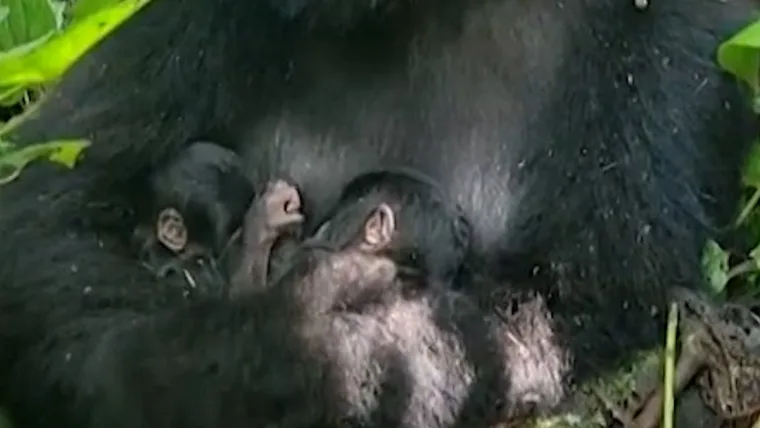
A Rare Sign of Hope: Mountain Gorilla Twins Born in Virunga National Park
In the mist-covered forests of eastern Democratic Republic of Congo, conservationists have received extraordinary news: a female mountain gorilla has given birth to twins inside Virunga National Park. In a world where mountain gorillas number just over a thousand individuals, the birth of any infant is important. The arrival of twins, however, is nothing short of remarkable.
Wildlife authorities monitoring the gorilla groups in Virunga confirmed that the mother, a mature female named Mafuko, was recently observed carrying two healthy infants. Initial observations suggest both newborns are male. For conservationists who have spent decades battling extinction-level threats, this rare event has become a powerful symbol of resilience.
Why Mountain Gorilla Twins Are So Rare
Mountain gorillas are among the slowest-reproducing mammals on Earth. Females typically reach reproductive maturity at around ten years of age and give birth only once every four to six years. Unlike many other species, they almost always deliver a single infant.
Twin births occur in far less than one percent of documented mountain gorilla pregnancies. The reasons are biological and ecological: producing, nursing, and protecting two infants at once places enormous strain on a mother whose survival is already tightly linked to food availability, forest stability, and group protection.
In the dense montane forests of the Virunga Massif, where gorillas navigate steep terrain and thick vegetation, caring for two infants simultaneously is an immense challenge. Each baby depends completely on its mother for warmth, milk, movement, and protection during its early months of life.
A Mother with a History Marked by Conflict
Mafuko’s story adds deeper emotional weight to the event. Conservation records indicate that she lost her own mother years ago during violent human activity in the region. Armed conflict has long been one of the most serious threats facing Virunga’s wildlife, with gorillas sometimes caught in the crossfire of human instability.
Despite this traumatic beginning, Mafuko survived, integrated into her family group, and reached adulthood. Her ability to give birth—let alone to twins—demonstrates not only biological strength but also the importance of long-term conservation protection that allows gorillas to recover from early-life trauma.
For park rangers and researchers, Mafuko represents a generation of gorillas that have grown up under intense pressure yet continue to reproduce against the odds.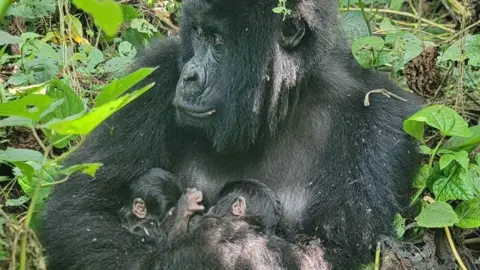

The Enormous Challenge of Raising Twins
While the birth of twins is a cause for celebration, experts remain cautious. Twin gorillas face significantly lower survival rates than single infants.
A mother must:
-
Produce enough milk for two infants
-
Carry or closely supervise both while moving
-
Protect them from accidents, illness, and social stress
Mountain gorillas usually move on all fours, meaning one arm is often occupied when carrying a baby. With twins, mothers must alternate carrying or allow one infant to cling independently earlier than usual, increasing risks.
Nutrition also becomes critical. Forest food availability must be sufficient for Mafuko to meet her increased energy demands. Any disruption—such as illness, injury, or habitat disturbance—could affect the twins’ chances of survival.
The Role of the Silverback and the Gorilla Family
In mountain gorilla society, the dominant silverback plays a crucial role in infant survival. He provides protection from predators, rival males, and internal group conflict. Observations over decades show that silverbacks who are tolerant, gentle, and attentive toward infants tend to lead more stable groups.
Young gorillas often climb, tug, and play around the silverback, learning social cues and gaining confidence. For twins, this social environment can be particularly important, as it reduces stress on the mother and increases overall group cohesion.
Researchers will be closely monitoring how the silverback and other group members interact with the twins over the coming months.
Conservation Success Against Overwhelming Odds
Mountain gorillas were once predicted to vanish entirely. In the late 20th century, their population dropped below 300 individuals due to:
-
Poaching
-
Habitat loss
-
Disease
-
Armed conflict
Today, they are one of the only great ape subspecies whose numbers are slowly increasing. This recovery is the result of:
-
Daily patrols by park rangers
-
Veterinary interventions for injured or sick gorillas
-
Strict anti-poaching enforcement
-
Community engagement and ecotourism
Virunga National Park rangers operate under extreme conditions, often risking their lives to protect wildlife. The birth of twins stands as a quiet reward for decades of sacrifice and persistence.
What the Birth Means for the Species
From a scientific perspective, the twins represent more than a heartwarming story. They indicate:
-
Successful reproduction in a stable habitat
-
Adequate nutrition and social structure
-
Effective long-term protection measures
While two infants will not dramatically change population numbers, each birth contributes to genetic diversity and demographic stability. In small populations, every individual matters.
For conservationists, such events reinforce the importance of sustained protection rather than short-term interventions.
A Powerful Emotional Connection
Mountain gorillas have long captivated humans because of their familiarity. Their expressive faces, close family bonds, and nurturing behavior mirror aspects of human society. Seeing a mother cradle two newborns in the wild evokes empathy that transcends borders and politics.
This emotional connection has played a major role in global conservation support. Images and stories from Virunga continue to inspire funding, awareness, and political attention toward protecting one of Africa’s most biologically rich yet vulnerable regions.
Looking Ahead: Hope Mixed with Caution
The coming months will be critical. Rangers and researchers will quietly observe, ensuring minimal disturbance while documenting the twins’ development. If both infants survive their first year—a period of highest mortality—it will mark a truly extraordinary conservation milestone.
Regardless of the outcome, the birth itself is already meaningful. It proves that even in landscapes shaped by conflict and uncertainty, nature can still produce moments of profound hope.
As conservationists often remind the world: mountain gorillas are not saved yet—but they are surviving, and sometimes, they even thrive.
The birth of rare mountain gorilla twins in Virunga National Park is more than an unusual biological event—it is a testament to resilience, protection, and the fragile success of conservation. In a region where wildlife faces relentless pressure, two tiny lives have emerged as symbols of what is still possible when commitment outweighs conflict.
For now, all eyes remain on Mafuko and her twins, quietly navigating the forest, carrying with them the hopes of a species that continues to defy extinction.