


Rwenzori Climbing Routes as Africa’s Most Demanding and Rewarding Mountain Experience
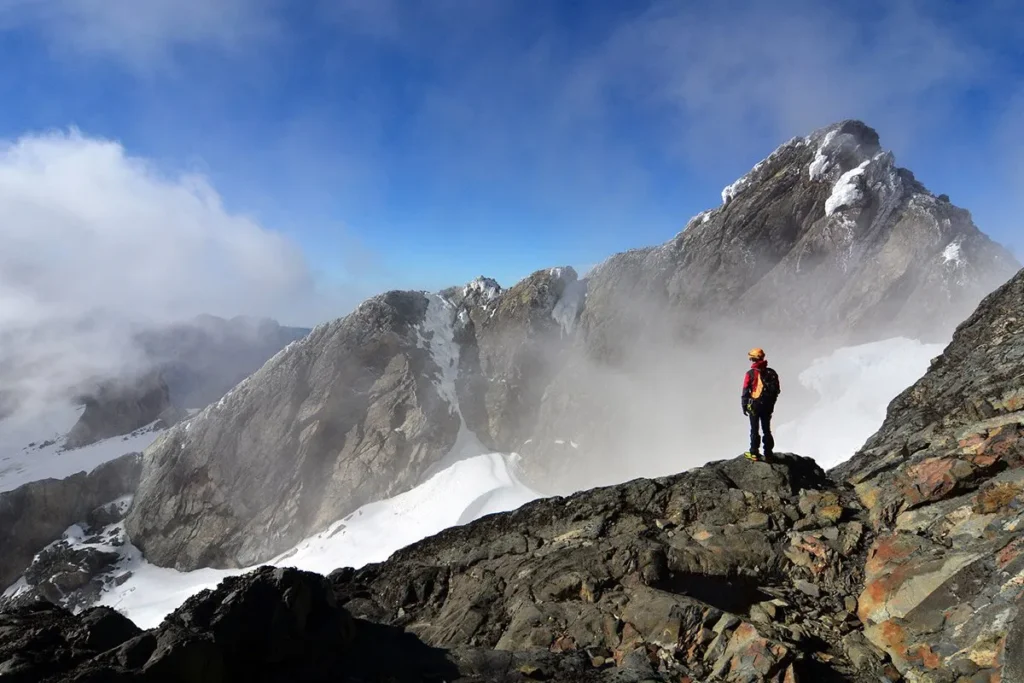
The Rwenzori climbing routes represent one of the most complex, demanding, and profoundly rewarding mountaineering experiences on the African continent. Rising dramatically along the Uganda–DR Congo border, the Rwenzori Mountains defy conventional expectations of African peaks. Instead of dry volcanic slopes or open alpine scree, climbers encounter dense equatorial rainforest, deep bogs, slippery rock faces, glacial valleys, and permanently snow-capped summits straddling the equator. This unique combination makes the Rwenzori unlike any other mountain system in Africa.
Often referred to as the “Mountains of the Moon,” the Rwenzori range challenges not only physical endurance but also mental resilience, adaptability, and patience. The climbing routes are not standardized trails designed for casual ascent; they are evolving pathways shaped by rainfall, vegetation growth, and glacial retreat. Understanding the Rwenzori climbing routes in depth is essential for anyone seeking to summit its highest peaks safely and responsibly.
Understanding the Rwenzori Mountains and Their Geography
The Rwenzori Mountains form a block range rather than a single peak, consisting of six major massifs and numerous subsidiary summits. These mountains rise abruptly from the surrounding lowlands, creating extreme vertical relief over relatively short horizontal distances. This geography results in steep ascents, deep valleys, and rapid ecological transitions.
The highest point of the range is Margherita Peak on Mount Stanley, standing at 5,109 meters above sea level. Unlike freestanding volcanic mountains, the Rwenzori peaks are connected by ridges and saddles, requiring sustained multi-day traverses rather than straightforward ascents. The complexity of this terrain is a defining feature of all Rwenzori climbing routes.
Most climbs are conducted within Rwenzori Mountains National Park, a UNESCO World Heritage Site recognized for its exceptional biodiversity and unique alpine ecosystems.
Why the Rwenzori Climbing Routes Are Unlike Any Other in Africa
Rwenzori climbing routes differ fundamentally from routes on Mount Kilimanjaro or Mount Kenya. While those mountains are volcanic and relatively dry, the Rwenzori are tectonic in origin and receive heavy rainfall year-round. Climbers must contend with mud, standing water, dense vegetation, and constantly changing trail conditions.
These routes demand technical movement, particularly in upper zones where ice, snow, and exposed rock are present. Rope work, crampon use, and ice axe skills are often required near the summits. As a result, Rwenzori routes appeal most strongly to experienced trekkers and mountaineers seeking a true expedition-style climb rather than a guided walk-up peak.
Ecological Zones Encountered Along Rwenzori Climbing Routes
One of the most remarkable aspects of the Rwenzori climbing routes is the progression through multiple ecological zones. Climbers move from tropical lowland forest through montane forest, bamboo zone, heather and moorland, alpine bogs, and finally into glacial and snow-covered terrain.
Each zone presents distinct challenges. Lower forests are humid and slippery, bamboo zones require careful footing, and alpine bogs test stamina with deep mud and waterlogged ground. Higher zones demand technical climbing ability and acclimatization. Understanding these transitions is critical for route planning and pacing.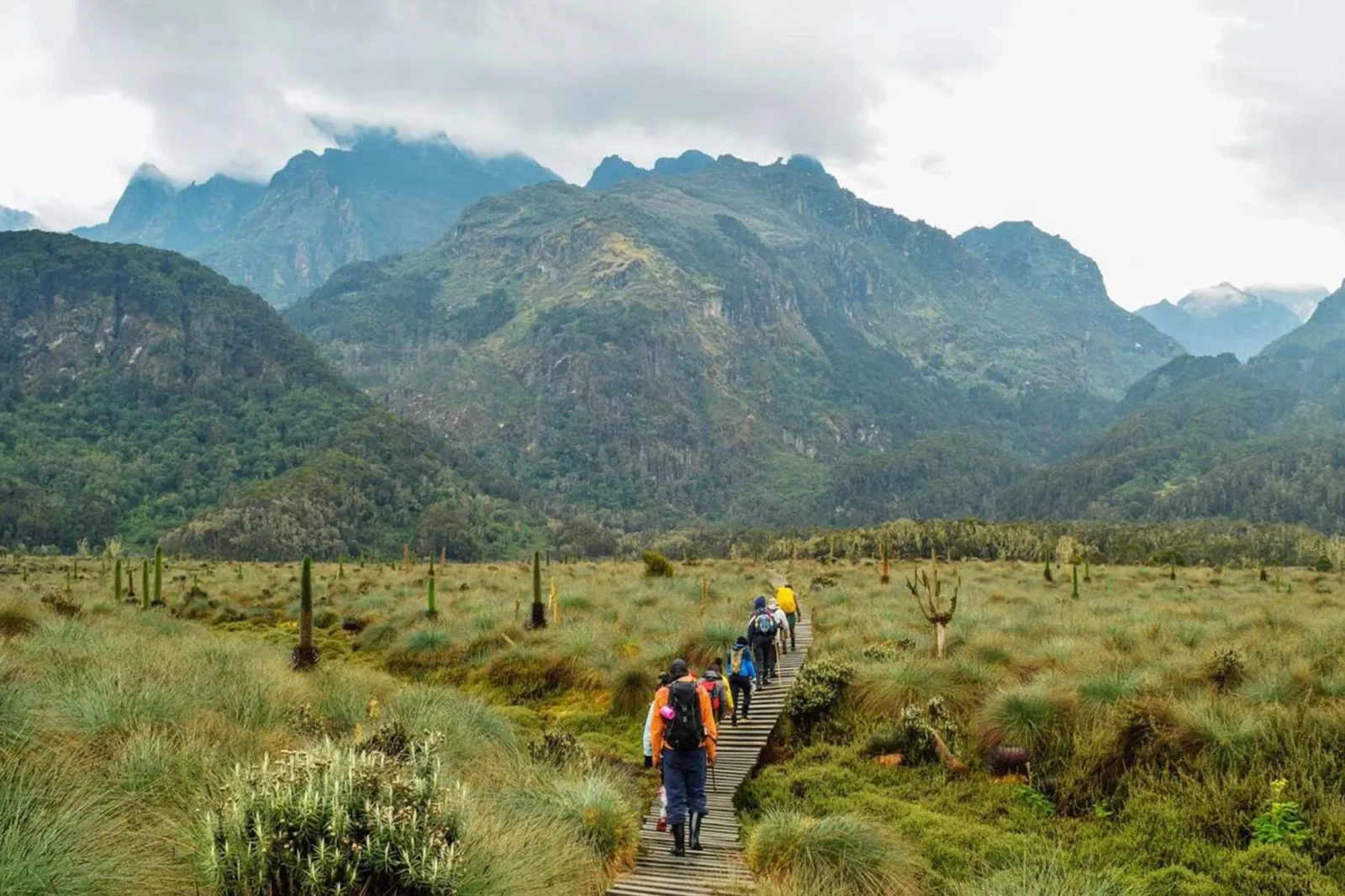

The Central Circuit Trail: The Classic Rwenzori Climbing Route
The Central Circuit Trail is the oldest and most established of all Rwenzori climbing routes. Originally developed by early European explorers, it remains the most commonly used route for summiting Margherita Peak.
This route forms a loop through the heart of the Rwenzori Mountains, passing through several major valleys and crossing multiple high passes. The Central Circuit typically takes between seven and ten days, depending on itinerary design and acclimatization strategy.
The defining feature of the Central Circuit is its comprehensive coverage of the range’s core massifs. Climbers traverse the Bujuku Valley, cross Scott Elliot Pass, and access the Stanley massif via the Elena Glacier approach. This route provides exceptional scenery and a deep sense of immersion but requires strong endurance and comfort with sustained exposure to harsh conditions.
Key Challenges of the Central Circuit Trail
The Central Circuit Trail is physically demanding due to constant elevation changes, uneven terrain, and prolonged exposure to wet conditions. River crossings, muddy sections, and steep ascents are frequent.
Technical climbing becomes necessary near the summit, particularly when ascending Margherita Peak via the Elena Glacier. Weather conditions can change rapidly, making route timing and guide expertise crucial. Despite these challenges, the Central Circuit remains the benchmark against which other Rwenzori climbing routes are measured.
The Kilembe Trail: A Modern Alternative with Dramatic Scenery
The Kilembe Trail is a more recent addition to the Rwenzori climbing routes and has gained popularity for its scenic diversity and improved infrastructure. Starting from the western side of the mountains, this route offers a different perspective on the range.
Unlike the Central Circuit, the Kilembe Trail follows a more linear progression through valleys such as Nyamwamba and Mugusu. It allows access to multiple massifs and can be linked with sections of the Central Circuit for extended expeditions.
The Kilembe Trail is often praised for its dramatic landscapes, including deep valleys, cascading rivers, and expansive views of the surrounding lowlands. While still demanding, it offers slightly improved trail conditions in some sections compared to the Central Circuit.
Technical Considerations on the Kilembe Trail
Despite its reputation as a modern route, the Kilembe Trail is not easier in a technical sense. Mud, steep gradients, and exposure remain significant factors. Climbers aiming for Margherita Peak via Kilembe must still contend with glacial travel and rope work.
This route is particularly well-suited for climbers seeking a quieter experience with fewer groups, as it sees less traffic than the Central Circuit. It is often chosen by repeat visitors or those seeking a more exploratory ascent.
The Bukurungu Route: Remote and Rarely Used
The Bukurungu Route is one of the least traveled Rwenzori climbing routes and is rarely used for summit attempts. This route approaches the mountains from the northern side and passes through extremely remote terrain.
Due to limited infrastructure, minimal trail maintenance, and logistical challenges, the Bukurungu Route is typically reserved for research expeditions or highly specialized climbs. It offers an unparalleled sense of isolation and wilderness but requires advanced planning, navigation skills, and strong self-sufficiency.
While not commonly used for standard climbs, the Bukurungu Route underscores the vastness and complexity of the Rwenzori range.
Approaches to Margherita Peak Across Different Routes
All major Rwenzori climbing routes ultimately converge toward similar summit approaches when targeting Margherita Peak. The final ascent typically involves glacier travel, steep rock slabs, and narrow ridges.
The most common approach is via the Elena Glacier, which requires crampons, harnesses, and ropes. Climbers must be comfortable with exposed traverses and icy conditions, often in poor visibility.
Summit day is long and physically taxing, often starting before dawn to take advantage of firmer snow and more stable weather. Successful ascent depends as much on timing and teamwork as on physical strength.
Climbing Mount Speke, Mount Baker, and Other Massifs
Not all Rwenzori climbing routes focus solely on Margherita Peak. Several routes allow ascents of other significant peaks such as Mount Speke and Mount Baker.
These climbs are slightly lower in elevation but still require technical skill and endurance. Routes to these peaks often branch off from the Central Circuit or Kilembe Trail and may involve steep scrambles and exposed ridges.
Climbers seeking a less crowded experience or those acclimatizing before attempting Margherita often include these peaks in their itinerary.
Seasonality and Route Conditions in the Rwenzori
Seasonality plays a critical role in determining the condition of Rwenzori climbing routes. While the mountains can technically be climbed year-round, rainfall patterns significantly affect trail conditions.
Drier periods generally offer more stable footing and improved visibility, while wetter months intensify mud, flooding, and river crossings. Snow and ice conditions near the summits can vary dramatically, influencing technical difficulty.
Experienced guides monitor conditions closely and adjust routes and schedules accordingly. Flexibility is essential when climbing in the Rwenzori.
The Role of Professional Guides on Rwenzori Climbing Routes
Professional guiding is mandatory on all established Rwenzori climbing routes, and for good reason. Guides possess intimate knowledge of terrain, weather patterns, and route variations.
They play a critical role in risk management, navigation, and decision-making, particularly during summit attempts. Their expertise ensures that climbers move efficiently while minimizing exposure to hazards such as rockfall, hypothermia, and altitude-related illness.
Support teams, including porters and cooks, are also essential for carrying equipment, preparing meals, and maintaining morale during long, demanding days.
Acclimatization Strategies Across Rwenzori Routes
Effective acclimatization is vital on all Rwenzori climbing routes. Rapid elevation gain combined with sustained exertion increases the risk of altitude sickness.
Routes are typically designed to include gradual elevation increases, rest days, and strategic camp placement. Climbers are encouraged to hydrate well, move at a steady pace, and communicate openly with guides about symptoms.
Successful acclimatization not only increases summit success rates but also enhances overall enjoyment of the climb.
Equipment Requirements for Rwenzori Climbing Routes
Rwenzori routes demand specialized equipment due to wet conditions and technical terrain. Waterproof boots, gaiters, layered clothing, and reliable rain protection are essential.
For summit attempts, technical gear such as harnesses, helmets, crampons, ice axes, and ropes is mandatory. Even experienced climbers are advised to use provided equipment familiar to local guides.
Proper equipment selection can make the difference between a manageable challenge and a dangerous situation.
Environmental Responsibility on the Rwenzori Climbing Routes
The Rwenzori Mountains are ecologically fragile, and responsible climbing practices are essential. Climbers are required to adhere to strict waste management protocols and respect designated trails.
Local conservation efforts rely on sustainable tourism to fund park management and community livelihoods. By following guidelines and supporting responsible operators, climbers contribute to the long-term protection of this unique mountain ecosystem.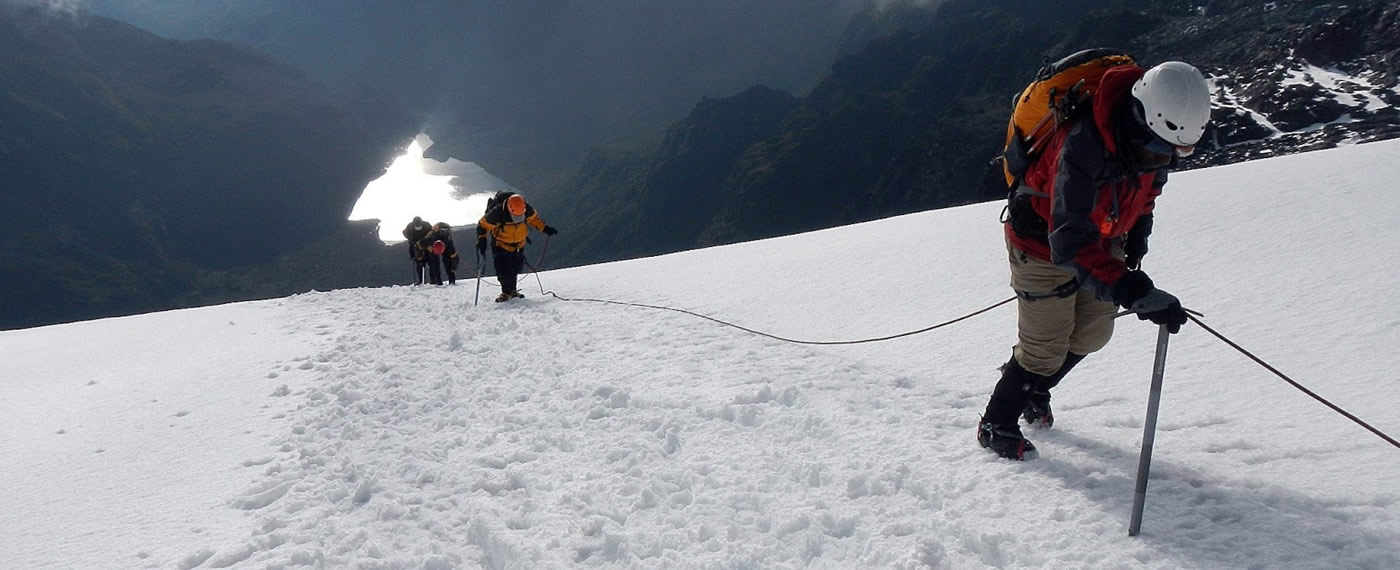

Who the Rwenzori Climbing Routes Are Best Suited For
Rwenzori climbing routes are best suited for experienced hikers, trekkers, and mountaineers seeking a challenging, expedition-style ascent. They are not recommended for beginners or those seeking a casual trekking experience.
Physical fitness, mental resilience, and adaptability are essential qualities for success. Those who approach the Rwenzori with patience and respect are rewarded with one of Africa’s most profound mountain experiences.
Comparing Rwenzori Routes to Other African Climbs
Compared to Mount Kilimanjaro and Mount Kenya, the Rwenzori offers greater technical complexity and environmental diversity. While summit success rates may be lower, the sense of achievement is correspondingly higher.
The Rwenzori climbing routes appeal to those who value process over outcome, immersion over speed, and challenge over convenience.
The Emotional and Psychological Impact of Rwenzori Climbing
Climbing in the Rwenzori is as much a mental journey as a physical one. Extended exposure to harsh conditions, isolation, and sustained effort fosters introspection and resilience.
Many climbers describe the experience as transformative, offering perspective and humility rarely found in more accessible climbs.
Planning a Successful Rwenzori Climbing Expedition
Successful planning involves selecting the appropriate route, allowing sufficient time, and working with experienced guides. Rushing the itinerary or underestimating conditions increases risk and diminishes the experience.
With careful preparation, the Rwenzori climbing routes deliver one of the most authentic and demanding mountaineering adventures available anywhere in the world.
Rwenzori Climbing Routes as Africa’s Ultimate Mountain Challenge
Ultimately, the Rwenzori climbing routes represent Africa’s ultimate mountain challenge. They test endurance, skill, and character while offering unparalleled ecological and aesthetic rewards.
For those willing to embrace difficulty and uncertainty, the Rwenzori delivers an experience that transcends conventional trekking. It is not simply a climb, but a journey through one of Earth’s last truly wild mountain systems.