



Family Trip to Serengeti: Safari Itinerary
A Once-in-a-Lifetime Journey Designed for Families
A family trip to Serengeti safari itinerary is not simply a holiday plan; it is an intentional journey into one of the world’s most iconic wildlife ecosystems, carefully shaped to meet the needs of families traveling with children and teenagers. The Serengeti is often associated with epic migrations, vast open plains, and dramatic predator encounters, yet it is equally a destination of learning, bonding, and perspective when approached with the right structure and pace.
For families, the Serengeti offers something increasingly rare in modern travel: uninterrupted time together in an environment that naturally encourages curiosity, patience, and shared discovery. A well-designed family safari itinerary balances wildlife intensity with comfort, education with relaxation, and adventure with safety. When these elements align, the Serengeti becomes a living classroom and a deeply rewarding family experience.
This article presents a complete, in-depth Serengeti family safari itinerary, explaining not only where families go each day, but why the journey is structured this way, what children gain from each phase, and how parents benefit from a slower, more meaningful safari rhythm.
Why the Serengeti Works for Family Safari Travel
The Serengeti ecosystem is uniquely suited to families because of its open landscapes, predictable wildlife movements, and long-established safari infrastructure. Visibility is excellent, reducing frustration for younger travelers, while the abundance of animals ensures frequent encounters without excessive driving.
A family safari here is not about ticking off species lists. It is about context. Children see how ecosystems function, how predators and prey coexist, and how conservation protects fragile systems. Parents, meanwhile, enjoy a safari that feels purposeful and enriching rather than rushed.
Equally important, the Serengeti supports family-friendly lodges, experienced guides accustomed to younger guests, and flexible safari activities that can be adapted to different age groups.
Planning a Family Serengeti Safari: Key Principles
Before detailing the day-by-day itinerary, it is essential to understand the planning principles that shape a successful family trip to Serengeti safari itinerary.
A family safari prioritizes fewer locations with longer stays. This reduces fatigue and allows children to settle into a routine. Game drives are planned with flexibility, avoiding excessively long sessions while still delivering exceptional wildlife viewing. Midday rest periods are built in, recognizing that children absorb more when they are not overtired.
The itinerary also blends active safari days with lighter transitions and reflective moments, ensuring sustained engagement across the journey.
Day 1: Arrival in Arusha
The family safari experience begins in Arusha, Tanzania’s primary northern safari hub. This first day is intentionally calm and restorative. After arrival, the family is transferred to a comfortable lodge set in a quiet environment, offering space to relax and recover from international travel.
In the evening, a comprehensive safari orientation takes place. Parents and children are introduced to the Serengeti ecosystem, safety guidelines, animal behavior basics, and what to expect over the coming days. This briefing is crucial for younger travelers, helping them feel included and prepared rather than uncertain.
The overnight stay in Arusha allows families to adjust before entering the wilderness.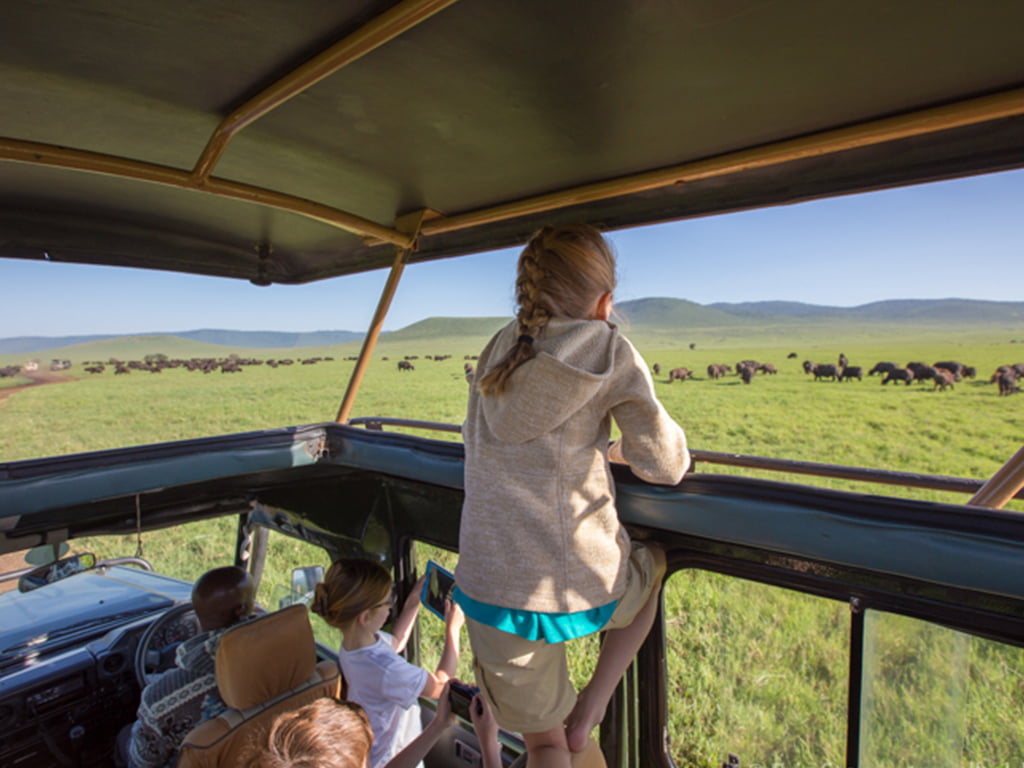

Day 2: Arusha to Serengeti National Park
The transition into the Serengeti marks a defining moment in the journey. Families typically travel by scheduled or charter flight, reducing long road transfers and preserving energy for wildlife viewing.
Upon arrival, the shift in landscape is immediate. Endless plains stretch to the horizon, dotted with acacia trees and grazing animals. A gentle introductory game drive follows the transfer, designed to ease children into safari life without overwhelming them.
This first Serengeti afternoon focuses on common species such as zebras, wildebeest, giraffes, and elephants. Early success builds excitement and confidence, particularly for younger family members.
Day 3: Central Serengeti
A full day in the central Serengeti allows families to settle into a safari rhythm. Morning game drives are timed to coincide with peak wildlife activity, while afternoons are reserved for rest and informal learning.
Guides tailor their explanations to family groups, turning sightings into stories. Children learn how to read animal tracks, understand herd behavior, and recognize warning signs in prey species. These lessons are delivered naturally, without classroom formality.
The central Serengeti is rich in resident wildlife, ensuring frequent encounters that keep attention levels high. The emphasis is not on speed, but on understanding patterns and relationships.
Day 4: Serengeti Predators and Ecosystem Dynamics
This day focuses on predator-prey dynamics, a topic that fascinates children and adults alike. Early morning drives explore lion territories and cheetah hunting grounds, with guides explaining how predators select prey and conserve energy.
Sensitive topics such as hunting are addressed carefully, framing them as essential ecological processes rather than dramatic events. This balanced approach helps children understand nature realistically while respecting emotional boundaries.
Afternoon downtime at the lodge allows families to reflect, journal, or participate in child-friendly conservation activities, reinforcing learning through calm engagement.
Day 5: Migration Context and Seasonal Wildlife
Depending on the time of year, this day introduces families to the broader Great Migration narrative. Even when large herds are not present in the immediate area, guides explain migration routes, seasonal changes, and survival strategies.
Children gain an understanding of scale, learning how millions of animals move across ecosystems in response to rainfall and grazing pressure. This contextual knowledge transforms future sightings into meaningful moments rather than isolated events.
The day concludes with a relaxed sunset game drive, allowing families to enjoy the Serengeti’s changing light and atmosphere.
Day 6: Cultural Insight and Conservation Awareness
A family safari itinerary benefits greatly from moments that extend beyond wildlife alone. This day introduces conservation themes and cultural context in an age-appropriate way.
Guides discuss how protected areas are managed, how tourism supports conservation, and how local communities coexist with wildlife. These conversations are framed positively, emphasizing solutions and stewardship rather than conflict.
Children often respond strongly to these discussions, developing empathy and curiosity about the people who protect the Serengeti.
Day 7: Serengeti Exploration Beyond the Main Routes
By this stage, families are comfortable with safari routines. This day allows exploration of quieter areas of the Serengeti, reducing crowd exposure and increasing the sense of discovery.
Game drives focus on observation rather than pursuit, encouraging children to notice smaller details such as birds, insects, and plant life. This shift broadens ecological understanding and keeps the safari experience fresh.
The evening includes storytelling around the lodge, reinforcing shared experiences and strengthening family bonds.
Day 8: Serengeti to Ngorongoro Conservation Area
The journey transitions from the open plains of the Serengeti to the cooler highlands of the Ngorongoro region. This change in scenery provides visual and climatic contrast, helping prevent safari fatigue.
The drive is punctuated with scenic stops, allowing children to stretch and absorb the changing environment. Arrival at the lodge in the Ngorongoro highlands is followed by rest and gentle exploration of the surroundings.
Day 9: Ngorongoro Crater
An early descent into the Ngorongoro Crater delivers one of the most concentrated wildlife experiences of the journey. For families, the crater’s enclosed ecosystem is particularly engaging, as animals are easily visible across open grasslands.
Game drives are paced to suit children’s attention spans, with frequent stops for explanation and observation. The variety of species encountered in a single day reinforces lessons learned earlier in the Serengeti.
Returning to the highlands in the evening provides a calm conclusion to an intense day.
Day 10: Ngorongoro Highlands
This lighter day allows families to process the previous week’s experiences. Activities focus on scenic walks, cultural insight, and rest.
Children often benefit from downtime to consolidate learning, while parents appreciate the slower pace. The highland environment encourages reflection, helping families reconnect outside the intensity of game drives.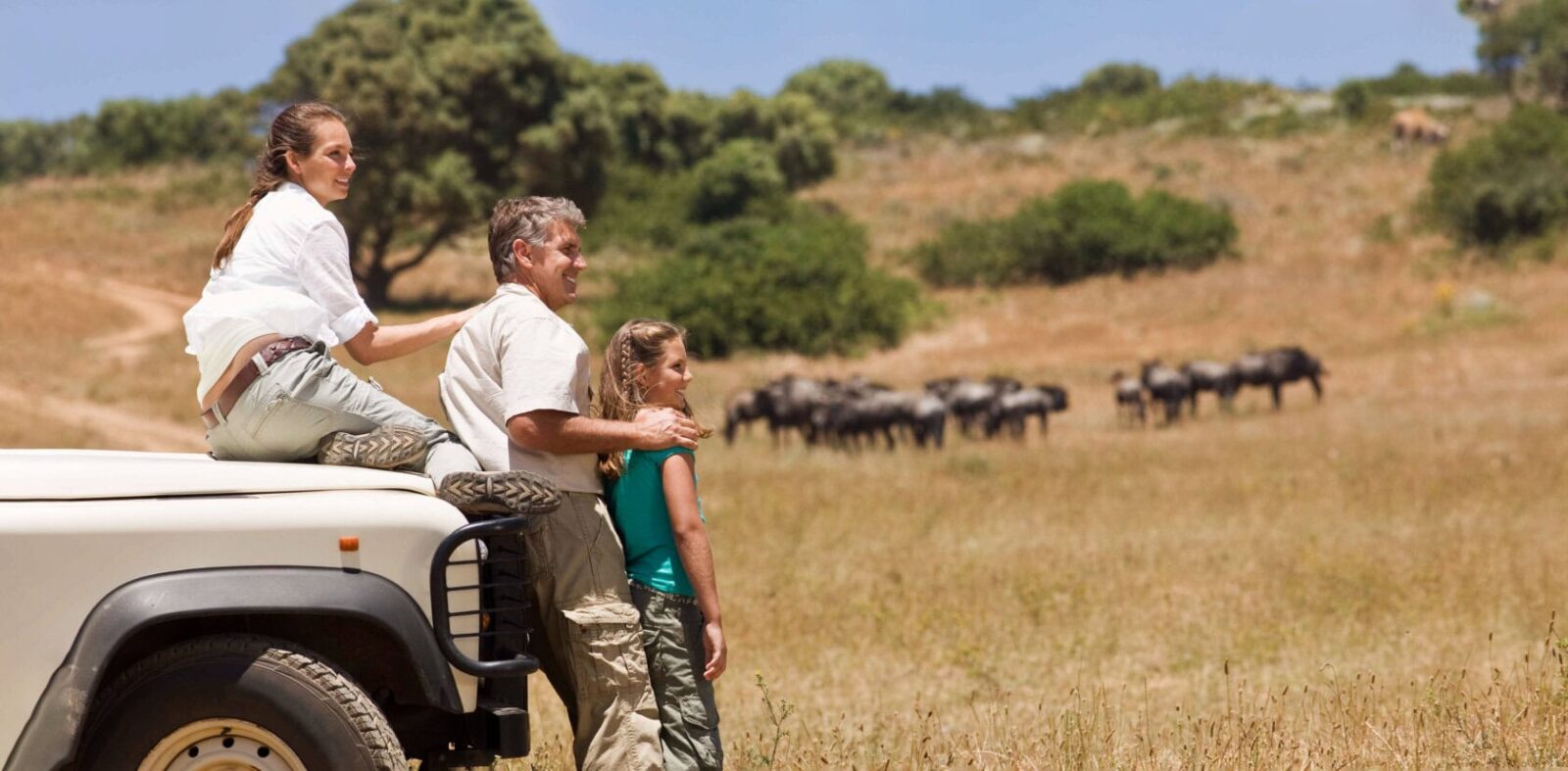

Day 11: Ngorongoro to Arusha
The return journey to Arusha marks the completion of the core safari experience. Along the way, guides help families review key moments, reinforcing educational themes and answering lingering questions.
Arrival in Arusha is followed by a comfortable overnight stay, allowing a buffer before onward travel.
Day 12: Optional Extension or Rest Day
Families may choose to include an additional rest day in Arusha or extend the journey to another region depending on interests and energy levels. This flexibility is a defining advantage of family-focused itineraries.
Day 13: Departure Preparations and Final Reflections
The penultimate day is intentionally unstructured. Families pack at a relaxed pace, revisit favorite moments, and enjoy final conversations with guides and hosts.
Children often express newfound awareness of wildlife and conservation, highlighting the safari’s educational impact.
Day 14: Departure
The final day concludes the family trip to Serengeti safari itinerary. Families depart not only with photographs, but with shared memories, deeper understanding, and a renewed sense of connection to the natural world.
Why This Family Serengeti Safari Itinerary Works
This itinerary succeeds because it respects the rhythms of both nature and family life. It avoids rushing, values explanation over spectacle, and prioritizes comfort without sacrificing authenticity.
For children, the Serengeti becomes a place of learning and wonder. For parents, it offers perspective and meaningful time together. Together, these elements transform a safari into a formative family experience.
The Lasting Impact of a Family Serengeti Safari
A family safari in the Serengeti leaves a lasting imprint. Children return home with expanded worldviews and a tangible understanding of conservation. Parents gain shared memories that deepen family bonds in ways few other journeys can achieve.
In an increasingly fast-paced world, a thoughtfully planned Serengeti safari offers families the rare gift of time, presence, and shared discovery.