


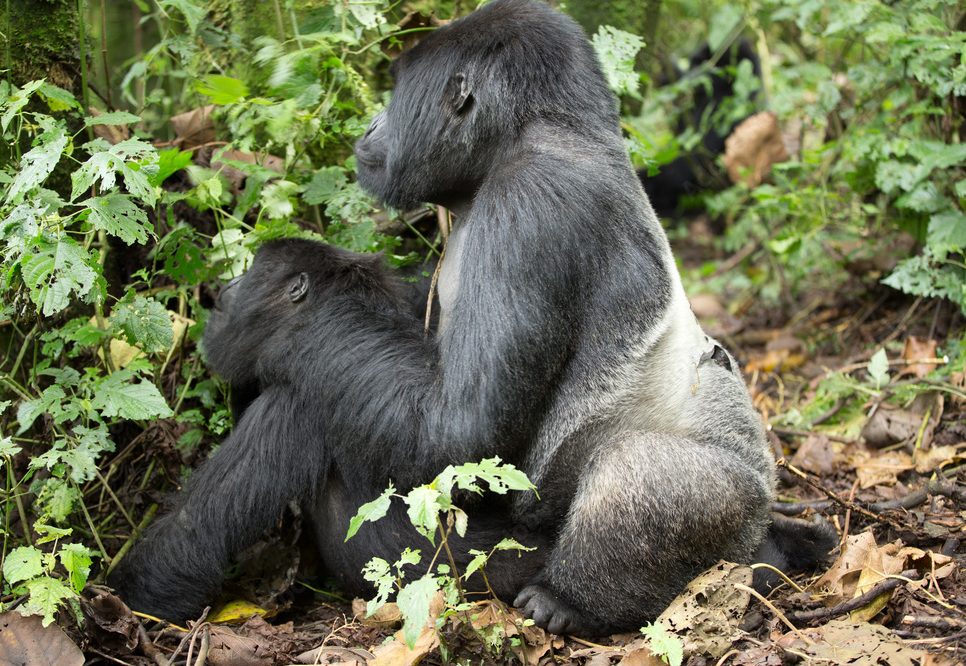
Silverback Gorilla Sex and Mating| Silverback Gorilla Reproduction and Social Mating Behaviour
In the dense, mist-covered mountains of Central and East Africa, a quiet drama unfolds daily — one that defines the structure, strength, and survival of gorilla society. The silverback gorilla, the awe-inspiring leader of his family, is not just a symbol of power; he is also the architect of continuity within his troop. His role in reproduction and mating extends far beyond dominance — it is tied to the very essence of gorilla survival, emotional intelligence, and evolutionary adaptation.
Understanding how silverback gorillas reproduce, bond, and maintain social harmony opens a window into one of nature’s most complex social systems. It is a subject not of sensationalism but of science and reverence — one that highlights the balance between instinct and emotion, strength and tenderness, leadership and legacy.
The Silverback: Guardian, Leader, and Patriarch
The term “silverback” refers to an adult male gorilla, typically over twelve years of age, whose dark hair has begun to turn silver across the back — a striking physical marker of maturity and authority. Within gorilla society, the silverback serves as both protector and patriarch, guiding his group (called a “troop” or “family”) through every facet of daily life, from foraging and resting to conflict resolution and reproductive organization.
Each troop can range from five to thirty individuals, often composed of one dominant silverback, several females, juveniles, and infants. Occasionally, a younger male (a “blackback”) remains within the group as a subordinate, assisting in protection or eventually leaving to establish his own troop.
The reproductive dynamics within these families revolve around the dominant silverback, whose authority is maintained through physical strength, charisma, and the trust of his females. His mating rights are not enforced purely through aggression but through complex social bonds that ensure both affection and stability within the group.
Female Choice and Courtship Dynamics
Contrary to the perception that male dominance alone determines reproduction, research into gorilla behaviour reveals that female choice plays a crucial role in mating dynamics. Female gorillas, upon reaching sexual maturity (usually between 8 and 10 years old), exhibit selective preference when choosing partners.
In many cases, females will choose to remain with or join a silverback whose leadership qualities are evident — one who offers protection, stability, and social harmony. This behaviour suggests an evolutionary strategy: choosing a partner who provides safety for offspring increases the chances of long-term survival for both mother and infant.
Courtship, while subtle compared to that seen in many primates, involves nuanced communication. Body language, gentle touches, prolonged eye contact, and soft vocalizations form part of a repertoire of social bonding behaviours. These gestures signify trust and willingness rather than dominance alone.
Unlike fleeting reproductive encounters, gorilla relationships — particularly in species such as the mountain gorilla — often involve lasting bonds built on mutual recognition, comfort, and companionship.

The Reproductive Cycle and Mating Season
Unlike some animal species that breed seasonally, gorillas do not have a fixed mating season. Females experience estrous cycles similar to humans, typically lasting around 28 to 33 days, with a fertile period during which conception is possible.
When a female enters estrus, she signals her readiness to the silverback through specific behavioural cues — approaches, physical gestures, and changes in scent and posture. The silverback, though dominant, responds with remarkable sensitivity, often showing patience and gentleness during interactions.
Mating behaviour, when observed scientifically, is guided by hormonal synchronization and social context rather than mere instinct. It is a process rooted in trust, hierarchy, and familiarity, ensuring that reproduction supports the troop’s long-term cohesion rather than creating conflict or instability.
Gestation, Birth, and Parental Care
Once conception occurs, the gestation period for gorillas lasts approximately 8.5 months, closely resembling that of humans. A female typically gives birth to one infant, though twins are rare but possible. Newborn gorillas are fragile, weighing around two kilograms, and are entirely dependent on maternal care.
The mother-infant bond is one of the most profound relationships in gorilla society. For the first six months, the infant remains clutched to its mother’s chest, feeding exclusively on milk and relying on her warmth, heartbeat, and protection. As the infant grows, it begins to explore cautiously, venturing only a few steps away before returning to the safety of its mother’s arms.
Throughout this period, the silverback plays a protective and supervisory role. Although he does not directly participate in infant care, his presence ensures safety from predators or rival males. Over time, infants develop strong attachments to the silverback, often climbing onto his back or following him during daily movements — a testament to his role as both father figure and protector.
Social Stability and Mating Rights
The stability of a gorilla troop depends heavily on the social order maintained by the silverback. His dominance is rarely questioned outright, as his authority stems from both physical prowess and social competence.
When females within the group conceive and raise offspring, the continuity of the troop’s genetic line becomes entwined with the silverback’s leadership. His role is not limited to reproduction; it encompasses mediation, peacekeeping, and ensuring that resources are shared equitably.
Challenges from younger males, however, can disrupt this harmony. Blackbacks — maturing males within or outside the troop — occasionally attempt to attract females or challenge the dominant silverback. Such confrontations can lead to displays of strength, chest-beating, and vocal roars. These contests rarely end in fatality but are critical in maintaining social balance and evolutionary fitness.
When a new silverback successfully takes over a troop, it can result in infanticide, a tragic but natural behaviour intended to eliminate offspring not sired by the new leader, thereby returning females to estrus sooner. Though seemingly brutal, such behaviour reflects the harsh logic of natural selection, ensuring that the dominant male’s genetic lineage prevails.
Emotional Intelligence and Bonding
What makes gorilla reproductive and social behaviour extraordinary is not only its structure but its emotional depth. Gorillas are highly sentient beings, capable of experiencing affection, jealousy, grief, and joy. Their reproductive systems are governed as much by emotion and empathy as by biology.
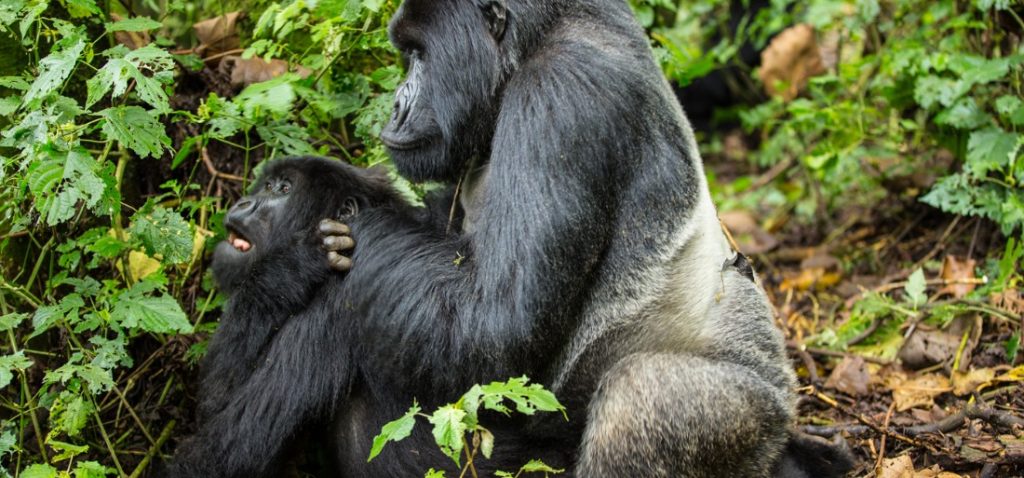
Observers have noted affectionate interactions between silverbacks and their mates — grooming, gentle embraces, and moments of shared rest. These behaviours are not strictly reproductive; they are relational, fostering trust and reducing tension within the troop.
Female gorillas, too, exhibit remarkable loyalty and companionship toward their silverback. They often comfort him after displays of aggression or remain close during moments of rest, showing that emotional connection, not fear, sustains their bonds.
The raising of infants further strengthens these relationships. As offspring mature, the troop becomes a network of shared responsibility, where lessons in social behaviour, hierarchy, and empathy are passed down through observation and imitation.

Differences Between Mountain, Eastern Lowland, and Western Lowland Gorillas
The nuances of reproductive behaviour vary among gorilla subspecies. Mountain gorillas (Gorilla beringei beringei), found in Uganda’s Bwindi Impenetrable and Mgahinga National Parks, exhibit cohesive family units led by a single dominant silverback. Their smaller troop size fosters deep, long-term relationships.
Eastern lowland gorillas (Gorilla beringei graueri), found mainly in the Democratic Republic of Congo, live in slightly larger groups and may exhibit multiple male hierarchies where subordinate males occasionally reproduce.
Western lowland gorillas (Gorilla gorilla gorilla) show even more variation, with looser group structures and higher instances of female transfer between troops. This diversity illustrates how gorilla social systems have evolved in response to environmental pressures, resource availability, and population density.
Conservation Implications of Reproductive Behaviour
The reproductive strategies of gorillas have direct implications for conservation. Given their slow reproductive rate — typically one infant every four to six years per female — population recovery is fragile.
Poaching, habitat destruction, and disease outbreaks such as Ebola have dramatically affected gorilla populations. The death of a single dominant silverback can destabilize an entire troop, leaving females and infants vulnerable to external threats or dispersion.
Conservation efforts therefore focus not just on protecting individual animals but on preserving family structures and the social continuity vital for successful reproduction. National parks in Uganda, such as Bwindi Impenetrable and Mgahinga Gorilla National Parks, implement strict monitoring and protection programs that safeguard both the gorillas and their natural social environments.
The Human Parallel: Empathy and Understanding
Studying gorilla reproduction and social behaviour offers profound insight into our own evolutionary journey. Gorillas share approximately 98% of their DNA with humans, making them one of our closest relatives. Their social organization, emotional intelligence, and parental care mirror many human traits.
Understanding the reproductive behaviour of silverbacks helps demystify the concept of dominance and reveals the balance between power and empathy. The silverback’s leadership is not maintained through fear but through responsibility — a trait that resonates with the human experience of family, protection, and continuity.

The Role of Responsible Tourism
Tourism plays an integral role in supporting gorilla conservation, particularly in Uganda. Gorilla trekking experiences in Bwindi and Mgahinga not only generate revenue for conservation but also foster global awareness about the delicate dynamics of gorilla reproduction and social life.
Tourists witnessing gorillas in their natural habitat observe a living testament to coexistence and cooperation. The silverback’s quiet vigilance, the mother’s tenderness, and the playfulness of young gorillas reflect a society balanced in harmony.
By adhering to ethical tourism practices — maintaining respectful distances, limiting group sizes, and supporting sustainable operators — travellers contribute directly to the protection of gorillas and their future generations.
The Legacy of the Silverback
The story of the silverback gorilla is not one of dominance alone. It is a story of guardianship — a saga of leadership tempered by compassion. His role in reproduction ensures the survival of his lineage, but his influence extends beyond genetics. He shapes the values of his troop, instilling lessons of unity, care, and endurance.
Each new birth within a gorilla family represents more than the continuation of a species; it symbolizes the triumph of nature’s design — the persistence of life through balance, respect, and adaptation.
The silverback stands not as a symbol of brute strength but as a reminder that true power lies in the ability to nurture, protect, and lead with wisdom.
The Call to Witness This Wonder
Few experiences compare to watching a gorilla family move gracefully through the forest — the silverback guiding from behind, the mothers carrying infants on their backs, and the youngsters tumbling through the vines. It is a moment that humbles the spirit and stirs the heart, reminding us of our shared ancestry and responsibility.
To experience this connection firsthand, travellers are invited to book their Africa tours and safaris with WildHorn Africa, a leading curator of authentic gorilla trekking and East African safari adventures. With expert guides, ethical practices, and deep commitment to conservation, WildHorn Africa ensures every journey contributes to the protection of these magnificent beings and the habitats that sustain them.
Embark on a journey that transcends tourism — a journey into the living story of the silverback gorilla, where leadership, life, and love intertwine beneath the canopy of Africa’s ancient forests.
