


A Zimbabwe safari is an immersion into some of Africa’s most authentic, least commercialised, and ecologically intact wilderness areas. It is a safari experience defined by depth rather than display, by understanding rather than speed, and by landscapes where wildlife still moves according to natural law. Zimbabwe has long been regarded by seasoned safari travellers and professional guides as one of Africa’s finest safari destinations, not because it is the most famous, but because it delivers substance, space, and exceptional guiding at a level few countries can match.
What distinguishes a Zimbabwe safari is its integrity. The country has protected vast tracts of land for wildlife, maintained strong guiding traditions, and embraced low-density tourism models that prioritise conservation and experience quality. Here, safaris are not rushed itineraries built around crowds and checklists. They are carefully paced journeys that allow wildlife encounters to unfold naturally, often in near silence, guided by some of the most highly trained professionals on the continent.
Understanding the Character of a Zimbabwe Safari
A Zimbabwe safari is shaped by diversity of habitat, scale of wilderness, and a conservation philosophy rooted in long-term stewardship. Zimbabwe’s national parks and safari areas encompass savannahs, teak forests, riverine woodlands, floodplains, and escarpments, creating varied ecosystems that support rich wildlife populations.
Unlike destinations where tourism infrastructure dominates the landscape, Zimbabwe has preserved a sense of wildness across its protected areas. Development is restrained, visitor numbers are relatively low, and large ecosystems remain connected. This allows predators to maintain natural territories, herbivores to migrate seasonally, and ecological processes to function without heavy human interference.
Another defining feature of a Zimbabwe safari is guiding excellence. Zimbabwe is internationally respected for its rigorous guide training standards. Guides are required to develop deep knowledge of ecology, animal behaviour, tracking, and safety, ensuring that safari experiences are educational and interpretive rather than superficial. For travellers who value learning and authenticity, Zimbabwe stands at the top tier of African safari destinations.
Hwange National Park and the Heart of Zimbabwe Safaris
At the centre of Zimbabwe’s safari offering lies Hwange National Park, the country’s largest and most important wildlife area.
A Landscape Shaped by Water and Seasonality
Hwange is defined by vast open plains, teak woodlands, and seasonal pans that fill during the rainy season. During the dry months, artificial waterholes maintained through conservation initiatives become critical lifelines for wildlife. These water points attract large concentrations of animals, creating exceptional viewing opportunities while supporting ecosystem stability.
A Zimbabwe safari in Hwange offers one of Africa’s most reliable elephant experiences. The park supports one of the continent’s largest elephant populations, with herds moving across extensive ranges and gathering in impressive numbers during dry periods.
Predator Dynamics and Ecological Balance
Hwange’s predator populations are strong and well studied. Lions form large prides adapted to hunting in open terrain, while leopards thrive in woodland and rocky areas. African wild dogs are a highlight of Hwange, with the park supporting one of Southern Africa’s most important populations of this endangered species.
A Zimbabwe safari in Hwange emphasises natural behaviour rather than staged encounters. Predators are observed hunting, resting, interacting, and responding to environmental pressures in ways that reveal the complexity of ecosystem balance.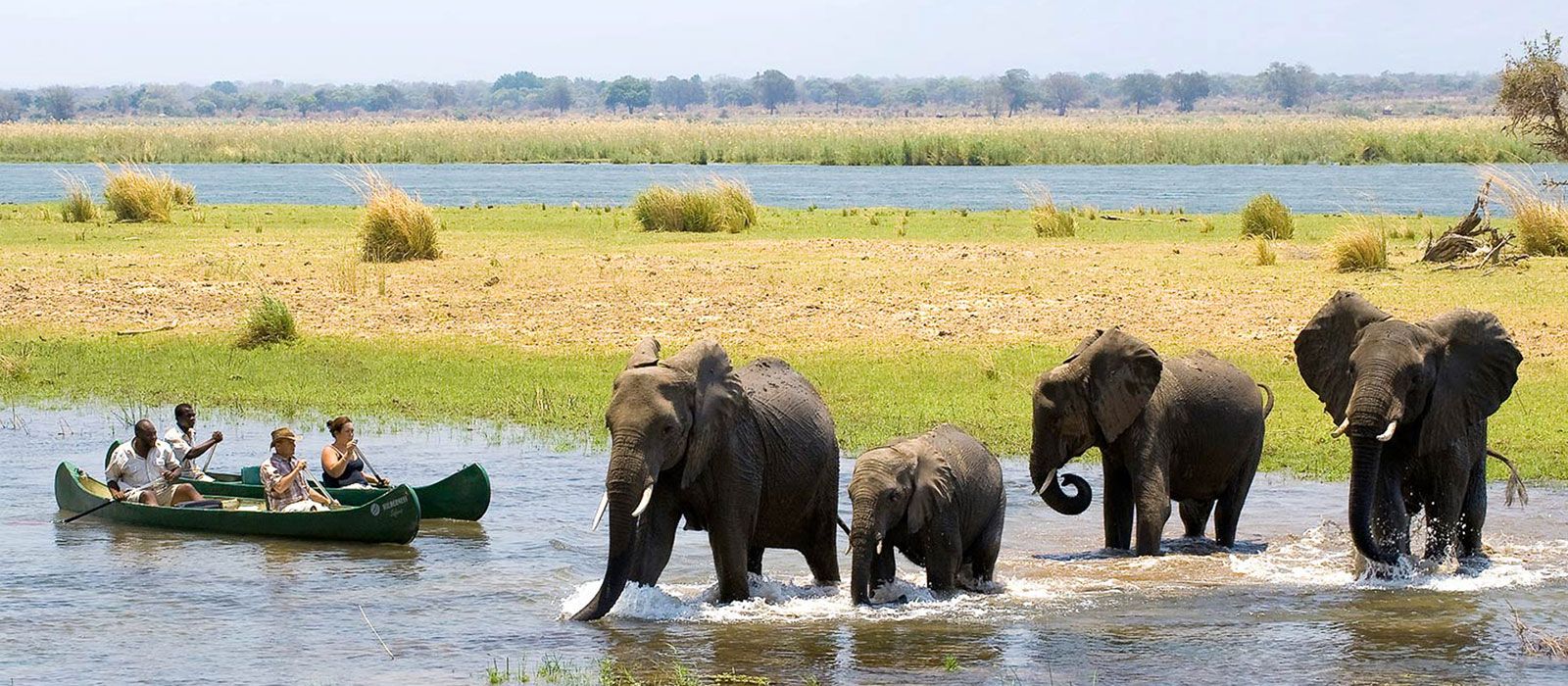

Mana Pools and River-Based Wilderness Safaris
Along the Zambezi River lies Mana Pools National Park, one of Africa’s most iconic wilderness areas and a UNESCO World Heritage Site.
The Zambezi Floodplain Ecosystem
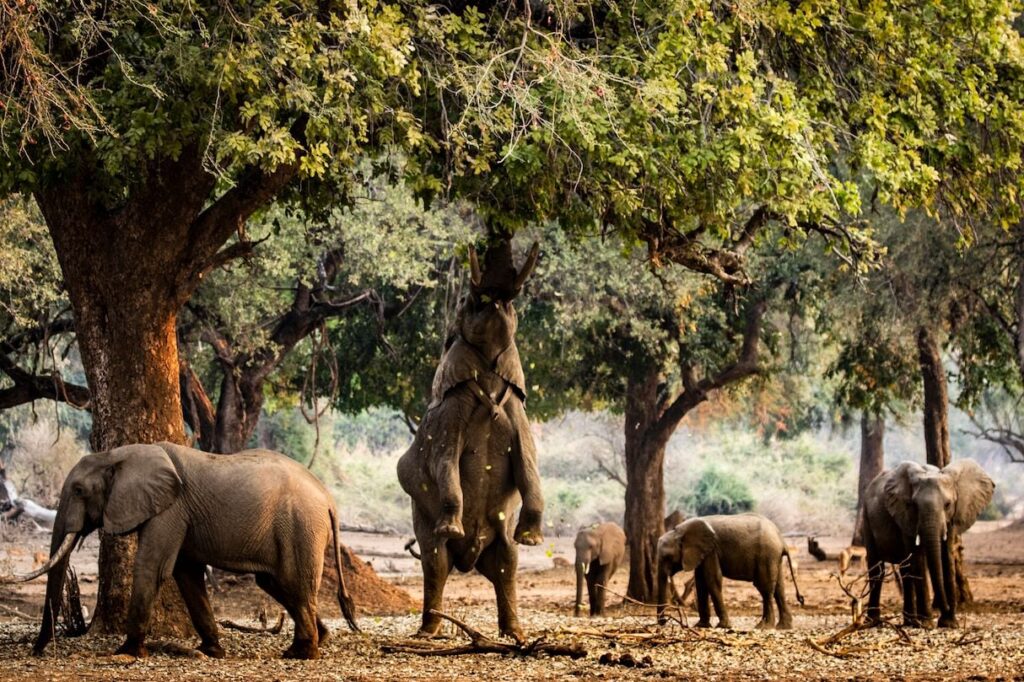
Mana Pools is defined by seasonal floodplains, ancient river channels, and towering albida trees that drop nutritious pods during the dry season. These trees attract elephants, which are often seen standing on their hind legs to reach higher branches, a behaviour that has become emblematic of the park.
A Zimbabwe safari in Mana Pools is shaped by proximity to wildlife. Animals are accustomed to the presence of vehicles and walkers without being habituated or disturbed, allowing exceptionally close yet respectful encounters.
Walking Safaris and Canoe Exploration
Mana Pools is renowned for its walking safaris, offering one of the purest on-foot wildlife experiences in Africa. Guided by highly skilled professionals, walking safaris reveal tracks, plants, animal behaviour, and subtle interactions often missed from vehicles.
Canoe safaris along the Zambezi provide another dimension, allowing silent movement past hippos, crocodiles, elephants, and birds. These experiences highlight Zimbabwe’s strength in low-impact, immersive safari styles that prioritise understanding over spectacle.
Matobo Hills and Cultural Landscapes
Southern Zimbabwe introduces a different safari dimension through Matobo Hills, a region of dramatic granite formations, ancient rock art, and spiritual significance.
Rhino Conservation and Unique Terrain
Matobo Hills is one of Zimbabwe’s most important rhino conservation areas. Both black and white rhinos are protected here through intensive monitoring and community-supported conservation programs. The park’s rugged terrain and open visibility make rhino tracking on foot a particularly powerful safari experience.
A Zimbabwe safari in Matobo is as much about landscape and history as wildlife. The area holds deep cultural significance and offers insight into the long relationship between humans and the natural world.
Gonarezhou and Remote Frontier Safaris
In the southeast of the country lies Gonarezhou National Park, one of Zimbabwe’s most remote and least visited protected areas.
Wilderness at Scale
Gonarezhou, meaning “place of elephants,” protects vast tracts of wilderness shaped by sandstone cliffs, river systems, and open plains. Elephant populations are strong, and wildlife moves across large areas with minimal human presence.
A Zimbabwe safari in Gonarezhou appeals to experienced travellers seeking solitude and exploration. Encounters here feel earned rather than expected, reinforcing the sense of discovery that defines frontier safaris.
Conservation Recovery and Collaboration
Gonarezhou has benefited from long-term conservation partnerships focused on park management, community engagement, and infrastructure restoration. These efforts demonstrate how sustained commitment can revive and protect remote ecosystems.
Wildlife Diversity on a Zimbabwe Safari
Zimbabwe supports exceptional wildlife diversity across its protected areas. Large mammals such as elephants, buffalo, giraffes, and hippos are widespread, while predators including lions, leopards, cheetahs, and African wild dogs maintain healthy populations.
Birdlife is particularly rich, with river systems, wetlands, and woodlands supporting hundreds of resident and migratory species. Zimbabwe is widely regarded as one of Southern Africa’s top birding destinations, especially in parks such as Mana Pools and Hwange.
A Zimbabwe safari rewards travellers who appreciate the full spectrum of biodiversity, from apex predators to insects, plants, and birds that underpin ecosystem health.
Safari Styles and Experiences in Zimbabwe
Zimbabwe offers some of Africa’s most varied and authentic safari styles. Vehicle-based game drives provide access to wide areas, while walking safaris allow intimate engagement with the environment. Canoe safaris on the Zambezi introduce a rare and powerful wildlife perspective, combining adventure with tranquillity.
Night drives in certain private concessions reveal nocturnal behaviour, while hide-based safaris at waterholes allow extended observation of wildlife interactions. These styles reflect Zimbabwe’s emphasis on patience, interpretation, and ethical wildlife viewing.
Conservation Philosophy and Safari Tourism in Zimbabwe
Conservation is deeply embedded in Zimbabwe’s safari industry. Tourism revenue supports park operations, anti-poaching units, wildlife monitoring, and community development programs. Zimbabwe has a long history of wildlife management and research, contributing significantly to regional conservation knowledge.
Community involvement is increasingly central to conservation success. Local communities benefit from employment, education, and infrastructure linked to safari tourism, reinforcing the value of wildlife protection.
A Zimbabwe safari directly contributes to sustaining these conservation systems, making responsible travel a critical part of wildlife preservation.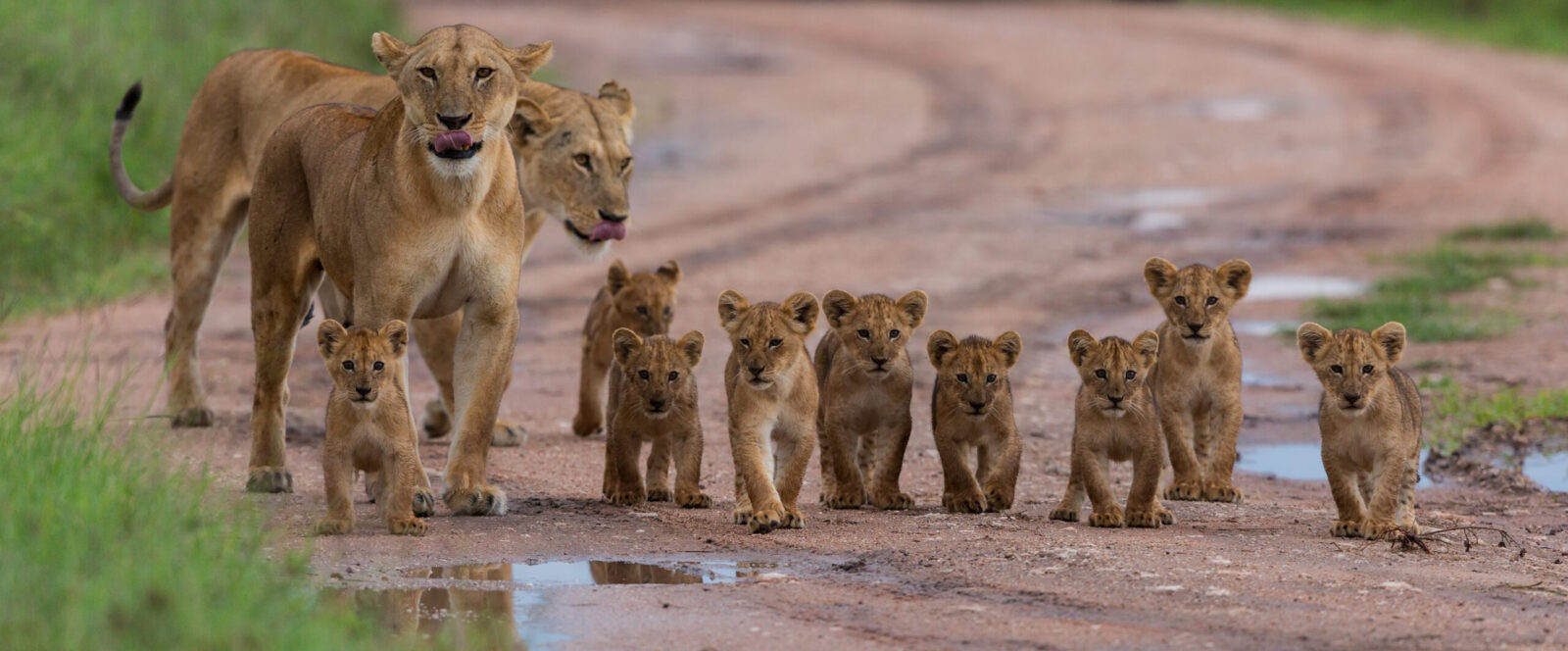

Seasonal Dynamics and Planning a Zimbabwe Safari
Seasonality strongly influences Zimbabwe safari experiences. The dry season concentrates wildlife around rivers and waterholes, producing excellent visibility and predator activity. This period is ideal for walking safaris and extended wildlife observation.
The wet season transforms landscapes, supporting breeding activity, migratory birdlife, and lush vegetation. While some areas become less accessible, ecological richness increases, offering rewarding experiences for photographers and birders.
Understanding these seasonal patterns allows travellers to plan Zimbabwe safaris aligned with their interests and expectations.
Cultural Context and Human History
Zimbabwe’s safari landscapes are deeply intertwined with human history. Archaeological sites, ancient trade routes, and traditional land-use practices reveal long-standing connections between people and wildlife.
Modern conservation efforts increasingly recognise the importance of cultural heritage and community involvement. A Zimbabwe safari gains depth when understood within this broader historical and social context.
Who a Zimbabwe Safari Is Best Suited For
A Zimbabwe safari appeals to travellers seeking authenticity, depth, and interpretation-driven experiences. It is particularly well suited to repeat safari visitors, photographers, conservation-minded travellers, and those interested in walking and river-based safaris.
Zimbabwe’s relatively low visitor density and strong guiding culture make it ideal for travellers who value quality over quantity.
Why the Zimbabwe Safari Remains One of Africa’s Finest
The Zimbabwe safari remains one of Africa’s finest because it preserves what many safari destinations have lost: space, silence, and authenticity. Wildlife encounters feel natural, landscapes remain expansive, and safaris are guided by knowledge rather than urgency.
In a world where wilderness is under constant pressure, Zimbabwe stands as a testament to disciplined conservation and responsible tourism. Its parks continue to function as complete ecosystems, its wildlife populations remain resilient, and its safari experiences offer rare depth and meaning.
A Zimbabwe safari is not about ticking off species. It is about understanding ecosystems, respecting wildlife, and reconnecting with nature in its most honest form. For those who seek a safari that educates as much as it inspires, Zimbabwe remains unmatched.