search
Can I combine Uganda with Rwanda, Kenya or Tanzania in one trip?

Can I combine Uganda with Rwanda, Kenya or Tanzania in one trip?

By Travel stories and blogs, Kenya travel guides, Rwanda travel guides, Tanzania travel guides, Uganda travel guides

Can I Combine Uganda with Rwanda, Kenya or Tanzania in One Trip? | East Africa Multi-Country Safari Guide 2026

For travelers seeking the ultimate East African adventure, the question often arises: Can I combine Uganda with Rwanda, Kenya, or Tanzania in one trip? The answer is a resounding yes. East Africa was crafted by nature to be explored as one seamless canvas — its borders drawn not by walls but by landscapes that merge effortlessly from mountain to savannah, from rainforest to ocean shore. To combine these nations is not just possible; it is the essence of what makes an African journey complete.

Each of these countries — Uganda, Rwanda, Kenya, and Tanzania — brings a distinctive rhythm and beauty to the safari experience. Uganda enchants with its emerald jungles and gorilla sanctuaries; Rwanda captivates with its tranquility and polished hospitality; Kenya thrills with its golden savannahs and iconic wildlife spectacles; and Tanzania mesmerizes with its vast horizons, from the Serengeti to Zanzibar’s beaches. When woven together, they form a journey that captures Africa’s soul in all its diversity.

However, combining multiple East African countries requires thoughtful planning, understanding of logistics, border procedures, and the unique experiences each destination offers. This detailed guide explores the how, why, and when of designing a multi-country safari across Uganda, Rwanda, Kenya, and Tanzania — ensuring that every traveler discovers the seamless harmony of East Africa without stress or compromise.

Understanding East Africa’s Geography and Travel Connectivity

East Africa’s geography lends itself naturally to cross-border exploration. The region’s major safari circuits are closely linked, with national parks and reserves often sitting along shared frontiers. For example, Queen Elizabeth National Park in Uganda borders Virunga and Volcanoes National Parks in the Congo and Rwanda, while Serengeti National Park in Tanzania merges with Maasai Mara in Kenya, forming one of the world’s most spectacular wildlife ecosystems.

Modern infrastructure, regular flight connections, and the East African Tourist Visa have made multi-country safaris smoother than ever before. The region’s governments have invested heavily in tourism collaboration, recognizing that travelers see East Africa not as a collection of borders but as a continuous journey.

Whether you prefer overland adventures that follow the rhythm of the land or quicker fly-in routes that connect distant highlights, East Africa’s accessibility ensures that a combined itinerary can be both practical and deeply rewarding. The real magic lies in the contrast — the shift from Uganda’s misty forests to Kenya’s sun-drenched plains or from Rwanda’s volcanoes to Tanzania’s sweeping Serengeti.

The Gateway: Starting in Uganda, the Heart of the Region

For many travelers, Uganda serves as the perfect entry point into East Africa. Nicknamed the Pearl of Africa, Uganda combines lush biodiversity with a central location that allows easy movement in all directions. Its international gateway, Entebbe International Airport, receives regular flights from Europe, the Middle East, and regional hubs like Nairobi and Kigali.

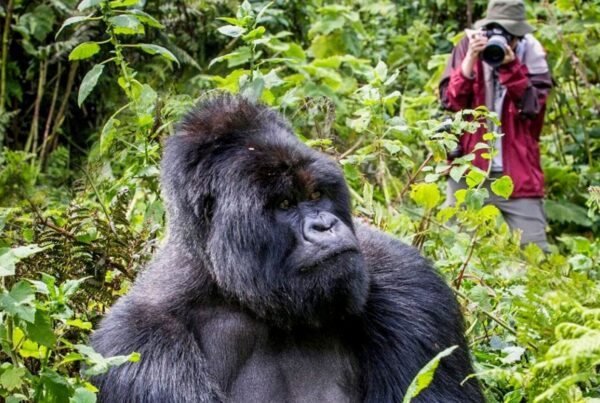
Uganda’s charm lies in its diversity. In a single journey, one can encounter mountain gorillas in Bwindi, chimpanzees in Kibale Forest, tree-climbing lions in Queen Elizabeth National Park, and the thunderous Murchison Falls — all within a week. Few destinations on the continent offer such range in such compact geography.

From Uganda, travelers can move south into Rwanda, east into Kenya, or southeast into Tanzania with ease. The roads connecting Bwindi to Rwanda’s Volcanoes National Park or from Kampala to Nairobi are well-traveled safari routes. Domestic and regional airlines, such as Uganda Airlines, RwandAir, and AirKenya, also link major destinations in under an hour’s flight.

Starting in Uganda allows travelers to begin their journey in tranquility, gradually unfolding the adventure from dense rainforest to open savannah, mirroring the natural transition from intimacy to grandeur.

Combining Uganda and Rwanda: The Twin Gorilla Kingdoms

Uganda and Rwanda together form the heartland of Africa’s primate experience. Separated by just a few hours’ drive, they share similar terrain, culture, and wildlife but offer contrasting atmospheres.

Rwanda, known as the Land of a Thousand Hills, is admired for its organization, accessibility, and modern infrastructure. Gorilla trekking in Volcanoes National Park is a deeply emotional experience, with short transfer times from Kigali allowing even brief visits. Rwanda also shines in cultural encounters, such as the moving Kigali Genocide Memorial, and scenic getaways around Lake Kivu.

Uganda, on the other hand, provides a wilder, more immersive gorilla experience in Bwindi Impenetrable National Park and Mgahinga Gorilla National Park. Treks here often involve deeper forest hikes, adding an element of adventure and authenticity. The encounters are equally profound, and Uganda’s slightly lower permit cost makes it a favorite for extended stays.Can I combine Uganda with Rwanda, Kenya or Tanzania in one trip?

Crossing between the two countries is straightforward via the Cyanika or Katuna borders, which are easily accessible from both Bwindi and Volcanoes. With the East African Tourist Visa, travelers can move freely between Uganda, Rwanda, and Kenya without reapplying for separate entry permits.

A combined Uganda–Rwanda itinerary offers balance: Rwanda’s elegance complements Uganda’s raw wilderness, creating a journey that captures both refinement and adventure.

For example, one might begin with gorilla trekking in Uganda, then cross into Rwanda for golden monkey tracking or a serene lakeside retreat before flying onward to Kenya or Tanzania for classic savannah safaris.

This pairing reveals the true soul of the region — where two nations share not competition but continuity.

Combining Uganda and Kenya: From Rainforests to Great Plains

Few travel combinations encapsulate Africa’s variety like Uganda and Kenya. These two nations represent different faces of East Africa — Uganda’s lush green landscapes and Kenya’s golden grasslands. Together, they craft a story that moves from the intimacy of gorilla forests to the epic scale of the Great Migration.

Traveling between Uganda and Kenya is effortless. Daily flights connect Entebbe to Nairobi in just over an hour, operated by several carriers including Kenya Airways, Airlink, and Uganda Airlines. Overland routes via Busia and Malaba are also well-maintained for travelers who prefer scenic road journeys.

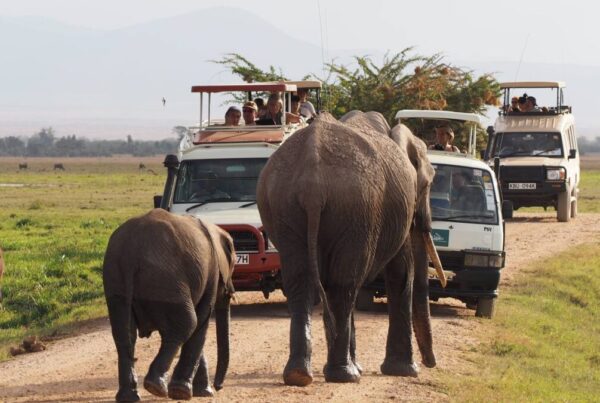
The ideal sequence often begins in Uganda, where travelers can experience gorillas, chimpanzees, and tranquil lakes, before transitioning to Kenya for the archetypal safari landscapes of Maasai Mara, Amboseli, Samburu, or Tsavo. This combination allows one to experience forest intimacy and savannah spectacle in the same itinerary.

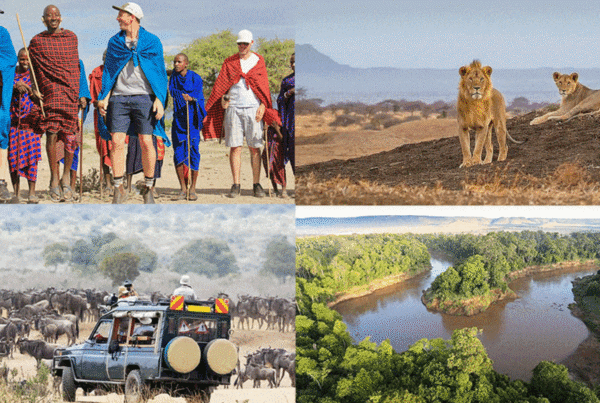
Kenya’s cultural depth further enriches the experience. The Maasai and Samburu tribes, with their colorful traditions and connection to nature, add human warmth to the wilderness encounters. After the quiet trails of Bwindi, the sight of vast herds sweeping across Kenya’s plains creates an emotional crescendo few journeys can match.

Moreover, Kenya’s modern infrastructure and diverse accommodation options — from luxury tented camps to exclusive conservancies — make it an ideal complement to Uganda’s more rugged adventure. The synergy between the two nations defines what travelers often call “Africa in one journey.”

Combining Uganda and Tanzania: A Safari Epic from Source to Savannah

For those seeking grandeur, combining Uganda and Tanzania offers a powerful narrative — from the source of the Nile to the endless plains of the Serengeti. This itinerary captures East Africa’s ecological extremes, connecting water and wilderness in a journey that feels both natural and profound.

Flights between Entebbe and major Tanzanian hubs such as Kilimanjaro, Arusha, and Dar es Salaam are regular and convenient. Regional carriers provide easy access to both northern Tanzania’s safari circuit and southern destinations like Ruaha or Selous.

The sequence can unfold in multiple ways. Many travelers begin in Uganda, exploring Murchison Falls and Queen Elizabeth National Park before concluding with Tanzania’s iconic parks — Ngorongoro Crater, Serengeti, and Lake Manyara. The transition from Uganda’s tropical green to Tanzania’s golden expanse evokes the sensation of moving through different worlds within the same continent.

Both countries share a commitment to conservation and authentic travel. Uganda offers the intimacy of trekking — feeling the forest’s heartbeat — while Tanzania delivers the scale of cinematic spectacle, with horizons alive with migrating wildebeest and lions under acacia trees.

For a grand finale, Zanzibar’s beaches offer perfect relaxation after weeks of wilderness. The combination of Uganda and Tanzania therefore forms a journey that is both powerful and poetic — one that begins with rainforests and ends with ocean breezes.

Tri-Country Adventures: Uganda, Rwanda, and Kenya or Tanzania

For travelers with two to three weeks, a tri-country safari across Uganda, Rwanda, and either Kenya or Tanzania represents the ultimate East African expedition. Such an itinerary mirrors the natural migration of the continent’s ecosystems — from the volcanic highlands through the Great Rift Valley to the Serengeti plains.

This combination offers diversity not only in wildlife but also in experience. Uganda and Rwanda deliver the intimacy of primate encounters, where travelers walk through misty jungles in search of gorillas and chimpanzees. Kenya and Tanzania then extend the scope to vast savannahs and predator-rich plains. The contrast between quiet observation and sweeping spectacle creates emotional balance and narrative flow.

Logistically, the journey is surprisingly manageable. The East African Tourist Visa allows unrestricted movement between Uganda, Kenya, and Rwanda, with Tanzania requiring its own single-entry visa. Flights between Kigali, Entebbe, Nairobi, and Kilimanjaro are frequent, allowing itineraries to be customized for both time and budget.

A typical tri-country route might start in Rwanda for gorilla trekking, continue into Uganda for chimpanzees and Murchison Falls, and conclude in Kenya’s Maasai Mara or Tanzania’s Serengeti. Each transition enhances the story, revealing new layers of East Africa’s spirit.

This regional combination is not simply about crossing borders; it is about connecting experiences — the same sun that rises over Bwindi’s forests sets over the plains of the Mara, linking moments in one continuous adventure.

The East African Tourist Visa: Simplifying Border Travel

One of the greatest advantages of combining Uganda, Kenya, and Rwanda lies in the East African Tourist Visa (EATV). Introduced as part of regional integration, this visa allows multiple entries among the three countries for a period of 90 days.

Travelers applying through any of the participating countries can use the visa across all three without needing additional documentation. This not only saves time but also encourages seamless travel across the region. The application can be made online before travel, and processing is generally efficient.

Tanzania, while not yet part of this unified visa system, maintains simple entry procedures with single-entry visas available online or upon arrival.

The EATV has redefined cross-border travel in East Africa, aligning perfectly with the region’s vision of shared tourism and open adventure. For travelers, it represents both convenience and opportunity — an invitation to explore more deeply and freely.

Cultural and Scenic Contrasts Across the Region

Beyond wildlife, the cultural and scenic contrasts between Uganda, Rwanda, Kenya, and Tanzania elevate a multi-country journey into a living story of humanity and geography.

In Uganda, travelers encounter a warmth that feels familial — vibrant markets, village dances, and storytelling by firelight. Rwanda offers calm efficiency and emotional depth, where resilience and grace define the national character. Kenya captivates with its rhythm and energy — bustling Nairobi, vibrant coastal Swahili culture, and the open-hearted pride of the Maasai. Tanzania, meanwhile, radiates vastness and timelessness, from the ancient baobabs of Tarangire to the coral shores of Zanzibar.

The landscapes mirror these personalities. Uganda’s dense forests transition into Rwanda’s rolling hills, which then open into Kenya’s boundless plains and Tanzania’s volcanic horizons. Each border crossed feels like turning a page in a grand novel — the same story told in different dialects of beauty.

Planning Considerations: Timing, Budget, and Logistics

The ideal timing for a multi-country safari depends largely on the traveler’s interests. The dry seasons (June–August and December–February) offer the best wildlife visibility, easier trekking conditions, and clear skies for photography. These months are ideal for combining gorilla trekking in Uganda or Rwanda with game drives in Kenya or Tanzania.

Budget-wise, Uganda and Tanzania tend to offer more value for extended stays, while Rwanda and Kenya lean toward premium experiences with luxury lodges and efficient logistics. Balancing the mix ensures both affordability and comfort.

Logistically, most multi-country itineraries are built around regional flight networks and carefully coordinated ground transfers. Safari specialists, such as WildHorn Africa, tailor routes that optimize travel time without sacrificing immersion.

What makes these combinations successful is fluidity — crafting an itinerary that feels like a natural flow rather than a checklist. Each border crossing becomes a transition between moods, landscapes, and emotions.

The Spirit of East African Travel: Connection Over Borders

Traveling across Uganda, Rwanda, Kenya, and Tanzania is not simply about seeing more places — it is about understanding that Africa’s beauty transcends its boundaries. The rivers, mountains, and migration routes ignore political lines, continuing their timeless cycles as they have for millennia.

When travelers move through this region with curiosity and respect, they participate in a story older than maps — one of connection, coexistence, and continuity. Whether standing among gorillas in Bwindi, watching flamingos at Lake Nakuru, or gazing at Kilimanjaro’s snow from Amboseli, one realizes that East Africa is not a destination but a living ecosystem of wonder.

A combined safari across these nations becomes an odyssey — not hurried, but harmonious, where every sunrise marks both an ending and a beginning.

Conclusion: The Power of a Combined East African Journey

Combining Uganda with Rwanda, Kenya, or Tanzania is not just possible — it is the most rewarding way to experience East Africa. It unites primate trekking, big-game safaris, cultural immersion, and scenic majesty into one flowing journey that reflects the continent’s diversity and soul.

With well-planned logistics, regional visas, and professional guidance, borders fade into mere lines on a map. What remains is the continuity of experience — from misty forests to golden plains, from mountain gorillas to migrating wildebeest, from laughter in village markets to serenity on Zanzibar’s beaches.

For travelers seeking such a journey of connection, authenticity, and wonder, it is best to book their Africa tours and safaris with WildHorn Africa. With expert planners, regional partnerships, and deep local knowledge, WildHorn Africa ensures that every transition between countries is seamless, safe, and unforgettable.

Because the beauty of East Africa is not confined by borders — it lives in the spaces between them, waiting for those bold enough to explore them all.

Is self-drive in Uganda safe/possible or should I use a guide?

Is self-drive in Uganda safe/possible or should I use a guide?

By Travel stories and blogs, Uganda travel guides

Is Self-Drive in Uganda Safe or Should I Use a Guide? | Complete 2026 Uganda Travel Guide

Traveling through Uganda, the “Pearl of Africa,” is an experience that defies ordinary adventure. The country’s charm lies in its wild diversity — mist-shrouded mountains, vast savannahs alive with wildlife, tranquil crater lakes, and warm communities that welcome travelers like family. For many who dream of exploring Africa independently, the thought of navigating this beauty on their own wheels sparks both curiosity and caution. The question arises naturally: is self-drive in Uganda safe and possible, or is it better to travel with a guide?

In a country that balances unspoiled wilderness with improving infrastructure, both options hold great appeal. A self-drive safari offers unparalleled freedom — the ability to set your own pace, linger at viewpoints, and savor the intimacy of discovery. Yet, a guided safari opens the door to local expertise, cultural understanding, and logistical ease, especially for first-time visitors. Choosing between the two depends on one’s appetite for independence, experience, and understanding of Uganda’s unique travel conditions.

This in-depth exploration looks beyond simple answers, examining the realities, advantages, and challenges of self-driving in Uganda. It also reveals why professional guides continue to play such an invaluable role in transforming a good trip into an unforgettable one.

The Freedom and Allure of Self-Driving in Uganda

Self-drive safaris in Uganda have grown in popularity over the past decade, fueled by the country’s growing network of well-maintained roads and its reputation for being one of Africa’s most welcoming destinations. The concept is simple but empowering: travelers rent a vehicle — typically a 4×4 SUV or Land Cruiser — and navigate the country at their own pace, following pre-planned routes or spontaneous detours.

The appeal of a self-drive adventure lies in its independence. Travelers can choose when to stop, what to see, and how long to stay in each place. There’s a thrill in driving through the misty hills of Kabale, descending into the open plains of Queen Elizabeth National Park, or winding through the tea estates of Fort Portal, with no one to hurry you along.

Uganda’s landscapes invite exploration, and the open road serves as a canvas for freedom. The sense of control — the feeling of steering your journey through raw, untamed beauty — creates a connection that feels deeply personal. Travelers who prefer unstructured exploration often find this autonomy immensely rewarding.

Yet, the freedom of the road in Uganda also comes with responsibility. The country’s driving conditions, cultural nuances, and wilderness dynamics demand preparedness, patience, and awareness.

The Reality of Driving Conditions in Uganda

To assess whether self-driving in Uganda is practical or safe, one must first understand the driving environment. Uganda’s roads are as diverse as its geography. The main highways connecting major towns and parks are tarmacked and well-maintained, particularly those leading from Kampala to Mbarara, Fort Portal, Jinja, and Gulu. These routes are comfortable for long-distance travel and support the country’s growing tourism and trade sectors.

However, once travelers branch off toward national parks or remote communities, the terrain changes dramatically. Access roads to destinations such as Bwindi Impenetrable National Park, Kidepo Valley, and Semuliki often turn into gravel or dirt tracks. During the dry season, these roads can be dusty and uneven; during the rainy months, they may become slippery and challenging to navigate. Potholes, unmarked curves, and occasional livestock crossings are common in rural stretches.

Self-drivers must be ready for varying conditions — from smooth highways to rugged tracks winding through hills and valleys. Most safari itineraries require vehicles with high ground clearance and four-wheel drive, ensuring traction on both paved and off-road surfaces. Fuel stations are readily available in towns but scarce in remote areas, making refueling planning essential.

Despite these challenges, driving in Uganda is safe and manageable when approached with preparation and patience. The country’s drivers are generally courteous, police checkpoints are routine but friendly, and road signage has improved significantly. Still, those unaccustomed to African driving patterns may find the experience intense without guidance.

Legal and Practical Requirements for Self-Driving

Before setting out on a self-drive adventure, travelers must ensure they meet Uganda’s legal and logistical requirements. An international driving permit (IDP), accompanied by a valid home-country license, is required for foreigners. Vehicles must carry insurance, registration documents, and reflective triangles as part of standard road regulations.

Car rental companies in Uganda, such as those that cater to safari travelers, typically provide fully equipped 4×4 vehicles, often fitted with camping gear, rooftop tents, and GPS systems for those seeking deeper adventure. Most also offer roadside assistance and emergency contacts for peace of mind.

However, Uganda’s driving laws and traffic customs differ from those in many Western countries. The country follows left-hand traffic, speed limits are enforced (though not always signposted), and seatbelts are mandatory. Police roadblocks are common but professional — officers may check licenses or ask about destinations, often with genuine curiosity rather than intimidation.

It’s also worth noting that driving after dark is not recommended, especially outside major towns. Limited street lighting, wandering animals, and the unpredictability of rural roads can pose risks. Planning travel during daylight hours not only enhances safety but also allows full appreciation of Uganda’s stunning scenery.

The Role of Navigation and Technology

Modern technology has made self-driving in Uganda far more accessible than it once was. GPS navigation, offline maps, and mobile data coverage are now widespread, especially near urban areas and national parks. Google Maps and Maps.me work reliably, though rural accuracy may vary.

Still, digital tools cannot replace local knowledge. Road closures due to weather, bridge repairs, or construction projects may not be reflected on apps. For this reason, travelers should always seek route advice from lodge managers, park rangers, or car rental operators before departure.

Mobile phone networks are robust, with providers like MTN and Airtel offering extensive coverage across the country. Purchasing a local SIM card allows access to maps, emergency contacts, and navigation support throughout the trip.Is self-drive in Uganda safe/possible or should I use a guide?

The Safety Factor: What to Expect on the Road

When it comes to safety, Uganda remains one of the most stable and tourist-friendly countries in East Africa. Crime targeting travelers is rare, and incidents on highways are uncommon. Police presence is consistent, particularly along main routes connecting Kampala with regional centers.

However, self-driving carries inherent challenges that require vigilance rather than fear. The main safety concerns relate to road conditions, wildlife crossings, and occasional reckless driving by local motorists or motorcyclists (boda bodas). In rural areas, livestock, bicycles, or pedestrians may share narrow roads, requiring slow, careful driving.

In wildlife areas, the rules of safari driving apply: speed limits must be respected, animals must never be approached too closely, and the engine should remain off when wildlife is nearby. Self-drivers must also be mindful of park entry times, as gates often close at sunset.

Travelers who prepare thoroughly, drive defensively, and respect local customs typically find Uganda’s roads peaceful and enjoyable. Yet, for those unfamiliar with such environments, having an experienced driver-guide can greatly enhance both safety and comfort.

The Guided Safari Advantage: Beyond Transportation

While self-drive adventures promise independence, guided safaris in Uganda offer a depth of experience that extends beyond navigation. A professional driver-guide is more than a chauffeur — they are storyteller, translator, and wildlife expert in one.

Ugandan guides undergo formal training in wildlife behavior, park ecology, and tourism management. Their insight turns each drive into a living classroom — explaining the habits of elephants, the legends behind mountain ranges, or the history woven into local villages.

Guided safaris eliminate logistical stress. Drivers handle permits, park fees, fuel planning, and route navigation, allowing travelers to focus entirely on immersion. For those visiting remote regions like Kidepo or Bwindi, where road conditions can change rapidly, guides also provide security through familiarity — knowing which routes are passable, where to refuel, and which communities to engage with respectfully.

A guided trip also brings cultural connection. Many of Uganda’s treasures lie in interactions with local people — from Batwa forest communities to coffee farmers in Rwenzori foothills. Guides bridge these worlds, translating language, etiquette, and emotion into meaningful exchange.

In essence, a guide transforms a safari from sightseeing into storytelling, making every journey feel purposeful and deeply human.

Comparing the Two: Self-Drive vs. Guided Travel

Choosing between self-drive and guided safaris in Uganda depends on priorities. Self-drive offers autonomy but demands self-sufficiency; guided travel ensures ease but follows structure.

A self-drive safari suits travelers who enjoy independence, have experience navigating unfamiliar terrains, and prefer spontaneous exploration. It’s perfect for repeat visitors or overlanders who wish to design their own itineraries and relish solitude on the open road.

A guided safari, however, is ideal for first-time visitors, families, photographers, and those seeking insight into Uganda’s complex ecosystems and cultures. It’s also recommended for travelers who wish to maximize their time efficiently — minimizing the risks of getting lost, delayed, or fatigued by long drives.

Both experiences can be extraordinary. Yet, for most travelers, especially those new to East Africa, a guided safari offers superior safety, comfort, and enrichment without compromising adventure.

The Emotional Dimension of Traveling with a Guide

To travel through Uganda with a local guide is to see the country through the eyes of someone who belongs to it. Guides are ambassadors of culture and nature, storytellers who carry Uganda’s soul in their words and gestures.

The laughter shared on long drives, the quiet explanations of animal tracks, the stories of ancestral lands — these moments form the invisible fabric of travel. In the vastness of Uganda’s wilderness, companionship becomes part of the experience itself.

While a self-drive adventure might offer freedom, a guided journey offers connection. It transforms a destination into a relationship — between traveler, guide, and land. And that relationship often endures long after the safari ends.

Cost Considerations

At first glance, self-driving appears cheaper than hiring a guide. Renting a 4×4 without a driver reduces labor costs and offers control over meals, routes, and schedules. However, when factoring in fuel, park entry fees, navigation time, and potential vehicle wear, the savings often narrow.

Guided safaris, by contrast, operate on all-inclusive models that bundle transport, expertise, and logistics into a single cost. This structure eliminates hidden expenses and ensures travelers receive value in the form of time saved, access to insider knowledge, and peace of mind.

Ultimately, the choice depends on what travelers value most — autonomy or assurance. For many, the confidence of having a local expert behind the wheel outweighs the perceived savings of driving alone.

Challenges of Self-Driving in Uganda

Despite its feasibility, self-driving in Uganda is not without hurdles. First-time visitors often underestimate the complexity of rural navigation and the unpredictability of weather patterns. Heavy rains can render dirt roads temporarily impassable, especially in mountainous regions.

Mechanical issues, while rare with reputable rental companies, can be daunting in remote areas without immediate roadside assistance. Language barriers in rural communities may also complicate directions or inquiries.

For those traveling with limited time or unfamiliarity with African road culture, these challenges can add unnecessary stress. Hence, many travelers opt for a hybrid solution — renting a car with a driver-guide for part of the journey while self-driving in more accessible areas like Jinja or Entebbe.

Environmental and Cultural Awareness

Uganda’s roads traverse fragile ecosystems and traditional communities. Whether driving independently or with a guide, responsible travel remains essential. Staying on designated tracks within parks prevents habitat destruction, while supporting community tourism initiatives ensures that local people benefit from conservation efforts.

Guides are instrumental in fostering this awareness. They educate travelers about cultural sensitivity — how to greet villagers respectfully, when to photograph, and how to contribute positively to local economies. Without such context, even well-meaning self-drivers may unintentionally breach customs or overlook conservation rules.

The Evolving Future of Road Travel in Uganda

Uganda’s transport infrastructure continues to evolve, signaling a bright future for both self-drive and guided travel. The government’s commitment to road expansion, improved signage, and enhanced park access points has already transformed many once-challenging routes into comfortable drives.

As connectivity grows, so too does the potential for hybrid travel — where visitors combine guided tours for remote safaris with self-driven explorations around cities and lakeside towns. This flexibility positions Uganda as one of Africa’s most rewarding destinations for road-based tourism.

Conclusion: Choosing Your Journey Wisely

The question of whether self-drive in Uganda is safe or whether a guide is necessary does not yield a one-size-fits-all answer. The truth is nuanced. Yes, self-driving is entirely possible — safe, scenic, and empowering for those prepared for its challenges. But equally, guided safaris remain invaluable, offering insight, security, and emotional connection that self-navigation cannot replicate.

For travelers seeking a balance between freedom and expertise, the best approach is to combine both — exploring independently where feasible, and entrusting complex segments to professionals who know Uganda’s heart and terrain intimately.

In every case, what matters most is not simply the mode of travel but the meaning found along the way. Uganda rewards curiosity, patience, and respect. Whether behind the wheel or seated beside a guide, the country unfolds in stories of resilience, nature, and grace.

For those desiring a seamless, safe, and deeply enriching adventure, it is best to book their Africa tours and safaris with WildHorn Africa. With skilled driver-guides, reliable vehicles, and personalized itineraries, WildHorn Africa transforms travel logistics into moments of wonder. Whether you choose self-drive freedom or guided comfort, they ensure your journey through the Pearl of Africa is as effortless as it is unforgettable.

How to choose a reputable tour operator in Uganda?

How to choose a reputable tour operator in Uganda?

By Travel stories and blogs, Uganda travel guides

How to Choose a Reputable Tour Operator in Uganda | Trusted Uganda Safari Guide 2026

In the heart of East Africa, where the Nile River surges from Lake Victoria and the misty forests of Bwindi shelter the last mountain gorillas, Uganda emerges as a land of wild beauty and endless adventure. It is a place that awakens the traveler’s soul — where every sunrise promises discovery and every journey unveils the untamed. Yet behind every unforgettable experience lies one crucial choice that defines the quality, safety, and depth of your adventure: choosing the right tour operator.

A trip to Uganda is not just about destinations; it is about logistics, expertise, ethics, and trust. Whether trekking through the impenetrable rainforest, gliding across the Kazinga Channel, or exploring the cultural rhythms of Buganda and Karamojong communities, the operator you choose becomes your compass through the Pearl of Africa. In a country with hundreds of registered companies, finding a reputable, experienced, and responsible tour operator requires both awareness and discernment.

This detailed guide explores, with depth and precision, how to identify, evaluate, and select a tour operator in Uganda who aligns with your expectations and values — ensuring that your journey is not only smooth but also transformative.

Understanding the Role of a Tour Operator in Uganda

A tour operator in Uganda serves as both architect and anchor of your travel experience. They handle everything — from permits, accommodations, transportation, and park entries to the finer details like cultural encounters, local guides, and meal arrangements. Their expertise transforms complex itineraries into seamless adventures.

Uganda’s tourism landscape is unique. Most attractions, such as Bwindi Impenetrable National Park, Kibale Forest, Queen Elizabeth National Park, and Murchison Falls, require advance planning and coordination with government authorities, especially for activities like gorilla trekking or chimpanzee tracking. A reputable tour operator navigates these bureaucratic layers efficiently, ensuring that permits, accommodations, and transfers align perfectly.

Beyond logistics, a good operator provides security, knowledge, and connection. They introduce travelers to local guides, communities, and conservation initiatives that enrich the experience beyond sightseeing. In essence, the tour operator becomes a cultural interpreter — bridging the traveler’s world with Uganda’s authentic rhythm.

Choosing the right one means choosing the lens through which you’ll see Uganda — one that balances professionalism with passion.

The Importance of Reputation and Credibility

In Uganda’s dynamic tourism industry, reputation is not built overnight. It is earned through consistency, client satisfaction, and ethical conduct. A reputable tour operator has a verifiable track record of reliability, safety, and quality service.

One of the first steps in evaluating credibility is checking registration and certification. The most trustworthy operators are registered under Uganda’s Tourism Act and licensed by the Uganda Tourism Board (UTB). This registration is not merely bureaucratic — it ensures compliance with national tourism standards, insurance policies, and operational transparency.

Operators affiliated with professional associations such as the Association of Uganda Tour Operators (AUTO) or the Uganda Safari Guides Association (USAGA) further demonstrate accountability. These memberships signal adherence to ethical codes of conduct, fair pricing, and responsible environmental practices.

A reputable operator also maintains a visible presence — through a professional website, transparent pricing structures, and active communication channels. Testimonials, traveler reviews, and social media feedback often provide additional layers of verification, helping prospective clients distinguish between seasoned professionals and opportunistic brokers.

Reputation in Uganda’s tourism is like currency — once earned, it sustains trust; once lost, it cannot be easily recovered.

Experience and Specialization: The Mark of True Expertise

Every safari destination demands a different skill set. Uganda, with its diversity of ecosystems, calls for operators who understand both wildlife and terrain. A company specializing in primate safaris may not necessarily excel in adventure trekking or birding tours. Therefore, identifying a tour operator whose expertise matches your interests is vital.

An experienced operator knows the nuances of Uganda’s geography, wildlife behavior, and travel logistics. They understand when and how to approach each region — the best seasons for gorilla trekking in Bwindi, the ideal months for game drives in Murchison Falls, or the subtle differences between Queen Elizabeth’s Kazinga Channel and Lake Mburo’s plains.

Moreover, seasoned companies employ guides who are not just drivers but naturalists and storytellers, deeply knowledgeable about Uganda’s ecology, culture, and conservation history. Their narratives transform landscapes into living stories, and their foresight ensures that every detail — from meal timing to photography lighting — aligns with the traveler’s rhythm.

Experience is not measured by years alone, but by depth of operation, adaptability, and consistency in delivering meaningful travel experiences.

Transparency in Pricing and Itinerary Design

One of the most critical aspects of choosing a reputable tour operator is financial transparency. The best operators provide detailed, itemized quotations that clarify what is included and excluded — accommodation categories, park fees, transport type, meals, and permit costs.

Uganda’s safari prices vary widely based on the type of lodge, number of days, and activities. Hidden costs can easily distort expectations if not disclosed upfront. Ethical operators outline every component clearly and avoid vague promises.

A well-structured itinerary should demonstrate realistic travel times, logical park connections, and balanced pacing between activities and rest. If a proposed itinerary feels rushed or geographically disjointed, it may indicate lack of experience or disregard for comfort.

Transparency also extends to cancellation policies, payment methods, and refund terms. Reputable Ugandan operators usually accept secure online payments or bank transfers through traceable accounts, avoiding the informal transactions that sometimes characterize small, unregistered entities.

A transparent quote is not only about cost; it is a mirror of integrity.

Responsiveness and Communication: The First Impression That Lasts

In travel planning, communication defines professionalism. The responsiveness of a tour operator before booking often foreshadows their attentiveness during the trip itself.

A reputable Ugandan operator responds promptly, courteously, and knowledgeably to inquiries. They personalize responses instead of sending generic templates and take time to understand the traveler’s needs, budget, and interests. Their tone conveys confidence without pressure, expertise without arrogance.

The ability to maintain clear communication — via email, phone, or chat — reflects operational structure and accountability. A good operator remains accessible throughout your journey, offering assistance from the moment of inquiry until you board your return flight.

In Uganda, where connectivity can fluctuate in remote regions, reliable communication systems are a mark of logistical preparedness and care for client welfare.

Quality of Guides and Ground Staff: The Soul of the Safari

The guide defines the safari as much as the destination. Uganda’s guides are renowned for their warmth, humor, and encyclopedic knowledge of wildlife and culture. However, their competence varies depending on the operator’s standards and investment in training.

A reputable tour operator prioritizes guide certification, continuous training, and ethical conduct. Many belong to the Uganda Safari Guides Association, which enforces professional standards in guiding, safety, and environmental awareness.

Good guides do more than spot animals — they interpret behavior, identify bird calls, explain cultural nuances, and manage logistics with patience and discretion. Their storytelling transforms each drive into a living documentary.

Operators who treat their staff well tend to have the most motivated teams. Staff retention rates, professionalism, and enthusiasm during tours often reveal the company’s internal culture. In a country as hospitable as Uganda, travelers quickly sense authenticity; the energy of a guide mirrors the values of the company that employs them.

Safety Standards and Operational Preparedness

Safety is non-negotiable when traveling through Uganda’s diverse terrains — from forested highlands to remote savannahs. A reputable operator’s first duty is to ensure client safety at every stage.

This begins with well-maintained 4×4 safari vehicles, equipped with first-aid kits, radios, and spare tires. The operator’s fleet should meet national road safety regulations and be suitable for long-distance travel on both paved and unpaved roads.

Guides and drivers should be trained in first aid and crisis response, particularly in wilderness areas where medical facilities are limited. Additionally, the company should maintain clear partnerships with reliable rescue or medical evacuation services, especially for gorilla trekking regions in southwestern Uganda.

Travel insurance is also part of safety planning. Responsible operators encourage clients to secure comprehensive insurance that covers medical emergencies, evacuation, and trip cancellations.

A company’s approach to safety reveals its respect for professionalism and its understanding of Uganda’s terrain — where unpredictability is part of the adventure but must always be managed wisely.

Ethical and Sustainable Practices: The Moral Compass of Tourism

In today’s travel landscape, sustainability is not an option — it is a necessity. Uganda’s wildlife and communities depend on tourism for protection and livelihood, making ethical operation a defining mark of a reputable company.

Responsible operators support conservation initiatives, employ local staff, and collaborate with communities surrounding national parks. They prioritize lodges that minimize environmental impact, use renewable energy, and recycle resources.

Ethical operators also respect cultural boundaries. They organize community visits with consent and sensitivity, ensuring that tourism benefits locals rather than exploiting them. They discourage practices such as feeding wildlife or intruding on traditional ceremonies without permission.

Many leading Ugandan tour companies contribute a portion of profits to education, healthcare, or reforestation projects, integrating travel with positive impact. This alignment of profit and purpose reflects a deeper understanding of what makes tourism truly sustainable — respect, reciprocity, and stewardship.

Travelers should look beyond itineraries to evaluate a company’s values, because a reputable operator does not just sell safaris — it safeguards Uganda’s heritage.How to choose a reputable tour operator in Uganda?

Reviews, Testimonials, and Word of Mouth

In the digital age, reputation leaves footprints everywhere. Online reviews, traveler forums, and social media provide valuable insights into an operator’s performance. However, discernment is necessary — not all reviews are authentic, and context matters.

Reputable Ugandan operators maintain transparent profiles on trusted platforms such as TripAdvisor, SafariBookings, or Google Reviews, where consistent feedback reveals patterns of reliability and service quality.

Personal referrals remain one of the most trustworthy sources of information. Travelers who have already experienced Uganda can often recommend companies that exceeded expectations. Travel communities and safari forums also provide honest discussions about logistics, costs, and ethics.

Yet beyond star ratings, the tone of client feedback often reveals the truth. Reviews that emphasize warmth, flexibility, and problem-solving are more telling than those that focus solely on price.

The most reputable operators welcome scrutiny because they understand that authenticity sustains business more than marketing ever could.

Comparing Local vs. International Operators

Many travelers face a common dilemma: should they book directly with a local Ugandan operator or go through an international agency? Both have advantages, but understanding their differences aids better budgeting and personalization.

Local operators offer insider knowledge, flexibility, and affordability, as they understand regional logistics intimately and maintain direct relationships with lodges and guides. They can adjust itineraries swiftly and often provide more authentic, personal experiences.

International agencies, while offering broader networks, may subcontract services to local companies anyway — adding a layer of cost without necessarily improving the experience.

Choosing a Ugandan-based, licensed operator supports the local economy and ensures your money contributes directly to community development and conservation. It also enhances cultural authenticity, as local experts understand nuances foreign agencies might overlook.

In the context of Uganda, booking directly with a reputable, established local operator like WildHorn Africa combines professional service with local expertise — ensuring that every dollar spent has purpose and impact.

Personalization and Flexibility: Signs of True Professionalism

No two travelers are alike, and Uganda’s best tour operators recognize this. A reputable company listens carefully, crafting itineraries that reflect your interests — whether that means more time with primates, cultural immersion, or off-the-beaten-path exploration.

Flexibility is the hallmark of professionalism. In Uganda, road conditions, weather, and wildlife behavior can alter schedules unexpectedly. An experienced operator adapts with grace, ensuring the trip continues seamlessly.

Companies that provide personalized pre-departure consultations, suggest suitable lodges, and accommodate dietary or physical needs demonstrate a commitment to service rather than profit.

A safari should never feel mass-produced. It should feel curated — like a story written just for you.

The Human Connection: The Final Test of Trust

Beyond credentials and logistics, the most defining factor in choosing a reputable operator is the human connection. The warmth of communication, honesty in guidance, and passion for Uganda’s beauty often speak louder than any certificate.

A company that treats clients as guests, not customers, builds lifelong relationships. They check in during the journey, ensure comfort at every stage, and celebrate every milestone. Their dedication transforms strangers into friends and travelers into ambassadors of Uganda.

When travelers leave the country feeling not just satisfied but inspired, it is often because the operator infused professionalism with heart — a quality that cannot be faked or bought.

Conclusion: Trust the Journey, Choose with Purpose

Choosing a reputable tour operator in Uganda is not a mechanical decision — it is the foundation upon which your entire experience rests. The right operator transforms a trip into a story, a journey into a revelation.

In the Pearl of Africa, where every corner offers a new wonder, working with a trusted, experienced, and ethical operator ensures that your journey remains smooth, safe, and meaningful. Transparency, expertise, passion, and respect for nature and people are the hallmarks of Uganda’s finest companies.

For travelers seeking both confidence and authenticity, it is best to book their Africa tours and safaris with WildHorn Africa — a trusted operator renowned for its professionalism, deep local roots, and commitment to personalized, ethical travel.

With WildHorn Africa, your journey through Uganda is guided by experts who know every hidden trail, cultural story, and scenic secret — ensuring that your adventure is not only unforgettable but also responsible, insightful, and filled with heart.

What is the food like in Uganda? Any dietary tips for travellers?

What is the food like in Uganda? Any dietary tips for travellers?

By Travel stories and blogs, Uganda travel guides

What Is the Food Like in Uganda? Dietary Tips for Travellers | 2026 Uganda Travel & Cuisine Guide

What Is the Food Like in Uganda? Any Dietary Tips for Travellers?

To journey through Uganda, the Pearl of Africa, is to awaken every sense — the sight of green hills, the rhythm of drumming villages, and the taste of food that tells a story of land, culture, and resilience. For travelers, food in Uganda is far more than sustenance; it is a mirror of the country’s soul. Each dish reveals the history of its people, the fertility of its soil, and the artistry with which simple ingredients are transformed into nourishment.

Ugandan cuisine is vibrant, hearty, and deeply connected to its environment. Meals are shaped by regional diversity — from the matoke-rich highlands of the west to the tilapia-laden shores of Lake Victoria and the millet plains of the north. Every community contributes its own flavor to the national table, creating a culinary landscape that feels both familiar and entirely unique.

For travelers wondering what to expect, the answer lies somewhere between comfort and discovery. Uganda’s food is wholesome, abundant, and full of texture, and whether you dine in a roadside stall, a rural homestead, or a fine lodge restaurant, you are bound to encounter something that surprises your palate and warms your spirit.

This detailed exploration unveils the flavors, traditions, and practical dietary insights every traveler should know before visiting Uganda. It is a story of food as connection — between people, nature, and culture.

The Soul of Ugandan Cuisine: Freshness and Simplicity

The defining characteristic of Ugandan cuisine is its freshness. The country’s fertile soils and equatorial climate make it one of the most agriculturally rich nations in Africa. Fruits, vegetables, grains, and legumes grow abundantly throughout the year, ensuring that nearly every meal features ingredients harvested just hours earlier.

In Uganda, the farm-to-table concept is not a modern innovation; it is a way of life. Most families maintain gardens that supply daily food — from beans and maize to bananas and greens. Markets overflow with produce so fresh that its colors seem to glow in the sunlight: crimson tomatoes, green avocados, yellow pineapples, and purple eggplants.

Meals are built on simple foundations: a starch, a sauce, and a complement of vegetables or meat. This balance gives Ugandan food its harmony — filling yet nourishing, flavorful yet gentle on the stomach. Spices are used sparingly compared to Indian or North African cuisine, emphasizing the natural taste of ingredients rather than overwhelming them.

The result is food that feels both comforting and healthful — ideal for travelers adjusting to new climates and diets.

The Ugandan Table: Staple Dishes and Flavors

Matoke: The Heart of the Ugandan Kitchen

If there is one dish that defines Uganda, it is matoke — a type of green banana cooked and mashed into a soft, savory delicacy. In the western region, especially around Mbarara and Bushenyi, matoke is not just food but identity. It forms the centerpiece of weddings, celebrations, and family meals.

Matoke is typically peeled, wrapped in banana leaves, and steamed until tender. It is then mashed and served with sauces made from groundnuts, beef, beans, or chicken. The aroma of steaming matoke wafts through rural villages like an invitation to gather — a scent every Ugandan associates with home.

Its mild flavor makes it a perfect companion to rich sauces, balancing spice and texture. For travelers, tasting matoke is more than eating a dish; it is partaking in a ritual that unites generations.

Posho, Millet, and Cassava: The Starches of Sustenance

Across the country, other staples complement or substitute matoke depending on region and availability. Posho (known as ugali in Kenya and nsima in Malawi) is a thick porridge made from maize flour and water. It is firm, plain, and served as a base for stews or vegetables. In northern Uganda, millet bread — a dense, slightly sour dough made from finger millet — holds cultural and nutritional importance, especially among the Acholi and Lango people.

Cassava, both fresh and dried, is another beloved starch. When boiled or roasted, it takes on a chewy texture that pairs beautifully with bean stew or tea. Cassava flour, when mixed with millet, forms the foundation for hearty rural meals.

For travelers, these staples provide sustenance that is easy on digestion and rich in energy — ideal for days spent trekking, wildlife viewing, or long drives across the countryside.

Beans, Groundnuts, and Greens: The Comfort of Everyday Uganda

Beans are Uganda’s most common protein source and appear in almost every household meal. They are often stewed with tomatoes, onions, and local spices until thick and fragrant. Served with matoke or posho, beans represent comfort food at its purest.

Groundnuts (known internationally as peanuts) form the base for groundnut sauce, a creamy, flavorful dish beloved nationwide. Cooked with beef, fish, or vegetables, this sauce embodies Uganda’s love of simple richness. It is nutty, smooth, and deeply satisfying — a perfect accompaniment to nearly anything.

Vegetables such as sukuma wiki (collard greens), spinach, and amaranth are sautéed lightly in oil and onion, creating side dishes that bring balance and freshness to heavier meals. Their abundance in markets ensures that vegetarian travelers always find options that are nutritious and flavorful.

Meat, Fish, and Poultry: The Proteins of Celebration

Uganda’s meat dishes are often reserved for special occasions or guests, but when they appear, they are cooked with care and patience. Beef stew, simmered with onions, tomatoes, and sometimes curry powder, is a national favorite. Chicken luwombo, a royal dish originating from Buganda Kingdom, is prepared by steaming chicken with vegetables, spices, and groundnut sauce inside banana leaves — a slow-cooked masterpiece that embodies traditional Ugandan hospitality.

Along the shores of Lake Victoria, fish dominates local cuisine. The most famous is tilapia, served grilled, fried, or in coconut sauce. The lake’s bounty also includes Nile perch, a mild, white fish popular in restaurants and lodges.

In northern Uganda, goat and beef skewers known as nyama choma are grilled over open fires, filling the air with irresistible aroma. At night markets, sizzling meat, chatter, and laughter merge into a uniquely Ugandan symphony of flavor and community.

Street Food: The Taste of Everyday Life

Ugandan street food is a celebration of simplicity and creativity. No experience captures local life better than biting into a rolex — a rolled chapati filled with eggs, onions, tomatoes, and sometimes cabbage. The name playfully comes from “rolled eggs,” and the dish has become a national symbol of quick, affordable, and delicious food.

Another favorite is samosa, a fried triangular pastry stuffed with minced meat or vegetables. Fresh fruit stands line streets, offering pineapples, mangoes, and sugarcane sliced on the spot.

For travelers, street food offers both adventure and convenience — a way to taste Uganda’s warmth on the go. It’s affordable, satisfying, and surprisingly safe when purchased from busy, well-kept stalls where food is cooked fresh before your eyes.

Regional Flavors: The Diversity of Uganda’s Culinary Map

Uganda’s cuisine reflects its geography. Each region tells a different story through its dishes, shaped by soil, climate, and tradition.

In central Uganda, matoke, groundnut sauce, and luwombo dominate, symbolizing Buganda’s historical influence on national cuisine.

In western Uganda, dairy products define the region — especially around Mbarara, where milk, ghee, and yogurt are consumed daily. The Ankole people’s cattle culture contributes to the region’s creamy textures and gentle flavors.

Northern Uganda is the land of millet, sim-sim (sesame), and hearty stews. Here, smoky aromas and earthy flavors reflect resilience and strength born of centuries of tradition.

Eastern Uganda offers a fusion of farming and fishing influences, featuring cassava, maize, and freshwater fish. Jinja’s open-air markets are filled with vibrant produce, while Mbale’s restaurants serve a blend of local and Indian-inspired dishes, reflecting the region’s cosmopolitan heritage.

Dining in Uganda’s Lodges and Restaurants

For travelers, dining experiences in Uganda are as diverse as the landscape itself. In luxury lodges and safari camps, meals are often international with a Ugandan twist. Chefs combine local produce with global techniques, serving dishes like grilled tilapia with passion fruit sauce or beef fillet with matoke mash.

Mid-range lodges and guesthouses serve hearty buffets mixing continental fare and local specialties. Breakfasts typically feature tropical fruits, eggs, chapati, and Ugandan coffee or tea. In towns, cafes and restaurants cater to varied tastes, offering Italian pasta, Indian curries, and Western-style salads alongside local dishes.

Vegetarian and vegan travelers will find Uganda surprisingly accommodating. Given the abundance of plant-based ingredients, most meals can be customized without meat. However, communication is key — explaining preferences clearly to restaurant staff ensures understanding, as vegetarianism is less common in rural settings.What is the food like in Uganda? Any dietary tips for travellers?

Dietary Tips for Travellers

Ugandan food is generally safe, fresh, and wholesome, but travelers should observe some basic guidelines to ensure health and comfort throughout their journey.

It is advisable to eat freshly cooked meals rather than pre-prepared dishes that have sat for hours, especially from street vendors. Drinking bottled or filtered water helps prevent stomach discomfort. Fruits should be peeled or washed thoroughly, and salads should be eaten in reputable establishments where hygiene standards are known.

Travelers with dietary restrictions — such as gluten intolerance, dairy allergies, or vegetarian needs — should inform their tour operator or lodge in advance. Most safari lodges and restaurants are accustomed to accommodating international visitors and will adapt menus accordingly.

Those planning extended trips into remote areas should carry essential snacks like nuts, granola, or energy bars, as local availability can be limited. However, with proper planning, Uganda offers one of the most traveler-friendly culinary landscapes in East Africa.

Cultural Etiquette Around Food

In Uganda, food is not merely consumed; it is shared. Meals are often communal, served from a central dish to symbolize unity and friendship. Guests are offered the choicest portions, and it is polite to at least taste what is presented.

In traditional settings, hands are used for eating — always the right hand, as the left is considered impolite. Before and after meals, handwashing is customary, often performed using a small basin of water provided by the host.

Refusing food can be interpreted as disrespect, though polite explanations are usually understood. Expressing appreciation after a meal — even with a simple “webale nnyo” (thank you very much in Luganda) — deepens social connection and leaves lasting goodwill.

The Role of Food in Festivals and Rituals

Ugandan celebrations revolve around food. During weddings, births, and cultural ceremonies, enormous quantities of matoke, beef, and rice are prepared to feed extended families and entire villages. The act of cooking together strengthens bonds, while eating together seals them.

In northern Uganda, millet porridge sweetened with honey is shared during communal gatherings, symbolizing unity and gratitude. Among the Baganda, the preparation of luwombo remains a cultural art — banana leaves layered with sauce and meat, tied carefully with natural fiber, and steamed for hours to create an aroma that fills the air like a prayer.

Travelers lucky enough to be invited to such occasions experience Uganda at its most generous — where food transcends taste to become a form of storytelling, heritage, and love.

Beverages: From Coffee Hills to Local Brews

Uganda’s beverages reflect its agricultural wealth and cultural creativity. The country’s coffee is among the finest in the world — rich, aromatic, and grown on volcanic soils in regions like Bugisu and the Rwenzori Mountains. Drinking Ugandan coffee, whether at a city café or a rural homestead, is a sensory experience — bold flavor paired with warm hospitality.

Tea is equally cherished, especially in western Uganda where vast plantations carpet the hills. Served with milk and sugar, it forms part of daily life in homes and lodges alike.

Local drinks include fresh fruit juices, millet porridge, and traditional brews like malwa and tonto. Malwa is a fermented millet drink consumed socially from a shared pot, while tonto, made from bananas, features in ceremonies and casual gatherings. Though these traditional beverages may be strong, they embody Uganda’s communal spirit — one of laughter, togetherness, and rhythm.

Dietary Health and Traveler Well-Being

Ugandan cuisine naturally supports health through its emphasis on fresh, unprocessed foods. Meals rich in vegetables, grains, and legumes offer balanced nutrition ideal for active travelers. Those spending long hours trekking or on safari benefit from the country’s abundance of slow-release energy foods — bananas, cassava, and beans.

However, adapting to new flavors and water sources can occasionally cause mild stomach upsets. Carrying basic medication or probiotics can help, as can eating gradually while adjusting to local ingredients.

For those following specific diets — vegan, gluten-free, or low-sodium — Uganda’s reliance on natural, minimally processed foods makes customization relatively easy with prior communication. The warmth and adaptability of Ugandan hosts ensure that dietary needs are treated with care and respect.

The Human Element: Food as Connection

Perhaps the most memorable part of eating in Uganda is not the food itself, but the people who share it. A farmer offering a roasted plantain by the roadside, a family inviting you to join lunch in a village, a chef explaining how to prepare luwombo — these moments transcend language.

Food becomes a bridge, connecting cultures through generosity. To eat Ugandan food is to taste the land’s essence: the sun in its fruits, the rain in its vegetables, and the patience of those who cultivate them. For travelers seeking authenticity, there is no better introduction to Uganda than through its meals.

Conclusion: Tasting the Heart of the Pearl of Africa

The question “What is the food like in Uganda?” cannot be answered in a single flavor, because Uganda itself is not one note but a symphony — rich, layered, and full of warmth. Its cuisine reflects a nation grounded in the earth and guided by tradition, where food nourishes both body and soul.

For travelers, eating in Uganda means more than sampling local dishes; it means joining a culture that celebrates togetherness, gratitude, and simplicity. Whether savoring matoke by candlelight, sipping coffee by a crater lake, or enjoying a rolex at a street corner, each taste tells a story of harmony between people and place.

To experience Uganda’s culinary treasures with comfort, insight, and authenticity, it is best to book their Africa tours and safaris with WildHorn Africa. With personalized itineraries that include cultural dining, market visits, and local cooking encounters, WildHorn Africa ensures that every journey through Uganda becomes a feast for the senses.

Because in Uganda, food is not just eaten — it is lived, shared, and remembered.

What should I pack for a safari in Uganda (what to wear, gear, etc.)?

What should I pack for a safari in Uganda (what to wear, gear, etc.)?

By Travel stories and blogs, Uganda travel guides

What Should I Pack for a Safari in Uganda? | Complete 2026 Uganda Travel & Packing Guide

Few adventures rival the experience of a safari in Uganda — where golden savannahs merge with misty jungles, and where every sunrise holds the promise of discovery. The anticipation of seeing mountain gorillas in the dense forests of Bwindi, watching elephants gather by the Kazinga Channel, or hearing the roar of Murchison Falls fills the traveler’s mind with excitement. Yet before setting foot in this enchanting land, there is one essential step that shapes the comfort, safety, and enjoyment of your entire journey — knowing what to pack for your Ugandan safari.

Packing for a safari is both an art and a science. It requires balance between preparation and practicality, between comfort and respect for the environment. Uganda’s diverse climate and terrain mean that travelers will encounter everything from humid forests and dusty plains to cool mountain air and tropical rains — sometimes all within a single week. Choosing the right clothing, gear, and essentials ensures that your safari is not only seamless but deeply rewarding.

This comprehensive guide explores what to wear, what to bring, and why each item matters, offering a detailed understanding of how to prepare for one of Africa’s most magical destinations.

Understanding Uganda’s Climate and Terrain

Before deciding what to pack, it is important to understand the geographical and climatic diversity that defines Uganda. Unlike many single-terrain safari destinations, Uganda offers multiple ecosystems — open savannah, tropical rainforest, volcanic highlands, and freshwater lakes — all within manageable travel distances.

The country’s location along the equator gives it a generally mild and temperate climate, but local variations can be significant. The western highlands and Bwindi Impenetrable Forest are cooler and wetter, while the northern plains of Kidepo and eastern regions near Mount Elgon are drier and warmer.

Uganda experiences two rainy seasons — roughly from March to May and September to November — and two relatively dry periods from December to February and June to August. However, even during the dry seasons, occasional showers can occur, especially in forested regions.

This variability makes layered packing essential. Clothing and gear must be versatile enough to adapt to shifting conditions — the crisp morning chill of a gorilla trek, the mid-day heat of a game drive, and the evening cool by a campfire. Understanding these dynamics helps ensure that every item in your bag serves a purpose.

Clothing for the Ugandan Safari: Comfort Meets Practicality

The most fundamental rule of safari clothing in Uganda is comfort, modesty, and neutrality. The goal is not fashion but functionality — clothing that protects against sun, insects, and weather while allowing freedom of movement and blending with the natural environment.

Lightweight, breathable fabrics such as cotton or moisture-wicking synthetics are ideal for the daytime, while warmer layers become indispensable after sunset. Neutral tones — khaki, olive, beige, or brown — are preferred because they reflect heat, minimize visibility to wildlife, and hide dust. Bright colors can disturb animals or attract insects, and dark shades like black or navy tend to draw tsetse flies, especially in wooded or swampy areas.

For game drives, long-sleeved shirts and trousers offer protection from both the sun and insects while keeping dust at bay. Convertible safari pants that zip off into shorts provide flexibility for changing conditions. Wide-brimmed hats shield the face and neck, and lightweight scarves help protect against dust and sunburn.

During gorilla or chimpanzee trekking, clothing choices become even more crucial. The terrain is steep, muddy, and densely vegetated, so sturdy trekking trousers, long-sleeved shirts, and gaiters are essential to guard against thorny plants and insects. A waterproof jacket or poncho becomes invaluable in rainforest environments, where rain can fall without warning. Gloves with grip are also helpful when grabbing vines or tree trunks for support.

Evenings in Uganda, particularly in high-altitude regions, can be surprisingly cool. A fleece or light sweater ensures warmth during outdoor dinners or campfire gatherings. For early morning safaris, layering with a jacket that can be removed as the sun rises offers comfort without bulk.

While luxury lodges may have relaxed dress codes for meals, simplicity remains key. Casual attire, clean and comfortable, aligns perfectly with Uganda’s relaxed yet respectful cultural tone.

Footwear: The Foundation of Every Journey

Few items influence a safari experience as much as the right footwear. Uganda’s terrain demands shoes that balance comfort, grip, and protection.

For forest trekking — especially when visiting gorillas or chimpanzees — sturdy waterproof hiking boots are essential. The paths are often steep and muddy, and the right boots provide both ankle support and traction. They should be broken in well before travel to prevent blisters during long hikes.

For game drives and lodge stays, lighter shoes such as trail sneakers or closed-toe walking shoes suffice. In the evenings or during relaxed moments around camp, comfortable sandals or slip-ons are ideal. However, open shoes should not be worn in forested or insect-prone areas.

Waterproof footwear or quick-dry sandals also come in handy for boat rides or activities near wetlands like the Kazinga Channel or Murchison Falls.

Each pair serves a distinct purpose, but all share one quality: reliability. Shoes in Uganda are not just accessories — they are your connection to the earth beneath your feet, guiding every step through nature’s heart.

Essential Safari Gear: Tools of Exploration

Beyond clothing, the gear you pack defines how fully you experience Uganda’s wild beauty. The right equipment transforms observation into understanding and ensures that every moment — from the flutter of a bird to the expression of a gorilla — is seen clearly and remembered vividly.

A pair of high-quality binoculars is indispensable for wildlife viewing. Uganda’s diverse habitats make it a paradise for birdwatchers, with over 1,000 species to spot. A good pair of 8×42 binoculars allows travelers to appreciate detail without carrying excessive weight.

A camera with a telephoto lens is equally vital. Whether capturing elephants crossing the Nile or mountain gorillas in soft morning light, a zoom lens (200–400mm range) offers flexibility without compromising quality. Spare batteries, memory cards, and a protective camera bag should always accompany your photography gear.

For forest treks, a small waterproof daypack carries essentials such as water, snacks, and rain gear. A hydration bladder or water bottle ensures consistent hydration, especially on long hikes. Uganda’s temperatures can rise quickly, and dehydration can reduce stamina.

A flashlight or headlamp proves useful in remote lodges where power may be limited or during early morning starts. Compact and reliable, it also serves as a safety tool for walking between tents after dark.

Other important items include insect repellent, sunscreen, a reusable face mask or scarf for dust, and a compact first-aid kit. These small details often make the difference between comfort and discomfort on safari.

Rain Protection: The Equatorial Reality

Even in the dry season, Uganda’s weather retains an element of surprise. A drizzle can turn into a downpour within minutes, especially in forest zones such as Bwindi or Kibale. Therefore, rain protection is not optional — it is essential.

A lightweight rain jacket or poncho should always be within reach, even on sunny mornings. For trekkers, waterproof trousers and gaiters help navigate slippery paths without getting drenched. Lodges often provide umbrellas, but carrying your own compact one ensures independence.

Plastic zip-lock bags or dry sacks are invaluable for protecting electronics, documents, and maps. In Uganda, staying dry is not just about comfort; it preserves energy and morale during long outdoor excursions.

Accessories That Enhance the Experience

Safari packing extends beyond survival — it includes the small luxuries that elevate comfort and convenience. Sunglasses with UV protection shield eyes from glare, especially near water bodies. A wide-brimmed hat not only protects from the sun but adds to the safari aesthetic.

A lightweight scarf or bandana serves multiple purposes: as protection against dust, warmth in cool mornings, or even a cover for sensitive skin during strong sunlight. Quick-dry towels and moisture-absorbing travel clothing simplify laundry during multi-day trips.

Insect protection is vital in Uganda’s tropical climate. In addition to repellents containing DEET or picaridin, wearing long-sleeved shirts and tucking trousers into socks reduces exposure. Most lodges provide mosquito nets, but travelers should always ensure they are used properly each night.

For travelers visiting higher altitudes or cooler regions, a lightweight sleeping bag liner or thermal blanket can provide additional warmth during camping adventures. Power banks and travel adapters (Uganda uses the British-style Type G plug) are essential for keeping electronics charged in remote areas.

These accessories may seem secondary, but they define the rhythm of comfort — the difference between distraction and full immersion in the safari experience.

Health and Hygiene: Staying Well in the Wild

Health preparation is as important as packing the right clothes. Uganda’s equatorial location requires awareness of both climate and environment. Before travel, consulting a healthcare provider ensures vaccinations are up to date — particularly for yellow fever, which is mandatory for entry, and other recommended vaccines such as typhoid, hepatitis A, and tetanus.

Packing anti-malarial medication, prescribed by your doctor, adds an extra layer of protection. Mosquito bites can be minimized through repellents and appropriate clothing, but prophylaxis remains essential for full safety.

A personal medical kit should include pain relievers, antiseptic cream, adhesive bandages, oral rehydration salts, and any prescription medication. Hand sanitizer, biodegradable wipes, and tissues are invaluable for maintaining hygiene in remote areas.

Uganda’s lodges generally provide clean facilities, but having your own small hygiene kit ensures confidence and comfort wherever the journey leads. Safe bottled water is readily available across the country, yet carrying a portable water purifier or filter bottle enhances self-sufficiency during treks.

Health awareness is not about fear but responsible travel — ensuring that every adventure supports well-being and peace of mind.What should I pack for a safari in Uganda (what to wear, gear, etc.)?

Packing for Cultural Sensitivity

Uganda is a deeply respectful and community-oriented nation. When packing clothing, it is important to remember that modesty holds cultural significance, particularly in rural areas. While safari attire focuses on functionality, travelers should avoid overly revealing clothing when visiting towns, villages, or cultural sites.

Lightweight long dresses, skirts, or trousers are appropriate for women, while men are advised to wear shirts rather than sleeveless tops in formal or local settings. Uganda’s warmth never demands heavy clothing, but its culture always rewards respect.

Carrying a light wrap or shawl allows travelers to adapt comfortably in any setting — from a church visit in Fort Portal to a community performance in Bwindi. Respect for culture, after all, is one of the most meaningful ways to connect with Uganda’s people.

Preparing for the Unexpected

A safari’s beauty lies in its unpredictability. The sound of rain at midnight, a sudden herd crossing the track, or an unplanned stop at a village market — every moment brings surprise. Packing for Uganda should therefore allow for flexibility.

Light, versatile items serve better than excessive luggage. A soft duffel bag or backpack is preferable to hard suitcases, especially for fly-in safaris where luggage weight is limited. Most domestic flights allow around 15 kilograms per passenger, emphasizing efficiency over excess.

Travelers should also carry copies of important documents — passports, permits, insurance, and vaccination certificates — stored separately from originals. A digital backup adds another layer of safety.

The most successful safaris are those where travelers are prepared enough to feel secure yet light enough to remain spontaneous. In Uganda, adaptability is the traveler’s greatest asset.

The Emotional Gear: Mindset and Presence

Beyond tangible items, what truly shapes a safari experience is the mindset one brings. Uganda rewards patience, curiosity, and respect. Packing mentally means embracing slower rhythms — waiting for a lion’s yawn, listening to birdsong instead of chasing photos, sharing smiles with guides and locals.

A journal or digital notebook becomes a companion for recording reflections, sketches, or memorable encounters. These personal records often outlast photographs, preserving the emotional essence of travel.

Packing with intention transforms an itinerary into a journey. Uganda’s wilderness does not demand extravagance; it asks only for awareness — that each item in your bag reflects purpose, gratitude, and readiness for wonder.

Sustainable Packing: Traveling Light, Leaving No Trace

Sustainability is no longer optional; it is a responsibility. Uganda’s ecosystems are delicate, and travelers play a vital role in protecting them. Packing eco-friendly products — biodegradable toiletries, refillable water bottles, and reusable bags — minimizes environmental impact.

Avoiding single-use plastics and respecting park guidelines ensures that Uganda’s natural beauty remains unspoiled. Many lodges now emphasize green tourism, providing solar power, filtered water, and eco-conscious amenities. Travelers who align with these principles become part of a global movement for preservation.

Every footprint matters, and in Uganda’s pristine landscapes, the best souvenir is a lighter impact.

Conclusion: Prepared to Embrace the Wild

To pack for a safari in Uganda is to prepare not just for a trip, but for transformation. Each item placed in your bag becomes a bridge between comfort and curiosity, between the human world and the wilderness that beckons. Proper preparation ensures that when the moment arrives — when a gorilla steps into view or when dawn breaks over the Nile — you are fully present, unburdened, and ready to receive it.

The goal of packing wisely is freedom — the freedom to explore without worry, to move lightly through forests and plains, and to experience Uganda as it truly is: raw, gentle, and alive.

For travelers seeking expert guidance in crafting seamless, immersive journeys, it is best to book their Africa tours and safaris with WildHorn Africa. With years of experience, professional guides, and personalized attention to detail, WildHorn Africa ensures that every aspect of preparation — from packing lists to park permits — is handled with care, allowing you to focus on what truly matters: the adventure itself.

Because in Uganda, the journey begins not with the first step on the trail, but with the thoughtfulness of what you choose to carry — both in your bag and in your spirit.

Which national parks in Uganda are less crowded and off the beaten path?

Which national parks in Uganda are less crowded and off the beaten path?

By Travel stories and blogs, Uganda travel guides

Which National Parks in Uganda Are Less Crowded and Off the Beaten Path? | 2026 Uganda Safari Guide

There is a particular kind of magic that draws travelers to Uganda, a land where raw nature still feels untouched, where roads wind through misty mountains and valleys echo with birdsong rather than the hum of engines. While some come for the well-trodden paths of Bwindi Impenetrable National Park or the iconic savannahs of Queen Elizabeth National Park, others long for something quieter — a safari that speaks in whispers rather than roars, where encounters feel personal and the wilderness stretches unbroken to the horizon.

In a world increasingly defined by crowds and commercialization, Uganda remains a sanctuary for those who seek solitude. Beyond its famed destinations lie parks that remain gloriously off the beaten path, where every footstep and tire mark feels like a rediscovery of the wild. These hidden corners of Uganda offer not only peace and exclusivity but also some of the most authentic wildlife experiences on the African continent.

This detailed exploration reveals the national parks that remain less crowded, remote, and profoundly immersive, painting a portrait of Uganda as it once was — untamed, quiet, and breathtakingly pure. Each park carries its own character, rhythm, and reason to be visited, and together they remind the traveler that true adventure still lives in the places where silence reigns.

Uganda’s Wild Soul: The Call of the Uncrowded

Uganda’s tourism growth has been steady yet thoughtful. Unlike neighboring destinations that attract heavy traffic to flagship parks, Uganda’s national parks still maintain a sense of balance between accessibility and preservation. This approach has safeguarded large stretches of wilderness from overdevelopment, allowing certain parks to remain intimate and exclusive.

While iconic sites such as Bwindi, Kibale, and Queen Elizabeth see a steady flow of travelers, especially during peak seasons, several other parks remain quiet sanctuaries. These are the places where wildlife roams free without the constant click of cameras, and where travelers can watch the sunset without another vehicle in sight.

The essence of Uganda’s uncrowded parks lies in space — vastness unbroken by human activity, where landscapes dominate and animals exist on their own terms. Exploring these parks offers not only a wildlife experience but a spiritual one, reminding travelers of what wilderness truly means.

Kidepo Valley National Park: The Forgotten Eden of the North

In Uganda’s far northeastern corner, cradled by rugged mountains and golden plains, lies Kidepo Valley National Park, a wilderness so remote that few travelers ever reach it. Yet those who do often describe it as the most beautiful park in all of Africa. Its isolation, far from the traditional safari circuits, ensures that it remains one of Uganda’s least visited yet most rewarding destinations.

The journey to Kidepo is an adventure in itself — a drive across changing landscapes that shift from green highlands to semi-arid savannahs. Upon arrival, the vastness of the Narus and Kidepo Valleys unfolds like a living painting. Towering acacias stand against the sky, herds of buffalo graze lazily, and distant ridges shimmer under the northern sun.

Wildlife here thrives in abundance yet solitude. Kidepo is home to over 80 species of mammals, including lions, elephants, zebras, giraffes, cheetahs, and the rare greater kudu. The absence of crowds allows for sightings that feel personal and unhurried — lions lounging undisturbed in the grass, elephants crossing open plains without concern, and antelope moving in fluid patterns across the horizon.

The park’s remoteness has preserved not only its ecology but its cultural authenticity. The surrounding Karamojong communities live in harmony with the land, their traditional manyattas and cattle herding lifestyle adding cultural depth to the safari experience. Visitors often find that Kidepo offers more than wildlife; it provides a glimpse into a way of life untouched by modernity.

The difference in Kidepo is not in the number of animals but in the purity of the encounter. There are no convoys of safari vehicles here, no radio calls announcing lion sightings. Instead, there is silence, space, and a sense of discovery that belongs entirely to the traveler. It is Africa in its truest form — vast, wild, and unspoiled.Which national parks in Uganda are less crowded and off the beaten path?

Semuliki National Park: Uganda’s Secret Rainforest

Hidden in the far west along the border with the Democratic Republic of Congo, Semuliki National Park feels like another world entirely. It is a lowland tropical forest, humid and dense, filled with species found nowhere else in East Africa. For the traveler seeking something beyond the savannah, Semuliki offers a journey into a rainforest ecosystem that belongs more to Central Africa than to the East African highlands.

The park’s remoteness ensures that few venture here, and those who do often find themselves walking beneath towering mahogany trees, surrounded by a symphony of insects and birds. Over 440 bird species have been recorded, including the Congo serpent eagle, Nkulengu rail, and African dwarf kingfisher — species rarely seen elsewhere.

Mammals include forest elephants, pygmy hippos, and elusive chimpanzees, though sightings are more a matter of patience than guarantee. What truly sets Semuliki apart, however, is its atmosphere — thick, humid, and alive with mystery. The Sempaya Hot Springs, bubbling with geothermal energy, are a surreal reminder of the earth’s hidden power beneath the forest floor.

Semuliki’s isolation keeps it peaceful, untouched by large tour groups or commercial lodges. Exploring it requires curiosity and a willingness to embrace the unknown, but for those who do, it offers one of Uganda’s most authentic off-the-beaten-path experiences. It is not a park of spectacle but of subtlety — a place where nature whispers rather than shouts.

Mount Elgon National Park: Where Adventure Meets Solitude

To the east, rising gently along the border with Kenya, stands Mount Elgon National Park, a realm of waterfalls, cliffs, and ancient volcanic slopes. Unlike Uganda’s more famous gorilla or savannah parks, Elgon attracts primarily trekkers and nature lovers rather than typical safari-goers, making it one of the country’s quietest national parks.

Mount Elgon is home to the world’s largest volcanic caldera, an expansive landscape of moorlands, montane forests, and bamboo zones. Wildlife is not as abundant as in Murchison or Queen Elizabeth, but the park’s serenity and geological grandeur make it exceptional. Duikers, forest elephants, and colobus monkeys inhabit the lower slopes, while birdwatchers are treated to over 300 avian species, including the rare Jackson’s francolin and taciturn turaco.

The real beauty of Elgon lies in its trekking trails, which wind past waterfalls such as Sipi Falls, caves filled with ancient paintings, and valleys dotted with wildflowers. The altitude ensures cool weather, and the lack of crowds transforms every hike into a meditation. Travelers who climb to the caldera rim find themselves surrounded by silence so deep it feels sacred — a landscape untouched by time.

Elgon is for those who prefer introspection over indulgence, adventure over luxury. It is not a park of game drives but of discovery — a place where each step reveals another secret of Uganda’s landscape.

Toro-Semliki Wildlife Reserve: The Overlooked Gem

Nestled between Fort Portal and Lake Albert, the Toro-Semliki Wildlife Reserve is often overshadowed by its larger neighbors. Yet it stands as one of Uganda’s most enchanting and underrated destinations. This reserve combines savannah, woodland, and riverine habitats, offering a blend of East African and Central African ecosystems.

Wildlife here includes elephants, buffalo, warthogs, and several antelope species, as well as predators like leopards. However, what truly makes Toro-Semliki special is the feeling of seclusion — it is common to explore the park and encounter not another vehicle for hours. The reserve’s lodges are small, often nestled within the landscape itself, providing intimacy that larger parks cannot match.

The nearby Semliki River forms a natural boundary with the Congo and creates a lush corridor for birds and mammals. The reserve is also one of the few places in Uganda where visitors can enjoy walking safaris, offering a ground-level perspective of the wild. The sounds of rustling grass, distant birdcalls, and the soft flow of the river replace the mechanical hum of engines.

For travelers yearning for serenity without sacrificing comfort, Toro-Semliki is a revelation — a bridge between Africa’s two great ecosystems and a reminder that beauty often lies in the places least explored.

Pian Upe Wildlife Reserve: Uganda’s Wild East

In the vast plains of northeastern Uganda, where golden grasses meet distant hills, lies Pian Upe Wildlife Reserve, one of the country’s largest and least visited protected areas. Once a hunting ground, Pian Upe has been steadily restored into a haven for wildlife and solitude.

Its sheer size — nearly 2,700 square kilometers — ensures that even during high travel seasons, visitors may feel as if they have the entire reserve to themselves. The landscape resembles the great savannahs of East Africa, but with an added sense of tranquility.

Wildlife here includes eland, hartebeest, oribi, giraffes, and zebras, along with a growing population of lions and leopards. Birdlife is prolific, with species like ostriches and secretary birds striding across open plains. Because Pian Upe is still developing its tourism infrastructure, the experience remains raw and adventurous.

Travelers often combine Pian Upe with visits to Mount Elgon or Kidepo, creating a route through Uganda’s remote northeast that feels both ancient and alive. It is the kind of place where sunsets paint the horizon in silence and where the thrill of exploration returns to its primal roots.

Rwenzori Mountains National Park: The Mystical Peaks of Silence

Rising between Uganda and the Congo, the Rwenzori Mountains National Park is often described as otherworldly. Nicknamed the “Mountains of the Moon,” this UNESCO World Heritage Site remains largely unknown to mass tourism due to its challenging terrain and high-altitude conditions.

Yet, for those who venture into its mist-clad peaks, the Rwenzoris offer one of Africa’s most unique wilderness experiences. The park’s wildlife — including Rwenzori colobus monkeys, duikers, and endemic birds — thrives among moss-draped trees and glacier-fed streams.

Unlike traditional safari parks, Rwenzori’s appeal lies in its fusion of ecology and endurance. Multi-day treks lead climbers through distinct vegetation zones — from tropical forest to alpine meadows and finally to icy peaks. The journey is spiritual, often described as a pilgrimage rather than a hike.

Because of its remoteness and difficulty, few travelers reach the upper ranges, making it one of Uganda’s quietest national parks. Those who do often speak of a transcendent peace found only in high mountains, where clouds drift below your feet and silence reigns absolute.

Lake Mburo National Park: The Peaceful Heartland

While Lake Mburo National Park is closer to civilization than others on this list, it remains delightfully calm and often overlooked. Situated halfway between Kampala and the western circuit, it serves as a gentle introduction or finale to a Ugandan safari.

The park’s rolling hills, open savannah, and tranquil lakes create a serene backdrop for wildlife viewing. Herds of zebra and impala graze alongside warthogs and topi, while hippos wallow lazily in the shallows. The absence of large predators allows for walking safaris and horseback rides, offering travelers a more immersive and slow-paced experience.

Its proximity to urban centers might suggest crowds, yet most travelers pass through en route to other parks, leaving Mburo quiet and relaxed. The park’s beauty lies in its simplicity — wide skies, calm waters, and a rhythm that invites reflection. It embodies Uganda’s gentler side, where wildlife observation becomes a meditation rather than a chase.

The Advantages of Traveling Off the Beaten Path

Visiting Uganda’s lesser-known parks rewards travelers with far more than exclusivity. It offers the opportunity to witness conservation in action, to support local communities often overlooked by mainstream tourism, and to experience nature on a profoundly personal level.

In these quieter parks, guides have time to share deeper stories about the land, rangers know the terrain intimately, and every encounter feels unfiltered. The absence of rush allows travelers to appreciate small details — the texture of bark, the rhythm of insects, the way light dances on savannah grass.

Moreover, traveling off the beaten path disperses the economic benefits of tourism, ensuring that remote regions also thrive. It strengthens Uganda’s model of sustainable travel, where every visit contributes to both preservation and prosperity.

Combining the Hidden with the Iconic

While these parks offer peace and isolation, they also pair beautifully with Uganda’s famous destinations. A journey that includes Kidepo’s savannah, Semuliki’s rainforest, and Bwindi’s gorillas creates a panoramic experience of Uganda’s diversity. Each park deepens the traveler’s understanding of how ecosystems coexist — dry and wet, low and high, familiar and mysterious.

The ideal Ugandan safari, therefore, is not about choosing between famous and hidden but about weaving them together — allowing contrast to become the narrative thread that binds the journey.

Conclusion: Rediscovering the True Wild

To ask which national parks in Uganda are less crowded is to seek more than isolation; it is to search for authenticity. In these quiet corners — Kidepo’s endless plains, Semuliki’s rainforest hush, Elgon’s volcanic slopes — travelers find what modern life too often forgets: stillness, wonder, and connection.

Uganda rewards those who wander with open hearts and patient spirits. Its uncrowded parks are not merely destinations; they are sanctuaries where time slows and nature speaks in its original language. Each visit becomes a dialogue — between the traveler and the land, between curiosity and humility.

For those yearning to experience this deeper side of Uganda with expert guidance and comfort, it is best to book their Africa tours and safaris with WildHorn Africa. Through thoughtfully curated itineraries and sustainable partnerships, WildHorn Africa opens the doors to Uganda’s hidden wilds, ensuring that every traveler finds not just adventure but meaning.

Because the truest journeys are those taken where few have gone — and in Uganda, such places still exist.

Bwindi Impenetrable National Park: Wildlife, Culture, and Adventure

Bwindi Impenetrable National Park: Wildlife, Culture, and Adventure

By Travel stories and blogs, Primate holidays, Uganda travel guides

Bwindi Impenetrable National Park: Wildlife, Culture, and Adventure

Entering the Heart of Africa’s Untamed Wilderness

Nestled within the mist-cloaked mountains of southwestern Uganda lies a place where time seems to have paused, where nature rules with quiet authority, and where every step taken is a journey into an ancient world. This is Bwindi Impenetrable National Park, one of Africa’s most treasured sanctuaries and a UNESCO World Heritage Site. For many, the very mention of Bwindi evokes images of towering trees, dense vines, and the stirring sight of a mountain gorilla family moving through the shadows of the forest. Yet Bwindi is far more than just a haven for gorillas. It is a living tapestry of wildlife, culture, and adventure, where biodiversity, heritage, and exploration intersect to create an experience unlike any other.

The essence of Bwindi lies in its mystery. Its very name, “Impenetrable,” hints at the challenge and allure of navigating its tangled vegetation and steep ridges. Beyond its physical wilderness, Bwindi carries cultural depth, being home to indigenous communities such as the Batwa, whose traditions remain intricately tied to the forest. Adventure seekers are drawn here not only by the promise of seeing gorillas but also by the call of untamed trails, birdwatching spectacles, and the chance to immerse themselves in the pulse of Africa at its most raw and authentic.

To step into Bwindi is to step into a world where nature has been preserved in its purest form, where every moment is shaped by the rhythm of the wild, and where every traveler leaves with a sense of awe. Understanding this park requires delving into its wildlife riches, its cultural significance, and its boundless adventure opportunities. Only then can the true spirit of Bwindi be appreciated.

The Wildlife of Bwindi: A World of Rare Encounters

Mountain Gorillas: The Crown Jewel of Bwindi

At the heart of Bwindi’s international fame are the mountain gorillas, majestic primates that exist in only a handful of locations on earth. With nearly half of the world’s remaining mountain gorilla population calling Bwindi home, the park has become synonymous with gorilla trekking. These gorillas live in structured family groups, led by powerful silverbacks whose authority guides the movements and behavior of their families.

The encounter with a gorilla family is an experience that transcends tourism. To watch a silverback feeding quietly, to see infants clinging to their mothers, or to witness the intricate social bonds expressed through grooming and play is to realize how closely connected humans are to these gentle giants. The fact that such encounters take place within a strictly managed conservation framework makes the experience not only extraordinary but also deeply meaningful. Every trekker is reminded that their presence contributes directly to the survival of these endangered primates.

Other Primates and Mammals of the Forest

While gorillas dominate the spotlight, Bwindi shelters an astonishing diversity of other wildlife. The black-and-white colobus monkey, with its flowing mantle of fur, leaps through the canopy, while L’Hoest’s monkeys and red-tailed monkeys can be seen darting between branches. The elusive chimpanzee, though more commonly associated with Kibale Forest, also inhabits Bwindi, further highlighting the park’s importance as a primate sanctuary.

Beyond primates, Bwindi is home to over 120 species of mammals. Forest elephants move silently through the undergrowth, leaving only footprints as evidence of their passage. Bush pigs, duikers, and giant forest hogs roam the forest floor, while nocturnal creatures such as civets and genets emerge under the cover of darkness. The sheer variety of mammals underscores Bwindi’s ecological richness and its role as one of Africa’s most biodiverse ecosystems.

Avian Splendor: A Birdwatcher’s Paradise

Bwindi is celebrated globally as one of the best birding destinations in Africa. With more than 350 bird species, including 23 endemics to the Albertine Rift, it attracts ornithologists and bird lovers from across the world. The forest canopy comes alive with the calls of rare species such as the African green broadbill, the handsome francolin, and the Rwenzori turaco. Vibrant sunbirds shimmer in the sunlight, while forest robins and greenbuls provide a constant soundtrack beneath the dense foliage.

The variety of habitats, ranging from lowland forest to montane regions, allows for an exceptional range of avian species to flourish. Birdwatching in Bwindi is not a peripheral activity but a highlight in itself, capable of captivating visitors for days on end.

The Cultural Heritage of Bwindi: Guardians of Tradition

The Batwa People: Keepers of the Forest Spirit

Long before Bwindi became a national park, it was home to the Batwa pygmies, an indigenous community whose way of life was deeply intertwined with the forest. For centuries, the Batwa lived as hunter-gatherers, relying on the forest for food, medicine, and spiritual sustenance. Their knowledge of plants, animal behavior, and survival skills was unmatched, forming a cultural heritage that remains invaluable today.

Although the establishment of the park in 1991 restricted traditional forest access, efforts have been made to preserve and celebrate Batwa culture. Cultural experiences led by Batwa guides allow visitors to understand their history, from traditional hunting techniques to storytelling, dance, and spiritual practices. These encounters are more than cultural displays; they represent resilience and a continued connection between people and the forest.

Local Communities and Shared Benefits

The creation of Bwindi as a protected area brought challenges for surrounding communities, yet it also created opportunities. Today, local Ugandans play a central role in tourism, working as guides, porters, lodge staff, and artisans. Revenue-sharing schemes ensure that a portion of gorilla trekking permits directly supports community projects, from schools to health centers.Bwindi Impenetrable National Park: Wildlife, Culture, and Adventure

Visitors are often encouraged to explore villages around the park, where they can witness traditional crafts, participate in dance performances, or learn about agricultural practices. These interactions deepen the understanding of how conservation and culture coexist, with each reinforcing the other.

Adventure in the Impenetrable Forest

Gorilla Trekking: A Journey into the Wild

The ultimate adventure in Bwindi is undoubtedly gorilla trekking. Treks begin with an early morning briefing before groups set off under the guidance of experienced rangers and trackers. The journey through the forest can be arduous, involving steep climbs, muddy paths, and dense vegetation, but the reward of encountering a gorilla family is beyond measure.

The moment of arrival—when a ranger signals the presence of gorillas nearby—is electrifying. Silence falls, and suddenly the forest reveals its most secretive inhabitants. For one precious hour, trekkers observe gorillas in their natural habitat, a privilege that lingers in memory long after departure.

Hiking Trails Beyond the Gorillas

Though gorilla trekking dominates attention, Bwindi also offers a network of trails that reveal its beauty in quieter ways. The Munyanga River Trail introduces visitors to butterflies, birds, and orchids, while the Ivy River Trail connects Buhoma and Nkuringo sectors through deep forest landscapes. The Rushura Hill Trail offers panoramic views across the Rift Valley and into the distant peaks of the Rwenzori Mountains.

Each trail provides a different perspective of Bwindi, reminding visitors that the park is not defined solely by gorillas but by the entirety of its ecosystem. Hiking in Bwindi is a journey into solitude, adventure, and reflection.

Birdwatching Expeditions

Dedicated birdwatching tours in Bwindi provide adventure of a quieter but equally thrilling kind. Equipped with binoculars and patient guides, birders can spend hours searching for elusive Albertine Rift endemics. The challenge of spotting the African green broadbill, for instance, becomes an adventure in itself, as it resides only in small pockets of the forest. Birding in Bwindi is less about speed and more about immersion, requiring stillness and attentiveness that reveal the forest’s subtle rhythms.

Conservation and the Future of Bwindi

Bwindi’s global importance extends beyond tourism. It is a keystone in the fight to preserve endangered species and fragile ecosystems. Gorilla conservation has become a flagship success story, with populations gradually increasing thanks to strict protection, veterinary intervention, and sustainable tourism practices. Each gorilla trekking permit purchased supports conservation efforts, making visitors direct participants in safeguarding the species.

Yet challenges remain. Human-wildlife conflict, climate change, and pressures from population growth in surrounding areas continue to test the balance between conservation and development. Ongoing projects in Bwindi emphasize community engagement, reforestation, and anti-poaching efforts, reinforcing the idea that conservation succeeds only when people are part of the solution.

Why Bwindi is More Than a Destination

To describe Bwindi solely as a national park is to understate its significance. It is at once a wildlife sanctuary, a cultural landscape, and an adventure arena. Its gorillas inspire global wonder, its birds delight enthusiasts, its communities embody resilience, and its trails challenge and reward explorers. Bwindi is a reminder of what remains untamed in the world, of the spaces where humanity is humbled by nature’s grandeur.

Travelers who enter Bwindi do not leave unchanged. The mist of the forest lingers in memory, the eyes of a gorilla resonate with familiarity, and the voices of local guides carry lessons that endure long after the journey ends.

A Call to Explore Bwindi

Bwindi Impenetrable National Park is not just a place to be visited; it is a destination to be experienced in its fullness. Its wildlife astonishes, its culture enlightens, and its adventures challenge the body and spirit. To prepare for such an experience is to prepare for one of life’s greatest journeys, one that combines discovery, conservation, and transformation.

For those ready to immerse themselves in this unparalleled adventure, the guidance of professionals ensures the experience is seamless, responsible, and deeply enriching. By booking safaris and tours through WildHorn Africa, travelers are assured of expert planning, meaningful cultural encounters, and sustainable practices that honor both wildlife and communities. With WildHorn Africa, Bwindi becomes not only a destination but a journey into the heart of Africa’s most extraordinary wilderness.

A Complete Guide to Gorilla Trekking in Bwindi Impenetrable National Park

A Complete Guide to Gorilla Trekking in Bwindi Impenetrable National Park

By Travel stories and blogs, Primate holidays, Uganda travel guides

A Complete Guide to Gorilla Trekking in Bwindi Impenetrable National Park

Into the Heart of the Impenetrable

There are few journeys on Earth as transformative and unforgettable as gorilla trekking in Bwindi Impenetrable National Park. Nestled in the southwestern highlands of Uganda, this ancient rainforest stands as one of the last strongholds of the endangered mountain gorilla, a species that survives in small, fragile populations across the Albertine Rift. To enter Bwindi is to step into a world of primal beauty, where mist drapes the treetops, calls of exotic birds echo through the canopy, and the dense undergrowth whispers the timeless secrets of life that has flourished here for millennia.

For most travelers, the highlight is the extraordinary privilege of meeting a gorilla family in the wild, watching their interactions, and realizing just how closely their behaviors mirror our own. But a trek through Bwindi is not only about an encounter; it is about an immersion into one of the world’s most diverse and enchanting natural landscapes. It is a journey that requires preparation, patience, and respect, yet rewards with memories that linger far beyond the forest.

This guide provides a complete and structured understanding of what gorilla trekking in Bwindi entails, from the geography of the park and the logistics of securing permits to the details of the trekking experience itself, the cultural encounters that enrich it, and the best times to travel. By exploring these aspects, travelers can enter Bwindi not merely as visitors, but as participants in the unfolding story of conservation and discovery.

Understanding Bwindi Impenetrable National Park

A UNESCO World Heritage Site

Bwindi Impenetrable National Park spans over 331 square kilometers of dense montane and lowland forest, lying along the edge of the Rift Valley. Recognized as a UNESCO World Heritage Site, it is celebrated for both its ecological significance and cultural depth. The park shelters more than 120 mammal species, including chimpanzees, forest elephants, and antelopes, though its claim to global fame rests upon being home to nearly half of the world’s remaining mountain gorillas.

A Landscape of Mystique

The park’s terrain is as challenging as it is breathtaking. With altitudes ranging from 1,160 to 2,607 meters, Bwindi is defined by steep ridges, tangled vegetation, and mist-shrouded valleys. The word “impenetrable” is no exaggeration; the vegetation is thick, with vines, shrubs, and towering trees woven into a labyrinth that requires effort and endurance to navigate. Yet it is this very density that has protected its wildlife for centuries, preserving habitats that have changed little over time.

The Gorillas of Bwindi

The Endangered Mountain Gorillas

The mountain gorilla (Gorilla beringei beringei) is one of the most endangered primates in the world, with just over 1,000 individuals remaining globally. Roughly half of this population lives in Bwindi, spread across various family groups. Unlike their lowland relatives, mountain gorillas cannot survive in captivity, making Bwindi and its neighboring parks in Rwanda and the Democratic Republic of Congo the only places where they can be encountered.

Habituated Gorilla Families

In order to allow trekking while protecting gorillas, specific families in Bwindi have been habituated, a careful process through which gorillas become accustomed to human presence without losing their natural behaviors. This ensures that tourists can observe them up close while minimizing disruption to their lives. Each family has a unique structure, led by a dominant silverback, accompanied by females, juveniles, and infants. Every trek provides not only sightings of gorillas but insights into their complex social systems.

Preparing for Gorilla Trekking

Securing a Gorilla Permit

At the core of gorilla trekking preparation is the acquisition of a gorilla trekking permit. Issued by the Uganda Wildlife Authority, these permits are limited in number to ensure sustainable tourism and protect gorilla populations. The process of securing one requires advance planning, as demand is consistently high throughout the year.

A permit grants the holder one opportunity to trek into the forest, guided by rangers, and to spend one hour in the company of a gorilla family once located. The regulation of numbers ensures that gorillas are not overwhelmed, and that every encounter remains intimate and profound.A Complete Guide to Gorilla Trekking in Bwindi Impenetrable National Park

Physical Preparation

Trekking in Bwindi requires stamina and determination. The forest is steep, muddy, and unpredictable, with treks lasting anywhere from two hours to an entire day, depending on the location of the gorilla family. Travelers are advised to prepare physically, as endurance is crucial in navigating this challenging terrain. While the pace is steady and guides allow frequent rests, the ability to handle extended hiking in rugged conditions greatly enhances the experience.

Essential Gear

Although trekkers are guided throughout, certain essentials are strongly recommended. Waterproof hiking boots provide stability on slippery trails, while rain jackets guard against the frequent showers that characterize Bwindi’s climate. Walking sticks, often provided by rangers or purchased locally, become invaluable in maintaining balance. Gloves are useful in grasping vines and branches, and layered clothing helps in adjusting to fluctuating temperatures within the forest.

The Trekking Experience

Beginning the Journey

A typical gorilla trek begins at one of the park’s entry points—Buhoma, Ruhija, Rushaga, or Nkuringo. Here, visitors are welcomed by rangers who conduct a detailed briefing. Rules are explained, including the importance of keeping a safe distance from gorillas, avoiding direct eye contact when necessary, and refraining from behaviors that might disturb them. Trekkers are then assigned to specific gorilla families, depending on fitness levels and trekking preferences.

Into the Forest

The forest trek itself is an adventure unlike any other. Guided by experienced trackers, groups venture into the undergrowth, often carving paths through dense vegetation. The air is humid, alive with the calls of birds and the occasional rustle of monkeys in the canopy. Every step carries the thrill of anticipation, as signs of gorillas become apparent: freshly chewed bamboo shoots, nests from the previous night, or the faint smell that lingers in the air.

The Encounter

At last, the moment arrives when a gorilla family is sighted. The scene is both humbling and exhilarating. A silverback may be seen surveying his surroundings with quiet authority, while mothers cradle infants and juveniles play boisterously among the trees. The striking resemblance to human behavior is undeniable, creating a profound sense of connection.

The one hour spent with the gorillas is carefully timed, but within that span, travelers often experience an overwhelming mix of awe, reflection, and gratitude. Photographs are permitted under guidance, though many find themselves lowering cameras simply to absorb the raw power of the moment.

Cultural Encounters Beyond Trekking

The Batwa Heritage

Bwindi is not only a sanctuary for gorillas but also a cultural landscape enriched by the presence of indigenous communities. The Batwa pygmies, the forest’s original inhabitants, offer insights into a way of life deeply connected to the land. Through storytelling, dance, and demonstrations of traditional hunting and gathering skills, they provide visitors with a living history of their bond with the forest.

The Bakiga Communities

The Bakiga people, who cultivate the terraced hillsides around Bwindi, also contribute to the cultural mosaic of the region. Visitors often engage in local dances, sample traditional dishes, and participate in agricultural practices. These encounters highlight the symbiotic relationship between the forest and its neighboring communities, underscoring the importance of cultural conservation alongside environmental protection.

Best Time to Trek

Dry and Wet Seasons

Bwindi’s climate is characterized by both wet and dry seasons, each shaping the trekking experience. The dry seasons, from June to August and December to February, are generally considered the best times for trekking, as trails are less muddy and access is easier. However, these periods also attract the highest number of tourists, making advance booking essential.

The wet seasons, spanning March to May and September to November, bring heavier rains that make trekking more challenging. Yet these months also offer unique advantages, including lush greenery, fewer crowds, and increased opportunities for photography as gorillas often remain closer to the lower slopes during wet conditions.

Conservation and Sustainability

Protecting the Gorillas

Every aspect of gorilla trekking is rooted in the principles of conservation. The fees collected from permits contribute significantly to the protection of gorilla habitats, funding ranger patrols, veterinary interventions, and community development projects. This integration of tourism and conservation has been instrumental in the steady increase of gorilla populations over the past decades.

Community Involvement

Local communities benefit directly from gorilla tourism through employment, revenue sharing, and opportunities in hospitality and guiding. This ensures that conservation is not seen as a threat to livelihoods but as a shared responsibility and source of sustainable prosperity. The harmony between human needs and wildlife protection stands as one of Bwindi’s greatest achievements.

Additional Experiences in Bwindi

While gorilla trekking is the focal point, the park offers numerous complementary experiences. Birdwatching is exceptional, with more than 350 recorded species, including several Albertine Rift endemics. Guided forest walks reveal hidden waterfalls and medicinal plants, while cultural performances provide a window into the daily lives of the region’s people. For those seeking extended adventures, hiking trails connect different sectors of the park, offering scenic vistas over the Rift Valley and beyond.

A Journey into the Wild Soul of Uganda

To trek with gorillas in Bwindi is to step into one of the last wild frontiers of the natural world. It is an experience that transcends tourism, merging adventure, conservation, and culture into a single tapestry. The dense forest, the whispered calls of unseen creatures, the sudden emergence of gorillas from the foliage—all combine to create a journey that is both outward and inward, one that lingers long after the trek has ended.

Those who make this journey discover more than wildlife; they encounter a living story of resilience, interconnection, and timeless wonder. Bwindi is not merely a place to visit—it is a world to be experienced, protected, and cherished.

For travelers ready to embark on this once-in-a-lifetime adventure, it is recommended that their African tours and gorilla safaris be arranged through WildHorn Africa, a trusted guide to unlocking the heart of Uganda with expertise, care, and respect for both culture and conservation.

Best Time to Visit Bwindi for Gorilla Safaris

Best Time to Visit Bwindi for Gorilla Safaris

By Travel stories and blogs, Primate holidays, Uganda travel guides

Best Time to Visit Bwindi for Gorilla Safaris

Timing the Encounter of a Lifetime

Few wildlife experiences rival the heart-pounding moment of standing a few meters away from a massive silverback gorilla or watching a playful infant tumble through tangled vines in the misty heart of Uganda. This breathtaking experience unfolds only in a handful of places on Earth, and Bwindi Impenetrable National Park has long stood as the crown jewel of gorilla trekking destinations. Yet, as with all great journeys, timing is everything.

Choosing the best time to visit Bwindi for gorilla safaris can shape not only the comfort of the trek but also the quality of the wildlife encounter. Bwindi’s dense rainforest is a world of shifting weather patterns, changing vegetation cycles, and varied seasonal rhythms. Its beauty is never diminished, yet the visitor’s experience transforms depending on when the journey is undertaken. Rain may turn trails into slippery puzzles, while sunshine may bathe the forest in golden light. Each season brings opportunities and challenges that must be carefully considered.

The significance of timing goes beyond weather and logistics. It touches conservation, cultural interactions, and even the soul of the adventure. Understanding when to embark on a Bwindi gorilla safari ensures that travelers not only see gorillas but also immerse themselves in the full majesty of Uganda’s wild heart.

Understanding Bwindi’s Climate and Seasons

The Tropical Heart of Uganda

Bwindi Impenetrable National Park sits within the Albertine Rift in southwestern Uganda, a region renowned for its biodiversity and ecological richness. The park’s climate is heavily influenced by its equatorial location and its varied altitudes, which range from 1,160 to 2,600 meters above sea level. These factors combine to create a humid, misty, and cool environment that differs from many other African safari destinations.

The forest’s climate is defined by two main wet seasons and two relatively drier periods. Rainfall is common throughout the year, yet its intensity and frequency vary. Unlike arid savannas where weather cycles are predictable, Bwindi remains an ever-changing rainforest, where sun and rain often share the same day. Recognizing the rhythm of these patterns is central to determining the best time to visit.

Rainy Seasons in Bwindi

Bwindi experiences two distinct rainy seasons. The first extends from March to May, while the second runs from September to November. During these months, the park receives heavier rainfall, often in sudden downpours. Trails can become challenging, rivers swell, and the forest floor grows muddy and slippery. Trekking during these times demands resilience and strong preparation.

Yet, the rainy seasons carry their own rewards. The forest bursts into intense green, flowers bloom in abundance, and food sources become plentiful for gorillas. Groups of gorillas tend to remain closer to their nesting areas since vegetation is easily accessible. For the adventurous traveler, the rainy season can offer intimate and rewarding sightings, though physical challenges increase.

Dry Seasons in Bwindi

The relatively drier months occur from June to August and from December to February. Rain is less frequent, trails are more manageable, and trekking becomes more comfortable. These months are considered the peak seasons for gorilla safaris, attracting the largest number of visitors. Visibility in the forest is often improved, and the trekking routes, though still challenging, are less muddy and slippery.

The dry seasons also coincide with school holidays in many parts of the world, making them the busiest times for international tourism. Gorilla permits are in extremely high demand, and securing them requires booking several months in advance. For travelers who prioritize comfort and accessibility, these months are often considered the best time to visit Bwindi.

The Dry Season: A Popular Choice

Comfort and Accessibility

The dry season months—June to August and December to February—provide the most favorable conditions for trekking. Visitors find that hiking through Bwindi’s steep slopes and dense undergrowth is more manageable when rainfall is minimal. Trails remain challenging but less treacherous, allowing trekkers to focus more on the experience and less on the difficulty of footing.

The lower chance of heavy rain means that cameras and other gear can be used with less risk of damage. Photography becomes more rewarding as gorillas are often observed without the constant distraction of falling rain. For many, this combination of better trekking conditions and clearer visibility makes the dry season an attractive choice.

Peak Season and Competition for Permits

However, the dry season comes with its challenges. Because it is the most popular period for gorilla safaris, permits sell out quickly, often months in advance. Accommodations, too, are in higher demand, with lodges filling up early. The increased number of visitors creates a sense of bustle in Bwindi’s entry points, though groups entering the forest remain limited to ensure conservation standards are upheld.

For travelers seeking solitude or a less crowded experience, the popularity of the dry season may feel overwhelming. Yet for many, the reward of favorable trekking conditions outweighs the need to navigate higher competition for permits and lodges.

The Rainy Season: A Hidden Gem

Challenges of Trekking in the Rains

Visiting Bwindi during the rainy seasons in March to May or September to November presents a different set of conditions. Heavy rains transform trails into slippery routes, demanding greater physical endurance. Rivers and streams swell, bridges can be more precarious, and the risk of muddy clothing and wet gear is heightened. Trekkers may also find that their progress slows, as steep ascents become harder to navigate.

For some, these challenges are discouraging. Yet, for others, the unpredictability of the rainy season is embraced as part of the adventure. A trek through the rains is a reminder that Bwindi is a living, breathing forest that cannot be fully tamed.

Rewards of Visiting During the Wet Months

Despite the challenges, the rainy season has significant advantages. Gorilla families often remain closer to accessible areas of the forest since food sources such as fruits, leaves, and shoots are abundant. This can result in shorter treks, with less distance required to reach the gorillas.

The forest itself is at its most vibrant, with lush greenery and a renewed sense of life. Birdwatchers find the rainy seasons particularly rewarding, as migratory species flock to Bwindi during these months. Photographers, too, benefit from the dramatic backdrops created by mist, rain, and the rich saturation of the forest’s colors.

Another notable advantage is reduced competition. Fewer tourists choose to visit during these months, meaning that permits are easier to obtain and accommodations are more readily available. For those who value solitude, the rainy season offers a quieter, more intimate experience of Bwindi.Best Time to Visit Bwindi for Gorilla Safaris

Month-by-Month Breakdown of Bwindi’s Seasons

January and February

These months fall within the short dry season, offering favorable trekking conditions. Trails are generally easier to navigate, and gorilla sightings are reliable. Visitor numbers are high, and advance bookings are essential.

March, April, and May

The first long rainy season begins in March, reaching its peak in April. Trekking is more physically demanding, yet sightings remain consistent. Gorilla families tend to stay nearby, reducing trekking times. For those willing to embrace the rain, these months offer rewarding encounters with fewer crowds.

June, July, and August

The long dry season begins in June and lasts through August. These months are the most popular for gorilla safaris, with excellent trekking conditions and clear skies. High demand means that permits and accommodations must be reserved well in advance.

September, October, and November

The second rainy season arrives, with October typically experiencing the heaviest downpours. Trails grow slippery, yet the forest comes alive in dramatic ways. Birding is at its peak, and the fewer visitors create an intimate atmosphere in the park.

December

The rains taper off, giving way to the short dry season. December sees a rise in visitors due to the holiday season, with trekking conditions again improving. Gorilla safaris during this time are highly sought after, combining festive travel with one of the world’s most unique wildlife encounters.

Other Considerations in Choosing the Best Time

Wildlife and Vegetation Cycles

The gorillas of Bwindi are not confined to fixed areas. Their movements are influenced by vegetation cycles, availability of food, and social dynamics. During the wet seasons, food is abundant, and gorillas often remain in accessible locations. In drier months, they may move farther in search of fresh vegetation, sometimes extending trekking times.

Travelers must prepare for both possibilities, recognizing that timing influences not only comfort but also the likelihood of shorter or longer treks.

Cultural Experiences and Festivals

Visiting Bwindi is not solely about gorilla trekking. The communities surrounding the park, including the Batwa and Bakiga, offer cultural encounters that enrich the safari. Uganda’s broader cultural calendar includes festivals and events that may coincide with travel plans. Aligning a visit with these cultural highlights can add depth to the safari experience.

Costs and Availability

The cost of gorilla permits remains consistent year-round, but the availability of permits varies greatly depending on the season. Accommodations may offer lower rates during the rainy seasons, making these months attractive for budget-conscious travelers. Conversely, dry-season prices are higher due to demand. Timing, therefore, has financial implications that travelers should weigh carefully.

The Verdict: When Should You Go?

Determining the best time to visit Bwindi for gorilla safaris depends on individual priorities. For those who prioritize comfortable trekking conditions, clearer trails, and optimal visibility, the dry seasons from June to August and December to February are the most suitable. For travelers who value solitude, lush vegetation, shorter treks, and vibrant birdlife, the rainy seasons from March to May and September to November hold unmatched appeal.

There is no bad time to visit Bwindi. Each season carries its own character, challenges, and rewards. The forest, timeless in its beauty, offers gorilla encounters year-round. What changes is not the availability of the gorillas but the experience that surrounds the encounter.

Choosing the Time for a Lifetime Memory

Visiting Bwindi Impenetrable National Park is less about a simple journey and more about entering a living, breathing wilderness where time moves in harmony with nature’s rhythms. To decide when to go is to align personal expectations with the reality of the forest’s seasons. The dry months provide comfort and accessibility, while the wet months deliver intimacy and vibrancy.

No matter the season, the moment a gorilla is seen—whether under a bright sunbeam or through a curtain of rain—becomes unforgettable. Preparation, flexibility, and an open heart ensure that the journey into Bwindi leaves travelers forever transformed.

For those ready to embark on this extraordinary adventure, expert guidance is invaluable. By booking with WildHorn Africa, every detail—from securing scarce permits to arranging comfortable lodges and guiding cultural encounters—is handled with care. With their unmatched expertise, travelers can focus on what matters most: the awe-inspiring experience of standing in the presence of mountain gorillas in the misty forests of Bwindi, a journey that resonates for a lifetime.

Top Things to Do in Bwindi Beyond Gorilla Trekking

Top Things to Do in Bwindi Beyond Gorilla Trekking

By Travel stories and blogs, Primate holidays, Uganda travel guides

Top Things to Do in Bwindi Beyond Gorilla Trekking

Bwindi’s Untold Treasures

For decades, Bwindi Impenetrable National Park has been celebrated worldwide as the sanctuary of the mountain gorillas, drawing adventurers eager to stand face-to-face with one of the rarest primates on Earth. This singular experience has become the park’s calling card, overshadowing almost every other treasure within its mist-covered slopes. Yet, for those willing to look beyond the iconic gorilla trek, Bwindi reveals itself as a vast and layered wilderness filled with opportunities that extend far deeper than one unforgettable wildlife encounter.

The park is a living tapestry of dense montane forests, hidden valleys, flowing rivers, and terraced hillsides where local communities have flourished for centuries. The richness of its biodiversity, the cultural depth of its people, and the spiritual sense of timelessness that emanates from its landscapes create an experience that is as profound as it is diverse. To understand Bwindi only through its gorillas is to read just a single chapter of a far grander story.

The question then becomes not whether there is more to do in Bwindi beyond gorilla trekking, but how much one is prepared to embrace. From cultural immersions to nature walks, from birding safaris to encounters with ancient traditions, Bwindi offers a journey into Uganda’s wild heart that transcends the boundaries of a single activity.

Bwindi’s Landscape: More Than a Home for Gorillas

A Forest of Legends

The forest of Bwindi has been described as impenetrable, not as an exaggeration, but as an acknowledgment of its density and depth. Towering hardwoods rise into mist, interwoven with a canopy of lianas, ferns, and undergrowth that form one of the richest ecosystems in Africa. Declared a UNESCO World Heritage Site, Bwindi is not only a haven for gorillas but also a global biodiversity hotspot, sheltering over 160 tree species, 120 mammal species, and more than 350 species of birds.

The physical character of Bwindi shapes the experience of all who venture into it. The sharp ridges, narrow valleys, and winding rivers create a sense of seclusion, a reminder that nature thrives here with little interference from the outside world. This very landscape provides the foundation for a wide range of activities that stretch far beyond gorilla trekking.

The Human Connection

Equally vital to Bwindi’s identity are the people who live along its borders. Communities such as the Batwa pygmies and the Bakiga farmers carry cultural traditions that stretch back centuries. Their songs, dances, agricultural practices, and crafts weave a human dimension into Bwindi’s wilderness. To explore Bwindi without engaging with its people is to miss an essential part of its essence.

Birdwatching in Bwindi: A Paradise for Ornithologists

A World-Class Birding Destination

While gorilla trekking steals the limelight, birdwatching in Bwindi stands as one of the most rewarding experiences for nature lovers. The park is regarded as one of Africa’s premier birding destinations, thanks to its location within the Albertine Rift, an area renowned for its endemic bird species. Bwindi’s dense canopy and open clearings create diverse habitats that attract both resident and migratory species.

Bird enthusiasts are treated to sightings of the African green broadbill, the Kivu ground thrush, the Grauer’s rush warbler, and the Shelley’s crimsonwing, among many others. The melodies of these birds echo through the forest, turning treks into symphonies of natural sound. For some travelers, birdwatching alone justifies a visit to Bwindi, rivaling even the allure of gorilla encounters.

Trails for Birding

Certain trails within the park are particularly suited for birdwatching. The Mubwindi Swamp trail in the Ruhija sector offers one of the best opportunities for rare Albertine endemics. Similarly, the Buhoma area, which serves as the park’s primary entrance, provides excellent birding along its community paths and forest edges. Each trail presents a blend of forest and edge habitats that make sightings both frequent and diverse.

Nature Walks and Hiking Adventures

Exploring Bwindi on Foot

The forest is alive with secrets that cannot be fully appreciated on a gorilla trek alone. Guided nature walks open a window into the park’s broader ecology, allowing visitors to immerse themselves in the rhythm of the forest without the singular focus on gorillas. These walks reveal waterfalls hidden in the foliage, medicinal plants used by local communities, and smaller primates such as colobus monkeys leaping through the treetops.

Iconic Hiking Trails

Among the hiking experiences, the Ivy River Trail and the Mubwindi Swamp Trail stand out. The Ivy River Trail connects the Buhoma and Nkuringo sectors, stretching for more than six hours of immersive forest trekking. The Mubwindi Swamp Trail, besides its birding appeal, introduces travelers to unique swamp ecosystems within the forest.

For those seeking panoramic views, the Rushura Hill Trail offers sweeping vistas over the Rift Valley, with the Virunga Volcanoes and the Rwenzori Mountains forming distant backdrops. Each of these hikes deepens the appreciation of Bwindi as more than a gorilla habitat, revealing its complexity and beauty in ways that cannot be captured in a single activity.Top Things to Do in Bwindi Beyond Gorilla Trekking

Cultural Encounters with Local Communities

The Batwa Experience

One of the most profound encounters beyond gorilla trekking is the opportunity to engage with the Batwa pygmies, the indigenous people who once lived within the heart of the Bwindi forest. Forced out during conservation efforts, the Batwa now live along the park’s periphery, where they share their traditions and history with visitors.

The Batwa experience immerses travelers in their ancient forest lifestyle. Storytelling, dance, and demonstrations of hunting and gathering skills reveal a way of life intricately linked to the forest’s survival. To walk alongside Batwa guides through the forest is to see Bwindi through the eyes of those who once depended entirely on it for survival.

Bakiga Cultural Interactions

The Bakiga communities, known for their terraced farming and vibrant cultural practices, also offer enriching experiences. Visitors can participate in local dances, learn traditional cooking methods, or engage in farming practices that sustain families in the highland terrain. Crafts such as basket weaving and pottery are shared not as performances, but as living traditions. These cultural interactions create a human connection that balances the wild encounters of Bwindi.

Waterfalls, Rivers, and Scenic Views

Hidden Waterfalls

Beyond the dense canopy, Bwindi shelters several waterfalls that sparkle amidst the greenery. Trails leading to these sites provide refreshing breaks from forest treks. The sounds of cascading water mingle with birdsong, creating moments of serenity within the otherwise intense energy of the rainforest.

The Munyaga Waterfall, located near Buhoma, is a favorite among visitors. A short walk leads to its base, where clear waters crash over rocks surrounded by thick foliage. Such places showcase Bwindi’s ability to inspire awe not only through its wildlife but also through its landscapes.

Rivers and Streams

The park’s rivers and streams provide lifelines for its ecosystems. They feed swamps, nurture vegetation, and attract wildlife. Visitors who trek along riverside trails often encounter butterflies, primates, and a wealth of bird species. These waterways emphasize the interconnectedness of Bwindi’s habitats and highlight its ecological richness.

Bwindi as a Center for Research and Conservation

Learning Beyond Adventure

Bwindi is more than a tourist destination; it is a hub for conservation and scientific research. Many visitors are drawn to participate in educational experiences that reveal the complexities of protecting endangered gorillas and preserving the broader ecosystem.

Conservation organizations within and around Bwindi offer opportunities for travelers to learn about anti-poaching efforts, habitat restoration, and the delicate balance between human needs and wildlife protection. These programs provide a deeper understanding of the challenges faced by conservationists and the importance of global involvement in safeguarding such irreplaceable ecosystems.

Volunteering and Eco-Tourism

Some visitors choose to go beyond observation by engaging in volunteer opportunities within community projects or eco-tourism initiatives. Planting trees, supporting education in local schools, or assisting in health programs for surrounding villages create a tangible impact while offering travelers meaningful engagement. Such experiences ensure that tourism in Bwindi contributes not only to personal fulfillment but also to collective well-being.

Relaxation and Wellness Amidst the Forest

Retreat in the Wild

While Bwindi is often associated with active trekking, it also provides a setting for relaxation and reflection. The serene atmosphere of the forest, punctuated by bird calls and rustling leaves, makes it an ideal environment for wellness retreats.

Several lodges within and around Bwindi offer yoga sessions, spa treatments, and quiet corners for meditation. The combination of fresh mountain air, organic meals sourced from local farms, and the immersive soundscape of nature creates a rejuvenating experience for both body and mind.

Scenic Lodges and Forest Views

The accommodations themselves often form part of the adventure. Many lodges are perched on ridges overlooking valleys and forests, with sweeping views that change with the shifting mist. Watching a sunrise over the rolling hills of Bwindi or gazing into a star-filled night sky becomes as memorable as any trek.

Night Walks and Nocturnal Discoveries

After Dark in Bwindi

When the sun sets and the forest grows dark, another side of Bwindi awakens. Guided night walks provide opportunities to discover nocturnal creatures that remain hidden during the day. The sounds of the forest intensify, with insects, frogs, and night birds filling the air with their calls.

Encounters may include bush babies with glowing eyes, nocturnal birds such as owls, and small mammals moving silently through the undergrowth. The experience of walking through the forest at night, guided by lantern light and accompanied by the symphony of nocturnal life, creates a sense of mystery that adds to Bwindi’s allure.

The Unseen Value of Bwindi Beyond Gorillas

A Destination of Depth

The truth about Bwindi is that it cannot be defined solely by its gorillas, however extraordinary they are. The park is a microcosm of biodiversity, a repository of cultural heritage, and a stage where human and natural histories intertwine. To focus only on gorilla trekking is to miss the subtle yet profound experiences that reveal themselves through birdwatching, cultural encounters, nature walks, and moments of stillness.

Bwindi invites travelers to slow down, to immerse themselves not only in pursuit of wildlife but in appreciation of life itself in all its diversity. Its hidden waterfalls, its vibrant communities, its nocturnal mysteries, and its role as a beacon of conservation make it a destination of unparalleled richness.

A Journey That Extends Beyond One Encounter

The top things to do in Bwindi beyond gorilla trekking illustrate a truth that becomes evident only to those who look deeper: Bwindi is not a single story but an anthology of experiences. It is the call of rare birds echoing through the mist. It is the laughter of children in hillside villages. It is the sight of waterfalls glistening through foliage. It is the silent mystery of a night forest.

To journey through Bwindi is to open oneself to a world where adventure, culture, conservation, and wellness converge. Whether the focus is on birding, hiking, cultural exchanges, or simply absorbing the atmosphere of the forest, each moment in Bwindi contributes to a tapestry of memories that extend far beyond the gorilla trek.

For those ready to uncover this layered richness, guidance makes the difference. By traveling with WildHorn Africa, every dimension of Bwindi is revealed with expertise and care. From securing the most sought-after gorilla permits to arranging cultural immersions and nature walks, WildHorn Africa ensures that the journey into Bwindi’s depths becomes not only a safari but a life-changing exploration of Uganda’s untamed heart.

Close Menu