
A Serengeti safari is the purest expression of what an African safari was always meant to be. It is not a single wildlife experience, a seasonal attraction, or a checklist of animals, but a journey into one of the last truly functioning ecosystems on Earth. The Serengeti is a landscape governed by natural law rather than human design, where wildlife movements are dictated by rainfall, grass growth, and instinct rather than fences or roads. To step into the Serengeti is to witness nature operating at a scale and complexity that has almost vanished elsewhere in the modern world.
What makes a Serengeti safari exceptional is not only the abundance of wildlife, but the continuity of life systems. Predators hunt freely across open plains, herbivores migrate across hundreds of kilometers, and ecological processes unfold uninterrupted. This is not a park created for tourism; it is a living system that tourism has learned, carefully, to coexist with. As a result, a Serengeti safari offers an experience that is immersive, educational, and profoundly humbling.
Understanding the Serengeti as an Ecosystem, Not a Park
The Serengeti is often spoken of as a destination, but in reality it is an ecosystem spanning northern Tanzania and extending into southern Kenya. At its heart lies Serengeti National Park, a protected area forming the core of this vast biological system. Surrounding it are conservation areas, community lands, and seasonal wildlife corridors that together allow animals to move freely across landscapes.
Unlike smaller reserves where wildlife is artificially contained, the Serengeti functions as a self-regulating system. Grass growth follows rainfall patterns, herbivores respond to fresh grazing, predators follow prey, and scavengers complete the cycle. This interconnectedness is what elevates a Serengeti safari beyond wildlife viewing into ecological immersion.
The Serengeti’s open plains, rocky kopjes, river systems, and woodlands each support different species and behaviors. A safari here is not static; it evolves daily as wildlife responds to subtle environmental changes.
The Great Migration and the Pulse of the Serengeti
The most famous feature of a Serengeti safari is the Great Migration, yet it is also the most misunderstood. Often portrayed as a single dramatic event, the migration is in fact a year-round ecological process involving over a million wildebeest, accompanied by zebra and gazelle.
Migration as a Continuous Cycle
The migration is driven by rainfall and grass regeneration rather than fixed dates. As rains fall in different regions of the ecosystem, herds move instinctively toward fresh grazing. This movement maintains grassland health by preventing overgrazing and stimulating new plant growth.
Predators depend on this movement for survival. Lions, cheetahs, leopards, hyenas, and crocodiles all time breeding and hunting behavior around the migration. A Serengeti safari allows travelers to observe not just movement, but cause and effect within nature.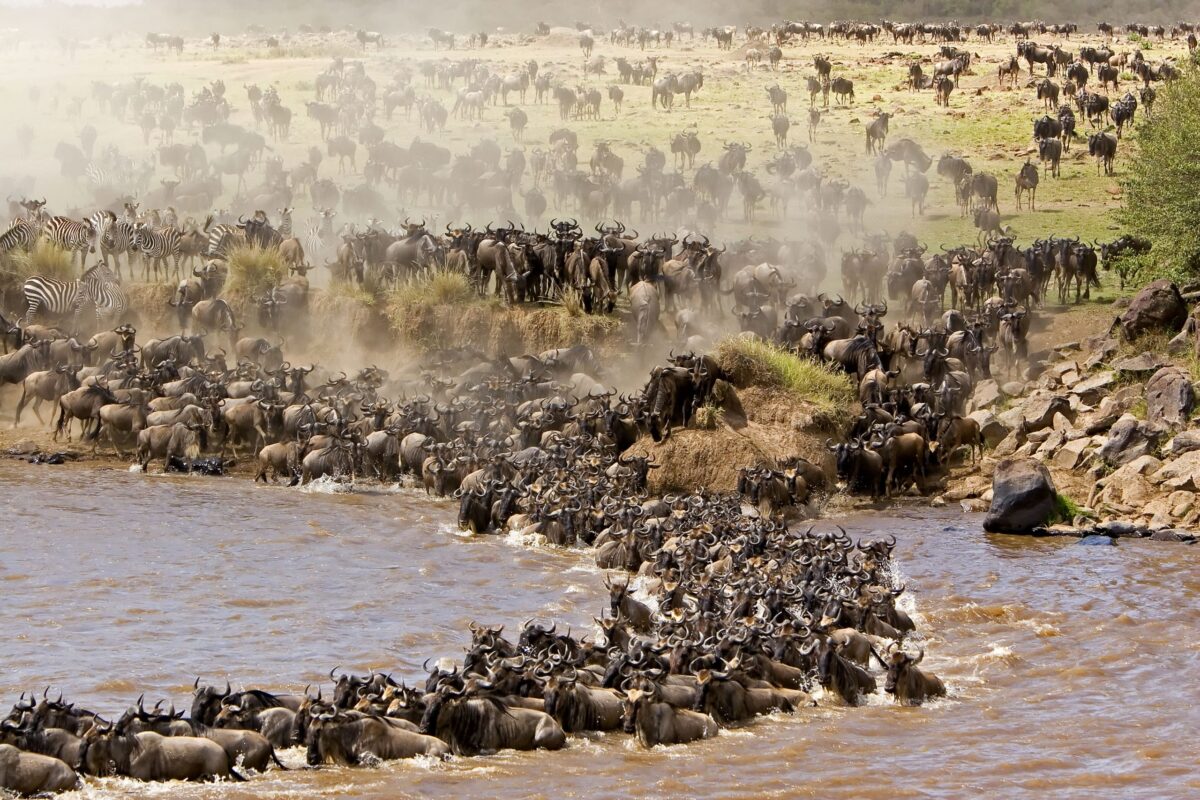
River Crossings and Ecological Drama
River crossings are the most visually dramatic phase of the migration, occurring when herds encounter major rivers. These moments reveal nature’s raw intensity, but they represent only a small fraction of the migration cycle. Calving seasons, predator concentration, and vast herd movements across open plains are equally significant and often less crowded.
Understanding the migration as a system rather than a spectacle transforms a Serengeti safari into an educational experience rooted in ecological literacy.
Predators and the Power Structure of the Serengeti
The Serengeti supports one of the highest concentrations of predators in Africa, making it one of the most important carnivore strongholds on the continent.
Lions and Social Dominance
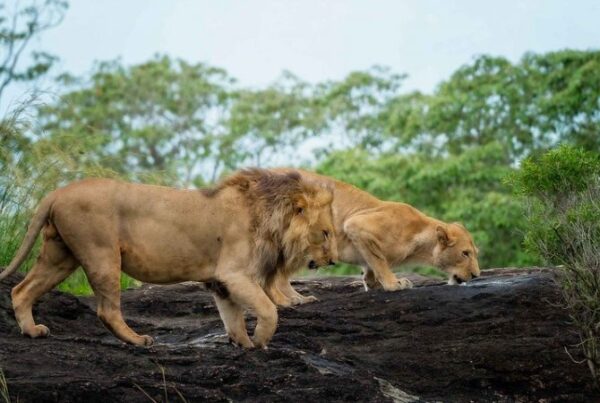
Lions dominate the Serengeti food chain, forming large prides that defend territories across the plains. Their social structure, cooperative hunting strategies, and territorial behavior are best observed in open landscapes where visibility is unobstructed. A Serengeti safari offers rare opportunities to observe lions interacting naturally over extended periods rather than fleeting sightings.
Cheetahs and Open-Plain Hunting
Cheetahs thrive in the Serengeti’s open grasslands, where speed is their primary advantage. Unlike ambush predators, cheetahs rely on daylight visibility and flat terrain. Observing cheetahs on a Serengeti safari reveals the delicate balance between speed, vulnerability, and survival.
Leopards and Woodland Adaptation
Leopards inhabit riverine forests and rocky kopjes, adapting to denser cover where stealth replaces speed. Their elusive nature makes sightings especially rewarding and highlights the Serengeti’s habitat diversity.
Hyenas and the Scavenger Network
Hyenas play a critical role in nutrient recycling and ecosystem balance. Often misunderstood, they are highly intelligent hunters and scavengers whose presence indicates a healthy ecosystem. A Serengeti safari reveals their complex social hierarchy and cooperative behavior.
Herbivores and the Foundation of Life
The Serengeti’s vast herbivore populations form the foundation of the ecosystem. Wildebeest, zebra, gazelle, buffalo, giraffe, and elephant shape vegetation patterns and sustain predator populations.
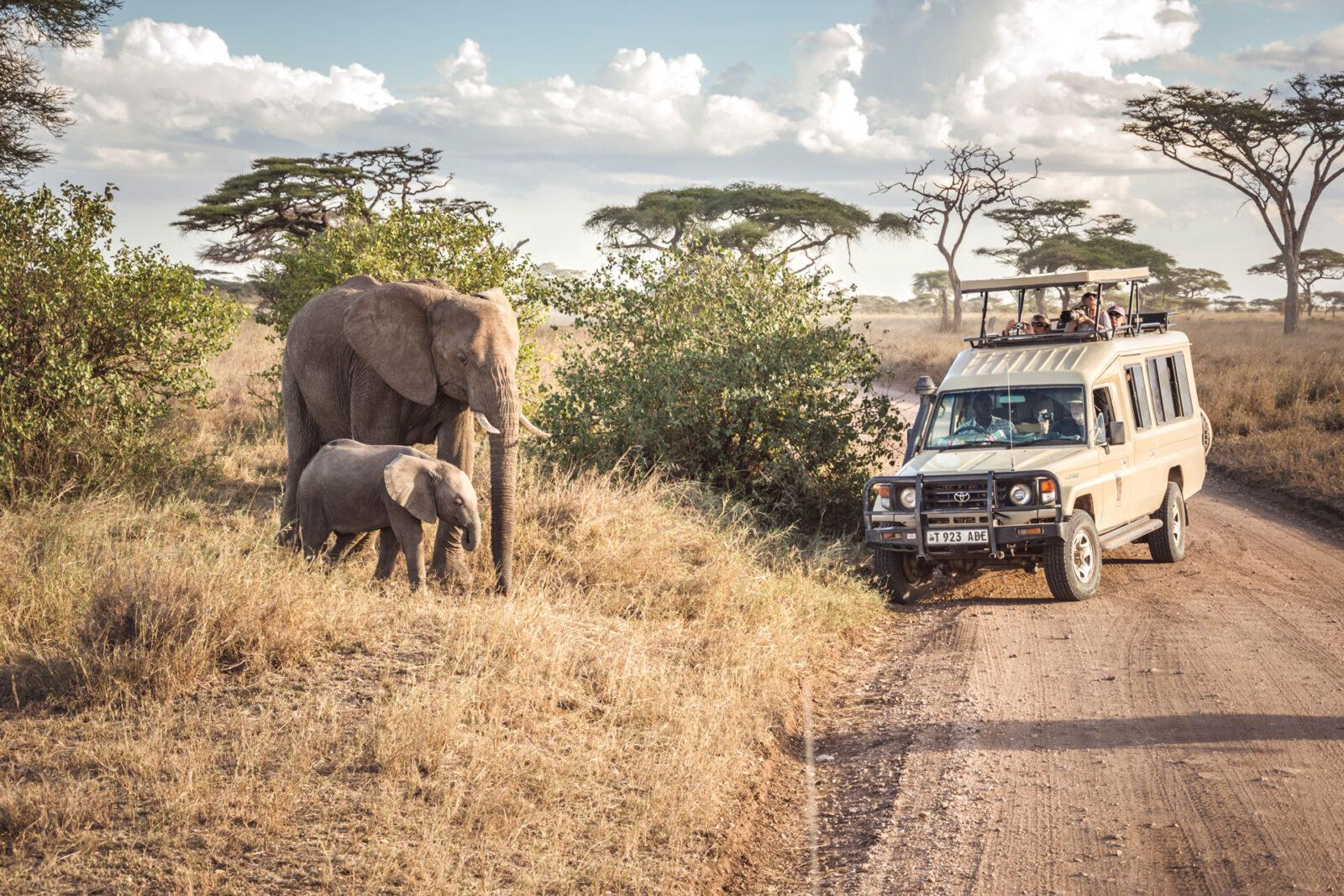
Elephants act as landscape engineers, altering tree cover and creating access to water sources for other species. Buffalo influence grassland composition through grazing pressure. Smaller antelope species occupy ecological niches that reduce competition and increase biodiversity.
A Serengeti safari allows travelers to understand how herbivores drive ecosystem dynamics rather than serving as passive prey.
Kopjes and Micro-Ecosystems
Scattered across the Serengeti plains are granite rock outcrops known as kopjes. These formations create microhabitats that support unique plant and animal communities.
Kopjes serve as lookout points for predators, shelter for reptiles, and breeding sites for birds. Lions often rest on kopjes, using elevation to survey territory. A Serengeti safari that explores kopjes reveals how geology influences wildlife behavior.
Seasonal Variation and the Changing Serengeti
A Serengeti safari changes dramatically with the seasons. Rain transforms dusty plains into lush grasslands, while dry periods concentrate wildlife near water sources.
Dry Season Dynamics
During dry months, visibility increases as vegetation thins. Predators become easier to spot, and wildlife congregates near rivers. These conditions often produce intense predator–prey interactions.
Green Season and Renewal
The green season brings calving, bird migrations, and fewer visitors. While some roads become challenging, the ecological richness of this period offers exceptional photographic and educational opportunities. A Serengeti safari during this time highlights renewal rather than scarcity.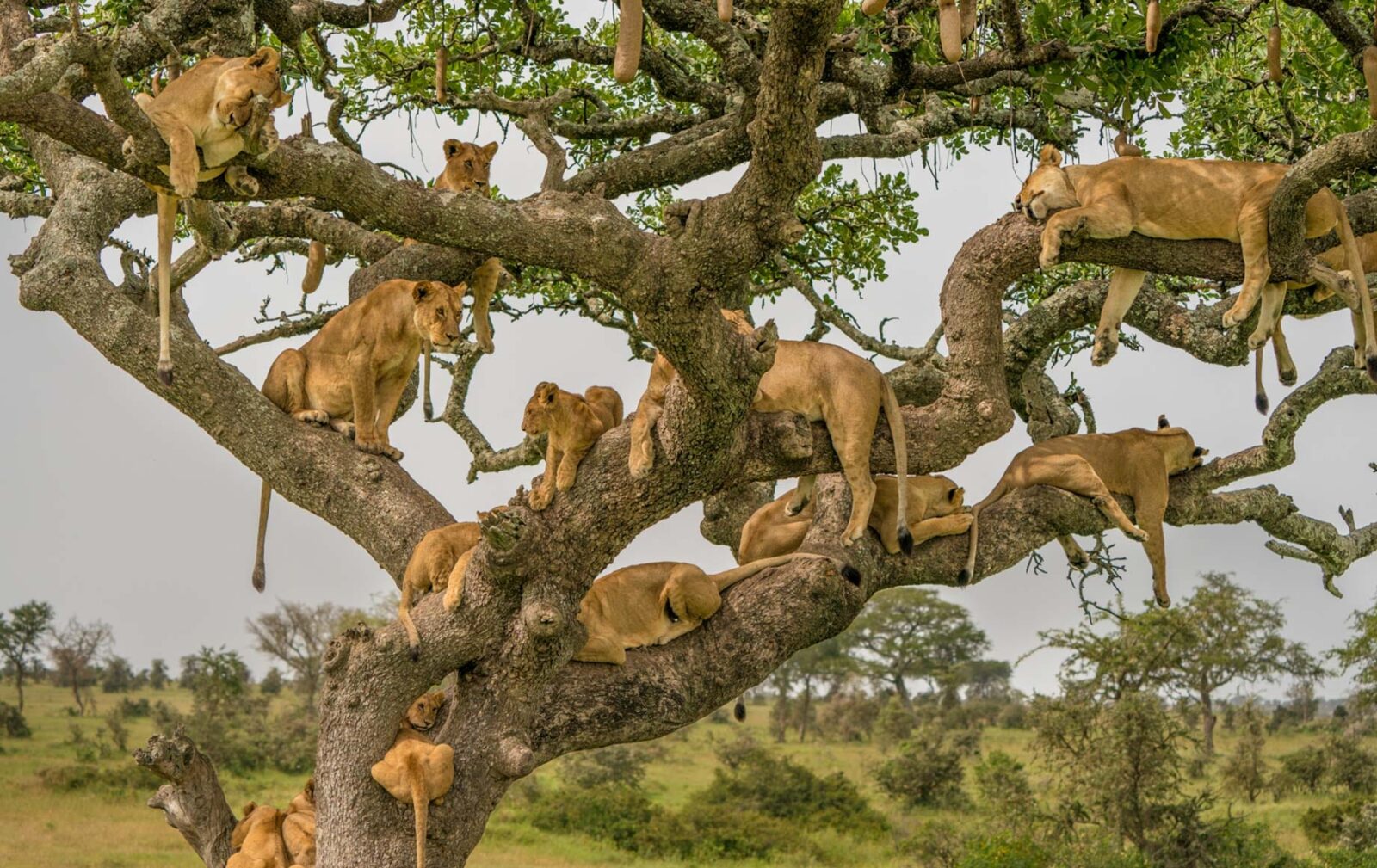
Conservation Philosophy of the Serengeti
The Serengeti is protected through strict conservation policies that prioritize ecological integrity over tourism volume. Lodge density is controlled, off-road driving is restricted in many areas, and visitor behavior is regulated to minimize disturbance.
Tourism revenue funds anti-poaching operations, habitat management, scientific research, and community development. The success of these measures is evident in stable wildlife populations and preserved migration routes.
A Serengeti safari is therefore not just observation, but participation in one of the world’s most important conservation efforts.
Cultural Context and Human History
Human history in the Serengeti dates back millions of years. Archaeological sites reveal early human occupation, while contemporary communities maintain cultural ties to the land surrounding the ecosystem.
While the national park itself is protected from settlement, surrounding areas illustrate how human livelihoods and wildlife conservation must coexist. A Serengeti safari gains depth when understood within this broader human–environment relationship.
Safari Styles in the Serengeti
The Serengeti safari experience is primarily vehicle-based due to scale and wildlife distribution. However, interpretation varies widely based on guiding quality and itinerary design.
Extended game drives allow for deeper observation of behavior patterns. Photographic safaris benefit from open terrain and controlled tourism pressure. Educational safaris focus on ecology, conservation, and wildlife monitoring.
Regardless of style, the Serengeti rewards patience, curiosity, and respect for natural rhythms.
Planning a Meaningful Serengeti Safari
Planning a Serengeti safari requires aligning expectations with ecological reality. Wildlife movement is influenced by rainfall rather than calendars, and no two seasons are identical.
Thoughtful planning prioritizes time over speed, allowing travelers to remain in one area long enough to observe patterns rather than chase sightings. This approach results in richer understanding and more meaningful experiences.
Who the Serengeti Safari Is Best Suited For
A Serengeti safari is ideal for travelers seeking authenticity, scale, and ecological depth. It appeals to wildlife enthusiasts, photographers, conservation-minded visitors, and those who value learning as much as seeing.
It is particularly rewarding for travelers willing to slow down, observe, and engage with nature on its own terms.
Why the Serengeti Safari Is Unmatched
The Serengeti safari remains unmatched because it protects one of the last large ecosystems where wildlife still lives according to ancient laws. Migration continues uninterrupted, predators maintain natural territories, and landscapes remain largely unchanged.
In a world where wilderness is increasingly fragmented, the Serengeti stands as proof that large-scale conservation can succeed. A Serengeti safari is not just a journey through Africa’s most famous park; it is an encounter with nature in its most complete and uncompromising form.
To experience the Serengeti is to witness life as it has evolved over millennia, still moving, still hunting, still renewing itself. That is what makes a Serengeti safari not only unforgettable, but essential.