
Silhouettes of the Bush: Murchison Falls, Masai Mara, Serengeti
There are moments in the African wilderness when detail dissolves and form takes over, when the land, wildlife, and sky merge into shapes carved by light rather than color. These moments arrive at dawn and dusk, when the sun hangs low and the bush reveals itself in silhouettes. In these hours, Africa speaks in outlines and movement, in contrasts that feel ancient and deliberate. Silhouettes of the bush: Murchison Falls, Masai Mara, Serengeti captures this profound visual and emotional language, shared across three of the continent’s most iconic landscapes, each distinct yet bound by the same elemental rhythm.
Silhouettes are not merely visual effects. They are expressions of scale, power, and continuity. An elephant crossing a river at sunset, a giraffe framed against a burning horizon, or a lion standing atop a kopje at first light communicates more than any detailed photograph. In Murchison Falls, the Masai Mara, and the Serengeti, silhouettes become symbols of Africa itself, revealing wilderness in its purest, most timeless form.
The Meaning Behind Silhouettes of the Bush
In the African context, silhouettes represent transition. They emerge at the thresholds of day and night, moments when ecosystems shift, predators stir, and prey recalibrate their awareness. These transitions are fundamental to understanding the bush. Life here is shaped not only by space, but by time and light.
The silhouettes of animals, trees, and landforms strip away distraction. Color fades, detail softens, and essence remains. A single outline can convey dominance, vulnerability, or harmony within the landscape. This is why silhouettes of the bush: Murchison Falls, Masai Mara, Serengeti resonate so deeply. They remind the observer that wilderness does not need embellishment to communicate meaning.
Murchison Falls: Silhouettes Along the Nile
Murchison Falls National Park occupies a unique position in East Africa’s safari geography. Defined by the mighty Nile River forcing itself through a narrow gorge before plunging violently downstream, the park blends savannah, riverine forest, and wetlands into a dramatic setting. Silhouettes here are shaped as much by water as by land.
At sunrise, the Nile becomes a mirror of soft light. Hippos surface quietly, their rounded backs forming dark shapes against shimmering water. Nile crocodiles lie motionless along sandbanks, their prehistoric outlines unchanged for millions of years. Elephants approach the river cautiously, their massive forms reflected perfectly in the stillness of early morning. These scenes define the silhouettes of the bush in Murchison Falls, where water and wildlife merge into striking compositions.
As evening approaches, the river transforms again. The sun descends behind Borassus palms, turning them into towering black forms against amber skies. Giraffes move slowly across open plains, their elongated necks cutting elegant shapes into the fading light. In these moments, Murchison Falls feels less like a park and more like a living canvas, painted daily by the movement of sun and shadow.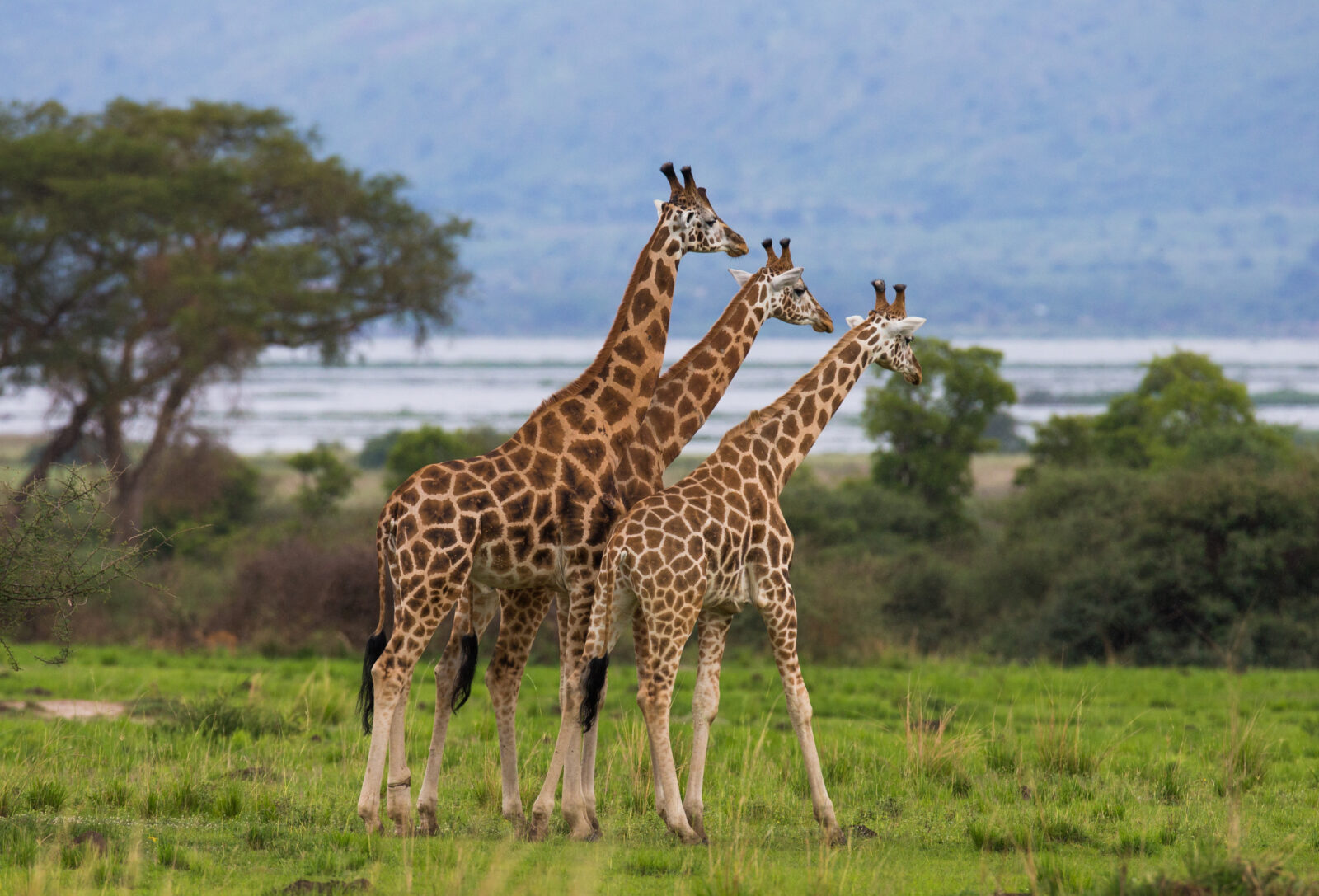
The Power of Light and Terrain in Murchison Falls
The terrain of Murchison Falls amplifies silhouette imagery. Rolling grasslands meet abrupt escarpments, while riverbanks curve unpredictably. This varied topography creates layered horizons, allowing wildlife to appear suspended between land and sky.
The Nile itself acts as a stage. Boat safaris offer a rare perspective where animals are framed laterally rather than head-on. A buffalo standing chest-deep in water at dusk becomes a monolithic shape, embodying strength and stillness. These moments define why silhouettes of the bush: Murchison Falls, Masai Mara, Serengeti begin meaningfully in Uganda’s largest protected area.
Masai Mara: Silhouettes on the Great Plains
Masai Mara National Reserve is synonymous with open space. The Mara’s defining feature is its horizon, vast and uninterrupted, allowing silhouettes to dominate the visual experience. Here, light stretches across endless grasslands, and wildlife movements are amplified by scale.
At dawn, the Mara awakens slowly. Lions rise from the grass, their manes dark against pale skies. Hyenas retreat after night hunts, their sloping backs outlined against the fading stars. Herds of wildebeest and zebra form undulating patterns, their collective silhouettes resembling a single living organism moving across the land.
Sunset in the Masai Mara is iconic for a reason. Acacia trees stand isolated against crimson skies, their flat canopies instantly recognizable. Giraffes often pass beneath them, creating compositions that have come to define African imagery worldwide. These scenes are not staged. They occur naturally, daily, reinforcing the timelessness of the silhouettes of the bush.
Predators and Silhouettes in the Masai Mara
Predators in the Masai Mara are particularly expressive in silhouette form. Cheetahs scanning the plains from termite mounds, leopards draped over tree branches, and lions silhouetted against the horizon convey dominance without movement or sound.
The openness of the Mara allows these silhouettes to be seen from great distances. A single animal can command attention simply by its outline. This visual language is powerful because it communicates hierarchy and presence instinctively. In the Masai Mara, silhouettes of the bush: Murchison Falls, Masai Mara, Serengeti reach a dramatic clarity shaped by space and light.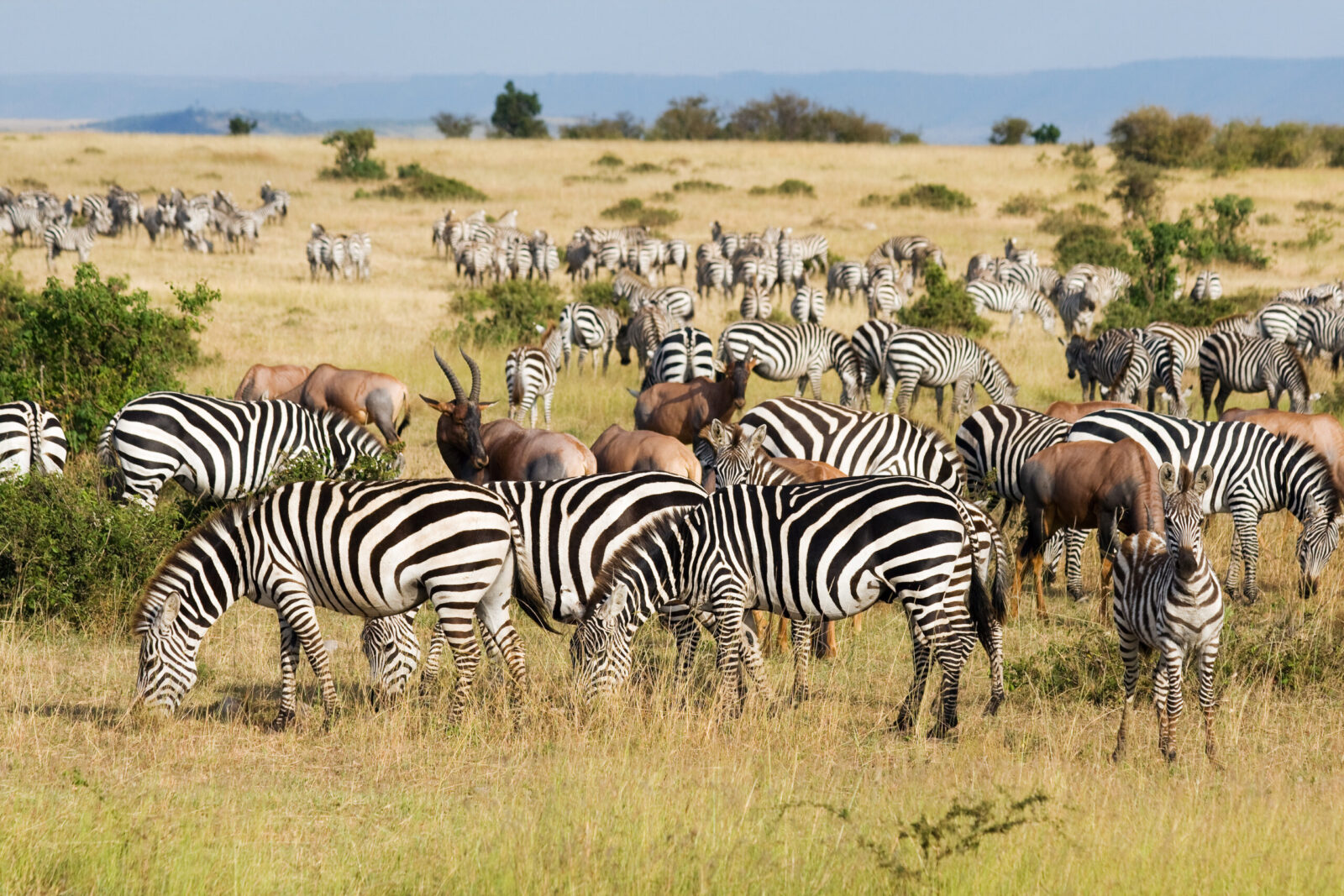
The Great Migration as Moving Silhouettes
During the Great Migration, the Masai Mara becomes a theater of motion. Thousands of animals move in unison, their combined silhouettes transforming the plains into a living shadow. River crossings at dusk create some of the most striking imagery in the bush, where splashing water and airborne dust blur into abstract forms against fading light.
These moments emphasize scale rather than detail. Individual animals disappear into collective movement, reinforcing the idea that the Mara is defined not by singular encounters, but by vast ecological processes. Silhouettes here communicate endurance, instinct, and continuity.
Serengeti: Silhouettes Across Infinite Horizons
Serengeti National Park extends the narrative of silhouettes even further. Larger than the Masai Mara and ecologically continuous with it, the Serengeti offers an unmatched sense of infinity. Here, silhouettes are shaped by distance as much as by form.
The Serengeti’s kopjes, ancient granite outcrops rising from the plains, play a central role in silhouette imagery. Lions often occupy these elevated points, their outlines sharply defined against the sky. At sunrise, a lone lion on a kopje becomes a symbol of the Serengeti itself, an image rooted in both reality and myth.
Elephants crossing open plains at sunset appear as slow-moving shadows, their immense size softened by distance. Ostriches, with their distinctive shapes, punctuate the horizon like animated punctuation marks. In the Serengeti, silhouettes stretch across space, emphasizing scale and timelessness.
Light, Dust, and Atmosphere in the Serengeti
The Serengeti’s atmosphere enhances silhouette experiences. Dust kicked up by hooves and wind diffuses light, creating glowing backdrops against which animals stand in stark contrast. This interplay of dust and sunlight produces gradients that shift minute by minute.
Morning light is cool and precise, while evening light is warm and expansive. Both conditions favor silhouettes, stripping scenes to their essentials. This is why silhouettes of the bush: Murchison Falls, Masai Mara, Serengeti find their most expansive expression in the Serengeti, where the land seems designed to hold light and shadow in perfect balance.
Comparing the Three Landscapes Through Silhouettes
While Murchison Falls, Masai Mara, and Serengeti share common wildlife and ecological connections, their silhouettes tell different stories. Murchison Falls emphasizes contrast between water and land, movement and stillness. The Masai Mara highlights interaction between wildlife and horizon, emphasizing openness and immediacy. The Serengeti conveys scale and continuity, where silhouettes stretch across time as well as space.
Together, they form a visual trilogy. Silhouettes of the bush: Murchison Falls, Masai Mara, Serengeti become a comparative study in how geography shapes perception. Each landscape reveals a different emotional tone, yet all speak the same language of wilderness.
Cultural and Symbolic Meaning of Silhouettes
Across East Africa, silhouettes have cultural resonance. Animals and landscapes are woven into oral histories, art, and symbolism, often represented in simplified forms rather than detailed realism. These forms reflect how communities have historically related to the land, recognizing essence over surface.
Witnessing silhouettes in the bush aligns travelers with this perspective. It encourages seeing wildlife not as objects to be cataloged, but as presences within a larger system. This cultural alignment deepens the experience of silhouettes of the bush: Murchison Falls, Masai Mara, Serengeti beyond aesthetics.
Photography and the Power of Absence
Silhouettes challenge conventional wildlife photography by prioritizing composition over detail. In doing so, they invite interpretation rather than documentation. A silhouetted elephant can evoke strength, solitude, or family depending on context and movement.
However, many of the most powerful silhouette moments resist photography altogether. The human eye and mind register nuance that cameras often flatten. The memory of standing silently as the bush darkens, watching forms dissolve into shadow, becomes personal and enduring.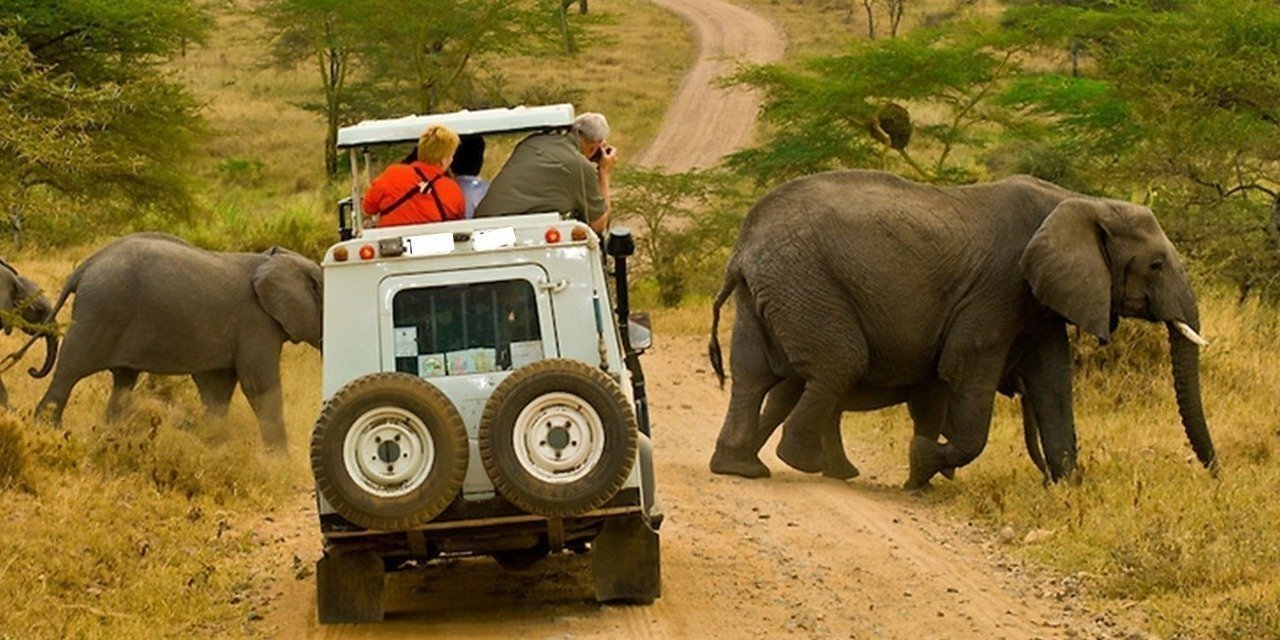
The Emotional Weight of Dusk and Dawn
Dawn and dusk carry emotional weight in the bush. They are moments of vulnerability and opportunity for wildlife, and moments of reflection for observers. Silhouettes emerge during these transitions, symbolizing balance between light and dark, life and rest.
In Murchison Falls, the Nile calms at dusk. In the Masai Mara, the plains exhale after a day of movement. In the Serengeti, the horizon seems endless and unresolved. These emotional responses are integral to understanding silhouettes of the bush: Murchison Falls, Masai Mara, Serengeti.
Why Silhouettes Leave Lasting Impressions
Silhouettes endure in memory because they simplify complexity. They remove excess information and allow meaning to surface naturally. An animal’s outline against the sky becomes a symbol rather than a subject.
This symbolic quality is why travelers often recall silhouette moments more vividly than detailed sightings. The mind holds onto shape, motion, and contrast. Silhouettes of the bush: Murchison Falls, Masai Mara, Serengeti remain long after the journey ends, resurfacing unexpectedly through memory and emotion.
Conservation Reflected in Silhouettes
Silhouettes also carry a message of fragility. Seeing animals reduced to outlines emphasizes how easily they could disappear. The survival of these iconic shapes depends on continued conservation and responsible tourism.
Murchison Falls, Masai Mara, and Serengeti are protected landscapes, yet they face ongoing pressures. Witnessing silhouettes within these parks reinforces the value of preservation, reminding travelers that what they see is not guaranteed.
Who Is Drawn to the Silhouettes of the Bush
This experience resonates with travelers who value depth over spectacle. Photographers, artists, conservationists, and reflective explorers are particularly drawn to these moments. The silhouettes of the bush: Murchison Falls, Masai Mara, Serengeti appeal to those who find meaning in quiet observation rather than constant activity.
The Timeless Nature of African Silhouettes
Silhouettes link past, present, and future. The same outlines observed today were seen by early humans, ancient communities, and generations of wildlife before modern tourism existed. This continuity creates a sense of belonging within a much larger narrative.
Experiencing silhouettes of the bush: Murchison Falls, Masai Mara, Serengeti is therefore not just visual, but philosophical. It places the observer within an ongoing story shaped by light, land, and life.
Why These Silhouettes Define the African Safari
Ultimately, silhouettes define the African safari because they distill it to essence. They remove distraction, amplify meaning, and reveal wilderness in its most honest form. Whether shaped by the Nile at Murchison Falls, the plains of the Masai Mara, or the infinite horizons of the Serengeti, these silhouettes communicate Africa’s soul.
Silhouettes of the bush: Murchison Falls, Masai Mara, Serengeti are not fleeting images. They are enduring impressions, etched into memory by light and shadow, carrying with them the timeless spirit of the African wilderness.