search
5 Fascinating Facts About the Shoebill

5 Fascinating Facts About the Shoebill

By Travel guides, Travel stories and blogs

5 Fascinating Facts About the Shoebill

Facts About the Shoebill

Enter the Dinosaur of the Wetlands

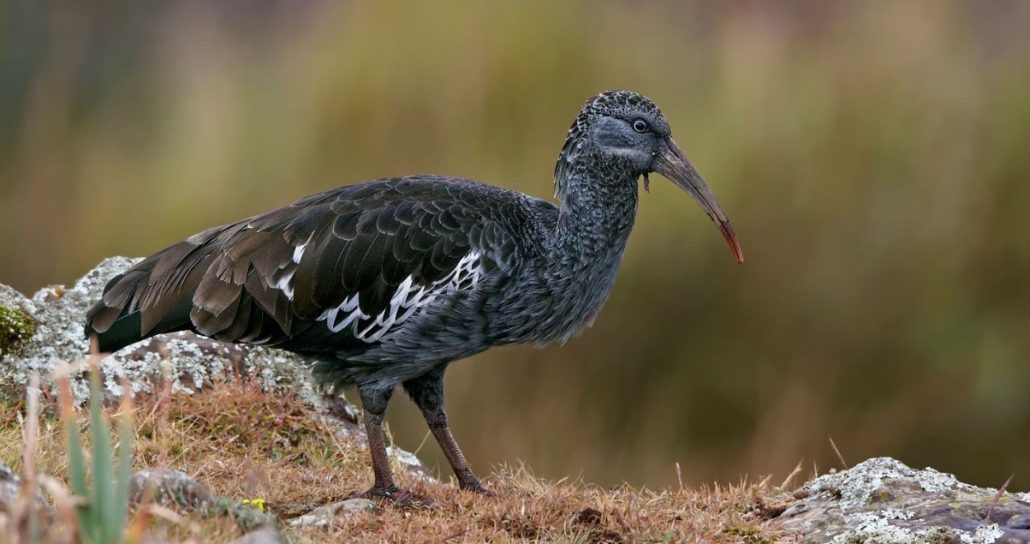
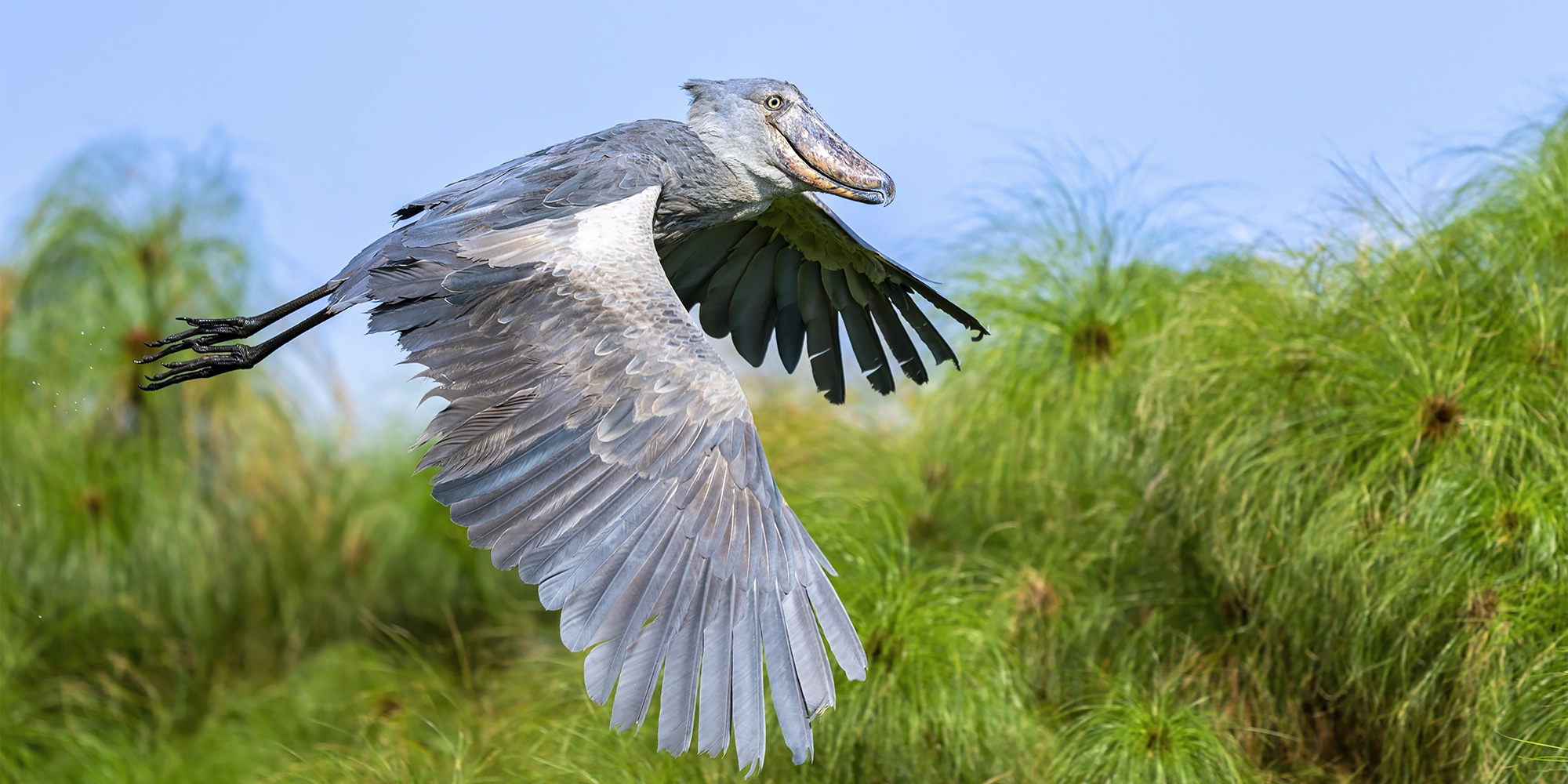
With its prehistoric appearance and piercing stare, the Shoebill (Balaeniceps rex) is one of Africa’s most mysterious and extraordinary birds. Standing tall and solitary in the swamps and marshes of central tropical Africa, this enigmatic avian commands attention not just because of its sheer size but due to its almost mythical aura. Known locally as the “whale-headed stork,” the Shoebill has evoked awe and curiosity among birdwatchers, researchers, and locals alike. Its massive, shoe-shaped bill and solemn demeanor give it an ancient air, as if it’s a creature suspended in time.

While many animals earn their intrigue through speed or power, the Shoebill captivates with stillness and subtle dominance. Despite being relatively elusive, this bird is gradually emerging as a symbol of the wild, untamed wetlands of East and Central Africa, most notably Uganda’s vast papyrus marshes. In this article, we unravel five compelling facts about the Shoebill, delving into what makes it one of the most fascinating creatures of the African wilderness.

A Beak Built Like a Weapon

The Shoebill’s most iconic feature is undoubtedly its massive bill, shaped eerily like a Dutch clog and reaching up to 24 centimeters long and 20 centimeters wide. More than just an oddity, this oversized beak is an evolutionary masterpiece. The edges of the bill are razor-sharp, and the powerful hook at the tip is used to grasp, crush, and decapitate prey with precision. This is not a gentle grazer—this is a bird built for stealth and lethal efficiency.

Feeding primarily on lungfish, eels, frogs, and even baby crocodiles, the Shoebill employs a hunting style that borders on theatrical. It stands perfectly still for hours, blending into its surroundings until the moment to strike arrives. With lightning speed, the Shoebill lunges forward, opening its beak wide and snapping it shut with a loud, echoing clatter that often signals a successful catch. This combination of patience and violence in hunting sets the Shoebill apart from most other wetland birds, underscoring its status as a top predator within its ecological niche.

Solitude and Strategy in the Swamps (Facts About the Shoebill)

Unlike many bird species that thrive in flocks, Shoebills are solitary hunters. They maintain and defend large territories, ensuring minimal competition for the rich aquatic resources of their marshland habitats. These territories, often several kilometers wide, are chosen with strategic precision—away from human disturbance, abundant in prey, and rich in cover.

The Shoebill’s solitary behavior extends into its mating and nesting habits. Pairs come together only briefly during the breeding season and raise a maximum of two chicks. However, in a striking example of siblicide, often only one chick survives, as the stronger nestling dominates the weaker to ensure it receives the lion’s share of food. While brutal, this behavior ensures that at least one offspring reaches maturity, especially in an environment where resources are unpredictable.

This minimalistic reproductive strategy, combined with their slow maturation, makes Shoebills particularly vulnerable to threats. Yet it also reinforces their identity as highly specialized and selective survivors, thriving only under the most optimal natural conditions.

A Call Like a Machine Gun

Despite their generally silent and stoic demeanor, Shoebills are not entirely voiceless. During the breeding season and interactions with mates or offspring, they produce a distinctive bill-clattering sound, reminiscent of a machine gun or typewriter. This sound is produced not with vocal cords but through rapid opening and closing of their formidable bills.

Chicks also emit a begging call that resembles human hiccups, a rare and almost humorous vocalization that highlights their unique auditory expressions. These sounds, although infrequent, serve as important social tools within the limited context of the Shoebill’s life.

The contrast between their quiet disposition and sudden bursts of mechanical-like sounds adds to the surreal experience of encountering one in the wild. Their eerie calls echoing across the swamp serve as a haunting reminder of their ancient lineage and otherworldly nature.

Masters of Stillness and Stealth

What truly sets the Shoebill apart behaviorally is its extraordinary stillness. Dubbed the “statue bird,” it can remain motionless for extended periods—sometimes several hours—while watching the water surface for subtle signs of movement. This monk-like patience is not lethargy; it’s a finely tuned predatory technique evolved for success in murky, vegetation-choked wetlands.

The Shoebill’s silent stalking and calculated strikes are hallmarks of its hunting prowess. Unlike herons or storks that wade and probe constantly, the Shoebill saves energy by letting prey come to it. Its entire physiology—from its long, strong legs to its forward-facing eyes—supports this precision-based strategy.

This behavior does more than help it hunt. It gives the Shoebill an almost spiritual presence, making it a favorite among wildlife photographers and birding enthusiasts. To witness this bird is to understand a different rhythm of the wild, one that values observation over action, patience over motion.

Conservation Concerns and Global Recognition

Despite their almost mythic stature, Shoebills are classified as Vulnerable by the International Union for Conservation of Nature (IUCN). Habitat loss due to agriculture, oil exploration, and settlement expansion is the bird’s most pressing threat. Additionally, the illegal pet trade has targeted Shoebills for their unusual appearance, further endangering already fragile populations.

Fortunately, global awareness and local conservation efforts are rising. Uganda, South Sudan, Zambia, and parts of the Democratic Republic of Congo are taking active roles in protecting Shoebill habitats through eco-tourism, community-based conservation, and legal protections. Bird sanctuaries and national parks are becoming safer refuges, and the Shoebill is slowly gaining the international recognition it needs to survive.

These conservation efforts also provide opportunities for travelers to witness the Shoebill responsibly. Ecotourism has emerged as one of the most powerful tools to save this bird—not only by funding protection programs but also by giving local communities a sustainable economic reason to preserve wetland environments.

Explore the Mystical World of the Shoebill with WildHorn Africa

The Shoebill is not just a bird—it’s a legend in feathers, a living relic of the past that demands both reverence and protection. Encountering this majestic bird in its natural habitat is an unforgettable experience, one that touches the soul and ignites a lifelong passion for conservation.

WildHorn Africa offers expertly guided safaris to some of the Shoebill’s last remaining strongholds, including the remote marshes of Uganda’s Mabamba Swamp. Our tours are tailored for intimate, immersive encounters with this awe-inspiring species, emphasizing ethical wildlife viewing and deep ecological appreciation.

Book your African safari with WildHorn Africa and embark on a journey that goes beyond sightseeing. Witness the haunting beauty of the Shoebill, connect with Africa’s wild heart, and become part of a movement to protect one of the continent’s most fascinating and elusive treasures. Let the wetlands whisper their ancient secrets, and let WildHorn Africa guide you to them.

Facts About the Shoebill #Facts About the Shoebill Facts About the Shoebill
5 Fascinating Facts About the African Fish Eagle

5 Fascinating Facts About the African Fish Eagle

By Travel guides, Travel stories and blogs


5 Fascinating Facts About the African Fish Eagle

With its striking cry echoing across Africa’s great lakes and rivers, the African Fish Eagle is more than just a bird — it’s a symbol of wilderness, freedom, and grace. Found across sub-Saharan Africa, this majestic raptor is often considered the avian voice of the continent.

Whether soaring above the Okavango Delta or perched on a high branch near Lake Victoria, the African Fish Eagle captivates travelers and bird enthusiasts alike. In this article, we explore five intriguing and in-depth facts about this regal bird that make it one of Africa’s most celebrated creatures.

Facts About the African Fish Eagle

1. A Voice That Defines the African Wilderness

The call of the African Fish Eagle is arguably one of the most recognizable sounds in the African wild. Its resonant, yodel-like cry is often described as “the sound of Africa”. It is used in countless documentaries and media to evoke the untamed spirit of the continent.

The eagle’s call is not just for dramatic effect. It serves several practical functions:

  • Territorial Declaration: The loud cry helps the eagle stake its claim to prime fishing spots.
  • Mating Communication: Mated pairs will often call to each other in duets, strengthening their bond.
  • Alerting Rivals: The echoing call is also a warning to other eagles nearby to keep their distance.

The cry is produced while the bird is perched or even while soaring through the air, giving a wild soundtrack to Africa’s riverbanks and wetlands.

2. Masters of Aquatic Hunting

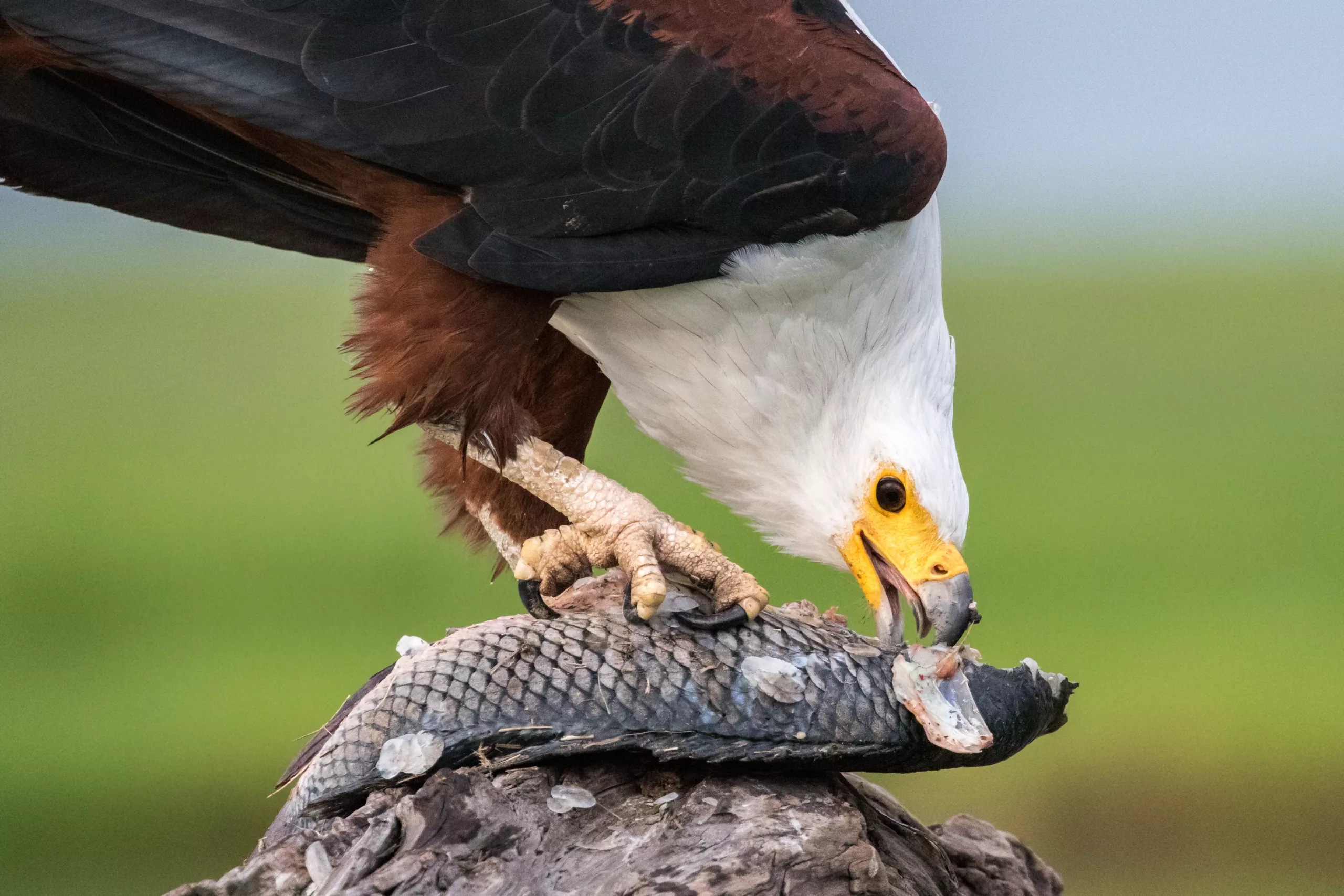
As their name suggests, African Fish Eagles are specialized piscivores—fish make up over 90% of their diet. Their hunting technique is both elegant and efficient.

Perched silently on high trees near water, the eagle uses its keen vision—up to 3.6 times sharper than human sight—to detect fish swimming near the surface. Once a target is spotted, the bird swoops down in a swift glide, extends its powerful talons, and snatches the prey from the water with precision.

Adaptations that make this possible include:

  • Strong, curved talons equipped with rough pads (spicules) for gripping slippery fish
  • A large, hooked beak for tearing flesh
  • Long, broad wings for gliding and hovering

Occasionally, fish may be too heavy to carry in flight. In such cases, the eagle paddles to shore using its wings, dragging its prey across the water — a rare and remarkable sight.

3. A Framed National Symbol

The African Fish Eagle isn’t just a biological marvel — it’s a cultural icon. It is the national bird of three countries:

Its image is proudly displayed on national coats of arms, flags, and currency. For many Africans, the eagle represents strength, vision, freedom, and pride.

In traditional beliefs, the Fish Eagle is often revered as a spiritual creature—a messenger of ancestors or a harbinger of change. Its piercing call is thought to carry symbolic meaning across generations.

This deep cultural reverence has helped protect the species, as communities living near large water bodies often view the eagle with admiration and respect.

4. Devoted Mates and Territorial Pairs (Facts About the African Fish Eagle)

African Fish Eagles are monogamous and often mate for life. Once a pair is established, they claim and defend a territory that includes access to ample fishing grounds and tall trees for nesting.

The nesting process is a remarkable display of teamwork. Eagles construct massive nests—called eyries—from sticks, sometimes over 2 meters (6.5 feet) wide. These nests are used year after year, with additional layers added annually, making some nests weigh hundreds of kilograms.

During breeding season:

  • The female typically lays 1 to 3 eggs.
  • Both parents take turns incubating the eggs for about 42–45 days.
  • After hatching, the chicks are fed fish regurgitated by both parents.

The devotion shown by Fish Eagle pairs contributes significantly to their breeding success and is a heartwarming example of lifelong partnership in the animal kingdom.

5. Widespread Yet Vulnerable to Environmental Change

African Fish Eagles are found near large bodies of open water with plentiful fish — from lakes, rivers, and estuaries to flooded forests and dams. Their range spans most of sub-Saharan Africa, making them one of the continent’s most familiar raptors.

However, this widespread presence does not mean they are immune to threats. Like many other species, they are affected by:

  • Water pollution — particularly from agricultural runoff and industrial waste
  • Overfishing — which reduces their food supply
  • Habitat destruction — due to damming and development along riverbanks
  • Climate change — affecting rainfall patterns and aquatic ecosystems

Conservationists monitor Fish Eagle populations as indicators of aquatic ecosystem health. Their presence often signals a balanced and thriving wetland or riverine environment.

Witness the Majesty of the African Fish Eagle in the Wild

Observing the African Fish Eagle in its natural habitat is a soul-stirring experience. From its haunting call at dawn to the dramatic dive that ends with a fish clenched in its talons, every moment speaks to the wonder of Africa’s wild places.

If you’ve ever dreamed of hearing the “voice of Africa” for yourself, or of watching a Fish Eagle glide over serene waters, there’s no better way than to join a professionally guided safari.

We highly recommend booking your African wildlife adventure with WildHorn Africa. Their expert-led safaris offer immersive experiences that connect you to the heart of Africa’s ecosystems — and the magnificent creatures that call them home.

Book Your Safari with WildHorn Africa Today

Facts About the African Fish Eagle #Facts About the African Fish Eagle Facts About the African Fish Eagle

5 Fascinating Facts About Vultures

5 Fascinating Facts About Vultures

By Travel guides, Travel stories and blogs

5 Fascinating Facts About Vultures

Facts About Vultures

Nature’s Unsung Clean-up Crew

In the vast, sun-drenched landscapes of Africa, where predators rule the day and survival hinges on the delicate balance of ecosystems, one bird often remains underappreciated yet utterly essential: the vulture. These majestic scavengers, often misunderstood and symbolically linked to death, play a role far more profound and life-giving than most imagine. Known for their bald heads, keen eyesight, and eerie silence as they soar on thermals high above the savannah, vultures are ecological custodians whose very existence keeps the wilderness clean, healthy, and thriving.

Despite the unglamorous reputation they carry, vultures are nothing short of ecological superheroes. They prevent the spread of deadly diseases, eliminate carrion that could pollute water sources, and maintain the balance of food chains across the continent. The African wilderness, without the vulture, would become a breeding ground for decay and disease. As we peel back the feathers of misunderstanding, five fascinating facts emerge that reveal the true wonder of these misunderstood creatures.

Remarkable Digestive Systems that Neutralize Disease

The most astonishing feature of vultures is undoubtedly their biological capacity to digest deadly bacteria and pathogens. When other animals might fall gravely ill or die from consuming infected carcasses, vultures thrive. Their stomach acid is one of the most corrosive known in the animal kingdom, with a pH level that can dissolve anthrax, botulism, cholera, and even rabies viruses without any harm to the bird. This unique adaptation allows vultures to safely consume carcasses that would otherwise serve as breeding grounds for disease, thereby protecting other wildlife and human populations from potentially fatal outbreaks.

In ecosystems where vultures are declining due to poisoning and habitat loss, an increase in decaying animal matter has correlated with a rise in feral dog populations and the spread of diseases such as rabies. The connection is clear: vultures act as a natural disease control system, reducing the burden on environmental and public health systems alike. Without them, the consequences can be disastrous, both ecologically and economically.

Exceptional Eyesight and Soaring Abilities (Facts About Vultures)

Vultures are masters of the sky with eyesight so powerful they can spot a carcass from kilometers away. This incredible vision, combined with their ability to glide effortlessly on thermal currents for hours with minimal wing flapping, makes them expert scavengers. Unlike many other birds, vultures rely almost entirely on sight rather than smell to locate their meals. From their aerial vantage point, they can detect the slightest movement or glimmer of decomposing flesh, often descending in flocks to claim their place at nature’s banquet.

The wingspan of some African vultures can exceed three meters, allowing them to cover vast territories in search of food. This ability to travel long distances is critical in the African savannah, where carcasses may be widely dispersed and difficult to find. Their aerial efficiency means vultures can remove dead animals from the landscape faster than any other scavenger, playing a pivotal role in maintaining cleanliness and balance.

Social Hierarchies and Inter-Species Cooperation

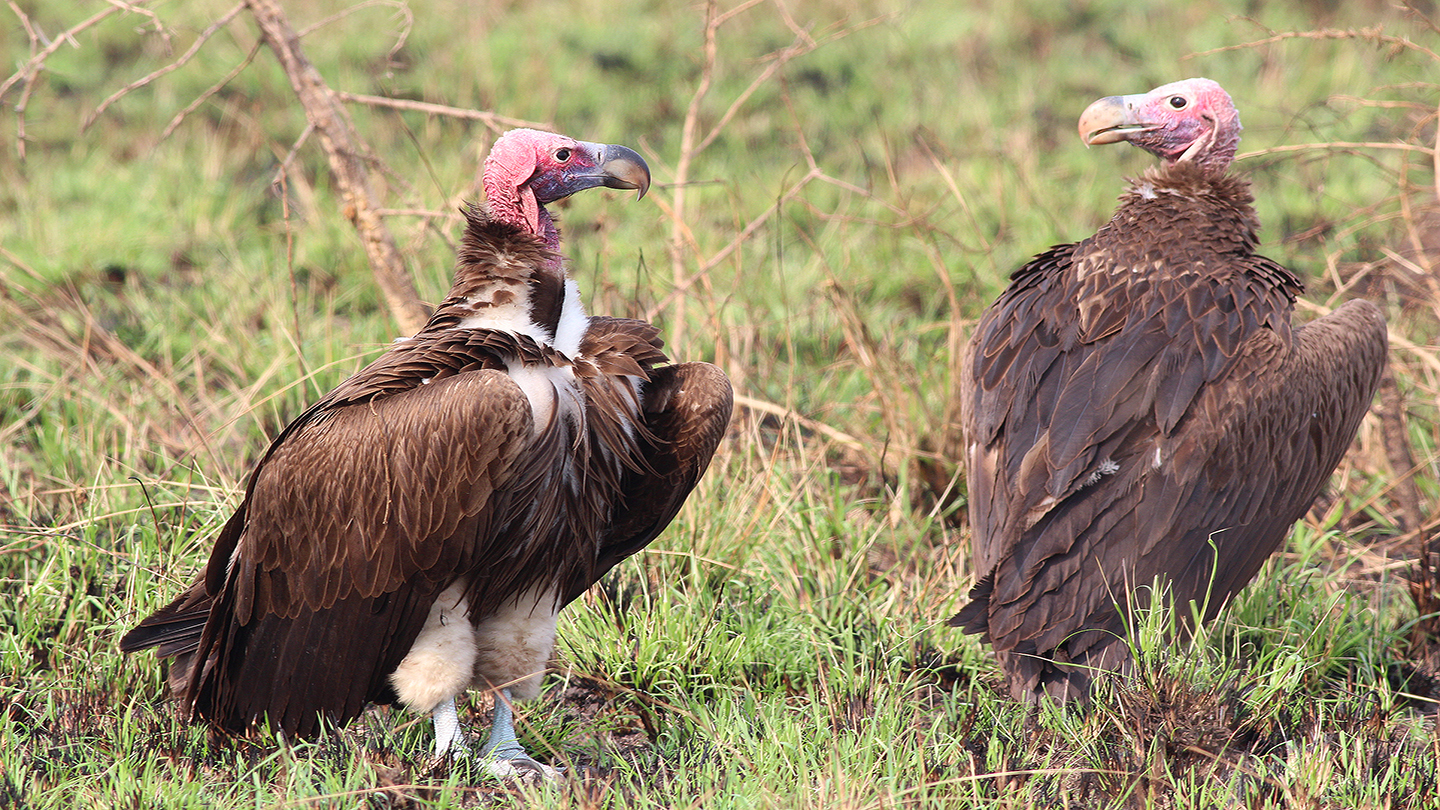
Contrary to their grim image, vultures are highly social birds that often feed and fly in groups. Within these groups, there is a structured hierarchy based on species and size. For example, the powerful Lappet-faced Vulture typically dominates smaller species such as the White-backed or Hooded Vulture at feeding sites. This pecking order ensures that each species fulfills its role in the scavenging process. Larger vultures tear open thick hides, allowing smaller vultures to access softer tissues.

This inter-species cooperation highlights the complex intelligence and social behavior of vultures. It also underscores the interconnectedness of African scavengers, where each species contributes uniquely to the ecosystem. Vultures often feed alongside other scavengers like hyenas and jackals, and this dynamic synergy ensures maximum efficiency in carcass consumption. Their role is so well integrated into nature’s rhythms that even predator species sometimes benefit indirectly from their cleanup work.

Symbolism, Culture, and Misunderstanding

Throughout history, vultures have been steeped in myth, superstition, and symbolism. In some African cultures, they are revered for their spiritual connection to the afterlife or used in traditional medicine for their perceived mystical powers. In contrast, other beliefs vilify them as omens of death or bearers of misfortune. This mixed legacy has influenced both the conservation and persecution of vultures across the continent.

Modern conservation efforts now emphasize the scientific and ecological value of vultures rather than relying on outdated superstitions. As research sheds light on their irreplaceable role in ecosystems, conservationists are working tirelessly to change public perceptions. The transformation from death symbol to ecological hero is still underway, but education and awareness are key in shifting the narrative.

Nevertheless, vultures remain vulnerable to practices like poisoning (often unintentional, through tainted carcasses meant for other predators), electrocution from power lines, and habitat destruction. Protecting vultures requires a fundamental change in how they are perceived and respected across Africa and the world.

Critical Conservation Status and the Fight for Survival

Perhaps the most sobering reality about vultures is that many species are now critically endangered. The African White-backed Vulture, Rüppell’s Vulture, and Hooded Vulture are all listed as critically endangered due to a combination of threats. Poisoning remains the most significant threat—whether deliberate, such as in retaliatory poisonings meant for lions, or incidental, through consumption of carcasses treated with veterinary drugs like diclofenac, which is fatal to vultures.

The fight to save vultures is multifaceted. Conservationists are promoting vulture-safe zones, banning harmful veterinary drugs, and working with local communities to develop awareness programs. Rescue and rehabilitation centers are treating injured birds and reintroducing them into safe habitats. But the battle is far from over. Saving vultures is not merely about preserving one species; it is about protecting the health of entire ecosystems. Their disappearance would create cascading effects that would be felt across the animal kingdom and human society.

Vultures may not be the most glamorous or beloved creatures in Africa, but they are without doubt among the most vital. They are the silent sentinels of the savannah, ever-watchful, ever-vigilant, ensuring that life continues even in the presence of death. Their story is one of resilience, utility, and misunderstood magnificence.

Experience the Majesty of Africa’s Sky Guardians with WildHorn Africa

Witnessing vultures in the wild is not only an awe-inspiring experience but also an education in nature’s extraordinary design. From watching them circle high above the plains to observing the orchestrated efficiency of their feeding rituals, these birds offer insight into the hidden mechanics of the natural world.

WildHorn Africa invites you to explore the untamed beauty of the continent through expertly curated safaris that highlight both the celebrated and the overlooked wonders of the animal kingdom. Whether you are drawn by the iconic Big Five or the humble but heroic vulture, WildHorn Africa ensures your journey is immersive, enlightening, and unforgettable.

Book your African safari with WildHorn Africa today and discover the true spirit of conservation, adventure, and ecological wonder.

Facts About Vultures #Facts About Vultures Facts About Vultures

5 Fascinating Facts About Flamingos (Phoenicopteridae)

5 Fascinating Facts About Flamingos (Phoenicopteridae)

By Travel guides, Travel stories and blogs

5 Fascinating Facts About Flamingos (Phoenicopteridae)

The Blazing Beacons of Africa’s Wetlands

Few sights in the natural world are as mesmerizing as a flock of flamingos—their vivid pink plumage set against shimmering lake waters, their long legs wading through shallows with an effortless grace. But beyond their flamboyant appearance lies a world of biological wonder, behavioral complexity, and ecological importance.

Flamingos, scientifically classified under the family Phoenicopteridae, are more than mere icons of elegance; they are survivors, engineers, and communicators in their ecosystems. Found across Africa’s saline and alkaline lakes, these birds embody adaptation at its finest.

Here are five incredible facts about flamingos that showcase why these birds are not only captivating but essential to understanding the delicate balance of Africa’s wild habitats.

1. Their Pink Color Comes From Their Diet (Facts About Flamingos)

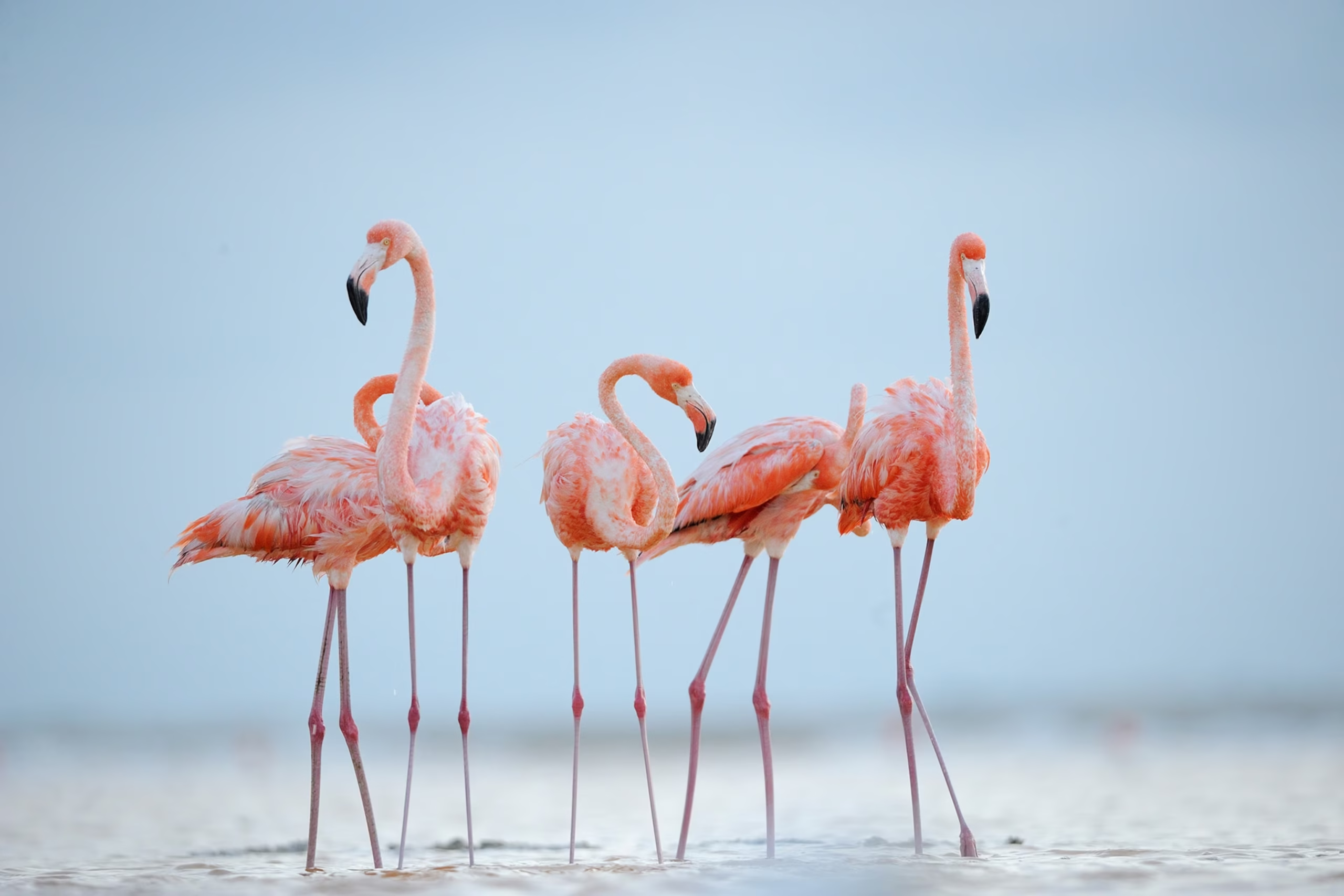
One of the most distinctive traits of flamingos is their brilliant pink coloration—but they aren’t born that way. Flamingo chicks hatch with grayish-white feathers, and their signature pink hue only develops as they grow older, thanks to their diet.

Carotenoids: The Secret Pigment

Flamingos feed primarily on blue-green algae, crustaceans, and plankton, which are rich in carotenoid pigments. As their bodies digest these foods, the pigments are broken down into colored molecules, which are then absorbed and deposited in the feathers, skin, and even the beak.

This vibrant pink not only serves as a visual identifier but also as a health indicator. The brighter the flamingo, the healthier and more desirable it appears to potential mates.

2. Flamingos Are Masters of Alkaline Lake Habitats

While many animals shy away from extreme conditions, flamingos thrive in some of Africa’s most inhospitable environments. They congregate in vast numbers in alkaline or saline lakes, such as Lake Natron in Tanzania and Lake Bogoria in Kenya, where few other species can survive.

Highly Specialized Beaks and Feeding Techniques

Flamingos have uniquely adapted beaks that allow them to filter microscopic food from the water. Using an upside-down feeding motion, they suck in water and pump it through comb-like structures called lamellae to trap algae and tiny invertebrates.

Their long legs and webbed feet help them wade into deeper, saltier water where food is abundant. In these settings, flamingos play a critical role in maintaining ecosystem balance, often serving as bioindicators for lake health.

3. They Are Incredibly Social and Synchronized

Flamingos are not solitary creatures. In fact, they are among the most social birds on the planet, forming colonies that can number in the hundreds of thousands. This social structure is not just for safety in numbers—it’s essential to their survival and reproductive success.

Courtship Rituals and Synchronization (Facts About Flamingos)

During mating season, flamingos engage in elaborate group displays where dozens, even hundreds, of birds perform synchronized movements—head-flagging, wing-saluting, and marching in unison. These rituals are critical for pair bonding and reproductive timing.

Once mated, a bonded pair builds a volcano-shaped mud nest in shallow water and lays a single egg. Both parents share responsibilities, from incubating the egg to feeding the chick with crop milk—a protein- and fat-rich secretion similar to mammalian milk.

Chick Crèches

After hatching, chicks gather in large groups called crèches, where they are supervised by a few adults while their parents forage. This behavior improves survival rates and reflects the communal spirit that defines flamingo societies.

4. Flamingos Communicate in Remarkably Complex Ways

Flamingos may not be known for their vocalizations like songbirds, but their communication methods are both diverse and effective.

Vocal and Visual Signals

Flamingos use a variety of grunts, honks, and low-frequency sounds to communicate, especially in dense flocks. These sounds are essential for maintaining group cohesion, alerting others to danger, and coordinating breeding behaviors.

Visual signals, such as posture, head movements, and plumage displays, also convey information about an individual’s mood, mating readiness, or hierarchical status.

In their crèches, flamingo chicks recognize and respond to individual calls from their parents, a vital skill in an environment where tens of thousands of birds look and sound similar.

Long-Distance Navigation

Flamingos are capable of long migratory journeys and are believed to use celestial cues, magnetic fields, and even olfactory signals to navigate. Their ability to return to the same breeding and feeding grounds year after year is a testament to their cognitive abilities and memory.

5. They Are Ecosystem Engineers and Conservation Indicators

Beyond their charm and beauty, flamingos serve as keystone species in their habitats. Their feeding activities stir up nutrients, promote algal growth, and help maintain the overall health of wetland ecosystems.

Environmental Sentinels

Because flamingos are sensitive to changes in water quality, salinity, and food availability, their presence—or absence—often serves as an early warning sign of ecological degradation. Conservationists monitor flamingo populations to assess the health of lake environments across Africa.

Conservation Challenges

Despite their resilience, flamingos face numerous threats, including habitat loss, climate change, and human disturbance. For example, plans to build industrial projects near Lake Natron could disrupt breeding colonies and cause population declines.

Ongoing conservation efforts focus on protecting flamingo habitats, enforcing anti-disturbance laws, and engaging local communities in sustainable tourism practices that benefit both wildlife and people.

The Flamingo: A Marvel of Adaptation and Elegance

The flamingo is far more than a pretty face in the wetlands. It is a symbol of adaptation, intelligence, and resilience—a bird that thrives in the harshest of habitats while nurturing some of the most complex social systems found in the avian world.

From its dietary pigments that paint it pink, to its finely tuned communication systems and vital ecological roles, the flamingo commands admiration and respect. By understanding and protecting these magnificent birds, we ensure the survival of the delicate ecosystems they help sustain.

See Flamingos in Their Element with WildHorn Africa

To experience the majesty of Africa’s flamingos in their natural habitat, nothing compares to a professionally guided safari. WildHorn Africa offers immersive wildlife expeditions to Lake Nakuru, Lake Natron, and other flamingo-rich sanctuaries, where you can witness flocks of thousands dancing across reflective waters.

With personalized itineraries, experienced guides, and a deep commitment to conservation, WildHorn Africa brings you closer to the continent’s most enchanting wildlife experiences.

Book your African tour today with WildHorn Africa – and step into the world of the extraordinary flamingo.

Facts About Flamingos #Facts About Flamingos Facts About Flamingos

5 Fascinating Facts About the Ostrich

5 Fascinating Facts About the Ostrich

By Travel guides, Travel stories and blogs


5 Fascinating Facts About the Ostrich

Meet the ostrich: a bird that can’t fly, yet can outrun most animals on Earth. It’s a creature of paradoxes—graceful yet gawky, comical yet commanding, prehistoric yet perfectly adapted to the modern African wilderness. Whether you’ve glimpsed one striding across the savanna or seen one bobbing its long neck in a documentary, the ostrich is impossible to ignore.

In this deep-dive, we explore five astonishing, science-backed facts that reveal the ostrich as not just the world’s largest bird, but also one of the most extraordinary animals on the African continent. This is not just trivia—these facts unveil the secrets behind the ostrich’s survival, evolution, and dominance in the wild.

1. The Ostrich Is the World’s Largest—and Heaviest—Bird

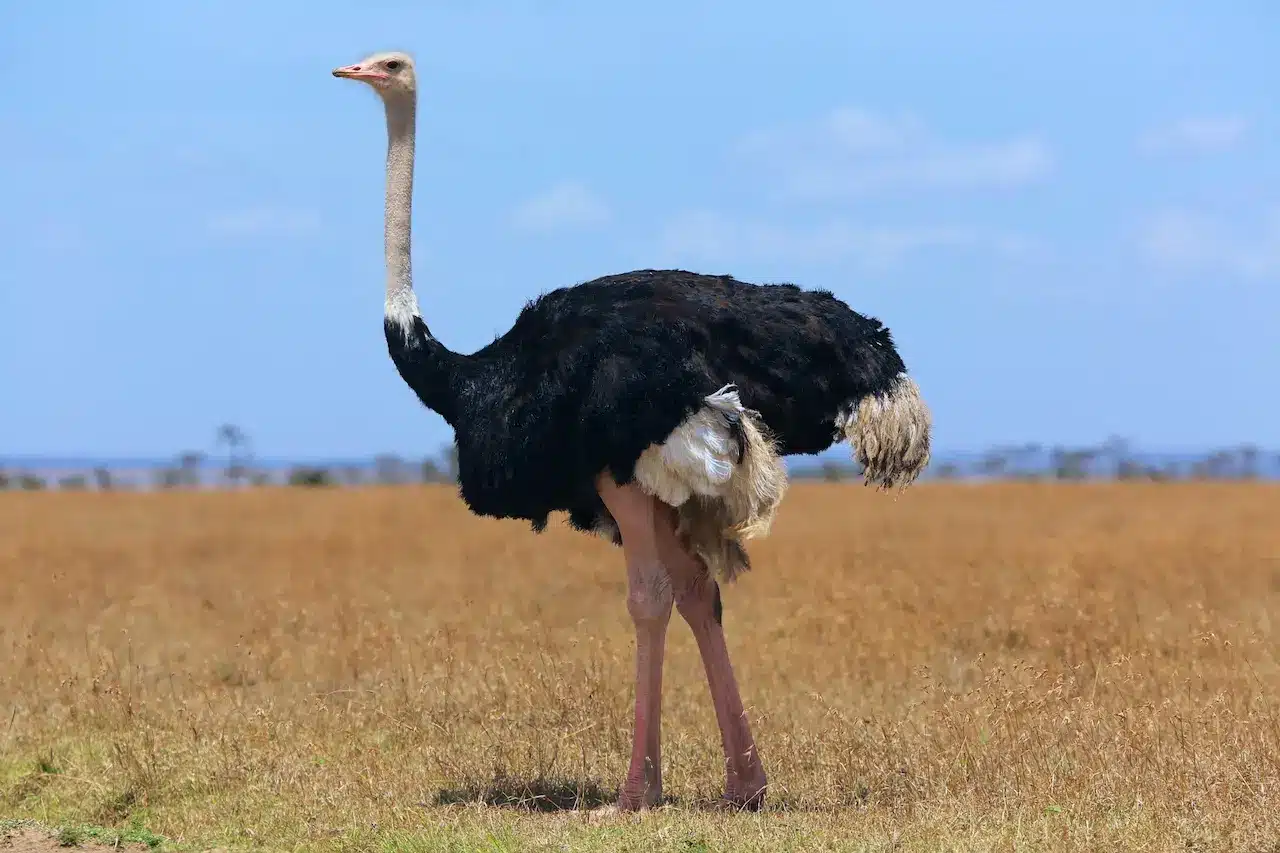
Ostriches don’t just tower above other birds—they dominate them. An adult ostrich can grow up to 9 feet (2.7 meters) tall and weigh between 220 to 290 pounds (100–130 kg). Males are typically larger than females and sport bold black-and-white plumage, while females are more subtly camouflaged in dusty brown.

Despite their size, ostriches are extremely well-adapted to life on the open plains of Africa. Their powerful legs not only support their massive weight but also serve as their primary defense mechanism (more on that later). Their height gives them a panoramic view of predators from afar, especially in open grasslands like the Serengeti or Kalahari.

2. Ostriches Can’t Fly—But They Run Like the Wind

Yes, it’s true. The ostrich is a bird that cannot fly. But nature has compensated magnificently. Ostriches are the fastest two-legged animals on Earth. With their long, muscular legs and spring-like tendons, ostriches can sprint up to 70 km/h (43 mph) for short bursts and maintain 50 km/h (31 mph) over longer distances.

Their legs are also their main line of defense. Each foot has only two toes—the larger inner toe sports a long, sharp claw that can disembowel a predator with one powerful kick. Lions and hyenas know not to take the ostrich lightly.

Why Can’t They Fly?

Ostriches are part of a group of flightless birds called ratites, which includes emus, cassowaries, and kiwis. Their flat breastbone lacks the keel that flying birds use to anchor their flight muscles. But their enormous wings (spanning up to 2 meters) still serve vital functions—they’re used for balance while running, courtship displays, and shade for their young.

3. They Lay the Largest Eggs in the World (Facts About the Ostrich)

No surprise here: the biggest bird lays the biggest eggs. But just how big? An ostrich egg is roughly the size of a cantaloupe, measuring up to 15 cm (6 inches) in length and weighing as much as 1.4 kg (3 pounds). One ostrich egg is equivalent to about two dozen chicken eggs.

These eggs are incubated communally. A dominant female lays her eggs in a shared nest called a scrape, dug into the ground. Multiple females may contribute eggs, but the dominant hen and the male do most of the incubation—female during the day and male at night, thanks to their respective feather colors that help camouflage the nest.

Amazing Eggshell Strength

Despite being thin, ostrich eggshells are incredibly tough. They can withstand the weight of a human (not recommended), and their strength helps protect developing chicks from predators and the harsh sun. In some African cultures, emptied ostrich eggs are repurposed as water canteens—a practice that dates back thousands of years.

4. Ostriches Have Incredible Eyesight—and the Largest Eyes of Any Land Animal

Ostriches rely on sight more than sound or smell. Their eyes measure 5 cm (2 inches) across—even larger than those of an elephant. These huge eyes give them an exceptional field of view and long-distance clarity, crucial for detecting predators like cheetahs and jackals in open terrain.

Each eye is so large that there’s barely any room in the ostrich’s skull for its brain—an anatomical quirk that has unfairly contributed to the myth of ostriches being “dumb.” In fact, they’re surprisingly cognitively agile, capable of sophisticated predator recognition and social hierarchy within groups.

The Brain-to-Eye Ratio Myth (Facts About the Ostrich)

While the ostrich brain is smaller than its eye, it’s perfectly adapted for what the bird needs: spatial awareness, motor control, and quick reflexes. So, next time you hear someone joke about the ostrich’s intelligence, remind them that size isn’t everything—especially in the brain department.

5. They Don’t Bury Their Heads in the Sand—But They Do Have Strange Behavior

Let’s bust the biggest myth of them all: ostriches do NOT bury their heads in the sand. This misconception likely arose from a few misunderstood behaviors:

  • They often lower their heads to the ground when sensing danger, making their long necks almost invisible from afar.
  • They may dig or turn their eggs in the sand using their beaks, appearing as though they’re “hiding.”

Ostriches have evolved far more effective survival strategies than sticking their heads underground. From running at lightning speed to kicking with brutal force, these birds are perfectly equipped to thrive in Africa’s untamed wilderness.

Social Creatures with a Pecking Order

Ostriches live in groups, usually between 5 and 50 individuals, led by a dominant male and female. These flocks offer protection and coordinated vigilance. During breeding season, males engage in elaborate dances to attract mates—drooping wings, puffing feathers, and thumping the ground in rhythmic displays.

Get Up Close with Africa’s Most Iconic Birds

The ostrich is more than just a big bird—it’s a living relic of Earth’s evolutionary history, a marvel of speed, vision, and adaptation. Seeing one in the wild is an experience that leaves a lasting impression.

If you’re ready to witness the magnificence of the ostrich—and countless other wonders of the African bush—there’s no better way than booking your next adventure with WildHorn Africa. Their expertly crafted safari experiences offer immersive encounters with Africa’s most extraordinary wildlife, landscapes, and cultures.

Book Your Safari with WildHorn Africa Today

Facts About the Ostrich #Facts About the Ostrich Facts About the Ostrich

5 Fascinating Facts About the Secretary Bird (Sagitarius Serpentarius)

5 Fascinating Facts About the Secretary Bird (Sagitarius Serpentarius)

By Travel guides, Travel stories and blogs


5 Fascinating Facts About the Secretary Bird (Sagittarius serpentarius)Graceful, fierce, and utterly unique – discover Africa’s raptor that walks the savannah like a legend

Introduction to the Facts About the Secretary Bird

With long stilt-like legs, an eagle’s fierce gaze, and a striking crest of quill-like feathers, the Secretary Bird is one of Africa’s most recognizable and extraordinary birds.
Named perhaps for its resemblance to a Victorian-era clerk with pen-like feathers behind the ears, this terrestrial raptor is anything but desk-bound.

Roaming the grasslands of sub-Saharan Africa, the Secretary Bird is a master predator that prefers to walk rather than fly—and it has one particular enemy: snakes.
But there’s much more to this fascinating bird than meets the eye. In this article, we explore five incredible facts that showcase why Sagittarius serpentarius
deserves your admiration and attention on your next African safari.

1. The Secretary Bird Is a Terrestrial Raptor

Unlike most birds of prey, the Secretary Bird spends the majority of its life on the ground. It can walk up to 30 kilometers (18 miles) a day in search of prey,
using its long, crane-like legs to stalk the savannah. Although it has powerful wings and can fly well, it only takes to the air when absolutely necessary.

This ground-dwelling behavior is a remarkable evolutionary adaptation, allowing it to efficiently scan and hunt in open grasslands, where small mammals, birds, and reptiles abound.

2. A Snake-Slayer with Precision Strikes

The Secretary Bird is best known for its snake-hunting prowess. It is one of the few birds that actively seeks out and kills venomous snakes,
including cobras, puff adders, and mambas.

It uses a deadly combination of speed, accuracy, and powerful kicks to deliver fatal blows. Each strike, measured at over 195 Newtons of force,
is delivered with such precision that it can crush a snake’s skull or spine. In fact, its legs are so well adapted that they have built-in protection against venomous bites.

Once the snake is immobilized, the bird swallows it whole or tears it apart with its beak—one of nature’s most dramatic predator-prey dynamics.

3. Distinctive Appearance and Imposing Size

Standing up to 1.3 meters (4.3 feet) tall, the Secretary Bird is among the tallest birds of prey in the world. Its wingspan can reach over 2 meters (6.6 feet),
though its wing muscles are relatively small compared to other raptors.

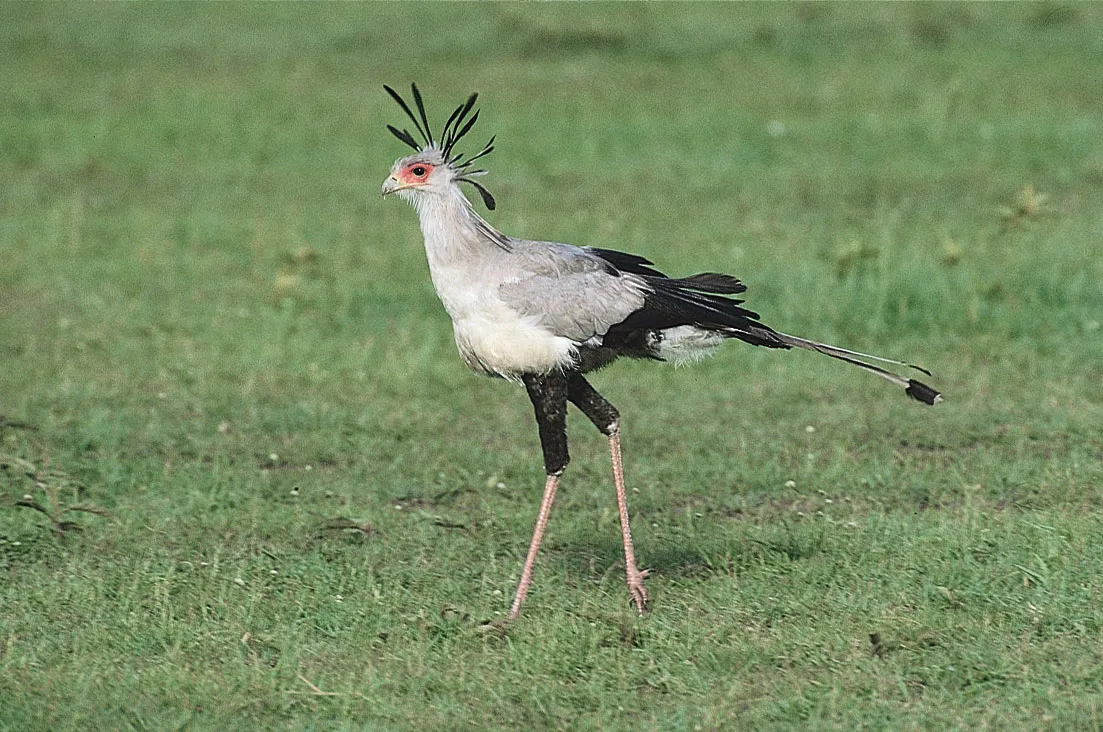
Its plumage is mostly grey and white, with contrasting black flight feathers and crest. The feathered crest, often likened to quill pens, gives the Secretary Bird its name.
Its face is bare and brightly colored in orange and yellow hues, making it unmistakable in the wild.

Its long tail and dramatic gait add to its theatrical appearance, making it one of Africa’s most photogenic and symbolic birds.

4. Symbol of Power and Prestige (Facts About the Secretary Bird)

The Secretary Bird holds deep symbolic value across Africa. It is the national emblem of Sudan and appears prominently on the South African coat of arms,
representing vigilance, strength, and the power to strike decisively when necessary.

In many cultures, the bird’s ability to kill snakes makes it a protector—a living guardian of fields and villages. Farmers often welcome its presence,
as it helps control populations of pests and dangerous reptiles.

This high regard has contributed to the bird’s protection and its revered status in both folklore and modern national identity.

5. A Conservation Concern in a Changing Landscape

Despite its fame, the Secretary Bird faces growing threats from habitat loss, agriculture, and fire regimes that alter its preferred open-grassland environments.
The species is now listed as Vulnerable on the IUCN Red List, with population numbers in decline across much of its range.

Conservationists are working hard to preserve protected areas and raise awareness about the importance of grassland ecosystems.
Organizations across Africa, including birding groups and ecotourism operators, are also helping to fund conservation through responsible tourism.

Every sighting of a Secretary Bird in the wild is a reminder of Africa’s complex biodiversity—and a call to action to protect it for future generations.

Conclusion of the Facts About the Secretary Bird

The Secretary Bird is not just another predator—it is a biological marvel, cultural icon, and ecological sentinel.
With its unmatched ability to stalk prey on foot, its regal appearance, and its fearsome reputation among snakes, the bird is a must-see for any wildlife enthusiast.

Witnessing this majestic creature stride across the savannah is a moment that stays with you—a vivid slice of untamed Africa.

Plan Your Encounter with the Wild

Want to see the incredible Secretary Bird up close in its natural habitat? Book your African safari today with WildHorn Africa—your trusted guide to unforgettable
wildlife encounters, expert-led tours, and immersive experiences across the continent’s most iconic landscapes.

WildHorn Africa offers curated adventures tailored to your interests—whether birdwatching, photography, big game, or cultural exploration.
Don’t just dream it—experience Africa the WildHorn way.

Facts About the Secretary Bird #Facts About the Secretary Bird

5 Fascinating Facts About the Ground Hornbill

5 Fascinating Facts About the Ground Hornbill

By Travel guides, Travel stories and blogs


5 Fascinating Facts About the Ground HornbillA deep dive into the life of Africa’s charismatic and endangered bird of thunder.

Introduction to the Facts About the Ground Hornbill

Towering over the African savannah with their vivid red faces and booming voices, ground hornbills are unlike any other birds.
These striking black-feathered giants are members of the hornbill family, but they defy the norms of their tree-dwelling relatives by spending most of their lives on foot.
With their intelligent eyes, methodical hunting style, and thunderous calls that echo for miles, ground hornbills are both captivating and critical to their ecosystems.

Yet despite their majesty, these birds are increasingly rare, threatened by habitat destruction and changing cultural perceptions.
Let’s uncover the secrets behind this incredible species with five in-depth, factual insights into the life of the ground hornbill.

Table of Contents

Facts About the Ground Hornbill

1. The Largest Hornbills on Earth

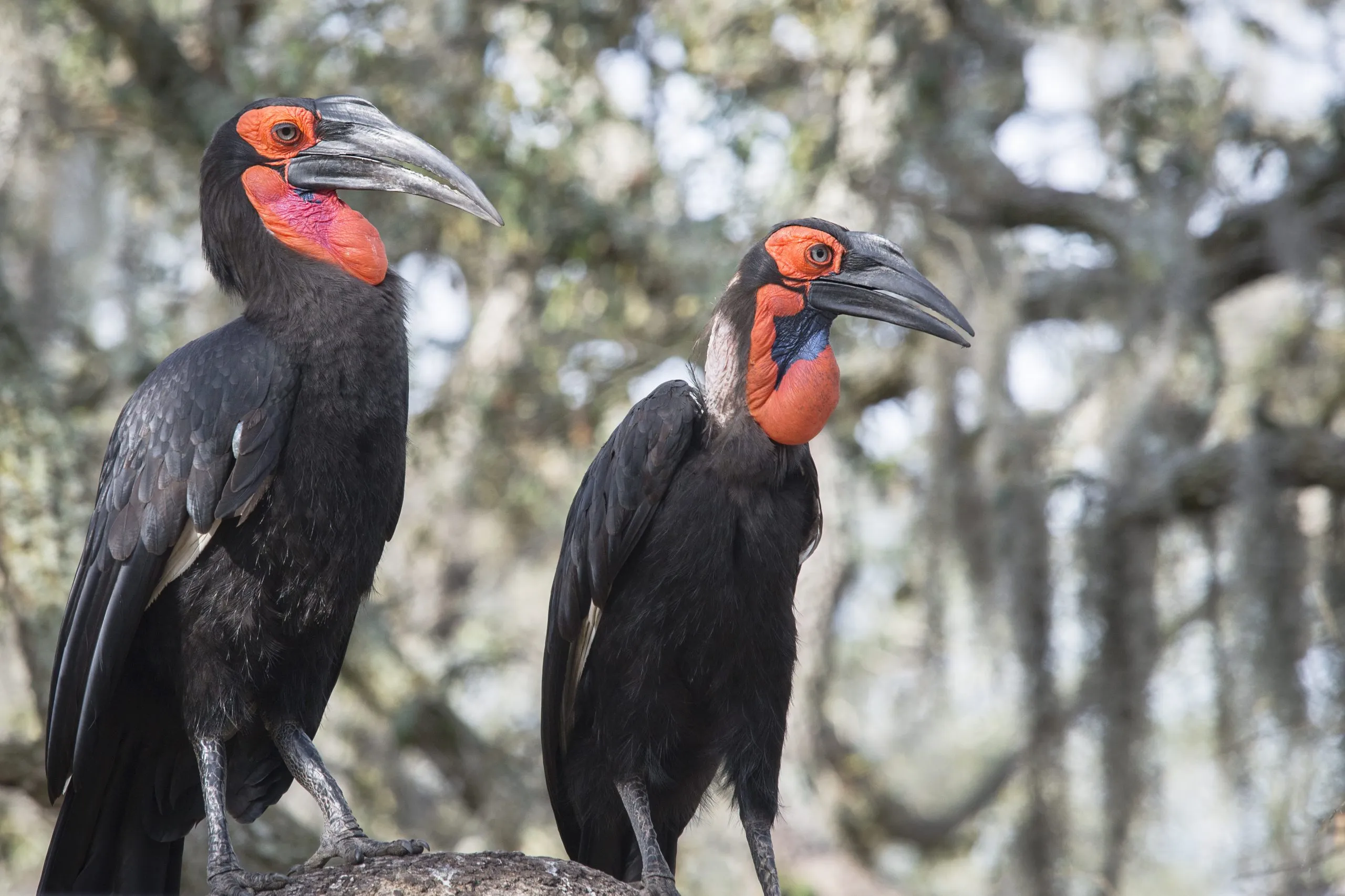
The Southern ground hornbill (Bucorvus leadbeateri) is not only the largest hornbill in Africa—it is the largest hornbill species in the world.
Adults stand nearly 1 meter (3.3 feet) tall, with wingspans of up to 1.8 meters (6 feet).

Their impressive size is matched by their imposing appearance. With jet-black plumage, long lashes, and vibrant red facial and throat skin (blue in juveniles),
they command immediate attention in the open grasslands and savannahs they inhabit. Their strong, downward-curving bills serve as versatile tools for hunting and defense.

2. Walking Predators with a Carnivorous Diet

While many hornbills feed on fruit and insects in treetops, ground hornbills are carnivorous hunters that forage primarily on the ground.
They consume a wide range of prey including insects, snakes, lizards, amphibians, tortoises, small mammals, and even birds.

Their hunting style is deliberate and cooperative. Groups often move in coordinated fashion, covering ground methodically and using their powerful beaks to dig, stab, and pry open prey.
This unique foraging behavior is an example of their advanced intelligence and social cooperation.

3. A Thunderous Voice that Travels for Kilometers

One of the most remarkable traits of the ground hornbill is its booming call, which sounds more like a deep drumbeat or thunderclap than a bird’s voice.
This call can travel up to 3 kilometers across the savannah, and is often used to communicate across vast distances between family groups or to declare territory.

The species has a unique inflatable throat sac (more prominent in males) that resonates the sound, acting like a built-in amplifier.
These vocalizations are heard primarily at dawn and dusk, serving as a natural alarm clock in the African bush.

4. Lifelong Bonds and Cooperative Parenting (Facts About the Ground Hornbill)

Ground hornbills live in tightly knit family units usually consisting of a dominant breeding pair and several helper birds, often previous offspring.
These groups exhibit strong social cohesion and remarkable cooperative breeding behavior, where non-breeding individuals assist in raising chicks.

Breeding is infrequent—females may lay only one or two eggs every three to nine years. Usually, only one chick survives, as the stronger often outcompetes the weaker.
The helpers assist in feeding and protecting the young during the lengthy development phase, which may take up to a year before full independence.

This long parental investment and slow reproduction rate contribute to the species’ vulnerability.

5. Endangered Icons with Cultural Significance

Despite their majesty and ecological role, ground hornbills are classified as Vulnerable by the IUCN, with some regional populations considered Critically Endangered.
Threats include habitat loss, persecution, and power line collisions. Their slow reproduction rates only exacerbate their decline.

Culturally, ground hornbills are woven into African mythology. In many traditions, they are seen as omens of rain or messengers from the ancestors.
While some cultures protect them, others historically viewed them with fear or suspicion, leading to their persecution.

Conservation programs today are focused on education, captive breeding, reintroduction, and cultural dialogue to ensure these iconic birds continue to thrive in the wild.

Conclusion of the Facts About the Ground Hornbill

Ground hornbills are more than just large birds with a loud voice—they are intelligent, complex, and ecologically vital species.
Their behaviors—from carnivorous hunting to cooperative parenting—challenge our perceptions of bird life.
But their declining numbers also remind us of our responsibility to preserve Africa’s wild treasures.

By learning more about these unique birds and supporting conservation efforts, we help protect not just a species, but the cultural and biological diversity they represent.

Facts About the Ground Hornbill #Facts About the Ground Hornbill Facts About the Ground Hornbill

Flora and Fauna of Mount Elgon National Park

Flora and Fauna of Mount Elgon National Park

By Travel stories and blogs, Adventure holidays, Safari holidays, Uganda travel guides

Flora and Fauna of Mount Elgon National Park

The Living Tapestry of Mount Elgon

Rising majestically along the Uganda-Kenya border, Mount Elgon National Park is a sanctuary of biodiversity, where life flourishes amid the remnants of one of Africa’s oldest volcanoes. Its slopes, carved by millennia of geological activity, host a rich mosaic of ecosystems—from dense montane forests and bamboo belts to moorlands and expansive grasslands. The park is not only a haven for nature enthusiasts but also a living laboratory for scientists, conservationists, and eco-tourists seeking to understand the delicate balance between environment, wildlife, and human activity.

To traverse Mount Elgon is to encounter life in its myriad forms: towering trees dripping with moss, streams alive with frogs and insects, elephants seeking salt in subterranean caves, and rare birds soaring above the caldera rim. Every step reveals intricate relationships, adaptations, and interactions that define the mountain’s flora and fauna. Understanding this diversity enhances appreciation of the park not merely as a scenic destination but as an intricate ecological system.

This article delves into the botanical and zoological richness of Mount Elgon National Park, exploring the unique species, ecological zones, and conservation challenges that make it a cornerstone of Uganda’s natural heritage.

The Botanical Wealth of Mount Elgon

Montane Forests: Verdant Complexity

The lower slopes of Mount Elgon are cloaked in montane forests, which serve as vital reservoirs of biodiversity. These forests are characterized by towering trees, dense undergrowth, and a complex web of life. Tree species such as Newtonia, Maesopsis, and Syzygium dominate the canopy, providing shelter and sustenance for countless bird, mammal, and insect species. Mosses and lichens cover trunks and branches, creating a soft, almost otherworldly atmosphere that shrouds the forest floor in muted green light.

Underneath the canopy, ferns and shrubs thrive, creating microhabitats for amphibians and small mammals. These montane forests play a critical ecological role, maintaining soil stability, regulating water flow, and capturing carbon, thereby mitigating climate change. From a photographic perspective, the interplay of light and shadow within these forests offers endless opportunities for dramatic and intimate compositions.

Bamboo Belts: Natural Engineering Marvels

As elevation increases, bamboo zones emerge, marking a transition from dense forest to the open moorlands. Bamboo in Mount Elgon grows in dense thickets, often forming almost impenetrable walls that provide both food and shelter for wildlife. Elephants and primates are known to feed on bamboo shoots, and the dense clusters serve as breeding grounds for several bird species.

Bamboo belts also function as ecological buffers. Their deep root systems prevent erosion on the mountain slopes, and their rapid growth allows them to recover quickly from natural disturbances, demonstrating a resilience that few other plant species can match. For hikers and nature observers, walking through these bamboo corridors feels like entering a secluded and timeless world, where the wind through the stalks creates a symphony of natural sound.

Moorlands and Afro-Alpine Vegetation

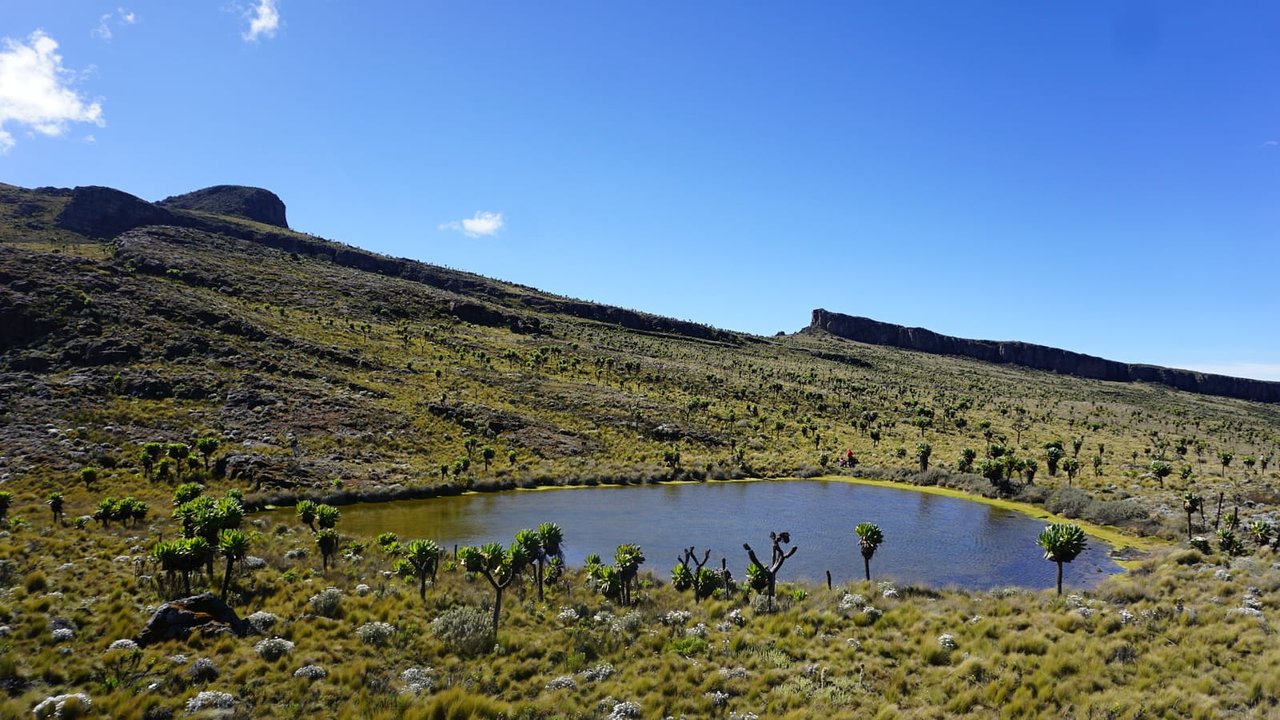
Higher up, the landscape transforms into moorlands dominated by giant lobelias, groundsels, and heathers. These plants, unique to East Africa’s highlands, have adapted to extreme conditions of high UV exposure, fluctuating temperatures, and thin volcanic soils. The giant lobelia (Lobelia deckenii), in particular, is a striking botanical spectacle, with towering flower stalks that can reach several meters in height.

Moorlands are visually dramatic and ecologically vital. They act as catchment areas, regulating water flow into streams and rivers that descend the mountain, supporting both wildlife and human communities. These zones also host endemic plant species, meaning they are found nowhere else in the world, emphasizing Mount Elgon’s global ecological significance.

Faunal Diversity: Life on the Slopes

Mammalian Residents

Mount Elgon is home to a diverse assemblage of mammals, ranging from elusive forest dwellers to conspicuous grazers. The park’s elephants are particularly unique for their cave-visiting behavior, mining salt from the walls of Kitum and Kapkwai caves. This rare adaptation is found only in a few regions globally and provides a striking example of animal intelligence and ecological adaptation.

Primates such as red-tailed monkeys, black-and-white colobus monkeys, and baboons inhabit the montane forests, often visible along trails and in bamboo belts. These species contribute to seed dispersal and forest regeneration, underlining their ecological importance. Smaller mammals, including duikers, bushbucks, and hyraxes, inhabit both forest and moorland zones, often going unnoticed due to their secretive habits but playing essential roles in the mountain’s food web.

Predators are present as well, though in lower densities. Servals and genets roam the forest understory, while larger carnivores like leopards, though rare, continue to inhabit the region, ensuring natural ecological balance.Flora and Fauna of Mount Elgon National Park

Avian Richness

Mount Elgon is a birder’s paradise, boasting over 300 species of birds. The diversity spans montane forest specialists, moorland dwellers, and migratory species. Among the most iconic is the lammergeyer, a rare bearded vulture that soars over cliffs, preying on bones and carrion. Its presence reflects the health of the mountain’s ecosystems, as it requires expansive territories and undisturbed habitats.

Other notable species include turacos with brilliant plumage, sunbirds flitting between flowering plants, and hornbills nesting in tree cavities. Birdwatchers visiting Mount Elgon can observe intricate behaviors, courtship displays, and feeding strategies, often guided by local experts who combine ecological knowledge with cultural insights.

Amphibians, Reptiles, and Invertebrates

The mountain’s streams, wetlands, and forest floors support a range of amphibians, including endemic frogs that are indicators of environmental health. Reptiles such as chameleons, geckos, and snakes inhabit various zones, each adapted to its specific microhabitat.

Invertebrates, though often overlooked, are extraordinarily diverse. Butterflies, moths, beetles, and ants contribute to pollination, decomposition, and nutrient cycling. Entomologists find Mount Elgon particularly intriguing for studying high-altitude adaptations and species interactions that cannot be observed elsewhere.

Ecological Interactions and Adaptations

The richness of Mount Elgon’s flora and fauna is a product of millions of years of evolution, where species have adapted to specific elevation zones, climate patterns, and geological formations. Elephants mining cave salt illustrate behavioral adaptation to nutrient scarcity, while plants like lobelias have evolved structural modifications to survive high UV radiation and nighttime freezing.

Pollination, seed dispersal, predator-prey relationships, and competition for resources create a dynamic equilibrium. Forests feed moorlands through water regulation, animals aid forests through seed dispersal, and human communities contribute through conservation initiatives. Understanding these interactions provides insight into why Mount Elgon is considered a keystone ecosystem of East Africa.

Conservation and Threats

Despite its ecological importance, Mount Elgon faces multiple conservation challenges. Deforestation for agriculture, human settlement encroachment, and illegal resource extraction threaten habitats. Climate change introduces additional pressures, altering rainfall patterns, affecting water availability, and influencing species distribution.

Efforts to mitigate these threats have been proactive. Community conservation initiatives, park ranger patrols, and environmental education programs are implemented to protect both species and habitats. Scientific research and ecological monitoring provide data for informed management, ensuring that Mount Elgon’s biodiversity is preserved for future generations.

Tourism and Educational Opportunities

Mount Elgon’s biodiversity is not only an ecological treasure but also an educational resource. Eco-tourism, bird watching, botanical studies, and wildlife photography are increasingly integrated into park management strategies. Guided hikes through different elevation zones allow tourists to learn about species adaptations, ecological roles, and conservation challenges.

Community involvement enhances these experiences, as local guides provide unique insights into both ecological knowledge and traditional practices that have coexisted with the environment for centuries. For visitors, these encounters transform leisure into learning, emphasizing that the mountain’s value extends beyond recreation to global ecological significance.

Flora and Fauna as a Cultural Lens

The mountain’s biodiversity is deeply entwined with the cultural practices of surrounding communities. Forests provide medicinal plants, bamboo is used for construction and crafts, and wildlife features in folklore and traditional beliefs. Understanding the flora and fauna of Mount Elgon is therefore inseparable from understanding the cultural landscape, illustrating how conservation and culture are mutually reinforcing.

For example, sacred groves are protected not only for spiritual reasons but also because they harbor endemic species. Community rituals often occur in proximity to ecologically sensitive areas, embedding environmental awareness within cultural norms. Visitors engaging with both nature and community gain a holistic appreciation of the mountain’s interconnectedness.

Practical Tips for Exploring Mount Elgon’s Biodiversity

Hiking through Mount Elgon to observe flora and fauna requires preparation. Early mornings and late afternoons are ideal for spotting animals, as cooler temperatures encourage movement. Binoculars and cameras enhance bird and mammal observation, while sturdy footwear is essential for traversing forest floors, bamboo corridors, and moorlands.

Guides familiar with the park’s ecosystems provide invaluable insights into species identification, behavior, and habitat. They also ensure that visitors minimize ecological disturbance, making each encounter ethical and safe. Whether the goal is photography, wildlife observation, or educational study, preparation, awareness, and respect for the environment are crucial.

Preserving the Mountain’s Living Legacy

The flora and fauna of Mount Elgon National Park represent one of East Africa’s richest and most complex ecosystems. From dense montane forests and bamboo thickets to expansive moorlands and teeming streams, the park is a showcase of evolutionary adaptation, ecological interdependence, and conservation significance. Its wildlife, ranging from elephants and primates to rare birds and endemic plants, reflects the mountain’s global importance as a biodiversity hotspot.

For travelers, scientists, and conservationists, Mount Elgon is more than a scenic destination—it is a living classroom, a sanctuary, and a symbol of the delicate balance between nature and human activity. Engaging responsibly with this biodiversity ensures that its ecological, cultural, and educational values endure.

To experience Mount Elgon’s unique flora and fauna while supporting conservation and local communities, it is recommended to book tours through WildHorn Africa, a trusted expert in curating unforgettable safaris and trekking adventures across Uganda. With their expertise, every visit becomes both an ecological journey and a meaningful contribution to preserving one of Africa’s most treasured landscapes.

Birdwatching in Semuliki: Over 400 Rare Species

Birdwatching in Semuliki: Over 400 Rare Species

By Travel stories and blogs, Bucket list holidays, Luxury holidays, Safari holidays, Uganda travel guides

Birdwatching in Semuliki: Over 400 Rare Species

A Paradise of Wings in Uganda’s Hidden Wilderness

In the western reaches of Uganda, where the Congo Basin rainforest stretches into the Albertine Rift Valley, lies a treasure that few birdwatchers can resist—Semuliki National Park. This extraordinary sanctuary, although smaller and less famous than some of Uganda’s other reserves, has earned global recognition as a birding paradise. More than 400 bird species have been recorded here, many of which are rare, elusive, and confined to the forests of Central Africa.

To step into Semuliki is to enter a world where the dawn chorus is unlike anywhere else in Uganda, where the forest canopy bursts into life with whistles, cackles, and trills from birds that cannot be seen in other parts of East Africa. Every turn of the trail brings the promise of a new species, every patch of sunlight on the forest floor may reveal flashes of color, and every pause in silence can be rewarded with the rustle of wings. For ornithologists, conservationists, and passionate travelers, birdwatching in Semuliki is not just an activity but a journey into one of Africa’s most exhilarating natural theaters.

The Unique Setting of Semuliki National Park

Semuliki National Park lies in Bundibugyo District, on the floor of the Rift Valley, covering 220 square kilometers of lowland tropical rainforest. Unlike Uganda’s other forests, which are largely montane or transitional, Semuliki is an extension of the Ituri Rainforest of the Democratic Republic of Congo, one of the oldest and most diverse forests in Africa.

This location makes the park ecologically distinct. It is not only home to species typical of Central Africa but also serves as a crossroads where Central and East African ecosystems merge. Its altitude, ranging between 670 and 760 meters above sea level, allows for conditions that favor lowland rainforest specialists rarely encountered elsewhere in Uganda. The Semuliki River, winding along the western border, further enriches the park by sustaining swampy floodplains and riparian habitats that attract aquatic and semi-aquatic birds.

The combination of forest, swamp, and river ecosystems creates a mosaic of habitats, each harboring its own assemblage of bird species. This is why Semuliki, despite its modest size, holds one of the highest densities of avian diversity in East Africa.

A Birding Haven: Over 400 Rare Species

Diversity Beyond Comparison

More than 441 bird species have been documented in Semuliki National Park. This accounts for nearly 40% of Uganda’s total bird species and two-thirds of its forest birds. The park is also the only place in East Africa where several Congo Basin endemics can be reliably observed, making it an indispensable destination for birdwatchers intent on expanding their life lists.

What sets Semuliki apart is not merely the number of species but the rarity and uniqueness of those found here. Birders who may already have explored Uganda’s savannah parks or montane forests are often astonished by the distinctiveness of Semuliki’s checklist. This is a place where species such as the Nkulengu rail, yellow-throated cuckoo, and blue-billed malimbe are not just possible but likely with patience and skilled guiding.

Rare and Endemic Species

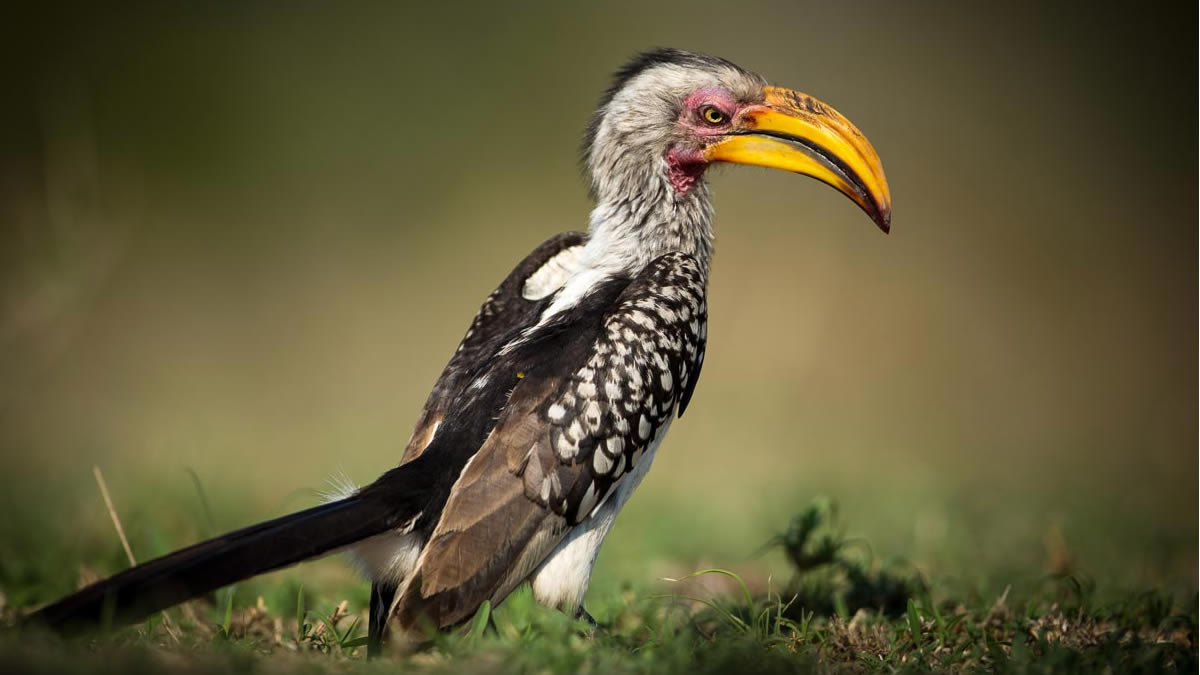
The park is celebrated for hosting Central African endemics that extend only marginally into Uganda. Among the highlights are the Congo serpent eagle, an imposing raptor that soars above the canopy; the black-wattled hornbill, whose deep wingbeats echo across the forest; and the white-crested hornbill, recognizable by its striking head plumes and noisy calls.

Other rare sightings include the red-billed dwarf hornbill, the elusive piping hornbill, and the yellow-throated nicator. Colorful species such as the crested malimbe and the blue-billed malimbe dazzle with their plumage, while the Nkulengu rail, with its nocturnal booming calls, remains a prize for patient birders.

The presence of these species gives Semuliki its legendary reputation, making it a must-visit location not only for Uganda’s birding circuits but for Africa’s birdwatching scene as a whole.

Birding Habitats in Semuliki

The Rainforest Canopy

The dense rainforest canopy is perhaps the most rewarding yet challenging habitat for birdwatchers. Birds are often heard long before they are seen, their calls echoing from layers of foliage high above. Canopy specialists such as hornbills, turacos, and greenbuls dominate this layer. The challenge lies in spotting fleeting movements through the leaves, but the reward is immense when species like the white-crested hornbill or yellow-throated cuckoo are observed in clear view.

Swamps and Floodplains

The swampy stretches around the Semuliki River offer habitats for aquatic and semi-aquatic birds. Kingfishers, herons, and weaver species are common here, but so too are rarities such as the African dwarf kingfisher. The quiet edges of the river provide birders with easier observation opportunities compared to the dense forest trails.

Forest Understory

The shadowy understory of the rainforest hosts insectivorous species and shy ground dwellers. Birds like the Nkulengu rail and forest robin may be encountered here, often requiring stillness and patience to catch fleeting glimpses. Walking slowly along forest paths, one can often detect movement by the rustle of leaves or the flash of a wing near the forest floor.

Birding Trails and ExperienceBirdwatching in Semuliki: Over 400 Rare Species

The Kirumia Trail

The Kirumia Trail is the premier birding route in Semuliki. Stretching for 13 kilometers from the main road to the Semuliki River, it offers an all-day immersive experience through diverse habitats. Birders on this trail may record dozens of species, from canopy hornbills to understory specialists, making it the ultimate showcase of Semuliki’s avian wealth.

The Sempaya Trail

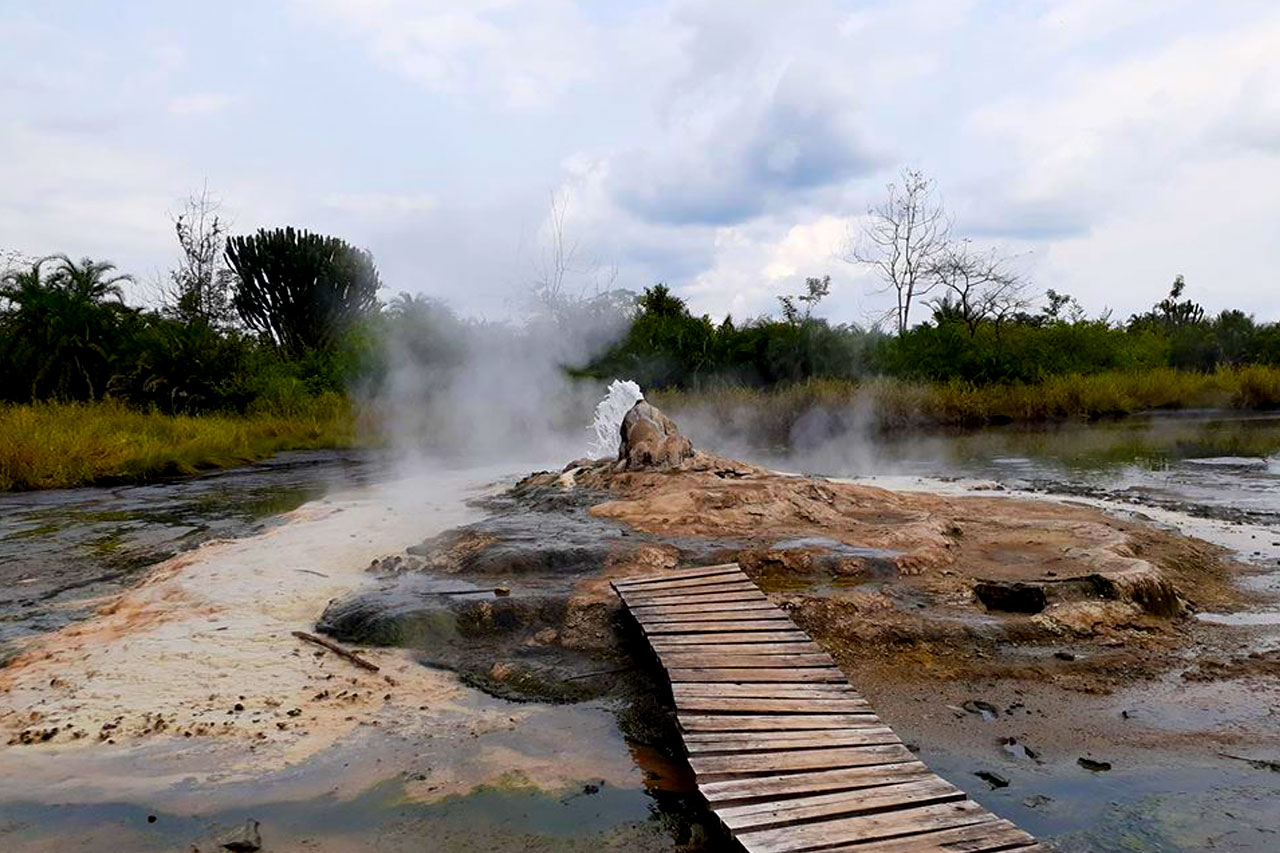
This shorter trail leads visitors to the famous Sempaya Hot Springs, but along the way it also provides rewarding birding opportunities. Species like the red-billed dwarf hornbill and piping hornbill are often spotted here, and the open clearings near the springs sometimes reveal raptors circling overhead.

The Red Monkey Trail

Located near the park’s eastern border, this trail is particularly productive for primates but also yields exciting birding encounters. Its more open forest structure allows for better light, making it easier to spot and photograph species such as the blue-billed malimbe.

he Birdwatching Atmosphere: An Immersive Encounter

Birdwatching in Semuliki is unlike the experience in savannah or grassland parks. The forest environment demands attentiveness and patience. Birds may remain hidden for long stretches, their presence betrayed only by calls or rustling movements. Yet the thrill of discovery is amplified by this challenge. Each sighting feels like a triumph, each new species a reward for perseverance.

The atmosphere of birding here is deeply immersive. Morning mists drift through the forest as the first calls ring out. Hornbills fly heavily across the canopy, while sunbirds flit between blossoms in patches of light. By mid-morning, the forest resonates with a symphony of trills, whistles, and cackles, an auditory feast even when visual sightings are few.

Afternoons often bring quieter moments, but birders know that patience can reveal gems—a malimbe constructing a nest, a raptor gliding silently overhead, or the sudden call of the Nkulengu rail as evening descends. Night walks, too, introduce a chorus of owls and nocturnal birds, completing the round-the-clock spectacle.

The Role of Skilled Guides

Birdwatching in Semuliki is enhanced immeasurably by the knowledge of experienced guides. Local guides possess intimate familiarity with bird calls, behavior, and habitats. Their ability to recognize subtle movements or mimic bird calls often makes the difference between missing or recording a rare species.

Guides also enrich the experience with cultural stories, ecological knowledge, and conservation insights, ensuring that birding is not only about checklists but also about a deeper understanding of the park’s living systems. For visitors new to Central African birds, the expertise of guides is invaluable in navigating the complexity of species identification.

Conservation Significance of Birdlife in Semuliki

The bird species of Semuliki are not merely attractions for tourism; they are indicators of ecological health and guardians of the forest’s future. Many of the park’s species are dependent on intact lowland rainforest, making their survival intrinsically linked to conservation efforts.

Birds play vital ecological roles as pollinators, seed dispersers, and pest controllers. The hornbills, for example, are essential for spreading the seeds of large forest trees, ensuring regeneration. Insects are kept in balance by insectivorous species, while nectar-feeding birds contribute to plant pollination.

The conservation of Semuliki’s birdlife is therefore a priority, not only for tourism but also for the long-term resilience of the ecosystem. Protection against deforestation, hunting, and habitat encroachment is central to ensuring that the forest continues to echo with the calls of its avian residents for generations to come.

Best Time for Birdwatching in Semuliki

Birdwatching in Semuliki can be rewarding throughout the year, but seasonal variations influence activity and accessibility.

The dry seasons from December to February and June to September offer easier hiking conditions and clearer views, making them popular for birders. Trails are more accessible, and visibility improves as foliage thins slightly.

The wet seasons, from March to May and October to November, transform the forest into a vibrant paradise, rich in insect life and flowering plants. This abundance stimulates bird activity, while migratory species may also be present. Although trails can become slippery, dedicated birders often find the wet months even more rewarding.

Regardless of season, the sheer diversity of birds ensures that every visit yields memorable encounters, whether it is the sight of a hornbill in flight or the song of a rare malimbe.

Birdwatching as Part of the Semuliki Experience

Although birdwatching is the defining feature of Semuliki, it is enriched by the park’s other attractions. The Sempaya Hot Springs offer dramatic geothermal wonders, while encounters with primates such as the black-and-white colobus monkey add variety to excursions. Cultural visits to nearby Batwa and Bamba communities deepen appreciation of how humans and the forest have coexisted for centuries.

This holistic experience ensures that birdwatching in Semuliki is not an isolated activity but part of a broader journey into Uganda’s cultural and natural heritage. The park becomes more than a birding checklist; it becomes a story of interconnected life, from the wings of hornbills to the rituals of local communities.

A Rare Treasure of Wings

Semuliki National Park is a place where the extraordinary diversity of birdlife converges with the beauty of ancient rainforests, creating an experience unlike anywhere else in East Africa. With more than 400 rare and remarkable species, many found nowhere else in Uganda, it stands as a beacon for birdwatchers seeking authenticity, rarity, and challenge.

To watch birds in Semuliki is to be immersed in an orchestra of wings and songs, where patience and attentiveness are rewarded with unforgettable encounters. Beyond the birds, it is a journey into the living heart of one of Africa’s oldest ecosystems, where cultural legends, geothermal wonders, and wildlife together shape an adventure that endures in memory.

Those who long to discover this avian paradise are encouraged to take their journey with trusted expertise. For seamless, enriching, and unforgettable safaris across Uganda and beyond, it is highly recommended to book your African tours with WildHorn Africa, a partner committed to unlocking the wonders of the continent.

Exploring Semuliki National Park: Uganda’s Birding Paradise

Exploring Semuliki National Park: Uganda’s Birding Paradise

By Travel stories and blogs, Family holidays, Safari holidays, Uganda travel guides

Exploring Semuliki National Park: Uganda’s Birding Paradise

A Hidden Gem of African Wilderness

Nestled in the remote western corner of Uganda, where the vast Congo Basin merges with the Albertine Rift Valley, lies Semuliki National Park, a sanctuary often described as Uganda’s birding paradise. Unlike the world-famous Bwindi Impenetrable or Queen Elizabeth National Park, Semuliki remains relatively untouched, offering travelers an intimate and authentic wilderness experience. It is a destination that escapes the gaze of mass tourism, quietly preserving a wealth of biodiversity and cultural richness that makes it truly exceptional.

The park is celebrated for its extraordinary birdlife, but its story is far richer than avian wonders alone. Ancient rainforests, meandering rivers, bubbling hot springs, diverse wildlife, and vibrant local communities together weave a narrative that speaks to the very essence of African wilderness. Visitors who step into Semuliki find themselves immersed in a realm where Central African rainforest meets East African savannah, creating a melting pot of ecosystems and species that cannot be found elsewhere in the region.

To explore Semuliki is to be captivated by nature in its purest form: the calls of exotic birds reverberating through the forest canopy, the shimmering haze of geothermal springs rising into the morning air, the soft rustle of primates leaping between branches, and the stories of indigenous communities whose lives remain deeply intertwined with the forest. This is not simply a national park; it is a living, breathing mosaic of nature and culture, preserved for those who venture into Uganda’s lesser-known frontiers.

Location and Geography: The Heart of the Rift Valley

Semuliki National Park is situated in Bundibugyo District, straddling Uganda’s western frontier with the Democratic Republic of Congo. Encompassing about 220 square kilometers, the park may be modest in size, but it is incredibly rich in ecological diversity. The Semuliki River, which meanders lazily along the park’s western boundary, serves as a natural demarcation line between Uganda and Congo. Its floodplains, swamps, and oxbow lakes foster habitats for numerous aquatic species, particularly migratory and resident birds.

The park lies at an altitude ranging between 670 and 760 meters above sea level, making it one of the few lowland tropical rainforests in East Africa. This distinguishes it from the montane forests of Bwindi or Kibale and creates conditions that mirror those of the vast Congo Basin. Its forests are, in fact, extensions of the Ituri Rainforest in Congo, one of the oldest surviving rainforests in the world, estimated to date back more than 25,000 years.

Surrounding the park are remarkable geographical features that frame its identity. To the northeast rise the mystical Rwenzori Mountains, their snow-capped peaks often veiled in clouds. To the west stretches the seemingly endless expanse of Congo’s Ituri, while the fertile Semliki Valley itself is a product of tectonic activity that carved the Rift Valley eons ago. This dramatic geography not only shapes the park’s scenery but also supports a remarkable array of ecosystems, from dense rainforest to riverine woodland and swamp.

The Rainforest Ecosystem: An Ancient Refuge

Semuliki National Park protects one of the few remaining true lowland rainforests in East Africa. Entering its forest is like stepping back in time, into an environment that has existed unchanged for millennia. The canopy towers above like an emerald cathedral, its high branches interwoven with lianas and epiphytes, while the understory teems with shrubs, fungi, and ferns. The air is thick with humidity, carrying the earthy scent of decaying leaves and the sweet fragrance of flowering plants.

This rainforest is not merely beautiful; it is also immensely productive, sustaining countless species. Over 400 bird species, more than 60 mammals, and an unrecorded abundance of insects, amphibians, and reptiles inhabit these forests. Many of these species are endemic to Central Africa, underscoring the park’s unique role as a bridge between East and Central African biodiversity.

Unlike Uganda’s montane forests, Semuliki’s lowland rainforest is easier to explore at ground level, allowing visitors to observe ecosystems in close proximity. Birders, in particular, find themselves immersed in habitats where every turn reveals new calls, colors, and movements. It is this intact and ancient ecosystem that gives Semuliki its reputation as a living museum of biodiversity.

Birding Paradise: The Crown Jewel of Semuliki

Among Semuliki’s greatest treasures is its reputation as one of the top birding destinations in Africa. With over 441 recorded species, the park accounts for nearly 40% of Uganda’s total bird species and almost 67% of the country’s forest birds. Such density and variety make it an unrivaled haven for ornithologists and birdwatching enthusiasts.

Endemic and Rare Species

Many of the species found in Semuliki are endemic to the Congo Basin, meaning that Uganda is the only East African country where they can be spotted. This gives birders an exceptional opportunity to record lifers without traveling deep into Central Africa. Among the most sought-after species are:

  • Nkulengu rail: A shy bird known for its loud, booming calls that often echo through the forest at night.

  • Congo serpent eagle: A striking raptor that soars gracefully above the canopy.

  • Black-wattled hornbill: A large and charismatic species often spotted flying in pairs across the forest.

  • White-crested hornbill: Recognizable by its unique crest and noisy calls.

  • Blue-billed malimbe: A colorful weaver species rarely found outside Central Africa.

  • Yellow-throated cuckoo and Crested malimbe: Both highly prized by birders for their rarity.

Beyond these, the park also shelters species such as the red-billed dwarf hornbill, piping hornbill, and the elusive African piculet, each adding to the richness of the birding checklist.

The Birding Experience

Birding in Semuliki is an experience that demands patience, skill, and a keen sense of observation. Guided walks along the Kirumia Trail, which stretches for about 13 kilometers through the heart of the forest, are particularly rewarding. Birders often spend hours along this trail, pausing frequently to listen for calls or spot movements in the canopy. Unlike open savannah birding, the forest environment makes every sighting a triumph, and the sense of discovery is heightened with each encounter.

What makes Semuliki especially appealing is that birding is not limited to one season. While certain migratory species arrive during specific months, the park’s endemic and resident birds remain active year-round. This ensures that birders, regardless of when they visit, are guaranteed a rewarding checklist.

Wildlife Beyond Birds

Although birds are the highlight, Semuliki National Park shelters an impressive variety of other wildlife. Over 60 species of mammals have been recorded, including some that are rarely seen elsewhere in Uganda.

The park is home to forest elephants, smaller and more elusive than their savannah counterparts. Their presence is often indicated by broken branches and footprints along muddy trails. Forest buffaloes, distinguishable by their darker coats, roam the swamps and floodplains. Antelope species such as the bay duiker and the rare water chevrotain add to the diversity, though their secretive nature makes sightings a rare privilege.

Primates also enrich Semuliki’s wildlife portfolio. Visitors may encounter black-and-white colobus monkeys, red-tailed monkeys, De Brazza’s monkeys, and occasionally even chimpanzees, though the latter are not habituated for tourism. Nocturnal primates such as pottos and galagos add an air of mystery during night walks.

Reptiles, amphibians, and insects abound, with species of butterflies alone numbering in the hundreds. Crocodiles and hippos are frequently seen along the Semuliki River, creating thrilling opportunities for riverine exploration.Exploring Semuliki National Park: Uganda’s Birding Paradise

The Sempaya Hot Springs: Wonders of Fire and Water

One of the park’s most iconic attractions is the Sempaya Hot Springs, geological marvels that steam and bubble in the midst of the rainforest. There are two main springs: the “male” hot spring, locally called Bintente, which is a large pool of boiling water, and the “female” hot spring, known as Nyasimbi, which is smaller but shoots water up to two meters high.

Beyond their scientific intrigue, the hot springs hold deep cultural and spiritual significance for the local communities. Legends tie them to ancestral spirits, fertility rituals, and community gatherings. Visitors often find guides sharing these stories, weaving myth and science into a captivating narrative. The springs also serve practical uses, as locals traditionally cook food such as eggs and plantains in the boiling waters.

Cultural Heritage: The People of Semuliki

Surrounding the park are diverse communities whose cultures enrich the visitor experience. The most notable are the Batwa pygmies, one of Africa’s oldest surviving indigenous groups. Traditionally forest dwellers, the Batwa once depended entirely on hunting, gathering, and forest resources for survival. Although modern pressures have altered their way of life, their knowledge of the forest remains unparalleled.

Visitors can engage with Batwa communities to learn about traditional dances, storytelling, hunting demonstrations, and herbal medicine. These cultural encounters not only deepen understanding but also provide vital support to local livelihoods.

The Bamba and Bakonzo people also inhabit the region, contributing to the area’s cultural richness. Their farming practices, rituals, and folklore demonstrate a profound connection with the land, while their vibrant markets and crafts offer insights into daily life in Bundibugyo.

Activities and Attractions

Exploring Semuliki is an adventure that unfolds across multiple dimensions. Birding remains the star activity, but nature walks, cultural encounters, and river excursions add variety to the experience.

Guided forest walks bring travelers into intimate contact with the rainforest’s beauty, from towering trees to elusive primates. Visits to the hot springs combine natural wonder with cultural storytelling, offering unique photo opportunities.

For those seeking more adventurous experiences, the Kirumia Trail provides a day-long hike through the forest to the Semuliki River, rewarding hikers with sightings of both birds and mammals. The Red Monkey Trail, closer to the park’s edge, is ideal for primate viewing. Night walks reveal a different side of the forest, alive with nocturnal creatures.

Cultural tours to nearby communities complete the Semuliki experience, ensuring that visitors leave with not only memories of wildlife but also an appreciation of human traditions intertwined with the forest.

Seasons of Discovery: When to Visit

Semuliki National Park welcomes visitors throughout the year, yet the experience varies with the seasons.

The dry seasons, from December to February and June to September, are considered the best for birding and hiking. Trails are more accessible, and wildlife activity is heightened around water sources. Birders, in particular, find these months rewarding, as visibility improves and activity is concentrated.

The wet seasons, from March to May and October to November, transform the forest into a lush, vibrant paradise. The rains bring out an explosion of life, from frogs and insects to flowering plants. Though trails can be muddy and challenging, the atmosphere is magical, and migratory bird species enhance birding opportunities.

Ultimately, the choice of when to visit depends on personal interests. Those seeking comfort and ease of movement may prefer the dry months, while those enchanted by the raw vibrancy of rainforests will find the wet season equally rewarding.

Unlocking Uganda’s Birding Treasure

Semuliki National Park is not just a destination—it is an experience that captivates the senses, ignites curiosity, and deepens appreciation for Africa’s wilderness. From its ancient rainforests to its steaming hot springs, from the calls of rare birds to the traditions of its people, Semuliki is a place where nature and culture exist in harmony.

For birders, it stands unmatched as Uganda’s finest paradise of wings and songs. For wildlife enthusiasts, it offers encounters with species rarely seen elsewhere. For cultural travelers, it reveals traditions rooted in centuries of coexistence with the forest. Above all, it is a sanctuary where one can escape the ordinary and connect with Africa at its most authentic.

Travelers who long to explore this hidden gem are encouraged to embark on their journey with expert guidance. For a seamless and enriching safari that brings together Uganda’s wonders, it is highly recommended to book your African tours and safaris with WildHorn Africa, a trusted partner in crafting unforgettable journeys into the heart of the continent.

Close Menu