search
A Complete Guide to Gorilla Trekking in Bwindi Impenetrable National Park

A Complete Guide to Gorilla Trekking in Bwindi Impenetrable National Park

By Travel stories and blogs, Primate holidays, Uganda travel guides

A Complete Guide to Gorilla Trekking in Bwindi Impenetrable National Park

Into the Heart of the Impenetrable

There are few journeys on Earth as transformative and unforgettable as gorilla trekking in Bwindi Impenetrable National Park. Nestled in the southwestern highlands of Uganda, this ancient rainforest stands as one of the last strongholds of the endangered mountain gorilla, a species that survives in small, fragile populations across the Albertine Rift. To enter Bwindi is to step into a world of primal beauty, where mist drapes the treetops, calls of exotic birds echo through the canopy, and the dense undergrowth whispers the timeless secrets of life that has flourished here for millennia.

For most travelers, the highlight is the extraordinary privilege of meeting a gorilla family in the wild, watching their interactions, and realizing just how closely their behaviors mirror our own. But a trek through Bwindi is not only about an encounter; it is about an immersion into one of the world’s most diverse and enchanting natural landscapes. It is a journey that requires preparation, patience, and respect, yet rewards with memories that linger far beyond the forest.

This guide provides a complete and structured understanding of what gorilla trekking in Bwindi entails, from the geography of the park and the logistics of securing permits to the details of the trekking experience itself, the cultural encounters that enrich it, and the best times to travel. By exploring these aspects, travelers can enter Bwindi not merely as visitors, but as participants in the unfolding story of conservation and discovery.

Understanding Bwindi Impenetrable National Park

A UNESCO World Heritage Site

Bwindi Impenetrable National Park spans over 331 square kilometers of dense montane and lowland forest, lying along the edge of the Rift Valley. Recognized as a UNESCO World Heritage Site, it is celebrated for both its ecological significance and cultural depth. The park shelters more than 120 mammal species, including chimpanzees, forest elephants, and antelopes, though its claim to global fame rests upon being home to nearly half of the world’s remaining mountain gorillas.

A Landscape of Mystique

The park’s terrain is as challenging as it is breathtaking. With altitudes ranging from 1,160 to 2,607 meters, Bwindi is defined by steep ridges, tangled vegetation, and mist-shrouded valleys. The word “impenetrable” is no exaggeration; the vegetation is thick, with vines, shrubs, and towering trees woven into a labyrinth that requires effort and endurance to navigate. Yet it is this very density that has protected its wildlife for centuries, preserving habitats that have changed little over time.

The Gorillas of Bwindi

The Endangered Mountain Gorillas

The mountain gorilla (Gorilla beringei beringei) is one of the most endangered primates in the world, with just over 1,000 individuals remaining globally. Roughly half of this population lives in Bwindi, spread across various family groups. Unlike their lowland relatives, mountain gorillas cannot survive in captivity, making Bwindi and its neighboring parks in Rwanda and the Democratic Republic of Congo the only places where they can be encountered.

Habituated Gorilla Families

In order to allow trekking while protecting gorillas, specific families in Bwindi have been habituated, a careful process through which gorillas become accustomed to human presence without losing their natural behaviors. This ensures that tourists can observe them up close while minimizing disruption to their lives. Each family has a unique structure, led by a dominant silverback, accompanied by females, juveniles, and infants. Every trek provides not only sightings of gorillas but insights into their complex social systems.

Preparing for Gorilla Trekking

Securing a Gorilla Permit

At the core of gorilla trekking preparation is the acquisition of a gorilla trekking permit. Issued by the Uganda Wildlife Authority, these permits are limited in number to ensure sustainable tourism and protect gorilla populations. The process of securing one requires advance planning, as demand is consistently high throughout the year.

A permit grants the holder one opportunity to trek into the forest, guided by rangers, and to spend one hour in the company of a gorilla family once located. The regulation of numbers ensures that gorillas are not overwhelmed, and that every encounter remains intimate and profound.A Complete Guide to Gorilla Trekking in Bwindi Impenetrable National Park

Physical Preparation

Trekking in Bwindi requires stamina and determination. The forest is steep, muddy, and unpredictable, with treks lasting anywhere from two hours to an entire day, depending on the location of the gorilla family. Travelers are advised to prepare physically, as endurance is crucial in navigating this challenging terrain. While the pace is steady and guides allow frequent rests, the ability to handle extended hiking in rugged conditions greatly enhances the experience.

Essential Gear

Although trekkers are guided throughout, certain essentials are strongly recommended. Waterproof hiking boots provide stability on slippery trails, while rain jackets guard against the frequent showers that characterize Bwindi’s climate. Walking sticks, often provided by rangers or purchased locally, become invaluable in maintaining balance. Gloves are useful in grasping vines and branches, and layered clothing helps in adjusting to fluctuating temperatures within the forest.

The Trekking Experience

Beginning the Journey

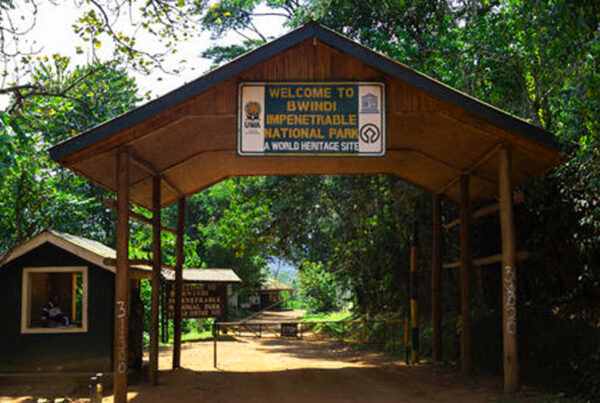
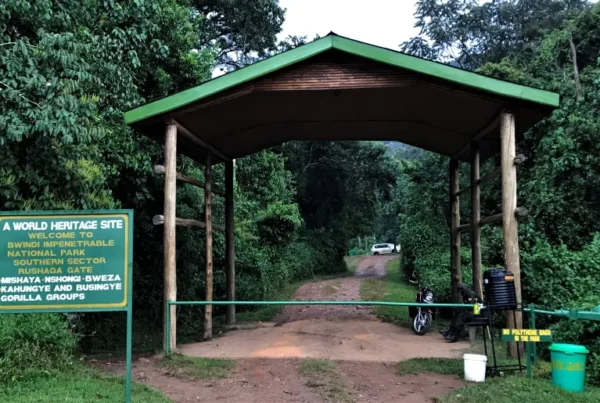
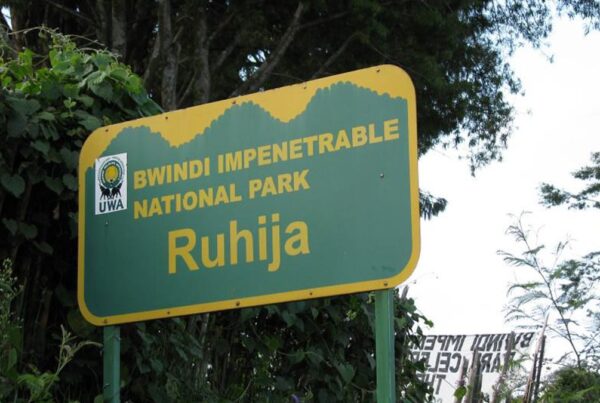
A typical gorilla trek begins at one of the park’s entry points—Buhoma, Ruhija, Rushaga, or Nkuringo. Here, visitors are welcomed by rangers who conduct a detailed briefing. Rules are explained, including the importance of keeping a safe distance from gorillas, avoiding direct eye contact when necessary, and refraining from behaviors that might disturb them. Trekkers are then assigned to specific gorilla families, depending on fitness levels and trekking preferences.

Into the Forest

The forest trek itself is an adventure unlike any other. Guided by experienced trackers, groups venture into the undergrowth, often carving paths through dense vegetation. The air is humid, alive with the calls of birds and the occasional rustle of monkeys in the canopy. Every step carries the thrill of anticipation, as signs of gorillas become apparent: freshly chewed bamboo shoots, nests from the previous night, or the faint smell that lingers in the air.

The Encounter

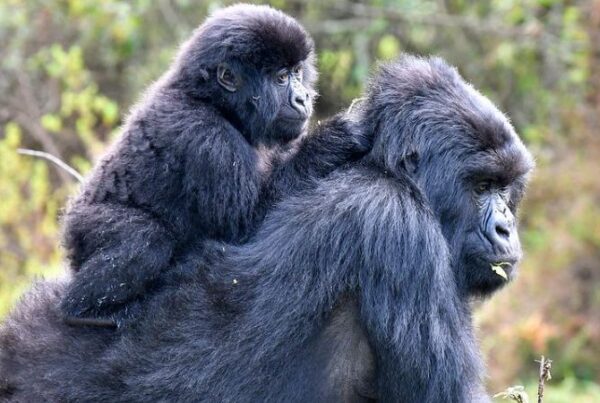
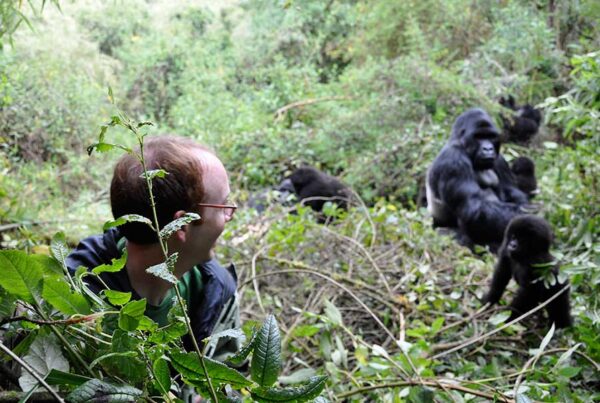
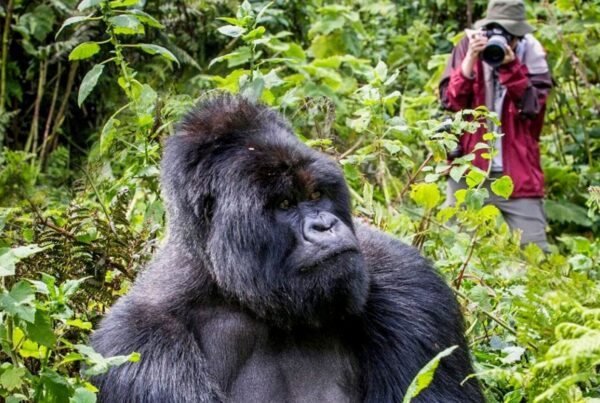
At last, the moment arrives when a gorilla family is sighted. The scene is both humbling and exhilarating. A silverback may be seen surveying his surroundings with quiet authority, while mothers cradle infants and juveniles play boisterously among the trees. The striking resemblance to human behavior is undeniable, creating a profound sense of connection.

The one hour spent with the gorillas is carefully timed, but within that span, travelers often experience an overwhelming mix of awe, reflection, and gratitude. Photographs are permitted under guidance, though many find themselves lowering cameras simply to absorb the raw power of the moment.

Cultural Encounters Beyond Trekking

The Batwa Heritage

Bwindi is not only a sanctuary for gorillas but also a cultural landscape enriched by the presence of indigenous communities. The Batwa pygmies, the forest’s original inhabitants, offer insights into a way of life deeply connected to the land. Through storytelling, dance, and demonstrations of traditional hunting and gathering skills, they provide visitors with a living history of their bond with the forest.

The Bakiga Communities

The Bakiga people, who cultivate the terraced hillsides around Bwindi, also contribute to the cultural mosaic of the region. Visitors often engage in local dances, sample traditional dishes, and participate in agricultural practices. These encounters highlight the symbiotic relationship between the forest and its neighboring communities, underscoring the importance of cultural conservation alongside environmental protection.

Best Time to Trek

Dry and Wet Seasons

Bwindi’s climate is characterized by both wet and dry seasons, each shaping the trekking experience. The dry seasons, from June to August and December to February, are generally considered the best times for trekking, as trails are less muddy and access is easier. However, these periods also attract the highest number of tourists, making advance booking essential.

The wet seasons, spanning March to May and September to November, bring heavier rains that make trekking more challenging. Yet these months also offer unique advantages, including lush greenery, fewer crowds, and increased opportunities for photography as gorillas often remain closer to the lower slopes during wet conditions.

Conservation and Sustainability

Protecting the Gorillas

Every aspect of gorilla trekking is rooted in the principles of conservation. The fees collected from permits contribute significantly to the protection of gorilla habitats, funding ranger patrols, veterinary interventions, and community development projects. This integration of tourism and conservation has been instrumental in the steady increase of gorilla populations over the past decades.

Community Involvement

Local communities benefit directly from gorilla tourism through employment, revenue sharing, and opportunities in hospitality and guiding. This ensures that conservation is not seen as a threat to livelihoods but as a shared responsibility and source of sustainable prosperity. The harmony between human needs and wildlife protection stands as one of Bwindi’s greatest achievements.

Additional Experiences in Bwindi

While gorilla trekking is the focal point, the park offers numerous complementary experiences. Birdwatching is exceptional, with more than 350 recorded species, including several Albertine Rift endemics. Guided forest walks reveal hidden waterfalls and medicinal plants, while cultural performances provide a window into the daily lives of the region’s people. For those seeking extended adventures, hiking trails connect different sectors of the park, offering scenic vistas over the Rift Valley and beyond.

A Journey into the Wild Soul of Uganda

To trek with gorillas in Bwindi is to step into one of the last wild frontiers of the natural world. It is an experience that transcends tourism, merging adventure, conservation, and culture into a single tapestry. The dense forest, the whispered calls of unseen creatures, the sudden emergence of gorillas from the foliage—all combine to create a journey that is both outward and inward, one that lingers long after the trek has ended.

Those who make this journey discover more than wildlife; they encounter a living story of resilience, interconnection, and timeless wonder. Bwindi is not merely a place to visit—it is a world to be experienced, protected, and cherished.

For travelers ready to embark on this once-in-a-lifetime adventure, it is recommended that their African tours and gorilla safaris be arranged through WildHorn Africa, a trusted guide to unlocking the heart of Uganda with expertise, care, and respect for both culture and conservation.

Top Things to Do in Bwindi Beyond Gorilla Trekking

Top Things to Do in Bwindi Beyond Gorilla Trekking

By Travel stories and blogs, Primate holidays, Uganda travel guides

Top Things to Do in Bwindi Beyond Gorilla Trekking

Bwindi’s Untold Treasures

For decades, Bwindi Impenetrable National Park has been celebrated worldwide as the sanctuary of the mountain gorillas, drawing adventurers eager to stand face-to-face with one of the rarest primates on Earth. This singular experience has become the park’s calling card, overshadowing almost every other treasure within its mist-covered slopes. Yet, for those willing to look beyond the iconic gorilla trek, Bwindi reveals itself as a vast and layered wilderness filled with opportunities that extend far deeper than one unforgettable wildlife encounter.

The park is a living tapestry of dense montane forests, hidden valleys, flowing rivers, and terraced hillsides where local communities have flourished for centuries. The richness of its biodiversity, the cultural depth of its people, and the spiritual sense of timelessness that emanates from its landscapes create an experience that is as profound as it is diverse. To understand Bwindi only through its gorillas is to read just a single chapter of a far grander story.

The question then becomes not whether there is more to do in Bwindi beyond gorilla trekking, but how much one is prepared to embrace. From cultural immersions to nature walks, from birding safaris to encounters with ancient traditions, Bwindi offers a journey into Uganda’s wild heart that transcends the boundaries of a single activity.

Bwindi’s Landscape: More Than a Home for Gorillas

A Forest of Legends

The forest of Bwindi has been described as impenetrable, not as an exaggeration, but as an acknowledgment of its density and depth. Towering hardwoods rise into mist, interwoven with a canopy of lianas, ferns, and undergrowth that form one of the richest ecosystems in Africa. Declared a UNESCO World Heritage Site, Bwindi is not only a haven for gorillas but also a global biodiversity hotspot, sheltering over 160 tree species, 120 mammal species, and more than 350 species of birds.

The physical character of Bwindi shapes the experience of all who venture into it. The sharp ridges, narrow valleys, and winding rivers create a sense of seclusion, a reminder that nature thrives here with little interference from the outside world. This very landscape provides the foundation for a wide range of activities that stretch far beyond gorilla trekking.

The Human Connection

Equally vital to Bwindi’s identity are the people who live along its borders. Communities such as the Batwa pygmies and the Bakiga farmers carry cultural traditions that stretch back centuries. Their songs, dances, agricultural practices, and crafts weave a human dimension into Bwindi’s wilderness. To explore Bwindi without engaging with its people is to miss an essential part of its essence.

Birdwatching in Bwindi: A Paradise for Ornithologists

A World-Class Birding Destination

While gorilla trekking steals the limelight, birdwatching in Bwindi stands as one of the most rewarding experiences for nature lovers. The park is regarded as one of Africa’s premier birding destinations, thanks to its location within the Albertine Rift, an area renowned for its endemic bird species. Bwindi’s dense canopy and open clearings create diverse habitats that attract both resident and migratory species.

Bird enthusiasts are treated to sightings of the African green broadbill, the Kivu ground thrush, the Grauer’s rush warbler, and the Shelley’s crimsonwing, among many others. The melodies of these birds echo through the forest, turning treks into symphonies of natural sound. For some travelers, birdwatching alone justifies a visit to Bwindi, rivaling even the allure of gorilla encounters.

Trails for Birding

Certain trails within the park are particularly suited for birdwatching. The Mubwindi Swamp trail in the Ruhija sector offers one of the best opportunities for rare Albertine endemics. Similarly, the Buhoma area, which serves as the park’s primary entrance, provides excellent birding along its community paths and forest edges. Each trail presents a blend of forest and edge habitats that make sightings both frequent and diverse.

Nature Walks and Hiking Adventures

Exploring Bwindi on Foot

The forest is alive with secrets that cannot be fully appreciated on a gorilla trek alone. Guided nature walks open a window into the park’s broader ecology, allowing visitors to immerse themselves in the rhythm of the forest without the singular focus on gorillas. These walks reveal waterfalls hidden in the foliage, medicinal plants used by local communities, and smaller primates such as colobus monkeys leaping through the treetops.

Iconic Hiking Trails

Among the hiking experiences, the Ivy River Trail and the Mubwindi Swamp Trail stand out. The Ivy River Trail connects the Buhoma and Nkuringo sectors, stretching for more than six hours of immersive forest trekking. The Mubwindi Swamp Trail, besides its birding appeal, introduces travelers to unique swamp ecosystems within the forest.

For those seeking panoramic views, the Rushura Hill Trail offers sweeping vistas over the Rift Valley, with the Virunga Volcanoes and the Rwenzori Mountains forming distant backdrops. Each of these hikes deepens the appreciation of Bwindi as more than a gorilla habitat, revealing its complexity and beauty in ways that cannot be captured in a single activity.Top Things to Do in Bwindi Beyond Gorilla Trekking

Cultural Encounters with Local Communities

The Batwa Experience

One of the most profound encounters beyond gorilla trekking is the opportunity to engage with the Batwa pygmies, the indigenous people who once lived within the heart of the Bwindi forest. Forced out during conservation efforts, the Batwa now live along the park’s periphery, where they share their traditions and history with visitors.

The Batwa experience immerses travelers in their ancient forest lifestyle. Storytelling, dance, and demonstrations of hunting and gathering skills reveal a way of life intricately linked to the forest’s survival. To walk alongside Batwa guides through the forest is to see Bwindi through the eyes of those who once depended entirely on it for survival.

Bakiga Cultural Interactions

The Bakiga communities, known for their terraced farming and vibrant cultural practices, also offer enriching experiences. Visitors can participate in local dances, learn traditional cooking methods, or engage in farming practices that sustain families in the highland terrain. Crafts such as basket weaving and pottery are shared not as performances, but as living traditions. These cultural interactions create a human connection that balances the wild encounters of Bwindi.

Waterfalls, Rivers, and Scenic Views

Hidden Waterfalls

Beyond the dense canopy, Bwindi shelters several waterfalls that sparkle amidst the greenery. Trails leading to these sites provide refreshing breaks from forest treks. The sounds of cascading water mingle with birdsong, creating moments of serenity within the otherwise intense energy of the rainforest.

The Munyaga Waterfall, located near Buhoma, is a favorite among visitors. A short walk leads to its base, where clear waters crash over rocks surrounded by thick foliage. Such places showcase Bwindi’s ability to inspire awe not only through its wildlife but also through its landscapes.

Rivers and Streams

The park’s rivers and streams provide lifelines for its ecosystems. They feed swamps, nurture vegetation, and attract wildlife. Visitors who trek along riverside trails often encounter butterflies, primates, and a wealth of bird species. These waterways emphasize the interconnectedness of Bwindi’s habitats and highlight its ecological richness.

Bwindi as a Center for Research and Conservation

Learning Beyond Adventure

Bwindi is more than a tourist destination; it is a hub for conservation and scientific research. Many visitors are drawn to participate in educational experiences that reveal the complexities of protecting endangered gorillas and preserving the broader ecosystem.

Conservation organizations within and around Bwindi offer opportunities for travelers to learn about anti-poaching efforts, habitat restoration, and the delicate balance between human needs and wildlife protection. These programs provide a deeper understanding of the challenges faced by conservationists and the importance of global involvement in safeguarding such irreplaceable ecosystems.

Volunteering and Eco-Tourism

Some visitors choose to go beyond observation by engaging in volunteer opportunities within community projects or eco-tourism initiatives. Planting trees, supporting education in local schools, or assisting in health programs for surrounding villages create a tangible impact while offering travelers meaningful engagement. Such experiences ensure that tourism in Bwindi contributes not only to personal fulfillment but also to collective well-being.

Relaxation and Wellness Amidst the Forest

Retreat in the Wild

While Bwindi is often associated with active trekking, it also provides a setting for relaxation and reflection. The serene atmosphere of the forest, punctuated by bird calls and rustling leaves, makes it an ideal environment for wellness retreats.

Several lodges within and around Bwindi offer yoga sessions, spa treatments, and quiet corners for meditation. The combination of fresh mountain air, organic meals sourced from local farms, and the immersive soundscape of nature creates a rejuvenating experience for both body and mind.

Scenic Lodges and Forest Views

The accommodations themselves often form part of the adventure. Many lodges are perched on ridges overlooking valleys and forests, with sweeping views that change with the shifting mist. Watching a sunrise over the rolling hills of Bwindi or gazing into a star-filled night sky becomes as memorable as any trek.

Night Walks and Nocturnal Discoveries

After Dark in Bwindi

When the sun sets and the forest grows dark, another side of Bwindi awakens. Guided night walks provide opportunities to discover nocturnal creatures that remain hidden during the day. The sounds of the forest intensify, with insects, frogs, and night birds filling the air with their calls.

Encounters may include bush babies with glowing eyes, nocturnal birds such as owls, and small mammals moving silently through the undergrowth. The experience of walking through the forest at night, guided by lantern light and accompanied by the symphony of nocturnal life, creates a sense of mystery that adds to Bwindi’s allure.

The Unseen Value of Bwindi Beyond Gorillas

A Destination of Depth

The truth about Bwindi is that it cannot be defined solely by its gorillas, however extraordinary they are. The park is a microcosm of biodiversity, a repository of cultural heritage, and a stage where human and natural histories intertwine. To focus only on gorilla trekking is to miss the subtle yet profound experiences that reveal themselves through birdwatching, cultural encounters, nature walks, and moments of stillness.

Bwindi invites travelers to slow down, to immerse themselves not only in pursuit of wildlife but in appreciation of life itself in all its diversity. Its hidden waterfalls, its vibrant communities, its nocturnal mysteries, and its role as a beacon of conservation make it a destination of unparalleled richness.

A Journey That Extends Beyond One Encounter

The top things to do in Bwindi beyond gorilla trekking illustrate a truth that becomes evident only to those who look deeper: Bwindi is not a single story but an anthology of experiences. It is the call of rare birds echoing through the mist. It is the laughter of children in hillside villages. It is the sight of waterfalls glistening through foliage. It is the silent mystery of a night forest.

To journey through Bwindi is to open oneself to a world where adventure, culture, conservation, and wellness converge. Whether the focus is on birding, hiking, cultural exchanges, or simply absorbing the atmosphere of the forest, each moment in Bwindi contributes to a tapestry of memories that extend far beyond the gorilla trek.

For those ready to uncover this layered richness, guidance makes the difference. By traveling with WildHorn Africa, every dimension of Bwindi is revealed with expertise and care. From securing the most sought-after gorilla permits to arranging cultural immersions and nature walks, WildHorn Africa ensures that the journey into Bwindi’s depths becomes not only a safari but a life-changing exploration of Uganda’s untamed heart.

How to Prepare for Gorilla Trekking in Uganda’s Bwindi Forest

How to Prepare for Gorilla Trekking in Uganda’s Bwindi Forest

By Travel stories and blogs, Primate holidays, Uganda travel guides

How to Prepare for Gorilla Trekking in Uganda’s Bwindi Forest

Entering the Realm of the Mountain Gorillas

Deep in the heart of Uganda, where thick mist settles over towering trees and birdsong echoes through ancient canopies, lies Bwindi Impenetrable National Park—a place revered as one of the last sanctuaries of the endangered mountain gorilla. For many travelers, a journey to Bwindi is not merely an item on a bucket list; it is a pilgrimage into one of the most profound wildlife encounters in the world.

Yet, while the idea of standing face-to-face with a massive silverback or watching infants tumble through vines may stir excitement, the experience requires careful preparation. Bwindi’s rugged terrain, unpredictable weather, and conservation protocols demand that every visitor be both physically and mentally prepared. More than just a trek, gorilla tracking is an expedition into one of Africa’s most untamed landscapes.

Understanding how to prepare ensures not only comfort and safety but also a deeper appreciation of the privilege of meeting gorillas in their natural home. From physical fitness and packing essentials to cultural awareness and conservation ethics, preparation shapes the journey long before the forest paths are set upon. To prepare for gorilla trekking in Bwindi is to embrace the adventure fully, ensuring that each step in the dense forest leads not only to discovery but to transformation.

Understanding Bwindi: The Setting of the Trek

The Geography and Terrain of Bwindi

Bwindi is situated in southwestern Uganda along the Albertine Rift, its boundaries stretching across steep hillsides, valleys, and ridges cloaked in one of Africa’s oldest rainforests. The park’s name, “Impenetrable,” reflects the reality of its terrain. Trekking here involves navigating dense undergrowth, muddy trails, and challenging inclines. Altitudes range between 1,160 meters and 2,600 meters, creating conditions where oxygen levels thin slightly and physical exertion is heightened.

Those who prepare for gorilla trekking must recognize that the journey through Bwindi is unlike a casual walk in the woods. Trails are not always predictable, weather shifts quickly, and the forest floor may be slippery. Preparation, therefore, involves understanding that the trek is an endurance activity shaped by nature itself.

Climate and Weather Considerations

Bwindi experiences a tropical climate, marked by two main rainy seasons between March and May and again from September to November. Even outside these seasons, rain can fall unexpectedly, and mist frequently shrouds the higher slopes. The combination of high humidity and steep gradients demands both stamina and adaptability from trekkers.

Temperatures vary with altitude but generally remain mild, averaging between 7°C at night and 20°C during the day. Packing appropriate clothing, waterproof gear, and layering essentials is not optional but necessary for a successful trek.

Preparing Physically: Building the Strength for the Trek

Fitness Requirements

Although gorilla trekking does not require professional athleticism, it does demand moderate physical fitness. Treks may last anywhere between two and eight hours, depending on the gorillas’ movements. This means extended periods of walking through uneven terrain, often at a steady uphill pace.

Those planning to visit Bwindi are encouraged to begin fitness preparations months before arrival. Regular walking, jogging, and hiking improve stamina, while targeted leg and core exercises build the strength needed for climbing inclines and maintaining balance on slippery paths. By preparing physically, trekkers are not only better equipped for the demands of the forest but also able to focus more fully on the encounter with gorillas rather than on exhaustion.

Altitude Adjustment

Bwindi’s elevation, though not extreme, can cause mild altitude-related fatigue for some visitors. Acclimatization is best achieved by spending a day in the region before trekking, allowing the body to adjust. Hydration plays a key role in managing altitude effects, as does pacing oneself during the trek. Proper preparation ensures that altitude enhances rather than hinders the sense of immersion in the forest.

Practical Preparations: Permits and Guidelines

Obtaining a Gorilla Trekking Permit

The cornerstone of preparation for gorilla trekking in Bwindi is securing a permit. These permits are issued by the Uganda Wildlife Authority and are required for all treks. Demand is high, and permits are limited to protect the gorillas from excessive human interaction. Securing one often requires booking months in advance, a step that emphasizes the seriousness of the experience.

A permit grants a visitor one hour with a habituated gorilla family, preceded by the trek itself. The cost, though significant, directly supports conservation efforts and community development, ensuring that trekking remains sustainable. Travelers must understand that preparation includes not only financial readiness but also a commitment to conservation values.

Conservation Rules and Visitor Guidelines

Trekking in Bwindi is governed by rules designed to protect both gorillas and humans. A safe distance of seven meters must always be maintained, though curious gorillas sometimes close the gap themselves. Masks may be required to prevent disease transmission, as gorillas are susceptible to human illnesses.

Preparation involves familiarizing oneself with guidelines that include avoiding flash photography, refraining from littering, and maintaining silence when near gorillas. Observing these rules ensures that the experience remains respectful and that the fragile balance of the ecosystem is preserved.How to Prepare for Gorilla Trekking in Uganda’s Bwindi Forest

Packing for the Experience: Essential Gear for Bwindi

Clothing for the Forest Environment

Dressing appropriately is central to preparing for Bwindi. Long-sleeved shirts and trousers are necessary to protect against nettles, insects, and the forest’s dense vegetation. Neutral colors such as greens, browns, or khakis blend with the environment, avoiding unnecessary disturbance to wildlife.

Sturdy hiking boots with good ankle support are indispensable, as slippery paths and steep inclines are common. Waterproof jackets and layers provide comfort against sudden rain and fluctuating temperatures. Hats and gloves add extra protection, particularly in misty or chilly conditions at higher altitudes.

Gear and Personal Essentials

Beyond clothing, several essentials define successful trekking preparation. A small backpack allows trekkers to carry water, snacks, and personal items without difficulty. Walking sticks, often provided by guides, aid balance and reduce fatigue. Insect repellent, sunscreen, and a reusable water bottle are vital for comfort and health.

Binoculars enhance the experience by allowing glimpses of birds and other wildlife along the way, while cameras capture memories of the journey. However, preparation also means being ready to experience moments directly, without the constant lens of technology.

Mental Preparation: Embracing the Experience

Patience and Resilience

A central aspect of preparing for gorilla trekking is cultivating the right mindset. The trek is unpredictable—gorillas move freely, weather shifts suddenly, and paths may take hours before an encounter occurs. Patience and resilience are essential qualities, ensuring that the challenges of the trek are embraced as part of the adventure rather than viewed as obstacles.

Trekkers are encouraged to approach the experience with openness, recognizing that the journey itself is as significant as the destination. The anticipation, the sounds of the forest, and the gradual immersion into the wilderness form part of the transformative experience.

Respect for Wildlife

Mental preparation also involves an appreciation of the privilege of seeing gorillas. These are not zoo animals but wild creatures in their natural habitat. Respect requires quiet observation, humility in the presence of such powerful beings, and awareness that this is their home.

By preparing mentally, trekkers ensure that their behavior enhances rather than detracts from the delicate relationship between humans and gorillas.

Cultural Preparation: Connecting with Communities

The Role of Local Communities

Preparation for gorilla trekking in Bwindi extends beyond the forest to the communities that surround it. Villages near the park are integral to conservation efforts, benefiting from tourism revenue and contributing to sustainable practices. Engaging with local communities, whether through cultural performances, craft markets, or guided walks, enriches the trekking experience.

Travelers who prepare to connect with these communities gain a deeper understanding of how conservation and human livelihoods intersect. It becomes evident that the survival of gorillas is tied not only to forest protection but also to the well-being of people who live alongside them.

The Batwa Experience

Among the most profound cultural encounters is with the Batwa pygmies, the forest’s original inhabitants. For centuries, the Batwa lived as hunter-gatherers, drawing sustenance and spiritual connection from Bwindi. Though relocated when the park was created, their traditions remain alive through storytelling, dance, and demonstrations of forest survival skills.

Preparation for gorilla trekking can include readiness to engage with Batwa culture, allowing visitors to see Bwindi not only as a wilderness but also as a cultural landscape where history, identity, and conservation converge.

The Trekking Day: What to Expect

The Morning of the Trek

Preparation culminates on the morning of the trek. After an early breakfast, trekkers gather at designated starting points such as Buhoma, Nkuringo, Rushaga, or Ruhija. A briefing is given by rangers, covering safety, behavior, and the specifics of the gorilla family to be visited.

Groups are assigned and trackers head into the forest ahead of time to locate the gorillas. Trekkers then follow guides, beginning the journey into the thick forest. The hours that follow are a blend of anticipation, physical exertion, and growing excitement as signs of gorilla presence—nests, droppings, and broken vegetation—appear along the trail.

The Encounter with Gorillas

When the moment arrives, and gorillas are spotted, the atmosphere changes. Voices lower, cameras ready, and every movement becomes deliberate. For one extraordinary hour, trekkers stand in the presence of gorillas, watching their interactions, hearing their vocalizations, and sensing their power and gentleness.

This is the climax of preparation—the moment when every step, every bead of sweat, and every ounce of patience comes together in an unforgettable encounter.

Post-Trek Reflection: Carrying the Experience Forward

Preparation for gorilla trekking does not end when the trek concludes. Reflection is a vital stage, allowing trekkers to process the magnitude of what they have witnessed. Journaling, photography, and storytelling become ways of preserving memories, but so too does a commitment to conservation, ensuring that the privilege is not taken for granted.

Many visitors leave Bwindi with a transformed sense of connection to nature, inspired to support conservation efforts or to advocate for responsible tourism. Preparation, therefore, extends beyond the trek itself to the way in which the experience shapes future actions.

Preparing for a Journey of a Lifetime

Preparing for gorilla trekking in Uganda’s Bwindi Forest is more than packing the right clothes or securing a permit. It is a holistic process that involves physical training, mental readiness, cultural awareness, and a commitment to conservation. To prepare is to honor the journey itself, ensuring that every moment—from the first step into the forest to the final glimpse of a silverback—carries its full weight of meaning.

Those who prepare well are rewarded with an experience that transcends ordinary travel. They encounter not just gorillas but the very essence of wilderness, community, and conservation woven together.

For travelers ready to begin this once-in-a-lifetime journey, expert guidance makes all the difference. By booking with WildHorn Africa, every detail—from permits and accommodations to cultural experiences and conservation practices—is carefully managed. With their professionalism and passion, trekkers are ensured not just a trip, but an unforgettable journey into the misty heart of Bwindi, where preparation meets adventure and memory lasts forever.

Luxury Safari Lodges in Bwindi Impenetrable National Park

Luxury Safari Lodges in Bwindi Impenetrable National Park

By Travel stories and blogs, Primate holidays, Uganda travel guides

Luxury Safari Lodges in Bwindi Impenetrable National Park

The Pinnacle of Comfort Amidst Untamed Wilderness

In the heart of southwestern Uganda, where mist-shrouded mountains rise above emerald valleys and ancient forests teem with wildlife, Bwindi Impenetrable National Park has emerged as one of Africa’s most extraordinary destinations for both adventure and luxury. While the park is globally renowned for its endangered mountain gorillas, it is equally celebrated for the world-class safari lodges that offer a seamless blend of comfort, exclusivity, and intimate encounters with nature. Staying in Bwindi’s luxury lodges transforms the wilderness experience, allowing guests to enjoy the forest’s grandeur without forgoing the elegance and sophistication expected of a premium safari.

Luxury in Bwindi is defined not only by refined accommodations and high-end amenities but also by the careful integration of lodges into the forest ecosystem. Guests awaken to the symphony of birdsong, descend to freshly prepared gourmet breakfasts, and venture into the forest under the guidance of experienced rangers, knowing that their lodgings reflect sustainable and environmentally responsible practices. The juxtaposition of raw wilderness and refined comfort creates an unparalleled safari experience, making Bwindi a must-visit destination for discerning travelers.

The Geographic and Ecological Significance of Bwindi

Bwindi Impenetrable National Park encompasses approximately 321 square kilometers of dense tropical forest, situated along the western edge of Uganda near the border with the Democratic Republic of Congo. Its elevation varies from 1,160 meters in the valleys to over 2,600 meters at the higher ridges, resulting in diverse vegetation zones ranging from lowland swamp forests to high-altitude bamboo and montane forests. This ecological complexity has not only made Bwindi a critical refuge for wildlife but also an ideal setting for safari lodges that offer immersive experiences while preserving the integrity of the environment.

The park is part of the Albertine Rift, a biodiversity hotspot renowned for its endemic species and ecological richness. The interplay of misty mountains, flowing streams, and dense vegetation provides habitats for over 350 bird species, multiple primate species including the iconic mountain gorillas, and countless mammals and reptiles. Luxury lodges in Bwindi are strategically positioned to maximize encounters with wildlife while ensuring minimal disturbance to these delicate ecosystems.

Bwindi’s climatic conditions, characterized by a bimodal rainfall pattern, create a year-round lush environment that supports both flora and fauna. Guests are often greeted with mornings cloaked in mist and evenings softened by the gentle patter of rain, enhancing the sense of seclusion and serenity. The lodges, designed to harmonize with these conditions, often feature natural materials, elevated platforms, and open designs that allow nature to be both observed and experienced intimately.

Defining Luxury in Bwindi Safari Lodges

Luxury in Bwindi extends beyond lavish accommodations; it is expressed in the attention to detail, personalized service, and seamless integration with the natural environment. Guests are accommodated in spacious suites or cottages, often elevated to provide panoramic views of valleys, hills, and forest canopies. Interiors are typically adorned with locally sourced materials, handcrafted furniture, and subtle design elements that reflect Ugandan culture while providing modern comforts such as plush bedding, en-suite bathrooms, and private verandas.

Dining experiences within these lodges are equally refined. Meals are prepared by skilled chefs using fresh, locally sourced ingredients, often incorporating Ugandan flavors with international culinary techniques. Guests are able to enjoy breakfast while overlooking misty hills, dine under the stars beside a roaring fire, or savor afternoon teas accompanied by the distant calls of gorillas and exotic birds. Every element of the lodge experience is designed to ensure that comfort, privacy, and immersion in nature coexist harmoniously.

The service culture within Bwindi’s luxury lodges is characterized by discreet yet attentive hospitality. Staff are trained to anticipate guests’ needs, coordinate wildlife excursions, and provide insights into local culture and ecology. This personalized attention ensures that every stay is tailored, allowing for a sense of exclusivity and relaxation that complements the thrill of adventure within the forest.Luxury Safari Lodges in Bwindi Impenetrable National Park

Iconic Luxury Lodges in Bwindi

Among the most renowned lodges in Bwindi is Sanctuary Gorilla Forest Camp, where elegance meets wilderness in a setting perched high on a forested hillside. The camp’s elevated suites provide unobstructed views over the valleys, allowing guests to observe wildlife from the comfort of private verandas. Every detail, from the handwoven décor to the gourmet meals, is crafted to blend seamlessly with the environment. The lodge is particularly valued for its proximity to gorilla trekking zones, enabling early morning departures into the forest while ensuring maximum comfort upon return.

Buhoma Lodge, another celebrated retreat, offers an intimate and exclusive experience in the northern sector of the park. Its architecture harmonizes with the surrounding forest, employing natural stone and timber while maintaining modern luxury. The lodge emphasizes wellness, offering spa treatments and relaxation areas that allow guests to rejuvenate after guided walks or gorilla encounters. Buhoma Lodge’s strategic location enables visitors to combine gorilla trekking, birdwatching, and nature walks, all from the sanctuary of a refined lodge environment.

Mvule Gardens Lodge, located near the park’s southern sector, provides a boutique safari experience characterized by understated luxury and personalized service. Guests are accommodated in cottages surrounded by lush gardens and forest views. The lodge’s emphasis on sustainability is reflected in solar power usage, rainwater harvesting, and environmentally conscious design, ensuring that indulgence does not compromise ecological responsibility. Mvule Gardens Lodge provides a quiet, immersive experience for those seeking serenity alongside adventure.

These lodges exemplify the synergy between luxury and conservation, demonstrating that high-end tourism can coexist with environmental stewardship. They not only provide comfort but also support the park’s broader ecological objectives, contributing to research, community engagement, and habitat preservation.

Immersive Wildlife Experiences from Luxury Lodges

One of the defining features of Bwindi’s luxury lodges is the ability to observe wildlife directly from accommodations or through curated excursions. Gorilla trekking remains the pinnacle experience, where guests, guided by expert rangers, follow habituated gorilla families through dense forest. The lodges coordinate these treks, providing early morning departures, packed lunches, and logistical support, ensuring a seamless and safe experience. The emotional impact of encountering gorillas in their natural habitat is profound, and returning to a comfortable lodge afterwards enhances the sense of privilege and intimacy with nature.

Beyond gorillas, lodges offer guided birdwatching walks, primate tracking, and forest hikes, allowing guests to witness the ecological diversity of Bwindi up close. The forest’s over 350 bird species, including rare Albertine Rift endemics, provide exceptional observation opportunities for enthusiasts. Canopy walks and elevated suites allow for unique vantage points, where guests may observe forest dwellers without disturbing their natural behaviors. Night walks, conducted with lanterns or torches, reveal a different spectrum of wildlife activity, from nocturnal primates to elusive civets, creating a 24-hour immersion in the forest ecosystem.

Cultural experiences are also integrated into lodge offerings. Guests may visit local communities to observe traditional crafts, music, and dance, or learn about sustainable forest practices and the importance of conservation initiatives. Such experiences enhance the understanding of Bwindi’s human and natural heritage, providing depth to the luxury safari beyond mere accommodation.

Seasonal Considerations for Safari Lodges

Luxury safari experiences in Bwindi are influenced by the park’s climatic and seasonal variations. The forest experiences two rainy periods, between March and May and September to November, and drier months from June to August and December to February. Each season offers distinct opportunities and challenges.

During rainy periods, the forest becomes verdant and lush, and wildlife is highly active. However, trails may be slippery and certain excursions more demanding. Luxury lodges mitigate these challenges through careful trail management, provision of walking aids, and alternative indoor and wellness activities. Drier months offer easier access for trekking, photography, and birdwatching, providing predictable weather conditions while maintaining the forest’s aesthetic appeal. Regardless of season, the lodges are designed to maximize comfort, accessibility, and wildlife observation, ensuring that guests’ expectations of luxury are consistently met.

Sustainability and Eco-Conscious Design

A defining feature of Bwindi’s luxury lodges is their commitment to sustainability. Lodges are constructed with minimal environmental impact, often using renewable materials, solar power, and rainwater harvesting systems. Waste management, energy efficiency, and water conservation are integrated into operational practices, reflecting a broader ethos of responsible tourism.

Community engagement is another pillar of sustainability. Lodges often collaborate with nearby villages to provide employment, support education initiatives, and fund local conservation projects. This symbiotic relationship ensures that tourism benefits extend beyond the lodges themselves, fostering goodwill and long-term ecological protection. Guests, in turn, gain insight into the interconnectedness of human and environmental stewardship, enriching the luxury experience with purpose and consciousness.

The Allure of Privacy and Exclusivity

Luxury in Bwindi is defined not only by comfort but also by privacy and exclusivity. Many lodges maintain limited occupancy, ensuring that guests enjoy secluded, serene environments. Private verandas, individual cottages, and elevated viewing decks provide spaces where wildlife can be observed without disturbance, and where guests can reflect upon their encounters in the forest’s quietude.

Exclusive experiences, such as private gorilla trekking, bespoke guided walks, and personalized dining, elevate the lodge experience. Such offerings are tailored to the preferences of individual guests, whether seeking adventure, relaxation, or immersive education. This emphasis on exclusivity ensures that every stay is memorable, intimate, and deeply personal, establishing Bwindi as a pinnacle destination for luxury safari enthusiasts.

Planning a Stay at Bwindi’s Luxury Lodges

Planning a visit to Bwindi’s luxury lodges requires careful consideration of timing, accommodations, and desired experiences. Advance booking is often recommended due to limited availability and high demand, particularly during peak gorilla trekking seasons. Guests are advised to select lodges based on proximity to trekking zones, preferred level of comfort, and the type of ecological and cultural experiences sought.

Travel logistics, including transfers from Entebbe International Airport or regional hubs, are often facilitated by tour operators specializing in Ugandan safaris. Such coordination ensures that guests arrive seamlessly, minimizing travel fatigue and maximizing time spent in the forest. In-lodge concierge services assist with itinerary planning, special requests, and tailored excursions, allowing visitors to fully immerse themselves in the forest’s luxury and wilderness offerings.

The Ultimate Blend of Wilderness and Luxury

Bwindi Impenetrable National Park exemplifies the synergy of adventure and indulgence, where the thrill of encountering mountain gorillas, rare birds, and pristine ecosystems is complemented by sophisticated, high-end accommodations. Luxury safari lodges in Bwindi do more than provide comfort; they enable deep connection with the forest, its wildlife, and its communities, offering an experience that is both enriching and transformative.

For discerning travelers seeking the ultimate safari experience, Bwindi’s lodges provide unparalleled opportunities to witness the majesty of one of Africa’s most biodiverse forests without compromising on elegance, privacy, or service. Every detail, from architectural design to culinary excellence, has been curated to harmonize with the natural environment, ensuring a seamless blend of luxury and ecological responsibility.

To ensure a truly memorable and expertly guided safari, bookings should be made through experienced operators such as WildHorn Africa, who provide access to the finest lodges, knowledgeable guides, and ethically managed wildlife experiences. By choosing WildHorn Africa, travelers not only enjoy an extraordinary adventure but also contribute to the conservation and sustainability of Bwindi’s precious ecosystems, guaranteeing that this remarkable destination will inspire awe for generations to come.

Birdwatching in Bwindi: Uganda’s Avian Paradise

Birdwatching in Bwindi: Uganda’s Avian Paradise

By Travel stories and blogs, Primate holidays, Uganda travel guides

Birdwatching in Bwindi: Uganda’s Avian Paradise

A Symphony of Feathers and Forests

Nestled in the southwestern corner of Uganda, Bwindi Impenetrable Forest has long been celebrated for its iconic mountain gorillas, yet hidden within its dense foliage is another extraordinary treasure: a vibrant, diverse avian population that thrills bird enthusiasts from around the globe. Birdwatching in Bwindi is not merely an activity; it is an immersion into a living orchestra of color, song, and flight, where each step into the forest reveals a new species, a hidden nest, or the fleeting shimmer of an elusive plumage. The forest, cloaked in mist and mystery, provides both challenge and reward, appealing equally to casual nature lovers and dedicated ornithologists.

The significance of Bwindi as a birdwatching destination lies not only in the sheer number of species present but also in the rarity and endemism of its birds. Many species found here are Afro-montane endemics, existing only in restricted ranges within the Albertine Rift, a biodiversity hotspot recognized globally for its ecological importance. The forest’s unique microclimates, its network of streams, and the interplay between dense vegetation and open clearings create niches that are ideally suited for avian life.

The Geographical and Ecological Context of Bwindi

Bwindi Impenetrable Forest spans approximately 321 square kilometers, lying along the edge of the Albertine Rift Valley. Its elevation varies from 1,160 meters to over 2,600 meters, creating a remarkable diversity of habitats, from lowland swamp forests to high-altitude bamboo and montane forests. These ecological gradients are pivotal in sustaining a wide range of bird species, each adapted to specific forest layers, from the canopy to the undergrowth.

The forest experiences a bimodal rainfall pattern, with heavy rains falling between March and May and a secondary peak from September to November. This rainfall sustains lush vegetation year-round, creating an environment rich in fruits, seeds, and insects—critical food sources for birds. It also contributes to a network of streams and waterfalls that not only enhance the forest’s beauty but provide breeding and feeding grounds for aquatic and semi-aquatic species.

Bwindi’s forest structure is remarkably complex, with multiple vegetation strata. The emergent trees, towering above 50 meters, provide nesting and foraging opportunities for raptors and canopy dwellers. Mid-level trees and shrubs offer cover for understorey species, while the forest floor, dense with ferns, fallen logs, and leaf litter, hosts a variety of ground-dwelling birds. The richness of these layers, combined with minimal human disturbance in designated national park areas, has created a haven for species whose habitats are threatened elsewhere.

Avian Diversity in Bwindi: A Living Kaleidoscope

Bwindi Impenetrable Forest is home to over 350 bird species, making it a premier destination for birdwatching in East Africa. Among these, more than 23 species are Albertine Rift endemics, meaning they are found only in this region and nowhere else in the world. These include the Grauer’s Swamp Warbler, Handsome Francolin, and the Shelley’s Crimsonwing, each with its unique song and plumage, captivating observers fortunate enough to encounter them.

The diversity spans all ecological niches. Canopy specialists such as African Green Broadbills and African Grey Parrots dominate the upper reaches, while understorey dwellers like the Yellow-throated Woodland Warbler and Chapin’s Flycatcher thrive amidst dense shrubbery and moss-laden branches. Forest edges and bamboo zones host species such as the White-spotted Flufftail, which remains notoriously difficult to observe but is highly prized by dedicated birders. Seasonal visitors, including various sunbirds and migratory flycatchers, add another layer of dynamism, transforming the forest into a temporal mosaic of avian activity.

The calls and songs of these birds create a continuous soundscape, which not only serves to alert one to their presence but also offers an immersive auditory experience. Early mornings, when mist clings to the canopy and the forest is at its quietest, provide the most rewarding birding opportunities, with dawn choruses announcing the day’s activity in intricate, overlapping patterns.

Iconic and Rare Birds of Bwindi

Among the forest’s most celebrated residents is the African Green Broadbill, a small, vivid green bird with delicate markings and a melodious call. Its rarity and elusive behavior make it a prized sighting for any visitor. The Handsome Francolin, in contrast, is more terrestrial, striding gracefully across the forest floor and often flushed by attentive observers. The Red-faced Woodland Warbler and the Black-billed Turaco exemplify the striking plumage and subtle vocalizations that make Bwindi an avian paradise.

Endemic species hold particular fascination for ornithologists. Grauer’s Swamp Warbler, for instance, inhabits swamps and wetland edges within Bwindi, its presence signaling the health of these delicate ecosystems. The Kivu Ground Thrush, rarely encountered due to its cryptic nature, represents one of the many secretive species that underscore the forest’s ecological richness. The presence of such birds indicates Bwindi’s role as a critical refuge for threatened and restricted-range species, emphasizing the forest’s global conservation importance.

Seasonal Dynamics and Migration Patterns

Birdwatching in Bwindi is not static; it is a seasonally dynamic endeavor. While many species are resident year-round, the forest also hosts seasonal migrants from northern Africa and Europe. These include various flycatchers, warblers, and swallows, which arrive to exploit the abundant insect life during Uganda’s wet seasons. The interaction between residents and migrants creates an ever-changing tableau of avian activity, making repeated visits to Bwindi uniquely rewarding.

Rainfall patterns influence visibility and bird behavior. During peak rainy seasons, forest trails may be slippery and challenging, yet the abundance of food encourages higher activity among frugivorous and insectivorous species. Conversely, during drier periods, birds congregate near streams and waterholes, providing easier observation opportunities and enhancing photographic potential. Each season, therefore, offers a distinct birdwatching experience, from tracking secretive understorey species to witnessing colorful canopy dwellers in full display.Birdwatching in Bwindi: Uganda’s Avian Paradise

The Art and Science of Birdwatching in Bwindi

Successful birdwatching in Bwindi requires a blend of patience, skill, and ecological understanding. Observers must attune themselves to subtle cues: a fleeting shadow, a rustle of leaves, or the distant call of an unfamiliar songbird. The forest’s density necessitates slow, deliberate movement, often accompanied by guides with extensive knowledge of bird habits and habitats.

Guided walks enhance the experience significantly. Local guides are trained to identify species by both sight and sound, providing insights into behavior, feeding ecology, and breeding habits. Their knowledge allows visitors to locate even the most elusive species, revealing hidden nests, feeding territories, and migratory patterns that might otherwise remain unseen. The interaction between guide expertise and visitor curiosity transforms birdwatching from simple observation into a deeply engaging educational pursuit.

Photography, while increasingly popular, poses challenges in Bwindi’s low-light conditions. Canopy birds, elusive understorey species, and fast-moving flycatchers demand patience, steady equipment, and keen timing. However, successful photographs become more than souvenirs; they serve as records of ecological presence, contributing to citizen science and conservation efforts.

Conservation and Ecological Significance

Bwindi Impenetrable Forest is protected as a National Park and UNESCO World Heritage Site, recognizing both its cultural and ecological value. Bird populations are tightly linked to forest health, making the preservation of Bwindi critical not only for gorillas but for its avian inhabitants. Habitat degradation elsewhere in the Albertine Rift has increased the forest’s importance as a refuge for both endemic and migratory species.

Conservation initiatives focus on minimizing human impact while promoting sustainable tourism. Trails are carefully managed, and visitor numbers are regulated to reduce disturbance. Community programs educate surrounding populations about the importance of the forest and provide alternative livelihoods through ecotourism, mitigating pressures from logging and agriculture. Through such measures, Bwindi’s avian diversity remains resilient, ensuring that future generations can witness the same kaleidoscope of species that draws visitors today.

Experiencing Bwindi: Tips for Bird Enthusiasts

For those seeking to experience Bwindi at its finest, preparation enhances both comfort and success. Early morning walks, when birds are most active, are recommended, with light, breathable clothing and waterproof gear essential during wet periods. Binoculars and field guides tailored to Albertine Rift species enhance observation and identification. Silence and minimal movement are critical, allowing birds to continue natural behaviors without alarm.

Accommodation options near the park vary from rustic lodges to more luxurious establishments, each providing proximity to forest entrances and guiding services. Many lodges emphasize sustainable practices, including the use of local materials, responsible waste management, and community engagement, aligning with the conservation ethos of Bwindi.

The social aspect of birdwatching is equally enriching. Enthusiasts often find camaraderie in shared sightings, discussions about species behavior, and collaborative tracking of rare birds. This community dynamic fosters learning and cultural exchange, transforming birdwatching from a solitary pursuit into a deeply rewarding communal experience.

Birdwatching Beyond Bwindi

While Bwindi is a focal point, the Albertine Rift offers numerous complementary birding locations. Nearby forests, wetlands, and savannahs expand opportunities to observe species not present within Bwindi itself. These excursions provide comparative insights into habitat preferences, altitudinal variation, and broader ecological patterns, deepening appreciation for Uganda’s avian richness.

Moreover, integrating birdwatching with broader wildlife experiences enriches the visit. Observing primates, mammals, and butterflies in conjunction with birds provides a holistic understanding of forest ecology, highlighting interdependence among species and the intricate web of life that sustains Bwindi.

An Invitation to Discovery

Bwindi Impenetrable Forest stands as a testament to Uganda’s unparalleled biodiversity, a sanctuary where the thrill of birdwatching is matched by the serenity of untouched wilderness. Its dense canopies, hidden streams, and rich undergrowth create a stage for one of the most extraordinary avian spectacles in Africa. Each visit promises encounters with rare and endemic species, the discovery of hidden behaviors, and the profound satisfaction of connecting with nature in its purest form.

For travelers and bird enthusiasts seeking an immersive, unforgettable experience, Bwindi offers both challenge and reward. Its birdlife, intertwined with the forest’s ecological complexity, inspires awe and fosters a deep appreciation for conservation.

To truly experience the wonders of birdwatching in Bwindi, it is recommended to plan your journey through professional, knowledgeable tour operators. Booking your tours and safaris via WildHorn Africa ensures expert guidance, ethical and sustainable practices, and access to the best locations for bird observation. With their support, your journey into Uganda’s avian paradise will not only be memorable but also contribute to the ongoing protection of this remarkable ecosystem.

Packing List for Gorilla Trekking in Bwindi Impenetrable Forest

Packing List for Gorilla Trekking in Bwindi Impenetrable Forest

By Travel stories and blogs, Primate holidays, Uganda travel guides

Packing List for Gorilla Trekking in Bwindi Impenetrable Forest

Preparing for the Journey of a Lifetime

Hidden within the misty ridges of southwestern Uganda lies Bwindi Impenetrable National Park, a UNESCO World Heritage Site and one of the last strongholds of the endangered mountain gorilla. For many travelers, the decision to trek into this ancient forest to witness a gorilla family in its natural habitat is nothing short of life-changing. The anticipation of moving through thick vegetation, climbing steep ridges, and hearing the distant rustle of gorillas in the undergrowth fills the imagination with awe and excitement. Yet such an extraordinary journey is not one that can be embarked upon without careful preparation.

The experience of gorilla trekking is unique, intense, and physically demanding. The terrain of Bwindi is rugged, the climate unpredictable, and the forest dense beyond imagination. Those who arrive well-prepared are not only more comfortable but also more likely to fully immerse themselves in the encounter without distraction. The importance of a carefully considered packing list for gorilla trekking in Bwindi Impenetrable Forest therefore cannot be overstated.

Every item packed, from the clothing worn to the gear carried, plays a role in ensuring safety, comfort, and readiness for the challenges of the trek. Beyond convenience, the right preparation demonstrates respect for the fragile ecosystem and the critically endangered gorillas themselves, as visitors are required to adhere to strict guidelines designed to safeguard the well-being of the animals.

In this article, the essentials of packing will be explored in depth, weaving practical considerations with the cultural and ecological significance of gorilla trekking. The aim is to create not only a guide to what should be carried but also a broader understanding of why each item matters within the context of one of Africa’s most profound wilderness experiences.

Understanding the Trekking Environment

Before examining what should be packed, it is vital to understand the conditions that await trekkers in Bwindi. Known as the “impenetrable forest,” Bwindi is an ecosystem characterized by steep gradients, thick vegetation, tangled vines, and uneven terrain. Rain is common throughout the year, even during the so-called dry seasons, and the forest floor can quickly turn slippery and muddy.

Treks often last several hours, ranging from short hikes of two to three hours to more demanding expeditions that can extend to eight hours depending on the location of the gorilla family being tracked. The altitude ranges from 1,160 meters to 2,600 meters above sea level, and the combination of elevation, humidity, and physical exertion requires both stamina and preparation.

This environment is not hostile but challenging, designed to remind trekkers that they are stepping into a primeval world where nature dictates the pace. The unpredictability of the trek means that clothing, gear, and supplies must be chosen not only for comfort but for resilience against mud, rain, and thick undergrowth.

Clothing for Comfort and Protection

The choice of clothing plays a decisive role in shaping the gorilla trekking experience. The forest is home to thorny plants, stinging nettles, and biting insects, which make proper coverage essential. Long-sleeved shirts and trousers, preferably in muted or earthy tones, are strongly recommended for both protection and blending into the environment. Such clothing not only shields against vegetation but also reduces the chances of insect bites, which can otherwise make the trek uncomfortable.

The climate of Bwindi demands layers that can be easily adjusted. The mornings are often cool, with mist lingering across the ridges, but as the trek progresses and physical exertion increases, heat and humidity build quickly. Lightweight, breathable fabrics are therefore ideal, enabling the body to remain comfortable throughout varying conditions. A waterproof jacket or poncho is indispensable, given the high likelihood of rain, and should always be carried regardless of forecasts.

Footwear is another essential consideration. The steep, muddy trails demand sturdy hiking boots with strong ankle support and deep treads to maintain grip in slippery conditions. The terrain can easily become treacherous without the right footwear, and poorly chosen shoes can result in injuries or discomfort that overshadow the experience. Thick socks should also be packed, as they reduce friction, protect against insects, and add comfort during long hours of hiking.

Gloves, often overlooked, provide invaluable protection when moving through thick undergrowth or gripping onto branches for balance. Gardening gloves or lightweight trekking gloves shield against scratches from vines and branches while still allowing flexibility and movement.

Essential Gear for the Trek

Beyond clothing, certain items of gear are indispensable for gorilla trekking. A daypack, light yet durable, serves as the foundation of preparation, carrying water, snacks, and personal essentials. Such a bag should ideally be waterproof or contain a rain cover to safeguard contents from sudden downpours.

The role of hydration during trekking cannot be understated. Several liters of drinking water are essential, as the combination of altitude and physical exertion can quickly deplete energy reserves. Reusable water bottles or hydration packs are both environmentally responsible and practical. Lightweight snacks, such as energy bars or dried fruit, provide additional sustenance during long treks, ensuring that fatigue does not hinder the experience.

A walking stick, often provided at the start of the trek by park rangers or local porters, is more valuable than many first anticipate. It provides balance on steep or slippery slopes and relieves strain on the knees during long descents. For trekkers unaccustomed to uneven terrain, the walking stick becomes almost indispensable.Packing List for Gorilla Trekking in Bwindi Impenetrable Forest

Rainproof coverings for cameras, phones, or other electronics must also be considered. Many visitors travel with cameras to capture the remarkable moment of seeing gorillas in their natural setting. Yet without waterproof protection, expensive equipment can be quickly damaged by the forest’s unpredictable weather.

Binoculars, though not always necessary for gorilla viewing given the proximity of the encounter, enhance the overall trekking experience. Bwindi is a birdwatcher’s paradise, home to over 350 avian species, and keen eyes can also spot monkeys, duikers, and other wildlife during the trek.

Health and Safety Considerations

Trekking in Bwindi demands not only physical readiness but also preparation for personal health and safety. Insect repellent is essential, as mosquitoes and other biting insects are abundant in the forest. Products containing DEET or other strong repellents are particularly effective. Sunscreen, though sometimes overlooked due to the canopy’s shade, is equally important, as exposed sections of the trek may subject trekkers to strong equatorial sun.

A basic first aid kit should always be included in the packing list, containing bandages, antiseptic wipes, and pain relievers. Blisters, small cuts, or insect bites can become significant discomforts if left unattended during a trek of several hours. Antihistamines may also prove useful for those with allergic reactions.

Visitors must also consider prescription medications, ensuring that enough supplies are carried for the duration of the trip. A small waterproof pouch can be used to store these securely inside the daypack.

Hand sanitizer or wet wipes provide an added level of hygiene, especially since gorilla trekking involves close contact with shared equipment and occasional meals in the field. These items minimize the risk of infection while reinforcing adherence to the strict health guidelines designed to protect gorillas from human diseases.

Photography and Ethical Considerations

While photography is one of the highlights of gorilla trekking, ethical guidelines must guide how cameras are used. Flash photography is prohibited, as it can startle gorillas and disrupt their behavior. Therefore, trekkers must ensure that camera settings are adjusted before the encounter begins. Carrying spare batteries and memory cards ensures that no moments are missed, as gorilla sightings often involve dynamic movement within dense foliage.

The importance of waterproof and dustproof protection for cameras cannot be overstated. A sudden rainstorm can arrive without warning, and lenses are easily fogged or damaged by humidity. Lens cloths and dry bags should be included in the preparation to maintain the quality of equipment throughout the trek.

Beyond technical considerations, photography in Bwindi requires a mindset of respect. Gorillas are wild animals, and the experience should prioritize observation and connection rather than excessive intrusion. Visitors are encouraged to remain present in the moment, using cameras to capture memories but never at the expense of disturbing the gorillas.

Porters and Responsible Trekking

While discussions of packing often focus on personal items, the role of local porters is an equally vital part of the trekking experience. Porters, drawn from communities around Bwindi, are available for hire to carry bags and assist during challenging sections of the trek. Engaging a porter not only eases the physical burden on the trekker but also contributes directly to community livelihoods, reducing reliance on forest resources and strengthening conservation support.

Hiring a porter transforms the packing experience, allowing trekkers to carry lighter loads and focus more fully on the trek itself. Heavy gear such as cameras, water supplies, and rain clothing can be managed by porters, enabling visitors to conserve energy for the encounter with gorillas. The inclusion of porter services in one’s planning is thus not merely an option but a meaningful choice that enriches the entire experience.

Cultural Sensitivity and Practical Extras

The trek into Bwindi is not only an encounter with gorillas but also an immersion into the cultural landscapes of southwestern Uganda. Visitors pass through local villages and interact with community members, making cultural sensitivity a vital part of the preparation. Packing modest, neutral-colored clothing for interactions before and after the trek demonstrates respect for local traditions.

A small amount of local currency, securely kept, is also advisable for tipping guides, porters, or purchasing local crafts. This contributes to the broader economic benefits of gorilla trekking, reinforcing the positive relationship between conservation and community development.

Small practical extras, such as a notebook and pen, allow trekkers to record reflections or observations during the journey. A sense of mindfulness, fostered by such simple items, deepens the meaning of the experience, turning it from a mere excursion into a lifelong memory.

Why Preparation Enhances the Encounter

Packing for gorilla trekking in Bwindi is not simply a logistical exercise but an act of respect toward the environment, the gorillas, and oneself. Every item chosen reflects a readiness to engage with the forest responsibly and to adapt to its unpredictability. The layers of clothing, the resilience of boots, the reliability of waterproof gear, and the thoughtfulness of health precautions all combine to ensure that nothing distracts from the central moment—the extraordinary encounter with a gorilla family.

The encounter itself lasts only one precious hour, as visitors are allowed to spend a strictly regulated time in the presence of gorillas. Yet the memory of that hour lingers for a lifetime. The quality of the memory is shaped not only by what is seen but by the comfort, safety, and preparedness of the trekker. Those who arrive well-equipped are able to focus entirely on the majestic presence of gorillas, watching as they feed, groom, or nurture their young within the folds of the impenetrable forest.

Packing for a Transformative Experience

Gorilla trekking in Bwindi Impenetrable Forest is one of the most profound wildlife experiences on earth, blending physical challenge, ecological wonder, and cultural depth into a single journey. The significance of a carefully prepared packing list lies not in luxury but in readiness—the readiness to endure mud and rain, to respect gorillas and local communities, and to immerse oneself fully in the timeless magic of Bwindi.

Those who prepare with foresight are rewarded not only with comfort but with clarity, as every distraction fades and attention rests solely on the silent power of a gorilla family encountered in its natural home.

To transform this dream into reality, travelers are encouraged to plan with professional operators who understand the unique requirements of gorilla trekking. By booking safaris and tours through WildHorn Africa, visitors ensure not only expert guidance and seamless preparation but also the knowledge that their journey contributes directly to conservation and local communities. With WildHorn Africa, gorilla trekking in Bwindi becomes not only a personal adventure but a meaningful act of preservation, securing the survival of gorillas and their ancient forest for generations to come.

The History and Significance of Bwindi Impenetrable National Park

The History and Significance of Bwindi Impenetrable National Park

By Travel stories and blogs, Primate holidays, Uganda travel guides

The History and Significance of Bwindi Impenetrable National Park

A Timeless Forest of Global Importance

In the far reaches of southwestern Uganda, where the ridges of the Albertine Rift cradle a sea of mist and ancient trees, lies Bwindi Impenetrable National Park, a place of extraordinary natural and cultural importance. Known across the world for harboring nearly half of the planet’s remaining endangered mountain gorillas, Bwindi is not only a sanctuary for rare wildlife but also a living monument to Africa’s ecological history and human resilience. To step beneath its dense canopy is to journey into a forest that has remained largely unchanged for millennia, offering a rare glimpse into what much of the continent may once have looked like before human expansion reshaped the land.

The story of Bwindi is not only one of biodiversity but also of human interaction, conservation struggle, and cultural significance. It is a tale that weaves together indigenous traditions, global recognition, and ongoing scientific discovery, making it one of the most significant protected areas on the African continent. Understanding the history and significance of this park requires an exploration of its origins, its role in protecting endangered species, its cultural heritage, and its contribution to global conservation.

Origins of the Bwindi Forest

Long before it was designated as a protected area, the forest now called Bwindi stood as an ancient stronghold of biodiversity. Estimated to be over 25,000 years old, Bwindi has survived climatic shifts, glaciations, and human encroachments, making it one of the most biologically rich forests in Africa. Its survival is partly due to its rugged terrain, characterized by steep slopes, deep valleys, and thick vegetation that made large-scale human settlement and cultivation difficult.

For centuries, Bwindi served as the home of the Batwa pygmies, one of Africa’s oldest surviving indigenous groups. The Batwa lived as hunter-gatherers, deeply attuned to the rhythms of the forest, relying on it for food, medicine, and spiritual identity. The forest was not merely a resource but a sacred space, imbued with meaning and ritual. Their intimate knowledge of plants, animals, and ecological patterns remains unparalleled, forming an essential part of the cultural history of Bwindi.

The Establishment of Bwindi as a Protected Area

The journey toward protecting Bwindi began in the mid-20th century as the pressures of agriculture, logging, and human expansion threatened the forest’s ecological balance. In 1942, parts of the forest were designated as a forest reserve by the British colonial administration. However, protection remained limited, and encroachment continued. It was not until 1964 that stricter measures were introduced, with the creation of the Bwindi Impenetrable Central Forest Reserve, which merged several smaller reserves into a larger protected area.

The turning point in Bwindi’s history came in 1991, when the Ugandan government elevated the area to the status of a national park. This decision was driven by the urgent need to protect the mountain gorillas, whose numbers had plummeted due to poaching, habitat loss, and human-wildlife conflict. With the establishment of Bwindi Impenetrable National Park, the forest gained legal protection, enabling structured conservation strategies, stricter anti-poaching measures, and international support.

In 1994, Bwindi’s global significance was formally recognized when it was inscribed as a UNESCO World Heritage Site. This acknowledgment was based on both its exceptional biodiversity and its status as a critical habitat for endangered species. The designation elevated Bwindi from a national treasure to a site of global heritage, ensuring that its protection would become a matter of international concern and cooperation.

Ecological Significance of Bwindi

The ecological importance of Bwindi cannot be overstated. Encompassing 321 square kilometers, the park hosts a remarkable variety of ecosystems, from lowland rainforests to montane forests and bamboo zones. Its altitudinal range, from 1,160 meters to over 2,600 meters above sea level, creates a mosaic of habitats that support an astonishing range of species.

Bwindi is home to over 350 bird species, including 23 Albertine Rift endemics such as the African Green Broadbill and Shelley’s Crimsonwing. It also shelters more than 200 species of butterflies, 120 species of mammals, and countless reptiles, amphibians, and plants. Among its flora, many species are rare or endemic, some with medicinal properties long recognized by the Batwa and other local communities.

The park’s most iconic residents are the mountain gorillas (Gorilla beringei beringei). Nearly half of the world’s population of these great apes resides within Bwindi’s borders, making the park a cornerstone of global gorilla conservation. Beyond gorillas, Bwindi supports other primates such as chimpanzees, black-and-white colobus monkeys, and L’Hoest’s monkeys, further emphasizing its significance as a primate haven.

The forest also plays a vital ecological role beyond its borders. Its dense vegetation and wetlands act as a watershed, feeding rivers and streams that sustain agriculture and human populations in surrounding areas. Its carbon sequestration capacity contributes to global climate regulation, making Bwindi not only a local and regional asset but also a contributor to global ecological health.

Cultural Significance and the Batwa People

While the park is celebrated for its natural wonders, its cultural significance is equally profound. The Batwa pygmies, who inhabited Bwindi for centuries, hold a unique place in its history. Their displacement in 1991, when the park was gazetted, remains a subject of both debate and conservation ethics. Although they were removed in order to ensure strict protection of gorillas and forest ecosystems, the Batwa lost access to their ancestral lands, resulting in cultural and economic hardships.

Efforts have since been made to integrate Batwa heritage into conservation and tourism. Cultural trails and educational programs now highlight their traditional forest knowledge, storytelling, and survival skills. These initiatives serve a dual purpose: preserving the Batwa cultural identity and enriching the experiences of visitors who come to understand Bwindi as both a natural and human heritage site.

The relationship between conservation and culture at Bwindi highlights the complex balance between protecting biodiversity and respecting indigenous rights. It is a reminder that the history of Bwindi is not only ecological but also profoundly human.The History and Significance of Bwindi Impenetrable National Park

Conservation Achievements and Challenges

The protection of Bwindi has produced notable conservation successes. Mountain gorilla numbers, once critically endangered and dwindling, have shown gradual recovery. Conservation organizations, local communities, and international donors have collaborated to strengthen anti-poaching patrols, veterinary interventions, and community-based programs that link human welfare with gorilla survival.

Tourism revenue has played a pivotal role in this success. Gorilla trekking, carefully regulated to minimize stress and disease transmission, generates funds that support both conservation and community development. A significant portion of the revenue is allocated to local communities, providing incentives for conservation and reducing reliance on forest resources.

Yet challenges remain. Population growth in surrounding areas increases demand for farmland, creating pressure on park boundaries. Human-wildlife conflict occasionally arises, as gorillas and other animals raid crops. Disease transmission between humans and gorillas remains a constant threat, particularly respiratory illnesses. Climate change introduces further uncertainty, potentially altering habitats and food availability within the forest.

Despite these challenges, Bwindi stands as a conservation success story, proving that with commitment, collaboration, and sustainable tourism, even critically endangered species can be safeguarded.

Bwindi as a Global Research and Education Hub

Bwindi is not only a site for tourism but also a living laboratory for scientific research. Ecologists, primatologists, ornithologists, and anthropologists conduct long-term studies within the park, generating knowledge that informs global conservation strategies. The monitoring of gorilla behavior, health, and population dynamics has produced critical insights into primate biology and conservation science.

Educational programs and collaborations with universities further extend Bwindi’s impact. Students and researchers from around the world travel to the park to study its ecosystems, contributing to a growing body of knowledge while fostering international networks of conservation expertise. This scientific significance adds another layer to Bwindi’s global importance, making it a hub where theory and practice converge in the effort to protect biodiversity.

Tourism and the Global Appeal of Bwindi

The significance of Bwindi extends beyond conservation and science into the realm of global tourism. Gorilla trekking has become one of Africa’s most coveted wildlife experiences, attracting travelers from every corner of the world. The chance to spend an hour in the company of a gorilla family, observing their daily routines and intimate interactions, is often described as life-changing.

Tourism in Bwindi is carefully regulated, with limited permits issued daily to reduce human impact on gorillas. This exclusivity has elevated the value of the experience, aligning with conservation goals while ensuring that tourism remains both sustainable and impactful.

Beyond gorillas, Bwindi attracts visitors for birdwatching, cultural experiences with the Batwa, forest hikes, and scenic views of the Albertine Rift. Luxury lodges and eco-friendly accommodations around the park enhance the visitor experience, blending comfort with wilderness immersion. The economic benefits of this tourism ripple outward, supporting local communities and national revenue while reinforcing the global profile of Bwindi as a premier destination.

The Legacy and Future of Bwindi

The history of Bwindi Impenetrable National Park is a narrative of survival—of a forest that has endured for millennia, of gorilla families that have adapted against the odds, and of human communities that continue to find balance between tradition and modern conservation. Its significance extends beyond Uganda, standing as a global beacon of what can be achieved when biodiversity is valued, protected, and integrated into sustainable human development.

The future of Bwindi depends on continued vigilance, adaptation to emerging challenges, and the strengthening of partnerships between governments, conservation organizations, scientists, and local communities. It is a shared responsibility that calls for global commitment, as the survival of Bwindi’s ecosystems resonates far beyond its borders, influencing climate, biodiversity, and cultural heritage worldwide.

A Call to Experience and Protect

Bwindi Impenetrable National Park is more than a forest; it is a living testament to resilience, diversity, and interconnectedness. Its history speaks of ancient ecosystems and cultural traditions, its present reflects conservation triumphs and challenges, and its future depends on continued global stewardship. To walk in its misty valleys and stand in the presence of gorilla families is to encounter both nature’s grandeur and humanity’s responsibility.

For those seeking to experience the majesty of Bwindi while contributing to its protection, it is recommended to plan journeys with professional and ethical operators. Booking safaris and tours through WildHorn Africa ensures not only expert guidance and exclusive access but also the knowledge that every visit directly supports conservation and local communities. With WildHorn Africa, travelers are invited to witness the timeless beauty of Bwindi while becoming active participants in its preservation for generations to come.

Gorilla Families of Bwindi: What You Need to Know

Gorilla Families of Bwindi: What You Need to Know

By Travel stories and blogs, Primate holidays, Uganda travel guides

Gorilla Families of Bwindi: What You Need to Know

An Encounter Beyond Imagination

In the mist-laden mountains of southwestern Uganda, where towering trees embrace the clouds and the air vibrates with the distant calls of exotic birds, lies Bwindi Impenetrable National Park, a sanctuary unlike any other. This UNESCO World Heritage Site is not only famed for its pristine forest but also for being home to one of the most extraordinary treasures on Earth: the endangered mountain gorillas. To walk within this ancient forest, tracing narrow trails under the dense canopy, is to step into a living world where humans and primates share a fleeting but profound moment of connection.

The allure of Bwindi lies not merely in the chance to glimpse a gorilla but in the opportunity to sit among them, observing the gentle gaze of a silverback, the playful antics of juveniles, and the nurturing care of mothers. These encounters are made possible through the habituation of specific gorilla families, groups that have been carefully introduced to human presence under the guidance of conservationists and researchers. Each gorilla family carries its own story, a unique composition of personalities, hierarchies, and behaviors that reflect the intricate social fabric of these great apes.

To understand the gorilla families of Bwindi is to appreciate the park not only as a haven of biodiversity but also as a living narrative of resilience, adaptation, and conservation success.

Bwindi Impenetrable National Park: The Cradle of Gorilla Families

Bwindi Impenetrable National Park covers 321 square kilometers of montane and lowland forest, stretching across steep ridges and valleys within the Albertine Rift. The park is divided into four main sectors—Buhoma, Ruhija, Rushaga, and Nkuringo—each hosting habituated gorilla families available for trekking. These divisions not only organize conservation efforts but also distribute visitors, ensuring that gorillas are not overwhelmed by human presence.

The park is estimated to shelter nearly half of the world’s remaining mountain gorilla population, making it one of the most critical sites for their survival. Each family within Bwindi represents more than just a group of gorillas; it is a testament to conservation strategies, a product of decades of protection and monitoring. Unlike many other wildlife species, mountain gorillas live in cohesive social groups led by a dominant silverback. Their dynamics mirror human social structures, where leadership, conflict, nurturing, and cooperation all play crucial roles in daily survival.

The rugged terrain and dense vegetation of Bwindi provide both sanctuary and challenge. For visitors, this means that trekking to meet a gorilla family requires determination and endurance. Yet it is precisely this impenetrability that has preserved the gorillas for centuries, shielding them from external threats and enabling their families to thrive within this green fortress.

Understanding Gorilla Families: Structure and Dynamics

A gorilla family, also known as a troop or group, typically consists of 10 to 30 individuals, though numbers can vary. At the center of this social unit is the silverback, a dominant male distinguished by the silver streak running down his back, which develops with maturity. The silverback assumes responsibility for the group’s protection, decision-making, and cohesion. His authority is both respected and contested, as younger males may eventually challenge him for leadership.

Females form the nurturing core of the family, raising infants and forging social bonds that stabilize the troop. Infants and juveniles inject vibrancy into the group, their play behaviors contributing to learning, coordination, and social integration. Subordinate males, often referred to as blackbacks, hover between loyalty and ambition, awaiting their time to either inherit leadership within the group or disperse to establish new families.

These family structures are not static; they evolve with births, deaths, and conflicts. Splinter groups form when subordinate males or discontent females break away, leading to the establishment of new families. Such dynamics ensure genetic diversity and resilience within the broader gorilla population.

In Bwindi, each habituated gorilla family has been carefully monitored, named, and studied. Their histories are chronicled, their compositions recorded, and their behaviors observed, enabling visitors to not only see gorillas but also understand their individual identities.

Gorilla Families of the Buhoma Sector

Buhoma, the oldest sector for gorilla trekking in Bwindi, offers a unique gateway to families whose histories are deeply intertwined with the early days of gorilla tourism. Among them, the Mubare family holds historical significance, being the first gorilla family to be habituated in Bwindi. Established in the early 1990s, Mubare has undergone multiple leadership transitions, reflective of the struggles and triumphs inherent in gorilla social life.

The Habinyanja family, another notable group in Buhoma, is recognized for its large size and complex social structure. It was habituated in 1997 and has since provided rich insights into gorilla behavior and leadership succession. The Rushegura family, a splinter from Habinyanja, represents the dynamic adaptability of gorilla groups, thriving independently under new leadership.

Buhoma’s families embody both the resilience and vulnerability of gorilla groups. Observing them offers visitors a chance to witness a living chronicle of gorilla conservation history, while also enjoying the accessibility and infrastructure that Buhoma provides.

Gorilla Families of the Ruhija Sector

The Ruhija sector, located at higher elevations, is celebrated for its rich biodiversity and cooler climate. Among its most famous families is the Bitukura family, known for its unusually peaceful temperament and tolerance among multiple silverbacks. This rare phenomenon challenges assumptions about gorilla leadership and demonstrates the variability of gorilla social systems.

The Oruzogo family, another group in Ruhija, is renowned for its playful juveniles and energetic interactions. Visitors often describe encounters with Oruzogo as particularly lively, with younger gorillas showcasing acrobatic displays and mock fights. These behaviors not only entertain but also serve critical functions in skill development and social cohesion.

The Ruhija sector’s gorilla families provide opportunities to observe how environment influences behavior. The elevation, vegetation, and relative seclusion of Ruhija create conditions that shape the identities of its resident families, offering unique insights compared to other sectors.Gorilla Families of Bwindi: What You Need to Know

Gorilla Families of the Rushaga Sector

Rushaga, situated in the southern part of Bwindi, hosts the largest number of habituated gorilla families, making it a hub for visitors seeking diversity of encounters. Families here include the Nshongi group, once the largest habituated gorilla family in the world, comprising over 30 members at its peak. Although it has since split, Nshongi remains iconic, symbolizing the fluid nature of gorilla social organization.

The Bweza and Kahungye families, both splinters from larger groups, highlight the adaptability of gorillas in forming new units when internal pressures arise. The Mishaya family, established by a silverback breaking away from Nshongi, provides further evidence of the dynamic leadership contests that characterize gorilla society.

Rushaga is also notable for offering the gorilla habituation experience, where visitors can spend extended periods observing semi-habituated families as they gradually adapt to human presence. This process allows deeper understanding of gorilla behavior while contributing directly to conservation science.

Gorilla Families of the Nkuringo Sector

Nkuringo, located on Bwindi’s rugged southern ridge, is home to fewer but equally fascinating gorilla families. The Nkuringo family, habituated in 2004, is particularly renowned for its resilience and strength. Led for years by the formidable silverback Rafiki, whose tragic death in 2020 drew international attention, the Nkuringo group represents the vulnerability of gorillas despite intensive conservation efforts. Yet even in loss, the family has demonstrated the ability to regroup and endure, embodying the spirit of survival that defines Bwindi.

Other families in Nkuringo, such as the Bushaho group, illustrate how dispersals and new leadership give rise to thriving new lineages. Trekking in Nkuringo is considered more physically demanding due to steep terrain, yet the encounters here are especially rewarding, combining breathtaking views with intimate gorilla observations.

The Role of Habituation in Gorilla Tourism

The possibility of encountering gorilla families in Bwindi is made possible through habituation, a carefully managed process in which gorillas are gradually accustomed to human presence. Conducted over a period of years, this process involves daily monitoring by researchers and rangers until gorillas display comfort and non-aggression around visitors. The habituation process is critical for tourism, as it ensures that gorilla encounters are both safe and sustainable.

Yet habituation is more than a practical measure; it is a window into gorilla psychology and adaptation. Some families adjust quickly, while others remain wary, demonstrating the individuality of each group. The process underscores the delicate balance between enabling human encounters and preserving gorillas’ natural behaviors.

Conservation Significance of Gorilla Families

Each gorilla family within Bwindi serves as a living indicator of conservation success. The survival and growth of these families attest to decades of protection, research, and community engagement. Revenue generated from gorilla trekking is channeled into park management, anti-poaching patrols, and community development, creating a virtuous cycle where gorilla families sustain not only themselves but also human communities.

The stories of individual families highlight the fragility of gorilla existence, constantly threatened by habitat loss, disease, and human-wildlife conflict. Yet they also inspire hope, as population numbers have shown gradual increases, reflecting the effectiveness of conservation strategies.

Experiencing Gorilla Families: A Journey of Transformation

For visitors, the encounter with a gorilla family is not merely observational but deeply transformative. Sitting quietly in the presence of these great apes, one is struck by the familiarity of their behaviors—the gentle touch of a mother, the mischievous play of youngsters, the authoritative gaze of a silverback. Such moments blur the boundaries between species, instilling a profound sense of kinship and responsibility.

The journey to reach these families, often through dense foliage and steep climbs, enhances the sense of achievement and reverence. Each family encountered becomes part of a narrative etched into memory, a personal story that intertwines with the broader saga of gorilla conservation.

A Call to Witness and Protect

The gorilla families of Bwindi are not just wildlife; they are dynasties, each with histories, struggles, and triumphs that echo the resilience of life itself. To know them is to understand the complexity of nature, the urgency of conservation, and the privilege of human-gorilla encounters. From the legendary Mubare family to the resilient Nkuringo group, each troop invites visitors to step into their world, if only for a fleeting hour, and witness a connection that defies words.

Yet these families remain vulnerable, their survival dependent on continued protection, sustainable tourism, and global awareness. The act of visiting them is not only an adventure but a contribution to their preservation, ensuring that future generations may also experience their majesty.

For travelers who desire an immersive, expertly guided journey into Bwindi’s heart, it is recommended that tours and safaris be booked through WildHorn Africa. With their expertise, commitment to sustainability, and dedication to excellence, WildHorn Africa provides not just access to gorilla families but an experience that is both transformative and responsible. By choosing WildHorn Africa, every encounter becomes more than a memory—it becomes a step toward protecting Uganda’s greatest natural treasure.

Cultural Encounters with the Batwa People near Bwindi

Cultural Encounters with the Batwa People near Bwindi

By Travel stories and blogs, Primate holidays, Uganda travel guides

Cultural Encounters with the Batwa People near Bwindi

Experiencing the Living Heritage of Uganda

In the verdant hills surrounding Bwindi Impenetrable National Park, one of Uganda’s most extraordinary cultural landscapes unfolds. Here, the Batwa people, often referred to as the forest dwellers or pygmies, have lived in intimate connection with the tropical rainforest for centuries. Their survival, customs, and traditions are deeply intertwined with the forest ecosystem that forms the backdrop of some of Africa’s most iconic wildlife experiences. For travelers seeking a journey that transcends typical safari encounters, cultural immersion with the Batwa offers insights into a way of life that has endured, adapted, and yet remains remarkably resilient in the face of modern pressures. The opportunity to witness the Batwa’s music, storytelling, medicinal practices, and intimate relationship with nature allows visitors to gain a profound appreciation of the forest beyond its gorilla inhabitants.

The Batwa People: History and Heritage

Origins and Traditional Lifestyle

The Batwa people are among the oldest indigenous communities in East Africa. Historically, they have inhabited the dense forests of southwestern Uganda, surviving as hunter-gatherers with a profound understanding of the forest’s resources. Their lifestyle was traditionally dictated by seasonal changes, availability of edible plants, and the movements of forest animals. The forest was not merely a habitat but a source of identity, spirituality, and sustenance. Knowledge of medicinal plants, tracking skills, and foraging techniques was passed down through generations, forming a rich cultural repository that reflected their adaptation to one of the most challenging environments on the continent.

Impact of Conservation and Displacement

The creation of national parks, particularly Bwindi Impenetrable National Park, led to the displacement of the Batwa from their ancestral forest lands. While conservation efforts have preserved critical habitats for mountain gorillas and other species, they have also disrupted traditional Batwa livelihoods, compelling the community to adapt to sedentary village life and new forms of economic activity. Despite these challenges, cultural practices, oral traditions, and knowledge of forest ecology have been preserved. Engagements with the Batwa today often focus on responsible cultural tourism, where visitors can experience traditional life while contributing to community sustainability.

The Significance of Cultural Tourism with the Batwa

Preserving Heritage Through Engagement

Cultural tourism with the Batwa is not merely a form of entertainment but a mechanism for heritage preservation. Through guided visits, storytelling sessions, music, and dance, the Batwa are able to share their history, values, and ecological knowledge. Visitors are offered a lens into a lifestyle that is closely attuned to nature, demonstrating principles of resourcefulness, environmental stewardship, and community cohesion. These interactions also provide economic incentives for the Batwa, enabling them to sustain cultural practices while participating in modern economic systems.

Ethical Considerations in Cultural Tourism

Engagement with the Batwa must be approached with sensitivity and respect. Photographs, participation in rituals, and interactions should be conducted with consent and understanding. Ethical tourism ensures that cultural representation is authentic and that the benefits of tourism are equitably distributed. Guides and community organizations mediate these interactions, ensuring that cultural experiences remain enriching, educational, and non-exploitative.

Experiencing Batwa Music and Dance

The Role of Music in Daily Life

Music and dance constitute the heartbeat of Batwa culture. Drumming, chanting, and melodic singing are not only forms of entertainment but also vital expressions of social cohesion, spiritual beliefs, and historical memory. Traditional instruments, often crafted from forest materials, accompany dances that narrate stories of hunting, forest life, and community events. For visitors, witnessing or participating in these performances provides an immersive understanding of Batwa identity, connecting rhythm and movement to broader cultural narratives.

Learning Through Observation and Participation

Guided sessions with the Batwa often allow visitors to observe the intricate patterns of dance, understand the symbolism embedded in movements, and appreciate the intergenerational transmission of musical knowledge. Participation, when respectfully offered, fosters empathy and connection, transforming cultural observation into active engagement. Such encounters also reveal the adaptability of Batwa music, which has incorporated influences from neighboring communities while retaining distinct forest-rooted characteristics.

Traditional Knowledge and Forest Ecology

Medicinal Plants and Survival Skills

A profound element of the Batwa’s cultural heritage lies in their understanding of forest ecology. Generations of interaction with Bwindi’s dense rainforest have endowed the community with knowledge of medicinal plants, edible roots, and techniques for identifying forest resources. Visitors are often shown how plants are used to treat ailments, prepare food, and craft tools. This ecological wisdom not only illustrates the Batwa’s ingenuity but also provides a living example of sustainable forest use that contrasts with modern extractive practices.

Hunting and Foraging Practices

While traditional hunting has diminished due to conservation restrictions, the Batwa’s knowledge of animal behavior, tracking, and foraging remains an integral part of cultural heritage. Demonstrations of tracking techniques, identification of animal signs, and insights into seasonal resource management are offered during cultural visits. These interactions highlight the community’s intricate relationship with the environment, emphasizing principles of sustainability, observation, and respect for all living beings within the forest.Cultural Encounters with the Batwa People near Bwindi

Art, Craft, and Cultural Expression

Handicrafts as Cultural Narratives

The Batwa engage in craftsmanship that reflects both utilitarian and artistic sensibilities. Baskets, beaded jewelry, and wooden carvings are created using traditional methods and natural materials. These artifacts convey stories of forest life, social structures, and spiritual beliefs. Visitors are often given the opportunity to observe artisans at work, learning about the processes and symbolism embedded in each creation. Purchases of handicrafts contribute to economic sustainability while supporting the preservation of skills that have been passed down for generations.

Integration of Art in Modern Cultural Tourism

Artistic expression serves as a bridge between tradition and contemporary tourism. Exhibitions, workshops, and community events provide visitors with interactive experiences that go beyond passive observation. Ethical engagement ensures that artisans retain control over the presentation and commercialization of their work, allowing cultural integrity to be maintained while generating income for the community.

Community Life and Daily Activities

Understanding Batwa Social Structures

Daily life among the Batwa is structured around community cohesion, interdependence, and shared responsibilities. Household organization, child-rearing practices, and community decision-making reflect deeply ingrained values of cooperation and reciprocity. Visitors gain insight into these structures through guided interactions, home visits, and participatory experiences. Observing domestic life, food preparation, and communal rituals provides a holistic understanding of Batwa society, extending beyond ceremonial displays to the realities of contemporary living.

Education and Adaptation

Modern challenges, including displacement and integration into village life, have necessitated adaptation among the Batwa. Education initiatives, vocational training, and cultural preservation programs have been developed in collaboration with NGOs and government agencies. Visitors can learn about these efforts, observing the ways in which traditional knowledge is being preserved while addressing socioeconomic needs. Such engagements highlight the dynamic nature of Batwa culture and the community’s resilience in navigating modernity without losing its distinctive identity.

Responsible Engagement and Cultural Sensitivity

Guided Visits and Ethical Practices

Cultural encounters with the Batwa are facilitated by trained guides who ensure that interactions are respectful, safe, and educational. Visitors are instructed on appropriate behaviors, including seeking consent before photography, participating in activities respectfully, and honoring community norms. These practices ensure that cultural engagement is mutually beneficial and that tourism does not disrupt the integrity of Batwa traditions.

Supporting Community Sustainability

Participation in Batwa cultural experiences contributes directly to community development. Entrance fees, donations, and purchases of handicrafts are often reinvested into education, healthcare, and cultural preservation initiatives. Ethical tourism not only provides meaningful experiences for visitors but also empowers the Batwa to maintain their cultural heritage and improve living standards. Through responsible engagement, tourism becomes a tool for cultural resilience and ecological stewardship.

Integrating Batwa Encounters into Bwindi Safaris

Combining Wildlife and Cultural Experiences

For travelers visiting Bwindi Impenetrable National Park, encounters with the Batwa can be seamlessly integrated into a broader safari itinerary. Early morning gorilla trekking can be complemented by afternoon cultural visits, allowing for a multidimensional experience of the forest and its human heritage. Photographers and wildlife enthusiasts alike gain a more complete understanding of the forest ecosystem when its human custodians are included in the journey. The juxtaposition of gorilla observation with Batwa cultural engagement provides depth, context, and narrative richness to the safari experience.

Practical Considerations for Visitors

Logistical planning is essential for maximizing both wildlife and cultural experiences. Transportation to Batwa villages, coordination with guides, and scheduling within the framework of park regulations are necessary considerations. Accommodation near Bwindi ranges from lodges to community-run guesthouses, providing options that support both comfort and ethical engagement. Visitors are encouraged to plan visits thoughtfully, ensuring that encounters are respectful, meaningful, and sustainable.

The Transformative Impact of Cultural Encounters

Personal Enrichment and Perspective

Encounters with the Batwa often leave a lasting impression on visitors, fostering empathy, cross-cultural understanding, and an appreciation for human resilience. Observing traditional practices, hearing oral histories, and participating in communal activities allow travelers to connect with a way of life that is deeply intertwined with nature. The insights gained extend beyond cultural knowledge, influencing perceptions of conservation, sustainability, and the value of indigenous wisdom.

Conservation and Cultural Preservation

The survival of Batwa culture is closely linked to the preservation of Bwindi’s forest ecosystem. Cultural tourism reinforces the importance of sustainable forest management, ethical wildlife observation, and community participation in conservation initiatives. By engaging with the Batwa, visitors contribute to both ecological and cultural preservation, supporting a holistic model of responsible tourism that benefits both people and wildlife.

Embracing the Richness of Batwa Heritage

Cultural encounters with the Batwa people near Bwindi provide a profound dimension to the experience of Uganda’s forests. Through music, dance, craftsmanship, forest knowledge, and daily life, the Batwa offer insights into a human culture that has been shaped by centuries of intimate connection with nature. Visitors gain not only memorable experiences but also a deeper understanding of the ecological and cultural richness of the region. Ethical engagement ensures that these encounters are mutually beneficial, supporting community sustainability and preserving heritage for future generations.

For travelers seeking to combine wildlife adventures with meaningful cultural experiences, tours and safaris in Uganda can be booked through WildHorn Africa. With expertise in both conservation-focused wildlife safaris and responsible cultural tourism, WildHorn Africa ensures that every encounter, from gorilla trekking to Batwa village visits, is conducted with professionalism, sensitivity, and unforgettable impact. By choosing WildHorn Africa, visitors are guaranteed immersive, educational, and transformative experiences that celebrate both the natural and human heritage of Uganda.

Bwindi Impenetrable Forest: UNESCO World Heritage Site Explained

Bwindi Impenetrable Forest: UNESCO World Heritage Site Explained

By Travel stories and blogs, Primate holidays, Uganda travel guides

Bwindi Impenetrable Forest: UNESCO World Heritage Site Explained

The Mystique of Bwindi Impenetrable Forest

Deep in the southwestern corner of Uganda lies a forest that has been described as one of the most enigmatic and biodiverse landscapes on the African continent. Known as Bwindi Impenetrable Forest, this remarkable ecosystem has been recognized as a UNESCO World Heritage Site, reflecting its global ecological and cultural significance. Bwindi is celebrated not only for its dense, ancient rainforest but also for being home to the endangered mountain gorilla, a species that has captured the imagination of scientists, conservationists, and travelers alike. The forest’s impenetrable vegetation, rolling hills, and mist-shrouded valleys create an atmosphere of mystery and adventure, drawing visitors into a world where nature reigns supreme and human presence is carefully managed. Understanding Bwindi in its full ecological, historical, and cultural context allows travelers and scholars to appreciate the exceptional values that earned it UNESCO recognition and to experience the forest as a living, breathing heritage site.

Geographical Location and Topography

Position within Uganda

Bwindi Impenetrable Forest is located in southwestern Uganda, extending across parts of Kisoro, Kanungu, Rubanda, and Kabale districts. Its location places it in close proximity to the Virunga Volcanoes and the borders of the Democratic Republic of Congo and Rwanda. This positioning situates Bwindi within a larger network of high-altitude forests and volcanic ecosystems that are recognized for their unique biodiversity. The forest lies at elevations ranging from approximately 1,160 meters to 2,607 meters above sea level, creating varied microclimates that support an extraordinary range of plant and animal life.

Terrain and Forest Structure

The forest is characterized by steep hills, deep valleys, and a dense canopy that has earned it the designation “Impenetrable.” Thick vines, moss-covered trees, and undergrowth form a complex, multi-layered structure that provides habitat for countless species. Numerous streams and rivers carve their way through the forest, supporting aquatic life and creating lush riparian corridors. The forest’s rugged terrain presents challenges for accessibility, yet it also serves to protect its ecological integrity, allowing flora and fauna to thrive with minimal human disturbance.

Biodiversity and Ecological Significance

Flora and Vegetation Types

Bwindi is considered a biodiversity hotspot, supporting over 400 species of plants, many of which are endemic or rare. The forest includes montane and lowland rainforest, bamboo thickets, swamps, and secondary growth areas. Giant fig trees, towering mahogany, and strangler figs form the canopy, while the understory is enriched with ferns, orchids, and medicinal plants. This diversity not only supports wildlife but also provides the Batwa and local communities with resources for traditional medicines, food, and cultural practices. Ecologists have noted that the forest’s plant richness contributes to carbon sequestration, soil stabilization, and climate regulation, underscoring its global ecological value.

Fauna and Endangered Species

The most famous inhabitants of Bwindi are the mountain gorillas, with the forest supporting nearly half of the world’s remaining population. These primates are highly social, intelligent, and sensitive to environmental changes, making their protection critical. Beyond gorillas, Bwindi is home to more than 120 mammal species, including chimpanzees, elephants, buffalo, leopards, and numerous monkey species such as red-tailed monkeys and black-and-white colobus monkeys. Its avifauna is equally impressive, with over 350 bird species documented, including the African green broadbill, great blue turaco, and the rare grey parrot. Reptiles, amphibians, and invertebrates thrive in the forest’s humid microclimates, creating a complex and interconnected ecosystem that has earned global recognition.

Historical and Cultural Context

Early Human Inhabitants

The forest has been inhabited for centuries by the Batwa people, an indigenous pygmy community whose traditional lifestyle was closely tied to the forest. The Batwa relied on hunting, gathering, and forest knowledge to sustain their communities. Their intimate understanding of the environment allowed them to utilize medicinal plants, track animals, and harvest food sustainably. Archaeological and anthropological studies have revealed that the Batwa possess a rich cultural heritage, including oral histories, music, dance, and rituals, all of which are informed by their relationship with Bwindi.

Impact of Conservation Policies

The designation of Bwindi as a national park and later a UNESCO World Heritage Site led to the displacement of the Batwa from their ancestral lands. While conservation efforts successfully protected endangered species and preserved critical habitats, they also created social challenges by removing traditional access to the forest. Today, programs aimed at integrating the Batwa into cultural tourism and community projects help to restore economic opportunities while preserving cultural heritage. These initiatives underscore the dual role of Bwindi as both a natural and cultural heritage site, highlighting the need for balanced approaches to conservation and human well-being.

UNESCO World Heritage Designation

Criteria for Recognition

Bwindi Impenetrable Forest was inscribed as a UNESCO World Heritage Site in 1994 due to its outstanding universal value. Recognition was based on both ecological and biological criteria, emphasizing the forest’s exceptional biodiversity, presence of endangered species, and role in maintaining ecological processes. The site is celebrated for its irreplaceable contribution to global conservation and for providing a living laboratory for scientific research. UNESCO’s designation has strengthened international support, funding, and awareness, facilitating long-term preservation of Bwindi’s unique ecological and cultural resources.

Implications of the Designation

World Heritage status has brought heightened attention to Bwindi, resulting in increased tourism, research, and conservation initiatives. It has also introduced stricter regulatory frameworks to protect the forest from illegal logging, poaching, and encroachment. While the designation has promoted global recognition, it has also required careful management to balance tourism, community needs, and environmental integrity. The presence of international NGOs, research institutions, and government agencies ensures that conservation strategies are adaptive, science-based, and culturally sensitive.Bwindi Impenetrable Forest: UNESCO World Heritage Site Explained

Gorilla Conservation and Ecotourism

Mountain Gorilla Protection Programs

The conservation of mountain gorillas in Bwindi has been a flagship success story, involving decades of collaborative efforts by the Uganda Wildlife Authority, international conservation organizations, and local communities. Gorilla families are habituated to human presence under controlled conditions, enabling both scientific research and tourism. Strict guidelines are enforced regarding observation time, group size, and behavior to ensure minimal disturbance. The gorilla protection programs have not only stabilized populations but also raised global awareness about the importance of preserving this critically endangered species.

Ecotourism as a Conservation Tool

Tourism in Bwindi is largely ecotourism-focused, emphasizing responsible, low-impact experiences. Gorilla trekking, guided forest walks, and birdwatching generate revenue that supports conservation, park management, and local communities. Sustainable tourism practices ensure that ecological footprints are minimized while maximizing educational and cultural value. Visitors are encouraged to respect wildlife, adhere to park rules, and contribute to community development projects. This integration of tourism and conservation demonstrates a model where natural heritage preservation and economic development are mutually reinforcing.

Trekking and Visitor Experience

Trekking Routes and Park Sectors

Bwindi is divided into four main trekking sectors: Buhoma, Ruhija, Rushaga, and Nkuringo, each offering distinct experiences in terms of terrain, difficulty, and wildlife encounters. Trails wind through dense rainforest, across streams, and over steep inclines, providing opportunities to observe diverse flora, birdlife, and forest mammals. Trekkers are guided by trained rangers who provide ecological interpretation, safety, and logistical support. The trekking experience, while physically demanding, is enriched by the forest’s atmospheric beauty, misty valleys, and the anticipation of encountering gorillas in their natural habitat.

Best Practices for Visitors

Visitors to Bwindi are advised to prepare adequately for challenging terrain and variable weather. Lightweight, breathable clothing, sturdy footwear, and rain protection are recommended. Photography equipment must be managed carefully due to humidity and forest density. Trekkers are instructed to maintain quiet, avoid sudden movements, and observe gorilla guidelines. These practices ensure both personal safety and the continued well-being of wildlife. By following park rules and respecting ecological boundaries, visitors contribute to the long-term sustainability of Bwindi’s natural and cultural assets.

Scientific Research and Ecological Monitoring

Long-Term Studies and Biodiversity Surveys

Bwindi has been the focus of extensive scientific research, particularly concerning gorilla behavior, forest ecology, and biodiversity monitoring. Long-term studies have documented gorilla family dynamics, social structures, and habitat use, providing critical data for conservation planning. Additionally, surveys of plants, birds, insects, and other mammals contribute to understanding ecosystem processes, species interactions, and the impacts of climate change. These research initiatives not only advance scientific knowledge but also inform adaptive management strategies for park conservation.

Community Participation in Research

Local communities, including the Batwa, participate in ecological monitoring and conservation programs. Their traditional knowledge complements scientific data, providing insights into plant uses, animal behavior, and seasonal environmental changes. Community involvement fosters local stewardship and ensures that conservation benefits are shared equitably. Collaborative research approaches enhance both scientific and cultural understanding of Bwindi, reinforcing its value as a living heritage site.

Challenges and Conservation Threats

Human-Wildlife Conflict

Bwindi’s proximity to human settlements occasionally results in human-wildlife conflicts, including crop raiding by gorillas and other wildlife. Mitigation measures, such as community education, buffer zones, and compensation schemes, have been implemented to reduce negative interactions. Effective conflict management is critical to maintaining community support for conservation and ensuring that wildlife populations can thrive without causing hardship to local residents.

Environmental Pressures

Deforestation, climate change, and illegal resource extraction present ongoing challenges to Bwindi’s ecological integrity. Monitoring and enforcement by park authorities, supported by international conservation organizations, aim to prevent habitat degradation. Sustainable tourism and community-based initiatives provide alternative livelihoods, reducing pressure on forest resources. The resilience of Bwindi’s ecosystem relies on adaptive management, continuous research, and strong partnerships between government, communities, and conservationists.

Appreciating Bwindi as a World Heritage Treasure

Bwindi Impenetrable Forest stands as a remarkable example of ecological richness, cultural heritage, and conservation success. Its dense rainforest, diverse wildlife, and historical significance make it one of the world’s most extraordinary natural sites. UNESCO World Heritage designation has highlighted the global importance of preserving Bwindi, balancing the needs of biodiversity, local communities, and responsible tourism. From the intimate observation of mountain gorillas to the appreciation of Batwa heritage, visitors to Bwindi are offered a profound and transformative experience. The forest’s ecological, cultural, and educational values underscore its status as a living heritage site, where conservation, research, and human engagement converge.

For travelers wishing to experience the wonders of Bwindi Impenetrable Forest, tours and safaris can be arranged through WildHorn Africa, a trusted provider specializing in responsible and immersive wildlife experiences. With expert guidance, logistical support, and a focus on sustainability, WildHorn Africa ensures that every journey into Bwindi is conducted ethically, safely, and memorably. By choosing WildHorn Africa, visitors are guaranteed an opportunity to witness the forest’s extraordinary biodiversity, engage with its cultural heritage, and create experiences that resonate long after leaving its verdant depths.

Close Menu