search
Where To See Elephants in Africa – the Top 5 Best Safari Destinations To See Elephants

Where To See Elephants in Africa

By Travel guides, Travel stories and blogs

Where To See Elephants in Africa – The Top 5 Best Safari Destinations To See Elephants

An Icon of the Wild: The Soul of Africa on Four Majestic Legs

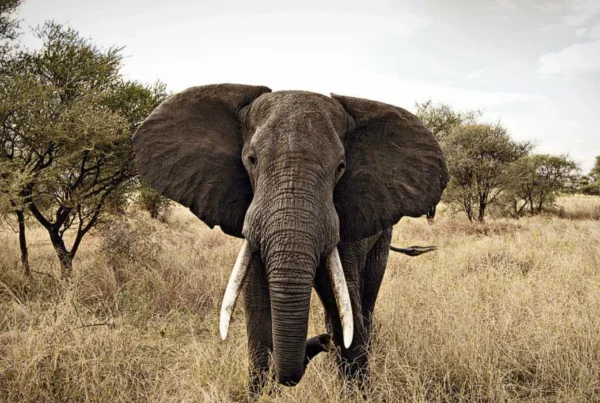
There is perhaps no creature more deeply symbolic of the African wilderness than the African elephant. Towering, intelligent, and profoundly emotional, elephants do not simply walk the land—they define it. With their massive silhouettes, long sweeping trunks, and silent, deliberate movements, they carry with them the legacy of time itself. To see an elephant in the wild is not merely a safari sighting; it is a moment of deep human connection with nature’s rawest, most magnificent force.

Africa’s elephant populations span across diverse ecosystems—roaming through dense forests, across arid deserts, along riverbanks, and into open savannas. But not all destinations offer the same kind of elephant experience. Certain regions of the continent provide exceptional opportunities to encounter these majestic beings in large numbers, dramatic settings, and often at close range. Some destinations boast thousands of elephants on migration routes. Others offer quiet, personal moments as individuals drink from mirrored waterholes or travel in matriarch-led herds across vast golden plains.

This article uncovers the top five destinations in Africa where sightings of elephants transcend expectation—where the grandeur, complexity, and intimacy of elephant life can be witnessed in the purest and most meaningful forms.

Chobe National Park, Botswana – The Elephant Capital of the World

At the heart of northern Botswana, where the Chobe River meanders along Namibia’s border, lies Chobe National Park, renowned across the globe as the single greatest stronghold for elephants in Africa. It is estimated that over 120,000 elephants call this region home—an extraordinary concentration unrivaled anywhere else on Earth.

Elephants in Chobe are not just abundant—they are central to the ecosystem. During the dry season, immense herds converge along the riverbanks, forming a natural theatre of movement, interaction, and survival. The air becomes alive with the sounds of splashing, trumpeting, and playful jostling as families of elephants bathe, drink, and dust themselves in the golden light of dusk.

What makes Chobe so unique is the proximity it offers. Whether gliding silently on a riverboat cruise or navigating the floodplain in a 4×4 safari vehicle, guests are brought within arm’s reach of elephant herds in their most relaxed state. From calves learning to use their trunks to matriarchs standing guard, each encounter reveals the deep social structure and emotional intelligence of these creatures.

The park’s distinct seasonal rhythm ensures that the spectacle evolves throughout the year, while its relatively undeveloped terrain allows for experiences that feel raw, wild, and untouched. In Chobe, the elephant is not a rare prize—it is the heartbeat of the land.

Amboseli National Park, Kenya – Giants Beneath the Shadow of Kilimanjaro

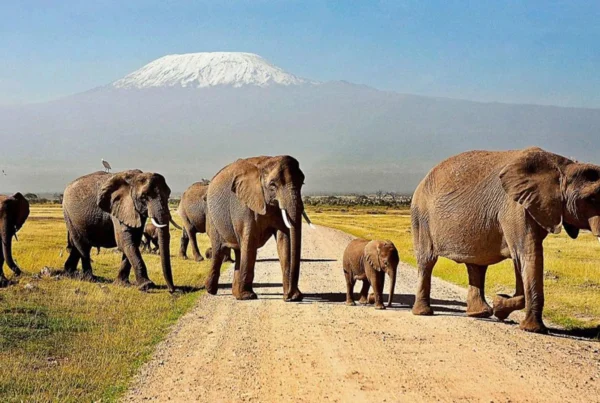
Few scenes in Africa rival the vision of elephants marching across golden savannahs with the snow-capped peak of Mount Kilimanjaro looming in the background. This breathtaking tableau unfolds daily in Amboseli National Park, a region located in the southern reaches of Kenya near the Tanzanian border.

Amboseli is famed for its open landscapes, sparse vegetation, and shallow swamps—conditions that make elephant sightings not only frequent but visually spectacular. The elephants here are among the most studied in Africa, forming part of a long-standing research project that has cataloged generations of individuals. Their sheer size, long ivory tusks, and graceful movements against the photogenic backdrop make for one of the continent’s most iconic safari scenes.

Because of the park’s relatively small size and its reliable water sources, elephants tend to concentrate around marshy areas, particularly during dry spells. This draws them in from surrounding regions, resulting in mesmerizing daily gatherings of dozens, sometimes hundreds, of elephants, often moving in long, winding lines with purpose and coordination.

Beyond the visual impact, what distinguishes Amboseli is the emotional resonance of its elephants. Here, researchers and rangers speak of elephants with familiarity and reverence. Each herd is known, each matriarch named. The result is not just a safari of sights, but a safari of stories—an encounter not just with a species, but with individuals and families whose lives unfold under the gaze of Kilimanjaro.

Tarangire National Park, Tanzania – The Hidden Giant Sanctuary

Often overshadowed by its more famous northern Tanzanian counterparts such as the Serengeti and Ngorongoro, Tarangire National Park remains one of the most underestimated elephant sanctuaries in Africa. Nestled along the Tarangire River and bordered by ancient baobab trees, this park serves as a dry-season refuge for thousands of elephants, creating a phenomenon that remains blissfully under the radar.

Between June and October, the river becomes the primary lifeline, drawing herds from surrounding regions in search of water. During this period, Tarangire boasts one of the highest elephant concentrations per square kilometer in East Africa. Unlike some of the more sprawling parks, Tarangire’s compact geography ensures close encounters with the animals as they migrate through woodlands, drink at waterholes, and shade themselves under massive baobabs.

What sets Tarangire apart is not just its abundance but its atmosphere. The landscape, dotted with termite mounds and marula trees, radiates an ancient, almost mythical quality. Against this backdrop, elephants appear not just as part of the environment, but as its architects—shaping the land with each step and trunk pull.

Because of its relatively low visitor numbers, guests in Tarangire often find themselves alone with herds, able to observe undisturbed behavior and soak in the sounds of the wild. It is a deeply meditative elephant experience, far from the crowds and fully in tune with the rhythm of the land.

Kruger National Park, South Africa – A Mosaic of Elephant Diversity

No list of Africa’s elephant destinations would be complete without mention of Kruger National Park, South Africa’s flagship reserve and one of the largest protected areas on the continent. Stretching across nearly 20,000 square kilometers, Kruger encompasses a variety of ecosystems—each offering different types of elephant experiences, from dense bushveld and river valleys to savannah plains and mopane forests.

Elephants in Kruger are widespread and accessible. Whether in the northern reaches near Pafuri or the southern zones around Skukuza, travelers are almost guaranteed multiple encounters. The ease of accessibility, both via guided safaris and self-drives, makes Kruger an ideal destination for those seeking consistent sightings over a longer period.

Perhaps most intriguing is the range of elephant behavior visible here. With such a large population distributed across varied habitats, one can observe differences in herd size, movement patterns, and even feeding techniques. Seasonal shifts influence elephant behavior dramatically, with the dry season drawing herds to riverbanks and dams, while the rainy season disperses them into more remote territories.

The park’s deep investment in conservation, along with its sophisticated infrastructure, ensures that elephant populations are both protected and studied. As a result, visitors are not only treated to outstanding elephant encounters, but also have access to educational insights into the challenges and triumphs of elephant conservation in a modern context.

Hwange National Park, Zimbabwe – Land of the Gentle Giants

Tucked away in western Zimbabwe, near the edge of the Kalahari Desert, lies Hwange National Park, a sanctuary that holds some of the largest herds of elephants in southern Africa. It is a place where desert meets forest, where the arid landscape pulses with life due to a series of pumped waterholes that sustain wildlife during the dry season.

Hwange is unique in its combination of wilderness and remoteness, offering a safari experience that is at once rugged and deeply rewarding. Elephants here are numerous, bold, and unafraid of human presence. Large bulls often walk directly past safari vehicles, while breeding herds cross open clearings in deliberate, dignified procession.

The park’s mosaic of habitats, from teak woodlands to sandveld grasslands, allows for diverse interactions and sightings. During peak dry months, elephants converge in staggering numbers—sometimes in herds of over 200 individuals—around watering points, creating a powerful and almost cinematic spectacle of life, dominance, and community.

Unlike more commercialized destinations, Hwange offers a deeper sense of connection to wilderness. Its elephants, many of which migrate between Botswana and Zimbabwe, represent a critical piece of southern Africa’s conservation puzzle. To witness them in Hwange is to witness resilience, adaptation, and the untamed heart of Africa itself.

Crafting the Elephant Journey of a Lifetime with WildHorn Africa

Elephants are more than symbols of Africa—they are its guardians, its architects, and its memory keepers. To stand in their presence is to feel small yet connected, humbled yet elevated. Their eyes reflect wisdom. Their movements echo grace. And their stories, etched across continents and centuries, continue to inspire awe.

Each of these destinations—Chobe, Amboseli, Tarangire, Kruger, and Hwange—offers a distinct chapter in the epic narrative of elephant life in Africa. Together, they paint a portrait of grandeur, struggle, beauty, and hope.

For those who dream of embarking on the ultimate elephant safari, there is no better way to make it seamless, meaningful, and unforgettable than by traveling with WildHorn Africa. Known for crafting customized luxury safaris rooted in conservation and authenticity, WildHorn Africa connects travelers not just to places, but to the living pulse of Africa’s wilderness.

With expert guides, handpicked accommodations, and a commitment to ethical travel, WildHorn Africa ensures that your elephant encounters will not only move you—but transform you.

Where To See Elephants in Africa – the Top 5 Best Safari Destinations To See Elephants

Where To See Elephants in Africa – the Top 5 Best Safari Destinations To See Elephants

By Travel guides, Travel stories and blogs

Where To See Elephants in Africa – The Top 5 Best Safari Destinations To See Elephants

Africa’s Giants: An Encounter Like No Other

There is something ancient and profound about locking eyes with an elephant in the wild. Majestic, intelligent, and emotionally complex, elephants are more than just the largest land mammals on Earth — they are the guardians of Africa’s wilderness, shaping ecosystems with every step and radiating a presence that is both powerful and gentle.

In African mythology and modern conservation alike, elephants occupy a place of deep respect. They are symbols of strength, wisdom, memory, and kinship. Seeing one in its natural habitat isn’t just a safari highlight — it’s a spiritual experience, a reminder of nature’s magnitude and grace.

Across the continent, from the golden savannahs of East Africa to the hidden wetlands of the south, there are places where elephants still roam freely, in great numbers, and with the dignity that only true wilderness allows. This article explores the Top 5 Best Safari Destinations To See Elephants in Africa, each offering not just sightings, but soul-stirring experiences with these extraordinary creatures.

Chobe National Park – Botswana’s Elephant Kingdom

No destination on the continent rivals Chobe National Park in northern Botswana when it comes to sheer elephant numbers. Often referred to as the elephant capital of the world, Chobe is home to over 120,000 elephants — a population so immense it seems almost mythical until you see it for yourself.

Here, elephants are not elusive shadows. They are everywhere. Herds of hundreds gather along the Chobe River’s edge, particularly during the dry season, to drink, bathe, and cross from bank to bank in mesmerizing formations. You’ll witness matriarchs leading their families, calves playing in the mud, and bulls wrestling in displays of dominance — all against the stunning backdrop of setting suns and golden waters.

What makes Chobe exceptional isn’t just quantity — it’s the intimacy. River safaris offer an unparalleled front-row seat to observe elephants at water level. Watching them swim across the river, their trunks raised like snorkels, is an unforgettable sight. And because of Botswana’s strong conservation policies and low-impact tourism approach, your time in Chobe feels deeply authentic and sustainable.

Amboseli National Park – Kenya’s Iconic Elephant Landscape

For a safari scene worthy of a postcard, few places match the grandeur of Amboseli National Park in southern Kenya. Picture this: elephants walking in slow procession across open plains, dust swirling around their legs, with the towering snow-capped peak of Mount Kilimanjaro rising in the distance. This isn’t a dream — it’s Amboseli at dusk.

Amboseli is famous for its elephant families with massive tusks, the result of decades of protection and careful research. The park is also the site of the Amboseli Elephant Research Project, one of the world’s longest-running studies on wild elephants, giving you the chance to see these giants in a region where they are deeply understood and respected.

Unlike denser bushlands, Amboseli’s open terrain allows for clear, cinematic views. You can watch herds stretching across the horizon, witness young calves taking their first steps, and even spot the legendary big tuskers — rare individuals whose ivory can almost reach the ground. In Amboseli, every game drive is a living documentary.

Queen Elizabeth National Park – Uganda’s Hidden Elephant Haven

When travelers think of Uganda, it’s often the mountain gorillas that first come to mind. Yet Uganda is also a remarkable elephant destination, particularly within the diverse landscapes of Queen Elizabeth National Park.

Located in the western arm of the Great Rift Valley, Queen Elizabeth National Park is a tapestry of ecosystems — from volcanic crater lakes to open savannah and dense forests. This variety supports a healthy and growing elephant population, many of which can be seen roaming through the Kasenyi plains, along the Kazinga Channel, or emerging from the shadows of the park’s lush Maramagambo Forest.

The most spectacular way to observe elephants in Queen Elizabeth is by boat on the Kazinga Channel. As the sun warms the banks, elephants descend to drink, swim, and dust themselves with soil. Alongside them, hippos grunt, crocodiles bask, and flocks of kingfishers dart across the water — creating one of Africa’s most vibrant wildlife spectacles.

Uganda’s elephants also carry a history of resilience. After decades of poaching during past conflicts, elephant numbers have rebounded thanks to robust conservation efforts. Today, tracking them in the wild feels like bearing witness to a quiet triumph of nature.

Tarangire National Park – Tanzania’s Elephant Sanctuary

Often overshadowed by the more famous Serengeti, Tarangire National Park remains one of Tanzania’s most underrated elephant destinations — and one of the most rewarding. During the dry season, this park turns into a magnet for elephants, who migrate in large numbers to the Tarangire River, the area’s primary water source.

Tarangire is a place of surprises and contrasts. Its rolling hills are dotted with ancient baobab trees — sacred sentinels that watch over the land — and the scent of acacia blossoms floats on the breeze. Amid this scenic beauty, herds of elephants gather in astonishing density, numbering in the hundreds.

What sets Tarangire apart is its sense of seclusion. Far fewer tourists venture here, which means quieter game drives and deeper immersion. It’s common to spend long, uninterrupted hours with elephant herds — observing not just movement, but subtle social interactions, protective parenting, and the curious nature of calves discovering their world.

The elephants of Tarangire, especially during the dry months, seem almost magnetically drawn to the river, creating the perfect stage for nature’s grand performance.

Hwange National Park – Zimbabwe’s Elephant Stronghold

In the far west of Zimbabwe, bordering Botswana, lies a vast and little-explored sanctuary called Hwange National Park. Spanning over 14,000 square kilometers, Hwange is one of Africa’s largest national parks and home to some of the densest elephant populations in the southern hemisphere.

Elephants in Hwange are not just plentiful — they are epic in scale. In the dry season, they converge on waterholes in astonishing numbers, sometimes over 500 elephants at a single site, creating a phenomenon that must be seen to be believed.

Hwange is also remarkable for its diversity of landscapes, from teak forests to desert-like dunes, which means that elephants here display a wide range of behaviors and adaptations. Some herds live in the mopane woodland corridors, others traverse open savannahs, and still more follow ancient migratory paths to neighboring parks and countries.

Despite challenges in Zimbabwe’s past, Hwange stands as a testament to the resilience of conservation and community-led tourism. Here, you’ll experience elephants not just as wildlife, but as fellow inhabitants of a timeless land that still pulses with wild, unspoiled rhythm.

Why Elephants Matter — And Why Seeing Them Changes You

Elephants are more than safari highlights. They are ecosystem engineers, reshaping their environments by uprooting trees, digging for water, and dispersing seeds. Their presence sustains entire chains of life. Yet, across Africa, elephants face mounting threats: poaching, habitat loss, and human-wildlife conflict.

To see them in the wild is to understand the fragility and strength of our natural world. It is to be humbled by their wisdom, awed by their emotion, and called to action in their defense. Every photograph, every observation, every journey into their world becomes a step toward protecting their future.

Plan Your Elephant Expedition with WildHorn Africa (Safari Destinations To See Elephants)

The magic of seeing elephants in the wild begins not just with the destination, but with how you choose to experience it. WildHorn Africa offers expertly designed, conservation-focused safaris that connect you with elephants across East and Southern Africa in the most ethical, immersive, and unforgettable ways.

Whether you dream of drifting silently along the Kazinga Channel in Uganda, following a matriarchal herd across Botswana’s plains, or standing beneath Kilimanjaro as tuskers walk by, WildHorn Africa crafts journeys that resonate long after you return home.

Book your elephant safari with WildHorn Africa, and walk beside the giants of Africa with purpose, passion, and a promise to protect. The elephants are waiting — not just to be seen, but to be remembered.

Safari Destinations To See Elephants #Safari Destinations To See Elephants Safari Destinations To See Elephants

Close Menu