search
5 Fascinating Facts About the African Elephant

5 Fascinating Facts About the African Elephant

By Travel guides, Travel stories and blogs


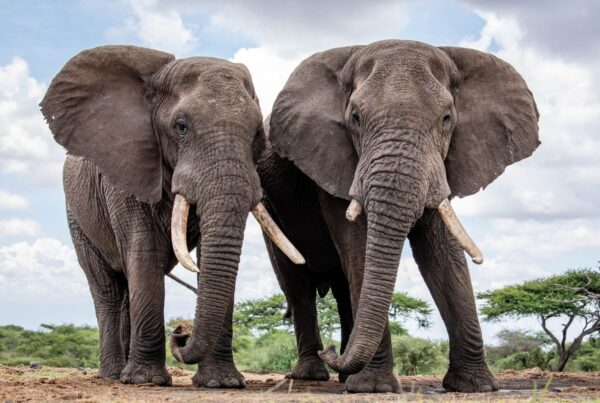
5 Fascinating Facts About the African ElephantUncover the grandeur, intelligence, and mystery of Earth’s largest land mammal

Introduction to the Facts About the African Elephant

Towering over the African savannas and forests, the African elephant is more than just a giant—it’s a keystone species, an icon of wilderness, and a marvel of evolution.
These majestic creatures represent power, intelligence, and community, making them one of the most fascinating animals on the planet. With ears like sails, tusks that shape landscapes,
and a memory that rivals humans, African elephants continue to captivate scientists and wildlife lovers alike.

In this article, we delve into five remarkable facts about the African elephant, uncovering what makes them both biologically unique and culturally significant.

1. The Largest Land Mammal on Earth

The African elephant holds the title of the largest terrestrial animal alive today. Adult males, also called bulls, can weigh up to 6,800 kilograms (15,000 pounds)
and stand over 3.5 meters (11.5 feet) tall at the shoulder.

There are two subspecies: the Savanna (or Bush) elephant (Loxodonta africana)—larger and more widely distributed—and the Forest elephant
(Loxodonta cyclotis), which is smaller and adapted to life in Central and West Africa’s dense forests.

Despite their massive size, elephants move with surprising grace and can walk silently for kilometers each day in search of food and water.

2. Remarkably Intelligent and Social Creatures

African elephants possess exceptional intelligence, comparable to that of great apes and dolphins. Their brains weigh over 5 kilograms (11 pounds) and feature a highly
developed neocortex, which governs problem-solving and emotional response.

Elephants are capable of grief, empathy, self-recognition, and long-term memory. They form deep family bonds, particularly among females who live in matriarchal groups led by the oldest female.
Calves are raised communally, and members often stop to comfort or protect injured or deceased companions.

In addition to their emotional intelligence, elephants are skilled communicators. They use infrasound frequencies to communicate across distances of several kilometers,
coordinating movements and maintaining social contact.

3. Their Tusks Are More Than Just Teeth

An elephant’s tusks are actually elongated incisor teeth that continue growing throughout their lives. Both male and female African elephants have tusks, unlike their Asian relatives,
where only some males do.

Tusks serve many vital functions. Elephants use them to dig for water and minerals, strip bark from trees, lift heavy objects, and as formidable weapons during fights.
Sadly, their ivory also makes them a target for poaching, contributing to significant population declines.

Tusks are also an indicator of age and status within elephant society, with older individuals often bearing larger, more worn tusks that reflect a life of survival and experience.

4. Architects of the Ecosystem (Facts About the African Elephant)

African elephants are sometimes referred to as ecosystem engineers due to the transformative role they play in shaping their habitats.
By knocking down trees, elephants create open spaces in savannas, promoting grass growth that benefits other herbivores. In forests, they clear pathways and help maintain biodiversity.

Their dung not only disperses seeds but also provides nourishment for beetles, fungi, and other decomposers. Water holes dug by elephants during dry seasons
often serve as critical hydration points for other animals.

Without elephants, entire ecosystems can become unbalanced, highlighting their vital role in maintaining the health and diversity of African landscapes.

5. Facing the Threats of Poaching and Habitat Loss

Despite their grandeur, African elephants face increasing threats from poaching, habitat destruction, and human-wildlife conflict.
Over the past century, their population has been reduced dramatically due to the illegal ivory trade and shrinking habitats caused by agriculture and development.

Conservation efforts are underway across Africa, including anti-poaching patrols, protected area designations, and wildlife corridors.
Many countries have implemented strict ivory bans and invested in community-based conservation programs that encourage coexistence.

Protecting elephants is not only about preserving a species—it’s about sustaining entire ecosystems and cultural heritages. Their survival is intricately tied
to Africa’s environmental and economic future.

Conclusion of the Facts About the African Elephant

The African elephant is an extraordinary creature—giant in form, grand in mind, and vital in function. From their complex societies to their ecological significance,
they embody the intricate balance of the natural world.

As we strive to conserve and understand them, we are reminded that protecting elephants means protecting the broader web of life they support.
In every trumpet, tusk, and trail, the African elephant leaves a legacy of awe and purpose—a legacy we must ensure endures for generations to come.

Facts About the African Elephant #Facts About the African Elephant Facts About the African Elephant

5 Fascinating Facts About the Secretary Bird (Sagitarius Serpentarius)

5 Fascinating Facts About the Secretary Bird (Sagitarius Serpentarius)

By Travel guides, Travel stories and blogs


5 Fascinating Facts About the Secretary Bird (Sagittarius serpentarius)Graceful, fierce, and utterly unique – discover Africa’s raptor that walks the savannah like a legend

Introduction to the Facts About the Secretary Bird

With long stilt-like legs, an eagle’s fierce gaze, and a striking crest of quill-like feathers, the Secretary Bird is one of Africa’s most recognizable and extraordinary birds.
Named perhaps for its resemblance to a Victorian-era clerk with pen-like feathers behind the ears, this terrestrial raptor is anything but desk-bound.

Roaming the grasslands of sub-Saharan Africa, the Secretary Bird is a master predator that prefers to walk rather than fly—and it has one particular enemy: snakes.
But there’s much more to this fascinating bird than meets the eye. In this article, we explore five incredible facts that showcase why Sagittarius serpentarius
deserves your admiration and attention on your next African safari.

1. The Secretary Bird Is a Terrestrial Raptor

Unlike most birds of prey, the Secretary Bird spends the majority of its life on the ground. It can walk up to 30 kilometers (18 miles) a day in search of prey,
using its long, crane-like legs to stalk the savannah. Although it has powerful wings and can fly well, it only takes to the air when absolutely necessary.

This ground-dwelling behavior is a remarkable evolutionary adaptation, allowing it to efficiently scan and hunt in open grasslands, where small mammals, birds, and reptiles abound.

2. A Snake-Slayer with Precision Strikes

The Secretary Bird is best known for its snake-hunting prowess. It is one of the few birds that actively seeks out and kills venomous snakes,
including cobras, puff adders, and mambas.

It uses a deadly combination of speed, accuracy, and powerful kicks to deliver fatal blows. Each strike, measured at over 195 Newtons of force,
is delivered with such precision that it can crush a snake’s skull or spine. In fact, its legs are so well adapted that they have built-in protection against venomous bites.

Once the snake is immobilized, the bird swallows it whole or tears it apart with its beak—one of nature’s most dramatic predator-prey dynamics.

3. Distinctive Appearance and Imposing Size

Standing up to 1.3 meters (4.3 feet) tall, the Secretary Bird is among the tallest birds of prey in the world. Its wingspan can reach over 2 meters (6.6 feet),
though its wing muscles are relatively small compared to other raptors.

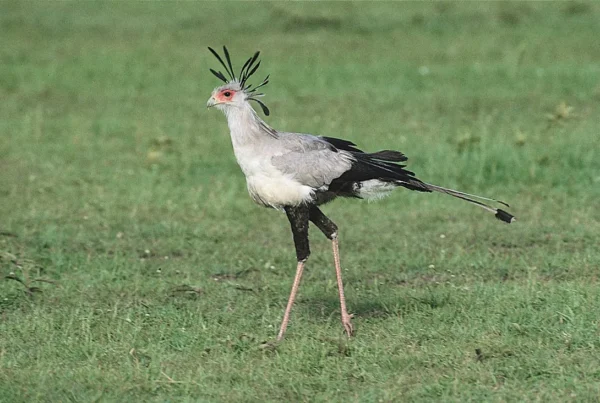
Its plumage is mostly grey and white, with contrasting black flight feathers and crest. The feathered crest, often likened to quill pens, gives the Secretary Bird its name.
Its face is bare and brightly colored in orange and yellow hues, making it unmistakable in the wild.

Its long tail and dramatic gait add to its theatrical appearance, making it one of Africa’s most photogenic and symbolic birds.

4. Symbol of Power and Prestige (Facts About the Secretary Bird)

The Secretary Bird holds deep symbolic value across Africa. It is the national emblem of Sudan and appears prominently on the South African coat of arms,
representing vigilance, strength, and the power to strike decisively when necessary.

In many cultures, the bird’s ability to kill snakes makes it a protector—a living guardian of fields and villages. Farmers often welcome its presence,
as it helps control populations of pests and dangerous reptiles.

This high regard has contributed to the bird’s protection and its revered status in both folklore and modern national identity.

5. A Conservation Concern in a Changing Landscape

Despite its fame, the Secretary Bird faces growing threats from habitat loss, agriculture, and fire regimes that alter its preferred open-grassland environments.
The species is now listed as Vulnerable on the IUCN Red List, with population numbers in decline across much of its range.

Conservationists are working hard to preserve protected areas and raise awareness about the importance of grassland ecosystems.
Organizations across Africa, including birding groups and ecotourism operators, are also helping to fund conservation through responsible tourism.

Every sighting of a Secretary Bird in the wild is a reminder of Africa’s complex biodiversity—and a call to action to protect it for future generations.

Conclusion of the Facts About the Secretary Bird

The Secretary Bird is not just another predator—it is a biological marvel, cultural icon, and ecological sentinel.
With its unmatched ability to stalk prey on foot, its regal appearance, and its fearsome reputation among snakes, the bird is a must-see for any wildlife enthusiast.

Witnessing this majestic creature stride across the savannah is a moment that stays with you—a vivid slice of untamed Africa.

Plan Your Encounter with the Wild

Want to see the incredible Secretary Bird up close in its natural habitat? Book your African safari today with WildHorn Africa—your trusted guide to unforgettable
wildlife encounters, expert-led tours, and immersive experiences across the continent’s most iconic landscapes.

WildHorn Africa offers curated adventures tailored to your interests—whether birdwatching, photography, big game, or cultural exploration.
Don’t just dream it—experience Africa the WildHorn way.

Facts About the Secretary Bird #Facts About the Secretary Bird

5 Fascinating Facts About the Spotted Hyena

5 Fascinating Facts About the Spotted Hyena

By Travel guides, Travel stories and blogs


5 Fascinating Facts About the Spotted HyenaNature’s most misunderstood predator unveiled.

Introduction

When you hear the word “hyena,” what comes to mind?
Perhaps an eerie laugh echoing through the savannah or a cunning scavenger lurking in the shadows?
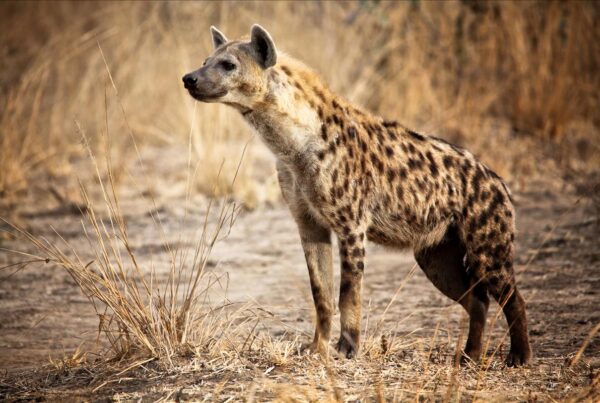
The spotted hyena—also known as the Crocuta crocuta—is often misjudged and wrapped in myth.
But the truth? It’s one of the most intelligent, strategic, and powerful predators on Earth.

Let’s uncover the truth with these five astonishing facts that will change how you view this remarkable carnivore forever.

Table of Contents

1. Matriarchal Power: Female Hyenas Reign Supreme

In the world of spotted hyenas, females dominate males—socially, physically, and hierarchically.
The clan is led by an alpha female who holds the highest status, and even the lowest-ranking female
ranks above the highest-ranking male.

Female hyenas are larger and more aggressive than males, and they inherit their rank from their mothers.
This unusual matriarchal society challenges traditional views of animal dominance and makes hyena society one of the most
complex among mammals.

2. Not Just Scavengers: They’re Skilled Hunters

While hyenas are often portrayed as mere scavengers, this is a gross misconception.
Spotted hyenas are apex predators and can hunt alone or in coordinated packs.

In fact, studies show that up to 70% of their food comes from their own kills.
They chase down prey like wildebeest, zebras, and antelopes, using endurance and teamwork to exhaust and corner their targets.
Their success rate can even rival that of lions.

3. Their Laugh Is a Language

That infamous “laugh” isn’t a sign of amusement—it’s a sophisticated form of communication.
Spotted hyenas emit a range of vocalizations, and their high-pitched giggle is used to express
social status, distress, or submission.

Each hyena’s laugh is unique and can reveal its age and rank within the clan. It’s a form of vocal ID in the wild.

4. One of the Most Powerful Jaws in the Animal Kingdom

The spotted hyena possesses one of the most powerful bites of any land mammal, capable of exerting over
1,000 psi (pounds per square inch). This jaw strength allows them to crush and digest bones—a feat few predators can manage.

Their digestive system is so efficient that they leave behind very little after a meal, often only hair and hooves.
This contributes greatly to ecosystem cleanup and nutrient cycling.

5. Highly Intelligent and Social Creatures

Spotted hyenas have large frontal cortexes in their brains, comparable to those of primates.
This makes them incredibly intelligent—capable of problem-solving, learning from experience, and using strategic social manipulation.

They live in complex social groups of up to 80 individuals, with each member knowing its place and relationship within the clan.
Their social intelligence rivals that of some apes and dolphins.

Conclusion

The spotted hyena is far more than its eerie laugh and mythological reputation.
With their matriarchal hierarchy, hunting prowess, and intellectual abilities,
these animals are true wonders of the wild.
It’s time we gave the spotted hyena the respect it deserves—not as a scavenger, but as one of nature’s most fascinating survivors.


5 Fascinating Facts About the African Rock Python

5 Fascinating Facts About the African Rock Python

By Travel guides, Travel stories and blogs


5 Fascinating Facts About the African Rock PythonA deep dive into Africa’s largest, boldest, and most misunderstood serpent.

Introduction to the Facts About the African Rock Python

Few creatures stir the imagination and fear of the wild quite like a python—and none in Africa command more awe than the
African rock python (Python sebae). As the continent’s largest snake, this reptile is wrapped in both
myth and mystery, often portrayed as a silent hunter capable of incredible strength and cunning. But there’s more to this
cold-blooded giant than just fearsome looks.

Beneath its patterned scales lies a species of biological marvels, intricate behaviors, and critical ecological roles.
Whether you’re a wildlife enthusiast or just curious about Africa’s reptiles, these five facts will give you a whole new appreciation
for this powerful predator.

Table of Contents

1. Africa’s Largest Snake by Length and Bulk

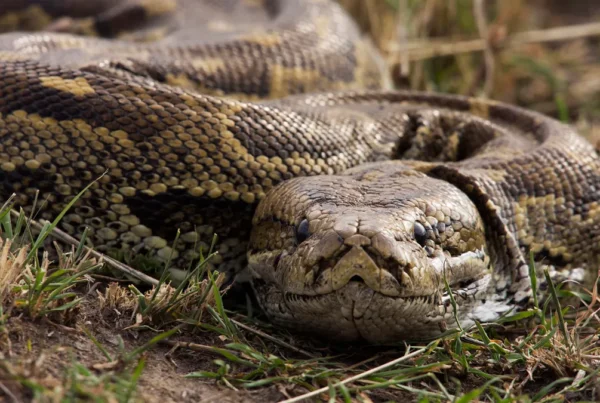
The African rock python is a giant among snakes. Adults typically reach lengths of 3 to 5 meters (10–16 feet),
though some individuals have been recorded exceeding 6 meters. Its body is heavily built, making it not just the longest but also
one of the heaviest snakes on the continent, with large specimens weighing over 90 kilograms (200 pounds).

Its impressive size allows it to subdue a wide range of prey and makes it one of the most formidable non-venomous snakes in the world.

2. A Master Constrictor with Crushing Power (Facts About the African Rock Python)

Unlike venomous snakes that inject toxins, the African rock python is a constrictor. It kills its prey by wrapping
its powerful coils around the animal and tightening its grip with each exhalation. This pressure cuts off circulation, causing
cardiac arrest within minutes.

Its prey includes a wide variety of animals, from rodents and birds to antelopes, monkeys, and even crocodiles.
Yes—this python has been documented overpowering small crocodiles using sheer muscle power. After the kill, the snake swallows
its prey whole, aided by its expandable jaws and stretchy ligaments.

3. It Swims, Climbs, and Ambushes With Precision

The African rock python is a highly versatile predator. Despite its size, it is an excellent swimmer and is
commonly found near rivers, swamps, and wetlands. It also climbs trees in search of birds or arboreal mammals.

Pythons rely on stealth and ambush rather than speed. Their camouflaged scales help them blend seamlessly
into the environment, where they wait for hours or even days near trails or waterholes. When the moment is right, they strike
with blinding speed.

Their hunting success is greatly aided by heat-sensing pits on their upper lips, which detect infrared radiation
from warm-blooded prey, even in complete darkness.

4. A Rare Example of Maternal Care in Reptiles

Most reptiles lay their eggs and abandon them—but not the African rock python. Females exhibit maternal behavior that
is rare among snakes. After laying between 20 to 100 eggs in a burrow or termite mound, the mother coils around them to
protect and incubate them for about 90 days.

During this time, she will hiss loudly and strike at intruders. When the hatchlings emerge, she may even remain nearby
for a short period to guard them. This level of parental investment is uncommon in snakes and speaks to the python’s
unique survival strategy.

5. Misunderstood but Vital to the Ecosystem

Despite their reputation, African rock pythons are not aggressive unless threatened. Most incidents involving humans
are due to fear, not actual attacks. These snakes are shy and prefer to avoid confrontation.

Ecologically, they play a crucial role in controlling populations of rodents and small mammals, acting as a natural form of
pest control. Without them, certain prey species could overpopulate and disrupt the ecological balance.

Sadly, the python faces increasing threats from habitat loss, poaching, and persecution. In some areas,
it is hunted for its skin or meat, while in others, it is killed out of fear. Conservationists are working to change
perceptions and protect this misunderstood predator.

Conclusion of the Facts About the African Rock Python

The African rock python is not a monster of folklore—it is a biological masterpiece. With its immense strength,
complex behaviors, and ecological significance, it deserves both respect and protection.
Far from being just a giant snake, it is a symbol of the wild’s balance and power.

By understanding and appreciating this extraordinary reptile, we not only reduce fear but also
strengthen efforts to conserve Africa’s natural heritage.


5 Fascinating Facts About the Ground Hornbill

5 Fascinating Facts About the Ground Hornbill

By Travel guides, Travel stories and blogs


5 Fascinating Facts About the Ground HornbillA deep dive into the life of Africa’s charismatic and endangered bird of thunder.

Introduction to the Facts About the Ground Hornbill

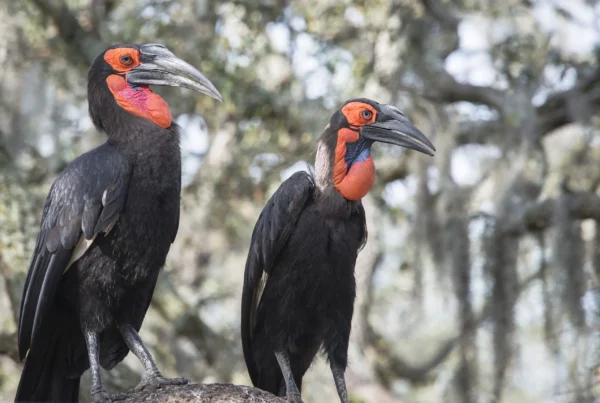
Towering over the African savannah with their vivid red faces and booming voices, ground hornbills are unlike any other birds.
These striking black-feathered giants are members of the hornbill family, but they defy the norms of their tree-dwelling relatives by spending most of their lives on foot.
With their intelligent eyes, methodical hunting style, and thunderous calls that echo for miles, ground hornbills are both captivating and critical to their ecosystems.

Yet despite their majesty, these birds are increasingly rare, threatened by habitat destruction and changing cultural perceptions.
Let’s uncover the secrets behind this incredible species with five in-depth, factual insights into the life of the ground hornbill.

Table of Contents

Facts About the Ground Hornbill

1. The Largest Hornbills on Earth

The Southern ground hornbill (Bucorvus leadbeateri) is not only the largest hornbill in Africa—it is the largest hornbill species in the world.
Adults stand nearly 1 meter (3.3 feet) tall, with wingspans of up to 1.8 meters (6 feet).

Their impressive size is matched by their imposing appearance. With jet-black plumage, long lashes, and vibrant red facial and throat skin (blue in juveniles),
they command immediate attention in the open grasslands and savannahs they inhabit. Their strong, downward-curving bills serve as versatile tools for hunting and defense.

2. Walking Predators with a Carnivorous Diet

While many hornbills feed on fruit and insects in treetops, ground hornbills are carnivorous hunters that forage primarily on the ground.
They consume a wide range of prey including insects, snakes, lizards, amphibians, tortoises, small mammals, and even birds.

Their hunting style is deliberate and cooperative. Groups often move in coordinated fashion, covering ground methodically and using their powerful beaks to dig, stab, and pry open prey.
This unique foraging behavior is an example of their advanced intelligence and social cooperation.

3. A Thunderous Voice that Travels for Kilometers

One of the most remarkable traits of the ground hornbill is its booming call, which sounds more like a deep drumbeat or thunderclap than a bird’s voice.
This call can travel up to 3 kilometers across the savannah, and is often used to communicate across vast distances between family groups or to declare territory.

The species has a unique inflatable throat sac (more prominent in males) that resonates the sound, acting like a built-in amplifier.
These vocalizations are heard primarily at dawn and dusk, serving as a natural alarm clock in the African bush.

4. Lifelong Bonds and Cooperative Parenting (Facts About the Ground Hornbill)

Ground hornbills live in tightly knit family units usually consisting of a dominant breeding pair and several helper birds, often previous offspring.
These groups exhibit strong social cohesion and remarkable cooperative breeding behavior, where non-breeding individuals assist in raising chicks.

Breeding is infrequent—females may lay only one or two eggs every three to nine years. Usually, only one chick survives, as the stronger often outcompetes the weaker.
The helpers assist in feeding and protecting the young during the lengthy development phase, which may take up to a year before full independence.

This long parental investment and slow reproduction rate contribute to the species’ vulnerability.

5. Endangered Icons with Cultural Significance

Despite their majesty and ecological role, ground hornbills are classified as Vulnerable by the IUCN, with some regional populations considered Critically Endangered.
Threats include habitat loss, persecution, and power line collisions. Their slow reproduction rates only exacerbate their decline.

Culturally, ground hornbills are woven into African mythology. In many traditions, they are seen as omens of rain or messengers from the ancestors.
While some cultures protect them, others historically viewed them with fear or suspicion, leading to their persecution.

Conservation programs today are focused on education, captive breeding, reintroduction, and cultural dialogue to ensure these iconic birds continue to thrive in the wild.

Conclusion of the Facts About the Ground Hornbill

Ground hornbills are more than just large birds with a loud voice—they are intelligent, complex, and ecologically vital species.
Their behaviors—from carnivorous hunting to cooperative parenting—challenge our perceptions of bird life.
But their declining numbers also remind us of our responsibility to preserve Africa’s wild treasures.

By learning more about these unique birds and supporting conservation efforts, we help protect not just a species, but the cultural and biological diversity they represent.

Facts About the Ground Hornbill #Facts About the Ground Hornbill Facts About the Ground Hornbill

Close Menu