search
Night Safaris in Semuliki National Park

Night Safaris in Semuliki National Park

By Travel stories and blogs, Luxury holidays, Safari holidays, Uganda travel guides, Wildlife holidays

Night Safaris in Semuliki National Park. The Enchantment of Semuliki After Dark

As the sun dips below the horizon, Semuliki National Park transforms into a realm of mystery and allure. Located in western Uganda, this park is renowned for its rich biodiversity and unique ecosystems. While daytime safaris offer glimpses of its vibrant wildlife, the true magic unfolds under the cover of night. Night safaris in Semuliki provide an unparalleled opportunity to witness the park’s nocturnal inhabitants in their natural habitat.

The Allure of Nocturnal Wildlife

The Nighttime Transformation

As dusk settles over Semuliki, the forest comes alive with sounds and movements that are absent during the day. Nocturnal creatures emerge from their hiding spots, engaging in behaviors that are seldom observed by daytime visitors. The park’s diverse habitats, ranging from tropical rainforests to savannah grasslands, support a wide array of nocturnal species.

Notable Nocturnal Species

  • Pottos: These slow-moving primates are known for their distinctive method of locomotion and are often spotted during night walks.

  • Bush Babies: Small, agile primates with large eyes, bush babies are a highlight for many night safari enthusiasts.

  • White-tailed Mongoose: This elusive mammal is frequently encountered during night drives, often foraging along the park’s trails.

  • Leopards: Semuliki’s leopards are primarily nocturnal hunters, making night safaris an ideal time to spot these elusive big cats.

  • Civets and Genets: These small carnivores are often seen prowling the underbrush during the night, hunting for small prey.

  • Owls and Nightjars: The park’s skies host various owl species and nightjars, which are active during the night, offering excellent birdwatching opportunities.

The Night Safari Experience

Guided Night Drives

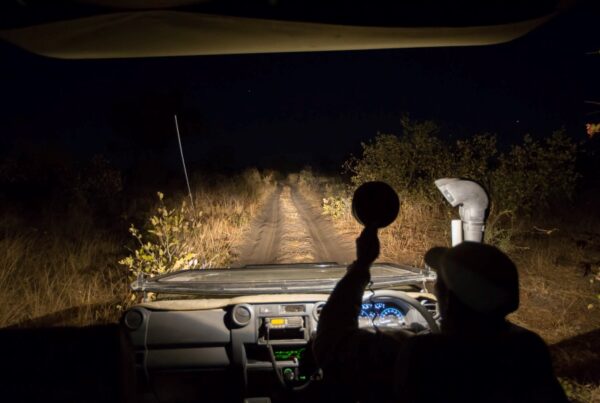
Embarking on a guided night drive is the most common way to explore Semuliki’s nocturnal wildlife. Equipped with powerful spotlights, experienced guides lead visitors through designated trails, enhancing the chances of wildlife sightings. These drives typically last between one to two hours and are conducted in the evening after dinner.

Night Nature Walks

For those seeking a more intimate experience, night nature walks offer a chance to explore the park’s trails on foot. Accompanied by a knowledgeable guide, visitors can observe the subtle sounds and movements of the forest at night. These walks provide a unique perspective on the park’s ecosystem, allowing for close encounters with nocturnal species and a deeper understanding of their behaviors.

Safety and Preparation

While night safaris in Semuliki are generally safe, it’s essential to adhere to safety guidelines. Traveling with a certified guide ensures not only safety but also enriches the experience with informative commentary. It’s advisable to wear long sleeves and trousers to protect against insects and to carry insect repellent. Bringing a flashlight is recommended, although guides typically provide adequate lighting.

The Ecological Significance of Night Safaris

Understanding Nocturnal Behaviors

Night safaris offer invaluable insights into the behaviors and activities of nocturnal species. Observing animals in their natural nighttime routines helps researchers and conservationists understand their roles within the ecosystem, their feeding habits, and their interactions with other species.

Conservation Awareness

Participating in night safaris raises awareness about the importance of preserving nocturnal habitats. Many of Semuliki’s nocturnal species are sensitive to environmental changes, and understanding their needs is crucial for effective conservation efforts. By supporting sustainable tourism practices, visitors contribute to the ongoing protection of these unique ecosystems.Night Safaris in Semuliki National Park

The Best Time for Night Safaris

Optimal Seasons

The dry seasons, typically from December to February and June to July, are considered the best times for night safaris in Semuliki. During these periods, the park’s trails are more accessible, and the chances of spotting nocturnal wildlife are higher. The clear skies during these months also enhance the stargazing experience, adding another layer of wonder to the night safari.

Weather Considerations

While the dry seasons are ideal, Semuliki’s weather can be unpredictable. It’s essential to check weather forecasts before planning a night safari, as rain can make trails slippery and challenging to navigate. Even during the dry seasons, occasional showers can occur, so it’s advisable to carry waterproof gear and be prepared for sudden changes in weather conditions.

Accommodation Options Near Semuliki

Semuliki Safari Lodge

Located within the park’s boundaries, Semuliki Safari Lodge offers luxury accommodations with stunning views of the surrounding wilderness. The lodge provides guided night drives and nature walks, ensuring guests have a comprehensive safari experience.

Ntoroko Game Lodge

Situated near Lake Albert, Ntoroko Game Lodge offers a more rustic experience with comfortable amenities. The lodge organizes night safaris and cultural encounters, providing guests with a blend of wildlife and local culture.

Camping Options

For adventurous travelers, camping within the park offers an immersive experience. Several campsites are available, providing basic facilities and the opportunity to sleep under the stars, surrounded by the sounds of the African wilderness.

Cultural Experiences Complementing Night Safaris

Interaction with Local Communities

Engaging with the local communities near Semuliki enhances the safari experience. Visitors can learn about traditional customs, participate in cultural dances, and gain insights into the daily lives of the indigenous people. These interactions foster a deeper connection to the region and its heritage.

Traditional Storytelling

Evenings around the campfire often feature traditional storytelling sessions, where elders share myths, legends, and histories of the land. These narratives provide context to the natural surroundings and offer a rich cultural perspective on the area.

The Future of Night Safaris in Semuliki

Sustainable Tourism Practices

As interest in night safaris grows, it’s crucial to implement sustainable tourism practices to minimize environmental impact. Guided tours should adhere to established trails to prevent habitat disruption, and noise levels should be kept to a minimum to avoid disturbing wildlife. Educating visitors on responsible behavior ensures that Semuliki’s nocturnal ecosystems remain intact for future generations.

Research and Conservation Initiatives

Ongoing research and conservation efforts are essential to understanding and protecting Semuliki’s nocturnal wildlife. Collaborations between local communities, conservation organizations, and researchers help develop strategies to mitigate threats such as poaching and habitat loss. Supporting these initiatives through eco-tourism contributes to the long-term preservation of the park’s unique biodiversity.

Embracing the Night in Semuliki

Night safaris in Semuliki National Park offer an extraordinary opportunity to witness the hidden world of nocturnal wildlife. From the elusive bush babies to the majestic leopards, the park’s nighttime inhabitants provide a captivating glimpse into the complexity of African ecosystems. By participating in these safaris, visitors not only experience the thrill of discovery but also contribute to the conservation of one of Uganda’s most unique natural treasures.

For an unforgettable adventure that combines the thrill of night safaris with the rich cultural heritage of Uganda, consider booking your African tours and safaris through WildHorn Africa. Their expertise and commitment to sustainable tourism ensure a memorable and responsible travel experience.

How to Combine Kibale with Queen Elizabeth Safaris

How to Combine Kibale with Queen Elizabeth Safaris

By Travel stories and blogs, Family holidays, Luxury holidays, Primate holidays, Safari holidays, Uganda travel guides, Wildlife holidays

How to Combine Kibale with Queen Elizabeth Safaris

A Dual Safari Experience

Uganda’s diverse landscapes provide an unmatched opportunity for multi-dimensional safari experiences, where primate tracking and savannah game viewing can be seamlessly combined. Among these experiences, Kibale National Park and Queen Elizabeth National Park stand out for their unique and complementary wildlife offerings. Kibale is globally renowned for chimpanzee trekking and dense tropical rainforest ecosystems, while Queen Elizabeth provides vast savannah plains, crater lakes, and abundant large mammals, offering classic African game drives and boat safaris.

Combining these two destinations allows travelers to experience the full spectrum of Uganda’s biodiversity, from the intimate encounters with primates in thick forests to the expansive vistas of elephants, lions, buffalo, and hippos in the savannah. The logistical integration of these parks requires careful planning, taking into consideration distances, transportation options, seasonal variations, accommodation, and itinerary sequencing. When executed effectively, a combined safari provides a holistic perspective of Uganda’s ecological richness, while offering cultural insights, photographic opportunities, and immersive wildlife experiences.

This guide provides an in-depth exploration of strategies for combining Kibale with Queen Elizabeth safaris, including practical travel planning, recommended itineraries, wildlife highlights, seasonal considerations, accommodation options, and tips for maximizing both ecological and cultural encounters.

Understanding the Distinctive Features of Each Park

Kibale National Park: Primate Paradise

Kibale National Park covers approximately 795 square kilometers of tropical rainforest, with undulating terrain, rivers, and swamp areas supporting high biodiversity. The park is home to over 1,500 chimpanzees, most of which are habituated for research and tourism purposes, making chimpanzee tracking the central attraction.

Beyond chimpanzees, Kibale hosts 13 other primate species, including red-tailed monkeys, olive baboons, black-and-white colobus monkeys, and L’Hoest’s monkeys. Avian diversity exceeds 370 species, offering opportunities for birdwatching and photography. Trails are well-maintained, and lodges are situated in proximity to trekking starting points, facilitating early morning departures when chimpanzee activity is at its peak.

Kibale’s appeal lies in its immersive forest experience, where visitors observe wildlife at close range, gain insight into primate social dynamics, and experience the lush tropical environment firsthand. Complementary activities include nature walks, cultural interactions with nearby communities, and ecological education, creating a multidimensional safari experience.

Queen Elizabeth National Park: The Savannah Experience

Queen Elizabeth National Park spans 1,978 square kilometers, encompassing savannah plains, tropical forests, wetlands, crater lakes, and the famed Kazinga Channel. The park supports large mammal populations, including elephants, lions, leopards, buffalo, hippos, Uganda kob, and a variety of antelope species. Predator-prey interactions are frequently observed, enhancing the thrill of game drives.

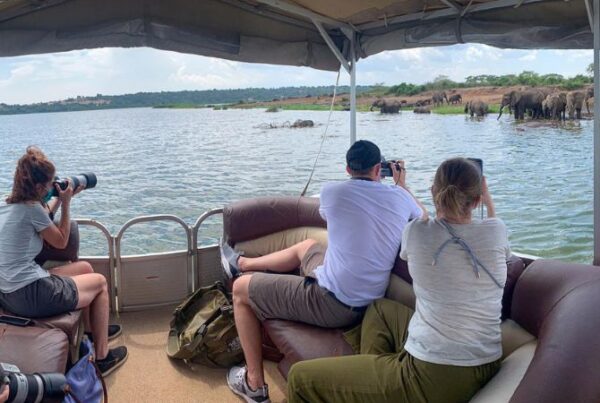
Birdlife in Queen Elizabeth is also exceptional, with over 600 species including herons, kingfishers, African fish eagles, and shoebills in wetland areas. The Kazinga Channel provides opportunities for boat safaris, allowing visitors to observe hippos, crocodiles, and waterbirds in natural habitats.

Queen Elizabeth’s unique features include diverse ecosystems, open savannah for unobstructed wildlife photography, and extensive accommodation options ranging from luxury lodges to safari camps. This combination makes it ideal for visitors seeking classic African safari experiences in tandem with Uganda’s rainforest adventures.

Planning the Combined Safari

Sequencing the Itinerary

The optimal sequencing generally begins with Kibale National Park, allowing travelers to acclimate to Uganda’s western regions and experience the intensive primate tracking before transitioning to the more expansive savannah landscapes of Queen Elizabeth. Morning chimpanzee treks in Kibale are typically followed by cultural visits or nature walks in the afternoon, providing a balanced approach to time and energy management.

Travel to Queen Elizabeth usually occurs via road transfer, covering approximately 3 to 4 hours depending on routes, road conditions, and stops along the way. Early departures from Kibale ensure arrival in Queen Elizabeth with sufficient time for afternoon game drives, sunset boat cruises, or relaxation at lodges. Alternatively, a reverse sequence is feasible for those prioritizing savannah wildlife before immersing in rainforest experiences.

Duration and Recommended Itinerary

A combined safari is often planned over 5 to 7 days, allowing adequate time for both chimpanzee tracking in Kibale and full game drives in Queen Elizabeth. The suggested itinerary includes two full days in Kibale for trekking, nature walks, and cultural engagements, followed by 2 to 3 days in Queen Elizabeth for morning and evening game drives, Kazinga Channel boat cruises, and birdwatching. An additional day can be allocated for travel, lodge relaxation, or optional excursions such as crater lake visits or community interactions.

Careful planning ensures that permits for chimpanzee tracking, lodge bookings, and park entry fees are secured in advance, particularly during peak seasons when visitor numbers increase. Guided itineraries enhance both the efficiency and quality of experiences, as rangers provide ecological insights and assist with wildlife observation techniques.

Wildlife Highlights and Photography Opportunities

Kibale Wildlife Photography

In Kibale, photographers and wildlife enthusiasts focus primarily on chimpanzees and primates, capturing detailed social behaviors, feeding activities, and juvenile interactions. Birdwatching provides secondary opportunities, with colorful species inhabiting canopy layers, riverine corridors, and swamp edges. Macro photography enthusiasts can also explore forest flora, insects, and amphibians, documenting ecological intricacies often overlooked in savannah environments.

Lighting conditions are influenced by dense canopy cover, necessitating careful adjustment of ISO, shutter speed, and lens selection. Early morning hours offer soft light and heightened animal activity, while late afternoons provide golden hues for landscape compositions.How to Combine Kibale with Queen Elizabeth Safaris

Queen Elizabeth Wildlife Photography

Queen Elizabeth provides open landscapes conducive to wide-angle photography, with elephants, buffalo herds, lions, and leopards creating dramatic compositions against savannah backdrops. The Kazinga Channel offers unique perspectives for capturing waterbirds, hippos, crocodiles, and reflective water scenes. Photographers benefit from unobstructed lines of sight, dynamic lighting during sunrise and sunset, and the opportunity to capture predator-prey interactions at relatively close distances.

Combining Kibale and Queen Elizabeth allows photographers to juxtapose intimate forest moments with expansive savannah scenes, producing a diverse portfolio that captures Uganda’s ecological breadth.

Cultural and Community Integration

Interactions Near Kibale

Visits to local communities surrounding Kibale provide insight into Bakiga and Batwa traditions, including agricultural practices, craft making, music, and storytelling. These encounters can be documented ethically, emphasizing cultural respect and collaboration. Cultural photography complements wildlife imagery, offering a holistic narrative of human-nature interactions.

Interactions Near Queen Elizabeth

Communities adjacent to Queen Elizabeth, such as those around the Kyambura Gorge and Ishasha sector, present opportunities to observe pastoralist lifestyles, traditional fishing, and land-use practices. These interactions provide context for understanding human-wildlife coexistence, as residents navigate challenges related to crop-raiding wildlife and conservation regulations. Ethical engagement ensures that photography reflects genuine experiences while respecting privacy and cultural norms.

Logistics and Transportation

Road Transfers

Road transfers between Kibale and Queen Elizabeth are typically conducted via private safari vehicles, providing comfort, flexibility, and opportunities for roadside wildlife observation. Travel duration varies depending on weather, road conditions, and stops at viewpoints or community sites. Adequate preparation for fuel, refreshments, and photographic stops ensures a smooth journey.

Accommodation Options

Luxury lodges, tented camps, and eco-lodges are available in both regions, often integrated with safari packages. Kibale lodges are generally forest-based, offering proximity to trekking trails and immersive nature experiences. Queen Elizabeth lodges provide savannah vistas, river access, and strategic locations for game drives. Selecting accommodations in advance is critical, particularly during peak travel seasons.

Guided Services

Professional guides enhance the combined safari by providing ecological interpretation, wildlife tracking expertise, safety guidance, and cultural insights. Experienced teams ensure that safari permits, park regulations, and ethical photography practices are adhered to, optimizing both enjoyment and conservation outcomes.

Seasonal Considerations

Dry Season Advantages

The dry seasons from December to February and June to August facilitate smoother trekking in Kibale and improved road conditions to Queen Elizabeth. Wildlife visibility is enhanced as animals congregate around water sources, creating excellent game drive and photography opportunities. Trails are more navigable, and early morning and late afternoon light conditions are favorable for both forest and savannah photography.

Wet Season Advantages

The wet seasons from March to May and September to November produce lush vegetation, vibrant bird activity, and dramatic forest landscapes. While travel may be slower and trails muddier, the photographic rewards include misty forest scenes, reflective water surfaces, and active wildlife behaviors. Careful planning and waterproof gear ensure a productive safari despite seasonal challenges.

Maximizing the Combined Safari Experience

Integrated Wildlife Observation

Combining Kibale and Queen Elizabeth allows for a comprehensive wildlife experience, contrasting primate-centric forest encounters with large mammal-focused savannah safaris. Observers can appreciate ecological connectivity, witness species-specific behaviors, and engage in photography across contrasting environments, enriching both scientific understanding and aesthetic appreciation.

Balancing Cultural and Ecological Engagement

Incorporating community interactions alongside wildlife activities ensures that the safari experience is holistic and multidimensional. Visitors gain insights into human adaptation to forest and savannah ecosystems, understand conservation challenges, and participate in responsible tourism initiatives that support local livelihoods and ecological preservation.

Ethical and Responsible Tourism

Ethical considerations guide all aspects of the combined safari. Minimizing disturbance to wildlife, maintaining safe distances during observation, securing consent for cultural photography, and adhering to park regulations ensures sustainable and respectful engagement. These practices support long-term conservation objectives and enhance visitor experience by promoting authentic, undisturbed encounters.

The Ultimate Dual Safari

Combining Kibale National Park and Queen Elizabeth National Park offers a uniquely rewarding Ugandan safari, merging the intimate forest encounters of primate tracking with the expansive wildlife spectacles of the savannah. Thoughtful itinerary planning, guided experiences, and awareness of seasonal and ecological variables maximize both wildlife observation and photographic opportunities. Cultural encounters enrich the safari, bridging human and ecological narratives for a holistic understanding of Uganda’s landscapes.

For travelers seeking a seamless, expertly curated, and ethically responsible combined safari, arrangements through WildHorn Africa are recommended. Their expertise ensures access to prime wildlife locations, knowledgeable guides, logistical coordination, and immersive cultural experiences, transforming a journey across Kibale and Queen Elizabeth into a memorable and comprehensive exploration of Uganda’s ecological and cultural wealth.

Ultimate Travel Guide to Murchison Falls National Park

Ultimate Travel Guide to Murchison Falls National Park

By Travel stories and blogs, Family holidays, Luxury holidays, Safari holidays, Travel guides, Uganda travel guides, Wildlife holidays

Ultimate Travel Guide to Murchison Falls National Park

The Untamed Jewel of the Nile

At the heart of Uganda’s wilderness lies Murchison Falls National Park, a destination of striking beauty and immense power where the Nile River thunders through a narrow gorge before cascading into a roaring pool below. This spectacle of water, sound, and unyielding force defines the park, making it one of Africa’s most dramatic natural landmarks. For centuries, explorers, naturalists, and travelers have been drawn to this remarkable place, where the allure of the untamed wild meets the majesty of Africa’s longest river.

Murchison Falls is not merely a park; it is an emblem of Uganda’s ecological wealth and a gateway to unforgettable encounters with nature. The park’s blend of vast savannahs, riverine forests, and sweeping woodlands supports a diversity of wildlife that mirrors the grandeur of the landscapes. From herds of elephants grazing in the open plains to crocodiles lurking in the shallows of the Nile, and from giraffes stretching towards the acacia canopies to lions prowling silently at dusk, the park unfolds as a living masterpiece of the natural world.

For travelers seeking the ultimate safari adventure, a visit to Murchison Falls offers a rare combination of raw wilderness, breathtaking scenery, and cultural depth. This guide unveils the park’s landscapes, wildlife, history, and travel essentials, creating a resource for those who wish to discover Uganda’s largest and most iconic protected area.

The History and Significance of Murchison Falls

The story of Murchison Falls National Park is rooted in both natural and cultural heritage. Established in 1952, it is Uganda’s oldest and largest conservation area, spanning over 3,800 square kilometers. Its significance, however, predates its formal designation. The Nile, which slices through the park, has long been revered as a lifeline for both wildlife and people. Early explorers, including Sir Samuel Baker, were captivated by the falls in the nineteenth century, describing them as a natural wonder unlike any other. It was Baker who named the falls in honor of Roderick Murchison, a prominent geologist of the era.

During the twentieth century, the park became a sanctuary not only for wildlife but also for scientific exploration and tourism. Although periods of political unrest led to poaching and population decline among species such as elephants and rhinos, conservation efforts have since revitalized the ecosystem. Today, Murchison Falls stands as a testament to resilience, conservation, and the enduring magnificence of Uganda’s landscapes.

Landscapes and Natural Beauty

The landscapes of Murchison Falls are diverse and captivating. The northern sector of the park is dominated by rolling savannahs and open grasslands, dotted with Borassus palms and acacia trees, creating a quintessential African scene. Herds of antelope graze freely, while giraffes and buffalo traverse the plains under the sweeping skies. The southern sector contrasts sharply, with woodlands, riverine forests, and thick vegetation, providing shelter to chimpanzees and other primates.

The Nile River, which divides the park, serves as the lifeblood of the ecosystem. It flows from Lake Victoria, traverses Lake Kyoga, and makes its way into Lake Albert after passing through the narrow cleft that forms Murchison Falls. This river is more than a geographic feature; it is the stage upon which the park’s drama unfolds. The spray from the falls, the thunderous sound of crashing water, and the rainbow arcs that appear in the mist create scenes that remain imprinted in memory long after departure.

The Power of the Falls

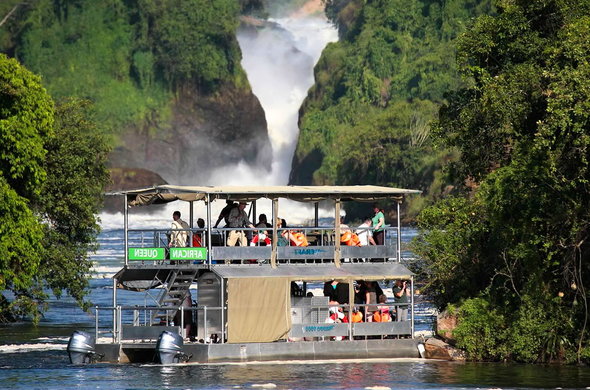
At the heart of the park lies the mighty spectacle of Murchison Falls, where the Victoria Nile narrows from a width of nearly fifty meters into a gorge barely seven meters wide before plunging forty-three meters below. The sight is breathtaking, as millions of liters of water crash through the rock, creating a roar that reverberates across the cliffs. This immense force has earned Murchison Falls the reputation of being the most powerful waterfall in the world.

Visitors can witness the falls from several vantage points. Boat cruises along the Nile provide dramatic views from below, where hippos, crocodiles, and elephants are frequently observed along the banks. Hiking trails lead to the top of the falls, where the water can be felt vibrating beneath one’s feet, and panoramic views of the river and surrounding savannah stretch into the distance. The combination of sight, sound, and sensation makes Murchison Falls an unforgettable centerpiece of any Ugandan safari.

Wildlife Diversity in Murchison Falls

The park is home to an impressive array of wildlife, making it one of Uganda’s premier safari destinations. Elephants, lions, leopards, giraffes, buffalo, and hyenas roam the savannah, while hippos and crocodiles dominate the Nile waters. Over seventy mammal species inhabit the park, ensuring that every game drive or boat safari reveals something extraordinary.

Primates add to the richness, with chimpanzees thriving in the Budongo Forest Reserve on the southern edge of the park. This forest, one of the largest mahogany reserves in East Africa, also shelters black-and-white colobus monkeys, red-tailed monkeys, and olive baboons. Birdlife is equally abundant, with over 450 species recorded. From the rare shoebill stork to colorful kingfishers, fish eagles, and herons, the park serves as a paradise for birdwatchers.

The wildlife experience in Murchison Falls is shaped not only by diversity but also by scale. The herds appear vast, the predators more elusive yet present, and the river ecosystem teems with life. This grandeur distinguishes the park from others, offering encounters that feel both dramatic and authentic.

Activities in the Park

A visit to Murchison Falls offers more than traditional game drives. Each activity is designed to showcase the park’s varied ecosystems and reveal the depth of its beauty.

The boat safari along the Nile remains one of the most iconic experiences. Departing from Paraa, these cruises glide upstream towards the base of the falls, passing pods of hippos, basking crocodiles, and a wealth of bird species. The stillness of the water contrasts with the anticipation of the approaching falls, culminating in a view that is both serene and powerful.Ultimate Travel Guide to Murchison Falls National Park

Game drives in the northern savannahs provide another dimension of exploration. Early mornings and late afternoons are particularly rewarding, as predators are more active and herbivores gather in large numbers. The Kasenyi plains and Buligi tracks are especially productive for sightings of lions, elephants, and Uganda kob.

For those seeking physical engagement, the hike to the top of the falls delivers both adventure and reward. The sound grows louder with each step, the mist rises higher, and the culmination offers an unparalleled vantage point over one of Africa’s greatest natural wonders.

In Budongo Forest, chimpanzee trekking introduces visitors to the primate world. Guided walks through the lush canopy bring travelers face to face with these intelligent and social creatures, offering insights into their behavior and conservation challenges.

Accessibility and Travel Logistics

Murchison Falls National Park lies approximately 300 kilometers northwest of Uganda’s capital, Kampala. Travel by road takes between five and seven hours, depending on the route and conditions. The journey passes through scenic countryside, small towns, and rural landscapes, providing a glimpse into Uganda’s cultural life.

For those preferring air travel, domestic flights operate to Pakuba, Chobe, and Bugungu airstrips, significantly reducing travel time. These flights are particularly convenient for travelers with limited schedules or those seeking comfort.

Once inside the park, the Paraa ferry connects the southern and northern banks of the Nile, facilitating access to game drive areas and lodges. Roads within the park are primarily dirt tracks, navigable with four-wheel drive vehicles, particularly during the rainy season. Accessibility may vary depending on seasonal conditions, and planning with local expertise ensures a smoother experience.

Accommodation Options

Accommodation within Murchison Falls caters to a wide spectrum of preferences. Luxury lodges perched along the Nile offer panoramic views and high levels of comfort, with spacious rooms, fine dining, and guided excursions integrated into their services. Mid-range lodges and tented camps provide balance between affordability and comfort, while budget campsites offer simplicity and closeness to nature.

Each option ensures that visitors remain immersed in the wilderness. Nights in the park are characterized by the calls of distant lions, the grunts of hippos, and the rustling of nocturnal animals, creating an atmosphere that reinforces the sense of being far removed from the modern world.

Seasons and Best Time to Visit

The climate of Murchison Falls is defined by wet and dry seasons. The dry months, typically from December to February and June to September, are considered the best times to visit. During these periods, roads are more accessible, vegetation is thinner, and wildlife congregates around water sources, enhancing visibility.

The wet seasons, from March to May and October to November, bring lush greenery and increased bird activity. Migratory species add to the avian diversity, and landscapes appear vibrant and refreshed. However, heavy rains can make some roads challenging to navigate, and boat cruises may be affected by rising water levels. Travelers must weigh the benefits of lush scenery and birdwatching against the potential difficulties of access during these times.

Cultural Encounters Around the Park

Beyond the wildlife, Murchison Falls offers cultural richness through interactions with communities living near the park. Visits to villages reveal traditional dances, crafts, and farming practices, offering insights into how people coexist with the wilderness. The Banyoro and Alur communities, among others, share their heritage through music, storytelling, and art. These encounters deepen the safari experience, providing not only entertainment but also education and appreciation of Uganda’s cultural mosaic.

Conservation and Sustainability

Murchison Falls has faced challenges of poaching, habitat loss, and human-wildlife conflict over the decades. Conservation initiatives, led by the Uganda Wildlife Authority and supported by international organizations, have worked to restore populations of elephants, giraffes, and other species. Anti-poaching patrols, community involvement, and tourism revenue have played pivotal roles in sustaining the park’s ecosystem.

Visitors contribute to conservation simply by choosing responsible tourism. Fees support park management, while engagement in community projects fosters coexistence between humans and wildlife. The future of Murchison Falls depends on the delicate balance between preservation and access, a responsibility shared by all who step into its landscapes.

Comparing Murchison with Other Ugandan Parks

While Uganda is home to several remarkable national parks, Murchison Falls distinguishes itself through scale, diversity, and spectacle. Queen Elizabeth National Park offers more varied habitats within a smaller area, including crater lakes and tree-climbing lions, while Murchison emphasizes raw wilderness and the unmatched drama of the Nile. Kibale Forest excels in primate experiences, particularly chimpanzee trekking, while Bwindi Impenetrable National Park is celebrated for gorilla encounters. Yet none combines the grandeur of savannahs, riverine ecosystems, and the power of the world’s strongest waterfall as Murchison does.

Planning an Itinerary

A well-planned itinerary ensures that visitors capture the essence of Murchison Falls. Two to three days within the park allows for game drives, a boat cruise to the base of the falls, and a hike to the top. Additional days may include chimpanzee trekking in Budongo Forest, birdwatching excursions, or cultural visits to surrounding communities. Combining Murchison Falls with other Ugandan destinations, such as Ziwa Rhino Sanctuary or Kibale Forest, creates a diverse journey that highlights the country’s natural and cultural richness.

The Power and Beauty of Murchison Falls

Murchison Falls National Park is a destination where nature’s raw energy is on full display, where wildlife roams freely across vast savannahs, and where the Nile demonstrates its unrelenting force. From the thunder of the falls to the serenity of the river, from the majesty of elephants to the grace of giraffes, the park embodies the essence of African wilderness.

For travelers seeking more than a safari, Murchison Falls offers connection—to landscapes, to wildlife, to people, and to the timeless rhythm of the Nile. Every moment spent here is a reminder of the fragility and grandeur of the natural world, leaving impressions that endure long after the journey ends.

To ensure that such a journey is seamless, enriching, and deeply memorable, it is recommended that travelers book their Uganda safaris through WildHorn Africa. With expertise, commitment to conservation, and passion for creating meaningful experiences, WildHorn Africa transforms a visit to Murchison Falls into an adventure that captures the heart and soul of Uganda’s wilderness.

Best Game Drives in Murchison Falls National Park

Best Game Drives in Murchison Falls National Park

By Travel stories and blogs, Family holidays, Luxury holidays, Safari holidays, Uganda travel guides, Wildlife holidays

Best Game Drives in Murchison Falls National Park

Where the Wilderness Unfolds in Epic Grandeur

There are places in Africa where the heartbeat of the wild can be felt with every step, where landscapes stretch endlessly beneath golden sunlight, and where animals roam as they did centuries ago, untouched by time. One such place is Murchison Falls National Park, Uganda’s largest and most famous conservation area. Known primarily for hosting the world’s most powerful waterfall, the park is also a sanctuary of extraordinary wildlife encounters. Among its greatest treasures lies the game drive experience, a journey into the savannah and riverine landscapes that defines the very essence of an African safari.

The game drives in Murchison Falls National Park are not ordinary excursions; they are timeless passages into a wilderness that reveals its secrets only to those willing to watch, listen, and feel. Every turn of the trail brings the possibility of an encounter with elephants moving gracefully through the grasslands, lions resting in the shade, or giraffes stretching their necks against a blue African sky. The game drive transforms into more than an activity; it becomes a dialogue between human presence and the eternal wilderness, a narrative written by paw prints, shadows, and calls carried on the wind.

In this comprehensive exploration, the beauty, drama, and variety of game drives within Murchison Falls National Park will be uncovered. From the savannah plains of the northern sector to the quieter woodland regions in the south, from sunrise expeditions to nocturnal explorations beneath the stars, each experience unfolds as a testament to the diversity and vitality of Uganda’s wildlife heritage.

The Landscape That Defines the Game Drive

The setting of a game drive is as significant as the wildlife itself. Murchison Falls National Park spans nearly four thousand square kilometers, a landscape shaped by the course of the Victoria Nile as it carves its way toward Lake Albert. This river divides the park into contrasting habitats, creating a natural diversity that enriches every safari experience.

The northern banks are dominated by open savannah grasslands, a stage where herds of antelope graze and predators move stealthily in search of prey. Palm-dotted plains stretch as far as the eye can see, creating vistas reminiscent of classic African safaris. The southern banks reveal a different character, composed of woodlands, riverine forests, and the Budongo Forest Reserve, which shelters chimpanzees and other primates.

It is this duality—savannah and woodland, openness and enclosure—that defines the game drive in Murchison Falls. Each journey brings a contrast in scenery, ensuring that no two drives are ever alike.

The Wildlife Drama of the Savannah

A game drive through the northern savannahs is often remembered as the quintessential safari experience. The open landscapes offer sweeping visibility, allowing travelers to witness wildlife in motion across vast horizons. Herds of Ugandan kob, with their elegant spiral horns, move gracefully through the plains, while waterbucks, hartebeests, and oribi add variety to the herbivore populations.

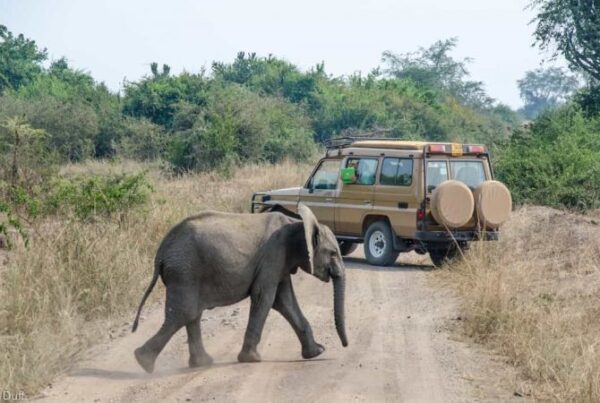
Elephants dominate these plains with their sheer presence, moving in family groups whose gentle demeanor contrasts with their imposing size. Giraffes rise above the acacia trees, their movements slow yet graceful, while buffalo gather in formidable numbers, forming one of the park’s most impressive spectacles.

Amid this abundance of prey, the predators thrive. Lions are frequently sighted, sometimes resting in shaded thickets, other times patrolling in search of hunting opportunities. Their roars echo across the grasslands at dawn, a sound that embodies the wilderness. Leopards, more elusive but equally captivating, reveal themselves occasionally in trees or through sudden movements in the undergrowth. Hyenas roam the plains, scavengers yet skilled hunters, ensuring the balance of the ecosystem remains intact.

The savannah game drive is thus not simply about seeing animals; it is about witnessing the eternal balance of predator and prey, survival and adaptation, all unfolding against a backdrop of timeless African landscapes.

The Southern Woodlands: A Different Perspective

While the northern savannahs dominate most visitors’ imaginations, the southern woodlands of Murchison Falls provide a quieter but equally rewarding game drive experience. Here, the terrain shifts into denser vegetation, where fig trees, mahogany, and ironwood create shaded pathways.

In these woodlands, primates become prominent. Baboons line the forest edges, colobus monkeys leap through branches, and the nearby Budongo Forest resonates with the calls of chimpanzees. The presence of forest elephants, smaller and more secretive than their savannah counterparts, adds mystery to the southern drives.

Birdlife thrives in these areas, with hornbills, turacos, and kingfishers adding bursts of color and song. While predators are less frequently observed in the dense woodlands, the atmosphere is one of discovery and intimacy, as if the forest reveals its secrets only to those who move slowly and attentively.

This diversity ensures that the southern woodlands complement the northern savannahs, offering a holistic game drive experience that combines openness with enclosure, spectacle with subtlety.

Morning Game Drives: The Awakening of the Wilderness

The game drive at dawn is a ritual unlike any other. As the first light spreads across the horizon, the wilderness awakens with energy and movement. The cool air carries the calls of birds, the distant trumpeting of elephants, and the rustling of antelope in the tall grass.

Predators, still active from the night, are often sighted during these early hours. Lions may be seen returning from a hunt, their golden coats glowing in the soft morning light. Hyenas patrol the plains, and leopards may still linger in trees before retreating into daytime secrecy.

Herbivores emerge to graze, silhouetted against the rising sun. The sight of giraffes moving gracefully through golden light or kob leaping in morning play creates scenes that feel almost cinematic. The morning game drive is therefore not only about wildlife sightings but also about atmosphere—the merging of light, sound, and movement that defines the wilderness in its purest form.Best Game Drives in Murchison Falls National Park

Afternoon Game Drives: The Heat and Stillness of the Plains

As the day progresses, the wilderness takes on a different rhythm. The afternoon game drive, often conducted later in the day to avoid the intense midday sun, reveals the park in a more contemplative mood. Many animals retreat to shade, creating moments of stillness punctuated by bursts of activity.

Elephants may be found near water sources, cooling themselves in the river or bathing in mud to protect their skin from the heat. Buffalo remain active, often forming herds that dominate the plains with their numbers. Giraffes, less troubled by the sun, continue their graceful feeding, silhouetted against a sky deepening toward sunset.

Predators become active again as the heat diminishes, with lions preparing for the night hunt and hyenas gathering in anticipation of opportunities. As the sun lowers, the light becomes golden, bathing the landscape in colors that photographers dream of capturing. The afternoon game drive is thus defined by contrast: the quietness of midday giving way to the anticipation of evening.

Night Game Drives: The Wilderness in Darkness

For those who seek the wilderness beyond the veil of day, the night game drive becomes an unforgettable experience. Conducted with specialized spotlights, these drives reveal a world that remains hidden under the cover of darkness.

Nocturnal predators, including lions and leopards, become more active, their eyes glowing in the artificial light as they move silently through the grasslands. Hyenas, ever opportunistic, patrol in groups, their eerie calls adding a haunting soundtrack to the night. Smaller predators such as servals and genets also make appearances, their movements quick and deliberate.

Herbivores display different behaviors under the stars, often gathering in groups for protection. Hippos, which spend daylight hours submerged in water, emerge to graze, their massive forms moving silently across the plains.

The night drive is less about spectacle and more about atmosphere. The wilderness feels raw, mysterious, and intimate, offering travelers an experience of Africa that few ever encounter.

The Role of the Nile in the Game Drive Experience

The presence of the Nile shapes every game drive in Murchison Falls National Park. The river provides not only a lifeline for wildlife but also a dramatic stage upon which encounters unfold.

Along the riverbanks, hippos gather in large pods, their constant grunts and splashes becoming a soundtrack to the drive. Crocodiles bask on sandy shores, immobile until sudden bursts of movement reveal their predatory nature. Elephants descend to the river to drink, sometimes crossing in numbers that inspire awe.

Birdlife flourishes in these habitats, with kingfishers darting into the water, African fish eagles soaring above, and the rare shoebill stork lurking in the papyrus swamps. The river thus transforms the game drive into a multi-dimensional experience, where land and water merge into one.

Birdwatching on Game Drives

While the focus of most game drives lies on the mammals, birdwatching in Murchison Falls adds another layer of wonder. Over 450 species inhabit the park, creating a vibrant avian population that accompanies every journey.

Colorful bee-eaters line the branches, rollers display their acrobatic flights, and herons patrol the riverbanks. The shoebill, rare and prehistoric in appearance, remains one of the most sought-after sightings, its presence considered a privilege for those fortunate enough to observe it.

The game drive, therefore, becomes not only a mammalian spectacle but also an avian symphony, enriching the experience for those who appreciate the delicate beauty of birdlife.

The Human Connection: Guides and Trackers

The success of a game drive is not only determined by wildlife but also by the expertise of the guides and trackers who accompany visitors. Their knowledge of animal behavior, landscapes, and subtle signs transforms the drive into an educational journey.

A simple paw print in the sand becomes a story of nocturnal movement. A sudden silence among birds becomes a signal of a predator’s presence. Guides interpret these signs with skill, allowing travelers to experience the wilderness with deeper understanding.

Through their storytelling and interpretation, the game drive transcends the ordinary and becomes a journey into the language of the wild.

Conservation and the Future of Game Drives

The preservation of game drives in Murchison Falls is inseparable from the conservation of the park itself. Challenges such as poaching, habitat degradation, and climate change threaten the delicate balance of the ecosystem. Yet progress has been made through community engagement, government efforts, and sustainable tourism initiatives.

Visitors who participate in game drives contribute directly to these conservation efforts. Entrance fees, lodge revenues, and partnerships with local communities ensure that wildlife remains protected and that the future of the game drive experience remains secure.

Sustainability, therefore, is not only a principle but a necessity. The survival of the wilderness depends upon it, as does the continuation of the unforgettable game drives that define Murchison Falls.

Where the Wild Becomes Eternal

The game drives in Murchison Falls National Park are among the finest safari experiences in Africa. They offer more than glimpses of animals; they immerse travelers in a world where life and survival unfold without script, where every dawn and dusk tells a new story. From the golden savannahs to the shaded woodlands, from morning awakenings to nocturnal mysteries, the game drive embodies the diversity, beauty, and power of the wild.

Murchison Falls is not simply a place; it is an experience that lingers long after departure. The thunder of the falls, the sight of elephants moving across the plains, the call of a lion in the night—all become etched into memory as part of the eternal song of Africa.

To ensure that this song is experienced in its most authentic and rewarding form, it is advised that travelers plan their journey with WildHorn Africa, a provider renowned for expertise, dedication, and commitment to creating extraordinary safaris. With WildHorn Africa, the game drives of Murchison Falls transform from excursions into life-changing encounters with the timeless wilderness of Uganda.

Photography Safari Tips in Queen Elizabeth National Park

Photography Safari Tips in Queen Elizabeth National Park

By Travel stories and blogs, Luxury holidays, Safari holidays, Special offers, Uganda travel guides, Wildlife holidays

Photography Safari Tips in Queen Elizabeth National Park

Capturing the Untamed Beauty of Uganda

In the heart of Uganda, where the savannah stretches into distant horizons, volcanic craters shimmer with lakes, and the Kazinga Channel teems with wildlife, lies Queen Elizabeth National Park—a sanctuary not only for animals but also for photographers seeking to encapsulate the essence of Africa. Photography safaris in this iconic park offer a rare opportunity to observe and preserve moments that blend nature’s artistry with untamed behavior.

For enthusiasts and professionals alike, a safari in Queen Elizabeth is not merely a photographic pursuit; it is an educational journey, an exercise in patience, observation, and understanding of ecological dynamics. First-time photographers may initially be overwhelmed by the abundance of subjects—from tree-climbing lions in Ishasha to hippos wallowing in the Kazinga Channel—but with preparation, guidance, and awareness, every encounter can become a lasting memory captured through the lens.

Photographic opportunities are endless, but they demand more than equipment alone. Knowledge of animal behavior, light, composition, and ethical considerations ensures that every image reflects both artistic merit and respect for wildlife. This article provides a comprehensive guide for maximizing photography experiences in Queen Elizabeth National Park, offering insights into preparation, technique, and the unique challenges of safari photography.

Understanding the Landscape and Lighting

The landscape of Queen Elizabeth National Park is extraordinarily diverse, encompassing savannahs, wetlands, crater lakes, riverine forests, and the Ishasha plains. Each ecosystem presents distinct photographic possibilities and challenges. The wide-open savannahs of Kasenyi provide panoramic vistas, allowing photographers to frame herds of elephants or prides of lions against dramatic skies. In contrast, the dense riverine forests and Kyambura Gorge require attention to lighting and composition to capture elusive species without disturbing their natural behavior.

Lighting plays a pivotal role in photography. Early mornings and late afternoons are universally preferred, as the sun casts a golden glow, illuminating the landscape and enhancing the texture and color of wildlife. Midday light can be harsh and flat, yet with proper exposure settings, it can reveal intricate details in fur, feathers, and landscapes. Understanding the interaction between light, shadow, and subject is essential for creating images that convey depth, drama, and authenticity.

Cloud cover, reflections on lakes, and the shimmer of the Kazinga Channel add further variables that must be anticipated. Photographers are encouraged to study the terrain, anticipate animal movement, and position themselves strategically to exploit natural light for dramatic effect.

Essential Equipment for Safari Photography

A successful photography safari in Queen Elizabeth requires thoughtful selection of equipment. Telephoto lenses, typically ranging from 200mm to 600mm, are indispensable for capturing detailed wildlife portraits while maintaining safe distances. Wide-angle lenses are equally valuable for landscape compositions, showing animals within their expansive habitats or framing iconic landmarks like crater lakes and the Kazinga Channel.

Tripods and monopods are optional but can enhance stability for low-light conditions or long telephoto shots. Camera settings must be adjusted to balance shutter speed, aperture, and ISO, particularly for fast-moving subjects such as lions in pursuit or birds in flight. Filters may also be employed to manage reflections, glare, or harsh sunlight, and backup batteries and memory cards are critical for uninterrupted shooting in remote areas.

First-time photographers often underestimate the importance of mobility. Safari vehicles are frequently in motion, and wildlife can appear unexpectedly. Equipment must be easily accessible, securely mounted, and adaptable to rapid changes in positioning, ensuring that no moment is missed.

Approaching Wildlife: Patience and Observation

Successful wildlife photography in Queen Elizabeth is rooted in patience and observation. Animals behave unpredictably, and premature attempts to photograph them can lead to missed opportunities or disturbance. Guides play a crucial role in interpreting animal behavior, indicating moments when a lion pride may emerge from the shade, a herd of elephants may cross the plains, or a shoebill may strike at its prey in the papyrus swamps.

Observation extends beyond mere sight. Listening to rustles in the grass, understanding the social hierarchy within predator groups, and anticipating migratory patterns of herbivores are all essential skills. First-time photographers are often guided to watch quietly, adjust lens settings in advance, and remain prepared for sudden action, ensuring that images are authentic and unobtrusive.

Ethical considerations also govern approach. Wildlife should never be provoked, cornered, or distracted for the sake of a photograph. The preservation of natural behavior and safety for both photographer and subject is paramount, and adherence to these principles distinguishes professional wildlife photography from casual snapshots.Photography Safari Tips in Queen Elizabeth National Park

Composition and Storytelling in Safari Photography

Capturing compelling images goes beyond technical proficiency; it requires an understanding of composition and storytelling. Queen Elizabeth’s diverse habitats allow for creative framing, whether juxtaposing the vast savannah with a solitary elephant, highlighting predator-prey interactions, or using reflections in crater lakes to evoke serenity.

Foreground, middle ground, and background elements are carefully considered to convey depth. Leading lines, such as riverbanks, paths, or tree trunks, guide the viewer’s eye through the frame. The rule of thirds is applied to emphasize focal points, whether a lion’s gaze, a bird in mid-flight, or the elegant curve of a crocodile’s back emerging from the water.

Storytelling extends to sequencing. A series of images can narrate an entire safari day—sunrise over the plains, a lion hunt, elephants drinking at the river, hippos submerged at dusk, and nightfall on the savannah. By combining technical mastery with narrative sensibility, photographers create images that resonate emotionally and aesthetically, capturing not just subjects but moments in time.

Specialized Techniques for Iconic Subjects

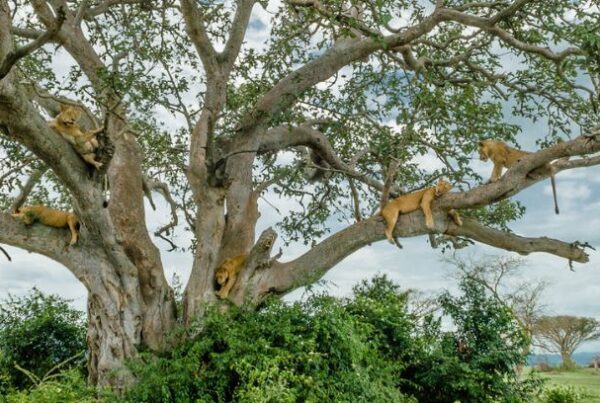
Certain species and behaviors in Queen Elizabeth require specialized photographic techniques. Lions in Ishasha, for instance, demand telephoto lenses to capture tree-climbing behavior without disturbing the animals. Slow shutter speeds may be employed creatively to convey motion when a lion stretches or yawns, while faster shutter speeds freeze sudden movements.

Bird photography, particularly of elusive species like the shoebill stork or African fish eagle, requires anticipation, rapid autofocus, and careful composition to capture action without spooking the bird. Water reflections, flight paths, and lighting angles all influence final results. Patience is rewarded with images that reveal behavioral intricacies and the elegance of flight or predation.

Elephants and buffalo herds also present opportunities for dynamic group shots. Photographers are guided to select vantage points that capture scale, depth, and movement, sometimes employing panoramic techniques to encompass entire herds against sweeping landscapes.

Capturing Landscapes and Ecosystems

While wildlife is central, Queen Elizabeth’s landscapes are integral to the photographic narrative. Crater lakes, the Kazinga Channel, savannah expanses, and forested gorges provide context and contrast. Sunrise and sunset light enhance textures, shadows, and colors, while atmospheric conditions—mist rising from lakes, storm clouds over plains—add drama and mood.

Photographers are encouraged to integrate environmental elements with wildlife subjects, creating images that illustrate the interaction between species and habitat. This approach elevates photographs from simple portraits to holistic representations of ecological systems, conveying the interconnectedness of life within the park.

Practical Considerations: Vehicles, Timing, and Safety

Safari vehicles in Queen Elizabeth are adapted for photography, often featuring elevated seats and open roofs to allow unobstructed views. First-time photographers are advised to position themselves strategically, anticipate wildlife movement, and minimize sudden shifts that might disturb animals. Coordination with guides ensures optimal timing and placement.

Timing is crucial. Early mornings and late afternoons offer optimal light and peak wildlife activity, while midday drives may focus on shaded habitats, birdlife, or water-based species. Safety is paramount; photographers must remain in vehicles unless accompanied by guides during controlled walking safaris, and maintain respectful distances from large or potentially dangerous animals.

Post-Processing and Image Enhancement

After capturing images, post-processing becomes an essential step. Adjustments to exposure, contrast, color balance, and sharpness can enhance the clarity and impact of photographs while maintaining authenticity. For wildlife images, care is taken not to manipulate scenes unrealistically; the goal is to convey nature’s beauty accurately while emphasizing composition and detail.

Organizing and cataloging images according to species, location, and behavior aids both personal use and professional portfolios. First-time safari photographers are often encouraged to maintain journals, noting conditions, animal behavior, and photographic techniques employed, fostering continuous learning and improvement.

Ethical and Responsible Photography

Responsible photography underpins every aspect of safari work in Queen Elizabeth. Wildlife should not be coerced or enticed for images, and habitats must remain undisturbed. Guides enforce codes of conduct that protect both visitors and animals, ensuring that photography supports conservation rather than exploitation.

Respect extends to local communities as well. When photographing villages or cultural activities, permission and sensitivity are required, ensuring that representation is accurate, respectful, and mutually beneficial. Ethical engagement strengthens both the visitor experience and the integrity of the park’s social and ecological systems.

The Emotional and Educational Impact

Photography safaris in Queen Elizabeth offer more than visual documentation; they foster emotional connection, mindfulness, and understanding of ecological relationships. Each image reflects hours of observation, patience, and immersion in the wilderness. For first-time photographers, the experience cultivates respect for wildlife, appreciation for ecosystems, and awareness of conservation challenges.

By combining artistic pursuit with ecological education, photography safaris elevate the safari experience into an enduring journey of personal and environmental enrichment. Images become narratives of Africa’s wild heart, preserved for both personal memory and broader awareness.

Immortalizing the Wild in Queen Elizabeth

Photography safaris in Queen Elizabeth National Park provide an unparalleled opportunity to capture the essence of Africa. From tree-climbing lions in Ishasha and hippos in the Kazinga Channel to flocks of birds and panoramic savannahs, every frame tells a story of life, adaptation, and beauty.

For enthusiasts and professionals alike, success is determined not solely by equipment, but by preparation, patience, ethical conduct, and a deep understanding of both wildlife and landscape. By adhering to these principles, every photographer can create images that are meaningful, authentic, and breathtaking.

To fully experience a photography safari in Queen Elizabeth, it is recommended that tours and safaris be arranged through WildHorn Africa. With their expertise, knowledge of wildlife behavior, and commitment to conservation, every safari becomes an opportunity to immortalize the wild while contributing to the preservation of Uganda’s extraordinary landscapes and biodiversity.

Comparing Queen Elizabeth with Murchison Falls: Which to Choose?

Comparing Queen Elizabeth with Murchison Falls: Which to Choose?

By Travel stories and blogs, Family holidays, Luxury holidays, Safari holidays, Uganda travel guides, Wildlife holidays

Comparing Queen Elizabeth with Murchison Falls: Which to Choose?

Choosing the Perfect Safari Destination in Uganda

For travelers planning a safari in Uganda, the decision often comes down to two of the nation’s most celebrated parks: Queen Elizabeth National Park and Murchison Falls National Park. Each offers unique experiences, landscapes, and wildlife encounters, making the choice both exciting and complex. First-time visitors may feel challenged to weigh the advantages of one destination against the other, while seasoned travelers often consider what distinct features each park provides to craft a diverse itinerary.

Uganda, frequently called the “Pearl of Africa,” is renowned for its rich biodiversity, dramatic landscapes, and accessibility. Queen Elizabeth, situated in the western part of the country along the Rift Valley, is celebrated for its tree-climbing lions, crater lakes, and the Kazinga Channel, while Murchison Falls, in the northwestern region, is distinguished by the Victoria Nile’s dramatic waterfall, expansive savannahs, and rugged wilderness. The decision between the two often depends on wildlife preferences, desired activities, accommodation standards, and the type of safari experience sought.

This comparison explores the features of both parks in detail, offering insights into landscapes, wildlife diversity, accessibility, activities, and cultural opportunities, helping travelers make informed decisions for a memorable safari in Uganda.

Landscapes and Scenery: Contrasting Terrains

Queen Elizabeth National Park is characterized by a mosaic of habitats. The savannah plains, forested valleys, volcanic crater lakes, and wetlands converge within a relatively compact area, creating a rich tapestry of ecological diversity. The Kazinga Channel, linking Lake Edward and Lake George, flows through the park, attracting vast congregations of hippos, crocodiles, and birdlife. Hills, escarpments, and grassy plains provide scenic vistas, offering opportunities for panoramic photography and leisurely exploration.

In contrast, Murchison Falls National Park is dominated by the powerful flow of the Victoria Nile, culminating in the spectacular Murchison Falls, where the river is forced through a narrow gorge before cascading into the downstream pools. The park encompasses vast savannahs, woodlands, and riverine forests, which support both large mammals and an array of bird species. The terrain is more open and rugged than Queen Elizabeth, lending itself to dramatic photographic compositions and experiences that evoke the rawness of untamed wilderness.

For travelers drawn to varied landscapes within a single park, Queen Elizabeth provides an intimate diversity, blending water, forest, and grassland. Murchison Falls, however, offers a more singular yet striking spectacle, with the falls and the river forming the central visual and ecological focus of the park.

Wildlife Diversity: Species and Sightings

Queen Elizabeth National Park is often praised for its high concentration and diversity of wildlife, making it ideal for first-time safari goers and photographers alike. Lions, elephants, buffalo, hippos, Uganda kob, warthogs, and leopards are frequently observed, while Ishasha’s tree-climbing lions provide a singular spectacle. Bird enthusiasts benefit from over 600 recorded species, including the rare shoebill stork, fish eagles, and numerous migratory birds. The Kazinga Channel ensures predictable water-based wildlife sightings, which enhances the overall safari experience.

Murchison Falls offers equally compelling wildlife encounters but in a different context. The park is home to elephants, giraffes, lions, leopards, crocodiles, and a substantial population of buffalo and hippos. Its northern savannahs are particularly conducive to observing large herds of antelope and predators. Murchison is also notable for its less frequented trails and more rugged environment, which may appeal to travelers seeking remote, off-the-beaten-path experiences. Birding in Murchison is rich, with species such as the rock pratincole, Goliath heron, and African skimmer adding distinct appeal.

Overall, Queen Elizabeth offers high density and accessibility for diverse wildlife viewing, while Murchison provides opportunities to witness larger-scale herds and dramatic riverine predator-prey interactions, especially around the Nile and the falls.

Iconic Features and Signature Experiences

Queen Elizabeth is defined by its signature attractions, most notably the tree-climbing lions of Ishasha and the Kazinga Channel boat safari. Boat safaris allow close observation of hippos, crocodiles, and waterbirds, while game drives across Kasenyi Plains, crater lakes, and forested valleys offer varied wildlife encounters. Crater lakes introduce geological interest, while community tours along the park’s edges reveal the human dimension of conservation.

Murchison Falls, on the other hand, is synonymous with the spectacle of the falls themselves. The narrow gorge, where the Nile is funneled into a thunderous cascade, presents a dramatic natural feature that defines the park. Boat safaris along the Nile, both above and below the falls, provide opportunities to observe hippos, crocodiles, and riverine bird species, while trekking to the top of the falls allows panoramic views of the river and surrounding savannahs. The falls’ power and scale create a photographic and emotional impact that is unmatched elsewhere in Uganda.

While Queen Elizabeth offers a variety of habitats and signature wildlife, Murchison emphasizes singular natural grandeur and riverine dynamics, giving travelers distinctly different yet equally compelling experiences.

Accessibility and Travel Logistics

Queen Elizabeth is relatively accessible, located near the town of Kasese and approximately six to eight hours’ drive from Uganda’s capital, Kampala. The park’s road network is well-maintained, and game drive routes, lodges, and boat launch points are designed to maximize comfort and minimize travel fatigue, making it particularly suitable for family safaris and first-time visitors. Domestic flights to nearby airstrips also reduce travel time for those with limited schedules.

Murchison Falls, in contrast, is more remote. Situated in northwestern Uganda, travel from Kampala may take eight to ten hours by road, though domestic flights to Pakuba and Bugungu airstrips are available. The remoteness of Murchison ensures fewer crowds and more intimate wildlife encounters, but it may require travelers to tolerate longer drives and less developed infrastructure compared to Queen Elizabeth.

Accessibility can influence choice based on time constraints, travel preferences, and comfort requirements. Families or first-time safari goers often favor Queen Elizabeth for convenience, while adventurous travelers seeking a more rugged experience may prefer Murchison Falls.

Accommodation Options

Queen Elizabeth National Park offers a spectrum of accommodations, from luxury lodges and safari camps along the Kazinga Channel to eco-friendly tented sites. Many properties provide family-friendly amenities, including spacious rooms, safe dining areas, and easy access to game drives. Lodges near the Ishasha sector offer proximity to tree-climbing lions, while properties along the channel provide scenic views and boat safari integration.

Murchison Falls also offers a range of accommodations, including riverfront lodges, safari camps, and tented accommodations. However, properties are generally more isolated, emphasizing immersion in wilderness rather than immediate convenience. Families and travelers seeking intimate, remote experiences may find Murchison appealing, whereas those prioritizing accessibility and a combination of activities may prefer Queen Elizabeth.

Activities Beyond Game DrivesComparing Queen Elizabeth with Murchison Falls: Which to Choose?

Queen Elizabeth provides diverse activities beyond traditional game drives. Boat safaris on the Kazinga Channel, crater lake walks, birdwatching excursions, and community visits offer educational and cultural enrichment. Family safaris can be complemented by interactions with local communities, understanding conservation efforts, and learning about traditional practices that coexist with wildlife.

Murchison Falls emphasizes adventure and nature exploration. Activities include boat safaris above and below the falls, trekking to the top of Murchison Falls, and birdwatching along the Nile. More remote areas allow walking safaris with guides, offering intimate encounters with wildlife and the landscape. While Queen Elizabeth provides variety and accessibility, Murchison offers intensity, adventure, and a sense of untamed wilderness.

Wildlife Viewing Strategy

In Queen Elizabeth, wildlife is often concentrated along predictable habitats, making observation easier for newcomers. Guides interpret animal behavior and lead travelers to locations where sightings are frequent, ensuring high encounter rates. The combination of boat and land safaris provides multiple perspectives, enhancing both photography and educational opportunities.

Murchison Falls requires a more strategic approach, as wildlife is dispersed across larger areas. The northern savannahs and riverine forests demand careful planning and guide expertise, rewarding visitors with dramatic encounters but requiring greater patience. For travelers seeking intimate, rugged wildlife experiences, Murchison excels; for those prioritizing density and variety, Queen Elizabeth remains ideal.

Cultural and Community Engagement

Queen Elizabeth offers opportunities to engage with local communities living around the park, providing insight into traditional practices, agriculture, crafts, and conservation efforts. These interactions enrich the safari experience, particularly for families and first-time visitors, by combining adventure with education and cross-cultural learning.

Murchison Falls also incorporates community visits, particularly near riverside villages. However, the emphasis remains on wilderness immersion rather than cultural integration, which may appeal to travelers seeking solitude and minimal human interference.

Seasonal Considerations

Both parks have wet and dry seasons, which influence wildlife visibility, road conditions, and landscape aesthetics. Queen Elizabeth’s dry seasons, from June to September and December to February, offer optimal viewing, while wet seasons enhance vegetation, bird diversity, and the vibrancy of crater lakes. Murchison Falls’ dry season also ensures accessible roads and concentrated wildlife along rivers, while wet seasons transform the landscape into lush greenery and swelling rivers, accentuating the drama of the falls themselves.

Understanding seasonal variations helps travelers align their preferences with park conditions, balancing wildlife visibility, accessibility, and landscape photography opportunities.

Choosing Between the Two Parks

The decision between Queen Elizabeth and Murchison Falls often depends on visitor priorities. Queen Elizabeth appeals to families, first-time safari goers, and photographers seeking high-density wildlife in varied ecosystems. The park provides accessibility, comfort, and multiple activity options, creating a comprehensive safari experience.

Murchison Falls appeals to adventurous travelers, wildlife enthusiasts seeking remote and rugged experiences, and those drawn to dramatic landscapes. The emphasis on the Victoria Nile, large herds, and untamed wilderness provides intensity and grandeur, rewarding those willing to embrace longer travel times and more isolated accommodations.

Ultimately, some travelers choose to combine both parks in a single itinerary, capturing the diversity of Uganda’s wildlife and landscapes while benefiting from contrasting experiences—Queen Elizabeth’s variety and accessibility, paired with Murchison’s dramatic scenery and remoteness.

Making the Right Choice

Both Queen Elizabeth National Park and Murchison Falls National Park embody the richness and diversity of Uganda’s wildlife and landscapes. Each offers unique features, challenges, and rewards, shaping the safari experience according to visitor expectations. While Queen Elizabeth emphasizes variety, accessibility, and family-friendly adventure, Murchison provides raw wilderness, dramatic riverine scenery, and immersive exploration.

For travelers seeking to maximize the quality, safety, and educational value of their safari, it is strongly recommended that tours and safaris be booked through WildHorn Africa. With their expertise, local knowledge, and commitment to creating unforgettable experiences, every journey—whether in Queen Elizabeth or Murchison Falls—is transformed into an adventure that combines wildlife observation, scenic beauty, and cultural insight, leaving lasting memories of Uganda’s unparalleled natural heritage.

Family Safari in Queen Elizabeth: What to Expect

Family Safari in Queen Elizabeth: What to Expect

By Travel stories and blogs, Family holidays, Luxury holidays, Safari holidays, Uganda travel guides, Wildlife holidays

A Family Safari in Queen Elizabeth: What to Expect

The Ultimate Family Adventure in Uganda

A family safari represents more than a holiday; it is an immersive journey into nature, a rare opportunity for both children and adults to witness the wonders of the wild, and a chance to create memories that endure for a lifetime. Queen Elizabeth National Park, Uganda’s most iconic wildlife destination, has emerged as one of the safest, most accessible, and diverse parks in Africa for families seeking a balanced combination of adventure, education, and comfort.

For parents considering their first safari experience with children, the prospect may seem daunting. Concerns about safety, accessibility, and engagement often dominate considerations. Yet Queen Elizabeth has been designed to accommodate families in a manner that fosters curiosity, learning, and responsible interaction with the environment. From tree-climbing lions in Ishasha to hippos in the Kazinga Channel, from scenic crater lakes to guided educational walks, every aspect of the park is structured to ensure that both adults and children can fully enjoy the safari experience.

A family safari here is not only about observing wildlife but also about connecting with nature, understanding ecosystems, and appreciating conservation. Each encounter is layered with opportunities for storytelling, learning, and shared excitement, making the journey as much about personal growth as it is about leisure.

Understanding Queen Elizabeth for Family Travelers

Queen Elizabeth National Park spans nearly 2,000 square kilometers across Uganda’s western Rift Valley, encompassing a remarkable variety of habitats that make it ideal for family safaris. The park’s diversity includes expansive savannahs, wetlands, riverine forests, volcanic crater lakes, and forested gorges, all of which are home to over ninety-five mammal species and more than six hundred bird species.

For families, this diversity is particularly valuable. While adults may be captivated by predator-prey interactions and bird behavior, children often find fascination in observing elephants, warthogs, or the playful antics of hippos. The park’s accessibility is also a major advantage; well-maintained roads and family-friendly lodges ensure safe travel, reducing the physical strain often associated with safaris in more remote regions.

Queen Elizabeth’s wildlife density, coupled with its variety of ecosystems, allows families to experience multiple habitats within a single day. A morning game drive in Kasenyi Plains can be followed by a boat safari along the Kazinga Channel, creating opportunities for continuous discovery and engagement without the fatigue of long-distance travel.

Preparing for a Family Safari

Preparation is central to ensuring a smooth and enjoyable safari experience for families. Clothing choices, equipment, health precautions, and expectations must all be addressed. Lightweight, neutral-colored clothing is recommended for blending into natural surroundings and minimizing animal disturbance. Hats, sunglasses, and sunscreen are essential for sun protection, while insect repellent reduces exposure to mosquitoes and other insects.

Children require special attention, including suitable footwear, hydration, and snacks. Binoculars and cameras are encouraged for older children to cultivate observation skills and interest in wildlife photography. First-time family safari goers are advised to discuss the itinerary with guides in advance, tailoring activities to the ages and abilities of children, ensuring both safety and engagement.

Understanding wildlife behavior is also crucial. Parents are often briefed on how to manage close encounters, maintain safe distances, and interpret animal signals. This preparation fosters confidence and ensures that children remain both safe and engaged throughout the safari.

Family-Friendly Game Drives

Game drives are central to the family safari experience, providing the first opportunity to witness Africa’s iconic wildlife in their natural habitat. Vehicles are typically modified for comfort and safety, with elevated seating that allows children unobstructed views. Guides ensure that drives progress at a pace suitable for families, allowing frequent stops for observation, photography, and explanation.

Early mornings are ideal for wildlife activity, when predators emerge, elephants move to water sources, and birds sing in the trees. Late afternoons are equally rewarding, as the golden light of sunset illuminates the savannah and nocturnal species begin to stir. Guides often incorporate storytelling, teaching children about predator-prey dynamics, social structures within herds, and animal adaptations, turning every sighting into an educational moment.

The Ishasha sector, with its famed tree-climbing lions, is particularly captivating for children, who are often amazed by lions resting across fig tree branches. The unique behavior of these animals creates an unforgettable visual experience while reinforcing lessons about animal adaptation and survival.Family Safari in Queen Elizabeth: What to Expect

Boat Safaris along the Kazinga Channel

Complementing land-based drives, a boat safari along the Kazinga Channel provides families with a safe, accessible, and visually rich wildlife encounter. The channel supports an extraordinary concentration of hippos, Nile crocodiles, and waterbirds, making it one of the park’s most dynamic ecosystems.

Boat safaris allow families to observe wildlife from a close yet secure distance, fostering excitement without compromising safety. Guides interpret behaviors such as hippo interactions, crocodile basking, and bird hunting techniques, providing children and adults with engaging narratives that connect biology, behavior, and conservation. Reflections on the water, changing light, and interaction between species add a scenic dimension, enhancing photography opportunities and family storytelling.

The Kazinga Channel also offers lessons in aquatic ecology, showing how rivers link ecosystems, sustain wildlife, and support local communities. For children, this is an opportunity to see real-world applications of ecological concepts learned in classrooms, reinforcing curiosity and understanding.

Engaging Children Through Birdwatching

Queen Elizabeth’s avian diversity creates another layer of engagement for families. With over six hundred species recorded, including the shoebill stork, African fish eagle, and numerous hornbills and weavers, birdwatching can be introduced even to younger children as an interactive and educational activity.

Guides often provide simple explanations of behavior, feeding patterns, and migration, making complex ecological concepts accessible. Birding also teaches patience and observation skills, allowing children to develop attentiveness and appreciation for smaller, often overlooked species. Through binoculars and field guides, children learn to identify species, understand their roles within ecosystems, and cultivate a sense of wonder about the natural world.

Exploring Crater Lakes and Scenic Areas

The crater lakes of Queen Elizabeth offer families a different type of safari experience. Surrounded by volcanic hills, these lakes provide calm and serene landscapes that are ideal for educational walks, photography, and reflection. Families are introduced to the interactions between aquatic ecosystems and terrestrial wildlife, observing birds, small mammals, and amphibians that inhabit these microhabitats.

Walking trails around crater lakes are safe for children under guidance, allowing close engagement with nature while instilling lessons in environmental stewardship. The combination of scenic beauty, wildlife observation, and educational narration creates an enriching experience that balances adventure with learning.

Accommodation and Family Comfort

Lodges and camps in Queen Elizabeth are designed to accommodate families, combining comfort with immersion in nature. Properties along the Kazinga Channel or in Ishasha provide spacious rooms, dining facilities, and safety features that ensure peace of mind. For children, accommodations often include family-sized units, shaded outdoor areas, and controlled access to wildlife viewpoints.

Eco-camps offer a more intimate bush experience, where children hear the sounds of hippos, lions, and birds from their tents. Parents are reassured by the presence of trained staff and security measures, allowing families to engage fully with the wilderness without compromising comfort.

The integration of accommodation with safari activities reduces travel time, ensuring that families can maximize engagement and minimize fatigue, a key consideration for children on multi-day safaris.

Educational and Cultural Engagement

Family safaris are enriched through community visits that highlight local culture, agriculture, and crafts. Children gain insight into traditional lifestyles, sustainable farming, and the coexistence of people and wildlife. Participating in cultural activities, such as craft demonstrations, storytelling, or traditional dance, enhances understanding and fosters respect for diverse ways of life.

Educational components of these visits teach conservation principles, showing how communities benefit from protecting wildlife and habitats. For children, this introduces concepts of responsibility, stewardship, and empathy, reinforcing the values embedded within the safari experience.

Health and Safety Considerations

Health and safety are paramount on family safaris. Families are advised to carry first-aid kits, maintain hydration, and adhere to park rules regarding wildlife distances. Vaccinations and preventive measures against malaria are typically recommended, and guides provide continuous supervision during drives, walks, and boat excursions.

Safety protocols also extend to vehicles, accommodation, and interaction with communities. Children are taught to respect boundaries, remain in vehicles during drives unless guided, and follow instructions for safe wildlife observation. These measures ensure that adventure is coupled with security, creating an environment where families can engage confidently with nature.

Seasonal Considerations for Families

The timing of a family safari influences both wildlife visibility and comfort. Dry seasons, from June to September and December to February, are particularly suitable for families, as roads are accessible, wildlife congregates near water sources, and insects are less abundant. Wet seasons, while providing lush landscapes and abundant birdlife, may pose challenges for mobility, particularly for families with young children.

Guides often adjust itineraries seasonally, balancing animal sightings, activity timing, and accommodation logistics to ensure a rewarding family experience regardless of the month. Awareness of seasonal variations enhances planning and allows families to anticipate optimal viewing conditions and comfort levels.

Photography and Memories

Photography forms an integral part of the family safari experience. Parents and children are encouraged to capture moments that illustrate wildlife behavior, landscapes, and shared experiences. From elephants crossing the savannah to hippos at the Kazinga Channel, photography allows families to preserve memories while fostering attention to detail and appreciation of natural beauty.

Guides often provide tips on framing, composition, and timing, ensuring that photographs are both visually compelling and respectful of wildlife. These images become tangible representations of the journey, reinforcing lessons learned and shared experiences.

Emotional and Developmental Benefits for Children

A family safari in Queen Elizabeth offers profound emotional and developmental benefits. Exposure to wildlife and nature fosters curiosity, creativity, empathy, and critical thinking in children. Observing animal behavior, tracking footprints, and participating in educational activities cultivates patience, attentiveness, and problem-solving skills.

Moreover, shared experiences strengthen family bonds, creating a sense of collective achievement and wonder. The combination of adventure, education, and cultural engagement ensures that children emerge from the safari not only entertained but also enriched and inspired.

An Unforgettable Family Journey

A family safari in Queen Elizabeth National Park transcends the traditional notion of a vacation. It is an educational expedition, an immersive adventure, and a profound encounter with the natural world. From game drives and boat safaris to birdwatching, crater lake exploration, and community engagement, every moment offers opportunities for learning, bonding, and appreciation of Africa’s extraordinary wildlife and landscapes.

For families seeking a safe, enriching, and unforgettable safari, it is strongly recommended that tours and safaris be arranged through WildHorn Africa. With their expertise, attention to detail, and commitment to both family comfort and conservation, every journey in Queen Elizabeth is transformed into a remarkable adventure that creates lasting memories while fostering understanding and respect for Uganda’s natural and cultural heritage.

Queen Elizabeth National Park for First-Time Safari Goers

Queen Elizabeth National Park for First-Time Safari Goers

By Travel stories and blogs, Luxury holidays, Safari holidays, Uganda travel guides, Wildlife holidays

Queen Elizabeth National Park for First-Time Safari Goers

A Gateway to Africa’s Wild Heart

For first-time safari goers, the allure of Africa is often encapsulated in a single dream—the chance to witness wildlife roaming freely across open landscapes, the thrill of tracking lions, elephants, and hippos, and the serenity of sunrise over vast plains. Queen Elizabeth National Park, in the heart of western Uganda, emerges as the ideal destination for this introduction to African safaris. Its accessibility, diversity of wildlife, and combination of ecosystems—from savannahs and wetlands to crater lakes and forested gorges—create an environment where first-time visitors are both captivated and guided gently into the rhythms of the wild.

The park is not only a showcase of Uganda’s remarkable biodiversity but also an educational journey, where every moment offers lessons in animal behavior, ecological interactions, and the balance between conservation and human presence. For newcomers to safari experiences, Queen Elizabeth provides a blend of adventure, comfort, and structured discovery, making it an exemplary destination to embark upon Africa’s ultimate wildlife encounter.

Understanding Queen Elizabeth National Park

Queen Elizabeth National Park, spanning over 1,978 square kilometers, is one of Uganda’s most celebrated protected areas. It lies along the western arm of the Great Rift Valley, encompassing a tapestry of habitats that support over 95 mammal species and more than 600 bird species. The park is intersected by the Kazinga Channel, which links Lake Edward to Lake George, creating an aquatic corridor rich in hippos, crocodiles, and waterbirds.

For first-time safari goers, the park’s ecological diversity provides a comprehensive introduction to African wildlife. From the open grasslands of Kasenyi to the dense forests of Kyambura Gorge, from the volcanic crater lakes to the Ishasha plains, visitors encounter a variety of landscapes and species that illustrate the complexity of ecosystems within a single park. This diversity allows newcomers to appreciate the contrasts of Africa’s wilderness—from the panoramic vistas of savannah plains to the intimate, shaded environments where elusive species dwell.

Preparing for a First Safari Experience

A first safari is both exhilarating and novel, often requiring preparation in terms of expectations, logistics, and understanding of wildlife behavior. Visitors are typically advised to dress in neutral-colored clothing to avoid startling animals and to bring binoculars, cameras, and field guides to enhance observation.

Knowledge of safari etiquette is also introduced. Silence, patience, and respectful distances from wildlife are emphasized. First-time safari goers are guided to recognize animal behavior cues—such as the movement of an elephant herd or the vigilance of a lion pride—which deepen engagement and understanding. Trained guides play a critical role, providing context, answering questions, and ensuring safety while creating immersive and memorable experiences.

Game Drives: The Core of the Safari Experience

The game drive is often the first and most iconic encounter for novice safari goers. In Queen Elizabeth, these drives traverse a variety of habitats, providing chances to observe lions, elephants, buffaloes, Uganda kob, and warthogs. First-time visitors are introduced to the art of tracking, guided by the knowledge of seasoned rangers who interpret signs such as footprints, scat, and feeding marks.

Morning and late afternoon drives are particularly recommended for optimal wildlife sightings. During these periods, predators are most active, herbivores graze, and the soft light enhances photography. Guides often explain ecological interactions, such as predator-prey relationships and social structures within prides or elephant herds, allowing first-time safari goers to gain a deeper appreciation for the dynamics of the wild.

The Ishasha sector, famous for tree-climbing lions, offers a unique twist on traditional game drives. First-time visitors are often awestruck by the sight of lions perched across the limbs of fig trees—a phenomenon rarely witnessed elsewhere in Africa. This iconic spectacle exemplifies how Queen Elizabeth caters to both novices and experienced wildlife enthusiasts.Queen Elizabeth National Park for First-Time Safari Goers

Kazinga Channel Boat Safari: An Introduction to Aquatic Wildlife

Complementing land-based drives, a boat safari along the Kazinga Channel offers first-time visitors an immersive aquatic wildlife experience. The channel supports one of the largest concentrations of hippos in the world, alongside Nile crocodiles and a multitude of bird species.

Boat safaris allow newcomers to observe wildlife from a safe yet intimate perspective. Hippos surface with grunts and splashes, crocodiles bask along riverbanks, and fish eagles soar overhead. Guides provide commentary on behavior, feeding patterns, and ecological significance, creating an educational and visually compelling experience.

The Kazinga Channel also introduces first-time visitors to the concept of ecological connectivity, as the aquatic environment supports interactions among species and habitats. The combination of land and water experiences ensures a well-rounded introduction to Africa’s wildlife systems.

Birdwatching: A Window into Biodiversity

For first-time safari goers, birdwatching in Queen Elizabeth adds a fascinating layer to the overall experience. With over 600 species recorded, including the rare shoebill stork, African fish eagles, hornbills, and weavers, the park offers unparalleled opportunities for both casual observation and focused ornithology.

Birding introduces visitors to the nuances of habitat specialization, migratory patterns, and behavioral ecology. Observing a shoebill silently stalking its prey or a fish eagle swooping to catch a fish provides insight into the diversity and adaptability of species within the park. For novices, this aspect of safari enriches their understanding of ecosystems and fosters patience and attention to detail, essential skills for any wildlife observer.

Crater Lakes and Scenic Diversity

Queen Elizabeth’s crater lakes present another dimension for first-time safari goers. Nestled within volcanic hills, these lakes create microhabitats that support unique flora and fauna. Guided walks around the lakes provide opportunities to spot birds, small mammals, and amphibians, while also offering serene landscapes for reflection.

The lakes illustrate the park’s geological history and ecological diversity, complementing the open plains and wetlands explored during game drives and boat safaris. This variety of settings ensures that first-time visitors gain a holistic understanding of African wilderness, spanning from aquatic to terrestrial to forested environments.

Night Drives and Wildlife Nocturnality

To introduce first-time safari goers to nocturnal species, night drives are conducted in specific sections of the park. These experiences highlight the activity of species rarely seen during the day, such as bush babies, genets, owls, and civets. Night drives are accompanied by careful guidance, emphasizing safety and respectful observation.

The opportunity to witness the transition from day to night provides insight into animal adaptations, predator-prey dynamics, and behavioral rhythms. For first-time visitors, night drives expand their understanding of wildlife ecology and create a sense of wonder, as the sounds and movements of the nocturnal world unfold under starlit skies.

Accommodation and Safari Comfort

First-time safari goers benefit from accommodations that blend comfort with immersion in nature. Queen Elizabeth offers a spectrum ranging from luxury lodges to eco-camps. Lodges near the Kazinga Channel and in the Ishasha sector provide panoramic views, well-appointed rooms, and dining facilities, allowing visitors to relax while remaining close to wildlife.

Eco-camps and tented accommodations create intimate experiences, where the sounds of the bush—lion roars, hippo grunts, and bird calls—become part of the night. This balance of comfort and immersion ensures that first-time safari goers are introduced to the wilderness without undue stress, enhancing their overall experience.

Combining Wildlife with Community Experiences

For novices, the inclusion of community tours complements wildlife encounters. Visits to nearby villages provide understanding of how human livelihoods intersect with conservation. Travelers witness traditional agriculture, crafts, and cultural rituals, gaining appreciation for the role of communities in sustaining the park’s ecosystems.

Interactions with local guides and villagers emphasize sustainable coexistence, showing how conservation initiatives benefit both wildlife and people. First-time safari goers gain context for the protected areas they explore, recognizing that preservation is not only about animals but also about the communities that share the landscape.

Planning Tips for First-Time Safari Goers

Preparation is crucial for maximizing the experience of a first safari. Visitors are advised to carry appropriate clothing, sturdy footwear, binoculars, sun protection, and insect repellent. Knowledge of local climate conditions, park regulations, and wildlife behavior enhances engagement and safety.

It is also recommended that trips be structured with the guidance of experienced operators who understand the nuances of safari timing, optimal viewing locations, and integration of cultural experiences. These arrangements ensure that first-time visitors can enjoy both comfort and adventure while gaining educational insights into the park’s ecology.

The Emotional and Educational Impact

For first-time safari goers, the experience of Queen Elizabeth National Park is transformative. Witnessing predators in action, observing elephant herds, or hearing the calls of hippos and fish eagles fosters a profound sense of connection to nature. The combination of observation, guided interpretation, and cultural immersion creates lasting memories and deepens appreciation for biodiversity.

Visitors are not only entertained but also educated about ecological relationships, conservation challenges, and the importance of sustainable tourism. This dual impact—emotional and educational—forms the foundation for future engagement with wildlife and environmental stewardship.

The Ideal Introduction to African Safaris

Queen Elizabeth National Park is an exceptional destination for first-time safari goers, offering an accessible, immersive, and comprehensive introduction to African wildlife and ecosystems. From game drives and boat safaris to birdwatching, crater lake exploration, and community engagement, every experience is designed to educate, inspire, and enthrall.

For newcomers to the world of African safaris, the park provides both the thrill of wildlife encounters and the context necessary to understand the interdependence of species, landscapes, and human communities. Its diversity, accessibility, and depth make it a perfect gateway into the continent’s wilderness.

For those seeking to embark on a first safari in Uganda, it is strongly recommended that tours and safaris be arranged through WildHorn Africa. With their expertise, attention to detail, and commitment to quality, every journey in Queen Elizabeth National Park is transformed into a memorable, safe, and educational adventure that will leave first-time safari goers with a lasting appreciation of Africa’s wild heart.

The Ishasha Sector: A Hidden Gem in Queen Elizabeth

The Ishasha Sector: A Hidden Gem in Queen Elizabeth

By Travel stories and blogs, Family holidays, Luxury holidays, Safari holidays, Uganda travel guides, Wildlife holidays

The Ishasha Sector: A Hidden Gem in Queen Elizabeth

Discovering a Secret Corner of the Savannah

Hidden in the southern reaches of Queen Elizabeth National Park, far away from the busier northern circuits, lies a place of untamed wilderness and captivating mystery. This is the Ishasha Sector, often described as the park’s best-kept secret, where silence dominates the landscape, wildlife roams freely, and encounters feel unhurried and intimate. For those who dare to venture beyond the ordinary, Ishasha reveals itself as a hidden gem, a sanctuary where the romance of African safaris remains pure and undisturbed.

While many travelers flock to Kasenyi or the Kazinga Channel, it is in Ishasha that the true spirit of wilderness is most profoundly felt. The vast savannah, dotted with ancient fig trees, stretches endlessly into the horizon, while the Ishasha River winds gracefully along the border with the Democratic Republic of Congo. Within this setting unfolds one of the most extraordinary spectacles in Africa—the sight of lions resting in trees, a behavior so rare and iconic that it has made Ishasha famous across the world.

Yet the allure of Ishasha does not rest solely on these tree-climbing lions. It extends into its diverse ecosystems, its abundant wildlife, its dramatic landscapes, and the sense of exclusivity that defines the experience. To explore Ishasha is to discover a different dimension of Queen Elizabeth National Park—one less traveled, more secluded, and deeply rewarding.

The Geographic Setting of Ishasha

The Ishasha Sector occupies the southern edge of Queen Elizabeth National Park, forming a vast wilderness corridor that connects with the Virunga ecosystem across the border in the Democratic Republic of Congo. Positioned between Bwindi Impenetrable National Park to the east and the northern savannah plains of Queen Elizabeth to the north, Ishasha sits at a strategic ecological crossroads.

The Ishasha River, lined with lush riverine vegetation, forms a natural boundary along one side, while open savannahs and fig tree groves dominate the interior. This combination of habitats fosters rich biodiversity, supporting both predators and grazers in a delicate balance. Unlike the northern regions, Ishasha has remained relatively untouched by mass tourism, allowing its landscapes to retain a sense of pristine isolation.

Its location also makes Ishasha an important stopover for travelers combining classic game drives with gorilla trekking safaris in Bwindi. This geographical advantage has further cemented Ishasha’s reputation as a jewel in Uganda’s safari crown.

The Enigma of Tree-Climbing Lions

The phenomenon that has made Ishasha internationally renowned is its population of tree-climbing lions. Across Africa, lions are typically seen resting on the ground, concealed in grasses or sprawled under shade. Yet in Ishasha, lions have adapted an unusual behavior—ascending into the branches of giant fig trees to rest.

The reasons behind this rare behavior are still debated. Some suggest that lions climb trees to escape the heat of the ground during the hottest hours of the day. Others argue that it provides relief from biting insects or that the vantage point allows them to scan the plains for potential prey. Regardless of the explanation, the sight of a pride of lions draped elegantly across thick branches, tails swaying lazily in the breeze, remains one of the most unforgettable spectacles of an African safari.

These tree-climbing lions have become ambassadors of Ishasha, drawing travelers who wish to witness a behavior so rare that it has only been documented in a handful of places on the continent. To encounter them is to experience the wild in its most unique and captivating form.The Ishasha Sector: A Hidden Gem in Queen Elizabeth

Wildlife Beyond the Lions

Though the tree-climbing lions are Ishasha’s crown jewel, the sector’s wildlife extends far beyond them. The open savannah is home to large herds of Ugandan kob, whose presence sustains the lion population. Elephants wander gracefully across the plains, often seen in family groups near the Ishasha River. Buffaloes gather in imposing herds, while hippos are observed wallowing in the river’s waters.

Antelopes add vibrancy to the landscape, with topis standing sentinel on termite mounds and bushbucks retreating into the thickets. Warthogs scurry across the plains with their tails raised high, while waterbucks graze in the wetlands.

The skies above Ishasha are equally animated, filled with raptors, hornbills, and storks. Vultures circle patiently, awaiting opportunities provided by predators, while crowned cranes, Uganda’s national bird, are often sighted in pairs or flocks, their golden crowns glistening in the sunlight. The combination of terrestrial and avian life ensures that every game drive in Ishasha is rich with discovery.

The Untouched Wilderness

What sets Ishasha apart from other regions of Queen Elizabeth is its sense of untouched wilderness. Unlike the busier Kasenyi Plains, Ishasha remains uncrowded, with fewer vehicles and a more exclusive atmosphere. Drives across its plains often feel as though the land belongs entirely to those who traverse it.

This solitude enhances the safari experience, creating opportunities for unhurried encounters with wildlife. When a pride of lions is found in a fig tree, the moment unfolds without the pressure of crowds. When elephants cross the track, their presence is savored in silence. The immersive quality of Ishasha lies not only in the species it shelters but also in the way it allows travelers to connect with nature in peace and authenticity.

Birdlife in Ishasha

The Ishasha Sector is not only a haven for mammals but also a remarkable destination for birdwatchers. Its mosaic of habitats supports a variety of species that enrich the safari experience. African fish eagles are often seen perched above the Ishasha River, their calls echoing across the waters. Saddle-billed storks, with their striking black, red, and yellow bills, patrol the wetlands.

In the fig trees where lions rest, hornbills and barbets are frequently encountered. Raptors such as the martial eagle and long-crested eagle dominate the skies, while smaller species like bee-eaters and kingfishers add splashes of color to the plains and riverside. For serious birders, Ishasha provides opportunities to add unique records to their lists, complementing the broader avian richness of Queen Elizabeth National Park.

Safari Experiences in Ishasha

Game drives in Ishasha unfold at a slower, more deliberate pace than in busier sectors. Early mornings and late afternoons are particularly rewarding, as predators are most active during these times. Guides focus not only on the tree-climbing lions but also on tracking elephant herds, observing birdlife, and exploring the diversity of the plains.

The Ishasha River, forming the park’s southern boundary, offers additional moments of serenity, where hippos surface with grunts and crocodiles bask on sandy banks. Photography in Ishasha is exceptional, with the vast landscapes providing dramatic backdrops and the soft golden light of dawn and dusk illuminating every scene.

Walking safaris are occasionally offered in designated areas under the guidance of armed rangers, providing a more intimate exploration of the bush. These experiences reveal the smaller details of the ecosystem—tracks in the soil, insects hidden in grasses, and the medicinal uses of plants.

The Connection with Bwindi

One of the unique advantages of Ishasha lies in its proximity to Bwindi Impenetrable National Park, home to Uganda’s mountain gorillas. Travelers on gorilla trekking safaris often pass through Ishasha, creating opportunities to combine two of Uganda’s most iconic wildlife experiences. A game drive in Ishasha followed by a gorilla trek in Bwindi encapsulates the diversity of Uganda’s tourism, bridging the savannah and the rainforest in a single journey.

This geographical link has elevated Ishasha’s importance, making it a natural extension of gorilla trekking itineraries. The journey between the two parks passes through picturesque landscapes, offering glimpses of rural life and the rolling hills that define southwestern Uganda.

Conservation and Community Involvement

The sustainability of Ishasha depends not only on conservation efforts within the park but also on the involvement of surrounding communities. Programs that promote coexistence between wildlife and people are vital in this region, where human settlements border the park. Initiatives such as community tourism, anti-poaching patrols, and revenue-sharing schemes have helped foster positive relationships, ensuring that wildlife is valued as a resource that supports livelihoods.

Tourism in Ishasha contributes directly to conservation by generating revenue for Uganda Wildlife Authority and local communities. Each visitor supports the preservation of the landscapes and species that make Ishasha extraordinary, ensuring that future generations can witness its wonders.

When to Visit Ishasha

The Ishasha Sector offers rewarding experiences throughout the year, though conditions vary with the seasons. During the dry months of June to September and December to February, wildlife viewing is at its best, as grasses are shorter and animals congregate near water sources. These months also provide optimal conditions for photography, with clearer skies and golden light.

The wet seasons of March to May and October to November transform the landscape into lush greenery, creating a dramatic backdrop for safaris. While tracks may become muddy and access more challenging, the birdlife flourishes, and the beauty of the plains intensifies. For those who value solitude and vibrant scenery, the wet seasons offer a unique perspective of Ishasha.

Lodging in the Wilderness

Accommodation in Ishasha reflects the sector’s wild character. Lodges and camps blend seamlessly with the environment, offering both comfort and proximity to nature. Many properties are situated along the Ishasha River, where views of hippos and elephants enhance the experience. Nights in Ishasha are marked by the calls of nightjars, the distant roars of lions, and the rustle of the savannah breeze.

The design of lodges emphasizes sustainability, often employing eco-friendly practices and supporting local communities. Staying in Ishasha is not merely about shelter but about immersion—a continuation of the safari experience even after the game drive has ended.

The Undiscovered Jewel of Queen Elizabeth

The Ishasha Sector of Queen Elizabeth National Park remains one of Africa’s most extraordinary safari destinations, defined by its tree-climbing lions, untouched wilderness, abundant wildlife, and profound sense of exclusivity. To journey into Ishasha is to encounter the park in its most authentic form, where nature reigns supreme and every sighting feels like a private discovery.

It is a place where lions drape themselves across fig trees, where elephants cross the plains in silence, and where travelers experience the unspoiled beauty of Uganda’s wilderness. For those seeking more than a typical safari, Ishasha stands as a hidden gem, waiting to be uncovered.

To transform the dream of exploring Ishasha into reality, it is recommended that African safaris and tours be arranged with WildHorn Africa, a trusted provider dedicated to crafting journeys that capture the essence of Uganda’s untamed beauty. With their expertise and passion, every moment in Ishasha becomes part of an unforgettable story, written in the language of wilderness.

Best Time to Visit Queen Elizabeth for Game Drives

Best Time to Visit Queen Elizabeth for Game Drives

By Travel stories and blogs, Family holidays, Luxury holidays, Safari holidays, Uganda travel guides, Wildlife holidays

Best Time to Visit Queen Elizabeth for Game Drives

The Pulse of an African Safari

In the western expanse of Uganda, where the Rwenzori Mountains rise like guardians of the horizon and volcanic craters shape the land in ancient elegance, lies one of Africa’s most treasured landscapes. Queen Elizabeth National Park is not only a sanctuary of biodiversity but also a place where the rhythm of life is dictated by the sun, the rains, and the endless migration of animals across grasslands and wetlands. To experience its wilderness in its most vivid form is a privilege, yet one that is profoundly influenced by timing.

A safari in Queen Elizabeth National Park is an exploration of life’s raw beauty, but the quality of the experience depends on choosing the best time to embark on game drives. The park changes with the seasons; dry spells open its plains to endless visibility, while rains transform it into a lush paradise alive with birth and regeneration. Understanding when to visit is not merely a matter of convenience but of immersion—of aligning a journey with nature’s pulse.

This article unfolds the intricacies of timing a safari in Queen Elizabeth National Park, examining the seasons, the wildlife behaviors they influence, and the experiences each window of the year holds. By the end, the best months for game drives will not only be revealed but deeply understood, allowing travelers to step into the park at its finest moments.

The Geography and Climate of Queen Elizabeth National Park

The timing of a safari in Queen Elizabeth National Park is inseparable from its geography and climate. Spread across nearly two thousand square kilometers of savannah, crater lakes, forests, and wetlands, the park straddles the equator, meaning its climate is tropical and relatively stable throughout the year. Unlike destinations that experience extreme temperature variations, Queen Elizabeth’s temperatures remain fairly consistent, ranging between 18°C and 28°C.

What defines its seasons, however, is not heat or cold but rainfall. Rainfall determines not only the growth of vegetation but also the movement of animals, the condition of roads, and the ease with which travelers can access wildlife. Two dry seasons and two wet seasons divide the year, each leaving a distinct imprint on the safari experience. The dry months stretch from June to September and again from late December to February, while the rains dominate March to May and October to November.

To truly appreciate the best time for game drives, one must first understand how these seasonal shifts sculpt the behaviors of the animals and the character of the land itself.

The Dry Seasons: June to September and December to February

The dry seasons are widely regarded as the ideal windows for game drives in Queen Elizabeth National Park. During these periods, rainfall is minimal, vegetation thins, and water sources become concentrated. This ecological shift draws animals toward rivers, channels, and waterholes, creating natural congregations that make sightings frequent and spectacular.

In the months from June to September, the park basks in extended sunshine. The grasses, though still present, recede enough to unveil the movements of predators and prey alike. Lions, particularly the famed tree-climbers of Ishasha, are easier to spot as they ascend fig trees to escape the heat. Elephants, buffalo, and Uganda kob move visibly across the plains, their herds leaving trails of dust in their wake.

The shorter dry spell from late December to February mirrors these conditions. It coincides with a season of relative warmth, where the clarity of the skies and the crispness of the savannah light make for unmatched photographic opportunities. It is during these months that travelers often report the park at its most accessible and rewarding, where every game drive seems scripted by nature for maximum drama.

The Wet Seasons: March to May and October to November

Though the dry seasons hold the crown as the best for game drives, the wet months weave their own unique magic into Queen Elizabeth National Park. From March to May, heavy rains rejuvenate the land. The savannah transforms into a lush green expanse, crater lakes brim with new life, and the air resonates with birdsong. This season is particularly celebrated by birdwatchers, as migratory species swell the already rich avian population.

Wildlife viewing, however, becomes more challenging. The abundant vegetation conceals animals, and the softened terrain makes certain tracks difficult to navigate. Game drives, while still possible, require patience and a keen eye. Yet those who choose to visit during this time are rewarded with fewer crowds, quieter landscapes, and a sense of intimacy with the park that is rare during the peak seasons.

The shorter wet season, stretching through October and November, is similar in character but less intense. The rains fall with less persistence, leaving windows of bright weather interspersed with showers. Wildlife disperses more widely, but the beauty of the landscapes, painted in fresh hues of green, provides a backdrop that feels alive and unspoiled.

Wildlife Behavior Across the Seasons

The ultimate aim of a game drive is not only to traverse the park but to immerse oneself in the lives of its animals. Wildlife behavior in Queen Elizabeth National Park is deeply tied to the cycles of rainfall and drought, making the timing of a visit crucial to the kinds of encounters one may witness.

During the dry months, scarcity drives abundance. Herds of elephants march in unison toward the Kazinga Channel, where water remains constant. Hippos gather in dense pods, their movements exaggerated by the reduced expanse of water. Lions patrol the plains with confidence, knowing prey is exposed and vulnerable. Leopards, normally elusive, are more likely to be seen as they exploit thinning cover. Predation intensifies during these months, offering visitors the chance to observe dramatic chases and hunts.Best Time to Visit Queen Elizabeth for Game Drives

In contrast, the wet months bring renewal. Calving season often coincides with these rains, as prey animals take advantage of abundant vegetation to raise their young. The plains become dotted with newborn kob and warthogs, their fragility balanced by the attentive protection of their mothers. Predators respond by shifting strategies, using the tall grasses for ambushes. For those who value observing the cycles of life, the wet months offer unparalleled insight into the park’s ecological rhythm.

Birdwatching and the Influence of Seasons

While much of the focus in safari discussions rests on mammals, Queen Elizabeth National Park is a paradise for bird enthusiasts. With over six hundred bird species recorded, the park is one of the richest avian habitats in Africa. The timing of a visit plays a critical role in shaping the birdwatching experience.

The wet seasons, particularly from March to May, attract migratory birds from Europe and Asia. These months see an explosion of bird activity, with species such as the lesser flamingo, broad-billed roller, and white-winged tern swelling the skies. The Mweya Peninsula and Kazinga Channel become vibrant with avian life, making this time exceptional for birdwatchers willing to accept the challenges of wetter conditions.

The dry seasons, though less prolific in migratory arrivals, still offer spectacular birdwatching opportunities. Kingfishers, fish eagles, and pelicans dominate the waterways, while savannah species like secretary birds and grey-crowned cranes continue to enchant visitors. For travelers aiming to combine birdwatching with traditional game drives, the dry seasons strike a balance between accessibility and variety.

Photography and the Safari Seasons

The art of safari photography is shaped as much by light and landscape as by wildlife. In Queen Elizabeth National Park, the dry seasons provide photographers with optimal conditions. The reduced humidity sharpens visibility, the golden savannah light enhances textures, and dust rising from the plains creates dramatic atmospheres. Animals congregating near water sources allow for diverse compositions in a single frame, from elephants and buffalo to hippos and crocodiles.

The wet seasons, however, offer their own aesthetic rewards. The saturated greens of the savannah, reflections in swollen lakes, and mist over crater forests create ethereal moods. Dramatic skies following rainstorms frame wildlife in ways that cannot be replicated in drier months. While sightings may be less frequent, the quality of photographs often exceeds expectations, rewarding those who look for beauty beyond abundance.

Visitor Numbers and Safari Atmosphere

Another dimension in choosing the best time for game drives is the question of crowds and solitude. The dry seasons, being the most popular, attract higher numbers of visitors. Game drive routes, particularly in the Kasenyi plains, can feel busier, with multiple vehicles converging on the same sightings. For some travelers, this collective energy enhances the excitement, but for others, it diminishes the sense of wilderness.

In the wet seasons, the park breathes more quietly. Fewer vehicles traverse its tracks, and encounters feel more personal. A lone lioness in the tall grass or a herd of elephants by a rain-fed pool can be experienced in near solitude. For those who seek immersion over spectacle, the low seasons provide a safari atmosphere steeped in intimacy.

Accessibility and Infrastructure Across Seasons

The practicalities of safari are also shaped by the seasons. In the dry months, roads within the park remain firm, allowing vehicles to penetrate deeper into the plains. Game drives proceed with minimal disruption, and travel between sectors, from Kasenyi to Ishasha, is smooth. Accommodations operate at full capacity, offering a wide choice of experiences.

The wet months, by contrast, present challenges. Certain tracks become muddy and impassable, and access to remote areas may be temporarily restricted. Yet these obstacles often lead to discoveries, as guides adapt routes to the conditions, uncovering wildlife in unexpected corners. The lower demand for accommodation also makes this season more affordable, with lodges offering reduced rates to encourage visitors.

Month-by-Month Breakdown of Safari Experiences

To fully capture the nuances of timing, it is helpful to envision the safari experience month by month.

From January to February, the park is dry, accessible, and rich with concentrated wildlife around water sources. By March, rains begin, peaking through April and May, when lush growth obscures animals but transforms the scenery into an emerald paradise.

The months of June through September return the park to prime game viewing conditions. Vast herds dominate the plains, and predators thrive. In October and November, short rains bring bursts of greenery and renewed vitality, while December restores the short dry season, offering yet another window for exceptional drives.

Timing the Pulse of the Wild

The question of the best time to visit Queen Elizabeth National Park for game drives cannot be answered with simplicity, for each season carries its own rewards. The dry months from June to September and from December to February are undeniably the most favorable for wildlife visibility, accessibility, and ease of experience. Yet the wet months, though more demanding, offer quieter encounters, lush beauty, and profound insight into the cycles of renewal that sustain the park.

Ultimately, the decision lies not in which season is objectively best, but in what each traveler seeks. For drama and abundance, the dry seasons hold sway. For intimacy and rejuvenation, the wet seasons offer treasures unseen by many. In every season, Queen Elizabeth National Park reveals a different face, but always the same soul—untamed, majestic, and unforgettable.

For those ready to step into this wilderness and witness its rhythm firsthand, it is highly recommended that Africa tours and safaris be booked with WildHorn Africa. With unmatched expertise, passion for conservation, and dedication to excellence, WildHorn Africa ensures that every game drive becomes not just a journey through landscapes but a memory etched deeply into the heart.

Close Menu