search
5 Fascinating Facts About the Nile Monitor Lizard

5 Fascinating Facts About the Nile Monitor Lizard

By Travel guides, Travel stories and blogs

5 Fascinating Facts About the Nile Monitor

Facts About the Nile Monitor Lizard

The Overlooked Giant of Africa’s Wetlands

While Africa’s Big Five often steal the spotlight, the continent is home to many lesser-known yet equally captivating creatures. One such reptilian marvel is the Nile Monitor (Varanus niloticus), a formidable lizard that prowls riversides, swamps, and wetlands across sub-Saharan Africa.

With its sleek build, cryptic patterns, and raw power, the Nile Monitor is a living relic of prehistoric times, often overlooked but never unworthy of fascination. This reptile commands respect not only for its size—which rivals that of any lizard on the continent—but also for its remarkable intelligence, adaptability, and ecological significance.

Nile Monitors Are Among the Largest Lizards in the World

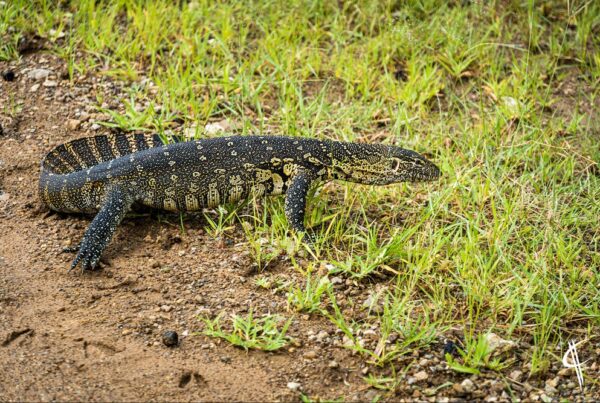
A full-grown Nile Monitor is a truly impressive creature. Reaching lengths of over two meters and weighing up to twenty kilograms, this reptile ranks among the largest lizards globally, second only to the formidable Komodo dragon. Its body is long and muscular, with a whip-like tail that accounts for more than half its total length. The tail is not just for show—it serves as a powerful weapon against predators and rivals alike, capable of delivering bone-cracking strikes.

Their skin, adorned with intricate patterns of yellow and black spots, provides effective camouflage in dense vegetation and along murky riverbanks. Equipped with sharp claws and strong limbs, Nile Monitors are adept climbers and swimmers, moving with surprising agility for their size. These physical attributes enable them to dominate their aquatic and terrestrial habitats, hunting and evading threats with ease. Their jaws are lined with recurved teeth designed to seize and hold struggling prey, adding to their fearsome predatory arsenal.

They Are Opportunistic Predators With a Broad Diet

The Nile Monitor is not a picky eater. In fact, it is one of the most opportunistic carnivores in Africa’s wetlands. Feeding primarily on fish, amphibians, birds, and small mammals, it has even been observed raiding nests for eggs and hatchlings, including those of crocodiles. Its strong sense of smell, enhanced by the flicking of its long, forked tongue, helps it locate hidden prey beneath soil, sand, or water.

This dietary flexibility makes the Nile Monitor a critical ecological regulator, preventing overpopulation of smaller vertebrates and invertebrates in its ecosystem. However, its appetite also brings it into conflict with humans. Farmers often accuse the monitor of pillaging chicken coops and duck ponds, leading to retaliatory killings. Yet, in a healthy, undisturbed ecosystem, the Nile Monitor plays an essential role in maintaining ecological balance.

Nile Monitors often exhibit feeding behaviors that resemble intelligence. They have been observed stalking prey stealthily, even exhibiting problem-solving tendencies when pursuing difficult meals. This suggests a higher cognitive ability than typically associated with reptiles, adding to the mystery and marvel surrounding their biology.

Nile Monitors Exhibit Astonishing Adaptability Across Africa

Nile Monitors are native to nearly every country south of the Sahara and are even found in parts of North Africa. They inhabit a diverse array of ecosystems, from freshwater lakes and marshlands to arid savannas, provided a water source is nearby. This widespread distribution is a testament to their extraordinary adaptability. They can tolerate a range of temperatures, elevations, and humidity levels, adjusting their behavior accordingly.

In cooler conditions, Nile Monitors bask on rocks or tree limbs to raise their body temperature, exhibiting the classic behavior of ectotherms. During dry seasons, they may enter a state of dormancy in burrows or termite mounds to conserve energy and moisture. Their nesting behavior is equally versatile, with females laying eggs in sandy banks, hollow logs, or even abandoned burrows.

In regions with heavy human encroachment, Nile Monitors have shown resilience by adapting to man-made environments. Urban waterways, irrigation channels, and even sewage systems have become unintentional habitats. However, their adaptability comes at a cost. These lizards often face persecution, roadkill risks, and entrapment due to human infrastructure. Still, their survival across such varied conditions speaks volumes about their evolutionary success.

Their Reproduction Strategy is a Masterclass in Survival

Reproductive success in the wild hinges on both strategy and timing, and Nile Monitors have mastered both. Mating typically occurs during the rainy season, when food is abundant and environmental conditions are favorable. Males engage in vigorous combat, wrestling with one another to gain access to females. The victorious male then mates with the receptive female, who will later lay between 20 to 60 eggs, depending on her size and health.

What makes their reproductive strategy particularly fascinating is the choice of nesting site. Nile Monitors often exploit termite mounds for egg deposition. The warmth and insulation provided by the termite colony create a stable incubating environment, protecting the eggs from predators and temperature fluctuations. The eggs are left unattended, relying entirely on environmental stability for successful development.

Hatchlings emerge three to six months later, depending on environmental conditions. From the moment they hatch, young monitors are entirely independent. Armed with instinct and physical prowess, they climb trees or scatter through the underbrush to avoid predators, including adult monitors. This self-sufficiency is critical for survival, given the high rate of predation in the wild.

Intelligence, Mythology, and Human Interaction

Despite their intimidating appearance, Nile Monitors have long held a place in local folklore and traditional medicine. In some African cultures, they are regarded as symbols of alertness and agility. Others fear them, associating them with curses or supernatural forces. These mixed perceptions have led to varied human interactions, from reverence and protection to fear and eradication.

Scientific studies have revealed that Nile Monitors exhibit behaviors suggestive of higher cognitive function, such as observational learning and environmental memory. In captivity, some individuals have even been trained to recognize routines and human caretakers. This level of responsiveness places them among the more intelligent reptilian species, rivaling certain birds and mammals in behavioral complexity.

The Nile Monitor’s role in the ecosystem, combined with its intelligence and adaptability, makes it a species worthy of greater recognition and protection. Unfortunately, habitat destruction, pollution, and illegal pet trade continue to threaten local populations. Conservation efforts remain fragmented, and public awareness is limited. Raising the profile of this extraordinary lizard could be a key step in ensuring its future survival.

Discover the Nile Monitor with WildHorn Africa (Facts About the Nile Monitor Lizard)

If you’re seeking a safari experience that goes beyond the familiar, consider setting your sights on the elusive Nile Monitor. Encountering one of these ancient reptiles in the wild is not just a sighting—it’s a glimpse into the primal rhythms of African ecosystems. Their stealth, strength, and mystery are a compelling counterpoint to the grandeur of elephants or the drama of lions.

WildHorn Africa offers immersive safari experiences tailored for those who crave deeper encounters with Africa’s natural wonders. With expert guides, eco-conscious travel planning, and access to pristine habitats, WildHorn Africa ensures that your journey is both thrilling and transformative.

Book your African safari with WildHorn Africa today and unlock the secrets of the Nile Monitor—and so much more. The adventure of a lifetime awaits in the heart of Africa’s wildest landscapes.

Facts About the Nile Monitor Lizard #Facts About the Nile Monitor Lizard Facts About the Nile Monitor Lizard

5 Fascinating Facts About the Flap neck Chameleon

5 Fascinating Facts About the Flap neck Chameleon

By Travel guides, Travel stories and blogs


5 Fascinating Facts About the Flap neck ChameleonFrom color-changing skin to lightning-fast tongues, meet one of Africa’s most captivating reptiles.

Introduction to the Facts About the Flap neck Chameleon

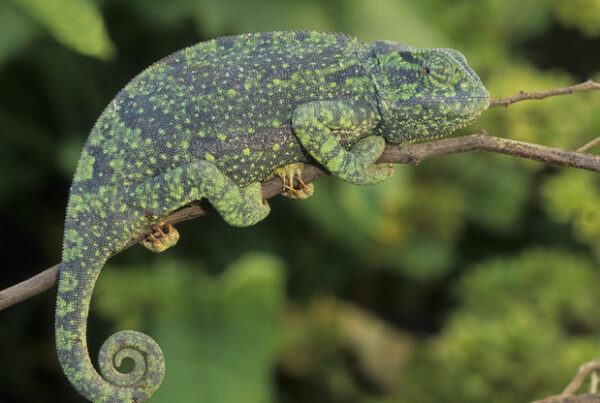
In the vast savannas and woodlands of sub-Saharan Africa dwells an elusive creature that looks more like a mythical forest spirit than a reptile — the Flap-neck Chameleon (Chamaeleo dilepis). With its slow, deliberate movements, independently rotating eyes, and extraordinary ability to change color, this chameleon is nothing short of a biological marvel.

Among the most widespread chameleon species in Africa, the flap-neck is a master of camouflage, a skilled predator, and an evolutionary wonder with traits that continue to fascinate scientists and nature lovers alike. Despite its quiet demeanor, this species plays an active and essential role in the ecological balance of its environment.

In this article, we delve into five astonishing facts that make the flap-neck chameleon one of the most unique creatures on the continent.

1. Color Changing: More Than Just Camouflage

One of the most iconic features of any chameleon is its ability to change color. But contrary to popular belief, this isn’t solely about blending into their surroundings. For the flap-neck chameleon, color change serves several purposes:

  • Thermoregulation: Dark colors help absorb heat in cooler conditions, while lighter hues reflect sunlight during hot periods.
  • Communication: Brighter colors may indicate stress, aggression, or a readiness to mate.
  • Camouflage: Of course, these reptiles still use their color palette to blend into vegetation and avoid predators.

This incredible ability stems from specialized skin cells called iridophores that contain nanocrystals. By adjusting the spacing between these crystals, flap-neck chameleons can reflect different wavelengths of light — essentially “repainting” themselves in real time.

2. Vision That Sees the World Differently

If you’ve ever watched a chameleon up close, you’ve likely noticed its independently rotating eyes. Each eye can move in a different direction, giving the flap-neck chameleon a full 360-degree view of its surroundings without moving its head.

Even more fascinating is their depth perception and binocular vision. When locking onto prey, both eyes can focus together to provide precise targeting, allowing them to strike with pinpoint accuracy.

Their eyes are capable of detecting ultraviolet light, helping them:

  • Identify mates or rivals more effectively.
  • Detect prey more vividly under dappled light conditions.
  • Navigate their environment with enhanced clarity.

The flap-neck’s vision is a vital asset in both hunting and avoiding predators like snakes and birds of prey.

3. The Fastest Tongue in the African Bush

When it comes to feeding, the flap-neck chameleon doesn’t stalk or chase its prey. Instead, it relies on one of nature’s most powerful projectile weapons: its tongue.

The chameleon’s tongue can extend to nearly twice the length of its body and strikes its target in a fraction of a second — faster than the blink of a human eye.

This feat is made possible by a muscular, accordion-like structure powered by an elastic recoil mechanism. At the tip of the tongue is a sticky, suction-cup-like pad that traps prey such as:

  • Grasshoppers and crickets
  • Flies and beetles
  • Occasionally small lizards or frogs

The speed, accuracy, and power of this tongue are among the most advanced in the animal kingdom, making the flap-neck chameleon a highly efficient insectivore.

4. Unique Locomotion and Defense Strategies

Flap-neck chameleons move in a deliberate, swaying manner — a behavior that mimics the motion of leaves rustling in the wind. This type of locomotion, along with their color adaptation, helps them evade predators like birds, snakes, and small carnivores.

Additional defense adaptations include:

  • Flap-like extensions on the neck (hence the name) that can be puffed out to appear larger and more intimidating.
  • Hissing and mouth-gaping when threatened.
  • Tail curling and body inflation to confuse predators.

While they may not be fast runners, flap-neck chameleons rely on these defense strategies to navigate the dangers of the African bush.

5. Widespread Yet Vulnerable (Facts About the Flap neck Chameleon)

Found throughout much of southern, central, and eastern Africa, flap-neck chameleons inhabit savannas, forests, and even suburban gardens. Despite their widespread range, they face several threats:

  • Habitat loss due to agricultural expansion and urbanization.
  • Illegal pet trade, where individuals are captured and exported globally.
  • Pesticides and vehicle collisions that impact local populations.

Conservation efforts emphasize educating communities on the ecological role of chameleons and discouraging illegal wildlife trade. Luckily, the species is currently listed as Least Concern by the IUCN, but local populations can still be fragile.

Conclusion of the Facts About the Flap neck Chameleon

The flap-neck chameleon is an extraordinary symbol of adaptation, stealth, and precision in Africa’s rich ecosystems. From its vibrant color-changing skin to its high-speed tongue and panoramic vision, this reptile continues to intrigue biologists, travelers, and storytellers alike.

Though often hidden in the foliage, it plays an indispensable role in insect control and ecological balance. Observing a flap-neck chameleon in its natural habitat is a truly rewarding experience — a silent reminder of nature’s wonders hiding in plain sight.

See the Flap neck Chameleon in the Wild

Ready to witness this marvel up close? Whether you’re trekking through the miombo woodlands or exploring savanna trails, the flap-neck chameleon is just one of many treasures waiting to be discovered.

Book your African safari with WildHorn Africa — your premier partner for ethical, expertly guided wildlife adventures across the continent.

With WildHorn Africa, you don’t just travel — you connect with the heartbeat of nature.

Start your journey today. Explore more. Discover deeper. Choose WildHorn Africa.

Facts About the Flap neck Chameleon #5 Fascinating Facts About the Flap neck Chameleon

5 Fascinating Facts About the Nile Crocodile

5 Fascinating Facts About the Nile Crocodile

By Travel guides, Travel stories and blogs


5 Fascinating Facts About the Nile CrocodileExplore Africa’s most feared reptilian predator—an ancient survivor that rules the rivers with ruthless efficiency.

Introduction to the Facts About the Nile Crocodile

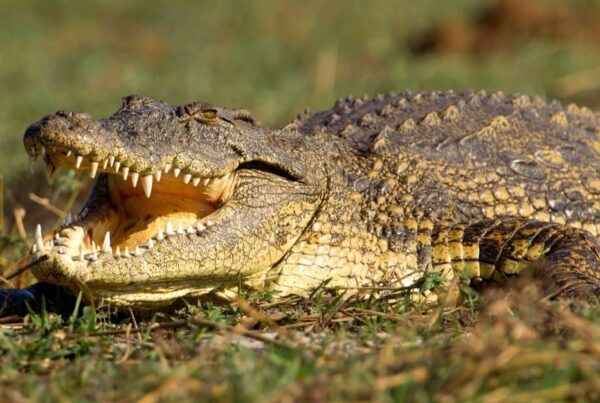
Few creatures strike as much fear—and awe—as the formidable Nile Crocodile (Crocodylus niloticus). With a lineage dating back over 200 million years,
this apex predator is not just Africa’s largest reptile but also one of its most fascinating. Known for its sheer power, calculated stealth, and prehistoric presence,
the Nile Crocodile commands immense respect in both nature and folklore.

Inhabiting rivers, marshes, and lakes from sub-Saharan Africa to the Nile Delta, it is an indispensable part of the continent’s aquatic ecosystems. But beyond its fearsome jaws lies
a world of complex behavior, evolutionary marvels, and ecological importance. Here are five incredible facts that will deepen your appreciation for this aquatic giant.

1. They Are One of the Largest Crocodilian Species

The Nile Crocodile is the second-largest crocodile species in the world—only surpassed by the saltwater crocodile of Southeast Asia and Australia. Adult males typically measure
between 4 to 5 meters (13 to 16 feet) in length, although some exceptional individuals can exceed 6 meters (20 feet) and weigh over
1,000 kilograms (2,200 pounds).

These size metrics aren’t just impressive—they signify dominance. Their bulk allows them to tackle large prey, including antelope, buffalo, and even, on rare occasions, humans.
Their powerful tails, armored scales, and muscular bodies make them a formidable aquatic force that few animals dare to challenge.

2. Perfect Predators: Masters of Ambush

Nile Crocodiles are ambush predators—patient, strategic, and merciless. They possess unparalleled stealth in water, often lurking just beneath the surface with only their eyes
and nostrils exposed. Their prey never sees them coming.

When the moment is right, the crocodile explodes from the water with lightning speed. Its jaws snap shut with a bite force of over 5,000 PSI (pounds per square inch)—one of the
strongest bites in the animal kingdom.

After the initial capture, it often performs a gruesome but effective maneuver called the “death roll”, twisting its body violently to tear flesh or dismember limbs.
This behavior has fascinated scientists and horrified witnesses for decades.

3. They Exhibit Advanced Social and Parental Behavior

Despite their fearsome reputation, Nile Crocodiles display surprisingly sophisticated social behavior. During the dry season, hundreds of crocodiles can gather around shrinking
waterholes, tolerating each other’s presence without conflict—an unusual trait among apex predators.

Even more remarkable is their maternal instinct. Females guard their nests for months and gently carry hatchlings to water in their mouths once they emerge.
Mothers often remain near the young for extended periods, protecting them from predators such as birds, monitor lizards, and even other crocodiles.

This level of parental care is rare among reptiles and highlights the complex nature of crocodilian behavior—far beyond the cold-blooded killer stereotype.

4. Ancient Survivors with Powerful Adaptations

Nile Crocodiles are living dinosaurs—reptiles that have survived mass extinctions and outlived the Ice Age. Their evolutionary success lies in several key adaptations:

  • Transparent third eyelids (nictitating membranes) that protect their eyes underwater while allowing vision.
  • Specialized heart valves that regulate blood flow and allow prolonged dives—up to 30 minutes without surfacing.
  • Dermal pressure receptors on their jaws that detect minute vibrations in the water, aiding in detecting movement even in murky rivers.

These adaptations make the Nile Crocodile not only a master of its environment but a symbol of biological efficiency perfected over millennia.

5. Vital Role in Ecosystem Balance

As apex predators, Nile Crocodiles are essential for maintaining healthy ecosystems. By preying on the weak, the sick, and the injured, they help regulate populations of
fish, amphibians, and mammals, which in turn ensures balanced food chains and biodiversity.

Furthermore, crocodile nesting activity aerates soil, and their scavenging habits help prevent the spread of disease by cleaning up carcasses. Their presence is often an
indicator of a well-functioning wetland or river system.

Sadly, these ecological benefits are often overlooked due to fear and misconceptions, which can lead to unnecessary persecution of these animals.

Human Conflict and Conservation Challenges

Nile Crocodiles occasionally come into conflict with humans, especially in areas where people rely heavily on rivers for fishing, bathing, or laundry. Attacks, though rare,
can be fatal, leading to fear-driven killings and habitat destruction.

Despite these challenges, the species remains relatively widespread and is currently listed as “Least Concern” on the IUCN Red List. However, certain regional populations
are at risk due to habitat degradation, illegal hunting, and pollution.

Conservation efforts focus on education, community-based conservation, and the promotion of ecotourism as a sustainable way to benefit from crocodile presence while preserving
their habitats.

Conclusion of the Facts About the Nile Crocodile

The Nile Crocodile is more than a fearsome predator—it is a living fossil, ecological guardian, and evolutionary marvel. Its presence in Africa’s rivers is both
thrilling and essential, reminding us that true wilderness still exists, governed by creatures as old as time itself.

Whether seen sunbathing along a riverbank or lurking silently in the reeds, the Nile Crocodile is an animal that commands respect and offers a rare glimpse into prehistoric life.

See the Nile Crocodile in Its Natural Habitat

Want to witness the raw power of the Nile Crocodile up close? Book your African safari today with WildHorn Africa—your gateway to immersive wildlife experiences
and unforgettable river encounters.

From guided boat safaris to expert-led expeditions along Africa’s great rivers, WildHorn Africa offers you the chance to experience this ancient predator in its full glory—safely,
ethically, and awe-inspiringly wild.

Adventure awaits—trust WildHorn Africa to take you to the heart of the wild.


5 Fascinating Facts About the African Rock Python

5 Fascinating Facts About the African Rock Python

By Travel guides, Travel stories and blogs


5 Fascinating Facts About the African Rock PythonA deep dive into Africa’s largest, boldest, and most misunderstood serpent.

Introduction to the Facts About the African Rock Python

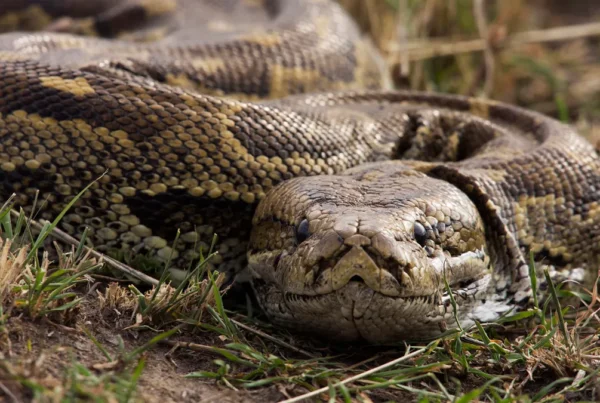
Few creatures stir the imagination and fear of the wild quite like a python—and none in Africa command more awe than the
African rock python (Python sebae). As the continent’s largest snake, this reptile is wrapped in both
myth and mystery, often portrayed as a silent hunter capable of incredible strength and cunning. But there’s more to this
cold-blooded giant than just fearsome looks.

Beneath its patterned scales lies a species of biological marvels, intricate behaviors, and critical ecological roles.
Whether you’re a wildlife enthusiast or just curious about Africa’s reptiles, these five facts will give you a whole new appreciation
for this powerful predator.

Table of Contents

1. Africa’s Largest Snake by Length and Bulk

The African rock python is a giant among snakes. Adults typically reach lengths of 3 to 5 meters (10–16 feet),
though some individuals have been recorded exceeding 6 meters. Its body is heavily built, making it not just the longest but also
one of the heaviest snakes on the continent, with large specimens weighing over 90 kilograms (200 pounds).

Its impressive size allows it to subdue a wide range of prey and makes it one of the most formidable non-venomous snakes in the world.

2. A Master Constrictor with Crushing Power (Facts About the African Rock Python)

Unlike venomous snakes that inject toxins, the African rock python is a constrictor. It kills its prey by wrapping
its powerful coils around the animal and tightening its grip with each exhalation. This pressure cuts off circulation, causing
cardiac arrest within minutes.

Its prey includes a wide variety of animals, from rodents and birds to antelopes, monkeys, and even crocodiles.
Yes—this python has been documented overpowering small crocodiles using sheer muscle power. After the kill, the snake swallows
its prey whole, aided by its expandable jaws and stretchy ligaments.

3. It Swims, Climbs, and Ambushes With Precision

The African rock python is a highly versatile predator. Despite its size, it is an excellent swimmer and is
commonly found near rivers, swamps, and wetlands. It also climbs trees in search of birds or arboreal mammals.

Pythons rely on stealth and ambush rather than speed. Their camouflaged scales help them blend seamlessly
into the environment, where they wait for hours or even days near trails or waterholes. When the moment is right, they strike
with blinding speed.

Their hunting success is greatly aided by heat-sensing pits on their upper lips, which detect infrared radiation
from warm-blooded prey, even in complete darkness.

4. A Rare Example of Maternal Care in Reptiles

Most reptiles lay their eggs and abandon them—but not the African rock python. Females exhibit maternal behavior that
is rare among snakes. After laying between 20 to 100 eggs in a burrow or termite mound, the mother coils around them to
protect and incubate them for about 90 days.

During this time, she will hiss loudly and strike at intruders. When the hatchlings emerge, she may even remain nearby
for a short period to guard them. This level of parental investment is uncommon in snakes and speaks to the python’s
unique survival strategy.

5. Misunderstood but Vital to the Ecosystem

Despite their reputation, African rock pythons are not aggressive unless threatened. Most incidents involving humans
are due to fear, not actual attacks. These snakes are shy and prefer to avoid confrontation.

Ecologically, they play a crucial role in controlling populations of rodents and small mammals, acting as a natural form of
pest control. Without them, certain prey species could overpopulate and disrupt the ecological balance.

Sadly, the python faces increasing threats from habitat loss, poaching, and persecution. In some areas,
it is hunted for its skin or meat, while in others, it is killed out of fear. Conservationists are working to change
perceptions and protect this misunderstood predator.

Conclusion of the Facts About the African Rock Python

The African rock python is not a monster of folklore—it is a biological masterpiece. With its immense strength,
complex behaviors, and ecological significance, it deserves both respect and protection.
Far from being just a giant snake, it is a symbol of the wild’s balance and power.

By understanding and appreciating this extraordinary reptile, we not only reduce fear but also
strengthen efforts to conserve Africa’s natural heritage.


Close Menu