
Tanzania’s Best Safari Destinations
Few countries on Earth deliver the depth, scale, and continuity of wildlife experiences found in Tanzania. To travel through Tanzania is to move through the very architecture of the African safari, where vast ecosystems remain intact, migration routes are unbroken, and wildlife still governs the rhythm of the land. Tanzania is not simply one of Africa’s safari destinations; it is the benchmark against which all others are measured.
What makes Tanzania exceptional is not just the number of national parks, but how different those parks are from one another. Each ecosystem operates on its own logic, shaped by geography, rainfall, and ancient animal movement. From endless grass plains and volcanic calderas to remote river systems and predator-dominated wilderness, Tanzania offers safari experiences that feel complete, authentic, and emotionally powerful. Exploring Tanzania’s best safari destinations is therefore not about choosing one place, but about understanding how each landscape contributes to the whole.
Why Tanzania Defines the Classic African Safari
Tanzania occupies a unique position in Africa’s conservation story. It has preserved enormous tracts of land under national park and protected area status, allowing wildlife to move freely across ecosystems without artificial barriers. Unlike destinations built around private reserves alone, Tanzania’s safari experience is rooted in scale and continuity.
This commitment to preservation has produced some of the most iconic wildlife spectacles on the planet, including the Great Migration, vast predator populations, and intact predator–prey systems. Tanzania’s best safari destinations do not rely on curated encounters. They deliver natural processes unfolding in real time, exactly as they have for thousands of years.
Serengeti National Park
Serengeti National Park is the foundation of Tanzania’s safari reputation and one of the most important wildlife landscapes on Earth. Covering over 14,000 square kilometers, the Serengeti is defined by openness, movement, and ecological balance. Its plains stretch uninterrupted to the horizon, allowing wildlife to exist at a scale few places can support.
The Serengeti is best known for hosting the Great Wildebeest Migration, where more than a million animals move continuously in search of fresh grazing. Yet the park’s importance extends far beyond this single phenomenon. Resident wildlife populations include large prides of lions, abundant cheetahs, leopards, hyenas, elephants, giraffes, and a full spectrum of plains game.
What sets the Serengeti apart is consistency. Wildlife viewing here is exceptional year-round. Even outside migration peaks, predator density and prey availability ensure meaningful encounters. For many travelers, the Serengeti represents not just Tanzania’s best safari destination, but the purest expression of African wilderness.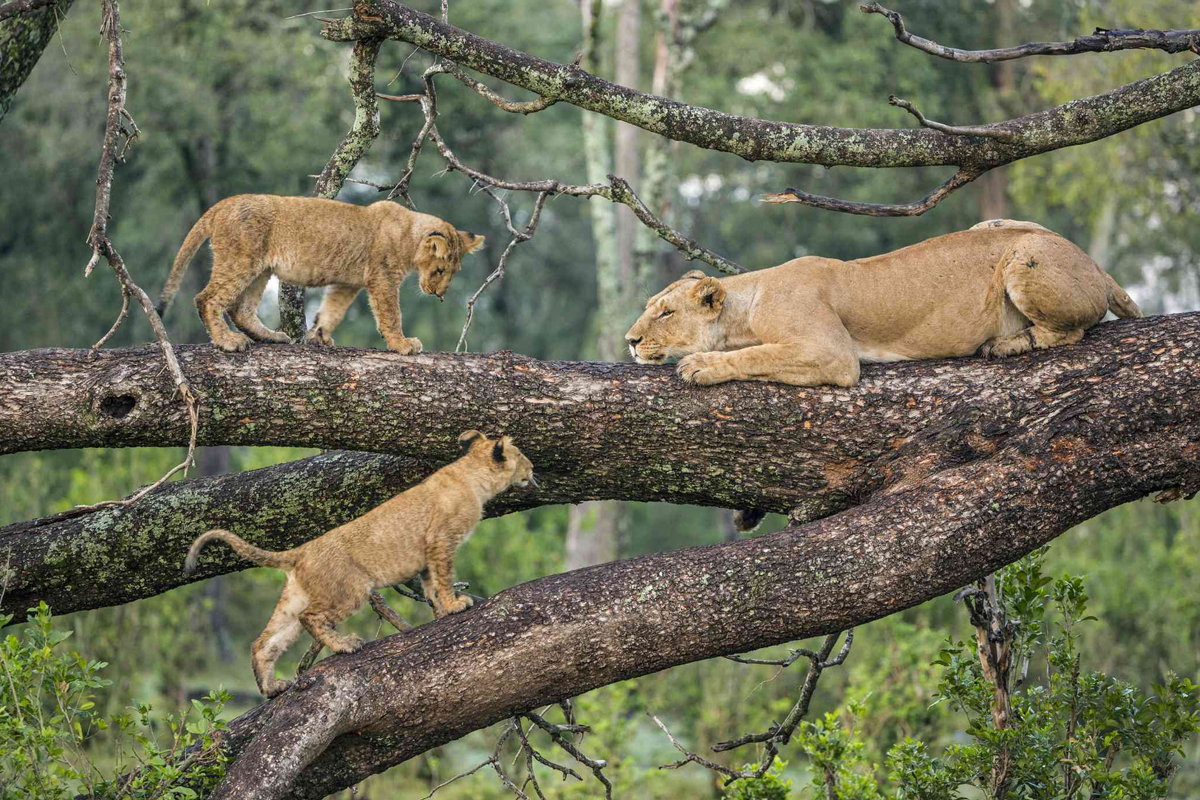
Ngorongoro Conservation Area
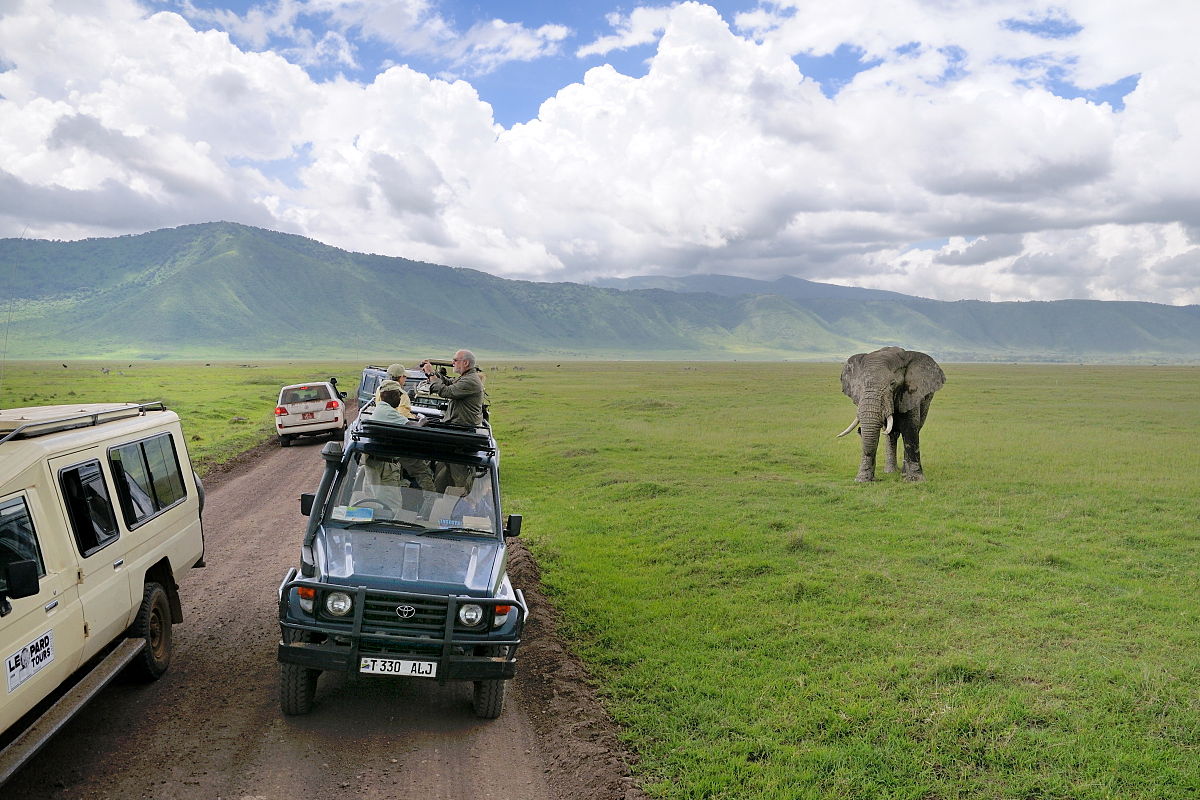
Ngorongoro Conservation Area offers one of the most concentrated wildlife experiences anywhere in Africa. At its center lies the Ngorongoro Crater, a massive volcanic caldera formed millions of years ago and now functioning as a self-contained ecosystem.
The crater floor supports a remarkable density of wildlife, including lions, elephants, buffalo, wildebeest, zebras, hippos, and one of the highest chances of seeing black rhino in East Africa. Because animals rarely leave the crater, sightings are frequent and varied within a relatively small area.
What makes Ngorongoro exceptional is not just abundance, but contrast. Within a single game drive, travelers encounter grasslands, swamps, forests, and lakes, each hosting different species. This diversity, combined with dramatic crater walls rising above the plains, creates an experience that feels both intimate and monumental.
Tarangire National Park
Tarangire National Park is often underestimated, yet it ranks among Tanzania’s most rewarding safari destinations. The park is defined by its ancient baobab trees and one of the largest elephant populations in the country.
During the dry season, the Tarangire River becomes a magnet for wildlife, drawing large herds of elephants, buffalo, and antelope into open viewing areas. Predator activity increases in response, offering excellent opportunities to observe lions and leopards in natural hunting zones.
Tarangire’s appeal lies in its character. The landscape feels sculpted rather than endless, with rolling hills, riverbeds, and iconic trees shaping the safari experience. For travelers seeking strong wildlife encounters without the scale of the Serengeti, Tarangire delivers depth and atmosphere in equal measure.
Lake Manyara National Park
Lake Manyara National Park offers a different perspective on Tanzania’s safari diversity. Nestled beneath the Great Rift Valley escarpment, the park compresses forest, groundwater springs, open plains, and alkaline lake ecosystems into a relatively small area.
Lake Manyara is particularly known for its rich birdlife, including flamingos, pelicans, and numerous raptors. It also supports elephants, giraffes, buffalo, and the famously elusive tree-climbing lions, though sightings depend on season and luck.
This park excels as a contrast destination, especially when paired with Tarangire or Ngorongoro. It demonstrates how Tanzania’s best safari destinations are not defined by size alone, but by ecological complexity and variation.
Nyerere National Park (Selous)
Nyerere National Park, formerly part of the Selous Game Reserve, represents safari travel at its most remote and exclusive. Covering an area larger than Switzerland, Nyerere is Africa’s largest national park and one of its least visited.
The Rufiji River system defines the park, creating a network of channels, lakes, and floodplains that support diverse wildlife populations. Boat safaris here offer a unique viewing perspective, allowing close encounters with hippos, crocodiles, elephants, and water-associated species.
What sets Nyerere apart is isolation. Safari vehicles are few, human presence minimal, and wildlife behavior remains largely unconditioned. For travelers seeking privacy, scale, and a sense of exploration, Nyerere stands among Tanzania’s best safari destinations for true wilderness immersion.
Ruaha National Park
Ruaha National Park is a park for experienced safari travelers and wildlife purists. Located in southern Tanzania, Ruaha is vast, rugged, and defined by dramatic river systems and rocky escarpments.
Ruaha supports one of East Africa’s largest lion populations, as well as significant numbers of leopards, cheetahs, wild dogs, and hyenas. Elephant herds are substantial, and the park’s isolation allows predators to hunt and interact with minimal disturbance.
The landscape itself feels primordial, with baobab-studded hills and dry riverbeds shaping animal movement. Ruaha rewards patience and observation, making it one of Tanzania’s most intellectually and emotionally engaging safari destinations.
Katavi National Park
Katavi National Park is among Africa’s least visited and most dramatic wildlife areas. Remote and logistically challenging, Katavi offers an experience that feels untouched by time.
During the dry season, wildlife concentrates around shrinking water sources, producing extraordinary scenes of hippos packed into muddy pools, massive buffalo herds, and intense predator activity. The scale of these interactions is raw and uncompromising.
Katavi is not for everyone. It appeals to travelers who value authenticity over comfort and rarity over convenience. For those willing to go the distance, Katavi stands among Tanzania’s best safari destinations for unfiltered wilderness.
Mahale Mountains National Park
Mahale Mountains National Park offers one of Africa’s most extraordinary primate experiences. Located on the shores of Lake Tanganyika, the park combines forested mountains with crystal-clear waters, creating a setting unlike any other safari destination in Tanzania.
Mahale is best known for chimpanzee trekking, where visitors track habituated groups through dense forest. Observing chimpanzee social behavior, communication, and movement offers insight into intelligence and social complexity that parallels human systems.
The combination of primate encounters, pristine beaches, and total isolation makes Mahale one of Tanzania’s most unique safari destinations, especially for travelers seeking a balance between wildlife and serenity.
Gombe Stream National Park
Gombe Stream National Park is globally significant as the site of pioneering chimpanzee research led by Jane Goodall. Though small in size, Gombe holds immense scientific and conservation importance.
Chimpanzee tracking here is intimate and educational, offering a deeper understanding of primate behavior and long-term research efforts. Access is limited, preserving the park’s fragile ecosystem.
Gombe appeals to travelers interested in conservation history and primate science, adding intellectual depth to Tanzania’s safari offerings.
How to Choose Among Tanzania’s Best Safari Destinations
Choosing the right safari destinations in Tanzania depends on traveler priorities rather than simple rankings. The Serengeti and Ngorongoro deliver iconic wildlife and spectacle. Tarangire and Lake Manyara offer contrast and accessibility. Nyerere, Ruaha, and Katavi provide isolation and depth. Mahale and Gombe introduce primate-focused experiences rarely matched elsewhere.
Tanzania’s strength lies in combination. Pairing destinations creates a narrative that moves from scale to intimacy, from abundance to exclusivity, without repetition.
Seasonal Considerations Across Tanzania’s Safari Landscape
Seasonality shapes wildlife movement and viewing conditions across Tanzania. The dry season concentrates animals around water sources, enhancing predictability. The green season transforms landscapes, supports calving events, and offers fewer crowds with exceptional photography conditions.
Importantly, Tanzania’s best safari destinations remain productive year-round. Wildlife does not disappear; it redistributes. Understanding this allows travelers to match experience style rather than chase peak months alone.
Conservation as the Backbone of Tanzania’s Safari Success
Tanzania’s safari excellence is rooted in long-term conservation policy. Large protected areas, migration corridors, and community involvement have preserved ecosystems at scale.
Tourism revenue supports anti-poaching, habitat management, and local livelihoods, ensuring that wildlife protection remains economically viable. Visiting Tanzania’s best safari destinations is therefore not only a personal experience, but a contribution to global conservation.
Why Tanzania Remains Africa’s Ultimate Safari Country
Tanzania stands apart because it has resisted fragmentation. Its wildlife systems remain intact, its landscapes vast, and its safari experiences authentic. There is room to explore, time to observe, and silence to reflect.
Tanzania’s best safari destinations do not compete with one another. They complement, contrast, and complete the safari story. This harmony is what makes Tanzania not just a safari destination, but the safari destination.