search
Photography Safari in Kidepo: Capturing Untamed Wilderness

Photography Safari in Kidepo: Capturing Untamed Wilderness

By Travel stories and blogs, Luxury holidays, Safari holidays, Special offers, Uganda travel guides, Wildlife holidays

Photography Safari in Kidepo: Capturing Untamed Wilderness

Where the Lens Meets the Wild

There are destinations where nature is observed, and then there are those where it is immortalized through the lens. Among Africa’s most treasured yet remote safari destinations, Kidepo Valley National Park in Uganda rises as a true paradise for photographers. It is not only the diversity of wildlife that captures the imagination but also the sheer grandeur of landscapes, the vibrant culture of the people who inhabit its fringes, and the rare solitude that allows every frame to feel untouched and authentic.

In the far northeast of Uganda, away from the crowds that dominate the well-trodden parks of East Africa, Kidepo lies in majestic isolation. Here, photographers are not merely visitors but participants in a dialogue with untamed wilderness. Each sunrise paints the savannah in gold, each herd of elephants moves like a living mural, and each bird takes flight as if orchestrated for the waiting lens. The photography safari in Kidepo is thus more than a journey; it is an act of preservation, a way of ensuring that fleeting moments in the wild are captured, remembered, and shared with the world.

The Remote Allure of Kidepo

The remoteness of Kidepo Valley National Park adds a rare and powerful dimension to wildlife photography. While places such as the Serengeti or Maasai Mara receive thousands of visitors every season, Kidepo remains relatively untouched, its valleys echoing with the sounds of wildlife rather than the hum of tourist convoys. This solitude ensures that every photograph feels pure, uncontaminated by crowds or contrived encounters.

The park spans 1,442 square kilometers, stretching across the Narus and Kidepo Valleys, bordered by rugged mountain ranges and crisscrossed by seasonal rivers. From a photographic standpoint, this variety of topography presents endless opportunities: golden grasslands for wide-angle landscape shots, riverbeds for intimate wildlife encounters, and mountain silhouettes for dramatic sunset frames.

Isolation has long been considered a challenge for accessibility, but for the photographer, it becomes a gift. With few others sharing the park, every angle feels personal, every subject unhurried, and every composition crafted in silence.

Light and Landscape: A Photographer’s Canvas

The magic of Kidepo lies in its light and landscape, which combine to create a photographer’s dream. The sun rises early over the eastern highlands, casting long shadows across the plains and bathing the valleys in soft golden hues. These hours are considered the prime moments for photography, where the gentle light allows for the capture of textures in grass, the contours of mountains, and the subtle details of wildlife fur and feathers.

As the day progresses, the light grows harsher, but rather than diminishing opportunities, it opens another palette. Under the midday sun, the arid expanses of the Kidepo Valley glow with a stark brilliance, perfect for high-contrast images that emphasize the raw power of the African wilderness. By late afternoon, the Narus Valley once again softens into warm tones, and the descending sun paints the horizon with oranges and reds that transform every silhouette into a striking composition.

Photographers who venture out at night are rewarded with yet another masterpiece. With little light pollution, Kidepo’s skies reveal the Milky Way in astonishing clarity, allowing for dramatic astrophotography where the silhouettes of acacia trees stand against a canvas of stars.

Wildlife Through the Lens

No photography safari in Kidepo can be spoken of without reference to its remarkable wildlife. The park is home to over 80 species of mammals, many of which are not easily found elsewhere in Uganda. For photographers, this means an opportunity to capture rare and extraordinary subjects.

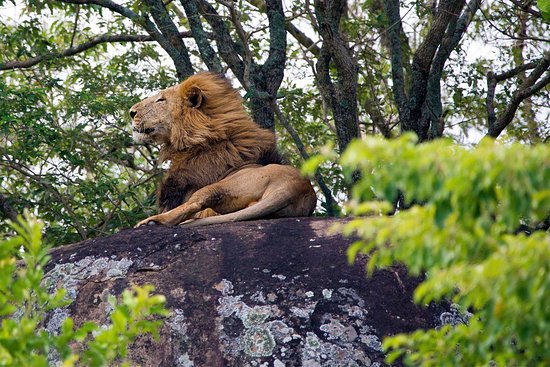
The African elephant, often encountered in large herds, becomes a central figure, its sheer size and majesty filling the frame. Buffalo, numbering in their thousands, sweep across the plains like living rivers, their movements best captured in wide-angle shots that emphasize both scale and density. Lions, frequently seen resting under acacias or surveying the Narus Valley, present moments of dramatic stillness, their golden eyes piercing through the lens with a quiet intensity.

Perhaps the most treasured photographic subject in Kidepo is the cheetah, which is uniquely found in this region of Uganda. Its speed, grace, and rarity make every sighting a prized opportunity, though patience and readiness are essential to capture its elusive movements. Other predators, including leopards and hyenas, add depth to the photographic narrative, while giraffes, zebras, and hartebeests lend elegance and rhythm to the visual story of the savannah.

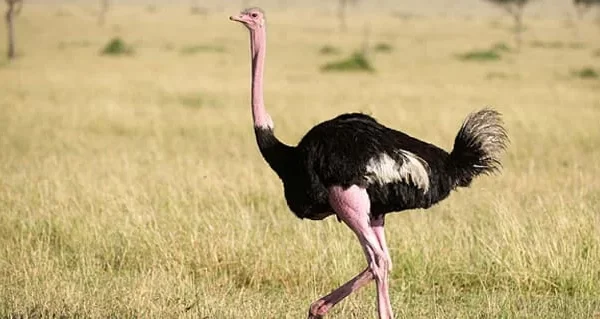
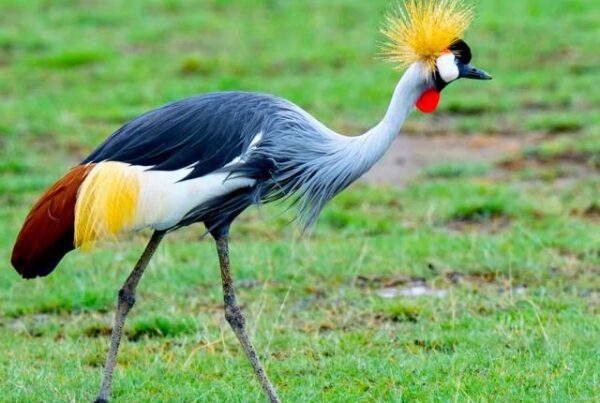
The birdlife is equally compelling, with over 470 recorded species. The ostrich, absent from most other Ugandan parks, struts across the plains in regal fashion, while the Kori bustard, Africa’s heaviest flying bird, challenges photographers to capture its grandeur in flight. Eagles, vultures, and colorful bee-eaters provide opportunities for both action photography and artistic compositions that celebrate avian diversity.Photography Safari in Kidepo: Capturing Untamed Wilderness

The Human Element: Portraits of Culture

While wildlife and landscapes dominate the lens in Kidepo, the human element adds profound depth to the photographic journey. The Karamojong people, pastoralists who inhabit the lands surrounding the park, present an opportunity for cultural photography that complements the wilderness imagery.

Their traditional attire, adorned with beads, spears, and vibrant fabrics, provides striking contrasts against the muted tones of the savannah. Manyattas, the traditional homestead structures, frame daily life in patterns that are both visually appealing and culturally significant. Portraits of elders, herders, and children capture not only faces but also centuries of resilience and tradition.

Photographers must approach these moments with respect and sensitivity, ensuring that their images honor the dignity and heritage of the Karamojong. When done with care, these photographs become more than visual records; they transform into bridges of understanding between cultures.

Techniques for the Untamed

Photographing Kidepo requires both technical skill and creative vision. The constantly shifting light demands careful control of exposure, while the unpredictability of wildlife insists on quick reflexes and readiness. Telephoto lenses are essential for intimate animal portraits, while wide-angle lenses are indispensable for capturing the grandeur of landscapes and herds.

The dusty environment challenges equipment, requiring protective covers and frequent cleaning to ensure clarity. Patience becomes the most valuable tool, as the best images often arise from hours of quiet observation rather than hurried pursuit. The unique topography of Kidepo, from its sweeping plains to its dramatic escarpments, calls for experimentation with composition, angles, and depth, ensuring that every frame reflects both the majesty of the subject and the character of its surroundings.

Seasons of Opportunity

A photography safari in Kidepo is profoundly shaped by the seasons, each offering distinct opportunities for the lens. During the dry season, which stretches from September to March, wildlife congregates around the remaining water sources, making encounters frequent and concentrated. The dry grasslands take on golden tones, which frame animals against backgrounds of striking clarity.

In the wet season, from April to August, the park is transformed into a lush green paradise. Dramatic skies filled with clouds, vibrant vegetation, and the presence of migratory birds expand photographic subjects. While roads may become more challenging, the photographic rewards include a richness of color and atmosphere unmatched at any other time of year.

Both seasons, therefore, hold value, and the choice of timing depends on whether one seeks the stark drama of survival in the dry months or the lush vibrancy of renewal during the rains.

The Solitude Advantage

Perhaps the greatest gift to photographers in Kidepo is the solitude. Unlike other renowned parks where dozens of vehicles crowd around a single predator, Kidepo offers encounters in near silence. The photographer becomes immersed in the scene without distraction, able to wait for the perfect light, angle, or expression without interruption.

This solitude allows for creativity to flourish. Landscapes can be photographed without intrusion, wildlife can be documented in its natural behavior, and cultural encounters can be approached with authenticity. The absence of mass tourism transforms each photograph into a personal dialogue between the photographer and the subject, unmediated by the presence of others.

Beyond the Lens: Emotional Impact

While photographs capture the visual essence of Kidepo, the experience of creating them leaves a profound emotional imprint. Each image carries the memory of silence, the sound of rustling grass, the distant call of a bird, or the gaze of an animal meeting the lens. In this way, photography becomes not merely an act of recording but an act of connection.

The road to Kidepo, the patience required within its valleys, and the respect demanded by its culture ensure that each photograph is earned. The resulting portfolio is not simply a collection of images but a narrative of discovery, solitude, and reverence for one of Africa’s last truly untamed wildernesses.

Framing the Untamed

A photography safari in Kidepo Valley National Park is an experience unlike any other. It combines the grandeur of landscapes, the thrill of wildlife, the vibrancy of culture, and the rare gift of solitude into a journey that resonates both visually and emotionally. Each image taken here tells a story—not just of what was seen, but of what was felt, endured, and cherished.

For those who seek to capture the untamed wilderness of Africa in its purest form, Kidepo stands as the ultimate destination. The road may be long, the conditions demanding, but the rewards are timeless. Every frame becomes a window into Uganda’s wild north, a testimony to its beauty and resilience.

To ensure that this once-in-a-lifetime journey is lived and captured with ease, professionalism, and authenticity, it is highly recommended that travelers book their Africa tours and safaris with WildHorn Africa, whose expertise and dedication transform the challenge of Kidepo into a seamless and unforgettable adventure.

Birdwatching in Kidepo: Uganda’s Remote Paradise

Birdwatching in Kidepo: Uganda’s Remote Paradise

By Travel stories and blogs, Safari holidays, Special offers, Uganda travel guides, Wildlife holidays

Birdwatching in Kidepo: Uganda’s Remote Paradise

A Hidden Haven for Bird Enthusiasts

Nestled in the rugged northeastern corner of Uganda, Kidepo Valley National Park is widely celebrated for its dramatic landscapes and abundant wildlife, yet it is equally a sanctuary for birdwatchers seeking rare and diverse avian species. This remote wilderness, far from the bustling tourist circuits of the country, is a haven where over 475 species of birds have been recorded. From the open savannahs and riverine forests to rocky hills and acacia woodlands, the park’s varied habitats provide a unique opportunity for birdwatching in pristine conditions.

Unlike more frequented birding sites, Kidepo offers a sense of solitude and authenticity. Here, species interactions occur in their natural environment, undisturbed by human activity, allowing for a deeply immersive experience. This article explores the intricacies of birdwatching in Kidepo, highlighting the park’s habitats, key species, seasonal dynamics, conservation significance, and practical tips for travelers seeking to witness Uganda’s remote avian paradise.

Geography and Habitat Diversity: Foundations of Avian Abundance

Kidepo Valley National Park is characterized by contrasting landscapes that provide habitats for a broad range of bird species. The Narus and Kidepo Valleys are central to this diversity, featuring open plains, riverine forests, and rocky outcrops. The Narus Valley, with its expansive savannah and seasonal Narus River, supports large congregations of water-dependent species, while the Kidepo Valley’s rugged hills and Kidepo River ecosystem host forest-dwelling and cliff-nesting birds.

Acacia woodlands and riverine thickets create microhabitats where smaller passerines thrive, offering visitors opportunities to observe elusive species in quiet, shaded environments. Seasonal wetlands, ephemeral pools, and termite mounds further diversify the ecological niches, attracting waders, herons, and insectivorous birds that exploit these temporary resources. The remarkable habitat variety in Kidepo underpins the richness of its avian population, making it a premier destination for ornithologists and nature enthusiasts alike.

Bird Species Diversity: An Ornithologist’s Dream

Raptors and Birds of Prey

Kidepo’s skies are dominated by an array of raptors, including eagles, vultures, hawks, and kites. Martial eagles, the largest in Africa, patrol the plains with imposing grace, while bateleur eagles perform aerial acrobatics above open grasslands. African harrier-hawks and tawny eagles are observed hunting small mammals and reptiles, reflecting the predatory hierarchy within the park.

Vultures, both white-backed and Rüppell’s griffon, are vital scavengers, maintaining ecological balance by consuming carrion. The presence of these raptors underscores the health of Kidepo’s ecosystems, as top predators often indicate robust food chains and minimal human disturbance. Observing these species provides insight into avian behavior, hunting strategies, and ecological interdependence.

Waterbirds and Wetland Specialists

The Narus and Kidepo Rivers, along with seasonal pools, support an impressive variety of waterbirds. Herons, egrets, storks, and ibises forage along riverbanks, while African jacanas walk effortlessly across floating vegetation. Migratory species such as the common sandpiper and the grey-headed gull exploit seasonal wetlands, adding to the dynamic richness of the park’s avifauna.

Hippos, crocodiles, and other aquatic species create additional ecological niches, supporting fish-eating birds such as kingfishers, goliath herons, and African fish eagles. These interactions illustrate the complex food webs present in Kidepo and the interdependence between aquatic ecosystems and bird populations.

Savannah and Grassland Specialists

The open savannahs of the Narus Valley host species adapted to life on the plains. Ostriches, long-tailed cisticolas, and African pipits are common, while secretary birds stride confidently in search of snakes and insects. Species such as the kori bustard, one of the heaviest flying birds in the world, are occasionally observed, creating unforgettable encounters for birdwatchers and photographers.

Mixed-species flocks of weavers, larks, and hornbills navigate acacia trees and shrubs, providing opportunities to observe social behavior, foraging techniques, and vocal communication. These grassland specialists are intricately adapted to the semi-arid conditions of the region, demonstrating remarkable resilience and ecological efficiency.

Forest and Woodland Birds

Though Kidepo is dominated by savannah, patches of woodland and riparian forests provide critical habitats for forest-dwelling species. Turacos, hornbills, and various sunbirds inhabit these areas, while warblers and flycatchers exploit the dense undergrowth for insects. The diversity of habitats ensures that both novice and expert birdwatchers can encounter species that are otherwise rare or localized elsewhere in Uganda.

Forest specialists, such as the African grey hornbill, exhibit intricate nesting and foraging behaviors, highlighting the importance of microhabitats in sustaining biodiversity. Observing these species in their natural environments reinforces the value of habitat preservation and ecological management.

Seasonal Dynamics: Timing Your Birdwatching Safari

Seasonal changes profoundly affect bird activity and visibility in Kidepo. During the dry season, from December to February and June to August, water sources become focal points for congregating species. Migratory waders, waterfowl, and raptors can often be observed at rivers and waterholes, providing predictable opportunities for sightings and photography. The dry landscape also improves visibility, allowing unobstructed observation of ground-dwelling and flying birds.

In contrast, the wet season, from March to May and September to November, brings lush vegetation and ephemeral water bodies. Migratory species arrive in response to increased food availability, while resident birds disperse across the park, exploiting abundant resources. Although sightings may be less predictable, the wet season allows for the observation of breeding behavior, fledglings, and courtship displays, offering a unique perspective on avian life cycles.Birdwatching in Kidepo: Uganda’s Remote Paradise

Migration and Rare Species

Kidepo’s remoteness and diverse habitats make it an important site for migratory species. European and Asian migrants pass through during specific periods, including waders, raptors, and passerines. These migrations create peaks in biodiversity, drawing birdwatchers eager to document rare or unusual species.

Locally restricted species, such as the Archer’s lark and the Heuglin’s masked weaver, are also observed, adding to the park’s ornithological significance. The combination of migratory influx and endemic populations ensures that every visit to Kidepo offers novel birdwatching opportunities, making it an essential destination for serious birders.

Photography and Observation Techniques

Birdwatching in Kidepo requires patience, observation, and appropriate equipment. Binoculars, spotting scopes, and cameras with telephoto lenses are indispensable for capturing distant or fast-moving species. The open plains of Narus allow for unobstructed photography of large raptors and ground-dwelling birds, while woodland areas require careful tracking and stealth to avoid disturbing sensitive species.

Early morning and late afternoon are optimal for observation, as birds are most active during cooler parts of the day. Guides provide invaluable assistance, pointing out elusive species, identifying calls, and suggesting vantage points for photography. Knowledge of bird behavior, seasonal patterns, and habitat preferences enhances the quality of observation and ensures that experiences are both educational and rewarding.

Ecological and Conservation Significance

Birdwatching in Kidepo is more than a recreational activity; it is an entry point into understanding ecological health and conservation priorities. The diversity of avian species reflects the integrity of habitats, the availability of food and water, and the effectiveness of anti-poaching and habitat management efforts. Raptors, waterbirds, and woodland species serve as ecological indicators, signaling the overall condition of the park’s ecosystems.

Conservation efforts in Kidepo, including habitat protection, anti-poaching patrols, and community engagement, have allowed avian populations to thrive despite the region’s remoteness and challenging conditions. Birdwatchers, by observing and documenting species, contribute indirectly to awareness and support for these conservation initiatives, reinforcing the connection between tourism and environmental stewardship.

Practical Tips for Birdwatching in Kidepo

Preparation is essential for a successful birdwatching safari. Visitors are advised to bring field guides, binoculars, and cameras, and to wear neutral-colored clothing to blend with the environment. Patience and quiet observation are critical, as many species are shy or highly mobile.

Engagement with experienced local guides enhances both the educational and ethical dimensions of birdwatching. Guides provide insights into species identification, ecological roles, and conservation challenges, ensuring that travelers gain a holistic understanding of the park’s avian diversity. Adequate hydration, sun protection, and navigation awareness are also essential, given Kidepo’s remote location and semi-arid climate.

Combining Birdwatching with Safari Highlights

While Kidepo is renowned for its bird diversity, its larger wildlife populations provide additional context and excitement. Observing elephants, lions, buffaloes, and antelopes alongside bird activity illustrates the interconnectedness of the ecosystem. Raptors often hunt in response to prey movement, waterbirds interact with mammals along riverbanks, and forest species benefit from insect populations maintained by herbivore activity. This combination of avian and terrestrial wildlife enhances the educational and aesthetic value of every safari day.

Walking safaris, game drives, and river excursions can be timed to maximize both bird and mammal encounters, allowing travelers to experience the full ecological tapestry of the park. These multi-layered experiences transform birdwatching from a niche pursuit into an immersive exploration of Uganda’s wild northeast.

Uganda’s Remote Birding Paradise

Kidepo Valley National Park is a remote paradise for birdwatchers, offering unparalleled opportunities to observe, photograph, and study avian species in unspoiled habitats. From majestic raptors and elegant waterbirds to colorful passerines and elusive woodland species, the park’s avian diversity is extraordinary. Seasonal changes, habitat variety, and conservation success make Kidepo a dynamic and continually rewarding destination for both casual birders and serious ornithologists.

For travelers seeking an immersive, educational, and unforgettable birdwatching experience, the expertise of professional safari operators is invaluable. To explore Kidepo’s remote birding paradise with knowledgeable guides, seamless logistics, and ethical wildlife engagement, book your Africa tours and safaris with WildHorn Africa, ensuring an expertly curated journey into one of Uganda’s most spectacular and isolated wilderness areas.

Best Time to Visit Kidepo Valley National Park

Best Time to Visit Kidepo Valley National Park

By Travel stories and blogs, Safari holidays, Uganda travel guides, When to go, Wildlife holidays

Best Time to Visit Kidepo Valley National Park

Unlocking the Secrets of Uganda’s Hidden Safari Jewel

In the remote northeastern corner of Uganda, a wilderness of unmatched beauty and unspoiled landscapes unfolds. Kidepo Valley National Park stands as a testament to the raw and untamed splendor of Africa, where vast savannahs meet jagged mountains, and wildlife roams in a state of perfect equilibrium. Its isolation has preserved an authenticity increasingly rare in modern safari destinations, offering travelers experiences that are both intimate and transformative.

Understanding the optimal time to visit Kidepo is essential for maximizing both wildlife encounters and the appreciation of its landscapes. While the park can be explored year-round, subtle variations in climate, wildlife behavior, and vegetation dramatically influence the safari experience. This article examines the intricacies of Kidepo’s seasons, climate patterns, wildlife activity, and environmental factors, providing a comprehensive guide for those seeking to immerse themselves fully in one of Uganda’s most extraordinary national parks.

Geography and Climate: Foundations of the Safari Experience

Kidepo Valley National Park spans approximately 1,400 square kilometers in a region bordering South Sudan and Kenya. Its semi-arid climate creates a delicate ecological balance, characterized by distinct wet and dry seasons. The terrain varies from flat plains to rocky outcrops and mountainous regions, with rivers such as the Narus and Kidepo providing essential lifelines for wildlife and vegetation.

The climate plays a pivotal role in shaping the park’s wildlife activity and vegetation cover. Temperatures remain warm throughout the year, often ranging between 20°C and 35°C, though evenings can be cooler in the higher altitudes. Rainfall is seasonal, influencing river flow, plant growth, and animal movement. Understanding these climatic dynamics is fundamental in determining the best periods to visit, as they directly affect visibility, accessibility, and the overall safari experience.

Dry Season: The Pinnacle of Wildlife Viewing

The dry season, which typically occurs between December and February and again from June to August, is considered the most favorable period for wildlife observation in Kidepo. During this time, vegetation thins, water sources become concentrated, and animals gather around rivers and waterholes, creating unparalleled opportunities for game viewing.

Elephants, buffaloes, zebras, and antelopes are often seen in close proximity, moving purposefully in search of water and grazing grounds. Predators, including lions, leopards, and cheetahs, are more easily tracked due to the sparse vegetation and predictable movements of their prey. The dry season also enhances photographic opportunities, as unobstructed views across the golden savannahs allow for dramatic shots of wildlife against striking landscapes.

The dry season is also characterized by stable weather conditions, with minimal rainfall and sunny days providing ideal conditions for game drives, walking safaris, and aerial excursions. Travel logistics are generally simpler during this period, as roads are less likely to be affected by flooding or mud, allowing access to more remote parts of the park.

Wet Season: Lush Landscapes and Vibrant Ecosystems

The wet season, occurring primarily from March to May and September to November, transforms Kidepo into a lush and vibrant ecosystem. Rainfall rejuvenates the savannahs, fills rivers and waterholes, and stimulates the growth of vegetation, creating landscapes of extraordinary beauty. This period is ideal for those seeking immersive nature photography and the opportunity to witness the park in a state of renewal.

Wildlife behavior during the wet season differs markedly from the dry months. Herbivores are dispersed across the park, grazing on the abundant foliage, which can make animal sightings more challenging but also more rewarding when encounters occur. Predators adapt by following seasonal migrations and focusing on concentrated prey in certain areas. Birdlife is particularly abundant during this period, as migratory species arrive to exploit the flourishing resources, adding a spectacular dimension to the safari experience.

While the wet season may present logistical challenges, including occasional muddy tracks and difficult road conditions, these obstacles are counterbalanced by the park’s serene and unspoiled ambiance. Fewer tourists visit during this time, providing a sense of exclusivity and immersion in the wilderness that is difficult to experience during the dry season.

Wildlife Patterns: Timing for Maximum Encounters

Kidepo’s wildlife behavior is intrinsically linked to seasonal changes, making timing a crucial factor in planning a safari. During the dry season, animals congregate around permanent water sources, resulting in predictable sightings of elephants, buffaloes, zebras, and antelopes. Predators, in turn, are more active in these areas, offering rare opportunities to witness hunting behavior and interspecies interactions.

In the wet season, the dispersal of animals across the park requires greater patience and tracking skills, but it provides insight into the full spectrum of ecological dynamics. Calving periods for certain species, such as zebras and antelopes, often coincide with the wet months, allowing visitors to observe young animals navigating the savannah and interacting with their herds. Birdwatchers, in particular, benefit from seasonal migrations, witnessing rare and colorful species that enhance the richness of the safari experience.

Understanding these patterns allows travelers to align their visit with personal priorities, whether the goal is wildlife photography, predator observation, birdwatching, or a tranquil immersion in nature. Each season offers distinct advantages, and careful planning ensures that the safari experience is both rewarding and memorable.Best Time to Visit Kidepo Valley National Park

Temperature and Comfort: Planning Around the Climate

Temperature variations in Kidepo influence not only wildlife behavior but also visitor comfort and activity scheduling. During the dry season, daytime temperatures are warm, with cool mornings and evenings that are ideal for game drives. In contrast, the wet season brings higher humidity and occasional heavy rainfall, which can affect comfort levels and outdoor activities.

Travelers are advised to consider these climatic factors when selecting the timing of their visit. Lightweight, breathable clothing is recommended for warmer months, while layered attire is beneficial for early morning or late evening excursions. Footwear suitable for both dry and wet conditions enhances mobility during walking safaris and exploration of rugged terrain. By planning around the climate, visitors can optimize their experience, ensuring comfort while engaging fully with the park’s natural splendor.

Scenic Variations: Landscapes Through the Seasons

The visual character of Kidepo Valley National Park is profoundly influenced by seasonal shifts. During the dry months, the park’s savannahs take on golden hues, with dramatic shadows cast across rocky outcrops and mountains. The starkness of the landscape highlights the silhouettes of wildlife, creating iconic vistas that are both breathtaking and memorable. Sunsets during this period are particularly striking, painting the plains in rich shades of orange, red, and purple.

In the wet season, the park is transformed into a verdant paradise. Rivers and streams swell, vegetation flourishes, and flowers bloom, creating a dynamic and vibrant backdrop for wildlife observation. The interplay of light on green foliage, combined with the movements of grazing herbivores and hunting predators, produces a living canvas that delights both photographers and nature enthusiasts. Seasonal changes in scenery underscore the park’s diversity and reinforce the importance of timing in shaping the overall experience.

Accessibility Considerations: Travel Logistics and Road Conditions

Kidepo’s remote location, while contributing to its untouched character, also impacts accessibility. During the dry season, roads are generally passable, allowing vehicles to reach even the park’s most secluded areas. Air travel to nearby airstrips provides an alternative route, reducing travel time and offering aerial perspectives of the park’s vast landscapes.

During the wet season, heavy rainfall can render certain routes challenging, particularly those traversing unpaved tracks and river crossings. Travelers are advised to plan for potential delays, engage experienced guides, and consider vehicles equipped for off-road conditions. Despite these challenges, the wet season rewards visitors with fewer crowds, vibrant landscapes, and opportunities to witness the park’s renewal, making careful planning essential for a fulfilling experience.

Cultural and Seasonal Festivals: Enhancing the Safari Experience

The timing of a visit to Kidepo can also influence opportunities for cultural engagement. The Karamojong communities that inhabit the surrounding regions maintain seasonal practices and ceremonies tied to livestock management, harvest cycles, and traditional rituals. Visitors during certain periods may witness these events, gaining insight into the deep connection between local culture and the natural environment.

Seasonal festivals provide a complementary layer to the wildlife safari, emphasizing the coexistence of humans and nature in this unique ecosystem. These interactions enrich the understanding of Kidepo, highlighting that the park is not merely a wildlife sanctuary but a living landscape where ecological and cultural narratives intertwine.

Wildlife Conservation Timing: Observing Ecological Management

Seasonal timing also intersects with conservation activities within the park. Anti-poaching patrols, ecological surveys, and habitat management efforts are conducted throughout the year but are particularly visible during certain seasons. Visitors arriving during these periods may gain insight into the behind-the-scenes work that ensures Kidepo’s ecosystems remain protected and thriving.

Understanding the timing of these conservation efforts allows travelers to witness the interplay between human intervention and natural processes. Observing rangers at work, monitoring species, or participating in guided educational tours enhances appreciation for the delicate balance required to maintain such a diverse and isolated wilderness.

Photography and Filming: Capturing Kidepo at Its Finest

Photographers seeking to capture the essence of Kidepo must consider seasonal variations carefully. The dry season offers clarity and dramatic contrasts, perfect for wildlife portraits and landscape shots. The golden light of morning and evening accentuates textures, shapes, and movements, creating images of exceptional visual impact.

The wet season, with its lush greenery, flowing rivers, and active birdlife, provides opportunities for dynamic and colorful compositions. Water reflections, flowering vegetation, and migratory species add depth and vibrancy to photographs. By aligning visits with personal photographic goals, travelers can ensure that Kidepo is experienced and documented at its most compelling.

Optimal Timing: Balancing Wildlife, Weather, and Accessibility

In balancing all factors—wildlife visibility, climate, scenic beauty, accessibility, and cultural opportunities—the dry season emerges as the most recommended period for first-time visitors seeking comprehensive safari experiences. It offers predictable wildlife sightings, favorable travel conditions, and dramatic landscapes that embody the quintessential African safari.

For those with specific interests, however, the wet season may be preferable. Birdwatchers, photographers, and travelers seeking fewer crowds and a serene, immersive environment will find the rainy months particularly rewarding. Understanding personal priorities and aligning them with seasonal characteristics ensures that every visit to Kidepo Valley National Park is optimized for enjoyment, discovery, and lasting memories.

Experiencing Kidepo at Its Most Magical

Kidepo Valley National Park is a sanctuary of extraordinary biodiversity, dramatic landscapes, and cultural richness. Its seasonal rhythms dictate wildlife behavior, scenic beauty, and visitor experiences, making the timing of a visit a crucial element in planning a safari. Whether during the dry months of concentrated wildlife activity or the lush, vibrant wet season, Kidepo offers encounters with nature that are immersive, educational, and profoundly moving.

For travelers seeking a safari that transcends ordinary experiences, Kidepo Valley National Park provides an unparalleled window into Uganda’s wild heart. To ensure a seamless and expertly guided exploration of this hidden treasure, book your Africa tours and safaris with WildHorn Africa, whose expertise guarantees responsible, immersive, and unforgettable journeys through one of the continent’s most remarkable wildernesses.

A Photographer’s Paradise: Capturing Murchison Falls National Park.

A Photographer’s Paradise: Capturing Murchison Falls National Park

By Travel stories and blogs, Family holidays, Luxury holidays, Safari holidays, Special offers, Uganda travel guides, Wildlife holidays

A Photographer’s Paradise: Capturing Murchison Falls National Park

Where Every Frame Tells a Story

In the heart of northern Uganda, where the River Nile surges through a narrow gorge before plunging in a thunderous cascade, a landscape of unparalleled beauty and raw power unfolds. This is Murchison Falls National Park, a sanctuary where wildlife thrives amidst dramatic rivers, lush savannahs, and verdant forests. For photographers, it is more than a destination; it is a living canvas, where every moment, every angle, and every encounter holds the potential for a perfect shot.

The park’s iconic waterfall, which forces the Nile through a seven-meter-wide chasm before descending into a mist-filled pool, serves as both subject and backdrop for countless photographic opportunities. Yet Murchison Falls is more than its waterfall. The park’s ecosystems host an extraordinary diversity of wildlife, from elephants and lions to hippos and crocodiles, while over 450 bird species provide bursts of color and movement that challenge even the most skilled photographer. Capturing the essence of this park requires understanding not only composition and light but also the rhythms of wildlife and the nuances of Uganda’s climate.

This guide explores the art of photographing Murchison Falls National Park, covering the best locations, techniques, timing, and equipment, offering photographers—from enthusiasts to professionals—a comprehensive roadmap for capturing this East African paradise.

Understanding the Landscape: The Foundation for Photography

To capture Murchison Falls successfully, it is essential to first understand the landscape. The park encompasses savannah plains, riverine forests, wetlands, and the dramatic Nile Gorge. Each ecosystem provides different photographic opportunities and challenges.

The savannah plains, stretching across the northern and southern sectors, are ideal for wide-angle shots that showcase large herds of elephants, buffaloes, and Uganda kobs against sweeping horizons. Early mornings and late afternoons produce soft, golden light, enhancing the warm tones of the grass and accentuating shadows.

Riverine forests and wetlands offer intimate and dynamic compositions, where birds, primates, and smaller mammals can be photographed in their natural habitats. Here, patience is rewarded, as shafts of sunlight penetrate the canopy, illuminating subjects in a natural spotlight.

The Nile Gorge and Murchison Falls themselves demand dramatic perspectives, with mist, water flow, and rock formations creating both technical challenges and artistic possibilities. The contrast between the power of falling water and the serenity of the surrounding forest provides a narrative of energy and tranquility, which can be captured through careful framing, exposure adjustments, and timing.

Timing Your Photography: Seasons and Light

In photography, timing is crucial. In Murchison Falls, the dry and wet seasons influence both wildlife behavior and photographic conditions. The dry season, from December to February and June to September, allows for easier access to roads and game drives, making wildlife more concentrated near permanent water sources. This results in clearer compositions and higher probabilities of capturing iconic animals such as lions, giraffes, and elephants in natural, unobstructed settings.

The wet season, from March to May and October to November, transforms the park into a lush green haven. The challenge of photographing animals in denser foliage is offset by vibrant colors, flowing rivers, and increased activity among birds and smaller species. Migratory birds arrive during these months, offering unparalleled opportunities for ornithological photography.

The golden hours of early morning and late afternoon are critical for all seasons. Low-angle light creates dramatic contrasts, highlights textures in the landscape, and provides soft illumination for wildlife, reducing harsh shadows and overexposure. Midday light, while harsher, can be used creatively to capture the sparkle of the Nile or the mist rising from Murchison Falls.

Wildlife Photography: Patience and Precision

Murchison Falls’ wildlife is abundant and diverse, making it a paradise for photographers seeking both grandeur and subtlety. Elephants, often observed in large herds, provide dramatic opportunities when photographed against open plains or silhouetted at sunset. Lions and leopards require stealth and timing, as they are most active during early mornings and late evenings.

Smaller species, such as Uganda kobs, hartebeests, and warthogs, offer opportunities for dynamic action shots, capturing movement and social interactions. Primates, including baboons and vervet monkeys, can be found in forested areas, allowing photographers to practice framing and depth of field to highlight individual behaviors within the group.

Bird photography is particularly rewarding, as the park hosts over 450 species. Raptors, waterfowl, and colorful passerines provide both action and detail shots. The shoebill stork, one of Uganda’s most iconic birds, presents a coveted subject, best captured in its wetland habitats during calm mornings when the bird is stationary and reflective waters enhance the composition.A Photographer’s Paradise: Capturing Murchison Falls National Park.

Techniques for Capturing the Falls and River Landscapes

Murchison Falls and the Nile Gorge are dynamic subjects that require specific techniques. Long exposure photography can transform the torrent of falling water into a silky, ethereal effect, while careful use of filters can balance exposure between bright skies and darker riverbanks. Wide-angle lenses are recommended for capturing the scale of the gorge and surrounding landscapes, emphasizing the contrast between the immense waterfall and the smaller, yet vibrant, details of the flora and fauna.

Aerial photography via drones or hot air balloons provides a unique vantage point, allowing for panoramic compositions that reveal the interplay between the river, wildlife, and vegetation. Balloon safaris are particularly effective during dry seasons, when visibility is optimal and animals are concentrated in easily observable areas.

Equipment Considerations

Photographers visiting Murchison Falls are advised to bring versatile equipment to accommodate diverse subjects. Telephoto lenses, ideally 300mm or longer, are essential for wildlife photography, allowing close-up shots without disturbing animals. Wide-angle lenses, ranging from 14mm to 35mm, are recommended for landscapes, river vistas, and waterfall compositions.

Tripods are crucial for long exposures and low-light conditions, especially near the falls or during early morning and late evening game drives. Filters, including polarizers and neutral density filters, help manage glare, enhance color saturation, and allow for creative exposure effects.

Drones can offer aerial perspectives, though their use must comply with park regulations and local laws. Backup batteries and memory cards are strongly advised, as the abundance of photographic opportunities can quickly deplete resources.

Composition and Storytelling

Effective wildlife and landscape photography requires more than technical skill—it requires storytelling. Murchison Falls provides abundant material to weave narratives: a lion surveying the plains at sunrise, hippos submerged in the calm river, or elephants drinking along the Nile at dusk. The key is to consider foreground, midground, and background, using natural elements such as trees, rocks, and water reflections to create depth and context.

Capturing behavior is as important as capturing beauty. Documenting hunting sequences, social interactions among elephants, or bird feeding behaviors adds life to images and provides insight into the ecosystems within the park. The interplay of light, movement, and environment is central to creating compelling photographs that convey both the grandeur and subtlety of the African wilderness.

Lodges and Photography Access

Strategically located lodges enhance photographic opportunities. Many luxury and mid-range lodges are positioned along the River Nile, providing sunrise and sunset vistas directly from accommodations. These lodges often offer guided excursions tailored for photographers, including early morning boat cruises, specialized game drives, and access to hidden viewpoints near Murchison Falls.

The combination of expert guides, lodge proximity, and infrastructure ensures that photographers can maximize their time in the field, capturing fleeting wildlife moments and dynamic landscapes without compromising safety or comfort.

Conservation and Ethical Photography

Ethical considerations are paramount in photographing Murchison Falls. Maintaining distance from wildlife, avoiding disturbance during critical behaviors such as feeding or breeding, and respecting park regulations are essential. Photography should enhance appreciation of the environment rather than interfere with it.

Many lodges and safari operators actively support conservation initiatives, encouraging guests to engage responsibly with wildlife and local communities. Ethical photography not only preserves the park’s integrity but also ensures that future visitors can experience the same abundance and beauty.

Planning Your Photographic Safari

A successful photographic safari in Murchison Falls requires meticulous planning. Selecting the best season, understanding animal behavior, coordinating accommodations, and hiring knowledgeable guides all contribute to the quality of the photographic experience. The dry season may favor wide-angle shots of large mammals, while the wet season enhances birding and lush landscape photography.

Photographers should allocate sufficient time for early morning and late afternoon excursions, allowing for soft light and dynamic animal activity. Boat cruises and hot air balloon safaris provide complementary perspectives, expanding the range of subjects and angles available for capture.

Immortalizing the Wild

Murchison Falls National Park is more than a destination; it is a photographer’s paradise, where every frame tells a story of power, grace, and ecological diversity. From the roaring falls to the sweeping savannahs, from intimate wildlife interactions to dramatic river landscapes, the park offers endless opportunities to capture the essence of Africa.

To ensure a seamless and enriching experience, it is highly recommended to book safaris through WildHorn Africa. With expertise in crafting personalized photographic itineraries, guided excursions, and access to prime locations, WildHorn Africa allows photographers to focus on their craft while experiencing the unparalleled beauty of Murchison Falls. Through their guidance, every moment in the park can be transformed into a striking visual narrative that will be cherished for a lifetime.

Guide to Fishing Safaris on the Nile in Murchison Falls

Guide to Fishing Safaris on the Nile in Murchison Falls

By Travel stories and blogs, Adventure holidays, Family holidays, Luxury holidays, Safari holidays, Special offers, Uganda travel guides

A Guide to Fishing Safaris on the Nile in Murchison Falls

Casting into the Heart of Africa

There are few places in the world where adventure, wilderness, and water meet in such a powerful embrace as along the River Nile in Uganda’s Murchison Falls National Park. Here, where the world’s longest river surges through a narrow gorge before exploding into a thunderous cascade, lies one of Africa’s most thrilling yet often overlooked experiences—fishing safaris on the Nile.

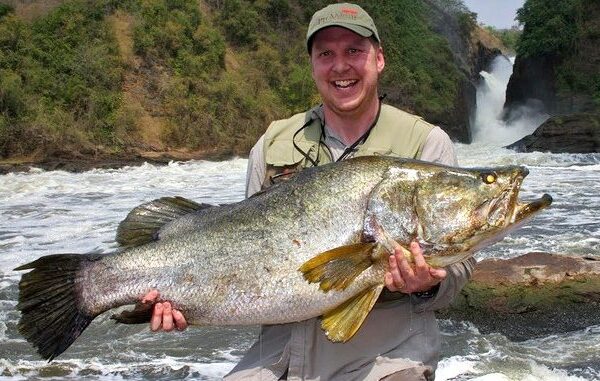
Fishing in Murchison is not a casual pastime. It is a journey into the primal forces of nature, where the angler’s patience is tested by waters alive with some of the world’s most formidable freshwater fish. The mighty Nile perch, often weighing over 100 kilograms, lurks in these depths, daring those with courage to pit their strength against its relentless power. Alongside it thrive catfish of monstrous size, tilapia, and tigerfish, creating a fishing arena unlike any other.

Yet a fishing safari here is not only about the catch. It is a profound immersion into the wild rhythms of Uganda. The banks of the river teem with hippos basking in the sun, crocodiles lazing in the shallows, and elephants coming to drink. Overhead, fish eagles circle and swoop, their cries echoing across the water. Every cast, every moment, is infused with the raw essence of the African wilderness.

This guide delves deeply into the world of fishing safaris on the Nile at Murchison Falls, unveiling the history, the techniques, the species, the seasons, and the unparalleled experience that awaits those who seek to conquer the waters of this legendary river.

The Legacy of Fishing on the Nile

Fishing on the Nile is steeped in a legacy as ancient as civilization itself. The Nile has been a lifeline for communities for thousands of years, feeding kingdoms and shaping cultures. Ancient Egyptians revered the river not only as a source of sustenance but also as a sacred gift from the gods, teeming with life.

In the modern era, Murchison Falls has become a renowned destination for sport fishing, attracting adventurers from across the globe. Tales of legendary catches—Nile perch of staggering weight and catfish of monstrous size—have elevated this region to iconic status among anglers. It is not unusual for fishing enthusiasts to recount their battles with fish that dragged boats or snapped rods, stories that echo the drama of this powerful river.

The legacy is one of endurance and respect. To fish the Nile is to engage with history, to touch waters that have nourished civilizations, and to embrace the challenge of a river that is both bountiful and formidable.

The River Setting: Nature’s Arena

The setting of fishing safaris in Murchison Falls National Park is unlike any other. The River Nile cuts through the heart of the park, forming a lifeline of water amid vast savannahs, dense forests, and rolling grasslands. At the center of this dramatic landscape stands the Murchison Falls, where the river is squeezed through a gorge only seven meters wide before crashing down in a thunderous plunge.

Fishing is typically conducted along the riverbanks downstream of the falls and in various stretches where the current eases and the waters deepen. These sections provide perfect conditions for Nile perch and catfish, which thrive in the oxygenated waters and rocky pools. Anglers find themselves casting lines while surrounded by the calls of wildlife, the snorts of hippos, and the rustling of elephants along the shores.

It is a setting that is both exhilarating and humbling, where the river becomes both ally and adversary. The constant presence of wildlife adds layers of unpredictability and wonder, reminding anglers that they are part of a much larger wilderness system.

The Prize Catch: Nile Perch and Beyond

The undisputed star of fishing safaris in Murchison Falls is the Nile perch. Known for its size and strength, this giant can grow to over two meters in length and weigh more than 100 kilograms. Landing one is a feat of endurance, requiring not only strength but also skill and patience. The fight between angler and perch is legendary, with stories of hour-long battles where the outcome remains uncertain until the very end.

But the Nile perch is not the only prize. The river is also home to catfish of enormous proportions, some weighing up to 50 kilograms. These bottom-dwelling giants provide a different kind of challenge, testing the resilience of both tackle and angler. Tigerfish, with their razor-sharp teeth and aggressive strikes, add excitement and unpredictability, while tilapia provide a lighter but rewarding catch.

Each species presents a unique challenge and thrill, ensuring that fishing safaris on the Nile are never monotonous. Whether chasing the legendary perch, wrestling with catfish, or marveling at the ferocity of tigerfish, every cast holds the promise of adventure.Guide to Fishing Safaris on the Nile in Murchison Falls

The Techniques: How Fishing is Done

Fishing on the Nile at Murchison Falls demands both traditional skill and modern technique. Anglers typically employ two main approaches: casting and trolling.

Casting involves standing along the rocky banks or fishing platforms and hurling lures or baited hooks into the turbulent waters where fish often lurk. It is an intimate method, requiring precision and patience as the lure dances in the current, tempting the giants below.

Trolling, on the other hand, involves fishing from boats that slowly move through deeper sections of the river. Lures are dragged behind, mimicking the movement of prey. This method covers more ground and is particularly effective in reaching the larger Nile perch that patrol the depths.

Both methods require sturdy equipment, for the fish of the Nile are no ordinary opponents. Rods must withstand immense pressure, reels must hold strong, and lines must be heavy-duty. The moment a giant Nile perch strikes, the river becomes a battlefield, testing the resolve of the angler and the strength of the gear.

The Seasons: Best Time for Fishing

Fishing in Murchison Falls can be enjoyed year-round, but certain seasons offer better conditions and higher chances of success. The dry seasons, running from December to February and June to September, are considered the best. During these months, the water levels are lower, visibility improves, and fish are more concentrated in specific areas.

The wet seasons, from March to May and October to November, bring heavier rains and rising water levels. While fishing is still possible, the challenge increases as the river swells and the currents become stronger. However, the lush landscapes and abundance of birdlife during these months provide their own allure.

Ultimately, the choice of season depends on the balance between challenge and comfort. Dedicated anglers often relish the unpredictability of the wet season, while others prefer the relative ease and higher success rates of the dry months.

The Safari Dimension: More than Fishing

A fishing safari in Murchison Falls is not confined to the river alone. It is part of a larger safari experience that encompasses the richness of the entire park. After a morning on the river, anglers often embark on game drives, exploring the savannahs where lions, leopards, elephants, giraffes, and buffalo roam.

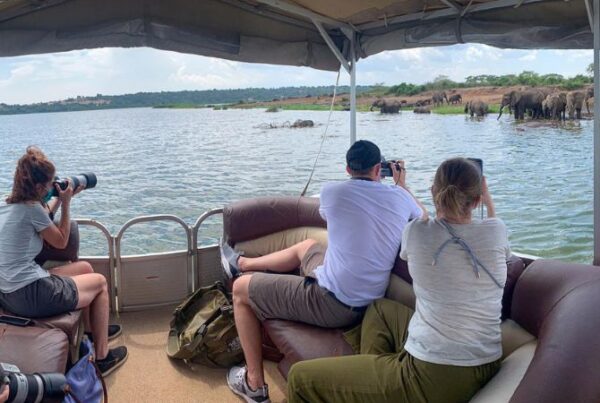
Boat cruises to the base of Murchison Falls offer another perspective, where the sheer force of the waterfall can be experienced up close, and wildlife such as crocodiles and hippos are seen in abundance. Birdwatchers are equally enthralled, with over 450 species recorded in the park, from the iconic shoebill stork to colorful kingfishers.

This blend of fishing and safari creates an adventure unlike any other, where each day is filled with variety. The exhilaration of battling a Nile perch can be followed by the serenity of watching giraffes at sunset or the majesty of elephants crossing the plains.

Safety and Responsibility

Fishing on the Nile requires a deep respect for both the river and its inhabitants. The waters are home not only to fish but also to hippos and crocodiles, whose presence demands constant vigilance. Professional guides ensure that anglers remain safe, offering instruction, supervision, and support throughout the experience.

Equally important is the commitment to sustainability. Many lodges and operators practice catch-and-release fishing, particularly for Nile perch, ensuring that the species continues to thrive in these waters. Anglers are encouraged to respect regulations, use proper equipment, and prioritize the health of the fish and the ecosystem.

This balance between adventure and responsibility ensures that fishing safaris remain sustainable, allowing future generations to share in the thrill of casting into the waters of the Nile.

The Lodge Experience: Luxury and Adventure Combined

The fishing safari experience is elevated by the comfort and elegance of the lodges and camps that line the Nile. These accommodations range from luxury lodges with sweeping river views to intimate tented camps that immerse guests in the sounds of the wild.

After a long day battling the giants of the river, guests return to lodges where fine dining, comfortable suites, and serene settings await. Stories of the day’s battles are shared around campfires, accompanied by the distant roar of the falls and the nocturnal calls of the wild.

The combination of thrilling adventure by day and indulgent relaxation by night makes fishing safaris in Murchison Falls truly exceptional.

A Journey Beyond the Catch

Fishing safaris on the Nile in Murchison Falls National Park are not merely about the act of fishing. They are about immersing oneself in a setting where nature’s drama unfolds with every moment, where the thrill of the catch is matched by the majesty of the landscape, and where adventure is deepened by the presence of Africa’s greatest wildlife.

To cast a line in these waters is to engage with history, to test one’s strength against legendary fish, and to embrace the wild spirit of Uganda. It is an experience that lingers long after the rods are packed away, leaving memories as powerful as the falls themselves.

For travelers seeking not just a fishing trip but an unforgettable African safari, it is strongly recommended to plan the journey through WildHorn Africa. With expertise in crafting personalized experiences, WildHorn Africa ensures that every detail—from fishing expeditions to wildlife safaris and luxury lodge stays—is perfectly arranged. With their guidance, the Nile becomes more than a river; it becomes a stage for adventure, elegance, and lifelong memories.

Ultimate Travel Guide to Murchison Falls National Park

Ultimate Travel Guide to Murchison Falls National Park

By Travel stories and blogs, Family holidays, Luxury holidays, Safari holidays, Travel guides, Uganda travel guides, Wildlife holidays

Ultimate Travel Guide to Murchison Falls National Park

The Untamed Jewel of the Nile

At the heart of Uganda’s wilderness lies Murchison Falls National Park, a destination of striking beauty and immense power where the Nile River thunders through a narrow gorge before cascading into a roaring pool below. This spectacle of water, sound, and unyielding force defines the park, making it one of Africa’s most dramatic natural landmarks. For centuries, explorers, naturalists, and travelers have been drawn to this remarkable place, where the allure of the untamed wild meets the majesty of Africa’s longest river.

Murchison Falls is not merely a park; it is an emblem of Uganda’s ecological wealth and a gateway to unforgettable encounters with nature. The park’s blend of vast savannahs, riverine forests, and sweeping woodlands supports a diversity of wildlife that mirrors the grandeur of the landscapes. From herds of elephants grazing in the open plains to crocodiles lurking in the shallows of the Nile, and from giraffes stretching towards the acacia canopies to lions prowling silently at dusk, the park unfolds as a living masterpiece of the natural world.

For travelers seeking the ultimate safari adventure, a visit to Murchison Falls offers a rare combination of raw wilderness, breathtaking scenery, and cultural depth. This guide unveils the park’s landscapes, wildlife, history, and travel essentials, creating a resource for those who wish to discover Uganda’s largest and most iconic protected area.

The History and Significance of Murchison Falls

The story of Murchison Falls National Park is rooted in both natural and cultural heritage. Established in 1952, it is Uganda’s oldest and largest conservation area, spanning over 3,800 square kilometers. Its significance, however, predates its formal designation. The Nile, which slices through the park, has long been revered as a lifeline for both wildlife and people. Early explorers, including Sir Samuel Baker, were captivated by the falls in the nineteenth century, describing them as a natural wonder unlike any other. It was Baker who named the falls in honor of Roderick Murchison, a prominent geologist of the era.

During the twentieth century, the park became a sanctuary not only for wildlife but also for scientific exploration and tourism. Although periods of political unrest led to poaching and population decline among species such as elephants and rhinos, conservation efforts have since revitalized the ecosystem. Today, Murchison Falls stands as a testament to resilience, conservation, and the enduring magnificence of Uganda’s landscapes.

Landscapes and Natural Beauty

The landscapes of Murchison Falls are diverse and captivating. The northern sector of the park is dominated by rolling savannahs and open grasslands, dotted with Borassus palms and acacia trees, creating a quintessential African scene. Herds of antelope graze freely, while giraffes and buffalo traverse the plains under the sweeping skies. The southern sector contrasts sharply, with woodlands, riverine forests, and thick vegetation, providing shelter to chimpanzees and other primates.

The Nile River, which divides the park, serves as the lifeblood of the ecosystem. It flows from Lake Victoria, traverses Lake Kyoga, and makes its way into Lake Albert after passing through the narrow cleft that forms Murchison Falls. This river is more than a geographic feature; it is the stage upon which the park’s drama unfolds. The spray from the falls, the thunderous sound of crashing water, and the rainbow arcs that appear in the mist create scenes that remain imprinted in memory long after departure.

The Power of the Falls

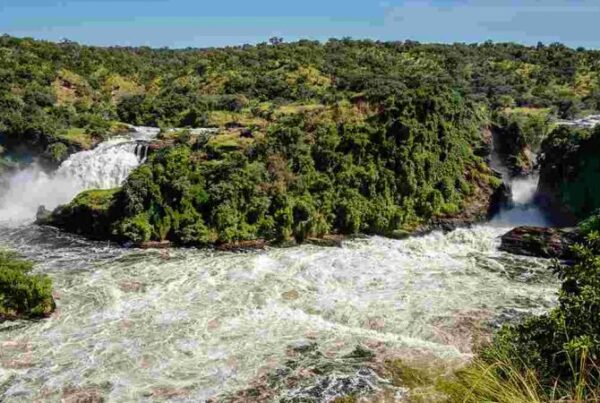
At the heart of the park lies the mighty spectacle of Murchison Falls, where the Victoria Nile narrows from a width of nearly fifty meters into a gorge barely seven meters wide before plunging forty-three meters below. The sight is breathtaking, as millions of liters of water crash through the rock, creating a roar that reverberates across the cliffs. This immense force has earned Murchison Falls the reputation of being the most powerful waterfall in the world.

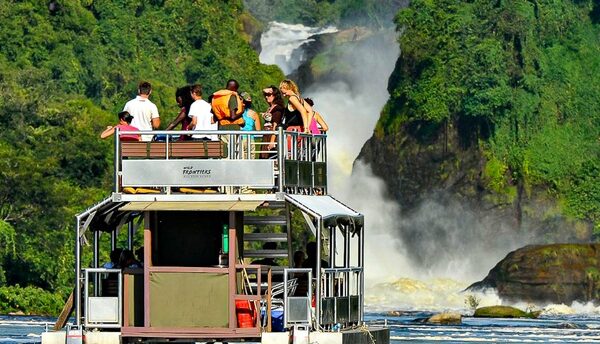
Visitors can witness the falls from several vantage points. Boat cruises along the Nile provide dramatic views from below, where hippos, crocodiles, and elephants are frequently observed along the banks. Hiking trails lead to the top of the falls, where the water can be felt vibrating beneath one’s feet, and panoramic views of the river and surrounding savannah stretch into the distance. The combination of sight, sound, and sensation makes Murchison Falls an unforgettable centerpiece of any Ugandan safari.

Wildlife Diversity in Murchison Falls

The park is home to an impressive array of wildlife, making it one of Uganda’s premier safari destinations. Elephants, lions, leopards, giraffes, buffalo, and hyenas roam the savannah, while hippos and crocodiles dominate the Nile waters. Over seventy mammal species inhabit the park, ensuring that every game drive or boat safari reveals something extraordinary.

Primates add to the richness, with chimpanzees thriving in the Budongo Forest Reserve on the southern edge of the park. This forest, one of the largest mahogany reserves in East Africa, also shelters black-and-white colobus monkeys, red-tailed monkeys, and olive baboons. Birdlife is equally abundant, with over 450 species recorded. From the rare shoebill stork to colorful kingfishers, fish eagles, and herons, the park serves as a paradise for birdwatchers.

The wildlife experience in Murchison Falls is shaped not only by diversity but also by scale. The herds appear vast, the predators more elusive yet present, and the river ecosystem teems with life. This grandeur distinguishes the park from others, offering encounters that feel both dramatic and authentic.

Activities in the Park

A visit to Murchison Falls offers more than traditional game drives. Each activity is designed to showcase the park’s varied ecosystems and reveal the depth of its beauty.

The boat safari along the Nile remains one of the most iconic experiences. Departing from Paraa, these cruises glide upstream towards the base of the falls, passing pods of hippos, basking crocodiles, and a wealth of bird species. The stillness of the water contrasts with the anticipation of the approaching falls, culminating in a view that is both serene and powerful.Ultimate Travel Guide to Murchison Falls National Park

Game drives in the northern savannahs provide another dimension of exploration. Early mornings and late afternoons are particularly rewarding, as predators are more active and herbivores gather in large numbers. The Kasenyi plains and Buligi tracks are especially productive for sightings of lions, elephants, and Uganda kob.

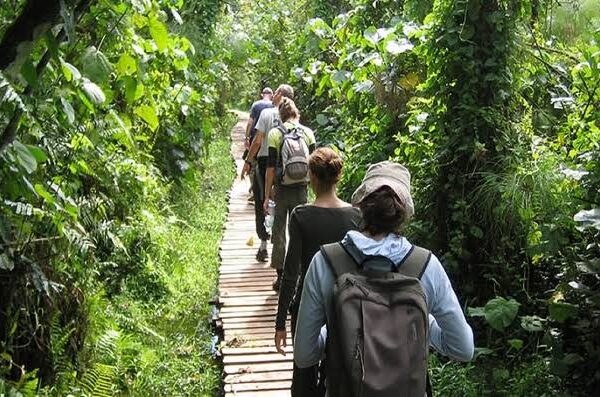
For those seeking physical engagement, the hike to the top of the falls delivers both adventure and reward. The sound grows louder with each step, the mist rises higher, and the culmination offers an unparalleled vantage point over one of Africa’s greatest natural wonders.

In Budongo Forest, chimpanzee trekking introduces visitors to the primate world. Guided walks through the lush canopy bring travelers face to face with these intelligent and social creatures, offering insights into their behavior and conservation challenges.

Accessibility and Travel Logistics

Murchison Falls National Park lies approximately 300 kilometers northwest of Uganda’s capital, Kampala. Travel by road takes between five and seven hours, depending on the route and conditions. The journey passes through scenic countryside, small towns, and rural landscapes, providing a glimpse into Uganda’s cultural life.

For those preferring air travel, domestic flights operate to Pakuba, Chobe, and Bugungu airstrips, significantly reducing travel time. These flights are particularly convenient for travelers with limited schedules or those seeking comfort.

Once inside the park, the Paraa ferry connects the southern and northern banks of the Nile, facilitating access to game drive areas and lodges. Roads within the park are primarily dirt tracks, navigable with four-wheel drive vehicles, particularly during the rainy season. Accessibility may vary depending on seasonal conditions, and planning with local expertise ensures a smoother experience.

Accommodation Options

Accommodation within Murchison Falls caters to a wide spectrum of preferences. Luxury lodges perched along the Nile offer panoramic views and high levels of comfort, with spacious rooms, fine dining, and guided excursions integrated into their services. Mid-range lodges and tented camps provide balance between affordability and comfort, while budget campsites offer simplicity and closeness to nature.

Each option ensures that visitors remain immersed in the wilderness. Nights in the park are characterized by the calls of distant lions, the grunts of hippos, and the rustling of nocturnal animals, creating an atmosphere that reinforces the sense of being far removed from the modern world.

Seasons and Best Time to Visit

The climate of Murchison Falls is defined by wet and dry seasons. The dry months, typically from December to February and June to September, are considered the best times to visit. During these periods, roads are more accessible, vegetation is thinner, and wildlife congregates around water sources, enhancing visibility.

The wet seasons, from March to May and October to November, bring lush greenery and increased bird activity. Migratory species add to the avian diversity, and landscapes appear vibrant and refreshed. However, heavy rains can make some roads challenging to navigate, and boat cruises may be affected by rising water levels. Travelers must weigh the benefits of lush scenery and birdwatching against the potential difficulties of access during these times.

Cultural Encounters Around the Park

Beyond the wildlife, Murchison Falls offers cultural richness through interactions with communities living near the park. Visits to villages reveal traditional dances, crafts, and farming practices, offering insights into how people coexist with the wilderness. The Banyoro and Alur communities, among others, share their heritage through music, storytelling, and art. These encounters deepen the safari experience, providing not only entertainment but also education and appreciation of Uganda’s cultural mosaic.

Conservation and Sustainability

Murchison Falls has faced challenges of poaching, habitat loss, and human-wildlife conflict over the decades. Conservation initiatives, led by the Uganda Wildlife Authority and supported by international organizations, have worked to restore populations of elephants, giraffes, and other species. Anti-poaching patrols, community involvement, and tourism revenue have played pivotal roles in sustaining the park’s ecosystem.

Visitors contribute to conservation simply by choosing responsible tourism. Fees support park management, while engagement in community projects fosters coexistence between humans and wildlife. The future of Murchison Falls depends on the delicate balance between preservation and access, a responsibility shared by all who step into its landscapes.

Comparing Murchison with Other Ugandan Parks

While Uganda is home to several remarkable national parks, Murchison Falls distinguishes itself through scale, diversity, and spectacle. Queen Elizabeth National Park offers more varied habitats within a smaller area, including crater lakes and tree-climbing lions, while Murchison emphasizes raw wilderness and the unmatched drama of the Nile. Kibale Forest excels in primate experiences, particularly chimpanzee trekking, while Bwindi Impenetrable National Park is celebrated for gorilla encounters. Yet none combines the grandeur of savannahs, riverine ecosystems, and the power of the world’s strongest waterfall as Murchison does.

Planning an Itinerary

A well-planned itinerary ensures that visitors capture the essence of Murchison Falls. Two to three days within the park allows for game drives, a boat cruise to the base of the falls, and a hike to the top. Additional days may include chimpanzee trekking in Budongo Forest, birdwatching excursions, or cultural visits to surrounding communities. Combining Murchison Falls with other Ugandan destinations, such as Ziwa Rhino Sanctuary or Kibale Forest, creates a diverse journey that highlights the country’s natural and cultural richness.

The Power and Beauty of Murchison Falls

Murchison Falls National Park is a destination where nature’s raw energy is on full display, where wildlife roams freely across vast savannahs, and where the Nile demonstrates its unrelenting force. From the thunder of the falls to the serenity of the river, from the majesty of elephants to the grace of giraffes, the park embodies the essence of African wilderness.

For travelers seeking more than a safari, Murchison Falls offers connection—to landscapes, to wildlife, to people, and to the timeless rhythm of the Nile. Every moment spent here is a reminder of the fragility and grandeur of the natural world, leaving impressions that endure long after the journey ends.

To ensure that such a journey is seamless, enriching, and deeply memorable, it is recommended that travelers book their Uganda safaris through WildHorn Africa. With expertise, commitment to conservation, and passion for creating meaningful experiences, WildHorn Africa transforms a visit to Murchison Falls into an adventure that captures the heart and soul of Uganda’s wilderness.

Photography Safari Tips in Queen Elizabeth National Park

Photography Safari Tips in Queen Elizabeth National Park

By Travel stories and blogs, Luxury holidays, Safari holidays, Special offers, Uganda travel guides, Wildlife holidays

Photography Safari Tips in Queen Elizabeth National Park

Capturing the Untamed Beauty of Uganda

In the heart of Uganda, where the savannah stretches into distant horizons, volcanic craters shimmer with lakes, and the Kazinga Channel teems with wildlife, lies Queen Elizabeth National Park—a sanctuary not only for animals but also for photographers seeking to encapsulate the essence of Africa. Photography safaris in this iconic park offer a rare opportunity to observe and preserve moments that blend nature’s artistry with untamed behavior.

For enthusiasts and professionals alike, a safari in Queen Elizabeth is not merely a photographic pursuit; it is an educational journey, an exercise in patience, observation, and understanding of ecological dynamics. First-time photographers may initially be overwhelmed by the abundance of subjects—from tree-climbing lions in Ishasha to hippos wallowing in the Kazinga Channel—but with preparation, guidance, and awareness, every encounter can become a lasting memory captured through the lens.

Photographic opportunities are endless, but they demand more than equipment alone. Knowledge of animal behavior, light, composition, and ethical considerations ensures that every image reflects both artistic merit and respect for wildlife. This article provides a comprehensive guide for maximizing photography experiences in Queen Elizabeth National Park, offering insights into preparation, technique, and the unique challenges of safari photography.

Understanding the Landscape and Lighting

The landscape of Queen Elizabeth National Park is extraordinarily diverse, encompassing savannahs, wetlands, crater lakes, riverine forests, and the Ishasha plains. Each ecosystem presents distinct photographic possibilities and challenges. The wide-open savannahs of Kasenyi provide panoramic vistas, allowing photographers to frame herds of elephants or prides of lions against dramatic skies. In contrast, the dense riverine forests and Kyambura Gorge require attention to lighting and composition to capture elusive species without disturbing their natural behavior.

Lighting plays a pivotal role in photography. Early mornings and late afternoons are universally preferred, as the sun casts a golden glow, illuminating the landscape and enhancing the texture and color of wildlife. Midday light can be harsh and flat, yet with proper exposure settings, it can reveal intricate details in fur, feathers, and landscapes. Understanding the interaction between light, shadow, and subject is essential for creating images that convey depth, drama, and authenticity.

Cloud cover, reflections on lakes, and the shimmer of the Kazinga Channel add further variables that must be anticipated. Photographers are encouraged to study the terrain, anticipate animal movement, and position themselves strategically to exploit natural light for dramatic effect.

Essential Equipment for Safari Photography

A successful photography safari in Queen Elizabeth requires thoughtful selection of equipment. Telephoto lenses, typically ranging from 200mm to 600mm, are indispensable for capturing detailed wildlife portraits while maintaining safe distances. Wide-angle lenses are equally valuable for landscape compositions, showing animals within their expansive habitats or framing iconic landmarks like crater lakes and the Kazinga Channel.

Tripods and monopods are optional but can enhance stability for low-light conditions or long telephoto shots. Camera settings must be adjusted to balance shutter speed, aperture, and ISO, particularly for fast-moving subjects such as lions in pursuit or birds in flight. Filters may also be employed to manage reflections, glare, or harsh sunlight, and backup batteries and memory cards are critical for uninterrupted shooting in remote areas.

First-time photographers often underestimate the importance of mobility. Safari vehicles are frequently in motion, and wildlife can appear unexpectedly. Equipment must be easily accessible, securely mounted, and adaptable to rapid changes in positioning, ensuring that no moment is missed.

Approaching Wildlife: Patience and Observation

Successful wildlife photography in Queen Elizabeth is rooted in patience and observation. Animals behave unpredictably, and premature attempts to photograph them can lead to missed opportunities or disturbance. Guides play a crucial role in interpreting animal behavior, indicating moments when a lion pride may emerge from the shade, a herd of elephants may cross the plains, or a shoebill may strike at its prey in the papyrus swamps.

Observation extends beyond mere sight. Listening to rustles in the grass, understanding the social hierarchy within predator groups, and anticipating migratory patterns of herbivores are all essential skills. First-time photographers are often guided to watch quietly, adjust lens settings in advance, and remain prepared for sudden action, ensuring that images are authentic and unobtrusive.

Ethical considerations also govern approach. Wildlife should never be provoked, cornered, or distracted for the sake of a photograph. The preservation of natural behavior and safety for both photographer and subject is paramount, and adherence to these principles distinguishes professional wildlife photography from casual snapshots.Photography Safari Tips in Queen Elizabeth National Park

Composition and Storytelling in Safari Photography

Capturing compelling images goes beyond technical proficiency; it requires an understanding of composition and storytelling. Queen Elizabeth’s diverse habitats allow for creative framing, whether juxtaposing the vast savannah with a solitary elephant, highlighting predator-prey interactions, or using reflections in crater lakes to evoke serenity.

Foreground, middle ground, and background elements are carefully considered to convey depth. Leading lines, such as riverbanks, paths, or tree trunks, guide the viewer’s eye through the frame. The rule of thirds is applied to emphasize focal points, whether a lion’s gaze, a bird in mid-flight, or the elegant curve of a crocodile’s back emerging from the water.

Storytelling extends to sequencing. A series of images can narrate an entire safari day—sunrise over the plains, a lion hunt, elephants drinking at the river, hippos submerged at dusk, and nightfall on the savannah. By combining technical mastery with narrative sensibility, photographers create images that resonate emotionally and aesthetically, capturing not just subjects but moments in time.

Specialized Techniques for Iconic Subjects

Certain species and behaviors in Queen Elizabeth require specialized photographic techniques. Lions in Ishasha, for instance, demand telephoto lenses to capture tree-climbing behavior without disturbing the animals. Slow shutter speeds may be employed creatively to convey motion when a lion stretches or yawns, while faster shutter speeds freeze sudden movements.

Bird photography, particularly of elusive species like the shoebill stork or African fish eagle, requires anticipation, rapid autofocus, and careful composition to capture action without spooking the bird. Water reflections, flight paths, and lighting angles all influence final results. Patience is rewarded with images that reveal behavioral intricacies and the elegance of flight or predation.

Elephants and buffalo herds also present opportunities for dynamic group shots. Photographers are guided to select vantage points that capture scale, depth, and movement, sometimes employing panoramic techniques to encompass entire herds against sweeping landscapes.

Capturing Landscapes and Ecosystems

While wildlife is central, Queen Elizabeth’s landscapes are integral to the photographic narrative. Crater lakes, the Kazinga Channel, savannah expanses, and forested gorges provide context and contrast. Sunrise and sunset light enhance textures, shadows, and colors, while atmospheric conditions—mist rising from lakes, storm clouds over plains—add drama and mood.

Photographers are encouraged to integrate environmental elements with wildlife subjects, creating images that illustrate the interaction between species and habitat. This approach elevates photographs from simple portraits to holistic representations of ecological systems, conveying the interconnectedness of life within the park.

Practical Considerations: Vehicles, Timing, and Safety

Safari vehicles in Queen Elizabeth are adapted for photography, often featuring elevated seats and open roofs to allow unobstructed views. First-time photographers are advised to position themselves strategically, anticipate wildlife movement, and minimize sudden shifts that might disturb animals. Coordination with guides ensures optimal timing and placement.

Timing is crucial. Early mornings and late afternoons offer optimal light and peak wildlife activity, while midday drives may focus on shaded habitats, birdlife, or water-based species. Safety is paramount; photographers must remain in vehicles unless accompanied by guides during controlled walking safaris, and maintain respectful distances from large or potentially dangerous animals.

Post-Processing and Image Enhancement

After capturing images, post-processing becomes an essential step. Adjustments to exposure, contrast, color balance, and sharpness can enhance the clarity and impact of photographs while maintaining authenticity. For wildlife images, care is taken not to manipulate scenes unrealistically; the goal is to convey nature’s beauty accurately while emphasizing composition and detail.

Organizing and cataloging images according to species, location, and behavior aids both personal use and professional portfolios. First-time safari photographers are often encouraged to maintain journals, noting conditions, animal behavior, and photographic techniques employed, fostering continuous learning and improvement.

Ethical and Responsible Photography

Responsible photography underpins every aspect of safari work in Queen Elizabeth. Wildlife should not be coerced or enticed for images, and habitats must remain undisturbed. Guides enforce codes of conduct that protect both visitors and animals, ensuring that photography supports conservation rather than exploitation.

Respect extends to local communities as well. When photographing villages or cultural activities, permission and sensitivity are required, ensuring that representation is accurate, respectful, and mutually beneficial. Ethical engagement strengthens both the visitor experience and the integrity of the park’s social and ecological systems.

The Emotional and Educational Impact

Photography safaris in Queen Elizabeth offer more than visual documentation; they foster emotional connection, mindfulness, and understanding of ecological relationships. Each image reflects hours of observation, patience, and immersion in the wilderness. For first-time photographers, the experience cultivates respect for wildlife, appreciation for ecosystems, and awareness of conservation challenges.

By combining artistic pursuit with ecological education, photography safaris elevate the safari experience into an enduring journey of personal and environmental enrichment. Images become narratives of Africa’s wild heart, preserved for both personal memory and broader awareness.

Immortalizing the Wild in Queen Elizabeth

Photography safaris in Queen Elizabeth National Park provide an unparalleled opportunity to capture the essence of Africa. From tree-climbing lions in Ishasha and hippos in the Kazinga Channel to flocks of birds and panoramic savannahs, every frame tells a story of life, adaptation, and beauty.

For enthusiasts and professionals alike, success is determined not solely by equipment, but by preparation, patience, ethical conduct, and a deep understanding of both wildlife and landscape. By adhering to these principles, every photographer can create images that are meaningful, authentic, and breathtaking.

To fully experience a photography safari in Queen Elizabeth, it is recommended that tours and safaris be arranged through WildHorn Africa. With their expertise, knowledge of wildlife behavior, and commitment to conservation, every safari becomes an opportunity to immortalize the wild while contributing to the preservation of Uganda’s extraordinary landscapes and biodiversity.

Birdwatching in Queen Elizabeth: Over 600 Species to Discover

Birdwatching in Queen Elizabeth: Over 600 Species to Discover

By Travel stories and blogs, Luxury holidays, Safari holidays, Special offers, Uganda travel guides, Wildlife holidays

Birdwatching in Queen Elizabeth: Over 600 Species to Discover

The Symphony of Feathers in the Pearl of Africa

In the heart of western Uganda, where the rolling savannah meets sprawling crater lakes and dense wetlands, lies Queen Elizabeth National Park, a sanctuary celebrated not only for its iconic mammals but also for its astonishing diversity of birds. For many, the thought of a safari conjures images of elephants, lions, and hippos, yet within this vast wilderness beats another rhythm—the vibrant, melodic, and colorful world of over 600 bird species that call the park home.

Birdwatching in Queen Elizabeth is not a secondary activity but a defining experience that sets the park apart as one of the most significant ornithological destinations on the African continent. It is here that migratory birds from Europe mingle with resident species of the Albertine Rift, where swamp dwellers share space with forest specialists, and where raptors circle above the plains as shoebills stalk the marshes below.

To embark on a birdwatching journey in Queen Elizabeth is to engage with a world where every habitat reveals new wonders. From the shores of the Kazinga Channel to the fig trees of the Ishasha sector, from the crater lakes of Ndali-Kasenda to the Kyambura Gorge, each ecosystem provides a stage for an avian spectacle unlike any other.

The Ornithological Richness of Queen Elizabeth National Park

The magnitude of avian diversity in Queen Elizabeth cannot be overstated. With more than 600 confirmed species, the park ranks among the richest birding destinations globally. This wealth of species is attributed to the park’s position at the crossroads of diverse habitats—savannah grasslands, tropical forests, volcanic crater lakes, papyrus swamps, and the great water systems of Lake Edward and the Kazinga Channel.

It is within this mosaic that birds of prey soar in search of movement, weavers build intricate nests over shimmering waters, and kingfishers dart across riverbanks with flashes of color. Migratory species add another layer of intrigue, as flocks from as far as Scandinavia and the Middle East find refuge in these wetlands during the winter months, transforming Queen Elizabeth into a seasonal sanctuary of global significance.

Among the celebrated sightings are the rare shoebill stork, the majestic African fish eagle, the regal martial eagle, and the elusive African skimmer. Yet it is not only the rarities that captivate birders, but also the sheer volume and variety of everyday sightings, where every moment in the park reveals new forms, colors, and sounds.

Habitats that Nurture Avian Diversity

The Savannah Plains

The rolling savannahs of Queen Elizabeth provide a backdrop for species adapted to open grasslands and scattered acacia woodlands. Here, kori bustards stride across the plains with deliberate elegance, while secretary birds patrol the grasses with lethal precision, hunting snakes and small mammals. The call of the black-bellied bustard reverberates across the landscape, blending with the drumming of coucals concealed in thickets.

Raptors dominate the skies above the savannah. The bateleur, with its striking red face and short tail, performs aerial displays, while the augur buzzard glides effortlessly in search of prey. Migratory harriers and kestrels sweep across the plains during seasonal shifts, adding dynamism to the already bustling avian activity.

The Kazinga Channel and Wetlands

The Kazinga Channel, linking Lake George and Lake Edward, is an epicenter of birdwatching in Queen Elizabeth. Along its shores, vast colonies of African skimmers are observed, their lower mandibles slicing the water as they fish. Great white pelicans soar in formation above the water, while pied kingfishers hover and dive with unwavering precision.

Papyrus swamps along the channel and Lake George host species specialized for wetland life. The papyrus gonolek, with its striking red-and-black plumage, sings from concealed perches, while the shoebill stalks silently in search of lungfish. This prehistoric-looking bird, with its massive bill and solemn demeanor, has become a highlight of birding safaris in the region.

The Crater Lakes and Forested Slopes

The volcanic crater lakes scattered across the park’s landscape provide unique microhabitats where forest edge species and water-associated birds coexist. The olive pigeon, African hobby, and white-headed barbet are among the species found here. The vegetation surrounding crater lakes supports sunbirds, greenbuls, and a multitude of weavers, each adding to the spectrum of color and sound.Birdwatching in Queen Elizabeth: Over 600 Species to Discover

Kyambura Gorge

Known as the “Valley of Apes” for its chimpanzee population, Kyambura Gorge also harbors an impressive diversity of birds. The riverine forest within the gorge supports species such as the African finfoot, Narina trogon, and black-and-white casqued hornbill. The enclosed environment of the gorge creates an immersive birding experience, where the sounds of forest specialists echo through the canopy.

Ishasha Sector

In the southern Ishasha plains, renowned for their tree-climbing lions, the avian spectacle continues. Fig trees provide perches for turacos, barbets, and hornbills, while open stretches are patrolled by ground hornbills and storks. Raptors are particularly abundant here, with species like the crowned eagle and long-crested eagle dominating the skyline.

Signature Species: Icons of Queen Elizabeth’s Avian World

Among the hundreds of species recorded in Queen Elizabeth, a few stand as icons of the park’s birding reputation.

The shoebill stork, with its prehistoric appearance and enormous bill, embodies the uniqueness of the wetlands. Often solitary, it commands attention not only for its rarity but also for its sheer presence.

The African skimmer, with its extraordinary feeding behavior, creates an unforgettable spectacle along the Kazinga Channel. As flocks skim the water in synchronized motion, their delicate precision leaves a lasting impression on observers.

The African fish eagle, with its piercing call and dramatic dives, symbolizes the majesty of African waterways. Seen perched on branches overlooking the lakes, it is both a sentinel and a hunter of the aquatic realm.

Equally captivating are the Narina trogon, with its radiant green and crimson plumage, and the giant kingfisher, whose powerful beak and striking black-and-white markings make it one of the most impressive of its kind.

Birdwatching Seasons and Migratory Movements

Birdwatching in Queen Elizabeth is not confined to a single season. Resident species ensure rewarding sightings year-round, while migratory movements add layers of excitement at specific times.

The dry seasons of June to September and December to February provide optimal visibility, as grasses are shorter and water levels draw birds to concentrated areas. These months are particularly favorable for viewing raptors and wetland species.

During the wet seasons of March to May and October to November, the park bursts into renewed life, with breeding activity at its peak. Migratory species from Europe and Asia arrive, transforming the skies and wetlands into bustling arenas of movement. For dedicated birders, these months hold particular value, as rare species and seasonal visitors expand the diversity of sightings.

The Experience of Birdwatching Safaris

Birdwatching in Queen Elizabeth is not a passive pursuit but an immersive experience shaped by the diversity of habitats and the expertise of guides. Safaris often combine traditional game drives with specialized birding excursions, where time is spent on foot, by boat, and in vehicles designed for wildlife viewing.

Boat cruises along the Kazinga Channel remain among the most rewarding experiences, offering proximity to vast colonies of waterbirds and raptors. Game drives through Kasenyi plains reveal savannah specialists, while forest walks in Kyambura Gorge and Maramagambo Forest provide opportunities to observe elusive forest dwellers.

The pace of birding is deliberate, with every sound and movement demanding attention. Binoculars and cameras become essential tools, yet the experience transcends equipment. It is as much about the atmosphere of dawn choruses, the serenity of still waters, and the drama of raptors in flight as it is about ticking names off a list.

The Role of Birdwatching in Conservation

Birdwatching in Queen Elizabeth contributes directly to conservation efforts, both through tourism revenue and the awareness it fosters. Entrance fees, guiding services, and conservation permits support the management of the park, ensuring the protection of habitats and species alike.

Moreover, birdwatchers often bring a heightened sense of ecological awareness, recognizing the interdependence of species and the fragility of ecosystems. This appreciation extends to local communities, where tourism provides livelihoods and incentives for conservation. Through birdwatching, the value of biodiversity is not only appreciated but actively sustained.

Cultural Encounters Along Birding Journeys

Beyond the feathers and songs, birdwatching journeys in Queen Elizabeth often weave through the lives of surrounding communities. Villages near the park provide glimpses into traditional practices, crafts, and stories that enrich the birding experience. Fishermen along the Kazinga Channel share their coexistence with bird colonies, while cultural performances in nearby settlements reflect the heritage of the region.

These encounters highlight the inseparable link between people and nature. Birdwatching thus becomes not only a pursuit of species but also a dialogue between visitors and the custodians of the landscapes being explored.

An Endless Symphony of Wings

To engage in birdwatching in Queen Elizabeth National Park is to immerse oneself in an endless symphony of wings, colors, and calls. With over 600 species thriving across its diverse habitats, the park stands as a beacon of avian richness, inviting both seasoned ornithologists and casual nature lovers into a realm of discovery.

Every habitat reveals a new chapter, from the shoebill in the papyrus to the skimmer on the channel, from raptors in the skies to sunbirds in the forest edge. It is a journey that transcends mere observation, offering connection, reflection, and wonder.

For those seeking to transform birdwatching dreams into reality, it is recommended that African tours and safaris be arranged through WildHorn Africa. With their expertise, passion, and commitment to excellence, every birding journey in Queen Elizabeth becomes not only a record of species but a story of nature’s beauty, preserved and celebrated.

doing good

Doing good

By Experiences

Doing good Holidays

Doing good

Doing Good is about traveling with purpose — journeys that create meaningful connections while leaving a positive, lasting impact on the places and people you visit. Our charitable travel experiences in Africa are designed for conscious travelers who want more than sightseeing. By working closely with local communities, conservation initiatives, and grassroots organizations, we ensure that every trip supports education, wildlife protection, cultural preservation, and sustainable livelihoods. Travelers are not passive observers; they become respectful participants, learning directly from local people and contributing in ways that are ethical, transparent, and genuinely beneficial.

read more

Our destinations span some of Africa’s most diverse and culturally rich countries, including Botswana, Congo, Egypt, Ethiopia, Gabon, Kenya, Madagascar, Malawi, Mozambique, Namibia, Rwanda, South Africa, South Sudan, Tanzania, Uganda, Zambia, and Zimbabwe. Each destination offers carefully curated charitable travel opportunities rooted in real local needs, from conservation projects in wildlife-rich regions to community development initiatives in rural and urban settings. With experienced local partners and responsible travel principles at the core of every program, Doing Good ensures your journey supports Africa’s future while offering you an authentic, deeply human travel experience.

What makes charitable travel different from regular tourism?

Charitable travel focuses on positive social and environmental impact. Instead of only consuming experiences, travelers contribute to local projects, support community-led initiatives, and travel in ways that prioritize long-term sustainability.

Do I need special skills to participate in charitable travel?

No. Most programs are designed for travelers without technical expertise. What matters most is respect, openness to learning, and a willingness to engage responsibly with local communities.

How do you ensure contributions truly benefit local communities?

We work directly with vetted local partners, community leaders, and conservation organizations. Projects are community-driven, transparent, and aligned with locally identified needs rather than short-term visitor interests.

doing good
Africa wildlife safaris and tour packages

Ultimate Africa wildlife safaris and tours

Kampala Honeymoon Ideas: Where to Stay for first-time visitors

Kampala Honeymoon Ideas: Where to Stay for first-time visitors

By Travel stories and blogs, Honeymoon holidays, Uganda travel guides, Your first safari

Kampala Honeymoon Ideas: Where to Stay for First-Time Visitors

Falling in Love with the Heart of Uganda

There are few cities in Africa that combine the rhythm of a bustling capital with the intimacy of a cultural heartland quite like Kampala. For newlyweds, the city offers an enchanting balance of romance, discovery, and cultural immersion that makes it an ideal starting point for a honeymoon in Uganda. It is a place where the ancient kingdoms of Buganda whisper through historic sites, where the waters of Lake Victoria invite tranquil reflection, and where the city skyline is framed by rolling hills and lush greenery.

For first-time visitors, the question of where to stay during a honeymoon in Kampala is both exciting and significant. The choice of accommodation defines the mood of the journey, shaping how couples engage with the city and how they create memories together. In Kampala, accommodation ranges from luxurious five-star hotels overlooking the lake, to intimate boutique lodges tucked away in leafy neighborhoods, to eco-friendly resorts that bring nature into the heart of the honeymoon experience. Each option not only provides comfort but also tells a story about the city and the lifestyle it offers.

A honeymoon in Kampala is more than a stay; it is an invitation to weave romance into the rhythm of Uganda’s capital. The places to stay are reflections of Kampala’s character—vibrant, welcoming, diverse, and deeply rooted in tradition while embracing modern elegance.

Understanding Kampala as a Honeymoon Destination

The Vibrancy of a Modern African City

Kampala is Uganda’s cultural and political hub, yet it maintains a charm that feels welcoming and intimate for couples. Unlike many sprawling capitals, Kampala has a sense of rhythm that moves between lively markets and serene gardens, between historic palaces and lakeside retreats. For honeymooners, this rhythm creates the perfect balance between exploration and relaxation.

The city is also uniquely positioned geographically. Surrounded by seven historic hills and located just minutes from the shores of Lake Victoria, Kampala provides couples with endless opportunities for scenic views and peaceful escapes. Even within the bustle, there are quiet corners that allow intimacy to flourish.

The Cultural Heartbeat of Uganda

For couples who are first-time visitors, Kampala offers a vibrant introduction to Ugandan culture. From the grandeur of the Kasubi Tombs, which narrate the legacy of Buganda kings, to the colorful markets at Owino and Nakasero, where fabrics, spices, and crafts burst with life, the city becomes a canvas of shared discovery. Staying in Kampala allows couples to not only enjoy modern comfort but also immerse themselves in the traditions and hospitality of Uganda.

Choosing the Perfect Place to Stay in Kampala

Luxury Hotels with Panoramic Views

For honeymooners desiring an indulgent experience, Kampala is home to several luxury hotels that define elegance. Properties overlooking Lake Victoria or perched on hills with panoramic city views create an atmosphere of grandeur. These hotels are designed for couples seeking privacy while still enjoying the finest amenities. Spacious suites, rooftop dining, infinity pools, and wellness spas provide the perfect setting for romance.

Luxury hotels in Kampala often serve as destinations in themselves. Honeymooners can spend entire days within these establishments, enjoying gourmet meals, couple’s massages, or private evening cocktails on terraces illuminated by city lights. The experience is one of indulgence, where the hustle of Kampala remains a distant hum, allowing romance to take center stage.Kampala Honeymoon Ideas: Where to Stay for first-time visitors

Boutique Retreats for Intimacy and Charm

For first-time visitors who prefer intimacy over grandeur, Kampala’s boutique lodges and guesthouses offer personalized hospitality. Nestled in leafy neighborhoods such as Muyenga, Kololo, and Bugolobi, these retreats combine contemporary design with local flair. Each space feels carefully curated, often adorned with Ugandan art, handcrafted furniture, and gardens blooming with tropical flowers.

Honeymooners choosing boutique retreats often enjoy the warmth of a home-like atmosphere. Hosts provide tailored guidance on exploring the city, suggesting hidden gems that might escape the notice of larger hotel chains. In these spaces, romance grows in the quietness of shared gardens, in candlelit dinners by the pool, or in leisurely breakfasts on verandas surrounded by birdsong.

Eco-Lodges and Nature-Inspired Resorts

Kampala’s proximity to Lake Victoria and its surrounding wetlands has encouraged the rise of eco-conscious accommodation options. These eco-lodges provide honeymooners with the opportunity to combine sustainability with romance. Constructed with natural materials, powered by solar energy, and often surrounded by lush greenery, these resorts allow couples to immerse themselves in nature without leaving the city.

For newlyweds, staying in an eco-lodge offers a unique opportunity for reflection. Kayaking on calm waters, birdwatching from private decks, or simply enjoying the silence of natural surroundings creates a honeymoon atmosphere grounded in peace and intimacy. It is an ideal choice for couples who value both environmental responsibility and soulful connection.

Lakeside Escapes near Entebbe Road

Some of Kampala’s most enchanting accommodations are found closer to the shores of Lake Victoria, particularly along the road to Entebbe. These lakeside escapes provide an alternative honeymoon experience, where the sound of gentle waves replaces the city’s buzz. Sunsets over the lake become moments of poetry, and leisurely boat rides offer shared adventures.

These lakeside stays are particularly ideal for first-time visitors because they combine easy access to the city with the calm of a resort setting. Couples can explore Kampala during the day and retreat to the serenity of the lake in the evening, creating a honeymoon rhythm that balances adventure with relaxation.

Honeymoon Activities Around Your Stay

Romantic Dining Experiences

Kampala’s accommodation options often feature world-class dining, but the city itself is a culinary adventure. Honeymooners can savor local delicacies such as luwombo, matoke, or freshly grilled tilapia by the lakeside. Fine dining restaurants, rooftop lounges, and lakeside cafes all create opportunities for romantic meals. Staying near such culinary hubs allows couples to enjoy memorable evenings together, where cuisine and ambiance intertwine.

Wellness and Spa Indulgence

Several luxury hotels and boutique retreats in Kampala offer spa services designed for couples. Aromatherapy, traditional massages, and wellness treatments allow newlyweds to unwind after days of exploration. These indulgences add to the sense of intimacy and rejuvenation, transforming a stay in Kampala into a sanctuary of rest.

Cultural Exploration from Your Base

No matter where couples choose to stay, Kampala’s cultural highlights remain accessible. Visits to the Uganda Museum, tours of the Kabaka’s Palace, or explorations of the Kasubi Tombs can easily be planned from hotels or lodges. Staying in Kampala provides honeymooners with the perfect launch pad for cultural immersion, ensuring that romance is intertwined with learning and discovery.

Seasonal Considerations for First-Time Visitors

Kampala enjoys a tropical climate that makes it a year-round destination. However, the choice of when to honeymoon can influence the type of stay.

The dry seasons between December and February, and June to August, offer clear skies and warm evenings, perfect for rooftop dinners or lakeside strolls. These months are popular among honeymooners seeking outdoor activities.

The wet seasons between March and May, and September to November, bring occasional rains but also lush greenery and quieter accommodation options. Couples staying during these months often enjoy lower rates and more privacy, making it ideal for those who prefer seclusion.

Understanding these seasonal variations allows first-time visitors to align their stay with the desired mood of their honeymoon, whether it be vibrant adventure or quiet intimacy.

Emotional Dimensions of a Kampala Honeymoon

For first-time visitors, a honeymoon in Kampala is not just defined by where they stay but by how the city makes them feel. The accommodations reflect more than architectural beauty; they embody the warmth, hospitality, and vibrancy of Ugandan culture. Staying in Kampala allows couples to craft memories infused with laughter, reflection, and discovery.

Every hotel terrace, boutique garden, or lakeside retreat becomes a backdrop for moments of connection. It is in the quiet of a morning coffee overlooking the hills, the shared awe at a sunset over Lake Victoria, or the laughter shared during a market stroll that the spirit of a Kampala honeymoon is realized.

A Stay That Defines Your First Steps Together

For honeymooners visiting Kampala for the first time, choosing where to stay is the cornerstone of creating unforgettable memories. The city offers accommodations that range from luxury and indulgence, to intimacy and charm, to eco-conscious serenity, to lakeside tranquility. Each option tells a different story of Kampala, but all share the common thread of hospitality and romance.

Staying in Kampala allows couples to discover the rhythm of Uganda’s capital, where culture, adventure, and intimacy meet. It is not only about the places they see but about the emotions they carry forward as they begin a shared life together.

For couples inspired to create this journey, it is recommended to book their African tours and safaris through WildHorn Africa. With expertise in crafting unforgettable experiences, WildHorn Africa ensures that every stay in Kampala becomes part of a larger love story—one where romance, culture, and adventure are seamlessly woven together into a honeymoon that will forever be remembered.

Close Menu