
search
Flora and Fauna of Mount Elgon National Park

Flora and Fauna of Mount Elgon National Park

By Travel stories and blogs, Adventure holidays, Safari holidays, Uganda travel guides

Flora and Fauna of Mount Elgon National Park

The Living Tapestry of Mount Elgon

Rising majestically along the Uganda-Kenya border, Mount Elgon National Park is a sanctuary of biodiversity, where life flourishes amid the remnants of one of Africa’s oldest volcanoes. Its slopes, carved by millennia of geological activity, host a rich mosaic of ecosystems—from dense montane forests and bamboo belts to moorlands and expansive grasslands. The park is not only a haven for nature enthusiasts but also a living laboratory for scientists, conservationists, and eco-tourists seeking to understand the delicate balance between environment, wildlife, and human activity.

To traverse Mount Elgon is to encounter life in its myriad forms: towering trees dripping with moss, streams alive with frogs and insects, elephants seeking salt in subterranean caves, and rare birds soaring above the caldera rim. Every step reveals intricate relationships, adaptations, and interactions that define the mountain’s flora and fauna. Understanding this diversity enhances appreciation of the park not merely as a scenic destination but as an intricate ecological system.

This article delves into the botanical and zoological richness of Mount Elgon National Park, exploring the unique species, ecological zones, and conservation challenges that make it a cornerstone of Uganda’s natural heritage.

The Botanical Wealth of Mount Elgon

Montane Forests: Verdant Complexity

The lower slopes of Mount Elgon are cloaked in montane forests, which serve as vital reservoirs of biodiversity. These forests are characterized by towering trees, dense undergrowth, and a complex web of life. Tree species such as Newtonia, Maesopsis, and Syzygium dominate the canopy, providing shelter and sustenance for countless bird, mammal, and insect species. Mosses and lichens cover trunks and branches, creating a soft, almost otherworldly atmosphere that shrouds the forest floor in muted green light.

Underneath the canopy, ferns and shrubs thrive, creating microhabitats for amphibians and small mammals. These montane forests play a critical ecological role, maintaining soil stability, regulating water flow, and capturing carbon, thereby mitigating climate change. From a photographic perspective, the interplay of light and shadow within these forests offers endless opportunities for dramatic and intimate compositions.

Bamboo Belts: Natural Engineering Marvels

As elevation increases, bamboo zones emerge, marking a transition from dense forest to the open moorlands. Bamboo in Mount Elgon grows in dense thickets, often forming almost impenetrable walls that provide both food and shelter for wildlife. Elephants and primates are known to feed on bamboo shoots, and the dense clusters serve as breeding grounds for several bird species.

Bamboo belts also function as ecological buffers. Their deep root systems prevent erosion on the mountain slopes, and their rapid growth allows them to recover quickly from natural disturbances, demonstrating a resilience that few other plant species can match. For hikers and nature observers, walking through these bamboo corridors feels like entering a secluded and timeless world, where the wind through the stalks creates a symphony of natural sound.

Moorlands and Afro-Alpine Vegetation

Higher up, the landscape transforms into moorlands dominated by giant lobelias, groundsels, and heathers. These plants, unique to East Africa’s highlands, have adapted to extreme conditions of high UV exposure, fluctuating temperatures, and thin volcanic soils. The giant lobelia (Lobelia deckenii), in particular, is a striking botanical spectacle, with towering flower stalks that can reach several meters in height.

Moorlands are visually dramatic and ecologically vital. They act as catchment areas, regulating water flow into streams and rivers that descend the mountain, supporting both wildlife and human communities. These zones also host endemic plant species, meaning they are found nowhere else in the world, emphasizing Mount Elgon’s global ecological significance.

Faunal Diversity: Life on the Slopes

Mammalian Residents

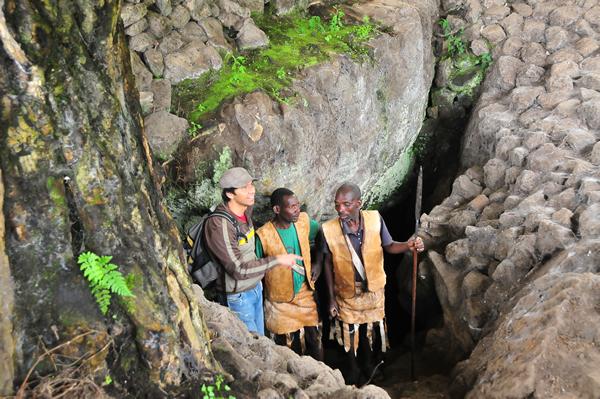
Mount Elgon is home to a diverse assemblage of mammals, ranging from elusive forest dwellers to conspicuous grazers. The park’s elephants are particularly unique for their cave-visiting behavior, mining salt from the walls of Kitum and Kapkwai caves. This rare adaptation is found only in a few regions globally and provides a striking example of animal intelligence and ecological adaptation.

Primates such as red-tailed monkeys, black-and-white colobus monkeys, and baboons inhabit the montane forests, often visible along trails and in bamboo belts. These species contribute to seed dispersal and forest regeneration, underlining their ecological importance. Smaller mammals, including duikers, bushbucks, and hyraxes, inhabit both forest and moorland zones, often going unnoticed due to their secretive habits but playing essential roles in the mountain’s food web.

Predators are present as well, though in lower densities. Servals and genets roam the forest understory, while larger carnivores like leopards, though rare, continue to inhabit the region, ensuring natural ecological balance.Flora and Fauna of Mount Elgon National Park

Avian Richness

Mount Elgon is a birder’s paradise, boasting over 300 species of birds. The diversity spans montane forest specialists, moorland dwellers, and migratory species. Among the most iconic is the lammergeyer, a rare bearded vulture that soars over cliffs, preying on bones and carrion. Its presence reflects the health of the mountain’s ecosystems, as it requires expansive territories and undisturbed habitats.

Other notable species include turacos with brilliant plumage, sunbirds flitting between flowering plants, and hornbills nesting in tree cavities. Birdwatchers visiting Mount Elgon can observe intricate behaviors, courtship displays, and feeding strategies, often guided by local experts who combine ecological knowledge with cultural insights.

Amphibians, Reptiles, and Invertebrates

The mountain’s streams, wetlands, and forest floors support a range of amphibians, including endemic frogs that are indicators of environmental health. Reptiles such as chameleons, geckos, and snakes inhabit various zones, each adapted to its specific microhabitat.

Invertebrates, though often overlooked, are extraordinarily diverse. Butterflies, moths, beetles, and ants contribute to pollination, decomposition, and nutrient cycling. Entomologists find Mount Elgon particularly intriguing for studying high-altitude adaptations and species interactions that cannot be observed elsewhere.

Ecological Interactions and Adaptations

The richness of Mount Elgon’s flora and fauna is a product of millions of years of evolution, where species have adapted to specific elevation zones, climate patterns, and geological formations. Elephants mining cave salt illustrate behavioral adaptation to nutrient scarcity, while plants like lobelias have evolved structural modifications to survive high UV radiation and nighttime freezing.

Pollination, seed dispersal, predator-prey relationships, and competition for resources create a dynamic equilibrium. Forests feed moorlands through water regulation, animals aid forests through seed dispersal, and human communities contribute through conservation initiatives. Understanding these interactions provides insight into why Mount Elgon is considered a keystone ecosystem of East Africa.

Conservation and Threats

Despite its ecological importance, Mount Elgon faces multiple conservation challenges. Deforestation for agriculture, human settlement encroachment, and illegal resource extraction threaten habitats. Climate change introduces additional pressures, altering rainfall patterns, affecting water availability, and influencing species distribution.

Efforts to mitigate these threats have been proactive. Community conservation initiatives, park ranger patrols, and environmental education programs are implemented to protect both species and habitats. Scientific research and ecological monitoring provide data for informed management, ensuring that Mount Elgon’s biodiversity is preserved for future generations.

Tourism and Educational Opportunities

Mount Elgon’s biodiversity is not only an ecological treasure but also an educational resource. Eco-tourism, bird watching, botanical studies, and wildlife photography are increasingly integrated into park management strategies. Guided hikes through different elevation zones allow tourists to learn about species adaptations, ecological roles, and conservation challenges.

Community involvement enhances these experiences, as local guides provide unique insights into both ecological knowledge and traditional practices that have coexisted with the environment for centuries. For visitors, these encounters transform leisure into learning, emphasizing that the mountain’s value extends beyond recreation to global ecological significance.

Flora and Fauna as a Cultural Lens

The mountain’s biodiversity is deeply entwined with the cultural practices of surrounding communities. Forests provide medicinal plants, bamboo is used for construction and crafts, and wildlife features in folklore and traditional beliefs. Understanding the flora and fauna of Mount Elgon is therefore inseparable from understanding the cultural landscape, illustrating how conservation and culture are mutually reinforcing.

For example, sacred groves are protected not only for spiritual reasons but also because they harbor endemic species. Community rituals often occur in proximity to ecologically sensitive areas, embedding environmental awareness within cultural norms. Visitors engaging with both nature and community gain a holistic appreciation of the mountain’s interconnectedness.

Practical Tips for Exploring Mount Elgon’s Biodiversity

Hiking through Mount Elgon to observe flora and fauna requires preparation. Early mornings and late afternoons are ideal for spotting animals, as cooler temperatures encourage movement. Binoculars and cameras enhance bird and mammal observation, while sturdy footwear is essential for traversing forest floors, bamboo corridors, and moorlands.

Guides familiar with the park’s ecosystems provide invaluable insights into species identification, behavior, and habitat. They also ensure that visitors minimize ecological disturbance, making each encounter ethical and safe. Whether the goal is photography, wildlife observation, or educational study, preparation, awareness, and respect for the environment are crucial.

Preserving the Mountain’s Living Legacy

The flora and fauna of Mount Elgon National Park represent one of East Africa’s richest and most complex ecosystems. From dense montane forests and bamboo thickets to expansive moorlands and teeming streams, the park is a showcase of evolutionary adaptation, ecological interdependence, and conservation significance. Its wildlife, ranging from elephants and primates to rare birds and endemic plants, reflects the mountain’s global importance as a biodiversity hotspot.

For travelers, scientists, and conservationists, Mount Elgon is more than a scenic destination—it is a living classroom, a sanctuary, and a symbol of the delicate balance between nature and human activity. Engaging responsibly with this biodiversity ensures that its ecological, cultural, and educational values endure.

To experience Mount Elgon’s unique flora and fauna while supporting conservation and local communities, it is recommended to book tours through WildHorn Africa, a trusted expert in curating unforgettable safaris and trekking adventures across Uganda. With their expertise, every visit becomes both an ecological journey and a meaningful contribution to preserving one of Africa’s most treasured landscapes.

Eco-Lodge Reviews at Lake Bunyonyi: Local's Guide with kids

Eco-Lodge Reviews at Lake Bunyonyi: Local’s Guide with kids

By Travel stories and blogs, Adventure holidays, Family holidays, Safari holidays, Uganda travel guides

Eco-Lodge Reviews at Lake Bunyonyi: Local’s Guide with Kids

Where Nature, Family, and Luxury Intertwine

There are destinations that carry an air of mystery, places where nature writes its poetry in still waters and rolling hills, and where each sunrise seems like a new invitation to explore. Lake Bunyonyi, in southwestern Uganda, is such a place. Known as the “Lake of the Little Birds,” it is Africa’s second-deepest lake, dotted with 29 lush islands that rise like emeralds from its reflective surface. For families seeking a luxury retreat that blends sustainability, relaxation, and adventure, Bunyonyi is both an escape and a discovery.

Unlike many destinations where parents must compromise between indulgence and children’s needs, Lake Bunyonyi creates harmony. Here, eco-lodges designed with sustainability at their core offer luxury that is responsible, inclusive, and family-friendly. They provide spaces where children can learn and play, where parents can rejuvenate, and where nature becomes both a playground and a classroom.

This guide is written with the eye of a local who has seen Lake Bunyonyi evolve into a haven for travelers. It reviews eco-lodges through the lens of family experiences, offering first-time visitors and seasoned explorers insights into what makes Bunyonyi not just beautiful, but profoundly enriching when traveling with kids.

The Enchantment of Lake Bunyonyi

Lake Bunyonyi rests between Kisoro and Kabale districts, just a few hours from Bwindi Impenetrable Forest. Its name, derived from the abundance of small birds that inhabit its shores and islands, speaks to its natural wealth. The lake is bilharzia-free, crocodile-free, and hippo-free, making it one of the safest freshwater lakes in Africa for swimming and family recreation.

The setting itself is luxurious. Rolling terraced hills surround the lake, painted with vibrant greens from banana plantations and dotted with traditional homesteads. Mist often lingers over the water in the morning, creating a dreamlike canvas. For children, this environment sparks imagination, while for adults it offers tranquility unmatched by busier tourist hubs.

To stay in an eco-lodge here is to enter a dialogue with the land. Lodges are designed to blend with the environment, using local materials, renewable energy, and community-driven practices. For families, this translates into an experience that is safe, comfortable, and meaningful — a combination that makes Lake Bunyonyi one of Uganda’s most beloved family escapes.

What Defines an Eco-Lodge at Lake Bunyonyi?

Eco-lodges at Lake Bunyonyi are not just accommodations but philosophies of living with nature rather than against it. Built with minimal environmental impact, they feature designs inspired by local traditions — thatched roofs, wooden decks, stone paths, and open spaces that encourage connection with the landscape.

Sustainability manifests in multiple ways. Many lodges use solar power for electricity and heating, harvest rainwater, and practice waste recycling or composting. Gardens surrounding these lodges often supply fresh vegetables and herbs, while fish served at the dining tables is frequently sourced directly from the lake.

For families with kids, this sustainability becomes an education. Children witness how luxury can coexist with responsibility, learning lessons about ecology and culture in a way no classroom can replicate.Eco-Lodge Reviews at Lake Bunyonyi: Local's Guide with kids

Family-Friendly Eco-Lodges — Spaces of Comfort and Adventure

Several eco-lodges around Lake Bunyonyi have gained reputations for their unique balance of luxury, sustainability, and family inclusivity. Each offers something distinct, yet all share a commitment to creating an environment where parents and children alike feel welcome.

Rooms often include family cottages or interconnecting suites, designed with space and privacy in mind. Play areas, shallow swimming spots, and guided activities ensure that children are engaged, while adults enjoy moments of leisure. The essence of luxury here is not extravagance but personalized experiences: dining under starlit skies, waking to bird calls, and exploring islands with private guides who tailor excursions to families.

Well-trained staff members, many from nearby communities, often serve as cultural interpreters for children, teaching them local songs, dances, and crafts. These moments of connection ensure that the stay is not only about seeing a destination but becoming part of it.

Dining Experiences — Where Taste Meets Education

Food at eco-lodges around Lake Bunyonyi is more than nourishment; it is an expression of both culture and sustainability. Menus celebrate Uganda’s organic abundance: matoke, groundnut sauce, tilapia from the lake, and fresh fruits such as pineapples and passion fruit. International influences are often blended in, ensuring variety and refinement.

For children, meals become both delicious and educational. Many lodges encourage kids to visit gardens where ingredients are grown, teaching them the value of farm-to-table dining. Cooking classes for families sometimes allow children to try their hands at preparing traditional dishes, making dining an adventure rather than a formality.

Luxury in this context lies in detail: meals prepared with care, options tailored to children’s tastes, and dining experiences set against breathtaking backdrops of lake and hills.

Activities for Families with Kids

Lake Bunyonyi thrives on activity, offering adventures that families can share together. Canoe rides across the calm waters are among the most iconic experiences. Traditional dugout canoes allow parents and children to paddle between islands, listening to local stories about their names and histories. For children, the thrill of gliding on water that feels endless is unforgettable.

Hiking trails around the lake provide gentle to moderate challenges suitable for families. Along the way, kids encounter local farms, spot exotic birds, and interact with villagers whose warmth leaves lasting impressions. Swimming in designated safe areas of the lake offers another highlight, with the cool, clean waters a delight for children on warm afternoons.

Eco-lodges often organize cultural performances or craft workshops in the evenings. Children can participate in basket weaving, bead-making, or drumming sessions, channeling creativity while connecting with traditions. These activities enrich the family experience, ensuring that luxury is remembered not as indulgence but as shared joy.

Safety and Comfort — A Parent’s Assurance

For families, especially those with children, safety is paramount. Lake Bunyonyi’s eco-lodges prioritize this through thoughtful design and attentive service. The absence of dangerous aquatic animals makes the lake uniquely reassuring for parents who wish to allow their children to swim. Lodges often provide life jackets, safe swimming zones, and supervision where needed.

Hygiene and comfort are equally prioritized. Eco-lodges maintain high standards of cleanliness, with filtered water, mosquito nets, and well-maintained facilities ensuring health and ease. Staff are accustomed to hosting families, offering flexible meal times and child-focused services.

For luxury travelers with children, this assurance transforms the experience from worry to relaxation, allowing parents to enjoy the same depth of indulgence as they would on a solo or couple’s journey.

Seasons and the Best Times for Families

Lake Bunyonyi’s appeal shifts subtly with the seasons, and timing a family visit is important. The dry seasons — December to February and June to September — are ideal for families with children. Trails are manageable, skies are clear, and outdoor activities unfold with minimal disruption. Canoeing and hiking during these months are particularly enjoyable.

The wet seasons, March to May and October to November, bring heavier rains. While this season offers lush greenery and quieter lodges, trails can be muddy, and outdoor excursions may be interrupted. Families who prefer less crowding and enjoy indoor activities might still find this season rewarding, as eco-lodges provide cozy environments with fireplaces, storytelling sessions, and cultural programs to keep children engaged.

For locals guiding families, the best advice is to align visits with dry months for ease and comfort, but to embrace wet seasons if privacy and intimacy are priorities.Eco-Lodge Reviews at Lake Bunyonyi: Local's Guide with kids

Cultural Context — Teaching Children the Human Story

Eco-lodges around Lake Bunyonyi are deeply connected to nearby communities. Families traveling with kids are often introduced to the Bakiga and Batwa peoples, whose traditions form the cultural fabric of the region.

For children, these interactions are transformative. Visiting a local school, listening to folktales, or watching traditional dances provides lessons that no classroom can replicate. They learn empathy, appreciation for diversity, and the joy of human connection.

Parents often find that these cultural exchanges enrich not only their children’s experience but their own, reminding them that luxury travel is not isolation from local life but immersion into it, carried out with respect and authenticity.

Conservation and Responsibility — Lessons for Young Minds

One of the most powerful aspects of staying in eco-lodges at Lake Bunyonyi is the opportunity to teach children about sustainability. Lodges often involve guests in conservation activities such as tree planting, wetland restoration, or bird-watching walks that highlight endangered species.

For kids, these activities are hands-on lessons in environmental stewardship. They see how waste is recycled, how solar panels generate electricity, and how communities thrive when tourism supports conservation. For parents, the greatest luxury is knowing that travel is leaving a positive legacy — shaping not only the environment but also the values of the next generation.

Wellness and Reflection for Families

Even with children in tow, Lake Bunyonyi offers abundant opportunities for wellness. Early mornings spent watching mist lift from the water create moments of shared stillness for families. Lodges often offer spa services for parents, while kids are entertained with creative activities. Family yoga sessions overlooking the lake or gentle walks through terraced hills provide both exercise and bonding.

Luxury here lies in balance: children play and learn while parents relax and restore. The lake itself, timeless and serene, becomes a teacher of calm, reminding families of the value of slowing down together.

Why Eco-Lodges Are the Perfect Choice for Families

Unlike conventional hotels, eco-lodges at Lake Bunyonyi offer families holistic experiences. They provide comfort without excess, immersion without disruption, and indulgence without guilt. For parents, they ensure peace of mind. For children, they create wonder. For both, they establish a shared memory where luxury is not about separation from nature but intimacy with it.

The local’s perspective emphasizes that Bunyonyi is best experienced slowly. Families who linger discover that every island, every trail, and every evening by the fire adds another layer of richness to their journey. First-time visitors often depart with the promise to return, not because they saw everything but because they realized there was always more to discover.

Book with WildHorn Africa

For families seeking to embrace Lake Bunyonyi’s eco-lodge experiences at their finest, WildHorn Africa is the trusted companion. With expertise in crafting luxury, family-friendly safaris, they ensure that every detail — from selecting the most suitable lodge to arranging child-friendly excursions — is curated with precision and care.

By booking with WildHorn Africa, families gain more than a vacation. They gain peace of mind, knowing their travels support conservation, empower local communities, and provide children with life-changing experiences. Each itinerary becomes a story of elegance, responsibility, and joy — a story that Lake Bunyonyi, with its shimmering waters and islands of wonder, tells best.

In 2025 and beyond, the lake remains one of Uganda’s most cherished treasures. And with WildHorn Africa, families discover it not only as travelers but as part of a legacy of luxury, sustainability, and shared adventure.

Luxury Picks: Source of the Nile wildlife photography tips for luxury travelers

Luxury Picks: Source of the Nile wildlife photography tips for luxury travelers

By Adventure holidays, Luxury holidays, Safari holidays, Special offers, Travel stories and blogs, Uganda travel guides, Wildlife holidays

Luxury Picks: Source of the Nile Wildlife Photography Tips for Luxury Travelers

Where Luxury Meets the Untamed

At the very heart of Uganda, in the legendary town of Jinja, the Source of the Nile flows with a timeless rhythm that has captivated explorers, artists, and travelers for centuries. To stand at this origin point of the world’s longest river is to witness history, geography, and beauty converging in one extraordinary location. Yet for the modern luxury traveler, the Source of the Nile offers something even more alluring — a rare opportunity to capture its wildlife and landscapes through the lens of a camera, blending indulgence with creativity in an unforgettable way.

Wildlife photography in this region is not simply about pointing a lens toward the subject. It is about mastering patience, understanding the flow of the environment, and seeking the perfect balance of light, movement, and composition. The Nile teems with life, from the dazzling bird species that dart across its skies to the hippos that bask lazily along its edges. Each image has the power to preserve a fleeting moment, translating raw nature into timeless artistry.

For luxury travelers, the appeal lies not only in the photography itself but in the refined experience that frames it. Imagine embarking on a private boat ride at dawn, the mist rising gently as kingfishers dart into the water, while every movement is guided by expert trackers and photography professionals. This marriage of indulgence and authenticity makes wildlife photography at the Source of the Nile more than an activity — it becomes an art form of luxury exploration.

The Source of the Nile — A Living Canvas

The landscapes surrounding the Nile’s origin are a photographer’s dream, layered with textures, colors, and moods that shift throughout the day. From the golden hues of sunrise that paint the riverbanks in warm light to the silvery tones of dusk where silhouettes dominate, every hour presents a new perspective.

The region is alive with biodiversity. The river’s edges attract an extraordinary array of bird species, making Jinja one of Uganda’s most celebrated birding destinations. Brightly colored kingfishers, African fish eagles, herons, and bee-eaters are just a few of the subjects waiting for the discerning traveler’s lens. On the water, hippos wallow in pods, crocodiles glide silently beneath the surface, and fish leap momentarily into the air before disappearing again.

In this setting, the Source of the Nile becomes a living canvas where every photograph tells a story — of survival, elegance, or fleeting beauty. Unlike studio photography where light and composition are controlled, here the photographer must surrender to the unpredictability of the wild, capturing what unfolds naturally. For luxury travelers, this unpredictability is not a limitation but part of the adventure.Luxury Picks: Source of the Nile wildlife photography tips for luxury travelers

Why Luxury Travelers Are Drawn to Wildlife Photography

Wildlife photography demands both patience and precision, qualities that align with the essence of luxury travel. For those who pursue refinement, the act of waiting for the perfect moment — whether it is a bird in mid-flight or a hippo yawning at dawn — mirrors the appreciation of subtle details in life.

Moreover, wildlife photography offers a sense of exclusivity. Each image captured is unrepeatable, a private moment shared between traveler and subject. For long after the journey ends, the photograph remains as a personal treasure, impossible to replicate by anyone else. In this way, photography at the Source of the Nile provides not only memories but also heirlooms of experience.

The luxurious aspect of this pursuit lies in the curated journey that surrounds it. From private photography safaris to stays in riverside lodges that offer unobstructed views of wildlife, the experience is designed to ensure comfort without sacrificing authenticity. The blending of five-star service with untamed beauty transforms photography from a hobby into a pinnacle of luxury travel.

The Art of Light and Timing

Every great wildlife photograph rests on a foundation of light and timing. The Source of the Nile provides conditions that challenge and reward photographers in equal measure. Early mornings are often bathed in soft golden light, a time when animals are most active. The stillness of dawn allows reflections on the river’s surface to appear crisp, while mist adds layers of depth to every composition.

As the day advances, light becomes harsher, demanding adjustments in technique. Shadows grow bolder, colors shift, and subjects retreat into the shade. For photographers, this is the moment to experiment with contrasts — capturing the silhouette of a bird against a blinding sky, or the glistening scales of a crocodile as it emerges from the water.

Evenings at the Nile are spectacular. The sky often explodes into tones of orange, pink, and red as the sun dips below the horizon. This “golden hour” provides some of the most romantic settings for photography, turning even the simplest of subjects into masterpieces. For luxury travelers, guided photography excursions are often timed around these magical windows, ensuring that no opportunity for extraordinary light is missed.

The Challenge of Movement

Wildlife photography is not only about capturing stillness; it is equally about mastering movement. At the Source of the Nile, where fish leap unexpectedly, birds dive with lightning speed, and water ripples constantly, the ability to anticipate motion becomes essential.

Luxury travelers often benefit from the presence of professional guides and photography experts who accompany them. These specialists share insights into animal behavior, teaching how to anticipate when a bird is likely to take flight or when a hippo might rise from beneath the water. Such guidance transforms photography from guesswork into strategy, enabling travelers to return home with images that feel both spontaneous and deliberate.

Ethical Photography at the Nile

Luxury travel carries with it an inherent sense of responsibility. At the Source of the Nile, wildlife photography is not only about capturing beauty but also about practicing ethics of respect. Animals must never be disturbed for the sake of a shot, and natural behavior should always be preserved. Flash photography, aggressive positioning, or intrusive proximity can stress animals and alter their routines, something responsible travelers must always avoid.

Eco-conscious lodges and tour operators in Jinja emphasize these principles, ensuring that wildlife remains undisturbed. Luxury, in this sense, is redefined not as taking more but as leaving less impact. For many travelers, the knowledge that their images were captured respectfully adds a deeper sense of value to the experience.

The Role of Equipment — Luxury Tools for Luxury Experiences

The world of wildlife photography is heavily influenced by equipment, yet at the Source of the Nile, the emphasis lies on using tools wisely rather than excessively. Long lenses allow close captures of distant birds, while wide-angle lenses provide context, showcasing both subject and environment in harmony. Luxury travelers often arrive with professional gear, but even those with lighter setups find that the Nile offers opportunities for creativity.

Lodges and guides often provide photography support, from equipment rentals to charging stations powered by solar energy. For long-stay travelers, this integration of technology with sustainability ensures that the pursuit of perfect images does not compromise environmental ethics. Here again, luxury and responsibility intersect seamlessly.

Portraits of Birds — The Jewel of Nile Photography

Among the many photographic opportunities, bird photography stands as the crown jewel of the Source of the Nile. The region is part of the Albertine Rift, one of the richest birding corridors in Africa. Brightly feathered kingfishers perch on branches before plunging into the water, bee-eaters hover mid-air with stunning grace, and African fish eagles circle overhead with their piercing calls.

Capturing these creatures demands patience and attentiveness. For luxury travelers, the process is elevated through private excursions to less crowded spots, where silence allows closer observation. The thrill of freezing a bird in mid-flight, wings spread in full symmetry, becomes an unparalleled reward.Luxury Picks: Source of the Nile wildlife photography tips for luxury travelers

Hippos, Crocodiles, and the Drama of Water Life

The Source of the Nile is not only about birds; it is also about the dramatic presence of water life. Hippos, often gathered in pods, offer opportunities for intimate yet powerful photography. Their yawns, often misinterpreted as signs of boredom, are dramatic gestures that, when captured correctly, convey the raw power of these creatures.

Crocodiles, in contrast, provide a subtler challenge. Their movements are often slow, deliberate, and hidden. Capturing them requires a trained eye and often a boat ride into less disturbed parts of the river. Luxury experiences often include expert boatmen who know where these creatures rest, allowing photographers to approach without intrusion.

Cultural Context — Photography Beyond Wildlife

For luxury travelers, photography at the Source of the Nile is not confined to animals alone. The cultural fabric of Jinja and its surroundings provides rich subjects. Fishermen casting their nets at dawn, children playing along the riverbanks, and vibrant local markets filled with colors and textures all offer photographic treasures.

Respect remains central in cultural photography. Seeking consent, engaging with subjects, and understanding the stories behind the images elevate them from snapshots to respectful portraits of life. In this way, photography becomes a bridge between traveler and host, creating connections that transcend the image itself.

Wellness and Reflection Through Photography

Beyond the technical aspects, photography at the Source of the Nile nurtures wellness. For long-stay luxury travelers, the act of focusing on details — a bird’s eye, the ripple of water, the curve of a tree — becomes a form of meditation. The concentration required silences the noise of daily life, while the beauty of the Nile restores a sense of calm and balance.

Even without producing award-winning images, travelers often find that the process itself enriches their spirit. Each click of the camera is an affirmation of presence, a reminder that they are living within one of the world’s most remarkable landscapes. This reflective aspect transforms wildlife photography into a journey of both outer exploration and inner renewal.

Why the Source of the Nile is a Luxury Photographer’s Paradise

Few destinations in Africa combine accessibility, biodiversity, cultural richness, and natural beauty as seamlessly as the Source of the Nile. For luxury travelers, it offers a rare paradox: untamed wilderness framed within refined comfort. Riverside lodges provide champagne breakfasts after dawn excursions, private guides ensure exclusive access to the best vantage points, and wellness amenities complement the physical intensity of photography expeditions.

This holistic experience ensures that the photography trip is not about fatigue but about pleasure, not about struggle but about harmony. The Nile becomes not only a subject but a host, offering itself generously to those who approach with patience and respect.

Capture the Nile with WildHorn Africa

For those who dream of experiencing the Source of the Nile in all its photographic splendor, WildHorn Africa provides the expertise to transform vision into reality. With a reputation for designing bespoke journeys, WildHorn Africa ensures that luxury travelers gain not only the finest accommodations but also privileged access to the most photogenic corners of the Nile.

From arranging dawn boat rides with expert guides to curating wellness retreats that complement photography excursions, their itineraries balance indulgence with authenticity. By booking with WildHorn Africa, travelers secure not just a trip but an immersion — one where every photograph reflects the spirit of place, and every moment resonates with refinement and responsibility.

Luxury Lodges around Mount Elgon National Park

Luxury Lodges around Mount Elgon National Park

By Travel stories and blogs, Adventure holidays, Family holidays, Safari holidays, Uganda travel guides

Luxury Lodges around Mount Elgon National Park

Where Wilderness Meets Elegance

Amid the sweeping highlands and dramatic volcanic slopes of Mount Elgon National Park, a unique convergence of nature and comfort awaits discerning travelers. The park’s towering peaks, cascading waterfalls, and lush forests provide an immersive experience for adventurers and nature enthusiasts, yet the allure of luxury lodges in the surrounding region allows these experiences to be complemented with elegance, privacy, and world-class amenities.

Luxury lodges in and around Mount Elgon do more than offer accommodation—they serve as sanctuaries of tranquility, where travelers can retreat from the rigors of trekking, safari excursions, or cultural exploration. Each lodge is carefully positioned to balance accessibility to the park with unobstructed views of the caldera, verdant valleys, and coffee plantations that blanket the lower slopes. Here, mornings are greeted with panoramic vistas, evenings are accompanied by the gentle rustling of bamboo forests, and every stay becomes an integral part of the Mount Elgon experience.

This article provides a comprehensive guide to the luxury lodges surrounding Mount Elgon National Park, exploring their location, architecture, amenities, experiences offered, and how they enhance the visitor’s journey through one of Uganda’s most compelling natural landscapes.

The Appeal of Luxury Lodges in Mount Elgon

Harmonizing Comfort with Nature

Luxury lodges in the Mount Elgon region are designed to blend seamlessly into their surroundings, using locally sourced materials, architectural styles inspired by the environment, and eco-friendly practices. Guests are often enveloped by panoramic views of rolling hills, volcanic cliffs, and distant savannahs, creating a sense of immersion that is both visually stunning and emotionally restorative.

These lodges prioritize comfort without compromising the authenticity of the wilderness experience. Private suites, elevated terraces, and expansive windows ensure that visitors can appreciate the landscape at any moment, while the use of natural materials, stonework, and timber connects the interiors to the surrounding terrain. The lodges themselves become part of the ecological and aesthetic narrative of Mount Elgon, offering a luxurious lens through which the mountain’s beauty is experienced.

Accessibility and Strategic Location

Most luxury lodges are strategically located near key access points of the park, including Kapchorwa, Sipi Falls, Mbale, and Budadiri. These locations provide easy access to popular hiking trails, waterfalls, caves, and community tourism initiatives. The proximity allows guests to enjoy full-day excursions without extensive travel, while still offering a secluded environment removed from the bustle of towns or major roads.

Accessibility is further enhanced by private transport arrangements provided by many lodges, ensuring that travel to trailheads, viewpoints, and cultural sites is convenient, safe, and comfortable. The integration of location, accessibility, and exclusivity is a defining feature of luxury accommodation in this region.

Signature Luxury Lodges and Their Features

Lodge Architecture and Design

Luxury lodges around Mount Elgon are characterized by a fusion of contemporary design and local aesthetics. Structures often feature thatched roofs reminiscent of traditional Ugandan architecture, combined with modern interiors that include king-sized beds, ensuite bathrooms, and climate control systems. Open-plan designs allow natural light to permeate living spaces, while terraces and balconies provide uninterrupted views of the mountains and valleys below.

The design philosophy is not merely about aesthetics—it serves a functional purpose as well. Elevated foundations protect against humidity, large windows facilitate ventilation, and outdoor seating areas encourage interaction with the surrounding flora and fauna. The result is a lodging experience that feels both exclusive and integrally connected to nature.

Amenities and Guest Services

Luxury lodges offer a wide range of amenities to enhance the visitor experience. Gourmet restaurants serve locally sourced ingredients, often incorporating traditional Ugandan flavors into international cuisine. Spa services, wellness programs, and meditation spaces allow guests to unwind after strenuous hikes or adventurous excursions.

Many lodges provide personalized services such as private guides, tailor-made trekking itineraries, birdwatching tours, and cultural immersion programs. Wi-Fi, private transport, and concierge services ensure that guests enjoy modern conveniences without compromising the sense of escape that defines the Mount Elgon experience.Luxury Lodges around Mount Elgon National Park

Experiential Opportunities at Luxury Lodges

Trekking and Hiking Excursions

Staying at a luxury lodge does not mean compromising on adventure. Guests have easy access to Mount Elgon’s diverse trekking routes, including the Sasa, Sipi, Piswa, and Suam trails. Lodges often arrange for expert guides who accompany visitors, providing insights into flora, fauna, and local culture while ensuring safety and comfort.

Hikes can vary in difficulty and duration, allowing guests to tailor their experiences. Day treks to Sipi Falls or moderate climbs to the caldera rim provide rewarding views without demanding multi-day expeditions. For those seeking a summit experience, multi-day climbs can be arranged with full logistical support from the lodge, including porters, meals, and camping equipment, ensuring that adventure is paired with convenience and luxury.

Wildlife Observation and Birdwatching

The rich biodiversity of Mount Elgon National Park is readily accessible from lodge grounds and surrounding trails. Guests can observe forest elephants visiting cave salt deposits, primates foraging in bamboo belts, and a wide array of bird species including lammergeyers, turacos, and sunbirds. Guided birdwatching excursions allow enthusiasts to identify rare and endemic species while learning about ecological interactions and conservation efforts.

Luxury lodges often provide hides, elevated viewing platforms, and expert guides to enhance observation experiences, ensuring that wildlife encounters are intimate, ethical, and educational. The combination of comfort and proximity to nature creates opportunities for both photography and reflection, fostering a deeper connection to the park’s ecological wealth.

Waterfall and Cave Exploration

Proximity to natural attractions such as Sipi Falls and Kitum Cave adds another dimension to the luxury lodge experience. Day trips to these sites can be arranged with private guides, allowing visitors to explore cascading waterfalls, hidden grottos, and volcanic caves while enjoying the convenience of lodge-arranged transport and support services.

The lodges enhance these excursions by providing meals, picnic setups, and resting points, ensuring that exploration is enjoyable without logistical stress. Visitors can immerse themselves fully in the natural wonders of Mount Elgon, knowing that comfort and care await at the lodge at day’s end.

Cultural Engagement and Community Tourism

Luxury lodges around Mount Elgon increasingly integrate community tourism experiences, providing guests with insights into local life. Visitors may participate in coffee farm tours, craft workshops, or traditional ceremonies under the guidance of community leaders. These experiences enrich the stay, transforming it from mere luxury accommodation into a holistic cultural and ecological journey.

Such engagements also ensure that tourism revenue benefits local populations, supporting livelihoods, education, and conservation initiatives. For luxury travelers, this integration offers a meaningful layer to their visit, blending exclusivity with ethical and immersive experiences.

Sustainability and Eco-Luxury

Environmentally Responsible Practices

Many lodges around Mount Elgon prioritize sustainable and eco-friendly practices, recognizing that the preservation of biodiversity and natural landscapes is essential to maintaining the region’s appeal. Solar power, rainwater harvesting, energy-efficient construction, and waste management systems are increasingly standard features.

This approach not only reduces ecological footprints but also enhances guest experiences. Guests can appreciate the harmony between modern luxury and environmental stewardship, witnessing firsthand how comfort and responsibility coexist seamlessly.

Community Integration and Conservation

Sustainability in luxury lodges extends beyond the environment. Community partnerships ensure that lodges contribute to local development, whether through employment, capacity building, or support for schools and health programs. Guests benefit from interactions with knowledgeable local staff, cultural immersion, and the knowledge that their stay supports conservation and social initiatives.

Planning Your Stay at a Luxury Lodge

Selecting the Right Lodge

Choosing a lodge requires consideration of location, amenities, and experiences offered. Proximity to preferred trails, waterfalls, and villages should align with individual interests. For wildlife enthusiasts, lodges near bamboo forests and moorlands provide better chances of observing endemic species. Those prioritizing cultural engagement may prefer lodges with strong community tourism links.

Timing and Seasonal Considerations

The dry seasons from June to August and December to February are optimal for hiking, wildlife observation, and cultural events. Lodges remain fully operational, offering outdoor experiences and clear views of Mount Elgon’s peaks and valleys. The rainy seasons, while presenting challenges for road travel and trekking, reveal lush landscapes and dramatic waterfalls, offering a different but equally spectacular perspective.

Booking and Packages

Luxury lodges often provide comprehensive packages including accommodation, guided treks, meals, and cultural excursions. Booking in advance is recommended, particularly during peak seasons or for specialized experiences such as summit treks or multi-day wildlife tours. Selecting a lodge with integrated packages ensures that visitors enjoy convenience, safety, and a seamless luxury experience throughout their stay.

The Appeal of Luxury Amidst Adventure

Luxury lodges around Mount Elgon redefine the idea of wilderness accommodation. They combine comfort, privacy, and world-class service with direct access to one of Uganda’s most captivating natural landscapes. Guests enjoy panoramic views, fine dining, and spa treatments while remaining fully immersed in adventure, culture, and ecology.

This balance allows for a travel experience that is restorative, educational, and thrilling, catering to individuals, couples, families, and groups seeking an exclusive and personalized journey. For photographers, naturalists, and adventurers, luxury lodges provide both a base for exploration and a sanctuary for reflection.

Experiencing Mount Elgon in Style

The luxury lodges around Mount Elgon National Park are more than accommodations; they are gateways to immersive exploration, cultural connection, and ecological appreciation. With panoramic vistas, eco-conscious design, curated excursions, and integration with local communities, these lodges offer an experience where comfort and wilderness coexist in harmony.

For travelers wishing to explore Mount Elgon in style while enjoying safety, convenience, and unparalleled natural beauty, it is strongly recommended to book tours and lodge stays through WildHorn Africa. With expertise in crafting tailor-made safaris and mountain adventures, WildHorn Africa ensures that every stay becomes a luxurious, meaningful, and unforgettable journey, leaving guests inspired, relaxed, and deeply connected to the heart of Uganda.

Naming a Rhino: How Uganda’s Unique Conservation Campaign Inspires Connection

Naming a Rhino: How Uganda’s Unique Conservation Campaign Inspires Connection

By Travel stories and blogs, Safari holidays, Special offers, Uganda travel guides, Wildlife holidays

Naming a Rhino: How Uganda’s Unique Conservation Campaign Inspires Connection

A Call to Protect a Giant

Uganda, often celebrated as the “Pearl of Africa,” is home to incredible biodiversity, from the misty mountains of Bwindi to the savannahs of Murchison Falls. Among its most iconic species is the rhinoceros, a symbol of both strength and vulnerability. Once widespread in the region, rhinos were tragically hunted to local extinction by the early 1980s. Today, through determined conservation efforts, they are making a slow but inspiring comeback.

One innovative initiative spearheaded by the Uganda Wildlife Authority (UWA) is the “Name a Rhino” campaign. This project allows individuals, families, and organizations to participate in rhino conservation by naming one of these majestic animals. At first glance, it might seem like a symbolic gesture, but in reality, it is a powerful tool that fosters personal connection, generates critical funding, and raises awareness globally about rhino protection.

This article explores the story behind the campaign, the journey of rhino conservation in Uganda, and why naming a rhino goes far beyond a simple act of sponsorship—it becomes an investment in the future of one of Africa’s most endangered species.

The History of Rhinos in Uganda

Decades ago, rhinos roamed freely in Uganda’s grasslands and woodlands. Both black and white rhinoceroses thrived in the country’s national parks, playing essential ecological roles as grazers and browsers. However, relentless poaching, fueled by demand for rhino horn, combined with years of political instability, drove these giants to extinction in Uganda by 1983.

The loss was catastrophic not only for Uganda’s ecosystems but also for its cultural and natural heritage. For years, the absence of rhinos was a reminder of how quickly even the most formidable creatures can vanish when human greed outweighs conservation.

In 2005, a turning point arrived with the establishment of the Ziwa Rhino Sanctuary, a collaborative effort between the Rhino Fund Uganda and UWA. White rhinos from Kenya and the United States were reintroduced, and a breeding program was initiated to restore rhinos to Uganda’s wild. Today, Ziwa has become a beacon of hope, where rhinos once again roam safely, guarded by rangers and protected by communities.

The “Name a Rhino” Campaign: An Overview

The “Name a Rhino” program was designed as a creative fundraising and awareness initiative. By allowing donors to name individual rhinos, the Uganda Wildlife Authority provides an avenue for people to form personal bonds with conservation. Naming creates identity—it transforms an anonymous animal into a known individual with a story, a history, and a legacy.

The funds generated through this campaign are directed toward rhino protection, including ranger salaries, habitat maintenance, veterinary care, anti-poaching patrols, and community outreach programs. In this way, the act of naming becomes a vital contribution to keeping rhinos safe.

Participants also receive updates about the rhino they’ve named, fostering ongoing engagement. It is not a one-time act but rather an enduring connection to Uganda’s conservation story.Naming a Rhino: How Uganda’s Unique Conservation Campaign Inspires Connection

Why Naming Matters: The Psychology of Connection

Conservation campaigns worldwide increasingly recognize the importance of emotional connection. People are more likely to support causes when they feel personally invested. By naming a rhino, a donor forms a symbolic relationship with the animal. It is no longer just one of many rhinos—it is their rhino, with a name that reflects their choice, culture, or inspiration.

This humanization of wildlife can be controversial, but in the context of conservation, it has proven powerful. When donors see photos, updates, or hear about the progress of a rhino carrying the name they chose, they feel pride and responsibility. The rhino’s survival becomes a personal triumph, and its struggles resonate as personal challenges.

The Role of Rhinos in Uganda’s Ecosystems

Beyond symbolism, rhinos play an indispensable ecological role. As mega-herbivores, they act as natural lawnmowers, maintaining grasslands by grazing and preventing overgrowth. Their movements create open areas that benefit smaller herbivores, while their dung provides nutrients that support insect populations, which in turn feed birds and other species.

The return of rhinos to Uganda is not just about saving an individual species—it is about restoring balance to ecosystems that evolved with their presence. By contributing to rhino protection, donors help safeguard entire habitats that countless other species depend on.

Community Involvement and the Wider Impact

Conservation cannot succeed in isolation from communities. The “Name a Rhino” campaign recognizes this by ensuring that revenues also benefit local people. Employment opportunities are created through ranger positions, tourism services, and community projects funded by conservation.

When local communities see tangible benefits from protecting rhinos, they become active guardians rather than bystanders. This approach reduces human-wildlife conflict and strengthens conservation at the grassroots level. Naming campaigns like this therefore extend beyond donors—they ripple outward, improving lives and fostering pride in Uganda’s natural heritage.

Global Participation: Bridging Borders Through Conservation

One of the most striking aspects of the “Name a Rhino” initiative is its ability to bridge borders. A family in Europe, a school in Asia, or a conservation group in North America can all name a rhino in Uganda, creating global stakeholders in its survival.

This international dimension is crucial because poaching and wildlife crime are global problems. Rhino horns are trafficked across continents, driven by markets far from Africa. By engaging the global public through something as personal as naming, Uganda turns distant spectators into partners in conservation.Naming a Rhino: How Uganda’s Unique Conservation Campaign Inspires Connection

The Symbolism of Names

Names carry stories, traditions, and aspirations. Donors often choose names that reflect cultural heritage, honor loved ones, or embody qualities like strength and resilience. In doing so, they add layers of meaning to conservation. Each rhino becomes not only a representative of its species but also a carrier of human narratives.

This symbolic connection can also inspire future generations. Children who grow up knowing their family “named a rhino” may feel a stronger commitment to wildlife conservation, ensuring that the message endures beyond a single generation.

Challenges Facing Rhino Conservation in Uganda

While initiatives like “Name a Rhino” are innovative, challenges remain immense. Poaching continues to be a threat across Africa, driven by international demand. Habitat loss, climate change, and human encroachment also endanger rhino survival.

Maintaining Ziwa Rhino Sanctuary and expanding conservation to national parks requires continuous funding and vigilance. Naming campaigns provide critical support, but long-term success will depend on sustained international cooperation, strict law enforcement, and ongoing education.

The Broader Significance of the Campaign

At its core, the “Name a Rhino” campaign is about more than fundraising. It represents a shift in how conservation is communicated. Instead of presenting wildlife as abstract populations, it emphasizes individuality, connection, and shared responsibility.

It shows that protecting a species is not just the job of rangers or governments—it is something everyone can contribute to. By naming a rhino, donors join a larger movement that transcends borders and fosters global solidarity for endangered species.

Why Naming a Rhino Is Worth It

The story of Uganda’s rhinos is one of resilience, hope, and human determination. From extinction in the 1980s to reintroduction in the 2000s, their return symbolizes what is possible when people unite for conservation. The “Name a Rhino” campaign amplifies this message, giving individuals worldwide the chance to become part of that legacy.

Naming a rhino is not just an act of charity—it is a declaration of connection, a pledge to protect, and a step toward a future where Uganda’s wild landscapes once again thrive with these magnificent animals.

For travelers, conservationists, and families alike, it offers a rare opportunity: to not only witness history but to write themselves into it. By naming a rhino, you are helping secure a future where Uganda’s grasslands echo once more with the footsteps of giants.

Community Tourism in Mount Elgon Region

Community Tourism in Mount Elgon Region

By Travel stories and blogs, Adventure holidays, Family holidays, Safari holidays, Uganda travel guides

Community Tourism in Mount Elgon Region

Beyond Mountains – The Heartbeat of Mount Elgon

Nestled in the far eastern reaches of Uganda, where lush highlands meet the skies, Mount Elgon rises not only as a natural monument but also as a hub for vibrant communities whose lives are intertwined with the mountain. Known for its vast caldera, cascading waterfalls, and mysterious caves, the region offers more than adventure and breathtaking landscapes. It is a landscape where culture, tradition, and community converge to create an authentic African experience.

For travelers seeking depth beyond sightseeing, community tourism in the Mount Elgon region represents an opportunity to engage meaningfully with local populations, learn about their customs, participate in cultural activities, and support sustainable development. It is a model of tourism that emphasizes shared experiences, mutual respect, and the preservation of both culture and environment. Unlike conventional tours, community tourism allows visitors to witness how human life and nature coexist, making Mount Elgon not merely a destination but a living cultural tapestry.

This article explores the multi-faceted dimensions of community tourism in the Mount Elgon region, delving into its cultural, economic, ecological, and social impacts, and illustrating how travelers can engage in authentic and responsible ways.

The Cultural Landscape of Mount Elgon

The Bagisu People and the Imbalu Ceremony

The Bagisu, also referred to as Bamasaba, are one of the primary communities inhabiting the slopes of Mount Elgon. Their culture is deeply intertwined with the mountain, which they regard as sacred. The Imbalu circumcision ceremony is one of the most significant cultural events in the region, marking the transition of boys into manhood. Performed every two years, this ceremony involves ritual dances, singing, drumming, and symbolic rites of passage.

Visitors to the Mount Elgon region who engage in community tourism have the unique opportunity to witness these ceremonies, often under the guidance of local community members who provide context and explain the significance of each ritual. The experience allows tourists to appreciate the depth of tradition while fostering respect for the sacredness of the practice. Photography and participation are generally welcomed when approached with humility, providing a rare insight into one of East Africa’s most striking cultural traditions.

The Sabiny Community and Agricultural Life

To the north and east of the mountain, the Sabiny people live along fertile slopes where terraced farming is a way of life. Coffee, bananas, maize, and vegetables dominate the agricultural landscape, and local farmers have developed sustainable practices that have been refined over generations. For travelers, community-based tours offer immersive experiences in farming life, including participation in coffee cultivation, crop harvesting, and food preparation.

These interactions are not only educational but also foster a sense of empathy and understanding for rural livelihoods. Travelers gain perspective on how communities balance subsistence with commercial farming, how they manage natural resources, and how traditional knowledge complements modern practices.Community Tourism in Mount Elgon Region

Economic Impacts of Community Tourism

Supporting Local Livelihoods

Community tourism in the Mount Elgon region has a tangible economic impact. By choosing to stay in locally-run homesteads, buy food from community markets, or hire local guides, visitors inject revenue directly into the region. Unlike conventional tourism where profits often benefit distant operators or hotels, community tourism ensures that local populations reap the rewards of their cultural and natural resources.

The sale of handmade crafts, traditional clothing, and locally produced goods such as honey, coffee, and woven baskets provides supplementary income. Markets around towns like Mbale, Kapchorwa, and Budadiri thrive due to tourism, with artisans relying on visitors to sustain the value of their work. These exchanges create a mutually beneficial system, empowering communities while enriching the visitor experience.

Capacity Building and Skills Development

Revenue from tourism is increasingly reinvested into community development projects, ranging from education and health services to infrastructure improvements. Local youth often receive training as guides, cultural interpreters, and hospitality providers, developing skills that enhance employability and promote self-sufficiency. Women’s groups in the region benefit from training in handicrafts, agro-processing, and eco-tourism initiatives, creating pathways for empowerment.

Through these programs, tourism serves not only as a revenue stream but also as a vehicle for sustainable development, ensuring that cultural preservation and economic growth proceed hand in hand.

Environmental Stewardship Through Community Engagement

Conservation and Sustainable Practices

Mount Elgon National Park is home to fragile ecosystems, including montane forests, bamboo zones, and moorlands. Community tourism initiatives emphasize the importance of environmental stewardship, educating both locals and visitors about conservation. Through guided walks, forest walks, and participatory projects such as tree planting or waste management, tourists learn about the ecological significance of the mountain and the need to protect it.

The communities around Mount Elgon understand that their livelihoods are intricately linked to the health of the mountain. Protecting forests ensures water sources, preserves wildlife habitats, and sustains agricultural productivity. By engaging travelers in these efforts, tourism becomes a tool for raising awareness while reinforcing local responsibility.

Wildlife Conservation and Ethical Encounters

Visitors also benefit from observing wildlife in its natural habitat. From forest elephants visiting caves for salt, to primates in bamboo forests, to endemic bird species like the lammergeyer, the biodiversity of Mount Elgon is astonishing. Community tourism programs encourage ethical wildlife encounters, emphasizing observation without disturbance. Guides trained in both ecology and culture provide context, explaining species behavior and conservation challenges, which enhances appreciation and fosters responsible tourism.

Cultural Exchange and Learning

Homestays as Windows into Daily Life

One of the most powerful aspects of community tourism is the opportunity to stay in homesteads with local families. Homestays allow visitors to experience daily routines, participate in cooking and farming activities, and share meals prepared from local ingredients. Such experiences are deeply immersive, offering insights into family structures, social norms, and community rituals.

Through these exchanges, travelers gain a holistic understanding of the interplay between culture and environment. The experience becomes a dialogue rather than passive observation, fostering empathy, cultural literacy, and a profound connection to place.

Community-led Workshops and Demonstrations

In addition to homestays, communities often organize workshops showcasing traditional crafts, dances, and music. Visitors may learn to weave baskets, roast coffee using age-old techniques, or participate in dance rehearsals. These interactions go beyond entertainment—they serve as platforms for cultural preservation and knowledge transfer. By engaging directly with practitioners, tourists become participants in living traditions, rather than distant observers.

Challenges and Considerations

While community tourism offers numerous benefits, it is not without challenges. Balancing visitor expectations with cultural sensitivity is essential. Tourists must approach traditions respectfully, recognizing that some rituals and practices are sacred and not open to outsiders. Similarly, the environmental impact of increased visitation must be carefully managed to prevent degradation of fragile habitats.

Communities must also navigate the tension between monetizing culture and preserving authenticity. Over-commercialization can dilute traditions, making experiences feel staged rather than organic. Successful programs prioritize authenticity, community consent, and equitable revenue distribution, ensuring that tourism enhances rather than exploits local life.

Planning a Community Tourism Experience

Choosing the Right Entry Points

Most visitors begin their community-based tours through towns like Mbale, Kapchorwa, and Sipi, where local organizations and tour operators coordinate visits. Entrance fees and guide services are often included in package arrangements, ensuring that funds flow directly to host communities. By selecting certified operators, travelers can maximize both their safety and their positive impact.

Timing and Seasonal Considerations

The dry seasons from June to August and December to February offer the best conditions for hiking, village visits, and participation in outdoor cultural events. During these periods, trails are more accessible, waterfalls are visible in full flow, and agricultural activities provide engaging opportunities for visitors. Conversely, the wet seasons, though challenging, reveal the mountain’s lushness and provide a different but equally rewarding perspective.

Ethical Engagement

Visitors are encouraged to approach community tourism with respect and cultural sensitivity. Learning basic greetings, observing dress codes, and following guidance from community leaders ensures a harmonious exchange. Small gestures, such as purchasing goods directly from artisans or contributing to local projects, reinforce the principle that tourism can be both enjoyable and socially responsible.

Broader Impacts of Community Tourism

Community tourism in the Mount Elgon region exemplifies how travel can transform lives and landscapes simultaneously. By connecting visitors to local cultures, economies, and ecosystems, it creates a cycle of mutual benefit. Communities gain revenue, skills, and conservation awareness, while travelers acquire knowledge, meaningful experiences, and memories that extend beyond conventional sightseeing.

The model fosters resilience, as local populations diversify income streams and reduce dependency on external assistance. It also encourages conservation, as economic incentives are aligned with the protection of forests, wildlife, and water resources. In effect, community tourism becomes a sustainable pathway where culture, nature, and economy coexist harmoniously.

The Essence of Community Tourism in Mount Elgon

The Mount Elgon region offers more than trekking trails and waterfalls; it provides a living, breathing cultural landscape shaped by centuries of human-nature interaction. Community tourism transforms the act of visiting into an immersive, educational, and socially responsible endeavor. It allows travelers to witness traditional ceremonies, engage in daily life, support local livelihoods, and participate in conservation efforts.

For those seeking travel experiences that transcend superficial sightseeing, community tourism in Mount Elgon embodies the ideals of authenticity, sustainability, and cultural respect. Each visit contributes to the well-being of local populations, preserves heritage, and deepens the visitor’s understanding of Uganda’s diverse landscapes and peoples.

For travelers wishing to explore Mount Elgon while making a positive impact, it is highly recommended to book their tours through WildHorn Africa, a trusted expert in curating meaningful safaris and mountain experiences. With WildHorn Africa, community tourism becomes seamless, safe, and profoundly enriching, ensuring that every journey fosters connection, understanding, and lasting memories.

Wildlife and Birding in Mount Elgon National Park

Wildlife and Birding in Mount Elgon National Park

By Travel stories and blogs, Adventure holidays, Safari holidays, Uganda travel guides, Wildlife holidays

Wildlife and Birding in Mount Elgon National Park

Where the Mountain Breathes Life

On the border of Uganda and Kenya lies one of Africa’s most captivating natural treasures, a place where ancient volcanic landscapes cradle forests, rivers, and high-altitude moorlands teeming with life. This is Mount Elgon National Park, a sanctuary that stretches across more than a thousand square kilometers and protects the slopes of Mount Elgon, one of the oldest and largest extinct volcanoes on the continent.

Here, wildlife and birding experiences unfold against a backdrop of sheer cliffs, vast calderas, cascading waterfalls, and fertile valleys. For those who walk its trails, Mount Elgon reveals itself not simply as a mountain but as a living ecosystem where every corner hums with natural vitality.

The park’s biodiversity is profound. Its lower slopes shelter elephants, buffalo, and forest hogs, while its higher reaches reveal alpine vegetation and rare birds found nowhere else in Uganda. Streams and rivers host small mammals and vibrant insects, while caves echo with bats that have roosted there for centuries. To explore Mount Elgon is to witness the intricate web of life that thrives when geology, climate, and ecology converge in balance.

For wildlife enthusiasts and birdwatchers, Mount Elgon National Park offers a journey of discovery unlike any other. It is a place where patience is rewarded with sightings of shy antelopes, where the forests open to reveal flashes of brilliant plumage, and where the stillness of the moorlands is broken only by the cry of a raptor circling above.

The Ecosystem of Mount Elgon: A Mosaic of Habitats

Understanding the wildlife and birding opportunities of Mount Elgon requires first appreciating its ecosystem diversity. The mountain rises from fertile lowland farmlands at around 1,250 meters above sea level to its highest point at 4,321 meters, Wagagai Peak. Along this gradient lie distinct ecological zones, each supporting unique communities of plants and animals.

At the base, fertile volcanic soils nurture farmlands interspersed with remnants of montane forest. As one ascends, dense forests take over, giving way to bamboo zones where monkeys leap through swaying stems. Higher still, heath and moorlands dominate, covered with giant groundsels and giant lobelias—plants that seem almost prehistoric in form. Finally, near the summit, the terrain becomes rocky and open, with sparse vegetation adapted to the harsh conditions.

This altitudinal range allows Mount Elgon National Park to support a remarkable variety of wildlife species, many of which are specialized to thrive within specific zones. It also explains the extraordinary diversity of birds found here, as different habitats attract different avian communities.

Mammals of Mount Elgon: Elusive Treasures of the Forest

Though Mount Elgon is not as famous for large mammals as some of Uganda’s savannah parks, it remains home to an impressive array of species, particularly those adapted to forest and mountain environments.

The lower forests provide habitat for African elephants, which move along ancient migration corridors in search of food and water. Their presence is most evident in the park’s caves, such as Kitum and Chepnyali, where they have been known to mine salt deposits for centuries. Observing elephants in these unusual settings provides a unique glimpse into their behavior rarely seen elsewhere.

Buffalo herds roam the mid-altitude forests and clearings, often moving quietly through the vegetation. The elusive giant forest hog, one of Africa’s largest pig species, can also be encountered, its dark bristled coat and formidable size leaving a strong impression on those lucky enough to spot it.

Antelopes are common, with duikers, bushbucks, and the rare oribi inhabiting various parts of the park. These shy grazers are often glimpsed darting through undergrowth or standing silently in forest glades. At higher altitudes, hyraxes and rock-dwelling mammals become more prominent, demonstrating the adaptability of life in the park’s rugged environments.

Predators exist in smaller numbers, with leopards occasionally observed and serval cats prowling the bamboo zones. Smaller carnivores such as genets, civets, and mongooses are also present, though largely nocturnal.

Primates add further richness to Mount Elgon’s wildlife. Black-and-white colobus monkeys swing gracefully through forest canopies, while blue monkeys are frequently seen near bamboo stands. Baboons and vervet monkeys are also widespread, often encountered at forest edges or near villages. These primates provide both fascination and entertainment for trekkers.Wildlife and Birding in Mount Elgon National Park

Birding in Mount Elgon: A Sanctuary of Avian Diversity

If Mount Elgon’s mammals are often elusive, its birdlife is gloriously abundant. The park is recognized as one of Uganda’s most important birding destinations, with over 300 recorded species. Its altitudinal range creates a variety of habitats that attract both forest and highland species, many of which are rare or endemic to the region.

Among the most sought-after birds is the Lammergeyer, or bearded vulture, a dramatic raptor that soars effortlessly above cliffs and valleys. With its vast wingspan and distinctive feathered beard, it is one of the most iconic species associated with Mount Elgon.

Other raptors include the augur buzzard, African goshawk, and various eagles that patrol the skies. These predators play a vital role in maintaining ecological balance, and their presence adds majesty to the birding experience.

The forests are alive with smaller species, from the striking black-collared apalis to the melodious Chubb’s cisticola. Sunbirds, including the regal scarlet-tufted malachite sunbird, sparkle in the highland flora, their iridescent feathers catching the sunlight as they feed on nectar.

Endemic and near-endemic species make Mount Elgon particularly valuable to birdwatchers. The Jackson’s francolin, the Hartlaub’s turaco, and the taciturn black-collared apalis are among the highlights, while the eastern bronze-naped pigeon and mountain yellow warbler reward patient observers.

Wetland habitats and rivers attract species such as kingfishers, while the moorlands host pipits, canaries, and stonechats. With every step through the park’s varied zones, a new chorus of birds emerges, ensuring that birders are constantly engaged and rewarded.

The Caves of Mount Elgon: Wildlife Sanctuaries

Among the most unusual features of Mount Elgon are its caves, carved into the cliffs by millennia of erosion and volcanic activity. These caves are not only geological wonders but also wildlife sanctuaries.

The most famous, Kitum Cave, lies on the Kenyan side but reflects a pattern common across the mountain. Here, elephants venture deep into the darkness to mine mineral-rich salts, using their tusks to scrape the cave walls. This extraordinary behavior, known as geophagy, has fascinated scientists and travelers alike.

Bats roost in many of the caves, creating thriving colonies that play vital roles in insect control and pollination. Other animals, such as bushbucks and hyraxes, use the caves for shelter, especially during the rainy season.

For visitors, exploring these caves offers a rare opportunity to see how wildlife adapts to unusual environments, blending survival with geological history in dramatic fashion.

Flora and Its Role in Wildlife Habitats

The flora of Mount Elgon is as diverse as its fauna, and the two are inextricably linked. The mountain supports five distinct vegetation zones, each providing crucial habitats.

At lower elevations, montane forests dominate, sheltering elephants, primates, and countless birds. These forests are rich in mahoganies, olives, and fig trees, whose fruits sustain wildlife throughout the year.

Above the forests, dense bamboo belts form unique ecosystems where monkeys, duikers, and certain bird species thrive. Bamboo provides both food and shelter, and its rapid growth supports a dynamic ecological balance.

The heath and moorlands introduce an otherworldly landscape of giant lobelias and groundsels, plants that have adapted to the harsh high-altitude climate. These moorlands are crucial habitats for highland birds, sunbirds, and small mammals.

At the summit, sparse vegetation reflects the extreme conditions, yet life persists in the form of lichens, mosses, and hardy grasses. This resilience underscores the adaptability of species across the mountain.

The Role of Rivers and Waterfalls

Mount Elgon’s slopes are carved by numerous rivers and waterfalls that sustain both wildlife and human communities. Rivers such as the Sipi and Suam provide essential water sources, while waterfalls like the Sipi Falls cascade dramatically into valleys, creating microhabitats rich in biodiversity.

These water systems attract animals for drinking and foraging, while also supporting fish, amphibians, and aquatic insects. Birds such as kingfishers and herons thrive near the rivers, adding to the richness of the avian population.

The constant flow of water from Mount Elgon is not only vital to the park but also to the surrounding regions, where communities depend on it for agriculture and daily living. Thus, the rivers and waterfalls represent both ecological and cultural lifelines.

Cultural Connections to Wildlife

For the communities living around Mount Elgon, wildlife and birds are not distant spectacles but integral parts of daily life and cultural identity. The Bagisu and Sabiny peoples hold traditions that connect them to the land and its animals. Elephants, for instance, feature in local folklore, while certain birds are regarded as messengers or omens.

Farming communities coexist with the wildlife of the lower slopes, relying on fertile volcanic soils while respecting the boundaries of the park. Coffee plantations flourish here, adding another layer to the region’s cultural and ecological landscape.

Visitors who engage with local guides not only learn about wildlife but also gain insights into the cultural meanings attached to these animals, enriching the overall experience of the park.

Best Time for Wildlife and Birding in Mount Elgon

The experience of wildlife and birding in Mount Elgon is influenced strongly by seasonal patterns. During the dry seasons—from June to August and December to February—trails are easier to navigate, and visibility is higher, making it easier to spot mammals and enjoy extended birding sessions. The clearer skies also provide better conditions for observing raptors in flight.

The wet seasons, from March to May and October to December, bring challenges of muddy trails and frequent rain. Yet these months also enhance the vibrancy of the park. Waterfalls swell dramatically, vegetation flourishes, and many birds become more active, with some species nesting during these periods.

For birdwatchers, both seasons hold appeal. The dry season ensures comfort and accessibility, while the rainy season offers unparalleled activity and lush scenery. Ultimately, the best time depends on individual priorities, though the dry months are generally recommended for first-time visitors.

The Experience: Harmony of Life on the Slopes

To walk through Mount Elgon National Park is to experience the harmony of life across an ancient volcanic landscape. A trek might begin in dense forests alive with monkeys, continue through bamboo groves where duikers dart silently, and ascend into moorlands where sunbirds gleam like jewels among giant lobelias.

Along the way, bird calls create a soundtrack that shifts with altitude, from the deep notes of turacos in the forest to the cries of raptors wheeling above the cliffs. Encounters with wildlife may be fleeting—a buffalo moving through a clearing, a troop of colobus leaping across the canopy—but each moment adds depth to the understanding of this living ecosystem.

The experience is not one of spectacle alone but of reflection, where nature’s subtleties reveal themselves to those who walk slowly and attentively. Mount Elgon is not a park to be rushed; it is a park to be absorbed, where every step tells a story of resilience, adaptation, and interconnection.

Discovering Mount Elgon’s Living Treasure

Mount Elgon National Park is a sanctuary where wildlife and birding experiences unfold with a richness that rewards both patience and curiosity. Its mammals, though often elusive, reflect the mountain’s untamed character, while its birdlife dazzles with diversity and color. Its rivers, forests, and moorlands form a mosaic of habitats that sustain life at every level, and its cultural connections remind visitors that people, too, are part of this landscape.

For those seeking an authentic encounter with Uganda’s natural heritage, Mount Elgon stands as an unforgettable destination. It offers not only the thrill of discovery but also the peace of walking in harmony with nature.

To experience the park in all its depth and wonder, it is recommended to arrange wildlife and birding tours through WildHorn Africa, a trusted provider of safaris and adventures across Africa. With expert guidance and seamless organization, every journey into Mount Elgon becomes a story worth telling, a memory worth keeping, and a testament to the beauty of Uganda’s wilderness.

Adventure Tours in Semuliki National Park

Adventure Tours in Semuliki National Park

By Travel stories and blogs, Adventure holidays, Family holidays, Safari holidays, Uganda travel guides

Adventure Tours in Semuliki National Park

Semuliki National Park, nestled in the remote Bwamba County of Bundibugyo District in western Uganda, offers an unparalleled adventure experience. Often overshadowed by more renowned parks, Semuliki stands as a testament to Africa’s rich biodiversity and cultural heritage. This park, established in 1993, is a sanctuary for a myriad of species, many of which are rare or endemic to the region. Its significance is underscored by its designation as a UNESCO Biosphere Reserve, highlighting its global ecological importance.

Ecological Significance

A Confluence of Biomes

Semuliki’s unique position at the intersection of the Guinea-Congo and East African biomes results in a rich tapestry of flora and fauna. This convergence has led to the park hosting species that are typically found in Central Africa, making it a critical area for biodiversity conservation. The park’s landscape is characterized by flat to gently undulating terrain, with elevations ranging from 670 to 760 meters above sea level. This topography, combined with an average annual rainfall of 1,500 mm, creates ideal conditions for the thriving ecosystems within.

Rainforest Ecosystem

As East Africa’s only lowland tropical rainforest, Semuliki’s vegetation is predominantly medium-altitude moist evergreen to semi-deciduous forest. The dominant tree species is the Uganda ironwood (Cynometra alexandri), which forms the backbone of the forest structure. Interspersed among these are various other tree species, including swamp forest communities, which contribute to the park’s rich plant diversity. The forest’s dense canopy and layered understory provide habitats for a multitude of species, both flora and fauna.

Adventure Activities in Semuliki National Park

Birdwatching: A Haven for Avian Enthusiasts

Semuliki is a birdwatcher’s paradise, with over 441 recorded bird species, representing 40% of Uganda’s total bird species and 66% of the forest bird species found in the country. Among these are 35 Guinea-Congo forest biome species, such as the spot-breasted ibis and Hartlaub’s duck, which are rare in East Africa. The park also hosts 12 species with extremely restricted ranges, including the Western bronze-naped pigeon and yellow-throated cuckoo. Additionally, 23 Albertine Rift endemic species have been recorded, adding to its global birding significance.

Nature Walks and Trails: Immersing in the Wilderness

Exploring Semuliki on foot allows visitors to immerse themselves in the forest’s sights and sounds. Trails such as the Kirumia Trail offer opportunities to observe wildlife, including primates and butterflies, and to learn about the park’s flora. Night walks are also available, providing a chance to see nocturnal species like bush babies and civets.Adventure Tours in Semuliki National Park

Cultural Experiences: Engaging with the Batwa Community

Visitors to Semuliki can engage with the local Batwa community, gaining insights into their traditional lifestyles and crafts. The Batwa people have a deep connection to the forest, and their knowledge and practices offer valuable perspectives on sustainable living and conservation.

Hot Springs Exploration: Sempaya Hot Springs

The Sempaya Hot Springs, consisting of the male (Bintente) and female (Nyansimbi) springs, are among the most famous attractions in Semuliki National Park. Visitors can witness the boiling geysers and even cook plantains and eggs in the hot waters, offering a unique and memorable experience.

Boat Rides on the Semuliki River: Exploring the Waterways

The Semuliki River meanders through the park, forming ox-bow lakes in some places. Boat rides on the river provide opportunities to observe aquatic life and bird species, such as the papyrus gonolek and caruthers’s cisticola, which are recorded in the surrounding swamps.

Chimpanzee Trekking: Encountering Our Closest Relatives

Semuliki offers chimpanzee trekking experiences, allowing visitors to observe these intelligent primates in their natural habitat. The park’s dense forests provide a suitable environment for chimpanzees, and trekking expeditions are guided by experienced rangers who ensure safety and provide informative insights into the species’ behavior and ecology.

Hiking to Nyaburogo Gorge: Scenic Views and Adventure

For those seeking more strenuous activities, hiking to Nyaburogo Gorge offers challenging terrain and rewarding views. The hike provides opportunities to observe diverse plant species and wildlife, making it a fulfilling adventure for nature enthusiasts.

Conservation Efforts and Challenges

Biodiversity Conservation

Semuliki’s rich biodiversity has attracted the attention of conservationists worldwide. Efforts are underway to protect the park’s unique ecosystems through sustainable tourism, research, and community engagement. The Uganda Wildlife Authority (UWA) plays a pivotal role in these initiatives, working closely with local communities and international partners to ensure the park’s long-term preservation.

Human-Wildlife Conflict

Despite conservation efforts, challenges persist. Human-wildlife conflict remains a significant issue, with local communities sometimes coming into conflict with wildlife over resources. Encroachment and illegal activities, such as poaching and logging, also threaten the park’s integrity. Addressing these challenges requires a collaborative approach that balances conservation goals with the needs and livelihoods of local communities.

Climate Change

Climate change poses an emerging threat to Semuliki’s ecosystems. Shifts in rainfall patterns and temperatures can affect species distributions and the timing of biological events, such as flowering and breeding. Monitoring and adaptive management strategies are essential to mitigate these impacts and ensure the resilience of the park’s ecosystems.

Accommodation and Accessibility

Accommodation options within and around Semuliki National Park cater to various preferences and budgets. Options range from luxury lodges to budget-friendly campsites, ensuring that visitors have comfortable stays while exploring the park’s attractions. Access to the park is facilitated through well-maintained roads, and guided tours are available to enhance the visitor experience.

Semuliki National Park is a hidden gem in Uganda’s vast array of protected areas. Its unique blend of flora, fauna, and cultural heritage makes it a must-visit destination for nature enthusiasts and adventure seekers alike. Whether you’re an avid birdwatcher, a wildlife photographer, or someone seeking to connect with nature, Semuliki offers experiences that are both enriching and unforgettable.

For those planning to explore the wonders of Semuliki and beyond, consider booking your Africa tours and safaris through WildHorn Africa. Their expert guides and tailored itineraries ensure that your journey through Uganda’s natural treasures is both seamless and memorable.

Night Safaris in Semuliki National Park

Night Safaris in Semuliki National Park

By Travel stories and blogs, Luxury holidays, Safari holidays, Uganda travel guides, Wildlife holidays

Night Safaris in Semuliki National Park. The Enchantment of Semuliki After Dark

As the sun dips below the horizon, Semuliki National Park transforms into a realm of mystery and allure. Located in western Uganda, this park is renowned for its rich biodiversity and unique ecosystems. While daytime safaris offer glimpses of its vibrant wildlife, the true magic unfolds under the cover of night. Night safaris in Semuliki provide an unparalleled opportunity to witness the park’s nocturnal inhabitants in their natural habitat.

The Allure of Nocturnal Wildlife

The Nighttime Transformation

As dusk settles over Semuliki, the forest comes alive with sounds and movements that are absent during the day. Nocturnal creatures emerge from their hiding spots, engaging in behaviors that are seldom observed by daytime visitors. The park’s diverse habitats, ranging from tropical rainforests to savannah grasslands, support a wide array of nocturnal species.

Notable Nocturnal Species

  • Pottos: These slow-moving primates are known for their distinctive method of locomotion and are often spotted during night walks.

  • Bush Babies: Small, agile primates with large eyes, bush babies are a highlight for many night safari enthusiasts.

  • White-tailed Mongoose: This elusive mammal is frequently encountered during night drives, often foraging along the park’s trails.

  • Leopards: Semuliki’s leopards are primarily nocturnal hunters, making night safaris an ideal time to spot these elusive big cats.

  • Civets and Genets: These small carnivores are often seen prowling the underbrush during the night, hunting for small prey.

  • Owls and Nightjars: The park’s skies host various owl species and nightjars, which are active during the night, offering excellent birdwatching opportunities.

The Night Safari Experience

Guided Night Drives

Embarking on a guided night drive is the most common way to explore Semuliki’s nocturnal wildlife. Equipped with powerful spotlights, experienced guides lead visitors through designated trails, enhancing the chances of wildlife sightings. These drives typically last between one to two hours and are conducted in the evening after dinner.

Night Nature Walks

For those seeking a more intimate experience, night nature walks offer a chance to explore the park’s trails on foot. Accompanied by a knowledgeable guide, visitors can observe the subtle sounds and movements of the forest at night. These walks provide a unique perspective on the park’s ecosystem, allowing for close encounters with nocturnal species and a deeper understanding of their behaviors.

Safety and Preparation

While night safaris in Semuliki are generally safe, it’s essential to adhere to safety guidelines. Traveling with a certified guide ensures not only safety but also enriches the experience with informative commentary. It’s advisable to wear long sleeves and trousers to protect against insects and to carry insect repellent. Bringing a flashlight is recommended, although guides typically provide adequate lighting.

The Ecological Significance of Night Safaris

Understanding Nocturnal Behaviors

Night safaris offer invaluable insights into the behaviors and activities of nocturnal species. Observing animals in their natural nighttime routines helps researchers and conservationists understand their roles within the ecosystem, their feeding habits, and their interactions with other species.

Conservation Awareness

Participating in night safaris raises awareness about the importance of preserving nocturnal habitats. Many of Semuliki’s nocturnal species are sensitive to environmental changes, and understanding their needs is crucial for effective conservation efforts. By supporting sustainable tourism practices, visitors contribute to the ongoing protection of these unique ecosystems.Night Safaris in Semuliki National Park

The Best Time for Night Safaris

Optimal Seasons

The dry seasons, typically from December to February and June to July, are considered the best times for night safaris in Semuliki. During these periods, the park’s trails are more accessible, and the chances of spotting nocturnal wildlife are higher. The clear skies during these months also enhance the stargazing experience, adding another layer of wonder to the night safari.

Weather Considerations

While the dry seasons are ideal, Semuliki’s weather can be unpredictable. It’s essential to check weather forecasts before planning a night safari, as rain can make trails slippery and challenging to navigate. Even during the dry seasons, occasional showers can occur, so it’s advisable to carry waterproof gear and be prepared for sudden changes in weather conditions.

Accommodation Options Near Semuliki

Semuliki Safari Lodge

Located within the park’s boundaries, Semuliki Safari Lodge offers luxury accommodations with stunning views of the surrounding wilderness. The lodge provides guided night drives and nature walks, ensuring guests have a comprehensive safari experience.

Ntoroko Game Lodge

Situated near Lake Albert, Ntoroko Game Lodge offers a more rustic experience with comfortable amenities. The lodge organizes night safaris and cultural encounters, providing guests with a blend of wildlife and local culture.

Camping Options

For adventurous travelers, camping within the park offers an immersive experience. Several campsites are available, providing basic facilities and the opportunity to sleep under the stars, surrounded by the sounds of the African wilderness.

Cultural Experiences Complementing Night Safaris

Interaction with Local Communities

Engaging with the local communities near Semuliki enhances the safari experience. Visitors can learn about traditional customs, participate in cultural dances, and gain insights into the daily lives of the indigenous people. These interactions foster a deeper connection to the region and its heritage.

Traditional Storytelling

Evenings around the campfire often feature traditional storytelling sessions, where elders share myths, legends, and histories of the land. These narratives provide context to the natural surroundings and offer a rich cultural perspective on the area.

The Future of Night Safaris in Semuliki

Sustainable Tourism Practices

As interest in night safaris grows, it’s crucial to implement sustainable tourism practices to minimize environmental impact. Guided tours should adhere to established trails to prevent habitat disruption, and noise levels should be kept to a minimum to avoid disturbing wildlife. Educating visitors on responsible behavior ensures that Semuliki’s nocturnal ecosystems remain intact for future generations.

Research and Conservation Initiatives

Ongoing research and conservation efforts are essential to understanding and protecting Semuliki’s nocturnal wildlife. Collaborations between local communities, conservation organizations, and researchers help develop strategies to mitigate threats such as poaching and habitat loss. Supporting these initiatives through eco-tourism contributes to the long-term preservation of the park’s unique biodiversity.

Embracing the Night in Semuliki

Night safaris in Semuliki National Park offer an extraordinary opportunity to witness the hidden world of nocturnal wildlife. From the elusive bush babies to the majestic leopards, the park’s nighttime inhabitants provide a captivating glimpse into the complexity of African ecosystems. By participating in these safaris, visitors not only experience the thrill of discovery but also contribute to the conservation of one of Uganda’s most unique natural treasures.

For an unforgettable adventure that combines the thrill of night safaris with the rich cultural heritage of Uganda, consider booking your African tours and safaris through WildHorn Africa. Their expertise and commitment to sustainable tourism ensure a memorable and responsible travel experience.

Unique Safari Lodges in Semuliki National Park

Unique Safari Lodges in Semuliki National Park

By Travel stories and blogs, Adventure holidays, Honeymoon holidays, Luxury holidays, Primate holidays, Safari holidays, Uganda travel guides, Wildlife holidays

Unique Safari Lodges in Semuliki National Park: A Gateway to Uganda’s Hidden Wilderness

Nestled in the western reaches of Uganda, Semuliki National Park stands as a testament to the country’s rich biodiversity and untamed landscapes. Encompassing approximately 220 square kilometers, this park is the easternmost extension of the vast Ituri Forest of the Congo Basin, making it one of Africa’s oldest and most ecologically significant rainforests. Its unique position offers a blend of Central African flora and fauna, creating a haven for wildlife enthusiasts and photographers alike.

For those seeking an immersive experience, the lodges within and around Semuliki National Park provide more than just accommodation—they offer a gateway to the heart of the wilderness. These establishments are thoughtfully designed to harmonize with the natural surroundings, ensuring minimal environmental impact while delivering unparalleled comfort and service.

Semuliki Safari Lodge: A Sanctuary in the Wild

Overview

Semuliki Safari Lodge is a premier luxury accommodation located within the Toro-Semuliki Wildlife Reserve. Constructed using locally sourced materials, the lodge seamlessly blends traditional African architecture with modern comforts. Its strategic location offers guests direct access to the park’s diverse ecosystems, from dense rainforests to open savannahs.

Accommodation

The lodge boasts eight spacious tented suites, each elevated on wooden platforms to provide panoramic views of the surrounding wilderness. These suites are tastefully furnished with king-sized beds, en-suite bathrooms, and private verandas. The interiors reflect a fusion of rustic charm and elegance, featuring handcrafted furniture and local artworks.

Dining and Amenities

Guests can indulge in gourmet meals at the lodge’s open-air dining area, where dishes are prepared using fresh, locally sourced ingredients. The bar offers a selection of fine wines and spirits, perfect for unwinding after a day of exploration. Additional amenities include a swimming pool, spa services, and a well-stocked library.

Activities

Semuliki Safari Lodge offers a range of activities tailored to nature enthusiasts. Guided game drives provide opportunities to spot the park’s diverse wildlife, including elephants, buffaloes, and various antelope species. Birdwatching excursions are particularly rewarding, with over 400 bird species recorded in the park. Guests can also embark on nature walks, boat trips along the Semuliki River, and cultural visits to nearby Batwa communities.Unique Safari Lodges in Semuliki National Park

Kirimia Guesthouse: A Homely Retreat

Overview

Located near the Kirimia trailhead, Kirimia Guesthouse offers a more intimate and budget-friendly option for travelers. This guesthouse provides basic yet comfortable accommodations, making it ideal for those seeking a closer connection to nature without compromising on essential amenities.

Accommodation

The guesthouse features several self-contained rooms, each equipped with basic furnishings and private bathrooms. While the decor is simple, the rooms are clean and well-maintained, ensuring a restful stay.

Dining and Amenities

Meals are served in a communal dining area, where guests can enjoy home-cooked dishes prepared with locally sourced ingredients. The guesthouse also offers guided walks to the nearby hot springs and forest trails, allowing guests to immerse themselves in the park’s natural beauty.

National Park Bandas and Campsite: Embracing the Outdoors

Overview

Managed by the Uganda Wildlife Authority, the National Park Bandas and Campsite offers a more rustic and adventurous experience for visitors. Situated midway between Sempaya and Ntandi, this facility caters to campers and those preferring a more direct interaction with the environment.

Accommodation

The Bandas are simple, self-contained units that provide basic shelter for guests. For those opting for a more traditional camping experience, the campsite offers designated areas equipped with fire pits and shared facilities. This setup is perfect for travelers looking to experience the park’s wilderness up close.

Activities

Guests can embark on guided walks to the Sempaya hot springs, explore the forest trails, or participate in birdwatching sessions. The proximity to the park’s core areas ensures that visitors have ample opportunities to witness the diverse flora and fauna of Semuliki National Park.

Choosing the Right Lodge for Your Safari

When planning a visit to Semuliki National Park, selecting the appropriate lodge is crucial to ensure a memorable experience. Consider the following factors:

  • Budget: Determine your budget to narrow down accommodation options.

  • Amenities: Identify the amenities that are most important to you, such as Wi-Fi, air conditioning, or spa services.

  • Activities: Choose a lodge that offers activities aligned with your interests, whether it’s birdwatching, game drives, or cultural experiences.

  • Accessibility: Consider the lodge’s proximity to park entrances and key attractions to maximize your time spent exploring.

Immersing Yourself in Semuliki’s Wonders

Semuliki National Park offers a unique blend of natural beauty, rich biodiversity, and cultural heritage. The lodges within and around the park provide diverse options to suit various preferences and budgets. Whether you opt for the luxury of Semuliki Safari Lodge, the homely charm of Kirimia Guesthouse, or the adventurous spirit of the National Park Bandas and Campsite, each accommodation offers a gateway to the park’s wonders.

To ensure a seamless and enriching safari experience, it is advisable to book your accommodation and safari activities through reputable tour operators. WildHorn Africa specializes in crafting personalized African safari experiences, ensuring that your journey through Semuliki National Park is both memorable and transformative.

Close Menu