search
5 Fabulous Facts of the Greater Kudu (Tragelaphus Strepsiceros)

5 Fabulous Facts of the Greater Kudu (Tragelaphus Strepsiceros)

By Travel guides, Travel stories and blogs

5 Fabulous Facts of the Greater Kudu (Tragelaphus strepsiceros)

The Ghost of the Savannah: A Majestic Antelope Unveiled

There are few creatures in the African wilderness that evoke such awe and elegance as the Greater Kudu, a towering and graceful antelope with spiral horns that seem drawn by an artist’s hand. With a presence both subtle and powerful, the Greater Kudu is often referred to as the “ghost of the bush” — not only for its elusive nature but for the way it glides almost silently through thickets and woodland shadows. Unlike the lion or the elephant, whose grandeur is loud and commanding, the Greater Kudu asserts its majesty through a more refined and mystic charisma.

This remarkable antelope is found across various parts of eastern and southern Africa, dwelling primarily in dense woodlands, scrublands, and semi-arid zones. It belongs to the genus Tragelaphus, known for its tall, slender build and ornate horns. The Greater Kudu (Tragelaphus strepsiceros) is the largest of the kudu species and one of the most visually striking antelopes in Africa.

In this detailed exploration, we dive into five fabulous facts that unveil the secrets of the Greater Kudu — facts that not only illustrate the creature’s beauty but also highlight its ecological, behavioral, and evolutionary significance. By the end of this journey, you will see why encountering a Greater Kudu on safari is one of Africa’s most enchanting experiences.

Horns Like Helixes: Nature’s Sculptural Marvel (Facts of the Greater Kudu)

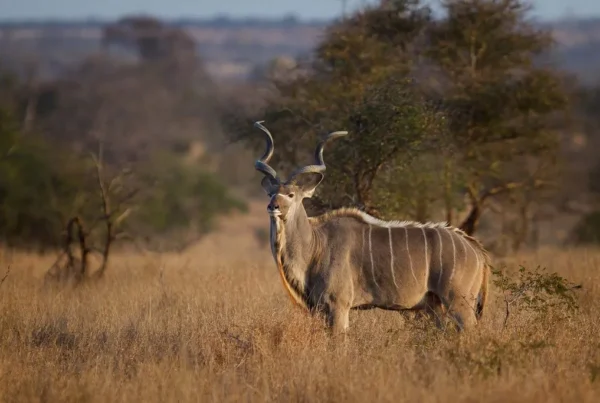
Perhaps the most instantly captivating feature of the Greater Kudu is its majestic spiral horns. These extraordinary structures can grow up to 1.8 meters (6 feet) in length and make up to two and a half full twists. Found only on males, these horns begin to spiral as the kudu matures and serve multiple functions: they are tools for combat, ornaments of sexual selection, and emblems of status within the group.

The curling design of the horns is not merely decorative. In dominance contests, kudu males engage in ritualized battles, locking horns in slow, deliberate tests of strength and leverage rather than violent clashes. These contests rarely result in injury, as the species has evolved mechanisms to avoid serious harm, unlike some other antelopes that fight with lethal intensity.

The horns are also a magnet for admiration from humans. In ancient African symbolism and tribal culture, the horns of the kudu were often considered sacred. Their spirals represented continuity, time, and the unseen patterns of nature — a design echoed in many pieces of indigenous art and ceremonial wear.

These spiraled crowns contribute to the kudu’s ghost-like image, as they glide silently through the trees, their horns slicing elegantly through dappled sunlight. Whether silhouetted against a rising sun or half-hidden in the shade of a mopane tree, the kudu’s horns always leave an impression of awe.

Masters of Camouflage: The Art of Staying Unseen

In the animal kingdom, visibility often means vulnerability. The Greater Kudu has mastered the art of staying invisible in plain sight. With their vertical white stripes — usually six to ten running down the body — and earthy grey-brown coats, they melt seamlessly into the dappled patterns of their woodland environments. These stripes mimic shafts of light filtering through trees, making it difficult for predators to pick out their silhouette against the background.

But camouflage is only half the story. The Greater Kudu is also a master of stillness. When sensing danger, it doesn’t flee immediately. Instead, it will freeze and hold its breath, often going unnoticed even by nearby humans or predators. Only when directly threatened does it burst into action, leaping with astonishing power and speed, capable of clearing fences and obstacles as high as 2.5 meters in a single bound.

This blend of visual stealth and explosive agility makes the kudu a challenging target even for apex predators like lions and leopards. Unlike many antelope species that rely primarily on herd security and panic-driven flight, kudus leverage their solitary or small-group behavior to remain undetected for as long as possible — a trait that makes encounters with them during safari drives feel like rare, intimate discoveries.

A Gentle Giant with Towering Elegance

Though less aggressive and social than other antelopes, the Greater Kudu exudes a quiet majesty. Males can weigh between 190 to 270 kilograms, while females tend to be smaller, averaging around 120 to 210 kilograms. Their height at the shoulder reaches up to 1.6 meters, giving them a tall, regal stature, particularly when viewed head-on in the open savannah.

Unlike the more aggressive and territorial males of some other antelope species, kudu bulls often coexist peacefully, particularly outside the breeding season. They form bachelor groups or remain solitary, wandering through the bush in search of food and safety. Their diet is varied and adaptive; they are primarily browsers, feeding on leaves, shoots, fruits, and sometimes even succulents during the dry season when water is scarce.

Females, on the other hand, tend to form small matriarchal groups, usually comprising a few females and their offspring. The calves are born after a gestation period of around eight months and are hidden carefully in undergrowth for the first few weeks of life. This hiding strategy, coupled with the calf’s innate stillness and camouflaged coat, greatly increases survival rates in areas of high predation.

The Greater Kudu’s lifestyle reflects a delicate balance between boldness and restraint, power and subtlety — a contrast that lies at the heart of its enduring allure.

Vocalists of the Wild: Communication Beyond Sight

While much of the kudu’s survival relies on silence and concealment, it is also among the more vocal antelope species when necessary. It produces a range of sounds, including alarm barks, grunts, low moans, and even snorts, especially during mating season or when warning group members of approaching danger.

One of the most distinct and often startling vocalizations is its alarm bark — a loud, guttural call that echoes through the bush like the bark of a large dog. This bark is used to alert others of danger and is often followed by a flurry of movement or a sharp freeze as the animal reassesses its environment.

Beyond vocalization, kudus also use body language as a primary mode of communication. Ear posture, tail flicks, and the orientation of their head can convey intent or signal alarm. In the mating season, males will display a ritualized posture called the “neck wrestle,” where they face each other with their necks arched and heads low, sizing each other up before locking horns in slow-motion duels.

These behaviors highlight the kudu’s sensitivity and intelligence. They are not just creatures of instinct but of deliberate communication — adapting to changing conditions through layered social signals and nuanced body dynamics.

Guardians of Biodiversity: Ecological Significance in African Ecosystems

Beyond their visual and behavioral appeal, the Greater Kudu plays a critical role in maintaining ecological balance within its habitat. As primary browsers, kudus help manage vegetation growth in wooded and semi-arid ecosystems, preventing overgrowth and facilitating new plant cycles. Their selective feeding also contributes to seed dispersal and pruning of dominant plant species, encouraging plant diversity and regeneration.

Predators, particularly large carnivores like lions, leopards, and hyenas, rely on the kudu as a key part of their diet. The presence of kudu populations is often an indicator of a healthy predator-prey dynamic — a fundamental element of ecosystem health.

Moreover, kudus indirectly support scavenger species. When a kudu falls to predation, vultures, jackals, and other carrion feeders benefit from the remains, ensuring that energy continues to flow efficiently through the food web. Even their dung plays a role, enriching the soil and providing food for dung beetles and other decomposers.

In this way, the Greater Kudu is more than a solitary ghost of the bush. It is a keystone of biodiversity, a quiet yet powerful force that supports the health and function of entire ecosystems across the African continent.

Experience the Magic of the Greater Kudu with WildHorn Africa

There are few creatures more emblematic of the African wilderness than the Greater Kudu. With its spiral horns, spectral grace, and ecological importance, this antelope captures the heart of what a true safari should offer: not just dramatic scenes of predator and prey, but subtle, awe-inspiring moments of natural artistry.

At WildHorn Africa, we believe in crafting safari experiences that are deeply immersive, responsibly curated, and soul-stirring. Whether you’re journeying through the miombo woodlands of southern Tanzania, the thickets of Botswana, or the acacia-strewn landscapes of Namibia, our expert guides will help you track and observe the elusive Greater Kudu — always with reverence, respect, and passion.

Book your African safari with WildHorn Africa today, and step into the wild places where legends roam. Let the horns of the kudu guide your path into mystery, memory, and the heartbeat of Africa.

Facts of the Greater Kudu #Facts of the Greater Kudu Facts of the Greater Kudu

5 Fascinating Facts About the Eland

5 Fascinating Facts About the Eland

By Travel guides, Travel stories and blogs

5 Fascinating Facts About the Eland

5 Fascinating Facts About the Eland

The Gentle Giant of Africa’s Grasslands

In the golden expanse of Africa’s savannahs, amidst the iconic silhouettes of acacia trees and grazing antelope, the Eland stands out as a symbol of grace and grandeur. Known scientifically as Taurotragus oryx, the Eland is the largest species of antelope on the continent and one of the most fascinating creatures in Africa’s diverse wildlife tapestry.

Its presence in myths, art, and ecology is profound, with indigenous peoples revering it not only for its size but also for its elusive nature and survival skills. The Eland’s unique adaptations, social behaviors, and deep-rooted cultural significance make it a subject worthy of close exploration. Through this article, we delve into five compelling aspects of the Eland’s life and legacy, offering a glimpse into the marvels of this magnificent herbivore.

Imposing Size Paired with Surprising Agility

At first glance, the Eland’s sheer size is awe-inspiring. Adult males can weigh up to 1,000 kilograms and stand nearly two meters at the shoulder. Yet despite this formidable bulk, the Eland is a surprisingly agile and fast-moving animal. It can run at speeds of up to 40 kilometers per hour and leap over fences and obstacles more than two meters high.

This remarkable combination of mass and mobility is supported by its muscular build, long legs, and a powerful cardiovascular system. The Eland’s agility is not just a matter of survival but also a key to its migratory lifestyle. During the dry season, it can traverse long distances in search of food and water, often navigating challenging terrains with ease. This ability to balance power with grace makes the Eland a wonder of biological engineering.

Spiral Horns and Sexual Dimorphism (5 Fascinating Facts About the Eland)

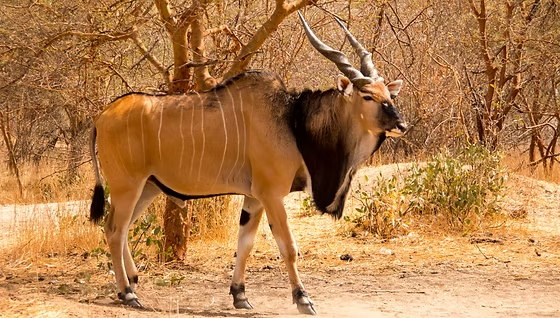
One of the most striking features of the Eland is its set of spiraled horns, which are present in both males and females. In males, these horns are thick and tightly twisted, often forming a compact corkscrew that can grow up to 125 centimeters long. Females possess thinner and slightly more open spirals. These horns serve various purposes, including defense against predators and competition among males for mating rights.

Interestingly, sexual dimorphism in the Eland is not limited to horn structure. Males also develop a prominent dewlap under the throat and a tuft of dark hair on the forehead as they age, both of which are believed to play roles in thermoregulation and social signaling. This dimorphism adds to the visual drama of the species and helps researchers and observers distinguish individuals in the wild.

Complex Social Structures and Behavior

Elands are social creatures that often form herds ranging from a few individuals to more than a hundred, especially in areas with abundant food. These herds are typically composed of females and their young, with adult males often leading more solitary lives or joining the herds during mating seasons. The social structure within a herd is not random. Females form hierarchies based on age and experience, while males establish dominance through displays and occasional combat.

Communication among Elands involves a combination of vocalizations, body postures, and even a unique clicking sound produced by their knees. Scientists believe this sound may play a role in group cohesion and signaling movement. Such intricate social dynamics point to a level of cognitive complexity not often attributed to antelope species and demonstrate the evolutionary advantages of communal living in open landscapes.

Cultural Reverence and Historical Significance

The Eland has long been a creature of symbolic importance, particularly among the indigenous San people of Southern Africa. In San rock art, the Eland frequently appears as a central figure, often associated with rain, fertility, and spiritual power. Shamans revered it as a totem animal capable of bridging the physical and spiritual worlds. This deep cultural reverence underscores the Eland’s prominence not just as a source of food and materials but also as a spiritual guide and emblem of balance within the natural order.

Historically, early European explorers and settlers also recognized the Eland’s significance, with several colonial-era paintings and writings documenting their admiration for the animal. Today, the Eland continues to feature in African literature, folklore, and conservation efforts, serving as a living link to the continent’s rich cultural past.

Adaptability in Varied Habitats and Climate Conditions

The Eland’s ecological success lies in its incredible adaptability. Found in a wide range of habitats—from arid deserts and open savannahs to montane grasslands—the Eland has evolved to thrive in some of the most challenging environments on Earth. It can go for days without water, extracting moisture from the plants it consumes. Its diet is diverse, including grasses, leaves, fruits, and even bark during the lean seasons.

This dietary flexibility allows it to adjust quickly to seasonal changes and shifting food availability. Additionally, its slow metabolic rate reduces the need for constant feeding and water intake, making it more resilient to drought and habitat disruption. These survival traits not only ensure the Eland’s continued presence across vast territories but also highlight its role as a keystone species in many African ecosystems.

Experience the Majesty of the Eland with WildHorn Africa

Seeing an Eland in the wild—its muscular frame moving silently through the grass, its horns glinting in the sun—is an unforgettable moment for any wildlife enthusiast. It is a reminder of the raw, unspoiled beauty that still exists in the heart of Africa. For those seeking an authentic encounter with this gentle giant, a safari curated by experts is the ideal path.

WildHorn Africa offers immersive and ethically guided safaris that bring you face-to-face with Africa’s most iconic wildlife, including the elusive Eland. With routes through premier conservation areas and national parks, their safaris ensure not just visual wonder but also educational depth. Whether you’re a first-time traveler or a seasoned explorer, WildHorn Africa crafts experiences that resonate deeply and leave lasting impressions.

Book your next African safari with WildHorn Africa and witness the profound beauty, intelligence, and cultural significance of the Eland in its natural domain. Let your journey echo with the footsteps of giants and the stories of a land as ancient as time itself.

5 Fascinating Facts About the Eland #5 Fascinating Facts About the Eland 5 Fascinating Facts About the Eland

5 Fascinating Facts About the Klipspringer

5 Fascinating Facts About the Klipspringer

By Travel guides, Travel stories and blogs


5 Fascinating Facts About the KlipspringerDiscover the incredible secrets of Africa’s agile mountain antelope.

Introduction to the Facts About the Klipspringer

In the rocky hills and rugged cliffs of eastern and southern Africa, a small, nimble antelope balances with astonishing precision—often seeming to defy gravity.
This elusive creature is the klipspringer (Oreotragus oreotragus), a species whose name literally means “rock jumper” in Afrikaans.

Despite its modest size, the klipspringer is packed with fascinating adaptations that make it a true marvel of mountain survival.
Its unique features and behaviors set it apart from other antelopes and make it a highlight for wildlife enthusiasts and naturalists.
Below are five deeply fascinating facts about this sure-footed sentinel of the cliffs.

Table of Contents

1. The Master of Vertical Terrain

The klipspringer thrives where few animals dare to tread—on steep, rocky outcrops and mountainous slopes.
These antelopes are exceptionally agile, capable of bounding up vertical faces and hopping between narrow ledges with ease.
Their compact bodies and short legs give them superior balance and maneuverability in rugged landscapes.

Unlike most antelopes that prefer open plains or forests, klipspringers specialize in elevated, rocky environments
where predators find it difficult to follow. This niche specialization helps them avoid lions, leopards, and wild dogs,
though they still have to watch out for eagles and caracals.

2. Hooves Made for Precision

One of the klipspringer’s most unique features is its specialized hooves. Unlike the wide hooves of plains-dwelling antelopes,
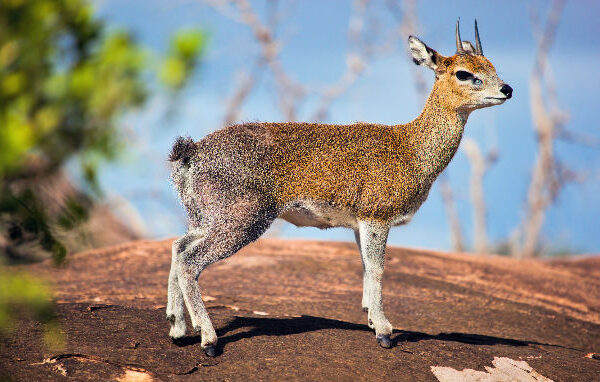
the klipspringer’s hooves are small, cylindrical, and rubbery-textured at the base.
These hooves allow the animal to stand on the very tips—like a ballet dancer en pointe.

This anatomical trait enables klipspringers to grip even the tiniest protrusions on rock surfaces, making them
one of the most agile antelopes in Africa. Their confident ability to walk along cliff edges just inches wide has fascinated biologists and safari-goers alike.

3. Monogamous and Loyal Mates (Facts About the Klipspringer)

In a departure from the harems and solitary lifestyles common in many antelope species, klipspringers form monogamous pairs that stay together year-round.
These pairs maintain a small territory, which they mark and defend cooperatively against intruders.

The pair rarely stray far from each other, often within just a few meters. While one forages, the other acts as a lookout on a higher perch.
If a predator approaches, the lookout gives a sharp, alarmed whistle and both disappear into the rocks in seconds.
This partnership-based survival strategy enhances their chances of evading danger in treacherous terrain.

4. Camouflage and Seclusion: Survival by Stealth

In addition to their rocky agility, klipspringers benefit from excellent natural camouflage.
Their yellowish-gray to olive-brown fur blends seamlessly with the granite and sandstone surfaces they inhabit.
When motionless, they are almost invisible to both predators and observers.

Klipspringers are primarily crepuscular—active during the early morning and late afternoon—when light levels are low, reducing the chances of being seen.
They also rely on stealth over speed; when threatened, they rarely run far, instead using sharp turns and narrow ledges to escape into difficult terrain.

5. A Unique Coat Unlike Any Other Antelope

One of the klipspringer’s most extraordinary features is its hollow, brittle fur.
Unlike the dense, solid hairs of other antelope, each hair on a klipspringer is tubular and spongy, providing insulation and cushioning.

This adaptation serves multiple purposes. It protects the skin from sharp rocks, helps with thermoregulation in exposed highlands,
and also acts as shock absorption during falls or rough landings. Interestingly, this fur texture gives the animal a “fluffy” appearance from a distance,
though it is quite coarse to the touch.

These unique hairs even help repel water and can trap a layer of air close to the body, assisting the klipspringer in maintaining body temperature across
the wide range of climates found in rocky highlands.

Conclusion of the Facts About the Klipspringer

The klipspringer may be small in size, but it is immense in character and evolutionary design.
From its precise hooves to its hollow fur and tight-knit relationships, this antelope exemplifies nature’s ability
to craft specialists for extreme environments.

Often overlooked on the safari trail, the klipspringer is a reminder that not all wildlife wonder lies in big size or brute strength—some of the most
fascinating adaptations are built for the cliffs, where survival hangs by a hoof.

Facts About the Klipspringer #Facts About the Klipspringer Facts About the Klipspringer

Close Menu