search
Where To See Hippos in Africa – The 12 Best Places To Go

Where To See Hippos in Africa – The 12 Best Places To Go

By Travel guides, Travel stories and blogs

Where To See Hippos in Africa – The 12 Best Places To Go

The Magnetic Pull of Africa’s Gentle Giants

In the vast tapestry of African wildlife, the hippopotamus stands as one of the continent’s most fascinating and iconic creatures. These semi-aquatic mammals, known for their immense size and surprising agility in water, have captivated the attention of nature enthusiasts worldwide. The prospect of observing hippos in their natural habitats—where they wallow in rivers and lakes or emerge at dusk to graze—offers a unique window into Africa’s rich ecological diversity. But where exactly can the best opportunities to see hippos be found? This question calls for a detailed exploration of Africa’s prime locations where these majestic animals thrive.

The Ecological Niche of Hippos and Their Distribution

Hippos are primarily found in sub-Saharan Africa, favoring freshwater bodies such as rivers, lakes, and swamps. Their dependence on water for thermoregulation and protection means that regions with reliable aquatic environments naturally attract substantial hippo populations. While hippos may appear docile, they are known to be territorial and can be highly aggressive if provoked. Observing them safely requires knowledgeable guides and access to suitable viewing points.

The Mighty Zambezi River: A Hippo Haven

The Zambezi River, flowing through countries such as Zambia, Zimbabwe, and Mozambique, is among the most celebrated locales for hippo sightings. In particular, the stretch around Lower Zambezi National Park in Zambia is renowned for its large hippo pods. Visitors can experience hippos both from river safaris by boat and from vantage points along the riverbanks. The interplay between hippos and the riverine environment provides unforgettable scenes, especially during sunset when the animals emerge to graze.

Botswana’s Okavango Delta: A Waterworld for Hippos

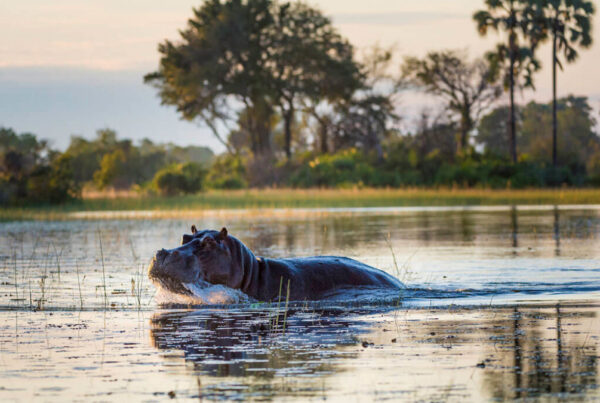
The Okavango Delta, one of Africa’s last remaining great wetland wildernesses, supports vast numbers of hippos year-round. The seasonal flooding creates an intricate network of channels, lagoons, and floodplains, offering the perfect habitat for these creatures. Hippos here can be observed during mokoro (dugout canoe) excursions, allowing close and quiet approaches. The Delta’s rich biodiversity means that hippo sightings are often accompanied by encounters with elephants, crocodiles, and an abundance of birdlife, enhancing the safari experience.

South Luangwa National Park: Zambia’s Hippo Capital

South Luangwa National Park, renowned for its walking safaris and rich wildlife, hosts substantial hippo populations primarily along the Luangwa River. Hippos congregate in deep pools and river bends during the day, creating spectacular natural spectacles. The park’s relatively pristine environment and expert guiding services offer ideal conditions for safely viewing hippos, particularly during the dry season when animals are concentrated around remaining water sources.

Chobe National Park: Hippos Amongst Elephants

Bordering the Chobe River in northern Botswana, Chobe National Park is widely regarded for its dense elephant populations, but it is also a prime habitat for hippos. The riverine ecosystem supports large pods that can be seen lounging in the water during the heat of the day or grazing along the banks at dusk. River cruises provide some of the best vantage points for observing hippos in this area, offering intimate views of their social behavior and interactions.

Lake Malawi: Africa’s Inland Hippo Sanctuary

Lake Malawi, one of the continent’s largest freshwater lakes, is another significant habitat where hippos thrive. The lake’s extensive shoreline and numerous bays offer safe havens for these animals. While not as heavily trafficked by tourists as some other locations, Lake Malawi provides a quieter, more off-the-beaten-path opportunity for hippo observation. Local boat trips and community-run tours facilitate responsible wildlife viewing while supporting conservation efforts.

The Mara River in Kenya and Tanzania: Hippos Amid the Great Migration

The Mara River, flowing through the Masai Mara and Serengeti ecosystems, is famous for the dramatic annual wildebeest migration, but it also sustains large hippo populations. Hippos play a crucial ecological role in the river, maintaining the health of aquatic vegetation and influencing river dynamics. Visitors to the Masai Mara National Reserve and Serengeti National Park can observe hippos during game drives and river excursions, often witnessing these animals in proximity to other large mammals and predators.

Nile River and Murchison Falls National Park: Uganda’s Hippo Hotspot

Uganda’s Nile River, particularly within Murchison Falls National Park, is home to impressive concentrations of hippos. The river’s fast-flowing waters and surrounding wetlands create a dynamic environment where hippos thrive. Boat safaris along the Nile provide safe and close encounters, while the backdrop of the dramatic Murchison Falls enhances the visual splendor. Hippos can often be seen basking on sandbanks or emerging into the surrounding grasslands.

Lake Naivasha: Kenya’s Freshwater Hippo Refuge

In Kenya’s Great Rift Valley, Lake Naivasha offers a freshwater habitat attracting hippos in large numbers. The lake’s calm waters and surrounding papyrus swamps create an ideal environment for hippos, which are frequently observed from boats and lakeside lodges. The area’s proximity to Nairobi and other safari destinations makes it an accessible and convenient location for hippo viewing, often combined with bird watching and visits to nearby Hell’s Gate National Park.

Mana Pools National Park: Zimbabwe’s Hippo Wonderland

Mana Pools, a UNESCO World Heritage Site located on the Zambezi River floodplain, is celebrated for its pristine wilderness and abundant hippo populations. The park’s seasonal flooding creates vast waterways and islands, where hippos congregate in large groups. Canoe safaris offer a unique way to approach hippos silently, providing close-up encounters that highlight the animals’ social structures and behaviors.

Selous Game Reserve: Tanzania’s Lesser-Known Gem

Selous Game Reserve, one of Africa’s largest protected areas, contains extensive river systems and lakes that serve as excellent hippo habitats. Despite being less frequented by tourists than northern safari circuits, Selous offers unspoiled environments where hippos are plentiful. Boat safaris and walking safaris reveal hippos in their natural rhythms, allowing for immersive wildlife experiences.

Lake Tanganyika: A Borderland for Hippo Observation

Stretching across several countries including Tanzania, the Democratic Republic of Congo, Burundi, and Zambia, Lake Tanganyika supports hippos along its vast shoreline. The lake’s deep waters and diverse ecosystems offer habitats for these animals, although sightings may require more effort due to the lake’s size and regional accessibility challenges. Guided tours from Tanzanian or Zambian sides provide opportunities to appreciate the hippos alongside other unique aquatic and terrestrial wildlife.

The Importance of Responsible Hippo Viewing

Throughout Africa’s prime hippo habitats, the emphasis on responsible wildlife viewing has grown significantly. Hippos, while robust in appearance, are vulnerable to habitat loss, pollution, and poaching pressures. Tours and safaris that prioritize ethical practices, minimize disturbance, and contribute to conservation initiatives have become the standard. Professional guides and operators ensure that encounters are safe for both animals and visitors, preserving these majestic creatures for future generations.

Embark on Your Hippo Safari with WildHorn Africa

For travelers inspired to witness Africa’s magnificent hippos in their natural environments, expert assistance in planning and booking is invaluable. Through WildHorn Africa, access is provided to expertly guided safaris across the continent’s best hippo-viewing destinations. Every journey is crafted with a commitment to safety, sustainability, and authentic wildlife encounters, ensuring that each moment spent observing hippos is meaningful and memorable.

The opportunity to stand witness to these fascinating animals, in the company of seasoned guides and in some of Africa’s most breathtaking landscapes, awaits.

5 Fascinating Facts About the Hippo

5 Fascinating Facts About the Hippo

By Travel guides, Travel stories and blogs


5 Fascinating Facts About the Hippo

When you picture African wildlife, you likely think of the towering elephant, the swift cheetah, or the regal lion. But there’s one heavyweight champion of the continent that often surprises safari-goers—the **hippopotamus**. Despite its pudgy appearance and seemingly lazy behavior, the hippo is one of the most **complex**, **dangerous**, and **awe-inspiring** animals in Africa.

In this article, we’ll explore five mind-blowing facts about the hippopotamus—a semi-aquatic mammal that’s much more than meets the eye. From its biology to its behavior, you’re about to discover why this river giant deserves a place of respect and fascination in the African wild.

1. The Hippo Is One of Africa’s Most Dangerous Animals

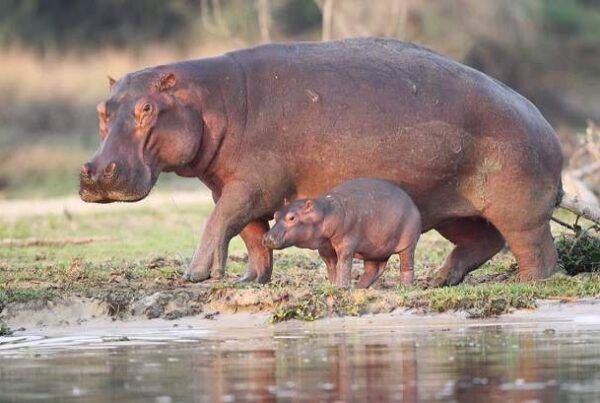
Don’t let their goofy grins fool you—hippos are among the deadliest creatures on the continent. Responsible for an estimated **500 human deaths annually**, hippos are extremely territorial and unpredictable, especially near water.

A full-grown male can weigh up to 3,500 kg (7,700 lbs) and can run up to 30 km/h (19 mph) on land over short distances. Despite their massive size, hippos are astonishingly quick and agile, particularly when defending their territory or young.

Most attacks occur when humans unknowingly get between a hippo and deep water or approach a mother with calves. Their immense jaws can open nearly **180 degrees** and exert over **2,000 psi (pounds per square inch)** of pressure—enough to crush a crocodile or a small boat.

2. Hippos Are Semi-Aquatic—but They Can’t Swim

While hippos spend most of their lives in water, they technically do not swim. Instead, they move by walking or galloping along the bottom of rivers and lakes. Their bodies are too dense to float easily, and their legs—though short—are powerful enough to propel them through water with ease.

Hippos stay submerged for the majority of the day to regulate their body temperature and prevent sunburn. Interestingly, they surface for air every **3 to 5 minutes**, even while sleeping. This is an involuntary reflex that allows them to rise and breathe without waking.

Their skin also secretes a natural sunblock-like substance often called “blood sweat.” This red-orange fluid is not actually blood, but it serves as both a sunscreen and an antibiotic, protecting their skin from UV rays and infections.

3. They’re Surprisingly Vocal and Communicative

The hippo is far from silent. In fact, it’s one of the most **vocal mammals** in Africa, capable of making an array of noises, from honks and grunts to bellows and wheezes. These sounds help hippos communicate both above and below water.

One of the most fascinating aspects of hippo communication is their ability to “talk underwater.” Using a mix of nasal vibrations and surface calls, hippos can transmit messages across long distances in a river or lake environment. Researchers believe these calls help maintain social structures and territory boundaries.

The signature “hippo honk”—a deep, resonating chortle—can be heard up to a kilometer away. These sounds are not just random noise; they’re part of a highly organized **social system** with dominant males, subordinate bulls, and complex interactions.

4. They Play a Crucial Role in Their Ecosystem

The hippopotamus is what ecologists call a “keystone species”—an animal that has a disproportionately large effect on its environment. Hippos help shape aquatic ecosystems in multiple ways:

  • Pathways and Channels: As they move through rivers, their trails can alter water flow and create natural irrigation systems.
  • Fertilization: Their dung is rich in nutrients and fertilizes river systems, supporting algae and aquatic life.
  • Habitat Creation: Wallows and pools made by hippos often become habitats for fish, frogs, and birds.

However, when hippo populations become too concentrated—particularly in man-made dams or restricted reserves—their waste can lead to ecological imbalance. This underscores the importance of sustainable wildlife management in safari regions.

5. Hippos Are More Closely Related to Whales Than to Other Land Mammals

You might assume the hippo is closely related to pigs, cows, or elephants. In truth, their closest living relatives are **whales and dolphins**! Genetic and fossil evidence places hippos within the order Artiodactyla, but specifically in the sub-group known as Whippomorpha, which includes whales.

Around 55 million years ago, the ancestors of today’s whales and hippos diverged from a common semiaquatic ancestor. While whales evolved to live entirely in the ocean, hippos remained on the edge—adapting to both land and water. This evolutionary lineage explains their unique anatomical features, including:

  • Webbed feet suited for walking underwater
  • A multi-chambered stomach like ruminants (but they don’t chew cud)
  • Nostrils and ears that can close underwater

This evolutionary relationship is one of the most intriguing examples of how diverse life on Earth can adapt and survive across millennia.

See the Hippo in Its Natural Glory, Facts About the Hippo

The hippopotamus is a magnificent and misunderstood animal—part river dweller, part land mammal, and entirely fascinating. From their ecological impact to their ancient evolutionary roots, hippos are essential players in the African wilderness.

If you’re eager to witness the mighty hippo basking in riverbanks or yawning wide in a golden sunset, there’s no better way than to embark on an unforgettable African safari.

WildHorn Africa offers expertly guided safari tours designed to bring you face to face with the wonders of the wild—including up-close encounters with hippos in their natural habitat. Their eco-conscious, locally informed itineraries provide a safe and immersive wildlife experience like no other.

Book Your African Safari with WildHorn Africa Today

Facts About the Hippo #Facts About the Hippo Facts About the Hippo

Close Menu