search
How to road trip in Queen Elizabeth National Park — Luxury Picks with limited time

How to road trip in Queen Elizabeth National Park — Luxury Picks with limited time

By Safari holidays, Travel stories and blogs, Uganda travel guides, Wildlife holidays

How to Road Trip in Queen Elizabeth National Park — Luxury Picks with Limited Time

The Road Less Traveled into Uganda’s Crown Jewel

There are journeys that unfold slowly, like the turn of a page in an epic novel, and there are others that sweep you into their momentum, filling every hour with new landscapes and revelations. A road trip through Queen Elizabeth National Park belongs firmly in the latter category. When time is limited but the desire for luxury and authenticity is unshakable, the experience can still be profoundly rewarding. The park, celebrated as Uganda’s most diverse safari destination, sits astride the Great Rift Valley, its beauty unfolding in mosaic landscapes that stretch from shimmering crater lakes to the grassy savannas of Kasenyi, from the thickets of Kyambura Gorge to the wetlands of the Ishasha sector where tree-climbing lions patrol their kingdom.

To road trip here is to immerse oneself in an unfolding theater of wildlife, culture, and history. It is a drive where every curve introduces new wonder, where every pause on the roadside reveals a hidden story, and where even the most time-conscious traveler is enveloped by richness. While days may be limited, the experience need not feel hurried, for in Queen Elizabeth National Park, luxury resides in the orchestration of moments rather than the abundance of time. This guide unfolds how a road trip can be crafted with refinement, focus, and indulgence, ensuring that even the briefest journey captures the essence of one of Africa’s most treasured parks.

Queen Elizabeth National Park: A Landscape of Contrasts

Queen Elizabeth National Park is not a uniform wilderness but a grand stage upon which diverse habitats converge. Covering nearly two thousand square kilometers, it is home to over 95 mammal species and more than 600 bird species, making it one of the most biodiverse protected areas in East Africa. For the luxury traveler, the park offers a dual promise: proximity to abundant wildlife and access to lodges and camps that provide world-class comfort.

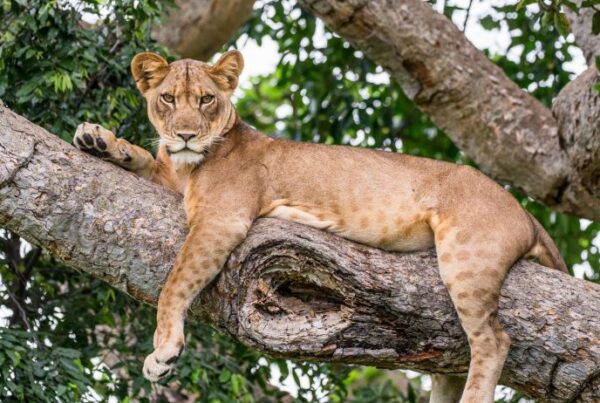
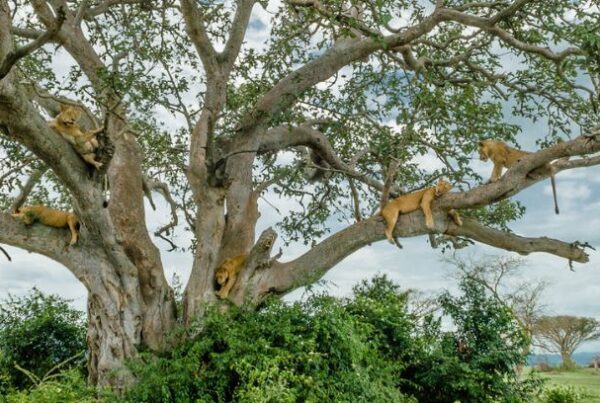
The road trip through the park mirrors this diversity. Driving across the Kasenyi plains presents scenes of elephants against the golden backdrop of savanna grass, while the Kazinga Channel, a natural waterway connecting Lake George to Lake Edward, offers spectacles of hippos wallowing in their hundreds and kingfishers darting like flashes of blue flame. Venturing into Kyambura Gorge, one is plunged into a green chasm where chimpanzees move stealthily through the canopy. Further south, the Ishasha sector introduces one of the most iconic images in African wildlife tourism: lions reclining on fig tree branches, an extraordinary adaptation found in only a handful of places on the continent.

Such contrasts make the park uniquely suited for a luxury road trip, where limited time can be orchestrated into a sequence of concentrated yet deeply memorable encounters.

Designing the Perfect Road Trip with Limited Time

The challenge of limited time is not one of compromise but of careful design. A road trip itinerary through Queen Elizabeth National Park must balance pace with experience, ensuring that the traveler is not rushed but rather guided through the highlights in a manner that feels seamless.

Luxury travel emphasizes quality over quantity, and this principle is particularly resonant here. A road trip need not attempt to conquer every corner of the park. Instead, it must be curated to capture the defining experiences: a dawn game drive across the Kasenyi plains where predators emerge from night’s shadow, a mid-morning cruise on the Kazinga Channel where birdlife and aquatic animals converge in dramatic fashion, an afternoon drive into Ishasha in search of lions in their arboreal kingdoms, and an evening retreat into the sanctuary of a luxury lodge where fine dining and comfort accompany the sounds of the wilderness.

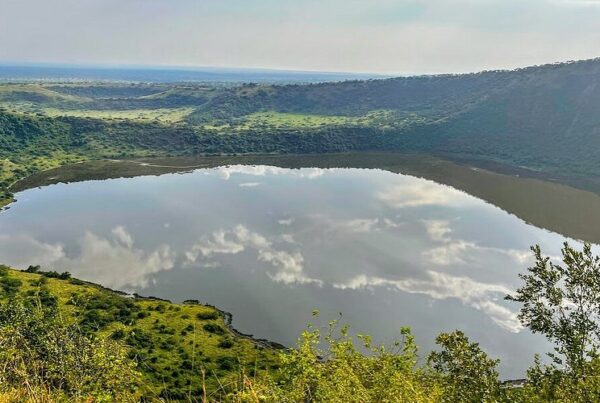
The road itself becomes part of the journey. The routes weave between savanna and woodland, past crater lakes that glimmer like mirrors in volcanic depressions, and alongside villages where local life intersects with the rhythms of the park. For travelers on a limited schedule, the road is not merely a corridor of transit but an essential canvas upon which the safari is painted.

Luxury on the Road: The Lodges that Elevate the Journey

A road trip in Queen Elizabeth National Park achieves its fullest expression when combined with stays at luxury lodges that offer both comfort and character. These accommodations are more than places to rest; they are experiences in themselves, extending the safari beyond the daylight hours into the realms of relaxation and refinement.

Perched on escarpments overlooking the Rift Valley, some lodges offer sweeping views that capture the expanse of the park in a single gaze. Infinity pools reflect the skies, while dining terraces open toward sunsets that bathe the savanna in amber light. Suites are often designed to blur the boundary between indoors and outdoors, with floor-to-ceiling windows and open verandas that allow nature to remain a constant companion.

What distinguishes these luxury picks is their balance of indulgence with intimacy. Personalized service ensures that even brief stays are memorable. Whether it is the warmth of a private butler preparing a fireside drink after a game drive or the quiet detail of a turn-down service that leaves behind a handwritten note, these touches craft an atmosphere where time feels expanded, where even a fleeting journey carries the resonance of permanence.

For travelers seeking the finest experiences, lodges near Kasenyi and Mweya offer easy access to game drives and boat safaris, while those near Ishasha position guests directly in the path of the park’s most famous lions. Each selection harmonizes with the rhythm of a road trip, ensuring that luxury is not interrupted but seamlessly interwoven with exploration.

Wildlife Encounters: The Soul of the Safari

No road trip through Queen Elizabeth National Park is complete without immersion into the wildlife encounters that define the destination. Time may be limited, but the park’s concentration of biodiversity ensures that even short excursions yield extraordinary moments.

A dawn drive on the Kasenyi plains often unveils lions patrolling the grasslands, leopards retreating into thickets, and herds of Uganda kob moving with elegance across open fields. Elephants are a constant presence, sometimes seen crossing the road in quiet procession, their young sheltered within the protective embrace of the herd. Buffalo graze in formidable numbers, and warthogs scuttle in comical haste across the tracks.

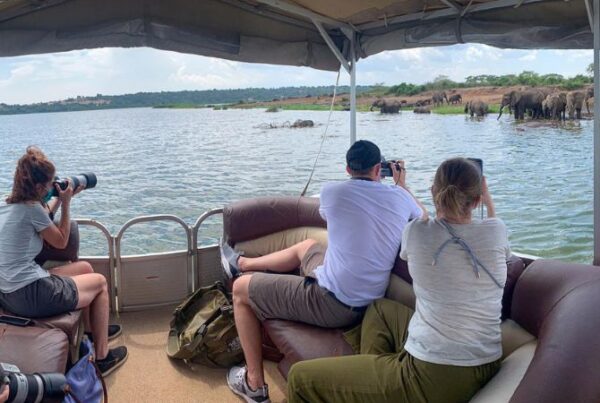
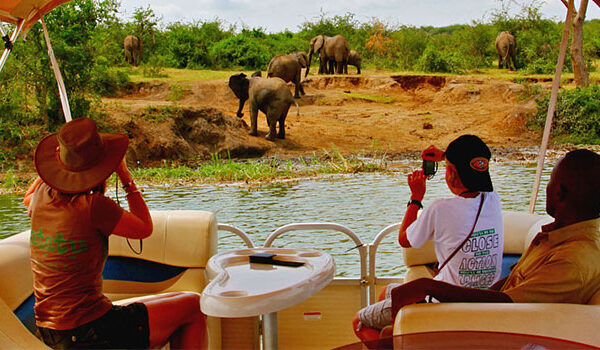
The Kazinga Channel introduces another dimension of abundance. A boat cruise along this stretch is not simply a luxury activity but a revelation, where the proximity of wildlife feels almost theatrical. Hippos congregate in massive pods, crocodiles bask on the banks, and birdlife astonishes with variety—from the African fish eagle’s commanding calls to the vibrant plumage of bee-eaters and kingfishers.

Southward in Ishasha, the encounter with tree-climbing lions elevates the safari into the realm of the extraordinary. Watching these predators reclining on branches, their golden forms outlined against the leaves, is a memory that even limited time cannot diminish. It is a reminder that luxury lies not only in where one stays but also in what one witnesses along the way.How to road trip in Queen Elizabeth National Park — Luxury Picks with limited time

The Luxury of Culture and Connection

Beyond the wildlife, a road trip through Queen Elizabeth National Park opens avenues into cultural engagement. Villages at the periphery of the park reveal rhythms of life that complement the wilderness within. For travelers on a tight schedule, encounters with local communities can still be woven meaningfully into the journey.

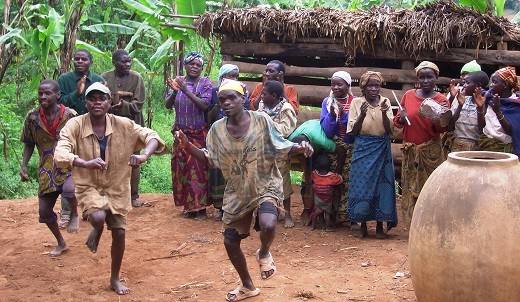
Visits to artisan cooperatives introduce crafts that draw upon generations of skill, while music and dance performances capture the vibrancy of Uganda’s cultural heritage. For those staying at lodges that partner with local communities, the experience often extends into guided walks where residents share knowledge of medicinal plants, agricultural practices, and stories that frame the landscape in human terms.

Such connections remind the luxury traveler that the park is not an isolated enclave but part of a larger human and ecological narrative. Even within limited time, these cultural exchanges enrich the journey, providing depth that transcends the visual splendor of wildlife.

Crafting the Itinerary: When Every Hour Counts

Time, when limited, becomes a luxury in itself, and its orchestration requires precision. A well-designed road trip itinerary in Queen Elizabeth National Park ensures that no moment is squandered. Mornings must be dedicated to game drives when wildlife is most active, mid-days to boat safaris where the Kazinga Channel brims with activity, and afternoons to focused drives into Ishasha or the crater lakes depending on preference. Evenings become a time of reflection, best spent in the sanctuary of a luxury lodge where the day’s experiences are savored over gourmet meals and fine wines.

The roads themselves can be seen as transitions rather than interruptions. The drive from Kasenyi to Mweya, for instance, reveals landscapes dotted with crater lakes, while the route into Ishasha crosses remote woodlands alive with bird calls. Each segment of the road carries its own atmosphere, ensuring that even transfers between activities remain infused with discovery.

Seasons and Timing: Maximizing the Limited Window

When planning a road trip in Queen Elizabeth National Park with limited time, the season of travel plays a crucial role. The dry seasons, spanning June to September and December to February, provide the best conditions for wildlife viewing and road travel. Grass is shorter, animals congregate at water sources, and trails are more navigable.

The wet seasons, from March to May and October to November, present more challenges with muddy tracks, but they also reveal a greener, more vibrant landscape. For luxury travelers, lodges remain havens of comfort regardless of season, offering refuge and refinement even when rains dominate. Limited time during wet months requires even more meticulous planning, but the rewards include fewer crowds and landscapes at their most lush.

The Spirit of the Journey: When the Road Defines the Memory

To undertake a road trip in Queen Elizabeth National Park with limited time is to embrace intensity without haste. The journey becomes a meditation on contrasts: the stillness of elephants beside crater lakes against the turbulence of hippos on the Kazinga Channel; the majesty of lions at dawn against the serenity of sunsets over the savanna.

Luxury in this context is defined not only by the lodges that punctuate the trip but by the orchestration of experiences that ensures no moment is trivial. It is the luxury of clarity, where the essence of the park is distilled into a timeframe that respects both the traveler’s schedule and the park’s grandeur.

Road Tripping with Purpose and Elegance

A road trip through Queen Elizabeth National Park does not demand weeks to reveal its splendor. Even with limited time, luxury travelers can immerse themselves in wildlife encounters, cultural exchanges, and stays at lodges that embody refinement. The key lies in curation, in selecting the highlights that define the park and weaving them together into a journey that feels both complete and expansive.

For those seeking to undertake such a journey, the importance of expert guidance cannot be overstated. Crafting an itinerary that maximizes every hour while retaining comfort and indulgence requires the hand of specialists who know the park intimately. To ensure that your limited time is transformed into limitless memory, it is recommended that you book your Africa tours and safaris with WildHorn Africa, whose expertise in luxury travel guarantees that every road taken leads to extraordinary discovery.

How to white water rafting in Queen Elizabeth National Park — How to Get There for weekenders

How to white water rafting in Queen Elizabeth National Park — How to Get There for weekenders

By Travel stories and blogs, Adventure holidays, Travel guides, Uganda travel guides

How to White Water Rafting in Queen Elizabeth National Park — How to Get There for Weekenders

Where Wild Waters Meet Untamed Wilderness

For weekenders seeking a thrilling break from routine, few destinations in East Africa compare to the breathtaking setting of Queen Elizabeth National Park. Widely celebrated for its vast savannahs, iconic wildlife, and shimmering crater lakes, the park has long been a favorite for safari enthusiasts. Yet, beyond the lions and elephants lies another side of Queen Elizabeth — one defined by the roar of rushing waters and the exhilaration of adventure sports. White water rafting, though less conventional here compared to the Nile in Jinja, has been gradually shaping itself into an adventurous pursuit for those daring to go beyond traditional game drives.

The combination of the park’s natural beauty and the unpredictability of white water currents creates a unique experience where adrenaline and serenity intertwine. For weekend travelers, the adventure of rafting becomes more than just a sport; it turns into an immersion into Uganda’s wilderness, a way of meeting nature on its own powerful terms.

The Spirit of White Water Rafting in Queen Elizabeth National Park

While Queen Elizabeth National Park is known primarily for its biodiversity, it also holds rivers and channels that provide an untapped playground for water sports. The Kazinga Channel, threading its way between Lake George and Lake Edward, is the most famous water body here, though better known for boat cruises. Yet, with careful exploration, there are segments and adjoining rivers where white water rafting excursions are possible, guided by seasoned experts who understand the seasonal rhythms of the waters.

For weekenders, the excitement lies in experiencing the park from an entirely different vantage point. Instead of watching wildlife from the safety of a vehicle, rafting offers a close and visceral encounter with the landscape. The spray of water, the pull of the current, and the sheer unpredictability of rapids merge to form memories that transcend the ordinary. This form of adventure redefines what it means to connect with nature, especially when surrounded by dramatic backdrops of savannah, forest, and volcanic escarpments.

Why Weekenders Should Choose Rafting in Queen Elizabeth

The appeal of white water rafting within Queen Elizabeth National Park for weekend travelers lies in its ability to condense excitement into a short but transformative getaway. A two or three-day escape to the park becomes instantly unforgettable when adrenaline-filled water adventures are added to the itinerary. Unlike wildlife sightings, which depend on patience and timing, rafting guarantees moments of exhilaration that punctuate the safari journey with sheer energy.

Furthermore, rafting here offers weekenders a distinctive story, separating their experiences from the conventional. While most visitors describe lions resting in fig trees or elephants roaming the plains, those who take to the waters leave with tales of surging rapids, teamwork with fellow rafters, and the unshakable thrill of harnessing the river’s raw force. It is this combination of rarity and intensity that makes rafting in Queen Elizabeth particularly attractive to short-term travelers eager to maximize every hour of their trip.

How to Get There: The Journey to Queen Elizabeth National Park

For weekenders planning to experience white water rafting, reaching Queen Elizabeth National Park is the first step in shaping the adventure. The park is located in western Uganda, approximately 400 kilometers from Kampala. The drive, which takes between six and seven hours, follows a scenic route through towns such as Masaka, Mbarara, and Bushenyi, offering glimpses of rolling hills, banana plantations, and the cultural richness of rural Uganda.

For those with limited time, flights are available from Entebbe International Airport or Kajjansi Airstrip to airstrips near the park, including Kasese and Mweya. This option reduces travel time significantly, making it possible to embark on rafting adventures almost immediately upon arrival. Once inside the park, guided transfers lead travelers to designated rafting locations, with local operators providing orientation and equipment.

The journey to Queen Elizabeth is itself part of the experience, as landscapes gradually shift from bustling urban scenes to lush countryside, before giving way to the park’s sweeping savannahs. Whether by road or air, the approach to the park instills a growing sense of anticipation, perfectly setting the stage for the weekend’s excitement.

Preparing for the Rapids: Safety and Orientation

White water rafting, though exhilarating, is an activity that demands preparation and respect for the elements. Weekenders arriving at Queen Elizabeth are first introduced to experienced guides who conduct safety briefings and orientation sessions. Here, participants are provided with helmets, life jackets, and paddles, and they are trained in basic techniques for steering, paddling, and responding to rapid conditions.

For solo travelers and first-time rafters, this preparation eases anxieties and builds confidence. The presence of professional instructors ensures that the adventure remains both safe and enjoyable. Rafting routes are chosen based on water levels, weather conditions, and participant experience, ensuring that the thrill is never compromised by recklessness.

This careful balance between excitement and security is what allows rafting in Queen Elizabeth to be an inviting option for weekenders who may only have a few days to spare but want to maximize adventure without undue risk.

The Experience of Rafting: Nature and Adrenaline Combined

Once in the water, the true essence of rafting in Queen Elizabeth unfolds. The rivers carve through landscapes teeming with life, from flocks of birds wheeling overhead to hippos and crocodiles along calmer sections of the channels. Each stretch of water introduces new challenges — rapids that test teamwork and endurance, calmer pools that offer a chance to breathe and take in the scenery, and banks alive with wildlife watching quietly from a distance.

The sensation of navigating rapids is both terrifying and liberating. Water roars and sprays, the raft dips and rises, and every muscle works in unison to keep balance. For photographers, waterproof gear becomes invaluable, as capturing the contrast between human struggle and natural grandeur tells a compelling story of resilience and adventure.

By the time the raft glides into gentler waters at the journey’s end, weekenders are left with a profound sense of achievement. The adrenaline lingers, blending seamlessly with the tranquility of the surrounding wilderness. It is an experience that bonds groups of strangers and reaffirms the adventurous spirit within every individual.

Beyond Rafting: Completing the Weekender Experience

Though rafting is the centerpiece of such a trip, Queen Elizabeth National Park offers countless other highlights to fill a weekend itinerary. Game drives across the Kasenyi plains provide sightings of elephants, buffaloes, and prides of lions. A cruise along the calmer stretches of the Kazinga Channel reveals an astonishing diversity of bird species and large gatherings of hippos. For those seeking cultural immersion, visits to nearby communities introduce traditional music, crafts, and storytelling.

By combining rafting with these other experiences, weekenders ensure that their short stay captures the full spectrum of what Queen Elizabeth represents: adventure, wildlife, culture, and natural wonder. Every moment becomes part of a carefully woven narrative, ensuring that even a brief visit feels rich and complete.

Adventure Perfected for Weekenders

White water rafting in Queen Elizabeth National Park redefines what it means to spend a weekend in the wild. More than just a diversion, it becomes a symphony of adrenaline, beauty, and discovery, where water, wildlife, and human determination collide. For weekenders, the journey is short but transformative, proving that even limited time can yield limitless adventure.

Those seeking to embrace this rare combination of thrill and serenity are encouraged to plan their journey with expertise and care. For the most seamless experience, it is highly recommended to book Africa tours and safaris via WildHorn Africa, where professional guidance ensures every rafting trip, game drive, and cultural encounter is safe, memorable, and truly extraordinary.

How to Combine Kibale with Queen Elizabeth Safaris

How to Combine Kibale with Queen Elizabeth Safaris

By Travel stories and blogs, Family holidays, Luxury holidays, Primate holidays, Safari holidays, Uganda travel guides, Wildlife holidays

How to Combine Kibale with Queen Elizabeth Safaris

A Dual Safari Experience

Uganda’s diverse landscapes provide an unmatched opportunity for multi-dimensional safari experiences, where primate tracking and savannah game viewing can be seamlessly combined. Among these experiences, Kibale National Park and Queen Elizabeth National Park stand out for their unique and complementary wildlife offerings. Kibale is globally renowned for chimpanzee trekking and dense tropical rainforest ecosystems, while Queen Elizabeth provides vast savannah plains, crater lakes, and abundant large mammals, offering classic African game drives and boat safaris.

Combining these two destinations allows travelers to experience the full spectrum of Uganda’s biodiversity, from the intimate encounters with primates in thick forests to the expansive vistas of elephants, lions, buffalo, and hippos in the savannah. The logistical integration of these parks requires careful planning, taking into consideration distances, transportation options, seasonal variations, accommodation, and itinerary sequencing. When executed effectively, a combined safari provides a holistic perspective of Uganda’s ecological richness, while offering cultural insights, photographic opportunities, and immersive wildlife experiences.

This guide provides an in-depth exploration of strategies for combining Kibale with Queen Elizabeth safaris, including practical travel planning, recommended itineraries, wildlife highlights, seasonal considerations, accommodation options, and tips for maximizing both ecological and cultural encounters.

Understanding the Distinctive Features of Each Park

Kibale National Park: Primate Paradise

Kibale National Park covers approximately 795 square kilometers of tropical rainforest, with undulating terrain, rivers, and swamp areas supporting high biodiversity. The park is home to over 1,500 chimpanzees, most of which are habituated for research and tourism purposes, making chimpanzee tracking the central attraction.

Beyond chimpanzees, Kibale hosts 13 other primate species, including red-tailed monkeys, olive baboons, black-and-white colobus monkeys, and L’Hoest’s monkeys. Avian diversity exceeds 370 species, offering opportunities for birdwatching and photography. Trails are well-maintained, and lodges are situated in proximity to trekking starting points, facilitating early morning departures when chimpanzee activity is at its peak.

Kibale’s appeal lies in its immersive forest experience, where visitors observe wildlife at close range, gain insight into primate social dynamics, and experience the lush tropical environment firsthand. Complementary activities include nature walks, cultural interactions with nearby communities, and ecological education, creating a multidimensional safari experience.

Queen Elizabeth National Park: The Savannah Experience

Queen Elizabeth National Park spans 1,978 square kilometers, encompassing savannah plains, tropical forests, wetlands, crater lakes, and the famed Kazinga Channel. The park supports large mammal populations, including elephants, lions, leopards, buffalo, hippos, Uganda kob, and a variety of antelope species. Predator-prey interactions are frequently observed, enhancing the thrill of game drives.

Birdlife in Queen Elizabeth is also exceptional, with over 600 species including herons, kingfishers, African fish eagles, and shoebills in wetland areas. The Kazinga Channel provides opportunities for boat safaris, allowing visitors to observe hippos, crocodiles, and waterbirds in natural habitats.

Queen Elizabeth’s unique features include diverse ecosystems, open savannah for unobstructed wildlife photography, and extensive accommodation options ranging from luxury lodges to safari camps. This combination makes it ideal for visitors seeking classic African safari experiences in tandem with Uganda’s rainforest adventures.

Planning the Combined Safari

Sequencing the Itinerary

The optimal sequencing generally begins with Kibale National Park, allowing travelers to acclimate to Uganda’s western regions and experience the intensive primate tracking before transitioning to the more expansive savannah landscapes of Queen Elizabeth. Morning chimpanzee treks in Kibale are typically followed by cultural visits or nature walks in the afternoon, providing a balanced approach to time and energy management.

Travel to Queen Elizabeth usually occurs via road transfer, covering approximately 3 to 4 hours depending on routes, road conditions, and stops along the way. Early departures from Kibale ensure arrival in Queen Elizabeth with sufficient time for afternoon game drives, sunset boat cruises, or relaxation at lodges. Alternatively, a reverse sequence is feasible for those prioritizing savannah wildlife before immersing in rainforest experiences.

Duration and Recommended Itinerary

A combined safari is often planned over 5 to 7 days, allowing adequate time for both chimpanzee tracking in Kibale and full game drives in Queen Elizabeth. The suggested itinerary includes two full days in Kibale for trekking, nature walks, and cultural engagements, followed by 2 to 3 days in Queen Elizabeth for morning and evening game drives, Kazinga Channel boat cruises, and birdwatching. An additional day can be allocated for travel, lodge relaxation, or optional excursions such as crater lake visits or community interactions.

Careful planning ensures that permits for chimpanzee tracking, lodge bookings, and park entry fees are secured in advance, particularly during peak seasons when visitor numbers increase. Guided itineraries enhance both the efficiency and quality of experiences, as rangers provide ecological insights and assist with wildlife observation techniques.

Wildlife Highlights and Photography Opportunities

Kibale Wildlife Photography

In Kibale, photographers and wildlife enthusiasts focus primarily on chimpanzees and primates, capturing detailed social behaviors, feeding activities, and juvenile interactions. Birdwatching provides secondary opportunities, with colorful species inhabiting canopy layers, riverine corridors, and swamp edges. Macro photography enthusiasts can also explore forest flora, insects, and amphibians, documenting ecological intricacies often overlooked in savannah environments.

Lighting conditions are influenced by dense canopy cover, necessitating careful adjustment of ISO, shutter speed, and lens selection. Early morning hours offer soft light and heightened animal activity, while late afternoons provide golden hues for landscape compositions.How to Combine Kibale with Queen Elizabeth Safaris

Queen Elizabeth Wildlife Photography

Queen Elizabeth provides open landscapes conducive to wide-angle photography, with elephants, buffalo herds, lions, and leopards creating dramatic compositions against savannah backdrops. The Kazinga Channel offers unique perspectives for capturing waterbirds, hippos, crocodiles, and reflective water scenes. Photographers benefit from unobstructed lines of sight, dynamic lighting during sunrise and sunset, and the opportunity to capture predator-prey interactions at relatively close distances.

Combining Kibale and Queen Elizabeth allows photographers to juxtapose intimate forest moments with expansive savannah scenes, producing a diverse portfolio that captures Uganda’s ecological breadth.

Cultural and Community Integration

Interactions Near Kibale

Visits to local communities surrounding Kibale provide insight into Bakiga and Batwa traditions, including agricultural practices, craft making, music, and storytelling. These encounters can be documented ethically, emphasizing cultural respect and collaboration. Cultural photography complements wildlife imagery, offering a holistic narrative of human-nature interactions.

Interactions Near Queen Elizabeth

Communities adjacent to Queen Elizabeth, such as those around the Kyambura Gorge and Ishasha sector, present opportunities to observe pastoralist lifestyles, traditional fishing, and land-use practices. These interactions provide context for understanding human-wildlife coexistence, as residents navigate challenges related to crop-raiding wildlife and conservation regulations. Ethical engagement ensures that photography reflects genuine experiences while respecting privacy and cultural norms.

Logistics and Transportation

Road Transfers

Road transfers between Kibale and Queen Elizabeth are typically conducted via private safari vehicles, providing comfort, flexibility, and opportunities for roadside wildlife observation. Travel duration varies depending on weather, road conditions, and stops at viewpoints or community sites. Adequate preparation for fuel, refreshments, and photographic stops ensures a smooth journey.

Accommodation Options

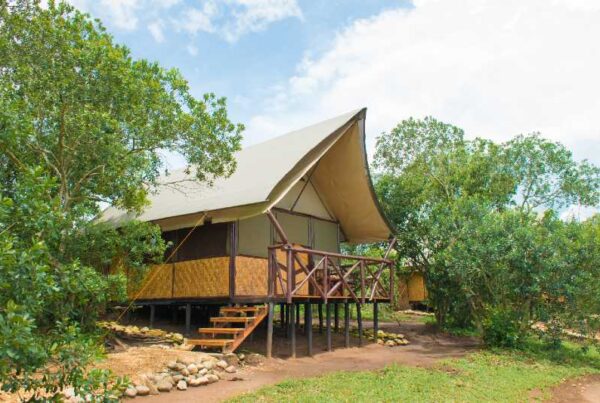
Luxury lodges, tented camps, and eco-lodges are available in both regions, often integrated with safari packages. Kibale lodges are generally forest-based, offering proximity to trekking trails and immersive nature experiences. Queen Elizabeth lodges provide savannah vistas, river access, and strategic locations for game drives. Selecting accommodations in advance is critical, particularly during peak travel seasons.

Guided Services

Professional guides enhance the combined safari by providing ecological interpretation, wildlife tracking expertise, safety guidance, and cultural insights. Experienced teams ensure that safari permits, park regulations, and ethical photography practices are adhered to, optimizing both enjoyment and conservation outcomes.

Seasonal Considerations

Dry Season Advantages

The dry seasons from December to February and June to August facilitate smoother trekking in Kibale and improved road conditions to Queen Elizabeth. Wildlife visibility is enhanced as animals congregate around water sources, creating excellent game drive and photography opportunities. Trails are more navigable, and early morning and late afternoon light conditions are favorable for both forest and savannah photography.

Wet Season Advantages

The wet seasons from March to May and September to November produce lush vegetation, vibrant bird activity, and dramatic forest landscapes. While travel may be slower and trails muddier, the photographic rewards include misty forest scenes, reflective water surfaces, and active wildlife behaviors. Careful planning and waterproof gear ensure a productive safari despite seasonal challenges.

Maximizing the Combined Safari Experience

Integrated Wildlife Observation

Combining Kibale and Queen Elizabeth allows for a comprehensive wildlife experience, contrasting primate-centric forest encounters with large mammal-focused savannah safaris. Observers can appreciate ecological connectivity, witness species-specific behaviors, and engage in photography across contrasting environments, enriching both scientific understanding and aesthetic appreciation.

Balancing Cultural and Ecological Engagement

Incorporating community interactions alongside wildlife activities ensures that the safari experience is holistic and multidimensional. Visitors gain insights into human adaptation to forest and savannah ecosystems, understand conservation challenges, and participate in responsible tourism initiatives that support local livelihoods and ecological preservation.

Ethical and Responsible Tourism

Ethical considerations guide all aspects of the combined safari. Minimizing disturbance to wildlife, maintaining safe distances during observation, securing consent for cultural photography, and adhering to park regulations ensures sustainable and respectful engagement. These practices support long-term conservation objectives and enhance visitor experience by promoting authentic, undisturbed encounters.

The Ultimate Dual Safari

Combining Kibale National Park and Queen Elizabeth National Park offers a uniquely rewarding Ugandan safari, merging the intimate forest encounters of primate tracking with the expansive wildlife spectacles of the savannah. Thoughtful itinerary planning, guided experiences, and awareness of seasonal and ecological variables maximize both wildlife observation and photographic opportunities. Cultural encounters enrich the safari, bridging human and ecological narratives for a holistic understanding of Uganda’s landscapes.

For travelers seeking a seamless, expertly curated, and ethically responsible combined safari, arrangements through WildHorn Africa are recommended. Their expertise ensures access to prime wildlife locations, knowledgeable guides, logistical coordination, and immersive cultural experiences, transforming a journey across Kibale and Queen Elizabeth into a memorable and comprehensive exploration of Uganda’s ecological and cultural wealth.

Lake Mburo vs Queen Elizabeth: Which Park to Visit?

Lake Mburo vs Queen Elizabeth: Which Park to Visit?

By Travel stories and blogs, Family holidays, Luxury holidays, Safari holidays, Uganda travel guides, Wildlife holidays

Lake Mburo vs Queen Elizabeth: Which Park to Visit?

Choosing Between Two Iconic Ugandan Parks

For travelers seeking a memorable safari experience in Uganda, the decision between Lake Mburo National Park and Queen Elizabeth National Park can be both exciting and challenging. Each park offers distinct landscapes, wildlife experiences, and safari activities, and the choice depends on individual preferences, time constraints, and desired adventure intensity. While Lake Mburo is smaller, more intimate, and ideal for close encounters with zebras, antelopes, and birdlife, Queen Elizabeth provides vast savannahs, crater lakes, and the iconic tree-climbing lions, along with diverse mammals and bird species across larger ecosystems.

Understanding the unique characteristics, wildlife offerings, accessibility, activities, and seasonal considerations of each park is essential to make an informed decision. This article provides a detailed comparison between Lake Mburo and Queen Elizabeth, helping travelers determine which park aligns best with their safari expectations, and emphasizing how professional tour operators like WildHorn Africa can optimize the experience.

Overview of Lake Mburo National Park

Lake Mburo National Park, located in western Uganda near Mbarara, is Uganda’s smallest savannah park, covering approximately 370 square kilometers. Despite its size, the park boasts rich biodiversity and scenic landscapes, including rolling grasslands, acacia woodlands, papyrus wetlands, and lakeshores. Its compactness allows for intimate wildlife encounters and manageable travel logistics, making it ideal for short safaris, weekend trips, or family-friendly visits.

The park is renowned for its zebra populations, often seen grazing across open plains, along with antelopes such as impalas, elands, and waterbucks. Hippos inhabit the lakes and wetlands, while bird enthusiasts can enjoy over 350 species, including African fish eagles, kingfishers, herons, and the elusive shoebill. Activities in Lake Mburo include guided game drives, walking safaris, cycling tours, and boat excursions, all conducted with an emphasis on conservation, education, and immersive experience.

Lake Mburo is particularly suited for travelers seeking close-up wildlife observation, gentle trails, and scenic tranquility. Its accessibility from Kampala, roughly a five to six-hour drive, enhances its appeal for short safaris and weekend getaways.

Overview of Queen Elizabeth National Park

Queen Elizabeth National Park, spanning approximately 1,978 square kilometers, is Uganda’s largest and most diverse safari destination, located in southwestern Uganda along the Kasese and Kamwenge districts. The park features vast savannahs, crater lakes, volcanic highlands, dense forests, and the Kazinga Channel, which links Lake George and Lake Edward. This variety of habitats supports an extensive array of wildlife, making it one of Africa’s most ecologically diverse parks.

Visitors to Queen Elizabeth can expect to encounter elephants, lions, leopards, buffaloes, hippos, and antelopes, as well as unique phenomena such as tree-climbing lions in Ishasha. Birdlife exceeds 600 recorded species, with opportunities to observe African fish eagles, jacanas, herons, and many migratory birds. Activities include game drives, boat cruises along the Kazinga Channel, walking safaris, hot air balloon rides, and cultural experiences with nearby communities.

Queen Elizabeth appeals to travelers seeking larger landscapes, a wide range of wildlife, and diverse safari activities, and is particularly suited for multi-day itineraries, photography safaris, and those aiming to experience iconic African predators in their natural habitats.

Wildlife Comparison: Close Encounters vs Vast Diversity

Lake Mburo offers intimate wildlife experiences, where zebras, antelopes, and hippos are frequently observed within proximity to trails and lodges. Walking safaris and cycling tours allow visitors to engage with wildlife at a personal pace, enhancing appreciation for ecological relationships and animal behavior. The smaller scale ensures that wildlife is consistently visible, reducing travel fatigue and making observation predictable and enjoyable.

Queen Elizabeth, by contrast, provides diverse and extensive wildlife encounters, including larger mammals such as elephants, lions, and leopards. Tree-climbing lions in the Ishasha sector present a unique and iconic phenomenon, while boat cruises along the Kazinga Channel allow close observation of hippos, crocodiles, and abundant waterfowl. Wildlife distribution in Queen Elizabeth is broader, requiring longer drives, careful planning, and sometimes patience to locate specific species.

For travelers prioritizing frequent sightings of grazers, small predators, and abundant birdlife, Lake Mburo may be preferable. For those seeking big game, predator viewing, and ecological diversity, Queen Elizabeth offers a broader and more challenging safari experience.Lake Mburo vs Queen Elizabeth: Which Park to Visit?

Activities and Safari Styles

The activity offerings in both parks differ due to terrain, size, and ecological features. In Lake Mburo, walking safaris, cycling tours, and boat excursions allow immersive, close-range exploration. Game drives are often shorter and more flexible, making the park ideal for travelers with limited time or those who prefer interactive and educational safaris. Early morning and late afternoon drives provide prime wildlife viewing, while cultural visits to Banyankole communities enhance the experience.

Queen Elizabeth offers extended game drives, boat cruises, walking safaris, and hot air balloon safaris. The Kazinga Channel boat trips provide a unique opportunity to observe hippos and birds in large numbers, while Ishasha sector drives reveal tree-climbing lions and expansive savannah landscapes. The park’s size allows for longer excursions, multi-day itineraries, and varied experiences that appeal to photographers, big game enthusiasts, and travelers seeking diverse ecosystems.

While Lake Mburo emphasizes intimacy and accessibility, Queen Elizabeth emphasizes scale, diversity, and iconic wildlife sightings, with each park catering to different safari styles and traveler expectations.

Accessibility and Logistics

Lake Mburo’s proximity to Kampala makes it highly accessible for short trips. A five to six-hour drive along well-maintained roads allows travelers to arrive by early afternoon, maximizing the time available for game drives and activities. The park’s small size reduces the need for extensive driving, making it convenient for families, weekend travelers, and first-time safari-goers.

Queen Elizabeth, situated approximately 400 kilometers from Kampala, requires longer travel times, generally between six and eight hours depending on the chosen route. Its larger size necessitates strategic planning for accommodation, game drives, and sector visits, particularly for multi-day safaris. While accessible, Queen Elizabeth is better suited for travelers with extended timeframes who wish to explore multiple sectors and ecosystems.

Accommodation and Lodging Options

Both parks offer accommodation that complements their respective safari experiences. Lake Mburo provides mid-range lodges, tented camps, and family-friendly options that are close to trails and lakeshores, ensuring ease of access to wildlife and scenic views. Lodges typically include private rooms, dining facilities, and outdoor observation areas, emphasizing comfort and immersion.

Queen Elizabeth features a broader range of accommodations, from luxury lodges with panoramic savannah views to mid-range campsites and tented options near the Kazinga Channel or Ishasha sector. These lodges cater to travelers seeking longer stays, multiple activity options, and expansive wildlife observation opportunities. While Lake Mburo emphasizes convenience and intimacy, Queen Elizabeth emphasizes variety and scale, allowing visitors to tailor their experience according to preference and budget.

Seasonal Considerations

Seasonal variations influence wildlife visibility, accessibility, and activity options in both parks. In Lake Mburo, dry seasons from June to August and December to February offer optimal game drives, easy walking and cycling trails, and high visibility for photography. Wet seasons from March to May and September to November create lush landscapes, vibrant birdlife, and opportunities to observe newborn wildlife, though trails may be slippery or partially inaccessible.

Queen Elizabeth’s dry seasons allow for easier vehicle travel across the park’s vast terrain, predictable wildlife congregations near water sources, and comfortable boat cruises along the Kazinga Channel. Wet seasons enhance the park’s vegetation, migratory bird activity, and landscape photography opportunities but can make some sectors less accessible. Seasonal planning is crucial to align safari objectives with park conditions, particularly when choosing between a short visit to Lake Mburo or a more extended stay in Queen Elizabeth.

Photography Opportunities

Both parks offer exceptional photographic potential, though the style and subjects differ. Lake Mburo provides close-range photography of zebras, antelopes, hippos, and birds in varied landscapes. Walking safaris and boat excursions allow photographers to capture intimate wildlife behaviors, detailed textures, and ecological interactions. The smaller scale ensures convenience and accessibility for both professional and amateur photographers.

Queen Elizabeth offers large-scale landscape photography, big game observation, and unique phenomena such as tree-climbing lions and Kazinga Channel wildlife aggregations. Photographers can capture elephants traversing savannahs, lions in open grasslands, and dramatic sunrise and sunset scenes across lakes and volcanic highlands. The park’s size and diversity require patience and strategic positioning but reward visitors with iconic African safari imagery.

Educational and Conservation Value

Both parks emphasize education and conservation, providing opportunities to learn about Uganda’s ecosystems, wildlife behavior, and environmental challenges. Lake Mburo showcases community-based conservation efforts, predator-prey relationships, and the impact of wetland ecosystems on biodiversity. Queen Elizabeth demonstrates landscape-scale conservation, anti-poaching initiatives, and species diversity management, offering insights into ecological and human interactions on a larger scale.

Visitors in either park gain appreciation for ethical tourism, responsible wildlife observation, and sustainable travel practices. Educational experiences are enhanced by guides’ knowledge, interpretive tours, and opportunities to interact with local communities, providing contextual understanding beyond visual observation.

Making the Choice: Lake Mburo or Queen Elizabeth?

The choice between Lake Mburo and Queen Elizabeth depends on time availability, safari objectives, and personal preferences. Lake Mburo is ideal for travelers seeking a short, accessible, and intimate safari, suitable for families, weekend trips, and first-time visitors. Its small size, diverse landscapes, and close wildlife encounters make it manageable and rewarding within a brief timeframe.

Queen Elizabeth is better suited for extended safaris, travelers seeking big game encounters, diverse ecosystems, and multiple activities across a larger area. Its iconic wildlife, including tree-climbing lions and large herds of elephants, combined with extensive photographic and boating opportunities, makes it a preferred choice for multi-day itineraries, photography tours, and wildlife enthusiasts.

Ultimately, both parks offer authentic and memorable Ugandan safari experiences, with each emphasizing different aspects of wildlife observation, landscape immersion, and ecological education. Travelers can also combine visits to both parks for a comprehensive understanding of Uganda’s biodiversity and landscapes.

Tailored Safari Experiences

Lake Mburo and Queen Elizabeth National Parks each offer distinct safari experiences that cater to different traveler preferences. Lake Mburo emphasizes intimacy, accessibility, and close wildlife encounters, making it ideal for short trips and educational visits. Queen Elizabeth emphasizes diversity, scale, and iconic African wildlife, suited for extended explorations and multi-activity safaris.

For travelers seeking professional guidance, seamless logistics, and customized safari itineraries to either or both parks, booking Africa tours and safaris with WildHorn Africa ensures expert planning, safety, and unforgettable experiences. By leveraging their expertise, visitors can fully immerse themselves in Uganda’s natural wonders, whether observing zebras grazing in Lake Mburo or encountering elephants and lions in the vast expanses of Queen Elizabeth.

Community Tours around Queen Elizabeth National Park

Community Tours around Queen Elizabeth National Park

By Travel stories and blogs, Family holidays, Luxury holidays, Safari holidays, Uganda travel guides, Wildlife holidays

Community Tours around Queen Elizabeth National Park

Beyond the Wilderness – Engaging with Culture

When one imagines Queen Elizabeth National Park, visions of elephants, lions, hippos, and tree-climbing lions often dominate the mind. Yet beyond the untamed wilderness lies another dimension of exploration that enriches the safari experience—community tours. These cultural journeys reveal the interwoven relationship between humans and nature, providing visitors with insight into the traditions, daily lives, and resilience of the communities living on the periphery of the park.

Community tours around Queen Elizabeth transform travel from passive observation into immersive engagement. The narrative of wildlife conservation is inseparable from the stories of local people, whose knowledge, stewardship, and traditions shape the landscapes travelers explore. Villages nestled along the Kazinga Channel, near the Ishasha sector, or within the foothills of the Rwenzori Mountains, are alive with history, crafts, and rituals that have been passed down through generations.

By participating in community tours, travelers witness a different form of richness—one measured not in the number of species encountered but in the depth of human connection and cultural understanding. The experience fosters empathy, education, and sustainable development while offering a rare lens through which Uganda’s soul can be perceived.

Understanding the Communities Around Queen Elizabeth

The communities surrounding Queen Elizabeth National Park are as diverse as the landscapes themselves. Primarily composed of subsistence farmers, fishermen, and small-scale traders, these populations have developed adaptive strategies to coexist with the wildlife that roams the park. Their knowledge of natural cycles, animal behavior, and environmental stewardship is extensive, often passed down orally across generations.

The Batwa, one of Uganda’s indigenous groups, have historically inhabited the forests near Bwindi and the southern Ishasha region. Their traditional knowledge, spiritual beliefs, and practices offer valuable insights into forest ecology, medicinal plants, and sustainable resource management. Other communities, such as the Bakiga, Bafumbira, and Banyankole, maintain agricultural lifestyles and rituals that are intimately connected to the land. These communities rely on the fertile soils surrounding Queen Elizabeth for crops such as bananas, maize, beans, and sweet potatoes.

Understanding these communities provides context to the conservation successes of Queen Elizabeth National Park. Human-wildlife conflicts, land-use planning, and tourism development are all shaped by the interactions between these people and their environment. Community tours, therefore, do more than entertain—they educate and cultivate an appreciation for sustainable coexistence.

Types of Community Tours

Community tours around Queen Elizabeth National Park are varied, offering opportunities for participation in daily life, cultural performances, and conservation projects. One category involves village visits, where travelers witness traditional farming techniques, learn about local culinary practices, and engage in storytelling sessions that preserve historical narratives. Guests are introduced to the social structures of the villages, understanding the roles of elders, women, and youth in maintaining cohesion and cultural heritage.

Another form of community engagement centers on arts and crafts. Many villages are renowned for weaving, basketry, pottery, and beadwork, each reflecting centuries-old techniques and aesthetic values. Visitors can observe artisans at work, gain hands-on experience, and purchase authentic crafts directly from the creators, ensuring that revenue benefits the local economy.

School visits and educational programs offer an additional avenue of interaction. Local schools often welcome tourists to participate in reading sessions, storytelling, or music and dance performances. These encounters provide a human dimension to conservation tourism, demonstrating how education and cultural transmission are intertwined with sustainable development.

Finally, community tours sometimes involve participatory conservation projects, such as tree planting, wetland restoration, or wildlife monitoring. These initiatives allow visitors to contribute tangibly to the protection of ecosystems while learning about the delicate balance between human needs and environmental preservation.

Cultural Immersion Along the Kazinga Channel

The Kazinga Channel, renowned for its concentration of hippos, crocodiles, and birdlife, also forms a lifeline for the communities that reside along its banks. Here, community tours often focus on traditional fishing practices, which have been refined over centuries. Travelers are shown how nets are cast, fish are smoked or dried, and communal methods ensure that resources are used sustainably.

In addition to fishing, local markets provide an opportunity to explore Ugandan trade practices. Fresh produce, handicrafts, and livestock are displayed in vibrant arrays, reflecting the ingenuity and resilience of these communities. Through guided interactions, travelers learn about the seasonal rhythms that dictate planting, harvesting, and fishing, while also gaining appreciation for the social rituals embedded in daily labor.

Cultural performances along the channel further enrich the experience. Dance, music, and storytelling highlight the community’s spiritual connection to the land and water. Traditional instruments, chants, and ceremonial attire convey meaning that extends beyond entertainment, offering profound insight into local values and cosmology.Community Tours around Queen Elizabeth National Park

Experiences in the Ishasha Communities

The southern Ishasha sector, famous for its tree-climbing lions, is also home to communities that have adapted to living alongside large predators. Villagers here employ strategies to minimize conflicts with wildlife, such as constructing elevated granaries, using guard animals, and maintaining designated buffer zones.

Community tours in Ishasha often involve guided walks with local residents, who provide interpretation of tracks, scat, and other signs of wildlife presence. These excursions allow visitors to understand the intimate knowledge of the land possessed by those who share it with elephants, lions, and buffaloes.

Visitors are also introduced to traditional medicinal practices, where plants are used for remedies, rituals, and nutrition. The stories surrounding these practices reflect a worldview in which nature and humans exist in a reciprocal relationship—a principle that underpins much of the community’s approach to conservation.

Culinary and Agricultural Immersion

Food is a universal bridge to cultural understanding, and in communities around Queen Elizabeth, culinary practices are deeply tied to the environment. Guests are often invited to participate in the preparation of traditional meals, using ingredients harvested from farms, gardens, or the river. Dishes such as matoke, posho, beans, and fresh fish offer not only sustenance but also insight into local tastes, techniques, and traditions.

Agricultural practices are equally educational. Farmers demonstrate terracing, crop rotation, and organic fertilization, highlighting how these methods sustain both livelihoods and the surrounding ecosystem. Seasonal variations, pest management, and the use of traditional knowledge in predicting rainfall patterns are explained, revealing an intricate understanding of land stewardship.

Conservation and Community Linkages

Community tours serve as a critical bridge between tourism and conservation. The income generated through guided visits, craft sales, and cultural experiences incentivizes local populations to protect wildlife and habitats. Communities that see direct benefits from tourism are more likely to support anti-poaching measures, engage in sustainable land management, and participate in conservation initiatives.

Programs that link community development with environmental protection are increasingly prevalent. Revenue-sharing models, microfinance projects, and education programs funded by tourism ensure that the benefits of the park extend beyond its boundaries. Through these mechanisms, visitors to Queen Elizabeth not only enjoy cultural enrichment but also contribute to the long-term preservation of both human and natural heritage.

Planning and Participating in Community Tours

The success of a community tour is enhanced by thoughtful planning. It is recommended that visits be guided by local experts who understand cultural protocols, language nuances, and ecological sensitivities. This ensures that interactions are respectful, meaningful, and mutually beneficial.

Tours are often scheduled in coordination with daily routines to minimize disruption while maximizing insight. Morning visits may coincide with farm work or market activity, while afternoons may feature craft demonstrations or cultural performances. Multi-day programs may integrate community engagement with wildlife safaris, allowing travelers to experience the full spectrum of life around Queen Elizabeth.

Participation in these tours is not passive; visitors are encouraged to ask questions, engage in activities, and reflect on the interconnectedness of community, wildlife, and landscape. By doing so, the tour becomes a two-way exchange, enriching both traveler and host.

The Role of Education in Community Tourism

Education is central to the philosophy of community tours. By understanding local traditions, wildlife management practices, and environmental challenges, visitors gain a deeper appreciation for the complex dynamics that sustain Queen Elizabeth National Park. School visits, storytelling sessions, and workshops provide platforms for knowledge exchange, where both communities and tourists share perspectives and learn from one another.

Through education, community tourism fosters long-term impact. Travelers leave with insights that extend beyond the park, while communities gain recognition, skill development, and resources that support cultural preservation and economic empowerment. The result is a cycle of engagement that benefits wildlife, people, and the broader ecosystem.

Benefits of Community Tours for Travelers

For visitors, community tours offer enrichment that complements traditional wildlife experiences. They provide context to the landscapes observed on game drives, revealing the human stories that shape the savannahs, wetlands, and forests. Travelers gain practical knowledge of agriculture, craft-making, and conservation, deepening their understanding of Uganda beyond the lens of safari vehicles.

The tours also foster empathy and connection, as interactions with local people reveal shared values, aspirations, and challenges. In this way, tourism transcends observation, becoming a vehicle for personal growth, intercultural understanding, and appreciation for the intertwined fates of humans and nature.

Beyond Wildlife – Embracing Humanity

Community tours around Queen Elizabeth National Park open a portal to a world where culture, history, and nature are inseparable. They provide a lens through which the richness of Ugandan life can be appreciated, complementing the thrill of wildlife viewing with the depth of human connection.

To explore villages, participate in traditional practices, witness crafts, and engage in conservation projects is to see Queen Elizabeth not only as a sanctuary for animals but as a living landscape sustained by its people. Each tour offers lessons in resilience, stewardship, and the enduring bond between humans and the natural world.

For those seeking a safari that combines adventure, education, and cultural immersion, it is strongly recommended that African tours and safaris be booked via WildHorn Africa. With their expertise and dedication, every community tour becomes a meaningful journey, ensuring that travelers experience the park in its fullest richness while contributing to the well-being and preservation of its communities.

Photography Safari Tips in Queen Elizabeth National Park

Photography Safari Tips in Queen Elizabeth National Park

By Travel stories and blogs, Luxury holidays, Safari holidays, Special offers, Uganda travel guides, Wildlife holidays

Photography Safari Tips in Queen Elizabeth National Park

Capturing the Untamed Beauty of Uganda

In the heart of Uganda, where the savannah stretches into distant horizons, volcanic craters shimmer with lakes, and the Kazinga Channel teems with wildlife, lies Queen Elizabeth National Park—a sanctuary not only for animals but also for photographers seeking to encapsulate the essence of Africa. Photography safaris in this iconic park offer a rare opportunity to observe and preserve moments that blend nature’s artistry with untamed behavior.

For enthusiasts and professionals alike, a safari in Queen Elizabeth is not merely a photographic pursuit; it is an educational journey, an exercise in patience, observation, and understanding of ecological dynamics. First-time photographers may initially be overwhelmed by the abundance of subjects—from tree-climbing lions in Ishasha to hippos wallowing in the Kazinga Channel—but with preparation, guidance, and awareness, every encounter can become a lasting memory captured through the lens.

Photographic opportunities are endless, but they demand more than equipment alone. Knowledge of animal behavior, light, composition, and ethical considerations ensures that every image reflects both artistic merit and respect for wildlife. This article provides a comprehensive guide for maximizing photography experiences in Queen Elizabeth National Park, offering insights into preparation, technique, and the unique challenges of safari photography.

Understanding the Landscape and Lighting

The landscape of Queen Elizabeth National Park is extraordinarily diverse, encompassing savannahs, wetlands, crater lakes, riverine forests, and the Ishasha plains. Each ecosystem presents distinct photographic possibilities and challenges. The wide-open savannahs of Kasenyi provide panoramic vistas, allowing photographers to frame herds of elephants or prides of lions against dramatic skies. In contrast, the dense riverine forests and Kyambura Gorge require attention to lighting and composition to capture elusive species without disturbing their natural behavior.

Lighting plays a pivotal role in photography. Early mornings and late afternoons are universally preferred, as the sun casts a golden glow, illuminating the landscape and enhancing the texture and color of wildlife. Midday light can be harsh and flat, yet with proper exposure settings, it can reveal intricate details in fur, feathers, and landscapes. Understanding the interaction between light, shadow, and subject is essential for creating images that convey depth, drama, and authenticity.

Cloud cover, reflections on lakes, and the shimmer of the Kazinga Channel add further variables that must be anticipated. Photographers are encouraged to study the terrain, anticipate animal movement, and position themselves strategically to exploit natural light for dramatic effect.

Essential Equipment for Safari Photography

A successful photography safari in Queen Elizabeth requires thoughtful selection of equipment. Telephoto lenses, typically ranging from 200mm to 600mm, are indispensable for capturing detailed wildlife portraits while maintaining safe distances. Wide-angle lenses are equally valuable for landscape compositions, showing animals within their expansive habitats or framing iconic landmarks like crater lakes and the Kazinga Channel.

Tripods and monopods are optional but can enhance stability for low-light conditions or long telephoto shots. Camera settings must be adjusted to balance shutter speed, aperture, and ISO, particularly for fast-moving subjects such as lions in pursuit or birds in flight. Filters may also be employed to manage reflections, glare, or harsh sunlight, and backup batteries and memory cards are critical for uninterrupted shooting in remote areas.

First-time photographers often underestimate the importance of mobility. Safari vehicles are frequently in motion, and wildlife can appear unexpectedly. Equipment must be easily accessible, securely mounted, and adaptable to rapid changes in positioning, ensuring that no moment is missed.

Approaching Wildlife: Patience and Observation

Successful wildlife photography in Queen Elizabeth is rooted in patience and observation. Animals behave unpredictably, and premature attempts to photograph them can lead to missed opportunities or disturbance. Guides play a crucial role in interpreting animal behavior, indicating moments when a lion pride may emerge from the shade, a herd of elephants may cross the plains, or a shoebill may strike at its prey in the papyrus swamps.

Observation extends beyond mere sight. Listening to rustles in the grass, understanding the social hierarchy within predator groups, and anticipating migratory patterns of herbivores are all essential skills. First-time photographers are often guided to watch quietly, adjust lens settings in advance, and remain prepared for sudden action, ensuring that images are authentic and unobtrusive.

Ethical considerations also govern approach. Wildlife should never be provoked, cornered, or distracted for the sake of a photograph. The preservation of natural behavior and safety for both photographer and subject is paramount, and adherence to these principles distinguishes professional wildlife photography from casual snapshots.Photography Safari Tips in Queen Elizabeth National Park

Composition and Storytelling in Safari Photography

Capturing compelling images goes beyond technical proficiency; it requires an understanding of composition and storytelling. Queen Elizabeth’s diverse habitats allow for creative framing, whether juxtaposing the vast savannah with a solitary elephant, highlighting predator-prey interactions, or using reflections in crater lakes to evoke serenity.

Foreground, middle ground, and background elements are carefully considered to convey depth. Leading lines, such as riverbanks, paths, or tree trunks, guide the viewer’s eye through the frame. The rule of thirds is applied to emphasize focal points, whether a lion’s gaze, a bird in mid-flight, or the elegant curve of a crocodile’s back emerging from the water.

Storytelling extends to sequencing. A series of images can narrate an entire safari day—sunrise over the plains, a lion hunt, elephants drinking at the river, hippos submerged at dusk, and nightfall on the savannah. By combining technical mastery with narrative sensibility, photographers create images that resonate emotionally and aesthetically, capturing not just subjects but moments in time.

Specialized Techniques for Iconic Subjects

Certain species and behaviors in Queen Elizabeth require specialized photographic techniques. Lions in Ishasha, for instance, demand telephoto lenses to capture tree-climbing behavior without disturbing the animals. Slow shutter speeds may be employed creatively to convey motion when a lion stretches or yawns, while faster shutter speeds freeze sudden movements.

Bird photography, particularly of elusive species like the shoebill stork or African fish eagle, requires anticipation, rapid autofocus, and careful composition to capture action without spooking the bird. Water reflections, flight paths, and lighting angles all influence final results. Patience is rewarded with images that reveal behavioral intricacies and the elegance of flight or predation.

Elephants and buffalo herds also present opportunities for dynamic group shots. Photographers are guided to select vantage points that capture scale, depth, and movement, sometimes employing panoramic techniques to encompass entire herds against sweeping landscapes.

Capturing Landscapes and Ecosystems

While wildlife is central, Queen Elizabeth’s landscapes are integral to the photographic narrative. Crater lakes, the Kazinga Channel, savannah expanses, and forested gorges provide context and contrast. Sunrise and sunset light enhance textures, shadows, and colors, while atmospheric conditions—mist rising from lakes, storm clouds over plains—add drama and mood.

Photographers are encouraged to integrate environmental elements with wildlife subjects, creating images that illustrate the interaction between species and habitat. This approach elevates photographs from simple portraits to holistic representations of ecological systems, conveying the interconnectedness of life within the park.

Practical Considerations: Vehicles, Timing, and Safety

Safari vehicles in Queen Elizabeth are adapted for photography, often featuring elevated seats and open roofs to allow unobstructed views. First-time photographers are advised to position themselves strategically, anticipate wildlife movement, and minimize sudden shifts that might disturb animals. Coordination with guides ensures optimal timing and placement.

Timing is crucial. Early mornings and late afternoons offer optimal light and peak wildlife activity, while midday drives may focus on shaded habitats, birdlife, or water-based species. Safety is paramount; photographers must remain in vehicles unless accompanied by guides during controlled walking safaris, and maintain respectful distances from large or potentially dangerous animals.

Post-Processing and Image Enhancement

After capturing images, post-processing becomes an essential step. Adjustments to exposure, contrast, color balance, and sharpness can enhance the clarity and impact of photographs while maintaining authenticity. For wildlife images, care is taken not to manipulate scenes unrealistically; the goal is to convey nature’s beauty accurately while emphasizing composition and detail.

Organizing and cataloging images according to species, location, and behavior aids both personal use and professional portfolios. First-time safari photographers are often encouraged to maintain journals, noting conditions, animal behavior, and photographic techniques employed, fostering continuous learning and improvement.

Ethical and Responsible Photography

Responsible photography underpins every aspect of safari work in Queen Elizabeth. Wildlife should not be coerced or enticed for images, and habitats must remain undisturbed. Guides enforce codes of conduct that protect both visitors and animals, ensuring that photography supports conservation rather than exploitation.

Respect extends to local communities as well. When photographing villages or cultural activities, permission and sensitivity are required, ensuring that representation is accurate, respectful, and mutually beneficial. Ethical engagement strengthens both the visitor experience and the integrity of the park’s social and ecological systems.

The Emotional and Educational Impact

Photography safaris in Queen Elizabeth offer more than visual documentation; they foster emotional connection, mindfulness, and understanding of ecological relationships. Each image reflects hours of observation, patience, and immersion in the wilderness. For first-time photographers, the experience cultivates respect for wildlife, appreciation for ecosystems, and awareness of conservation challenges.

By combining artistic pursuit with ecological education, photography safaris elevate the safari experience into an enduring journey of personal and environmental enrichment. Images become narratives of Africa’s wild heart, preserved for both personal memory and broader awareness.

Immortalizing the Wild in Queen Elizabeth

Photography safaris in Queen Elizabeth National Park provide an unparalleled opportunity to capture the essence of Africa. From tree-climbing lions in Ishasha and hippos in the Kazinga Channel to flocks of birds and panoramic savannahs, every frame tells a story of life, adaptation, and beauty.

For enthusiasts and professionals alike, success is determined not solely by equipment, but by preparation, patience, ethical conduct, and a deep understanding of both wildlife and landscape. By adhering to these principles, every photographer can create images that are meaningful, authentic, and breathtaking.

To fully experience a photography safari in Queen Elizabeth, it is recommended that tours and safaris be arranged through WildHorn Africa. With their expertise, knowledge of wildlife behavior, and commitment to conservation, every safari becomes an opportunity to immortalize the wild while contributing to the preservation of Uganda’s extraordinary landscapes and biodiversity.

Comparing Queen Elizabeth with Murchison Falls: Which to Choose?

Comparing Queen Elizabeth with Murchison Falls: Which to Choose?

By Travel stories and blogs, Family holidays, Luxury holidays, Safari holidays, Uganda travel guides, Wildlife holidays

Comparing Queen Elizabeth with Murchison Falls: Which to Choose?

Choosing the Perfect Safari Destination in Uganda

For travelers planning a safari in Uganda, the decision often comes down to two of the nation’s most celebrated parks: Queen Elizabeth National Park and Murchison Falls National Park. Each offers unique experiences, landscapes, and wildlife encounters, making the choice both exciting and complex. First-time visitors may feel challenged to weigh the advantages of one destination against the other, while seasoned travelers often consider what distinct features each park provides to craft a diverse itinerary.

Uganda, frequently called the “Pearl of Africa,” is renowned for its rich biodiversity, dramatic landscapes, and accessibility. Queen Elizabeth, situated in the western part of the country along the Rift Valley, is celebrated for its tree-climbing lions, crater lakes, and the Kazinga Channel, while Murchison Falls, in the northwestern region, is distinguished by the Victoria Nile’s dramatic waterfall, expansive savannahs, and rugged wilderness. The decision between the two often depends on wildlife preferences, desired activities, accommodation standards, and the type of safari experience sought.

This comparison explores the features of both parks in detail, offering insights into landscapes, wildlife diversity, accessibility, activities, and cultural opportunities, helping travelers make informed decisions for a memorable safari in Uganda.

Landscapes and Scenery: Contrasting Terrains

Queen Elizabeth National Park is characterized by a mosaic of habitats. The savannah plains, forested valleys, volcanic crater lakes, and wetlands converge within a relatively compact area, creating a rich tapestry of ecological diversity. The Kazinga Channel, linking Lake Edward and Lake George, flows through the park, attracting vast congregations of hippos, crocodiles, and birdlife. Hills, escarpments, and grassy plains provide scenic vistas, offering opportunities for panoramic photography and leisurely exploration.

In contrast, Murchison Falls National Park is dominated by the powerful flow of the Victoria Nile, culminating in the spectacular Murchison Falls, where the river is forced through a narrow gorge before cascading into the downstream pools. The park encompasses vast savannahs, woodlands, and riverine forests, which support both large mammals and an array of bird species. The terrain is more open and rugged than Queen Elizabeth, lending itself to dramatic photographic compositions and experiences that evoke the rawness of untamed wilderness.

For travelers drawn to varied landscapes within a single park, Queen Elizabeth provides an intimate diversity, blending water, forest, and grassland. Murchison Falls, however, offers a more singular yet striking spectacle, with the falls and the river forming the central visual and ecological focus of the park.

Wildlife Diversity: Species and Sightings

Queen Elizabeth National Park is often praised for its high concentration and diversity of wildlife, making it ideal for first-time safari goers and photographers alike. Lions, elephants, buffalo, hippos, Uganda kob, warthogs, and leopards are frequently observed, while Ishasha’s tree-climbing lions provide a singular spectacle. Bird enthusiasts benefit from over 600 recorded species, including the rare shoebill stork, fish eagles, and numerous migratory birds. The Kazinga Channel ensures predictable water-based wildlife sightings, which enhances the overall safari experience.

Murchison Falls offers equally compelling wildlife encounters but in a different context. The park is home to elephants, giraffes, lions, leopards, crocodiles, and a substantial population of buffalo and hippos. Its northern savannahs are particularly conducive to observing large herds of antelope and predators. Murchison is also notable for its less frequented trails and more rugged environment, which may appeal to travelers seeking remote, off-the-beaten-path experiences. Birding in Murchison is rich, with species such as the rock pratincole, Goliath heron, and African skimmer adding distinct appeal.

Overall, Queen Elizabeth offers high density and accessibility for diverse wildlife viewing, while Murchison provides opportunities to witness larger-scale herds and dramatic riverine predator-prey interactions, especially around the Nile and the falls.

Iconic Features and Signature Experiences

Queen Elizabeth is defined by its signature attractions, most notably the tree-climbing lions of Ishasha and the Kazinga Channel boat safari. Boat safaris allow close observation of hippos, crocodiles, and waterbirds, while game drives across Kasenyi Plains, crater lakes, and forested valleys offer varied wildlife encounters. Crater lakes introduce geological interest, while community tours along the park’s edges reveal the human dimension of conservation.

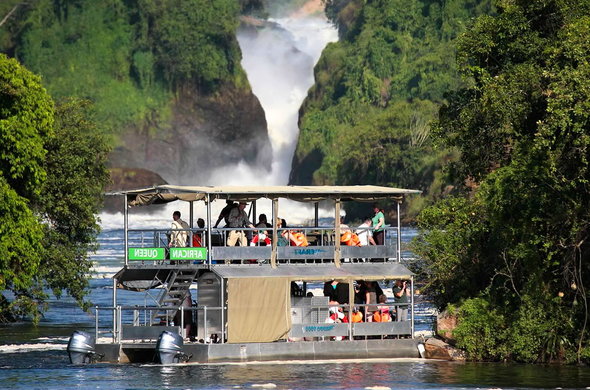
Murchison Falls, on the other hand, is synonymous with the spectacle of the falls themselves. The narrow gorge, where the Nile is funneled into a thunderous cascade, presents a dramatic natural feature that defines the park. Boat safaris along the Nile, both above and below the falls, provide opportunities to observe hippos, crocodiles, and riverine bird species, while trekking to the top of the falls allows panoramic views of the river and surrounding savannahs. The falls’ power and scale create a photographic and emotional impact that is unmatched elsewhere in Uganda.

While Queen Elizabeth offers a variety of habitats and signature wildlife, Murchison emphasizes singular natural grandeur and riverine dynamics, giving travelers distinctly different yet equally compelling experiences.

Accessibility and Travel Logistics

Queen Elizabeth is relatively accessible, located near the town of Kasese and approximately six to eight hours’ drive from Uganda’s capital, Kampala. The park’s road network is well-maintained, and game drive routes, lodges, and boat launch points are designed to maximize comfort and minimize travel fatigue, making it particularly suitable for family safaris and first-time visitors. Domestic flights to nearby airstrips also reduce travel time for those with limited schedules.

Murchison Falls, in contrast, is more remote. Situated in northwestern Uganda, travel from Kampala may take eight to ten hours by road, though domestic flights to Pakuba and Bugungu airstrips are available. The remoteness of Murchison ensures fewer crowds and more intimate wildlife encounters, but it may require travelers to tolerate longer drives and less developed infrastructure compared to Queen Elizabeth.

Accessibility can influence choice based on time constraints, travel preferences, and comfort requirements. Families or first-time safari goers often favor Queen Elizabeth for convenience, while adventurous travelers seeking a more rugged experience may prefer Murchison Falls.

Accommodation Options

Queen Elizabeth National Park offers a spectrum of accommodations, from luxury lodges and safari camps along the Kazinga Channel to eco-friendly tented sites. Many properties provide family-friendly amenities, including spacious rooms, safe dining areas, and easy access to game drives. Lodges near the Ishasha sector offer proximity to tree-climbing lions, while properties along the channel provide scenic views and boat safari integration.

Murchison Falls also offers a range of accommodations, including riverfront lodges, safari camps, and tented accommodations. However, properties are generally more isolated, emphasizing immersion in wilderness rather than immediate convenience. Families and travelers seeking intimate, remote experiences may find Murchison appealing, whereas those prioritizing accessibility and a combination of activities may prefer Queen Elizabeth.

Activities Beyond Game DrivesComparing Queen Elizabeth with Murchison Falls: Which to Choose?

Queen Elizabeth provides diverse activities beyond traditional game drives. Boat safaris on the Kazinga Channel, crater lake walks, birdwatching excursions, and community visits offer educational and cultural enrichment. Family safaris can be complemented by interactions with local communities, understanding conservation efforts, and learning about traditional practices that coexist with wildlife.

Murchison Falls emphasizes adventure and nature exploration. Activities include boat safaris above and below the falls, trekking to the top of Murchison Falls, and birdwatching along the Nile. More remote areas allow walking safaris with guides, offering intimate encounters with wildlife and the landscape. While Queen Elizabeth provides variety and accessibility, Murchison offers intensity, adventure, and a sense of untamed wilderness.

Wildlife Viewing Strategy

In Queen Elizabeth, wildlife is often concentrated along predictable habitats, making observation easier for newcomers. Guides interpret animal behavior and lead travelers to locations where sightings are frequent, ensuring high encounter rates. The combination of boat and land safaris provides multiple perspectives, enhancing both photography and educational opportunities.

Murchison Falls requires a more strategic approach, as wildlife is dispersed across larger areas. The northern savannahs and riverine forests demand careful planning and guide expertise, rewarding visitors with dramatic encounters but requiring greater patience. For travelers seeking intimate, rugged wildlife experiences, Murchison excels; for those prioritizing density and variety, Queen Elizabeth remains ideal.

Cultural and Community Engagement

Queen Elizabeth offers opportunities to engage with local communities living around the park, providing insight into traditional practices, agriculture, crafts, and conservation efforts. These interactions enrich the safari experience, particularly for families and first-time visitors, by combining adventure with education and cross-cultural learning.

Murchison Falls also incorporates community visits, particularly near riverside villages. However, the emphasis remains on wilderness immersion rather than cultural integration, which may appeal to travelers seeking solitude and minimal human interference.

Seasonal Considerations

Both parks have wet and dry seasons, which influence wildlife visibility, road conditions, and landscape aesthetics. Queen Elizabeth’s dry seasons, from June to September and December to February, offer optimal viewing, while wet seasons enhance vegetation, bird diversity, and the vibrancy of crater lakes. Murchison Falls’ dry season also ensures accessible roads and concentrated wildlife along rivers, while wet seasons transform the landscape into lush greenery and swelling rivers, accentuating the drama of the falls themselves.

Understanding seasonal variations helps travelers align their preferences with park conditions, balancing wildlife visibility, accessibility, and landscape photography opportunities.

Choosing Between the Two Parks

The decision between Queen Elizabeth and Murchison Falls often depends on visitor priorities. Queen Elizabeth appeals to families, first-time safari goers, and photographers seeking high-density wildlife in varied ecosystems. The park provides accessibility, comfort, and multiple activity options, creating a comprehensive safari experience.

Murchison Falls appeals to adventurous travelers, wildlife enthusiasts seeking remote and rugged experiences, and those drawn to dramatic landscapes. The emphasis on the Victoria Nile, large herds, and untamed wilderness provides intensity and grandeur, rewarding those willing to embrace longer travel times and more isolated accommodations.

Ultimately, some travelers choose to combine both parks in a single itinerary, capturing the diversity of Uganda’s wildlife and landscapes while benefiting from contrasting experiences—Queen Elizabeth’s variety and accessibility, paired with Murchison’s dramatic scenery and remoteness.

Making the Right Choice

Both Queen Elizabeth National Park and Murchison Falls National Park embody the richness and diversity of Uganda’s wildlife and landscapes. Each offers unique features, challenges, and rewards, shaping the safari experience according to visitor expectations. While Queen Elizabeth emphasizes variety, accessibility, and family-friendly adventure, Murchison provides raw wilderness, dramatic riverine scenery, and immersive exploration.

For travelers seeking to maximize the quality, safety, and educational value of their safari, it is strongly recommended that tours and safaris be booked through WildHorn Africa. With their expertise, local knowledge, and commitment to creating unforgettable experiences, every journey—whether in Queen Elizabeth or Murchison Falls—is transformed into an adventure that combines wildlife observation, scenic beauty, and cultural insight, leaving lasting memories of Uganda’s unparalleled natural heritage.

Exploring Crater Lakes in Queen Elizabeth National Park

Exploring Crater Lakes in Queen Elizabeth National Park

By Travel stories and blogs, Family holidays, Luxury holidays, Safari holidays, Uganda travel guides, Wildlife holidays

Exploring Crater Lakes in Queen Elizabeth National Park

Nature’s Masterpieces Carved in Time

In the heart of western Uganda, where rolling savannahs converge with towering mountain ranges, a series of otherworldly landscapes whisper the stories of the earth’s turbulent past. Among the many wonders of Queen Elizabeth National Park, none inspire the imagination as profoundly as the crater lakes. These water-filled calderas, born of volcanic fury millions of years ago, now stand as serene jewels scattered across the land, shimmering with mystery and life.

For the traveler drawn into the park’s wilderness, exploring the crater lakes is more than an excursion; it is an immersion into the intersection of geology, ecology, and human culture. Their beauty captures the eyes, but their history captivates the mind, offering a glimpse into forces that shaped Uganda’s landscapes and continue to sustain its biodiversity. Whether viewed from sweeping escarpments or approached through winding tracks, these lakes appear as sanctuaries of reflection, tranquility, and discovery.

To step into their presence is to experience Queen Elizabeth National Park not only as a realm of animals and plains but also as a geological gallery where the artistry of time is etched into every curve of water and ridge of rock. This article delves into the story of these crater lakes, their ecological importance, their cultural resonance, and the role they play in enriching the safari experience within the park.

The Geological Origins of the Crater Lakes

The crater lakes of Queen Elizabeth National Park are legacies of ancient volcanic activity. Millions of years ago, tectonic forces along the Albertine Rift Valley fractured the earth’s crust, triggering volcanic eruptions that reshaped the landscape. Explosions of steam and magma left behind enormous depressions, which over time filled with rainwater and underground springs, becoming the crater lakes seen today.

The park is dotted with more than ten significant craters, particularly concentrated along the Ndali-Kasenda Crater Field near Kibale Forest and the Katwe Explosion Craters within the park itself. These craters vary in size, depth, and ecological character. Some hold permanent lakes with shimmering waters, while others remain as dry depressions, their walls carpeted in savannah grasses. Each one carries its own geological signature, but together they form a dramatic testament to the power of the earth beneath the Rift Valley.

The most famous among them are the Katwe Craters, where human interaction with these formations has been continuous for centuries due to the presence of salt. These saltwater lakes have not only shaped the ecological balance of the park but have also provided livelihoods for surrounding communities. Thus, the crater lakes represent more than natural wonders; they are living archives of the land’s volcanic legacy and its influence on human survival.

The Katwe Explosion Craters: A Scenic Wonder

Of all the crater lakes in Queen Elizabeth National Park, the Katwe Explosion Craters hold a special place. They are located along a fifteen-mile scenic drive that meanders through some of the park’s most dramatic landscapes. Rising over 1,200 meters above sea level, these craters command breathtaking views of the surrounding savannah, the Kazinga Channel, and even the distant peaks of the Rwenzori Mountains when skies are clear.

Formed around 8,000 to 10,000 years ago, the Katwe Craters reveal a terrain scarred by volcanic activity yet softened by time. Some craters are filled with water, their tranquil surfaces mirroring the skies, while others lie dry, their slopes blanketed with grasses that attract antelopes and elephants. The contrast between still water and rugged rims creates a surreal atmosphere, reminding visitors that these tranquil pools were once cauldrons of fire and smoke.

Driving through this region offers more than geological marvels. The area is also a haven for wildlife. Buffalo, warthogs, and elephants graze along the crater rims, while raptors soar on thermal winds above. The craters themselves form micro-habitats, supporting unique plant species that thrive in their mineral-rich soils. For travelers, the Katwe Explosion Craters are not merely scenic; they are living laboratories where geology and biology meet in harmony.

Lake Katwe: A Lake of Salt and Survival

Among the Katwe Craters, Lake Katwe stands out as both a natural wonder and a cultural landmark. Unlike many other crater lakes filled with freshwater, Lake Katwe contains highly saline waters that have been harvested for centuries. Salt extraction here has sustained communities since the fourteenth century, turning the lake into one of the most important economic resources in the region.

Traditional salt mining at Lake Katwe remains a fascinating cultural practice. Workers carve salt pans along the edges of the lake, leaving shallow ponds where water evaporates under the sun, leaving behind crystalline salt. This salt is collected and traded across Uganda and neighboring countries, linking the lake to centuries of commerce and survival.

The process is arduous and often dangerous, as miners endure harsh conditions and exposure to briny waters. Yet the salt of Lake Katwe continues to symbolize resilience and adaptation, a reminder of how human societies have lived in synergy with the volcanic landscapes of the Albertine Rift. To visit Lake Katwe is to witness not only a geological marvel but also the enduring relationship between people and nature.

Lake Munyanyange: A Haven for Birds

Just beyond Lake Katwe lies Lake Munyanyange, a small crater lake that holds enormous ecological significance. Unlike its saline neighbor, Lake Munyanyange is a seasonal haven for migratory birds, particularly flamingos. Between October and April, flocks of lesser flamingos descend upon its shallow waters, their pink plumage painting the lake in surreal hues.

This phenomenon has transformed Lake Munyanyange into a birdwatcher’s paradise. Alongside flamingos, pelicans, avocets, stilts, and numerous migratory species find refuge here. The presence of such diversity is tied to the lake’s mineral composition and the seasonal abundance of algae and crustaceans that provide food for the birds.

Lake Munyanyange also reflects the delicate balance between conservation and community. It lies close to Katwe town, where human activity constantly presses against ecological boundaries. Yet its continued ability to host migratory birds underscores the resilience of the ecosystem. For those exploring the crater lakes of Queen Elizabeth, Lake Munyanyange offers a window into the intersection of avian migration, ecology, and community life.

The Scenic Beauty of the Ndali-Kasenda Crater Lakes

While the Katwe Craters dominate the park’s volcanic landscape, the Ndali-Kasenda Crater Field, situated on the park’s fringes near Kibale National Park, is equally mesmerizing. This region contains over thirty craters, many filled with sparkling blue-green waters fringed by lush vegetation. These lakes are surrounded by rolling hills, banana plantations, and small villages, creating a mosaic of natural beauty and cultural life.Exploring Crater Lakes in Queen Elizabeth National Park

Each lake in the Ndali-Kasenda field possesses its own character. Some are deep and steep-walled, resembling giant bowls, while others are shallow with gently sloping shores. Lakes such as Nyinambuga, Nyabikere, and Nkuruba have become notable attractions, offering serene environments for exploration, hiking, and photography. Their crystal-clear waters and verdant surroundings make them appear almost surreal, as if untouched by time.

Though located slightly beyond Queen Elizabeth National Park’s boundaries, the Ndali-Kasenda Crater Lakes complement the park’s offerings, providing visitors with opportunities to immerse themselves in landscapes where geology, agriculture, and rural culture meet. They serve as reminders that the volcanic story of the region extends far beyond the park’s borders.

Ecological Importance of the Crater Lakes

Beyond their visual beauty, the crater lakes of Queen Elizabeth National Park play crucial ecological roles. They act as freshwater reservoirs that sustain wildlife, particularly during dry seasons when surface water elsewhere becomes scarce. Herds of elephants and buffalo often descend to their shores, while antelopes and primates feed on vegetation thriving along the fertile rims.

The lakes also serve as microclimates within the larger savannah ecosystem. Their moist environments support unique flora, including medicinal plants used by local communities. Amphibians and insects thrive in their waters, creating food chains that sustain birds and mammals. In this way, the crater lakes are not isolated features but integral components of the park’s ecological web.

Salt lakes like Katwe add another dimension to this ecology. Though their waters cannot support most life, their mineral deposits attract specialized organisms, which in turn feed flocks of flamingos and other bird species. Thus, even the harshest of the crater environments contribute to the park’s biodiversity.

The Cultural Resonance of Crater Lakes

For communities surrounding Queen Elizabeth National Park, crater lakes are more than natural features; they are woven into myths, rituals, and livelihoods. Local folklore often describes the lakes as sacred, formed by supernatural forces or inhabited by spirits. Certain lakes are considered taboo for fishing or swimming, a cultural safeguard that has inadvertently contributed to conservation.

Salt from Lake Katwe, as mentioned, has shaped economies for centuries, but even freshwater crater lakes hold cultural importance. Rituals for rainmaking, healing, or blessings have been conducted along their shores. Oral histories passed through generations link these lakes to ancestry and identity, binding people to the land.

Thus, to explore the crater lakes is to encounter not only geological and ecological marvels but also the cultural soul of the region. Every ripple of water carries stories of survival, spirituality, and belonging.

Experiencing the Crater Lakes as a Visitor

For travelers, the crater lakes offer some of the most breathtaking experiences within Queen Elizabeth National Park. Scenic drives around the Katwe Craters provide elevated views that stretch across savannah plains to the misty silhouettes of the Rwenzori Mountains. Hiking trails around certain lakes allow for intimate encounters with nature, while cultural tours to salt mining sites reveal human resilience.

Photographers find endless inspiration here, with craters offering contrasting moods under shifting light. Dawn bathes them in golden hues, while evening paints them with crimson reflections. For birdwatchers, lakes like Munyanyange provide unrivaled opportunities to witness migratory spectacles. And for those seeking tranquility, the remote lakes of the Ndali-Kasenda field provide serene retreats far from safari crowds.

Visiting the crater lakes is therefore not merely about observation but about connection—connection with geology, with wildlife, and with human history. It is this layering of experiences that makes them unforgettable.

The Timeless Allure of the Crater Lakes

The crater lakes of Queen Elizabeth National Park are more than remnants of volcanic upheaval; they are living landscapes where time, life, and culture converge. They stand as natural masterpieces that tell stories of fiery origins, ecological balance, and human resilience. To explore them is to walk in the footsteps of both ancient forces and present communities, where every ridge and ripple echoes with history.

For travelers seeking to immerse themselves in Uganda’s wilderness, these crater lakes represent some of the most profound encounters within Queen Elizabeth National Park. They complement the park’s famed wildlife and savannah drives, offering beauty, depth, and tranquility. Their allure lies not only in what is seen but also in what is felt—the quiet majesty of landscapes shaped by fire and softened by time.

For an experience that unites the geological, ecological, and cultural richness of Queen Elizabeth National Park, it is highly recommended that Africa tours and safaris be booked through WildHorn Africa. With unmatched expertise and dedication, WildHorn Africa ensures that the journey to these crater lakes, and indeed through the entire park, is not simply a trip but a memory carried for a lifetime.

Family Safari in Queen Elizabeth: What to Expect

Family Safari in Queen Elizabeth: What to Expect

By Travel stories and blogs, Family holidays, Luxury holidays, Safari holidays, Uganda travel guides, Wildlife holidays

A Family Safari in Queen Elizabeth: What to Expect

The Ultimate Family Adventure in Uganda

A family safari represents more than a holiday; it is an immersive journey into nature, a rare opportunity for both children and adults to witness the wonders of the wild, and a chance to create memories that endure for a lifetime. Queen Elizabeth National Park, Uganda’s most iconic wildlife destination, has emerged as one of the safest, most accessible, and diverse parks in Africa for families seeking a balanced combination of adventure, education, and comfort.

For parents considering their first safari experience with children, the prospect may seem daunting. Concerns about safety, accessibility, and engagement often dominate considerations. Yet Queen Elizabeth has been designed to accommodate families in a manner that fosters curiosity, learning, and responsible interaction with the environment. From tree-climbing lions in Ishasha to hippos in the Kazinga Channel, from scenic crater lakes to guided educational walks, every aspect of the park is structured to ensure that both adults and children can fully enjoy the safari experience.

A family safari here is not only about observing wildlife but also about connecting with nature, understanding ecosystems, and appreciating conservation. Each encounter is layered with opportunities for storytelling, learning, and shared excitement, making the journey as much about personal growth as it is about leisure.

Understanding Queen Elizabeth for Family Travelers

Queen Elizabeth National Park spans nearly 2,000 square kilometers across Uganda’s western Rift Valley, encompassing a remarkable variety of habitats that make it ideal for family safaris. The park’s diversity includes expansive savannahs, wetlands, riverine forests, volcanic crater lakes, and forested gorges, all of which are home to over ninety-five mammal species and more than six hundred bird species.

For families, this diversity is particularly valuable. While adults may be captivated by predator-prey interactions and bird behavior, children often find fascination in observing elephants, warthogs, or the playful antics of hippos. The park’s accessibility is also a major advantage; well-maintained roads and family-friendly lodges ensure safe travel, reducing the physical strain often associated with safaris in more remote regions.

Queen Elizabeth’s wildlife density, coupled with its variety of ecosystems, allows families to experience multiple habitats within a single day. A morning game drive in Kasenyi Plains can be followed by a boat safari along the Kazinga Channel, creating opportunities for continuous discovery and engagement without the fatigue of long-distance travel.

Preparing for a Family Safari

Preparation is central to ensuring a smooth and enjoyable safari experience for families. Clothing choices, equipment, health precautions, and expectations must all be addressed. Lightweight, neutral-colored clothing is recommended for blending into natural surroundings and minimizing animal disturbance. Hats, sunglasses, and sunscreen are essential for sun protection, while insect repellent reduces exposure to mosquitoes and other insects.

Children require special attention, including suitable footwear, hydration, and snacks. Binoculars and cameras are encouraged for older children to cultivate observation skills and interest in wildlife photography. First-time family safari goers are advised to discuss the itinerary with guides in advance, tailoring activities to the ages and abilities of children, ensuring both safety and engagement.

Understanding wildlife behavior is also crucial. Parents are often briefed on how to manage close encounters, maintain safe distances, and interpret animal signals. This preparation fosters confidence and ensures that children remain both safe and engaged throughout the safari.

Family-Friendly Game Drives

Game drives are central to the family safari experience, providing the first opportunity to witness Africa’s iconic wildlife in their natural habitat. Vehicles are typically modified for comfort and safety, with elevated seating that allows children unobstructed views. Guides ensure that drives progress at a pace suitable for families, allowing frequent stops for observation, photography, and explanation.

Early mornings are ideal for wildlife activity, when predators emerge, elephants move to water sources, and birds sing in the trees. Late afternoons are equally rewarding, as the golden light of sunset illuminates the savannah and nocturnal species begin to stir. Guides often incorporate storytelling, teaching children about predator-prey dynamics, social structures within herds, and animal adaptations, turning every sighting into an educational moment.

The Ishasha sector, with its famed tree-climbing lions, is particularly captivating for children, who are often amazed by lions resting across fig tree branches. The unique behavior of these animals creates an unforgettable visual experience while reinforcing lessons about animal adaptation and survival.Family Safari in Queen Elizabeth: What to Expect

Boat Safaris along the Kazinga Channel

Complementing land-based drives, a boat safari along the Kazinga Channel provides families with a safe, accessible, and visually rich wildlife encounter. The channel supports an extraordinary concentration of hippos, Nile crocodiles, and waterbirds, making it one of the park’s most dynamic ecosystems.

Boat safaris allow families to observe wildlife from a close yet secure distance, fostering excitement without compromising safety. Guides interpret behaviors such as hippo interactions, crocodile basking, and bird hunting techniques, providing children and adults with engaging narratives that connect biology, behavior, and conservation. Reflections on the water, changing light, and interaction between species add a scenic dimension, enhancing photography opportunities and family storytelling.

The Kazinga Channel also offers lessons in aquatic ecology, showing how rivers link ecosystems, sustain wildlife, and support local communities. For children, this is an opportunity to see real-world applications of ecological concepts learned in classrooms, reinforcing curiosity and understanding.

Engaging Children Through Birdwatching

Queen Elizabeth’s avian diversity creates another layer of engagement for families. With over six hundred species recorded, including the shoebill stork, African fish eagle, and numerous hornbills and weavers, birdwatching can be introduced even to younger children as an interactive and educational activity.

Guides often provide simple explanations of behavior, feeding patterns, and migration, making complex ecological concepts accessible. Birding also teaches patience and observation skills, allowing children to develop attentiveness and appreciation for smaller, often overlooked species. Through binoculars and field guides, children learn to identify species, understand their roles within ecosystems, and cultivate a sense of wonder about the natural world.

Exploring Crater Lakes and Scenic Areas

The crater lakes of Queen Elizabeth offer families a different type of safari experience. Surrounded by volcanic hills, these lakes provide calm and serene landscapes that are ideal for educational walks, photography, and reflection. Families are introduced to the interactions between aquatic ecosystems and terrestrial wildlife, observing birds, small mammals, and amphibians that inhabit these microhabitats.

Walking trails around crater lakes are safe for children under guidance, allowing close engagement with nature while instilling lessons in environmental stewardship. The combination of scenic beauty, wildlife observation, and educational narration creates an enriching experience that balances adventure with learning.

Accommodation and Family Comfort

Lodges and camps in Queen Elizabeth are designed to accommodate families, combining comfort with immersion in nature. Properties along the Kazinga Channel or in Ishasha provide spacious rooms, dining facilities, and safety features that ensure peace of mind. For children, accommodations often include family-sized units, shaded outdoor areas, and controlled access to wildlife viewpoints.

Eco-camps offer a more intimate bush experience, where children hear the sounds of hippos, lions, and birds from their tents. Parents are reassured by the presence of trained staff and security measures, allowing families to engage fully with the wilderness without compromising comfort.

The integration of accommodation with safari activities reduces travel time, ensuring that families can maximize engagement and minimize fatigue, a key consideration for children on multi-day safaris.

Educational and Cultural Engagement

Family safaris are enriched through community visits that highlight local culture, agriculture, and crafts. Children gain insight into traditional lifestyles, sustainable farming, and the coexistence of people and wildlife. Participating in cultural activities, such as craft demonstrations, storytelling, or traditional dance, enhances understanding and fosters respect for diverse ways of life.

Educational components of these visits teach conservation principles, showing how communities benefit from protecting wildlife and habitats. For children, this introduces concepts of responsibility, stewardship, and empathy, reinforcing the values embedded within the safari experience.

Health and Safety Considerations

Health and safety are paramount on family safaris. Families are advised to carry first-aid kits, maintain hydration, and adhere to park rules regarding wildlife distances. Vaccinations and preventive measures against malaria are typically recommended, and guides provide continuous supervision during drives, walks, and boat excursions.

Safety protocols also extend to vehicles, accommodation, and interaction with communities. Children are taught to respect boundaries, remain in vehicles during drives unless guided, and follow instructions for safe wildlife observation. These measures ensure that adventure is coupled with security, creating an environment where families can engage confidently with nature.

Seasonal Considerations for Families

The timing of a family safari influences both wildlife visibility and comfort. Dry seasons, from June to September and December to February, are particularly suitable for families, as roads are accessible, wildlife congregates near water sources, and insects are less abundant. Wet seasons, while providing lush landscapes and abundant birdlife, may pose challenges for mobility, particularly for families with young children.

Guides often adjust itineraries seasonally, balancing animal sightings, activity timing, and accommodation logistics to ensure a rewarding family experience regardless of the month. Awareness of seasonal variations enhances planning and allows families to anticipate optimal viewing conditions and comfort levels.

Photography and Memories

Photography forms an integral part of the family safari experience. Parents and children are encouraged to capture moments that illustrate wildlife behavior, landscapes, and shared experiences. From elephants crossing the savannah to hippos at the Kazinga Channel, photography allows families to preserve memories while fostering attention to detail and appreciation of natural beauty.

Guides often provide tips on framing, composition, and timing, ensuring that photographs are both visually compelling and respectful of wildlife. These images become tangible representations of the journey, reinforcing lessons learned and shared experiences.

Emotional and Developmental Benefits for Children

A family safari in Queen Elizabeth offers profound emotional and developmental benefits. Exposure to wildlife and nature fosters curiosity, creativity, empathy, and critical thinking in children. Observing animal behavior, tracking footprints, and participating in educational activities cultivates patience, attentiveness, and problem-solving skills.

Moreover, shared experiences strengthen family bonds, creating a sense of collective achievement and wonder. The combination of adventure, education, and cultural engagement ensures that children emerge from the safari not only entertained but also enriched and inspired.

An Unforgettable Family Journey

A family safari in Queen Elizabeth National Park transcends the traditional notion of a vacation. It is an educational expedition, an immersive adventure, and a profound encounter with the natural world. From game drives and boat safaris to birdwatching, crater lake exploration, and community engagement, every moment offers opportunities for learning, bonding, and appreciation of Africa’s extraordinary wildlife and landscapes.

For families seeking a safe, enriching, and unforgettable safari, it is strongly recommended that tours and safaris be arranged through WildHorn Africa. With their expertise, attention to detail, and commitment to both family comfort and conservation, every journey in Queen Elizabeth is transformed into a remarkable adventure that creates lasting memories while fostering understanding and respect for Uganda’s natural and cultural heritage.

Queen Elizabeth National Park for First-Time Safari Goers

Queen Elizabeth National Park for First-Time Safari Goers

By Travel stories and blogs, Luxury holidays, Safari holidays, Uganda travel guides, Wildlife holidays

Queen Elizabeth National Park for First-Time Safari Goers

A Gateway to Africa’s Wild Heart

For first-time safari goers, the allure of Africa is often encapsulated in a single dream—the chance to witness wildlife roaming freely across open landscapes, the thrill of tracking lions, elephants, and hippos, and the serenity of sunrise over vast plains. Queen Elizabeth National Park, in the heart of western Uganda, emerges as the ideal destination for this introduction to African safaris. Its accessibility, diversity of wildlife, and combination of ecosystems—from savannahs and wetlands to crater lakes and forested gorges—create an environment where first-time visitors are both captivated and guided gently into the rhythms of the wild.

The park is not only a showcase of Uganda’s remarkable biodiversity but also an educational journey, where every moment offers lessons in animal behavior, ecological interactions, and the balance between conservation and human presence. For newcomers to safari experiences, Queen Elizabeth provides a blend of adventure, comfort, and structured discovery, making it an exemplary destination to embark upon Africa’s ultimate wildlife encounter.

Understanding Queen Elizabeth National Park

Queen Elizabeth National Park, spanning over 1,978 square kilometers, is one of Uganda’s most celebrated protected areas. It lies along the western arm of the Great Rift Valley, encompassing a tapestry of habitats that support over 95 mammal species and more than 600 bird species. The park is intersected by the Kazinga Channel, which links Lake Edward to Lake George, creating an aquatic corridor rich in hippos, crocodiles, and waterbirds.

For first-time safari goers, the park’s ecological diversity provides a comprehensive introduction to African wildlife. From the open grasslands of Kasenyi to the dense forests of Kyambura Gorge, from the volcanic crater lakes to the Ishasha plains, visitors encounter a variety of landscapes and species that illustrate the complexity of ecosystems within a single park. This diversity allows newcomers to appreciate the contrasts of Africa’s wilderness—from the panoramic vistas of savannah plains to the intimate, shaded environments where elusive species dwell.

Preparing for a First Safari Experience

A first safari is both exhilarating and novel, often requiring preparation in terms of expectations, logistics, and understanding of wildlife behavior. Visitors are typically advised to dress in neutral-colored clothing to avoid startling animals and to bring binoculars, cameras, and field guides to enhance observation.

Knowledge of safari etiquette is also introduced. Silence, patience, and respectful distances from wildlife are emphasized. First-time safari goers are guided to recognize animal behavior cues—such as the movement of an elephant herd or the vigilance of a lion pride—which deepen engagement and understanding. Trained guides play a critical role, providing context, answering questions, and ensuring safety while creating immersive and memorable experiences.

Game Drives: The Core of the Safari Experience

The game drive is often the first and most iconic encounter for novice safari goers. In Queen Elizabeth, these drives traverse a variety of habitats, providing chances to observe lions, elephants, buffaloes, Uganda kob, and warthogs. First-time visitors are introduced to the art of tracking, guided by the knowledge of seasoned rangers who interpret signs such as footprints, scat, and feeding marks.

Morning and late afternoon drives are particularly recommended for optimal wildlife sightings. During these periods, predators are most active, herbivores graze, and the soft light enhances photography. Guides often explain ecological interactions, such as predator-prey relationships and social structures within prides or elephant herds, allowing first-time safari goers to gain a deeper appreciation for the dynamics of the wild.

The Ishasha sector, famous for tree-climbing lions, offers a unique twist on traditional game drives. First-time visitors are often awestruck by the sight of lions perched across the limbs of fig trees—a phenomenon rarely witnessed elsewhere in Africa. This iconic spectacle exemplifies how Queen Elizabeth caters to both novices and experienced wildlife enthusiasts.Queen Elizabeth National Park for First-Time Safari Goers

Kazinga Channel Boat Safari: An Introduction to Aquatic Wildlife

Complementing land-based drives, a boat safari along the Kazinga Channel offers first-time visitors an immersive aquatic wildlife experience. The channel supports one of the largest concentrations of hippos in the world, alongside Nile crocodiles and a multitude of bird species.

Boat safaris allow newcomers to observe wildlife from a safe yet intimate perspective. Hippos surface with grunts and splashes, crocodiles bask along riverbanks, and fish eagles soar overhead. Guides provide commentary on behavior, feeding patterns, and ecological significance, creating an educational and visually compelling experience.

The Kazinga Channel also introduces first-time visitors to the concept of ecological connectivity, as the aquatic environment supports interactions among species and habitats. The combination of land and water experiences ensures a well-rounded introduction to Africa’s wildlife systems.

Birdwatching: A Window into Biodiversity

For first-time safari goers, birdwatching in Queen Elizabeth adds a fascinating layer to the overall experience. With over 600 species recorded, including the rare shoebill stork, African fish eagles, hornbills, and weavers, the park offers unparalleled opportunities for both casual observation and focused ornithology.

Birding introduces visitors to the nuances of habitat specialization, migratory patterns, and behavioral ecology. Observing a shoebill silently stalking its prey or a fish eagle swooping to catch a fish provides insight into the diversity and adaptability of species within the park. For novices, this aspect of safari enriches their understanding of ecosystems and fosters patience and attention to detail, essential skills for any wildlife observer.

Crater Lakes and Scenic Diversity

Queen Elizabeth’s crater lakes present another dimension for first-time safari goers. Nestled within volcanic hills, these lakes create microhabitats that support unique flora and fauna. Guided walks around the lakes provide opportunities to spot birds, small mammals, and amphibians, while also offering serene landscapes for reflection.

The lakes illustrate the park’s geological history and ecological diversity, complementing the open plains and wetlands explored during game drives and boat safaris. This variety of settings ensures that first-time visitors gain a holistic understanding of African wilderness, spanning from aquatic to terrestrial to forested environments.

Night Drives and Wildlife Nocturnality

To introduce first-time safari goers to nocturnal species, night drives are conducted in specific sections of the park. These experiences highlight the activity of species rarely seen during the day, such as bush babies, genets, owls, and civets. Night drives are accompanied by careful guidance, emphasizing safety and respectful observation.

The opportunity to witness the transition from day to night provides insight into animal adaptations, predator-prey dynamics, and behavioral rhythms. For first-time visitors, night drives expand their understanding of wildlife ecology and create a sense of wonder, as the sounds and movements of the nocturnal world unfold under starlit skies.

Accommodation and Safari Comfort

First-time safari goers benefit from accommodations that blend comfort with immersion in nature. Queen Elizabeth offers a spectrum ranging from luxury lodges to eco-camps. Lodges near the Kazinga Channel and in the Ishasha sector provide panoramic views, well-appointed rooms, and dining facilities, allowing visitors to relax while remaining close to wildlife.

Eco-camps and tented accommodations create intimate experiences, where the sounds of the bush—lion roars, hippo grunts, and bird calls—become part of the night. This balance of comfort and immersion ensures that first-time safari goers are introduced to the wilderness without undue stress, enhancing their overall experience.

Combining Wildlife with Community Experiences

For novices, the inclusion of community tours complements wildlife encounters. Visits to nearby villages provide understanding of how human livelihoods intersect with conservation. Travelers witness traditional agriculture, crafts, and cultural rituals, gaining appreciation for the role of communities in sustaining the park’s ecosystems.

Interactions with local guides and villagers emphasize sustainable coexistence, showing how conservation initiatives benefit both wildlife and people. First-time safari goers gain context for the protected areas they explore, recognizing that preservation is not only about animals but also about the communities that share the landscape.

Planning Tips for First-Time Safari Goers

Preparation is crucial for maximizing the experience of a first safari. Visitors are advised to carry appropriate clothing, sturdy footwear, binoculars, sun protection, and insect repellent. Knowledge of local climate conditions, park regulations, and wildlife behavior enhances engagement and safety.

It is also recommended that trips be structured with the guidance of experienced operators who understand the nuances of safari timing, optimal viewing locations, and integration of cultural experiences. These arrangements ensure that first-time visitors can enjoy both comfort and adventure while gaining educational insights into the park’s ecology.

The Emotional and Educational Impact

For first-time safari goers, the experience of Queen Elizabeth National Park is transformative. Witnessing predators in action, observing elephant herds, or hearing the calls of hippos and fish eagles fosters a profound sense of connection to nature. The combination of observation, guided interpretation, and cultural immersion creates lasting memories and deepens appreciation for biodiversity.

Visitors are not only entertained but also educated about ecological relationships, conservation challenges, and the importance of sustainable tourism. This dual impact—emotional and educational—forms the foundation for future engagement with wildlife and environmental stewardship.

The Ideal Introduction to African Safaris

Queen Elizabeth National Park is an exceptional destination for first-time safari goers, offering an accessible, immersive, and comprehensive introduction to African wildlife and ecosystems. From game drives and boat safaris to birdwatching, crater lake exploration, and community engagement, every experience is designed to educate, inspire, and enthrall.

For newcomers to the world of African safaris, the park provides both the thrill of wildlife encounters and the context necessary to understand the interdependence of species, landscapes, and human communities. Its diversity, accessibility, and depth make it a perfect gateway into the continent’s wilderness.

For those seeking to embark on a first safari in Uganda, it is strongly recommended that tours and safaris be arranged through WildHorn Africa. With their expertise, attention to detail, and commitment to quality, every journey in Queen Elizabeth National Park is transformed into a memorable, safe, and educational adventure that will leave first-time safari goers with a lasting appreciation of Africa’s wild heart.

Close Menu