search
Top 6 Best Private Game Reserves Bordering Kruger National Park

Top 6 Best Private Game Reserves Bordering Kruger National Park

By South Africa travel guides, Travel guides, Travel stories and blogs

Top 6 Best Private Game Reserves Bordering Kruger National Park. Where the Wild Roams Freely, and Luxury Meets Wilderness

There is a primal magic in South Africa’s Lowveld region, where the horizon stretches endlessly and the sun blazes over thorny acacias and golden grasslands. Nestled within this untamed majesty lies the Kruger National Park, one of the most revered wildlife sanctuaries on Earth. But while the park is a marvel in itself, a quieter, more exclusive experience awaits on its fringes. Along the western border of Kruger, a number of private game reserves unfold like hidden gems, offering world-class safaris, intimate lodges, and close-up wildlife encounters that feel more personal and raw than anything found in the public sector.

These private reserves share unfenced borders with Kruger, allowing animals to roam freely between the public and private lands. However, they maintain limited vehicle access, off-road tracking privileges, and strict conservation policies, which translates into unparalleled viewing experiences for guests. Travelers drawn to these wild corners aren’t just chasing the Big Five—they are seeking a deeper connection with Africa’s wilderness, paired with top-tier comfort.

What follows is an immersive look into the top six private game reserves that border Kruger National Park, each promising an experience that is both thrillingly wild and luxuriously secluded.

1. Sabi Sand Game Reserve – The Pinnacle of Prestige (Best Private Game Reserves)

Regarded as the crown jewel among private reserves in South Africa, Sabi Sand is synonymous with luxury, exclusivity, and legendary leopard sightings. Covering roughly 65,000 hectares, the reserve is home to some of the most celebrated safari lodges in Africa, such as Singita, Londolozi, and Sabi Sabi.

Sabi Sand’s reputation has been meticulously built over decades. The reserve benefits immensely from its long-standing conservation efforts and the fact that many of its lodges have been owned and operated by the same families for generations. The result is not just an extraordinary game-viewing experience, but a deeply rooted cultural and ecological story that guests become part of.

What sets Sabi Sand apart is its allowance of off-road driving, which ensures that once a leopard or lion is spotted, the safari vehicle can veer off the path for a closer and more intimate encounter. The rangers and trackers here are among the best trained in the continent, and they often know individual animals by name or family lineage.

2. Timbavati Private Nature Reserve – The Wild Heart of the Lowveld

Directly adjoining Kruger’s central region, Timbavati is a haven for those seeking rugged authenticity with a touch of understated elegance. Known for its white lions, which have become almost mythical in status, Timbavati spans over 53,000 hectares and houses an extraordinary variety of ecosystems.

Unlike the polished lodges of Sabi Sand, Timbavati offers a more earthy, grounded experience, though without compromising comfort. Game drives here are quiet and purposeful, with a strong focus on sustainable tourism and conservation. The reserve participates actively in research and anti-poaching efforts, and its lodges often support community development programs.

Because of the reserve’s size and habitat diversity, wildlife encounters are frequent and varied. Guests might find themselves tracking elephants through mopane thickets in the morning and watching wild dogs in pursuit by dusk.

3. Klaserie Private Nature Reserve – Remote and Untamed

Adjoining Timbavati to the west, Klaserie offers what is perhaps the most uncommercialized safari experience bordering Kruger. Covering a staggering 60,000 hectares, this reserve is the epitome of seclusion. Game viewing is no less spectacular here, but the experience feels more raw, quiet, and deeply immersive.

The lodges in Klaserie are often small, family-run operations, ensuring that visitors receive highly personalized service. Here, it’s not uncommon to go on a game drive and not see another vehicle for hours. The emphasis lies in ethical wildlife viewing, and many lodges employ expert guides who involve guests in conservation practices and environmental education.

Klaserie’s terrain is wild and diverse, hosting everything from large herds of buffalo to elusive leopards and rhinos. Night drives here are exceptional, revealing the seldom-seen nocturnal creatures of the African bush, under skies blazing with stars.Top 6 Best Private Game Reserves Bordering Kruger National Park

4. Manyeleti Game Reserve – The Hidden Gem of Authenticity

If there is a reserve that can be described as Kruger’s best-kept secret, it would undoubtedly be Manyeleti. Situated between Sabi Sand and Timbavati, and covering over 23,000 hectares, this reserve is wholly owned by the Mnisi community, making it a unique example of community-based conservation.

Manyeleti, meaning “Place of Stars” in Shangaan, lives up to its name. Far removed from tourist crowds, the reserve is characterized by pristine wilderness and rich cultural storytelling. Lodges here operate with community partnerships, ensuring that tourism directly benefits local development and environmental stewardship.

Wildlife abounds, from majestic elephants to lion prides that dominate the open plains. Unlike more developed reserves, Manyeleti remains largely unspoiled, making it perfect for travelers seeking solitude, authenticity, and purpose in their travels.

5. Balule Nature Reserve – The Conservation Corridor

Part of the Greater Kruger conservation initiative, Balule spans roughly 40,000 hectares and is one of the most ecologically diverse reserves bordering the park. Its terrain transitions from riverine forests to open savannah, drawing in a wide array of species year-round.

Balule’s strength lies in its commitment to anti-poaching, habitat restoration, and education. Its proximity to the Olifants River ensures regular sightings of aquatic birds, hippos, and crocodiles, while inland areas teem with giraffes, hyenas, and big cats.

This reserve strikes a balance between luxury and accessibility, with lodges catering to various budgets without compromising on quality or game viewing. Because of its active wildlife corridors, Balule is also a fantastic destination for birders and photographers.

6. Thornybush Game Reserve – Elegance in the Wild

Lying adjacent to Timbavati, Thornybush is often celebrated for its sophisticated safari offerings and exceptional hospitality. Though slightly smaller at around 14,000 hectares, the reserve punches above its weight when it comes to game viewing and service quality.

Thornybush is renowned for high-density predator sightings, particularly lion, cheetah, and leopard. The guides here are storytelling experts, weaving the landscape’s narrative into every game drive. Many lodges boast spa treatments, gourmet cuisine, and infinity pools overlooking waterholes.

What makes Thornybush especially appealing is its dedication to inclusive travel. The reserve actively supports female guides, eco-tourism education for local youth, and rewilding initiatives, making it a forward-thinking player in South Africa’s private reserve network.

The Unrivaled Allure of the Private Kruger Experience

While Kruger National Park remains a vital pillar of South Africa’s conservation landscape, the private reserves bordering it elevate the safari experience to another level. Here, intimacy replaces mass tourism, and bespoke experiences replace rigid schedules. Whether one dreams of tracking lions across golden plains or sipping sundowners as elephants bathe below, these private sanctuaries deliver in ways that feel both personal and unforgettable.

The true beauty of these private game reserves lies in their ethos of conservation, community, and quiet excellence. Travelers do not merely pass through; they participate in a delicate balance of life, culture, and wild rhythm that defines the African bush.

Make It Your Story—With WildHorn Africa (Best Private Game Reserves)

To turn this dream into a living, breathing experience, it is strongly recommended that travelers plan their safari with experts who understand the terrain, the wildlife, and the nuances that make each reserve unique. WildHorn Africa, a trusted name in bespoke African travel, offers handcrafted safari itineraries, personalized guidance, and access to the most coveted lodges in Kruger’s private reserves.

From first-time visitors to seasoned adventurers, WildHorn Africa ensures that every journey is seamless, unforgettable, and purpose-driven. Let your story begin in the heart of Africa’s wild soul—where the roar of lions is your morning anthem, and the stars your silent witness.

Book your private safari experience with WildHorn Africa today—and step into the untamed elegance of Kruger’s private frontier.

Top 10 Best Things To Do in Victoria Falls

Top 10 Best Things To Do in Victoria Falls

By Travel guides, Travel stories and blogs, Zambia travel guides, Zimbabwe travel guides

Top 10 Best Things To Do in Victoria Falls

There are places in the world where nature doesn’t whisper—it roars. Where the elements collide with such force and beauty that the soul is left in awe. Victoria Falls, straddling the border between Zimbabwe and Zambia, is one such place. Known locally as Mosi-oa-Tunya—the “Smoke That Thunders”—this colossal waterfall is not merely a spectacle of falling water. It is a gateway to adventure, culture, wildlife, and wonder, a destination where the sublime meets the wild.

Carved into the heart of Africa, Victoria Falls offers more than just panoramic vistas of cascading water. It is a region where adrenaline flows as freely as the Zambezi River, where ancient cultures thrive, and where nature unveils its majesty in dramatic form. Whether one seeks heart-pounding thrills, immersive encounters with wildlife, or serene moments of reflection, the area surrounding Victoria Falls offers a rare variety of experiences.

In this comprehensive guide, the most iconic, unique, and unforgettable activities that define Victoria Falls have been explored in depth, each one chosen to reflect the spirit of discovery that pulses through this incredible corner of Africa. From daring adventures to cultural revelations, this is your guide to the top 10 best things to do in Victoria Falls, each one a memory waiting to be made.

Witnessing the Falls in Their Full Glory

The first and most essential experience in Victoria Falls is, of course, seeing the falls themselves. With a width of over 1,700 meters and a drop of over 100 meters, Victoria Falls holds the title of the largest sheet of falling water on Earth. But this is no static postcard—it is a living, breathing spectacle that shifts with the seasons and the rains.

During peak flow between February and May, a thunderous curtain of water crashes into the gorge below, sending up plumes of mist that can be seen from kilometers away. In the drier months, the structure of the gorge is revealed, offering different photographic and visual perspectives. Paths wind through rainforest-fed microclimates, bringing visitors to various viewpoints with names like Devil’s Cataract, Main Falls, Horseshoe Falls, and Rainbow Falls—each offering a different voice of the river’s roar.

Walking along the trails within the Victoria Falls National Park provides a rare sensory immersion. The air becomes thick with mist, rainbows form spontaneously in the light, and the sound of water crashing into the depths becomes the heartbeat of the landscape.

Helicopter Flight Over the Falls – The Flight of Angels

To truly grasp the immensity and grandeur of Victoria Falls, one must rise above it. From the air, the falls appear as a crack in the earth, a surreal and majestic fissure that splits the Zambezi’s gentle flow into something epic and powerful. This is the perspective that explorer David Livingstone once described as “a sight so lovely it must have been gazed upon by angels in their flight.”

Helicopter flights—often referred to as the “Flight of Angels”—offer a breathtaking, bird’s-eye view of the falls, the meandering river, and the surrounding national parks. The contrast between the green foliage, the churning whitewater, and the arid landscape beyond is stunning. Each circuit through the skies reveals the scale and splendor of one of the natural wonders of the world from an angle impossible to appreciate from the ground.

Devil’s Pool – Nature’s Edge of Infinity

For the brave and the bold, one of the most thrilling experiences in Victoria Falls lies right on its edge—literally. During the dry season, when water levels drop to safer levels, travelers have the chance to swim in the legendary Devil’s Pool, a natural rock pool formed at the lip of the falls on the Zambian side.

This unique formation allows visitors to peer over the edge of the thundering chasm while remaining in relative safety. The experience is not for the faint of heart. It involves a boat ride, a guided walk across the slick rock ledge of Livingstone Island, and a carefully timed dip into the pool. But the reward is a rush of adrenaline and a memory few will ever forget—hovering inches away from one of the greatest drops on Earth.

Zambezi River Sunset Cruise – Tranquility on Africa’s Great River

While Victoria Falls inspires awe with its power, the Zambezi River upstream offers a completely different mood—one of serenity, color, and gentle motion. A sunset cruise on this storied river is a tranquil counterpoint to the thunder of the falls. Here, hippos grunt in the reeds, crocodiles sun themselves on the banks, and elephants come to drink in the golden hour light.

With a drink in hand and the soft hum of the boat beneath, visitors drift along the river, watching the sun dip beneath the horizon in a sky ablaze with oranges, reds, and purples. Birdsong echoes through the air as the day gently gives way to dusk. This experience is about slow beauty, quiet reflection, and the simple majesty of an African evening.

Whitewater Rafting – Conquering the Wild Zambezi

Beneath the falls, the Zambezi River transforms into one of the world’s premier whitewater rafting destinations. The Batoka Gorge offers up grade IV and V rapids, with names like “Oblivion” and “The Washing Machine” hinting at the intensity of the experience. For thrill-seekers, this is a chance to dance with the power of nature, plunging through roaring rapids surrounded by towering cliffs.

This journey is not merely a thrill ride; it is a full-day adventure through sculpted canyon landscapes, with moments of calm between rapids that allow for swimming, scenic appreciation, and storytelling. It’s a raw, visceral connection to the river that carved this ancient landscape.

Bungee Jumping from Victoria Falls Bridge – A Leap of Faith

Suspended between Zimbabwe and Zambia is the Victoria Falls Bridge, an engineering marvel and the launch point for one of the world’s most iconic bungee jumps. At 111 meters, the jump offers not just freefall but a pure, heart-racing plunge into the gorge with the mist of the falls rising in the distance.

This experience is often described as a rite of passage for extreme adventurers. The countdown, the leap, the rush—it all blurs into one of the most intense moments a traveler can have. The view alone, before the jump, is breathtaking. What comes after is an unforgettable plunge into the void, with the Zambezi roaring far below.

Game Drives in Zambezi and Mosi-oa-Tunya National Parks

The lands surrounding Victoria Falls are not just about water—they are rich with wildlife. Both Zambezi National Park in Zimbabwe and Mosi-oa-Tunya National Park in Zambia offer superb game viewing opportunities, often in more intimate settings than larger parks.

Here, herds of elephant move through open plains, buffalo graze along riverbanks, and antelope scatter through the bush. The chance to see giraffe, zebra, crocodile, hippo, and myriad bird species adds to the depth of the Victoria Falls experience. Game drives offer a quiet immersion into Africa’s living tapestry, with knowledgeable guides revealing secrets hidden in the brush.

Victoria Falls Town – A Cultural Crossroads

No visit is complete without time spent in Victoria Falls Town, a vibrant hub of culture, craft, cuisine, and history. Art galleries display contemporary African works, while local markets overflow with handmade carvings, textiles, and jewelry. Traditional drumming performances fill the air with rhythm and energy.

Dining in the town reveals a culinary fusion, with influences from southern Africa, Europe, and beyond. Local delicacies, such as bream from the Zambezi or game meat from nearby reserves, offer a true taste of place. Here, visitors engage not only with nature, but with the people and stories that give the region its soul.

Canoeing on the Upper Zambezi – A Journey Through Stillness

For those who seek a gentler communion with nature, canoeing along the upper Zambezi offers a peaceful and meditative experience. Paddling silently through calm waters, guests glide past lily-covered channels, sandbanks, and shaded tree canopies, where wildlife moves unhurried and unthreatened.

This activity emphasizes closeness to nature, providing opportunities to see birds, elephants, hippos, and even the occasional crocodile from a safe distance. The slow rhythm of paddling becomes a kind of mindfulness, where every ripple tells a story, and every bend in the river brings quiet discovery.

Exploring Livingstone Island – A Step Into History

Named after the famed Scottish explorer David Livingstone, who was the first European to set eyes on the falls, Livingstone Island is located at the very brink of the falls themselves. Guided tours allow visitors to stand in the explorer’s footsteps, learning about his journey and seeing the waterfall from a perspective that few have ever experienced.

The island experience combines history, geology, and natural drama, often including a swim in Devil’s Pool during the dry season. It is a location where legend and landscape merge—where the river slows, the mist rises, and history hangs in the air.

Book Your Victoria Falls Experience with WildHorn Africa

Victoria Falls is not just a destination—it is a multi-sensory encounter with the sublime, a place where land, water, wildlife, and culture come together in breathtaking fashion. Whether the heart seeks adventure, tranquility, or transformation, this remarkable region delivers it in abundance.

To ensure that your journey to Victoria Falls is seamless, meaningful, and unforgettable, WildHorn Africa offers expertly curated travel experiences tailored to your interests and aspirations. From securing premium accommodations and exclusive tours to arranging cross-border adventures and cultural excursions, WildHorn Africa delivers personalized safari planning grounded in passion and professionalism.

Book your Victoria Falls adventure today with WildHorn Africa—and discover the thundering wonder of one of Earth’s most powerful and beautiful places.

How Long Does It Take To Climb Mount Kilimanjaro?

How Long Does It Take To Climb Mount Kilimanjaro?

By Tanzania travel guides, Travel guides, Travel stories and blogs

How Long Does It Take To Climb Mount Kilimanjaro? A Dream Worth Climbing

Rising in majestic silence above the plains of Tanzania, Mount Kilimanjaro stands not only as Africa’s highest peak but also as one of the most iconic summits in the world. Crowned with glaciers and often cloaked in clouds, it is the tallest free-standing mountain on Earth, reaching an impressive 5,895 meters (19,341 feet) above sea level. It is a peak that beckons thousands of adventurers every year—novices and seasoned trekkers alike—each drawn by its allure, its challenge, and the dream of standing on the legendary Uhuru Peak.

But beneath its awe-inspiring silhouette lies a crucial question every prospective climber must consider: how long does it really take to climb Mount Kilimanjaro? The answer isn’t as straightforward as it may seem, for it depends on a variety of factors—ranging from route choice, acclimatization needs, and individual fitness, to the underlying goal of a safe, successful summit.

This article ventures deep into the time it truly takes to conquer Kilimanjaro, breaking down its duration, the science behind the climb, and what climbers can expect on this journey to the top of Africa.

Understanding the Climb: More Than Just Days on a Trail

The question of how long it takes to climb Kilimanjaro is not simply a number—it is a consideration of altitude adaptation, physical endurance, and mental preparation. Unlike technical peaks that demand climbing expertise and ropes, Kilimanjaro is considered a non-technical trek, meaning no prior mountaineering skills are required. However, that does not imply it is easy.

What makes Kilimanjaro truly challenging is its rapid ascent through varying climate zones, from equatorial rainforest to alpine desert and finally to glacial arctic conditions. This swift change in altitude within a few days places immense stress on the human body, especially when proper acclimatization is not prioritized.

As a result, climbers are strongly advised to choose longer routes, even if they seem more demanding. Time on the mountain directly correlates with acclimatization, and acclimatization is the key to success. It has been widely reported that shorter climbs have significantly lower summit success rates, often due to altitude sickness, which affects a high percentage of those ascending too quickly.

Route Matters: A Journey Dictated by Pathways

There are several officially established routes to Kilimanjaro’s summit, each with a distinct character and timeline. Some are designed for swift ascents, while others meander more gradually, allowing the body to adjust to the thinning air.

Among the shortest is the Marangu Route, which can be completed in as little as five days, although this timeframe carries a lower summit success rate and greater risk of altitude complications. Most climbers, even on this route, are encouraged to extend their trek to six days for better adjustment.

On the other end of the spectrum lies the Lemosho Route, often completed in seven to eight days. It is widely regarded for its beauty, solitude, and high success rate due to its more gradual ascent profile. Similarly, the Machame Route, also known as the “Whiskey Route,” typically spans six to seven days, offering scenic variation and strong acclimatization opportunities through its climb high, sleep low pattern.

The Rongai, Shira, Umbwe, and Northern Circuit routes vary in length from six to nine days, with the Northern Circuit being the longest and least trafficked—yet offering the highest summit success rate due to its extended duration.

When the question is posed—how long does it take to climb Mount Kilimanjaro—the correct answer is this: it depends on the route chosen, but the optimal range is between 6 to 9 days, with longer durations greatly enhancing chances of success and safety.

The Power of Acclimatization: A Matter of Health and Altitude

What cannot be overstated in any discussion about Kilimanjaro is the importance of acclimatization. The ascent takes climbers from sea-level oxygen concentrations to less than 50% of normal atmospheric oxygen at the summit. Without adequate time to adjust, the risk of Acute Mountain Sickness (AMS) rises dramatically, potentially escalating to serious conditions such as High Altitude Pulmonary Edema (HAPE) or High Altitude Cerebral Edema (HACE).

Routes that offer additional acclimatization days or incorporate climb-high, sleep-low strategies have proven more successful. Such methods allow the body to adapt naturally to altitude changes, reducing physiological strain and enabling climbers to enjoy the journey, rather than merely endure it.

In fact, most reputable guides and operators now emphasize that the question should not be “how quickly can it be done?” but rather “how safely and sustainably can it be achieved?” The mountain is not a race—it is a pilgrimage of endurance, humility, and respect for nature’s extremes.

Fitness and Preparation: Shaping the Timeline from the Ground Up

While time on the mountain is dictated by route and altitude needs, the preparation phase before the climb is equally vital. For those starting their journey from home, physical conditioning should begin at least two to three months in advance, incorporating cardiovascular training, leg strengthening, and long-duration hiking with weight.

The fitter a climber is, the better they can manage the daily trekking distances and elevation gain. Yet even peak fitness does not replace the necessity for altitude acclimatization, which remains non-negotiable regardless of strength or age.

Mental preparedness also plays a key role. The higher one climbs, the more challenging the conditions become. Freezing temperatures, reduced appetite, disrupted sleep, and physical fatigue are common. The ability to stay positive, resilient, and mentally focused contributes as much to summit success as physical strength does.

Summit Day: The Longest and Most Challenging Push

While most days on Kilimanjaro involve moderate trekking of 4 to 7 hours, the final push to the summit is an entirely different challenge. Summit day typically begins around midnight, with climbers ascending slowly in the darkness under starlit skies, often for 6 to 8 hours, before reaching the crater rim and, eventually, Uhuru Peak.

This part of the climb is the most taxing—physically, mentally, and emotionally. Temperatures plummet well below freezing, winds intensify, and oxygen levels drop to their lowest. The ascent is slow and deliberate, and the altitude effects are at their peak.

After summiting, climbers must descend the same day, often trekking a total of 10 to 14 hours before reaching a lower camp. This day, more than any other, highlights the need for proper pacing and adequate acclimatization in the preceding days.

Descent and Reflection: The Journey Down the Mountain

After the summit, the descent takes one to two days, depending on the route. Though physically easier, it places stress on joints and muscles. Many trekkers report the descent as surprisingly demanding, though it is lightened by the psychological elation of having reached the top.

By the time climbers return to the base, they will have spent between six and nine days immersed in the ever-changing beauty of Kilimanjaro’s ecosystems—from jungle to alpine meadows to frozen summit—and every hour spent will have contributed to a profound transformation, both physically and spiritually.

Climbing Kilimanjaro: A Timeless Adventure Requires Timely Planning

To climb Mount Kilimanjaro is to accept a challenge that is both monumental and deeply personal. The time it takes to reach the summit is not measured only in days—but in determination, acclimatization, preparation, and a willingness to embrace the unknown.

For those who dream of standing on Africa’s highest point, the path is there—but it must be walked with patience, humility, and proper planning. The journey cannot be rushed, and the rewards lie not just at the summit, but in every step that leads to it.

Plan Your Ascent with WildHorn Africa

When choosing to take on Kilimanjaro, the guidance of experienced, ethical, and passionate tour operators is essential. For those seeking a seamless, supported, and unforgettable Kilimanjaro climb, WildHorn Africa offers expertly curated trekking itineraries, professional mountain teams, and a commitment to both safety and success.

With WildHorn Africa, climbers are not just clients—they are companions in a journey of transformation. Whether you are planning your first African adventure or adding Kilimanjaro to your bucket list, trust the team that understands the mountain, the land, and the soul of the climb.

Book your Kilimanjaro adventure—and your broader African safari experience—with WildHorn Africa today. Let your journey to the top begin with the people who know the path.

Best Places To See the Big 5 on Safari in Africa

Best Places To See the Big 5 on Safari in Africa

By Travel guides, Travel stories and blogs
Best Places To See the Big 5 on Safari in Africa

There are few experiences on Earth that rival the intensity and majesty of coming face-to-face with Africa’s Big 5—lion, leopard, rhinoceros, elephant, and buffalo. These legendary animals, once deemed the most dangerous to hunt on foot, have since become the centerpiece of modern photographic safaris. For many travelers, seeing all five in the wild represents the ultimate safari milestone—a journey that is not only about the thrill of sightings but about connecting deeply with the rhythms of untamed nature.

Africa, vast and diverse, offers many regions where these iconic animals still roam free. Yet only a handful of destinations can consistently provide the chance to witness the full Big 5 in their natural habitats. From the savannahs of East Africa to the bushveld of the south, the continent’s premier reserves and national parks stand as sanctuaries of wildlife, ecological wonder, and raw, unfiltered beauty.

Those who seek the Big 5 are not just pursuing a checklist—they are stepping into ancient ecosystems where survival is earned, balance is maintained by instinct, and every encounter tells a story. To track the Big 5 is to follow the pulse of Africa itself, where the drama of the wild unfolds daily against some of the most breathtaking backdrops on the planet.

Kruger National Park and Its Private Reserves: The Beating Heart of the Big 5

Tucked into the northeast corner of South Africa, Kruger National Park and the surrounding private game reserves form one of the most prolific Big 5 regions in the world. Here, vast landscapes stretch across multiple ecosystems, creating a haven for thriving populations of lion prides, elusive leopards, large elephant herds, and both black and white rhinos. Buffalo—resilient and imposing—are almost a constant presence across the terrain.

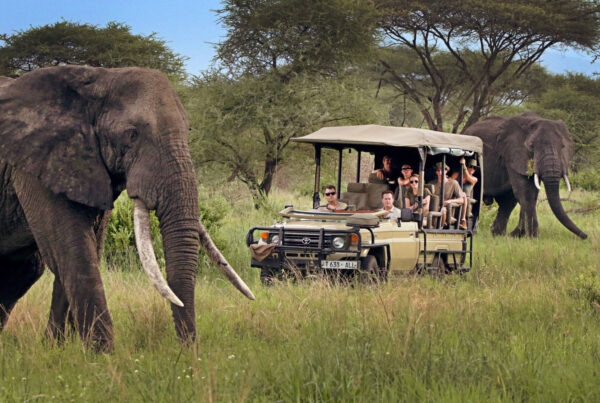
While Kruger’s public areas are accessible to self-drivers, adjacent private reserves such as Sabi Sand, Timbavati, and Manyeleti offer a more intimate and rewarding experience. Off-road game drives, expert trackers, and luxurious lodges elevate every aspect of the safari. Sabi Sand, in particular, is famed for its remarkable leopard sightings, often considered the best in all of Africa.

In this region, conservation and tourism work hand-in-hand, with many lodges contributing directly to anti-poaching efforts and community development. The Big 5 experience here is not only immersive but also sustainable, making every sighting feel part of a larger, purposeful narrative.

Masai Mara and Serengeti: Where the Wild Moves in Great Numbers

Straddling the border of Kenya and Tanzania, the Masai Mara National Reserve and the Serengeti National Park form a contiguous ecosystem that plays host to the world-famous Great Migration. Yet beyond the spectacle of wildebeest herds and galloping zebras lies another promise—the opportunity to spot all five of Africa’s most formidable mammals.

Lions are abundant here, often seen lounging in the shade or stalking the plains. Leopards favor the riverine woodlands, moving with silent precision. Buffalo are ever-present, and elephants march through the acacia-dotted horizon in grand family groups. Rhinos, although more elusive, can be found particularly in areas like Ngorongoro Crater, a natural amphitheater that boasts one of the highest densities of wildlife in Africa.

The magic of this region lies not just in the presence of the Big 5, but in the vastness of the landscape and the interplay of predator and prey. Guided by local Maasai warriors turned conservationists, visitors gain rare insights into both the animal kingdom and the vibrant human cultures that coexist with it.

South Luangwa National Park: Where Wilderness Remains Wild

In the eastern reaches of Zambia lies South Luangwa National Park, a place often heralded as one of Africa’s last true wildernesses. Known for its walking safaris, this region invites guests to experience the bush on foot, heightening the senses and bringing every track, sound, and movement into sharp focus.

The Big 5 are present here, although rhinos have been extirpated and sightings require visits to other parks for a full set. Nevertheless, South Luangwa’s exceptional lion encounters, healthy elephant populations, and striking sightings of the ever-elusive leopard make it one of the most rewarding destinations on the continent.

What sets South Luangwa apart is the raw, unmanicured feel of the landscape and the authenticity of the safari experience. Here, wildlife dictates the rhythm of the day, and the absence of crowds means that every sighting feels deeply personal. Conservation is paramount, with lodges often community-owned and operated in alignment with nature’s cycles.

Etosha National Park: A Salt Pan Oasis for the Giants

Etosha, in northern Namibia, may not be the first name that comes to mind when seeking the Big 5, yet it offers one of Africa’s most unique and accessible safari environments. Centered around a vast, shimmering salt pan, Etosha is home to a surprisingly diverse range of wildlife, including four of the Big 5.

Rhinos, particularly the endangered black rhino, are frequently seen around the park’s numerous waterholes, often emerging at dusk or dawn. Lions are visible in the open terrain, their golden coats catching the desert light. Elephants gather in massive herds during the dry season, and buffalo, though less common, are occasionally spotted in the western sections of the park. Leopards remain elusive, yet sharp-eyed guides and patient tracking increase the chances of that coveted glimpse.

Etosha’s strength lies in the visibility of its wildlife and the stark, otherworldly beauty of its terrain. The park’s waterholes act as magnets for animals, especially during the dry months, making it a photographer’s dream and a remarkable place to experience the grandeur of African wildlife.

Okavango Delta: The Pulse of Life in the Wetlands

In Botswana’s north lies the Okavango Delta, a UNESCO World Heritage Site and one of the richest wildlife habitats on Earth. Each year, floodwaters from the Angolan highlands transform this arid land into a lush mosaic of lagoons, channels, and islands. This seasonal transformation brings with it an explosion of life, including all members of the Big 5.

Leopards are frequently seen along the treed islands, using elevated branches to scout for prey. Lions prowl the grassy edges of floodplains, while elephants wade through water with majestic calm. Buffalo move in large herds across the delta’s fringes, and rhinos, reintroduced and heavily protected, now roam in secure areas like Moremi Game Reserve.

What makes the Okavango Delta truly exceptional is its combination of land and water safaris, allowing visitors to explore by 4×4, mokoro (dugout canoe), or boat. Each mode offers a different lens through which to view the Big 5—not just as animals to see, but as beings that move with grace and purpose through a sacred landscape.

Hluhluwe-iMfolozi Park: Where Conservation Began

As one of the oldest proclaimed nature reserves in Africa, Hluhluwe-iMfolozi Park in South Africa holds a storied place in conservation history. It was here that efforts to save the white rhino from extinction first took root, and today the park remains one of the best places on Earth to see both black and white rhinos.

The Big 5 are all present here, roaming through rolling hills, savannahs, and dense thickets. The park’s manageable size increases the likelihood of sightings, while the absence of large tourist crowds preserves an intimate safari feel. Rich in history and biodiversity, Hluhluwe-iMfolozi is a hidden gem where legacy and wilderness converge.

The Call of the Wild—And the Wisdom of Choosing the Right Partner

To see the Big 5 is to step into a myth made real. It is to witness the lion’s commanding presence, to follow the silent path of the leopard, to feel the earth move beneath the feet of elephants, to watch buffalo graze with quiet might, and to glimpse a rhino in solemn strength. But more than these moments, it is the journey between them that transforms a safari from a checklist into a life-affirming story.

Navigating Africa’s vast and varied landscapes, understanding the seasonal patterns of wildlife, and ensuring access to the best guides and accommodations requires not just ambition, but expertise. That is why those who seek the true essence of the Big 5 trust WildHorn Africa.

With deep roots in the continent and a passion for conservation-driven travel, WildHorn Africa designs journeys that go beyond the ordinary. Every safari is crafted with care—connecting travelers to exceptional guides, intimate lodges, and meaningful encounters that honor both the land and its inhabitants.

Whether tracking lions across the Serengeti plains, drifting silently through the Okavango’s reeds, or watching rhinos at dusk in the golden light of Hluhluwe, the journey toward the Big 5 begins with choosing a partner who knows the soul of Africa.

Let WildHorn Africa lead you there—not just to see the Big 5, but to feel the heartbeat of a continent.

Visiting Sossusvlei: A Guide to the Sand Dunes of Namibia

Visiting Sossusvlei: A Guide to the Sand Dunes of Namibia

By Namibia travel guides, Travel guides, Travel stories and blogs

Visiting Sossusvlei: A Guide to the Sand Dunes of Namibia

In the remote heart of the Namib Desert, where the earth burns red beneath a cobalt sky and winds carve artful ridges into ancient sands, lies a place of otherworldly beauty and geological marvel: Sossusvlei. This is not just a destination; it is a living canvas of color, contrast, and solitude—one of the most surreal landscapes on Earth. Here, gravity-defying sand dunes tower like terracotta mountains, and cracked white clay pans shimmer like bleached parchment under the fierce African sun.

Located within the vast Namib-Naukluft National Park in southwestern Namibia, Sossusvlei stands as a testament to millions of years of natural sculpting, offering travelers a rare opportunity to walk in a world that seems untouched by time. From dawn-lit summits of crimson dunes to the spectral trees of Deadvlei frozen in death for centuries, every inch of this land tells a story—raw, elemental, and eternal.

This detailed guide invites you into the awe-inspiring world of Sossusvlei, unfolding its mysteries, showcasing its unmissable highlights, and offering practical insights to ensure your journey into the desert is nothing short of transformative.

Understanding Sossusvlei: More Than Just a Dune Field

Sossusvlei is often mistakenly thought of as a single landmark, but in truth, it refers to a broader area within the Namib-Naukluft Park, defined by salt and clay pans surrounded by some of the tallest sand dunes on the planet. The name “Sossusvlei” itself is derived from the Nama word “Sossus,” meaning “no return,” and the Afrikaans “vlei,” meaning “marsh.” Together, the name poetically hints at a place where water comes to vanish—a desert basin of silence and stillness.

This region is part of the Namib Desert, believed to be the oldest desert on Earth, with dune formations dating back more than five million years. The dunes of Sossusvlei are not just ancient; they are also dynamic. Their shapes constantly shift with the wind, though their overall structure remains remarkably steady over time.

What makes these dunes so mesmerizing is their distinct color—an intense, rust-red hue caused by the high iron content in the sand. As the sun arcs across the sky, the light transforms the dunes into kaleidoscopic waves of shadow and brilliance, creating a visual drama that changes by the minute.

Deadvlei and the Ghosts of Time

No visit to Sossusvlei is complete without standing amidst the haunting beauty of Deadvlei—a white clay pan punctuated by the blackened skeletons of camelthorn trees that have stood dead for over 600 years. These trees, long since starved of water when the Tsauchab River was cut off by shifting dunes, remain preserved in the desert air, never decaying due to the arid climate.

Deadvlei is a paradox of life and death, presence and absence. The sun-bleached pan, stark against the fiery dunes of Big Daddy and Big Mama, creates a visual masterpiece of contrast, often described as one of the most photographed landscapes on the African continent. To walk among these still, ancient figures is to experience an eerie serenity, where time feels suspended and nature whispers of endurance.Visiting Sossusvlei: A Guide to the Sand Dunes of Namibia

The Giants of Sand: Dune 45, Big Daddy, and Beyond

Sossusvlei’s dunes are as diverse in personality as they are in height. Among the most famous is Dune 45, often referred to as the most photographed dune in the world. Its position near the road, combined with its elegantly curved spine, makes it a popular spot for sunrise climbs. At 170 meters tall, it offers a manageable yet rewarding ascent, and from its summit, the desert seems to stretch infinitely.

More formidable is Big Daddy, towering at over 325 meters, and considered the tallest dune in the Sossusvlei area. Climbing Big Daddy is no easy feat—it demands strength, balance, and patience—but the payoff is unparalleled. From its crest, the views of Deadvlei below are both epic and humbling, a panorama of ancient earth and elemental beauty.

Each dune offers its own experience, shaped by light, wind, and time. There is a rhythmic meditation to the climb, as every step sinks into sand, every breath syncs with the wind, and every glance reveals new curves etched by nature’s unseen hand.

The Life Within the Desert: Flora, Fauna, and Survival

Though it may appear lifeless at first glance, Sossusvlei’s desert ecosystem supports a surprisingly rich web of adapted wildlife and plant species. Life here has evolved not to conquer the harshness but to coexist with it.

Animals such as oryx (gemsbok), springbok, jackals, ostriches, and even desert foxes roam the dunes and dry pans, surviving with minimal water. Small insects and reptiles, like the shovel-snouted lizard, thrive in the heat through unique behavioral adaptations, including “thermal dancing” to avoid burning feet.

Plants, too, are miraculous survivors. The Welwitschia mirabilis, often described as a living fossil, thrives in gravel plains nearby, living up to a thousand years by absorbing moisture from desert fog. Grasses and camelthorn trees endure thanks to deep root systems that seek underground reserves.

This delicate desert equilibrium reminds travelers that beauty can be found not only in grand vistas but also in the subtle resilience of life.

When to Visit Sossusvlei: The Rhythm of the Seasons

Sossusvlei can be visited year-round, but timing your journey with the seasonal rhythms of the Namib enhances the experience. The cooler months from May to September offer more comfortable temperatures for climbing dunes and exploring on foot, with crisp desert mornings and clear, photogenic skies.

During the summer months (October to April), temperatures soar, especially midday, but the light during sunrise and sunset becomes even more vivid—casting the dunes in gold, crimson, and deep auburn. Occasional summer rains can create rare ephemeral pools, briefly bringing water back to the vlei and attracting wildlife and birds.

Regardless of the season, early morning and late afternoon remain the optimal times for exploration, not only for the lighting but also to avoid the intensity of midday heat.

Getting There and Exploring Responsibly

Sossusvlei is accessible via both self-drive adventures and guided tours, with the gateway town of Sesriem serving as the main base for accommodation and park access. From Sesriem, travelers can enter the park at dawn and follow a paved road for about 60 kilometers into the heart of the dunes, with the final stretch to Sossusvlei and Deadvlei requiring a 4×4 vehicle or shuttle service.

For those unfamiliar with desert driving, guided excursions are highly recommended, ensuring safety and deeper insight into the geology, ecology, and history of the area. Expert guides not only navigate the terrain but also offer storytelling that connects visitors to the deeper narrative of the Namib.

It is essential that exploration is done responsibly and respectfully. The Namib Desert is a fragile ecosystem, and footprints can last for decades on dune slopes. Travelers are encouraged to follow designated paths, leave no trace, and carry plenty of water, sunscreen, and protective gear.

A Journey Into Silence and Immensity

Visiting Sossusvlei is more than a photographic opportunity; it is a pilgrimage into the ancient silence of Earth’s memory. There is no crowd, no chaos—only wind, sand, and time. Standing atop a dune at sunrise, feeling the desert breathe and the silence pulse, is an experience that touches the soul in ways no city skyline or luxury retreat ever could.

This journey reveals a deeper truth: that nature, even in its most barren form, can be profoundly moving. The dunes of Sossusvlei are not just sights to be seen—they are stories to be felt, etched in the shifting sands of one of the world’s last true wildernesses.

Explore the Soul of the Desert with WildHorn Africa

For those seeking to experience Sossusvlei in all its breathtaking wonder, guided with expertise and care, there is no better companion than WildHorn Africa. Specializing in authentic, conservation-centered safari experiences, WildHorn Africa curates journeys that are immersive, educational, and unforgettable.

From luxury desert lodges to personalized itineraries that include Sossusvlei, Deadvlei, and beyond, WildHorn Africa ensures that every step you take is rooted in excellence, sustainability, and cultural respect.

Book your Namibian desert safari with WildHorn Africa today—and awaken your spirit in the timeless sands of Sossusvlei.

Budongo Forest Day Trip: Ultimate Checklist for luxury travelers

Budongo Forest Day Trip: Ultimate Checklist for luxury travelers

By Travel stories and blogs, Luxury holidays, Primate holidays, Uganda travel guides

Budongo Forest Day Trip: Ultimate Checklist for Luxury Travelers

The Gateway to Untamed Luxury

In the heart of Uganda’s pristine wilderness lies a destination that stirs curiosity and ignites wonder — Budongo Forest, a sanctuary of ancient mahogany trees, whispering canopies, and wildlife encounters that feel as if they belong to another era. For the luxury traveler, a day trip to this natural gem is not merely an excursion but an immersion into a world where exclusivity and raw beauty intertwine. The forest, part of the greater Murchison Falls Conservation Area, offers more than a glimpse of Uganda’s biodiversity; it delivers an experience where comfort, elegance, and adventure coexist in perfect harmony.

The concept of luxury travel has evolved. Today’s discerning travelers seek more than plush amenities and polished services; they yearn for experiences that connect them to authentic landscapes and cultures while maintaining the refined comforts they expect. Budongo Forest epitomizes this new definition of luxury. A single day in its depths becomes a journey that elevates the spirit, nourishes the senses, and creates memories that linger far beyond the return flight home.

This ultimate checklist for luxury travelers is designed not as a superficial guide but as a detailed companion that explores every dimension of a Budongo Forest day trip — from preparation and arrival to the adventures within, and the reflective quietude that follows.

The First Step — Preparing for Budongo in Style

Luxury travel begins long before one sets foot in the destination. The preparation phase is as important as the journey itself, and for Budongo, it sets the tone for what lies ahead. The forest, renowned for its ancient trees and thriving wildlife, calls for a balance of elegance and readiness.

Travelers are advised to consider the season when planning their visit. Uganda’s tropical climate offers lush greenery throughout the year, but the dry months from December to February and June to September provide clearer trails and more favorable conditions for forest exploration. Luxury travelers often prefer this period, as it allows smoother navigation of activities without compromising on comfort.

In terms of attire, preparation is both practical and stylish. Lightweight fabrics suited for humid climates, neutral tones that blend seamlessly with the environment, and comfortable footwear designed for forest trails become essentials. Yet, luxury travelers elevate even practicality into style, choosing pieces that combine functionality with understated elegance. A day trip to Budongo becomes not only an adventure but also an expression of refined presence.Budongo Forest Day Trip: Ultimate Checklist for luxury travelers

The Arrival — First Impressions of Untouched Grandeur

The journey into Budongo Forest is an unveiling of Uganda’s character. From the urban energy of Kampala or Entebbe, the transition into the forest is gradual yet powerful. Roads give way to sweeping countryside, dotted with farms, small villages, and vistas that reflect the heartbeat of rural Uganda. For the luxury traveler, this drive is not a mere transfer but a scenic prelude, often enhanced by private vehicles offering comfort, privacy, and the freedom to pause at vantage points along the way.

Upon arrival, the grandeur of Budongo reveals itself. Towering mahogany trees rise like guardians of an ancient secret, their canopies forming a protective roof over a world teeming with life. The forest air feels different — cooler, fresher, and laden with earthy scents that immediately awaken the senses. The first impression is always one of awe, as the forest exudes both intimacy and majesty. It is a reminder that while luxury is often associated with man-made refinement, nature possesses a grandeur that surpasses any crafted elegance.

Into the Wild — Chimpanzee Tracking as the Pinnacle of the Day

Among Budongo’s most celebrated experiences is chimpanzee tracking, an activity that brings travelers face-to-face with humanity’s closest relatives. The forest is home to one of Uganda’s largest populations of wild chimpanzees, and encountering them is a moment that transcends ordinary adventure.

The experience is curated with precision. Guided by trained experts, travelers move along trails where rustling leaves, distant calls, and the occasional breaking of branches signal the presence of chimpanzees. Each step becomes a dialogue with the forest, where patience is rewarded with moments of connection. When the chimps finally appear — playing in groups, grooming each other, or swinging gracefully between branches — the encounter is profound. Their behaviors mirror human life in ways that are both humbling and inspiring, sparking reflections on kinship and conservation.

For luxury travelers, this moment is heightened by exclusivity. Smaller, private groups ensure intimacy and minimize intrusion, allowing the experience to unfold naturally. The emphasis is not on rushing through but on lingering in the presence of these creatures, observing, absorbing, and connecting. Chimpanzee tracking in Budongo is not only an adventure; it is a meditation on the shared narrative of life on Earth.Budongo Forest Day Trip: Ultimate Checklist for luxury travelers

Beyond the Chimps — Discovering the Layers of Budongo

While chimpanzees capture much of the attention, Budongo Forest holds layers of experiences waiting to be discovered. The forest itself is a living museum of biodiversity. Towering mahoganies, some centuries old, create cathedral-like spaces where sunlight filters through in golden streams. Birdlife flourishes here, with over 350 recorded species filling the canopy with song. For the keen observer, every turn of the path reveals something extraordinary — a flash of color from a kingfisher, the distant drumming of a woodpecker, or the silent glide of a butterfly.

Luxury travelers often find joy in these subtler encounters, appreciating not only the grandeur of iconic wildlife but also the quiet details that complete the forest’s tapestry. Guided walks provide interpretive narratives, where local experts share insights into the ecology, medicinal uses of plants, and the intricate balance that sustains this ecosystem. This deeper understanding elevates the experience from mere sightseeing to a profound journey of learning and connection.

The Luxury of Stillness — Reflective Moments in Nature

Budongo Forest offers more than activity; it provides the luxury of stillness. Amidst the towering trees and symphony of life, travelers find moments of profound peace. For luxury travelers accustomed to fast-paced lives, this stillness is not absence but presence — the presence of nature’s rhythm, uninterrupted by human urgency.

Secluded clearings within the forest provide spaces where one can pause, breathe deeply, and listen. The experience of sitting quietly, surrounded by towering trunks and the distant calls of wildlife, becomes a form of natural meditation. It is here that the true meaning of luxury is redefined — not as opulence or excess, but as access to moments so rare and authentic they cannot be replicated elsewhere.

Fine Dining in the Wild — The Culinary Dimension

Luxury travel is incomplete without culinary indulgence, and even in a forest day trip, this aspect is not overlooked. Thoughtfully curated meals, often blending international flavors with Ugandan freshness, become part of the journey. Private picnic set-ups in carefully chosen forest clearings or riverside locations transform dining into an experience of elegance.

Fresh tropical fruits, locally sourced ingredients, and the craftsmanship of skilled chefs elevate each meal into an event. The juxtaposition of fine dining against the raw backdrop of the forest creates a memory where taste and place intertwine. A glass of wine savored beneath mahogany canopies, accompanied by the distant chatter of chimpanzees, becomes an experience impossible to recreate in any urban setting.

Conservation and Luxury — A Responsible Balance

One of the defining qualities of luxury travel in the modern age is responsibility. Travelers no longer seek indulgence alone; they also desire to contribute positively to the places they visit. Budongo Forest offers this balance seamlessly. Its chimpanzee population and wider biodiversity are protected through carefully managed tourism that prioritizes conservation.

By visiting, luxury travelers become part of this narrative, their presence contributing to the financial support that sustains the forest. Conservation fees ensure that the delicate balance between tourism and preservation is maintained. For many travelers, this adds a profound layer of meaning to their experience — knowing that their journey contributes to safeguarding the forest for future generations.

The Departure — Leaving but Not Forgetting

As the day draws to a close and travelers prepare to leave Budongo, the departure is not marked by finality but by reflection. The return journey carries with it more than physical fatigue; it holds the weight of new memories, impressions, and a deeper connection to Uganda’s soul.

The forest, with its grandeur and intimacy, leaves an imprint that lingers. For the luxury traveler, this is not just another destination checked off a list but an encounter that reshapes perspectives. Budongo becomes a reminder of nature’s majesty and the delicate balance that sustains life. The departure is softened by the knowledge that though one leaves the forest physically, its spirit continues to reside within.

Why Budongo Belongs on Every Luxury Itinerary

Budongo Forest is not merely an optional excursion but an essential chapter in the story of luxury travel through Uganda. It embodies the ideals of refined adventure — where exclusivity, authenticity, and natural grandeur converge. A day trip here enriches broader itineraries that may include gorilla trekking in Bwindi, boat safaris on the Nile, or wildlife drives in Queen Elizabeth National Park.

For honeymooners, families, or solo travelers seeking elegance, Budongo offers the balance of activity and reflection. It is not only about what is seen but about how it is felt, making it an experience that resonates long after it concludes.

Explore with WildHorn Africa

For those who aspire to explore Budongo Forest in the truest spirit of luxury, the guidance and expertise of WildHorn Africa are invaluable. Renowned for crafting bespoke itineraries across East Africa, WildHorn Africa ensures that every detail — from transport and guides to dining and accommodation — is handled with precision and elegance.

Through their curated services, a Budongo Forest day trip becomes not just a visit but a transformative journey, seamlessly integrated into broader safaris that encompass Uganda’s most iconic treasures. By booking through WildHorn Africa, luxury travelers secure the assurance that their adventure will not only meet expectations but surpass them, leaving them with stories that define a lifetime.

Luxury Picks — Boma Hotel Kampala mountain biking for honeymooners

Luxury Picks — Boma Hotel Kampala mountain biking for honeymooners

By Travel stories and blogs, Adventure holidays, Honeymoon holidays, Luxury holidays, Uganda travel guides

Luxury Picks — Boma Hotel Kampala Mountain Biking for Honeymooners

A Luxury Haven Meets Adventure

When the idea of a honeymoon is envisioned, the mind often drifts to secluded beaches, candlelit dinners, and the peaceful charm of a getaway far removed from the noise of daily life. Yet, for many modern couples, romance is not defined only by stillness but also by the exhilaration of discovery, shared experiences, and adventure that builds lifelong memories. Boma Hotel Kampala, an exquisite luxury establishment nestled in the vibrant Ugandan capital, offers an enchanting answer to this evolving idea of what a honeymoon can be. Here, the elegance of world-class hospitality is combined with the invigorating appeal of mountain biking excursions, creating a unique blend of romance, culture, and thrill.

The hotel is not just a place to rest but rather a gateway into Uganda’s heartbeat, with lush gardens, colonial charm, and an aura of quiet exclusivity. Yet, what makes this destination stand out is its subtle embrace of adventure, offering honeymooners a chance to explore the landscapes surrounding Kampala on two wheels. For couples seeking a honeymoon that moves beyond clichés, the Boma experience provides both indulgence and adrenaline, presenting love as a journey shared not only in spirit but in motion.

The Setting — Kampala’s Pulse and Boma’s Calm

Kampala is a city of vibrant contrasts: bustling markets filled with voices and colors, bodabodas weaving through traffic with rhythmic urgency, and the aroma of roasted coffee mingling with tropical flowers. Amid this energy lies the Boma Hotel Kampala, set within lush gardens that feel like a sanctuary away from the bustle.

The hotel embodies colonial-style architecture with spacious verandas, soft lighting, and carefully curated interiors that evoke both nostalgia and sophistication. Guests are enveloped in an atmosphere where modern comfort meets cultural authenticity. For honeymooners, this calmness provides a cocoon where privacy and serenity are guaranteed. However, what makes the stay distinct is the way the hotel connects its luxury setting with Kampala’s vibrant backdrop, offering curated activities that allow couples to step beyond the walls and immerse themselves in Uganda’s natural and cultural wealth.

Among these experiences, mountain biking emerges as a surprising yet deeply rewarding option, offering not only physical activity but also a shared journey through the terrain and life of Uganda’s heartland.Luxury Picks — Boma Hotel Kampala mountain biking for honeymooners

Mountain Biking — A Romantic Adventure in Motion

Mountain biking may not traditionally be associated with honeymoons, but its inclusion in the Boma Hotel Kampala’s curated experiences reflects a new trend in luxury travel: the fusion of wellness, adventure, and intimacy. For couples, riding together through trails that wind across rolling hills, villages, and green countryside creates a dynamic form of bonding. It is not about competition or speed but about moving together, supporting each other, and pausing along the way to admire the landscapes that tell Uganda’s story.

The routes often begin near the city and extend into areas where the hum of Kampala fades into the songs of birds and the rhythm of life in rural communities. As couples cycle past banana plantations, traditional homesteads, and open fields, they encounter a side of Uganda that feels raw, authentic, and untouched by mainstream tourism. Every bend in the path reveals something new: a child waving with joy, a farmer tending to his crops, or the distant shimmer of Lake Victoria.

The adventure itself is symbolic of the journey marriage represents — sometimes uphill, sometimes smooth, occasionally requiring effort, and always better when shared. For honeymooners, these biking trails become more than exercise; they transform into shared memories that outshine ordinary experiences.

The Symbolism of Shared Adventure

The allure of mountain biking for honeymooners lies not only in the physical act but in its symbolism. Life together is a path filled with unknown terrains, demanding both endurance and joy in the small moments. Cycling side by side becomes an act of partnership, where one encourages the other during steeper climbs and both celebrate at the top when the horizon stretches wide.

Unlike passive forms of honeymoon relaxation, biking engages both body and spirit, creating laughter when paths get muddy and silence when views leave one breathless. These moments linger longer in memory than a simple dinner, because they are lived rather than merely observed.

In this sense, Boma Hotel Kampala has tapped into the essence of modern romance: a celebration of love through shared adventure and the building of stories that couples will recount for decades.

Wellness, Romance, and Luxury Combined

The brilliance of combining biking with a luxury hotel stay is the seamless way in which physical activity is balanced with indulgence. After hours spent exploring trails, couples return to the Boma to be enveloped in comfort. Imagine stepping into a private suite where polished wooden floors meet soft linens, and where a veranda overlooks the gardens glowing with lantern light. Here, a couple can sink into a bath, sip Ugandan coffee or wine, and let muscles relax as the mind replays the day’s discoveries.

The dining experience adds another layer to this indulgence. With farm-fresh produce, international flair, and Ugandan culinary influences, meals at the Boma are not just about sustenance but about savoring every bite. A candlelit dinner after a biking excursion transforms into a ritual of reward, where couples nourish not only their bodies but also their shared sense of intimacy.

Wellness also permeates the stay through spa treatments, yoga sessions, and quiet walks in the gardens. Thus, while biking introduces adrenaline, the hotel ensures restoration, making the entire experience holistic and deeply enriching for honeymooners.

The Landscape of Uganda on Two Wheels

Uganda is often described as the “Pearl of Africa,” a title gifted by Winston Churchill, and for good reason. Its landscapes range from lush rainforests and savannahs to volcanic mountains and shimmering lakes. Mountain biking around Kampala offers a microcosm of this beauty.

Trails meander through gently rolling hills that are covered in greenery throughout the year. The fertile land paints a picture of abundance, with crops swaying in the breeze and the distant sounds of livestock completing the rural harmony. For honeymooners, the rides provide a rare intimacy with the land, where time slows down and the focus is purely on the moment.

Sunsets add another layer of magic. As couples ride back towards the city, the African sky often bursts into hues of gold, orange, and crimson. Few sights speak of romance more powerfully than cycling together under a sky that seems to celebrate love in color.Luxury Picks — Boma Hotel Kampala mountain biking for honeymooners

Cultural Immersion Beyond the Ride

What sets the Boma Hotel Kampala’s mountain biking experiences apart is the way they are infused with cultural immersion. The trails pass through villages where life unfolds in authenticity, untouched by the rush of urbanization. Couples are often greeted with warmth and curiosity, invited to witness the rhythm of rural Uganda.

This interaction with local communities is not forced or staged but naturally woven into the journey. Watching women carry water jars, hearing laughter of children, or stopping at a roadside market to taste fresh fruits connects honeymooners to Uganda’s essence. Love in this setting expands beyond the personal bond between two people and becomes a recognition of the beauty of human connection in its simplest form.

In many ways, this cultural dimension elevates mountain biking from mere adventure to meaningful exploration. It is not only about the landscapes traversed but also about the lives encountered, leaving couples with stories that extend beyond themselves.

The Timeless Romance of Uganda’s Spirit

While luxury and adventure form the pillars of this experience, what truly lingers is the romance woven through Uganda’s spirit. The land, vibrant and alive, reflects resilience and beauty — qualities mirrored in the journey of love. Honeymooners at the Boma find themselves immersed not just in indulgence but in a rhythm of life that feels eternal.

Every ride, every return to the hotel, and every quiet evening spent together in its gardens becomes part of a larger narrative where romance is not confined to fleeting gestures but embedded in meaningful experiences. Uganda becomes the canvas, and the couple paints their memories upon it.

Why Boma Hotel Kampala Stands Apart

In a world where luxury often feels standardized, Boma Hotel Kampala offers something rare: a luxury that feels personal, authentic, and rooted in place. The staff, attentive yet unobtrusive, create an atmosphere where honeymooners feel not like tourists but like cherished guests. Every detail — from the arrangement of flowers in rooms to the choice of local art on the walls — reflects intentionality.

The mountain biking experience is not an afterthought but part of this thoughtful design, demonstrating the hotel’s commitment to offering honeymooners more than predictable indulgence. It reflects a philosophy that luxury is not just about comfort but about connection — with oneself, with one’s partner, and with the land.

The Broader Honeymoon in Uganda

While the Boma provides a captivating foundation, the honeymoon journey need not end within Kampala. Uganda unfolds further treasures for couples to explore: gorilla trekking in Bwindi Impenetrable Forest, boat cruises on the Nile, game drives in Queen Elizabeth National Park, and cultural explorations in traditional kingdoms. Each of these experiences complements the Boma’s offering, creating a honeymoon itinerary that is as diverse as it is unforgettable.

By starting with mountain biking at the Boma, couples are introduced to Uganda in a way that blends luxury and adventure, setting the stage for deeper exploration of the Pearl of Africa.

A Lasting Impression

As the honeymoon draws to a close, what remains is not just the memory of a luxurious stay but the shared laughter on winding trails, the quiet moments in candlelit gardens, and the sense of discovery that only adventure can bring. Boma Hotel Kampala ensures that love is celebrated not just in stillness but in movement, making the honeymoon an unforgettable chapter in a couple’s story.

Journey with WildHorn Africa

To fully immerse in such unique and transformative experiences, it is recommended that travelers plan their African journeys through WildHorn Africa, a specialist in curating bespoke tours and safaris. With expertise in crafting itineraries that balance luxury, adventure, and authenticity, WildHorn Africa ensures that every detail of a honeymoon or safari is handled with precision and care.

From arranging a stay at the Boma Hotel Kampala to extending the adventure into Uganda’s national parks, Rwanda’s volcanic landscapes, or Tanzania’s Serengeti plains, WildHorn Africa transforms dreams into reality. By booking with them, honeymooners can rest assured that their African escape will not only meet expectations but exceed them in ways both intimate and grand.

Luxury Lodges around Mount Elgon National Park

Luxury Lodges around Mount Elgon National Park

By Travel stories and blogs, Adventure holidays, Family holidays, Safari holidays, Uganda travel guides

Luxury Lodges around Mount Elgon National Park

Where Wilderness Meets Elegance

Amid the sweeping highlands and dramatic volcanic slopes of Mount Elgon National Park, a unique convergence of nature and comfort awaits discerning travelers. The park’s towering peaks, cascading waterfalls, and lush forests provide an immersive experience for adventurers and nature enthusiasts, yet the allure of luxury lodges in the surrounding region allows these experiences to be complemented with elegance, privacy, and world-class amenities.

Luxury lodges in and around Mount Elgon do more than offer accommodation—they serve as sanctuaries of tranquility, where travelers can retreat from the rigors of trekking, safari excursions, or cultural exploration. Each lodge is carefully positioned to balance accessibility to the park with unobstructed views of the caldera, verdant valleys, and coffee plantations that blanket the lower slopes. Here, mornings are greeted with panoramic vistas, evenings are accompanied by the gentle rustling of bamboo forests, and every stay becomes an integral part of the Mount Elgon experience.

This article provides a comprehensive guide to the luxury lodges surrounding Mount Elgon National Park, exploring their location, architecture, amenities, experiences offered, and how they enhance the visitor’s journey through one of Uganda’s most compelling natural landscapes.

The Appeal of Luxury Lodges in Mount Elgon

Harmonizing Comfort with Nature

Luxury lodges in the Mount Elgon region are designed to blend seamlessly into their surroundings, using locally sourced materials, architectural styles inspired by the environment, and eco-friendly practices. Guests are often enveloped by panoramic views of rolling hills, volcanic cliffs, and distant savannahs, creating a sense of immersion that is both visually stunning and emotionally restorative.

These lodges prioritize comfort without compromising the authenticity of the wilderness experience. Private suites, elevated terraces, and expansive windows ensure that visitors can appreciate the landscape at any moment, while the use of natural materials, stonework, and timber connects the interiors to the surrounding terrain. The lodges themselves become part of the ecological and aesthetic narrative of Mount Elgon, offering a luxurious lens through which the mountain’s beauty is experienced.

Accessibility and Strategic Location

Most luxury lodges are strategically located near key access points of the park, including Kapchorwa, Sipi Falls, Mbale, and Budadiri. These locations provide easy access to popular hiking trails, waterfalls, caves, and community tourism initiatives. The proximity allows guests to enjoy full-day excursions without extensive travel, while still offering a secluded environment removed from the bustle of towns or major roads.

Accessibility is further enhanced by private transport arrangements provided by many lodges, ensuring that travel to trailheads, viewpoints, and cultural sites is convenient, safe, and comfortable. The integration of location, accessibility, and exclusivity is a defining feature of luxury accommodation in this region.

Signature Luxury Lodges and Their Features

Lodge Architecture and Design

Luxury lodges around Mount Elgon are characterized by a fusion of contemporary design and local aesthetics. Structures often feature thatched roofs reminiscent of traditional Ugandan architecture, combined with modern interiors that include king-sized beds, ensuite bathrooms, and climate control systems. Open-plan designs allow natural light to permeate living spaces, while terraces and balconies provide uninterrupted views of the mountains and valleys below.

The design philosophy is not merely about aesthetics—it serves a functional purpose as well. Elevated foundations protect against humidity, large windows facilitate ventilation, and outdoor seating areas encourage interaction with the surrounding flora and fauna. The result is a lodging experience that feels both exclusive and integrally connected to nature.

Amenities and Guest Services

Luxury lodges offer a wide range of amenities to enhance the visitor experience. Gourmet restaurants serve locally sourced ingredients, often incorporating traditional Ugandan flavors into international cuisine. Spa services, wellness programs, and meditation spaces allow guests to unwind after strenuous hikes or adventurous excursions.

Many lodges provide personalized services such as private guides, tailor-made trekking itineraries, birdwatching tours, and cultural immersion programs. Wi-Fi, private transport, and concierge services ensure that guests enjoy modern conveniences without compromising the sense of escape that defines the Mount Elgon experience.Luxury Lodges around Mount Elgon National Park

Experiential Opportunities at Luxury Lodges

Trekking and Hiking Excursions

Staying at a luxury lodge does not mean compromising on adventure. Guests have easy access to Mount Elgon’s diverse trekking routes, including the Sasa, Sipi, Piswa, and Suam trails. Lodges often arrange for expert guides who accompany visitors, providing insights into flora, fauna, and local culture while ensuring safety and comfort.

Hikes can vary in difficulty and duration, allowing guests to tailor their experiences. Day treks to Sipi Falls or moderate climbs to the caldera rim provide rewarding views without demanding multi-day expeditions. For those seeking a summit experience, multi-day climbs can be arranged with full logistical support from the lodge, including porters, meals, and camping equipment, ensuring that adventure is paired with convenience and luxury.

Wildlife Observation and Birdwatching

The rich biodiversity of Mount Elgon National Park is readily accessible from lodge grounds and surrounding trails. Guests can observe forest elephants visiting cave salt deposits, primates foraging in bamboo belts, and a wide array of bird species including lammergeyers, turacos, and sunbirds. Guided birdwatching excursions allow enthusiasts to identify rare and endemic species while learning about ecological interactions and conservation efforts.

Luxury lodges often provide hides, elevated viewing platforms, and expert guides to enhance observation experiences, ensuring that wildlife encounters are intimate, ethical, and educational. The combination of comfort and proximity to nature creates opportunities for both photography and reflection, fostering a deeper connection to the park’s ecological wealth.

Waterfall and Cave Exploration

Proximity to natural attractions such as Sipi Falls and Kitum Cave adds another dimension to the luxury lodge experience. Day trips to these sites can be arranged with private guides, allowing visitors to explore cascading waterfalls, hidden grottos, and volcanic caves while enjoying the convenience of lodge-arranged transport and support services.

The lodges enhance these excursions by providing meals, picnic setups, and resting points, ensuring that exploration is enjoyable without logistical stress. Visitors can immerse themselves fully in the natural wonders of Mount Elgon, knowing that comfort and care await at the lodge at day’s end.

Cultural Engagement and Community Tourism

Luxury lodges around Mount Elgon increasingly integrate community tourism experiences, providing guests with insights into local life. Visitors may participate in coffee farm tours, craft workshops, or traditional ceremonies under the guidance of community leaders. These experiences enrich the stay, transforming it from mere luxury accommodation into a holistic cultural and ecological journey.

Such engagements also ensure that tourism revenue benefits local populations, supporting livelihoods, education, and conservation initiatives. For luxury travelers, this integration offers a meaningful layer to their visit, blending exclusivity with ethical and immersive experiences.

Sustainability and Eco-Luxury

Environmentally Responsible Practices

Many lodges around Mount Elgon prioritize sustainable and eco-friendly practices, recognizing that the preservation of biodiversity and natural landscapes is essential to maintaining the region’s appeal. Solar power, rainwater harvesting, energy-efficient construction, and waste management systems are increasingly standard features.

This approach not only reduces ecological footprints but also enhances guest experiences. Guests can appreciate the harmony between modern luxury and environmental stewardship, witnessing firsthand how comfort and responsibility coexist seamlessly.

Community Integration and Conservation

Sustainability in luxury lodges extends beyond the environment. Community partnerships ensure that lodges contribute to local development, whether through employment, capacity building, or support for schools and health programs. Guests benefit from interactions with knowledgeable local staff, cultural immersion, and the knowledge that their stay supports conservation and social initiatives.

Planning Your Stay at a Luxury Lodge

Selecting the Right Lodge

Choosing a lodge requires consideration of location, amenities, and experiences offered. Proximity to preferred trails, waterfalls, and villages should align with individual interests. For wildlife enthusiasts, lodges near bamboo forests and moorlands provide better chances of observing endemic species. Those prioritizing cultural engagement may prefer lodges with strong community tourism links.

Timing and Seasonal Considerations

The dry seasons from June to August and December to February are optimal for hiking, wildlife observation, and cultural events. Lodges remain fully operational, offering outdoor experiences and clear views of Mount Elgon’s peaks and valleys. The rainy seasons, while presenting challenges for road travel and trekking, reveal lush landscapes and dramatic waterfalls, offering a different but equally spectacular perspective.

Booking and Packages

Luxury lodges often provide comprehensive packages including accommodation, guided treks, meals, and cultural excursions. Booking in advance is recommended, particularly during peak seasons or for specialized experiences such as summit treks or multi-day wildlife tours. Selecting a lodge with integrated packages ensures that visitors enjoy convenience, safety, and a seamless luxury experience throughout their stay.

The Appeal of Luxury Amidst Adventure

Luxury lodges around Mount Elgon redefine the idea of wilderness accommodation. They combine comfort, privacy, and world-class service with direct access to one of Uganda’s most captivating natural landscapes. Guests enjoy panoramic views, fine dining, and spa treatments while remaining fully immersed in adventure, culture, and ecology.

This balance allows for a travel experience that is restorative, educational, and thrilling, catering to individuals, couples, families, and groups seeking an exclusive and personalized journey. For photographers, naturalists, and adventurers, luxury lodges provide both a base for exploration and a sanctuary for reflection.

Experiencing Mount Elgon in Style

The luxury lodges around Mount Elgon National Park are more than accommodations; they are gateways to immersive exploration, cultural connection, and ecological appreciation. With panoramic vistas, eco-conscious design, curated excursions, and integration with local communities, these lodges offer an experience where comfort and wilderness coexist in harmony.

For travelers wishing to explore Mount Elgon in style while enjoying safety, convenience, and unparalleled natural beauty, it is strongly recommended to book tours and lodge stays through WildHorn Africa. With expertise in crafting tailor-made safaris and mountain adventures, WildHorn Africa ensures that every stay becomes a luxurious, meaningful, and unforgettable journey, leaving guests inspired, relaxed, and deeply connected to the heart of Uganda.

Affordable Hiking Tours in Mount Elgon National Park

Affordable Hiking Tours in Mount Elgon National Park

By Travel stories and blogs, Adventure holidays, Uganda travel guides

Affordable Hiking Tours in Mount Elgon National Park

Trekking Adventure Without Breaking the Bank

In the far eastern reaches of Uganda, where the land rises dramatically into volcanic slopes and clouds drift lazily across towering peaks, stands the magnificent Mount Elgon National Park. This sprawling wilderness of rugged landscapes, tumbling waterfalls, mysterious caves, and unique wildlife has long been a beacon for adventurers seeking to step off the beaten path. Yet, unlike many of Africa’s high-altitude trekking destinations that come with hefty costs, Mount Elgon remains one of the continent’s most affordable hiking treasures.

For travelers who dream of conquering volcanic peaks, exploring vast calderas, and immersing themselves in vibrant cultures without straining their finances, Mount Elgon offers the perfect balance. Here, affordability does not mean compromise. The mountain provides the same sense of challenge, wonder, and accomplishment found in more expensive trekking destinations, yet it does so with a rare accessibility that makes it possible for a broader range of travelers.

This article explores in detail the world of affordable hiking tours in Mount Elgon National Park. From the beauty of its landscapes and the diversity of its wildlife to the cultural encounters and practical tips for budget-friendly travel, it paints a vivid picture of why Mount Elgon is not only a hidden gem but also a destination where adventure and affordability harmoniously converge.

The Allure of Mount Elgon: A Less-Traveled Jewel

An Ancient Giant with a Gentle Personality

Mount Elgon is an extinct shield volcano that once soared higher than Kilimanjaro but has, over millennia, eroded into a vast yet gentle massif. Its slopes rise gradually, making it more accessible to hikers of varying fitness levels compared to the steep ascents of other African mountains. The highlight of the park is the world’s largest volcanic caldera, measuring over 60 kilometers in diameter. Its scale is overwhelming, a reminder of nature’s immense power, yet its trails invite exploration rather than intimidation.

While the challenge of summiting Wagagai Peak at 4,321 meters remains real, the gradual inclines allow hikers to immerse themselves in the journey without the exhausting extremes common to steeper mountains. This characteristic is part of what makes Mount Elgon such an affordable trekking option, as climbers do not require expensive technical gear or specialist climbing equipment.

Rich Ecosystems Across Elevation Zones

As hikers ascend Mount Elgon, they pass through distinct vegetation zones, each offering unique photographic and experiential opportunities. Lush montane forests cloak the lower slopes, alive with monkeys, birds, and butterflies. Higher up, bamboo belts sway in the wind, leading to moorlands where giant lobelias and groundsels dominate the horizon. The diversity of flora and fauna ensures that every section of the hike feels like entering a new world.

For budget-conscious travelers, the ecological variety means that even shorter treks can feel complete and rewarding. A two-day hike through forests and caves may offer as much fulfillment as a five-day summit attempt, making the park accessible to both those with time and those with limited resources.

Why Mount Elgon Is a Budget-Friendly Hiking Destination

Lower Permit and Entry Fees

Compared to Uganda’s gorilla trekking permits or the climbing fees for Kilimanjaro, the costs associated with Mount Elgon National Park are remarkably modest. Park entry fees are significantly lower, and hiking permits, which include the services of guides and rangers, are priced with affordability in mind. This structure allows both international visitors and local travelers to engage with the mountain without financial strain.

Because of its relative obscurity compared to world-famous peaks, Mount Elgon has avoided the inflated pricing driven by high demand. The affordability of permits makes it an attractive choice for students, backpackers, or travelers seeking longer adventures without exhausting their savings.

Simplified Logistics

Hiking in Mount Elgon does not require chartered flights, expensive climbing gear, or extensive acclimatization schedules. The mountain’s accessibility from Kampala and Jinja, combined with reliable road transport to Mbale and Kapchorwa, means that travelers spend less on logistics. Even accommodation near the park offers choices for every budget, from campsites to modest lodges, without sacrificing comfort or experience.

Moreover, the absence of obligatory porters, though they remain available for those who wish to hire them, reduces costs considerably. Independent travelers carrying their own supplies can enjoy full treks while keeping expenses minimal.

Flexible Trekking Routes

The park provides multiple trekking routes—Sasa, Sipi, Piswa, and Suam—each offering different durations and levels of difficulty. This flexibility allows travelers to tailor experiences to their budget. A shorter route, such as the Sipi or Piswa trail, reduces costs related to guides, food, and accommodation, while still showcasing the mountain’s beauty. Longer expeditions, though slightly costlier, remain significantly cheaper than equivalent treks in other East African mountains.Affordable Hiking Tours in Mount Elgon National Park

Affordable Hiking Experiences Within the Park

Exploring the Sipi Falls Corridor

The Sipi Falls, located on the park’s western edge, is a must-see for every visitor. This series of three cascading waterfalls not only provides dramatic photography opportunities but also offers budget-friendly hiking circuits. Short half-day or full-day treks around the falls introduce travelers to local farming communities, coffee plantations, and viewpoints that stretch across the Karamoja plains.

For those who cannot commit to multi-day mountain hikes, Sipi Falls becomes an affordable alternative that delivers breathtaking experiences at minimal cost. The combination of scenery, culture, and accessibility makes it an essential part of Mount Elgon’s affordability narrative.

Caves and Cultural Encounters

The park’s caves, such as Kitum and Kapkwai, hold both geological intrigue and cultural significance. Historically used by elephants mining salt, these caves also functioned as shelter for local communities. Guided tours into the caves are relatively inexpensive and provide opportunities for visitors to explore a side of Mount Elgon that combines wildlife behavior with human heritage.

Adding cultural encounters with the Bagisu and Sabiny people further enriches the hiking experience. Participation in or observation of the Imbalu circumcision ceremonies or learning about traditional farming practices creates meaningful interactions without significant expense. These cultural dimensions turn affordable tours into holistic adventures.

Wildlife on a Budget

While Mount Elgon does not boast the dense concentrations of large mammals found in savannah parks, it is home to unique wildlife encounters that remain accessible on modest tours. Forest monkeys, antelope, and a variety of birds, including the endangered lammergeyer, can be spotted on guided walks. Because treks do not require costly safari vehicles, wildlife viewing in Mount Elgon is among the most economical ways to engage with Uganda’s natural heritage.

Balancing Affordability with Adventure

The Value of Simplicity

One of the great strengths of hiking Mount Elgon lies in its simplicity. Affordable tours emphasize experiences that strip away unnecessary luxury, allowing travelers to reconnect with nature directly. Nights under the stars, meals prepared at campsites, and the rhythm of walking day after day create a sense of intimacy with the mountain that money cannot buy.

The affordability of Mount Elgon’s tours is not a matter of compromise but rather a reflection of the mountain’s essence—welcoming, generous, and grounded. In fact, many travelers leave with the realization that simplicity enhances rather than diminishes the adventure.

Comparisons with Other Mountains

When compared to trekking destinations like the Rwenzori or Kilimanjaro, Mount Elgon stands out not only for affordability but also for accessibility. Climbers seeking challenging technical routes may gravitate toward the Rwenzori, but those desiring both achievement and economy find Mount Elgon the more balanced option. The absence of crowds enhances the sense of solitude, ensuring that photographs, memories, and encounters feel uniquely personal.

Practical Tips for Affordable Hiking in Mount Elgon

Choosing the Right Season

The dry seasons from June to August and December to February offer the most reliable weather, reducing logistical challenges and costs associated with delays. However, hiking in the rainy seasons, though more demanding, can sometimes lower accommodation expenses and provides lush, photogenic scenery.

Accommodation Options

From campsites inside the park to budget lodges near Kapkwai and Sipi Falls, there is no shortage of affordable places to stay. Many accommodations partner with local guides and offer packages that reduce costs while ensuring a seamless hiking experience.

Supporting Local Communities

Hiring local guides, purchasing food from community markets, and joining cultural tours not only enrich experiences but also ensure that money circulates within the region. This community-based tourism model keeps costs reasonable for visitors while strengthening local economies.

Adventure Within Reach

Mount Elgon National Park offers one of the most affordable hiking adventures in East Africa, a rare opportunity to experience world-class trekking, stunning waterfalls, mysterious caves, and rich cultural encounters without the heavy costs often associated with such journeys. Its landscapes invite exploration, its communities share their traditions openly, and its affordability ensures that no traveler is excluded from its wonders.

For those who dream of scaling volcanic peaks, wandering through lush forests, or simply standing in awe before Africa’s largest caldera, Mount Elgon proves that adventure does not need to come with prohibitive expense. Affordability here is not about limitation; it is about accessibility, inclusivity, and authenticity.

To make the most of these experiences, it is recommended that travelers book their Uganda tours and safaris through WildHorn Africa, a trusted specialist in crafting journeys that balance affordability with quality. With their expertise, every step on Mount Elgon becomes not only possible but profoundly rewarding.

How to Get to Mount Elgon National Park

How to Get to Mount Elgon National Park

By Travel stories and blogs, Adventure holidays, Uganda travel guides

How to Get to Mount Elgon National Park

The Journey Toward Uganda’s Forgotten Giant

In the eastern reaches of Uganda, where rolling plains rise gradually into cloud-cloaked peaks, the Mount Elgon National Park waits as a vast wilderness that is both ancient and mysterious. Its slopes, carved by time and softened by vegetation, stand as the remnants of a once colossal volcano that shaped the very landscapes of East Africa. Within its boundaries lie gorges, waterfalls, caves, and the largest volcanic caldera in the world, drawing explorers from around the globe who seek both adventure and serenity. Yet for all its grandeur, one of the most pressing questions for any traveler remains the same: how does one actually reach Mount Elgon National Park?

Unlike destinations with direct airports or train stations at their doorstep, reaching Mount Elgon requires a journey that is as much part of the adventure as the hiking itself. It is a path that takes travelers across Uganda’s heartland, from bustling urban centers and fertile agricultural belts to the foothills where coffee farms thrive and local cultures express their unique traditions. To travel toward Mount Elgon is to embark on a transition—not just geographically, but also mentally—as the rhythm of life slows and the natural world begins to take center stage.

This article provides a deeply detailed and structured explanation of the different ways to reach Mount Elgon, weaving together the logistics, geography, and experiences encountered along the way. Whether traveling by road, air, or crossing from neighboring Kenya, the journey is demystified, showing how each route offers its own rewards and challenges.

The Geographical Context of Mount Elgon

Before examining the routes themselves, it is essential to understand where Mount Elgon lies and why its location shapes the way travelers must approach it. Straddling the Uganda-Kenya border, Mount Elgon is a vast massif covering over 4,000 square kilometers. The Ugandan portion of the national park is centered near the towns of Mbale and Kapchorwa, both of which serve as gateways for visitors entering the park.

From Kampala, Uganda’s capital city, Mount Elgon lies to the east, approximately 230 kilometers away in direct distance, though the journey by road extends this due to winding routes and terrain. This location, while remote, is one of its greatest charms, for reaching it allows travelers to see parts of Uganda often missed by those who focus solely on famous destinations like Bwindi or Queen Elizabeth National Park.

The Primary Gateway: From Kampala to Mbale

Road Travel as the Main Route

The most common and practical way to reach Mount Elgon National Park is by road from Kampala to Mbale, the nearest major town to the park. The journey is approximately 230–250 kilometers, depending on the route taken, and typically requires between four and six hours of driving. The road journey is both straightforward and rewarding, offering views of the countryside, bustling roadside markets, and river crossings.

Departing Kampala, the route passes through Jinja, a vibrant town on the shores of Lake Victoria, often celebrated as the adventure capital of East Africa. Here, the Nile River makes its first steps northward, and many travelers pause to witness the river’s source before continuing east. Beyond Jinja, the road winds through Iganga and Tororo, towns that reflect the agricultural productivity of Uganda’s eastern corridor. Fields of sugarcane, maize, and bananas stretch endlessly, punctuated by small villages that embody Uganda’s rural charm.

The tarmac road connecting Kampala to Mbale is generally well-maintained, though sections can be congested, particularly near trading centers. Public transport options such as buses and matatus (shared minivans) operate daily, making the journey affordable for budget travelers. Private cars or organized tour vehicles offer more comfort and flexibility, allowing stops along the way for photography, meals, or sightseeing.

The Mbale Hub

Upon arrival in Mbale, travelers find a town that balances urban life with proximity to nature. Mbale is a logistical hub, offering accommodation, restaurants, and markets where supplies can be purchased before venturing deeper toward the park. It is also culturally vibrant, being the heartland of the Bagisu people, whose traditional Imbalu ceremonies draw interest from both locals and visitors.

From Mbale, the park’s entrances—particularly Kapkwai and Budadiri—are easily accessible by short drives. Kapkwai, near Kapchorwa, provides access to the Sipi and Kapkwai trailheads, while Budadiri serves as the starting point for the Sasa Trail, the shortest but steepest route to the caldera.

Alternative Routes Through Jinja and Beyond

The Scenic Kampala–Jinja–Mbale Route

While the Kampala–Mbale road is the standard option, those with time can transform the journey into an extended adventure by spending time in Jinja. Just two hours from Kampala, Jinja offers white-water rafting, bungee jumping, and river cruises. Incorporating Jinja into the journey not only breaks up the drive but also enriches the experience with one of Uganda’s most iconic river settings.

Travelers may also choose to stop in smaller towns like Iganga or Tororo, where roadside food stalls serve roasted maize, chapatti, and local delicacies. These stops provide authentic glimpses into everyday Ugandan life, making the road trip more than just a transfer.

Access from Kenya: The Cross-Border Routes

Because Mount Elgon straddles two countries, it is also possible to reach the park from Kenya, though most visitors choose the Ugandan side for its accessibility and better-developed infrastructure. From Nairobi, travelers can head northwest toward Kitale and enter Mount Elgon National Park through the Kenyan side. However, this approach is less common due to longer travel times and limited tourism facilities compared to Uganda.

For travelers already exploring western Kenya, cross-border entry provides a unique option. Border crossings such as Malaba or Busia allow smooth entry into Uganda, after which Mbale is reached within a few hours. These routes appeal particularly to overland travelers moving across East Africa who wish to integrate both Kenya and Uganda into their itineraries.How to Get to Mount Elgon National Park

Air Travel: Limited but Possible Options

Unlike destinations such as Bwindi or Kidepo that boast nearby airstrips, Mount Elgon does not have a direct commercial airport. However, air travel remains an option for those seeking to reduce road time. The nearest functional airstrips include Soroti and Tororo, both of which can be accessed through chartered flights from Entebbe or Kajjansi.

From Soroti or Tororo, the remaining journey to Mbale or Kapchorwa must still be completed by road, but the total travel time is reduced considerably. While chartered flights are more costly than road transport, they can be worthwhile for groups or travelers on tight schedules. For most visitors, however, the affordability and cultural richness of the road journey make it the preferred method.

Local Transport Options

Travel within the eastern region of Uganda is facilitated by a variety of local transport methods. Public buses and matatus provide the cheapest options, operating regularly between Kampala, Jinja, Mbale, and Kapchorwa. These journeys, while crowded, offer authentic experiences where one shares space with local farmers, traders, and families.

For greater flexibility, boda bodas (motorcycle taxis) are commonly used for shorter distances, especially from towns like Mbale to park gates such as Budadiri. However, for comfort and safety, many visitors opt to organize travel through registered tour companies or private drivers who are familiar with the terrain and capable of coordinating stops at attractions along the way.

The Journey Within: Moving Between Park Entrances

Mount Elgon National Park features multiple entrance gates—Budadiri, Kapkwai, Sipi, Piswa, and Suam—each linked to different trails and experiences. Reaching these entrances requires navigating rural roads that may be unpaved and rough, particularly during the rainy season. Four-wheel drive vehicles are recommended, though smaller cars can access some points in drier months.

The choice of entrance often depends on the trekking route selected. The Sasa Trail, starting at Budadiri, provides a direct but steep ascent, while the Sipi Trail offers a more gradual climb beginning near Sipi Falls. The Piswa Trail, accessible from Kapchorwa, is longer but less strenuous, providing excellent views of the Karamoja plains. Understanding these variations helps travelers plan not only their routes but also the transport arrangements needed to reach specific trailheads.

The Cultural Dimension of the Journey

Traveling toward Mount Elgon is not simply a logistical matter but also a cultural immersion. Along the way, travelers encounter the vibrant Bagisu and Sabiny communities, whose traditions and hospitality enrich the journey. Local markets buzz with life, offering roasted plantains, groundnuts, and steaming cups of coffee grown on the very slopes one is heading to explore.

Stopping to engage with communities en route transforms the journey from a transfer into an integral part of the experience. Photography opportunities abound, from roadside scenes to sweeping landscapes of plantations and rolling hills. The journey thus becomes a narrative, where each segment tells part of the story of reaching the mountain.

Challenges of Reaching Mount Elgon

While access to Mount Elgon is relatively straightforward compared to remote parks like Kidepo, challenges remain. Road conditions can deteriorate in the rainy season, leading to longer travel times and occasional delays. Public transport, though affordable, lacks comfort and reliability, sometimes resulting in missed connections or extended waits.

Yet these challenges also highlight the authenticity of the journey. Unlike overdeveloped destinations where travel feels sterilized, the process of reaching Mount Elgon retains an adventurous spirit. Patience and flexibility become allies, ensuring that the challenges are embraced as part of the overall experience rather than seen as obstacles.

The Path as Part of the Adventure

Reaching Mount Elgon National Park is not simply about arriving at a destination; it is about embracing a journey that transitions travelers from Uganda’s vibrant cities to the serene highlands of one of Africa’s oldest volcanoes. Whether by road from Kampala, crossing from Kenya, or chartering flights to nearby airstrips, the process is imbued with landscapes, cultures, and stories that shape the adventure even before the first step on a trail.

For those seeking both clarity and confidence in planning, it is highly recommended to book their Uganda tours and safaris through WildHorn Africa, a trusted specialist in curating seamless experiences. With expert logistical planning, cultural insights, and a passion for authentic adventure, WildHorn Africa ensures that reaching Mount Elgon becomes not just a matter of transport but a meaningful part of the trekking journey itself.

Close Menu