search
What visas, border crossings and multi-country passes work in East Africa including Uganda?

What visas, border crossings and multi-country passes work in East Africa including Uganda?

By Travel stories and blogs, Uganda travel guides

East Africa Visa Guide: Uganda, Kenya, Rwanda Multi-Country Passes & Borders | WildHorn Africa | border crossings

When planning a safari across East Africa, the logistics of visas, border crossings, and regional travel passes become as crucial as choosing the right park or lodge. For travellers heading to Uganda, and perhaps venturing on to neighbouring countries like Kenya and Rwanda (or even Tanzania), understanding how these systems work will save time, money and stress. This comprehensive article explains how the visa regimes operate in Uganda and the region, what kinds of multi-country passes exist, how border crossings are managed, and what travellers need to watch out for to ensure a seamless journey.

The Regional Framework: East Africa and the Tourist Visa Initiative

East Africa has long been recognised as one of the most wildlife-rich and diverse regions on the planet. Countries within the East African Community (EAC) such as Uganda, Kenya and Rwanda realised that enabling easier movement across borders would enhance tourism and strengthen the region’s appeal as a multi-destination safari zone. With that in mind, a multi-country tourist visa was introduced, known as the East Africa Tourist Visa (EATV), which allows travellers to enter and move between participating countries on a single permit.

The EATV was designed to simplify travel between Uganda, Kenya and Rwanda, providing multiple entries for tourism purposes within a 90-day period. It reduces the administrative burden of applying for separate visas for each country, making cross-border safari circuits far more appealing and accessible.

However, not all EAC members participate in the same way. While the concept originally aimed to include Tanzania, the country did not fully join the program. This means travellers must plan carefully if their route includes Tanzania or other neighbouring states beyond the three core countries.

Understanding the East Africa Tourist Visa (EATV)

Validity, Entry Conditions and Restrictions

For travellers wishing to visit Uganda, Kenya and Rwanda under one permit, the East Africa Tourist Visa provides a simplified solution. This visa is valid for 90 days from the date of first entry and allows multiple entries among the three countries. The visa must be obtained from the country of first entry, meaning if your safari begins in Uganda, you apply through Uganda’s immigration system.

The visa costs around USD 100 and is non-extendable. It covers tourism activities only — work, study, or residence are not permitted. Travellers are required to hold a passport valid for at least six months upon entry and provide documentation such as itinerary, accommodation details, and a yellow fever vaccination certificate.

Application Process for Uganda

In Uganda, the application for the EATV is made online through the country’s e-visa portal. Once approved, travellers print their visa confirmation or display the digital copy upon entry. The same document remains valid when crossing borders into Kenya or Rwanda, provided travel occurs within the 90-day validity period.

Because each participating country’s immigration system is interconnected for verification purposes, the traveller’s first entry country becomes the visa’s issuing authority. Therefore, ensuring your itinerary begins in the country from which the visa is issued is essential.

Uganda’s Single Country Visa Options and Border Crossings

Uganda’s Standard Visa Options

For travellers focusing solely on Uganda, standard visas apply. Uganda offers single-entry and multiple-entry visas, the former valid for up to 90 days, and the latter for six, twelve, or twenty-four months. Multiple-entry visas are useful for visitors who may leave Uganda and return several times during an extended trip or while conducting regional safaris.

Border Crossing Procedures

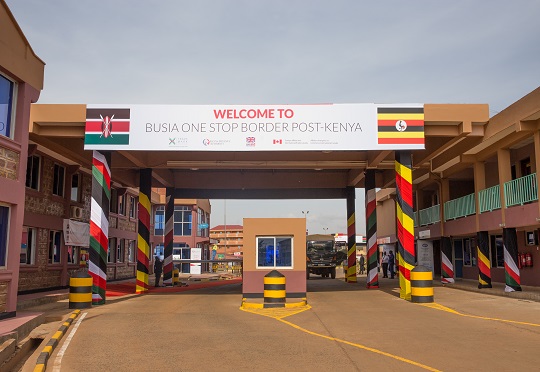
Uganda shares land borders with Kenya, Tanzania, Rwanda, South Sudan, and the Democratic Republic of Congo. Major crossing points include Malaba and Busia into Kenya, Gatuna into Rwanda, and Mutukula into Tanzania.

When crossing borders, immigration officials check documentation, including passports, visa validity, and vaccination certificates. For travellers on an East Africa Tourist Visa, the immigration officer confirms that the visa was issued by the first entry country and remains valid within the trip’s time frame.

Travellers should also carry printed copies of itineraries and accommodation bookings. These documents can be useful at checkpoints to verify that travel is strictly for tourism purposes.

Uganda’s Role in Regional Crossings

As the geographic heart of East Africa, Uganda serves as a gateway between the equatorial forest region of Central Africa and the vast savannahs of the East. Many overland safari itineraries pass through Uganda as part of a circuit linking Kenya’s Maasai Mara, Uganda’s Bwindi and Queen Elizabeth National Parks, and Rwanda’s Volcanoes National Park. The visa’s multi-entry nature allows these routes to be explored efficiently without repeated visa costs.

Tanzania and Other Neighbouring Countries

Tanzania’s Separate Visa Policy

Although Tanzania is a member of the East African Community, it is not part of the East Africa Tourist Visa scheme. Travellers visiting Tanzania must apply for a separate visa either online through the Tanzania eVisa system or on arrival, depending on nationality. Costs and validity periods vary.

For travellers including Tanzania in their itinerary alongside Uganda, Kenya, or Rwanda, planning must accommodate both visa systems. Some safari circuits, for instance, combine the Serengeti in Tanzania with Masai Mara in Kenya or Bwindi Impenetrable Forest in Uganda. In these cases, separate visa applications and border formalities are required.

Other Regional Agreements

While discussions about a broader EAC single tourist visa continue, no formal system currently covers all member states (including Burundi and South Sudan). Thus, only Uganda, Kenya, and Rwanda fully participate in the East Africa Tourist Visa. Any travel outside this tri-nation zone requires independent visas.

What visas, border crossings and multi-country passes work in East Africa including Uganda?Planning a Multi-Country Safari Itinerary

Choosing the First Entry Country

Because the East Africa Tourist Visa must be obtained from and first used in the issuing country, the entry sequence is vital. Travellers beginning in Uganda must enter Uganda first, not Kenya or Rwanda. Entering another country first would invalidate the visa. This detail is particularly important for those booking flights that may land in Nairobi or Kigali en route to Uganda.

Time Management and Validity

The 90-day validity of the East Africa Tourist Visa begins upon first entry into the issuing country. The period cannot be extended, so itineraries must be designed to fit within that timeframe. Travellers who wish to stay longer than three months may need to apply for separate visas, especially if they intend to base themselves in one country for extended volunteering, research, or business.

Safari Vehicle Crossings

For travellers embarking on overland safaris, vehicles must clear customs at each border post. Tour operators handle most of these logistics, including vehicle import documentation, insurance, and temporary road permits. It is essential that travellers verify these arrangements before departure, as vehicle clearance procedures can vary widely between borders.

Travelling with an experienced operator also minimizes delays, as border crossings can sometimes be lengthy due to customs checks or high traffic volumes.

Border Crossings: Air and Land Logistics

Air Travel Across Borders

Regional air connectivity among Uganda, Kenya, and Rwanda has greatly improved. Flights between Entebbe, Kigali, and Nairobi are frequent, making air transfers a convenient option for travellers on the East Africa Tourist Visa. Air travel simplifies the process since airport immigration officers are well-versed in handling EATV passengers.

When flying, travellers should ensure that their passport is stamped upon exit and entry at each airport, maintaining consistency in travel records to avoid complications.

Land Travel and Overland Crossings

Overland travel is ideal for travellers seeking scenic routes and close encounters with local life. Popular border crossings include:

  • Busia or Malaba (Uganda–Kenya) for access between Kampala and Nairobi.

  • Katuna or Cyanika (Uganda–Rwanda) for travellers moving between Bwindi and Volcanoes National Parks.

  • Mutukula (Uganda–Tanzania) for southern routes.

While these crossings are safe and well-maintained, it is advisable to travel during daylight and to carry sufficient local currency for border fees or tips for services such as baggage handling.

Health and Document Requirements

Health regulations across East Africa are consistent. Yellow fever vaccination certificates are mandatory for travellers entering Uganda, Kenya, or Rwanda from regions where yellow fever transmission occurs. Carrying the International Certificate of Vaccination (the yellow booklet) avoids complications at entry points.

All travellers must also have:

  • Passports valid for at least six months beyond the intended departure date.

  • At least two blank pages for stamps.

  • Proof of accommodation and onward or return travel.

Insurance covering medical evacuation is highly recommended, particularly for those engaging in wildlife or mountain activities.

Border Crossing Costs and Practical Considerations

While the visa fee covers entry permissions, certain border fees may still apply, especially for travellers driving private vehicles or for customs clearances of safari equipment. These include temporary vehicle permits, third-party insurance, and, in some cases, small community road levies.

Travellers using the East Africa Tourist Visa should note that leaving the tri-nation region automatically invalidates the visa. For instance, if a traveller enters Tanzania, Burundi, or South Sudan, re-entry into Uganda, Kenya, or Rwanda would require a new visa.

Careful sequencing and consultation with travel specialists prevent such mishaps, ensuring seamless transitions between countries.

Recent Developments in East African Visa Policy

Visa policies in East Africa continue to evolve. Kenya has recently transitioned to an Electronic Travel Authorization (eTA) system, which streamlines entry for many nationalities. Uganda’s e-visa system has improved processing times, and Rwanda continues to promote the East Africa Tourist Visa as part of its tourism integration strategy.

Efforts are underway to expand the EATV’s scope to include more East African Community members. Once fully harmonised, this could create one of the world’s most accessible tourism regions, allowing travellers to experience everything from Uganda’s gorillas to Kenya’s savannahs and Rwanda’s volcanoes on a single permit.

Until then, awareness of each country’s unique rules remains essential for smooth travel planning.

Sample Itinerary Using the East Africa Tourist Visa

Imagine a traveller beginning their journey in Uganda — landing at Entebbe International Airport. After securing the East Africa Tourist Visa online prior to arrival, they spend the first ten days exploring Kibale Forest, Queen Elizabeth National Park, and Bwindi Impenetrable Forest.

From there, they cross into Rwanda through the Katuna border post to visit Volcanoes National Park and Kigali’s cultural attractions. Two weeks later, they fly from Kigali to Nairobi to conclude their journey with a safari in Maasai Mara before returning home.

Throughout the 90 days, the same visa remains valid across all three countries, and border procedures are straightforward since the visa was issued by Uganda (the first country of entry). This flexibility underscores the value of the East Africa Tourist Visa for travellers seeking multi-country experiences in one seamless journey.

The Broader Importance of Multi-Country Travel in East Africa

The introduction of the East Africa Tourist Visa reflects the region’s growing cooperation and the recognition that modern travellers seek regional experiences rather than single-country holidays. By linking destinations like Bwindi, Serengeti, Masai Mara, and Volcanoes National Park, East Africa positions itself as a unified eco-tourism corridor.

Uganda plays a pivotal role in this framework. Its central location makes it both a destination and a transit hub, connecting Central Africa’s rainforests with East Africa’s grasslands. For travellers, this translates into endless possibilities — gorilla trekking, savannah game drives, river cruises, mountain hikes, and cultural encounters across multiple nations with shared natural and cultural heritage.

Understanding the visa and border frameworks that support these experiences ensures that travellers can fully embrace the adventure without interruption or uncertainty.

The Call to Explore East Africa Seamlessly

The beauty of East Africa lies not only in its wildlife and landscapes but also in its spirit of openness and collaboration. The East Africa Tourist Visa symbolises that spirit — an invitation to explore beyond borders, to connect cultures, and to experience a region bound together by diversity and shared purpose.

Whether trekking gorillas in Uganda, cruising the Nile, watching the Great Migration in Kenya, or wandering Kigali’s clean streets, the region offers an interconnected experience that few places on earth can match.

And when you are ready to embark on your own East African adventure, let it be guided by expertise, care, and authenticity. Choose to book your Africa tours and safaris with WildHorn Africa, where cross-border itineraries are handled with precision, and every detail — from visa planning to cultural experiences — is thoughtfully designed. With WildHorn Africa, your journey through East Africa becomes not just a trip, but a passage through a world of natural beauty, cultural depth, and boundless adventure.

Are there night drives or special safari activities in Uganda?

Are there night drives or special safari activities in Uganda?

By Travel stories and blogs, Uganda travel guides

Night Drives and Unique Safari Activities in Uganda | WildHorn Africa

When the sun dips below Uganda’s savannah horizons and the golden light fades into twilight, something extraordinary begins to stir. The air cools, the bush falls silent for a heartbeat, and then a different rhythm awakens — the whisper of nocturnal life. Eyes glint in the darkness, hyenas whoop in the distance, and the deep, haunting call of an owl drifts through the trees. This is a world that most travellers never see — a world that reveals Uganda’s wild beauty under the cloak of night.

For many who imagine a safari, the picture is painted in daylight: lions basking in the sun, elephants marching across open plains, and giraffes silhouetted against a crimson dawn. Yet Uganda, the “Pearl of Africa,” offers something beyond the ordinary. It is one of the few countries in East Africa where visitors can experience night game drives, nature walks, boat safaris, and a host of special activities that unfold when most others retreat to their lodges.

These after-dark adventures unveil a side of the wild that is intimate, mysterious, and utterly enthralling. They redefine the safari experience, transforming it from observation to immersion — an encounter with nature’s hidden pulse.

This article dives deep into the night drives and special safari experiences in Uganda, revealing what makes them unique, where they can be found, and why they elevate the country’s reputation as one of Africa’s most diverse and immersive safari destinations.

The Magic of Uganda’s Nocturnal Wilderness

Nightfall in Uganda carries a transformation unlike any other. As daylight fades, the savannah shifts from the visible to the unseen. The rustling of leaves, the soft padding of paws, and the far-off cries of predators blend into an orchestra of life that thrives beyond human sight.

Unlike many destinations where parks close strictly at sunset, several of Uganda’s national parks allow visitors to venture out after dark on guided night drives, offering a glimpse into the secret world of nocturnal wildlife. These excursions, conducted with trained rangers and equipped vehicles, are not only thrilling but also deeply educational — showing the intricate balance of predator and prey under the moonlit sky.

Uganda’s night safaris are not about adrenaline alone; they are about awareness — the recognition that half of the wild’s rhythm takes place when humans are asleep. From leopards on silent hunts to bush babies leaping through trees, the night reveals the heartbeat of the African wilderness in its purest form.

Where Night Game Drives Can Be Experienced

Among Uganda’s ten national parks, several stand out for their exceptional night drive opportunities. Each destination offers a distinct setting and species composition, ensuring that no two nocturnal experiences feel the same.

Queen Elizabeth National Park – The Heart of Nocturnal Adventure

Perhaps the most famous for night drives, Queen Elizabeth National Park captures Uganda’s wild elegance under the stars. The park’s Mweya Peninsula and Kasenyi Plains are hotspots for after-dark exploration, where safari vehicles move silently across open grasslands in search of elusive predators.

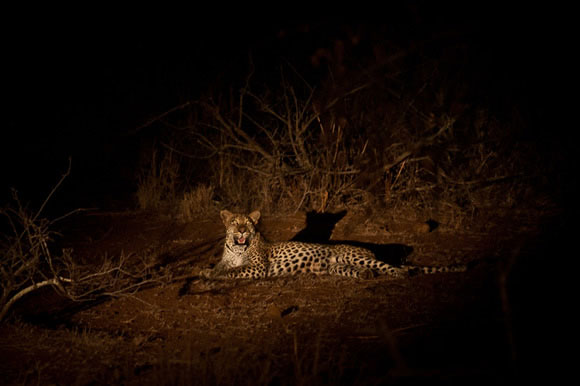
At night, the park transforms. Lions become active, moving gracefully through the savannah as they stalk prey. Leopards, usually shy and solitary, emerge from hiding, their sleek forms melting into the shadows. Hyenas prowl with eerie laughter, while genets, bush babies, and civets dart through the undergrowth. Even the nocturnal calls of nightjars and owls add a haunting beauty to the scene.

Guided by Uganda Wildlife Authority (UWA) rangers, visitors are not only kept safe but are also educated about animal behaviour, the role of nocturnal predators, and the delicate balance of ecosystems that thrive after sunset.

Lake Mburo National Park – Uganda’s Hidden Gem of Nightlife

Smaller yet equally captivating, Lake Mburo National Park is another haven for night drives. Its open acacia woodlands and rolling hills make it one of the easiest places to spot nocturnal creatures. Unlike larger parks, the intimacy of Mburo’s landscape enhances the experience — the silence feels deeper, and the encounters more personal.

Here, the rare leopard sightings are frequent, especially along the park’s main tracks. Bush pigs, porcupines, and the graceful African civet are often seen darting across the road, while hippos wander from the lake to graze under the cover of darkness. The contrast between the calm of the lake and the activity of the plains creates a surreal and unforgettable atmosphere.

Murchison Falls National Park – The Power and Mystery of the Nile at Night

At Murchison Falls, Uganda’s largest national park, night drives offer a blend of drama and tranquillity. The roar of the mighty Nile nearby serves as a backdrop to the symphony of nocturnal life. Travellers here can explore the northern bank’s vast grasslands, where predators roam freely and where elephants are often seen moving under the moonlight, their silhouettes glowing silver against the riverbanks.

The region around Pakuba and Delta Point is particularly rewarding, as the floodplains attract both grazers and hunters after dark. It is one of the few places where the raw power of nature — the sound of the waterfall, the calls of lions, the croaking of frogs — merges into one breathtaking experience.

The Thrill of Night Drives: What Makes Them Special

Night drives in Uganda differ profoundly from daytime safaris. They are not about abundance but about atmosphere. They challenge the senses — hearing replaces sight, intuition replaces familiarity. The beam of a spotlight slices through the darkness, revealing glimmering eyes and fleeting movements. Every encounter feels heightened, every moment charged with anticipation.

The magic lies in unpredictability. One minute, the world seems still; the next, a leopard glides past the vehicle like a ghost. The darkness hides yet also reveals, forcing travellers to slow down, to notice details — the texture of tree bark, the shimmer of dew on grass, the fragrance of wild herbs released by cool air.

Night safaris also highlight smaller and lesser-seen creatures often missed during the day. Bats, mongoose, jackals, and nocturnal birds become protagonists of their own wild theatre. It is a side of Africa that feels ancient, mysterious, and profoundly humbling.

For conservationists, night drives also hold educational value. Observing nocturnal behaviour helps researchers understand predator-prey dynamics and track elusive species that play critical roles in the ecosystem. Thus, every night drive contributes indirectly to Uganda’s broader conservation story.

Are there night drives or special safari activities in Uganda?Beyond the Darkness: Other Special Safari Activities in Uganda

While night drives form one of Uganda’s most exhilarating experiences, they are only a fraction of the country’s diverse safari offerings. The beauty of Uganda lies in its ability to provide multiple layers of adventure, from mountain peaks to watery expanses, from daylight discoveries to moonlit marvels.

Boat Safaris: The Rhythm of the River

Uganda’s lakes and rivers are living ecosystems that rival its savannahs in beauty and biodiversity. Boat safaris, particularly on the Kazinga Channel and the Nile, are among the most rewarding ways to experience the country’s wildlife.

At Queen Elizabeth National Park, the Kazinga Channel links Lakes Edward and George, creating a corridor where life converges. Travellers glide past herds of elephants bathing, hippos yawning in the shallows, and crocodiles basking on sandbanks. The proximity is remarkable; the perspective, entirely different from land-based safaris.

In Murchison Falls, boat cruises to the base of the falls combine serenity with spectacle. The gentle motion of the boat contrasts with the roaring waterfall ahead — a journey that builds in intensity until the spray drenches faces and the thunder of the Nile fills the air. Evening cruises, especially during sunset, are profoundly atmospheric as golden light dissolves into deep violet over the water.

Guided Nature Walks and Forest Experiences

In Uganda, some of the most meaningful encounters happen on foot. Guided nature walks allow visitors to feel the pulse of the land — to hear every birdcall, smell the earth, and trace animal footprints left in the dust.

At Lake Mburo, walking safaris are permitted in designated areas, offering the chance to observe zebras and impalas up close without the barrier of a vehicle. Kibale Forest, home to chimpanzees and 13 other primate species, provides an immersive rainforest walk that engages all the senses. In Bwindi Impenetrable National Park, nature walks complement gorilla trekking by revealing the intricate biodiversity of the forest — butterflies, orchids, medicinal plants, and birdlife that define this living ecosystem.

Hot Air Balloon Safaris: A View from the Skies

A relatively new addition to Uganda’s safari repertoire is the hot air balloon experience, available primarily in Murchison Falls National Park. Floating silently above the plains as the sun rises reveals the landscape in all its grandeur. The aerial view transforms perception — the meandering Nile below, herds moving like dots across the savannah, and the vastness of the park stretching to the horizon.

The stillness of the early morning flight, punctuated only by the occasional burst of flame from the balloon, creates a sense of awe that words cannot capture. Few experiences compare to seeing Uganda from above, where time seems suspended and nature’s artistry unfolds beneath your feet.

Birding Safaris: The Symphony of Wings

Uganda is one of the world’s premier birding destinations, boasting over 1,090 bird species — a number that rivals entire continents. Special birding safaris take visitors deep into habitats like Mabamba Swamp, Budongo Forest, and Semuliki National Park, where rare species such as the shoebill stork can be observed.

What makes Uganda’s birding experience unique is not just the diversity of species but the accessibility of habitats. From forest trails to riverbanks, from crater lakes to open grasslands, the variety of terrain ensures that every day offers new discoveries. For many travellers, birding in Uganda becomes a meditative experience — an exercise in patience, observation, and quiet appreciation.

Cultural Encounters: Humanity at the Heart of the Wild

No safari in Uganda is complete without engaging with its people. Beyond the wilderness lies a tapestry of cultures, each with its own stories, songs, and traditions.

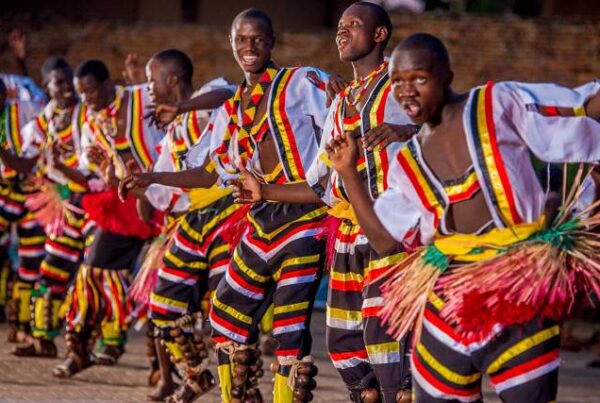
In the southwest, the Batwa community — the original forest dwellers — share their heritage through interpretive walks and storytelling. In the north, the Karamojong people offer insight into pastoral life on the plains. Throughout the country, visitors can experience traditional dances, craft markets, and local cuisines that reflect Uganda’s warmth and diversity.

These cultural interactions deepen understanding and remind travellers that conservation is not just about protecting animals, but also about empowering the communities who coexist with them.

The Conservation Perspective: Why These Activities Matter

Uganda’s special safari activities are not designed purely for entertainment. They form part of a larger vision of sustainable and inclusive tourism. Every night drive, boat trip, or nature walk contributes directly to conservation funding and community development.

By encouraging travellers to explore the parks at different times and in varied ways, Uganda reduces pressure on specific attractions like gorilla trekking and distributes tourism benefits more evenly. It also allows visitors to form a deeper connection with nature, fostering awareness and support for wildlife protection.

The Uganda Wildlife Authority ensures that all such activities are conducted responsibly — with strict adherence to environmental regulations, limited vehicle numbers, and professional guiding. This careful balance between access and preservation safeguards both the experience and the ecosystem for generations to come.

The Emotional Essence of Uganda’s Night and Special Safaris

To witness Uganda after dark or to explore its landscapes from unique perspectives is to move beyond tourism and into transformation. The night sky stretches wide and clear, revealing constellations so bright they seem to hum. The sounds of the wild become the soundtrack of ancient Africa — hyenas calling, lions roaring, frogs croaking, crickets vibrating in unison.

Moments like these awaken something primal. They remind travellers that humanity is part of this natural rhythm, not separate from it. A night drive is not merely an excursion; it is an invitation to rediscover humility — to see the world without filters, as it truly is.

Even in the quiet moments, such as drifting on the Kazinga Channel at sunset or walking through the forest at dawn, Uganda teaches the same lesson: the wild does not perform; it simply exists. And in that existence lies beauty beyond words.

The Call to Adventure: Discover Uganda’s Untamed Night

Uganda offers more than safaris — it offers perspective. It is one of the few places in Africa where travellers can experience the full spectrum of wilderness: day and night, land and water, mountain and plain, human and wild.

The thrill of a night drive in Queen Elizabeth, the serenity of a boat safari at Murchison Falls, the intimacy of a guided walk in Lake Mburo — each experience reveals another layer of the country’s soul. Together, they weave a narrative of diversity and depth unmatched anywhere else in Africa.

For those who seek an adventure that transcends the ordinary, who long not just to see but to feel Africa, Uganda awaits with open arms and open skies.

And when you decide to embark on that journey, let your exploration be guided by passion, expertise, and purpose. Choose to book your Africa tours and safaris with WildHorn Africa, where every experience is curated to blend comfort, authenticity, and conservation. With WildHorn Africa, your safari becomes not just a trip, but a story — one written in starlight, river spray, and the whispers of the wild.

What cultural festivals or events can travellers attend in Uganda?

What cultural festivals or events can travellers attend in Uganda?

By Travel stories and blogs, Uganda travel guides

Cultural Festivals and Events in Uganda | Discover Uganda’s Heritage with WildHorn Africa

When most people imagine Uganda, their minds often drift to mist-shrouded forests, mountain gorillas, and sweeping savannahs alive with wildlife. Yet beyond the call of the wild, Uganda holds another kind of rhythm — one that beats through its cities, villages, and hearts of its people. This rhythm is cultural, vibrant, and deeply rooted in tradition. It finds its voice in song, dance, and celebration — a dynamic expression of identity that captivates every traveller fortunate enough to witness it.

In Uganda, culture is not a performance; it is a living expression of community and continuity. From ancient royal ceremonies in the Buganda Kingdom to modern music festivals that pulse with youth and creativity, the country’s calendar brims with events that tell the story of its soul. For travellers seeking more than wildlife, these cultural experiences offer an authentic connection to Uganda’s heritage — a chance to feel the country’s heartbeat beyond its landscapes.

This article explores, in vivid detail, the cultural festivals and events in Uganda that travellers can attend — journeys through music, dance, art, and tradition that reveal the essence of what it means to be Ugandan.

The Cultural Soul of Uganda

Uganda is home to over fifty distinct ethnic groups, each with its own language, customs, and traditions. The result is a tapestry of cultures so diverse and yet so harmoniously woven that it defines the nation’s identity. From the Baganda of the central region, known for their elaborate royal traditions, to the Banyankole, Acholi, Basoga, Bagisu, and Karamojong, every community brings its unique expression to the national stage.

Cultural festivals in Uganda are not mere gatherings; they are celebrations of identity. They connect generations, preserve heritage, and invite outsiders to join in the dance of continuity. Music, storytelling, costume, and cuisine are central to these events, making them immersive experiences for travellers seeking authentic human connection.

Uganda’s festivals fall into two broad categories — traditional and contemporary. The traditional ones are rooted in rituals, harvests, and royal ceremonies, while the modern ones celebrate art, fashion, and innovation. Together, they reflect Uganda’s evolution — a nation proudly embracing the future without losing sight of its past.

The Royal Heritage: The Kabaka’s Birthday and Coronation

In Uganda’s central region, the Buganda Kingdom remains a powerful cultural and historical institution. Its leader, the Kabaka, is more than a monarch; he is a symbol of unity, tradition, and identity for millions of Baganda people.

Each year, the Kabaka’s birthday celebration transforms Kampala and surrounding areas into a vibrant sea of color, music, and dance. The festivities often begin with a marathon — the Kabaka’s Birthday Run — which draws thousands of participants wearing shirts emblazoned with the Kabaka’s crest. The run has evolved beyond celebration into a platform for health awareness and social causes, uniting people across the country.

The main royal celebration, however, takes place at the Mengo Palace or other traditional sites, where the Kabaka receives blessings from clan leaders, cultural performances fill the air, and the Baganda people reaffirm their allegiance to the throne. The atmosphere brims with pride, drumming, and ululations that echo Uganda’s royal past.

Equally grand is the Kabaka’s Coronation Anniversary (Enkuuka), held every July. This event commemorates the Kabaka’s ascent to the throne and features traditional performances, parades, and the attendance of dignitaries from across the nation. For travellers, witnessing this ceremony offers a glimpse into a living monarchy whose influence continues to shape Buganda’s identity within modern Uganda.

The Imbalu Circumcision Ceremony: A Rite of Passage in Bugisu

In eastern Uganda, near the slopes of Mount Elgon, the Bagisu people (also known as Bamasaba) uphold one of the country’s most powerful and visually striking traditions — the Imbalu Circumcision Ceremony.

Held every even year, usually between August and December, Imbalu marks the transition of boys into manhood. The ceremony is not a private ritual but a public celebration that involves entire communities. Villages erupt with song and dance as drummers announce the approach of the circumcision season. The initiates, adorned in traditional regalia, parade through the streets amid cheering crowds before undergoing the sacred rite.

To outsiders, the spectacle may appear intense, yet it is profoundly symbolic — a rite of identity and belonging that binds generations. For travellers, attending Imbalu is an opportunity to witness a ritual that has endured for centuries, untouched by time. The energy, emotion, and collective pride surrounding it make it one of the most authentic cultural experiences in Uganda.

The Nyege Nyege Festival: The Pulse of Modern Uganda

While traditional festivals preserve the past, Uganda’s modern cultural evolution finds its heartbeat in events like Nyege Nyege — arguably East Africa’s most famous music and arts festival.

Held annually in Jinja, along the banks of the River Nile, Nyege Nyege has become a symbol of freedom, creativity, and youthful expression. The name itself means “the irresistible urge to move or dance” in Luganda — a fitting description for a festival that blends traditional African sounds with contemporary beats, electronic music, and global artistry.

Over four electrifying days, Jinja transforms into a melting pot of cultures. Artists from across Africa and beyond converge to perform on multiple stages set amid lush riverside forests. From drum circles to experimental DJs, from traditional dancers to spoken word poets, Nyege Nyege is an explosion of creativity that captures the vibrancy of Africa’s cultural renaissance.

Beyond music, the festival promotes inclusivity and cultural exchange, celebrating Africa’s diversity while offering travellers a space to connect with Ugandan youth culture. It is raw, expressive, and unforgettable — an experience that encapsulates Uganda’s modern rhythm without losing touch with its roots.

The Rolex Festival: A Celebration of Ugandan Street Cuisine

No cultural exploration of Uganda would be complete without its food, and few dishes symbolize everyday Ugandan life like the Rolex — a rolled chapati stuffed with eggs, vegetables, and sometimes meat. What began as a quick roadside meal for students has evolved into a national symbol of creativity and simplicity.

To honor this culinary icon, Kampala hosts the Rolex Festival, a lively event that draws chefs, vendors, and food lovers from across the country. The festival is a feast of aromas, flavors, and laughter — stalls line the grounds with sizzling pans, music fills the air, and the energy is infectious.

Travellers attending the Rolex Festival experience more than food; they encounter the warmth of Ugandan hospitality and the ingenuity that transforms humble ingredients into beloved traditions. It’s a cultural immersion where taste becomes a language and food becomes connection.

The Bayimba International Festival of the Arts

Among Uganda’s most prestigious cultural events, the Bayimba International Festival stands as a beacon of artistic excellence and innovation. Founded in 2008, Bayimba has evolved into a multidisciplinary celebration of African creativity — encompassing music, dance, theatre, film, visual arts, and fashion.

Held on Lunkulu Island in Mukono, the festival’s location itself adds to the allure. Surrounded by Lake Victoria’s shimmering waters, the island becomes a sanctuary of art, performance, and community. Artists from Uganda and beyond gather to collaborate, perform, and inspire audiences through diverse expressions of culture.

For travellers, Bayimba offers a holistic encounter with Uganda’s artistic landscape. Whether one is watching a contemporary dance performance under the stars, attending an art exhibition, or joining a drum circle at dawn, the experience resonates deeply with Uganda’s evolving creative spirit.

Bayimba also embodies inclusivity and education, hosting workshops that empower young artists and foster cross-cultural exchange. It is a festival that doesn’t just entertain — it transforms, connecting people through shared passion and artistic vision.

The Kampala City Festival: Urban Energy at Its Peak

As the capital and cultural hub of Uganda, Kampala has its own grand celebration — the Kampala City Festival. This annual event, typically held in October, celebrates the city’s diversity, resilience, and modern identity.

For several days, Kampala’s streets come alive with parades, live music, street performances, and cultural exhibitions. From traditional drumming troupes to contemporary fashion showcases, the festival brings together every facet of Ugandan society. Businesses, artists, and community organizations participate, turning the city into a living carnival.

The Kampala Festival is not merely entertainment; it reflects the pulse of a city in motion — youthful, energetic, and proudly Ugandan. For travellers, it offers a vivid snapshot of urban life in Africa, where tradition meets innovation in the most dynamic ways.

The Ekyooto Ha Mpango Festival: Celebrating Tooro Kingdom

In western Uganda, the Tooro Kingdom holds one of the country’s most charming cultural festivals — the Ekyooto Ha Mpango. This event celebrates Tooro’s royal heritage, music, food, and dance, all while promoting tourism and cultural pride.

The festival’s name, meaning “fireplace of conversation,” symbolizes unity and dialogue. Attendees gather around symbolic fires, sharing stories, performing traditional songs, and presenting Tooro’s rich customs. The event also features exhibitions of local crafts, traditional attire, and culinary delights, giving visitors an immersive glimpse into the kingdom’s lifestyle.

For travellers, Ekyooto Ha Mpango is a unique chance to experience royal tradition outside the more publicized Buganda events. It radiates authenticity and intimacy, revealing Uganda’s regal diversity through one of its smaller yet deeply respected monarchies.

What cultural festivals or events can travellers attend in Uganda?The International Nyege Carnival and Kampala Fashion Week

Uganda’s modern cultural calendar also highlights the International Nyege Carnival and Kampala Fashion Week, both of which showcase the country’s creative industries on a global stage.

The Nyege Carnival, born from the success of Nyege Nyege, blends art installations, live performances, and global fusion music in an urban setting. It reflects the same energy but focuses more on community art and social inclusion.

Meanwhile, Kampala Fashion Week transforms the capital into a runway for innovation. Ugandan designers showcase traditional fabrics such as kikoyi and barkcloth reimagined in modern fashion forms. The event attracts global attention for its sustainability focus and its fusion of heritage with avant-garde creativity.

Both festivals reveal Uganda’s evolution as a cultural powerhouse — a country grounded in tradition but unafraid to experiment, adapt, and lead.

The Empango Coronation Anniversary in Tooro

Beyond Ekyooto, the Empango festival holds special significance for the Tooro Kingdom. This annual celebration marks the coronation anniversary of the Omukama (King), an event steeped in royal pageantry and cultural pride.

Held at the Karuzika Palace in Fort Portal, the Empango celebration gathers thousands of Tooro subjects dressed in traditional regalia, along with visitors from other kingdoms and countries. The event is characterized by drumming, dancing, and royal rituals that reaffirm the bond between the monarch and his people.

For travellers, attending Empango is like stepping into history. It provides insight into how Uganda’s kingdoms continue to shape the country’s cultural landscape, maintaining continuity amid modernization.

Traditional Dance and Music Festivals Across the Country

Uganda’s love for music and dance manifests not only in organized festivals but also in local cultural events that punctuate the calendar year. In northern Uganda, Acholi and Lango dance festivals showcase the intricate rhythms of traditional drumming and storytelling. In the east, Basoga cultural galas celebrate the spirit of Busoga through vibrant performances.

Each region contributes its signature style — from the high-energy Bakisimba dances of Buganda to the graceful Ekizino of the southwestern highlands. These festivals embody the essence of community, where generations come together to dance, sing, and pass down their traditions through movement and song.

For travellers, attending any of these local festivals is a privilege — a front-row seat to Uganda’s living heritage, often accompanied by laughter, hospitality, and spontaneous invitations to join the dance.

Religious and Faith-Based Celebrations

Religion plays a central role in Uganda’s cultural identity. The country’s calendar includes vibrant faith-based events that attract both pilgrims and visitors.

The Namugongo Martyrs Day, held every June 3rd, commemorates the Christian martyrs who were executed for their faith during the reign of Kabaka Mwanga II in the late 19th century. Millions of pilgrims from Uganda and beyond converge at the Namugongo Martyrs Shrine near Kampala, creating one of Africa’s largest annual religious gatherings.

Similarly, the Muslim Idd celebrations, Eid al-Fitr and Eid al-Adha, are marked with community prayers and festive meals that reflect Uganda’s interwoven faith traditions. These events offer travellers a chance to witness the nation’s spiritual depth and its capacity for peaceful coexistence among diverse beliefs.

The Human Connection: What Festivals Reveal About Uganda

Attending festivals in Uganda is more than sightseeing — it is participation in a shared humanity. Every drumbeat carries meaning, every dance step tells a story, and every smile offers welcome. The festivals reveal Uganda’s greatest strength — its people.

Despite its complex history, Uganda stands as one of Africa’s most culturally unified nations. Festivals here are not confined to ethnic lines; they are open celebrations of diversity. Whether in royal grounds or city streets, in music arenas or rural villages, the same message resonates — unity through culture.

For travellers, this openness is transformative. Participation in these events dissolves barriers between visitor and local, creating moments of genuine connection that linger long after departure.

The Call to Experience Uganda’s Cultural Heart

Uganda’s festivals are living stories — tales of resilience, creativity, and joy. They capture the past, energize the present, and inspire the future. To attend them is to see the country not as a destination, but as a conversation between history and hope.

From the spiritual solemnity of Namugongo to the electric energy of Nyege Nyege, from the regal grace of the Kabaka’s Coronation to the communal joy of the Rolex Festival, every event opens a different window into Uganda’s soul.

For travellers yearning for authentic, transformative experiences, Uganda’s cultural calendar offers endless possibilities.

And when you choose to explore these celebrations, do it with those who understand their essence and respect their roots. Choose to book your Africa tours and safaris with WildHorn Africa, where every journey is crafted not only to showcase Uganda’s beauty but to connect you deeply with its people, traditions, and stories. With WildHorn Africa, you don’t just witness Uganda’s culture — you become part of it.

What unique experiences does Uganda offer (e.g., tree-climbing lions, mountain gorillas)?

What unique experiences does Uganda offer (e.g., tree-climbing lions, mountain gorillas)?

By Travel stories and blogs, Uganda travel guides

Unique Experiences in Uganda: Gorillas, Tree-Climbing Lions & Hidden Wonders | WildHorn Africa

There is a country in the heart of Africa that defies ordinary travel expectations — a land where misty jungles hide the world’s last mountain gorillas, where lions lounge in trees like leopards, and where mighty rivers carve through ancient rocks to form the most powerful waterfalls on the continent. That country is Uganda — the “Pearl of Africa.”

In a world where safaris often follow familiar paths, Uganda stands apart as an untamed, immersive, and soul-stirring destination. It offers unique experiences that transcend traditional wildlife viewing — encounters that are raw, emotional, and deeply human. Here, nature isn’t just observed; it’s felt, breathed, and lived.

This article explores in depth what makes Uganda’s safari experiences so distinctive, why they are unlike anything else in East Africa, and how travellers can uncover this raw beauty through authentic exploration. From the whispering rainforests of Bwindi to the roaring torrents of Murchison Falls, Uganda offers not a journey across land — but a journey into the very heart of life itself.

The Soul of Uganda: Nature’s Living Tapestry

Uganda sits astride the equator, a lush intersection of East Africa’s savannahs and Central Africa’s rainforests. This geographical diversity creates an extraordinary fusion of ecosystems — where mountain gorillas, chimpanzees, tree-climbing lions, shoebill storks, and elephants all share one country. It is this blend of landscapes and species that gives Uganda its uniqueness.

While Kenya and Tanzania boast sweeping plains and great migrations, Uganda offers something more intimate and spiritual. Its appeal lies not in sheer numbers, but in the quality of experience — the sense of being fully enveloped by the natural world. Every journey feels like a discovery, every encounter a revelation.

The Uganda Wildlife Authority manages ten national parks, each offering a distinct ecological personality. Together, they represent Africa’s diversity in microcosm — from alpine peaks to wetlands, tropical forests, and open savannahs.

What sets Uganda apart is that nowhere else on the continent can a traveller, in a single journey, track mountain gorillas, spot tree-climbing lions, cruise alongside hippos, and stand on the edge of the Nile’s thunderous descent — all within one country’s borders.

The Mountain Gorillas of Bwindi: A Once-in-a-Lifetime Encounter

To step into Bwindi Impenetrable National Park is to step into another world. The forest hums with ancient life — damp, dense, and fragrant, a cathedral of green where sunlight barely pierces the canopy. It is here that Uganda’s most iconic experience unfolds — the chance to meet the mountain gorillas, our closest relatives in the wild.

Bwindi, a UNESCO World Heritage Site, shelters nearly half of the world’s remaining mountain gorillas, a species found only here and in neighbouring Rwanda and the Congo. To encounter them is not just a wildlife experience; it is a deeply emotional and humbling event that transcends tourism.

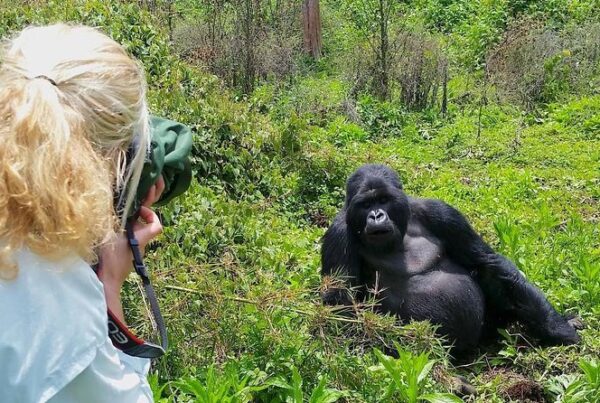
The trek begins in the cool of dawn, guided by expert rangers through tangled undergrowth and steep ridges. Hours may pass before the first glimpse appears — a flash of black fur, a rustle in the leaves. Then, suddenly, they are there: a silverback watching protectively over his family, juveniles tumbling through vines, mothers nursing quietly in the shadows.

The stillness that follows is almost sacred. For one hour, humans and gorillas share the same space, separated only by respect. The eyes of a gorilla — intelligent, gentle, and familiar — reflect something ancient, a reminder of our shared origins.

This encounter, fragile and transformative, is one of the planet’s rarest privileges. Uganda’s careful conservation policies, including limited daily permits and community engagement programs, ensure that each visit supports both the gorillas and the people who protect them.

The Tree-Climbing Lions of Ishasha: A Natural Wonder

Among Africa’s many predators, few behaviours are as intriguing as the tree-climbing lions of Ishasha. Found within the southern sector of Queen Elizabeth National Park, these lions defy their species’ norms by spending their afternoons draped lazily across the branches of giant fig trees.

While lions are typically ground dwellers, the Ishasha pride has evolved this unusual habit — perhaps to escape tsetse flies, enjoy cool breezes, or survey the plains from a vantage point. Whatever the reason, the sight of these muscular cats stretched out on tree limbs against the backdrop of the African sky is unforgettable.

Driving through the Ishasha plains, one must look upward rather than outward. There, silhouetted against the sun, lie these regal animals — paws dangling, tails flicking idly, their golden eyes half-closed in the afternoon heat. It is both surreal and majestic, a reminder that in Uganda, nature rewrites its own rules.

Nowhere else in the world can this phenomenon be seen so reliably. The Ishasha lions symbolize the distinct character of Ugandan wildlife, where familiar creatures reveal unfamiliar stories, and the expected gives way to the extraordinary.

What unique experiences does Uganda offer (e.g., tree-climbing lions, mountain gorillas)?The Power of Murchison Falls: Where the Nile Roars

In the northwestern reaches of Uganda, the world’s longest river performs one of its most spectacular acts. The Nile, having journeyed quietly from Lake Victoria, suddenly compresses itself through a narrow seven-meter gorge and explodes into a thunderous cascade known as Murchison Falls.

The sight is nothing short of elemental. Water churns, mist rises, and rainbows form in the spray as millions of gallons surge through the gap each second. The ground trembles, and the sound reverberates through the cliffs — a deep, primeval roar that captures the essence of untamed Africa.

Below the falls, the Nile widens into calm stretches where hippos, crocodiles, and elephants gather along the banks. A boat cruise to the base of the falls offers one of Uganda’s most cinematic experiences, combining serene wildlife viewing with the overwhelming power of nature.

The surrounding Murchison Falls National Park is Uganda’s largest, hosting giraffes, buffaloes, antelopes, and predators like lions and leopards. The contrast between thunderous energy and tranquil beauty makes Murchison one of the continent’s most dramatic natural spectacles — a testament to Uganda’s dual nature of power and grace.

The Primate Kingdom: Chimpanzees and Beyond

Beyond the mountain gorillas lies another primate paradise — the Kibale Forest National Park, often called the “primate capital of the world.” This lush rainforest is home to over a thousand chimpanzees and thirteen other primate species, making it the highest primate density area on earth.

Chimpanzee tracking in Kibale is a sensory adventure. The forest echoes with their whoops and calls long before they are seen. Following the rangers through vines and roots, one eventually catches sight of them — grooming, feeding, or playing in family groups. Their behaviour mirrors human social patterns so closely that it feels like watching distant cousins in their natural element.

Kibale’s ecosystem also supports red colobus monkeys, grey-cheeked mangabeys, and L’Hoest’s monkeys. The experience here is both scientific and spiritual — a reminder of the intricate web that connects all life.

For travellers seeking something even more secluded, Budongo Forest near Murchison Falls offers a quieter chimpanzee tracking experience, where the air is thick with humidity and birdsong.

The Kazinga Channel: Where Water Meets Wildlife

Uganda’s uniqueness lies not only in its forests and mountains but also in its waterways. The Kazinga Channel, a 40-kilometer natural link between Lake Edward and Lake George in Queen Elizabeth National Park, is one of Africa’s richest aquatic habitats.

Here, a boat safari becomes a living tapestry of wildlife. Herds of elephants wade into the shallows to drink. Hippos crowd the riverbanks, half-submerged and grunting softly. Nile crocodiles bask in the sun, while flocks of pelicans, cormorants, and kingfishers fill the air with motion.

Unlike the fast-paced drama of land safaris, the Kazinga experience unfolds in peaceful rhythm — a slow drift through abundance. The reflections of animals on the water, the interplay of light and sound, create a sense of harmony rarely found elsewhere.

The channel’s ecosystem is vital to the park’s biodiversity, sustaining both land and aquatic species. It symbolizes Uganda’s seamless blending of environments — where water, forest, and savannah coexist effortlessly.

The Rwenzori Mountains: The Mystical “Mountains of the Moon”

Rising like sentinels along Uganda’s western frontier, the Rwenzori Mountains stand as one of Africa’s most otherworldly landscapes. Cloaked in mist and capped with glaciers, these peaks were long considered mythical — described by ancient geographers as the “Mountains of the Moon.”

Today, they remain one of Africa’s most challenging and rewarding trekking destinations. The trails ascend through zones of changing vegetation — from tropical forest to bamboo, heather, and alpine meadows. Giant lobelias and groundsels, plants found nowhere else, tower over hikers like relics from a prehistoric world.

At higher altitudes, the scenery transforms into a dreamlike realm of ice and cloud. The summits, including Margherita Peak on Mount Stanley, rise above 5,000 meters, offering views across Uganda, the Congo, and beyond.

The Rwenzori experience embodies the spiritual side of adventure — one of endurance, solitude, and awe. Few travellers venture here, which makes its beauty feel even more exclusive and untouched.

The Shoebill and Birding Paradise

For bird enthusiasts, Uganda is a revelation. With over 1,090 bird species, it ranks among the world’s top birding destinations. Its varied ecosystems — wetlands, forests, and savannahs — provide habitats for both endemic and migratory species.

The most sought-after sighting is the shoebill stork, an extraordinary bird with a prehistoric appearance and a shoe-shaped bill. Found in wetlands such as Mabamba Bay near Entebbe, this bird embodies the mystery of Uganda’s wild spaces. Watching it stalk silently through papyrus reeds feels like glimpsing into the age of dinosaurs.

Beyond the shoebill, locations like Semuliki, Budongo, and Queen Elizabeth National Park offer endless birding opportunities. From iridescent sunbirds to crowned cranes and African fish eagles, Uganda’s avian diversity astonishes even seasoned ornithologists.

Birding in Uganda is not just about species count; it’s about immersion. The sounds, colours, and rhythms of the land blend into a living symphony of flight.

The Crater Lakes and Scenic Highlands

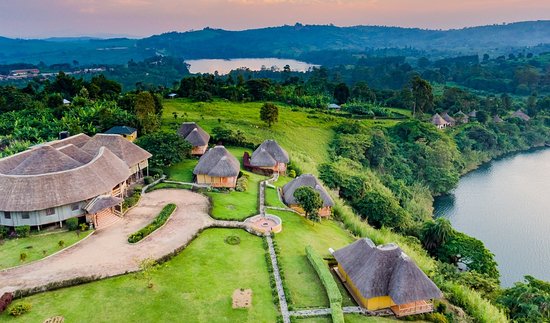
Scattered across western Uganda, the crater lakes are hidden jewels of tranquility. Formed by ancient volcanic activity, these deep, sapphire-blue waters are surrounded by terraced hills, banana plantations, and forested slopes.

Areas like Fort Portal, Ndali-Kasenda, and Kabale offer some of the most picturesque landscapes in East Africa. Kayaking, swimming, and hiking around these lakes reveal Uganda’s serene side, far from the roar of lions or the thunder of waterfalls.

The people living in these regions cultivate coffee and vanilla, welcoming travellers with warm smiles and stories of the land. The crater lakes provide not just scenery but cultural connection — a balance of natural beauty and human harmony.

The Kidepo Valley: Africa’s Hidden Frontier

Far to the northeast, where Uganda meets South Sudan and Kenya, lies Kidepo Valley National Park, one of Africa’s last untouched wildernesses. Its remoteness alone sets it apart — a place so wild that even time seems to pause.

The landscape here is stark and beautiful, a vast plain framed by rugged mountains. Wildlife flourishes freely — lions, cheetahs, giraffes, elephants, and large herds of buffalo roam undisturbed. The park’s isolation has preserved its purity; sightings are often private, shared only with the wind.

Encounters with the Karamojong people, pastoralists who live in harmony with the land, add cultural richness to the experience. Visiting Kidepo feels like stepping into Africa before it was discovered — an echo of an older, purer world.

Uganda’s Human Warmth: The Heart Behind the Adventure

Beyond its wildlife and scenery, Uganda’s greatest treasure is its people. Warm, open, and endlessly hospitable, Ugandans embody the spirit of community and resilience. Every interaction — whether in a bustling market, a quiet village, or a safari lodge — feels genuine.

The cultural diversity is immense, with over fifty tribes, each contributing to Uganda’s social fabric. Music, dance, and storytelling remain vital forms of expression. Visitors are often drawn into spontaneous drumming sessions, laughter-filled meals, or evening campfire tales that illuminate the heart of the country.

In Uganda, tourism is not a detached activity but a shared experience between visitor and host. Travellers are not observers; they are welcomed as participants in a living, breathing culture that thrives alongside nature.

Why Uganda’s Uniqueness Matters

In an age of mass tourism and predictable itineraries, Uganda stands as a reminder of what travel once meant — discovery, connection, and awe. Its experiences are unique because they are unrepeatable elsewhere.

The mountain gorillas cannot be relocated. The tree-climbing lions exist only here. The shoebill still haunts its ancient wetlands. The Nile still thunders through its gorge. And the people, whose lives are intertwined with these landscapes, continue to preserve their authenticity.

Every journey through Uganda is transformative. It invites travellers to slow down, to listen, to feel — to rediscover not only nature but themselves.

The Call to Adventure

Uganda is not a destination to rush through; it is a place to be absorbed by. Its unique experiences are chapters in a story of life’s diversity and endurance — from the primal forests of Bwindi to the golden plains of Ishasha and the soaring heights of the Rwenzoris.

Each moment lingers long after the journey ends. The gaze of a gorilla, the rumble of Murchison Falls, the cry of an African fish eagle at sunset — they imprint themselves on the spirit.

To explore Uganda is to witness Africa’s past, present, and future coexisting in one breathtaking landscape.

For those ready to embark on a safari that transcends the ordinary, where every encounter feels personal and every experience unforgettable, the journey begins with a trusted guide. Choose to book your Africa tours and safaris with WildHorn Africa, where expertise meets passion, and where every itinerary is designed not just for exploration, but for transformation. With WildHorn Africa, you don’t just visit Uganda — you become part of its story.

What surface roads and driving conditions should I expect in Uganda?

What surface roads and driving conditions should I expect in Uganda?

By Travel stories and blogs, Uganda travel guides

Uganda Road Conditions and Driving Guide | What to Expect on Safari Roads | WildHorn Africa | What surface roads and driving conditions should I expect in Uganda?

Traveling across Uganda is an adventure that unfolds not only in the beauty of its landscapes but also in the diversity of its roads. From the modern highways leading out of Kampala to the winding dirt tracks that snake through remote parks, Uganda’s road network reflects both progress and raw natural character. Whether you are planning a self-drive safari or being chauffeured through the country’s national parks, understanding Uganda’s road surfaces and driving conditions is crucial to ensuring a smooth, safe, and enjoyable experience.

This detailed guide explores every aspect of driving in Uganda — from tarmac highways to unpaved tracks, weather impacts, regional differences, vehicle requirements, and essential safety insights — to prepare you for what lies ahead.

The Character of Uganda’s Roads

Uganda’s road system is as varied as its geography. Smooth tarmac highways connect major towns and cities, while rugged, unpaved tracks cut across the wilderness to reach lodges, conservation areas, and mountain regions. Travelers quickly learn that in Uganda, distance doesn’t always equal time; a 100-kilometer stretch can take hours depending on surface type and weather.

The majority of Uganda’s major highways are paved and generally in good condition. These include routes from Kampala to Entebbe, Jinja, Gulu, Mbarara, and Fort Portal. Beyond these main arteries, most secondary roads — especially those leading to national parks or rural communities — are made of murram, a laterite gravel mixture that is firm when dry but slippery when wet.

These unpaved roads are typical of Africa’s hinterlands: scenic, adventurous, and sometimes unpredictable. Their charm lies in the fact that they carry travelers into Uganda’s most authentic landscapes, from the foothills of the Rwenzori Mountains to the forests of Bwindi and Mgahinga.

The Major Paved Highways

Paved highways offer comfort and reliability for most of the journey between Uganda’s key destinations. The Entebbe–Kampala Expressway, for instance, is a modern multi-lane highway that connects Uganda’s international airport to its capital city in less than an hour. From Kampala, several main roads radiate outwards:

  • The Kampala–Masaka–Mbarara route links to the southwest, leading toward Lake Mburo National Park and the Bwindi region.

  • The Kampala–Fort Portal–Kasese highway serves as a gateway to Queen Elizabeth National Park and the crater lake region.

  • The Kampala–Gulu–Kitgum route leads north to Murchison Falls National Park and further to Kidepo Valley.

  • The Kampala–Jinja–Mbale–Soroti route connects to the east, passing through rich farmlands and forest zones.

On these routes, driving conditions are generally stable. Roads are wide and sealed, with visible lane markings and regular fuel stations. However, expect frequent speed bumps near towns, unpredictable overtaking by minivans, and occasional potholes that demand cautious driving.

Traffic near Kampala can be dense and chaotic, with boda-boda motorcycles weaving through gaps, pedestrians crossing unexpectedly, and minibus taxis making sudden stops. Defensive driving and patience are invaluable virtues when navigating the city’s roads.

The Real Safari Roads: Unpaved, Dusty, and Wild

While paved highways provide the backbone of Uganda’s transport system, the real adventure begins when you turn onto the unpaved roads leading to national parks and lodges. These murram roads are where the safari experience truly begins — and where driving skills and vehicle quality start to matter.

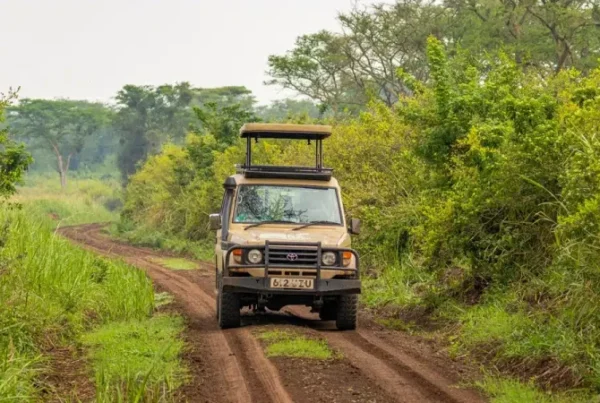
In the dry season, these roads are usually firm and dusty. The fine red laterite dust hangs in the air and can coat vehicles and luggage in minutes. Corrugations (small ridges caused by constant traffic) often develop, making the ride bumpy and noisy.

In the wet season, the same roads can become treacherous. Tropical downpours quickly turn murram into slick mud. Deep ruts form where heavy trucks or safari vehicles pass, and uphill sections can become nearly impassable. Drivers often have to use low gears, and in extreme cases, even the best 4×4 vehicles can get bogged down.

Bridges in remote regions are sometimes simple wooden or concrete structures, and occasional flooding during heavy rains can render certain routes temporarily impassable. The unpredictability of rural roads adds an element of raw adventure — and also underscores the need for expert local guidance.

Driving Conditions Inside National Parks

Once inside the parks, roads are typically dirt or gravel, managed by the Uganda Wildlife Authority. During dry months, they are navigable but dusty; during rainy months, they can become slippery and heavily rutted.

For example, in Murchison Falls National Park, main game-viewing tracks are generally well-maintained but can turn muddy after rainfall. In Queen Elizabeth National Park, the roads near the Kazinga Channel and Ishasha sectors are passable most of the year, but after prolonged rains, travelers may encounter slippery clay sections.

In the Bwindi Impenetrable and Mgahinga Gorilla National Parks, the terrain becomes steeper, with winding mountain roads that require careful navigation. Four-wheel-drive vehicles are mandatory here, as the roads are narrow and often surrounded by dense forest.

Traveling with experienced guides or drivers who know how to handle these terrains ensures not only safety but also access to remote lodges that offer breathtaking views of Uganda’s wild heart.

The Influence of Weather on Road Conditions

Uganda’s climate features two main rainy seasons — from March to May and October to November — and two dry seasons — from June to August and December to February. These weather patterns strongly dictate road conditions and travel efficiency.

During the rainy seasons, roads can degrade quickly. What was a passable route in the morning can become a muddy obstacle by afternoon. Landslides occasionally occur in hilly areas such as the Kigezi region, blocking mountain passes. Travelers who underestimate the rains may find themselves delayed for hours or even forced to reroute.

Conversely, the dry seasons bring stability but also dust and heat. Vehicles generate clouds of red dust that can obscure visibility. On busy routes, this dust becomes a persistent feature of travel. Windscreens, headlights, and radiators need frequent cleaning, and wearing sunglasses becomes almost essential.

It’s important to note that weather can vary dramatically across the country on the same day. The north may be dry while the southwest experiences downpours. Proper timing, route selection, and local updates are crucial for safe and comfortable travel.

The Experience of Driving: A Blend of Beauty and Challenge

Driving through Uganda is not just about getting from point A to B — it’s an immersion in a landscape alive with color, texture, and movement. From the smooth tarmac leaving Kampala to the twisting tracks through banana plantations, every stretch of road tells a story of the land and its people.

In rural areas, travelers encounter roadside markets, schoolchildren waving as they walk, and farmers carrying produce on bicycles. Goats, cows, and even chickens may cross without warning. Roadsides are shared spaces, demanding attentiveness and respect.

Beyond human activity, wildlife sightings are possible even before entering parks. Monkeys may dart across forest roads, and antelopes occasionally appear near open grasslands. This proximity to nature adds an unpredictable beauty to the journey — one that makes Uganda so distinct.

Yet, this charm comes with caution. Rural drivers often share narrow roads without strict adherence to traffic discipline, and potholes can appear suddenly. Good brakes, slow speeds, and defensive driving make the difference between a memorable trip and a stressful one.

The Necessity of a 4×4 Vehicle

In Uganda, the type of vehicle you choose determines not only comfort but also access. A 4×4 vehicle is essential for most safaris, especially when traveling to Bwindi, Mgahinga, Kidepo, or any park off the main tarmac routes.

Four-wheel drive vehicles handle uneven surfaces, steep inclines, and mud far better than standard sedans. They also provide higher ground clearance to navigate rocks, potholes, and flooded sections. Safari operators typically use well-maintained 4×4 Land Cruisers, Land Rovers, or Toyota Prados equipped with spare tires, recovery gear, and knowledgeable drivers.

If you are self-driving, it’s advisable to inspect your vehicle thoroughly before departure. Ensure that tires, brakes, lights, and suspension are in excellent condition. Carry a spare wheel, jack, tow rope, and basic toolkit. For long journeys, stock drinking water, snacks, and a first-aid kit — particularly when traveling to remote areas with limited services.

What surface roads and driving conditions should I expect in Uganda?Safety and Etiquette on Ugandan Roads

Uganda drives on the left-hand side, following British tradition. Road signs are in English, but rural signage can be sparse or inconsistent. Always adhere to local speed limits, typically 50 km/h in towns and 80 km/h on highways, unless otherwise marked.

At police checkpoints, which are common on main roads, remain calm and courteous. Officers often check for valid licenses, insurance, and vehicle documents. Travelers with all required paperwork rarely face issues.

Night driving is discouraged outside major towns. Most rural roads lack street lighting, and visibility drops significantly after dark. Animals, cyclists without reflectors, or unmarked road hazards can appear suddenly.

Drivers should also watch for speed bumps, particularly near trading centers, schools, and villages. These are sometimes unmarked and can damage vehicles if crossed too quickly.

Regional Driving Insights

Central Uganda (Kampala–Entebbe–Jinja)

Expect urban traffic and modern highways. Roads are mostly paved but congested, especially during rush hours. The Kampala–Entebbe Expressway is the smoothest route, though boda-boda motorcycles require constant vigilance.

Western Uganda (Fort Portal–Kasese–Bwindi)

The western circuit combines tarmac and dirt. Roads through the crater lake regions and volcanic foothills are scenic but winding. Last-mile access to lodges in Bwindi or Mgahinga requires patience and low-gear driving.

Northern Uganda (Murchison Falls–Gulu–Kidepo)

The road from Kampala to Murchison is largely paved, but internal park roads and the routes to Kidepo are challenging. Expect dust, potholes, and long hours of driving. The remoteness, however, rewards travelers with untouched wilderness.

Eastern Uganda (Jinja–Mbale–Mount Elgon)

Roads to Jinja and Mbale are paved and well-maintained. The journey to Mount Elgon involves climbing into higher altitudes with occasional gravel stretches but remains manageable year-round.

Seasonal Preparation and Time Planning

Travel times in Uganda are best calculated generously. A journey that looks short on the map may take longer due to terrain or traffic. As a general rule, double the time you would expect in a Western context for the same distance.

In wet months, add additional hours to account for slow sections or detours. Always start early, allowing time to reach your destination before dusk. The country’s stunning scenery — rolling hills, lakes, and forests — makes slow travel a joy rather than a burden when well-planned.

Why Driving in Uganda Is Part of the Adventure

The driving experience in Uganda mirrors its wild and unfiltered essence. The rhythm of the road — the hum of tires over gravel, the curve of the hills, the scent of rain on red earth — immerses travelers in the country’s soul. Roads may challenge, but they also reward. Each bump, turn, and climb brings you closer to authentic Africa.

What might begin as a logistical concern becomes a defining part of the journey. The sense of remoteness and discovery is heightened by the fact that these roads remain largely untamed, much like the landscapes they traverse.

The Advantage of Traveling with WildHorn Africa

For travelers who prefer to focus on the adventure rather than the logistics, partnering with a professional safari company is invaluable. WildHorn Africa offers expertly curated safaris that factor in Uganda’s complex road conditions. Their team handles route planning, vehicle choice, and navigation through remote terrain, ensuring that your focus remains on the wildlife and scenery, not the road ahead.

With experienced drivers, well-maintained 4×4 vehicles, and a deep understanding of local conditions, WildHorn Africa guarantees both comfort and safety. Whether it’s a drive across the savannah or a winding ascent into the gorilla highlands, your journey becomes seamless and unforgettable.

Final Thoughts: Embrace the Road, Embrace Uganda

Uganda’s roads tell a story — of progress and resilience, of nature and exploration. While they can be rough, unpredictable, and demanding at times, they are also gateways to some of Africa’s most remarkable places. With preparation, patience, and the right guidance, even the toughest stretch becomes part of a thrilling adventure.

Travelers who approach the journey with respect for the terrain discover that Uganda’s roads are not obstacles, but invitations — invitations to explore a land still wild at heart.

Book your Africa tours and safaris via WildHorn Africa, and experience Uganda’s landscapes the way they were meant to be explored: safely, comfortably, and with every turn of the road leading to new wonders.

What are wildlife migration or seasonal patterns in Uganda?

What are wildlife migration or seasonal patterns in Uganda?

By Travel stories and blogs, Uganda travel guides

Wildlife Migration and Seasonal Patterns in Uganda | WildHorn Africa Safari Guide

Imagine the golden light of dawn stretching across Uganda’s sweeping savannahs, while elephants move slowly toward a waterhole shimmering in the morning haze. Picture great flocks of birds rising over papyrus swamps, or herds of kob grazing against the backdrop of distant hills. These timeless images are not random; they are part of a grand natural rhythm that pulses through Uganda’s ecosystems.

The wildlife migration and seasonal patterns in Uganda reveal much about how this diverse land functions. Every creature, from the smallest butterfly to the largest elephant, is influenced by the country’s alternating wet and dry seasons. These cycles dictate where animals feed, breed, and migrate — shaping the very fabric of Uganda’s wilderness and determining when travelers experience its most breathtaking spectacles.

In this article, we take an in-depth journey into Uganda’s seasonal movements — exploring what drives them, how they shape safari experiences, and why understanding them can transform the way you explore the Pearl of Africa.

Understanding the Pulse of Nature: Rainfall, Vegetation, and Water

At the heart of Uganda’s wildlife patterns lies the interplay between rainfall, vegetation, and water. The country’s equatorial position gives it a unique balance — lush and fertile, yet defined by distinct wet and dry phases that repeat year after year.

Rainfall acts as the primary rhythm-maker. When the rains arrive, grasses sprout, trees fruit, and rivers swell with life. The dry months, on the other hand, bring scarcity and concentration. Water recedes, pastures thin out, and animals must travel further in search of sustenance.

Uganda’s wildlife doesn’t migrate over vast continental distances like the wildebeest of the Serengeti, but many species exhibit localized and seasonal movements. Antelopes shift to follow new grazing areas, elephants travel between watering points, and countless birds traverse wetlands and forests with the changing seasons.

Water is the essence that connects them all. When rivers and wetlands shrink, life converges around what remains. When rains return, the wilderness bursts outward once again in renewal. The pattern is ancient, cyclical, and vital — the true heartbeat of Uganda’s wilderness.

Seasons and Their Influence on Wildlife Movement

Uganda’s climate does not follow harsh winters and summers but rather cycles between two wet seasons and two dry seasons, each shaping the land and its wildlife in remarkable ways.

The Wet Seasons: Renewal and Expansion

The wet seasons — generally from March to May and October to November — are a time of abundance and growth. Rains fall across much of the country, transforming the landscape into a lush paradise of green. Rivers swell, insects multiply, and new vegetation provides food for grazers and browsers alike.

During this time, wildlife disperses widely. Animals move away from permanent water sources and spread across the plains, forests, and hillsides in search of fresh grazing and breeding grounds. The wet season often coincides with breeding and calving, as food is plentiful and conditions favor survival.

Birdlife is especially magnificent during this period. Uganda lies on key migratory flyways, and the rains attract countless migratory species from Europe and Asia. Wetlands such as Mabamba Bay, Lutembe Beach, and the Kazinga Channel become havens of avian diversity, where travelers can witness flamingos, herons, pelicans, and storks in dazzling displays.

For safari-goers, the wet season brings beauty, solitude, and color. The landscapes are lush, skies dramatic, and wildlife vibrant, though travel can be more challenging due to muddy tracks and dense vegetation.

The Dry Seasons: Concentration and Survival

Uganda’s dry seasons — from June to August and December to February — are the moments when the drama of survival takes center stage. With rainfall diminished, grasses wither and watering holes recede. Animals begin to congregate near permanent sources such as the Kazinga Channel, River Nile, and Lake Albert.

The concentration of wildlife during the dry months creates extraordinary safari opportunities. Lions, leopards, and hyenas linger near water points, awaiting prey. Herds of elephants, buffalo, and antelope gather in great numbers. The scenes can be both beautiful and intense — life clustered around scarcity, yet thriving in resilience.

This is the prime safari season for game viewing, as visibility is higher and animals are more predictable in their movements. Photographers favor this time for the clarity of light and easier access to wildlife sightings.

What are wildlife migration or seasonal patterns in Uganda?Patterns Across Uganda’s Major Ecosystems

Each of Uganda’s ecosystems has its own rhythm and seasonal pattern — shaped by its geography, altitude, and ecology. Understanding these regional nuances deepens the safari experience and reveals how interconnected Uganda’s wilderness truly is.

The Savannah Plains of Queen Elizabeth and Murchison Falls

In Uganda’s great savannah parks — Queen Elizabeth National Park and Murchison Falls National Park — wildlife movements are driven largely by the seasonal fluctuations of the rivers and grasslands.

During the dry seasons, the Kazinga Channel, Lake George, and Victoria Nile become lifelines. Elephants, hippos, and antelope gather near these permanent water bodies, while predators such as lions and leopards follow closely.

When the rains return, herds disperse into the wider plains to feed on new vegetation. The once-dry grasslands come alive with vibrant hues, and birdlife flourishes. The cycle of movement here is subtle but powerful — a dance of retreat and expansion that mirrors the ebb and flow of the seasons.

The Forest Ecosystems of Bwindi, Kibale, and Mgahinga

Uganda’s forests are ruled by different rhythms — not vast migrations, but localized, seasonal movements within dense vegetation. In Bwindi Impenetrable Forest, Kibale Forest, and Mgahinga Gorilla National Park, the patterns revolve around fruiting cycles and food availability.

Mountain gorillas, chimpanzees, and monkeys move through their territories in search of ripening fruits, young leaves, and blossoms. Their movements are often influenced by elevation and rainfall: during wetter months, primates may stay higher in the canopy or venture deeper into the forest, while drier periods may draw them closer to lower elevations.

These subtle patterns ensure a constant but shifting mosaic of wildlife activity, making forest trekking a uniquely dynamic experience year-round.

The Wetlands and Lakes of Central Uganda

The wetlands, lakes, and swamps — from Mabamba Bay on Lake Victoria to Lake Kyoga and Lutembe Beach — are sanctuaries of movement. Here, the migration of birds is among the most dramatic wildlife events in Uganda.

Between August and April, Uganda becomes a rest stop and feeding ground for migratory birds from as far as northern Europe and central Asia. The rains replenish fish populations and insect life, attracting herons, sandpipers, kingfishers, and the iconic shoebill stork.

As water levels fluctuate, birds move between shallower and deeper areas, turning the wetlands into living mosaics of motion and sound.

The Dry Valleys of Kidepo and Karamoja

In Uganda’s far northeast, Kidepo Valley National Park and the Karamoja region experience more extreme fluctuations. The dry season here can be harsh, forcing wildlife to migrate along river systems and across borders in search of food and water.

When the rains return, Kidepo’s grasslands burst into life. Buffaloes, elephants, and antelope reclaim the plains, and predators once again roam in abundance. These cycles of scarcity and renewal give Kidepo its untamed beauty — a rhythm as ancient as the land itself.

Bird Migration: The Sky’s Great Symphony

While Uganda’s mammal movements may be localized, its bird migrations are continental in scale. Over 250 migratory species pass through the country annually, joining more than 1,000 resident species to make Uganda one of Africa’s greatest birding destinations.

Bird migration is governed by global seasons and Uganda’s equatorial balance. When northern latitudes cool, flocks of storks, bee-eaters, swallows, and wagtails travel southward to Uganda’s wetlands and forests, where warmth and food abound.

By March and April, as the northern spring begins, these same travelers take wing again, leaving behind a landscape enriched by their temporary presence.

Wetlands like Mabamba Bay, Queen Elizabeth’s crater lakes, and Lake Bunyonyi come alive during this time — a spectacle of color and sound that transforms Uganda’s skies into a living symphony of wings.

The Subtle Migrations of the Great Mammals

Although Uganda does not host a vast transboundary migration like Kenya or Tanzania, it witnesses extraordinary micro-migrations that are vital to its ecosystems.

In Queen Elizabeth National Park, elephants and buffaloes move between the park’s northern and southern sectors depending on rainfall and vegetation cycles. The Ishasha plains see seasonal shifts in both antelope herds and tree-climbing lions, whose behavior may be influenced by prey movements.

In Murchison Falls, elephants and giraffes migrate seasonally between riverine and grassland habitats, while in Lake Mburo, zebra and impala patterns reflect local rainfall and pasture regeneration.

These internal migrations are critical to maintaining ecological balance. They prevent overgrazing, promote vegetation renewal, and sustain predator-prey dynamics — the invisible threads that hold Uganda’s wild tapestry together.

Conservation and the Future of Movement

The beauty of Uganda’s seasonal wildlife movement lies in its fluidity — yet that very fluidity depends on space, habitat, and ecological integrity. Wildlife corridors connecting parks such as Kibale and Queen Elizabeth or Murchison Falls and Karuma are essential to ensure that animals can continue their natural migrations.

As human settlement expands and climate change alters rainfall patterns, these routes face growing pressure. Protecting them means preserving the very essence of Uganda’s natural rhythm.

Conservation programs now focus on restoring connectivity — creating wildlife corridors, reducing conflict with communities, and monitoring climate-driven changes in migration. For travelers, supporting such initiatives through eco-conscious tourism ensures that the pulse of Uganda’s wilderness continues to beat strong.

Timing Your Safari: Following the Rhythms of Nature

Understanding these migration and seasonal patterns allows travelers to plan safaris that align perfectly with nature’s flow.

For those seeking abundant game and clear views, the dry seasons offer unparalleled opportunities. Wildlife gathers near rivers and lakes, visibility improves, and every drive reveals dense clusters of life.

For those who prefer lush landscapes, vibrant colors, and abundant birdlife, the wet seasons provide a feast for the senses. Forest trekking becomes particularly rewarding as primates are active and vegetation thrives.

Transitional months such as September and November often strike a perfect balance — fewer crowds, moderate weather, and wildlife on the move.

Whichever time you choose, aligning your safari with Uganda’s natural rhythm ensures that each moment — whether on a savannah plain, forest trail, or misty lake shore — resonates with authenticity and life.

Experiencing Uganda’s Seasons with WildHorn Africa

To truly connect with Uganda’s wildlife patterns, travelers need not only timing but expertise. This is where WildHorn Africa distinguishes itself. As a leading safari operator deeply attuned to Uganda’s ecosystems, WildHorn Africa crafts experiences that flow with the seasons rather than against them.

Whether it’s positioning guests near the Kazinga Channel during the dry months, organizing gorilla treks when forest conditions are optimal, or curating birding safaris during migration peaks, WildHorn Africa ensures that your journey aligns with the country’s living rhythm.

Through careful planning, knowledgeable guides, and authentic lodges, your safari becomes more than an adventure — it becomes an immersion into the cyclical heartbeat of Uganda’s wilderness.

Book your Africa tours and safaris via WildHorn Africa, and witness how every season tells a different story — from the emerald bloom of the rains to the golden stillness of the dry plains. Here, the land never sleeps, and the wild is always on the move.

How to deal with jet-lag / time-zone when travelling to Uganda?

How to deal with jet-lag / time-zone when travelling to Uganda?

By Travel stories and blogs, Uganda travel guides

How to Deal with Jet-Lag and Time-Zone Change When Travelling to Uganda | WildHorn Africa | time-zone when travelling to Uganda?

Travelling from your home country to the lush wilderness and vibrant life of Uganda is an experience filled with excitement, wonder, and anticipation. Yet along with that excitement comes a challenge that many travelers underestimate: jet-lag and time-zone adjustment. When your internal body clock remains aligned to your home country while the environment around you follows a completely different rhythm, even the most thrilling safari can begin with fatigue and disorientation.

For those heading to Uganda — where early morning game drives, gorilla trekking, and long days of exploration are common — managing jet-lag is not just a comfort issue; it’s an essential part of preparing for a successful safari. In this comprehensive guide, we explore the science behind jet-lag, its impact on your body, and the best ways to minimize its effects before, during, and after your journey. By understanding how to align your internal clock with Uganda’s local time, you’ll arrive refreshed, alert, and ready to fully enjoy the adventure that awaits.

Understanding Jet-Lag and Time-Zone Change

Jet-lag occurs when your circadian rhythm — the body’s internal clock that regulates sleep, alertness, digestion, and hormones — is disrupted by rapid travel across multiple time zones. The body expects daylight, meals, and rest at certain hours, but when those cues change suddenly, your system needs time to recalibrate.

Traveling to Uganda often means crossing several time zones, especially for visitors from Europe, North America, or Asia. Uganda operates on East Africa Time (EAT), which is GMT+3, and does not observe daylight savings. Depending on where you depart from, your arrival could mean jumping ahead several hours, which tricks your body into thinking it’s still nighttime when it’s midday — or vice versa.

Common symptoms include fatigue, insomnia, poor concentration, irritability, loss of appetite, and even mild nausea. For safari travelers, these symptoms can affect performance, alertness, and overall enjoyment. Gorilla trekking or early morning drives in Murchison Falls or Queen Elizabeth National Park require energy, focus, and enthusiasm — none of which thrive under jet-lag.

That is why managing your body’s time adjustment is vital before your journey even begins.

Why Time-Zone Preparation Matters for a Safari

Uganda’s safaris are built around rhythm and timing. Game drives start early, sometimes before sunrise, to catch predators while they are active and to witness the golden glow of dawn across the savannah. Gorilla trekking in Bwindi Impenetrable Forest or Mgahinga Gorilla National Park also begins in the morning, with briefing sessions starting as early as 7:30 AM.

If your internal clock is still six or eight hours behind, these experiences can feel like hiking or driving through the wilderness in the middle of the night. Fatigue reduces awareness and enthusiasm, dulling your senses when you should be alive to every sound and movement.

Jet-lag can also affect your digestion, appetite, and hydration — all of which are critical when you’re active in warm climates or at higher altitudes. Adjusting your rhythm early ensures your energy, mood, and immune system function at their best throughout the safari.

Essentially, preparing for Uganda’s time zone is not a small detail — it is a form of safari conditioning that helps your body adapt to the adventure ahead.

Pre-Trip Preparation: Aligning Before You Fly

The best defense against jet-lag begins before your flight. The idea is to gently guide your body toward Uganda’s schedule a few days in advance.

Start by adjusting your sleep and wake times closer to Uganda’s local time. If you’re traveling eastward, try going to bed and waking up an hour earlier each day for three or four days before departure. This helps your body ease into the new rhythm rather than experiencing a sudden shift upon arrival.

Hydration is another important factor. Dehydration exacerbates jet-lag symptoms, and since airplane cabins are notoriously dry, beginning your journey well-hydrated makes adaptation easier. Avoid alcohol and heavy caffeine consumption before and during your flight, as these can interfere with sleep quality and cause further dehydration.

It is also helpful to schedule meals in alignment with your destination’s time zone. For example, if you know breakfast time in Uganda corresponds to 7 AM local time, start adjusting your eating schedule slightly closer to that pattern a few days before departure.

Finally, get plenty of rest before your journey. Many travelers make the mistake of staying up late packing or working before long-haul travel, arriving already sleep-deprived. Start your safari from a rested state — not an exhausted one — and your body will adjust more smoothly.

Managing Jet-Lag During the Flight

Once onboard, your journey toward time adjustment continues. As soon as you settle into your seat, set your watch to Uganda’s time. This psychological cue helps your body and mind start adapting before you land.

Try to mimic Uganda’s day-night schedule during your flight. If it’s nighttime at your destination, aim to sleep — use earplugs, an eye mask, or noise-cancelling headphones to create darkness and calm. If it’s daytime, stay awake, walk around occasionally, stretch, and drink plenty of water.

Choose light meals and avoid overindulgence; your digestion will thank you. Airplane food, combined with inactivity, can slow metabolism and affect how quickly your body synchronizes to local time. Light, balanced meals make the transition easier.

Most importantly, avoid excessive caffeine or alcohol on board. Both can disturb sleep patterns and dehydrate you. Even one or two drinks can make recovery slower once you land.

During the flight, movement is key. Walk the aisles, flex your legs, and perform gentle stretches. Circulation not only prevents stiffness and swelling but also supports oxygen flow, helping your brain stay alert when you arrive.

The First 24 Hours in Uganda: Syncing to Local Time

The moment you step off the plane in Entebbe, your body begins receiving new environmental cues — sunlight, warmth, local meals, and sounds. These are your allies in adjusting to the time zone.

Spend your first hours outdoors, absorbing natural sunlight. Light exposure is the most powerful way to reset your circadian rhythm. Morning light helps your body understand that it’s daytime, signaling the release of hormones like cortisol that promote wakefulness.

Eat local meals at regular Ugandan times, even if your body isn’t yet hungry. Doing so helps reset your digestion and metabolism to the new time zone.

Avoid long naps during the day, especially after arrival. Short naps of 20 to 30 minutes can help relieve fatigue, but anything longer can confuse your body and delay full adjustment. If you arrive in the morning, try to stay awake until evening local time before going to bed.

When night falls, create a restful environment to encourage quality sleep. Keep the room dark, cool, and quiet. Avoid screens or bright lights before bed, as they can suppress melatonin and delay sleep onset.

By syncing your sleep, meals, and light exposure to Uganda’s natural rhythm, you can significantly shorten the time your body needs to adapt.

How to deal with jet-lag / time-zone when travelling to Uganda?Maintaining Energy and Focus During the Safari

Once your safari begins, maintaining alignment with local time becomes part of the experience. Early mornings in Uganda are magical — the air crisp, the landscapes glowing gold, and wildlife most active. Being in sync allows you to feel that magic fully.

Eat breakfast early, hydrate regularly, and stay active throughout the day. Gentle physical activity, like walking, stretching, or swimming at the lodge, reinforces your body’s new rhythm.

Avoid oversleeping during the day. While a short siesta between game drives can be rejuvenating, long naps will push your bedtime later and slow adjustment.

Evening routines also matter. As darkness falls, minimize bright artificial light, especially from phones or laptops. Spend time outdoors under natural light, enjoying the sounds of the night. This calm, sensory environment helps your body wind down naturally, improving the quality of your sleep.

Remember that your internal rhythm will fully stabilize within two to four days. By keeping a consistent daily routine — waking up at sunrise, eating on schedule, and resting after dark — your body aligns effortlessly with Uganda’s environment.

Avoiding Common Mistakes Travelers Make

Some travelers unknowingly make choices that worsen jet-lag instead of easing it. One frequent mistake is scheduling an intense safari itinerary immediately upon arrival. Jumping straight from a long flight to a gorilla trek or 6 AM game drive leaves little room for recovery.

Another error is indulging in long daytime naps or sleeping immediately after landing. This reinforces your home time zone rather than helping your body adopt Uganda’s local time.

Overconsumption of caffeine or alcohol, especially on the first day, also delays adjustment. These substances may give short-term relief from fatigue but disrupt sleep quality later.

Finally, staying indoors for too long prevents your body from receiving the sunlight cues it needs to reset. Spending your first day in natural light — even if only walking near your lodge — dramatically improves adaptation speed.

The Role of Diet, Hydration, and Exercise

Nutrition and hydration are powerful yet often overlooked tools in managing jet-lag. Balanced meals high in fruits, vegetables, and lean protein provide energy without overloading your digestive system. Avoid heavy or greasy meals, particularly late at night.

Hydration is essential throughout your journey. Uganda’s warm climate and active safari days increase your body’s need for fluids. Drinking water regularly — from the flight to your final day — supports metabolism, temperature regulation, and overall energy.

Light physical activity also helps. Whether it’s a gentle walk in Entebbe’s botanical gardens, a short stretch after long drives, or swimming at a lodge, movement encourages blood flow, reduces stiffness, and promotes better sleep.

Together, these habits allow your body to adjust more quickly and maintain steady energy for the duration of your trip.

Creating a Time-Zone-Friendly Safari Itinerary

A well-structured itinerary can make all the difference in how you adjust to Uganda’s rhythm. Experienced operators like WildHorn Africa understand the importance of pacing your first few days strategically.

Ideally, travelers arrive in Uganda and spend their first night in Entebbe or Kampala, where they can relax, enjoy a leisurely dinner, and sleep early. This buffer day gives the body time to recover before embarking on long journeys to national parks or high-altitude treks.

After this gentle start, the safari can gradually build intensity — game drives, cultural visits, or gorilla tracking — as your body becomes fully attuned to the local schedule.

A time-zone-friendly itinerary balances adventure with recovery. It allows you to experience Uganda’s wilderness at your best — alert, energized, and deeply present.

Emotional Benefits of Overcoming Jet-Lag

When you arrive in Uganda aligned and refreshed, you experience the country with heightened awareness. You notice the pink hues of dawn over Lake Victoria, the rhythm of drumming in a distant village, and the playful chatter of vervet monkeys at sunrise.

Overcoming jet-lag doesn’t just improve comfort; it transforms your perception of travel. You feel grounded in the present, not caught between time zones. The joy of the journey begins from the first sunrise, not several days later when exhaustion fades.

Travel is as much about presence as it is about destination — and managing your rhythm is key to that presence.

Final Thoughts: Begin Your Journey Ready

Uganda’s allure lies in its contrasts — the untamed wildness of its parks and the serenity of its lakes, the rhythm of its people and the heartbeat of its forests. To experience this harmony, travelers must arrive in tune — not just physically, but rhythmically.

Managing jet-lag and time-zone change is part of that preparation. Through gradual sleep adjustments, healthy travel habits, and mindful scheduling, you ensure your body and spirit arrive together, ready to embrace Uganda’s wonders.

And as every experienced traveler knows, preparation is half the journey. By booking your safari with an expert team like WildHorn Africa, you gain not only seamless logistics and local expertise but also thoughtful travel pacing designed to minimize fatigue and maximize immersion.

Whether you’re trekking through Bwindi, gliding across the Kazinga Channel, or standing at the edge of Murchison Falls, your journey deserves clarity, energy, and wonder from the first moment to the last.

Book your Africa tours and safaris via WildHorn Africa — where each journey is designed to begin in perfect rhythm with the heart of Uganda.

What’s the best way to travel from Kampala to Uganda’s national parks?

What’s the best way to travel from Kampala to Uganda’s national parks?

By Travel stories and blogs, Uganda travel guides

Best Ways to Travel from Kampala to Uganda’s National Parks | WildHorn Africa

In the heart of East Africa lies a land so vibrant and alive that every sunrise feels like a new discovery. Uganda, the “Pearl of Africa,” is a country of breathtaking contrasts—lush rainforests, shimmering lakes, golden savannahs, and mist-covered mountains that cradle rare wildlife species found nowhere else on Earth. From the thunderous cascades of Murchison Falls to the ancient gorilla jungles of Bwindi Impenetrable Forest, Uganda’s national parks embody Africa in its purest form. But for every traveller planning a safari adventure, one vital question always arises: What’s the best way to travel from Kampala to Uganda’s national parks?

The answer is both fascinating and practical. Uganda’s capital, Kampala, serves as the gateway to adventure, connecting travellers to the country’s vast network of national parks scattered across its diverse landscapes. Whether you are drawn to the gorillas of the southwest, the lions of Queen Elizabeth, or the hippos of Murchison Falls, how you travel shapes not just your experience, but your understanding of Uganda’s rhythm and soul.

This article delves deep into the journey—unpacking the distances, travel options, hidden logistics, and the deeper experience that defines the road from Kampala to Uganda’s wild heart. It explores how to travel smart, safely, and sustainably, and why the journey itself becomes part of the adventure.

The Journey Begins: Kampala, the Heartbeat of Uganda

Kampala is not just the capital city; it is Uganda’s pulse, the point where every safari begins and ends. From the hills of Kololo to the shores of Lake Victoria, Kampala’s energy embodies both chaos and charm. Travellers find themselves immersed in a world where modern skyscrapers rise above centuries-old markets, and where traffic jams hum to the rhythm of boda-bodas darting through narrow streets.

Every national park journey starts here—whether you are travelling by road or air, Kampala is the launching pad. Its location in the central region of Uganda makes it a natural hub, connecting to major highways that lead north toward Murchison Falls, west toward Queen Elizabeth, and southwest toward Bwindi Impenetrable, Mgahinga, and Lake Mburo.

Choosing how to travel from Kampala depends on your budget, time, comfort level, and sense of adventure. Some travellers prefer the scenic overland drive that reveals Uganda’s countryside, while others opt for faster domestic flights that soar above the Rift Valley’s breathtaking scenery.

Understanding Uganda’s National Park Geography

Before choosing your travel method, it’s essential to grasp Uganda’s unique geography. The country hosts ten major national parks, each positioned in different ecological zones. From Kampala, the distances vary significantly, influencing how long your journey takes.

Murchison Falls National Park lies northwest, about 300 kilometers away. Queen Elizabeth National Park stretches westward near the Rwenzori Mountains, approximately 400 kilometers from Kampala. Bwindi Impenetrable National Park, home to Uganda’s mountain gorillas, is farther southwest, about 480 kilometers by road. To the east, Mount Elgon National Park sits along the Kenyan border, and to the north, Kidepo Valley National Park sprawls over 700 kilometers away in one of Africa’s most remote corners.

Each route offers its own rewards and challenges—scenic drives through tea plantations, rugged mountain roads, and glimpses of rural Uganda that few tourists ever see. The choice between road safaris and fly-in safaris often depends on the kind of experience one seeks: immersive and gradual or swift and luxurious.

Travelling by Road: The Scenic Safari Experience

Travelling by road from Kampala to Uganda’s national parks remains the most popular and immersive way to experience the country. Uganda’s road network has improved dramatically over the past two decades, with paved highways connecting most major towns and park entry points. Yet, the journey is as much about the experience as the destination itself.

A road safari allows travellers to witness Uganda’s landscapes unfold gradually—from bustling trading centers to quiet villages, from banana plantations to cattle fields stretching endlessly toward the horizon. The rhythm of the road offers intimate glimpses into daily life—children waving from schoolyards, women carrying baskets of fruit on their heads, and fishermen mending their nets by the roadside.

Professional tour companies such as WildHorn Africa typically organize comfortable 4×4 safari vehicles equipped for long journeys, with experienced driver-guides who double as storytellers of Uganda’s land and culture. These guides transform the trip into a moving classroom, pointing out bird species, explaining local customs, and narrating the country’s conservation story.

The Northern Route: Kampala to Murchison Falls National Park

The journey from Kampala to Murchison Falls National Park is among the most scenic and historically rich. Travellers depart northwest along the Kampala–Masindi–Paraa road, a route that spans roughly five to six hours depending on traffic and road conditions. Along the way, landscapes shift from dense forests to open savannah plains, offering a vivid prelude to the wilderness ahead.

The highlight, of course, is Murchison Falls itself—the point where the Nile River is forced through a narrow gorge before plunging 45 meters into the depths below. Travellers who choose the road route are rewarded with stops at Ziwa Rhino Sanctuary, where Uganda’s only rhinos roam freely, and at small towns where local markets bustle with life.

By the time one reaches Paraa or the park’s southern gate, the experience feels far more than transit—it becomes a journey through Uganda’s ecological and cultural diversity. The road is not just a connector; it is a storyteller.

The Western Route: Kampala to Queen Elizabeth National Park

From Kampala, the drive to Queen Elizabeth National Park unfolds westward through rolling hills and fertile landscapes. The journey takes about seven to eight hours, passing through Mubende, Fort Portal, and the foothills of the Rwenzori Mountains, famously known as the “Mountains of the Moon.”

This route is an adventure in itself, offering views of tea plantations shimmering under the sun, crater lakes that glisten like mirrors, and endless banana groves. Fort Portal, with its cool climate and charming colonial architecture, makes for an ideal stopover before continuing south toward Kasese and the Kazinga Channel.

Upon entering the park, travellers encounter Uganda’s most diverse wildlife territory—tree-climbing lions in Ishasha, elephants grazing along the Kazinga Channel, and hippos basking in the sun. Reaching Queen Elizabeth by road allows visitors to absorb Uganda’s changing landscape and appreciate the harmony between agriculture, culture, and conservation that defines the western region.

The Southwestern Route: Kampala to Bwindi Impenetrable National Park

For many travellers, the pilgrimage to Bwindi Impenetrable National Park is the ultimate safari dream—a journey to meet the world’s last remaining mountain gorillas. The drive from Kampala takes roughly nine to ten hours, stretching southwest through Masaka, Mbarara, and Kabale before ascending into the forested highlands near Rushaga, Nkuringo, or Buhoma, the park’s main trekking sectors.

While the distance may seem long, the experience is deeply rewarding. The road winds through Uganda’s lushest countryside, dotted with rolling hills, herds of Ankole cattle, and locals tending to tea plantations. Stops at the equator line in Kayabwe offer photo opportunities, while Lake Mburo National Park along the route makes for an excellent overnight stop.

As the altitude rises, the air cools, the mist thickens, and the scenery transforms into a patchwork of terraced hills and dense jungle. The approach to Bwindi feels like entering another world—an ancient realm where time slows and nature reigns supreme.

What’s the best way to travel from Kampala to Uganda’s national parks?The Northeastern Route: Kampala to Kidepo Valley National Park

Travelling to Kidepo Valley National Park from Kampala is a true expedition into Uganda’s wild frontier. The park lies in the remote Karamoja region, near the borders of South Sudan and Kenya, making it one of Africa’s last untouched wildernesses.

By road, the journey covers over 700 kilometers and can take up to twelve hours, depending on the chosen route—either through Gulu and Kitgum or via Soroti and Moroto. Despite its length, the road trip to Kidepo is a profound cultural and visual journey.

Travellers witness Uganda’s transformation from lush greenery to rugged semi-arid plains, encountering traditional Karimojong communities along the way. Their manyatta homesteads, adorned with cattle and spears, offer a glimpse into a lifestyle shaped by survival and tradition.

Arriving in Kidepo feels like reaching the edge of the world. The landscape opens into vast golden plains surrounded by mountains, where lions roam freely and ostriches stride gracefully across the horizon. For adventurers seeking raw beauty and authenticity, the road to Kidepo is incomparable.

Air Travel: The Luxurious and Time-Saving Alternative

For travellers seeking speed, comfort, and panoramic views, flying from Kampala (Entebbe Airport or Kajjansi Airstrip) to Uganda’s national parks offers a luxurious alternative. Domestic flights operated by local airlines such as Aerolink and Bar Aviation connect Kampala to key destinations like Kihihi (for Bwindi), Kasese (for Queen Elizabeth), Pakuba (for Murchison Falls), and Apoka (for Kidepo).

Flights typically last between one to two hours, drastically reducing travel time while providing breathtaking aerial perspectives of Uganda’s terrain—the serpentine Nile, crater lakes, and vast savannahs spreading toward the horizon.

Upon landing, travellers are transferred by 4×4 vehicles to their lodges or park gates, often in under an hour. This combination of air and ground travel provides both convenience and exclusivity, appealing to those with limited time or those seeking a premium safari experience.

Comparing Road and Air: The Essence of Choice

The decision between travelling by road or air is not merely logistical; it reflects the traveller’s personality and purpose. Road travel offers immersion—a gradual connection to the landscape, people, and rhythm of Uganda. It rewards patience with depth.

Air travel, in contrast, offers efficiency—allowing more time within the parks for exploration, photography, and relaxation. It suits luxury travellers, families, and photographers who prioritize time and comfort.

Ultimately, the best journeys often combine both: flying to one park and driving back to Kampala through another route. This hybrid approach maximizes experience while minimizing fatigue.

The Experience Beyond Travel: The Soul of the Journey

No matter the chosen mode of transport, the journey from Kampala to Uganda’s national parks is far more than movement from point A to point B. It is a sensory odyssey—a blend of sounds, scents, and stories that reveal Uganda’s soul.

The road hums with life; every mile carries echoes of laughter, music, and the distant rhythm of drums. Villages flash by like chapters in a living storybook, each with its character and charm. Farmers wave cheerfully as safari vehicles pass, and children shout “Mzungu!” with unfiltered joy.

By air, the feeling is different but equally poetic. The sight of the Nile winding through the landscape, of forests giving way to savannah, evokes awe. Uganda’s scale and beauty become tangible in a single sweeping view—a reminder of how vast and interconnected its ecosystems truly are.

Safety, Comfort, and Practical Tips for Travellers

Uganda is one of East Africa’s most welcoming and traveller-friendly nations, yet responsible planning enhances every experience. Road conditions can vary, and weather may influence travel times. During the rainy seasons, certain park roads become muddy and require skilled driving. Travelling with professional safari companies ensures safety and reliability.

Modern vehicles equipped with air conditioning, pop-up roofs, and charging ports make long drives comfortable. Most routes have rest stops, restaurants, and fuel stations at regular intervals. Travellers are advised to start early in the morning to avoid heavy traffic departing Kampala.

For air travel, it is recommended to book flights through certified operators and confirm schedules, as domestic flights sometimes depend on weather conditions and passenger numbers.

Sustainability: Travelling Responsibly Across Uganda

The beauty of travelling in Uganda lies not just in the scenery but in the awareness that every journey can help preserve it. Responsible travellers choose operators who uphold eco-conscious values, minimize environmental footprints, and invest in local communities.

By travelling with sustainable companies like WildHorn Africa, travellers ensure that every mile supports conservation, education, and community empowerment. From carbon-offset programs to ethical wildlife encounters, responsible travel transforms tourism from consumption into contribution.

The Hidden Value of the Journey

The true magic of travelling from Kampala to Uganda’s national parks lies in the transformation that occurs along the way. The journey slows the mind, heightens the senses, and deepens the appreciation for nature’s grandeur. It bridges the gap between the modern city and the untamed wilderness, reminding travellers that the two worlds are not separate but connected by the same land and spirit.

Each turn on Uganda’s roads or flight over its landscapes reveals a story—the story of resilience, coexistence, and natural wonder. It is in these moments that travellers understand why Uganda is not just a destination but a living, breathing experience.

The Call to Explore

Every traveller who sets out from Kampala embarks on more than a safari. They embark on a pilgrimage into nature’s soul—a journey that reveals both the beauty of the land and the humility of being part of something larger than oneself.

Whether driving across golden plains or flying above misty forests, the best way to travel from Kampala to Uganda’s national parks is the one that resonates with your heart. For some, it will be the thrill of the open road; for others, the elegance of the skies. But for all, it is a journey that defines what true exploration means.

And when that adventure calls, let it be guided by experts who know the land intimately and care for it deeply. Choose to book your Africa tours and safaris with WildHorn Africa, where every journey is crafted with purpose, every route is chosen with passion, and every mile travelled helps protect Uganda’s wild legacy for generations to come.

Are there luxury safari lodges in Uganda and how do they compare with other countries?

Are there luxury safari lodges in Uganda and how do they compare with other countries?

By Travel stories and blogs, Uganda travel guides

Luxury Safari Lodges in Uganda – How They Compare to Kenya, Tanzania, and Beyond | WildHorn Africa

When people think of African luxury safaris, their minds often drift to the glamorous lodges of Kenya’s Maasai Mara, Tanzania’s Serengeti, Botswana’s Okavango Delta, or South Africa’s private reserves. Yet, quietly and confidently, Uganda has been redefining what luxury means in the wild. This country — known as the Pearl of Africa — now hosts a growing collection of exquisite safari lodges that seamlessly blend comfort, exclusivity, and wilderness immersion.

The question often asked by discerning travelers is simple: Are there truly luxury safari lodges in Uganda, and how do they compare with the established safari giants of Africa?

The answer is a resounding yes — but with a distinct twist. In Uganda, luxury is not about sheer opulence or extravagance; it is about authenticity, intimacy, and connection with nature. It’s a kind of luxury that doesn’t remove you from the wild but places you within it, without compromising comfort. In this in-depth exploration, we unpack Uganda’s luxury safari scene, analyze how it compares to other African countries, and discover why Uganda might just be the best-kept secret in high-end African travel.

Defining Luxury in the Ugandan Safari Context

Luxury on safari can take many forms. In some destinations, it is defined by marble bathrooms, infinity pools, and champagne sunsets. In Uganda, it’s reimagined as something more soulful — a balance between comfort, culture, and conservation.

Uganda’s luxury lodges are crafted not just for indulgence but for immersion. Many are perched on remote ridges, nestled deep in rainforests, or set along winding rivers, designed to offer both exclusivity and intimacy. The country’s rugged beauty means that lodges are often built using local materials — timber, stone, and thatch — blending seamlessly into their surroundings.

Guests can expect private cottages or villas with expansive decks overlooking savannahs or mist-shrouded forests, fine dining infused with local ingredients, and attentive service guided by Ugandan warmth. But unlike in some more commercialized safari regions, luxury here is deeply tied to sustainability. Many lodges operate on solar power, source food locally, and employ staff from nearby communities — ensuring that the luxury experience also benefits conservation and people alike.

Uganda’s Top Luxury Safari Regions

The distribution of Uganda’s luxury lodges mirrors its most iconic destinations — each offering a unique kind of experience.

Bwindi Impenetrable Forest and Mgahinga Gorilla Region

The mist-covered hills of Bwindi and Mgahinga are home to the country’s most sought-after lodges. Here, the experience is less about traditional game drives and more about the intimacy of the forest. Luxury lodges in these regions provide panoramic views of the ancient rainforest, open fireplaces for the cool evenings, and direct access to gorilla trekking trailheads.

A stay here is transformative. After a long trek to find the mountain gorillas, guests return to private verandas overlooking the forest canopy, where the sounds of tropical birds and distant primates provide the perfect soundtrack to an evening cocktail. The atmosphere is tranquil yet thrilling — a blend of luxury and raw nature that few destinations can match.

Queen Elizabeth National Park

In the Rift Valley escarpment and along the Kazinga Channel, luxury lodges rise from landscapes of sweeping savannahs and shimmering lakes. These lodges offer elegant rooms with breathtaking views over the plains and access to the park’s extraordinary wildlife diversity. Guests can enjoy morning game drives to spot elephants, lions, and Uganda kob, followed by sunset cruises along the Kazinga Channel, where hippos and buffalo gather in great numbers.

Many lodges here emphasize space and seclusion — infinity pools overlooking the savannah, private butlers, and candle-lit dinners under the stars.

Murchison Falls National Park

Northwest Uganda’s Murchison Falls region brings together grandeur and wilderness. Luxury lodges sit on the banks of the Nile, offering guests the unforgettable experience of watching elephants bathe or giraffes graze from their balconies. The proximity to the powerful Murchison Falls adds drama to the stay, with activities ranging from river safaris to scenic hikes.

Kidepo Valley National Park

Far to the northeast lies Kidepo Valley, Uganda’s most remote national park and arguably its most exclusive. The lodges here are fewer but remarkable — designed for travelers who seek total isolation and untouched landscapes. From their vantage points, guests gaze across golden plains stretching into South Sudan, watching giraffes, lions, and ostriches against crimson sunsets.

This level of remoteness, combined with luxury and solitude, gives Kidepo lodges a sense of adventure and privilege that few places on the continent can rival.

Are there luxury safari lodges in Uganda and how do they compare with other countries?How Uganda’s Luxury Safari Lodges Compare to Other African Countries

Authenticity and Intimacy

Compared to the more established safari circuits of Kenya, Tanzania, and South Africa, Uganda’s luxury lodges are smaller, quieter, and more personal. Where other destinations might offer polished perfection, Uganda delivers depth and connection. Travelers often describe it as luxury “with a heartbeat.”

While Kenya’s Maasai Mara or Botswana’s Okavango Delta boast sprawling tented camps with ultra-modern amenities, Uganda’s lodges provide fewer rooms but greater proximity to nature. It’s the difference between watching elephants through a camera lens and hearing them trumpet in the valley below your veranda.

Experiences Beyond the Savannah

Uganda’s biggest luxury advantage lies in diversity. No other destination combines mountain gorilla trekking, chimpanzee encounters, Big Five game viewing, birding, crater lakes, and volcanic landscapes in a single country. A luxury safari here means more than open plains — it’s rainforest, river, and rift valley all in one journey.

In contrast, Kenya and Tanzania lean heavily toward savannah safaris, while South Africa and Botswana focus on private reserves and desert or delta ecosystems. Uganda’s lodges therefore cater to travelers seeking a multi-ecosystem luxury safari that goes beyond the traditional.

Conservation-Focused Design

Another point of distinction is Uganda’s emphasis on eco-luxury. Many of the country’s lodges are built around sustainable models that minimize environmental impact. Solar energy, rainwater harvesting, and reforestation programs are common features. The goal is not to dominate the landscape but to coexist with it.

While many other African countries also champion eco-tourism, Uganda’s approach feels more grassroots — community-based and integrated with conservation programs. Luxury travelers often find this authenticity more meaningful than polished grandeur.

Price and Value

Luxury in Uganda also stands out for its value proposition. While high-end lodges in Kenya’s private conservancies or Botswana’s delta can easily exceed $3,000 per night, Uganda’s top-tier lodges often range between $800 and $1,800 per night, offering a comparable level of comfort and exclusivity at a more attainable price point.

This balance makes Uganda a strong alternative for travelers seeking a premier safari experience without the ultra-premium costs found in other regions.

Service and Hospitality

Ugandan hospitality is legendary. Staff at luxury lodges are known for their warmth, humility, and genuine care — a reflection of the country’s culture. Service tends to be personalized rather than formal, and while some operations may lack the hyper-refined polish of South Africa’s luxury lodges, the sincerity and heart of Ugandan service often leave deeper impressions.

The Hallmarks of Uganda’s Luxury Safari Experience

Luxury in Uganda extends beyond the aesthetics of architecture or cuisine; it’s a philosophy of experience. Guests can expect a harmony of elements that make each stay unique.

The lodges are often positioned in extraordinary natural settings — perched above valleys, built on crater rims, or hidden within ancient forests. Interiors blend modern comfort with African design — handwoven textiles, local art, and polished wooden finishes.

Dining is an event in itself. Meals are prepared by skilled chefs who combine international techniques with Ugandan flavors — freshly caught tilapia, tropical fruits, and organic vegetables from local farms. Bush breakfasts and candle-lit dinners by the fire create moments of intimacy that transcend simple dining.

Many lodges also offer private game drives, guided nature walks, birding excursions, and spa treatments using local botanicals. The sound of the forest at night, the sight of the Milky Way above a remote lodge terrace — these are luxuries that money alone cannot buy.

Uganda’s Emerging Edge in Luxury Tourism

While Uganda entered the luxury safari market later than its East African neighbors, it is rapidly evolving. Roads are improving, domestic flight networks are expanding, and international brands are taking interest. Yet Uganda remains proudly distinct: its luxury is still rooted in authenticity rather than over-commercialization.

The country’s government and tourism stakeholders have also prioritized sustainable development, ensuring that growth in the luxury segment supports conservation and local communities. This makes Uganda’s high-end safari industry not only beautiful but also purposeful — a model where comfort coexists with responsibility.

As Uganda continues to refine its offerings, its luxury lodges stand poised to rival any on the continent — not in scale, but in substance.

Comparing the Feel: Uganda vs. Kenya, Tanzania, Botswana, and South Africa

To understand Uganda’s place among Africa’s luxury safari nations, it helps to look at the emotional and experiential differences:

In Kenya, luxury feels theatrical — sweeping savannahs, cinematic lodges, and safari glamour.
In Tanzania, it feels vast — endless plains, migration herds, and epic grandeur.
In Botswana, it feels exclusive — remote camps accessible only by air, with a heavy emphasis on privacy.
In South Africa, it feels polished — high design, gourmet dining, and spa indulgence in private reserves.
In Uganda, it feels alive — misty mornings in gorilla forests, soulful encounters, and the hum of unspoiled wilderness.

Uganda’s lodges embody a luxury of presence rather than performance. Guests don’t just observe nature — they feel enveloped by it.

The Emotional Element: Luxury with Soul

Uganda’s luxury safari experience appeals to travelers seeking depth. The connection between land, people, and wildlife is palpable. You’re not simply pampered — you’re immersed.

When you wake in a mountain lodge and see mist rising through the canopy, when you sit by a crackling fire after a day with gorillas, or when you listen to the river’s rhythm outside your tent, you understand that luxury here is not built — it is felt.

It is this emotional richness that sets Uganda apart. Its lodges offer serenity, meaning, and proximity to some of the most profound natural experiences on Earth.

Final Reflections: Uganda’s Luxury Redefined

Luxury safari travel is evolving, and Uganda stands at the forefront of that evolution — redefining what high-end travel in Africa can mean. Here, opulence is not about chandeliers and marble halls but about freedom, tranquility, and authenticity.

Uganda’s lodges may be fewer in number than those in older safari markets, but what they lack in quantity, they make up for in character and heart. Each lodge tells a story of place, culture, and conservation — a story travelers carry home long after they’ve left the savannah or forest behind.

For those who crave the wild without sacrificing comfort, Uganda offers a rare blend of adventure and indulgence. It is a destination where luxury and wilderness coexist naturally, each elevating the other.

To experience it best, it helps to travel with experts who understand the delicate balance of timing, comfort, and authenticity. Book your Africa tours and safaris via WildHorn Africa — where luxury is not only promised but deeply lived. With their expertise and passion for the land, your journey through Uganda’s wild heart will unfold in perfect harmony with the rhythm of nature itself.

How far in advance should I book a Uganda safari?

How far in advance should I book a Uganda safari?

By Travel stories and blogs, Uganda travel guides

How Far in Advance Should I Book a Uganda Safari? | WildHorn Africa Planning Guide

Every journey begins with a spark — that restless thought of adventure, of stepping beyond the ordinary, of witnessing something eternal in nature’s embrace. For many travelers, Uganda embodies that spark. It is a destination where mountain gorillas roam ancient rainforests, where thunderous waterfalls carve their way through untamed wilderness, and where every sunrise feels like the beginning of the world itself.

Yet before you find yourself deep in the heart of Bwindi Impenetrable Forest or standing at the edge of Murchison Falls, there’s a practical question that shapes the entire experience: how far in advance should you book a Uganda safari?

It might sound simple, but timing can make or break your trip. Booking too late might mean missing out on crucial permits, limited lodge availability, or inflated prices during peak travel seasons. Booking too early, on the other hand, requires careful consideration of travel plans, health preparations, and logistical details. The sweet spot depends on the kind of safari you want, the time of year, and the experiences you wish to include — whether it’s gorilla trekking, chimpanzee tracking, or multi-park adventures.

This article dives deeply into the art and timing of planning a safari in Uganda — exploring every layer, from permit reservations to seasonal considerations, to ensure that your dream journey unfolds with ease, precision, and peace of mind.

Understanding Why Timing Matters in Booking a Uganda Safari

Uganda’s safari ecosystem is unlike any other in East Africa. The country’s experiences are concentrated in its stunning network of protected areas, each with its own rules, limited permits, and diverse accommodation options. Because many of these parks — particularly Bwindi Impenetrable, Mgahinga Gorilla, and Kibale Forest National Parks — host limited numbers of visitors per day, early planning becomes more than a recommendation; it becomes a necessity.

Gorilla trekking permits, for instance, are capped at a small number per gorilla family group each day. Only a limited number of tourists are allowed to meet these gentle giants, both to protect the animals and to ensure an intimate, low-impact experience. In high-demand seasons, permits can sell out months in advance. Similarly, top lodges in areas like Queen Elizabeth National Park or the crater lakes near Fort Portal fill quickly, especially for travelers seeking high-end or eco-luxury experiences.

Moreover, logistics in Uganda — though improving rapidly — still require careful coordination. Domestic flights, road transfers, and cross-country routes demand prior booking to ensure smooth transitions between parks. Thus, the question of “how far in advance” is not merely about dates; it’s about ensuring every piece of your safari puzzle aligns perfectly.

The Ideal Booking Window: A Strategic Overview

The golden rule for most safari travelers is to book your Uganda safari at least six to twelve months in advance. This time frame provides flexibility, choice, and confidence — especially if your itinerary includes gorilla or chimpanzee trekking, peak-season travel, or stays in exclusive lodges.

Six months in advance allows sufficient time to secure gorilla permits, which are issued by the Uganda Wildlife Authority (UWA) and are strictly limited. For travelers planning to visit during the dry seasons — typically June to September and December to February — earlier booking ensures you avoid disappointment.

Booking a year ahead becomes particularly valuable for those seeking luxury accommodations or custom private safaris. It allows your operator to synchronize all details — from permits and flights to lodge bookings and personalized experiences — without the pressure of last-minute availability constraints.

Conversely, while low-season travel (March to May and October to November) sometimes allows shorter booking windows, even then, early preparation remains advisable, especially for specialized activities or group travel.

The Significance of Gorilla Trekking Permits in Safari Planning

Few experiences in the world match the awe of standing mere meters away from a mountain gorilla family in its natural habitat. Yet, this privilege demands both patience and foresight. Uganda’s gorilla trekking experience, offered primarily in Bwindi Impenetrable and Mgahinga Gorilla National Parks, depends on acquiring a limited gorilla permit.

Each permit grants a visitor one hour with a habituated gorilla family, and because the total number of daily permits is capped, competition is intense. During the high season, most permits are fully booked several months ahead.

This is why experienced operators, such as WildHorn Africa, strongly recommend booking at least 8 to 12 months in advance for travelers intent on trekking. This ensures not only the availability of permits but also the coordination of accommodations near the allocated trailhead — whether it’s Buhoma, Rushaga, Ruhija, or Nkuringo sectors of Bwindi.

In contrast, last-minute travelers may find limited availability or be forced to adjust itineraries, which can disrupt the ideal flow of their safari journey.

The same principle applies to chimpanzee tracking in Kibale Forest or Budongo Forest Reserve, where daily visitor numbers are also regulated. Early booking guarantees a place and allows your operator to align logistics seamlessly between parks.

The Role of Seasonality in Safari Timing

Uganda’s beauty is eternal, but its seasons shape its accessibility and appeal. Understanding these seasonal variations helps refine your booking timeline.

The dry seasons, from June to September and December to February, are the most popular times for safaris. Trails are firm, wildlife congregates near water sources, and visibility is excellent for game drives and trekking. However, these same conditions also make it the busiest period. Lodges, gorilla permits, and flights are in high demand, and prices often reflect peak occupancy.

The wet seasons, from March to May and October to November, bring their own charm. The landscape turns lush and vibrant, birdlife flourishes, and parks are quieter. Photographers often favor these months for the dramatic skies and vibrant greenery. While rains can make some roads challenging, modern safari vehicles and skilled guides ensure travel remains possible.

Because each season carries its advantages, early booking gives travelers the freedom to choose — to embrace either the vivid calm of the green season or the crisp clarity of the dry one — rather than settling for what remains available.

How far in advance should I book a Uganda safari?Why Early Booking Means Better Experiences

Booking early is not merely about logistics; it is about unlocking the full richness of a Ugandan safari. When you plan ahead, your options expand — not just for lodges and permits, but for curated experiences that turn a good trip into a great one.

Operators like WildHorn Africa can tailor safaris that reflect your interests — be it photography, culture, birding, or adventure — and synchronize these themes with the right destinations, guides, and accommodations.

For example, a traveler passionate about birdwatching might pair Mabamba Wetlands with Queen Elizabeth’s Kazinga Channel, while those seeking cultural depth could integrate visits to local communities near Lake Bunyonyi or the Karamojong plains. Such customization requires time and coordination, both of which are possible only with early planning.

Furthermore, early booking often translates to cost efficiency. Airlines, lodges, and even permit authorities sometimes offer early-bird rates, particularly for travelers booking well in advance of high-demand periods.

How Group and Family Safaris Affect Booking Timelines

For families or groups, the importance of early booking multiplies. Securing multiple rooms or family suites in popular lodges becomes challenging as dates approach. Family-friendly lodges often have limited inventory, designed to maintain exclusivity and tranquility.

Groups planning shared experiences — such as private vehicle safaris or exclusive gorilla treks — need even more lead time. Permits must be secured together to ensure that the entire party treks the same gorilla family on the same day.

This is why operators generally advise groups to start planning at least a year in advance, allowing sufficient time to align preferences, room configurations, dietary requests, and activity pacing for travelers of different ages.

Early planning also reduces stress, ensuring that every member of the group can look forward to the journey without last-minute compromises.

Flexibility and Its Relationship with Timing

One of the quiet advantages of early booking lies in flexibility. Travelers who confirm their safaris several months ahead enjoy the freedom to modify itineraries, upgrade lodges, or add special experiences such as hot-air balloon rides, cultural interactions, or photography workshops.

In contrast, last-minute arrangements often limit choices to what remains open. This can mean missing out on iconic lodges, preferred room categories, or specific sectors of parks that offer optimal wildlife viewing.

Planning early creates space for meaningful refinement — to adjust pacing, include rest days, or incorporate less-visited gems like Lake Mutanda, Sipi Falls, or the Rwenzori foothills. A safari, after all, is not just a journey through space but through rhythm — the rhythm of nature, and the rhythm of personal discovery. That rhythm unfolds best when it’s not rushed.

Navigating Permit and Payment Policies

Understanding payment schedules and permit policies also influences how far in advance you should book. Gorilla permits, for instance, must be purchased upfront through authorized operators, often requiring a non-refundable deposit. Lodges similarly request partial payments to secure rooms during peak seasons.

Booking well ahead allows these deposits to be managed comfortably, spreading costs over time. It also ensures that if any adjustments are needed — such as changing travel dates or upgrading accommodation — there’s sufficient flexibility to accommodate them without penalty.

Late bookings, however, compress both financial and logistical timelines, leading to fewer choices and higher costs.

A trusted operator manages all these details on your behalf, liaising with the Uganda Wildlife Authority, lodges, and transport providers to ensure every reservation aligns perfectly. Such coordination takes time — another reason early booking is not just wise but essential.

Last-Minute Safaris: Are They Possible?

While planning early is ideal, Uganda’s tourism industry does accommodate spontaneous travelers. Some operators, including WildHorn Africa, can arrange last-minute safaris when circumstances allow. This is more feasible during the green (low) season, when park visitation and lodge occupancy are lower.

However, flexibility becomes key. Travelers must be open to adjusting itineraries, shifting destinations, or accepting alternative accommodation levels. Gorilla trekking remains the main challenge, as permits for popular months are rarely available on short notice.

For those seeking last-minute options, professional guidance is critical. A local operator can quickly check real-time permit status, arrange internal flights, and confirm availability with lodges. Yet, such arrangements demand immediate commitment and full payment, reinforcing why early planning remains the gold standard for a seamless safari.

Health, Visas, and Travel Preparation

Booking early extends benefits beyond logistics — it directly impacts health readiness and visa preparation. Safaris in Uganda often involve remote environments, elevation changes, and close wildlife encounters.

Vaccinations such as yellow fever, typhoid, and hepatitis may be required or recommended, and some (like the yellow fever shot) must be administered weeks before departure. Travelers also need time to arrange malaria prophylaxis, travel insurance, and international flights.

The Uganda e-visa process, while straightforward, requires valid documentation and sometimes longer lead times during busy travel seasons. Early booking ensures that all such requirements are addressed systematically rather than rushed.

Additionally, early preparation allows travelers to participate in pre-trip briefings, reading, and fitness training for demanding activities such as gorilla trekking or hiking in the Rwenzori Mountains. It transforms the safari from a simple vacation into a well-prepared expedition.

How Professional Operators Simplify the Process

Planning a Uganda safari can appear complex, but with the right guidance, it becomes a rewarding process of anticipation. Experienced tour operators like WildHorn Africa act as both architects and guardians of your journey.

From the first inquiry, they assess your interests, travel dates, and budget to design an itinerary that balances adventure and comfort. They handle permit applications, liaise with lodges, arrange transport, and coordinate with guides — ensuring that every element aligns with your preferences.

Working with professionals also means accessing insider knowledge — knowing which lodges offer the best sunrise views, which park sectors are most active during certain months, and how to weave culture and wildlife into one seamless narrative.

This level of personalization takes time and planning, which is another reason to book early. It allows your operator to craft an experience that feels both exclusive and effortless.

The Human Value of Anticipation

Beyond logistics, booking a safari early nurtures something intangible yet powerful — anticipation. The months leading up to a safari are filled with excitement, research, and connection to the journey ahead. It gives travelers time to learn about Uganda’s landscapes, people, and wildlife — transforming the trip into an immersive experience long before arrival.

This emotional preparation builds a deeper appreciation for the places you’ll visit. When you finally step into the emerald light of Bwindi or watch elephants cross the Kazinga Channel, the experience resonates on a personal level because it has been envisioned, prepared for, and awaited.

In this sense, the timing of booking is not just a practical decision; it’s part of the story — the prologue to a life-changing chapter.

Conclusion: Timing is the Secret to a Perfect Safari

Booking a Uganda safari is not a transaction; it’s a journey that begins the moment you decide to go. Timing shapes every detail — from the rhythm of your itinerary to the authenticity of your experiences.

For gorilla trekking and peak-season travel, booking six to twelve months in advance is essential. It ensures permit availability, choice of lodges, and the flexibility to design your dream itinerary. Even for less time-sensitive trips, early booking opens doors to comfort, personalization, and peace of mind.

And when planning such an extraordinary adventure, it helps to have a partner who understands both the wild beauty of Uganda and the art of perfect timing. WildHorn Africa stands as that partner — a trusted guide dedicated to crafting journeys that blend expertise, care, and discovery.

With their experienced team, every detail — from your first inquiry to your final sunset — is handled with precision. You don’t just visit Uganda; you experience it as it was meant to be — vivid, personal, and unforgettable.

Book your Africa tours and safaris via WildHorn Africa — where adventure meets preparation, and every journey begins at the perfect moment.

Close Menu