search
Top 10 Best Places To Locate Cheetah on Safari

Top 10 Best Places To Locate Cheetah on Safari

By Travel guides, Travel stories and blogs

Top 10 Best Places to Locate Cheetah on Safari

Follow the World’s Fastest Predator Across Africa’s Finest Wildlife Destinations

An Icon of Speed, Grace, and Survival

Few creatures evoke the spirit of the African wilderness quite like the cheetah. Sleek, elegant, and built for speed, it reigns as the fastest land mammal on Earth, capable of reaching speeds up to 70 miles per hour in short bursts. Yet despite its fame, the cheetah remains a relatively elusive predator in the wild. Unlike lions, which dominate with power and pride, or leopards, which rule through stealth and seclusion, the cheetah lives a life of delicate balance—navigating territories marked by larger carnivores, habitat loss, and ever-shifting ecosystems.

To encounter this iconic animal in its natural environment is to witness not just a chase, but a story of resilience, vulnerability, and astonishing adaptation. Cheetahs are not only hunters—they are mothers raising cubs alone, males forming coalitions in hostile territory, and solitary nomads traveling across vast savannahs in search of survival.

For travelers and wildlife photographers alike, locating cheetahs on safari represents a profound reward. But their success hinges on more than just luck. It depends on knowing where the odds are highest, understanding their habits, and accessing the most productive ecosystems through expert guidance.

Presented below are the top 10 best places in Africa to locate cheetahs in the wild—regions where the landscape, prey density, and conservation management align to create optimal conditions for viewing these remarkable cats. Each destination offers not only sightings, but deep immersion in the environment that sustains the cheetah’s delicate life.

Serengeti National Park – Tanzania’s Predator Playground

Within the boundless plains of northern Tanzania, the Serengeti emerges as one of the most iconic and reliable places on Earth to spot cheetahs in the wild. Its open savannahs and abundant prey, particularly Thomson’s gazelles, provide ideal hunting grounds for cheetahs to exercise their blistering speed. The short-grass plains of the southern Serengeti, especially during the calving season, are particularly renowned for cheetah sightings.

Cheetahs are frequently seen scanning the horizon from termite mounds, stalking silently through golden grass, or accelerating into a chase that lasts mere seconds yet ends in breathtaking success or failure. The Serengeti’s predator density is exceptional, and with skilled guides and proper timing, travelers are granted front-row access to the drama of the hunt.

Masai Mara National Reserve – Kenya’s Theatre of the Chase

Just across the border from the Serengeti, Kenya’s Masai Mara provides a continuation of the same ecosystem, but with its own distinct charm. Its relatively compact geography, open plains, and high concentration of prey make it one of the most accessible and productive areas to locate cheetahs on safari.

Cheetahs in the Mara have become renowned for their confidence and visibility. Some individuals have grown accustomed to vehicles, allowing for prolonged and intimate observation. In particular, the Mara is known for its charismatic coalitions—groups of male cheetahs who defend territory and hunt in coordinated movements across the savannah.

The interaction between these cheetahs and other predators like lions and hyenas adds another layer to the experience, showcasing the constant risk-reward calculations cheetahs must make to survive.

Okavango Delta – Botswana’s Mosaic of Predatory Beauty

Though better known for its lion prides and leopard sightings, Botswana’s Okavango Delta is increasingly recognized as a prime destination for cheetah tracking—especially in the drier outer fringes of the delta. Areas such as the Selinda Reserve, Linyanti, and the eastern reaches of the delta offer open woodlands and savannahs that suit the cheetah’s hunting style.

The sparse vegetation in these drier zones gives cheetahs room to spot prey and space to accelerate. The ecosystem’s low density of lions and hyenas—compared to denser areas of the delta—provides critical breathing space for cheetah survival. Sightings here may feel more exclusive, as the remoteness of the region ensures that encounters are often experienced in solitude.

Kgalagadi Transfrontier Park – Southern Africa’s Hidden Cheetah Gem

Stretching across Botswana and South Africa, the Kgalagadi Transfrontier Park is one of the most underrated yet remarkable cheetah-viewing destinations on the continent. Its red dunes, dry riverbeds, and sparse vegetation offer unparalleled visibility, turning even distant cheetah movements into striking scenes.

In the Kgalagadi, cheetahs have adapted to arid environments, often relying on ambush techniques and traveling long distances in search of prey. The harshness of the land only amplifies the respect one feels when watching a cheetah make its move across the sand.

This is a destination for the true safari purist—those who seek extended hours in the bush, fewer vehicles, and encounters that feel deeply personal and unfiltered.

Ndutu Area – Tanzania’s Seasonal Cheetah Sanctuary

During the calving season from December to March, the Ndutu area in the southern Serengeti becomes a temporary haven for cheetahs. Drawn by the explosion of newborn wildebeest and gazelle, cheetahs take advantage of the easy pickings, often focusing on young and inexperienced prey.

It is during this time that the chances of seeing cheetahs hunting increase dramatically. The open landscape and abundance of targets make Ndutu a photographer’s dream, offering the rare chance to capture full hunting sequences in excellent light and proximity.

Here, nature’s theater plays out daily—often beginning in the cool hours before dawn and continuing into the golden hues of early evening, when cheetahs are most active.

Central Kalahari Game Reserve – Botswana’s Desert Enigma

The Central Kalahari, one of the largest protected areas in Africa, is often misunderstood as a barren wasteland. Yet beneath its quiet façade lies one of the most intriguing cheetah habitats on the continent. Its open pans, dry riverbeds, and expansive grasslands provide a perfect setting for cheetah pursuits.

Cheetahs here are known for their remarkable adaptability, surviving in a semi-desert climate with scattered prey and little cover. Spotting them often requires patience, sharp eyes, and expert tracking, but the reward is immense. Watching a cheetah emerge from mirage-like heatwaves and begin a slow, calculated stalk across a salt pan is an experience as haunting as it is beautiful.

Ruaha National Park – Tanzania’s Wild Frontier

In the remote southern region of Tanzania lies Ruaha, a lesser-known park that delivers surprisingly high cheetah densities, especially in its dry-season months. This vast and rugged park is defined by baobabs, dry riverbeds, and golden plains that stretch into the horizon.

Cheetahs in Ruaha navigate a predator landscape dominated by lions and wild dogs, making their behavior more cautious and strategic. Sightings can feel more dramatic due to the raw, untamed nature of the park and its minimal tourist footprint.

Ruaha remains one of East Africa’s best-kept secrets, offering encounters that feel far removed from the well-traveled safari routes—intimate, unhurried, and unforgettable.

Namib-Naukluft and Greater Namib Region – Survival Against All Odds

While not traditionally associated with big cat sightings, the Namib Desert and surrounding regions in Namibia support a population of desert-adapted cheetahs that have developed extraordinary survival techniques in one of the planet’s harshest environments.

The open terrain can make spotting easier, but cheetahs in this region are incredibly wary, as their survival depends on isolation, stealth, and endurance. Guided tracking expeditions—often led by conservation-focused lodges and organizations—provide an opportunity to learn about the conservation challenges facing this fragile population, while offering rare and rewarding encounters.

This is not a typical cheetah safari, but one that emphasizes conservation education, ethical tracking, and respect for the cheetah’s struggle in a rapidly changing world.

Lewa Wildlife Conservancy – Kenya’s Model for Cheetah Coexistence

Located in northern Kenya, Lewa Conservancy offers one of the best examples of private land conservation supporting a thriving cheetah population. With low tourist density, highly trained guides, and a carefully managed ecosystem, Lewa allows for longer, deeper, and more informative cheetah sightings.

Guests here are offered insight not just into cheetah behavior, but into the collaborative model that supports their continued survival—engaging with community-driven conservation efforts, anti-poaching strategies, and long-term monitoring programs. Every encounter becomes part of a broader narrative of hope and resilience.

Witness the Speed and Soul of the Wild

To locate a cheetah on safari is to find a symbol—of speed, yes, but also of fragility and grace. It is a reminder that beauty in the wild is never guaranteed, and that every sighting is a gift born of protection, patience, and presence.

From the rolling plains of the Serengeti to the quiet sands of the Kalahari, Africa offers countless landscapes where cheetahs continue to chase both prey and survival. For travelers, these moments offer not just photographs but connection—to nature, to stillness, and to the quiet intelligence of the world’s most agile hunter.

Book Your Cheetah Safari with WildHorn Africa

To elevate the chances of experiencing cheetahs in their natural element—and to do so with care, comfort, and conservation in mind—it is highly recommended that safaris be arranged through WildHorn Africa. With unmatched expertise in tailor-made wildlife experiences, WildHorn Africa ensures travelers are placed in the right locations, at the right times, with the right guides.

Whether the goal is to witness the Great Migration with cheetahs in pursuit, track desert-adapted cats across Namibia’s ancient lands, or photograph rare hunts on the Mara’s golden plains, WildHorn Africa crafts journeys that bring dreams to life.

Travel deeper. Travel smarter. Travel wild—with WildHorn Africa.

Wildlife in Uganda

Wildlife in Uganda

By Travel guides, Travel stories and blogs, Uganda travel guides

Wildlife in Uganda: Where Nature Reigns Supreme

A Tapestry of Untamed Life in the Pearl of Africa

Uganda, often referred to as the “Pearl of Africa,” holds a wildlife heritage that is nothing short of extraordinary. Straddling the equator and nestled between the Congo Basin rainforests and the East African savannahs, the country stands as a beacon of ecological richness and biodiversity. Its landscapes are as varied as its species—lush rainforests, rolling savannahs, crater lakes, papyrus-fringed wetlands, snow-capped mountains, and semi-arid plains all weave together to create one of Africa’s most diverse natural environments. Here, wildlife is not just seen—it is experienced, felt, and remembered.

Uganda’s position at the convergence of multiple ecological zones makes it a wildlife sanctuary unlike any other. It is a land where gorillas beat their chests in misty forests, elephants roam freely across golden plains, and rare birds call from ancient canopies. In every corner of this East African nation, life pulses wildly and profoundly, offering a powerful reminder of the earth’s raw beauty.

A Sanctuary of Mammalian Wonders

The mammalian diversity in Uganda is astounding, with over 340 recorded species ranging from towering giants to elusive primates. The country’s forests and national parks are particularly known for being one of the last safe havens for the critically endangered mountain gorilla, a majestic and intelligent species whose populations survive only in a few locations globally.

In the depths of Bwindi Impenetrable Forest and the slopes of Mgahinga Gorilla National Park, these gorillas are observed in their natural habitats during regulated treks that allow only brief, but deeply moving encounters. Visitors stand just meters away from a silverback and his family, watching as they groom, forage, and move through the undergrowth with quiet power. This connection—raw and real—leaves an imprint that lasts a lifetime.

Beyond the gorillas, chimpanzees roam the forests of Kibale, Budongo, and Kyambura, where their complex social lives are studied and admired. These primates, sharing over 98% of human DNA, live in dynamic communities and display behaviors that highlight the intricacies of animal intelligence and culture. Tracking them through the underbrush, hearing their hoots echo through the forest, one steps momentarily into a world both ancient and eerily familiar.

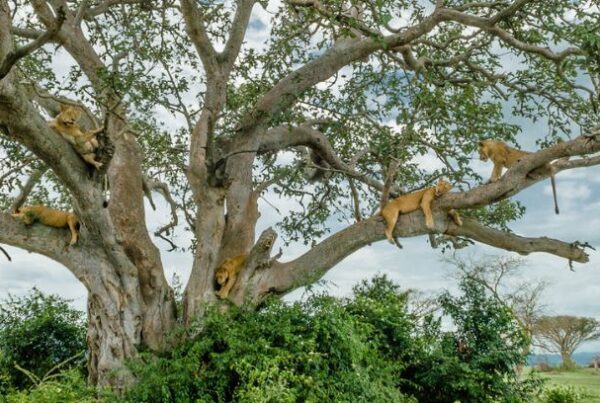
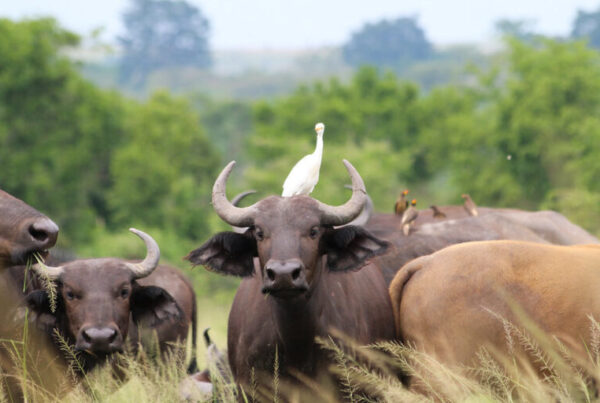
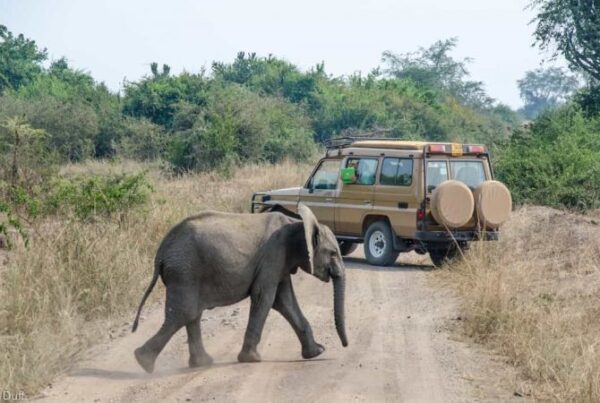
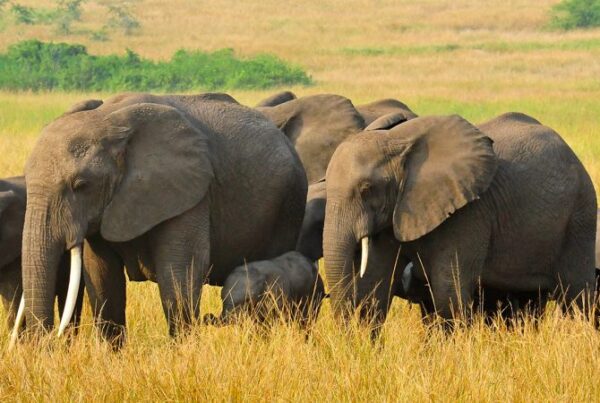
Uganda’s savannah parks add yet another layer to this mammalian richness. Lions, some of which exhibit the unique behavior of climbing trees, prowl the grasslands of Queen Elizabeth National Park. Leopards, more elusive but equally captivating, find refuge in forested zones and thickets. The country’s largest park, Murchison Falls, is a stronghold for elephants, buffaloes, giraffes, and a host of antelope species, while the far-flung Kidepo Valley National Park reveals a drier, rugged ecosystem that supports cheetahs, striped hyenas, and massive herds of game in a setting untouched by time.

The Avian Capital of Africa

If mammals dominate the land, then birds rule the skies—and swamps, forests, and riverbanks of Uganda. With over 1,060 bird species recorded, Uganda boasts the highest bird density per square kilometer in Africa, earning its title as the birding capital of the continent. From forest dwellers to water birds, migrants to endemics, the country is a paradise for ornithologists and amateur birders alike.

Among the most iconic of these is the shoebill stork, a prehistorically strange yet magnificent bird that inhabits the papyrus swamps of Mabamba Bay and Semuliki. Other remarkable sightings include the green-breasted pitta, African green broadbill, great blue turaco, and the African fish eagle, whose haunting cry is often described as the soundtrack of the African wilderness. The diversity of habitats ensures that birds can be found in nearly every part of Uganda, from alpine zones to lowland wetlands.

Reptiles, Amphibians, and the Lesser-Known Life

While the charismatic megafauna and vibrant birdlife steal the spotlight, Uganda’s reptilian and amphibian diversity adds depth to its ecological character. Nile crocodiles bask along riverbanks, especially in the Nile basin, while monitor lizards and various snake species occupy forests and grasslands. The country’s wetlands support a variety of frog species, some of which are found nowhere else on Earth.

Insects and other invertebrates form a hidden but essential part of the ecosystem. Uganda’s forests are alive with butterflies, beetles, and dragonflies, whose presence signifies the health of the environment. These small creatures form the base of the food chain, supporting larger predators and maintaining the balance that keeps Uganda’s ecosystems thriving.

Wetlands and Waterways: The Liquid Heart of Biodiversity

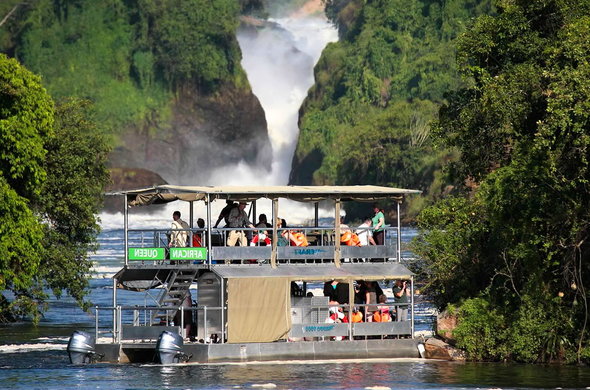
Uganda’s rivers, lakes, and swamps are lifelines for wildlife. The River Nile, which originates at Jinja, carves its way northward, bringing life to the landscapes of Murchison Falls National Park. At the falls themselves, the river crashes through a narrow gorge with thunderous power, creating both a spectacle of nature and a rich feeding ground for aquatic species.

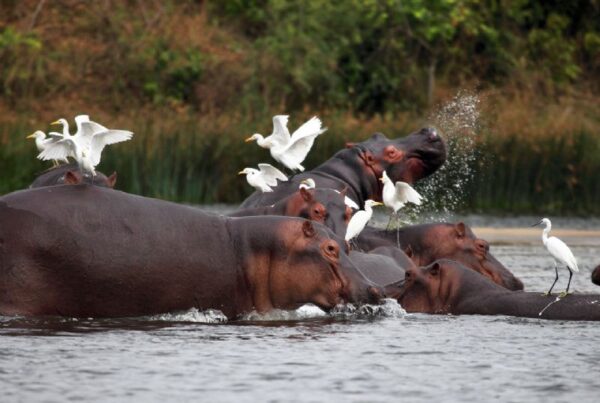
Lake Victoria, Africa’s largest lake, teems with fish, supports birdlife, and sustains communities. Kazinga Channel, which connects Lake George and Lake Edward, attracts one of the highest concentrations of hippos in the world, along with crocodiles and hundreds of water birds. It is on these waterways that boat safaris offer an intimate glimpse into aquatic life, revealing another dimension of Uganda’s wildlife richness.

The wetlands scattered across the country are not only biodiversity hotspots but also serve critical roles in water filtration, flood control, and carbon storage. These ecosystems are fragile yet vital, supporting species found nowhere else and maintaining the balance of surrounding landscapes.

Conservation Challenges and Ongoing Efforts

While Uganda’s wildlife is vast and awe-inspiring, it is not without its challenges. Poaching, habitat loss, climate change, and human-wildlife conflict pose persistent threats to species survival and ecosystem stability. However, extensive efforts have been made to counter these threats through national policy, community involvement, and international partnerships.

Protected areas are now co-managed with local communities, whose role in conservation and eco-tourism has been transformative. Revenue-sharing models, conservation education, and employment through tourism have made wildlife an asset rather than an adversary to the people who live alongside it. Organizations across Uganda, both governmental and non-governmental, continue to invest in anti-poaching patrols, research, and habitat restoration.

The recovery of species such as the white rhino, which is being reintroduced at Ziwa Rhino Sanctuary, is a testament to Uganda’s commitment to conservation. Protected areas are expanding, and awareness is growing, giving hope that Uganda’s wildlife will not just survive but flourish.

Uganda’s Wild Soul: A Living Legacy

To speak of wildlife in Uganda is to speak of life in its most vibrant, visceral form. Every trail in the forest, every ripple on a lake, and every call echoing through the savannah tells a story millions of years in the making. It is a country where the ancient rhythms of nature still dominate, where the wild is not just preserved—but celebrated.

Here, visitors do not merely observe animals from a distance—they become part of a landscape that breathes, hunts, hides, and thrives. Uganda is not a zoo. It is not a curated collection of animals behind fences. It is a living, breathing wild domain, where nature commands respect, demands patience, and offers moments of pure, unfiltered awe.

Experience Uganda with WildHorn Africa

For those ready to embark on a safari adventure beyond the ordinary, WildHorn Africa offers unmatched expertise and immersive journeys into Uganda’s wild heart. Whether it is gorilla tracking, chimpanzee trekking, game drives, birding safaris, or simply soaking in the serenity of a sunrise over the savannah, WildHorn Africa curates experiences that honor both nature and culture.

With a commitment to sustainable travel, deep local knowledge, and a passion for wildlife, WildHorn Africa ensures that every journey is more than a trip—it is a life-changing exploration. Step into Uganda’s wilderness with confidence, respect, and wonder.

Book your African safari through WildHorn Africa and allow the wild to change you, just as it has shaped the soul of this remarkable land.

The list of wildlife in Uganda

1. Mammals

Primates

  • Mountain Gorilla (Gorilla beringei beringei)

  • Chimpanzee (Pan troglodytes)

  • Olive Baboon (Papio anubis)

  • Black-and-white Colobus Monkey (Colobus guereza)

  • Red-tailed Monkey (Cercopithecus ascanius)

  • Blue Monkey (Cercopithecus mitis)

  • L’Hoest’s Monkey (Cercopithecus lhoesti)

  • Patas Monkey (Erythrocebus patas)

  • Golden Monkey (Cercopithecus kandti)

  • Vervet Monkey (Chlorocebus pygerythrus)

  • Bush Baby (Galago spp.)

Carnivores

  • African Lion (Panthera leo)

  • Leopard (Panthera pardus)

  • Cheetah (Acinonyx jubatus) – rare, mainly in Kidepo

  • Spotted Hyena (Crocuta crocuta)

  • Side-striped Jackal (Canis adustus)

  • Serval Cat (Leptailurus serval)

  • African Civet (Civettictis civetta)

  • Genet (Genetta spp.)

Herbivores

  • African Elephant (Loxodonta africana)

  • Cape Buffalo (Syncerus caffer)

  • Giraffe (Rothschild’s) (Giraffa camelopardalis rothschildi)

  • Hippopotamus (Hippopotamus amphibius)

  • Warthog (Phacochoerus africanus)

  • Bushbuck (Tragelaphus scriptus)

  • Waterbuck (Kobus ellipsiprymnus)

  • Uganda Kob (Kobus kob thomasi)

  • Jackson’s Hartebeest (Alcelaphus buselaphus jacksoni)

  • Oribi (Ourebia ourebi)

  • Topi (Damaliscus lunatus jimela)

  • Duiker species – various forest types

  • Common Eland (Taurotragus oryx) – rare, mostly in Pian Upe

Other Notable Mammals

  • White Rhinoceros (Ceratotherium simum) – reintroduced in Ziwa Rhino Sanctuary

  • African Pangolin (Manis spp.)

  • Aardvark (Orycteropus afer)

  • Porcupine (Hystrix spp.)

  • Bushpig (Potamochoerus larvatus)

2. Birds (Avifauna)

(Over 1,060 species — Uganda is a top birding destination)

Notable and Iconic Birds

  • Shoebill Stork (Balaeniceps rex)

  • African Fish Eagle (Haliaeetus vocifer)

  • Great Blue Turaco (Corythaeola cristata)

  • Green-breasted Pitta (Pitta reichenowi)

  • African Grey Parrot (Psittacus erithacus)

  • Marabou Stork (Leptoptilos crumenifer)

  • Secretary Bird (Sagittarius serpentarius)

  • Yellow-billed Stork (Mycteria ibis)

  • Hammerkop (Scopus umbretta)

  • Ross’s Turaco (Musophaga rossae)

Endemics and Albertine Rift Specials

  • Rwenzori Turaco (Ruwenzorornis johnstoni)

  • Handsome Francolin (Pternistis nobilis)

  • Doherty’s Bushshrike (Telophorus dohertyi)

  • Stripe-breasted Tit (Melaniparus fasciiventer)

3. Reptiles

  • Nile Crocodile (Crocodylus niloticus)

  • African Rock Python (Python sebae)

  • Black Mamba (Dendroaspis polylepis)

  • Boomslang (Dispholidus typus)

  • Monitor Lizards (Varanus spp.)

  • Chameleons – including the Jackson’s Chameleon (Trioceros jacksonii)

4. Amphibians

  • African Bullfrog (Pyxicephalus adspersus)

  • Banded Rubber Frog (Phrynomantis bifasciatus)

  • Western Clawed Frog (Xenopus tropicalis)

  • Uganda Reed Frog (Hyperolius spp.)

5. Fish

  • Nile Perch (Lates niloticus) – Lake Victoria and Nile River

  • Tilapia (Oreochromis spp.)

  • Catfish (Clarias spp.)

  • Lungfish (Protopterus aethiopicus)

  • Electric Catfish (Malapterurus electricus)

6. Insects and Other Invertebrates

Butterflies

  • Over 1,200 species including African Monarch, Forest Mother-of-Pearl, and Green-banded Swallowtail

Beetles and Dragonflies

  • Diverse species including the Goliath Beetle and Emperor Dragonfly

Spiders and Scorpions

  • Forest and savannah-dwelling species, including orb-weavers and bark scorpions

Top 10 Best Places To See Lions in Africa

Top 10 Best Places To See Lions in Africa

By Travel guides, Travel stories and blogs

Top 10 Best Places To See Lions in Africa
Tracking the Kings of the Wild in Their Natural Realm

Africa’s Timeless Icon: Where the Lion Still Reigns Supreme

Few creatures embody the wild majesty of Africa more powerfully than the African lion. Known as the “King of the Beasts,” this apex predator symbolizes strength, courage, and raw natural power. Yet, despite its iconic status, the lion is not always easy to find in the vast African wilderness. Its numbers have dwindled over the decades, and its territories continue to shrink due to habitat loss and human-wildlife conflict. But in protected parks and conservancies across the continent, the lion still roams free and rules the savannah, offering travelers an unforgettable opportunity to witness its dominance firsthand.

From open plains to dense woodlands, from vast deserts to rich delta systems, Africa presents a diverse tapestry of ecosystems where lions can still be observed in the wild. Each destination offers not just a sighting, but an immersive encounter—an invitation into the dramatic theatre of predator and prey, of survival and spectacle. These are not merely places to see lions; they are places to feel their presence, hear their roars echo across the night, and watch the subtle strategies of a pride unfold beneath the sun-drenched sky.

Masai Mara National Reserve – Kenya’s Premier Predator Arena

The Masai Mara, located in southwestern Kenya, has long been revered as one of the most prolific lion-viewing destinations in the world. It is part of the greater Serengeti ecosystem and forms the stage for the annual Great Migration, during which millions of wildebeest and zebras traverse predator-laden plains.

In this rich savannah landscape, lion prides flourish thanks to the constant availability of prey. Experienced guides track their movements daily, allowing visitors to observe not only hunts but also intricate pride dynamics, cub interactions, and territorial behaviors. The Mara’s open terrain and well-established safari infrastructure provide unparalleled access to the lives of these magnificent cats. Lion sightings here are not rare; they are almost expected, and yet each encounter feels deeply personal and unique.

Serengeti National Park – Tanzania’s Endless Lion Kingdom

Across the border in northern Tanzania lies the Serengeti, a park that epitomizes the raw, untamed spirit of Africa. The name itself is derived from the Maasai word “Siringet,” meaning “endless plains,” and it is across this sprawling wilderness that lions reign in dramatic fashion.

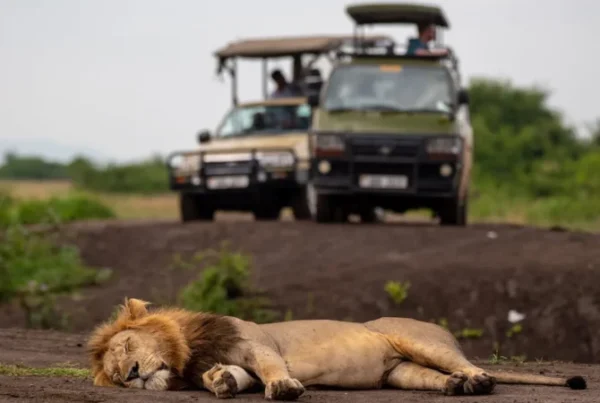
With one of the largest lion populations on the continent, the Serengeti offers remarkably consistent sightings, especially in the central Seronera region. Lions can often be seen lounging on kopjes (granite outcrops), stalking the grasslands, or feeding on fresh kills. During the calving season, lion activity intensifies as opportunistic predation increases. The Serengeti is not just a destination; it is a living documentary, where lions are both predator and protagonist in an epic natural drama that unfolds daily.

Okavango Delta – Botswana’s Wetland Predator Haven

In stark contrast to the open plains of East Africa, Botswana’s Okavango Delta presents a watery labyrinth of channels, islands, and floodplains. Yet within this lush and often flooded landscape, lions have astonishingly adapted their behavior to thrive.

Unlike other lion populations, some prides here are known to swim across deep channels, hunt in waterlogged terrain, and pursue prey such as buffalo in unexpected settings. This rare adaptation provides travelers with a chance to see lions behaving differently from their savannah cousins. Because of the Delta’s seasonal flooding, game viewing is best done by a combination of 4×4, mokoro (dugout canoe), and on foot with experienced trackers, deepening the sense of connection to both predator and place.

The exclusivity of the camps in the Delta enhances the experience, providing intimate, crowd-free wildlife encounters amid Botswana’s fiercely protected natural world.

Kruger National Park – South Africa’s Lion Stronghold

Spanning nearly 20,000 square kilometers, Kruger National Park is one of Africa’s oldest and most established game reserves. It harbors a healthy lion population, and with its network of well-maintained roads and high-quality lodges, it offers excellent access for lion enthusiasts.

What distinguishes Kruger is its diversity. Lions here may be spotted lounging near rivers, stalking in mopane woodlands, or silhouetted against crimson sunsets in the bushveld. The park’s southern and central regions are particularly noted for frequent sightings. Moreover, the neighboring private reserves within the Greater Kruger ecosystem—such as Sabi Sands and Timbavati—offer off-road driving, which enhances the viewing experience significantly, allowing for closer approaches and prolonged observation.

South Luangwa National Park – Zambia’s Hidden Gem of the Carnivores

Zambia’s South Luangwa remains one of the continent’s best-kept secrets—a sanctuary where wildlife viewing feels wild and unfiltered. Its lion population is robust, and the park is known for dramatic hunts, often in the heat of day due to the lack of tree cover in some regions.

The Luangwa River’s oxbow lagoons draw in herbivores in large numbers, creating ideal hunting grounds for the local lion prides. With the addition of walking safaris, South Luangwa provides a rare and visceral way to understand the lion’s place in the ecosystem. Seeing lion tracks, hearing distant roars, and encountering lions while on foot delivers a primal thrill that connects visitors directly to the pulse of the African wilderness.

Etosha National Park – Namibia’s Desert Adapted Predators

In the stark, white expanse of Etosha, lions have evolved to survive in a harsh, arid environment where waterholes serve as the only reliable sources of life. These man-made and natural waterholes draw an astonishing variety of game, especially in the dry season, making them hotspots for lion activity.

Etosha’s lions are larger than average and often lighter in color, blending into the dusty terrain. Patient observation at waterholes can yield unforgettable moments—ambushes, pride interactions, or even confrontations with rival predators. The eerie landscapes add a cinematic quality to every sighting, turning each encounter into a moment of surreal beauty.

Ngorongoro Crater – Tanzania’s Natural Lion Enclosure

Formed by a collapsed volcanic caldera, the Ngorongoro Crater is a unique micro-ecosystem that supports an incredibly dense population of wildlife, including a stable and observable lion population. The crater’s enclosed nature means that lions here are somewhat restricted, but this also allows for predictable sightings, often at close range.

With no need for long-distance migration, the lions of Ngorongoro display slightly different behavior, often more sedentary but highly visible. This makes the crater ideal for travelers with limited time or for those seeking high-density wildlife experiences in a compact area.

Kgalagadi Transfrontier Park – The Realm of the Black-Maned Lion

Straddling the border between Botswana and South Africa, the Kgalagadi offers a dramatically different lion experience. The arid semi-desert is home to the famed black-maned Kalahari lions, known for their size, dark manes, and fierce reputation.

Sightings here often feel more raw and elemental, with lions framed by red dunes and long, golden grasses. Because the terrain is open and the visitor numbers are low, sightings are often solitary, quiet, and deeply immersive. The stark silence of the desert, broken only by the sound of a distant roar, stays etched in memory.

Queen Elizabeth National Park – Uganda’s Tree-Climbing Lions

One of the most unusual lion populations in Africa resides in Uganda’s Ishasha sector, where lions are often observed lounging in trees. While this behavior has been recorded elsewhere, it is remarkably common here, making the park famous for its arboreal cats.

Perched high in fig trees, these lions seek relief from the heat and biting insects while keeping a watchful eye over their territory. The landscape of acacia-dotted savannah provides a striking backdrop for photography, and the rare behavior of these lions offers a unique twist to the typical safari narrative.

Experience the Majesty with WildHorn Africa

Choosing where to see lions in Africa is not simply a question of geography—it is a matter of storytelling, timing, and personalized guidance. Whether it’s the predator-rich plains of the Serengeti, the silent salt pans of Etosha, or the lion-filled forests of Luangwa, the experience must be curated with care.

With WildHorn Africa, travelers are guaranteed not just access, but insight—guided by experts who know the land, understand the behavior of lions intimately, and tailor each journey to the dreams of the traveler. Every lodge, route, and guide is selected with precision to ensure not only sightings, but moments of awe, understanding, and transformation.

For those who long to feel the tremble of a lion’s roar deep in their chest, who wish to stand face-to-face with Africa’s greatest predator in the places it still reigns supreme, booking with WildHorn Africa is the key to an experience that is not merely seen, but deeply felt.

Where To See Giraffes in Africa – The 10 Best Places To Go

Where To See Giraffes in Africa – The 10 Best Places To Go

By Travel guides, Travel stories and blogs

Where To See Giraffes in Africa – The 10 Best Places To Go

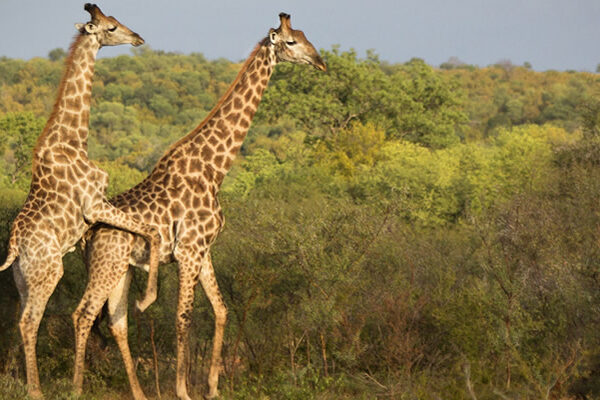
Among Africa’s most iconic and majestic creatures, the giraffe stands tall—both literally and symbolically—as a figure of elegance, serenity, and ecological significance. With their distinctive patchwork coats, elongated necks, and calm, observant demeanor, giraffes capture the imagination of all who encounter them. Yet, despite their popularity, many travelers are unaware that giraffe populations are spread across distinct regions, each home to subspecies that differ subtly in color, size, and behavior.

The opportunity to see giraffes roaming freely in their natural habitat is a powerful and humbling experience. Watching them glide across the savannah, browsing acacia trees with delicate tongues, or casting long shadows in the golden evening light is nothing short of magical. Africa offers a diversity of habitats in which giraffes thrive—from dry desert woodlands to lush riverine forests, and each ecosystem tells a different story of coexistence between wildlife, environment, and conservation.

The following ten destinations are recognized not only for their high visibility of giraffes but also for the quality of safari experience they provide. These are the places where Africa’s tallest animals can be admired with intimacy, respect, and wonder, within landscapes that speak to the ancient rhythms of the wild.

Kruger National Park, South Africa: A Southern Giant’s Sanctuary

One of Africa’s most celebrated wildlife reserves, Kruger National Park is home to large populations of the South African giraffe, easily identified by their star-shaped spots. These giraffes are seen throughout the park, particularly in the central and southern regions, where mixed woodland and savannah landscapes support ample food sources.

The park’s extensive road network, guided tours, and numerous rest camps make it an ideal location for consistent sightings. Herds often wander near rivers and watering holes, where giraffes tower over other herbivores as they bend awkwardly to drink. In Kruger, the giraffe is more than just another sighting—it becomes a thread in the broader tapestry of predator-prey interactions and ecological complexity that defines this incredible reserve.

Etosha National Park, Namibia: Watching Shadows Across Salt Pans

In the arid heart of northern Namibia lies Etosha National Park, a strikingly unique ecosystem centered around a vast salt pan that transforms into a seasonal wetland. Giraffes are regularly observed along the southern edges of the pan, where isolated watering holes attract a wide range of animals during the dry season.

The giraffes of Etosha are particularly photogenic, often silhouetted against pale, dusty backdrops or seen in contrast with ghostly mirages. Their survival in this dry, seemingly inhospitable environment is a testament to their adaptability. Observing these creatures here evokes a deep appreciation for the ways in which nature balances elegance with endurance.

Serengeti National Park, Tanzania: Giants on the Endless Plains

Few experiences rival that of seeing Masai giraffes striding through the boundless horizons of the Serengeti. Known for their irregular, jagged spot patterns and immense stature, these giraffes inhabit one of the world’s most iconic wildlife landscapes.

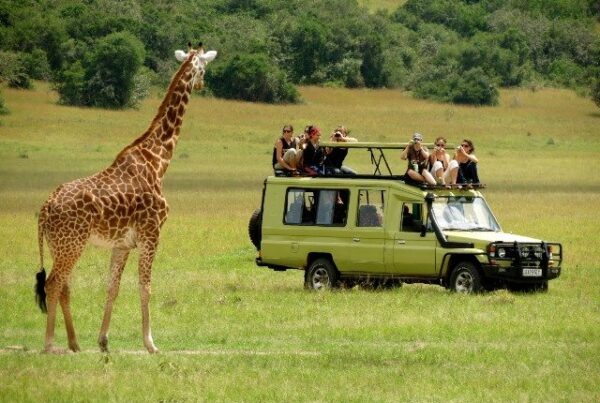
In the Serengeti, giraffes are often seen moving alongside wildebeest herds during the great migration, browsing treetops far from the reach of other herbivores. The open plains offer perfect visibility, and the richness of biodiversity in the region means giraffe sightings are often accompanied by interactions with lions, elephants, and other megafauna. The Serengeti transforms giraffe viewing into a cinematic spectacle of raw nature and ancient migratory patterns.

Masai Mara National Reserve, Kenya: Giraffes in the Golden Light

Just across the border from the Serengeti, Kenya’s Masai Mara offers similarly rich giraffe-viewing opportunities, with the added cultural depth of the Maasai people, who have coexisted with wildlife for generations. Giraffes here are seen gracefully crossing open grasslands, often in groups that appear to move in synchronized silence.

The golden hue of the Mara’s light at sunrise and sunset casts giraffes in an almost mythical glow. Watching these animals move across ridgelines with rolling hills behind them provides a powerful connection to a timeless African landscape. The Masai Mara doesn’t just deliver sightings—it delivers moments that linger in memory.Where To See Giraffes in Africa – The 10 Best Places To Go

Murchison Falls National Park, Uganda: Towering Above the Nile

In Uganda’s largest national park, Murchison Falls, giraffes reign as the park’s defining mammals. The park is home to the Rothschild’s giraffe, a rare subspecies once critically endangered but now making a recovery thanks to dedicated conservation efforts. Their pale coats and distinct lack of markings on the lower legs make them easy to identify.

The giraffes of Murchison are frequently seen on the Buligi Peninsula and along the banks of the Nile, where their long necks rise above the tall grass in peaceful contrast to the thunderous roar of the nearby falls. Boat cruises and game drives alike provide excellent encounters, and the presence of the Nile adds a dynamic, water-rich dimension to the viewing experience.

Nairobi National Park, Kenya: Wildlife with a City Skyline

Nowhere else in the world can giraffes be seen browsing against a backdrop of city skyscrapers—a surreal but poignant sight that defines Nairobi National Park. Just minutes from Kenya’s capital, the park is home to a healthy population of giraffes, along with rhinos, lions, and hundreds of bird species.

The giraffes here symbolize the delicate balance between urban expansion and conservation. Their presence amid city life serves as both inspiration and warning, reminding visitors that coexistence is possible when nature is prioritized. For travelers with limited time or those seeking an introduction to African wildlife, Nairobi National Park offers one of the most unique giraffe encounters on the continent.

Zambezi River Region, Zambia: A Forested Realm of Browsers

Zambia’s Zambezi River corridor, including parks like Lower Zambezi and South Luangwa, offers some of the most dramatic and intimate giraffe sightings in Africa. The Thornicroft’s giraffe, endemic to Zambia, is especially rare and found only in this region, distinguished by its light coat and uneven blotches.

Giraffes in this region are seen weaving through riverine forests, silhouetted against fiery sunsets, or standing among elephants and buffalo at remote waterholes. The setting is quieter, less trafficked, and far more intimate than the more famous East African parks, making every giraffe encounter feel like a secret shared with the wilderness itself.

Okavango Delta, Botswana: Islands of Life in a Sea of Water

Botswana’s Okavango Delta is a UNESCO World Heritage Site unlike any other, and within its maze of lagoons, floodplains, and forested islands, giraffes move with deliberate grace. Sightings in the delta feel more like discoveries, as the terrain shifts between water and dry land, requiring patience and understanding of animal movement.

Giraffes are most frequently seen browsing among island trees or crossing shallow floodplains in slow-motion elegance. The contrast of long-limbed mammals against aquatic backdrops creates photographic and spiritual experiences that are rare and breathtaking. Here, safari takes on a more elemental, almost dreamlike quality.

Kidepo Valley National Park, Uganda: A Wild Frontier Untouched

Far off the beaten path, Uganda’s Kidepo Valley remains one of the continent’s most isolated and unspoiled wilderness areas. It offers a raw, rugged safari environment where giraffes are seen alongside dramatic mountain backdrops, dry riverbeds, and thorny acacia groves.

The remoteness of Kidepo ensures that every wildlife sighting feels like a personal encounter. Giraffes roam freely across the Narus Valley and beyond, their movements unimpeded by vehicles or crowds. Here, Africa’s wild heart beats strongest, and the sight of giraffes wandering across the untouched terrain evokes a deep sense of solitude and wonder.

Selous Game Reserve (Nyerere National Park), Tanzania: Silent Giants of the South

As one of the largest protected areas in Africa, Nyerere National Park (formerly Selous) offers vast wilderness and a strong population of giraffes, often seen in large numbers along the Rufiji River. The reserve’s mixture of miombo woodland, open plains, and watercourses supports excellent giraffe habitat.

Game drives and boat safaris allow for diverse viewing angles, from water-level reflections to elevated ridgeline perspectives. The giraffes here are part of a much broader ecological story—one of predation, migration, and seasonal cycles that play out on an epic scale. Observing them in this vast, untamed expanse adds a layer of mythic scale to the giraffe experience.

See the Wild Through Their Eyes: Book with WildHorn Africa

Whether glimpsed on golden plains, reflected in watery deltas, or silhouetted against urban skylines, giraffes embody the grace, resilience, and splendor of Africa itself. Their presence adds poetry to every safari, and their stories—of survival, adaptation, and mystery—enrich every journey across the continent.

For those who seek more than just a safari, but a deeper connection to Africa’s landscapes and legends, WildHorn Africa crafts custom journeys that bring travelers face-to-face with the continent’s towering giants and untamed beauty. From private game reserves to national parks rich in biodiversity, every itinerary is designed with care, passion, and deep local insight.

Book your giraffe-filled African adventure with WildHorn Africa today—and let the journey rise as tall and unforgettable as the creatures that inspire it.

Top 12 Best Places To See Rhinos on Safari in Africa

Top 12 Best Places To See Rhinos on Safari in Africa

By Travel guides, Travel stories and blogs

Top 12 Best Places To See Rhinos on Safari in Africa

Few creatures stir the soul and command respect like the African rhinoceros. With prehistoric features, powerful frames, and a quiet grace, these ancient mammals symbolize both the strength and fragility of the continent’s wildlife. Today, encountering rhinos in the wild has become one of the most rare and coveted experiences in African safaris—not just because of their grandeur, but because of their tragic decline. Poaching, habitat loss, and human conflict have pushed these animals to the brink, making each sighting deeply poignant and unforgettable.

In this sacred pursuit of seeing rhinos roam free, Africa’s wilderness still offers havens where both black and white rhinos are protected, thriving, and accessible to those willing to journey into the heart of conservation. While their numbers may have diminished, the efforts to safeguard these majestic giants are stronger than ever, and in specific corners of the continent, visitors can still encounter rhinos in their natural habitat under the watchful care of dedicated guardians.

This in-depth guide explores the top 12 best places to see rhinos on safari in Africa—locations where the ancient rhythm of survival continues, and where travelers become witnesses to a living legacy that is as powerful as it is endangered.

1. Hluhluwe–iMfolozi Park, South Africa – The Birthplace of Rhino Conservation

No conversation about rhino safaris begins without acknowledging Hluhluwe–iMfolozi Park, located in South Africa’s KwaZulu-Natal province. Revered as the oldest proclaimed game reserve in Africa, this landscape played a vital role in rescuing the southern white rhino from extinction during the 20th century. Today, the park remains a stronghold for both white and black rhinos, offering a rewarding safari experience amidst its rolling hills and acacia-dotted savannahs.

Visitors to Hluhluwe–iMfolozi are often rewarded with regular rhino sightings, thanks to the park’s high population density and dedicated anti-poaching units. The landscape’s unique blend of river valleys and open plains enhances visibility, making it one of the most accessible places to spot rhinos in the wild.

2. Ol Pejeta Conservancy, Kenya – East Africa’s Leading Rhino Sanctuary

In the shadow of Mount Kenya lies Ol Pejeta Conservancy, a place where rhino conservation meets modern innovation. This 90,000-acre private conservancy is home to the largest population of black rhinos in East Africa and is globally recognized as the last sanctuary for the world’s two remaining northern white rhinos.

What sets Ol Pejeta apart is not just the density of rhinos, but the powerful story it tells. Armed with cutting-edge technology, canine units, and rigorous monitoring systems, the conservancy represents a modern conservation model, where safari tourism directly supports endangered species protection.

Visitors can engage in educational wildlife encounters, including visiting the rhino cemetery and learning about the challenges faced by the rangers. The presence of both white and black rhinos in such proximity offers a rare and deeply moving experience.

3. Etosha National Park, Namibia – A Desert Refuge for the White Rhino

In the arid wilderness of northern Namibia, Etosha National Park rises as a desert-adapted Eden where wildlife congregates around shimmering salt pans and life-giving waterholes. Among the elephants, lions, and giraffes, the southern white rhino quietly claims its place as one of the park’s signature species.

The unique geography of Etosha makes it ideal for self-drive safaris, where rhinos are frequently observed near waterholes—especially in the dry season. These dramatic scenes, often unfolding against a stark, sun-baked backdrop, create some of the most photogenic rhino encounters in Africa.

Etosha also protects a modest population of black rhinos, which are more elusive but equally iconic. The park’s commitment to conservation and its infrastructure make it a prime destination for rhino enthusiasts and photographers alike.

4. Ziwa Rhino Sanctuary, Uganda – Rhino Tracking on Foot

Nestled between Kampala and Murchison Falls National Park, Ziwa Rhino Sanctuary has become Uganda’s beacon of rhino hope. After years of local extinction, rhinos are being reintroduced here under a protected, well-managed initiative.

What makes Ziwa unique is the opportunity it offers for on-foot rhino tracking—a guided, immersive experience that allows visitors to walk within close range of white rhinos in the company of expert rangers. This intimate, low-impact encounter transforms the typical game drive into something deeply personal.

The sanctuary is also a key component of Uganda’s conservation story, acting as the first step in the broader goal of reintroducing rhinos into national parks across the country.

5. Lewa Wildlife Conservancy, Kenya – Luxury and Legacy

Renowned for its holistic conservation approach and high-end lodges, Lewa Wildlife Conservancy in northern Kenya is a UNESCO World Heritage Site and a celebrated stronghold for both black and white rhinos.

Surrounded by dramatic landscapes and ancient cultural heritage, Lewa offers exclusive safari experiences that blend wildlife viewing with conservation education. Its success story is one of collaboration between local communities, private enterprise, and conservationists—a triad that has brought rhinos back from the brink.

Here, sightings are frequent, and the setting is sublime. The chance to witness rhinos grazing on golden plains under Mount Kenya’s snowy crown is something few destinations can rival.

6. Kruger National Park and Its Private Reserves, South Africa – Africa’s Iconic Big Five Destination

Kruger National Park, one of Africa’s most famous safari destinations, continues to be a vital refuge for white and black rhinos, despite facing intense poaching pressures in recent years. The park, along with its adjoining private reserves like Sabi Sand, Timbavati, and Manyeleti, provides diverse opportunities to observe rhinos in the wild.

The private reserves in particular offer more intimate and guided experiences, often allowing off-road tracking and night drives, which increase chances of close-up sightings. The presence of skilled rangers and trackers ensures that every encounter is meaningful and responsibly managed.

7. Mkomazi National Park, Tanzania – A Rare Conservation Frontier

Though lesser known than the Serengeti or Ngorongoro Crater, Mkomazi National Park in northern Tanzania has quietly become a crucial site for black rhino conservation. With the establishment of a specialized rhino sanctuary within its borders, Mkomazi represents a new chapter in Tanzania’s effort to restore its rhino population.

Visitors can tour the sanctuary in guided vehicles and observe rhinos in a semi-wild setting, supported by robust fencing and round-the-clock monitoring. This controlled environment ensures safety for the rhinos while allowing for authentic encounters.

8. Phinda Private Game Reserve, South Africa – Where Conservation Meets Community

Situated in KwaZulu-Natal, Phinda Private Game Reserve has long been a pioneer in habitat restoration and wildlife reintroduction, including black and white rhinos. Managed by &Beyond, Phinda combines luxurious safari experiences with serious conservation science.

Its varied ecosystems—from coastal forest to mountain bushveld—support a high rhino density, and guests are often treated to extraordinary sightings with the guidance of expert rangers. Phinda also supports local communities through conservation-linked livelihoods, ensuring that protecting rhinos becomes everyone’s mission.

9. Matobo National Park, Zimbabwe – Sacred Hills and Stone Giants

Tucked among the granite kopjes of southern Zimbabwe lies Matobo National Park, where history, culture, and wildlife intersect. This UNESCO World Heritage Site is home to one of the highest concentrations of black and white rhinos in Zimbabwe.

The landscape here is surreal—rugged, spiritual, and dotted with ancient San rock art. Rhino tracking is conducted on foot, creating an adrenaline-fueled yet respectful proximity that few safari experiences can match.

10. Okavango Delta, Botswana – Waterways and Wilderness

Though not traditionally known for rhinos, the Okavango Delta has seen successful reintroduction efforts in select private concessions, where both black and white rhinos are now present. These areas, often managed by high-end lodges, allow guests to explore flooded channels and remote islands by mokoro (dugout canoe) and 4×4 vehicles.

The presence of rhinos in such an aquatic, lush ecosystem makes for unusual and striking contrasts—a white rhino grazing alongside elephants and hippos in a palm-fringed delta is an image of Africa at its wildest and most poetic.

11. Lake Nakuru National Park, Kenya – Flamingos and Rhinos in Harmony

Famed for its vibrant flocks of flamingos, Lake Nakuru is also one of Kenya’s premier locations for viewing both black and white rhinos. The park’s compact size and relatively open terrain increase the likelihood of sightings.

Nakuru serves as a critical rhino breeding ground, protected under vigilant park security. Combining birdlife with endangered mammals, the park offers a rewarding safari that balances beauty and biodiversity.

12. Meru National Park, Kenya – The Wild Return of the Rhinos

Once devastated by poaching, Meru National Park has staged a remarkable recovery and now boasts a thriving rhino sanctuary. This rugged, remote landscape—made famous by Joy Adamson’s Born Free—is again a place where rhinos roam free.

Its low visitor numbers ensure a secluded experience, and the landscape, rich with rivers and volcanic soil, creates a cinematic backdrop for rhino tracking. The park’s story is one of resilience and rebirth, mirroring the journey of the rhinos that now call it home.

Secure Your Place in the Legacy of Africa’s Rhinos with WildHorn Africa

To see a rhino in the wild is to witness a living relic of Earth’s ancient past—and to participate, however briefly, in the efforts to protect that legacy. These majestic creatures, once widespread, now depend on the few sanctuaries where they are fiercely guarded and lovingly preserved.

For travelers seeking to encounter rhinos in meaningful, responsible, and unforgettable ways, WildHorn Africa stands ready to craft bespoke safaris to the continent’s finest rhino habitats. With expert planning, conservation-driven itineraries, and access to exclusive reserves, WildHorn Africa ensures that your journey contributes to the protection of what matters most.

Book your African safari with WildHorn Africa today—and become part of the extraordinary story of rhino survival.

The Most Endangered Animals in Africa

The Most Endangered Animals in Africa

By Travel guides, Travel stories and blogs

The Most Endangered Animals in Africa

A Continent’s Cry for Survival and Conservation of the Most Endangered Animals in Africa

Africa’s Wild Beauty Is Under Threat

Africa, a land of epic landscapes, ancient rhythms, and timeless wonders, is home to some of the most iconic wildlife on the planet. From the roaring lion of the savannah to the elusive leopard of the bush, the continent’s biodiversity is the very heartbeat of its heritage. Yet behind the scenes of this natural magnificence lies a sobering reality: many of Africa’s greatest creatures are on the brink of vanishing. Endangered species across the continent are battling threats that could push them into extinction unless urgent action is taken.

Whether driven by habitat destruction, climate change, poaching, human-wildlife conflict, or illegal wildlife trade, the survival of these extraordinary animals is under siege. They are not just statistics or headlines—they are living beings that play crucial roles in maintaining ecological balance, supporting tourism economies, and preserving Africa’s cultural soul.

This article delves deep into Africa’s most endangered animals, not just to name them, but to understand the complex web of challenges they face and the collective effort required to safeguard their future. These stories are not merely about animals—they are about a shared planet, a global responsibility, and a call to act before the silence replaces the roar, the trumpet, or the rumble.

Most Endangered Animals in Africa #Most Endangered Animals in Africa Most Endangered Animals in Africa

Northern White Rhinoceros – A Species Hanging by a Thread

The tale of the northern white rhinoceros is one of the most tragic and urgent symbols of extinction in real-time. Once roaming across several East and Central African nations, this subspecies has now been reduced to just two surviving individuals, both females, living under constant armed guard in Kenya. The species is functionally extinct, as no known males remain alive.

The decline of the northern white rhino was fueled by rampant poaching driven by the demand for rhino horn, which is falsely believed to possess medicinal properties. Conservationists are now in a race against time, employing groundbreaking scientific methods like in vitro fertilization and stem cell research in an attempt to bring the species back from the brink. But beyond the headlines, the fate of this majestic creature reflects the heavy cost of unchecked greed and the urgency of preserving the genetic diversity of our natural world.

African Forest Elephant – The Silent Victim of Ivory Greed

Smaller and more elusive than its savannah counterpart, the African forest elephant inhabits the dense rainforests of Central and West Africa. Though often overshadowed in the media, this species has suffered catastrophic population declines in recent decades due to ivory poaching and habitat loss, with some estimates indicating a loss of over 60% in less than 30 years.

Forest elephants play a vital role in shaping their ecosystems, dispersing seeds and maintaining forest health. Their disappearance would not only disrupt local biodiversity but also contribute to climate change, as intact rainforests are critical carbon sinks. The battle to save the forest elephant is also a fight for the survival of entire ecosystems.

Pangolin – The World’s Most Trafficked Mammal

Despite its shy, unassuming nature, the pangolin has gained the unfortunate title of being the world’s most trafficked mammal. Covered in tough, overlapping scales, this nocturnal creature is hunted relentlessly for its meat, considered a delicacy in parts of Asia, and its scales, wrongly believed to have medicinal value.

Africa is home to four pangolin species, all of which are under increasing pressure from poaching and illegal trade. Often overlooked in conservation efforts due to their secretive habits and low-profile existence, pangolins are now the focus of intensified international protection measures. Their story serves as a powerful reminder that even the smallest, quietest animals need loud voices to defend them.

Ethiopian Wolf – The World’s Rarest Canid

The Ethiopian wolf is not just rare—it is the rarest canid in the world, with fewer than 500 individuals surviving in the wild. Confined to the high-altitude regions of Ethiopia’s Bale and Simien Mountains, this strikingly beautiful carnivore is often mistaken for a fox but is genetically closer to the grey wolf and coyote.

Threatened by habitat fragmentation, disease from domestic dogs, and climate change affecting its alpine ecosystem, the Ethiopian wolf is on a narrow precipice of extinction. Conservationists are working tirelessly to protect its remaining habitats, engage local communities in dog vaccination campaigns, and raise awareness about the critical role this predator plays in its fragile ecosystem.

Mountain Gorilla – A Conservation Success Still on the Edge

The story of the mountain gorilla offers a beacon of hope, though its survival remains far from secure. Once believed to be doomed to extinction, this subspecies of the eastern gorilla has made a remarkable recovery thanks to dedicated conservation efforts in the Virunga Mountains of Rwanda, Uganda, and the Democratic Republic of Congo.

Today, the population has grown to just over 1,000 individuals, a significant increase in recent decades. However, their future is still threatened by habitat encroachment, disease, and political instability in the region. Tourism has played a vital role in their protection, providing revenue and incentive for communities to preserve their natural heritage. The mountain gorilla proves that with collaboration, education, and sustainable ecotourism, endangered species can bounce back from the brink.

African Wild Dog – The Painted Hunter Fighting for Space

Also known as the painted wolf, the African wild dog is one of the most efficient and intelligent hunters on the continent. Yet despite its prowess, it is among Africa’s most endangered carnivores, with only around 6,000 individuals remaining across fragmented ranges.

African wild dogs face multiple threats including human-wildlife conflict, road accidents, habitat fragmentation, and disease. They require vast territories to thrive, making their conservation especially challenging in an increasingly populated and developed continent. Protecting them means protecting large swaths of wilderness, securing corridors, and promoting coexistence between wildlife and human communities.

Black Rhinoceros – A Species Scarred by Demand

The black rhino, once widespread across sub-Saharan Africa, has been devastated by decades of poaching driven by demand for its horn. Although the species has shown signs of recovery through robust conservation efforts, it remains critically endangered, with a population of around 5,000.

Black rhinos are browsers rather than grazers, playing a unique role in shaping vegetation and supporting other species. Their survival depends not only on anti-poaching patrols and breeding programs but also on shifting the global narrative around rhino horn. The black rhino is not just an icon—it’s a symbol of nature’s resilience under siege.

Hirola – The Forgotten Antelope of the Horn of Africa

The hirola, also known as Hunter’s hartebeest, is one of the least known yet most endangered antelope species in Africa. Found in a small region along the Kenya-Somalia border, its numbers have dwindled to less than 500 in the wild. It is the only surviving member of its genus, meaning its extinction would result in the loss of an entire evolutionary lineage.

Habitat degradation, poaching, and competition with livestock have driven the hirola to the edge. Conservation groups are now working to establish fenced sanctuaries, support community-based protection, and increase public awareness of this often-overlooked species.

The Urgency of Protection and the Power of Awareness

Africa’s endangered animals are not merely tourist attractions or conservation projects—they are the living legacy of a continent that holds the oldest stories of life on Earth. Their survival is a measure of humanity’s will to coexist with the wild, and their extinction would echo as a global failure.

Preserving these animals requires a combination of political will, scientific research, community involvement, and global awareness. It means choosing eco-conscious travel, supporting ethical tourism, and contributing to conservation organizations. It means telling their stories, not just to mourn their decline but to inspire action and hope.

Travel With Purpose: Explore and Protect Africa with WildHorn Africa

To truly understand the challenges these endangered animals face, you must walk the lands they roam. You must feel the stillness of the forest when a gorilla family stirs, hear the call of an elephant beneath an open sky, or witness the delicate steps of a rare antelope in its natural terrain.

At WildHorn Africa, we don’t just offer safaris—we offer deeply immersive, conservation-centered travel experiences that empower you to connect with Africa’s wild places responsibly. Our expert-led journeys take you to the heart of endangered species territory, always with the highest standards of sustainability, safety, and cultural respect.

Whether you’re tracking rhinos in the bushveld, observing wild dogs on the hunt, or supporting local communities committed to protecting wildlife, your journey with WildHorn Africa becomes part of something bigger. It becomes a promise to protect, a step toward awareness, and a celebration of the irreplaceable wonders of African nature.

Choose WildHorn Africa. Travel deeper. Help protect the wild. Before it disappears.

Most Endangered Animals in Africa #Most Endangered Animals in Africa Most Endangered Animals in Africa

5 Fascinating Facts About the Shoebill

5 Fascinating Facts About the Shoebill

By Travel guides, Travel stories and blogs

5 Fascinating Facts About the Shoebill

Facts About the Shoebill

Enter the Dinosaur of the Wetlands

With its prehistoric appearance and piercing stare, the Shoebill (Balaeniceps rex) is one of Africa’s most mysterious and extraordinary birds. Standing tall and solitary in the swamps and marshes of central tropical Africa, this enigmatic avian commands attention not just because of its sheer size but due to its almost mythical aura. Known locally as the “whale-headed stork,” the Shoebill has evoked awe and curiosity among birdwatchers, researchers, and locals alike. Its massive, shoe-shaped bill and solemn demeanor give it an ancient air, as if it’s a creature suspended in time.

While many animals earn their intrigue through speed or power, the Shoebill captivates with stillness and subtle dominance. Despite being relatively elusive, this bird is gradually emerging as a symbol of the wild, untamed wetlands of East and Central Africa, most notably Uganda’s vast papyrus marshes. In this article, we unravel five compelling facts about the Shoebill, delving into what makes it one of the most fascinating creatures of the African wilderness.

A Beak Built Like a Weapon

The Shoebill’s most iconic feature is undoubtedly its massive bill, shaped eerily like a Dutch clog and reaching up to 24 centimeters long and 20 centimeters wide. More than just an oddity, this oversized beak is an evolutionary masterpiece. The edges of the bill are razor-sharp, and the powerful hook at the tip is used to grasp, crush, and decapitate prey with precision. This is not a gentle grazer—this is a bird built for stealth and lethal efficiency.

Feeding primarily on lungfish, eels, frogs, and even baby crocodiles, the Shoebill employs a hunting style that borders on theatrical. It stands perfectly still for hours, blending into its surroundings until the moment to strike arrives. With lightning speed, the Shoebill lunges forward, opening its beak wide and snapping it shut with a loud, echoing clatter that often signals a successful catch. This combination of patience and violence in hunting sets the Shoebill apart from most other wetland birds, underscoring its status as a top predator within its ecological niche.

Solitude and Strategy in the Swamps (Facts About the Shoebill)

Unlike many bird species that thrive in flocks, Shoebills are solitary hunters. They maintain and defend large territories, ensuring minimal competition for the rich aquatic resources of their marshland habitats. These territories, often several kilometers wide, are chosen with strategic precision—away from human disturbance, abundant in prey, and rich in cover.

The Shoebill’s solitary behavior extends into its mating and nesting habits. Pairs come together only briefly during the breeding season and raise a maximum of two chicks. However, in a striking example of siblicide, often only one chick survives, as the stronger nestling dominates the weaker to ensure it receives the lion’s share of food. While brutal, this behavior ensures that at least one offspring reaches maturity, especially in an environment where resources are unpredictable.

This minimalistic reproductive strategy, combined with their slow maturation, makes Shoebills particularly vulnerable to threats. Yet it also reinforces their identity as highly specialized and selective survivors, thriving only under the most optimal natural conditions.

A Call Like a Machine Gun

Despite their generally silent and stoic demeanor, Shoebills are not entirely voiceless. During the breeding season and interactions with mates or offspring, they produce a distinctive bill-clattering sound, reminiscent of a machine gun or typewriter. This sound is produced not with vocal cords but through rapid opening and closing of their formidable bills.

Chicks also emit a begging call that resembles human hiccups, a rare and almost humorous vocalization that highlights their unique auditory expressions. These sounds, although infrequent, serve as important social tools within the limited context of the Shoebill’s life.

The contrast between their quiet disposition and sudden bursts of mechanical-like sounds adds to the surreal experience of encountering one in the wild. Their eerie calls echoing across the swamp serve as a haunting reminder of their ancient lineage and otherworldly nature.

Masters of Stillness and Stealth

What truly sets the Shoebill apart behaviorally is its extraordinary stillness. Dubbed the “statue bird,” it can remain motionless for extended periods—sometimes several hours—while watching the water surface for subtle signs of movement. This monk-like patience is not lethargy; it’s a finely tuned predatory technique evolved for success in murky, vegetation-choked wetlands.

The Shoebill’s silent stalking and calculated strikes are hallmarks of its hunting prowess. Unlike herons or storks that wade and probe constantly, the Shoebill saves energy by letting prey come to it. Its entire physiology—from its long, strong legs to its forward-facing eyes—supports this precision-based strategy.

This behavior does more than help it hunt. It gives the Shoebill an almost spiritual presence, making it a favorite among wildlife photographers and birding enthusiasts. To witness this bird is to understand a different rhythm of the wild, one that values observation over action, patience over motion.

Conservation Concerns and Global Recognition

Despite their almost mythic stature, Shoebills are classified as Vulnerable by the International Union for Conservation of Nature (IUCN). Habitat loss due to agriculture, oil exploration, and settlement expansion is the bird’s most pressing threat. Additionally, the illegal pet trade has targeted Shoebills for their unusual appearance, further endangering already fragile populations.

Fortunately, global awareness and local conservation efforts are rising. Uganda, South Sudan, Zambia, and parts of the Democratic Republic of Congo are taking active roles in protecting Shoebill habitats through eco-tourism, community-based conservation, and legal protections. Bird sanctuaries and national parks are becoming safer refuges, and the Shoebill is slowly gaining the international recognition it needs to survive.

These conservation efforts also provide opportunities for travelers to witness the Shoebill responsibly. Ecotourism has emerged as one of the most powerful tools to save this bird—not only by funding protection programs but also by giving local communities a sustainable economic reason to preserve wetland environments.

Explore the Mystical World of the Shoebill with WildHorn Africa

The Shoebill is not just a bird—it’s a legend in feathers, a living relic of the past that demands both reverence and protection. Encountering this majestic bird in its natural habitat is an unforgettable experience, one that touches the soul and ignites a lifelong passion for conservation.

WildHorn Africa offers expertly guided safaris to some of the Shoebill’s last remaining strongholds, including the remote marshes of Uganda’s Mabamba Swamp. Our tours are tailored for intimate, immersive encounters with this awe-inspiring species, emphasizing ethical wildlife viewing and deep ecological appreciation.

Book your African safari with WildHorn Africa and embark on a journey that goes beyond sightseeing. Witness the haunting beauty of the Shoebill, connect with Africa’s wild heart, and become part of a movement to protect one of the continent’s most fascinating and elusive treasures. Let the wetlands whisper their ancient secrets, and let WildHorn Africa guide you to them.

Facts About the Shoebill #Facts About the Shoebill Facts About the Shoebill

5 Fabulous Facts of the Greater Kudu (Tragelaphus Strepsiceros)

5 Fabulous Facts of the Greater Kudu (Tragelaphus Strepsiceros)

By Travel guides, Travel stories and blogs

5 Fabulous Facts of the Greater Kudu (Tragelaphus strepsiceros)

The Ghost of the Savannah: A Majestic Antelope Unveiled

There are few creatures in the African wilderness that evoke such awe and elegance as the Greater Kudu, a towering and graceful antelope with spiral horns that seem drawn by an artist’s hand. With a presence both subtle and powerful, the Greater Kudu is often referred to as the “ghost of the bush” — not only for its elusive nature but for the way it glides almost silently through thickets and woodland shadows. Unlike the lion or the elephant, whose grandeur is loud and commanding, the Greater Kudu asserts its majesty through a more refined and mystic charisma.

This remarkable antelope is found across various parts of eastern and southern Africa, dwelling primarily in dense woodlands, scrublands, and semi-arid zones. It belongs to the genus Tragelaphus, known for its tall, slender build and ornate horns. The Greater Kudu (Tragelaphus strepsiceros) is the largest of the kudu species and one of the most visually striking antelopes in Africa.

In this detailed exploration, we dive into five fabulous facts that unveil the secrets of the Greater Kudu — facts that not only illustrate the creature’s beauty but also highlight its ecological, behavioral, and evolutionary significance. By the end of this journey, you will see why encountering a Greater Kudu on safari is one of Africa’s most enchanting experiences.

Horns Like Helixes: Nature’s Sculptural Marvel (Facts of the Greater Kudu)

Perhaps the most instantly captivating feature of the Greater Kudu is its majestic spiral horns. These extraordinary structures can grow up to 1.8 meters (6 feet) in length and make up to two and a half full twists. Found only on males, these horns begin to spiral as the kudu matures and serve multiple functions: they are tools for combat, ornaments of sexual selection, and emblems of status within the group.

The curling design of the horns is not merely decorative. In dominance contests, kudu males engage in ritualized battles, locking horns in slow, deliberate tests of strength and leverage rather than violent clashes. These contests rarely result in injury, as the species has evolved mechanisms to avoid serious harm, unlike some other antelopes that fight with lethal intensity.

The horns are also a magnet for admiration from humans. In ancient African symbolism and tribal culture, the horns of the kudu were often considered sacred. Their spirals represented continuity, time, and the unseen patterns of nature — a design echoed in many pieces of indigenous art and ceremonial wear.

These spiraled crowns contribute to the kudu’s ghost-like image, as they glide silently through the trees, their horns slicing elegantly through dappled sunlight. Whether silhouetted against a rising sun or half-hidden in the shade of a mopane tree, the kudu’s horns always leave an impression of awe.

Masters of Camouflage: The Art of Staying Unseen

In the animal kingdom, visibility often means vulnerability. The Greater Kudu has mastered the art of staying invisible in plain sight. With their vertical white stripes — usually six to ten running down the body — and earthy grey-brown coats, they melt seamlessly into the dappled patterns of their woodland environments. These stripes mimic shafts of light filtering through trees, making it difficult for predators to pick out their silhouette against the background.

But camouflage is only half the story. The Greater Kudu is also a master of stillness. When sensing danger, it doesn’t flee immediately. Instead, it will freeze and hold its breath, often going unnoticed even by nearby humans or predators. Only when directly threatened does it burst into action, leaping with astonishing power and speed, capable of clearing fences and obstacles as high as 2.5 meters in a single bound.

This blend of visual stealth and explosive agility makes the kudu a challenging target even for apex predators like lions and leopards. Unlike many antelope species that rely primarily on herd security and panic-driven flight, kudus leverage their solitary or small-group behavior to remain undetected for as long as possible — a trait that makes encounters with them during safari drives feel like rare, intimate discoveries.

A Gentle Giant with Towering Elegance

Though less aggressive and social than other antelopes, the Greater Kudu exudes a quiet majesty. Males can weigh between 190 to 270 kilograms, while females tend to be smaller, averaging around 120 to 210 kilograms. Their height at the shoulder reaches up to 1.6 meters, giving them a tall, regal stature, particularly when viewed head-on in the open savannah.

Unlike the more aggressive and territorial males of some other antelope species, kudu bulls often coexist peacefully, particularly outside the breeding season. They form bachelor groups or remain solitary, wandering through the bush in search of food and safety. Their diet is varied and adaptive; they are primarily browsers, feeding on leaves, shoots, fruits, and sometimes even succulents during the dry season when water is scarce.

Females, on the other hand, tend to form small matriarchal groups, usually comprising a few females and their offspring. The calves are born after a gestation period of around eight months and are hidden carefully in undergrowth for the first few weeks of life. This hiding strategy, coupled with the calf’s innate stillness and camouflaged coat, greatly increases survival rates in areas of high predation.

The Greater Kudu’s lifestyle reflects a delicate balance between boldness and restraint, power and subtlety — a contrast that lies at the heart of its enduring allure.

Vocalists of the Wild: Communication Beyond Sight

While much of the kudu’s survival relies on silence and concealment, it is also among the more vocal antelope species when necessary. It produces a range of sounds, including alarm barks, grunts, low moans, and even snorts, especially during mating season or when warning group members of approaching danger.

One of the most distinct and often startling vocalizations is its alarm bark — a loud, guttural call that echoes through the bush like the bark of a large dog. This bark is used to alert others of danger and is often followed by a flurry of movement or a sharp freeze as the animal reassesses its environment.

Beyond vocalization, kudus also use body language as a primary mode of communication. Ear posture, tail flicks, and the orientation of their head can convey intent or signal alarm. In the mating season, males will display a ritualized posture called the “neck wrestle,” where they face each other with their necks arched and heads low, sizing each other up before locking horns in slow-motion duels.

These behaviors highlight the kudu’s sensitivity and intelligence. They are not just creatures of instinct but of deliberate communication — adapting to changing conditions through layered social signals and nuanced body dynamics.

Guardians of Biodiversity: Ecological Significance in African Ecosystems

Beyond their visual and behavioral appeal, the Greater Kudu plays a critical role in maintaining ecological balance within its habitat. As primary browsers, kudus help manage vegetation growth in wooded and semi-arid ecosystems, preventing overgrowth and facilitating new plant cycles. Their selective feeding also contributes to seed dispersal and pruning of dominant plant species, encouraging plant diversity and regeneration.

Predators, particularly large carnivores like lions, leopards, and hyenas, rely on the kudu as a key part of their diet. The presence of kudu populations is often an indicator of a healthy predator-prey dynamic — a fundamental element of ecosystem health.

Moreover, kudus indirectly support scavenger species. When a kudu falls to predation, vultures, jackals, and other carrion feeders benefit from the remains, ensuring that energy continues to flow efficiently through the food web. Even their dung plays a role, enriching the soil and providing food for dung beetles and other decomposers.

In this way, the Greater Kudu is more than a solitary ghost of the bush. It is a keystone of biodiversity, a quiet yet powerful force that supports the health and function of entire ecosystems across the African continent.

Experience the Magic of the Greater Kudu with WildHorn Africa

There are few creatures more emblematic of the African wilderness than the Greater Kudu. With its spiral horns, spectral grace, and ecological importance, this antelope captures the heart of what a true safari should offer: not just dramatic scenes of predator and prey, but subtle, awe-inspiring moments of natural artistry.

At WildHorn Africa, we believe in crafting safari experiences that are deeply immersive, responsibly curated, and soul-stirring. Whether you’re journeying through the miombo woodlands of southern Tanzania, the thickets of Botswana, or the acacia-strewn landscapes of Namibia, our expert guides will help you track and observe the elusive Greater Kudu — always with reverence, respect, and passion.

Book your African safari with WildHorn Africa today, and step into the wild places where legends roam. Let the horns of the kudu guide your path into mystery, memory, and the heartbeat of Africa.

Facts of the Greater Kudu #Facts of the Greater Kudu Facts of the Greater Kudu

Where To See Elephants in Africa – the Top 5 Best Safari Destinations To See Elephants

Where To See Elephants in Africa – the Top 5 Best Safari Destinations To See Elephants

By Travel guides, Travel stories and blogs

Where To See Elephants in Africa – The Top 5 Best Safari Destinations To See Elephants

Africa’s Giants: An Encounter Like No Other

There is something ancient and profound about locking eyes with an elephant in the wild. Majestic, intelligent, and emotionally complex, elephants are more than just the largest land mammals on Earth — they are the guardians of Africa’s wilderness, shaping ecosystems with every step and radiating a presence that is both powerful and gentle.

In African mythology and modern conservation alike, elephants occupy a place of deep respect. They are symbols of strength, wisdom, memory, and kinship. Seeing one in its natural habitat isn’t just a safari highlight — it’s a spiritual experience, a reminder of nature’s magnitude and grace.

Across the continent, from the golden savannahs of East Africa to the hidden wetlands of the south, there are places where elephants still roam freely, in great numbers, and with the dignity that only true wilderness allows. This article explores the Top 5 Best Safari Destinations To See Elephants in Africa, each offering not just sightings, but soul-stirring experiences with these extraordinary creatures.

Chobe National Park – Botswana’s Elephant Kingdom

No destination on the continent rivals Chobe National Park in northern Botswana when it comes to sheer elephant numbers. Often referred to as the elephant capital of the world, Chobe is home to over 120,000 elephants — a population so immense it seems almost mythical until you see it for yourself.

Here, elephants are not elusive shadows. They are everywhere. Herds of hundreds gather along the Chobe River’s edge, particularly during the dry season, to drink, bathe, and cross from bank to bank in mesmerizing formations. You’ll witness matriarchs leading their families, calves playing in the mud, and bulls wrestling in displays of dominance — all against the stunning backdrop of setting suns and golden waters.

What makes Chobe exceptional isn’t just quantity — it’s the intimacy. River safaris offer an unparalleled front-row seat to observe elephants at water level. Watching them swim across the river, their trunks raised like snorkels, is an unforgettable sight. And because of Botswana’s strong conservation policies and low-impact tourism approach, your time in Chobe feels deeply authentic and sustainable.

Amboseli National Park – Kenya’s Iconic Elephant Landscape

For a safari scene worthy of a postcard, few places match the grandeur of Amboseli National Park in southern Kenya. Picture this: elephants walking in slow procession across open plains, dust swirling around their legs, with the towering snow-capped peak of Mount Kilimanjaro rising in the distance. This isn’t a dream — it’s Amboseli at dusk.

Amboseli is famous for its elephant families with massive tusks, the result of decades of protection and careful research. The park is also the site of the Amboseli Elephant Research Project, one of the world’s longest-running studies on wild elephants, giving you the chance to see these giants in a region where they are deeply understood and respected.

Unlike denser bushlands, Amboseli’s open terrain allows for clear, cinematic views. You can watch herds stretching across the horizon, witness young calves taking their first steps, and even spot the legendary big tuskers — rare individuals whose ivory can almost reach the ground. In Amboseli, every game drive is a living documentary.

Queen Elizabeth National Park – Uganda’s Hidden Elephant Haven

When travelers think of Uganda, it’s often the mountain gorillas that first come to mind. Yet Uganda is also a remarkable elephant destination, particularly within the diverse landscapes of Queen Elizabeth National Park.

Located in the western arm of the Great Rift Valley, Queen Elizabeth National Park is a tapestry of ecosystems — from volcanic crater lakes to open savannah and dense forests. This variety supports a healthy and growing elephant population, many of which can be seen roaming through the Kasenyi plains, along the Kazinga Channel, or emerging from the shadows of the park’s lush Maramagambo Forest.

The most spectacular way to observe elephants in Queen Elizabeth is by boat on the Kazinga Channel. As the sun warms the banks, elephants descend to drink, swim, and dust themselves with soil. Alongside them, hippos grunt, crocodiles bask, and flocks of kingfishers dart across the water — creating one of Africa’s most vibrant wildlife spectacles.

Uganda’s elephants also carry a history of resilience. After decades of poaching during past conflicts, elephant numbers have rebounded thanks to robust conservation efforts. Today, tracking them in the wild feels like bearing witness to a quiet triumph of nature.

Tarangire National Park – Tanzania’s Elephant Sanctuary

Often overshadowed by the more famous Serengeti, Tarangire National Park remains one of Tanzania’s most underrated elephant destinations — and one of the most rewarding. During the dry season, this park turns into a magnet for elephants, who migrate in large numbers to the Tarangire River, the area’s primary water source.

Tarangire is a place of surprises and contrasts. Its rolling hills are dotted with ancient baobab trees — sacred sentinels that watch over the land — and the scent of acacia blossoms floats on the breeze. Amid this scenic beauty, herds of elephants gather in astonishing density, numbering in the hundreds.

What sets Tarangire apart is its sense of seclusion. Far fewer tourists venture here, which means quieter game drives and deeper immersion. It’s common to spend long, uninterrupted hours with elephant herds — observing not just movement, but subtle social interactions, protective parenting, and the curious nature of calves discovering their world.

The elephants of Tarangire, especially during the dry months, seem almost magnetically drawn to the river, creating the perfect stage for nature’s grand performance.

Hwange National Park – Zimbabwe’s Elephant Stronghold

In the far west of Zimbabwe, bordering Botswana, lies a vast and little-explored sanctuary called Hwange National Park. Spanning over 14,000 square kilometers, Hwange is one of Africa’s largest national parks and home to some of the densest elephant populations in the southern hemisphere.

Elephants in Hwange are not just plentiful — they are epic in scale. In the dry season, they converge on waterholes in astonishing numbers, sometimes over 500 elephants at a single site, creating a phenomenon that must be seen to be believed.

Hwange is also remarkable for its diversity of landscapes, from teak forests to desert-like dunes, which means that elephants here display a wide range of behaviors and adaptations. Some herds live in the mopane woodland corridors, others traverse open savannahs, and still more follow ancient migratory paths to neighboring parks and countries.

Despite challenges in Zimbabwe’s past, Hwange stands as a testament to the resilience of conservation and community-led tourism. Here, you’ll experience elephants not just as wildlife, but as fellow inhabitants of a timeless land that still pulses with wild, unspoiled rhythm.

Why Elephants Matter — And Why Seeing Them Changes You

Elephants are more than safari highlights. They are ecosystem engineers, reshaping their environments by uprooting trees, digging for water, and dispersing seeds. Their presence sustains entire chains of life. Yet, across Africa, elephants face mounting threats: poaching, habitat loss, and human-wildlife conflict.

To see them in the wild is to understand the fragility and strength of our natural world. It is to be humbled by their wisdom, awed by their emotion, and called to action in their defense. Every photograph, every observation, every journey into their world becomes a step toward protecting their future.

Plan Your Elephant Expedition with WildHorn Africa (Safari Destinations To See Elephants)

The magic of seeing elephants in the wild begins not just with the destination, but with how you choose to experience it. WildHorn Africa offers expertly designed, conservation-focused safaris that connect you with elephants across East and Southern Africa in the most ethical, immersive, and unforgettable ways.

Whether you dream of drifting silently along the Kazinga Channel in Uganda, following a matriarchal herd across Botswana’s plains, or standing beneath Kilimanjaro as tuskers walk by, WildHorn Africa crafts journeys that resonate long after you return home.

Book your elephant safari with WildHorn Africa, and walk beside the giants of Africa with purpose, passion, and a promise to protect. The elephants are waiting — not just to be seen, but to be remembered.

Safari Destinations To See Elephants #Safari Destinations To See Elephants Safari Destinations To See Elephants

5 Fascinating Facts About the Leopard (Panthera Pardus)

5 Fascinating Facts About the Leopard (Panthera Pardus)

By Travel guides, Travel stories and blogs

5 Fascinating Facts About the Leopard (Panthera Pardus)

Facts About the Leopard

The Enigmatic Shadow of the Savannah

In the golden hush of an African dusk, a figure melts into the tall grass with near supernatural stealth. Neither the thunderous lion nor the lightning-fast cheetah can match the sheer mystery and elegant danger exuded by the leopard (Panthera pardus). Revered as one of Africa’s most elusive predators, the leopard stands out not just for its mesmerizing rosette-patterned coat, but for a range of adaptations and behaviors that make it one of the most fascinating big cats on Earth. From dense rainforests and rugged mountains to arid savannahs and urban peripheries, the leopard’s incredible adaptability makes it a top predator across an extraordinary range of habitats.

To see a leopard in the wild is to witness the African wilderness at its most refined. These cats are as much poets of the predator world as they are silent executioners. Let us step into the life of the leopard and uncover five remarkable facets that make this spotted phantom one of Africa’s most awe-inspiring animals.

Master of Stealth and Adaptability

No predator matches the leopard in its ability to adapt to almost any environment. From the rain-drenched forests of Uganda to the rocky outcrops of South Africa’s Kruger National Park, leopards thrive where other big cats struggle. This success is largely due to their ability to stay hidden and hunt with a silence that borders on the supernatural. Leopards are ambush predators, using dense cover to approach their prey before delivering a swift and fatal pounce. Their entire hunting method revolves around stealth and patience rather than speed or strength alone.

A leopard’s adaptability also extends to its dietary flexibility. Unlike cheetahs or lions, leopards consume a wide variety of prey, from small rodents and birds to medium-sized antelope. They have even been recorded feeding on reptiles and fish when other food is scarce. This dietary diversity makes them incredibly resilient to ecological changes and capable of coexisting with human settlements, albeit often at the cost of conflict. The silent nature of their movement and their predominantly nocturnal behavior make them a rare sight, even in areas with a high population density.

Solitary Elegance and Territorial Precision

Leopards are among the most solitary of all big cats, with each adult maintaining a clearly defined territory that it defends with remarkable dedication. Males typically control larger ranges that may overlap with the territories of several females, but interactions are minimal and generally limited to mating periods. This solitary nature is not born of aggression, but necessity. It allows each leopard to avoid competition for food and maintain access to sufficient hunting grounds.

Territorial boundaries are meticulously marked with scent, claw marks on trees, and strategic fecal deposits. These invisible lines are strictly adhered to, a testament to the leopard’s instinctive understanding of balance and sustainability within its ecosystem. Females are fiercely protective of their cubs and raise them alone, teaching them how to hunt and navigate this solitary lifestyle before they reach independence around two years of age. The bond between mother and cub is strong, though fleeting, as nature compels them toward eventual separation.

Supreme Climbing Ability and Tree-Living Tactics

One of the most iconic images of a leopard is that of the cat reclining on the limbs of a tree, its meal hoisted high to avoid hyenas and lions. Leopards are exceptional climbers, using trees both as resting spots and as larders for their kills. The strength and coordination required to drag a carcass—often as heavy as the leopard itself—up into the branches is a marvel of feline engineering. This ability not only protects their meal from scavengers but also allows the leopard to feed in peace, far from the disruptive chaos of ground-level predators.

Trees are also used as observation platforms, offering a vantage point to scan the terrain for potential prey or rivals. Cubs often learn to climb at an early age, using the trees for safety and play. In fact, young leopards may spend considerable time in the canopy, refining their balance and ambush techniques. The tree-dwelling behavior of leopards is not merely a survival strategy but a sophisticated exploitation of vertical space in environments where competition is fierce.

Unrivaled Beauty and Camouflage Mastery (Facts About the Leopard)

The leopard’s coat, with its intricate rosette pattern, is not just a marvel of natural artistry—it’s a highly effective camouflage. Each leopard has a unique arrangement of spots, functioning like a fingerprint. This pattern helps them blend seamlessly into a wide range of backgrounds, from forest undergrowth to rocky hillsides. The effectiveness of this camouflage is so profound that even experienced trackers may pass within meters of a resting leopard without ever seeing it.

But the beauty of a leopard goes beyond its coat. Its musculature, fluid movement, and piercing golden eyes combine into a portrait of primal elegance. Artists, filmmakers, and photographers have long been fascinated by this aesthetic perfection, making the leopard a symbol of wild beauty across cultures. Even in traditional folklore and mythology, leopards are often seen as mystical beings, embodying stealth, power, and spiritual insight.

Conservation Challenges and Human Encounters

Despite their adaptability, leopards face growing threats across their range. Habitat fragmentation, human-wildlife conflict, and illegal poaching have led to declining populations in many areas. As their natural prey disappears due to deforestation and agricultural expansion, leopards are increasingly forced to hunt livestock, leading to fatal retaliation by farmers. This ongoing tension has made conservation efforts both more urgent and more complex.

Leopards are also victims of the illegal wildlife trade, particularly for their pelts and body parts. In some cultures, leopard skins are used in ceremonial dress or as symbols of status. While international trade is heavily regulated, enforcement remains a challenge in several countries. Conservationists are working hard to implement community-based strategies that promote coexistence, offer economic alternatives to poaching, and enhance the protection of critical habitats.

Modern conservation techniques include the use of camera traps, GPS collars, and citizen science initiatives to track leopard movements and populations. Education programs aimed at changing local perceptions of leopards are also showing promise. It is only through a combination of science, empathy, and cultural sensitivity that we can ensure the continued survival of this extraordinary predator.

Discover the Majesty of the Leopard with WildHorn Africa

To encounter a leopard in the wild is to witness nature at its most exquisite. It is a moment steeped in reverence, where time seems to pause and the very essence of the wild reveals itself. If you dream of experiencing this wonder firsthand, there is no better guide than WildHorn Africa. With a passion for conservation, deep local knowledge, and a commitment to sustainable tourism, WildHorn Africa curates safaris that offer more than just sightings—they offer understanding, connection, and awe.

Whether you’re tracking leopards through the golden light of the Maasai Mara, exploring the woodlands of Botswana, or marveling at their tree-top prowess in Uganda’s national parks, WildHorn Africa ensures your journey is immersive, ethical, and unforgettable. Book your African safari with WildHorn Africa, and step into the shadows where legends live.

Facts About the Leopard #Facts About the Leopard Facts About the Leopard

Close Menu