search
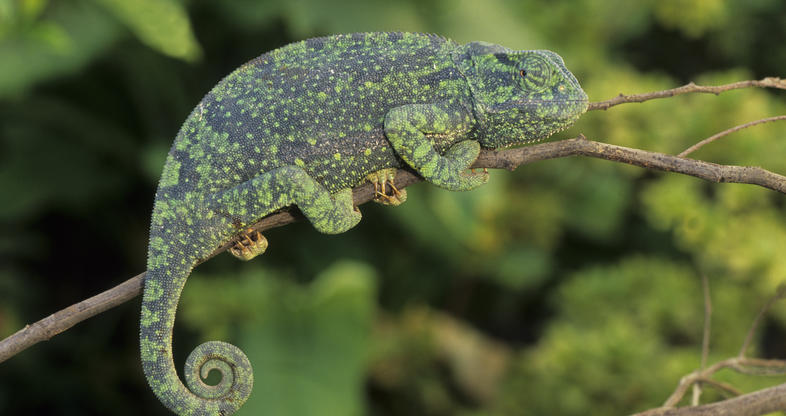
5 Fascinating Facts About the Flap neck Chameleon

5 Fascinating Facts About the Flap neck Chameleon

By Travel guides, Travel stories and blogs


5 Fascinating Facts About the Flap neck ChameleonFrom color-changing skin to lightning-fast tongues, meet one of Africa’s most captivating reptiles.

Introduction to the Facts About the Flap neck Chameleon

In the vast savannas and woodlands of sub-Saharan Africa dwells an elusive creature that looks more like a mythical forest spirit than a reptile — the Flap-neck Chameleon (Chamaeleo dilepis). With its slow, deliberate movements, independently rotating eyes, and extraordinary ability to change color, this chameleon is nothing short of a biological marvel.

Among the most widespread chameleon species in Africa, the flap-neck is a master of camouflage, a skilled predator, and an evolutionary wonder with traits that continue to fascinate scientists and nature lovers alike. Despite its quiet demeanor, this species plays an active and essential role in the ecological balance of its environment.

In this article, we delve into five astonishing facts that make the flap-neck chameleon one of the most unique creatures on the continent.

1. Color Changing: More Than Just Camouflage

One of the most iconic features of any chameleon is its ability to change color. But contrary to popular belief, this isn’t solely about blending into their surroundings. For the flap-neck chameleon, color change serves several purposes:

  • Thermoregulation: Dark colors help absorb heat in cooler conditions, while lighter hues reflect sunlight during hot periods.
  • Communication: Brighter colors may indicate stress, aggression, or a readiness to mate.
  • Camouflage: Of course, these reptiles still use their color palette to blend into vegetation and avoid predators.

This incredible ability stems from specialized skin cells called iridophores that contain nanocrystals. By adjusting the spacing between these crystals, flap-neck chameleons can reflect different wavelengths of light — essentially “repainting” themselves in real time.

2. Vision That Sees the World Differently

If you’ve ever watched a chameleon up close, you’ve likely noticed its independently rotating eyes. Each eye can move in a different direction, giving the flap-neck chameleon a full 360-degree view of its surroundings without moving its head.

Even more fascinating is their depth perception and binocular vision. When locking onto prey, both eyes can focus together to provide precise targeting, allowing them to strike with pinpoint accuracy.

Their eyes are capable of detecting ultraviolet light, helping them:

  • Identify mates or rivals more effectively.
  • Detect prey more vividly under dappled light conditions.
  • Navigate their environment with enhanced clarity.

The flap-neck’s vision is a vital asset in both hunting and avoiding predators like snakes and birds of prey.

3. The Fastest Tongue in the African Bush

When it comes to feeding, the flap-neck chameleon doesn’t stalk or chase its prey. Instead, it relies on one of nature’s most powerful projectile weapons: its tongue.

The chameleon’s tongue can extend to nearly twice the length of its body and strikes its target in a fraction of a second — faster than the blink of a human eye.

This feat is made possible by a muscular, accordion-like structure powered by an elastic recoil mechanism. At the tip of the tongue is a sticky, suction-cup-like pad that traps prey such as:

  • Grasshoppers and crickets
  • Flies and beetles
  • Occasionally small lizards or frogs

The speed, accuracy, and power of this tongue are among the most advanced in the animal kingdom, making the flap-neck chameleon a highly efficient insectivore.

4. Unique Locomotion and Defense Strategies

Flap-neck chameleons move in a deliberate, swaying manner — a behavior that mimics the motion of leaves rustling in the wind. This type of locomotion, along with their color adaptation, helps them evade predators like birds, snakes, and small carnivores.

Additional defense adaptations include:

  • Flap-like extensions on the neck (hence the name) that can be puffed out to appear larger and more intimidating.
  • Hissing and mouth-gaping when threatened.
  • Tail curling and body inflation to confuse predators.

While they may not be fast runners, flap-neck chameleons rely on these defense strategies to navigate the dangers of the African bush.

5. Widespread Yet Vulnerable (Facts About the Flap neck Chameleon)

Found throughout much of southern, central, and eastern Africa, flap-neck chameleons inhabit savannas, forests, and even suburban gardens. Despite their widespread range, they face several threats:

  • Habitat loss due to agricultural expansion and urbanization.
  • Illegal pet trade, where individuals are captured and exported globally.
  • Pesticides and vehicle collisions that impact local populations.

Conservation efforts emphasize educating communities on the ecological role of chameleons and discouraging illegal wildlife trade. Luckily, the species is currently listed as Least Concern by the IUCN, but local populations can still be fragile.

Conclusion of the Facts About the Flap neck Chameleon

The flap-neck chameleon is an extraordinary symbol of adaptation, stealth, and precision in Africa’s rich ecosystems. From its vibrant color-changing skin to its high-speed tongue and panoramic vision, this reptile continues to intrigue biologists, travelers, and storytellers alike.

Though often hidden in the foliage, it plays an indispensable role in insect control and ecological balance. Observing a flap-neck chameleon in its natural habitat is a truly rewarding experience — a silent reminder of nature’s wonders hiding in plain sight.

See the Flap neck Chameleon in the Wild

Ready to witness this marvel up close? Whether you’re trekking through the miombo woodlands or exploring savanna trails, the flap-neck chameleon is just one of many treasures waiting to be discovered.

Book your African safari with WildHorn Africa — your premier partner for ethical, expertly guided wildlife adventures across the continent.

With WildHorn Africa, you don’t just travel — you connect with the heartbeat of nature.

Start your journey today. Explore more. Discover deeper. Choose WildHorn Africa.

Facts About the Flap neck Chameleon #5 Fascinating Facts About the Flap neck Chameleon
5 Fascinating Facts About Plains Zebra

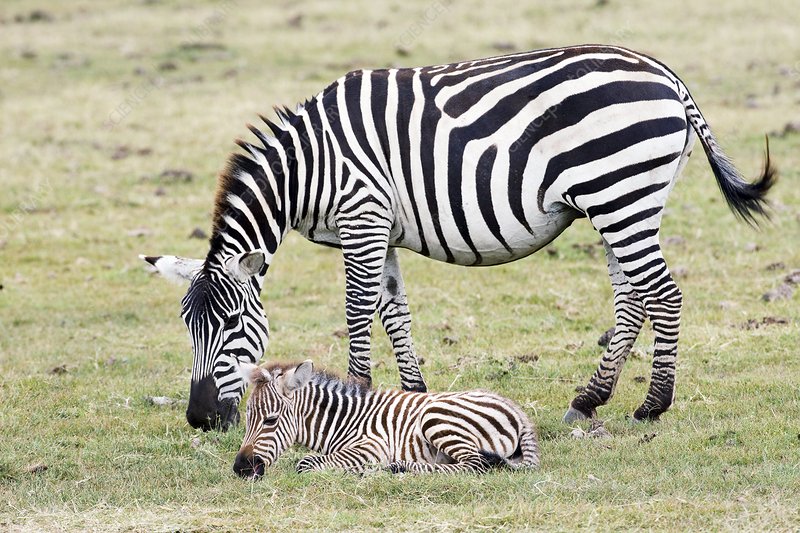
5 Fascinating Facts About Plains Zebra

By Travel guides, Travel stories and blogs

5 Fascinating Facts About Plains Zebra

Facts About Plains Zebra

Stripes in Motion: Nature’s Optical Wonder

Few animals command attention quite like the Plains Zebra (Equus quagga), with its distinctive black-and-white stripes gliding effortlessly across the African savannah. This iconic creature has long captured human fascination, not just for its mesmerizing appearance but also for its highly social behavior, remarkable adaptations, and vital ecological role. As the most common and widespread of the zebra species, the Plains Zebra stands as a symbol of Africa’s wild heart, moving in vast herds and interacting in complex ways that showcase the richness of nature’s design.

What appears at first to be a simple coat of contrasting colors is, in fact, a product of millennia of evolution, crafted to meet the demands of survival in a dynamic environment. Every stripe, muscle, and movement of the Plains Zebra tells a deeper story. Beneath its beauty lies a set of fascinating biological, behavioral, and ecological truths that underscore its status as a marvel of the natural world. In this exploration, we delve into five compelling facts that uncover the full splendor of the Plains Zebra.

The Purpose of the Stripes: More Than Just Aesthetics

Perhaps the most enduring mystery surrounding the Plains Zebra is the purpose behind its striking stripes. Numerous scientific theories have sought to explain this unique characteristic, and while the debate continues, several prominent ideas have emerged. One of the most widely supported explanations is that the stripes serve as a deterrent to biting insects, particularly tsetse flies and horseflies. Research suggests that the contrasting black-and-white patterns confuse these pests, reducing their ability to land effectively on the zebra’s skin and decreasing the chances of disease transmission.

Beyond deterring insects, stripes may also serve a thermoregulatory function. The black stripes absorb more heat than the white ones, creating tiny air currents along the body that help with cooling. In the hot savannah environment, this natural air conditioning system is not just clever—it’s essential.

Another compelling theory suggests that stripes function as a tool for social cohesion and individual recognition. In large herds, where visual confusion is easy, the unique stripe pattern of each zebra may help individuals identify one another. This is particularly important for mother-foal bonding and maintaining social bonds. The motion of stripes when zebras run also creates a dazzling optical illusion, potentially confusing predators and making it difficult to single out an individual.

Complex Social Structures and Communication

The social life of the Plains Zebra is a marvel of organization and intelligence. These animals live in small family groups called harems, consisting of one dominant male, several females, and their offspring. These harems are stable and tightly knit, with strong bonds between members. Within each harem, communication is constant and multifaceted. Zebras use vocalizations, ear positioning, facial expressions, and even tail movements to convey information about emotions, danger, or intent.

In addition to harems, Plains Zebras frequently congregate in larger temporary herds, especially during migrations or in areas with plentiful grazing. These gatherings offer safety in numbers and the opportunity to interact with other social units. Despite the apparent simplicity of a zebra’s life, the layers of social complexity rival that of many primates. Hierarchies, alliances, and conflict resolution are all part of their social repertoire, indicating a high level of cognitive sophistication.

Zebras are also incredibly attentive parents. Foals are able to stand and walk within an hour of birth, a necessary adaptation in predator-rich habitats. Mothers isolate themselves briefly after giving birth to ensure their newborn imprints on them visually and through scent. This early bonding period is critical for the foal’s survival and integration into the harem.

Adapted for Endurance and Migration (Facts About Plains Zebra)

The Plains Zebra is not only visually striking but also physically formidable. These animals are built for endurance, capable of traveling long distances in search of food and water. Their powerful legs, sturdy bodies, and efficient digestive systems enable them to thrive in a wide range of environments, from open grasslands to woodland savannahs.

Perhaps the most awe-inspiring display of their stamina comes during the Great Migration, where thousands of zebras join wildebeests and other herbivores in a massive journey across East Africa. This seasonal migration is driven by rainfall patterns and the availability of fresh grazing. The trek is perilous, fraught with river crossings, predator ambushes, and challenging terrain. Yet the Plains Zebra is undeterred, displaying a tenacity that speaks to its evolutionary success.

Their digestive system is another point of advantage. Unlike ruminants such as antelope, zebras are hindgut fermenters, which allows them to extract nutrients from low-quality forage. This enables them to graze on coarse grasses that other animals may avoid, giving them a competitive edge in mixed-species herds.

An Essential Player in the Ecosystem

Beyond their social and physical prowess, Plains Zebras play a crucial ecological role. As primary grazers, they are often the first to move into new grasslands. Their feeding habits help trim tall grasses, making the area more accessible to other herbivores. By consuming coarse vegetation, zebras create a mosaic of plant heights and species that support a wider variety of life forms.

Moreover, their manure enriches the soil, aiding plant growth and contributing to the health of the ecosystem. Predators, too, rely on zebras as a major food source. Lions, hyenas, leopards, and crocodiles all depend on zebra populations to sustain themselves. In this way, the Plains Zebra forms a vital link in the food web, supporting both plant and animal life.

Conservationists often view zebras as indicator species—animals whose health reflects the broader status of the ecosystem. Protecting zebra populations means safeguarding vast expanses of habitat that benefit many other species. Unfortunately, threats such as habitat fragmentation, human-wildlife conflict, and poaching continue to put pressure on these beautiful creatures.

Cultural Significance and Conservation Challenges

The Plains Zebra has captured the human imagination for centuries, symbolizing freedom, wildness, and natural beauty. Its image graces everything from tribal art to corporate logos, embodying a sense of untamed elegance. Yet this cultural admiration has not always translated into effective protection.

Although the Plains Zebra is currently classified as Near Threatened rather than endangered, its numbers are declining in some areas. Agricultural expansion, fencing, and competition with livestock limit their access to traditional migration routes and grazing grounds. Poaching, while less severe than for other African wildlife, still occurs, particularly in regions where their skins are prized or where local communities hunt them for meat.

Conservation strategies must address both ecological and social dimensions. Community-based programs that offer incentives for coexistence, education initiatives that raise awareness about zebra behavior and importance, and cross-border conservation efforts for migratory corridors are all essential. The survival of the Plains Zebra depends not only on biological resilience but also on human commitment to living in harmony with the wild.

Witness the Majestic Plains Zebra with WildHorn Africa

For those who yearn to witness the beauty, behavior, and brilliance of the Plains Zebra firsthand, nothing compares to a guided safari across the African wilderness. Standing amidst a herd, hearing the calls and seeing the stripes ripple through the golden grass, is an experience that stirs the soul and deepens our connection to the natural world.

WildHorn Africa offers curated safari adventures that bring you closer to this magnificent species and many others. Whether you’re exploring the Serengeti, the Okavango Delta, or the Maasai Mara, WildHorn Africa ensures that your journey is filled with expert knowledge, ethical travel, and unforgettable moments. Their deep respect for wildlife and commitment to conservation make every safari not just a vacation but a contribution to preserving Africa’s wild heritage.

Book your African safari today with WildHorn Africa, and step into the striped symphony of the savannah, where every hoofbeat echoes the ancient rhythm of nature.

Facts About Plains Zebra #Facts About Plains Zebra Facts About Plains Zebra

5 Interesting Facts About the Baboon (Papio Papio)

5 Interesting Facts About the Baboon (Papio Papio)

By Travel guides, Travel stories and blogs

5 Interesting Facts About the Baboon (Papio papio)

Facts About the Baboon

The Mischievous Minds of Africa: A Glimpse into the Baboon’s Wild World

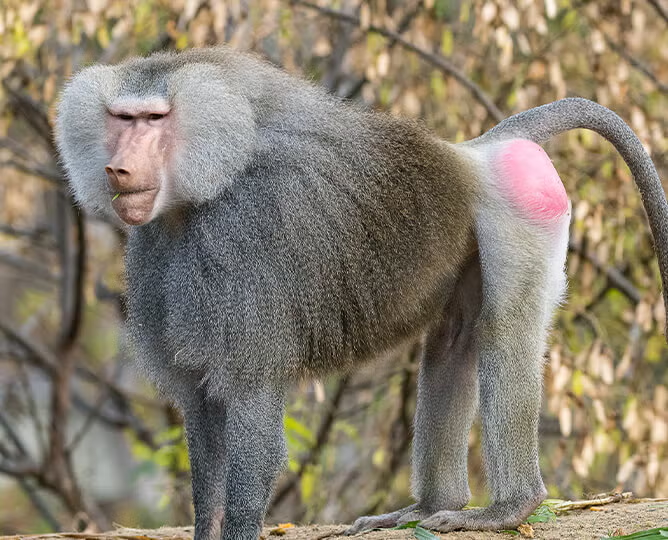
Few creatures in the African wilderness command the same mix of curiosity, respect, and occasional amusement as the baboon. The species known as Papio papio, commonly referred to as the Guinea baboon, is an intelligent, social, and highly adaptive primate found in the western regions of Africa. With their expressive faces, sharp intellect, and intricate group dynamics, baboons are a remarkable symbol of the continent’s vibrant biodiversity. They often play the role of both entertainer and enigma in the safari experience, leaving guests intrigued by their antics and depth.

While many travelers are drawn to Africa to see the “Big Five,” those who take the time to observe the baboon will discover a creature just as fascinating. Far from being mere background characters in the great African drama, baboons are complex animals with rich emotional lives, intricate social hierarchies, and impressive survival skills. Their story is one of adaptability and evolution, making them a must-see subject for anyone interested in the wonders of the natural world.

Baboons Share Deep Social Bonds

One of the most compelling aspects of baboon life is their deeply structured social system. These primates live in large troops that can number up to 200 individuals, though most commonly they average around 30 to 80. Unlike many mammals whose interactions are primarily driven by competition and conflict, baboons operate through a web of alliances, kinship bonds, and established hierarchies. Within a troop, individuals form close friendships that are not just strategic but deeply emotional.

Grooming serves not only a hygienic function but is also a way of cementing relationships and reducing social tension. Younger males often form coalitions to challenge higher-ranking individuals, while females typically inherit their social ranks from their mothers, forming long-lasting matrilineal lines.

The social intelligence required to navigate this complex system is considerable. Baboons can recognize individual faces, remember past interactions, and adjust their behavior accordingly. These traits make them excellent subjects for scientific studies on primate cognition and the evolutionary roots of human social behavior. Their ability to mediate conflict, engage in reconciliation, and show empathy speaks to the profound emotional depth of these animals, traits that are not only fascinating but humbling.

Baboons Are Exceptionally Adaptable (Facts About the Baboon)

Perhaps one of the most impressive features of the Guinea baboon is its adaptability. These primates can thrive in a wide range of environments, from savannas and woodlands to semi-arid scrublands. They are both terrestrial and arboreal, spending much of their time on the ground but climbing trees to sleep or to escape predators.

This versatility extends to their diet as well. Baboons are omnivores with a broad palate, consuming everything from fruits, seeds, and grasses to insects, small mammals, and even the occasional bird egg. Their opportunistic feeding habits allow them to survive in habitats where food availability can fluctuate dramatically.

Such dietary flexibility has not only ensured their survival but has also made them capable of coexisting in landscapes altered by human activity. Unfortunately, this sometimes leads to conflicts with local farmers, as baboons are known to raid crops and scavenge in villages. Despite these tensions, their resilience and resourcefulness have made them one of the few primate species able to sustain stable populations in regions undergoing environmental stress. Their ability to adapt is not merely a testament to their physical endurance, but also to their intelligence and behavioral plasticity.

Baboons Exhibit Complex Communication

Communication among baboons is not only vocal but also visual and tactile. They possess an extensive vocal repertoire used for different purposes: alarm calls to warn of predators, grunts to maintain group cohesion, screams during fights, and even distinct sounds for greeting familiar individuals. But vocalizations are just one part of their communication toolkit. Facial expressions, such as lip-smacking and eyebrow raising, convey emotional states and intentions. Body posture and gestures also play crucial roles in interactions, signaling dominance, submission, curiosity, or aggression.

For example, a yawn from a male baboon might appear innocuous, but it often serves as a display of dominance, showcasing the sharp canines that can deter potential rivals. Grooming, as mentioned earlier, is a cornerstone of social interaction, reinforcing bonds and calming tensions. All these forms of communication are not mere instinct but appear to involve learned behavior and intentionality.

Understanding how baboons communicate offers not only insights into their society but also clues about the evolution of language and social intelligence in humans. Their behavioral richness adds another layer to the safari experience, especially when observed in their natural habitats where these interactions unfold in real time.

Their Societies Are Matriarchal Yet Strategically Male-Dominated

While female baboons form the stable core of the troop, male baboons play dynamic and often volatile roles. In Guinea baboons, the male social structure is particularly fascinating. Unlike in some other baboon species where males are transient and compete aggressively for dominance, Guinea baboon males exhibit a more tolerant and cooperative nature. They form strong social bonds with females and other males, which helps them maintain their status and father offspring. Interestingly, males often stay within their birth groups, contributing to a more stable and less combative troop structure.

This social configuration is unique among baboon species and has made the Guinea baboon a subject of great interest among behavioral ecologists. The implications are significant: cooperation, not aggression, can be a successful evolutionary strategy. It also challenges long-held assumptions about primate behavior, showing that even within a single genus, social systems can evolve in dramatically different directions. The Guinea baboon, in this regard, serves as a living laboratory for the study of primate—and by extension, human—social evolution.

Baboons Are Important to Ecosystems and Human Understanding

Beyond their own social intrigues, baboons play a vital ecological role. As both predators and prey, they are integral parts of the food web. Their foraging habits help in seed dispersal, influencing plant diversity and regeneration. By digging for roots and insects, they aerate the soil, indirectly supporting the health of the environment. Their presence also serves as an indicator of ecosystem health, as thriving baboon populations often signal a balanced habitat.

From a scientific perspective, baboons have contributed immensely to our understanding of social behavior, stress physiology, and primate evolution. Long-term field studies of baboons have shed light on the impact of social status on health, the effects of environmental pressures on group cohesion, and the parallels between primate and human societies.

For safari-goers and wildlife enthusiasts, observing baboons offers a profound opportunity to connect with nature on a cognitive and emotional level. They remind us of our shared ancestry and the evolutionary paths that have shaped the intelligence and emotions we often consider uniquely human.

See Baboons in the Wild With WildHorn Africa

To truly appreciate the complexity and charisma of baboons, one must observe them in their natural environment—where their behaviors, interactions, and vibrant personalities can be fully appreciated. WildHorn Africa specializes in curated safari experiences that go beyond the ordinary. With expert guides, personalized itineraries, and a commitment to conservation, they offer travelers the chance to witness wildlife like the Guinea baboon in a meaningful, immersive way.

Whether you’re watching a troop play along a riverbank at dawn or quietly observing their intricate grooming rituals beneath an acacia tree, the experience is unforgettable. Don’t settle for surface-level sightings. Let WildHorn Africa take you into the heart of Africa’s wild landscapes, where each moment is a window into the soul of the continent.

Book your African safari with WildHorn Africa today and meet the wild minds of Africa up close—it’s a journey that changes you. (Facts About the Baboon)

Facts About the Baboon #Facts About the Baboon Facts About the Baboon

5 Fascinating Facts About the African Fish Eagle

5 Fascinating Facts About the African Fish Eagle

By Travel guides, Travel stories and blogs


5 Fascinating Facts About the African Fish Eagle

With its striking cry echoing across Africa’s great lakes and rivers, the African Fish Eagle is more than just a bird — it’s a symbol of wilderness, freedom, and grace. Found across sub-Saharan Africa, this majestic raptor is often considered the avian voice of the continent.

Whether soaring above the Okavango Delta or perched on a high branch near Lake Victoria, the African Fish Eagle captivates travelers and bird enthusiasts alike. In this article, we explore five intriguing and in-depth facts about this regal bird that make it one of Africa’s most celebrated creatures.

Facts About the African Fish Eagle

1. A Voice That Defines the African Wilderness

The call of the African Fish Eagle is arguably one of the most recognizable sounds in the African wild. Its resonant, yodel-like cry is often described as “the sound of Africa”. It is used in countless documentaries and media to evoke the untamed spirit of the continent.

The eagle’s call is not just for dramatic effect. It serves several practical functions:

  • Territorial Declaration: The loud cry helps the eagle stake its claim to prime fishing spots.
  • Mating Communication: Mated pairs will often call to each other in duets, strengthening their bond.
  • Alerting Rivals: The echoing call is also a warning to other eagles nearby to keep their distance.

The cry is produced while the bird is perched or even while soaring through the air, giving a wild soundtrack to Africa’s riverbanks and wetlands.

2. Masters of Aquatic Hunting

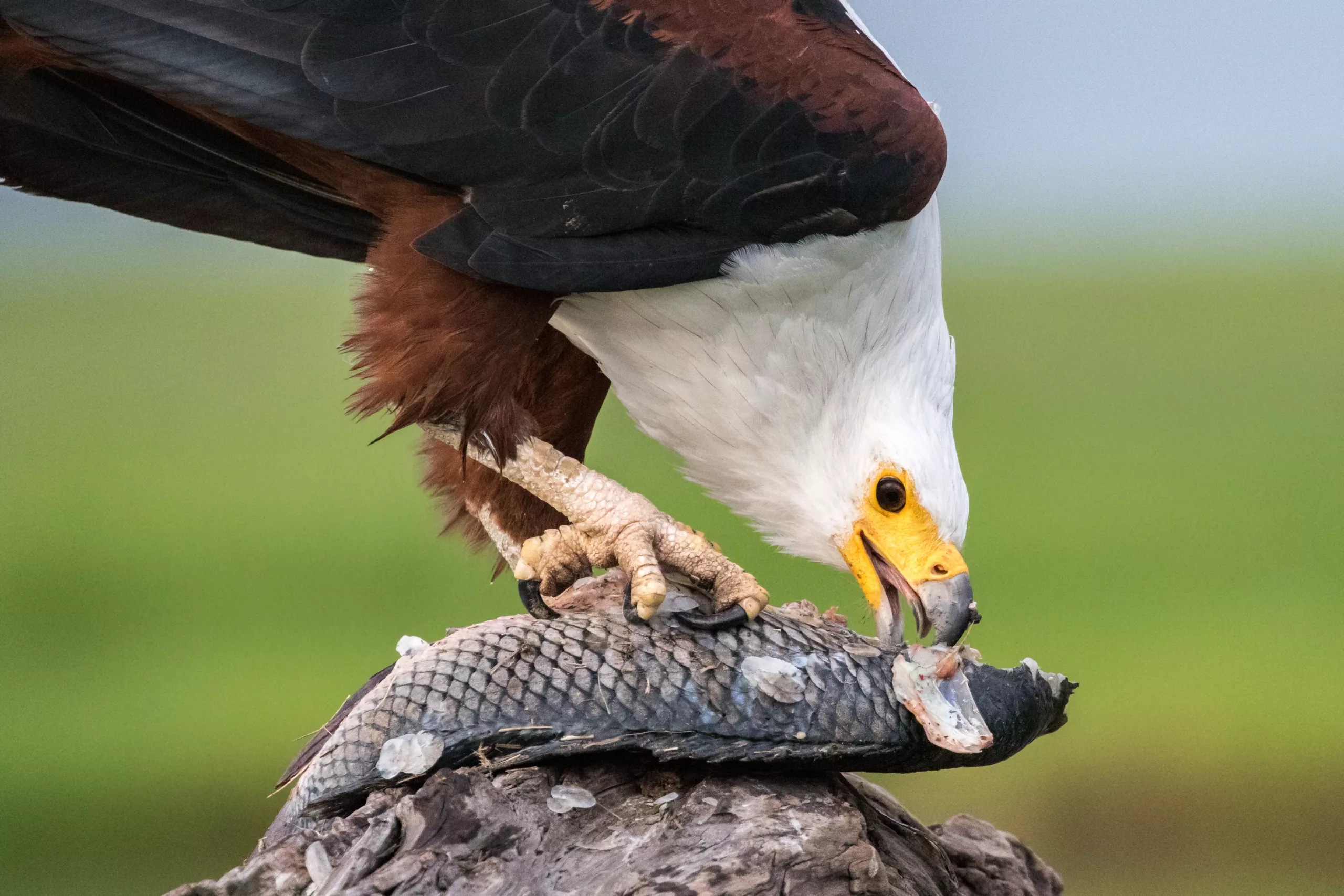
As their name suggests, African Fish Eagles are specialized piscivores—fish make up over 90% of their diet. Their hunting technique is both elegant and efficient.

Perched silently on high trees near water, the eagle uses its keen vision—up to 3.6 times sharper than human sight—to detect fish swimming near the surface. Once a target is spotted, the bird swoops down in a swift glide, extends its powerful talons, and snatches the prey from the water with precision.

Adaptations that make this possible include:

  • Strong, curved talons equipped with rough pads (spicules) for gripping slippery fish
  • A large, hooked beak for tearing flesh
  • Long, broad wings for gliding and hovering

Occasionally, fish may be too heavy to carry in flight. In such cases, the eagle paddles to shore using its wings, dragging its prey across the water — a rare and remarkable sight.

3. A Framed National Symbol

The African Fish Eagle isn’t just a biological marvel — it’s a cultural icon. It is the national bird of three countries:

Its image is proudly displayed on national coats of arms, flags, and currency. For many Africans, the eagle represents strength, vision, freedom, and pride.

In traditional beliefs, the Fish Eagle is often revered as a spiritual creature—a messenger of ancestors or a harbinger of change. Its piercing call is thought to carry symbolic meaning across generations.

This deep cultural reverence has helped protect the species, as communities living near large water bodies often view the eagle with admiration and respect.

4. Devoted Mates and Territorial Pairs (Facts About the African Fish Eagle)

African Fish Eagles are monogamous and often mate for life. Once a pair is established, they claim and defend a territory that includes access to ample fishing grounds and tall trees for nesting.

The nesting process is a remarkable display of teamwork. Eagles construct massive nests—called eyries—from sticks, sometimes over 2 meters (6.5 feet) wide. These nests are used year after year, with additional layers added annually, making some nests weigh hundreds of kilograms.

During breeding season:

  • The female typically lays 1 to 3 eggs.
  • Both parents take turns incubating the eggs for about 42–45 days.
  • After hatching, the chicks are fed fish regurgitated by both parents.

The devotion shown by Fish Eagle pairs contributes significantly to their breeding success and is a heartwarming example of lifelong partnership in the animal kingdom.

5. Widespread Yet Vulnerable to Environmental Change

African Fish Eagles are found near large bodies of open water with plentiful fish — from lakes, rivers, and estuaries to flooded forests and dams. Their range spans most of sub-Saharan Africa, making them one of the continent’s most familiar raptors.

However, this widespread presence does not mean they are immune to threats. Like many other species, they are affected by:

  • Water pollution — particularly from agricultural runoff and industrial waste
  • Overfishing — which reduces their food supply
  • Habitat destruction — due to damming and development along riverbanks
  • Climate change — affecting rainfall patterns and aquatic ecosystems

Conservationists monitor Fish Eagle populations as indicators of aquatic ecosystem health. Their presence often signals a balanced and thriving wetland or riverine environment.

Witness the Majesty of the African Fish Eagle in the Wild

Observing the African Fish Eagle in its natural habitat is a soul-stirring experience. From its haunting call at dawn to the dramatic dive that ends with a fish clenched in its talons, every moment speaks to the wonder of Africa’s wild places.

If you’ve ever dreamed of hearing the “voice of Africa” for yourself, or of watching a Fish Eagle glide over serene waters, there’s no better way than to join a professionally guided safari.

We highly recommend booking your African wildlife adventure with WildHorn Africa. Their expert-led safaris offer immersive experiences that connect you to the heart of Africa’s ecosystems — and the magnificent creatures that call them home.

Book Your Safari with WildHorn Africa Today

Facts About the African Fish Eagle #Facts About the African Fish Eagle Facts About the African Fish Eagle

5 Fascinating Facts About Vultures

5 Fascinating Facts About Vultures

By Travel guides, Travel stories and blogs

5 Fascinating Facts About Vultures

Facts About Vultures

Nature’s Unsung Clean-up Crew

In the vast, sun-drenched landscapes of Africa, where predators rule the day and survival hinges on the delicate balance of ecosystems, one bird often remains underappreciated yet utterly essential: the vulture. These majestic scavengers, often misunderstood and symbolically linked to death, play a role far more profound and life-giving than most imagine. Known for their bald heads, keen eyesight, and eerie silence as they soar on thermals high above the savannah, vultures are ecological custodians whose very existence keeps the wilderness clean, healthy, and thriving.

Despite the unglamorous reputation they carry, vultures are nothing short of ecological superheroes. They prevent the spread of deadly diseases, eliminate carrion that could pollute water sources, and maintain the balance of food chains across the continent. The African wilderness, without the vulture, would become a breeding ground for decay and disease. As we peel back the feathers of misunderstanding, five fascinating facts emerge that reveal the true wonder of these misunderstood creatures.

Remarkable Digestive Systems that Neutralize Disease

The most astonishing feature of vultures is undoubtedly their biological capacity to digest deadly bacteria and pathogens. When other animals might fall gravely ill or die from consuming infected carcasses, vultures thrive. Their stomach acid is one of the most corrosive known in the animal kingdom, with a pH level that can dissolve anthrax, botulism, cholera, and even rabies viruses without any harm to the bird. This unique adaptation allows vultures to safely consume carcasses that would otherwise serve as breeding grounds for disease, thereby protecting other wildlife and human populations from potentially fatal outbreaks.

In ecosystems where vultures are declining due to poisoning and habitat loss, an increase in decaying animal matter has correlated with a rise in feral dog populations and the spread of diseases such as rabies. The connection is clear: vultures act as a natural disease control system, reducing the burden on environmental and public health systems alike. Without them, the consequences can be disastrous, both ecologically and economically.

Exceptional Eyesight and Soaring Abilities (Facts About Vultures)

Vultures are masters of the sky with eyesight so powerful they can spot a carcass from kilometers away. This incredible vision, combined with their ability to glide effortlessly on thermal currents for hours with minimal wing flapping, makes them expert scavengers. Unlike many other birds, vultures rely almost entirely on sight rather than smell to locate their meals. From their aerial vantage point, they can detect the slightest movement or glimmer of decomposing flesh, often descending in flocks to claim their place at nature’s banquet.

The wingspan of some African vultures can exceed three meters, allowing them to cover vast territories in search of food. This ability to travel long distances is critical in the African savannah, where carcasses may be widely dispersed and difficult to find. Their aerial efficiency means vultures can remove dead animals from the landscape faster than any other scavenger, playing a pivotal role in maintaining cleanliness and balance.

Social Hierarchies and Inter-Species Cooperation

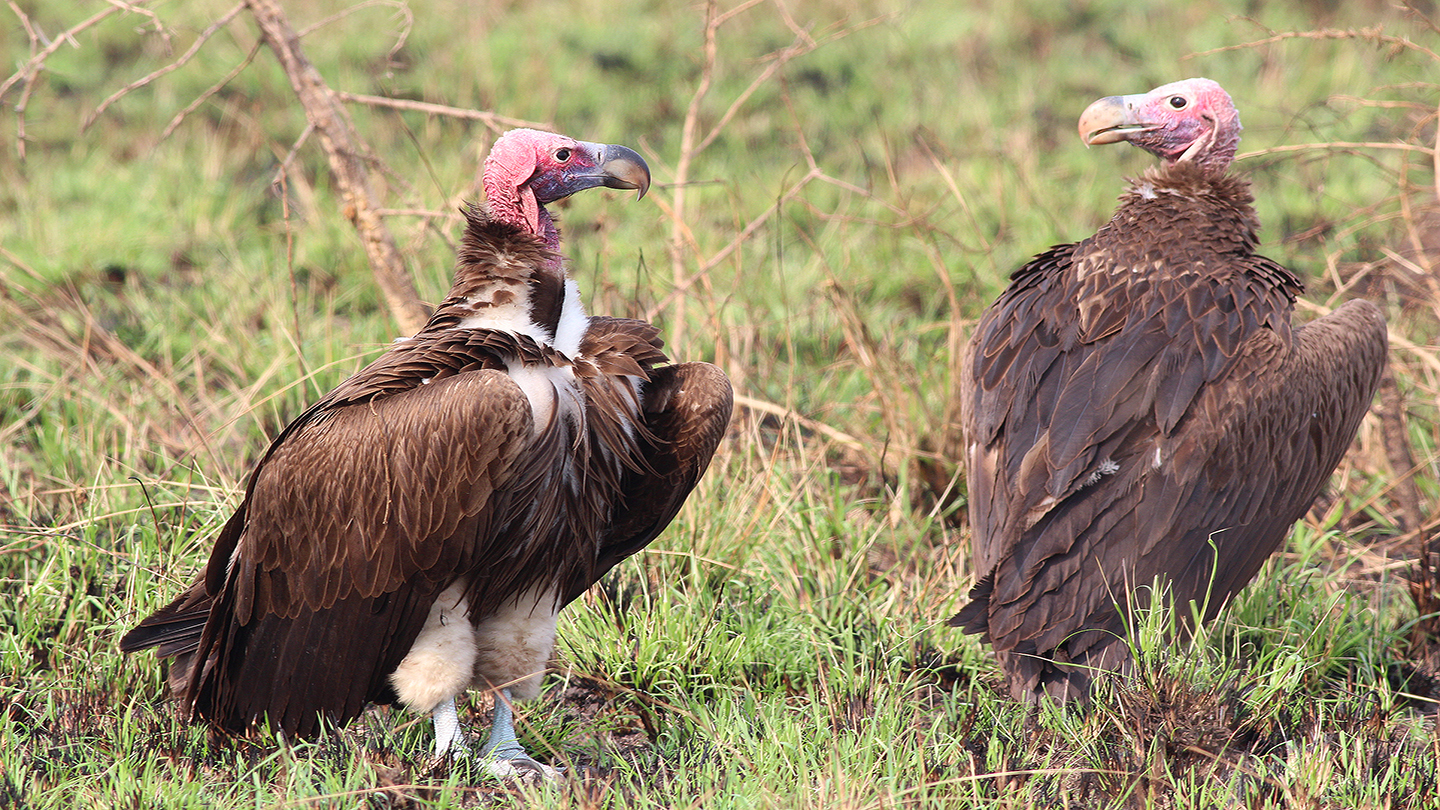
Contrary to their grim image, vultures are highly social birds that often feed and fly in groups. Within these groups, there is a structured hierarchy based on species and size. For example, the powerful Lappet-faced Vulture typically dominates smaller species such as the White-backed or Hooded Vulture at feeding sites. This pecking order ensures that each species fulfills its role in the scavenging process. Larger vultures tear open thick hides, allowing smaller vultures to access softer tissues.

This inter-species cooperation highlights the complex intelligence and social behavior of vultures. It also underscores the interconnectedness of African scavengers, where each species contributes uniquely to the ecosystem. Vultures often feed alongside other scavengers like hyenas and jackals, and this dynamic synergy ensures maximum efficiency in carcass consumption. Their role is so well integrated into nature’s rhythms that even predator species sometimes benefit indirectly from their cleanup work.

Symbolism, Culture, and Misunderstanding

Throughout history, vultures have been steeped in myth, superstition, and symbolism. In some African cultures, they are revered for their spiritual connection to the afterlife or used in traditional medicine for their perceived mystical powers. In contrast, other beliefs vilify them as omens of death or bearers of misfortune. This mixed legacy has influenced both the conservation and persecution of vultures across the continent.

Modern conservation efforts now emphasize the scientific and ecological value of vultures rather than relying on outdated superstitions. As research sheds light on their irreplaceable role in ecosystems, conservationists are working tirelessly to change public perceptions. The transformation from death symbol to ecological hero is still underway, but education and awareness are key in shifting the narrative.

Nevertheless, vultures remain vulnerable to practices like poisoning (often unintentional, through tainted carcasses meant for other predators), electrocution from power lines, and habitat destruction. Protecting vultures requires a fundamental change in how they are perceived and respected across Africa and the world.

Critical Conservation Status and the Fight for Survival

Perhaps the most sobering reality about vultures is that many species are now critically endangered. The African White-backed Vulture, Rüppell’s Vulture, and Hooded Vulture are all listed as critically endangered due to a combination of threats. Poisoning remains the most significant threat—whether deliberate, such as in retaliatory poisonings meant for lions, or incidental, through consumption of carcasses treated with veterinary drugs like diclofenac, which is fatal to vultures.

The fight to save vultures is multifaceted. Conservationists are promoting vulture-safe zones, banning harmful veterinary drugs, and working with local communities to develop awareness programs. Rescue and rehabilitation centers are treating injured birds and reintroducing them into safe habitats. But the battle is far from over. Saving vultures is not merely about preserving one species; it is about protecting the health of entire ecosystems. Their disappearance would create cascading effects that would be felt across the animal kingdom and human society.

Vultures may not be the most glamorous or beloved creatures in Africa, but they are without doubt among the most vital. They are the silent sentinels of the savannah, ever-watchful, ever-vigilant, ensuring that life continues even in the presence of death. Their story is one of resilience, utility, and misunderstood magnificence.

Experience the Majesty of Africa’s Sky Guardians with WildHorn Africa

Witnessing vultures in the wild is not only an awe-inspiring experience but also an education in nature’s extraordinary design. From watching them circle high above the plains to observing the orchestrated efficiency of their feeding rituals, these birds offer insight into the hidden mechanics of the natural world.

WildHorn Africa invites you to explore the untamed beauty of the continent through expertly curated safaris that highlight both the celebrated and the overlooked wonders of the animal kingdom. Whether you are drawn by the iconic Big Five or the humble but heroic vulture, WildHorn Africa ensures your journey is immersive, enlightening, and unforgettable.

Book your African safari with WildHorn Africa today and discover the true spirit of conservation, adventure, and ecological wonder.

Facts About Vultures #Facts About Vultures Facts About Vultures

5 Fascinating Facts About Flamingos (Phoenicopteridae)

5 Fascinating Facts About Flamingos (Phoenicopteridae)

By Travel guides, Travel stories and blogs

5 Fascinating Facts About Flamingos (Phoenicopteridae)

The Blazing Beacons of Africa’s Wetlands

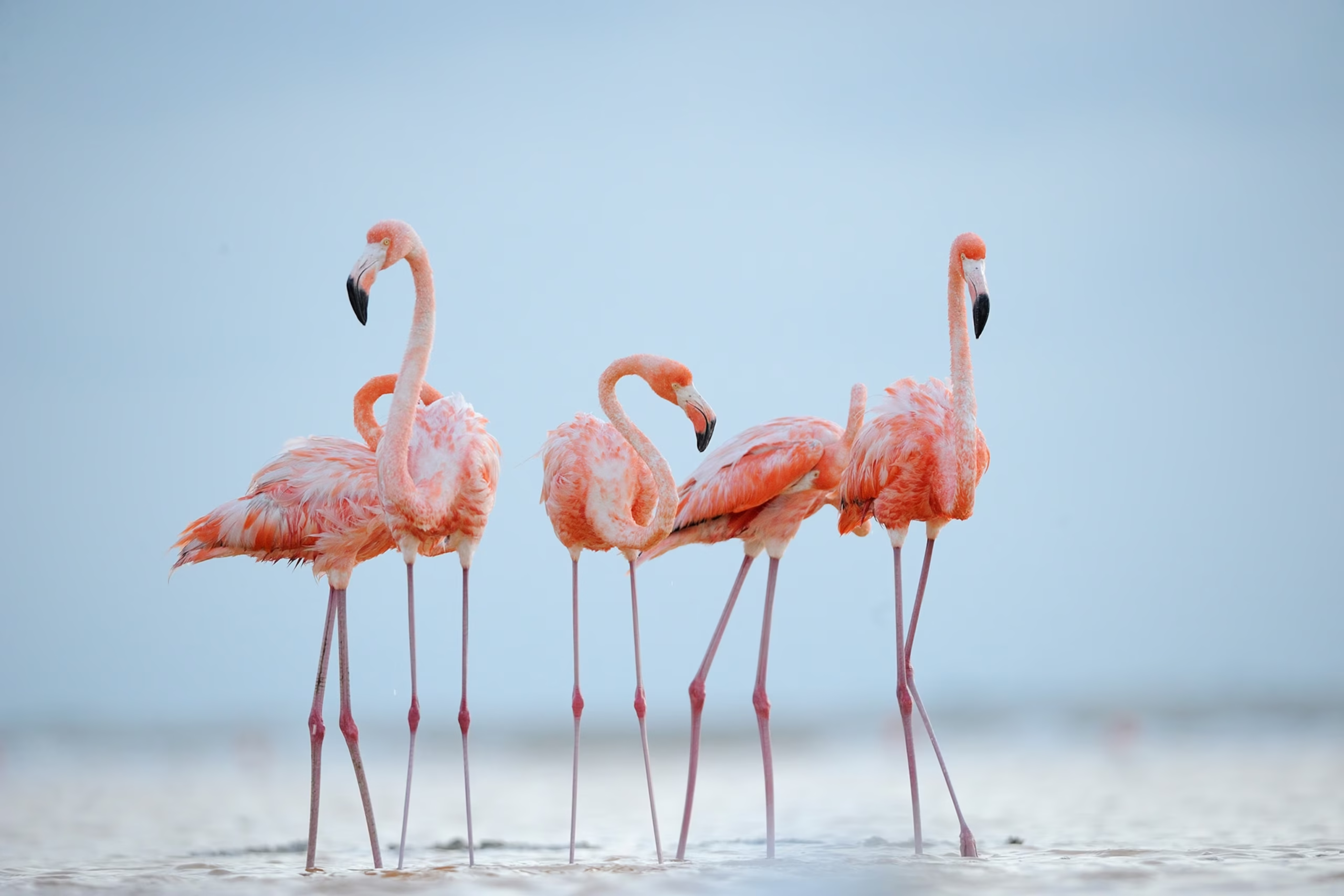
Few sights in the natural world are as mesmerizing as a flock of flamingos—their vivid pink plumage set against shimmering lake waters, their long legs wading through shallows with an effortless grace. But beyond their flamboyant appearance lies a world of biological wonder, behavioral complexity, and ecological importance.

Flamingos, scientifically classified under the family Phoenicopteridae, are more than mere icons of elegance; they are survivors, engineers, and communicators in their ecosystems. Found across Africa’s saline and alkaline lakes, these birds embody adaptation at its finest.

Here are five incredible facts about flamingos that showcase why these birds are not only captivating but essential to understanding the delicate balance of Africa’s wild habitats.

1. Their Pink Color Comes From Their Diet (Facts About Flamingos)

One of the most distinctive traits of flamingos is their brilliant pink coloration—but they aren’t born that way. Flamingo chicks hatch with grayish-white feathers, and their signature pink hue only develops as they grow older, thanks to their diet.

Carotenoids: The Secret Pigment

Flamingos feed primarily on blue-green algae, crustaceans, and plankton, which are rich in carotenoid pigments. As their bodies digest these foods, the pigments are broken down into colored molecules, which are then absorbed and deposited in the feathers, skin, and even the beak.

This vibrant pink not only serves as a visual identifier but also as a health indicator. The brighter the flamingo, the healthier and more desirable it appears to potential mates.

2. Flamingos Are Masters of Alkaline Lake Habitats

While many animals shy away from extreme conditions, flamingos thrive in some of Africa’s most inhospitable environments. They congregate in vast numbers in alkaline or saline lakes, such as Lake Natron in Tanzania and Lake Bogoria in Kenya, where few other species can survive.

Highly Specialized Beaks and Feeding Techniques

Flamingos have uniquely adapted beaks that allow them to filter microscopic food from the water. Using an upside-down feeding motion, they suck in water and pump it through comb-like structures called lamellae to trap algae and tiny invertebrates.

Their long legs and webbed feet help them wade into deeper, saltier water where food is abundant. In these settings, flamingos play a critical role in maintaining ecosystem balance, often serving as bioindicators for lake health.

3. They Are Incredibly Social and Synchronized

Flamingos are not solitary creatures. In fact, they are among the most social birds on the planet, forming colonies that can number in the hundreds of thousands. This social structure is not just for safety in numbers—it’s essential to their survival and reproductive success.

Courtship Rituals and Synchronization (Facts About Flamingos)

During mating season, flamingos engage in elaborate group displays where dozens, even hundreds, of birds perform synchronized movements—head-flagging, wing-saluting, and marching in unison. These rituals are critical for pair bonding and reproductive timing.

Once mated, a bonded pair builds a volcano-shaped mud nest in shallow water and lays a single egg. Both parents share responsibilities, from incubating the egg to feeding the chick with crop milk—a protein- and fat-rich secretion similar to mammalian milk.

Chick Crèches

After hatching, chicks gather in large groups called crèches, where they are supervised by a few adults while their parents forage. This behavior improves survival rates and reflects the communal spirit that defines flamingo societies.

4. Flamingos Communicate in Remarkably Complex Ways

Flamingos may not be known for their vocalizations like songbirds, but their communication methods are both diverse and effective.

Vocal and Visual Signals

Flamingos use a variety of grunts, honks, and low-frequency sounds to communicate, especially in dense flocks. These sounds are essential for maintaining group cohesion, alerting others to danger, and coordinating breeding behaviors.

Visual signals, such as posture, head movements, and plumage displays, also convey information about an individual’s mood, mating readiness, or hierarchical status.

In their crèches, flamingo chicks recognize and respond to individual calls from their parents, a vital skill in an environment where tens of thousands of birds look and sound similar.

Long-Distance Navigation

Flamingos are capable of long migratory journeys and are believed to use celestial cues, magnetic fields, and even olfactory signals to navigate. Their ability to return to the same breeding and feeding grounds year after year is a testament to their cognitive abilities and memory.

5. They Are Ecosystem Engineers and Conservation Indicators

Beyond their charm and beauty, flamingos serve as keystone species in their habitats. Their feeding activities stir up nutrients, promote algal growth, and help maintain the overall health of wetland ecosystems.

Environmental Sentinels

Because flamingos are sensitive to changes in water quality, salinity, and food availability, their presence—or absence—often serves as an early warning sign of ecological degradation. Conservationists monitor flamingo populations to assess the health of lake environments across Africa.

Conservation Challenges

Despite their resilience, flamingos face numerous threats, including habitat loss, climate change, and human disturbance. For example, plans to build industrial projects near Lake Natron could disrupt breeding colonies and cause population declines.

Ongoing conservation efforts focus on protecting flamingo habitats, enforcing anti-disturbance laws, and engaging local communities in sustainable tourism practices that benefit both wildlife and people.

The Flamingo: A Marvel of Adaptation and Elegance

The flamingo is far more than a pretty face in the wetlands. It is a symbol of adaptation, intelligence, and resilience—a bird that thrives in the harshest of habitats while nurturing some of the most complex social systems found in the avian world.

From its dietary pigments that paint it pink, to its finely tuned communication systems and vital ecological roles, the flamingo commands admiration and respect. By understanding and protecting these magnificent birds, we ensure the survival of the delicate ecosystems they help sustain.

See Flamingos in Their Element with WildHorn Africa

To experience the majesty of Africa’s flamingos in their natural habitat, nothing compares to a professionally guided safari. WildHorn Africa offers immersive wildlife expeditions to Lake Nakuru, Lake Natron, and other flamingo-rich sanctuaries, where you can witness flocks of thousands dancing across reflective waters.

With personalized itineraries, experienced guides, and a deep commitment to conservation, WildHorn Africa brings you closer to the continent’s most enchanting wildlife experiences.

Book your African tour today with WildHorn Africa – and step into the world of the extraordinary flamingo.

Facts About Flamingos #Facts About Flamingos Facts About Flamingos

5 Best Family-friendly Safaris in South Africa

5 Best Family-friendly Safaris in South Africa

By Family holidays, South Africa travel guides, Travel guides, Travel stories and blogs

5 Best Family-Friendly Safaris in South Africa

Where Wild Wonders Meet Family Adventure

South Africa is a land of dramatic landscapes, iconic wildlife, and unforgettable experiences. But beyond the thrilling game drives and luxurious lodges lies a deeper appeal: it is one of the most family-friendly safari destinations in the world. Whether you’re traveling with toddlers, teens, or grandparents, South Africa offers diverse safari experiences that combine wildlife, comfort, safety, and fun for all ages.

From malaria-free reserves to interactive educational programs and tailored accommodations, here are the five best family-friendly safaris in South Africa—each promising memories that will last a lifetime.

1. Madikwe Game Reserve – The Malaria-Free Marvel

Located in South Africa’s North West Province, near the Botswana border, Madikwe Game Reserve is one of the country’s best-kept safari secrets—and a top choice for families.

Why It’s Family-Friendly

  • Malaria-Free Zone: Parents can breathe easy knowing their little ones are safe from malaria without the need for preventive medication.
  • Big Five Viewing: The reserve is home to elephants, lions, leopards, rhinos, and buffalo, as well as wild dogs, giraffes, and countless bird species.
  • Child-Centric Lodges: Accommodations such as Tau Game Lodge and Jaci’s Safari Lodge offer specialized children’s programs, babysitting services, and kiddie safaris.

Experiences for the Whole Family

  • Interactive Safari Drives: Shorter, flexible game drives tailored for young children.
  • Junior Ranger Programs: Nature walks, animal tracking, and bushcraft classes engage kids in conservation while having fun.

Madikwe’s unique blend of accessibility, exclusivity, and family focus make it ideal for first-time safari families.

2. Pilanesberg National Park – Big Game Close to the City

Nestled in an extinct volcanic crater, Pilanesberg National Park is just a 2.5-hour drive from Johannesburg, offering a convenient and rewarding safari experience without extensive travel.

Why It’s Family-Friendly

  • Easy Access: No flights needed, making it ideal for families with young children.
  • Malaria-Free: Like Madikwe, the park is in a malaria-free zone.
  • Wide Range of Accommodation: From family-friendly lodges to budget chalets and luxury resorts.

Activities and Attractions

  • Self-Drive Safaris: For adventurous families wanting a more flexible schedule.
  • Sun City Resort Nearby: Combine your safari with water parks, zip lines, and entertainment.
  • Hideouts and Viewing Decks: Safe, engaging spots where children can observe wildlife up close.

Pilanesberg is perfect for short, accessible safaris that don’t compromise on wildlife or fun.

3. Kruger National Park – The Iconic Safari Adventure

No list would be complete without Kruger National Park, South Africa’s most famous wildlife destination. Stretching over 19,000 square kilometers, Kruger offers a classic safari experience with something for everyone.

Why It’s Family-Friendly

  • Diverse Accommodation Options: From self-catering rest camps to private lodges with family suites.
  • Educational Opportunities: Interpretive centers, guided bush walks, and interactive displays enrich the experience.
  • Varied Landscapes: Keep young minds stimulated with changing scenery and biodiversity.

Best Family Experiences

  • Skukuza Rest Camp: Offers family cottages, a pool, restaurant, and a kids’ play area.
  • Kruger National Park Junior Ranger Program: Teaches children about ecology and wildlife in a fun, engaging format.
  • Night Drives and Braais: Unique opportunities to see nocturnal animals and enjoy traditional outdoor cooking.

While Kruger is more tourist-heavy, careful planning ensures a tailored, rewarding family adventure.

4. Kwandwe Private Game Reserve – Luxury with Heart

Located in the Eastern Cape, Kwandwe Private Game Reserve is a premium destination for families seeking intimate, educational safari experiences in a malaria-free setting.

Why It’s Family-Friendly

  • Private Villas and Family Suites: Complete with pools, chefs, and guides.
  • Customizable Activities: Tailored game drives, treasure hunts, and cooking classes for kids.
  • Deep Conservation Ethos: Opportunities for children to learn about wildlife protection and community support.

Unique Family Offerings

  • Kids on Safari Program: Includes bug collecting, spoor tracking, and interactive learning.
  • Babysitting Services: Available for parents who want a romantic dinner or a longer game drive.
  • Child-Friendly Cuisine: Menus designed to suit all ages.

Kwandwe is for families who value luxury, learning, and legacy all in one.

5. Shamwari Game Reserve – Conservation in Action

Also in the malaria-free Eastern Cape, Shamwari Game Reserve blends wildlife viewing with meaningful conservation engagement.

Why It’s Family-Friendly

  • Malaria-Free: Ensuring peace of mind for families.
  • Purpose-Built Lodges: Like Riverdene Family Lodge, with playrooms, supervised activities, and pools.
  • Educational Depth: Includes visits to the Born Free Big Cat Rescue Centre and the Wildlife Rehabilitation Centre.

Family Highlights

  • Guided Game Drives with Child Specialists: Ensuring safety and engagement.
  • Wildlife Education: Learn about anti-poaching, animal care, and conservation science.
  • Nature Walks: Short, safe bush walks tailored to younger children.

Shamwari is ideal for families who want to combine fun with purpose, learning while exploring.

Tips for a Successful Family Safari

  • Choose Malaria-Free Zones: Especially important for children under 5.
  • Pack Smart: Include sunscreen, hats, binoculars, wildlife guides, and layers of clothing.
  • Plan Shorter Game Drives: Young children can tire easily; many lodges offer shorter, private drives.
  • Embrace Educational Moments: Many reserves offer junior ranger programs or wildlife talks.
  • Involve Everyone: Let kids keep a journal, draw the animals they see, or help plan activities.

Create Unforgettable Family Memories with WildHorn Africa

Family safaris are more than just vacations—they’re shared adventures, filled with awe, laughter, and discovery. From spotting a lion for the first time to sitting around a campfire under the stars, these moments bond families in ways no ordinary holiday can.

WildHorn Africa specializes in crafting tailor-made, family-friendly safaris that balance excitement, safety, comfort, and learning. With expert guides, child-friendly lodges, and customized itineraries, WildHorn Africa turns your safari dreams into lifelong memories.

Book your South African family safari today with WildHorn Africa – where every moment is wild, wondrous, and unforgettable.

Family-Friendly Safaris #Family-Friendly Safaris Family-Friendly Safaris

5 Fascinating Facts About the Ostrich

5 Fascinating Facts About the Ostrich

By Travel guides, Travel stories and blogs


5 Fascinating Facts About the Ostrich

Meet the ostrich: a bird that can’t fly, yet can outrun most animals on Earth. It’s a creature of paradoxes—graceful yet gawky, comical yet commanding, prehistoric yet perfectly adapted to the modern African wilderness. Whether you’ve glimpsed one striding across the savanna or seen one bobbing its long neck in a documentary, the ostrich is impossible to ignore.

In this deep-dive, we explore five astonishing, science-backed facts that reveal the ostrich as not just the world’s largest bird, but also one of the most extraordinary animals on the African continent. This is not just trivia—these facts unveil the secrets behind the ostrich’s survival, evolution, and dominance in the wild.

1. The Ostrich Is the World’s Largest—and Heaviest—Bird

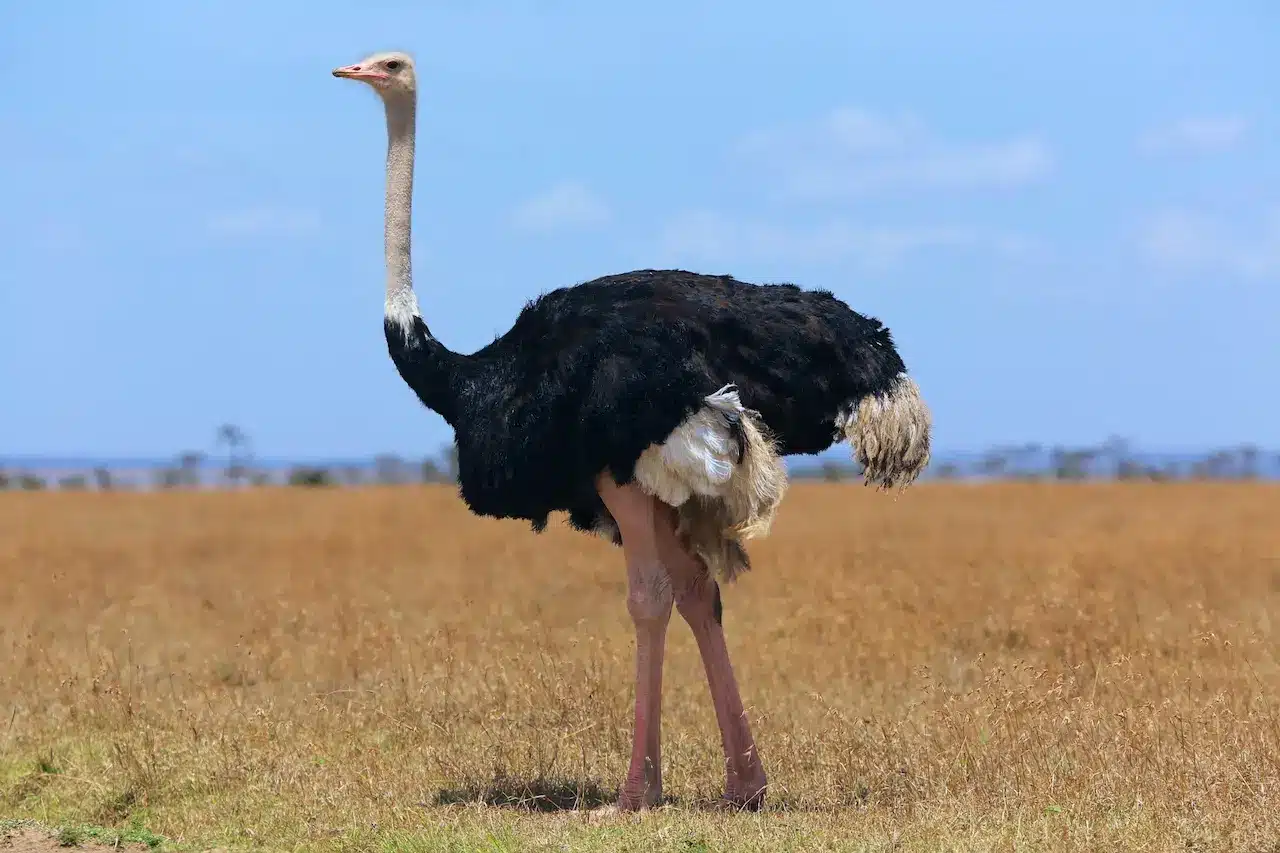
Ostriches don’t just tower above other birds—they dominate them. An adult ostrich can grow up to 9 feet (2.7 meters) tall and weigh between 220 to 290 pounds (100–130 kg). Males are typically larger than females and sport bold black-and-white plumage, while females are more subtly camouflaged in dusty brown.

Despite their size, ostriches are extremely well-adapted to life on the open plains of Africa. Their powerful legs not only support their massive weight but also serve as their primary defense mechanism (more on that later). Their height gives them a panoramic view of predators from afar, especially in open grasslands like the Serengeti or Kalahari.

2. Ostriches Can’t Fly—But They Run Like the Wind

Yes, it’s true. The ostrich is a bird that cannot fly. But nature has compensated magnificently. Ostriches are the fastest two-legged animals on Earth. With their long, muscular legs and spring-like tendons, ostriches can sprint up to 70 km/h (43 mph) for short bursts and maintain 50 km/h (31 mph) over longer distances.

Their legs are also their main line of defense. Each foot has only two toes—the larger inner toe sports a long, sharp claw that can disembowel a predator with one powerful kick. Lions and hyenas know not to take the ostrich lightly.

Why Can’t They Fly?

Ostriches are part of a group of flightless birds called ratites, which includes emus, cassowaries, and kiwis. Their flat breastbone lacks the keel that flying birds use to anchor their flight muscles. But their enormous wings (spanning up to 2 meters) still serve vital functions—they’re used for balance while running, courtship displays, and shade for their young.

3. They Lay the Largest Eggs in the World (Facts About the Ostrich)

No surprise here: the biggest bird lays the biggest eggs. But just how big? An ostrich egg is roughly the size of a cantaloupe, measuring up to 15 cm (6 inches) in length and weighing as much as 1.4 kg (3 pounds). One ostrich egg is equivalent to about two dozen chicken eggs.

These eggs are incubated communally. A dominant female lays her eggs in a shared nest called a scrape, dug into the ground. Multiple females may contribute eggs, but the dominant hen and the male do most of the incubation—female during the day and male at night, thanks to their respective feather colors that help camouflage the nest.

Amazing Eggshell Strength

Despite being thin, ostrich eggshells are incredibly tough. They can withstand the weight of a human (not recommended), and their strength helps protect developing chicks from predators and the harsh sun. In some African cultures, emptied ostrich eggs are repurposed as water canteens—a practice that dates back thousands of years.

4. Ostriches Have Incredible Eyesight—and the Largest Eyes of Any Land Animal

Ostriches rely on sight more than sound or smell. Their eyes measure 5 cm (2 inches) across—even larger than those of an elephant. These huge eyes give them an exceptional field of view and long-distance clarity, crucial for detecting predators like cheetahs and jackals in open terrain.

Each eye is so large that there’s barely any room in the ostrich’s skull for its brain—an anatomical quirk that has unfairly contributed to the myth of ostriches being “dumb.” In fact, they’re surprisingly cognitively agile, capable of sophisticated predator recognition and social hierarchy within groups.

The Brain-to-Eye Ratio Myth (Facts About the Ostrich)

While the ostrich brain is smaller than its eye, it’s perfectly adapted for what the bird needs: spatial awareness, motor control, and quick reflexes. So, next time you hear someone joke about the ostrich’s intelligence, remind them that size isn’t everything—especially in the brain department.

5. They Don’t Bury Their Heads in the Sand—But They Do Have Strange Behavior

Let’s bust the biggest myth of them all: ostriches do NOT bury their heads in the sand. This misconception likely arose from a few misunderstood behaviors:

  • They often lower their heads to the ground when sensing danger, making their long necks almost invisible from afar.
  • They may dig or turn their eggs in the sand using their beaks, appearing as though they’re “hiding.”

Ostriches have evolved far more effective survival strategies than sticking their heads underground. From running at lightning speed to kicking with brutal force, these birds are perfectly equipped to thrive in Africa’s untamed wilderness.

Social Creatures with a Pecking Order

Ostriches live in groups, usually between 5 and 50 individuals, led by a dominant male and female. These flocks offer protection and coordinated vigilance. During breeding season, males engage in elaborate dances to attract mates—drooping wings, puffing feathers, and thumping the ground in rhythmic displays.

Get Up Close with Africa’s Most Iconic Birds

The ostrich is more than just a big bird—it’s a living relic of Earth’s evolutionary history, a marvel of speed, vision, and adaptation. Seeing one in the wild is an experience that leaves a lasting impression.

If you’re ready to witness the magnificence of the ostrich—and countless other wonders of the African bush—there’s no better way than booking your next adventure with WildHorn Africa. Their expertly crafted safari experiences offer immersive encounters with Africa’s most extraordinary wildlife, landscapes, and cultures.

Book Your Safari with WildHorn Africa Today

Facts About the Ostrich #Facts About the Ostrich Facts About the Ostrich

5 Fascinating Facts About Cape Porcupine

5 Fascinating Facts About Cape Porcupine

By Travel guides, Travel stories and blogs

5 Fascinating Facts About Cape Porcupine

Unveiling Africa’s Quill-Covered Enigma

When you think of Africa’s iconic wildlife, lions, elephants, and giraffes may top the list. But tucked away in the continent’s woodlands, savannas, and rocky hillsides lives a lesser-known marvel that deserves its share of the spotlight: the Cape Porcupine.

With its imposing quills, nocturnal habits, and intriguing behavior, the Cape Porcupine (“Hystrix africaeaustralis”) is Africa’s largest rodent and one of the most misunderstood creatures in the animal kingdom. Join us as we delve into five astonishing facts about this quill-covered wonder that may just change the way you view rodents forever.

1. It’s the Largest Porcupine in the World

The Cape Porcupine isn’t just the biggest rodent in Africa; it holds the title of largest porcupine species globally. These robust creatures can reach lengths of up to 84 centimeters (33 inches) and weigh between 13 to 27 kilograms (29 to 60 pounds).

Despite their size, they are remarkably agile for forest dwellers, able to climb, burrow, and even swim when necessary. This size isn’t just for show either – it helps deter predators and supports their survival in a diverse range of African habitats, from savannas to mountainous areas.

Their bulk is not muscle alone. Much of their mass is supported by a coat of long, hollow quills that serve both as a defense mechanism and a warning system.

2. Those Quills Are Nature’s Masterpiece of Defense

Perhaps the most iconic feature of any porcupine is its quills. And in the Cape Porcupine’s case, these quills are nothing short of biological marvels.

How Do They Work?

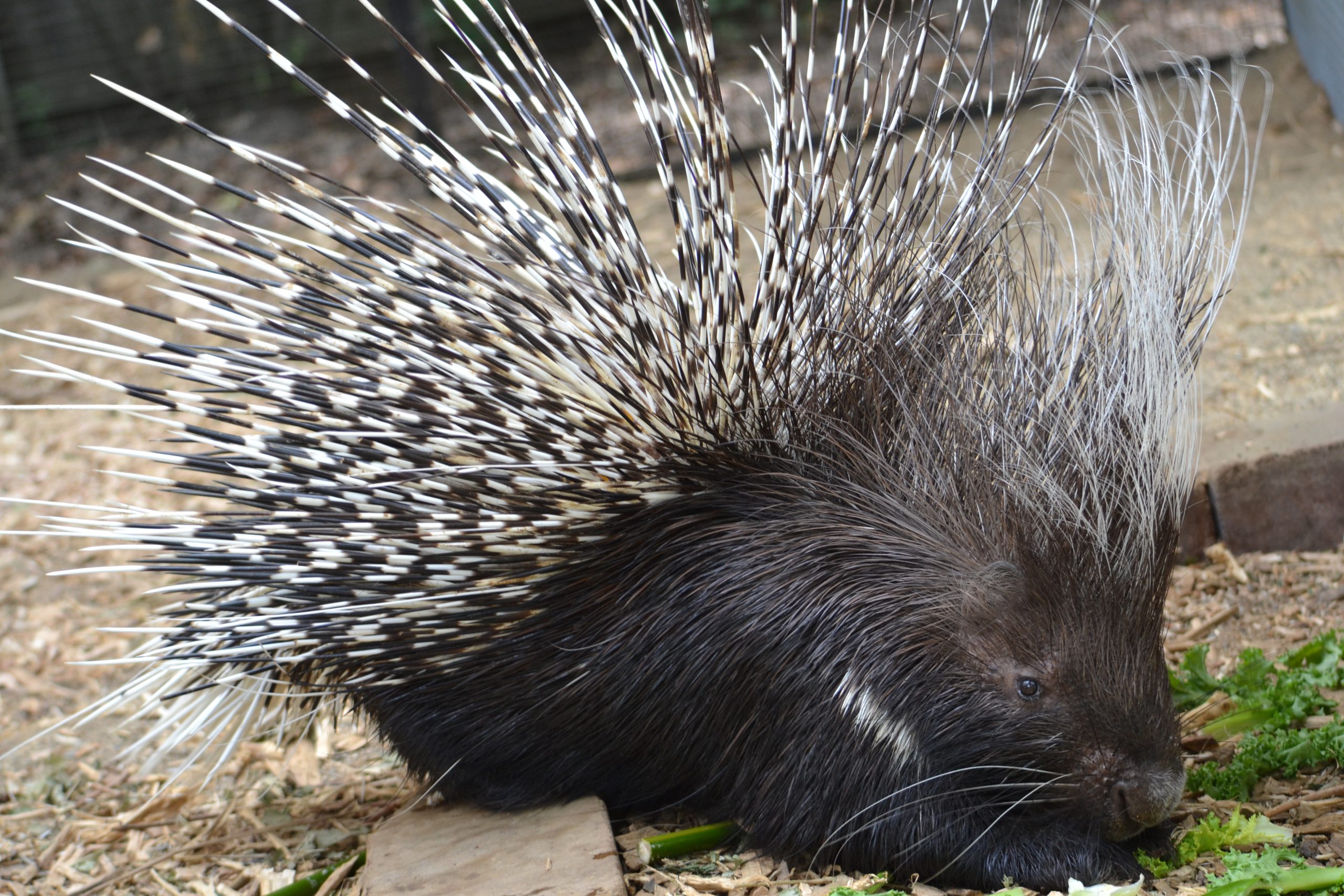
Contrary to popular belief, porcupines do not shoot their quills. Instead, they embed them into attackers using a powerful backward thrust. Each quill is loosely attached to the skin and can easily detach and lodge into a predator. Once embedded, these quills can migrate deeper into tissue over time, causing pain, infection, or even death in some cases.

A Sonic Warning System (Facts About Cape Porcupine)

Before engaging physically, Cape Porcupines often give warnings by rattling their hollow tail quills, producing a sound not unlike a maraca. This behavior deters many would-be predators, including lions and leopards. If that doesn’t work, they stamp their feet, charge backward, and bristle their quills in a final, explosive defense.

The quills also vary in length and function. Some are used for display, others for defense, and some, particularly the hollow ones at the tail end, serve strictly as auditory warning devices.

3. They Mate for Life and Share Parenting Duties

Cape Porcupines may look solitary, but their social structures are surprisingly advanced.

These porcupines often form monogamous pairs, and once they mate, they stay together for life. The pair usually shares a burrow system, which they dig themselves or expand from abandoned dens. These tunnels can be several meters long with multiple chambers for sleeping and raising young.

A Family Affair

After a gestation period of around 94 days, the female gives birth to 1-4 offspring (called “porcupettes”). These babies are born with soft quills, which harden within a few days. Both parents are involved in raising and protecting the young, a behavior rarely observed in most rodents.

Porcupettes remain with the family unit for several months, learning the ways of the wild and how to use their quills effectively. The strong bond and cooperation within the family enhance survival rates significantly.

4. They Are Ecological Engineers (Facts About Cape Porcupine)

Cape Porcupines aren’t just survivalists; they play a crucial role in their ecosystems.

By digging for roots, bulbs, and tubers, they aerate the soil, which improves nutrient cycling and enhances plant regeneration. Their foraging activities mimic natural tilling, making them vital contributors to healthy, balanced ecosystems.

Dietary Oddities

These creatures are mostly herbivorous, feeding on a wide range of vegetation including bark, roots, fallen fruit, and even agricultural crops. However, they have also been known to chew on bones and discarded antlers to obtain essential minerals like calcium and phosphorus.

Though this sometimes brings them into conflict with farmers, their ecological benefits often outweigh the occasional crop raid. Effective wildlife management and education can mitigate human-wildlife conflict and promote coexistence.

5. They Are Nocturnal and Surprisingly Intelligent

Cape Porcupines are strictly nocturnal, which means they are most active at night. This behavior helps them avoid predators and scorching daytime temperatures in the African bush.

Intelligent Navigators

Despite their reputation as slow or simple rodents, Cape Porcupines demonstrate impressive levels of spatial memory and problem-solving. They navigate complex burrow systems, remember locations of food sources, and even exhibit cautious behavior when exploring new environments.

They also maintain territorial boundaries marked by secretions from specialized glands. These scent marks allow them to avoid unnecessary confrontations and help establish social hierarchies within a given area.

Communication and Behavior

Cape Porcupines communicate using a combination of grunts, growls, foot stamping, and quill rattling. These sounds and gestures convey messages ranging from distress to mating interest. Their behavioral repertoire is vast, underscoring their cognitive capabilities.

Why You Should Care About the Cape Porcupine

Often overlooked in favor of Africa’s more glamorous wildlife, the Cape Porcupine deserves recognition for its unique adaptations, ecological contributions, and social intelligence. As human development continues to encroach upon wild habitats, understanding and protecting such creatures becomes more important than ever.

By appreciating the role species like the Cape Porcupine play, we gain a fuller understanding of Africa’s biodiversity and the importance of safeguarding ecosystems in their entirety.

Experience the Cape Porcupine and More With WildHorn Africa

The best way to understand and appreciate the wonders of African wildlife is to see it firsthand. From towering giraffes to the humble but fascinating Cape Porcupine, every creature tells a story.

Let WildHorn Africa guide you through immersive safari experiences that reveal the continent’s hidden gems. With expertly curated tours, knowledgeable guides, and a commitment to sustainability, WildHorn Africa offers more than just a vacation — it offers a deeper connection to the wild.

Book your African safari today with WildHorn Africa – and uncover the wonders of the wild.

Facts About Cape Porcupine #Facts About Cape Porcupine Facts About Cape Porcupine

5 Fascinating Facts About the Nile Crocodile

5 Fascinating Facts About the Nile Crocodile

By Travel guides, Travel stories and blogs


5 Fascinating Facts About the Nile CrocodileExplore Africa’s most feared reptilian predator—an ancient survivor that rules the rivers with ruthless efficiency.

Introduction to the Facts About the Nile Crocodile

Few creatures strike as much fear—and awe—as the formidable Nile Crocodile (Crocodylus niloticus). With a lineage dating back over 200 million years,
this apex predator is not just Africa’s largest reptile but also one of its most fascinating. Known for its sheer power, calculated stealth, and prehistoric presence,
the Nile Crocodile commands immense respect in both nature and folklore.

Inhabiting rivers, marshes, and lakes from sub-Saharan Africa to the Nile Delta, it is an indispensable part of the continent’s aquatic ecosystems. But beyond its fearsome jaws lies
a world of complex behavior, evolutionary marvels, and ecological importance. Here are five incredible facts that will deepen your appreciation for this aquatic giant.

1. They Are One of the Largest Crocodilian Species

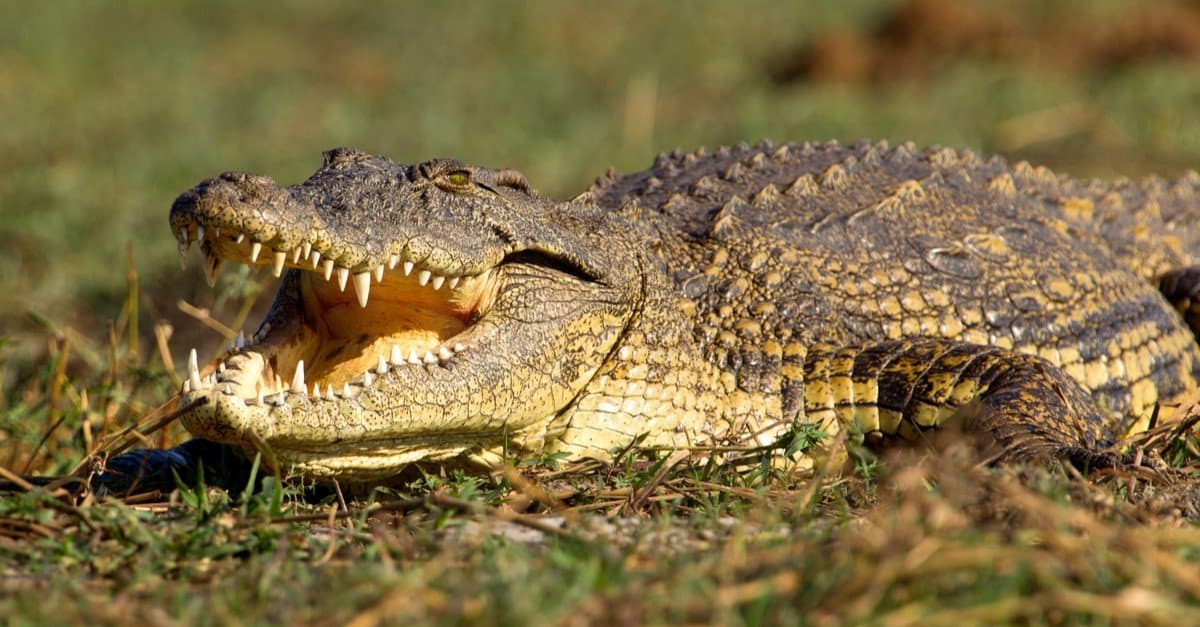
The Nile Crocodile is the second-largest crocodile species in the world—only surpassed by the saltwater crocodile of Southeast Asia and Australia. Adult males typically measure
between 4 to 5 meters (13 to 16 feet) in length, although some exceptional individuals can exceed 6 meters (20 feet) and weigh over
1,000 kilograms (2,200 pounds).

These size metrics aren’t just impressive—they signify dominance. Their bulk allows them to tackle large prey, including antelope, buffalo, and even, on rare occasions, humans.
Their powerful tails, armored scales, and muscular bodies make them a formidable aquatic force that few animals dare to challenge.

2. Perfect Predators: Masters of Ambush

Nile Crocodiles are ambush predators—patient, strategic, and merciless. They possess unparalleled stealth in water, often lurking just beneath the surface with only their eyes
and nostrils exposed. Their prey never sees them coming.

When the moment is right, the crocodile explodes from the water with lightning speed. Its jaws snap shut with a bite force of over 5,000 PSI (pounds per square inch)—one of the
strongest bites in the animal kingdom.

After the initial capture, it often performs a gruesome but effective maneuver called the “death roll”, twisting its body violently to tear flesh or dismember limbs.
This behavior has fascinated scientists and horrified witnesses for decades.

3. They Exhibit Advanced Social and Parental Behavior

Despite their fearsome reputation, Nile Crocodiles display surprisingly sophisticated social behavior. During the dry season, hundreds of crocodiles can gather around shrinking
waterholes, tolerating each other’s presence without conflict—an unusual trait among apex predators.

Even more remarkable is their maternal instinct. Females guard their nests for months and gently carry hatchlings to water in their mouths once they emerge.
Mothers often remain near the young for extended periods, protecting them from predators such as birds, monitor lizards, and even other crocodiles.

This level of parental care is rare among reptiles and highlights the complex nature of crocodilian behavior—far beyond the cold-blooded killer stereotype.

4. Ancient Survivors with Powerful Adaptations

Nile Crocodiles are living dinosaurs—reptiles that have survived mass extinctions and outlived the Ice Age. Their evolutionary success lies in several key adaptations:

  • Transparent third eyelids (nictitating membranes) that protect their eyes underwater while allowing vision.
  • Specialized heart valves that regulate blood flow and allow prolonged dives—up to 30 minutes without surfacing.
  • Dermal pressure receptors on their jaws that detect minute vibrations in the water, aiding in detecting movement even in murky rivers.

These adaptations make the Nile Crocodile not only a master of its environment but a symbol of biological efficiency perfected over millennia.

5. Vital Role in Ecosystem Balance

As apex predators, Nile Crocodiles are essential for maintaining healthy ecosystems. By preying on the weak, the sick, and the injured, they help regulate populations of
fish, amphibians, and mammals, which in turn ensures balanced food chains and biodiversity.

Furthermore, crocodile nesting activity aerates soil, and their scavenging habits help prevent the spread of disease by cleaning up carcasses. Their presence is often an
indicator of a well-functioning wetland or river system.

Sadly, these ecological benefits are often overlooked due to fear and misconceptions, which can lead to unnecessary persecution of these animals.

Human Conflict and Conservation Challenges

Nile Crocodiles occasionally come into conflict with humans, especially in areas where people rely heavily on rivers for fishing, bathing, or laundry. Attacks, though rare,
can be fatal, leading to fear-driven killings and habitat destruction.

Despite these challenges, the species remains relatively widespread and is currently listed as “Least Concern” on the IUCN Red List. However, certain regional populations
are at risk due to habitat degradation, illegal hunting, and pollution.

Conservation efforts focus on education, community-based conservation, and the promotion of ecotourism as a sustainable way to benefit from crocodile presence while preserving
their habitats.

Conclusion of the Facts About the Nile Crocodile

The Nile Crocodile is more than a fearsome predator—it is a living fossil, ecological guardian, and evolutionary marvel. Its presence in Africa’s rivers is both
thrilling and essential, reminding us that true wilderness still exists, governed by creatures as old as time itself.

Whether seen sunbathing along a riverbank or lurking silently in the reeds, the Nile Crocodile is an animal that commands respect and offers a rare glimpse into prehistoric life.

See the Nile Crocodile in Its Natural Habitat

Want to witness the raw power of the Nile Crocodile up close? Book your African safari today with WildHorn Africa—your gateway to immersive wildlife experiences
and unforgettable river encounters.

From guided boat safaris to expert-led expeditions along Africa’s great rivers, WildHorn Africa offers you the chance to experience this ancient predator in its full glory—safely,
ethically, and awe-inspiringly wild.

Adventure awaits—trust WildHorn Africa to take you to the heart of the wild.


Close Menu