search
10 Interesting Kalahari Desert Facts

10 Interesting Kalahari Desert Facts

By Botswana travel guides, Travel guides, Travel stories and blogs

10 Interesting Kalahari Desert Facts: A Journey Into Africa’s Living Sands

Unveiling the Soul of the Desert

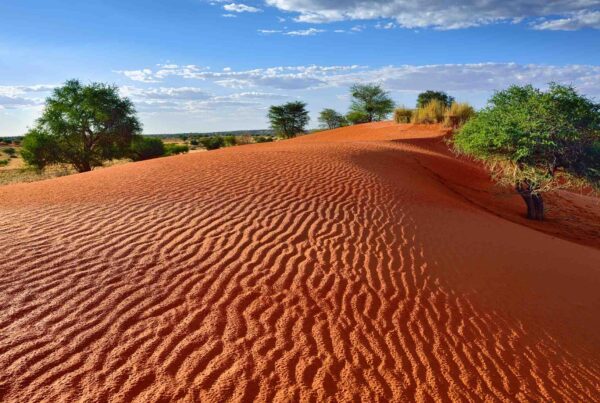
A sweeping canvas of burnt ochre dunes, dry riverbeds, and open grasslands, the Kalahari Desert has long been misunderstood by those who think of deserts only as lifeless expanses of sand. Yet, within its timeless silence lies one of the most vibrant, ecologically rich, and culturally significant regions on the African continent. Stretching across Botswana, Namibia, and parts of South Africa, the Kalahari is not merely a place—it is an enduring experience. Every grain of its sand holds a story of adaptation, survival, mystery, and raw natural beauty.

As more curious travelers seek destinations off the beaten path, the Kalahari emerges as a paradox of extreme conditions and intricate life. It may appear desolate to the untrained eye, but this ancient land pulses with deep-rooted secrets, hosting unique wildlife, ancient cultures, and natural wonders that continue to fascinate geographers, scientists, and adventurers alike.

Here are ten fascinating facts that peel back the surface of the Kalahari to reveal its extraordinary character, shedding light on what makes this semi-arid desert one of Africa’s most enigmatic natural treasures.

It’s Not a True Desert in the Traditional Sense

What surprises most visitors first is the realization that the Kalahari Desert, by scientific definition, isn’t truly a desert. Though its name is derived from the Tswana word Kgala, meaning “the great thirst,” the region receives significantly more rainfall than typical deserts. In some areas, up to 250 millimeters of rain fall annually, allowing a diverse range of plant life and supporting rich biodiversity. Technically, this qualifies the Kalahari as a semi-desert or dry savannah, rather than a hyper-arid zone like the neighboring Namib Desert. This climatic anomaly is what allows the desert to host surprisingly complex ecosystems, creating a fusion between the stark and the lush.

It’s Home to One of the World’s Oldest Cultures

The Kalahari is not only a physical landscape but also a cultural reservoir, home to the San people—often referred to as Bushmen. The San are among the oldest continuous cultures in the world, with archaeological evidence tracing their lineage back over 20,000 years. Their relationship with the desert is deeply symbiotic, based on a profound understanding of nature’s rhythms. Their unique language, characterized by click consonants, and their survival strategies—such as using plants for medicinal purposes and locating underground water sources—reflect an intimate knowledge of an environment many would find hostile.

It Supports a Diverse Range of Wildlife

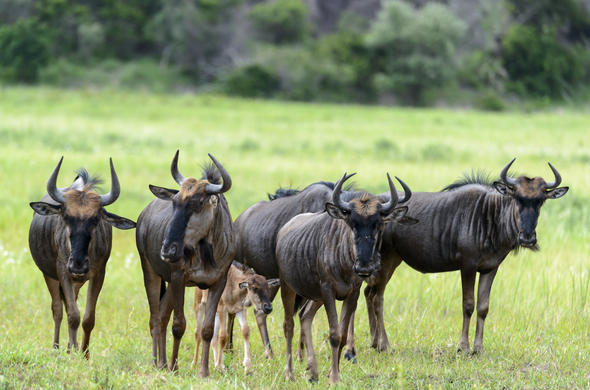
Though many envision deserts as lifeless, the Kalahari is a thriving habitat. Its open plains, wooded acacia groves, and salt pans support iconic species such as lions, cheetahs, hyenas, meerkats, gemsbok, and giraffes. Most famously, it is known for the black-maned Kalahari lion, a majestic subspecies adapted to the harsh climate. Predators here have developed more patient hunting strategies, while herbivores migrate to track seasonal vegetation. With birdlife as varied as kori bustards, secretary birds, and crimson-breasted shrikes, the desert becomes a living theater of natural adaptation.

It Hosts the Largest Continuous Stretch of Sand in the World

The Kalahari is part of the Kalahari Basin, an expansive geological depression spanning nearly 930,000 square kilometers. It forms the largest unbroken stretch of sand on Earth, surpassing even the Sahara in sand volume. But unlike the Sahara’s towering dunes, the Kalahari’s sands are mostly stable, covered with grass or shrubs, giving it a unique texture. These ancient sands are thought to have been laid down millions of years ago, forming a fossil desert—a landscape that has seen epochs come and go.

It Contains Africa’s Second-Largest Game Reserve

Within the heart of Botswana lies the Central Kalahari Game Reserve, a protected area that spans over 52,000 square kilometers—making it Africa’s second-largest game reserve and one of the most remote. Originally set aside in 1961 as a homeland for the San people, the reserve today offers travelers a sense of unfiltered wilderness. Wildlife sightings here are far more intimate and less crowded compared to more commercial parks, and the vast, open horizons allow for soul-stirring encounters with nature. Here, silence isn’t absence—it is presence at its most profound.

It Hosts Seasonal Waterways and Ancient Riverbeds

Although often perceived as dry, the Kalahari hides the traces of ancient rivers and periodic wetlands. The most famous of these is the Okavango River, which spills into the northwest of the basin to form the Okavango Delta, the world’s largest inland delta. This seasonal floodplain draws thousands of animals, transforming part of the desert into a lush, life-giving oasis. Elsewhere, fossil riverbeds like the Deception Valley tell of wetter eras when rivers once coursed through these lands, leaving behind mineral-rich soils and supporting life even today.

It Plays Host to a Remarkable Astronomical Display

Free from the pollution of artificial light and nestled in one of the most isolated parts of southern Africa, the Kalahari offers some of the clearest, darkest night skies on Earth. Stargazing here becomes a spiritual encounter. During the dry season, the Milky Way arches across the sky in pristine clarity, and constellations of the Southern Hemisphere—like the Southern Cross and Orion—are visible in stunning brilliance. The San people have their own celestial interpretations, using stars as navigational tools and weaving them into their oral traditions and cosmologies.

It Is an Evolving Landscape Shaped by Wind and Time

The Kalahari is a dynamic terrain constantly being sculpted by wind, temperature shifts, and erosion. Despite the apparent stillness, this is a landscape in motion. Sand dunes subtly shift over time, termite mounds rise and fall, and seasonal vegetation patterns change based on rainfall. Scientific studies continue to monitor how climate change may further influence the desert’s character, with some predictions suggesting increased aridity or altered migration patterns of wildlife. What remains constant, however, is the desert’s resilience and the rhythmic pulse of life that endures.

It Offers a Refuge for Rare and Endemic Species

Several species in the Kalahari have adapted so specifically to its unique conditions that they cannot be found anywhere else. Animals such as the brown hyena, bat-eared fox, and Kalahari tent tortoise are among the rare and ecologically important species that thrive here. Plants like the devil’s claw have evolved deep root systems and medicinal uses, making them both biologically and culturally significant. These adaptations represent nature’s ingenuity, shaped over millennia by necessity and time.

It Is a Living Classroom of Indigenous Knowledge

Perhaps the most extraordinary fact about the Kalahari is that it is still a living classroom, where ancient wisdom intersects with modern conservation. The San people’s continued presence and their ability to read the landscape with surgical precision—tracking animals, interpreting wind patterns, predicting weather—offers invaluable insights that complement scientific understanding. Today, efforts are being made to protect and integrate this indigenous knowledge, ensuring that it is not lost to modernity but honored as a vital part of Africa’s intellectual and ecological heritage.

Experience the Living Desert With WildHorn Africa

The Kalahari Desert is more than a geographical destination—it is a philosophy of survival, a landscape of layered mysteries, and a spiritual retreat for those who crave deeper connections with the natural world. Travelers drawn to this enigmatic realm often leave transformed, having encountered not only rare wildlife and ancient culture but also themselves in the process.

To explore the Kalahari with the depth, care, and respect it deserves, WildHorn Africa stands ready as your expert guide. Specializing in tailor-made African safaris, WildHorn Africa offers immersive experiences that bring travelers face-to-face with the essence of the desert. Whether it’s tracking lions across the dunes, stargazing in remote camps, or walking alongside San elders who whisper the secrets of the sands, each journey is carefully curated to inspire and inform.

For those seeking to unlock the profound beauty and surprising richness of Africa’s most misunderstood desert, there has never been a better time—or a better partner—than WildHorn Africa. Let your next adventure be shaped by the desert’s wisdom, and guided by those who know it best.

10 Interesting Namib Desert Facts

10 Interesting Namib Desert Facts

By Namibia travel guides, Travel guides, Travel stories and blogs

10 Interesting Namib Desert Facts

In the southwestern corner of Africa, where the land melts into an endless horizon of ochre and gold, lies a desert unlike any other. The Namib Desert, with its towering red dunes, fossilized trees, and wind-sculpted valleys, evokes awe not just for its beauty, but for its profound mystery. Though seemingly barren at first glance, the Namib breathes with hidden life and ancient rhythms. It is a place where time seems paused, where the earth tells stories that began millions of years ago, and where survival dances on the edge of impossibility.

Far from being a lifeless wasteland, the Namib is a living monument to resilience and adaptation, shaped by forces both fierce and subtle. Beneath its vast skies and sun-scorched sands, lie astonishing ecological marvels and geological wonders. The desert’s landscapes captivate scientists, adventurers, and dreamers alike, offering a glimpse into the raw majesty of nature untouched.

To explore the Namib Desert is to step into a realm of paradoxes: a place both ancient and ever-changing, lifeless in appearance yet rich in biological ingenuity. The following compilation reveals ten fascinating facts about the Namib Desert, not just as isolated curiosities, but as interconnected elements of a land that continues to surprise and inspire those who journey across its timeless dunes.

The Namib: The Oldest Desert on Earth

The Namib holds the extraordinary distinction of being the oldest desert on the planet. Scientific estimates suggest that arid conditions have persisted here for at least 55 to 80 million years, making it far older than the Sahara or the Gobi. While other deserts have come and gone through climatic shifts and glacial cycles, the Namib has remained a constant dry zone, shaped by the cold Benguela Current and the presence of the Atlantic Ocean.

This immense age has allowed for the evolution of unique flora and fauna not found anywhere else on Earth. The Namib’s longevity is not only a geological marvel but also a living laboratory, offering insights into how ecosystems adapt over millennia to extreme conditions.

Home to the World’s Tallest Sand Dunes

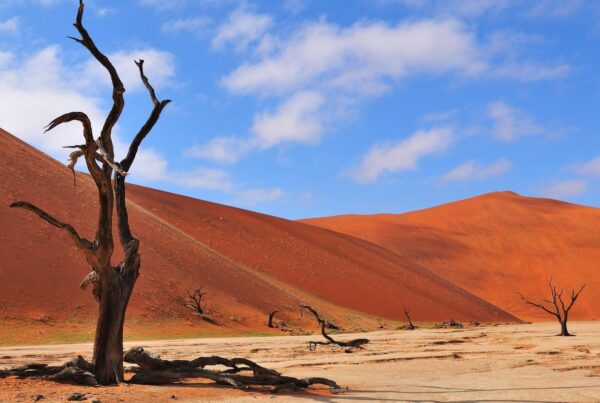
Within the heart of the Namib, particularly in the iconic region of Sossusvlei, rise some of the highest sand dunes on the planet. These red giants, including the famous Big Daddy and Dune 7, soar to heights of over 300 meters (nearly 1,000 feet). Sculpted by relentless winds and shifting currents, these dunes are in a constant state of transformation, despite their apparent permanence.

The rich red-orange color of the dunes is due to the oxidation of iron within the sand, acting like rust over time. This vibrant pigmentation, paired with the stark contrasts of the blue sky and white salt pans, creates a dreamlike visual spectacle that draws photographers and travelers from around the world.

A Fog-Driven Ecosystem

Despite receiving less than 10 millimeters of rainfall annually in some areas, the Namib supports life thanks to a surprising ally—fog. Driven inland by the cool Benguela Current off the Atlantic coast, thick fog banks drift over the desert in the early morning, providing precious moisture to plants, insects, and animals.

Many species, including the fog-basking beetle, have adapted ingenious ways to harvest moisture directly from the air. By tilting their bodies into the fog-laden wind, they collect water droplets that run down into their mouths. This ethereal fog is not merely atmospheric—it is a lifeline, sustaining life in a place where rain rarely falls.

An Ecosystem Rich in Endemic Species

The Namib Desert is one of the most biologically unique deserts on the planet, home to over 200 endemic species that exist nowhere else. This includes the legendary Welwitschia mirabilis, a plant often referred to as a “living fossil,” known for its bizarre appearance and ability to live for over 1,000 years.

Other endemic species include the Namib Desert gecko, the cartwheeling spider, and the golden mole, each adapted to survive extreme temperatures, minimal water, and harsh terrain. These organisms are not only scientifically significant—they are symbols of evolutionary brilliance, showcasing nature’s endless ingenuity.

A Desert Born from the Sea

Unlike many deserts shaped by continental forces, the Namib’s existence is intricately linked to the cold Atlantic Ocean. The Benguela Current cools the air, limiting rainfall inland and creating the hyper-arid conditions that define the region. Coastal deserts like the Namib are extremely rare and are shaped by oceanic influences that regulate temperature and wind patterns in profound ways.

The presence of fog, the wind-carved sand formations, and the unique dune ecosystems are all products of this oceanic interaction. In many ways, the Namib can be seen as a desert sculpted by the sea, a meeting point of elemental extremes.

A Desert of Skeletons and Shipwrecks

The Namib’s coastline is known as the Skeleton Coast, a name evoking both dread and fascination. This desolate stretch of land has claimed countless ships over centuries, their rusting skeletons still visible along the shore, buried in shifting sands. The combination of thick fog, rough seas, and uncharted shallows has turned this coastline into a maritime graveyard.

The eerie beauty of these wrecks, combined with whale bones, sun-bleached skulls, and abandoned settlements, paints a haunting picture of isolation and impermanence. Yet, it also draws the curious and the brave, offering raw, untamed wilderness for those seeking solitude and silence on the edge of the earth.

Namib’s Hidden Rivers and Subterranean Life

Although the Namib appears dry on the surface, seasonal rivers such as the Kuiseb and Tsauchab occasionally flow after rare rains, carving deep canyons and supporting brief explosions of life. Below the surface, ancient aquifers and underground streams sustain vegetation like the camelthorn tree, whose roots can reach more than 60 meters deep.

Some areas bloom spectacularly after rainfall, revealing ephemeral wildflowers and temporary grasslands that feed insects and antelope. These fleeting transformations are short-lived but dramatic, turning the barren into the beautiful with almost magical speed.

A Dark Sky Haven for Stargazing

Due to its remoteness, lack of light pollution, and crystal-clear air, the Namib Desert offers one of the best stargazing experiences on Earth. The NamibRand Nature Reserve, in particular, has been designated as a Gold Tier International Dark Sky Reserve, recognizing its unparalleled night skies.

Under the canopy of the Milky Way, travelers can witness celestial events, shooting stars, and constellations with breathtaking clarity. The silence of the desert enhances the experience, transforming each night into a cosmic symphony of silence and starlight.

Cultural Roots in an Ancient Land

The Namib is not only a wilderness of natural phenomena—it is also a cultural landscape, once home to indigenous groups like the San people, whose rock engravings and stone tools are still found in caves and on remote plateaus. These early inhabitants adapted to desert life with profound knowledge of plants, animal behavior, and weather patterns.

Even today, the Topnaar people, a Nama-speaking community, continue to live along the Kuiseb River, harvesting desert melons and practicing traditional desert survival techniques. The Namib’s cultural legacy reminds modern visitors that this land has been known, traversed, and honored for thousands of years.

A Destination of Rare Beauty and Global Significance

The Namib Desert has not only captured the imagination of explorers, filmmakers, and conservationists—it has earned recognition as a UNESCO World Heritage Site, due to its unique geological features and ecological significance. Its landscapes have served as the backdrop for iconic films, scientific research, and conservation studies that stretch across disciplines.

Its role in climate research, desert ecology, and sustainable tourism continues to expand. And yet, despite its fame, the Namib retains its quiet mystery. It never shouts, never boasts—it simply exists, vast and unyielding, inviting those who venture into its domain to listen, learn, and be humbled.

Experience the Magic of the Namib with WildHorn Africa

The Namib Desert is more than a destination; it is a testament to the enduring power of nature, a canvas of extremes that reveals itself slowly to those with the curiosity and reverence to explore. From climbing the blood-red dunes of Sossusvlei to tracing the ghostly shipwrecks of the Skeleton Coast, each journey into this desert promises moments of silence, beauty, and revelation.

For those ready to walk among ancient sands, witness rare wildlife, and discover the secrets of Earth’s oldest desert, WildHorn Africa stands ready to guide you. With bespoke safari itineraries, expert guides, and a passion for conservation, WildHorn Africa crafts immersive experiences that honor both the land and the life it supports.

Book your Namib Desert adventure today with WildHorn Africa—and discover a world where the desert speaks in whispers, and the past still lingers on the wind.

5 Fascinating Facts About the Shoebill

5 Fascinating Facts About the Shoebill

By Travel guides, Travel stories and blogs

5 Fascinating Facts About the Shoebill

Facts About the Shoebill

Enter the Dinosaur of the Wetlands

With its prehistoric appearance and piercing stare, the Shoebill (Balaeniceps rex) is one of Africa’s most mysterious and extraordinary birds. Standing tall and solitary in the swamps and marshes of central tropical Africa, this enigmatic avian commands attention not just because of its sheer size but due to its almost mythical aura. Known locally as the “whale-headed stork,” the Shoebill has evoked awe and curiosity among birdwatchers, researchers, and locals alike. Its massive, shoe-shaped bill and solemn demeanor give it an ancient air, as if it’s a creature suspended in time.

While many animals earn their intrigue through speed or power, the Shoebill captivates with stillness and subtle dominance. Despite being relatively elusive, this bird is gradually emerging as a symbol of the wild, untamed wetlands of East and Central Africa, most notably Uganda’s vast papyrus marshes. In this article, we unravel five compelling facts about the Shoebill, delving into what makes it one of the most fascinating creatures of the African wilderness.

A Beak Built Like a Weapon

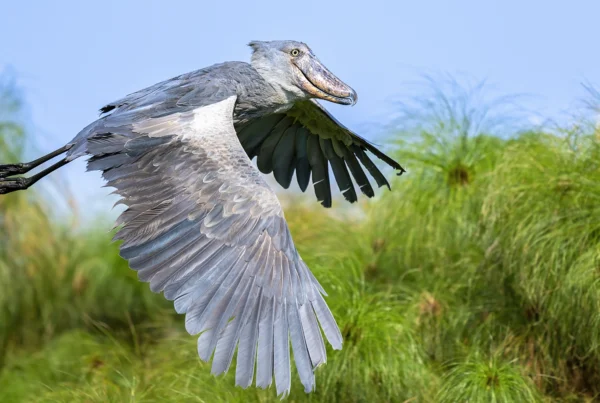
The Shoebill’s most iconic feature is undoubtedly its massive bill, shaped eerily like a Dutch clog and reaching up to 24 centimeters long and 20 centimeters wide. More than just an oddity, this oversized beak is an evolutionary masterpiece. The edges of the bill are razor-sharp, and the powerful hook at the tip is used to grasp, crush, and decapitate prey with precision. This is not a gentle grazer—this is a bird built for stealth and lethal efficiency.

Feeding primarily on lungfish, eels, frogs, and even baby crocodiles, the Shoebill employs a hunting style that borders on theatrical. It stands perfectly still for hours, blending into its surroundings until the moment to strike arrives. With lightning speed, the Shoebill lunges forward, opening its beak wide and snapping it shut with a loud, echoing clatter that often signals a successful catch. This combination of patience and violence in hunting sets the Shoebill apart from most other wetland birds, underscoring its status as a top predator within its ecological niche.

Solitude and Strategy in the Swamps (Facts About the Shoebill)

Unlike many bird species that thrive in flocks, Shoebills are solitary hunters. They maintain and defend large territories, ensuring minimal competition for the rich aquatic resources of their marshland habitats. These territories, often several kilometers wide, are chosen with strategic precision—away from human disturbance, abundant in prey, and rich in cover.

The Shoebill’s solitary behavior extends into its mating and nesting habits. Pairs come together only briefly during the breeding season and raise a maximum of two chicks. However, in a striking example of siblicide, often only one chick survives, as the stronger nestling dominates the weaker to ensure it receives the lion’s share of food. While brutal, this behavior ensures that at least one offspring reaches maturity, especially in an environment where resources are unpredictable.

This minimalistic reproductive strategy, combined with their slow maturation, makes Shoebills particularly vulnerable to threats. Yet it also reinforces their identity as highly specialized and selective survivors, thriving only under the most optimal natural conditions.

A Call Like a Machine Gun

Despite their generally silent and stoic demeanor, Shoebills are not entirely voiceless. During the breeding season and interactions with mates or offspring, they produce a distinctive bill-clattering sound, reminiscent of a machine gun or typewriter. This sound is produced not with vocal cords but through rapid opening and closing of their formidable bills.

Chicks also emit a begging call that resembles human hiccups, a rare and almost humorous vocalization that highlights their unique auditory expressions. These sounds, although infrequent, serve as important social tools within the limited context of the Shoebill’s life.

The contrast between their quiet disposition and sudden bursts of mechanical-like sounds adds to the surreal experience of encountering one in the wild. Their eerie calls echoing across the swamp serve as a haunting reminder of their ancient lineage and otherworldly nature.

Masters of Stillness and Stealth

What truly sets the Shoebill apart behaviorally is its extraordinary stillness. Dubbed the “statue bird,” it can remain motionless for extended periods—sometimes several hours—while watching the water surface for subtle signs of movement. This monk-like patience is not lethargy; it’s a finely tuned predatory technique evolved for success in murky, vegetation-choked wetlands.

The Shoebill’s silent stalking and calculated strikes are hallmarks of its hunting prowess. Unlike herons or storks that wade and probe constantly, the Shoebill saves energy by letting prey come to it. Its entire physiology—from its long, strong legs to its forward-facing eyes—supports this precision-based strategy.

This behavior does more than help it hunt. It gives the Shoebill an almost spiritual presence, making it a favorite among wildlife photographers and birding enthusiasts. To witness this bird is to understand a different rhythm of the wild, one that values observation over action, patience over motion.

Conservation Concerns and Global Recognition

Despite their almost mythic stature, Shoebills are classified as Vulnerable by the International Union for Conservation of Nature (IUCN). Habitat loss due to agriculture, oil exploration, and settlement expansion is the bird’s most pressing threat. Additionally, the illegal pet trade has targeted Shoebills for their unusual appearance, further endangering already fragile populations.

Fortunately, global awareness and local conservation efforts are rising. Uganda, South Sudan, Zambia, and parts of the Democratic Republic of Congo are taking active roles in protecting Shoebill habitats through eco-tourism, community-based conservation, and legal protections. Bird sanctuaries and national parks are becoming safer refuges, and the Shoebill is slowly gaining the international recognition it needs to survive.

These conservation efforts also provide opportunities for travelers to witness the Shoebill responsibly. Ecotourism has emerged as one of the most powerful tools to save this bird—not only by funding protection programs but also by giving local communities a sustainable economic reason to preserve wetland environments.

Explore the Mystical World of the Shoebill with WildHorn Africa

The Shoebill is not just a bird—it’s a legend in feathers, a living relic of the past that demands both reverence and protection. Encountering this majestic bird in its natural habitat is an unforgettable experience, one that touches the soul and ignites a lifelong passion for conservation.

WildHorn Africa offers expertly guided safaris to some of the Shoebill’s last remaining strongholds, including the remote marshes of Uganda’s Mabamba Swamp. Our tours are tailored for intimate, immersive encounters with this awe-inspiring species, emphasizing ethical wildlife viewing and deep ecological appreciation.

Book your African safari with WildHorn Africa and embark on a journey that goes beyond sightseeing. Witness the haunting beauty of the Shoebill, connect with Africa’s wild heart, and become part of a movement to protect one of the continent’s most fascinating and elusive treasures. Let the wetlands whisper their ancient secrets, and let WildHorn Africa guide you to them.

Facts About the Shoebill #Facts About the Shoebill Facts About the Shoebill

5 Fabulous Facts of the Greater Kudu (Tragelaphus Strepsiceros)

5 Fabulous Facts of the Greater Kudu (Tragelaphus Strepsiceros)

By Travel guides, Travel stories and blogs

5 Fabulous Facts of the Greater Kudu (Tragelaphus strepsiceros)

The Ghost of the Savannah: A Majestic Antelope Unveiled

There are few creatures in the African wilderness that evoke such awe and elegance as the Greater Kudu, a towering and graceful antelope with spiral horns that seem drawn by an artist’s hand. With a presence both subtle and powerful, the Greater Kudu is often referred to as the “ghost of the bush” — not only for its elusive nature but for the way it glides almost silently through thickets and woodland shadows. Unlike the lion or the elephant, whose grandeur is loud and commanding, the Greater Kudu asserts its majesty through a more refined and mystic charisma.

This remarkable antelope is found across various parts of eastern and southern Africa, dwelling primarily in dense woodlands, scrublands, and semi-arid zones. It belongs to the genus Tragelaphus, known for its tall, slender build and ornate horns. The Greater Kudu (Tragelaphus strepsiceros) is the largest of the kudu species and one of the most visually striking antelopes in Africa.

In this detailed exploration, we dive into five fabulous facts that unveil the secrets of the Greater Kudu — facts that not only illustrate the creature’s beauty but also highlight its ecological, behavioral, and evolutionary significance. By the end of this journey, you will see why encountering a Greater Kudu on safari is one of Africa’s most enchanting experiences.

Horns Like Helixes: Nature’s Sculptural Marvel (Facts of the Greater Kudu)

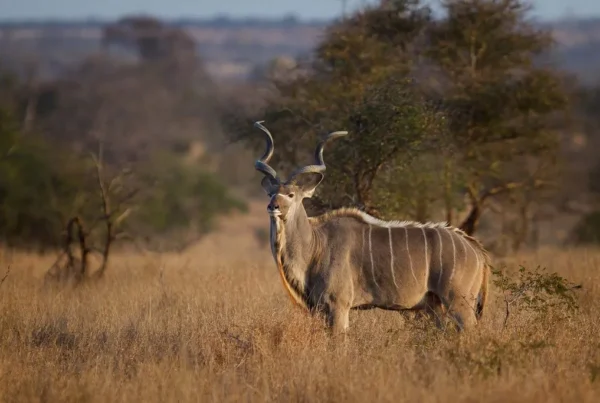
Perhaps the most instantly captivating feature of the Greater Kudu is its majestic spiral horns. These extraordinary structures can grow up to 1.8 meters (6 feet) in length and make up to two and a half full twists. Found only on males, these horns begin to spiral as the kudu matures and serve multiple functions: they are tools for combat, ornaments of sexual selection, and emblems of status within the group.

The curling design of the horns is not merely decorative. In dominance contests, kudu males engage in ritualized battles, locking horns in slow, deliberate tests of strength and leverage rather than violent clashes. These contests rarely result in injury, as the species has evolved mechanisms to avoid serious harm, unlike some other antelopes that fight with lethal intensity.

The horns are also a magnet for admiration from humans. In ancient African symbolism and tribal culture, the horns of the kudu were often considered sacred. Their spirals represented continuity, time, and the unseen patterns of nature — a design echoed in many pieces of indigenous art and ceremonial wear.

These spiraled crowns contribute to the kudu’s ghost-like image, as they glide silently through the trees, their horns slicing elegantly through dappled sunlight. Whether silhouetted against a rising sun or half-hidden in the shade of a mopane tree, the kudu’s horns always leave an impression of awe.

Masters of Camouflage: The Art of Staying Unseen

In the animal kingdom, visibility often means vulnerability. The Greater Kudu has mastered the art of staying invisible in plain sight. With their vertical white stripes — usually six to ten running down the body — and earthy grey-brown coats, they melt seamlessly into the dappled patterns of their woodland environments. These stripes mimic shafts of light filtering through trees, making it difficult for predators to pick out their silhouette against the background.

But camouflage is only half the story. The Greater Kudu is also a master of stillness. When sensing danger, it doesn’t flee immediately. Instead, it will freeze and hold its breath, often going unnoticed even by nearby humans or predators. Only when directly threatened does it burst into action, leaping with astonishing power and speed, capable of clearing fences and obstacles as high as 2.5 meters in a single bound.

This blend of visual stealth and explosive agility makes the kudu a challenging target even for apex predators like lions and leopards. Unlike many antelope species that rely primarily on herd security and panic-driven flight, kudus leverage their solitary or small-group behavior to remain undetected for as long as possible — a trait that makes encounters with them during safari drives feel like rare, intimate discoveries.

A Gentle Giant with Towering Elegance

Though less aggressive and social than other antelopes, the Greater Kudu exudes a quiet majesty. Males can weigh between 190 to 270 kilograms, while females tend to be smaller, averaging around 120 to 210 kilograms. Their height at the shoulder reaches up to 1.6 meters, giving them a tall, regal stature, particularly when viewed head-on in the open savannah.

Unlike the more aggressive and territorial males of some other antelope species, kudu bulls often coexist peacefully, particularly outside the breeding season. They form bachelor groups or remain solitary, wandering through the bush in search of food and safety. Their diet is varied and adaptive; they are primarily browsers, feeding on leaves, shoots, fruits, and sometimes even succulents during the dry season when water is scarce.

Females, on the other hand, tend to form small matriarchal groups, usually comprising a few females and their offspring. The calves are born after a gestation period of around eight months and are hidden carefully in undergrowth for the first few weeks of life. This hiding strategy, coupled with the calf’s innate stillness and camouflaged coat, greatly increases survival rates in areas of high predation.

The Greater Kudu’s lifestyle reflects a delicate balance between boldness and restraint, power and subtlety — a contrast that lies at the heart of its enduring allure.

Vocalists of the Wild: Communication Beyond Sight

While much of the kudu’s survival relies on silence and concealment, it is also among the more vocal antelope species when necessary. It produces a range of sounds, including alarm barks, grunts, low moans, and even snorts, especially during mating season or when warning group members of approaching danger.

One of the most distinct and often startling vocalizations is its alarm bark — a loud, guttural call that echoes through the bush like the bark of a large dog. This bark is used to alert others of danger and is often followed by a flurry of movement or a sharp freeze as the animal reassesses its environment.

Beyond vocalization, kudus also use body language as a primary mode of communication. Ear posture, tail flicks, and the orientation of their head can convey intent or signal alarm. In the mating season, males will display a ritualized posture called the “neck wrestle,” where they face each other with their necks arched and heads low, sizing each other up before locking horns in slow-motion duels.

These behaviors highlight the kudu’s sensitivity and intelligence. They are not just creatures of instinct but of deliberate communication — adapting to changing conditions through layered social signals and nuanced body dynamics.

Guardians of Biodiversity: Ecological Significance in African Ecosystems

Beyond their visual and behavioral appeal, the Greater Kudu plays a critical role in maintaining ecological balance within its habitat. As primary browsers, kudus help manage vegetation growth in wooded and semi-arid ecosystems, preventing overgrowth and facilitating new plant cycles. Their selective feeding also contributes to seed dispersal and pruning of dominant plant species, encouraging plant diversity and regeneration.

Predators, particularly large carnivores like lions, leopards, and hyenas, rely on the kudu as a key part of their diet. The presence of kudu populations is often an indicator of a healthy predator-prey dynamic — a fundamental element of ecosystem health.

Moreover, kudus indirectly support scavenger species. When a kudu falls to predation, vultures, jackals, and other carrion feeders benefit from the remains, ensuring that energy continues to flow efficiently through the food web. Even their dung plays a role, enriching the soil and providing food for dung beetles and other decomposers.

In this way, the Greater Kudu is more than a solitary ghost of the bush. It is a keystone of biodiversity, a quiet yet powerful force that supports the health and function of entire ecosystems across the African continent.

Experience the Magic of the Greater Kudu with WildHorn Africa

There are few creatures more emblematic of the African wilderness than the Greater Kudu. With its spiral horns, spectral grace, and ecological importance, this antelope captures the heart of what a true safari should offer: not just dramatic scenes of predator and prey, but subtle, awe-inspiring moments of natural artistry.

At WildHorn Africa, we believe in crafting safari experiences that are deeply immersive, responsibly curated, and soul-stirring. Whether you’re journeying through the miombo woodlands of southern Tanzania, the thickets of Botswana, or the acacia-strewn landscapes of Namibia, our expert guides will help you track and observe the elusive Greater Kudu — always with reverence, respect, and passion.

Book your African safari with WildHorn Africa today, and step into the wild places where legends roam. Let the horns of the kudu guide your path into mystery, memory, and the heartbeat of Africa.

Facts of the Greater Kudu #Facts of the Greater Kudu Facts of the Greater Kudu

5 Fascinating Facts About the Leopard (Panthera Pardus)

5 Fascinating Facts About the Leopard (Panthera Pardus)

By Travel guides, Travel stories and blogs

5 Fascinating Facts About the Leopard (Panthera Pardus)

Facts About the Leopard

The Enigmatic Shadow of the Savannah

In the golden hush of an African dusk, a figure melts into the tall grass with near supernatural stealth. Neither the thunderous lion nor the lightning-fast cheetah can match the sheer mystery and elegant danger exuded by the leopard (Panthera pardus). Revered as one of Africa’s most elusive predators, the leopard stands out not just for its mesmerizing rosette-patterned coat, but for a range of adaptations and behaviors that make it one of the most fascinating big cats on Earth. From dense rainforests and rugged mountains to arid savannahs and urban peripheries, the leopard’s incredible adaptability makes it a top predator across an extraordinary range of habitats.

To see a leopard in the wild is to witness the African wilderness at its most refined. These cats are as much poets of the predator world as they are silent executioners. Let us step into the life of the leopard and uncover five remarkable facets that make this spotted phantom one of Africa’s most awe-inspiring animals.

Master of Stealth and Adaptability

No predator matches the leopard in its ability to adapt to almost any environment. From the rain-drenched forests of Uganda to the rocky outcrops of South Africa’s Kruger National Park, leopards thrive where other big cats struggle. This success is largely due to their ability to stay hidden and hunt with a silence that borders on the supernatural. Leopards are ambush predators, using dense cover to approach their prey before delivering a swift and fatal pounce. Their entire hunting method revolves around stealth and patience rather than speed or strength alone.

A leopard’s adaptability also extends to its dietary flexibility. Unlike cheetahs or lions, leopards consume a wide variety of prey, from small rodents and birds to medium-sized antelope. They have even been recorded feeding on reptiles and fish when other food is scarce. This dietary diversity makes them incredibly resilient to ecological changes and capable of coexisting with human settlements, albeit often at the cost of conflict. The silent nature of their movement and their predominantly nocturnal behavior make them a rare sight, even in areas with a high population density.

Solitary Elegance and Territorial Precision

Leopards are among the most solitary of all big cats, with each adult maintaining a clearly defined territory that it defends with remarkable dedication. Males typically control larger ranges that may overlap with the territories of several females, but interactions are minimal and generally limited to mating periods. This solitary nature is not born of aggression, but necessity. It allows each leopard to avoid competition for food and maintain access to sufficient hunting grounds.

Territorial boundaries are meticulously marked with scent, claw marks on trees, and strategic fecal deposits. These invisible lines are strictly adhered to, a testament to the leopard’s instinctive understanding of balance and sustainability within its ecosystem. Females are fiercely protective of their cubs and raise them alone, teaching them how to hunt and navigate this solitary lifestyle before they reach independence around two years of age. The bond between mother and cub is strong, though fleeting, as nature compels them toward eventual separation.

Supreme Climbing Ability and Tree-Living Tactics

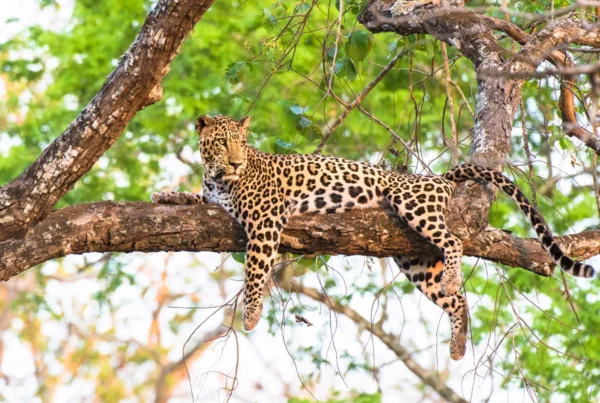
One of the most iconic images of a leopard is that of the cat reclining on the limbs of a tree, its meal hoisted high to avoid hyenas and lions. Leopards are exceptional climbers, using trees both as resting spots and as larders for their kills. The strength and coordination required to drag a carcass—often as heavy as the leopard itself—up into the branches is a marvel of feline engineering. This ability not only protects their meal from scavengers but also allows the leopard to feed in peace, far from the disruptive chaos of ground-level predators.

Trees are also used as observation platforms, offering a vantage point to scan the terrain for potential prey or rivals. Cubs often learn to climb at an early age, using the trees for safety and play. In fact, young leopards may spend considerable time in the canopy, refining their balance and ambush techniques. The tree-dwelling behavior of leopards is not merely a survival strategy but a sophisticated exploitation of vertical space in environments where competition is fierce.

Unrivaled Beauty and Camouflage Mastery (Facts About the Leopard)

The leopard’s coat, with its intricate rosette pattern, is not just a marvel of natural artistry—it’s a highly effective camouflage. Each leopard has a unique arrangement of spots, functioning like a fingerprint. This pattern helps them blend seamlessly into a wide range of backgrounds, from forest undergrowth to rocky hillsides. The effectiveness of this camouflage is so profound that even experienced trackers may pass within meters of a resting leopard without ever seeing it.

But the beauty of a leopard goes beyond its coat. Its musculature, fluid movement, and piercing golden eyes combine into a portrait of primal elegance. Artists, filmmakers, and photographers have long been fascinated by this aesthetic perfection, making the leopard a symbol of wild beauty across cultures. Even in traditional folklore and mythology, leopards are often seen as mystical beings, embodying stealth, power, and spiritual insight.

Conservation Challenges and Human Encounters

Despite their adaptability, leopards face growing threats across their range. Habitat fragmentation, human-wildlife conflict, and illegal poaching have led to declining populations in many areas. As their natural prey disappears due to deforestation and agricultural expansion, leopards are increasingly forced to hunt livestock, leading to fatal retaliation by farmers. This ongoing tension has made conservation efforts both more urgent and more complex.

Leopards are also victims of the illegal wildlife trade, particularly for their pelts and body parts. In some cultures, leopard skins are used in ceremonial dress or as symbols of status. While international trade is heavily regulated, enforcement remains a challenge in several countries. Conservationists are working hard to implement community-based strategies that promote coexistence, offer economic alternatives to poaching, and enhance the protection of critical habitats.

Modern conservation techniques include the use of camera traps, GPS collars, and citizen science initiatives to track leopard movements and populations. Education programs aimed at changing local perceptions of leopards are also showing promise. It is only through a combination of science, empathy, and cultural sensitivity that we can ensure the continued survival of this extraordinary predator.

Discover the Majesty of the Leopard with WildHorn Africa

To encounter a leopard in the wild is to witness nature at its most exquisite. It is a moment steeped in reverence, where time seems to pause and the very essence of the wild reveals itself. If you dream of experiencing this wonder firsthand, there is no better guide than WildHorn Africa. With a passion for conservation, deep local knowledge, and a commitment to sustainable tourism, WildHorn Africa curates safaris that offer more than just sightings—they offer understanding, connection, and awe.

Whether you’re tracking leopards through the golden light of the Maasai Mara, exploring the woodlands of Botswana, or marveling at their tree-top prowess in Uganda’s national parks, WildHorn Africa ensures your journey is immersive, ethical, and unforgettable. Book your African safari with WildHorn Africa, and step into the shadows where legends live.

Facts About the Leopard #Facts About the Leopard Facts About the Leopard

5 Fascinating Facts About the Common Chimpanzee A Glimpse Into Our Closest Wild Relatives With their expressive eyes, dexterous hands, and eerily human-like behaviors, the Common Chimpanzee (Pan troglodytes) captures the imagination of anyone fortunate enough to encounter them. These highly intelligent primates are not just another species on the African continent—they are our closest living relatives, sharing nearly 99% of our DNA. To watch a chimpanzee is to witness a mirror into our evolutionary past, a compelling look at a world where language, tools, social rules, and emotional depth are not uniquely human traits. The Common Chimpanzee roams across the dense tropical forests and savannahs of Central and West Africa. Despite being one of the most studied animals in the wild, chimpanzees continue to surprise researchers and observers alike with the depth of their intellect, the complexity of their social structures, and the emotional richness of their interactions. This article explores five of the most fascinating and illuminating facts about these extraordinary creatures, providing deeper insight into why the Common Chimpanzee deserves both admiration and protection. Tool Use and Innovation Chimpanzees are among the very few non-human species capable of not only using tools but also creating them. This ability places them in a unique cognitive category shared by very few other animals. Observed in various parts of Africa, chimpanzees skillfully use sticks to fish termites out of mounds, leaves to soak up drinking water, and stones to crack open nuts. These behaviors aren’t merely instinctual; they involve observation, learning, and problem-solving, indicating a level of intelligence that was once thought exclusive to humans. In some regions, chimpanzees have even been seen sharpening sticks into spears to hunt smaller primates like bush babies—a remarkable display of foresight and craftsmanship. These regional differences in tool use suggest that chimpanzees possess culture, where behaviors are passed down across generations and vary by community. Their ability to innovate and transmit knowledge reveals not only technical skill but a structured understanding of their environment and the potential uses of the materials within it. Complex Social Hierarchies and Relationships Chimpanzees live in fission-fusion societies, meaning that the composition of their groups changes frequently throughout the day and night. While large communities may consist of up to 100 individuals, smaller sub-groups form for activities such as foraging, grooming, or patrolling territory. Social bonds are central to chimpanzee life and are cultivated through intricate behaviors like grooming, facial expressions, vocalizations, and body language. Within these dynamic communities, hierarchies are well-defined. Male chimpanzees compete for dominance, often engaging in strategic alliances, displays of strength, and even deception. The alpha male doesn’t just gain leadership through brute force; he must demonstrate intelligence, social acumen, and the ability to maintain order. Females, on the other hand, establish their own hierarchies based on reproductive status, maternal success, and alliances. Emotional intelligence is deeply embedded in their social fabric. Chimpanzees exhibit grief when a group member dies, celebrate reunions, and even share in moments of apparent joy or humor. These emotional displays not only enrich their social bonds but also demonstrate a level of empathy and emotional depth that defies outdated assumptions about animal sentience. Remarkable Communication Abilities While chimpanzees may not speak human languages, they possess an extensive range of vocalizations, gestures, and facial expressions that form a sophisticated communication system. From soft grunts and high-pitched screams to complex pant-hoots and drum-like foot-thumps, each sound serves a specific social or environmental function. These vocalizations convey warnings, identify individuals, and express emotional states. Gestural communication is equally advanced. Chimpanzees use hand signals to request grooming, initiate play, or indicate direction. Facial expressions, such as the "play face" or a wide-eyed fear grimace, are universally understood among members of a group. Some chimpanzees in captivity have even been taught to use sign language or lexigrams, further proving their ability to grasp symbolic representation and abstract concepts. These abilities bridge the gap between instinct and learned behavior, illustrating the complexity of chimpanzee cognition. The richness of their communication underscores the species’ capacity for self-awareness and intentionality, challenging the long-held boundary between human and animal minds. Parenting, Learning, and Childhood Chimpanzee offspring experience an extended childhood, during which they are completely dependent on their mothers for care, guidance, and social instruction. This prolonged developmental phase allows for the slow acquisition of skills necessary for survival and social integration. Mothers invest years into nurturing their young, providing a model of caregiving that is deeply emotional and attentive. Young chimpanzees learn through imitation, observation, and playful exploration. They watch their mothers and other adults use tools, solve problems, and interact socially. Play among juveniles is not merely entertainment; it is a crucial aspect of development, where boundaries are tested, hierarchies explored, and cooperation learned. The bond between mother and infant is intensely strong. Infants cling to their mothers constantly during the early months, and even after weaning, the emotional closeness continues for years. The loss of a mother can be devastating to a young chimpanzee, often resulting in social withdrawal or reduced chances of survival. This deep familial attachment highlights the importance of nurturing relationships and emotional development in chimpanzee society. Conservation Status and Human Impact Despite their impressive intelligence and cultural richness, chimpanzees face grave threats from human activity. The Common Chimpanzee is currently listed as Endangered by the IUCN. Habitat destruction due to logging, agriculture, and infrastructure development continues to fragment their forest homes, isolating populations and reducing genetic diversity. In addition, the illegal pet trade and bushmeat hunting further diminish their numbers. Diseases introduced by humans, to which chimpanzees have no immunity, also pose a serious risk. As our closest genetic relatives, they are highly susceptible to illnesses like the flu, Ebola, and COVID-19. Conservation efforts are increasingly focused on preserving habitat, enforcing anti-poaching laws, and fostering eco-tourism that benefits both local communities and wildlife preservation. Organizations across Africa are working tirelessly to protect these primates. Sanctuaries provide refuge for orphaned and rescued chimpanzees, while research centers help us better understand their behavior and needs. Community-based conservation initiatives also aim to educate local populations and provide alternatives to environmentally harmful practices. The survival of the chimpanzee depends on sustained, collaborative efforts that value their existence not only as a species but as sentient beings deserving of respect and protection. Journey Into the Wild with WildHorn Africa There is nothing quite like witnessing a group of chimpanzees in the wild—watching them swing through the trees, embrace one another, or share a moment of play. These experiences transform the observer, forging a connection with nature that is as emotional as it is educational. WildHorn Africa curates exceptional safari experiences that allow you to explore the habitats of these remarkable primates. From Uganda’s Kibale National Park to Tanzania’s Mahale Mountains, WildHorn Africa ensures immersive, ethical, and expertly guided journeys into the heart of chimpanzee territory. Every expedition supports conservation and community, ensuring that your adventure contributes to the continued survival of Africa's wildlife. Book your African safari with WildHorn Africa and let your journey into the world of the Common Chimpanzee be one of discovery, empathy, and awe. Embrace the wild and be part of the legacy that protects our closest cousins in the animal kingdom.

5 Fascinating Facts About the Common Chimpanzee

By Travel guides, Travel stories and blogs

5 Fascinating Facts About the Common Chimpanzee

Facts About the Common Chimpanzee

A Glimpse Into Our Closest Wild Relatives

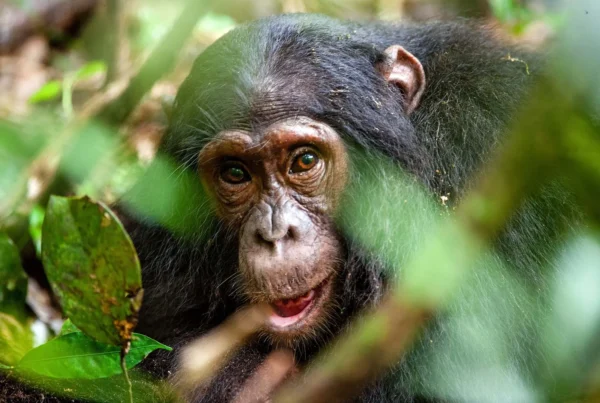
With their expressive eyes, dexterous hands, and eerily human-like behaviors, the Common Chimpanzee (Pan troglodytes) captures the imagination of anyone fortunate enough to encounter them. These highly intelligent primates are not just another species on the African continent—they are our closest living relatives, sharing nearly 99% of our DNA. To watch a chimpanzee is to witness a mirror into our evolutionary past, a compelling look at a world where language, tools, social rules, and emotional depth are not uniquely human traits.

The Common Chimpanzee roams across the dense tropical forests and savannahs of Central and West Africa. Despite being one of the most studied animals in the wild, chimpanzees continue to surprise researchers and observers alike with the depth of their intellect, the complexity of their social structures, and the emotional richness of their interactions. This article explores five of the most fascinating and illuminating facts about these extraordinary creatures, providing deeper insight into why the Common Chimpanzee deserves both admiration and protection.

Tool Use and Innovation

Chimpanzees are among the very few non-human species capable of not only using tools but also creating them. This ability places them in a unique cognitive category shared by very few other animals. Observed in various parts of Africa, chimpanzees skillfully use sticks to fish termites out of mounds, leaves to soak up drinking water, and stones to crack open nuts. These behaviors aren’t merely instinctual; they involve observation, learning, and problem-solving, indicating a level of intelligence that was once thought exclusive to humans.

In some regions, chimpanzees have even been seen sharpening sticks into spears to hunt smaller primates like bush babies—a remarkable display of foresight and craftsmanship. These regional differences in tool use suggest that chimpanzees possess culture, where behaviors are passed down across generations and vary by community. Their ability to innovate and transmit knowledge reveals not only technical skill but a structured understanding of their environment and the potential uses of the materials within it.

Complex Social Hierarchies and Relationships

Chimpanzees live in fission-fusion societies, meaning that the composition of their groups changes frequently throughout the day and night. While large communities may consist of up to 100 individuals, smaller sub-groups form for activities such as foraging, grooming, or patrolling territory. Social bonds are central to chimpanzee life and are cultivated through intricate behaviors like grooming, facial expressions, vocalizations, and body language.

Within these dynamic communities, hierarchies are well-defined. Male chimpanzees compete for dominance, often engaging in strategic alliances, displays of strength, and even deception. The alpha male doesn’t just gain leadership through brute force; he must demonstrate intelligence, social acumen, and the ability to maintain order. Females, on the other hand, establish their own hierarchies based on reproductive status, maternal success, and alliances.

Emotional intelligence is deeply embedded in their social fabric. Chimpanzees exhibit grief when a group member dies, celebrate reunions, and even share in moments of apparent joy or humor. These emotional displays not only enrich their social bonds but also demonstrate a level of empathy and emotional depth that defies outdated assumptions about animal sentience.

Remarkable Communication Abilities (Facts About the Common Chimpanzee)

While chimpanzees may not speak human languages, they possess an extensive range of vocalizations, gestures, and facial expressions that form a sophisticated communication system. From soft grunts and high-pitched screams to complex pant-hoots and drum-like foot-thumps, each sound serves a specific social or environmental function. These vocalizations convey warnings, identify individuals, and express emotional states.

Gestural communication is equally advanced. Chimpanzees use hand signals to request grooming, initiate play, or indicate direction. Facial expressions, such as the “play face” or a wide-eyed fear grimace, are universally understood among members of a group. Some chimpanzees in captivity have even been taught to use sign language or lexigrams, further proving their ability to grasp symbolic representation and abstract concepts.

These abilities bridge the gap between instinct and learned behavior, illustrating the complexity of chimpanzee cognition. The richness of their communication underscores the species’ capacity for self-awareness and intentionality, challenging the long-held boundary between human and animal minds.

Parenting, Learning, and Childhood

Chimpanzee offspring experience an extended childhood, during which they are completely dependent on their mothers for care, guidance, and social instruction. This prolonged developmental phase allows for the slow acquisition of skills necessary for survival and social integration. Mothers invest years into nurturing their young, providing a model of caregiving that is deeply emotional and attentive.

Young chimpanzees learn through imitation, observation, and playful exploration. They watch their mothers and other adults use tools, solve problems, and interact socially. Play among juveniles is not merely entertainment; it is a crucial aspect of development, where boundaries are tested, hierarchies explored, and cooperation learned.

The bond between mother and infant is intensely strong. Infants cling to their mothers constantly during the early months, and even after weaning, the emotional closeness continues for years. The loss of a mother can be devastating to a young chimpanzee, often resulting in social withdrawal or reduced chances of survival. This deep familial attachment highlights the importance of nurturing relationships and emotional development in chimpanzee society.

Conservation Status and Human Impact

Despite their impressive intelligence and cultural richness, chimpanzees face grave threats from human activity. The Common Chimpanzee is currently listed as Endangered by the IUCN. Habitat destruction due to logging, agriculture, and infrastructure development continues to fragment their forest homes, isolating populations and reducing genetic diversity. In addition, the illegal pet trade and bushmeat hunting further diminish their numbers.

Diseases introduced by humans, to which chimpanzees have no immunity, also pose a serious risk. As our closest genetic relatives, they are highly susceptible to illnesses like the flu, Ebola, and COVID-19. Conservation efforts are increasingly focused on preserving habitat, enforcing anti-poaching laws, and fostering eco-tourism that benefits both local communities and wildlife preservation.

Organizations across Africa are working tirelessly to protect these primates. Sanctuaries provide refuge for orphaned and rescued chimpanzees, while research centers help us better understand their behavior and needs. Community-based conservation initiatives also aim to educate local populations and provide alternatives to environmentally harmful practices. The survival of the chimpanzee depends on sustained, collaborative efforts that value their existence not only as a species but as sentient beings deserving of respect and protection.

Journey Into the Wild with WildHorn Africa

There is nothing quite like witnessing a group of chimpanzees in the wild—watching them swing through the trees, embrace one another, or share a moment of play. These experiences transform the observer, forging a connection with nature that is as emotional as it is educational.

WildHorn Africa curates exceptional safari experiences that allow you to explore the habitats of these remarkable primates. From Uganda’s Kibale National Park to Tanzania’s Mahale Mountains, WildHorn Africa ensures immersive, ethical, and expertly guided journeys into the heart of chimpanzee territory. Every expedition supports conservation and community, ensuring that your adventure contributes to the continued survival of Africa’s wildlife.

Book your African safari with WildHorn Africa and let your journey into the world of the Common Chimpanzee be one of discovery, empathy, and awe. Embrace the wild and be part of the legacy that protects our closest cousins in the animal kingdom.

Facts About the Common Chimpanzee #Facts About the Common Chimpanzee Facts About the Common Chimpanzee

5 Fascinating Facts About the Giraffe

5 Fascinating Facts About the Giraffe

By Travel guides, Travel stories and blogs

5 Fascinating Facts About the Giraffe

Facts About the Giraffe

The Towering Icon of the African Wilderness

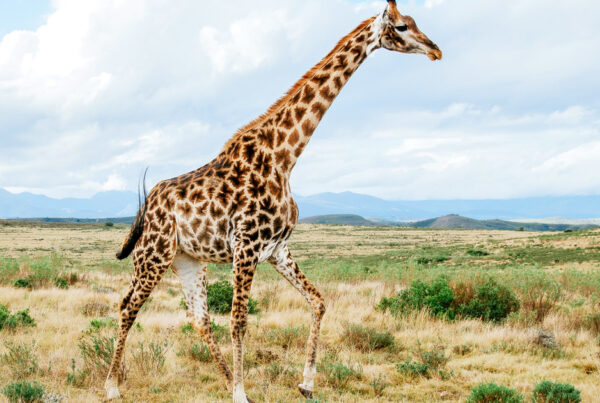
Graceful, majestic, and unmistakably unique, the Giraffe stands as one of the most captivating creatures in the African savannah. With its impossibly long neck, towering legs, and hypnotic gait, the giraffe (Giraffa camelopardalis) commands attention wherever it roams. These towering mammals are more than just safari favorites; they are ecological marvels and evolutionary masterpieces.

Every element of their anatomy and behavior tells a story of adaptation, resilience, and survival. In this article, we delve into five of the most fascinating facts about giraffes, peeling back the layers of these gentle giants to reveal their complexity and significance within the African ecosystem.

The Long Neck Mystery: Not Just for Reaching Leaves

The giraffe’s neck, which can stretch up to two meters in length, is undoubtedly its most iconic feature. For years, biologists assumed that this extraordinary adaptation evolved primarily to help giraffes reach the leaves of tall trees, especially acacias, which other herbivores could not access.

While this is certainly one advantage, newer research suggests that the giraffe’s neck also plays a pivotal role in social competition. In what scientists call “necking” behavior, males engage in dramatic battles using their necks as weapons. They swing their heads like hammers, striking their opponents in displays of strength and dominance. These contests determine mating rights and social hierarchy among males.

Interestingly, despite their long necks, giraffes have the same number of neck vertebrae as humans: seven. However, each vertebra can be over ten inches long and is connected by ball-and-socket joints that allow incredible flexibility. This anatomical marvel showcases how evolution can work within structural limitations to produce extraordinary outcomes, balancing both function and form in service of survival and reproduction.

A Heart Built for Height: Circulatory Wonders

To pump blood all the way to a brain located more than two meters above the heart, giraffes have evolved one of the most powerful cardiovascular systems in the animal kingdom. Their heart, which can weigh up to eleven kilograms, generates double the blood pressure of an average large mammal. This enormous pressure is necessary to overcome gravity, ensuring consistent blood flow to the brain even during rapid movements or when raising and lowering their heads.

In addition to a powerful heart, giraffes possess uniquely adapted blood vessels with valves that regulate pressure and prevent fainting or hemorrhaging. When a giraffe lowers its head to drink, a complex network of vessels known as the “rete mirabile” helps manage the sudden changes in blood pressure. Without this intricate system, giraffes would suffer catastrophic consequences each time they drank from a water source.

These circulatory adaptations not only support the giraffe’s extreme height but also reveal nature’s ingenious ability to create systems capable of overcoming seemingly impossible physical challenges.

Social Structures and Silent Communication

Giraffes are social animals, often seen moving in loose aggregations called towers. These groups are fluid, with individuals coming and going, but social bonds—particularly among females—can be strong and enduring. Female giraffes often form matrilineal groups where mothers, daughters, and even grandmothers cohabitate and protect the young collectively.

Communication among giraffes has long baffled scientists due to the animal’s relative silence. Recent studies, however, have uncovered that giraffes communicate through infrasound—low-frequency sounds below the range of human hearing. These deep rumbles can travel over long distances, enabling giraffes to stay connected even when dispersed across vast landscapes. Additionally, they use body language, eye contact, and subtle movements of their necks and tails to convey intentions and emotions.

This understated social complexity challenges earlier assumptions that giraffes were largely solitary and unsophisticated in their interactions. On the contrary, they exhibit a nuanced social intelligence and emotional depth that align with the rich behavioral repertoires of elephants and primates.

An Ecological Keystone: Giraffes as Landscape Architects

Giraffes are more than just passive consumers of foliage; they are active shapers of their environments. As browsers, they feed on the upper canopies of trees and shrubs, influencing the growth patterns of vegetation and the availability of resources for other animals. Their feeding behavior often stimulates plant regeneration, helping maintain ecological balance.

Moreover, giraffes serve as crucial pollinators. As they feed, they inadvertently transfer pollen from one plant to another, facilitating the reproductive cycles of various tree species. Their large size also makes them effective seed dispersers; seeds ingested by giraffes are deposited in their dung over wide distances, promoting biodiversity.

By fulfilling these multiple ecological roles, giraffes act as keystone species whose presence supports the survival of countless other organisms. Their disappearance would ripple across the ecosystem, leading to unforeseen imbalances and the potential collapse of interconnected food webs.

Conservation Challenges and Global Importance (Facts About the Giraffe)

Despite their grandeur, giraffes face growing threats in the wild. Habitat loss due to agricultural expansion, deforestation, and urbanization has fragmented their ranges, pushing populations into smaller, more isolated pockets. Additionally, giraffes are sometimes hunted for their meat, hides, and even tails, which are considered status symbols in some cultures.

Climate change has further exacerbated these issues by altering rainfall patterns and reducing the availability of the trees giraffes depend on for food. Once thought to be stable, giraffe populations have declined by nearly 40% over the past three decades, prompting conservationists to label this trend a “silent extinction.”

In response, several conservation organizations and national governments have launched initiatives aimed at giraffe protection. These include the creation of protected areas, anti-poaching patrols, and community-based conservation programs that involve local people in safeguarding giraffe habitats. Raising awareness and fostering appreciation for giraffes is also critical, especially in regions where economic pressures may lead to their exploitation.

Giraffes are not only African icons but global ambassadors for wildlife conservation. Their plight serves as a stark reminder of how easily even the most recognizable and admired animals can slip toward endangerment without vigilant stewardship.

Experience the Majesty of Giraffes with WildHorn Africa

To witness the towering grace of giraffes in the wild is an experience that transcends the ordinary. Whether they are galloping across open plains, reaching effortlessly for treetop foliage, or nurturing their calves beneath the vast African sky, giraffes captivate the imagination and stir a deep sense of wonder.

WildHorn Africa offers exceptional safari experiences that bring you face-to-face with these gentle giants in their natural habitat. Expert guides, tailor-made itineraries, and a strong commitment to conservation ensure that your journey is both unforgettable and impactful. From the Serengeti to the Kalahari, every WildHorn Africa safari promises intimate encounters with giraffes and a deeper appreciation of the wild landscapes they call home.

Book your next African adventure with WildHorn Africa and take the first step toward discovering the incredible world of giraffes. Let your safari be more than a journey—make it a tribute to nature, a celebration of wildlife, and a legacy of responsible travel.

Facts About the Giraffe #Facts About the Giraffe Facts About the Giraffe

5 Fascinating Facts About Brown Hyena

5 Fascinating Facts About Brown Hyena

By Travel guides, Travel stories and blogs

5 Fascinating Facts About Brown Hyena

Facts About Brown Hyena

The Ghost of the Desert: An Introduction

Among Africa’s most enigmatic and misunderstood predators, the Brown Hyena (Parahyaena brunnea) emerges as a symbol of survival, adaptability, and mystery. Often overlooked in favor of its more vocal and spotted cousin, the brown hyena carves a quiet, solitary path through the arid landscapes of southern Africa.

Cloaked in a shaggy brown coat, with pointed ears and a powerful build, this elusive carnivore has mastered the art of desert living. Its reputation as a scavenger barely scratches the surface of its complex role in the African ecosystem. To appreciate the depth of this animal’s story is to venture into one of nature’s most refined examples of adaptation.

The brown hyena’s life is a narrative of endurance. Found primarily in Namibia, Botswana, parts of Zimbabwe, and northern South Africa, this species is often seen wandering the fringes of the Kalahari and Namib Deserts. It is in these harsh terrains that the brown hyena thrives, revealing remarkable traits that have fascinated scientists, naturalists, and wildlife enthusiasts alike. From its social structure and feeding habits to its evolutionary lineage and role in cultural lore, the brown hyena offers more than just intrigue—it offers insight into the heart of Africa’s wilderness.

A Unique Appearance and Evolutionary Design

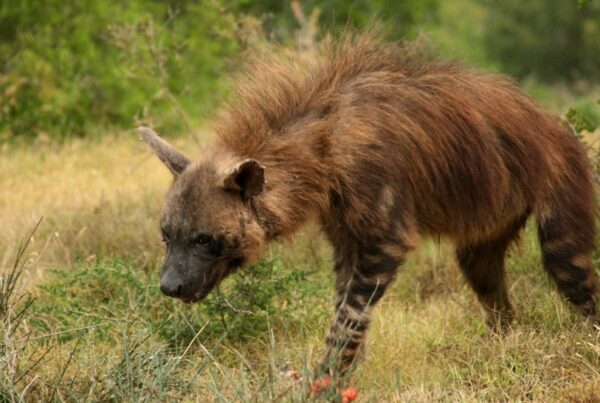
What sets the brown hyena apart visually is its thick, shaggy fur that ranges from dark brown to grey, with distinct cream-colored stripes on its legs and a mane that can stand upright when the animal feels threatened or excited. This rugged coat is more than a stylistic quirk; it serves a crucial purpose in insulating the animal against extreme temperatures, particularly during cold desert nights. With a body built for endurance, the brown hyena is equipped with strong forequarters, a sloped back, and robust jaws capable of crushing bone.

The species’ evolutionary lineage is equally fascinating. Belonging to the Hyaenidae family, the brown hyena is one of four existing hyena species. Despite their dog-like appearance, hyenas are more closely related to cats and mongooses. The brown hyena in particular is genetically distinct enough to warrant its own genus, Parahyaena, highlighting its unique evolutionary path. This ancient predator has adapted to survive in some of the driest regions of Africa, often walking over 30 kilometers a night in search of food. Its powerful olfactory senses and keen navigation skills allow it to locate carrion with remarkable efficiency.

Masters of Scavenging and Opportunistic Feeding

Perhaps the most well-known aspect of the brown hyena is its role as a scavenger. But what is often misunderstood is just how complex and vital this role is. The brown hyena plays an essential part in the ecosystem by cleaning up carcasses that would otherwise attract disease and other problems. Its diet is highly varied and opportunistic. While carrion makes up the bulk of its intake, it will also consume insects, fruits, eggs, small vertebrates, and occasionally even hunt live prey when circumstances permit.

The hyena’s digestive system is specially designed to extract maximum nutrients from the remains of other animals. It can digest bones, skin, and hooves with ease, ensuring little goes to waste. Its strong sense of smell allows it to detect dead animals from long distances, often beating larger predators to a fresh carcass. This scavenging ability makes it an unsung hero of the savanna, contributing to a balanced and healthy environment.

Interestingly, brown hyenas often cache food in secret locations, burying or hiding parts of a carcass to consume later. This behavior indicates not only a strategic mind but also an ability to plan and secure resources in a competitive environment. In many cases, these hidden caches can support a clan for several days, especially in resource-scarce regions.

Complex Social Structures and Communication (Facts About Brown Hyena)

While brown hyenas are largely solitary in their search for food, they are by no means asocial. They live in small clans that typically consist of an extended family group, often centered around a communal den. These clans can include up to 14 individuals, although most contain fewer members. What makes the brown hyena’s social life particularly intriguing is the balance it maintains between solitude and clan loyalty.

Clan members communicate through a complex array of vocalizations, scent markings, and body language. Scent marking is particularly important; each hyena possesses large anal glands that secrete a pungent paste used to mark territorial boundaries. These markers act as a social network, providing information about individual identity, reproductive status, and territorial claims. The famous “paste-marking” behaviors often occur near den sites and along the clan’s borders.

Mating behavior among brown hyenas is less hierarchical than that of spotted hyenas. Females typically give birth to one to four cubs in hidden dens, where they raise them for over a year before the young become fully independent. The den becomes a hub for social bonding, grooming, and protection, reinforcing the clan’s cohesion.

Stealthy Survivors Facing Conservation Challenges

Despite their resilience, brown hyenas face an increasing number of threats. Their population is currently listed as “Near Threatened” by the IUCN, primarily due to habitat loss, persecution, and poisoning. In agricultural regions, they are often mistakenly blamed for livestock predation and are targeted in retaliatory killings. Yet evidence suggests they rarely attack healthy livestock, instead scavenging from natural deaths or carcasses left unattended.

In some cultures, brown hyenas are associated with negative superstitions, being seen as omens or harbingers of misfortune. This perception has contributed to their mistreatment and a lack of legal protection in certain regions. Conservation organizations are working to shift this narrative by educating local communities on the ecological importance of hyenas and implementing community-based conservation strategies that align the needs of wildlife with human livelihoods.

Ecotourism also plays a pivotal role in brown hyena conservation. By showcasing these remarkable animals in their natural environments, safari operators and wildlife reserves generate both awareness and economic incentives to preserve their habitats. With continued research, education, and sustainable tourism, the brown hyena’s future can be secured.

Encounter the Enigmatic Brown Hyena with WildHorn Africa

There is no substitute for witnessing a brown hyena in the wild. Its ghost-like form gliding across the desert under a moonlit sky is a scene etched in memory. Observing its silent gait, deciphering its trail, and learning its behaviors from experienced guides enriches one’s understanding of Africa’s complex wildlife tapestry.

WildHorn Africa offers expertly curated safari experiences across the continent, including regions where the brown hyena can be found in its natural splendor. With a commitment to ethical tourism, conservation, and storytelling, WildHorn Africa turns every journey into an opportunity for learning and wonder. Join their guided expeditions to connect with wildlife in its purest form, contribute to vital conservation efforts, and witness the survival saga of the remarkable brown hyena.

Book your unforgettable African adventure with WildHorn Africa and let the mysterious beauty of the brown hyena deepen your appreciation for the wild heart of the continent.

Facts About Brown Hyena #Facts About Brown Hyena Facts About Brown Hyena

5 Fascinating Facts About the Nile Monitor Lizard

5 Fascinating Facts About the Nile Monitor Lizard

By Travel guides, Travel stories and blogs

5 Fascinating Facts About the Nile Monitor

Facts About the Nile Monitor Lizard

The Overlooked Giant of Africa’s Wetlands

While Africa’s Big Five often steal the spotlight, the continent is home to many lesser-known yet equally captivating creatures. One such reptilian marvel is the Nile Monitor (Varanus niloticus), a formidable lizard that prowls riversides, swamps, and wetlands across sub-Saharan Africa.

With its sleek build, cryptic patterns, and raw power, the Nile Monitor is a living relic of prehistoric times, often overlooked but never unworthy of fascination. This reptile commands respect not only for its size—which rivals that of any lizard on the continent—but also for its remarkable intelligence, adaptability, and ecological significance.

Nile Monitors Are Among the Largest Lizards in the World

A full-grown Nile Monitor is a truly impressive creature. Reaching lengths of over two meters and weighing up to twenty kilograms, this reptile ranks among the largest lizards globally, second only to the formidable Komodo dragon. Its body is long and muscular, with a whip-like tail that accounts for more than half its total length. The tail is not just for show—it serves as a powerful weapon against predators and rivals alike, capable of delivering bone-cracking strikes.

Their skin, adorned with intricate patterns of yellow and black spots, provides effective camouflage in dense vegetation and along murky riverbanks. Equipped with sharp claws and strong limbs, Nile Monitors are adept climbers and swimmers, moving with surprising agility for their size. These physical attributes enable them to dominate their aquatic and terrestrial habitats, hunting and evading threats with ease. Their jaws are lined with recurved teeth designed to seize and hold struggling prey, adding to their fearsome predatory arsenal.

They Are Opportunistic Predators With a Broad Diet

The Nile Monitor is not a picky eater. In fact, it is one of the most opportunistic carnivores in Africa’s wetlands. Feeding primarily on fish, amphibians, birds, and small mammals, it has even been observed raiding nests for eggs and hatchlings, including those of crocodiles. Its strong sense of smell, enhanced by the flicking of its long, forked tongue, helps it locate hidden prey beneath soil, sand, or water.

This dietary flexibility makes the Nile Monitor a critical ecological regulator, preventing overpopulation of smaller vertebrates and invertebrates in its ecosystem. However, its appetite also brings it into conflict with humans. Farmers often accuse the monitor of pillaging chicken coops and duck ponds, leading to retaliatory killings. Yet, in a healthy, undisturbed ecosystem, the Nile Monitor plays an essential role in maintaining ecological balance.

Nile Monitors often exhibit feeding behaviors that resemble intelligence. They have been observed stalking prey stealthily, even exhibiting problem-solving tendencies when pursuing difficult meals. This suggests a higher cognitive ability than typically associated with reptiles, adding to the mystery and marvel surrounding their biology.

Nile Monitors Exhibit Astonishing Adaptability Across Africa

Nile Monitors are native to nearly every country south of the Sahara and are even found in parts of North Africa. They inhabit a diverse array of ecosystems, from freshwater lakes and marshlands to arid savannas, provided a water source is nearby. This widespread distribution is a testament to their extraordinary adaptability. They can tolerate a range of temperatures, elevations, and humidity levels, adjusting their behavior accordingly.

In cooler conditions, Nile Monitors bask on rocks or tree limbs to raise their body temperature, exhibiting the classic behavior of ectotherms. During dry seasons, they may enter a state of dormancy in burrows or termite mounds to conserve energy and moisture. Their nesting behavior is equally versatile, with females laying eggs in sandy banks, hollow logs, or even abandoned burrows.

In regions with heavy human encroachment, Nile Monitors have shown resilience by adapting to man-made environments. Urban waterways, irrigation channels, and even sewage systems have become unintentional habitats. However, their adaptability comes at a cost. These lizards often face persecution, roadkill risks, and entrapment due to human infrastructure. Still, their survival across such varied conditions speaks volumes about their evolutionary success.

Their Reproduction Strategy is a Masterclass in Survival

Reproductive success in the wild hinges on both strategy and timing, and Nile Monitors have mastered both. Mating typically occurs during the rainy season, when food is abundant and environmental conditions are favorable. Males engage in vigorous combat, wrestling with one another to gain access to females. The victorious male then mates with the receptive female, who will later lay between 20 to 60 eggs, depending on her size and health.

What makes their reproductive strategy particularly fascinating is the choice of nesting site. Nile Monitors often exploit termite mounds for egg deposition. The warmth and insulation provided by the termite colony create a stable incubating environment, protecting the eggs from predators and temperature fluctuations. The eggs are left unattended, relying entirely on environmental stability for successful development.

Hatchlings emerge three to six months later, depending on environmental conditions. From the moment they hatch, young monitors are entirely independent. Armed with instinct and physical prowess, they climb trees or scatter through the underbrush to avoid predators, including adult monitors. This self-sufficiency is critical for survival, given the high rate of predation in the wild.

Intelligence, Mythology, and Human Interaction

Despite their intimidating appearance, Nile Monitors have long held a place in local folklore and traditional medicine. In some African cultures, they are regarded as symbols of alertness and agility. Others fear them, associating them with curses or supernatural forces. These mixed perceptions have led to varied human interactions, from reverence and protection to fear and eradication.

Scientific studies have revealed that Nile Monitors exhibit behaviors suggestive of higher cognitive function, such as observational learning and environmental memory. In captivity, some individuals have even been trained to recognize routines and human caretakers. This level of responsiveness places them among the more intelligent reptilian species, rivaling certain birds and mammals in behavioral complexity.

The Nile Monitor’s role in the ecosystem, combined with its intelligence and adaptability, makes it a species worthy of greater recognition and protection. Unfortunately, habitat destruction, pollution, and illegal pet trade continue to threaten local populations. Conservation efforts remain fragmented, and public awareness is limited. Raising the profile of this extraordinary lizard could be a key step in ensuring its future survival.

Discover the Nile Monitor with WildHorn Africa (Facts About the Nile Monitor Lizard)

If you’re seeking a safari experience that goes beyond the familiar, consider setting your sights on the elusive Nile Monitor. Encountering one of these ancient reptiles in the wild is not just a sighting—it’s a glimpse into the primal rhythms of African ecosystems. Their stealth, strength, and mystery are a compelling counterpoint to the grandeur of elephants or the drama of lions.

WildHorn Africa offers immersive safari experiences tailored for those who crave deeper encounters with Africa’s natural wonders. With expert guides, eco-conscious travel planning, and access to pristine habitats, WildHorn Africa ensures that your journey is both thrilling and transformative.

Book your African safari with WildHorn Africa today and unlock the secrets of the Nile Monitor—and so much more. The adventure of a lifetime awaits in the heart of Africa’s wildest landscapes.

Facts About the Nile Monitor Lizard #Facts About the Nile Monitor Lizard Facts About the Nile Monitor Lizard

5 Fascinating Facts About the Black-backed Jackal

5 Fascinating Facts About the Black-backed Jackal

By Travel guides, Travel stories and blogs

5 Fascinating Facts About the Black-backed Jackal

Facts About the Black-backed Jackal

The Cunning Sentinel of the African Wilderness

In the great theater of African wildlife, certain animals command the spotlight with sheer size or majesty. Yet, others captivate in quieter, more cunning ways. The Black-backed Jackal, with its striking two-toned coat, keen intelligence, and complex social behavior, is one such marvel. Often overshadowed by the continent’s larger predators, this medium-sized canid deserves recognition as a fascinating and vital player in Africa’s ecological balance.

With its sharp eyes and sharper wits, the Black-backed Jackal (Canis mesomelas) survives not through brute force, but by outsmarting and adapting to its ever-changing environment. To truly appreciate this remarkable animal, one must look beyond its modest stature and delve into the subtle intricacies of its behavior and biology.

Masters of Adaptation: Thriving Across Habitats

One of the most remarkable aspects of the Black-backed Jackal is its extraordinary adaptability. Native to eastern and southern Africa, these jackals thrive in a broad range of habitats, from arid deserts and dry savannahs to coastal scrublands and even mountainous regions. This versatility in habitat preference is a testament to the species’ evolutionary resilience.

Unlike some specialized predators that require specific conditions to survive, the Black-backed Jackal exhibits a generalist’s mastery of survival. It is capable of adjusting its diet and behavior to suit the demands of its surroundings, whether that means scavenging alongside hyenas, hunting rodents at night, or feeding on fruits during lean seasons.

This flexibility also allows the jackal to coexist with a variety of other species, often filling the niche of both predator and scavenger. In areas with intense competition from larger carnivores, the Black-backed Jackal modifies its activity patterns, foraging in off-peak hours or adopting stealthy, nocturnal habits. Their ability to shift strategies with such ease demonstrates a level of behavioral sophistication that has ensured their continued success in a landscape shaped by unpredictability.

Socially Complex and Monogamously Loyal (Facts About the Black-backed Jackal)

Despite their reputation for cunning and opportunism, Black-backed Jackals lead surprisingly structured social lives. They form long-term monogamous pairs that work cooperatively to raise offspring, defend territory, and hunt. This family structure enhances their ability to thrive in difficult environments by distributing the responsibilities of survival. A bonded pair will often maintain and defend a permanent territory year-round, marking boundaries with scent and vocalizations to ward off intruders.

What makes their social structure even more fascinating is the involvement of older offspring, who sometimes delay dispersal to help raise the next litter. These “helper” jackals contribute to feeding, guarding, and teaching their younger siblings survival skills. This cooperative breeding strategy, rare among carnivores, reflects an evolutionary advantage that ensures higher survival rates for pups. It also creates strong familial bonds and a clear social hierarchy within the group, demonstrating that even among wild canids, loyalty and cooperation can be as critical as aggression and competition.

Vocal Intelligence: A Language of Survival

Communication is at the heart of the Black-backed Jackal’s survival strategy. These jackals possess a highly developed system of vocalizations used to coordinate hunting, defend territory, and maintain social bonds. Their repertoire includes yelps, howls, growls, and a distinctive high-pitched scream that can pierce through the quiet of the African night. Unlike random noise-making, these calls are intentional and often context-specific, suggesting a form of rudimentary language.

Pair-bonded jackals frequently engage in duets, calling in unison to reinforce their bond and assert their territorial claim. These vocalizations serve a dual purpose: they strengthen social cohesion within the pair or family unit, and they act as an auditory fence that warns rivals to keep their distance. The ability to use sound so effectively, both for interpersonal bonding and strategic defense, highlights the Black-backed Jackal’s cognitive acumen. It allows them to navigate the complex dynamics of territory and competition without constant physical conflict, which conserves energy and reduces the risk of injury.

Opportunistic Diet: Carnivore with a Taste for Variety

The Black-backed Jackal’s diet is as diverse as the landscapes it inhabits. A true omnivore with carnivorous tendencies, this canid consumes a wide range of food items depending on availability. From insects, rodents, and small antelopes to carrion, fruits, and even human refuse, its menu is dictated by opportunity rather than preference. In areas near human settlements, jackals have been known to raid poultry farms or scavenge from trash heaps, showcasing both audacity and ingenuity.

This dietary flexibility plays a critical ecological role. By consuming carrion, jackals help prevent the spread of disease and contribute to nutrient cycling within ecosystems. When they hunt small mammals or insects, they help regulate populations that might otherwise reach pest levels. Their impact as both predator and scavenger makes them indispensable to the health of their environment. Furthermore, their ability to toggle between hunting and scavenging, depending on the presence of other predators, reveals a dynamic adaptability few species can match. The Black-backed Jackal does not merely survive in its ecosystem—it actively shapes and supports it.

Survival in the Shadow of Giants

Living alongside larger and often more aggressive predators like lions, leopards, and hyenas means the Black-backed Jackal must constantly tread a fine line between risk and reward. Rather than challenge these apex predators directly, jackals employ a clever blend of stealth, timing, and opportunism. They often follow larger carnivores from a distance, swooping in to scavenge the remnants of kills once the dominant players have moved on. In this regard, they serve as both cleanup crew and silent witnesses to Africa’s often brutal food chain.

This ability to navigate dangerous environments without engaging in direct conflict is a hallmark of the jackal’s intelligence. Their acute senses, particularly smell and hearing, help them detect threats early and respond accordingly. When danger approaches, they rely on speed and agility to escape, often retreating to burrows or dense brush. These evasive strategies, combined with their mental agility, allow them to carve out a sustainable niche in some of Africa’s most competitive ecosystems.

Witness the Wily World of the Black-backed Jackal with WildHorn Africa

To understand the true brilliance of the Black-backed Jackal, one must experience it in the wild, where every movement is a masterclass in survival, every call a note in nature’s orchestra. Observing these elusive canids in their native habitat reveals the intricate ballet of strategy, cooperation, and adaptation that defines their lives.

WildHorn Africa offers expertly curated safaris designed to showcase not just the Big Five, but the full spectrum of Africa’s wildlife, including the underestimated but utterly captivating Black-backed Jackal. With seasoned guides and immersive experiences, you can witness firsthand the cunning and charm of this remarkable animal.

Book your African adventure with WildHorn Africa and step into a world where intelligence, resilience, and family bonds rule the wild. Let the journey begin where curiosity meets conservation, and let the Black-backed Jackal guide you into the heart of Africa’s untamed magic.

Facts About the Black-backed Jackal #Facts About the Black-backed Jackal Facts About the Black-backed Jackal

Close Menu