search
Best Time to Visit Semuliki National Park

Best Time to Visit Semuliki National Park

By Travel stories and blogs, Family holidays, Luxury holidays, Safari holidays, Uganda travel guides, Wildlife holidays

Best Time to Visit Semuliki National Park. Discovering the Hidden Jewel of Uganda

Nestled deep within the western rift valley of Uganda, where the lush Ituri rainforest of the Congo Basin stretches into Ugandan territory, lies one of Africa’s most captivating natural sanctuaries—Semuliki National Park. Known for its unrivaled bird diversity, rare primates, mystical Sempaya hot springs, and a rich cultural heritage rooted in the traditions of the Batwa and Bamba people, Semuliki has steadily grown into a premier destination for travelers who seek both adventure and serenity.

While its ecological wealth remains constant throughout the year, the experience of exploring Semuliki changes dramatically depending on the season. Rainfall, temperatures, trail conditions, and animal behavior all shift with the passage of months, meaning that the choice of when to visit has a profound impact on what one encounters in the forest. For the passionate birdwatcher, the primate enthusiast, or the cultural explorer, the best time to visit Semuliki National Park becomes not just a practical concern but the foundation of an unforgettable journey.

The Climate of Semuliki National Park

A Distinctive Equatorial Climate

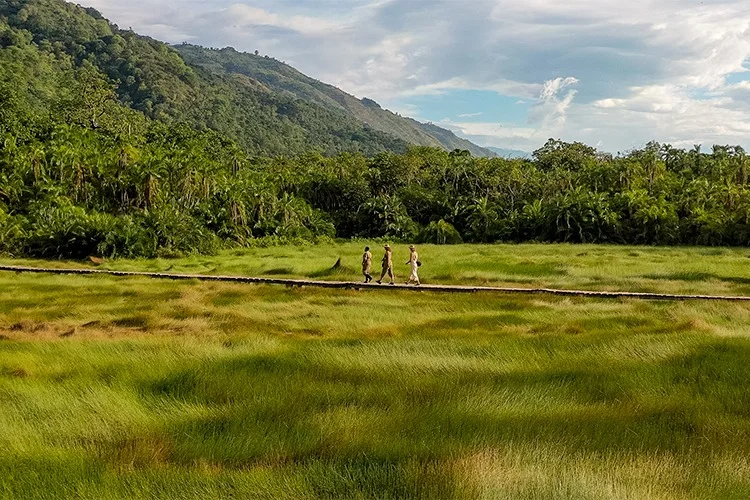
Semuliki National Park enjoys a tropical equatorial climate, owing to its location along the Uganda–Congo border and its relatively low elevation, which ranges between 670 and 760 meters above sea level. Unlike Uganda’s montane parks such as Bwindi or Mgahinga, Semuliki is characterized by warm and humid conditions almost year-round. The forest canopy retains heat, while the presence of the Semuliki River and swampy floodplains ensures a high level of humidity.

Temperatures remain fairly stable, typically ranging between 18°C and 30°C. This consistency makes Semuliki accessible throughout the year, though the forest environment responds dramatically to seasonal rainfall. It is this rainfall pattern—rather than temperature—that defines the rhythm of life in the park and determines the optimal time for different kinds of experiences.

Rainfall Patterns

Rainfall in Semuliki is bi-modal, with two distinct wet seasons separated by drier intervals. Heavy rains occur from March to May and again from September to November. During these periods, the park transforms into a lush, vibrant paradise, with swollen streams, intense greenery, and an explosion of bird activity. However, trails can become muddy, riverbanks slippery, and access more challenging.

The drier months span from December to February and from June to August. These seasons bring relatively less rainfall, easier trail navigation, and better overall accessibility. Wildlife movements also become easier to track, while the clearer skies provide excellent visibility for photography and birdwatching.

Dry Season: December to February and June to August

Ease of Exploration

The dry seasons are widely regarded as the best time to visit Semuliki National Park. The reduced rainfall makes the forest trails, particularly the Kirumia Trail and the Sempaya Trail, more accessible. Hiking becomes less strenuous as the mud recedes, and the risk of slippery slopes diminishes. Visitors find it easier to cover longer distances, allowing them to penetrate deeper into the rainforest and reach diverse habitats.

Birdwatching Opportunities

For birdwatchers, the dry months offer unparalleled clarity. The reduced foliage density allows for better visibility into the canopy and understory, enabling birders to spot elusive species such as the white-crested hornbill, yellow-throated cuckoo, and blue-billed malimbe. Raptors such as the Congo serpent eagle can be observed soaring against clear blue skies, while sunbirds and greenbuls become more conspicuous as they forage in open areas.

The dry months also coincide with increased vocal activity among many bird species. With reduced rain noise in the forest, bird calls resonate more clearly, assisting in identification and enhancing the immersive experience.

Wildlife and Primates

Semuliki is home to primates such as the red-tailed monkey, black-and-white colobus, and grey-cheeked mangabey. During the drier months, primates are often more active near forest edges, where fruiting trees become accessible. Wildlife observation becomes more straightforward as visibility improves in the less-dense foliage.

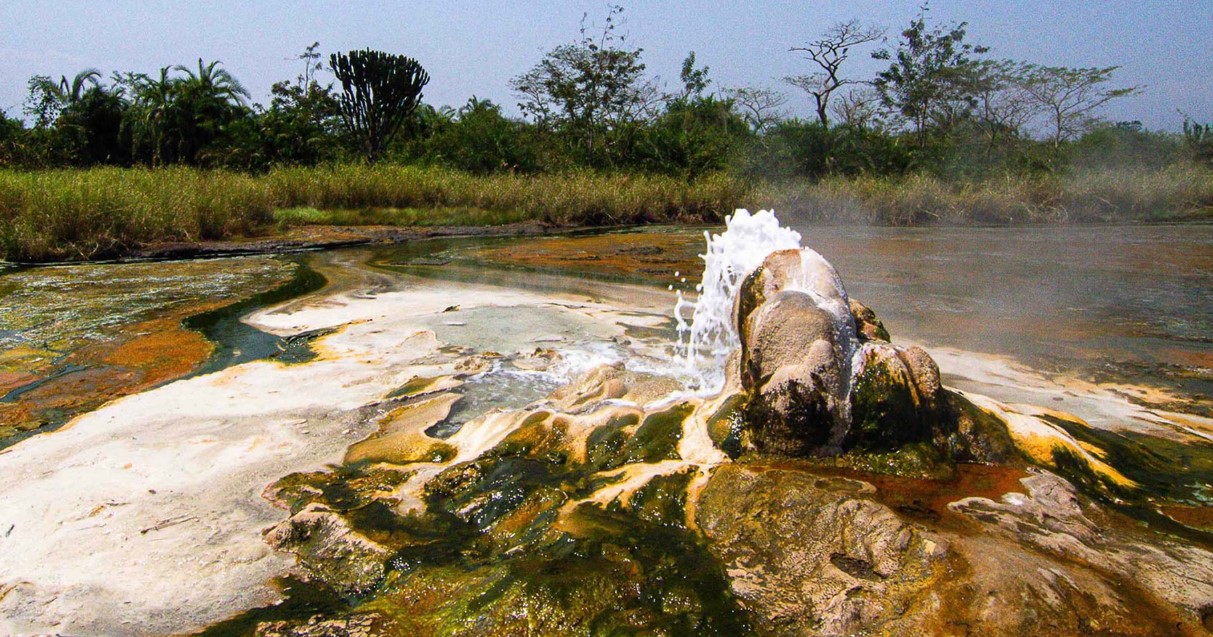
The famous Sempaya Hot Springs are also easier to access during this season, and the surrounding clearings become excellent vantage points for watching both birdlife and primates in the nearby forest canopy.

Photography and Scenery

Photographers find the dry seasons particularly rewarding. The air is clearer, with reduced mist, making forest landscapes and river scenes more vivid. Sunlight penetrates through the canopy, creating dramatic contrasts of light and shadow, perfect for capturing both wildlife and forest scenery.Best Time to Visit Semuliki National Park
Wet Season: March to May and September to November

A Vibrant, Lush Paradise

Though more challenging in terms of accessibility, the wet seasons transform Semuliki into a spectacularly lush environment. The rains rejuvenate the forest, triggering fresh growth, blooming flowers, and an abundance of insects that in turn attract insectivorous bird species. For the traveler willing to embrace muddy trails and occasional downpours, the rewards can be immense.

Birding Riches in the Wet Months

The wet seasons coincide with heightened bird activity. Many species enter breeding cycles during this period, and the forest resonates with songs and courtship displays. Migratory birds from the Palearctic also arrive, adding seasonal variety to the already impressive checklist. Birdwatchers who visit in the rains often encounter species such as the yellow-throated nicator or the elusive Nkulengu rail, which are more vocal and active during this time.

Although photography becomes more challenging due to mist and cloud cover, the richness of bird behavior compensates with rare and rewarding sightings.

Challenges of the Wet Season

The rains bring inevitable difficulties. Trails, particularly the Kirumia Trail, can become extremely muddy and challenging to navigate. Streams may swell, and crossings can be treacherous. Hikes take longer, and the likelihood of leeches, insects, and damp discomfort increases. Yet, for seasoned adventurers and dedicated birders, these challenges are part of the authentic rainforest experience.

Month-by-Month Guide to Visiting Semuliki

December to February

This period marks the long dry season. It is considered the most favorable time for general tourism, offering the best combination of accessibility and comfort. Birdwatching is excellent, primates are easily observed, and cultural tours to nearby Batwa and Bamba communities are unhindered by rainfall.

March to May

This season ushers in the long rains. While conditions become wetter, birders are rewarded with heightened activity and breeding displays. The forest scenery becomes enchanting, filled with fresh greenery and renewed vibrancy. For adventure seekers, this is a time when Semuliki reveals its raw, untamed essence.

June to August

The short dry season returns, again providing excellent accessibility. This is an ideal time for first-time visitors, as it combines good weather with consistently rewarding wildlife and bird sightings. Photography, in particular, flourishes under clearer skies.

September to November

The short rains descend, enriching the forest with fresh growth. Trails can be challenging, but birders find this season equally rewarding as migratory species arrive, adding an extra dimension to birdwatching expeditions. Travelers prepared for wetter conditions discover the park in one of its most dramatic moods.

Cultural and Scenic Considerations

Visiting Semuliki is not only about wildlife and birding; it is also an immersion into the cultural fabric of western Uganda. The Batwa pygmies and Bamba people have lived in and around the forest for centuries, their traditions deeply intertwined with the land. Seasonal shifts influence cultural experiences as well. Festivals, agricultural practices, and community activities vary across the year, and visitors during different months may witness unique aspects of local life.

The dramatic backdrop of the Rwenzori Mountains, often visible from the park, also changes with the seasons. During the dry months, the snow-capped peaks are seen more clearly, offering breathtaking scenery that enriches the overall experience.

Choosing the Best Time: A Balanced Perspective

The dry seasons remain the most practical and popular times to visit Semuliki National Park, offering easier access, clearer views, and comfortable exploration. However, the wet seasons hold their own allure, especially for passionate birders and adventurers who seek authentic rainforest immersion. Ultimately, the best time depends on the traveler’s priorities. Those who prioritize comfort and accessibility may prefer December to February or June to August, while those who wish to experience heightened bird activity and raw natural vibrancy may embrace March to May or September to November.

Planning Your Journey

Semuliki National Park is a sanctuary where time seems to stand still, where the forest whispers the stories of centuries, and where every season carries its own beauty and mystery. Whether one visits in the clear sunshine of the dry months or under the dramatic rainfall of the wet seasons, the park never ceases to amaze with its rich birdlife, geothermal wonders, primates, and cultural heritage.

The best time to visit is therefore not simply about weather but about what one seeks in an African journey. For a seamless, memorable, and enriching experience in Semuliki and beyond, travelers are encouraged to entrust their safaris to WildHorn Africa, a dedicated tour provider committed to showcasing the wonders of Uganda and the continent at large.
Primate Tracking in Semuliki National Park

Primate Tracking in Semuliki National Park

By Travel stories and blogs, Adventure holidays, Primate holidays, Safari holidays, Uganda travel guides, Wildlife holidays

Primate Tracking in Semuliki National Park. Into the Realm of the Forest Dwellers

At the heart of Uganda’s western frontier, nestled between the Rwenzori Mountains and the Congo Basin lowlands, lies a world where time seems untouched by modern rhythms—Semuliki National Park. This is a sanctuary where the whisper of the rainforest, the rush of the Semuliki River, and the distant calls of unseen creatures create an atmosphere unlike any other. Though widely celebrated as Uganda’s birding paradise, Semuliki is equally revered for a different yet equally thrilling adventure—primate tracking.

With over eight primate species inhabiting its dense rainforests, Semuliki offers one of the most immersive encounters with some of humanity’s closest relatives. To walk under the towering canopy, hearing rustles above and catching fleeting glimpses of fur and tails, is to step into a timeless drama of survival, play, and coexistence. Every tracking experience unfolds differently, shaped by the forest’s moods, the animals’ behaviors, and the patience of the tracker.

Primate tracking in Semuliki is not merely an excursion; it is a journey into the heart of Africa’s living heritage, where every encounter tells a story of adaptation, intelligence, and ecological balance.

The Unique Setting of Semuliki for Primate Encounters

A Distinctive Rainforest Environment

Unlike most of Uganda’s protected forests, Semuliki is an extension of the Ituri Rainforest of the Democratic Republic of Congo. This gives it a lowland tropical rainforest ecosystem rarely found elsewhere in East Africa. The park’s altitude, between 670 and 760 meters above sea level, creates a warm, humid climate that supports an array of species more typical of Central Africa than Uganda.

The dense vegetation, interspersed with swampy areas and riverine habitats, provides an ideal home for primates. The tall trees offer fruiting canopies, while the understory shelters insectivorous species. The ecological diversity ensures that primates of different diets and habits thrive within the same environment, making Semuliki a hotspot for tracking opportunities.

A Crossroads of Biodiversity

Semuliki is a biological crossroads, where East and Central African species overlap. This results in a primate community that reflects extraordinary variety. For travelers, this means the chance to encounter not only the familiar faces of Uganda’s monkeys but also species rarely seen in other parks.

The Primates of Semuliki National Park

Olive Baboons

The olive baboon is among the most conspicuous primates in Semuliki. Large troops roam the forest edges and savanna fringes, recognizable by their expressive faces and social dynamics. Observing baboons is always fascinating, as their behavior mirrors complex hierarchies, grooming rituals, and playful antics. Their adaptability allows them to thrive in both open and forested areas, often offering some of the most accessible sightings for trackers.

Red-tailed Monkeys

The red-tailed monkey, with its striking chestnut-red tail and white facial markings, is one of the most elegant species of Semuliki. Agile and arboreal, these monkeys are frequently seen leaping between branches in search of fruits, seeds, and insects. They often form mixed-species troops with other monkeys, enhancing the spectacle for trackers who may encounter multiple species at once.

Black-and-white Colobus Monkeys

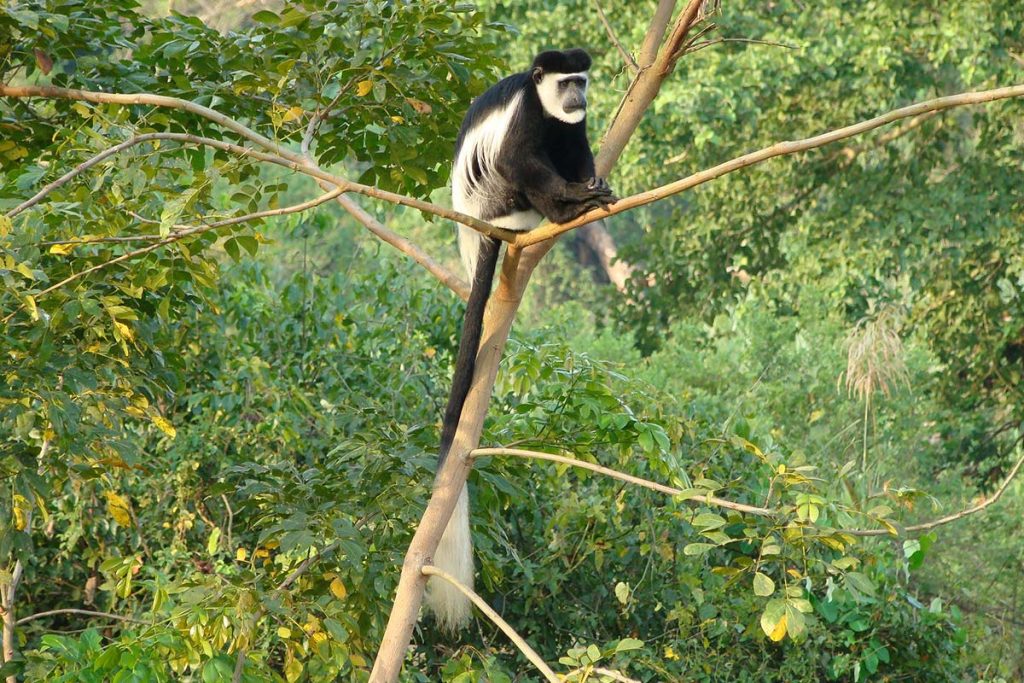
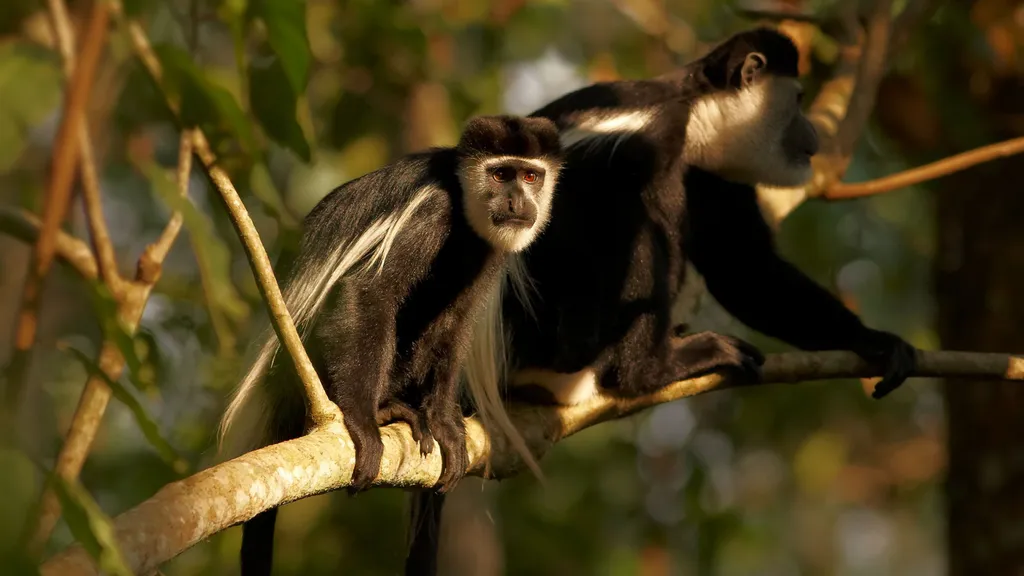
The black-and-white colobus is among the most iconic primates of African forests. Their long, flowing white mantles and tails make them visually striking against the green canopy. These leaf-eating specialists are quieter than other monkeys, often resting in groups high in the trees. Tracking them requires patience, but the reward is the chance to watch their graceful movements and social bonds.Primate Tracking in Semuliki National Park

Grey-cheeked Mangabeys

The grey-cheeked mangabey is another highlight for trackers. Known for their loud whooping calls, these monkeys are highly active and move in sizable troops. Their playful, curious nature makes them particularly engaging to observe, as they forage for fruits and seeds in the mid-levels of the forest.

De Brazza’s Monkeys

Among the rarer species in Semuliki, the De Brazza’s monkey is distinguished by its white beard and orange crown. Often shy and elusive, they are found near swampy areas and along the river. Their cryptic behavior means that sightings are considered a special reward for trackers who dedicate time to quieter, patient observation.

Vervet Monkeys

The vervet monkey thrives in more open woodland habitats within the park. Their adaptable nature makes them common, but their social interactions and playfulness continue to fascinate trackers. Vervets are excellent indicators of predator presence, often raising alarm calls that ripple across the forest when danger is near.

Pottos

While less conspicuous than diurnal species, the potto adds a nocturnal dimension to primate tracking in Semuliki. These slow-moving, nocturnal primates are often observed during night walks, clinging to branches and hunting insects. Their large eyes and deliberate movements make them particularly memorable for those fortunate enough to encounter them under torchlight.

Chimpanzees of Semuliki

Although not as habituated as in Kibale or Budongo, small populations of chimpanzees inhabit Semuliki. Their presence is often indicated by calls, distant drumming, or nests seen in trees. Spotting chimps in Semuliki is more challenging due to the dense forest, but the possibility adds a layer of excitement to every tracking expedition. For researchers and dedicated trackers, the chance to glimpse these great apes in such a raw, unspoiled environment is profoundly moving.

The Experience of Primate Tracking

Preparation and Guidance

Primate tracking in Semuliki begins with guidance from experienced rangers and local trackers. These individuals, deeply familiar with the forest, interpret subtle signs—fresh droppings, broken branches, distant calls—to lead visitors toward active groups. Their expertise transforms the experience, ensuring that each walk becomes both an educational journey and an adventure.

The Rhythm of the Forest

Tracking primates is as much about embracing the rhythm of the forest as it is about the animals themselves. Mornings often begin with a chorus of calls, signaling the start of activity. As the sun rises, monkeys become more visible, feeding, grooming, and playing. Midday often brings quieter periods, while evenings again resonate with activity as primates settle into resting sites.

The unpredictability of the encounters adds to the allure. A troop may suddenly emerge above a trail, or a baboon group may be found foraging in an open clearing. Patience, attentiveness, and respect for the forest’s pace are essential elements of the experience.

An Immersive Encounter

Unlike safari game drives, primate tracking requires travelers to move on foot, becoming part of the forest. The sounds, smells, and textures of the environment become central to the experience. The rustle of leaves, the scent of damp earth, and the sight of monkeys swinging overhead create an immersion that is both sensory and emotional. Each encounter feels personal, as if stepping briefly into the world of creatures who have thrived here for millennia.

The Role of Primate Tracking in Conservation

Primate tracking in Semuliki carries profound conservation significance. By attracting eco-conscious visitors, the activity generates revenue that supports the protection of the forest and its inhabitants. It also provides employment for local communities, reducing pressures on the forest from unsustainable practices.

Moreover, the presence of tourists underscores the value of primates as living treasures, fostering a culture of conservation among both locals and international visitors. Each successful tracking expedition becomes part of a broader effort to ensure that Semuliki’s primates continue to thrive in their natural habitats.

Cultural Dimensions of Primate Tracking

The human presence in and around Semuliki has shaped the ways primates are understood and encountered. The Batwa pygmies and Bamba people have lived alongside the forest’s primates for generations. Their folklore often intertwines with monkey behavior, offering cultural insights that enrich tracking expeditions.

Local guides sometimes share these stories during tracking experiences, adding layers of meaning to encounters. Observing a troop of colobus monkeys becomes more than a wildlife moment; it becomes an entry point into the cultural narratives that bind people and nature together in this region.

Best Time for Primate Tracking in Semuliki

The dry seasons, from December to February and June to August, provide the most favorable conditions for primate tracking. Trails are drier and easier to navigate, making it possible to reach deep into the forest where primates are most active. Visibility is also improved, with less dense foliage and clearer skies.

During the wet seasons, from March to May and September to November, primate tracking remains rewarding but more challenging. The forest becomes slippery and muddy, requiring greater endurance. Yet, the rains also bring fresh growth, abundant fruiting, and heightened primate activity, making sightings more dynamic and behaviorally rich. For those willing to embrace the challenges, the wet season offers some of the most vibrant tracking experiences.

The Emotional Power of Tracking Primates

Primate tracking is not solely about observation; it is about connection. Watching a mother colobus cradle her infant, hearing the playful calls of red-tailed monkeys, or catching sight of a chimpanzee nest evokes profound reflections on the kinship between humans and these intelligent beings.

The experience often leaves visitors with a renewed sense of respect for the delicate balance of ecosystems and the role primates play in them. It is not unusual for travelers to describe their encounters as transformative, reshaping their understanding of nature and their place within it.

A Journey Beyond the Ordinary

Primate tracking in Semuliki National Park is an adventure that transcends the ordinary boundaries of tourism. It is a journey into the dense, mysterious rainforests of western Uganda, where every step reveals a new secret, every sound carries meaning, and every encounter with a primate deepens the bond between humans and nature.

From the boisterous baboons to the elusive De Brazza’s monkey, from the graceful colobus to the shadowy potto, Semuliki offers an extraordinary theater of life that rewards those who seek patience, respect, and curiosity. More than an activity, primate tracking here is a reminder of Africa’s enduring wilderness, of the resilience of its creatures, and of the responsibility humanity bears to protect them.

For those ready to embark on this remarkable experience, it is recommended to plan with trusted experts who understand the rhythm of Africa’s wild places. For a seamless, insightful, and unforgettable safari in Semuliki and across Uganda, travelers are encouraged to book their journeys with WildHorn Africa, a dedicated partner in unveiling the continent’s treasures.

Cultural Tours with the Batwa in Semuliki

Cultural Tours with the Batwa in Semuliki

By Travel stories and blogs, Adventure holidays, Family holidays, Group holidays, Primate holidays, Safari holidays, Uganda travel guides

Cultural Tours with the Batwa in Semuliki. A Journey into the Heart of an Ancient Culture

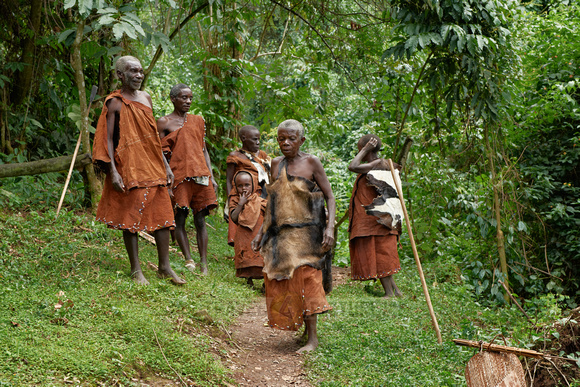
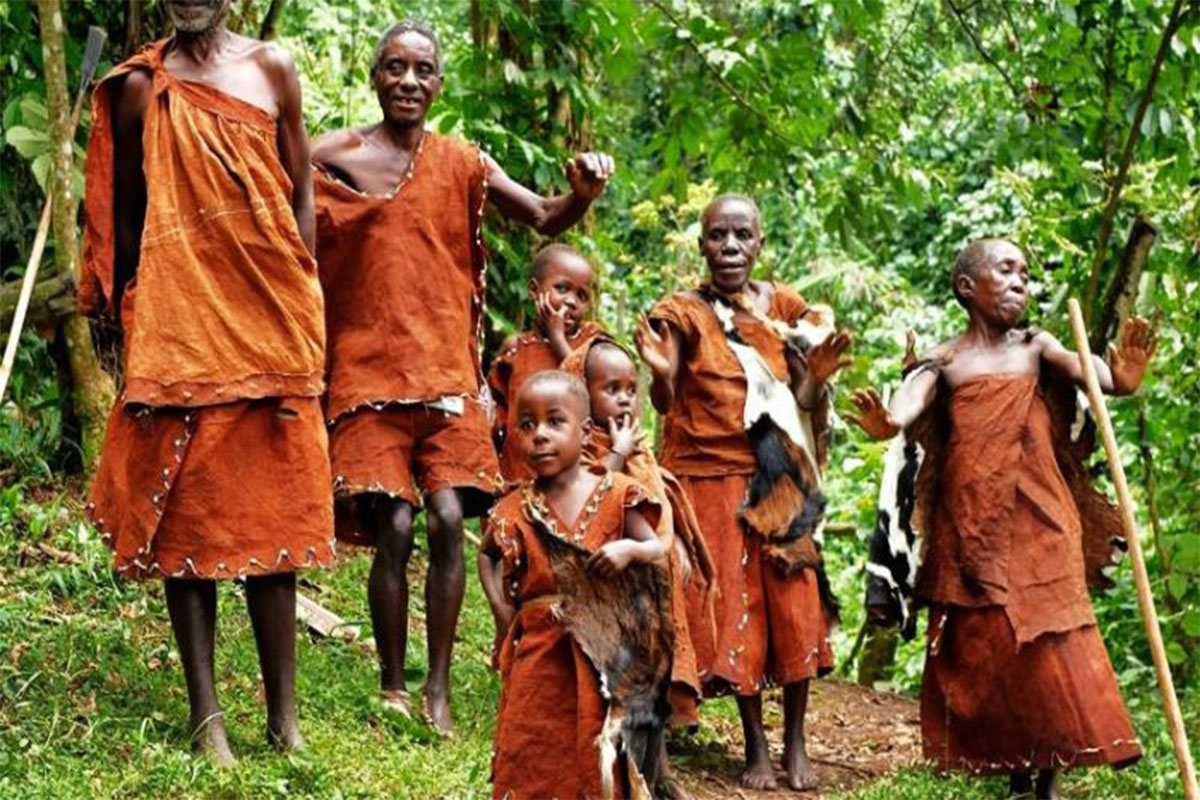
In the shadow of the Rwenzori Mountains and within the vast green embrace of Semuliki National Park, lies a human story as rich and enduring as the rainforest itself. Beyond the whispers of rustling leaves, the songs of rare birds, and the chatter of playful monkeys, there exists a cultural heartbeat that has pulsed through this land for centuries—the story of the Batwa people. Known as one of Africa’s oldest surviving indigenous groups, the Batwa are more than a community; they are living custodians of traditions, knowledge, and ways of life that are intricately woven into the forests of Semuliki.

To engage in cultural tours with the Batwa is to step into a different dimension of Africa’s heritage. It is to go beyond the safari and beyond the wildlife, into a human experience that reveals how people and forest can exist in profound harmony. Every song, every dance, every shared tale by the fire is a bridge across time, connecting modern travelers with the rhythms of an ancient world.

Semuliki is often celebrated for its wildlife treasures, its primate encounters, and its birding richness. Yet, it is in the cultural immersion with the Batwa that one finds some of the most transformative experiences, where visitors leave not only with memories but with lessons that speak to humanity’s shared origins and resilience.

The Batwa People: Guardians of the Forest

Origins and Identity

The Batwa, sometimes referred to as pygmies, are among the earliest known inhabitants of the Central African forests. Their roots trace back thousands of years, long before national borders and modern societies reshaped Africa’s landscapes. Traditionally, they lived as hunter-gatherers, depending on the forest for food, medicine, and shelter. For them, the forest was not simply a resource but a sacred space, alive with spirits and meaning.

In Semuliki, the Batwa identity remains strongly tied to the forest, even though modern pressures have changed many aspects of their daily lives. They are known for their intimate knowledge of the ecosystem—understanding which plants cure illnesses, which roots are edible, and which paths lead to hidden clearings. This knowledge, passed orally across generations, forms the backbone of their cultural identity.

A Way of Life Intertwined with Nature

The Batwa lived in small, mobile communities, building temporary shelters from leaves and branches. Hunting small game, collecting wild honey, and gathering fruits were part of their survival. Music, dance, and storytelling were equally central, serving as both entertainment and a means of preserving oral history. Every act—from making fire to preparing herbal remedies—was deeply connected to the forest.

Although modern challenges have shifted their lifestyle, cultural tours allow visitors to witness and experience aspects of this heritage firsthand. By engaging with the Batwa, travelers encounter not only a people but a worldview that treats nature as a living companion rather than a resource to be exploited.

The Experience of a Batwa Cultural Tour

A Welcome of Song and Dance

Visitors to the Batwa communities near Semuliki are often welcomed with traditional music and dance. The rhythm of drums, the clapping of hands, and the voices raised in ancient songs create an atmosphere of warmth and celebration. The dances are not merely performances but expressions of identity, echoing rituals once tied to hunting, healing, or celebrating life events.

The participatory nature of these welcomes draws travelers into the experience. Being invited to dance alongside Batwa performers transforms the encounter from observation into shared joy, bridging cultural differences through rhythm and movement.

Storytelling by the Elders

Central to the Batwa experience is the oral tradition of storytelling. Elders recount tales of creation, of the spirits of the forest, and of the animals that share their home. These stories are not only entertaining but also instructional, carrying lessons about respect, bravery, and survival.

For visitors, these moments provide a rare glimpse into the intangible heritage of the Batwa. The cadence of the voices, the fire crackling in the background, and the weight of centuries-old wisdom create a profound sense of connection with a culture that has endured against immense odds.

Demonstrations of Traditional Skills

Cultural tours often include demonstrations of the skills that sustained Batwa communities for generations. Visitors watch as fire is kindled without matches, as herbal medicines are prepared from forest plants, or as hunting techniques are explained. Each skill embodies a deep understanding of the environment, honed over centuries of living in symbiosis with the forest.

The making of crafts, such as baskets or tools, further illustrates the ingenuity of the Batwa. Every item is both functional and symbolic, carrying within it the knowledge of resource use and the artistry of a people connected to their land.

Music as a Language of the Spirit

The Batwa are renowned for their unique music traditions, often performed with wooden flutes, drums, and vocal harmonies that imitate the sounds of the forest. Music plays a vital role in ceremonies, whether to celebrate a successful hunt, to mourn loss, or to invoke blessings from ancestral spirits.

To listen to Batwa music in the setting of Semuliki is to hear an ancient dialogue between people and forest. Visitors often describe these performances as hauntingly beautiful, stirring emotions that transcend cultural and linguistic boundaries.

The Significance of Batwa Cultural Tours

Preserving a Disappearing Heritage

Modern pressures—land disputes, marginalization, and changing lifestyles—have threatened the survival of Batwa traditions. Cultural tours have emerged not only as a way for visitors to experience this heritage but also as a lifeline for the community. The revenue generated from tourism helps sustain cultural practices, support education, and provide health care.

By participating in these tours, travelers become active contributors to the preservation of one of Africa’s most endangered cultures. Each visit affirms that the Batwa’s knowledge and traditions hold value not only for themselves but for humanity at large.

Fostering Cross-Cultural Understanding

Cultural tours with the Batwa are not staged performances but opportunities for genuine exchange. Travelers leave with a deeper appreciation of the resilience, dignity, and wisdom of the Batwa people. At the same time, the Batwa gain recognition and respect for their identity in a world that often overlooks indigenous voices.

This mutual exchange fosters cross-cultural understanding, reminding visitors of the diversity of human existence and the many ways societies can adapt to their environments.Cultural Tours with the Batwa in Semuliki

Challenges Facing the Batwa Today

Displacement and Marginalization

Like many indigenous groups, the Batwa have faced displacement from ancestral lands due to conservation policies and land ownership conflicts. These changes have often forced them into unfamiliar lifestyles, far removed from the forest that shaped their culture. The struggle to retain identity in the face of modern pressures remains a central challenge.

Poverty and Limited Access to Services

Without land and with limited opportunities for employment, many Batwa communities face poverty. Access to education, health care, and social services is often restricted, further deepening their vulnerability. Tourism offers a pathway toward improved livelihoods, but broader structural support remains necessary for long-term stability.

Cultural Erosion in a Modern World

The younger generation of Batwa faces the tension between preserving traditions and adapting to modern society. With increasing integration into mainstream cultures, some elements of Batwa heritage risk being lost. Cultural tours help counter this erosion by creating spaces where traditions are practiced, celebrated, and valued.

The Role of Semuliki in Cultural Tourism

Semuliki National Park is uniquely positioned to highlight Batwa culture. Unlike other parks that focus primarily on wildlife safaris, Semuliki combines natural wonders with human stories. The presence of the Batwa near the park offers travelers the rare chance to experience both biodiversity and cultural diversity in a single journey.

The park’s management, in collaboration with local communities, has recognized the value of cultural tourism as part of its broader mission. By integrating Batwa experiences into the visitor experience, Semuliki demonstrates how conservation and culture can coexist in ways that benefit both people and environment.

Best Time for Cultural Tours with the Batwa

Cultural tours with the Batwa can be enjoyed throughout the year. However, the experience often blends with other activities in Semuliki, such as wildlife viewing or primate tracking, which are most favorable during the dry seasons from December to February and June to August. During these times, access to Batwa communities is easier, with less disruption from heavy rains.

The wet seasons, while more challenging, provide an equally rewarding experience, as the lushness of the forest amplifies the authenticity of the cultural setting. Regardless of the season, the heart of the experience remains unchanged—the chance to encounter the living heritage of the Batwa.

The Transformative Power of Cultural Immersion

Cultural tours with the Batwa in Semuliki often leave visitors profoundly moved. To witness the resilience of a people who have endured centuries of change yet maintained their identity is to encounter the very essence of human strength. The experience transcends tourism, becoming a journey of reflection and understanding.

Travelers return home with more than photographs; they return with stories, lessons, and a renewed sense of connection to humanity’s shared heritage. The Batwa remind us that progress need not erase tradition and that ancient ways of life hold wisdom that modern societies still desperately need.

An Invitation to Experience Living Heritage

Cultural tours with the Batwa in Semuliki National Park are not ordinary excursions. They are encounters with history, resilience, and the spirit of a people who remain deeply tied to the natural world. To share in their songs, to listen to their stories, and to witness their skills is to experience a living heritage that is both fragile and profound.

By choosing to engage with the Batwa, travelers not only enrich their own journeys but also contribute to the preservation of a culture that continues to inspire despite immense challenges. These tours are a reminder that Africa’s treasures are not only found in its landscapes and wildlife but also in the communities that keep ancient traditions alive.

For those seeking more than a safari, for those yearning to experience the human heart of Africa, there is no journey more rewarding than immersing oneself in the world of the Batwa. To ensure a seamless, respectful, and meaningful cultural encounter, it is recommended to plan with experts who understand the delicate balance of heritage and tourism. For an unforgettable experience in Semuliki and beyond, travelers are encouraged to book their African tours and safaris with WildHorn Africa, a trusted guide to the continent’s most authentic adventures.

Flora and Fauna of Semuliki Forest Explained

Flora and Fauna of Semuliki Forest Explained

By Travel stories and blogs, Primate holidays, Safari holidays, Uganda travel guides, Wildlife holidays

Flora and Fauna of Semuliki Forest Explained

Semuliki National Park, nestled in the remote Bwamba County of Bundibugyo District in western Uganda, stands as a testament to Africa’s rich biodiversity. Often overshadowed by more renowned parks, Semuliki offers a unique glimpse into a world where nature thrives in its most pristine form. This park, established in 1993, is a sanctuary for a myriad of species, many of which are rare or endemic to the region. Its significance is underscored by its designation as a UNESCO Biosphere Reserve, highlighting its global ecological importance.

Ecological Significance

A Confluence of Biomes

Semuliki’s unique position at the intersection of the Guinea-Congo and East African biomes results in a rich tapestry of flora and fauna. This convergence has led to the park hosting species that are typically found in Central Africa, making it a critical area for biodiversity conservation. The park’s landscape is characterized by flat to gently undulating terrain, with elevations ranging from 670 to 760 meters above sea level. This topography, combined with an average annual rainfall of 1,500 mm, creates ideal conditions for the thriving ecosystems within.

Rainforest Ecosystem

As East Africa’s only lowland tropical rainforest, Semuliki’s vegetation is predominantly medium-altitude moist evergreen to semi-deciduous forest. The dominant tree species is the Uganda ironwood (Cynometra alexandri), which forms the backbone of the forest structure. Interspersed among these are various other tree species, including swamp forest communities, which contribute to the park’s rich plant diversity. The forest’s dense canopy and layered understory provide habitats for a multitude of species, both flora and fauna.

Flora of Semuliki Forest

Tree Species Diversity

Semuliki boasts over 331 recorded tree species, with 24 considered restricted and three endangered. This diversity is a testament to the park’s ecological richness and the variety of habitats it supports. Notably, the forest is home to several endemic plant species, including seven flowering plants that are unique to the region. These species contribute to the park’s status as a biodiversity hotspot and underscore the importance of its conservation.

Epiphytes and Understory Flora

The forest floor and understory are rich in epiphytic plants, including orchids, ferns, and mosses. These plants play a crucial role in the ecosystem by contributing to nutrient cycling and providing food and shelter for various organisms. The dense vegetation also supports a variety of insect species, which in turn serve as food sources for higher trophic levels.

Medicinal and Cultural Plants

Beyond their ecological roles, many plant species in Semuliki have cultural and medicinal significance for the local communities. The indigenous Basua people, for instance, have a deep knowledge of the forest’s plant life, using various species for traditional medicine, rituals, and daily sustenance. This symbiotic relationship between the forest and its human inhabitants highlights the intertwined nature of cultural heritage and biodiversity.

Fauna of Semuliki Forest

Mammals

Semuliki is home to over 60 mammal species, including forest elephants, leopards, hippos, and various antelope species. The forest elephants (Loxodonta cyclotis) are particularly notable, being smaller and more elusive than their savanna counterparts. Other significant mammal species include the African buffalo, pygmy flying squirrel, and various species of duikers, such as the bay duiker (Cephalophus dorsalis). These mammals play vital roles in the ecosystem, from seed dispersal to maintaining the balance of predator-prey relationships.

Primates

The park is a haven for primate enthusiasts, hosting nine species. These include the red-tailed monkey, vervet monkey, and the elusive chimpanzee (Pan troglodytes). The presence of these primates underscores the forest’s ecological health and provides opportunities for research and conservation efforts. Chimpanzees, in particular, are of significant interest due to their intelligence and complex social structures.

Birds

Semuliki is a birdwatcher’s paradise, with over 441 recorded bird species, representing 40% of Uganda’s total bird species and 66% of the forest bird species found in the country. Among these are 35 Guinea-Congo forest biome species, such as the spot-breasted ibis and Hartlaub’s duck, which are rare in East Africa. The park also hosts 12 species with extremely restricted ranges, including the Western bronze-naped pigeon and yellow-throated cuckoo. Additionally, 23 Albertine Rift endemic species have been recorded, adding to its global birding significance.

Insects and Other Invertebrates

The park’s insect diversity is equally impressive, with over 490 species of butterflies alone. This includes 46 species of forest swallowtails and charaxes, representing 75% of Uganda’s total. The abundance of these insects is indicative of a healthy ecosystem, as they serve as pollinators and form the base of the food web for many other species.Flora and Fauna of Semuliki Forest Explained

Aquatic Life

The Semuliki River, which flows through the park, supports a variety of aquatic life. Species such as hippos and crocodiles are commonly found in its waters. The river’s ecosystem is intricately linked to the surrounding forest, with seasonal flooding influencing the distribution and behavior of both aquatic and terrestrial species.

Conservation Efforts and Challenges

Biodiversity Conservation

Semuliki’s rich biodiversity has attracted the attention of conservationists worldwide. Efforts are underway to protect the park’s unique ecosystems through sustainable tourism, research, and community engagement. The Uganda Wildlife Authority (UWA) plays a pivotal role in these initiatives, working closely with local communities and international partners to ensure the park’s long-term preservation.

Human-Wildlife Conflict

Despite conservation efforts, challenges persist. Human-wildlife conflict remains a significant issue, with local communities sometimes coming into conflict with wildlife over resources. Encroachment and illegal activities, such as poaching and logging, also threaten the park’s integrity. Addressing these challenges requires a collaborative approach that balances conservation goals with the needs and livelihoods of local communities.

Climate Change

Climate change poses an emerging threat to Semuliki’s ecosystems. Shifts in rainfall patterns and temperatures can affect species distributions and the timing of biological events, such as flowering and breeding. Monitoring and adaptive management strategies are essential to mitigate these impacts and ensure the resilience of the park’s ecosystems.

Activities and Attractions

Birdwatching

Given its rich avian diversity, birdwatching is a popular activity in Semuliki. The park’s varied habitats provide opportunities to observe a wide range of bird species, from elusive ground thrushes to vibrant hornbills. Guided birding tours are available, offering insights into the park’s birdlife and conservation efforts.

Nature Walks and Trails

Exploring Semuliki on foot allows visitors to immerse themselves in the forest’s sights and sounds. Trails such as the Kirumia Trail offer opportunities to observe wildlife, including primates and butterflies, and to learn about the park’s flora. Night walks are also available, providing a chance to see nocturnal species like bush babies and civets.

Cultural Experiences

Visitors to Semuliki can engage with the local Basua community, gaining insights into their traditional lifestyles and crafts. The Basua people have a deep connection to the forest, and their knowledge and practices offer valuable perspectives on sustainable living and conservation.

Semuliki National Park is a hidden gem in Uganda’s vast array of protected areas. Its unique blend of flora, fauna, and cultural heritage makes it a must-visit destination for nature enthusiasts and conservationists alike. Whether you’re an avid birdwatcher, a wildlife photographer, or someone seeking to connect with nature, Semuliki offers experiences that are both enriching and unforgettable.

For those planning to explore the wonders of Semuliki and beyond, consider booking your Africa tours and safaris through WildHorn Africa. Their expert guides and tailored itineraries ensure that your journey through Uganda’s natural treasures is both seamless and memorable.

Birdwatching in Semuliki: Over 400 Rare Species

Birdwatching in Semuliki: Over 400 Rare Species

By Travel stories and blogs, Bucket list holidays, Luxury holidays, Safari holidays, Uganda travel guides

Birdwatching in Semuliki: Over 400 Rare Species

A Paradise of Wings in Uganda’s Hidden Wilderness

In the western reaches of Uganda, where the Congo Basin rainforest stretches into the Albertine Rift Valley, lies a treasure that few birdwatchers can resist—Semuliki National Park. This extraordinary sanctuary, although smaller and less famous than some of Uganda’s other reserves, has earned global recognition as a birding paradise. More than 400 bird species have been recorded here, many of which are rare, elusive, and confined to the forests of Central Africa.

To step into Semuliki is to enter a world where the dawn chorus is unlike anywhere else in Uganda, where the forest canopy bursts into life with whistles, cackles, and trills from birds that cannot be seen in other parts of East Africa. Every turn of the trail brings the promise of a new species, every patch of sunlight on the forest floor may reveal flashes of color, and every pause in silence can be rewarded with the rustle of wings. For ornithologists, conservationists, and passionate travelers, birdwatching in Semuliki is not just an activity but a journey into one of Africa’s most exhilarating natural theaters.

The Unique Setting of Semuliki National Park

Semuliki National Park lies in Bundibugyo District, on the floor of the Rift Valley, covering 220 square kilometers of lowland tropical rainforest. Unlike Uganda’s other forests, which are largely montane or transitional, Semuliki is an extension of the Ituri Rainforest of the Democratic Republic of Congo, one of the oldest and most diverse forests in Africa.

This location makes the park ecologically distinct. It is not only home to species typical of Central Africa but also serves as a crossroads where Central and East African ecosystems merge. Its altitude, ranging between 670 and 760 meters above sea level, allows for conditions that favor lowland rainforest specialists rarely encountered elsewhere in Uganda. The Semuliki River, winding along the western border, further enriches the park by sustaining swampy floodplains and riparian habitats that attract aquatic and semi-aquatic birds.

The combination of forest, swamp, and river ecosystems creates a mosaic of habitats, each harboring its own assemblage of bird species. This is why Semuliki, despite its modest size, holds one of the highest densities of avian diversity in East Africa.

A Birding Haven: Over 400 Rare Species

Diversity Beyond Comparison

More than 441 bird species have been documented in Semuliki National Park. This accounts for nearly 40% of Uganda’s total bird species and two-thirds of its forest birds. The park is also the only place in East Africa where several Congo Basin endemics can be reliably observed, making it an indispensable destination for birdwatchers intent on expanding their life lists.

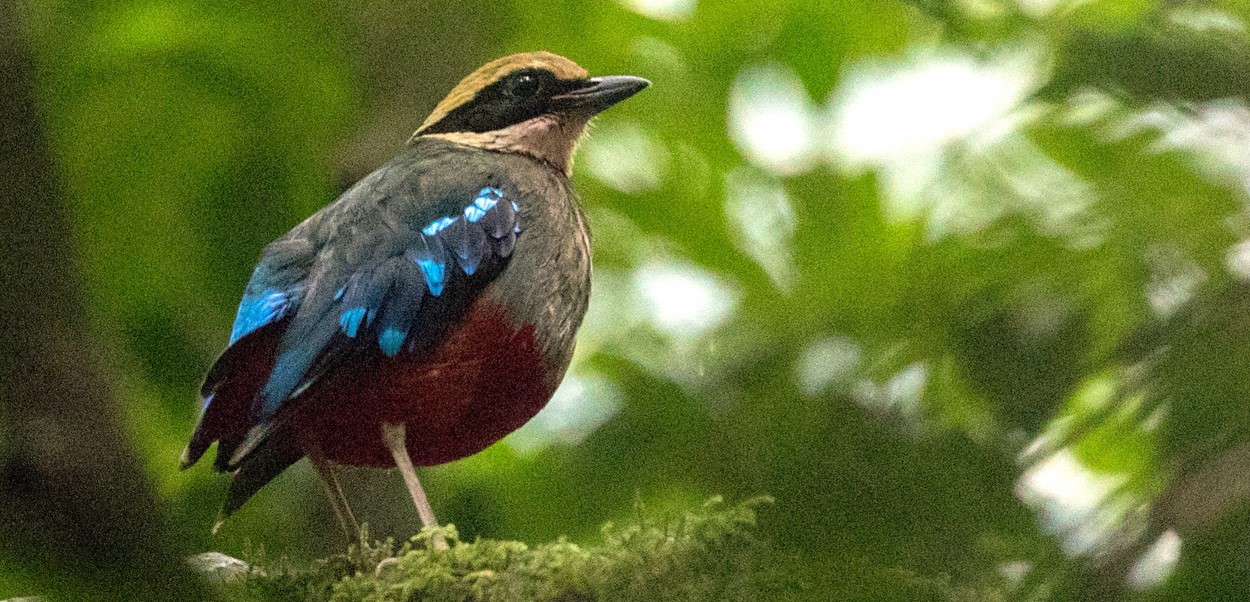
What sets Semuliki apart is not merely the number of species but the rarity and uniqueness of those found here. Birders who may already have explored Uganda’s savannah parks or montane forests are often astonished by the distinctiveness of Semuliki’s checklist. This is a place where species such as the Nkulengu rail, yellow-throated cuckoo, and blue-billed malimbe are not just possible but likely with patience and skilled guiding.

Rare and Endemic Species

The park is celebrated for hosting Central African endemics that extend only marginally into Uganda. Among the highlights are the Congo serpent eagle, an imposing raptor that soars above the canopy; the black-wattled hornbill, whose deep wingbeats echo across the forest; and the white-crested hornbill, recognizable by its striking head plumes and noisy calls.

Other rare sightings include the red-billed dwarf hornbill, the elusive piping hornbill, and the yellow-throated nicator. Colorful species such as the crested malimbe and the blue-billed malimbe dazzle with their plumage, while the Nkulengu rail, with its nocturnal booming calls, remains a prize for patient birders.

The presence of these species gives Semuliki its legendary reputation, making it a must-visit location not only for Uganda’s birding circuits but for Africa’s birdwatching scene as a whole.

Birding Habitats in Semuliki

The Rainforest Canopy

The dense rainforest canopy is perhaps the most rewarding yet challenging habitat for birdwatchers. Birds are often heard long before they are seen, their calls echoing from layers of foliage high above. Canopy specialists such as hornbills, turacos, and greenbuls dominate this layer. The challenge lies in spotting fleeting movements through the leaves, but the reward is immense when species like the white-crested hornbill or yellow-throated cuckoo are observed in clear view.

Swamps and Floodplains

The swampy stretches around the Semuliki River offer habitats for aquatic and semi-aquatic birds. Kingfishers, herons, and weaver species are common here, but so too are rarities such as the African dwarf kingfisher. The quiet edges of the river provide birders with easier observation opportunities compared to the dense forest trails.

Forest Understory

The shadowy understory of the rainforest hosts insectivorous species and shy ground dwellers. Birds like the Nkulengu rail and forest robin may be encountered here, often requiring stillness and patience to catch fleeting glimpses. Walking slowly along forest paths, one can often detect movement by the rustle of leaves or the flash of a wing near the forest floor.

Birding Trails and ExperienceBirdwatching in Semuliki: Over 400 Rare Species

The Kirumia Trail

The Kirumia Trail is the premier birding route in Semuliki. Stretching for 13 kilometers from the main road to the Semuliki River, it offers an all-day immersive experience through diverse habitats. Birders on this trail may record dozens of species, from canopy hornbills to understory specialists, making it the ultimate showcase of Semuliki’s avian wealth.

The Sempaya Trail

This shorter trail leads visitors to the famous Sempaya Hot Springs, but along the way it also provides rewarding birding opportunities. Species like the red-billed dwarf hornbill and piping hornbill are often spotted here, and the open clearings near the springs sometimes reveal raptors circling overhead.

The Red Monkey Trail

Located near the park’s eastern border, this trail is particularly productive for primates but also yields exciting birding encounters. Its more open forest structure allows for better light, making it easier to spot and photograph species such as the blue-billed malimbe.

he Birdwatching Atmosphere: An Immersive Encounter

Birdwatching in Semuliki is unlike the experience in savannah or grassland parks. The forest environment demands attentiveness and patience. Birds may remain hidden for long stretches, their presence betrayed only by calls or rustling movements. Yet the thrill of discovery is amplified by this challenge. Each sighting feels like a triumph, each new species a reward for perseverance.

The atmosphere of birding here is deeply immersive. Morning mists drift through the forest as the first calls ring out. Hornbills fly heavily across the canopy, while sunbirds flit between blossoms in patches of light. By mid-morning, the forest resonates with a symphony of trills, whistles, and cackles, an auditory feast even when visual sightings are few.

Afternoons often bring quieter moments, but birders know that patience can reveal gems—a malimbe constructing a nest, a raptor gliding silently overhead, or the sudden call of the Nkulengu rail as evening descends. Night walks, too, introduce a chorus of owls and nocturnal birds, completing the round-the-clock spectacle.

The Role of Skilled Guides

Birdwatching in Semuliki is enhanced immeasurably by the knowledge of experienced guides. Local guides possess intimate familiarity with bird calls, behavior, and habitats. Their ability to recognize subtle movements or mimic bird calls often makes the difference between missing or recording a rare species.

Guides also enrich the experience with cultural stories, ecological knowledge, and conservation insights, ensuring that birding is not only about checklists but also about a deeper understanding of the park’s living systems. For visitors new to Central African birds, the expertise of guides is invaluable in navigating the complexity of species identification.

Conservation Significance of Birdlife in Semuliki

The bird species of Semuliki are not merely attractions for tourism; they are indicators of ecological health and guardians of the forest’s future. Many of the park’s species are dependent on intact lowland rainforest, making their survival intrinsically linked to conservation efforts.

Birds play vital ecological roles as pollinators, seed dispersers, and pest controllers. The hornbills, for example, are essential for spreading the seeds of large forest trees, ensuring regeneration. Insects are kept in balance by insectivorous species, while nectar-feeding birds contribute to plant pollination.

The conservation of Semuliki’s birdlife is therefore a priority, not only for tourism but also for the long-term resilience of the ecosystem. Protection against deforestation, hunting, and habitat encroachment is central to ensuring that the forest continues to echo with the calls of its avian residents for generations to come.

Best Time for Birdwatching in Semuliki

Birdwatching in Semuliki can be rewarding throughout the year, but seasonal variations influence activity and accessibility.

The dry seasons from December to February and June to September offer easier hiking conditions and clearer views, making them popular for birders. Trails are more accessible, and visibility improves as foliage thins slightly.

The wet seasons, from March to May and October to November, transform the forest into a vibrant paradise, rich in insect life and flowering plants. This abundance stimulates bird activity, while migratory species may also be present. Although trails can become slippery, dedicated birders often find the wet months even more rewarding.

Regardless of season, the sheer diversity of birds ensures that every visit yields memorable encounters, whether it is the sight of a hornbill in flight or the song of a rare malimbe.

Birdwatching as Part of the Semuliki Experience

Although birdwatching is the defining feature of Semuliki, it is enriched by the park’s other attractions. The Sempaya Hot Springs offer dramatic geothermal wonders, while encounters with primates such as the black-and-white colobus monkey add variety to excursions. Cultural visits to nearby Batwa and Bamba communities deepen appreciation of how humans and the forest have coexisted for centuries.

This holistic experience ensures that birdwatching in Semuliki is not an isolated activity but part of a broader journey into Uganda’s cultural and natural heritage. The park becomes more than a birding checklist; it becomes a story of interconnected life, from the wings of hornbills to the rituals of local communities.

A Rare Treasure of Wings

Semuliki National Park is a place where the extraordinary diversity of birdlife converges with the beauty of ancient rainforests, creating an experience unlike anywhere else in East Africa. With more than 400 rare and remarkable species, many found nowhere else in Uganda, it stands as a beacon for birdwatchers seeking authenticity, rarity, and challenge.

To watch birds in Semuliki is to be immersed in an orchestra of wings and songs, where patience and attentiveness are rewarded with unforgettable encounters. Beyond the birds, it is a journey into the living heart of one of Africa’s oldest ecosystems, where cultural legends, geothermal wonders, and wildlife together shape an adventure that endures in memory.

Those who long to discover this avian paradise are encouraged to take their journey with trusted expertise. For seamless, enriching, and unforgettable safaris across Uganda and beyond, it is highly recommended to book your African tours with WildHorn Africa, a partner committed to unlocking the wonders of the continent.

Exploring Semuliki National Park: Uganda’s Birding Paradise

Exploring Semuliki National Park: Uganda’s Birding Paradise

By Travel stories and blogs, Family holidays, Safari holidays, Uganda travel guides

Exploring Semuliki National Park: Uganda’s Birding Paradise

A Hidden Gem of African Wilderness

Nestled in the remote western corner of Uganda, where the vast Congo Basin merges with the Albertine Rift Valley, lies Semuliki National Park, a sanctuary often described as Uganda’s birding paradise. Unlike the world-famous Bwindi Impenetrable or Queen Elizabeth National Park, Semuliki remains relatively untouched, offering travelers an intimate and authentic wilderness experience. It is a destination that escapes the gaze of mass tourism, quietly preserving a wealth of biodiversity and cultural richness that makes it truly exceptional.

The park is celebrated for its extraordinary birdlife, but its story is far richer than avian wonders alone. Ancient rainforests, meandering rivers, bubbling hot springs, diverse wildlife, and vibrant local communities together weave a narrative that speaks to the very essence of African wilderness. Visitors who step into Semuliki find themselves immersed in a realm where Central African rainforest meets East African savannah, creating a melting pot of ecosystems and species that cannot be found elsewhere in the region.

To explore Semuliki is to be captivated by nature in its purest form: the calls of exotic birds reverberating through the forest canopy, the shimmering haze of geothermal springs rising into the morning air, the soft rustle of primates leaping between branches, and the stories of indigenous communities whose lives remain deeply intertwined with the forest. This is not simply a national park; it is a living, breathing mosaic of nature and culture, preserved for those who venture into Uganda’s lesser-known frontiers.

Location and Geography: The Heart of the Rift Valley

Semuliki National Park is situated in Bundibugyo District, straddling Uganda’s western frontier with the Democratic Republic of Congo. Encompassing about 220 square kilometers, the park may be modest in size, but it is incredibly rich in ecological diversity. The Semuliki River, which meanders lazily along the park’s western boundary, serves as a natural demarcation line between Uganda and Congo. Its floodplains, swamps, and oxbow lakes foster habitats for numerous aquatic species, particularly migratory and resident birds.

The park lies at an altitude ranging between 670 and 760 meters above sea level, making it one of the few lowland tropical rainforests in East Africa. This distinguishes it from the montane forests of Bwindi or Kibale and creates conditions that mirror those of the vast Congo Basin. Its forests are, in fact, extensions of the Ituri Rainforest in Congo, one of the oldest surviving rainforests in the world, estimated to date back more than 25,000 years.

Surrounding the park are remarkable geographical features that frame its identity. To the northeast rise the mystical Rwenzori Mountains, their snow-capped peaks often veiled in clouds. To the west stretches the seemingly endless expanse of Congo’s Ituri, while the fertile Semliki Valley itself is a product of tectonic activity that carved the Rift Valley eons ago. This dramatic geography not only shapes the park’s scenery but also supports a remarkable array of ecosystems, from dense rainforest to riverine woodland and swamp.

The Rainforest Ecosystem: An Ancient Refuge

Semuliki National Park protects one of the few remaining true lowland rainforests in East Africa. Entering its forest is like stepping back in time, into an environment that has existed unchanged for millennia. The canopy towers above like an emerald cathedral, its high branches interwoven with lianas and epiphytes, while the understory teems with shrubs, fungi, and ferns. The air is thick with humidity, carrying the earthy scent of decaying leaves and the sweet fragrance of flowering plants.

This rainforest is not merely beautiful; it is also immensely productive, sustaining countless species. Over 400 bird species, more than 60 mammals, and an unrecorded abundance of insects, amphibians, and reptiles inhabit these forests. Many of these species are endemic to Central Africa, underscoring the park’s unique role as a bridge between East and Central African biodiversity.

Unlike Uganda’s montane forests, Semuliki’s lowland rainforest is easier to explore at ground level, allowing visitors to observe ecosystems in close proximity. Birders, in particular, find themselves immersed in habitats where every turn reveals new calls, colors, and movements. It is this intact and ancient ecosystem that gives Semuliki its reputation as a living museum of biodiversity.

Birding Paradise: The Crown Jewel of Semuliki

Among Semuliki’s greatest treasures is its reputation as one of the top birding destinations in Africa. With over 441 recorded species, the park accounts for nearly 40% of Uganda’s total bird species and almost 67% of the country’s forest birds. Such density and variety make it an unrivaled haven for ornithologists and birdwatching enthusiasts.

Endemic and Rare Species

Many of the species found in Semuliki are endemic to the Congo Basin, meaning that Uganda is the only East African country where they can be spotted. This gives birders an exceptional opportunity to record lifers without traveling deep into Central Africa. Among the most sought-after species are:

  • Nkulengu rail: A shy bird known for its loud, booming calls that often echo through the forest at night.

  • Congo serpent eagle: A striking raptor that soars gracefully above the canopy.

  • Black-wattled hornbill: A large and charismatic species often spotted flying in pairs across the forest.

  • White-crested hornbill: Recognizable by its unique crest and noisy calls.

  • Blue-billed malimbe: A colorful weaver species rarely found outside Central Africa.

  • Yellow-throated cuckoo and Crested malimbe: Both highly prized by birders for their rarity.

Beyond these, the park also shelters species such as the red-billed dwarf hornbill, piping hornbill, and the elusive African piculet, each adding to the richness of the birding checklist.

The Birding Experience

Birding in Semuliki is an experience that demands patience, skill, and a keen sense of observation. Guided walks along the Kirumia Trail, which stretches for about 13 kilometers through the heart of the forest, are particularly rewarding. Birders often spend hours along this trail, pausing frequently to listen for calls or spot movements in the canopy. Unlike open savannah birding, the forest environment makes every sighting a triumph, and the sense of discovery is heightened with each encounter.

What makes Semuliki especially appealing is that birding is not limited to one season. While certain migratory species arrive during specific months, the park’s endemic and resident birds remain active year-round. This ensures that birders, regardless of when they visit, are guaranteed a rewarding checklist.

Wildlife Beyond Birds

Although birds are the highlight, Semuliki National Park shelters an impressive variety of other wildlife. Over 60 species of mammals have been recorded, including some that are rarely seen elsewhere in Uganda.

The park is home to forest elephants, smaller and more elusive than their savannah counterparts. Their presence is often indicated by broken branches and footprints along muddy trails. Forest buffaloes, distinguishable by their darker coats, roam the swamps and floodplains. Antelope species such as the bay duiker and the rare water chevrotain add to the diversity, though their secretive nature makes sightings a rare privilege.

Primates also enrich Semuliki’s wildlife portfolio. Visitors may encounter black-and-white colobus monkeys, red-tailed monkeys, De Brazza’s monkeys, and occasionally even chimpanzees, though the latter are not habituated for tourism. Nocturnal primates such as pottos and galagos add an air of mystery during night walks.

Reptiles, amphibians, and insects abound, with species of butterflies alone numbering in the hundreds. Crocodiles and hippos are frequently seen along the Semuliki River, creating thrilling opportunities for riverine exploration.Exploring Semuliki National Park: Uganda’s Birding Paradise

The Sempaya Hot Springs: Wonders of Fire and Water

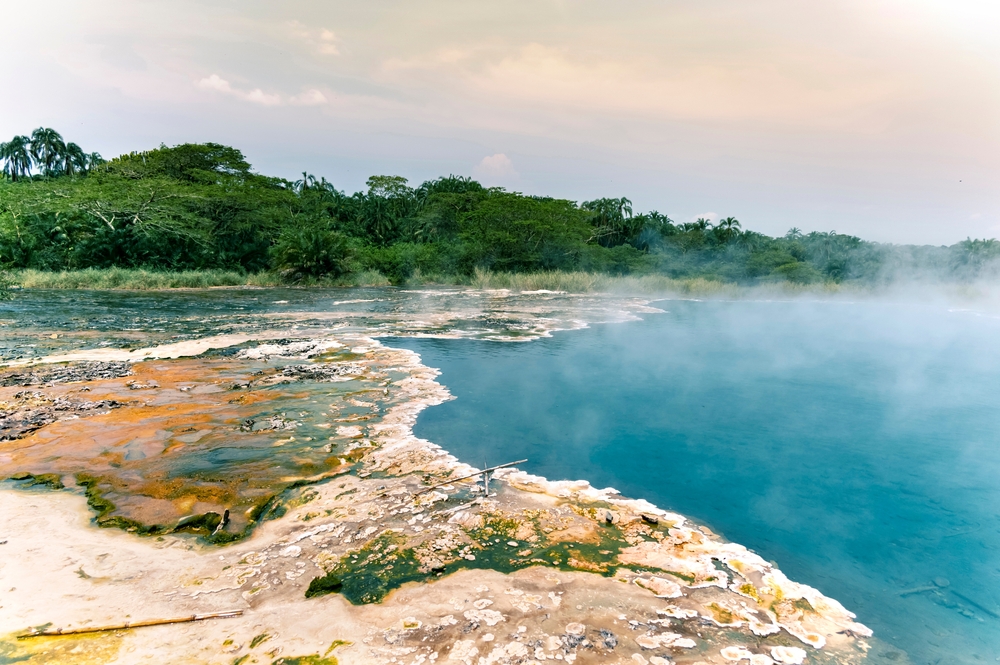
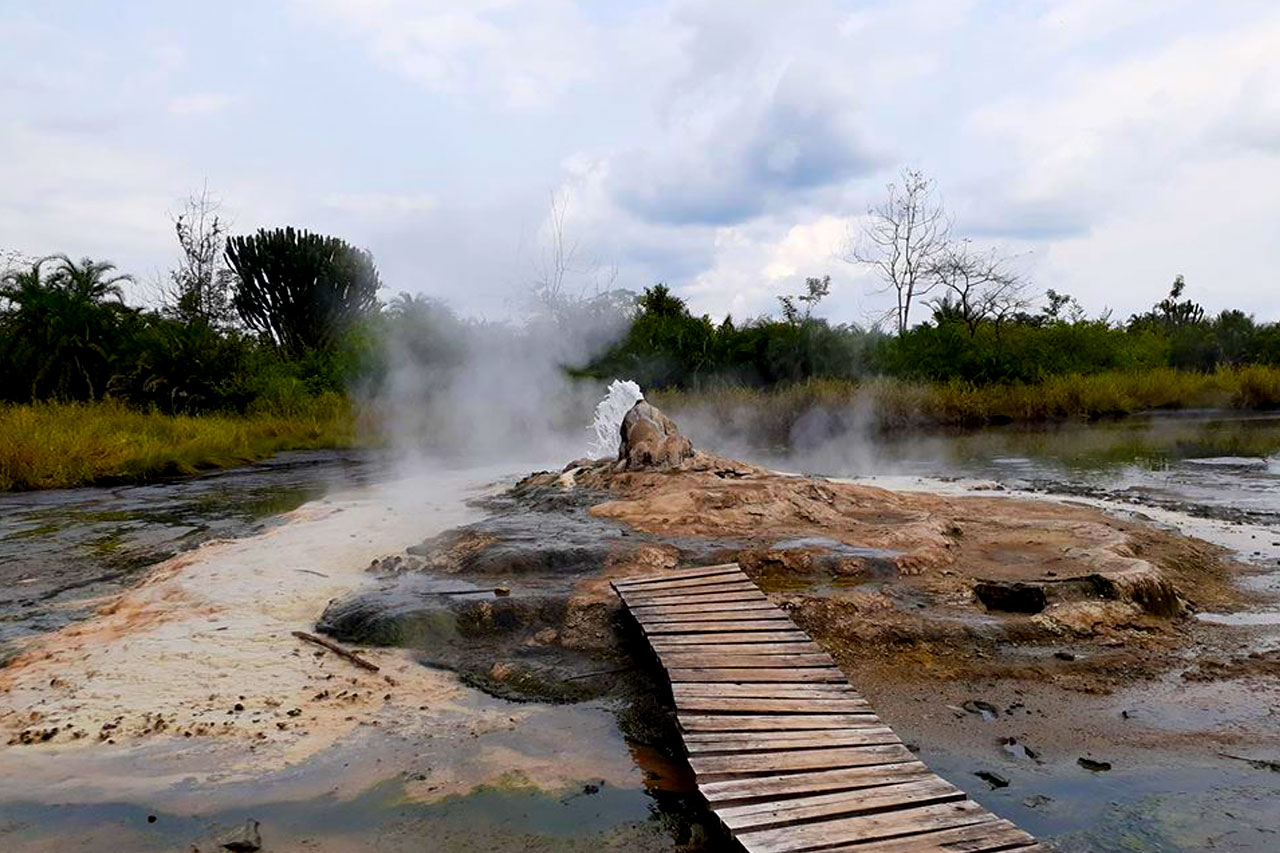
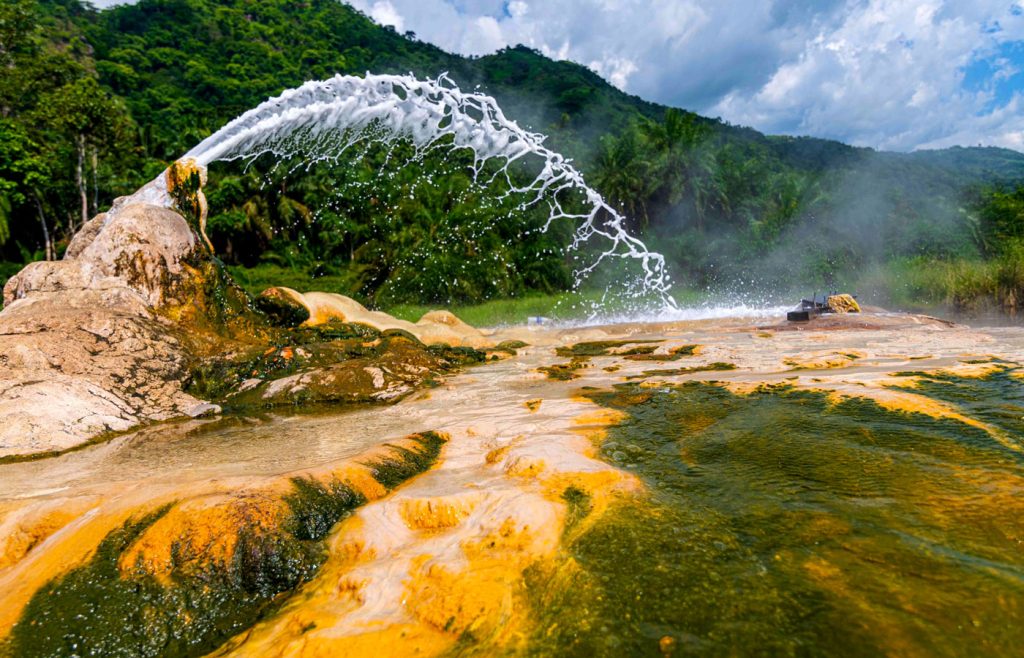
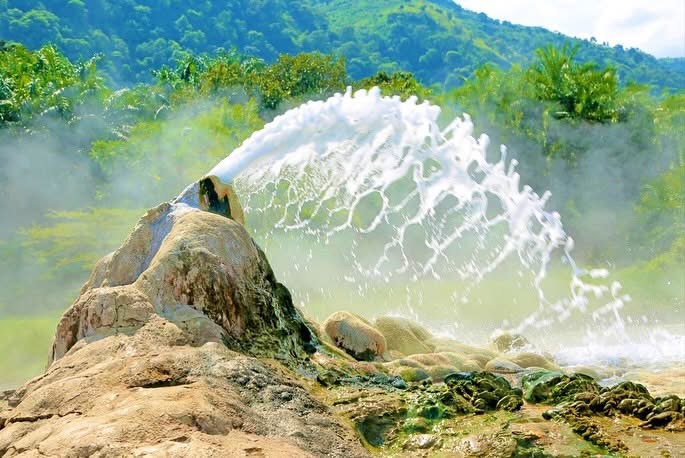
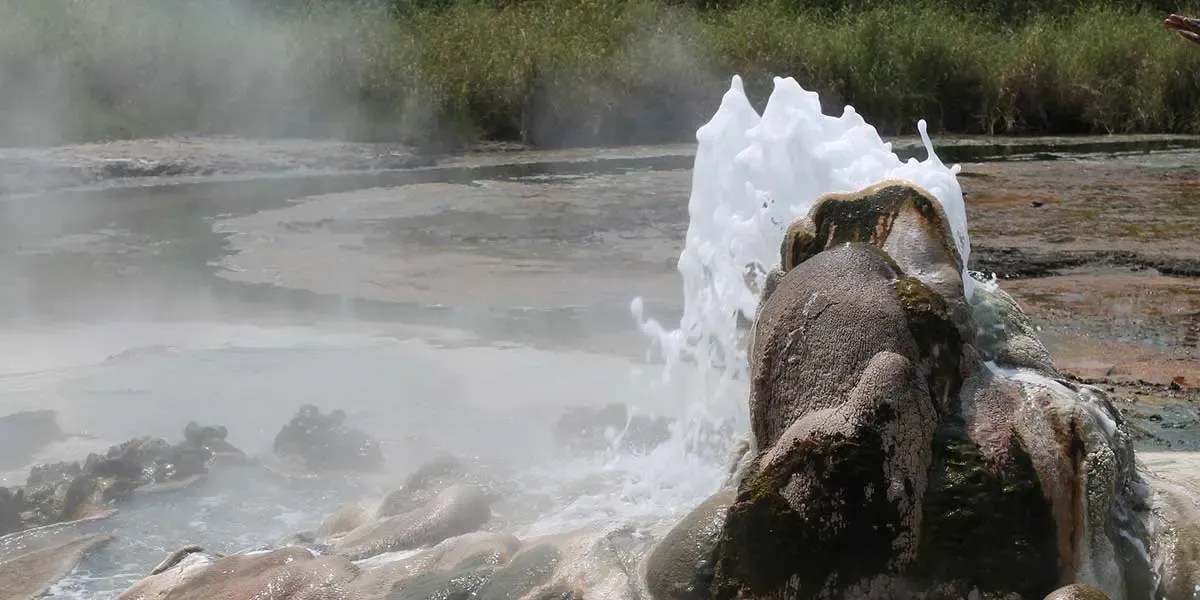
One of the park’s most iconic attractions is the Sempaya Hot Springs, geological marvels that steam and bubble in the midst of the rainforest. There are two main springs: the “male” hot spring, locally called Bintente, which is a large pool of boiling water, and the “female” hot spring, known as Nyasimbi, which is smaller but shoots water up to two meters high.

Beyond their scientific intrigue, the hot springs hold deep cultural and spiritual significance for the local communities. Legends tie them to ancestral spirits, fertility rituals, and community gatherings. Visitors often find guides sharing these stories, weaving myth and science into a captivating narrative. The springs also serve practical uses, as locals traditionally cook food such as eggs and plantains in the boiling waters.

Cultural Heritage: The People of Semuliki

Surrounding the park are diverse communities whose cultures enrich the visitor experience. The most notable are the Batwa pygmies, one of Africa’s oldest surviving indigenous groups. Traditionally forest dwellers, the Batwa once depended entirely on hunting, gathering, and forest resources for survival. Although modern pressures have altered their way of life, their knowledge of the forest remains unparalleled.

Visitors can engage with Batwa communities to learn about traditional dances, storytelling, hunting demonstrations, and herbal medicine. These cultural encounters not only deepen understanding but also provide vital support to local livelihoods.

The Bamba and Bakonzo people also inhabit the region, contributing to the area’s cultural richness. Their farming practices, rituals, and folklore demonstrate a profound connection with the land, while their vibrant markets and crafts offer insights into daily life in Bundibugyo.

Activities and Attractions

Exploring Semuliki is an adventure that unfolds across multiple dimensions. Birding remains the star activity, but nature walks, cultural encounters, and river excursions add variety to the experience.

Guided forest walks bring travelers into intimate contact with the rainforest’s beauty, from towering trees to elusive primates. Visits to the hot springs combine natural wonder with cultural storytelling, offering unique photo opportunities.

For those seeking more adventurous experiences, the Kirumia Trail provides a day-long hike through the forest to the Semuliki River, rewarding hikers with sightings of both birds and mammals. The Red Monkey Trail, closer to the park’s edge, is ideal for primate viewing. Night walks reveal a different side of the forest, alive with nocturnal creatures.

Cultural tours to nearby communities complete the Semuliki experience, ensuring that visitors leave with not only memories of wildlife but also an appreciation of human traditions intertwined with the forest.

Seasons of Discovery: When to Visit

Semuliki National Park welcomes visitors throughout the year, yet the experience varies with the seasons.

The dry seasons, from December to February and June to September, are considered the best for birding and hiking. Trails are more accessible, and wildlife activity is heightened around water sources. Birders, in particular, find these months rewarding, as visibility improves and activity is concentrated.

The wet seasons, from March to May and October to November, transform the forest into a lush, vibrant paradise. The rains bring out an explosion of life, from frogs and insects to flowering plants. Though trails can be muddy and challenging, the atmosphere is magical, and migratory bird species enhance birding opportunities.

Ultimately, the choice of when to visit depends on personal interests. Those seeking comfort and ease of movement may prefer the dry months, while those enchanted by the raw vibrancy of rainforests will find the wet season equally rewarding.

Unlocking Uganda’s Birding Treasure

Semuliki National Park is not just a destination—it is an experience that captivates the senses, ignites curiosity, and deepens appreciation for Africa’s wilderness. From its ancient rainforests to its steaming hot springs, from the calls of rare birds to the traditions of its people, Semuliki is a place where nature and culture exist in harmony.

For birders, it stands unmatched as Uganda’s finest paradise of wings and songs. For wildlife enthusiasts, it offers encounters with species rarely seen elsewhere. For cultural travelers, it reveals traditions rooted in centuries of coexistence with the forest. Above all, it is a sanctuary where one can escape the ordinary and connect with Africa at its most authentic.

Travelers who long to explore this hidden gem are encouraged to embark on their journey with expert guidance. For a seamless and enriching safari that brings together Uganda’s wonders, it is highly recommended to book your African tours and safaris with WildHorn Africa, a trusted partner in crafting unforgettable journeys into the heart of the continent.

Sempaya Hot Springs in Semuliki: A Must-See Attraction

Sempaya Hot Springs in Semuliki: A Must-See Attraction

By Travel stories and blogs, Family holidays, Luxury holidays, Safari holidays, Uganda travel guides, Where to go

Sempaya Hot Springs in Semuliki: A Must-See Attraction

Nature’s Fiery Wonder in the Heart of the Rainforest

Deep within Uganda’s Semuliki National Park, hidden among towering rainforest trees and mist-filled valleys, lies one of the most extraordinary natural wonders in East Africa—the Sempaya Hot Springs. Known for their steaming geysers, bubbling pools, and cultural significance, these hot springs are more than geological curiosities. They are an iconic symbol of the park, drawing visitors with their blend of mystery, science, and legend.

To witness the hot springs is to step into a world where the earth seems alive, constantly exhaling its fiery breath into the forest air. The springs hiss and bubble with untamed energy, shooting plumes of steam into the canopy and boiling water that seems to defy the lush greenery surrounding it. Few places in Uganda create such a powerful contrast between fire and water, between the serenity of the rainforest and the raw force of geothermal activity.

The Sempaya Hot Springs are not only a breathtaking sight but also a destination layered with meaning. They serve as cultural landmarks for the communities that have lived in the Semuliki Valley for centuries, they act as habitats for specialized plant life and micro-organisms, and they provide visitors with unforgettable encounters that blend science, legend, and natural beauty.

Exploring these hot springs is therefore more than a casual stop; it is an immersion into one of Uganda’s most captivating and spiritually charged attractions.

Location and Setting: A Jewel in Semuliki National Park

The Sempaya Hot Springs are located within Semuliki National Park, in the Bundibugyo District of western Uganda. The park itself lies at the base of the Rwenzori Mountains, along the floor of the Albertine Rift Valley. It stretches across about 220 square kilometers, dominated by lowland tropical rainforest that extends into the Congo Basin.

The springs are situated in the park’s Sempaya area, about a 30-minute drive from the park headquarters at Ntandi. This section of the park is easily accessible via well-maintained forest trails, offering visitors the chance to immerse themselves in lush vegetation before encountering the dramatic spectacle of geothermal energy.

The surroundings of the hot springs are characterized by dense rainforest, where towering mahogany and ironwood trees intermingle with vines, shrubs, and ferns. The air here is humid, carrying the earthy scent of the forest mixed with the unmistakable tang of sulfur. It is an environment that feels both primeval and alive, as though the earth’s earliest days are preserved in its steaming pools and thick vegetation.

Geological Formation: The Science Behind the Spectacle

The Sempaya Hot Springs are the result of geothermal activity linked to the tectonic dynamics of the Rift Valley. The Albertine Rift, part of the larger East African Rift System, is a region of immense geological activity where the earth’s crust is slowly being pulled apart. As a result, subterranean heat escapes through fissures, heating underground water reservoirs and forcing them to the surface as boiling springs.

The springs manifest in two distinct sites: the male hot spring, locally called Bintente, and the female hot spring, known as Nyasimbi. Both differ in form and scale, yet each illustrates the immense geothermal forces shaping this region.

The male spring is a large pool, calm on the surface but fiercely hot beneath, with water temperatures recorded at over 100 degrees Celsius. The female spring is more dramatic, jetting boiling water up to two meters into the air, creating a perpetual plume of steam that can be seen rising above the forest canopy from a distance.

Geologically, these springs represent a constant interaction between tectonic activity, underground water systems, and surface ecosystems. Their presence underscores the living, breathing nature of the earth beneath Uganda, a reminder that even beneath lush forests, powerful geological forces are always at work.

The Male and Female Hot Springs: A Tale of Two Wonders

Visitors to the Sempaya area are always introduced to the springs as the male and the female hot springs, a distinction that combines natural science with cultural symbolism.

The male spring, Bintente, is located in a swampy clearing, its broad pool shrouded in mist. Though less dramatic in its surface activity, the male spring is no less impressive in scale, covering a large area and exuding intense heat. The water here appears deceptively calm, yet it is boiling hot beneath its placid surface.

The female spring, Nyasimbi, is the most iconic. Nestled deeper in the forest, this geyser-like feature sends scalding water gushing upward with continuous energy. Jets of water and steam hiss loudly, creating a dramatic spectacle that commands attention. Visitors often marvel at the sheer force of Nyasimbi, which seems to symbolize the dynamic power of nature itself.

The naming of the springs as male and female reflects traditional beliefs among the local communities, who view them as embodying fertility, life, and spiritual presence. This cultural interpretation enriches the scientific marvel, turning the springs into not just geological features, but sacred entities with stories and symbolism that resonate across generations.Sempaya Hot Springs in Semuliki: A Must-See Attraction

Cultural Significance: Legends and Beliefs

The Sempaya Hot Springs are deeply embedded in the traditions of the local Bamba and Bakonzo communities. For centuries, they have been regarded as sacred places where ancestral spirits dwell. The local names themselves—Bintente and Nyasimbi—are tied to legends that explain their origins and significance.

According to local folklore, the male spring is linked to a tale of a man who disappeared while searching for food, believed to have been taken by spirits into the earth. The female spring, on the other hand, is associated with a woman who came to search for her missing husband but was herself consumed by the same supernatural forces. These stories, though varied in detail across communities, all emphasize themes of fertility, creation, and the interconnectedness of life and nature.

Traditionally, the springs have been sites of ritual and prayer. Offerings were made to appease spirits believed to reside in the springs, seeking blessings of fertility, good harvests, and protection from misfortune. Even today, some community members hold the springs in spiritual reverence, and cultural guides are eager to share the legends that continue to keep these traditions alive.

The blending of cultural mythology with the springs’ natural spectacle adds a profound dimension to visiting Sempaya. For travelers, it is not only a journey to witness geothermal wonder but also an opportunity to connect with stories that reflect humanity’s enduring relationship with the natural world.

Activities and Visitor Experience

A visit to the Sempaya Hot Springs is designed as a holistic experience that combines walking, nature immersion, storytelling, and visual spectacle. Guided walks from the park headquarters take visitors through lush forest trails, where encounters with monkeys, birds, and butterflies enrich the journey.

The trail to the male hot spring is relatively short and accessible, leading into a swamp clearing where the steaming pool emerges dramatically from the vegetation. Continuing deeper into the forest, the path to the female hot spring is slightly longer, winding through dense greenery before opening onto the geyser’s steaming clearing.

At the springs themselves, the experience is multisensory. The sight of steaming jets, the hiss of escaping gases, the pungent sulfur smell, and the humid heat create an atmosphere that feels otherworldly. Visitors are often encouraged to participate in the age-old tradition of boiling eggs or plantains in the scalding waters, a practice that connects modern tourism with local heritage.

Photography is another highlight, with the billowing steam against the backdrop of rainforest offering dramatic contrasts. Guides enrich the experience with cultural stories, scientific explanations, and historical anecdotes, ensuring that visitors leave not only with memories but with knowledge.

Ecological Importance: More than Just Spectacle

Though the Sempaya Hot Springs are primarily known as attractions, their ecological role cannot be overlooked. The geothermal waters create micro-habitats where specialized plants, algae, and bacteria thrive. These organisms are adapted to extreme heat, contributing to biodiversity in unique ways.

The surrounding swamp and rainforest also benefit from the constant presence of warm water, which influences microclimates in the immediate vicinity. Bird species, amphibians, and insects often concentrate around these habitats, creating hotspots of ecological activity.

Scientists consider geothermal ecosystems such as Sempaya important for research, as they provide insights into how life adapts to extreme conditions and may even hold clues to the origins of life on earth. Thus, the hot springs are not only visually impressive but also ecologically and scientifically significant.

Best Time to Visit: Seasons of the Springs

The Sempaya Hot Springs can be visited year-round, but the experience varies with the seasons. The dry seasons, from December to February and June to September, are ideal for visitors who prefer accessible trails and clear visibility. During these months, forest paths are less muddy, and the springs’ dramatic steam rises clearly into the dry air.

The wet seasons, from March to May and October to November, transform the surrounding forest into a lush, vibrant landscape. Though trails may become slippery and challenging, the rains amplify the rainforest’s vitality, and the contrast between heavy rainfall and steaming hot springs creates an even more dramatic spectacle.

Ultimately, the choice depends on individual preference. Birders and naturalists may favor the wet season for the abundance of life it brings, while those seeking ease of movement and clearer photography may prefer the dry months. Regardless of season, the springs remain a highlight of any visit to Semuliki.

The Sempaya Experience within the Larger Semuliki Adventure

While the Sempaya Hot Springs stand as the centerpiece attraction of Semuliki National Park, they are best appreciated as part of the broader park experience. Visitors who journey to the springs often combine their visit with birdwatching, as the park is home to over 400 species, many of them endemic to the Congo Basin. Nature walks, primate tracking, and cultural encounters with the Batwa and Bamba communities add further depth.

In this sense, the springs are both a climax and a gateway—a singular wonder that introduces travelers to the complexity and richness of Semuliki. By anchoring the experience of geothermal marvels within the broader context of rainforest ecology and human culture, the Sempaya Hot Springs become more than a tourist stop; they become a story of interconnection between earth, life, and people.

A Must-See Attraction in Uganda’s Wilderness

The Sempaya Hot Springs are not merely pools of boiling water. They are the beating heart of Semuliki National Park, a symbol of nature’s raw energy and cultural depth. Rising steam against the rainforest canopy, tales of spirits and fertility, the thrill of boiling eggs in scalding waters, and the scientific wonder of geothermal forces all converge to make this attraction truly unforgettable.

For travelers seeking authentic and enriching experiences, the springs represent a rare chance to witness one of Uganda’s most unique natural wonders. They encapsulate the essence of Semuliki—mysterious, powerful, and deeply rooted in both ecological and cultural significance.

To explore the Sempaya Hot Springs is to uncover a hidden treasure of Uganda, a place where the earth reveals its fiery soul and where humanity’s stories intertwine with the rhythms of nature. It is an experience that resonates long after the steam has faded into the forest air.

For those wishing to immerse themselves in this spectacle, to explore the springs alongside the birdlife, primates, and communities of Semuliki, the most rewarding way is through expert guidance. For a seamless and memorable safari across Uganda’s wilderness, it is highly recommended to book your Africa tours and safaris with WildHorn Africa, a trusted partner in unveiling the continent’s most extraordinary wonders.

How to Achieve a Successful Safari Trip in Uganda During Elections

How to Achieve a Successful Safari Trip in Uganda During Elections

By Travel stories and blogs, Uganda travel guides

How to achieve a successful safari in Uganda during elections.

There are few destinations on Earth that so eloquently epitomize adventure, tranquility, and discovery as vividly as Uganda, the “Pearl of Africa.” With its lush forests, rolling highlands, shimmering lakes, and abundant wildlife, Uganda captures the true essence of Africa in a way few countries can. For many travelers, embarking on a safari here is the culmination of a lifelong dream — a chance to witness mountain gorillas in the mist, lions in the golden plains, and elephants moving gracefully through acacia trees. Yet for some, the timing of travel in this season of elections raises questions and hesitation: Is it safe? Is it the right time to go? Can one still have a seamless, fulfilling experience in the midst of political activity?

The truth is that, with careful planning, local insight, and the right guidance, a safari trip to Uganda during elections can be just as rewarding-more so, even-than at any other time of the year. The general stability of the country, an excellent tourism infrastructure in place, and the natural calmness defining its landscapes make it fully possible to experience Uganda’s wild magic without interruption. As a matter of fact, travel during this period can give one a unique lens into Ugandan life, where democracy and wilderness blend together in harmony.

What follows now is a step-by-step guide on how to have a successful safari trip in Uganda during elections-not only in regard to logistics but also in understanding the deep context of travel, culture, and human connection that make Uganda such a remarkable destination.

Understanding Uganda During the Election Period

First, it is necessary to appreciate the character of Uganda during elections. Uganda is a country that undertakes regular democratic elections, which are deeply set in the civic culture of its people. The periods preceding these elections are often characterized by vibrant campaigns, peaceful rallies, and heightened sense of national pride.

Contrary to what many outsiders imagine, elections in Uganda do not bring life to a standstill. Roads are not closed to traffic, the markets are still buzzing, and tourism activities generally go on without disruption. The political atmosphere is usually lively yet calm, with people discussing leadership and the future respectfully.

You might hear some campaign music, see posters, or small rallies in major towns like Kampala, Entebbe, and Mbarara. Outside these centers, however, the countryside-with its Bwindi Impenetrable National Park, Queen Elizabeth National Park, Murchison Falls, and Kibale Forest-produces the same scenic sights as before. The wilderness cares little about politics: the gorillas climb, the lions hunt, and the sun continues to set over the savannas in shades of red and gold.

Timing and Preparation: The Foundation of a Smooth Journey

Planning a safari largely relies on timing, especially during the election period. The dates of the Ugandan elections are always announced way in advance, thus providing great ease for travelers to schedule their trips around them. The weeks before and after the election day are normally quiet, with minimal disruption to transport or tourism services.

Preparing for a successful safari actually begins with making sure all your documents are valid: your passport, visa, and vaccination certificates. Most visitors will require a tourist visa, which can be conveniently obtained online or upon arrival. It’s also best to carry a Yellow Fever vaccination certificate, since this is a required entry document for most travelers.

It will add an extra layer of safety and convenience to travel with a reputable operator such as WildHorn Africa. Their experienced teams handle all the logistics, from airport transfers to park permits, and adjust the itinerary if need be, so that guests never experience delays or uncertainty. With professionals handling the journey, travelers can focus solely on enjoying Uganda’s beauty and culture.

Travel Safety: Separating Perception from Reality

Safety concerns are among the top travelers’ concerns, yet realities often fail to correspond with perceptions. Uganda is one of the most stable and friendliest countries in East Africa, and its tourism operations are normally smooth, even during election time.

Most of Uganda’s prime safari destinations are far removed from major political centers. For example, Bwindi in the southwest and Murchison Falls in the north are tranquil areas where life flows peacefully regardless of national events. Security in and around the parks is managed efficiently by both the Uganda Wildlife Authority (UWA) and local communities who depend on tourism for their livelihoods.

Even in the cities, campaign activities are largely peaceful. The locals have a strong pride in their country’s reputation for hospitality, and they go out of their way to ensure that visitors are comfortable. Travelers who stay informed through their guides and tour operators find the experience not only safe but enlightening-a window into Ugandan democracy and resilience.

Working with Professional Tour Operators

Success on safari requires professional coordination. Travel during elections requires adaptability and real-time awareness of local conditions, which is best achieved through partnership with an experienced operator like WildHorn Africa.

WildHorn Africa knows how to turn emerging challenges into opportunities. Guides at WildHorn Africa are knowledgeable in up-to-date social and political climates, know which routes and paths are most efficient, and are in frequent communication with park authorities to take every precaution necessary. The company pays attention to every detail to make sure everything goes according to program, from a morning drive to late-night transfers.

Their commitment goes well beyond logistics. They act as cultural interpreters, helping travelers engage respectfully with local communities and understand the pulse of the nation. Guides often share personal stories, historical insights, and even light-hearted anecdotes that paint a fuller picture of Uganda — its humor, hospitality, and heart.How to Achieve a Successful Safari Trip in Uganda During Elections

Itinerary Planning: Maximizing Experience, Minimizing Disruption

A well-planned program is the backbone of any successful safari. When traveling at election time, flexibility will be an added virtue. Uganda’s beauty truly lies in the diversity of its varied landscapes, and a well-planned journey can afford experiences of this full spectrum while keeping away from potential election-related crowds in major towns.

A good example of an itinerary could be Entebbe, where there’s a short rest along Lake Victoria, then west toward Fort Portal, Kibale National Park, or Queen Elizabeth National Park. Scenic views out west, with lush hills and tea plantations, gradually lead from the hustle and bustle of city life to tranquil nature. It is from here that the route finds its way south toward the Bwindi Impenetrable Forest for gorilla trekking in just the right sequence of adventure and serenity.

Because the national parks are well-protected and self-contained, life inside of them almost feels timeless to the travelers. The lodges continue to keep their operations running, rangers continue their duties with the conservation efforts, and wildlife is behaving with its usual grace.

Traveling between parks on the road in daylight hours gives the passenger a sense of the countryside in motion: Farmers tend their crops, children wave as vehicles pass, and the landscapes change from wetlands to highland. The visual journey reinforces an important message about Uganda-that even during election time, the spirit of the land remains tied to peace and productivity.

Understanding the Local Perspective

Travel in election time is a gift of another kind, placing one in company with Ugandans themselves. Conversations with guides, lodge staff, or villagers reveal perspectives that go beyond the surface of politics. You begin to understand that democracy here is not a source of division but an expression of unity-a chance for citizens to shape their future while upholding their shared values of community and hospitality.

But it is the human relationship that adds to the safari experience in a big way. Sharing stories around the campfire or exchanging smiles with locals along the way brings the journey to life. Travelers soon find themselves realizing that it is not only the wildlife that makes Uganda worthy but the friendliness of its people.

Visitors who show genuine interest in local culture — greeting in Swahili or Luganda, asking about traditions, tasting regional dishes — are met with overwhelming warmth. Ugandans appreciate respect and curiosity. Often, their openness and generosity can create in travelers memories that feel more personal than any photograph could capture.

The Role of Nature in Balancing the Journey

Among the peculiar things one experiences while traversing Uganda during elections is the harmony between the human and natural worlds. Where towns may buzz with political energy, the wild remains calm-a grounding force of sorts that reminds travelers there is something in life that does not change.

The distant roar of a lion or the trumpet of an elephant may echo across the landscape, with the Rwenzori Mountains as a backdrop in Queen Elizabeth National Park. Along the Kazinga Channel, hippos laze in sun while fishermen paddle silently by in wooden canoes. In Bwindi, families of gorillas go about their day as if the affairs of humankind had nothing to do with them.

These moments of stillness bring perspective. Nature operates independently of human timelines, offering solace and continuity. It teaches travelers patience, reflection, and balance-values that mirror Uganda’s own approach to progress. Even in moments of national decision-making, the environment remains steadfast as a source of peace and strength.

Cultural Sensitivity and Respect

To travel successfully during elections is to travel in a mindful way. Respect for local customs and sensitivity to the mood of the nation go a long way in ensuring experiences that are positive in nature. Travelers are encouraged to observe rather than participate in political conversations, allowing locals to express their views freely without feeling pressured.

Be sure to greet them civilly, keep a note of humility, and never jump to conclusions with regard to political issues. The Ugandans appreciate diplomacy and friendliness, an attribute that is very close to their culture.

Simple gestures-like learning to say “Asante sana” for “thank you very much” or “Mirembe” for “peace”-can open hearts and doors. Such moments of human connection build bridges across the barriers of language and circumstance. They turn a safari from a sightseeing trip into a shared experience of humanity.

Maintaining Flexibility and Patience

By their nature, elections sometimes bring small logistical changes-a road closure, for instance, or a delayed service. Travelers who approach such moments with flexibility and patience discover the deeper essence of African travel: adaptability and serenity.

With every challenge, there is often an unexpected joy to go with it. Sometimes, a detour leads to a breathtaking view or an unplanned village encounter. And sometimes, the change in schedule offers time for a lakeside rest or an impromptu cultural performance. Uganda rewards those who travel with an open heart.

Experienced tour operators, such as WildHorn Africa, do these adjustments so smoothly that most of them are done even before the traveler notices them. The companies make sure the guests are comfortable, safe, and enjoying the breathtaking scenes around them.

The Economic and Conservation Impact of Traveling During Elections

Another crucial reason to continue safari travel during elections is the impact it has on communities and conservation. Tourism to Uganda is among its major sources of income, supporting not just the national parks themselves but also local economies.

By traveling at this time, visitors directly help keep livelihoods intact. From lodge staff to guides, drivers, artisans, and farmers, all benefit from tourism dollars, which in turn cements social stability. Conservation-wise, tourism dollars undergird anti-poaching efforts, habitat restoration, and community education that protect Uganda’s precious ecosystems.

Every park permit taken brings a contribution to the conservation of gorillas, elephants, and countless other species. In this sense, the traveler becomes a silent partner in this ongoing story of Uganda’s balance between development and conservation.

Why It Becomes a More Meaningful Safari

Traveling during elections in a country carries with it an emotional dimension that few other experiences can match. To see a country go through such democratic processes and yet keep its hospitality, friendliness, and care for the environment is just something else. It allows travelers to see Uganda not as an abstract destination, but as a living, breathing nation of people striving for a better tomorrow.

There is something so humbling about the moment the sun sets over Lake Bunyonyi while the hum of a community radio raises and falls with discussions of election results — a moment where nature and humanity blend in harmony. It reminds one that the true strength of Uganda lies in unity, in calmness, in an enduring spirit.

Such experiences elicit feelings of gratitude and humility, of how adventure is not only found in the wild but also in the understanding of how people coexist with change, hope, and tradition.

Turning Uncertainty into Ease

A successful safari in Uganda during elections depends largely on who you travel with. WildHorn Africa has recently emerged as one of the most trusted names for luxury and mid-range safaris in the region, providing customized journeys that combine exploration with comfort.

Their professional team ensures that travelers are guided by locals who are well experienced in their field, with real-time updates, well-thought-out itineraries that balance safety and immersion. Every detail from transportation and accommodation, to park access and cultural contact, is treated with professionalism and attention. Travel with WildHorn Africa, with your mind at ease. Their deep-rooted networks across Uganda make sure travelers are informed and supported, no matter where their journeys may lead.

They also focus on sustainability to ensure that each safari benefits the local communities and helps preserve the wildlife habitat. Conclusion: The Timeless Spirit of Uganda A successful safari in Uganda during elections is embracing the country in its wholeness-its people, landscapes, rhythm, and resilience. Uganda is a place where democracy unfolds alongside nature, modern life harmonizes with ancient wilderness, and travelers are welcomed not as outsiders but as participants in a shared story.

The key to success is preparation, awareness of the situation, and partnership with people who know the land up close. By traveling with experienced professionals and staying in a spirit of respect and openness, you can ensure your safari is as seamless as it is unforgettable. Even in election periods, Uganda remains one of Africa’s most peaceful, beautiful, and inspiring destinations.

The mountains still rise, the rivers still flow, and the people still smile. The heartbeat of the country has never stopped; it just beats to the rhythm of life itself. This journey, guided, refined, and made effortless by the experts at WildHorn Africa, beckons all those ready for this lifetime experience. Book your African safari with WildHorn Africa, where every journey tells a story, every traveler finds belonging, and every experience reveals the soul of Africa.

Tips to Make Your Safari a Success in Uganda During Elections

Tips to Make Your Safari a Success in Uganda During Elections

By Travel stories and blogs, Uganda travel guides

Tips to Make Your Safari a Success in Uganda During Elections

There is something magnetic about Uganda — a country whose heartbeat pulses through its rolling hills, emerald forests, and warm-hearted people. It’s a place where adventure meets authenticity, where travelers are embraced by nature’s beauty and the rhythm of everyday life. But what if your dream safari coincides with the nation’s election season? Should you postpone it, or could this be the experience of a lifetime? The truth is, with the right approach, knowledge, and preparation, your safari in Uganda during elections can be extraordinary, safe, and deeply enriching.

Uganda, sometimes referred to as the Pearl of Africa, remains one of the most captivating destinations in East Africa. Its varied landscapes-from the misty peaks of Bwindi to the shimmering savannas of Murchison Falls-offer moments that will linger long after your journey is over. Visiting during elections doesn’t have to be a source of worry; in fact, it can be a time to see the country at its most vibrant and expressive. Elections provide rare insight into Ugandan life, showing the unity, resilience, and optimism of its people.

This guide delves deep into how you can make your safari a resounding success during election time, marrying travel wisdom with local understanding and the balance between safety and adventure. With the right mindset and guidance, your journey can remain seamless and unforgettable, full of authentic encounters that only Uganda can avail.

Understanding Uganda During Election Season

First, the atmosphere of elections in Uganda has to be put into perspective. The country holds regular elections, which are much awaited and enthusiastically followed by the people. This might even bring vibrancy to the towns and cities, with colorful posters, rallies, and discussions at the community level. To an outsider, this may seem intense; yet Ugandans go about their day-to-day activities with calm determination, even as elections swell the air with excitement.

This is not a period of unrest for travelers but one of high activity. Life just goes on as usual: markets open, tourism services operate, and the country’s national parks remain fully accessible. The key lies in understanding local rhythms and respecting the flow of events. Elections are a civic duty that Ugandans take seriously but peacefully. By traveling mindfully, you not only stay safe but also earn an appreciation for the democratic spirit that defines modern Uganda.

Leading up to the vote, campaign posters plaster streetlights and shops in the months prior, while radio airwaves are filled with discussions on everything from leaders to policies. Outside the urban centers, though, the countryside remains tranquil: farmers tend to their fields, undisturbed wildlife roams, and the wilderness speaks its ancient stories. For visitors, such juxtaposition of political vibrancy and natural serenity is uniquely Ugandan-a testament to the nation’s balance between progress and preservation.

Choosing the Right Time and Itinerary

Thoughtful timing and itinerary planning form the basis of ensuring a successful safari during elections. The election periods are usually publicized well in advance, with fixed schedules beforehand, many months prior to the event. This predictability will enable travelers to plan accordingly, which allows them to avoid the actual voting days or major campaign rallies if preferred.

Visiting Uganda shortly before or after the main election week often provides a perfect window. It is calm, roads are clear, and lodges and parks are open without disruption. Besides, the country’s natural beauty knows no political season: gorillas climb the misty slopes of Bwindi, elephants graze beneath Queen Elizabeth National Park’s acacia trees, and the Nile thunders through Murchison Falls.

The trick is to balance destinations strategically: start your journey in the quieter regions of the west highlands or shores of Lake Bunyonyi, and allow time for transitions between parks. Well-maintained road networks and domestic flights within the country make it easy to get around. Travelers on a safari with a professional operator such as WildHorn Africa receive real-time updates on any local developments so that all logistics run smoothly.

The beauty of Uganda lies in its variety, from primate encounters to big game safaris and cultural immersions. During elections, this diversity works in your favor as there are some flexible routes that are not affected by the civic events.

Partnering with Knowledgeable Local Experts

The backbone of a stress-free safari during any period, and especially during elections, is in trusting experienced local professionals. The top tour operators of Uganda like WildHorn Africa possess an in-depth knowledge of both tourism logistics and national dynamics. Their teams are continuously updating information, coordinating with the local authorities, and altering routes taken during travel, when necessary, to guarantee the comfort and safety of their guests.

Having an experienced guide is more than safety; it’s insight. Guides are often storytellers who connect you with Uganda’s soul. They know where wildlife hides during midday heat, when the gorillas are most active, and which community experiences reveal the nation’s authentic charm. They also know how to navigate the subtle rhythms of election season — which towns to pass through quickly, where to rest, and which local events might actually enrich your cultural experience.

During my own travel through Uganda in a similar season, the difference made by local expertise was profound. Every leg of the journey flowed effortlessly-from airport transfers to lodge check-ins and park entry permits. Even as radio stations buzzed with political updates, our days unfolded to the rhythm of nature: sunrise safaris, riverside lunches, starlit evenings filled with the sounds of crickets and distant lions.Tips to Make Your Safari a Success in Uganda During Elections

Staying Informed While Staying Present

The most empowering part of traveling during an election period is being informed but not consumed. Reputable tour companies will keep their travelers updated through trusted local sources, rather than the speculation of social media, for clarity and peace of mind.

Understanding what’s going on around you and where you are does not disrupt the journey but enhances it. Uganda’s elections hardly alter its tourism infrastructure, and the government seeks to continue their national parks and travel services. However, knowing some proposed campaign events, primarily around major towns like Kampala or Mbarara, would allow travelers to know when to plan their days of transit.

Most lodges in the countryside stay serene, away from the political pulse of towns. Very rarely does any election excitement reach the national parks, and life just goes on uninterrupted in these natural havens. This is where Uganda reveals its truest self-a land where nature’s democracy prevails, where elephants cross savannas without concern for ballots, and where gorillas live in silent kingdoms far from human noise.

By blending awareness with presence, travelers can get the real Ugandan experience: one that embraces the vitality of human culture, as well as the timeless peacefulness of nature.

The Safety Reality: Facts Over Fears

To many potential travelers, the words “elections in Africa” may conjure up images of instability or unrest. However, Uganda is really one of the most peaceful and receptive countries on the continent, and even during political seasons, tourism carries on safely.

The difference is in perception compared to reality. Media might talk about political tension, but the experiences on the ground are filled with warmth and security, with very good hospitality. Tourism in Uganda is well looked after and taken care of as a national treasure. Large parks like Bwindi, Murchison Falls, and Queen Elizabeth are well managed with easy communication.

Because of this, local guides and lodges stay in close touch with district updates so that travelers are always routed through safe and scenic corridors. The Uganda Wildlife Authority provides consistent service delivery irrespective of any political events, and entry procedures remain efficient.

In fact, election times can even have their advantages: fewer visitors, more personalized attention at the lodges, and flexibility regarding the timing of safaris. Many travelers are surprised to find the atmosphere surprisingly calm, even festive, as communities engage respectfully in civic participation while continuing daily routines.

Managing Logistics and Movement

Successful safaris rely on smooth logistics, something that becomes all the more important during elections. Having a trusted operator means having every aspect, from transport to permit and accommodation arrangements, run like clockwork. The majority of travelers arrive via Entebbe International Airport, conveniently set along the shores of Lake Victoria, where efficiency is key. It’s from here that professional drivers or domestic flights ferry guests to destinations around the country.

Road travel is generally not affected at all during election periods, but to maximize comfort, departures are usually made very early to avoid the occasional delays that may result from campaign parades. Itineraries of safaris can also be planned in ways that minimize time spent in towns and maximize time in the wild. The great plus is that Uganda’s most famous parks lie far from the political centers — their silence remains intact.

The local staff welcome travelers at every stop with the same warmth for which Uganda is known. There is unsaid pride in making sure that visitors leave with the best impressions of the country, whatever the season is. A professionalism that for decades has kept Uganda among East Africa’s most reliable destinations.

Respecting Local Culture and Context

Every safari in Uganda is more than a wildlife experience; it’s a cultural journey. Election periods magnify this truth: how democracy and tradition intertwine in everyday life. Travelers who approach these moments with respect and curiosity find themselves rewarded with deeper understanding.

Ugandans are famously hospitable, and their hospitality extends naturally to visitors. Even in election periods, this does not change. Greeting locals with kindness, showing interest in their daily lives, and avoiding heated political debates demonstrate cultural sensitivity.

Respectful engagement also means knowing that political discussions are personal. Locals will willingly share their opinions, but you should listen more than speak. You learn through observing and listening to realize insights into a nation that is finding a balance between modern governance and community values founded on unity and peace.

These often turn out to be some of the most memorable moments of the journey. Over a cup of local coffee in Fort Portal or a lakeside chat in Kabale, you come to understand the Ugandan spirit: thoughtful, hopeful, endlessly resilient.

The Gift of Nature amidst Human Affairs

While elections do take place in the human kingdom, the Ugandan wild is always a stronghold of peace. A trip through the national parks at this time reinforces the reassuring continuity of life. The mist-shrouded Ruwenzori Mountains display their glacial sheen in the morning sun; elands gallop across the grasslands of Lake Mburo; and chimpanzees hoot in the ancient forests of Kibale.

Nowhere is this contrast more profound than at Bwindi Impenetrable Forest, home to the endangered mountain gorillas. The heavy vegetation makes one quickly forget the noises of the outside world during trekking. The forest hums with ancient energy, a living cathedral where time does not seem to move. Watching a gorilla family go about its day reminds one of life’s true priorities: connection, patience, and peace.

It is this harmony between nature and humanity that endows Uganda with its identity. Even during elections, the country never loses its serenity. The natural world continues its eternal cycle as if beckoning travelers into its fold. It can be a strong metaphor for balance-a lesson to find your serenity even when the world outside the forests stirs in change.

Embracing Flexibility and Patience

One of the golden rules of successful travel, especially during politically active times, is flexibility. Uganda rewards those who travel with an open mind. Sometimes roads can be slow, or events may cause minor detours; often these moments result in discoveries one hadn’t noticed before: a hidden waterfall, a local craft market, or a fine viewpoint one might have missed.

Patience in Uganda always pays off. It allows the traveler to sink into the rhythm of the land, to move not in haste but in harmony with the environment. The smiles of the locals, the calls of birds, and the gradual unfolding of each day create a sense of mindfulness that defines true safari travel.

In many ways, election season reinforces this mindset: it teaches the traveler to observe without judgment, to adapt with grace, and to find beauty in unpredictability. These lessons remain long past the close of the journey, shaping a traveler’s spirit for life.

Economic and Cultural Value while Traveling During Elections

One of the less talked-about benefits of traveling during election time is that it has an overall positive effect on the local community. While some international visitors may not feel comfortable traveling during these times, for those who do, the value of the income keeps livelihoods going. Tourism supports a number of Ugandan families through lodge staff, guides, artisans, and farmers supplying local produce.

By choosing to travel responsibly during such times, visitors help ensure stability in the very communities they come to experience. It is an act of support as much as exploration. Every lodge stay, park permit, and handcrafted souvenir contributes to conservation and development efforts that safeguard Uganda’s future.

Besides, travelers gain a far more intimate acquaintance with people. With fewer crowds, conversations become richer, experiences more personalized, and interactions more genuine. Often, travelers find themselves not as tourists but welcomed as honored guests, observing their hosts’ pride in their nation and its democratic journey.

Reflections: Finding Harmony Between Humanity and Wilderness

When thinking of what makes a safari to Uganda during elections so special, one would realize that the country indeed encompasses a harmonious rarity: composure and optimism on the part of the people in handling democracy and landscapes that are virgin and untainted. To travelers, this junction provides an opportunity to experience Uganda in its full dimension-as a modern nation, yet as an ancient sanctuary. With each sunrise, the same one rises above the savannas; with each dusk, the same crimson skies above the forests. While politics may illustrate the human story, it is the land that stands as a timeless witness.

The gorillas still forage in the mist, the elephants still march along their ancient paths, and the call of the African fish eagle still echoes over the Nile. For those ready to take it all in, traveling during elections is not a challenge but rather a great privilege-a chance to see a country alive in every sense of the word. Your Adventure Awaits with WildHorn Africa For an absolutely seamless safari experience, WildHorn Africa is the trusted partner for any traveler who seeks adventure with assurance. With several years of experience in organizing tailor-made safaris in Uganda and East Africa, their expertise will ensure that every journey runs perfectly, regardless of the season.

WildHorn Africa’s team of professional guides and coordinators constantly keep tabs on travel conditions, working alongside local communities and authorities to ensure not just safety but comfort as well. The itineraries are crafted with accuracy, fusing iconic wildlife viewing with captivating cultural encounters. From trekking gorillas in Bwindi and tracking lions across the Kasenyi plains to cruising along the Nile at sunset, they’ll make every detail seamless.

To travel with WildHorn Africa means more than sightseeing; it is a manner of venturing into the heart of Africa confidently, guided by people who know its pulse better than anybody else. From the time of arrival to departure, they ensure that one’s focus remains on the beauty, the adventure, and the unforgettable spirit of Uganda. Book the next African safari with WildHorn Africa, where every journey is crafted with care, every moment resonates with authenticity, and every traveler leaves with a story worth telling.

My Safari Experience in Uganda During Elections

My Safari Experience in Uganda During Elections

By Travel stories and blogs, Uganda travel guides

My Safari Experience in Uganda During Elections

The rhythm of Uganda during an election season is unlike anything else: a mix of anticipation, energy, and cultural vibrancy pulsating through every village, each roadside market, and each savanna breeze. Visiting a country during its elections might sound like a venture fraught with uncertainty, even to the most hardy travelers. Yet, for me, it became one of the most genuine and enlightening journeys of my life. My safari in Uganda during the time of elections was not only a journey through wildlife and landscapes but also through people, resilience, and the heartbeat of a nation negotiating democracy amidst its wilderness beauty.

What began as a simple plan for some gorilla trekking in the Bwindi Impenetrable National Park and some game drives across Queen Elizabeth National Park evolved into something far deeper-an encounter that would weave together the excitement of adventure with the living story of Uganda itself. A contrast of quiet rhythm in the wild versus a boisterous atmosphere of political season wove an unforgettable tapestry of experiences full of humanity and nature.

The Arrival: First Impressions of a Country in Motion

As I landed in Entebbe International Airport, the warmth of Uganda welcomed me at once — both in climate and people. The air was thick with humidity and energy, and as I passed through customs, posters and flags of different political candidates waved in the breeze outside. It was election season, and yet there was an undeniable calm. Ugandans went about their day with a sense of composure, a reflection of how well they knew these cycles of political life.

On the drive toward Kampala, Uganda’s vibrant capital, the roads teemed with colour: roasted maize and chapati sellers lined the streets, while boda-boda motorcyclists weaved through the traffic draped in campaign flags. It was not tense, but animated-full of music, laughter, and conversations of the impending vote.

It was the balance between civic engagement and the daily grind that came as a surprise. While we talked about politics, life just went along: markets functioned, schools ran, and people traveled. People were resilient, optimistic; their focus lay not so much with politics, but with community, family, and the promise of another day.

Journey to the West: Into the Wild Heart of Uganda

The road westward from Kampala was like the unfolding of a fairytale toward Fort Portal: chaos melted into rolling, green hills, and tea plantations spanned across to the horizon. Every minute, the noise of election fever grew dimmer and faded into the background, replaced by the rhythm of rural Uganda-a quiet and powerful heartbeat.

Campaign banners lined the sides of the road from time to time, but life was otherwise undisturbed. Farmers tilled their plots, children waved at passing vehicles, and local radio burbled news and jolly music. A reminder, if any was needed, that life in the Ugandan countryside moves to a timeless rhythm, unchanged by the coming elections.

Reaching Kibale National Park marked my first encounter with the wild treasures of Uganda. Referred to as the world’s capital for primates, Kibale is home to an astonishing variety of wild life, especially chimpanzees. The trek into its ancient forest was an immersion into a living cathedral of green. The rustling of leaves, the calls of monkeys, and the scent of damp earth created an atmosphere that was both mysterious and grounding.

The encounter with the chimpanzees was out of this world: playful, intelligent, and curious creatures observing us as much as we observed them. It was a moment of connection that reminded me how nature in Uganda seems untouched by politics or human affairs. The forest moves to its own rhythm, timeless and unbothered.My Safari Experience in Uganda During Elections

The Political Landscape Meets the Natural One

Traveling throughout Uganda during the elections, I found a very interesting juxtaposition-a country in the midst of very active political campaigning, yet exceedingly connected to its natural world. It was difficult to miss the posters and campaign trucks, but they stood alongside Ankole cattle peacefully grazing along roadsides and fishermen casting nets in glittering lakes.

One morning, I stopped in a small town for breakfast where a group of locals were listening to campaign speeches on the radio. The discussions were heated but respectful. Outside, life went on: women balancing baskets on their heads, schoolchildren laughing, matatus honking to pick up passengers. It struck me how Ugandans balance civic participation with everyday life, never allowing politics to get in the way of their routines or their hospitality towards visitors.

Even in the lodges and safari camps, it was a subject occasionally broached during evening conversations. Guides and staff discussed the elections with calm insight, reflecting a mature understanding of their country’s political fabric. Yet, amidst all this din of politics, the spotlight kept falling on nature-to the lions, elephants, and gorillas that have become the true ambassadors of Uganda.

The Great Wildlife Theaters of Uganda

Uganda’s wildlife reserves are some of the most beautiful in Africa, and to visit them during elections came with a singular advantage: fewer tourists, quieter parks, an intimacy with nature that felt deeply personal.

Queen Elizabeth National Park unfolded as a golden expanse of savanna interwoven with wetlands and lakes. The park was breathtakingly beautiful: elephants grazing with the Rwenzori Mountains, often referred to as the Mountains of the Moon, forming a majestic backdrop. The Kazinga Channel, which connected Lake Edward and Lake George, teemed with hippos, buffaloes, and an astounding diversity of birds.

On one afternoon cruise along the Kazinga Channel, the stillness of the water reflected that of the sky, carrying a sense of the sacred with it. Crocodiles lay lazily on the banks, fishermen paddled past in dugout canoes, and hippos snorted in the shallows. It was an image of Uganda untouched by the noise of campaigns or the pulse of politics.

Something new each day on safari: a pride of lions that had lain down to rest under the fig tree; a leopard on its back, sleeping, its eyes shining golden in silent watchfulness; antelopes grazing delicately while marabou storks sailed over their heads. Timeless scenes, unhurried and unchanged by the passage of human history, belonging as they did to a different world-to nature’s eternal, balanced, self-sustaining democracy.

Bwindi Impenetrable Forest: The Soul of Uganda

No trip to Uganda is complete without the pilgrimage to Bwindi Impenetrable National Park, the sanctuary of the endangered mountain gorillas. The journey from Queen Elizabeth to Bwindi was a breath-taking drive through misty highlands, tea plantations, and terraced farms that climbed hillsides like green staircases.

As we arrived into Buhoma, the gateway town for the northern sector of Bwindi, I could feel the air thick with anticipation. The next morning’s gorilla trek would be the highlight of the journey, and the night before, the lodge was alive with quiet excitement as travellers whispered about the families they might encounter.

Early morning descends, and the forest is still wreathed in fog. As the walk gets underway, the path curves through heavy vegetation, damp soil, and towering trees. With every step comes the hum of life-insects, birds, and the far-off echoes of primates deep within the forest.

After several hours, the trackers signaled silence. We were close. There, in a small clearing surrounded by bamboo, sat a family of mountain gorillas — calm, majestic, and profoundly human in their expressions. The silverback watched over his family with serene authority, while juveniles played nearby, tumbling over one another in a display of pure joy.

It was a life-changing experience. Standing face-to-face with those powerful yet gentle giants was humbling, beyond words. The world’s politics, noise, and chaos at that moment faded utterly. It was just nature-raw, beautiful, and deeply moving.

The Calm Amidst the Political Season

Coming down from the trek, I was struck by how tranquil this area remained as election day approached. In the towns, lines formed before dawn outside polling stations; people were voting in quiet dignity. There wasn’t an iota of tension in the air, just a sense of duty.

Visitors might be wary of traveling during such times, but what I found was a country that approached its civic duty with grace: the tourism infrastructure functioned well and parks were open and safe; guides, drivers, and lodge staff all were attentive and reassuring, making sure the visitors were comfortable during their journeys.

Uganda’s tourism professionals are remarkably adept at balancing the realities of national events with the smooth delivery of hospitality. Safaris went on without interruption. Treks departed as scheduled. And beyond the villages, the forests and savannas went about their quiet business, untouched by the rhythm of human politics.

The People: Uganda’s True Treasure

Although the wildlife and landscapes of Uganda are extraordinary, it’s the people that really define the soul of the country. Traveling during elections gave me an even greater appreciation for their resiliency, generosity, and sense of community.

In every region, I found friendliness and acceptance. Villagers waved at the passing safari vehicles; children laughed as they tried their English greetings; elders talked about their lives and the journey of the country. Even in political discussions, there was humor, respect, and hope.

At one far-off lodge on Lake Bunyonyi, I sat around the campfire with some locals who shared things with me about villages and families. As we talked, I could hear drums somewhere out in the distance, and the sounds of laughter carried through the night. And while political persuasions varied, everyone shared one thing in common: pride in being Ugandan-in their landscapes, their wildlife, and their heritage.

Deep was the sense of unity; it was a case where the elections, rather than dividing, reminded them of their collective identity. Traveling at that time offered a view, not only of Uganda’s democratic process, but an intimate understanding of its heart-a nation cemented in peace, culture, and shared humanity.

Reflections from the Road

As the journey drew to a close, I reflected on what made this safari so different. It wasn’t only the gorillas, lions, or landscapes, though they were unforgettable. It was the contrast — the interplay between human activity and natural tranquility, between the voices of campaign rallies and the quiet songs of the forest.

Uganda, at elections, was a mirror of life: dynamic, resilient, and ever-changing. A living lesson that beauty, in reality, most often resides not in perfection but in balance — the coexistence of progress with preservation, tradition with change.

The very act of traveling at such a time reminded me of the need for responsible tourism. Tourism is crucial to Uganda in aiding conservation and the welfare of the communities around these areas. Every tourist represents livelihoods, park protection, and education to ensure that Uganda’s treasures are kept through generations.

Even in the heat of elections, tourism talk remained high on the agenda to cement its position as a cornerstone of the nation’s identity and economy. Travelers came, were taken care of, and protected-a true expression of the professionalism and hospitality that characterise Ugandan tourism.

The Serenity Beyond Politics

There is something profoundly grounding about experiencing nature at the time of political noise. The gorillas went about their morning grooming, the elephants foraged in the savanna, and the Rwenzori peaks kept their eternal silence while the world debated policies and parties.

It reminded me that nature, in its timeless wisdom, always provides perspective. The wilderness does not recognize political seasons; it is in its own rhythm, offering solace and reflection to those who enter its embrace.

Landscapes of Uganda, from the Nile River to the Virunga volcanoes, are sanctuaries, not only for wildlife but also for the human spirit. Even in a nation negotiating the democratic way, the peace of its wilderness is unshaken.

Travelers who venture into Uganda during such times discover not uncertainty but authenticity. They find a country that handles its future with grace and its past with pride. They find, as I did, that the greatest adventure is not only in seeing the wild, but it is in understanding the soul of the place-its people, its resilience, and its beauty.

Departing the Pearl of Africa

As my journey came to an end, I found myself sitting by the shores of Lake Victoria, watching fishermen cast their nets in the golden evening light. The elections were concluding, and across the country, the atmosphere had already begun to return to its steady rhythm. Life went on, as it always had, with a quiet dignity that seemed to define Uganda’s character.

In retrospect, the safari for me during this period had been one of profound discovery-not only of landscapes and wildlife but also of humanity in itself. It showed Uganda as a nation of balance, grace, and quiet confidence, which can handle its wild wonders in harmony with civic responsibilities.

Uganda is indeed the Pearl of Africa, a land where every sunrise brings new color, every encounter brings a smile, and every journey teaches something about patience, peace, and perspective. Traveling during elections added depth to that understanding, transforming what could have been a routine safari into a journey of insight and connection.

Final Thoughts: Why Uganda Captures the Soul

To journey through Uganda during such a pivotal time is to see a country’s heart beating in rhythm with its landscape. It’s a place where democracy and nature can find a way to live in harmony, each reminding the other of balance and renewal. The parks, the mountains, the lakes — they all continue to stand as symbols of stability and beauty amidst human change. This, therefore, became the clear lesson from this safari: Uganda is not just a destination; it is a story of resilience, warmth, and authenticity.

It invites travelers not just to observe but to participate, listen, and feel. And in return, it gives them memories that echo long after the journey ends. Traveling in Uganda during election time is decidedly not the most orthodox of endeavors, yet this allows for an uncommonly up-close peek into the heartbeat of a nation. It shows that even in moments of transition, Uganda remains one of Africa’s safest, most welcoming, and spiritually rewarding destinations. Every traveler who comes leaves touched-by the wildlife, the people, and the profound calm that seems to underlie everything here. It’s a place where adventure meets introspection, where every safari becomes a personal journey, and every encounter is genuine and down-to-earth.

Plan Your Own African Story with WildHorn Africa For anyone inspired to experience the magic of Uganda-its untamed wilderness, its cultural warmth, its authentic rhythm-there is no better way than traveling with WildHorn Africa. Specializing in personalized safaris across East Africa, WildHorn Africa ensures that every detail of your journey is handled with expertise and care.

From gorilla trekking in Bwindi and wildlife safaris in Murchison Falls, to cultural tours along the Nile and scenic explorations of Lake Bunyonyi, they create experiences that balance comfort with adventure and authenticity. Traveling with WildHorn Africa means immersing yourself fully, safely, and meaningfully right in the heart of East Africa. Their professional guides, local insight, and passion for conservation guarantee not just a holiday but a deep connection to the land and the people. Book your African safari with WildHorn Africa, where every journey will become a story to be told and every traveler becomes part of the living heartbeat that is Africa.

Close Menu