search
Chimpanzee Tracking at Fort Portal: Packing Essentials for groups

Chimpanzee Tracking at Fort Portal: Packing Essentials for groups

By Travel stories and blogs, Primate holidays, Travel guides, Uganda travel guides

Chimpanzee Tracking at Fort Portal: Packing Essentials for Groups

The Call of the Forest

In the heart of western Uganda, beneath the shadow of the Rwenzori Mountains, lies Fort Portal, a town renowned not only for its breathtaking scenery but also for its access to some of Africa’s most enchanting primate experiences. Among these, chimpanzee tracking in Kibale National Park stands as a crown jewel. The journey into the forest in search of these intelligent creatures is far more than a wildlife excursion—it is an immersion into the wilderness, where the air is heavy with the scent of ancient trees, the calls of primates echo from the canopy, and the thrill of discovery beats strongly in the traveler’s chest.

For groups planning this adventure, the excitement is matched by the necessity of preparation. A chimpanzee tracking experience requires more than curiosity; it demands thoughtful packing, cultural awareness, and readiness for the challenges of forest trekking. The difference between a fulfilling journey and a difficult one often lies in the details of what is carried. This article, structured as a local’s guide, offers insight into the essentials that groups must prepare, ensuring that the adventure remains both comfortable and unforgettable.

Understanding the Landscape of Chimpanzee Tracking

Chimpanzee tracking in Kibale National Park, a short drive from Fort Portal, unfolds in a landscape that is both rugged and enchanting. The forest is dense, alive with biodiversity, and often humid. Trails weave through towering mahoganies, tangled undergrowth, and swampy clearings, demanding resilience from those who tread them.

The climate varies with the seasons, ranging from heavy rains that turn paths into mud to drier periods when the sun penetrates the canopy. This variability dictates that what is packed must be suited for both endurance and adaptability. For groups, this preparation becomes even more crucial, as the experience is shared collectively and the rhythm of the trek is often determined by the preparedness of the least equipped member.

Clothing: Dressing for the Forest

The first layer of preparation is found in what is worn. The forest is a living system filled with thorny branches, biting insects, and damp undergrowth. Clothing must therefore serve as protection as well as comfort. Long trousers and long-sleeved shirts are indispensable, shielding the body from scratches and insect bites while maintaining modesty in a culturally respectful setting.

Sturdy walking boots, preferably waterproof, are a necessity for navigating the sometimes treacherous trails. In group experiences, synchronization of pace becomes easier when every member is comfortably dressed and properly supported by footwear that grips in mud and cushions on rocky paths. A light rain jacket or poncho is equally important, as sudden showers are part of the forest’s rhythm. Dressing in muted colors allows travelers to blend seamlessly with the environment, ensuring that the presence of the group does not disturb the chimpanzees.

The Essentials of Comfort and Safety

Beyond clothing, a set of small but vital essentials defines the quality of the tracking experience. Insect repellent becomes an invisible shield against mosquitoes and forest flies, reducing discomfort and health risks. Sunscreen and a wide-brimmed hat provide protection in open areas where the canopy parts. Reusable water bottles or hydration packs ensure that energy is sustained, especially during treks that may stretch for several hours.

First-aid supplies, though often overlooked, remain indispensable for groups. Minor scratches, insect stings, or blisters are easily managed when basic medical items are carried. In shared group experiences, such preparation reflects consideration not only for individual comfort but also for collective well-being. The group dynamic thrives when no member is left behind due to preventable discomfort.

Technology and Tools for the Experience

Modern travel often merges adventure with the desire to document. For chimpanzee tracking, cameras with good zoom capability become companions in storytelling. The forest canopy is alive with movement, and while the chimps may descend to the ground, they often remain high in the trees. A reliable camera captures these moments while binoculars bring the finer details of forest life closer.

For groups, sharing such equipment fosters unity, as those without professional gear can still participate in viewing through binoculars or shared photographs. Flash photography is discouraged, as it startles the animals, but thoughtful use of technology enhances the experience without intruding upon it. A small backpack, preferably lightweight and waterproof, becomes the vessel that holds these tools along with snacks, water, and protective gear.

Food and Hydration for Energy

The rhythm of a chimpanzee trek is dictated by the movements of the forest and the unpredictable paths of the chimpanzees themselves. Sometimes the trek may be short, but on other occasions, it can extend into long hours of tracking. For groups, carrying light snacks such as energy bars, fruits, or nuts ensures that stamina is maintained. Water, often underestimated, is the lifeline of the experience, especially in the humid forest climate.

Meals before and after the trek also matter. Fort Portal and its surrounding lodges serve hearty Ugandan staples such as matoke, beans, and fresh vegetables that sustain travelers before the adventure. After tracking, group members often find themselves drawn to local restaurants where traditional dishes reconnect them with the cultural backdrop of the region. In this way, food becomes not only sustenance but also a bonding ritual for groups sharing the journey.

Group Dynamics and Cultural Awareness

Packing essentials extend beyond physical items into the realm of cultural preparation. In Uganda, respect for local communities and conservation efforts is paramount. Groups are expected to listen attentively to guides, follow trekking rules, and respect the delicate balance between humans and wildlife.

Carrying respect, patience, and flexibility may not fill a backpack, but they are as essential as boots or water bottles. For groups, harmony arises when every member recognizes that the forest is a shared space, not just among humans but also with the chimpanzees and other wildlife. The intangible essentials of courtesy and mindfulness create a smoother and more meaningful experience.

Preparing for Weather and Seasons

The timing of chimpanzee tracking influences what must be carried. During the rainy seasons of March to May and September to November, waterproof gear takes precedence, while extra layers become essential in the cooler mornings and evenings. In the drier months of June to August and December to February, dust masks or scarves may be useful for group members sensitive to dry air.

Group leaders often take responsibility for reminding travelers of these seasonal variations, ensuring that no one is caught unprepared. The collective spirit of the group is strengthened when each member feels secure in the knowledge that they have packed appropriately for the season.

The Emotional Essentials: Memory and Connection

Finally, beyond the tangible items that fill a backpack, the most enduring essentials of chimpanzee tracking are carried in the heart. Patience, curiosity, and a willingness to immerse oneself in the unpredictability of the forest are qualities that transform a trek into a life-changing memory. For groups, the shared laughter, mutual encouragement, and collective wonder at the sight of chimpanzees in their natural habitat become the true treasures of the journey.

Every camera click, every whispered observation, and every shared meal afterward becomes part of a mosaic of experiences that outlast the physical journey. Packing, therefore, is not simply about clothing and equipment but also about readiness to embrace the intangible rewards of connection—with nature, with people, and with oneself.

Preparedness as the Path to Fulfillment

A road into Fort Portal and onward into Kibale’s forest is not simply a physical journey but a meticulous preparation for discovery. Packing for chimpanzee tracking is an art that balances practicality, safety, and cultural sensitivity. When approached with care, every item carried transforms from mere necessity into a gateway of comfort, unity, and appreciation.

For groups, preparedness ensures that the adventure is shared harmoniously, that no member is left struggling, and that the focus remains on the wonder of encountering chimpanzees in the wild. The forest rewards those who respect its rhythm and those who arrive ready to immerse themselves fully in its embrace.

To elevate this transformative experience into a seamless and unforgettable journey, it is recommended that travelers plan their African adventures with WildHorn Africa, a trusted name in creating authentic safaris. With expert guidance and tailored itineraries, every trek, every meal, and every shared moment becomes part of a story worth telling for generations.

Visiting Uganda in January

Visiting Uganda in January

By Travel guides, Travel stories and blogs, Uganda best time to visit, Uganda travel guides, When to go

Visiting Uganda in January

There is a unique calm that blankets Uganda in January: a soft rhythm that meanders around its emerald hills, glittering lakes, and endless savannas. The air is fresh, the skies golden, and the sounds of nature louder now that the festive season is over. This is not just another month on the calendar; this is a pass into Uganda’s purest form, where the warmth of the people, the abundance of the wildlife, and the tranquility of the landscapes merge together into one unforgettable experience.

Visiting Uganda in January is as good as seeing the Pearl of Africa in its most generous mood. It’s a month when the skies are often kind, the wildlife is at their most visible in all their glory, and the country strides in a steady, even welcoming, pace. For a traveler who yearns both for serenity and adventure, January offers a rare combination-clear skies for safaris, pleasant temperatures for gorilla trekking, and peace in the atmosphere across national parks and cultural towns.

This in-depth guide covers everything that makes January the perfect month to visit Uganda, from its climate and landscapes to the experiences that define this magical time of year. It also reveals why traveling with the right local experts-like WildHorn Africa-transforms a good safari into a truly great one, ensuring that every moment flows seamlessly from arrival to departure.

Visiting Uganda in January: A Month of Clarity and Warmth

January falls comfortably within Uganda’s dry season, which always ranges from the middle of December to February. The rains have retreated, leaving the greenery to glow under the equatorial sun. The air is crisp in the mornings and pleasantly warm through the day, with temperatures averaging from 25°C to 30°C in most areas. It gets cooler at night, which is ideal for campfires, dinner under the stars, and quiet nights in the wild.

Unlike the longer dry spell of June to September, January brings a gentle freshness with it. The landscapes are still green from the recent short rains, while the roads are dry enough to make traveling around the country pretty easy. The weather balances well: sunny but not hot, dry and yet alive with colors. This is therefore the best time for safaris, trekking, and cultural explorations.

Places like Bwindi Impenetrable National Park and Mgahinga Gorilla National Park have near-perfect conditions for trekking. Trails are less slippery, the forest canopy shimmers in filtered sunlight, and the chance of spotting gorillas at close quarters is very high. Meanwhile, across Queen Elizabeth National Park, Murchison Falls, and Lake Mburo, reduced rainfall sees wildlife congregate around water sources, offering top-notch game viewing.

For photography travelers, January’s light is a gift. Golden sunrises over the plains at dawn give way to soft pastel evenings that cast the savannas and wetlands in cinematic tones.

The Season of Wildlife Abundance

One of the greatest advantages of a January visit to Uganda is the concentration of wildlife in its national parks. The dry conditions drive animals to predictable watering points, where sightings are more consistent and rewarding.

In Queen Elizabeth National Park, elephants, buffaloes, and antelopes congregate along the Kazinga Channel, with hippos lazily basking in the sun on the riverbanks. The lions spend a good deal of the afternoon sprawled over the branches of acacia trees, while leopards emerge from their shaded refuges, awaiting the arrival of dusk. Bird life is equally stunning-skies filled with storks, egrets, pelicans, and migratory species from Europe and Asia that thrive in Uganda’s wetlands during this season.

Murchison Falls National Park, Uganda’s largest and most dramatic reserve, also shines in January. The thunderous falls are powerful after the rains, though the surrounding terrain is dry enough to ensure clear game drives. The northern savannas are teeming with giraffes, hartebeests, elephants, and lions, while the Nile itself becomes a theater of crocodiles, hippos, and colorful kingfishers. The combination of accessibility, wildlife density, and breathtaking landscapes makes this park an essential stop for January travelers.

Further south, the Rwenzori Mountains stand tall, their peaks glistening with ice under the clear skies. Though trekking these mountains is more demanding, January’s dry climate offers better visibility and safer conditions for hikers who crave challenge and beauty in equal measure.

Gorilla Trekking is best done in January.

No experience defines Uganda more than gorilla trekking, and January presents one of the finest windows in which to undertake this life-changing adventure. The mountain gorillas of Bwindi Impenetrable and Mgahinga live deep in misty forests where weather conditions can dramatically affect accessibility. During January, the ground remains firm, and the trekking routes are more accessible, making it easy to move smoothly through the dense foliage. Visiting Uganda in January

The atmosphere of the forest is enchanting in January, with morning mists hanging low between ancient trees, sunlight filtering through the canopy, and every rustle seeming to carry mystery. Finally, the trackers lead you to a gorilla family, and the experience becomes transformative. It feels intimate and, at once, humbling to see a silverback sit around in quiet dominance or a mother cradling her infant. The gorillas seem placid, unruffled, their black coats lustrous under the soft sun.

Besides comfort and visibility, January will also bring smaller trekking groups. The holiday rush has passed, and there are fewer crowds; space for personal reflection is more possible on the trek. It’s a time when travelers can truly immerse themselves in the forest’s silence and the gorillas’ grace.

Birdwatching Bliss

For avid birdwatchers, January is paradise found in Uganda. The “birding capital of Africa” boasts over 1,000 species, with this month ranking as one of the finest for both residents and the migratory ones. Wetlands, forests, and lakes attract flocks as far away as Northern Europe and the Arctic, turning Uganda into a living aviary.Visiting Uganda in January

During this time, the Mabamba Swamp gets particularly alive, offering an excellent chance of viewing one of the most sought-after birds on the continent-the elusive shoebill stork. Queen Elizabeth National Park’s Ishasha and Mweya sectors are alive with saddle-billed storks, bee-eaters, and herons, as one views cormorants and kingfishers gliding over mirror-like waters in Lake Bunyonyi.

The warm, dry air facilitates clear viewing conditions, while the low vegetation around many water bodies makes spotting easier. For photographers, this is a dream season: vibrant plumage meeting perfect light.

Cultural Encounters in the Heart of Uganda

As much as wildlife is the most famous attraction in Uganda, its cultural depth is equally captivating-and January gives just the right setting to realize it. With the festive season now winding up, communities settle back into daily life, allowing travelers to engage with authentic Ugandan culture beyond the spectacle of celebration.Visiting Uganda in January

In the west, the Bakiga and Batwa people of Bwindi invite visitors to their villages to share in their ancient culture. Commonly referred to as the “keepers of the forest,” the Batwa share stories about coexisting with nature through song, dance, and storytelling. Such interactions reveal a profound harmony between humans and environment-a defining characteristic that cuts across much of Ugandan identity.

Central Uganda, especially around Kampala and Jinja, hums with modern vibrancy combined with traditional charm. The capital is easygoing in January, with less traffic on the road after the holidays, and restaurants, craft markets, and art galleries buzzing with creative energy. Meanwhile, Jinja — the source of the Nile — becomes a haven for adventure seekers looking to raft, kayak, or simply unwind along the riverbanks in pleasant weather.

Every encounter during this period with Ugandans is warm. Their laughter and hospitality to travelers make them proud of their heritage, showing why the country is one of the friendliest on the African continent.

The Beauty of the Landscape

January reveals Uganda in its most photogenic form. The green hills of Kisoro shimmer beneath the sun, Lake Victoria sparkles calm, and the terraced farms of Kabale create a living patchwork of emerald and gold. Every journey-from red-dirt roads that wind through banana plantations to silhouettes of volcanoes along the Rwandan border-feels cinematic.

January’s clear skies offer uninterrupted views of Uganda’s most iconic landmarks: the Rwenzori Mountains, Mount Elgon, and the Virunga ranges, while sunsets bathe the plains in molten orange. For travelers who value scenic beauty as much as wildlife, this is the month that turns ordinary drives into breathtaking journeys.Visiting Uganda in January

Festivities and Local Life

Although January is the end of the festive period, the echoes of celebrations are still heard. The towns and villages stay abuzz, full of laughter, music, and hums of new beginnings. To Ugandans, January means renewal-a time to focus on family, faith, and new ambitions.

Travelers who come during this month often find themselves witnessing local events such as cultural performances, markets, and community gatherings. In the Buganda region, traditional drum dances and storytelling evenings give an insight into the country’s rich oral history. Even the smallest villages carry a pulse of joy, with kids playing outside and adults chatting under mango trees while the sun sets.

For those seeking to connect outside the tourist sphere, January offers chances for real cultural immersion — less hurried, more heartfelt.

The Advantage of Fewer Crowds

Another benefit of going to Uganda in January is the relative tranquility across most destinations. The peak festive rush of December has eased and the weather is still conducive. National parks, lodges, and even trekking trails feel more intimate. Game drives are conducted at an easy tempo, while gorilla treks are less crowded. Travelers have the privilege of enjoying unhurried experiences.

The reduced footfall also means more flexibility in accommodation and itinerary options. Many luxury lodges offer early-year specials, while boutique camps concentrate on personalized attention and comfort. Fewer vehicles translate to unobstructed views and uninterrupted moments with wildlife for photographers, which is a treasure for those chasing authenticity.

Practical Considerations

Although January falls within the dry season, travelers should still be prepared for any occurrence of Uganda’s unpredictable equatorial climate. Sudden showers may occur, mainly in areas with woods, but often don’t last and are refreshing. Light, breathable clothing, solid walking shoes, and sun protection are essential. Long-sleeved attire and gloves will allow you to navigate the thick vegetation comfortably while gorilla trekking.

Bookings by seasoned tour operators, like WildHorn Africa, ensure that everything, from transportation and park permits to accommodations, is set in a seamless manner. Their professionalism eliminates any guesswork, allowing the travelers to completely focus on their experience.

From the health point of view, travelers need to update their vaccinations and take any prescribed malaria prophylaxis. At higher altitudes, January’s weather makes mosquito activity relatively low, although precautions are always wise.

Why January Feels Different

There’s something indescribably charming about Uganda in January, beyond the realm of weather and landscapes. It is a month defined by renewal — of nature, of spirit, and of connection. The landscapes seem to breathe easier, the wildlife moves with purpose, and the people go about each day with optimism.

Every experience seems amplified: the roar of Murchison Falls seems louder, the mist of Bwindi thicker, and the song of the African fish eagle more poignant. Perhaps it is the clarity of the skies or the slower pace of the season, but Uganda during January carries a sense of balance that leaves a lasting impression.

This is the month when Uganda reveals its soul to those seeking not just adventure but meaning: a place of contrasts, a place of harmony, a place of quiet strength, and a place of gentle joy.

The Role of WildHorn Africa in Crafting the Perfect January Safari

A safari or tour in Uganda becomes truly effortless when guided by professionals who understand the land intimately. WildHorn Africa is one of the most trusted names in East African travel, crafting journeys that combine exploration with elegance and authenticity. Their local team ensures that every itinerary fits to the rhythm of January perfectly, balancing adventure with comfort, wildlife encounters with cultural experiences, and logistics with leisure. Whether tracking gorillas across misty forests, gliding along the Nile, or watching elephants at sunset, WildHorn Africa makes every detail seamless.

Their commitment to sustainability and community partnership ensures that your travel supports conservation and local livelihoods. This means traveling with WildHorn Africa will not only let you see Uganda but experience it with respect, understanding, and purpose. Conclusion: Uganda’s January Magic Visiting Uganda in January is like seeing it at its most graceful.

The days are golden, the nights cool, and the land alive with beauty. From gorilla forests to open plains, from tranquil lakes to cultural heartlands, Uganda during this month feels like a story slowly unfolding and lingers in your mind long after you’ve left. It is a time when the balance between nature and culture seems most palpable, a month when each sunrise ushers in the promise of adventure and each sunset whispers peace.

For travelers in search of authenticity, repose, and bonding, January offers Uganda at its best: vibrant, yet unhurried; wild, yet welcoming. Book your African safari or tour with WildHorn Africa as they guide you deep into the heart of Uganda this January, with deep local knowledge and a commitment to excellence in every moment. This is a journey into the Pearl of Africa, beginning in wonder, ending in memory.

Parks and Reserves in Uganda

Parks and Reserves in Uganda

By Travel stories and blogs, Uganda travel guides, Where to go

Parks and Reserves in Uganda: Exploring the Untamed Pearl of Africa

NATIONAL PARKS

WILDLIFE RESERVES

A Land Where Wilderness Roars Loudest

Tucked away in the heart of East Africa lies Uganda, a country of astonishing biodiversity, raw natural beauty, and a magnetic allure for nature lovers. Often overshadowed by its more famed neighbors, Uganda remains one of Africa’s best-kept safari secrets. Its national parks and reserves, though lesser known, host some of the most captivating wildlife spectacles and diverse landscapes found anywhere on the continent. From the snow-capped peaks of the Rwenzori Mountains to the roaring waterfalls of Murchison and the primal depths of Bwindi Impenetrable Forest, Uganda’s protected areas offer a mosaic of life that is both pristine and soul-stirring.

Uganda’s Conservation Network: A Vision Rooted in Wilderness

The story of Uganda’s parks and reserves is not just one of tourism, but of deep conservation values and ecological importance. The country is home to ten national parks and over a dozen wildlife reserves, each managed to preserve the region’s endangered ecosystems, protect native flora and fauna, and support sustainable tourism that benefits local communities.

This network of protected lands plays a pivotal role in maintaining regional biodiversity. Uganda lies at the crossroads of East African savannahs and Central African rainforests, creating a unique ecological overlap that hosts a remarkable range of species. In these habitats thrive over 1,000 bird species, nearly 350 mammal species, including half of the world’s remaining mountain gorillas, chimpanzees, lions, elephants, and a plethora of smaller creatures.

The Iconic Parks That Define Uganda’s Wilderness

Among Uganda’s vast conservation lands, certain parks stand out—not just for their wildlife, but for their awe-inspiring settings, cultural heritage, and the life-changing experiences they offer.

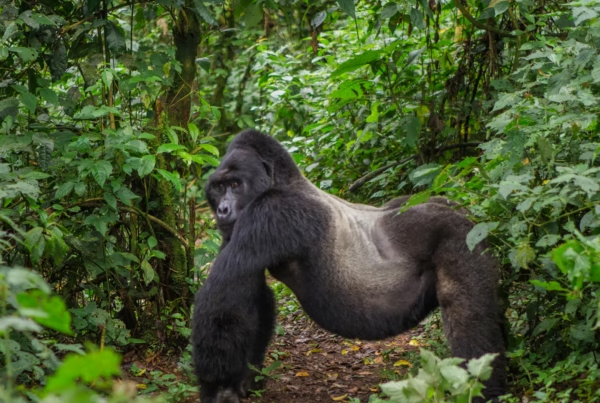
Bwindi Impenetrable National Park, a UNESCO World Heritage Site, is arguably Uganda’s crown jewel. Known globally for its population of mountain gorillas, it draws primate enthusiasts and researchers alike. Trekking through the ancient misty forest, visitors are led by expert trackers deep into the undergrowth where gorilla families go about their day, unbothered by human presence. Few experiences on Earth match the intensity and intimacy of locking eyes with a wild silverback in his domain. The forest is also a stronghold of biodiversity, teeming with rare butterflies, endemic birds, and ancient tree species.

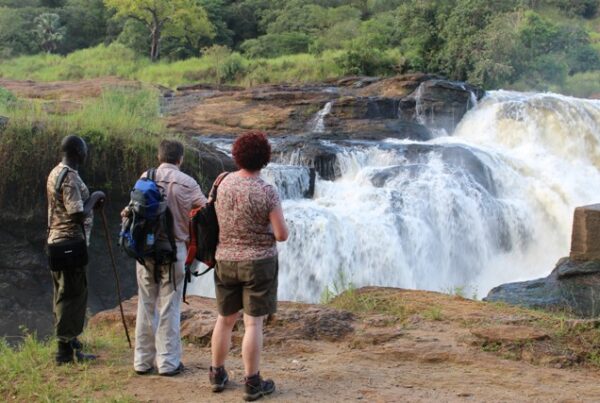
In the north, Murchison Falls National Park boasts an entirely different spectacle. The Nile, Africa’s longest river, thunders through a narrow gorge only seven meters wide, exploding into a cascade of mist and rainbow-hued spray. Below the falls, the river fans out into a delta that nourishes a rich plain, attracting herds of elephants, giraffes, and buffaloes, as well as hippos and crocodiles in its waters. Game drives here are complemented by river safaris that bring visitors remarkably close to the wildlife.

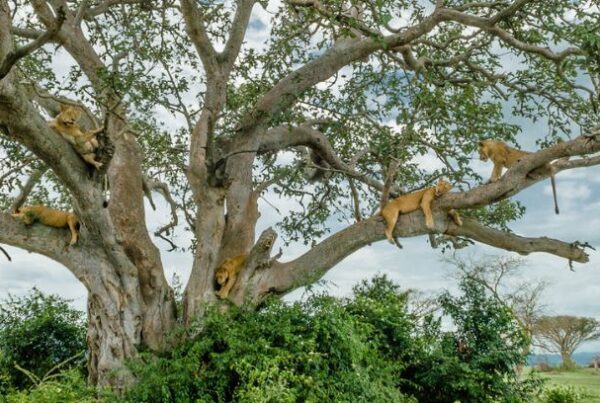
Queen Elizabeth National Park, stretching along the Albertine Rift Valley, is a mosaic of grassland savannah, crater lakes, and swampy channels. This diversity makes it one of the most species-rich parks in East Africa. Tree-climbing lions in Ishasha, a rare and curious behavior, are a highlight. The Kazinga Channel, which connects Lake George and Lake Edward, offers boat cruises that glide past dense concentrations of hippos, water birds, and shoreline-dwelling mammals.

A Haven for Primates and Predators

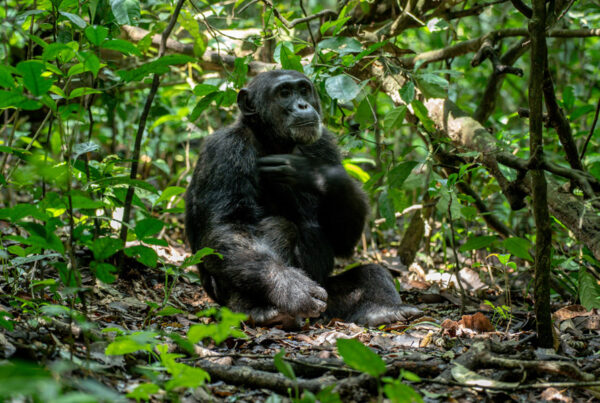
Uganda’s allure extends beyond its megafauna. The country is one of the few in the world where it is possible to track chimpanzees in the wild. In Kibale National Park, travelers embark on forest treks through tangled fig trees and echoing canopies to observe the complex social lives of chimpanzee troops. These intelligent primates, closely related to humans, are known for their vocalizations, tool use, and expressive behavior.

Meanwhile, Kidepo Valley National Park, lying far to the northeast, offers a wilder, more remote safari experience. Here, the wilderness remains largely untouched by mass tourism. The open plains and rugged mountains resemble a timeless Eden where cheetahs, lions, and leopards roam freely. It is also the best place in Uganda to see ostriches and large herds of Cape buffalo, often set against fiery sunsets and golden grasses.

Reserves and Wetlands: The Unsung Sanctuaries

Beyond the national parks, Uganda’s wildlife reserves and wetland systems contribute immensely to its conservation ethos. These lesser-known sites offer solitude, birdwatching opportunities, and immersion in untouched landscapes.

Semuliki Wildlife Reserve and the adjoining Semuliki National Park represent a transition zone between the dense Congo Basin forests and the East African grasslands. The reserve is one of Uganda’s most important areas for birdlife, hosting species rarely seen elsewhere on the continent, including the elusive shoebill stork.

Ziwa Rhino Sanctuary, though not a natural reserve in the traditional sense, plays a crucial role in Uganda’s rhino reintroduction efforts. After being wiped out in the 1980s due to poaching and conflict, white rhinos are now being bred and protected here, with hopes of re-establishing wild populations in national parks in the future. Walking safaris through Ziwa allow visitors to observe these prehistoric-looking giants on foot, under expert guidance.

Uganda’s Wetlands and Birding Havens

Uganda is also globally recognized as a birding paradise, with sites like Mabamba Swamp, Echuya Forest Reserve, and the Sango Bay area drawing ornithologists from around the world. Mabamba, in particular, is revered as a top location to spot the shoebill, a prehistoric-looking bird that is both mysterious and captivating. These wetlands are not just vital for biodiversity—they play a key role in flood regulation, climate balance, and the livelihoods of local fishing communities.

Community Involvement and Cultural Heritage

One of the most distinguishing features of Uganda’s conservation strategy is its emphasis on community participation. Protected areas are often managed with input from indigenous groups, including the Batwa, who once lived in the forests of Bwindi and Mgahinga. These communities are now engaged in eco-tourism, guiding services, and cultural conservation programs, offering visitors a deeper understanding of the human-nature connection that defines this region.

Cultural tourism has grown alongside wildlife tourism, allowing travelers to interact with traditional villages, witness local dances, and learn ancestral practices that have long coexisted with nature. This blend of wildlife experiences and cultural immersion makes Uganda a multi-dimensional destination, where conservation and culture walk hand in hand.

The Timeless Allure of Uganda’s Wild Heart

To journey through Uganda’s parks and reserves is to take a step back into a world where nature dominates, where silence is broken only by the trumpet of elephants or the haunting calls of chimpanzees. It is a world where every dawn promises adventure and every dusk, a new story etched into the fabric of the wild.

Uganda doesn’t overwhelm with commercialism or crowded vistas. Instead, it humbles with authenticity, inviting those who seek true wilderness to come and listen—not just with ears, but with the soul. Each park tells its own story, each reserve guards its own secret. And those who venture here leave not just with photographs, but with a changed perspective.

Start Your Journey with WildHorn Africa

For travelers ready to experience the full spectrum of Uganda’s natural wonders, choosing the right guide is essential. WildHorn Africa, with its deep local knowledge, responsible safari ethics, and personalized service, is the ideal partner for your African adventure. Whether you dream of gorilla trekking, lion tracking, birdwatching, or simply soaking in the serenity of a sunset over the savannah, WildHorn Africa will craft a journey as unforgettable as the land itself.

Book your African safari through WildHorn Africa and step into the wilderness with confidence, wonder, and respect for the untamed beauty that is Uganda.

Top 10 Best Places To Locate Cheetah on Safari

Top 10 Best Places To Locate Cheetah on Safari

By Travel guides, Travel stories and blogs

Top 10 Best Places to Locate Cheetah on Safari

Follow the World’s Fastest Predator Across Africa’s Finest Wildlife Destinations

An Icon of Speed, Grace, and Survival

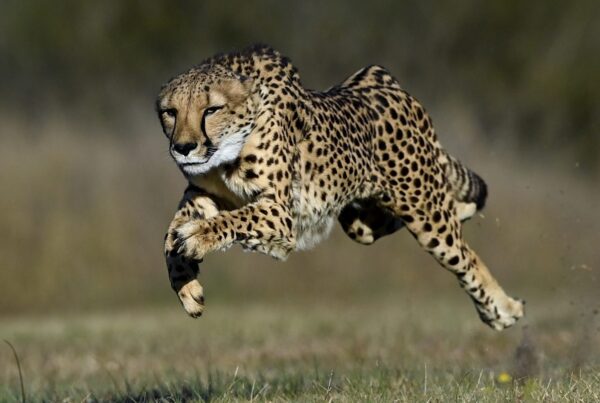
Few creatures evoke the spirit of the African wilderness quite like the cheetah. Sleek, elegant, and built for speed, it reigns as the fastest land mammal on Earth, capable of reaching speeds up to 70 miles per hour in short bursts. Yet despite its fame, the cheetah remains a relatively elusive predator in the wild. Unlike lions, which dominate with power and pride, or leopards, which rule through stealth and seclusion, the cheetah lives a life of delicate balance—navigating territories marked by larger carnivores, habitat loss, and ever-shifting ecosystems.

To encounter this iconic animal in its natural environment is to witness not just a chase, but a story of resilience, vulnerability, and astonishing adaptation. Cheetahs are not only hunters—they are mothers raising cubs alone, males forming coalitions in hostile territory, and solitary nomads traveling across vast savannahs in search of survival.

For travelers and wildlife photographers alike, locating cheetahs on safari represents a profound reward. But their success hinges on more than just luck. It depends on knowing where the odds are highest, understanding their habits, and accessing the most productive ecosystems through expert guidance.

Presented below are the top 10 best places in Africa to locate cheetahs in the wild—regions where the landscape, prey density, and conservation management align to create optimal conditions for viewing these remarkable cats. Each destination offers not only sightings, but deep immersion in the environment that sustains the cheetah’s delicate life.

Serengeti National Park – Tanzania’s Predator Playground

Within the boundless plains of northern Tanzania, the Serengeti emerges as one of the most iconic and reliable places on Earth to spot cheetahs in the wild. Its open savannahs and abundant prey, particularly Thomson’s gazelles, provide ideal hunting grounds for cheetahs to exercise their blistering speed. The short-grass plains of the southern Serengeti, especially during the calving season, are particularly renowned for cheetah sightings.

Cheetahs are frequently seen scanning the horizon from termite mounds, stalking silently through golden grass, or accelerating into a chase that lasts mere seconds yet ends in breathtaking success or failure. The Serengeti’s predator density is exceptional, and with skilled guides and proper timing, travelers are granted front-row access to the drama of the hunt.

Masai Mara National Reserve – Kenya’s Theatre of the Chase

Just across the border from the Serengeti, Kenya’s Masai Mara provides a continuation of the same ecosystem, but with its own distinct charm. Its relatively compact geography, open plains, and high concentration of prey make it one of the most accessible and productive areas to locate cheetahs on safari.

Cheetahs in the Mara have become renowned for their confidence and visibility. Some individuals have grown accustomed to vehicles, allowing for prolonged and intimate observation. In particular, the Mara is known for its charismatic coalitions—groups of male cheetahs who defend territory and hunt in coordinated movements across the savannah.

The interaction between these cheetahs and other predators like lions and hyenas adds another layer to the experience, showcasing the constant risk-reward calculations cheetahs must make to survive.

Okavango Delta – Botswana’s Mosaic of Predatory Beauty

Though better known for its lion prides and leopard sightings, Botswana’s Okavango Delta is increasingly recognized as a prime destination for cheetah tracking—especially in the drier outer fringes of the delta. Areas such as the Selinda Reserve, Linyanti, and the eastern reaches of the delta offer open woodlands and savannahs that suit the cheetah’s hunting style.

The sparse vegetation in these drier zones gives cheetahs room to spot prey and space to accelerate. The ecosystem’s low density of lions and hyenas—compared to denser areas of the delta—provides critical breathing space for cheetah survival. Sightings here may feel more exclusive, as the remoteness of the region ensures that encounters are often experienced in solitude.

Kgalagadi Transfrontier Park – Southern Africa’s Hidden Cheetah Gem

Stretching across Botswana and South Africa, the Kgalagadi Transfrontier Park is one of the most underrated yet remarkable cheetah-viewing destinations on the continent. Its red dunes, dry riverbeds, and sparse vegetation offer unparalleled visibility, turning even distant cheetah movements into striking scenes.

In the Kgalagadi, cheetahs have adapted to arid environments, often relying on ambush techniques and traveling long distances in search of prey. The harshness of the land only amplifies the respect one feels when watching a cheetah make its move across the sand.

This is a destination for the true safari purist—those who seek extended hours in the bush, fewer vehicles, and encounters that feel deeply personal and unfiltered.

Ndutu Area – Tanzania’s Seasonal Cheetah Sanctuary

During the calving season from December to March, the Ndutu area in the southern Serengeti becomes a temporary haven for cheetahs. Drawn by the explosion of newborn wildebeest and gazelle, cheetahs take advantage of the easy pickings, often focusing on young and inexperienced prey.

It is during this time that the chances of seeing cheetahs hunting increase dramatically. The open landscape and abundance of targets make Ndutu a photographer’s dream, offering the rare chance to capture full hunting sequences in excellent light and proximity.

Here, nature’s theater plays out daily—often beginning in the cool hours before dawn and continuing into the golden hues of early evening, when cheetahs are most active.

Central Kalahari Game Reserve – Botswana’s Desert Enigma

The Central Kalahari, one of the largest protected areas in Africa, is often misunderstood as a barren wasteland. Yet beneath its quiet façade lies one of the most intriguing cheetah habitats on the continent. Its open pans, dry riverbeds, and expansive grasslands provide a perfect setting for cheetah pursuits.

Cheetahs here are known for their remarkable adaptability, surviving in a semi-desert climate with scattered prey and little cover. Spotting them often requires patience, sharp eyes, and expert tracking, but the reward is immense. Watching a cheetah emerge from mirage-like heatwaves and begin a slow, calculated stalk across a salt pan is an experience as haunting as it is beautiful.

Ruaha National Park – Tanzania’s Wild Frontier

In the remote southern region of Tanzania lies Ruaha, a lesser-known park that delivers surprisingly high cheetah densities, especially in its dry-season months. This vast and rugged park is defined by baobabs, dry riverbeds, and golden plains that stretch into the horizon.

Cheetahs in Ruaha navigate a predator landscape dominated by lions and wild dogs, making their behavior more cautious and strategic. Sightings can feel more dramatic due to the raw, untamed nature of the park and its minimal tourist footprint.

Ruaha remains one of East Africa’s best-kept secrets, offering encounters that feel far removed from the well-traveled safari routes—intimate, unhurried, and unforgettable.

Namib-Naukluft and Greater Namib Region – Survival Against All Odds

While not traditionally associated with big cat sightings, the Namib Desert and surrounding regions in Namibia support a population of desert-adapted cheetahs that have developed extraordinary survival techniques in one of the planet’s harshest environments.

The open terrain can make spotting easier, but cheetahs in this region are incredibly wary, as their survival depends on isolation, stealth, and endurance. Guided tracking expeditions—often led by conservation-focused lodges and organizations—provide an opportunity to learn about the conservation challenges facing this fragile population, while offering rare and rewarding encounters.

This is not a typical cheetah safari, but one that emphasizes conservation education, ethical tracking, and respect for the cheetah’s struggle in a rapidly changing world.

Lewa Wildlife Conservancy – Kenya’s Model for Cheetah Coexistence

Located in northern Kenya, Lewa Conservancy offers one of the best examples of private land conservation supporting a thriving cheetah population. With low tourist density, highly trained guides, and a carefully managed ecosystem, Lewa allows for longer, deeper, and more informative cheetah sightings.

Guests here are offered insight not just into cheetah behavior, but into the collaborative model that supports their continued survival—engaging with community-driven conservation efforts, anti-poaching strategies, and long-term monitoring programs. Every encounter becomes part of a broader narrative of hope and resilience.

Witness the Speed and Soul of the Wild

To locate a cheetah on safari is to find a symbol—of speed, yes, but also of fragility and grace. It is a reminder that beauty in the wild is never guaranteed, and that every sighting is a gift born of protection, patience, and presence.

From the rolling plains of the Serengeti to the quiet sands of the Kalahari, Africa offers countless landscapes where cheetahs continue to chase both prey and survival. For travelers, these moments offer not just photographs but connection—to nature, to stillness, and to the quiet intelligence of the world’s most agile hunter.

Book Your Cheetah Safari with WildHorn Africa

To elevate the chances of experiencing cheetahs in their natural element—and to do so with care, comfort, and conservation in mind—it is highly recommended that safaris be arranged through WildHorn Africa. With unmatched expertise in tailor-made wildlife experiences, WildHorn Africa ensures travelers are placed in the right locations, at the right times, with the right guides.

Whether the goal is to witness the Great Migration with cheetahs in pursuit, track desert-adapted cats across Namibia’s ancient lands, or photograph rare hunts on the Mara’s golden plains, WildHorn Africa crafts journeys that bring dreams to life.

Travel deeper. Travel smarter. Travel wild—with WildHorn Africa.

Best Safari Parks & Game Reserves Near Dar es Salaam

Best Safari Parks & Game Reserves Near Dar es Salaam

By Tanzania travel guides, Travel guides, Travel stories and blogs

Best Safari Parks & Game Reserves Near Dar es Salaam: Tanzania’s Untamed Wilderness Within Reach

Discover Africa’s Hidden Safari Gateway

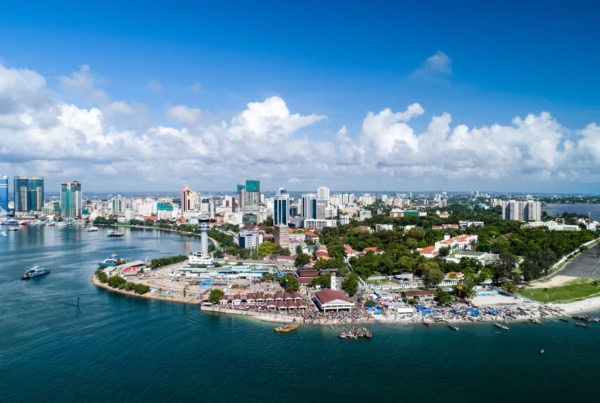
Just beyond the bustling streets, white-sand beaches, and vibrant culture of Dar es Salaam lies a safari experience as rich and untamed as any in Africa. Often overshadowed by its more famous northern counterparts such as the Serengeti or Ngorongoro Crater, the southern and coastal regions near Tanzania’s largest city hold within them some of the continent’s most underrated safari treasures. These parks and game reserves offer raw, authentic, and less crowded encounters with Africa’s iconic wildlife—without the need for long-haul travel across the country.

Dar es Salaam, being both a commercial hub and a coastal escape, is uniquely positioned as a gateway to remarkable safari experiences. For travelers pressed for time, seeking off-the-beaten-path adventures, or simply desiring a more tranquil alternative to the tourist-heavy northern circuit, the national parks and reserves near Dar es Salaam promise a seamless blend of accessibility and wilderness.

Within a few hours’ journey—by road, rail, or short bush flight—one may find themselves immersed in the sights and sounds of the African bush, where lions stalk through the savannah, elephants graze under ancient baobab trees, and crocodiles sun themselves along riverbanks teeming with birdlife. This article delves into the finest of these protected areas, offering a comprehensive exploration of the best safari parks and game reserves near Dar es Salaam, each holding its own allure, biodiversity, and signature experiences.

Mikumi National Park: The Southern Serengeti’s Secret Twin

One of the most accessible parks from Dar es Salaam is Mikumi National Park, located roughly 280 kilometers west of the city. Often dubbed the “Southern Serengeti”, Mikumi shares an ecosystem with the larger Selous (now Nyerere National Park) and features vast floodplains, golden savannah, and mountain backdrops that bear a striking resemblance to more famous northern landscapes.

Mikumi’s proximity to Dar es Salaam—just a five- to six-hour drive—makes it one of the top choices for a short safari escape. Within its boundaries, an impressive variety of wildlife can be observed, including lion prides, giraffes, herds of buffalo, zebras, elephants, wildebeest, and an astonishing number of bird species.

The Mkata floodplain, in particular, serves as a stunning focal point for wildlife viewing. With fewer safari vehicles than found in northern parks, Mikumi offers a serene and intimate game viewing experience, allowing for longer, uninterrupted sightings. The park’s infrastructure is well-developed, with lodges, tented camps, and budget accommodations ensuring that every traveler can enjoy the area’s natural wonders in comfort.

Nyerere National Park (Formerly Selous Game Reserve): A Vast and Wild Wonderland

Formerly known as Selous Game Reserve and now renamed Nyerere National Park, this is one of Africa’s largest protected areas, spanning over 30,000 square kilometers. Located just south of Dar es Salaam, Nyerere can be accessed by a short charter flight or an adventurous full-day drive. This vast, lesser-known gem offers a raw and unfiltered safari experience, drawing those who seek solitude and immersion in the untouched wilderness.

Nyerere is home to large populations of elephants, lions, leopards, wild dogs, hippos, and crocodiles, with the Rufiji River weaving through the park, providing a lifeline for its inhabitants. The river not only supports a flourishing ecosystem but also sets the stage for unique boat safaris, allowing visitors to witness hippos grunting in the shallows and elephants crossing the waters at sunset.

Because of its remoteness and sheer size, Nyerere offers adventure-driven safaris that include walking safaris with armed rangers, fly camping under the stars, and explorations of uncharted terrain. The atmosphere is wild and unpredictable, ideal for those drawn to the thrill of the unknown. The exclusivity of this park ensures that each sighting feels deeply personal and untouched by mass tourism.

Saadani National Park: Where the Bush Meets the Beach

Saadani National Park stands out as Tanzania’s only wildlife sanctuary bordering the ocean, offering a rare chance to blend a traditional safari with a coastal retreat. Located just north of Dar es Salaam along the Indian Ocean, this park presents a unique ecosystem where lions might roam sand dunes and buffalo graze near palm-fringed beaches.

Visitors can reach Saadani by road or via a brief flight, and once inside the park, the diversity of landscapes—from grasslands and mangroves to salt flats and beaches—creates an array of habitats for both land and marine life. Elephants, lions, giraffes, warthogs, and hartebeest are commonly seen, while the Wami River invites hippos, crocodiles, and flocks of aquatic birds.

Saadani’s charm lies not only in its distinct ecology but also in its ability to offer a dual experience: the excitement of game drives and the serenity of the Indian Ocean. After a morning tracking wildlife, guests may find themselves sunbathing on a private stretch of beach or enjoying a sundowner cruise along the river—a luxury combination unmatched by any other Tanzanian park.

Udzungwa Mountains National Park: A Haven of Biodiversity and Hiking Adventures

For those who seek a wilder, more biodiverse escape from the city, the Udzungwa Mountains National Park presents an alluring alternative to the more traditional big-game parks. Though it lacks large carnivores, Udzungwa is known for its exceptional hiking trails, endemic primate species, and lush montane forests. Located approximately 350 kilometers from Dar es Salaam, it is easily reachable by road, often paired with visits to Mikumi or Ruaha.

Udzungwa is part of the Eastern Arc Mountains and contains several ecosystems ranging from lowland forest to alpine meadows. The park is a hotspot for endemic flora and fauna, with rare monkeys like the Sanje mangabey and the Udzungwa red colobus found nowhere else on Earth. The highlight for many is the hike to Sanje Waterfalls, where travelers can stand in awe of cascading water tumbling down nearly 200 meters into a forest basin teeming with life.

The park’s uniqueness lies in its fusion of conservation and culture, where hiking becomes a journey through both natural and human heritage. While large mammals may be sparse, the immersive forest treks and opportunities for ecological discovery make it a compelling destination near Dar es Salaam for nature lovers and hiking enthusiasts alike.

Ruaha National Park: A Remote Jewel Worth the Journey

Though farther from Dar es Salaam than the other parks mentioned, Ruaha National Park remains accessible via connecting flights or extended overland safaris and offers a wild, majestic experience that rewards those who make the journey. As the second-largest national park in Tanzania, Ruaha is home to enormous elephant populations, massive baobab trees, and predator-rich savannahs.

Its remoteness has preserved its authenticity. Game drives in Ruaha often take place without encountering another vehicle all day, providing a level of solitude that enhances the safari experience. The Great Ruaha River attracts animals throughout the dry season, creating dramatic predator-prey interactions that rival any in Africa.

With luxurious camps perched along riverbanks and experienced guides offering deep bush knowledge, Ruaha is a crown jewel for seasoned safari-goers seeking a true wilderness immersion. While it requires more time to reach, the experience is unforgettable and stands among the finest in East Africa.

Let WildHorn Africa Craft Your Dar es Salaam Safari Adventure

The regions surrounding Dar es Salaam unveil a lesser-known yet equally compelling side of Tanzania’s wildlife legacy. From the untamed vastness of Nyerere to the coastal charm of Saadani, and the mountain mystique of Udzungwa to the classic savannahs of Mikumi and Ruaha, the southern safari circuit offers diversity, accessibility, and exclusivity rarely found elsewhere on the continent.

For travelers yearning for authenticity without sacrificing comfort, and for those seeking both seclusion and adventure, these parks and reserves deliver exceptional value and lasting memories. Whether it’s your first African safari or one of many, the ecosystems near Dar es Salaam provide a rich tapestry of wildlife encounters, landscapes, and cultural insights.

To ensure that every moment of your journey is curated with care, professionalism, and insider expertise, WildHorn Africa stands ready as your trusted safari planner. Specializing in personalized safari itineraries across East Africa, WildHorn Africa brings your vision of adventure to life, transforming dreams into immersive experiences. Choose WildHorn Africa to explore Tanzania’s hidden gems and embark on a safari that’s as bold, beautiful, and boundless as Africa itself.

Top 5 Best Game Reserves for Safaris Near Cape Town

Top 5 Best Game Reserves for Safaris Near Cape Town

By South Africa travel guides, Travel guides, Travel stories and blogs

Top 5 Best Game Reserves for Safaris Near Cape Town

Where Urban Sophistication Meets Untamed Wilderness

Cape Town, South Africa’s shimmering coastal jewel, is renowned for its cosmopolitan charm, rich cultural heritage, and breathtaking natural landscapes. But beyond the vineyards, Table Mountain, and Atlantic surf lies another world—a wild, untamed realm where nature reigns supreme. Many travelers are astonished to learn that within just a few hours’ drive from the city, some of the most captivating safari experiences in the region await. These reserves, though outside of the Kruger spotlight, deliver exceptional Big Five encounters, rich biodiversity, and intimate wilderness experiences without requiring long-haul travel.

What distinguishes the safari reserves near Cape Town is not merely their accessibility but their intelligent blending of conservation, luxury, and ecological diversity. The Western Cape, while not traditionally associated with massive herds or sprawling savannahs, offers carefully managed, malaria-free game reserves where conservation efforts have been profoundly successful. Each reserve holds a unique ecological story, set against a backdrop of majestic mountains, rolling plains, and fynbos-covered hills. These reserves are ideal for travelers seeking to complement their urban adventures with a deeply immersive journey into the wild.

Aquila Private Game Reserve – The Closest Taste of the Wild

Positioned less than two hours from Cape Town, the Aquila Private Game Reserve has long stood as one of the most popular safari destinations for city dwellers and international visitors alike. This reserve has been built around the principle of accessibility, offering a thrilling introduction to African wildlife within a short distance of the city. While its terrain might not mimic the endless bushveld of the Kruger or the Okavango, Aquila compensates with focused conservation efforts, particularly in reintroducing species to areas where they had long disappeared.

Aquila is recognized for housing the iconic Big Five—lion, leopard, elephant, buffalo, and rhino—alongside a range of antelope, giraffes, and diverse bird species. Game drives are conducted by experienced rangers, and the reserve also offers horseback safaris and quad bike explorations, adding a layer of adventure to the experience. With luxury lodges overlooking the rugged Karoo plains and a wellness spa nestled amid natural landscapes, Aquila caters equally to wildlife enthusiasts and luxury seekers. It is through this balance of conservation, comfort, and convenience that the reserve earns its place as a gateway to safari from Cape Town.

Inverdoorn Game Reserve – Conservation and Tranquility Combined

Situated approximately 2.5 hours northeast of Cape Town in the vast reaches of the Klein Karoo, Inverdoorn Game Reserve provides a more intimate and conservation-focused alternative. What makes this reserve stand out is its dedication to the rehabilitation of cheetahs, through its connection to the Western Cape Cheetah Conservation. Visitors are not only offered the chance to see these elusive predators but are also educated on the critical conservation work being carried out to ensure their survival.

Inverdoorn is home to a diverse ecosystem that includes the Big Five and an array of smaller species. The reserve’s arid beauty, punctuated by acacia trees and semi-desert landscapes, serves as a magnificent setting for sunrise and sunset game drives, during which wildlife sightings are plentiful and often accompanied by thoughtful ecological commentary. The luxury lodges at Inverdoorn exude understated elegance, with panoramic views and design elements that harmonize with the surrounding wilderness. This is a place where silence speaks, where the rhythm of nature can be felt with every breath of dry Karoo air.

Gondwana Game Reserve – Where Fynbos Meets Safari

Located along the picturesque Garden Route near Mossel Bay, Gondwana Game Reserve is a unique gem within the Western Cape. Its setting within the Cape Floral Kingdom, one of the richest biodiversity hotspots in the world, makes it the only Big Five reserve located in a fynbos biome. This rare ecological confluence creates a visually and biologically rich environment, where elephants meander through wild proteas, and lions prowl across flowering plains.

Gondwana offers a truly immersive safari experience with game drives led by passionate rangers who are well-versed in both animal behavior and botany. The landscape here offers dramatic scenery—rolling hills, distant mountains, and sweeping grasslands—providing the perfect habitat for predators and prey alike. The reserve’s accommodations range from high-end safari lodges to eco-camps, each offering a refined wilderness experience. The harmony between conservation and comfort here is palpable, positioning Gondwana as a top-tier destination for those seeking an authentic safari immersed in natural beauty, all within reach of Cape Town.Top 5 Best Game Reserves for Safaris Near Cape Town

Sanbona Wildlife Reserve – Vast, Untouched, and Timeless

Farther inland, nestled at the foot of the Warmwaterberg Mountains in the Little Karoo, lies Sanbona Wildlife Reserve, one of South Africa’s largest private reserves. Spanning over 58,000 hectares, Sanbona is a vast expanse of untamed wilderness, where nature unfolds at its own pace. The reserve’s deep commitment to ecological restoration and biodiversity protection sets it apart. Once an overgrazed farmland, the land has been lovingly rewilded, with species reintroduced and natural systems rejuvenated under the guidance of passionate conservationists.

Sanbona is one of the few places in the Western Cape where self-sustaining populations of the Big Five can be encountered, alongside rarer species such as the riverine rabbit and white lions. The reserve’s geography is striking—dramatic mountains, open plains, and ancient rock formations etched with San rock art. Here, safaris are not rushed; they are experiences shaped by stillness, storytelling, and observation. The luxury lodges blend seamlessly with the landscape, offering panoramic views and serene solitude. Time slows down at Sanbona, offering guests the profound luxury of space and silence.

Buffelsfontein Game & Nature Reserve – A Rustic Gateway

Less than ninety minutes from Cape Town, Buffelsfontein Game & Nature Reserve provides a rustic, down-to-earth safari experience. While it may not boast the grandeur of more remote reserves, it compensates with its welcoming atmosphere, accessibility, and affordability. Ideal for families or day-trippers, Buffelsfontein offers sightings of several large mammals, including buffalo, lion, giraffe, and zebra, along with numerous bird species that thrive in the fynbos-rich terrain.

The reserve’s landscape is quintessentially West Coast—open plains bordered by shrubland and distant hills, punctuated by watering holes and shaded thickets. Game drives are informal yet informative, conducted by guides who speak candidly about the animals and local ecology. The accommodations range from simple chalets to traditional bush camps, appealing to those who value authenticity over opulence. Buffelsfontein represents the soul of grassroots safari, where every sighting is celebrated, and the beauty of the wild is appreciated for its simplicity and immediacy.

Crafting the Perfect Cape Town Safari Getaway

The proximity of these remarkable game reserves to Cape Town allows travelers to experience the best of both worlds—urban sophistication and raw wilderness adventure. Whether one seeks the opulence of Gondwana, the ecological depth of Sanbona, or the intimate charm of Inverdoorn, the Western Cape’s safari offerings are as diverse as its landscapes. Each reserve presents a unique interpretation of African safari, shaped by geography, conservation ethos, and the rhythm of the wild.

In an age when time is a luxury and authentic experiences are prized above all, these safari destinations near Cape Town offer an ideal escape into nature without the need for extended travel or compromise. They showcase Africa not only in its grandeur but in its subtleties—in the flick of a lion’s tail, the rustle of dry grass, and the silent stare of a giraffe at dusk.

For travelers seeking expertly curated journeys into these magnificent regions, WildHorn Africa emerges as the trusted name in bespoke safari experiences. With a deep understanding of Africa’s hidden gems and a commitment to sustainable travel, WildHorn Africa designs itineraries that are both enriching and unforgettable. From the heart of Cape Town to the vast wilderness beyond, your journey into the wild is best undertaken with WildHorn Africa as your guide—where every safari becomes a story worth telling.

10 Interesting Kalahari Desert Facts

10 Interesting Kalahari Desert Facts

By Botswana travel guides, Travel guides, Travel stories and blogs

10 Interesting Kalahari Desert Facts: A Journey Into Africa’s Living Sands

Unveiling the Soul of the Desert

A sweeping canvas of burnt ochre dunes, dry riverbeds, and open grasslands, the Kalahari Desert has long been misunderstood by those who think of deserts only as lifeless expanses of sand. Yet, within its timeless silence lies one of the most vibrant, ecologically rich, and culturally significant regions on the African continent. Stretching across Botswana, Namibia, and parts of South Africa, the Kalahari is not merely a place—it is an enduring experience. Every grain of its sand holds a story of adaptation, survival, mystery, and raw natural beauty.

As more curious travelers seek destinations off the beaten path, the Kalahari emerges as a paradox of extreme conditions and intricate life. It may appear desolate to the untrained eye, but this ancient land pulses with deep-rooted secrets, hosting unique wildlife, ancient cultures, and natural wonders that continue to fascinate geographers, scientists, and adventurers alike.

Here are ten fascinating facts that peel back the surface of the Kalahari to reveal its extraordinary character, shedding light on what makes this semi-arid desert one of Africa’s most enigmatic natural treasures.

It’s Not a True Desert in the Traditional Sense

What surprises most visitors first is the realization that the Kalahari Desert, by scientific definition, isn’t truly a desert. Though its name is derived from the Tswana word Kgala, meaning “the great thirst,” the region receives significantly more rainfall than typical deserts. In some areas, up to 250 millimeters of rain fall annually, allowing a diverse range of plant life and supporting rich biodiversity. Technically, this qualifies the Kalahari as a semi-desert or dry savannah, rather than a hyper-arid zone like the neighboring Namib Desert. This climatic anomaly is what allows the desert to host surprisingly complex ecosystems, creating a fusion between the stark and the lush.

It’s Home to One of the World’s Oldest Cultures

The Kalahari is not only a physical landscape but also a cultural reservoir, home to the San people—often referred to as Bushmen. The San are among the oldest continuous cultures in the world, with archaeological evidence tracing their lineage back over 20,000 years. Their relationship with the desert is deeply symbiotic, based on a profound understanding of nature’s rhythms. Their unique language, characterized by click consonants, and their survival strategies—such as using plants for medicinal purposes and locating underground water sources—reflect an intimate knowledge of an environment many would find hostile.

It Supports a Diverse Range of Wildlife

Though many envision deserts as lifeless, the Kalahari is a thriving habitat. Its open plains, wooded acacia groves, and salt pans support iconic species such as lions, cheetahs, hyenas, meerkats, gemsbok, and giraffes. Most famously, it is known for the black-maned Kalahari lion, a majestic subspecies adapted to the harsh climate. Predators here have developed more patient hunting strategies, while herbivores migrate to track seasonal vegetation. With birdlife as varied as kori bustards, secretary birds, and crimson-breasted shrikes, the desert becomes a living theater of natural adaptation.

It Hosts the Largest Continuous Stretch of Sand in the World

The Kalahari is part of the Kalahari Basin, an expansive geological depression spanning nearly 930,000 square kilometers. It forms the largest unbroken stretch of sand on Earth, surpassing even the Sahara in sand volume. But unlike the Sahara’s towering dunes, the Kalahari’s sands are mostly stable, covered with grass or shrubs, giving it a unique texture. These ancient sands are thought to have been laid down millions of years ago, forming a fossil desert—a landscape that has seen epochs come and go.

It Contains Africa’s Second-Largest Game Reserve

Within the heart of Botswana lies the Central Kalahari Game Reserve, a protected area that spans over 52,000 square kilometers—making it Africa’s second-largest game reserve and one of the most remote. Originally set aside in 1961 as a homeland for the San people, the reserve today offers travelers a sense of unfiltered wilderness. Wildlife sightings here are far more intimate and less crowded compared to more commercial parks, and the vast, open horizons allow for soul-stirring encounters with nature. Here, silence isn’t absence—it is presence at its most profound.

It Hosts Seasonal Waterways and Ancient Riverbeds

Although often perceived as dry, the Kalahari hides the traces of ancient rivers and periodic wetlands. The most famous of these is the Okavango River, which spills into the northwest of the basin to form the Okavango Delta, the world’s largest inland delta. This seasonal floodplain draws thousands of animals, transforming part of the desert into a lush, life-giving oasis. Elsewhere, fossil riverbeds like the Deception Valley tell of wetter eras when rivers once coursed through these lands, leaving behind mineral-rich soils and supporting life even today.

It Plays Host to a Remarkable Astronomical Display

Free from the pollution of artificial light and nestled in one of the most isolated parts of southern Africa, the Kalahari offers some of the clearest, darkest night skies on Earth. Stargazing here becomes a spiritual encounter. During the dry season, the Milky Way arches across the sky in pristine clarity, and constellations of the Southern Hemisphere—like the Southern Cross and Orion—are visible in stunning brilliance. The San people have their own celestial interpretations, using stars as navigational tools and weaving them into their oral traditions and cosmologies.

It Is an Evolving Landscape Shaped by Wind and Time

The Kalahari is a dynamic terrain constantly being sculpted by wind, temperature shifts, and erosion. Despite the apparent stillness, this is a landscape in motion. Sand dunes subtly shift over time, termite mounds rise and fall, and seasonal vegetation patterns change based on rainfall. Scientific studies continue to monitor how climate change may further influence the desert’s character, with some predictions suggesting increased aridity or altered migration patterns of wildlife. What remains constant, however, is the desert’s resilience and the rhythmic pulse of life that endures.

It Offers a Refuge for Rare and Endemic Species

Several species in the Kalahari have adapted so specifically to its unique conditions that they cannot be found anywhere else. Animals such as the brown hyena, bat-eared fox, and Kalahari tent tortoise are among the rare and ecologically important species that thrive here. Plants like the devil’s claw have evolved deep root systems and medicinal uses, making them both biologically and culturally significant. These adaptations represent nature’s ingenuity, shaped over millennia by necessity and time.

It Is a Living Classroom of Indigenous Knowledge

Perhaps the most extraordinary fact about the Kalahari is that it is still a living classroom, where ancient wisdom intersects with modern conservation. The San people’s continued presence and their ability to read the landscape with surgical precision—tracking animals, interpreting wind patterns, predicting weather—offers invaluable insights that complement scientific understanding. Today, efforts are being made to protect and integrate this indigenous knowledge, ensuring that it is not lost to modernity but honored as a vital part of Africa’s intellectual and ecological heritage.

Experience the Living Desert With WildHorn Africa

The Kalahari Desert is more than a geographical destination—it is a philosophy of survival, a landscape of layered mysteries, and a spiritual retreat for those who crave deeper connections with the natural world. Travelers drawn to this enigmatic realm often leave transformed, having encountered not only rare wildlife and ancient culture but also themselves in the process.

To explore the Kalahari with the depth, care, and respect it deserves, WildHorn Africa stands ready as your expert guide. Specializing in tailor-made African safaris, WildHorn Africa offers immersive experiences that bring travelers face-to-face with the essence of the desert. Whether it’s tracking lions across the dunes, stargazing in remote camps, or walking alongside San elders who whisper the secrets of the sands, each journey is carefully curated to inspire and inform.

For those seeking to unlock the profound beauty and surprising richness of Africa’s most misunderstood desert, there has never been a better time—or a better partner—than WildHorn Africa. Let your next adventure be shaped by the desert’s wisdom, and guided by those who know it best.

Where To See Elephants in Africa – the Top 5 Best Safari Destinations To See Elephants

Where To See Elephants in Africa

By Travel guides, Travel stories and blogs

Where To See Elephants in Africa – The Top 5 Best Safari Destinations To See Elephants

An Icon of the Wild: The Soul of Africa on Four Majestic Legs

There is perhaps no creature more deeply symbolic of the African wilderness than the African elephant. Towering, intelligent, and profoundly emotional, elephants do not simply walk the land—they define it. With their massive silhouettes, long sweeping trunks, and silent, deliberate movements, they carry with them the legacy of time itself. To see an elephant in the wild is not merely a safari sighting; it is a moment of deep human connection with nature’s rawest, most magnificent force.

Africa’s elephant populations span across diverse ecosystems—roaming through dense forests, across arid deserts, along riverbanks, and into open savannas. But not all destinations offer the same kind of elephant experience. Certain regions of the continent provide exceptional opportunities to encounter these majestic beings in large numbers, dramatic settings, and often at close range. Some destinations boast thousands of elephants on migration routes. Others offer quiet, personal moments as individuals drink from mirrored waterholes or travel in matriarch-led herds across vast golden plains.

This article uncovers the top five destinations in Africa where sightings of elephants transcend expectation—where the grandeur, complexity, and intimacy of elephant life can be witnessed in the purest and most meaningful forms.

Chobe National Park, Botswana – The Elephant Capital of the World

At the heart of northern Botswana, where the Chobe River meanders along Namibia’s border, lies Chobe National Park, renowned across the globe as the single greatest stronghold for elephants in Africa. It is estimated that over 120,000 elephants call this region home—an extraordinary concentration unrivaled anywhere else on Earth.

Elephants in Chobe are not just abundant—they are central to the ecosystem. During the dry season, immense herds converge along the riverbanks, forming a natural theatre of movement, interaction, and survival. The air becomes alive with the sounds of splashing, trumpeting, and playful jostling as families of elephants bathe, drink, and dust themselves in the golden light of dusk.

What makes Chobe so unique is the proximity it offers. Whether gliding silently on a riverboat cruise or navigating the floodplain in a 4×4 safari vehicle, guests are brought within arm’s reach of elephant herds in their most relaxed state. From calves learning to use their trunks to matriarchs standing guard, each encounter reveals the deep social structure and emotional intelligence of these creatures.

The park’s distinct seasonal rhythm ensures that the spectacle evolves throughout the year, while its relatively undeveloped terrain allows for experiences that feel raw, wild, and untouched. In Chobe, the elephant is not a rare prize—it is the heartbeat of the land.

Amboseli National Park, Kenya – Giants Beneath the Shadow of Kilimanjaro

Few scenes in Africa rival the vision of elephants marching across golden savannahs with the snow-capped peak of Mount Kilimanjaro looming in the background. This breathtaking tableau unfolds daily in Amboseli National Park, a region located in the southern reaches of Kenya near the Tanzanian border.

Amboseli is famed for its open landscapes, sparse vegetation, and shallow swamps—conditions that make elephant sightings not only frequent but visually spectacular. The elephants here are among the most studied in Africa, forming part of a long-standing research project that has cataloged generations of individuals. Their sheer size, long ivory tusks, and graceful movements against the photogenic backdrop make for one of the continent’s most iconic safari scenes.

Because of the park’s relatively small size and its reliable water sources, elephants tend to concentrate around marshy areas, particularly during dry spells. This draws them in from surrounding regions, resulting in mesmerizing daily gatherings of dozens, sometimes hundreds, of elephants, often moving in long, winding lines with purpose and coordination.

Beyond the visual impact, what distinguishes Amboseli is the emotional resonance of its elephants. Here, researchers and rangers speak of elephants with familiarity and reverence. Each herd is known, each matriarch named. The result is not just a safari of sights, but a safari of stories—an encounter not just with a species, but with individuals and families whose lives unfold under the gaze of Kilimanjaro.

Tarangire National Park, Tanzania – The Hidden Giant Sanctuary

Often overshadowed by its more famous northern Tanzanian counterparts such as the Serengeti and Ngorongoro, Tarangire National Park remains one of the most underestimated elephant sanctuaries in Africa. Nestled along the Tarangire River and bordered by ancient baobab trees, this park serves as a dry-season refuge for thousands of elephants, creating a phenomenon that remains blissfully under the radar.

Between June and October, the river becomes the primary lifeline, drawing herds from surrounding regions in search of water. During this period, Tarangire boasts one of the highest elephant concentrations per square kilometer in East Africa. Unlike some of the more sprawling parks, Tarangire’s compact geography ensures close encounters with the animals as they migrate through woodlands, drink at waterholes, and shade themselves under massive baobabs.

What sets Tarangire apart is not just its abundance but its atmosphere. The landscape, dotted with termite mounds and marula trees, radiates an ancient, almost mythical quality. Against this backdrop, elephants appear not just as part of the environment, but as its architects—shaping the land with each step and trunk pull.

Because of its relatively low visitor numbers, guests in Tarangire often find themselves alone with herds, able to observe undisturbed behavior and soak in the sounds of the wild. It is a deeply meditative elephant experience, far from the crowds and fully in tune with the rhythm of the land.

Kruger National Park, South Africa – A Mosaic of Elephant Diversity

No list of Africa’s elephant destinations would be complete without mention of Kruger National Park, South Africa’s flagship reserve and one of the largest protected areas on the continent. Stretching across nearly 20,000 square kilometers, Kruger encompasses a variety of ecosystems—each offering different types of elephant experiences, from dense bushveld and river valleys to savannah plains and mopane forests.

Elephants in Kruger are widespread and accessible. Whether in the northern reaches near Pafuri or the southern zones around Skukuza, travelers are almost guaranteed multiple encounters. The ease of accessibility, both via guided safaris and self-drives, makes Kruger an ideal destination for those seeking consistent sightings over a longer period.

Perhaps most intriguing is the range of elephant behavior visible here. With such a large population distributed across varied habitats, one can observe differences in herd size, movement patterns, and even feeding techniques. Seasonal shifts influence elephant behavior dramatically, with the dry season drawing herds to riverbanks and dams, while the rainy season disperses them into more remote territories.

The park’s deep investment in conservation, along with its sophisticated infrastructure, ensures that elephant populations are both protected and studied. As a result, visitors are not only treated to outstanding elephant encounters, but also have access to educational insights into the challenges and triumphs of elephant conservation in a modern context.

Hwange National Park, Zimbabwe – Land of the Gentle Giants

Tucked away in western Zimbabwe, near the edge of the Kalahari Desert, lies Hwange National Park, a sanctuary that holds some of the largest herds of elephants in southern Africa. It is a place where desert meets forest, where the arid landscape pulses with life due to a series of pumped waterholes that sustain wildlife during the dry season.

Hwange is unique in its combination of wilderness and remoteness, offering a safari experience that is at once rugged and deeply rewarding. Elephants here are numerous, bold, and unafraid of human presence. Large bulls often walk directly past safari vehicles, while breeding herds cross open clearings in deliberate, dignified procession.

The park’s mosaic of habitats, from teak woodlands to sandveld grasslands, allows for diverse interactions and sightings. During peak dry months, elephants converge in staggering numbers—sometimes in herds of over 200 individuals—around watering points, creating a powerful and almost cinematic spectacle of life, dominance, and community.

Unlike more commercialized destinations, Hwange offers a deeper sense of connection to wilderness. Its elephants, many of which migrate between Botswana and Zimbabwe, represent a critical piece of southern Africa’s conservation puzzle. To witness them in Hwange is to witness resilience, adaptation, and the untamed heart of Africa itself.

Crafting the Elephant Journey of a Lifetime with WildHorn Africa

Elephants are more than symbols of Africa—they are its guardians, its architects, and its memory keepers. To stand in their presence is to feel small yet connected, humbled yet elevated. Their eyes reflect wisdom. Their movements echo grace. And their stories, etched across continents and centuries, continue to inspire awe.

Each of these destinations—Chobe, Amboseli, Tarangire, Kruger, and Hwange—offers a distinct chapter in the epic narrative of elephant life in Africa. Together, they paint a portrait of grandeur, struggle, beauty, and hope.

For those who dream of embarking on the ultimate elephant safari, there is no better way to make it seamless, meaningful, and unforgettable than by traveling with WildHorn Africa. Known for crafting customized luxury safaris rooted in conservation and authenticity, WildHorn Africa connects travelers not just to places, but to the living pulse of Africa’s wilderness.

With expert guides, handpicked accommodations, and a commitment to ethical travel, WildHorn Africa ensures that your elephant encounters will not only move you—but transform you.

Africa’s Best Safari Country of 2025–2026

Africa’s Best Safari Country of 2025–2026

By Travel guides, Travel stories and blogs

Africa’s Best Safari Country of 2025–2026: Why Uganda Reigns Supreme

A New Chapter in African Safari Excellence

In the ever-evolving world of African safaris, where travelers seek both untamed wilderness and profound personal transformation, a remarkable shift has quietly taken place. While traditional giants like Kenya, Tanzania, Botswana, and South Africa have long dominated safari headlines, the heart of the continent—Uganda—has surged forward to claim a new crown. Named the Best Safari Country of 2025–2026, Uganda has rightfully earned global recognition as the ultimate destination where biodiversity, authenticity, and immersive experience converge with powerful impact.

Unlike destinations that have grown familiar with mass tourism, Uganda offers a raw, yet refined safari experience where every journey feels like an exclusive discovery. The country’s success lies not merely in the numbers of wildlife it protects or the landscapes it harbors, but in its ability to provide something rare in modern travel—a deep emotional connection with the land, its people, and the majestic creatures that call it home.

As the travel world increasingly leans toward meaningful, sustainable, and enriching experiences, Uganda has quietly positioned itself at the intersection of all three. Its recognition as the best safari country is not a fleeting trend but a reflection of years of conservation efforts, infrastructural investment, and the unmatched allure of its natural treasures.

The Pearl of Africa Rediscovered

Winston Churchill once described Uganda as the “Pearl of Africa,” a phrase that captures the country’s lush beauty and radiant soul. Today, that phrase resonates more powerfully than ever, as Uganda reclaims its position on the global safari map—not as an alternative, but as a primary safari destination of unmatched depth and variety.

Nowhere else in Africa can one trek through mist-shrouded mountains to meet endangered mountain gorillas, glide through papyrus-lined channels in search of rare shoebill storks, and witness lions lounging in fig trees—all within the same country. The diversity of ecosystems—from snow-capped peaks to verdant savannahs, dense rainforests to sprawling wetlands—ensures that no two days on safari are ever alike.

What elevates Uganda above other destinations in 2025 and 2026 is not just its variety but the intimacy of the experience. Game drives feel personal, treks are guided by impassioned local experts, and each wildlife encounter is allowed the time and silence to unfold fully. This is safari travel that transcends sightseeing and becomes soul-seeing.

A Gorilla Kingdom: The Soul-Stirring Encounter in Bwindi

While Uganda offers a comprehensive safari portfolio, the experience that defines its global reputation is the mountain gorilla trekking in Bwindi Impenetrable Forest. Recognized as a UNESCO World Heritage Site, Bwindi’s ancient rainforest hosts nearly half of the world’s remaining mountain gorilla population.

The trek through dense vegetation, guided by whispers of birdsong and rustling leaves, culminates in one of the most emotionally charged wildlife encounters on Earth. To lock eyes with a silverback gorilla or watch a young gorilla tumble playfully under its mother’s gaze is to come face to face with our own evolutionary kin. It is an experience that has brought tears, silence, and spiritual awe to even the most seasoned of travelers.

This is not just a wildlife sighting—it is a profound reminder of nature’s fragile power. Uganda’s strict gorilla conservation protocols ensure that this encounter remains low-impact and deeply respectful, with only a limited number of daily permits issued and stringent health guidelines maintained.

It is this level of care and intention that has allowed Uganda to offer the most ethical and enriching gorilla trekking experiences in the world, making it a cornerstone of its safari supremacy.

Queen Elizabeth National Park: Where Savannah Meets Wetland Majesty

Positioned in the western arm of the Great Rift Valley, Queen Elizabeth National Park showcases Uganda’s unique ability to blend classic safari with surprising ecological nuance. Here, one can watch elephants roam beneath the backdrop of the Rwenzori Mountains, cruise along the Kazinga Channel, and observe one of the highest concentrations of hippos and Nile crocodiles in Africa.

Unlike more commercialized parks elsewhere, Queen Elizabeth delivers big-game viewing in a relaxed, uncrowded environment. Tree-climbing lions in the southern Ishasha sector provide one of Africa’s most unique carnivore sightings, while the park’s bird diversity, including over 600 recorded species, makes it a paradise for ornithologists and casual nature lovers alike.

The park’s rich biodiversity—from leopards and buffaloes to chimpanzees and giant forest hogs—is enhanced by the variety of activities offered. Traditional game drives are seamlessly paired with boat safaris, nature walks, and cultural interactions with surrounding communities. The result is a multi-sensory safari journey that engages the mind and spirit as much as the eyes.

Murchison Falls National Park: Power and Wildlife in Perfect Harmony

No safari destination in Africa matches the dramatic spectacle of Murchison Falls, where the mighty Nile River forces itself through a narrow gorge before exploding into thunderous mist. This natural phenomenon is not just visually captivating; it forms the heart of Uganda’s largest and oldest conservation area.

Murchison Falls National Park offers classic big-game viewing alongside unique river-based safaris that bring travelers face-to-face with elephants, giraffes, antelopes, and massive crocodiles. The park’s savannah ecosystem supports strong populations of lions and leopards, while the Nile delta area is a reliable location to spot the elusive shoebill stork—a bucket-list bird species for serious naturalists.

As Uganda’s infrastructure continues to improve in 2025 and 2026, Murchison has emerged as a top-tier destination, not just for its diversity but for its immersive storytelling—where water, wildlife, and wonder collide.

Kibale Forest and Kidepo Valley: The Unexpected Gems

Uganda’s dominance as Africa’s top safari country lies in its capacity to surprise even seasoned safari-goers. In Kibale Forest, chimpanzee tracking experiences rival gorilla treks in intensity and intimacy. Home to over 1,500 chimpanzees, as well as 12 other primate species, the forest provides a vibrant, vocal, and emotional journey into the treetops.

Further north, in the remote reaches of Uganda’s wilderness, lies Kidepo Valley National Park—a stark, open landscape where herds of buffalo stretch to the horizon and cheetahs scan golden grasslands. Often referred to as Africa’s most isolated national park, Kidepo delivers a powerful sense of discovery and solitude, offering wildness in its purest form.

The integration of these contrasting landscapes—jungles and dry savannahs, volcanoes and wetlands—creates a country where the safari narrative constantly shifts, keeping travelers engaged and enchanted at every turn.

A Safari of Purpose, People, and Preservation

Uganda’s rise to the top has not occurred in a vacuum. It has been built upon a foundation of community involvement, where tourism revenue directly supports local development and conservation. Village stays, community-led excursions, and cultural performances are not add-ons, but integral parts of the safari experience.

Unlike destinations where luxury is defined only by opulence, in Uganda, it is defined by connection, authenticity, and presence. Travelers leave not only with photographs but with stories, friendships, and a deeper appreciation of Africa’s heritage and complexity.

This ethos aligns seamlessly with the values of modern travelers in 2025 and 2026, who seek meaning over extravagance, impact over indulgence, and intimacy over mass-market experiences.

Crafting the Ultimate Ugandan Safari with WildHorn Africa

For those ready to experience the safari destination of the decade, WildHorn Africa offers the ideal gateway into Uganda’s awe-inspiring landscapes and experiences. Known for curating tailored, ethical, and immersive safari journeys, WildHorn Africa ensures that each moment in Uganda is optimized for wonder, safety, and storytelling.

From private gorilla treks in Bwindi to off-the-beaten-path expeditions in Kidepo, WildHorn Africa’s deep local knowledge and luxury partnerships provide a seamless journey into the heart of the continent’s most dynamic safari nation.

Travelers seeking transformation, thrill, and meaningful adventure in 2025–2026 will find no greater canvas than Uganda—and no better guide than WildHorn Africa.

10 Most Beautiful & Interesting Places To Visit in Tanzania

10 Most Beautiful & Interesting Places To Visit in Tanzania

By Tanzania travel guides, Travel guides, Travel stories and blogs

10 Most Beautiful & Interesting Places to Visit in Tanzania
Unveiling East Africa’s Crown Jewel of Wilderness, Culture, and Coastal Splendor

Tanzania: The Beating Heart of East Africa’s Natural Wonders

When the word Tanzania is spoken, it stirs images of endless savannahs teeming with wildlife, snow-capped peaks rising above the clouds, and turquoise waters lapping against white-sand shores. This East African nation, rich in both natural and cultural heritage, offers a landscape so diverse and awe-inspiring that it continues to leave travelers spellbound long after they return home. Tanzania is more than just a destination—it is an awakening, a celebration of life in its most raw, wild, and beautiful form.

From the iconic Serengeti plains to the spice-scented alleys of Zanzibar’s Stone Town, Tanzania embodies the very essence of what makes Africa magnetic. With each region offering its own flavor of adventure, heritage, and scenery, this land holds within it some of the most compelling and photogenic places on the continent. Whether you seek a soul-stirring safari, a tranquil retreat, or a cultural deep-dive, Tanzania reveals itself as an irresistible mosaic of experiences that demand to be lived.

Serengeti National Park – Nature’s Greatest Stage

No mention of Tanzania’s most beautiful places could ever begin without acknowledging the Serengeti, a name synonymous with untamed wilderness and the circle of life. Spanning more than 14,000 square kilometers of grassland and woodland, this UNESCO World Heritage Site is best known for hosting the Great Migration, the largest terrestrial animal movement on the planet.

Each year, over two million wildebeest, zebras, and gazelles thunder across the plains in a perilous journey driven by primal instinct, with predators lurking at every turn. Visitors who have stood on the Serengeti’s golden plains as herds stretched endlessly to the horizon have often described it as a spiritual experience—a humbling reminder of nature’s scale and complexity.

Yet beyond the migration, the Serengeti enchants with its sunrise safaris, roaring lions, and tranquil evenings under star-studded skies. It’s not simply a place to witness animals; it’s a place to understand the rhythm of life on Earth.

Mount Kilimanjaro – The Roof of Africa

Rising like a sentinel over the northern plains, Mount Kilimanjaro towers at 5,895 meters, making it the highest free-standing mountain in the world. Cloaked in glaciers and crowned by a snow-covered peak, Kilimanjaro has drawn adventurers and dreamers from around the globe to conquer its summit and stand above the clouds.

Unlike many high-altitude peaks, Kilimanjaro requires no technical climbing skills, allowing thousands each year to embark on this life-changing expedition through five ecological zones—from rainforest to alpine desert to the icy summit. The ascent is not just physical; it is deeply introspective. Each step toward Uhuru Peak, the mountain’s highest point, becomes a symbol of personal triumph, endurance, and humility.

Even for those who admire it from afar, Kilimanjaro remains a monument of natural majesty—a mountain that defines Tanzania’s spirit and geographical soul.

Zanzibar – The Island of Spices and Sails

Floating in the Indian Ocean just off the Tanzanian coast, Zanzibar reveals a different, yet equally enchanting side of the country. A semi-autonomous archipelago with a history woven from centuries of trade, conquest, and cultural exchange, Zanzibar is known not only for its crystal-clear waters and coral reefs, but also for its rich cultural heritage and aromatic spice plantations.

At the heart of the island lies Stone Town, a UNESCO World Heritage Site and labyrinth of narrow alleys, carved wooden doors, and centuries-old mosques. Every street echoes with the footsteps of Arab traders, Persian merchants, and Swahili storytellers. Beyond the town, the island stretches out into tranquil beaches such as Nungwi and Kendwa, where turquoise waves lap at white sands under leaning palms.

Zanzibar offers more than just a tropical escape; it offers a journey through time and tradition, seasoned with cloves, cardamom, and the rhythm of taarab music.

Ngorongoro Crater – Eden Within a Caldera

Deep within the highlands of northern Tanzania lies one of Earth’s most surreal landscapes—the Ngorongoro Crater. This massive volcanic caldera, the largest intact of its kind, plunges 600 meters below the surrounding plateau and cradles an ecosystem so rich and concentrated it feels like a lost world.

Within its fertile basin, an astonishing array of wildlife roams freely: black rhinos, lions, elephants, flamingos, and hippos, all against the backdrop of shimmering lakes and sweeping grasslands. The dense population of animals, combined with the crater’s dramatic topography, has given visitors a sense of stepping into a natural amphitheater where life performs without pause.

What makes Ngorongoro unique is not just its biodiversity, but its mythic atmosphere. Fog often spills over its rim at dawn, slowly unveiling a world that seems untouched by time.

Lake Manyara – A Mirror to the Wild

Nestled at the foot of the Great Rift Valley escarpment, Lake Manyara National Park is a smaller but deeply photogenic reserve, offering diverse ecosystems in a compact area. Its alkaline lake, shimmering pink with thousands of flamingos, serves as a centerpiece to a landscape that transitions from dense groundwater forest to open savannah.

Visitors are often drawn by the park’s famed tree-climbing lions, a rare behavior not commonly seen elsewhere. Herds of elephants browse peacefully beneath ancient mahogany trees, while baboons form troops that dominate the forest paths. The lake itself becomes a canvas, reflecting skies heavy with storm or streaked with sunset hues.

It’s not just a place to spot wildlife—it’s a place to feel the pulse of an ecosystem in transition, nestled between towering cliffs and endless water.

Ruaha National Park – Tanzania’s Best-Kept Secret

In the heart of the country, far from the northern tourist circuit, lies Ruaha National Park, an untouched sanctuary of raw, wild Africa. As the largest national park in Tanzania, Ruaha holds an immense landscape of baobab forests, rugged hills, and winding rivers that sustain an incredible diversity of animals.

Despite its size and richness, Ruaha remains largely under-visited, making it a dream for true wilderness seekers. Here, lions are known to hunt giraffes, and herds of elephants gather at waterholes with little regard for human presence. The predator population is among the highest in East Africa, yet sightings often unfold in complete solitude, free from crowds or convoyed safari vehicles.

Ruaha doesn’t perform for visitors—it simply exists in its wild, majestic state, waiting for those who are curious enough to find it.

Selous Game Reserve – A Realm of Rivers and Remoteness

Named after explorer Frederick Selous, this vast reserve in southern Tanzania—now part of Nyerere National Park—is a landscape where rivers carve through untamed bushlands, creating habitats of exceptional ecological wealth. It is one of Africa’s largest protected areas, yet often flies under the radar of mainstream tourism.

Selous offers a uniquely diverse safari experience, where game drives are complemented by boat safaris and walking expeditions. The Rufiji River, flanked by borassus palms and sandbanks, plays host to hippos, crocodiles, and flocks of waterbirds. The sense of remoteness here is total, inviting visitors to immerse themselves in a world where nature holds absolute authority.

This is not a park of spectacle; it is a realm of quiet wonder, suited for those who travel not to be entertained, but to connect deeply with the earth.

Tarangire National Park – The Kingdom of Giants

Often overshadowed by its northern neighbors, Tarangire National Park surprises every traveler who crosses its borders. Dominated by monumental baobabs and traversed by the Tarangire River, this park becomes especially dramatic during the dry season when wildlife converges in massive numbers around dwindling water sources.

Known for its immense elephant populations, Tarangire has become a sanctuary for observing these giants in their natural behaviors—bathing, feeding, and interacting across generations. The park also boasts rich birdlife and frequent sightings of leopards lounging in trees or lions resting in the shade.

Tarangire leaves a lasting impression not with grandeur, but with its intimacy, depth, and seasonal drama.

Mahale Mountains – Where Chimps Roam Free

On the remote western shores of Lake Tanganyika, the Mahale Mountains National Park rises in verdant folds, cloaked in thick rainforest and brimming with mystery. Accessible only by boat, this secluded park offers one of the most profound wildlife experiences in Africatrekking in search of wild chimpanzees.

Visitors ascend forested trails with expert trackers, catching fleeting glimpses of chimps swinging through the canopy, grooming one another, or vocalizing in thrilling unison. The park’s location beside the world’s second-deepest lake adds a layer of beauty, where white-sand beaches meet jungle and waters glisten beneath sun-drenched skies.

Mahale is not for the casual traveler—it is a pilgrimage for those who seek authentic, life-altering connection with nature.

Gombe Stream – A Legacy of Primate Discovery

Made famous by the pioneering research of Jane Goodall, Gombe Stream National Park continues to inspire generations of conservationists and adventurers. This small reserve on the shores of Lake Tanganyika remains one of the best places in the world to observe chimpanzees in the wild, and the experience is both emotional and scientifically fascinating.

Beyond the chimpanzees, Gombe offers rich biodiversity, including colobus monkeys, leopards, and over 200 species of birds. Narrow forest trails wind through tangled vines and streams, leading visitors into a world where every rustle of leaves could unveil a revelation.

Gombe is a place of legacy—where science, emotion, and wild beauty intertwine in profound harmony.

Begin Your Tanzanian Journey with Confidence

To travel across Tanzania is to traverse the full spectrum of natural and cultural brilliance. Each corner of the country tells its own story—stories written in ancient stone, flowing rivers, and wild animal tracks. Whether drawn by the roar of lions in the Serengeti or the silent wisdom of chimpanzees in Mahale, travelers will find in Tanzania a lifetime of wonder in a single destination.

Let your dream journey become a reality with WildHorn Africa—the premier guide to immersive, expertly curated African tours and safaris. From the snow-capped heights of Kilimanjaro to the turquoise embrace of Zanzibar, let every moment in Tanzania be crafted with care, passion, and purpose. The adventure of a lifetime awaits.

Close Menu