search
Horseback Safaris in Lake Mburo: A Unique Experience

Horseback Safaris in Lake Mburo: A Unique Experience

By Adventure holidays, Honeymoon holidays, Luxury holidays, Safari holidays, Travel stories and blogs, Uganda travel guides, Wildlife holidays

Horseback Safaris in Lake Mburo: A Unique Experience

Where Wilderness Meets the Saddle

In the heart of Uganda’s western wilderness lies an adventure that redefines the traditional African safari. While most travelers envision open-top jeeps rolling across the savannah, a more intimate and enchanting way to encounter wildlife awaits in Lake Mburo National Park—through horseback safaris. This rare opportunity allows adventurers to step back into a time when wildlife and humans shared open landscapes without engines, noise, or barriers. On horseback, the rhythm of hooves becomes the soundtrack of exploration, blending seamlessly with the calls of birds, the rustle of acacia trees, and the distant grunts of hippos.

Unlike the grand national parks such as Queen Elizabeth or Murchison Falls, where vehicles dominate the safari scene, Lake Mburo is one of the few sanctuaries in East Africa where exploring on horseback is not just possible but celebrated. It is a journey that grants travelers the freedom to ride alongside zebras, elands, and impalas, creating moments so authentic that they seem to dissolve the line between observer and observed. This experience transforms the safari into something deeper—a communion with nature, free from the intrusion of engines, where every encounter feels both thrilling and profoundly personal.

The Setting: Lake Mburo National Park

Located just a few hours’ drive from Kampala, Lake Mburo National Park is a compact but ecologically rich sanctuary covering 370 square kilometers. Despite being Uganda’s smallest savannah park, it boasts an impressive diversity of habitats, ranging from open grasslands to acacia woodlands, rocky outcrops, papyrus swamps, and, of course, the sparkling waters of Lake Mburo.

The park is unique not only for its landscapes but also for the wildlife species it protects. It is the only national park in Uganda where impalas can be found and one of the few where zebras and eland antelopes thrive in large numbers. The rolling hills and open plains offer ideal terrain for horseback riding, while the absence of lions ensures that horseback safaris can be enjoyed with a sense of safety, though the presence of leopards and hyenas maintains the park’s untamed character.

Lake Mburo is also part of the traditional Ankole pastoralist lands, where communities have herded cattle for centuries. The park therefore represents a meeting point between cultural heritage and natural wilderness, a place where travelers can experience both wildlife encounters and insights into the ways of life of the Bahima people.

Origins of Horseback Safaris in Lake Mburo

The introduction of horseback safaris in Lake Mburo was born from the vision of creating a unique, eco-friendly, and low-impact way of exploring the park. Inspired by traditional means of traversing the savannah before motorized vehicles became dominant, lodges and conservationists sought to offer an alternative experience that would bring travelers closer to wildlife without disturbing their natural rhythms.

Unlike game drives, where the sound of engines often alerts animals long before they are seen, horses blend into the environment. Antelopes and zebras regard them as part of their natural surroundings, allowing riders to approach with remarkable closeness. This has made horseback safaris one of the most intimate wildlife experiences in Uganda.

Over time, horseback safaris have grown in popularity, attracting adventurers, photographers, and nature enthusiasts seeking something beyond the conventional. Today, Lake Mburo stands as the only place in Uganda where such safaris are regularly offered, making it a singularly distinctive experience in the country’s tourism landscape.

The Experience of Riding Through the Savannah

The moment a safari begins on horseback, the wilderness unfolds in ways that feel both timeless and deeply immersive. Riders often set out in the early morning, when the savannah is alive with soft golden light and animals are most active. The air is crisp, the grasses glisten with dew, and the silence is punctuated by bird calls.

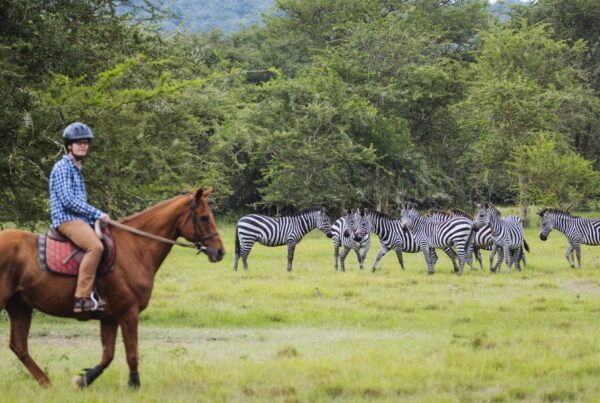
On horseback, riders become part of the landscape rather than intruders in it. Approaching a herd of zebras, for instance, brings a sense of kinship rather than distance. The zebras glance curiously at the horses, sometimes even moving closer, mistaking them for distant cousins. The rhythmic swaying of the saddle mirrors the pace of the land itself, creating an unparalleled sense of harmony.

Rides vary in duration and difficulty, from gentle excursions lasting an hour to longer expeditions that stretch across several hours. The terrain leads through valleys, grasslands, hillsides, and near the shores of Lake Mburo, offering ever-changing perspectives of the park. Each path reveals surprises—whether it is a herd of elands grazing calmly, a bushbuck darting into the thickets, or a family of warthogs trotting away with tails raised high.

Longer rides may pause near hilltops, where panoramic views stretch over the park’s lakes and plains. From such vantage points, the park’s mosaic of habitats can be fully appreciated, and the silence of the wilderness feels almost spiritual.

Wildlife Encounters on Horseback

What makes horseback safaris truly unique is the intimacy of wildlife encounters. Unlike vehicle safaris, where animals may flee at the sound of engines, horses are perceived as non-threatening, allowing riders to get much closer. This creates photographic opportunities and moments of observation that are rare in other settings.

The park’s signature residents, Burchell’s zebras, often graze peacefully near riders, sometimes mingling with the horses in scenes that feel straight out of an African dreamscape. The elegant impalas, exclusive to Lake Mburo, can be observed in herds numbering in the dozens, their graceful movements perfectly suited to the park’s open plains. Horseback Safaris in Lake Mburo: A Unique Experience

One of the highlights is riding alongside the majestic eland antelopes, Africa’s largest antelope species. Their imposing size, combined with their calm demeanor, makes them a breathtaking sight on horseback. Buffaloes, giraffes, bushbucks, and waterbucks also feature prominently during these safaris.

The lakeshore provides encounters with hippos and crocodiles, though from a safe distance, while the skies are alive with bird species such as fish eagles, kingfishers, and herons. The sheer variety of wildlife observed on horseback highlights Lake Mburo as one of Uganda’s most biodiverse sanctuaries despite its compact size.

The Role of Guides and Safety

Horseback safaris in Lake Mburo are conducted under the guidance of experienced safari guides who not only ensure safety but also enrich the experience with ecological knowledge and storytelling. Guides are skilled riders familiar with the behavior of both horses and wild animals, allowing them to lead visitors through the savannah with confidence.

Riders are often briefed before setting out, ensuring that they understand the basics of horseback riding and the etiquette of wildlife encounters. Horses used for these safaris are well-trained and accustomed to the park’s terrain and wildlife, which minimizes risks. While predators such as leopards and hyenas exist in the park, the open plains and guided routes ensure that encounters remain safe.

The presence of guides also adds a deeper dimension to the experience. They interpret animal tracks, explain plant uses, and share cultural anecdotes, creating a safari that is not only adventurous but also educational.

A Deeper Connection with Nature

Perhaps the most profound aspect of horseback safaris is the emotional connection they foster between travelers and the natural world. The absence of engines and artificial sounds allows the senses to awaken fully. The smell of earth after rain, the sound of hooves on dry grass, the sight of antelopes moving gracefully across the plains—all of these create a multisensory immersion that stays with visitors long after they leave the park.

The slower pace of horseback safaris encourages observation of details often missed on game drives. From the fluttering of butterflies to the delicate patterns of acacia bark, every aspect of the ecosystem is appreciated in its raw form. This closeness fosters respect and admiration for the fragile balance of nature, making horseback safaris not just an activity but a form of conservation awareness.

Cultural Dimensions of the Horseback Safari

Lake Mburo lies within the cultural landscape of the Bahima people, renowned pastoralists whose traditions revolve around the rearing of Ankole long-horned cattle. Horses, though not traditionally part of their culture, blend seamlessly with this pastoral backdrop, creating a fascinating intersection between ancient practices and modern tourism.

Visitors often complement horseback safaris with cultural tours, where they learn about cattle herding, traditional milking, and the folklore of the Banyankole people. This combination of wildlife adventure and cultural immersion enriches the overall experience, providing a more holistic understanding of Uganda’s heritage.

Accommodation and Safari Lodges

Several lodges in and around Lake Mburo National Park offer horseback safaris as part of their activities. These lodges provide not just the horses but also comfortable stays that immerse visitors in the wilderness. Many are perched on elevated locations, offering sweeping views of the savannah and the lake.

The architecture of these lodges often reflects an eco-conscious philosophy, using natural materials that harmonize with the landscape. Evenings spent around campfires, listening to the sounds of the wild, complete the sense of connection that begins on horseback during the day.

Best Time for Horseback Safaris

Horseback safaris can be enjoyed throughout the year, but the experience is particularly rewarding during the dry seasons between June and August and from December to February. During this time, wildlife tends to congregate around water sources, making encounters more predictable and rewarding.

The wet seasons, from March to May and September to November, transform the park into a lush green paradise. Though the trails may be muddy, the abundance of birdlife and the dramatic skies create magical backdrops for horseback adventures. Each season offers its own charm, ensuring that no two rides ever feel the same.

Why Horseback Safaris Are a Unique Experience

What sets horseback safaris apart is not merely the mode of transport but the transformational quality of the encounter. The blending of human, horse, and wilderness creates a triangle of connection that few other activities can replicate. Riders feel not only as observers but as participants in the savannah’s timeless drama.

Lake Mburo stands almost alone in Uganda as the sanctuary where such safaris are possible, making it a rare jewel in the country’s safari offerings. It is not just about seeing wildlife but about living moments of unfiltered authenticity that become lifelong memories.

Answering the Call of the Wild

To ride across the rolling savannahs of Lake Mburo on horseback is to rediscover the wilderness in its purest form. It is a journey that strips away the barriers of engines and metal, leaving only the pulse of nature and the steady rhythm of hooves. It is an experience where zebras become companions, elands become neighbors, and the vast Ugandan landscape becomes a home shared between riders and wildlife.

For those who seek safaris that go beyond the ordinary, horseback safaris in Lake Mburo offer an unmatched adventure—serene, intimate, and profoundly moving. They provide not just sightings of animals but encounters with the essence of Africa itself.

Travelers inspired to embrace this once-in-a-lifetime experience are encouraged to book their African tours and safaris with WildHorn Africa, a trusted guide in curating journeys that bring the heart of Uganda’s wilderness to life.

Lake Mburo National Park

Lake Mburo National Park

By Uganda places to visit, Where to go

Lake Mburo National Park is a hidden gem among Uganda’s national parks, offering a unique blend of wildlife viewing, scenic landscapes, and cultural experiences. Located in the country’s western region, it is the closest savannah park to Kampala and Entebbe, making it a popular stopover for travelers heading to or from southwestern Uganda.

Brief History of Lake Mburo National Park

Originally designated as a controlled hunting area in 1933, Lake Mburo gained game reserve status in 1963. It was officially upgraded to national park status in 1983 to protect its rich biodiversity and unique ecosystem. However, political conflicts and community tensions in the early years posed challenges to conservation efforts. Today, the park is managed by the Uganda Wildlife Authority (UWA) and is celebrated for its harmonious coexistence between wildlife and the surrounding communities.

Location and Landscape

Lake Mburo National Park is situated in Kiruhura District, about 240 kilometers west of Kampala, along the Kampala–Mbarara highway. It covers approximately 370 square kilometers, making it one of Uganda’s smallest national parks.

The park features a mix of rolling savannah, acacia woodlands, papyrus swamps, and lakes. Its centerpiece is Lake Mburo, one of 13 lakes in the surrounding wetland system. The landscape is dotted with rocky outcrops, grassy hills, and open plains, offering diverse habitats for both terrestrial and aquatic species.

What to Do at Lake Mburo National Park

1. Game Drives
Lake Mburo is one of the best places in Uganda to see plains game, including:

Zebras

Elands (Africa’s largest antelope)

Impala (only found in this park)

Topi

Warthogs

Buffaloes

Giraffes (recently reintroduced)

Game drives are best done in the morning and late afternoon, and are often guided by UWA rangers.

2. Boat Safari on Lake Mburo
A boat cruise on Lake Mburo offers a tranquil way to see hippos, crocodiles, and an abundance of waterbirds such as:

African fish eagles

Malachite kingfishers

African finfoot

Pied kingfishers

The cruise also provides great views of the park’s shoreline and aquatic vegetation.

3. Walking Safaris
Lake Mburo is one of the few national parks in Uganda where walking safaris are permitted. Guided walks allow visitors to explore the park on foot, getting closer to animals and learning about the ecosystem from experienced rangers. Walks often take place in Rwonyo area, salt licks, and hilltop lookouts.

4. Horseback Safaris
Operated by Mihingo Lodge, horseback safaris are a unique way to view wildlife without the noise of a vehicle. Riders can get close to zebras, giraffes, and antelopes while exploring the savannah on well-trained horses.

5. Cycling Tours
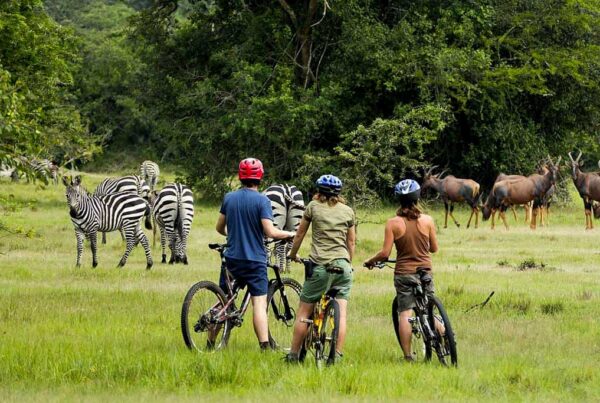
Mountain biking is available in certain parts of the park and its buffer zones. It offers a fun and active way to spot wildlife and enjoy the scenic views.

6. Bird Watching
With over 350 bird species, Lake Mburo is a birding paradise. Notable birds include:

African wattled lapwing

Papyrus gonolek

Red-faced barbet (a species restricted to this region in Uganda)

Rufous-bellied heron

Birding is excellent around Lake Mburo, Rwonyo, and the swampy valleys.

7. Cultural Encounters
Visitors can engage with the local Banyankole community, famous for their long-horned Ankole cattle. Cultural tours include visits to homesteads, traditional dance performances, and learning about cattle keeping and milk processing.

How to Get to Lake Mburo National Park

By Road:
The park is easily accessible by road from Kampala, taking about 4–5 hours.

The main entrance is at Nshara Gate (near Lyantonde) or Sanga Gate (near Mbarara).

It is a convenient stopover en route to Bwindi, Queen Elizabeth, or Mgahinga National Parks.

By Air:
Chartered flights are available from Entebbe International Airport to the nearby Mbarara airstrip, followed by a short drive to the park.

Accommodations at Lake Mburo National Park

Lake Mburo offers a range of lodges, tented camps, and budget options to suit different preferences and budgets.

Luxury Lodges:
Mihingo Lodge – A luxurious eco-lodge with a stunning infinity pool overlooking the savannah. Offers horseback safaris and guided nature walks.

Kimbla-Mantana Tented Camp – A high-end tented camp near Lake Mburo with excellent service and views.

Mid-Range:
Rwakobo Rock – Offers comfortable cottages built on a rocky outcrop with panoramic views of the park.

Eagle’s Nest Lodge – A budget-friendly option with permanent safari tents and great sunset views.

Budget Options:
Rwonyo Rest Camp – UWA-managed basic bandas and camping facilities.

Leopard Rest Camp – Affordable camping and safari tents just outside the park gate.

Lake Mburo National Park may be one of Uganda’s smaller national parks, but it delivers a rich safari experience with less crowding. From horseback safaris and boat cruises to walking adventures and community visits, Lake Mburo offers a refreshing alternative to the classic Big Five parks. Its strategic location, stunning landscapes, and varied activities make it a perfect destination for both short getaways and longer wildlife journeys in Uganda.

Close Menu