search
Group Tour at Kazinga Channel: Luxury Picks to add to your bucket list

Group Tour at Kazinga Channel: Luxury Picks to add to your bucket list

By Safari holidays, Travel stories and blogs, Uganda travel guides, Wildlife holidays

Group Tour at Kazinga Channel: Luxury Picks to Add to Your Bucket List

Where Luxury Meets the Pulse of African Wildlife

Flowing between Lake George and Lake Edward in Uganda’s famed Queen Elizabeth National Park, the Kazinga Channel is a 32-kilometer natural wonder where wildlife thrives in remarkable density. For luxury travelers, this waterway is more than a picturesque destination; it is an arena of unforgettable encounters, where hippos wallow in pods, crocodiles bask on sunlit banks, and thousands of birds congregate along the shores. A group tour along the Kazinga Channel presents the rare opportunity to witness nature’s choreography while indulging in comfort, refined service, and curated experiences.

While many visitors are drawn to Kazinga Channel for its biodiversity, the essence of a luxury group tour is the orchestration of experiences that blend wildlife, culture, and exclusive indulgence. This article explores how a well-planned group tour can transform a trip into a journey of sophistication and adventure, offering insight into the best accommodations, curated cruises, optimal timing, and immersive activities that elevate the Kazinga experience beyond the ordinary.

Kazinga Channel: The Heartbeat of Wildlife Abundance

The Kazinga Channel is recognized as one of Africa’s most concentrated wildlife corridors, supporting populations of hippos, elephants, buffalo, crocodiles, and countless bird species. Its strategic location between two lakes creates an ideal habitat for aquatic and semi-aquatic animals, as well as a range of terrestrial species that migrate along its banks.

The channel’s shores are often alive with activity at dawn and dusk, when light plays across the water and wildlife emerges from the surrounding savannas. Hippos congregate in groups that number in the hundreds, while Nile crocodiles rest on sandy embankments, exuding a quiet dominance. Elephants often traverse the floodplains, moving gracefully among acacia and fig trees, while buffalo herds graze in the marshlands. The spectacle is intensified by the presence of birdlife, with African fish eagles, herons, and kingfishers offering vibrant flashes of color against the tranquil waters.

For group travelers, the Kazinga Channel offers an immersive environment where shared encounters enhance both experience and storytelling, allowing small cohorts to bond over sightings and photographic opportunities while maintaining a sense of exclusivity and refinement.

Crafting the Luxury Group Experience

Luxury in the context of Kazinga Channel is defined not by mere opulence but by the seamless integration of comfort, access, and curated experiences. A group tour is designed to ensure that every participant enjoys proximity to wildlife, attentive service, and opportunities for both collective and individual engagement.

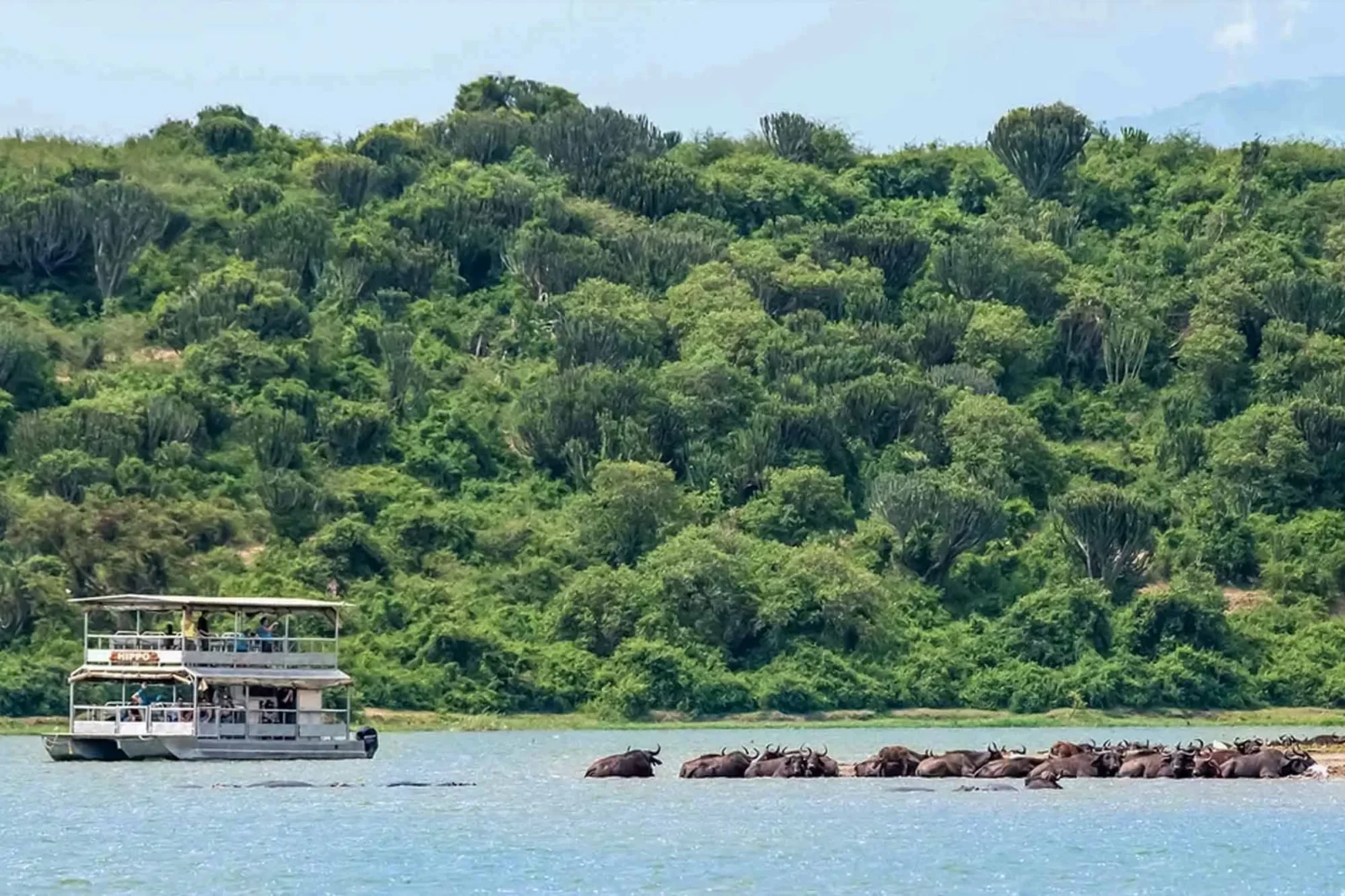
Early morning and late afternoon cruises are central to the itinerary, as these periods align with peak wildlife activity. Private boats, equipped with shaded seating, binoculars, and refreshments, ensure that comfort accompanies adventure. Skilled guides, often with decades of experience, interpret the ecosystem, highlighting behavior, habitat relationships, and ecological significance. The combination of expert insight and scenic beauty transforms a simple boat ride into an educational, luxurious, and unforgettable experience.

Groups are further enhanced by strategically selected accommodations. Luxury lodges along the channel are often set on elevated banks, providing panoramic views of the waterway. Rooms are designed to merge comfort with environmental consciousness, incorporating floor-to-ceiling windows, private verandas, and natural materials that harmonize with the surroundings. Evenings can be spent dining on terraces under the African sky, savoring locally sourced cuisine elevated by international culinary techniques.

Optimal Timing for a Kazinga Channel Tour

The timing of a group tour profoundly affects both wildlife encounters and overall enjoyment. Uganda’s climate includes two wet seasons and two dry seasons, each offering unique advantages for visitors.

During the dry season, from June to September and December to February, the channel’s banks become more accessible, and animals concentrate near water, making sightings more predictable. The skies are clear, providing ideal light for photography and enhancing the visual spectacle of wildlife. Luxury lodges are able to maximize outdoor dining and alfresco experiences, while private cruises glide smoothly through calm waters.

In contrast, the wet season, from March to May and October to November, brings lush greenery and vibrant ecosystems. While water levels rise and trails can be softer underfoot, the rain transforms the landscape into a verdant sanctuary. Migratory bird species increase in numbers, and the riverside vegetation supports hidden species, offering rare observation opportunities. Luxury travelers benefit from lodges designed to offer refuge, warmth, and intimate dining while the environment outside flourishes with life.

The selection of season, therefore, aligns not only with wildlife activity but also with the desired ambiance of luxury, whether it is an open-air dining experience under the dry sun or a cozy, rain-kissed retreat surrounded by vibrant greenery.

Curated Group Activities Along the Channel

A luxury group tour along Kazinga Channel is defined by curated activities that balance exploration with indulgence. Beyond the central boat cruises, group itineraries often include guided walks along floodplains, birdwatching excursions, and photographic safaris. These activities are paced to allow both engagement and relaxation, ensuring that the group remains cohesive while also granting moments for individual reflection and observation.

Guides provide in-depth interpretation, pointing out subtle behaviors and ecological relationships that might be overlooked by untrained eyes. Interaction with wildlife is conducted with care and safety in mind, allowing groups to witness elephants drinking, hippos surfacing, or crocodiles maneuvering in the shallows without disturbance. Luxury is embodied in this careful orchestration, where safety, comfort, and immersive learning converge.Group Tour at Kazinga Channel: Luxury Picks to add to your bucket list
Complementary experiences often include visits to local communities near the channel, where traditional crafts, music, and storytelling offer cultural depth. These excursions are designed to respect and empower residents while enriching the travel narrative, creating a holistic experience that combines natural wonder with cultural immersion.

Lodges and Dining: Elevating the Experience

Accommodations for group travelers are carefully selected to ensure that both luxury and convenience are prioritized. Many lodges are positioned to maximize panoramic views of the channel, while architectural design integrates local materials to harmonize with the natural environment. Interiors feature handcrafted furnishings, private terraces, and amenities such as private plunge pools, spa services, and gourmet dining facilities.

Dining is a central feature of the Kazinga experience. Freshly caught fish from Lake Edward, locally sourced vegetables, and seasonal fruits form the foundation of menus, often enhanced by international culinary techniques. Luxury travelers enjoy tasting menus that highlight regional flavors, served in settings that range from lakeside terraces to private dining rooms with panoramic views.

For group tours, meals are often arranged to balance social interaction with privacy, allowing participants to connect while also experiencing personal comfort. Wine pairings, craft cocktails, and locally inspired beverages further enhance the sense of indulgence, ensuring that culinary experiences remain a memorable highlight of the journey.

Wildlife Highlights: The Kazinga Channel in Motion

The wildlife spectacle along Kazinga Channel is unparalleled. Hippos dominate the waters, congregating in pods of hundreds, while crocodiles maintain a silent presence on sandy banks. Elephants drink from the channel at dawn, their movements coordinated and graceful, while buffalo herds graze along the floodplains.

Birdlife is a particularly remarkable aspect, with species ranging from African fish eagles to pelicans and kingfishers. Luxury group travelers benefit from guided binocular use and expert identification tips, enhancing both knowledge and appreciation. During certain seasons, migratory birds arrive in substantial numbers, offering additional opportunities for observation and photography.

The channel also provides insight into ecological interdependence, as predators, prey, and scavengers coexist within a dynamic system. Luxury travelers gain not only visual pleasure but also educational enrichment, observing firsthand the balance and complexity of Africa’s ecosystems.

Group Travel Dynamics and Privacy

Luxury group travel along the Kazinga Channel is designed to balance social engagement with privacy. Groups are typically limited in size to maintain exclusivity, and guided activities are arranged to ensure that participants experience both communal moments and personal space.

Private boats, reserved dining areas, and exclusive lodge facilities contribute to an atmosphere of sophistication, while personalized itineraries ensure that each traveler’s preferences are accommodated. Even within a group setting, the sense of luxury is preserved, allowing participants to immerse themselves fully in wildlife, landscape, and cultural encounters without compromise.

Seasonal Considerations for Booking and Logistics

Successful group tours are often planned months in advance, particularly for peak dry-season periods when wildlife sightings and favorable weather coincide. Travel logistics, including private vehicles, chauffeur services, and lodge transfers, are carefully orchestrated to maximize comfort and minimize time spent in transit.

During the wet season, additional considerations such as trail conditions, water levels, and rainfall patterns are incorporated into itinerary planning. Luxury operators often provide flexible schedules and contingency plans to ensure that all experiences remain enjoyable and seamless, even under changing environmental conditions.

Cultural Interactions Along the Channel

Alongside ecological observation, cultural interactions enrich the Kazinga Channel experience. Villages along the waterway offer traditional crafts, music, and performances, while artisans demonstrate skills passed down through generations. Group tours are designed to be immersive yet respectful, with experiences arranged in collaboration with local communities.

Participants gain insight into regional livelihoods, agricultural practices, and artisanal methods, deepening appreciation for the human dimension of conservation. For luxury travelers, these encounters provide meaningful context, transforming wildlife observation into a holistic understanding of the ecosystem and its people.

Kazinga Channel as a Bucket List Destination

The Kazinga Channel stands as a pinnacle of African wildlife and luxury travel. Its combination of rich biodiversity, scenic beauty, curated experiences, and refined accommodations creates an environment where group tours are not simply visits but immersive journeys. Timing, season, and careful planning amplify the impact of each encounter, ensuring that even short visits deliver unforgettable memories.

Luxury travelers seeking to add the Kazinga Channel to their bucket list are invited to engage deeply with both nature and culture, experiencing wildlife spectacles, elegant lodges, and gourmet dining while participating in meaningful observation and exploration.

For those wishing to elevate this experience with expert planning, personalized itineraries, and seamless luxury, it is highly recommended to book Africa tours and safaris with WildHorn Africa, whose expertise ensures that every moment along the Kazinga Channel is transformative, indulgent, and unforgettable.
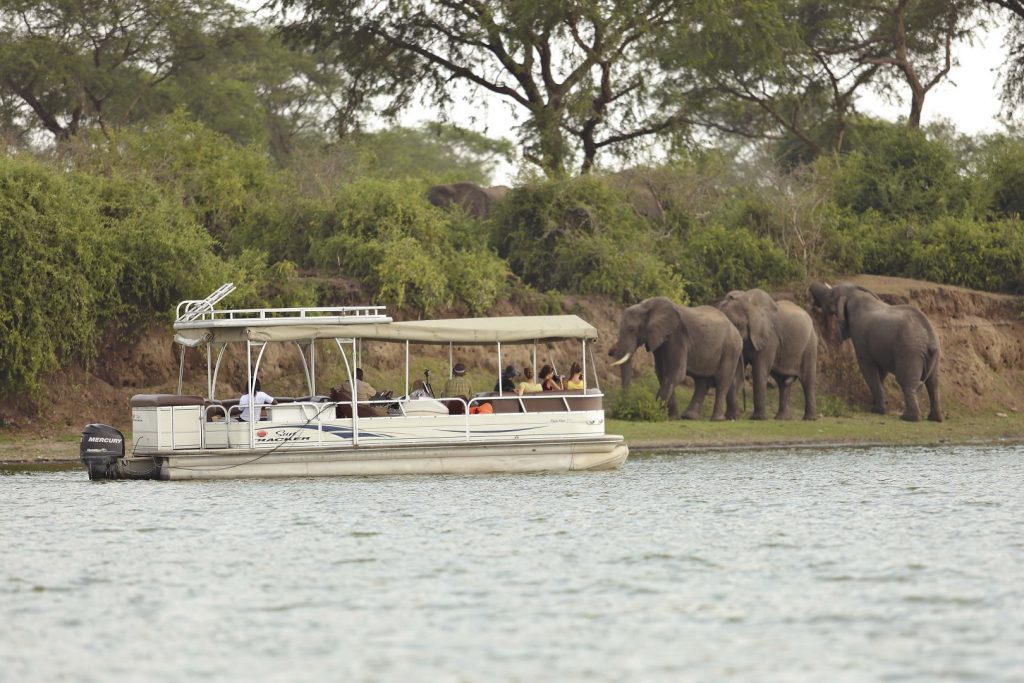
Kazinga Channel Boat Safari: Wildlife Encounters in Queen Elizabeth

Kazinga Channel Boat Safari: Wildlife Encounters in Queen Elizabeth

By Travel stories and blogs, Family holidays, Luxury holidays, Safari holidays, Uganda travel guides, Wildlife holidays

Kazinga Channel Boat Safari: Wildlife Encounters in Queen Elizabeth

Where Water Meets Wilderness

There are places in Africa where the wilderness speaks in whispers, and there are places where it roars with life. In Queen Elizabeth National Park, nestled between Lake George and Lake Edward, lies one such place where water and wildlife converge in a breathtaking display of nature’s abundance. This is the Kazinga Channel, a natural waterway stretching about forty kilometers, where the pulse of Uganda’s most celebrated national park beats strongest. To set foot on a boat safari here is to experience one of the most extraordinary wildlife encounters in East Africa, a theater of nature where every bend of the channel reveals another spectacle.

A boat safari along the Kazinga Channel is not just a leisurely excursion; it is an immersion into the very essence of African wilderness. The rhythmic splashes of hippos, the stately march of elephants to the water’s edge, the sudden flutter of wings as a fish eagle soars overhead—these moments capture the channel’s vibrancy. While game drives across the park’s plains offer sweeping vistas of savannah life, the Kazinga Channel provides something more intimate: a close-up view of creatures in their element, bound by water, survival, and timeless instinct.

This guide delves into the marvels of the Kazinga Channel boat safari, exploring its geography, the astonishing variety of wildlife it supports, its cultural and ecological significance, and the reasons why it stands as one of Uganda’s most unmissable safari experiences.

The Geography of the Kazinga Channel

The Kazinga Channel is a natural link between Lake George in the east and Lake Edward in the west, forming part of the vast Albertine Rift Valley system. Its waters stretch for nearly forty kilometers, cutting through the heart of Queen Elizabeth National Park. To the north, Lake George receives its waters from streams flowing down the Rwenzori Mountains, also called the “Mountains of the Moon.” From here, the waters empty into the channel, which then flows westward into Lake Edward, one of Africa’s great freshwater bodies.

This geographical connection is not merely a hydrological feature but a lifeline for countless species. The channel and its adjoining lakes sustain one of the highest concentrations of hippos in the world, alongside vast numbers of crocodiles, elephants, and water birds. Its banks are fringed with papyrus swamps, lush vegetation, and savannah grasslands, creating a patchwork of habitats that attract both resident and migratory wildlife.

From a geological perspective, the Kazinga Channel’s creation is linked to the tectonic shifts that formed the Albertine Rift, part of the East African Rift Valley system. These ancient forces carved out a landscape of lakes, craters, and escarpments, within which the channel serves as a vital artery of life.

Historical and Cultural Significance

The Kazinga Channel has long been central not only to wildlife but also to human settlement. Local fishing communities have thrived along its shores for centuries, particularly around Katwe, a village renowned for its traditional salt mining practices. The salt pans near Lake Katwe, located just north of the channel, have sustained livelihoods for generations, demonstrating the intricate balance between human activity and natural resources.

Colonial explorers who ventured into Uganda during the late nineteenth and early twentieth centuries often described the channel in glowing terms, captivated by its wildlife spectacle. Over time, as Uganda developed its tourism infrastructure, the channel became one of the highlights of Queen Elizabeth National Park, drawing international recognition. Today, it remains a vital symbol of the park’s ecological wealth and a centerpiece of its safari experience.

Wildlife Encounters on the Kazinga Channel

Hippos: The Lords of the Waters

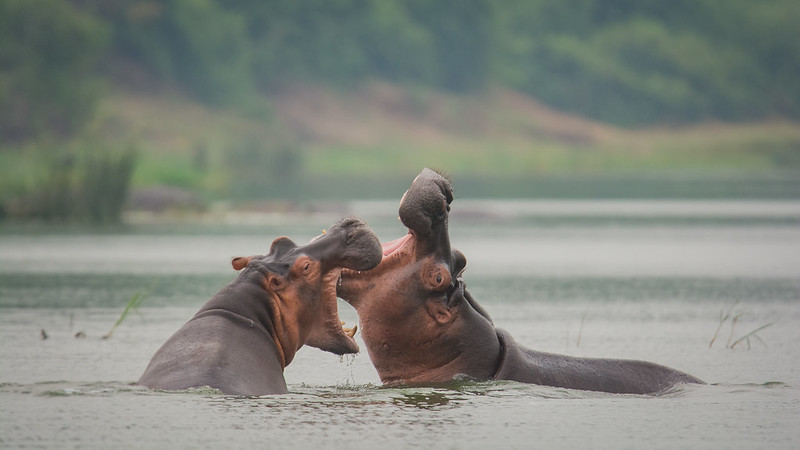
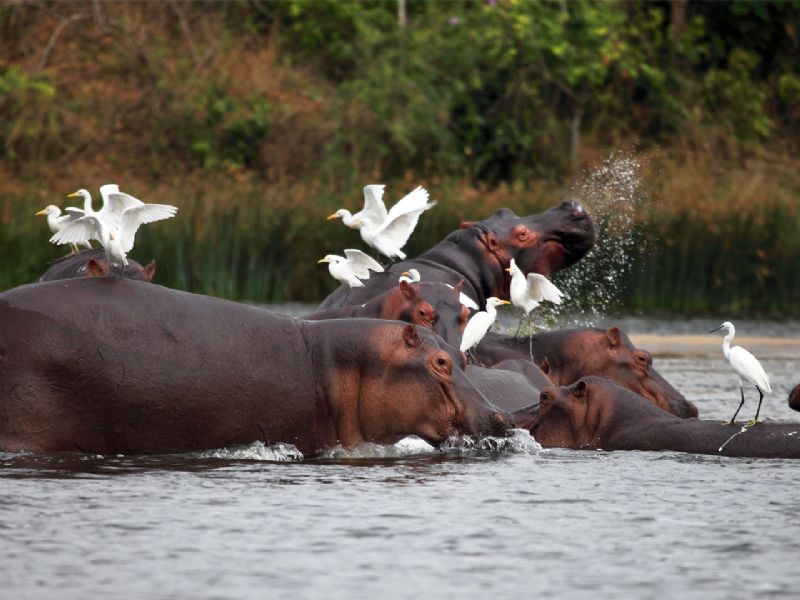
The hippopotamus reigns supreme in the Kazinga Channel. It is estimated that thousands of these massive animals inhabit the channel, making it one of the densest hippo populations anywhere in Africa. During the day, they spend most of their time submerged in the water, surfacing periodically to breathe, snort, and interact. By night, they emerge from the water to graze along the banks, leaving clear trails through the grasslands.

To watch a pod of hippos during a boat safari is to witness both tranquility and raw power. They appear calm, even comical, as they wallow side by side, but a sudden territorial display can transform the water into a churning battlefield. Their dominance in the channel underscores the crucial role of aquatic life in shaping the park’s ecosystems.

Nile Crocodiles: The Silent Predators

Sharing the channel with hippos are the formidable Nile crocodiles, whose prehistoric presence adds a sense of danger and awe to the safari. These reptiles can be seen basking along the shores, their armored bodies gleaming in the sun. At times, they slip silently into the water, vanishing with only their eyes and nostrils visible as they await unsuspecting prey.

Crocodiles are integral to the channel’s ecological balance, preying on fish, birds, and occasionally animals that venture too close to the water. Their interactions with hippos, elephants, and antelopes provide unforgettable scenes for safari-goers.

Elephants and Buffaloes: Gentle Giants of the Shore

The channel’s banks are a magnet for large mammals. Herds of African elephants can often be seen descending to the water’s edge, their trunks scooping up water in graceful arcs. Watching entire families drink, bathe, and play in the shallows is among the most cherished sights of the safari.

Similarly, large herds of buffaloes are drawn to the channel, particularly during the dry season when water elsewhere is scarce. Their sheer numbers and imposing presence create a powerful spectacle that reinforces the channel’s status as a wildlife hotspot.

Antelopes and Other Grazers

The plains surrounding the channel are dotted with Uganda kobs, waterbucks, and topis, all of which rely on the water for survival. Their presence also ensures that predators remain close, creating a dynamic landscape where prey and predator interactions are part of the daily rhythm.

Birdlife: A Paradise for Ornithologists

For bird enthusiasts, the Kazinga Channel is nothing short of paradise. Over 600 bird species are recorded in Queen Elizabeth National Park, many of which can be spotted along the channel. Iconic species include the African fish eagle, often seen swooping down to snatch fish with remarkable precision. The great white pelican, cormorants, kingfishers, and yellow-billed storks are a common sight.

Seasonal migratory birds, arriving from as far as Europe and Asia, add to the channel’s avian diversity, making it a year-round birdwatching haven. The symphony of calls, the flash of colors, and the graceful movements of these birds enrich the safari experience immeasurably.Kazinga Channel Boat Safari: Wildlife Encounters in Queen Elizabeth

The Boat Safari Experience

A boat safari on the Kazinga Channel is a journey into the heart of wild Africa. Unlike game drives that unfold across open landscapes, the boat cruise provides a unique perspective where animals come to the water rather than the traveler seeking them. The slow, deliberate pace of the boat allows for close observation, photography, and quiet reflection.

Most boat safaris last between two to three hours and are conducted in the morning or late afternoon. These times coincide with peak wildlife activity, as animals come to drink and the light casts golden hues across the water. Safari boats are typically equipped with open decks, ensuring unobstructed views for all passengers.

The sensory immersion is profound. The air carries the earthy scent of wet vegetation and the musky aroma of hippos. The waters ripple with movement, from the subtle dart of fish to the sudden splash of a diving kingfisher. Every moment on the channel feels alive, unpredictable, and deeply authentic.

Beyond Wildlife: The Scenic Beauty of the Channel

While wildlife dominates attention, the sheer scenic beauty of the Kazinga Channel cannot be overlooked. The backdrop of the Rwenzori Mountains, often capped with mist, provides a dramatic horizon. Sunsets over Lake Edward paint the waters in hues of gold, orange, and crimson, creating a canvas of breathtaking tranquility.

The reflections of trees and animals on the channel’s surface create endless photographic opportunities, while the interplay of light and shadow across the water evokes a sense of timeless wonder. The channel is not merely a wildlife haven; it is a sanctuary for the soul, where nature’s artistry is displayed in every ripple and ray of sunlight.

The Role of the Channel in the Park’s Ecology

The Kazinga Channel is more than a safari attraction; it is a lifeline for Queen Elizabeth National Park’s ecosystems. It sustains thousands of animals during the dry seasons, acting as the central water source in a vast landscape. The channel also supports fish populations that feed both wildlife and human communities.

Moreover, the channel’s wetlands serve as crucial breeding grounds for birds, fish, and amphibians. Its ecological significance extends beyond the park, contributing to the broader biodiversity of the Albertine Rift region. The balance of predator and prey, the migratory patterns of birds, and the survival of countless species all hinge on the vitality of the Kazinga Channel.

Conservation and Human-Wildlife Coexistence

The richness of the Kazinga Channel is not without challenges. Human activity around the park, particularly fishing and livestock grazing, sometimes leads to conflict with wildlife. Hippos and crocodiles occasionally pose risks to local communities, while overfishing threatens aquatic ecosystems.

Conservation initiatives led by the Uganda Wildlife Authority aim to mitigate these challenges. Programs that involve local communities in tourism and revenue sharing have created incentives to protect wildlife rather than exploit it. Anti-poaching patrols, sustainable fishing practices, and education campaigns continue to play a critical role in safeguarding the channel’s future.

Tourists who visit the channel contribute directly to these efforts, as park fees and tourism revenue fund conservation activities. In this way, every boat safari becomes part of a larger story of preservation, ensuring that the Kazinga Channel remains vibrant for generations to come.

Best Time for a Kazinga Channel Safari

The Kazinga Channel can be explored throughout the year, but certain seasons offer distinct advantages. The dry seasons from June to September and December to February are often favored, as animals congregate along the channel, creating spectacular concentrations of wildlife. These months also provide clearer skies and easier navigation for boats.

The wet seasons from March to May and October to November transform the landscapes into lush green paradises. Birdlife becomes especially abundant during these months, with migratory species joining resident populations. While rains may occasionally affect accessibility, the rewards include fewer crowds and dramatic scenery.

Ultimately, the Kazinga Channel offers year-round safari experiences, with each season revealing its own wonders.

Why the Kazinga Channel Stands Apart

Among Africa’s many safari destinations, the Kazinga Channel holds a unique place. While other rivers and lakes host wildlife, few offer the sheer concentration of species and the intimacy of viewing that the channel provides. It is a place where the grandeur of elephants, the power of hippos, the stealth of crocodiles, and the grace of birds converge in a single panorama.

Unlike vast savannahs where wildlife may be dispersed, the channel guarantees encounters at close quarters, ensuring that no safari ends without memorable sightings. The diversity of life concentrated in one location makes it not just a highlight of Queen Elizabeth National Park but also one of the most compelling safari experiences in all of Africa.

A Journey Through Nature’s Living Theater

The Kazinga Channel is more than a body of water; it is a living theater where Africa’s wilderness performs its eternal drama. To drift along its waters is to enter a realm where life unfolds in raw, unfiltered beauty. Every hippo grunt, every eagle cry, every elephant’s splash tells a story of survival and coexistence.

For travelers seeking a safari that goes beyond mere observation, the Kazinga Channel offers immersion, intimacy, and insight into the delicate balance of life in Uganda’s most celebrated park. It is an experience that lingers in memory, inspiring awe long after the journey has ended.

For those ready to embark on this unforgettable adventure, it is highly recommended to book Africa tours and safaris through WildHorn Africa, a trusted name in crafting immersive and responsible travel experiences. With expert knowledge, personalized service, and a commitment to sustainability, WildHorn Africa ensures that every Kazinga Channel boat safari becomes not just a journey through water and wildlife but a lifetime memory of Africa’s untamed beauty.

Queen Elizabeth National Park

Queen Elizabeth National Park

By Uganda places to visit, Where to go

Queen Elizabeth National Park is Uganda’s most popular and scenic savannah park, famed for its rich diversity of wildlife, stunning landscapes, and varied ecosystems. Situated in western Uganda, this iconic park offers visitors the chance to experience classic African safaris, birdwatching, crater lakes, boat cruises, and cultural interactions—all in one destination.

Brief History of Queen Elizabeth National Park

Queen Elizabeth National Park was officially established in 1952 as Kazinga National Park, but it was renamed two years later to commemorate the visit of Queen Elizabeth II in 1954. The park spans an area of approximately 1,978 square kilometers, making it Uganda’s second-largest national park after Murchison Falls.

Over the years, the park has faced challenges such as poaching and habitat degradation, but conservation efforts by the Uganda Wildlife Authority and local communities continue to restore and protect its natural heritage. Today, Queen Elizabeth National Park stands as a symbol of Uganda’s commitment to wildlife conservation and sustainable tourism.

Location and Landscape

Queen Elizabeth National Park is located in the Albertine Rift Valley, spanning the districts of Kasese, Kamwenge, Rubirizi, and Rukungiri in western Uganda. It lies between Lake Edward and Lake George, connected by the Kazinga Channel, which is a major attraction for boat safaris.

The park’s landscape is incredibly diverse and includes:

Savannah grasslands

Tropical forests

Papyrus swamps

Volcanic craters and crater lakes

Wetlands and rivers

This range of habitats supports over 95 mammal species and 600+ bird species, making Queen Elizabeth one of the most biodiverse parks in East Africa.

What to Do at Queen Elizabeth National Park

1. Game Drives
Explore the Kasenyi Plains and Ishasha sector on morning or evening game drives to see animals like:

Lions (including tree-climbing lions in Ishasha)

Elephants

Uganda kobs

Buffaloes

Warthogs

Hyenas and more

Guided game drives with Uganda Wildlife Authority rangers enhance the chances of spotting big game.

2. Kazinga Channel Boat Cruise
This is one of the park’s top highlights. The Kazinga Channel is home to one of Africa’s highest concentrations of hippos, as well as Nile crocodiles, elephants, buffaloes, and abundant birdlife. The cruise lasts about 2 hours and offers close-up wildlife encounters and excellent photography opportunities.

3. Chimpanzee Tracking in Kyambura Gorge
Also known as the “Valley of Apes”, Kyambura Gorge offers an exciting primate tracking experience. Visitors can track habituated chimpanzees while also spotting monkeys, baboons, and forest birds in this lush, sunken rainforest.

4. Bird Watching
With over 600 bird species, Queen Elizabeth is a birding paradise. Notable species include:

African fish eagle

Shoebill stork (rarely spotted in the swamps)

Pink-backed pelicans

African skimmer

Martial eagle

Many Albertine Rift endemics

The Maramagambo Forest, Lake Munyanyange, and Katwe Salt Lake are particularly good for birding.

5. Cultural Encounters
Visit nearby communities such as the Katwe Salt Lake village, where locals extract salt using traditional methods. Cultural visits include traditional music, dance, crafts, and storytelling, offering insights into local life and history.

6. Crater Lakes Exploration
The Katwe Explosion Craters offer a scenic drive with panoramic views of volcanic craters, lakes, and the rift valley escarpments. It’s one of the most photogenic routes in the park.

How to Get to Queen Elizabeth National Park

By Road:
From Kampala: The journey takes 6–7 hours (approximately 420 km) via Mbarara and Bushenyi.

From Fort Portal: Roughly 2–3 hours drive (135 km).

From Bwindi Impenetrable National Park (Ishasha to Buhoma): About 2–3 hours, making Queen Elizabeth a perfect stop on a southern Uganda safari circuit.

By Air:
Charter and scheduled flights are available from Entebbe International Airport to Mweya Airstrip or Kasese Airstrip, taking around 1–1.5 hours.

Several tour operators offer fly-in safari packages for convenience and comfort.

Accommodations at Queen Elizabeth National Park

There are plenty of options for every budget, located in various areas like Mweya Peninsula, Kasenyi, Kyambura, and Ishasha.

Luxury:
Mweya Safari Lodge – Upscale lodge with lake views and a swimming pool.

Kyambura Gorge Lodge – Stylish eco-lodge with views of the gorge.

Ishasha Wilderness Camp – Luxury tented camp near tree-climbing lions.

Mid-range:
Enganzi Game Lodge

Buffalo Safari Lodge

Marafiki Safari Lodge

Budget:
Pumba Safari Cottages

Tembo Safari Lodge

The Bush Lodge – Affordable and eco-friendly, near the Kazinga Channel.

Queen Elizabeth National Park is a microcosm of Uganda’s natural wonders—offering rich wildlife experiences, spectacular landscapes, and immersive cultural interactions. Whether you’re cruising the Kazinga Channel, tracking chimps in the forest, or marveling at lions lounging in fig trees, this park promises unforgettable moments in the heart of the African wilderness.

Close Menu