search
The Complete Guide: hiking at Arua for photographers

The Complete Guide: hiking at Arua for photographers

By Travel stories and blogs, Adventure holidays, Special offers, Uganda travel guides

The Complete Guide: Hiking at Arua for Photographers

Where the Lens Meets the Trail

In the far northwestern corner of Uganda lies a land of unspoken beauty, a place where landscapes merge with culture, and where light bends in ways that excite every creative eye. This is Arua, a city that is not merely a gateway to the West Nile region but a profound canvas for those who carry cameras in search of extraordinary stories. To a photographer, Arua is more than a destination; it is a stage upon which nature, culture, and adventure converge in harmony. And at the heart of that convergence lies an activity that defines both exploration and artistic discovery—hiking.

Every hiking trail in Arua unfolds as a living gallery of photographic subjects. The region offers more than physical exercise; it provides visual treasures—towering hills, undisturbed valleys, winding rivers, and communities that embody Uganda’s cultural depth. For photographers, each path leads not only to scenic viewpoints but also to opportunities for capturing stills that tell enduring tales. The fusion of movement, exploration, and photography elevates the journey beyond the ordinary, transforming it into a creative pilgrimage.

This complete guide explores why hiking in Arua is a transformative experience for photographers. From understanding its landscapes and trails to knowing the best times to visit, from grasping cultural encounters to refining the artistry of visual storytelling, this article positions Arua as a photographer’s dream destination.

Arua: A Northern Jewel in Uganda’s Wilderness

Arua, located near Uganda’s borders with the Democratic Republic of Congo and South Sudan, has always stood as a cultural and geographical bridge. It is a place defined by diversity, with communities that carry traditions passed down for generations. Its geography reflects contrasts—rolling savannas blend into hills, forests line hidden valleys, and rivers weave intricate networks through the countryside.

For photographers, this diversity translates into unlimited subjects and moods. A sunrise over the rugged hills of Vurra carries a different emotional tone than the sunset across the savanna plains. A portrait taken in a local market differs profoundly from a landscape shot atop Ajai Wildlife Reserve’s escarpments. Hiking allows photographers to step into this diverse world at a deliberate pace, absorbing textures and details that are often missed when traveling hurriedly.

Hiking as a Photographer’s Gateway

The art of photography is inseparable from perspective, and hiking in Arua provides the vantage points and stillness necessary for authentic capture. Unlike urban photography, which thrives on movement and immediacy, hiking photography leans on patience, composition, and anticipation. Trails in Arua demand attention—not only to physical steps but to the way shadows fall, how clouds interact with landscapes, and how light shifts across the hour.

Every ascent rewards with vistas that would otherwise remain unseen, and every descent reveals hidden valleys where local life thrives. These movements are more than physical; they are invitations for photographers to look closely, to frame stories that go beyond mere scenery, and to document the intersection of humanity and wilderness.

Trails and Landscapes of Arua

The hiking experience in Arua is defined by an interplay of terrain and atmosphere. Some trails move through wide savannas where long grass sways under wind, perfect for wide-angle landscape shots. Others climb into hills like those in the Vurra highlands, where altitude creates panoramic viewpoints stretching into neighboring countries.

Photographers hiking through these areas often find the contrast of textures captivating. Rocky outcrops juxtapose with soft grasslands, while scattered acacia trees stand against expansive skies. Rivers like the Enyau provide natural leading lines for compositions, guiding the eye through frames that balance land, water, and sky.

What distinguishes Arua from other destinations is the intimacy of its wilderness. Trails are not overcrowded, meaning that photographers can capture undisturbed scenes where wildlife, vegetation, and human activity coexist naturally.

The Photographer’s Light in Arua

Light is the essence of photography, and in Arua, it plays a central role in the hiking experience. The region lies near the equator, which creates dramatic shifts in light quality throughout the day. The early morning sun paints landscapes in soft gold, while late afternoons offer warmer hues that intensify colors and create long shadows.The Complete Guide: Hiking at Arua for Photographers

For landscape photographers, mornings and evenings present opportunities for dramatic shots where silhouettes of hikers stand against fiery skies. Midday, though often avoided for harsh light, presents its own artistic potential when shadows carve striking contrasts across rugged terrain. For portrait photographers, the diffused light under tree canopies provides natural softboxes that highlight expressions with gentle precision.

Wildlife and Nature Encounters Through the Lens

Hiking in Arua does not only involve landscapes; it also brings photographers close to wildlife and ecosystems that enrich visual narratives. Ajai Wildlife Reserve, located near Arua, is a haven for species such as antelopes, warthogs, and diverse birdlife. The trails around the reserve allow photographers to capture animals in their natural environment without the interruptions of large tourist crowds.

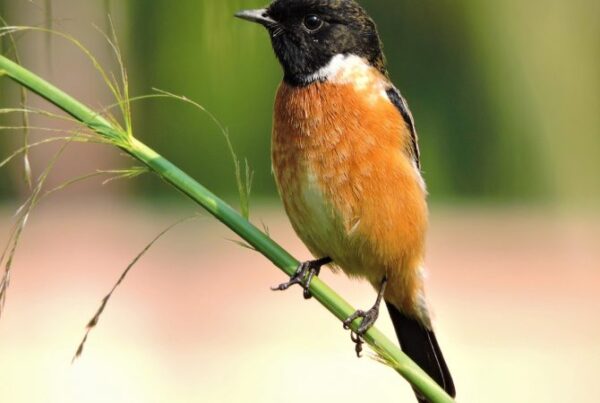
Bird photographers, in particular, find Arua rewarding. With species ranging from the African fish eagle to colorful bee-eaters, hikes around rivers and wetlands provide abundant opportunities for avian photography. Macro photographers, too, discover fascinating details in butterflies, flowers, and insects that populate forest trails.

Each encounter underscores the harmony of Arua’s wilderness—a reminder that hiking is not only a physical act but a sensory immersion that enriches every photographic frame.

Cultural Encounters Along the Trails

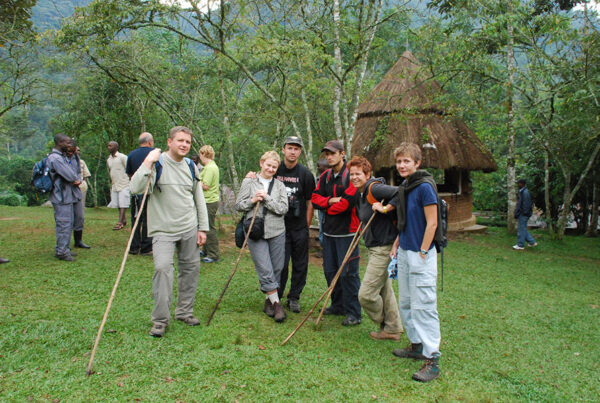
Photography in Arua is incomplete without acknowledging its cultural depth. Hiking often passes through villages where local communities live in harmony with their environment. For photographers, these interactions present authentic moments worth capturing, from children playing along footpaths to elders weaving traditional baskets under shade.

Markets along trails offer vibrant colors and textures—brightly patterned fabrics, fresh produce, and handmade crafts. The act of photographing these scenes requires sensitivity, respect, and engagement, as it transforms snapshots into genuine stories of identity and heritage.

Cultural photography on hikes does not only preserve images but also promotes understanding, allowing photographers to become visual ambassadors of Arua’s living traditions.

Practical Insights: Hiking and Photography in Arua

Hiking with the intent to photograph demands preparation. Arua’s climate oscillates between wet and dry seasons, influencing both trail conditions and lighting opportunities. During the dry months from December to February and June to September, trails remain firm, skies stay clear, and light is predictable—ideal for both hiking comfort and photographic clarity. In contrast, the wet seasons between March to May and October to November transform landscapes into lush green backdrops, though trails become muddy and more challenging. These months present dramatic skies, mist, and reflections, which can inspire photographers who embrace atmospheric moods.

The essence of preparation lies in balance: carrying lightweight gear that does not burden the hike, yet ensuring that essential tools—such as a reliable camera, lenses for landscapes and portraits, and protective coverings for sudden rain—are available. Hikers often find that photography in Arua benefits from slower pacing, as stopping frequently allows for compositions that reveal themselves only with patience.

Photographic Storytelling on Arua Trails

Hiking in Arua is not only about single images; it is about storytelling through sequences of photographs. Each trail can be documented as a narrative: the beginning with anticipation and fresh footsteps, the middle with challenges and discoveries, and the conclusion with reflections and horizons achieved.

Photographers often find themselves telling layered stories that merge human presence with natural grandeur. A wide-angle shot of a family hiking against the hills might be followed by a close-up of a hand brushing against tall grass, and then by a portrait of a villager encountered on the trail. Together, these images form a collection that transcends simple scenery and conveys emotion, place, and humanity.

Ethical and Respectful Photography

As photographers hike through Arua, an ethical approach becomes essential. Wildlife should be observed without intrusion, communities photographed with consent, and landscapes captured without leaving traces of disturbance. This respectful practice ensures that photography enriches rather than exploits.

In doing so, photographers not only preserve the integrity of their subjects but also elevate their art. The images captured under such mindfulness become more than visual records—they become testaments to harmony, empathy, and responsibility.

The Transformative Experience

What sets Arua apart for photographers is not only its scenic beauty but the transformation it ignites. Hiking with a camera through its landscapes inspires patience, adaptability, and deeper seeing. The act of walking becomes intertwined with the act of framing, so that every step sharpens perception.

Photographers leave Arua not merely with filled memory cards but with sharpened vision and renewed connection to the world. Hiking here redefines the relationship between creator and environment, reinforcing the idea that photography is not about taking images but about receiving them with humility and wonder.

Arua Awaits Behind the Lens

Hiking in Arua for photographers is a complete experience that merges art, culture, and adventure. It offers landscapes that stretch the imagination, wildlife that animates frames, communities that enrich narratives, and light that transforms the ordinary into the extraordinary. For photographers, it is a destination where every trail is a lesson, every step a perspective, and every image a chapter of a story worth telling.

To truly immerse in this unique blend of hiking and photography, it is recommended to plan your journey with a trusted partner who understands both the terrain and the artistic eye. For seamless, memorable, and carefully curated adventures, travelers are encouraged to book their Africa tours and safaris through WildHorn Africa, ensuring that the journey through Arua becomes not only a photographic pursuit but also a deeply personal experience of discovery.

Photography Safari in Semuliki National Park

Photography Safari in Semuliki National Park

By Travel stories and blogs, Luxury holidays, Safari holidays, Special offers, Uganda travel guides, Wildlife holidays

Photography Safari in Semuliki National Park

Capturing Uganda’s Hidden Eden

In the western reaches of Uganda, at the foot of the legendary Rwenzori Mountains and along the fertile basin of the Albertine Rift Valley, lies a sanctuary of unparalleled beauty—Semuliki National Park. Often referred to as Uganda’s birding paradise, this lowland tropical rainforest is not only a haven for biodiversity but also a living canvas for photographers seeking to capture Africa in its rawest form. To embark on a photography safari in Semuliki National Park is to step into a world where light, shadow, and life converge in a way that few other destinations can offer.

The allure of Semuliki lies in its unique character. Unlike Uganda’s savanna parks that are dominated by open plains, Semuliki is cloaked in the dense, misty atmosphere of a Central African rainforest extension. Here, rivers meander through thick vegetation, hot springs bubble with geothermal force, and wildlife lurks both seen and unseen. For photographers, every corner reveals a new perspective—whether it is the iridescent feathers of a turaco illuminated by morning light, the ghostly outlines of colobus monkeys in the canopy, or the cultural vibrancy of Batwa performances that echo through the forest edges.

A photography safari in Semuliki is not simply about taking pictures. It is an immersion into one of Africa’s most authentic wildernesses, where the challenge of capturing fleeting moments is matched by the reward of preserving stories that will inspire for years to come.

The Photographic Appeal of Semuliki National Park

A Lowland Tropical Rainforest in East Africa

One of the park’s most compelling qualities is its ecosystem, which is more typical of Central Africa than East Africa. Semuliki is an extension of the Ituri Rainforest of the Democratic Republic of Congo, making it one of the few lowland tropical forests in Uganda. Its unique vegetation, dense canopy, and swampy expanses create striking backdrops for photography, offering scenes that stand apart from those in the savanna landscapes.

The rainforest atmosphere provides photographers with dramatic contrasts: shafts of sunlight piercing through mist, reflections on calm river surfaces, and silhouettes of wildlife against thick green foliage. Such elements offer creative opportunities for both amateur and professional photographers seeking depth and diversity in their work.

A Mosaic of Landscapes

Semuliki is not a uniform forest. Within its 220 square kilometers, it includes riverine habitats, hot springs, swampy wetlands, and grassland patches. Each of these microhabitats presents distinct photographic subjects. The Sempaya Hot Springs, for instance, are not only geological wonders but also striking visual features that change appearance with steam, light, and angle. Meanwhile, the meandering Semuliki River and the backdrop of the Rwenzori Mountains create landscapes that combine grandeur with intimacy.

Wildlife Photography in Semuliki

Primates as Photographic Subjects

For wildlife photographers, primates represent some of the most engaging subjects. Semuliki hosts over eight primate species, each offering distinct photographic challenges and rewards.

The black-and-white colobus monkeys, with their flowing mantles and contrasting fur, provide dramatic shots when perched against the green canopy. The red-tailed monkeys, agile and expressive, are perfect for capturing movement and behavioral interactions. Olive baboons, often seen in large troops, create opportunities for storytelling images that reveal social hierarchies, grooming rituals, and playful young.

Occasionally, photographers may also encounter chimpanzees, whose presence, even fleeting, adds a sense of raw authenticity to a portfolio. Capturing their intelligence in a single frame requires patience, but the result can be among the most powerful wildlife images of the safari.

Bird Photography in the Birding Paradise

With more than 440 bird species recorded, Semuliki is a dream for bird photographers. The forest’s birdlife includes rare and sought-after species such as the Nkulengu rail, the African dwarf kingfisher, and the white-crested hornbill. Colorful turacos, bee-eaters, and sunbirds offer vibrant splashes against the green backdrop, while raptors like long-tailed hawk and Congo serpent eagle dominate the skies.

Photographing birds in a rainforest requires specialized skill—fast shutter speeds to capture wingbeats, long lenses to pierce the canopy, and patience to wait for fleeting exposures of light. For those who master the challenge, the rewards are spectacular images that reflect the park’s ornithological richness.

Mammals of the Forest and Beyond

Though the forest is dense, it shelters mammals that occasionally offer photographic opportunities. Forest buffaloes, bush pigs, and even the elusive forest elephants can be captured in the right conditions. Antelope species, such as waterbucks and sitatungas, provide subjects against riverine landscapes. Nocturnal species, including pottos, can be photographed during guided night walks, adding variety and depth to a photographic collection.

Aquatic and Reptilian Subjects

The Semuliki River hosts pods of hippos and Nile crocodiles, both of which are photogenic in their own right. Hippos often create dynamic splashes and yawning displays, while crocodiles can be captured as silent yet powerful presences along the banks. For photographers seeking detail and texture, reptiles such as monitor lizards provide intriguing close-up opportunities.

Landscape Photography OpportunitiesPhotography Safari in Semuliki National Park

The Semuliki River

The river itself is among the most photogenic features of the park. Winding its way across the lowlands, it creates natural compositions framed by forest vegetation, skies, and wildlife along its banks. Early morning and late afternoon light enhance its beauty, creating soft reflections and silhouettes ideal for both wide-angle and telephoto work.

The Sempaya Hot Springs

The hot springs of Semuliki are extraordinary photographic subjects. Steam rising against forest backdrops creates an almost mystical atmosphere, while bubbling water and mineral deposits offer abstract and textural compositions. Photographers often experiment with long exposures here to capture the fluid motion of steam and water.

The Rwenzori Backdrop

Though outside the park itself, the towering Rwenzori Mountains provide one of the most dramatic landscapes visible from Semuliki. Snow-capped peaks occasionally break through the clouds, creating breathtaking scenes when juxtaposed with the lowland rainforest below. These contrasts make the area one of the few places in Africa where such diversity of terrain can be captured in a single frame.

Cultural Photography: The Batwa and Local Communities

A photography safari in Semuliki is not complete without exploring its cultural dimensions. The Batwa people, indigenous inhabitants of the forest, are custodians of traditions that span centuries. Cultural tours provide opportunities to photograph dances, music performances, and daily practices. The vibrancy of Batwa attire, the expressiveness of their storytelling, and the artistry of their crafts offer rich subjects for portrait and documentary photography.

Beyond the Batwa, other communities such as the Bamba also contribute to the region’s cultural identity. Farmers, fishermen, and artisans provide glimpses into life at the edge of the forest, adding human narratives to photographic projects that might otherwise focus solely on wildlife.

Technical and Creative Challenges

Light and Shadow in the Rainforest

The dense canopy of Semuliki creates challenging lighting conditions. Photographers must often work with dim, uneven light and quick-changing exposures. Mastering low-light techniques, stabilizing equipment, and anticipating brief moments of direct sunlight are all essential for success.

Capturing Movement

Whether it is monkeys leaping between branches or birds darting through the undergrowth, Semuliki’s wildlife rarely stays still. High shutter speeds, continuous autofocus, and readiness are crucial for capturing crisp images of movement without sacrificing detail.

Storytelling Through Photography

A photography safari in Semuliki is about more than collecting images. It is about weaving a visual narrative that reflects the park’s essence—its landscapes, its wildlife, its people, and its moods. The challenge lies in balancing wide-angle landscape shots with intimate close-ups, action frames with contemplative portraits, and vibrant colors with subtle tonal studies.

The Best Time for Photography Safaris in Semuliki

The choice of season significantly shapes photographic outcomes.

During the dry seasons from December to February and June to August, trails are easier to navigate, wildlife is more concentrated around water sources, and visibility in the forest is slightly improved. Clear skies and golden light create ideal conditions for landscape and wildlife photography.

The wet seasons from March to May and September to November bring challenges of mud and rain but also unique opportunities. The forest becomes lush, bird activity peaks, and dramatic storm skies create atmospheric backdrops. Photographers who embrace these conditions often capture some of their most distinctive and memorable shots.

Conservation Through Photography

Photography in Semuliki is not only an art form but also a tool for conservation. Every image taken and shared raises awareness about the value of this fragile ecosystem. Documenting species, landscapes, and cultural practices helps highlight both the beauty and the vulnerability of the park. Photographers become ambassadors for conservation, reminding global audiences of the need to protect places like Semuliki.

By choosing responsible practices—such as avoiding disturbance to wildlife, respecting community consent for portraits, and minimizing environmental impact—photographers ensure that their work contributes positively to both conservation and culture.

The Transformative Nature of a Photography Safari

For many travelers, a photography safari in Semuliki becomes more than a pursuit of images; it becomes a journey of perspective. To sit quietly, waiting for a colobus monkey to reveal itself, or to frame the curve of the Semuliki River in evening light, is to enter into a rhythm dictated by the forest itself. Photography slows the experience, forcing awareness of details that might otherwise pass unnoticed—the texture of bark, the call of a bird, the play of steam on hot springs.

The act of photography transforms observation into connection. Each image carries not only a visual record but also the memory of patience, discovery, and awe. These moments, preserved in photographs, become stories shared across cultures and generations, ensuring that Semuliki’s magic resonates far beyond its borders.

A Safari of Light and Life

A photography safari in Semuliki National Park is an adventure unlike any other in Uganda. It is an exploration of rainforest and river, of primates and birds, of landscapes and cultures. It challenges photographers to adapt, to see creatively, and to embrace both unpredictability and opportunity. In return, it offers a portfolio of images that speak to the richness of one of Africa’s most authentic wildernesses.

Beyond the camera lens, the experience becomes personal and transformative, reminding travelers of the delicate bond between people, wildlife, and the environment. Semuliki is not a park to be rushed through; it is a park to be studied, to be felt, and to be captured in moments of light and life.

For those ready to embark on this journey of visual storytelling, it is recommended to travel with experts who understand both the technical demands of photography and the intricate rhythms of the wild. For seamless, insightful, and unforgettable African safaris, travelers are encouraged to book their adventures with WildHorn Africa, a trusted partner in revealing the beauty of Uganda’s hidden gems.

Birdwatching in Semuliki: Over 400 Rare Species

Birdwatching in Semuliki: Over 400 Rare Species

By Travel stories and blogs, Bucket list holidays, Luxury holidays, Safari holidays, Uganda travel guides

Birdwatching in Semuliki: Over 400 Rare Species

A Paradise of Wings in Uganda’s Hidden Wilderness

In the western reaches of Uganda, where the Congo Basin rainforest stretches into the Albertine Rift Valley, lies a treasure that few birdwatchers can resist—Semuliki National Park. This extraordinary sanctuary, although smaller and less famous than some of Uganda’s other reserves, has earned global recognition as a birding paradise. More than 400 bird species have been recorded here, many of which are rare, elusive, and confined to the forests of Central Africa.

To step into Semuliki is to enter a world where the dawn chorus is unlike anywhere else in Uganda, where the forest canopy bursts into life with whistles, cackles, and trills from birds that cannot be seen in other parts of East Africa. Every turn of the trail brings the promise of a new species, every patch of sunlight on the forest floor may reveal flashes of color, and every pause in silence can be rewarded with the rustle of wings. For ornithologists, conservationists, and passionate travelers, birdwatching in Semuliki is not just an activity but a journey into one of Africa’s most exhilarating natural theaters.

The Unique Setting of Semuliki National Park

Semuliki National Park lies in Bundibugyo District, on the floor of the Rift Valley, covering 220 square kilometers of lowland tropical rainforest. Unlike Uganda’s other forests, which are largely montane or transitional, Semuliki is an extension of the Ituri Rainforest of the Democratic Republic of Congo, one of the oldest and most diverse forests in Africa.

This location makes the park ecologically distinct. It is not only home to species typical of Central Africa but also serves as a crossroads where Central and East African ecosystems merge. Its altitude, ranging between 670 and 760 meters above sea level, allows for conditions that favor lowland rainforest specialists rarely encountered elsewhere in Uganda. The Semuliki River, winding along the western border, further enriches the park by sustaining swampy floodplains and riparian habitats that attract aquatic and semi-aquatic birds.

The combination of forest, swamp, and river ecosystems creates a mosaic of habitats, each harboring its own assemblage of bird species. This is why Semuliki, despite its modest size, holds one of the highest densities of avian diversity in East Africa.

A Birding Haven: Over 400 Rare Species

Diversity Beyond Comparison

More than 441 bird species have been documented in Semuliki National Park. This accounts for nearly 40% of Uganda’s total bird species and two-thirds of its forest birds. The park is also the only place in East Africa where several Congo Basin endemics can be reliably observed, making it an indispensable destination for birdwatchers intent on expanding their life lists.

What sets Semuliki apart is not merely the number of species but the rarity and uniqueness of those found here. Birders who may already have explored Uganda’s savannah parks or montane forests are often astonished by the distinctiveness of Semuliki’s checklist. This is a place where species such as the Nkulengu rail, yellow-throated cuckoo, and blue-billed malimbe are not just possible but likely with patience and skilled guiding.

Rare and Endemic Species

The park is celebrated for hosting Central African endemics that extend only marginally into Uganda. Among the highlights are the Congo serpent eagle, an imposing raptor that soars above the canopy; the black-wattled hornbill, whose deep wingbeats echo across the forest; and the white-crested hornbill, recognizable by its striking head plumes and noisy calls.

Other rare sightings include the red-billed dwarf hornbill, the elusive piping hornbill, and the yellow-throated nicator. Colorful species such as the crested malimbe and the blue-billed malimbe dazzle with their plumage, while the Nkulengu rail, with its nocturnal booming calls, remains a prize for patient birders.

The presence of these species gives Semuliki its legendary reputation, making it a must-visit location not only for Uganda’s birding circuits but for Africa’s birdwatching scene as a whole.

Birding Habitats in Semuliki

The Rainforest Canopy

The dense rainforest canopy is perhaps the most rewarding yet challenging habitat for birdwatchers. Birds are often heard long before they are seen, their calls echoing from layers of foliage high above. Canopy specialists such as hornbills, turacos, and greenbuls dominate this layer. The challenge lies in spotting fleeting movements through the leaves, but the reward is immense when species like the white-crested hornbill or yellow-throated cuckoo are observed in clear view.

Swamps and Floodplains

The swampy stretches around the Semuliki River offer habitats for aquatic and semi-aquatic birds. Kingfishers, herons, and weaver species are common here, but so too are rarities such as the African dwarf kingfisher. The quiet edges of the river provide birders with easier observation opportunities compared to the dense forest trails.

Forest Understory

The shadowy understory of the rainforest hosts insectivorous species and shy ground dwellers. Birds like the Nkulengu rail and forest robin may be encountered here, often requiring stillness and patience to catch fleeting glimpses. Walking slowly along forest paths, one can often detect movement by the rustle of leaves or the flash of a wing near the forest floor.

Birding Trails and ExperienceBirdwatching in Semuliki: Over 400 Rare Species

The Kirumia Trail

The Kirumia Trail is the premier birding route in Semuliki. Stretching for 13 kilometers from the main road to the Semuliki River, it offers an all-day immersive experience through diverse habitats. Birders on this trail may record dozens of species, from canopy hornbills to understory specialists, making it the ultimate showcase of Semuliki’s avian wealth.

The Sempaya Trail

This shorter trail leads visitors to the famous Sempaya Hot Springs, but along the way it also provides rewarding birding opportunities. Species like the red-billed dwarf hornbill and piping hornbill are often spotted here, and the open clearings near the springs sometimes reveal raptors circling overhead.

The Red Monkey Trail

Located near the park’s eastern border, this trail is particularly productive for primates but also yields exciting birding encounters. Its more open forest structure allows for better light, making it easier to spot and photograph species such as the blue-billed malimbe.

he Birdwatching Atmosphere: An Immersive Encounter

Birdwatching in Semuliki is unlike the experience in savannah or grassland parks. The forest environment demands attentiveness and patience. Birds may remain hidden for long stretches, their presence betrayed only by calls or rustling movements. Yet the thrill of discovery is amplified by this challenge. Each sighting feels like a triumph, each new species a reward for perseverance.

The atmosphere of birding here is deeply immersive. Morning mists drift through the forest as the first calls ring out. Hornbills fly heavily across the canopy, while sunbirds flit between blossoms in patches of light. By mid-morning, the forest resonates with a symphony of trills, whistles, and cackles, an auditory feast even when visual sightings are few.

Afternoons often bring quieter moments, but birders know that patience can reveal gems—a malimbe constructing a nest, a raptor gliding silently overhead, or the sudden call of the Nkulengu rail as evening descends. Night walks, too, introduce a chorus of owls and nocturnal birds, completing the round-the-clock spectacle.

The Role of Skilled Guides

Birdwatching in Semuliki is enhanced immeasurably by the knowledge of experienced guides. Local guides possess intimate familiarity with bird calls, behavior, and habitats. Their ability to recognize subtle movements or mimic bird calls often makes the difference between missing or recording a rare species.

Guides also enrich the experience with cultural stories, ecological knowledge, and conservation insights, ensuring that birding is not only about checklists but also about a deeper understanding of the park’s living systems. For visitors new to Central African birds, the expertise of guides is invaluable in navigating the complexity of species identification.

Conservation Significance of Birdlife in Semuliki

The bird species of Semuliki are not merely attractions for tourism; they are indicators of ecological health and guardians of the forest’s future. Many of the park’s species are dependent on intact lowland rainforest, making their survival intrinsically linked to conservation efforts.

Birds play vital ecological roles as pollinators, seed dispersers, and pest controllers. The hornbills, for example, are essential for spreading the seeds of large forest trees, ensuring regeneration. Insects are kept in balance by insectivorous species, while nectar-feeding birds contribute to plant pollination.

The conservation of Semuliki’s birdlife is therefore a priority, not only for tourism but also for the long-term resilience of the ecosystem. Protection against deforestation, hunting, and habitat encroachment is central to ensuring that the forest continues to echo with the calls of its avian residents for generations to come.

Best Time for Birdwatching in Semuliki

Birdwatching in Semuliki can be rewarding throughout the year, but seasonal variations influence activity and accessibility.

The dry seasons from December to February and June to September offer easier hiking conditions and clearer views, making them popular for birders. Trails are more accessible, and visibility improves as foliage thins slightly.

The wet seasons, from March to May and October to November, transform the forest into a vibrant paradise, rich in insect life and flowering plants. This abundance stimulates bird activity, while migratory species may also be present. Although trails can become slippery, dedicated birders often find the wet months even more rewarding.

Regardless of season, the sheer diversity of birds ensures that every visit yields memorable encounters, whether it is the sight of a hornbill in flight or the song of a rare malimbe.

Birdwatching as Part of the Semuliki Experience

Although birdwatching is the defining feature of Semuliki, it is enriched by the park’s other attractions. The Sempaya Hot Springs offer dramatic geothermal wonders, while encounters with primates such as the black-and-white colobus monkey add variety to excursions. Cultural visits to nearby Batwa and Bamba communities deepen appreciation of how humans and the forest have coexisted for centuries.

This holistic experience ensures that birdwatching in Semuliki is not an isolated activity but part of a broader journey into Uganda’s cultural and natural heritage. The park becomes more than a birding checklist; it becomes a story of interconnected life, from the wings of hornbills to the rituals of local communities.

A Rare Treasure of Wings

Semuliki National Park is a place where the extraordinary diversity of birdlife converges with the beauty of ancient rainforests, creating an experience unlike anywhere else in East Africa. With more than 400 rare and remarkable species, many found nowhere else in Uganda, it stands as a beacon for birdwatchers seeking authenticity, rarity, and challenge.

To watch birds in Semuliki is to be immersed in an orchestra of wings and songs, where patience and attentiveness are rewarded with unforgettable encounters. Beyond the birds, it is a journey into the living heart of one of Africa’s oldest ecosystems, where cultural legends, geothermal wonders, and wildlife together shape an adventure that endures in memory.

Those who long to discover this avian paradise are encouraged to take their journey with trusted expertise. For seamless, enriching, and unforgettable safaris across Uganda and beyond, it is highly recommended to book your African tours with WildHorn Africa, a partner committed to unlocking the wonders of the continent.

Birding Safaris in Murchison Falls National Park

Birding Safaris in Murchison Falls National Park

By Travel stories and blogs, Luxury holidays, Safari holidays, Uganda travel guides, Wildlife holidays

Birding Safaris in Murchison Falls National Park

A Symphony of Wings and Songs in the Wild

Few places in Africa capture the imagination of bird lovers as vividly as Murchison Falls National Park, Uganda’s oldest and largest protected area. This vast wilderness, where the mighty Nile River thunders through a narrow gorge before spreading across savannahs, woodlands, and wetlands, is not only celebrated for its dramatic landscapes and abundant big game but also as one of the finest birding destinations on the continent.

Birding safaris in Murchison Falls are an invitation to enter a world alive with color, sound, and movement. It is a journey that goes beyond the typical safari encounters with lions, elephants, and giraffes, and immerses travelers into the delicate and fascinating lives of over 450 recorded bird species. From the rare and prehistoric-looking shoebill stork lurking in papyrus swamps to the dazzling flocks of bee-eaters along the riverbanks, every corner of Murchison offers a fresh discovery for those who walk with binoculars and a sense of wonder.

This article explores in depth the experience of birding in Murchison Falls National Park. It examines the geography and ecosystems that make the park a haven for avifauna, describes the iconic species found within its boundaries, details the various birding habitats, and explains the best times and ways to embark on a birding safari. It also highlights the conservation significance of birdwatching and the profound impact such an activity can have on the appreciation of Uganda’s natural heritage.

The Landscape and Ecology of Birding in Murchison

Murchison Falls National Park stretches across 3,840 square kilometers, making it the largest protected area in Uganda. Its diverse landscape is the foundation of its extraordinary birdlife. The park is bisected by the Nile River, whose journey through the dramatic Murchison Falls gorge defines the region’s character.

The northern sector is dominated by expansive savannah grasslands and open woodlands, habitats that attract ground-dwelling and raptor species. To the south lies a mixture of dense forest patches and riverine woodlands, where forest-specialist birds thrive. Along the riverbanks, the wetlands, swamps, and papyrus stands form ideal nesting and feeding grounds for aquatic and semi-aquatic birds.

This mosaic of ecosystems ensures that the park supports an astonishing diversity of species. It is one of the few places where forest birds, waterbirds, and savannah specialists can be observed in a single safari. For birders, this means that every excursion, whether by boat, vehicle, or on foot, holds the promise of uncovering new species, some of them rare or even endemic to this region of Africa.

Iconic Bird Species of Murchison Falls

The birdlife of Murchison Falls is a tapestry of the common, the spectacular, and the elusive. Among the most sought-after species is the shoebill stork, a prehistoric-looking bird with a massive shoe-shaped bill and a reputation as one of Africa’s rarest and most fascinating avian sightings. Found in the papyrus swamps of the delta where the Nile meets Lake Albert, the shoebill has become an emblem of birding in Uganda.

The park also shelters the Goliath heron, the largest heron in the world, often seen stalking the riverbanks with majestic composure. The Abyssinian ground hornbill, with its striking black plumage and vivid red facial skin, strides across the savannah in pairs, while the African fish eagle, with its piercing call and bold contrast of black, white, and chestnut feathers, is almost always present near the Nile.

In addition to these, Murchison boasts an abundance of kingfishers, bee-eaters, weavers, sunbirds, and raptors. The forested southern sector shelters species such as the white-thighed hornbill and the chocolate-backed kingfisher, while the open northern plains attract Denham’s bustard, black-bellied bustard, and flocks of helmeted guineafowl. For migratory bird enthusiasts, the park is also a seasonal host to numerous Palearctic migrants, adding a dynamic layer to its avifaunal diversity.

The Birding Habitats of Murchison

Riverine and Wetland Birding

The Nile River is the lifeline of the park and one of its richest birding habitats. Along its banks, flocks of red-throated bee-eaters carve their nests into sandy cliffs, creating vibrant colonies that dazzle with their synchronized flights. The river also provides opportunities to see waterbirds such as the African skimmer, cormorants, darters, and a variety of herons and egrets.

The delta area near Lake Albert is particularly rewarding. This is the prime habitat for the shoebill stork, where patient scanning of the papyrus edges often reveals this extraordinary bird standing motionless in search of lungfish. The wetlands here also support jacanas delicately stepping across floating vegetation, as well as whistling ducks and other aquatic species.

Savannah and Woodland Birding

The northern sector of Murchison, characterized by rolling savannahs and acacia woodlands, is excellent for spotting ground-dwelling birds and raptors. Large terrestrial species such as bustards, francolins, and the Abyssinian ground hornbill are frequently seen. Raptors such as the martial eagle, bateleur eagle, and African harrier-hawk soar overhead, while weavers and finches decorate the acacia trees with their elaborate nests.

The open landscape also makes birding highly rewarding because sightings are rarely obstructed, and the birds are often observed in clear view against the backdrop of grazing antelopes and roaming elephants.

Forest Birding

In the south, the Budongo and Kaniyo Pabidi forests form a contrasting birding environment. These semi-deciduous forests shelter species that are rarely encountered in open habitats. Here, birders may encounter the yellow-footed flycatcher, Nahan’s francolin, and a variety of hornbills and turacos. The dense canopy, although challenging, creates a sense of intimacy with the forest, where patient listening and careful observation often lead to remarkable discoveries.

Birding on Boat Safaris

One of the most distinctive ways to experience birding in Murchison Falls National Park is by embarking on a boat safari along the Nile. These excursions offer the rare chance to observe birds at close range while gliding through the river’s calm waters. The boat trips usually travel either upstream towards the base of Murchison Falls or downstream towards the delta at Lake Albert.Birding Safaris in Murchison Falls National Park

On the upstream journey, the cliffs and rocks host colonies of bee-eaters, while kingfishers dart across the water and herons patiently stalk fish along the edges. The boat also allows access to the dramatic setting of the falls themselves, where raptors can sometimes be seen circling in the thermals above the gorge.

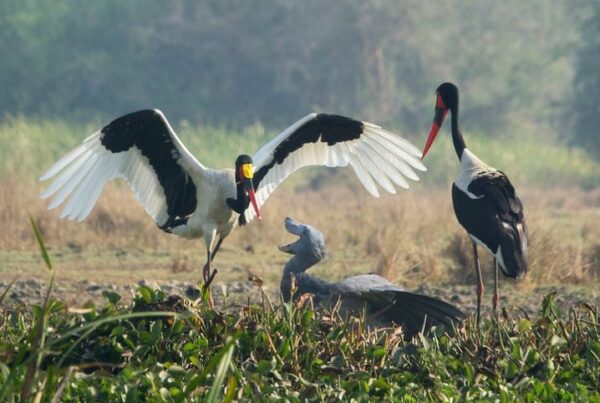
The downstream trip to the delta is a birder’s dream. It is here that the elusive shoebill is most reliably seen, often alongside saddle-billed storks, open-billed storks, and squacco herons. The combination of aquatic life, dramatic landscapes, and bird activity makes the boat safari a highlight of birding in Murchison.

Birding on Game Drives

For those who prefer traditional safari vehicles, birding during game drives across the northern sector offers excellent opportunities. While the primary focus of these drives is often on mammals such as lions, giraffes, and elephants, the abundance of birdlife ensures that birders remain constantly engaged. The savannah plains, punctuated by borassus palms and acacia trees, serve as prime perches for raptors and songbirds alike.

Game drives are especially rewarding in the early morning and late afternoon, when birds are most active. With the guidance of experienced rangers, visitors can easily combine big game viewing with focused birdwatching, creating a multifaceted safari experience.

Walking Safaris and Intimate Encounters

In addition to vehicle and boat-based experiences, walking safaris offer an even more intimate birding encounter. Accompanied by guides and rangers, visitors venture into the woodlands and along riverine paths, where smaller species can be observed at close range. The slower pace of walking allows birders to listen more carefully, track specific calls, and appreciate the details of plumage and behavior that might be missed from a vehicle.

Walking also provides a sense of connection with the environment, where each bird sighting becomes part of a broader appreciation of the textures, scents, and sounds of the African wilderness.

The Best Time for Birding Safaris

Birding in Murchison Falls is productive throughout the year, but the experience varies with the seasons. The dry months, from December to February and from June to September, are often preferred because the trails and roads are more accessible, and many species are more easily seen around water sources.

However, the wet seasons, between March and May and again in October and November, bring their own unique rewards. During these months, the park becomes lush and green, and many resident birds enter their breeding seasons, displaying vibrant plumage and elaborate courtship behaviors. Migratory species from Europe and Asia also arrive during this period, adding to the diversity and excitement.

Thus, the best time depends largely on the preferences of the birder. While the dry season offers convenience and clearer sightings, the wet season provides the thrill of seeing the park at its most vibrant and dynamic.

Conservation Value of Birding Safaris

Birding safaris in Murchison Falls are not merely recreational. They play a crucial role in conservation and sustainable tourism. Birdwatching attracts a specialized type of traveler who values nature deeply and contributes directly to the funding of protected areas. The revenue from birding permits, park entry, and guided activities helps sustain conservation initiatives that protect both birds and other wildlife.

Moreover, birding creates awareness about the fragility of ecosystems. Observing the delicate balance that supports the shoebill stork, for instance, emphasizes the importance of conserving wetlands, which in turn support countless species of fish, plants, and local livelihoods. In this way, birding becomes a tool not only for enjoyment but also for advocacy and stewardship of nature.

The Transformative Experience of Birding

For many travelers, birding in Murchison Falls is more than a checklist activity; it is a transformative journey that deepens the connection with the natural world. Watching the synchronized flight of bee-eaters, hearing the call of a fish eagle at dawn, or witnessing the patient stillness of a shoebill evokes emotions that transcend simple observation.

Birding also teaches patience, attentiveness, and humility. It invites visitors to slow down, to notice the subtle details, and to appreciate the richness of life that exists beyond the more obvious attractions of the African wilderness. In doing so, it transforms the safari into an experience of learning, reflection, and wonder.

An Invitation to Discover

Birding safaris in Murchison Falls National Park are among the most rewarding experiences available to travelers in Africa. They combine the thrill of discovering rare and iconic species with the beauty of diverse habitats, the excitement of multiple safari styles, and the satisfaction of contributing to conservation. Whether one is an expert ornithologist or a beginner inspired by the colors of a sunbird, the park offers endless opportunities to be amazed.

To make the most of this extraordinary adventure, it is recommended that travelers plan their birding safari with WildHorn Africa, a trusted tour operator dedicated to creating seamless and enriching journeys across Uganda. With expert guides, personalized itineraries, and a commitment to responsible tourism, WildHorn Africa ensures that every birding safari becomes not just a trip but a story worth telling, a memory worth cherishing, and a connection worth preserving.

Birdwatching in Queen Elizabeth: Over 600 Species to Discover

Birdwatching in Queen Elizabeth: Over 600 Species to Discover

By Travel stories and blogs, Luxury holidays, Safari holidays, Special offers, Uganda travel guides, Wildlife holidays

Birdwatching in Queen Elizabeth: Over 600 Species to Discover

The Symphony of Feathers in the Pearl of Africa

In the heart of western Uganda, where the rolling savannah meets sprawling crater lakes and dense wetlands, lies Queen Elizabeth National Park, a sanctuary celebrated not only for its iconic mammals but also for its astonishing diversity of birds. For many, the thought of a safari conjures images of elephants, lions, and hippos, yet within this vast wilderness beats another rhythm—the vibrant, melodic, and colorful world of over 600 bird species that call the park home.

Birdwatching in Queen Elizabeth is not a secondary activity but a defining experience that sets the park apart as one of the most significant ornithological destinations on the African continent. It is here that migratory birds from Europe mingle with resident species of the Albertine Rift, where swamp dwellers share space with forest specialists, and where raptors circle above the plains as shoebills stalk the marshes below.

To embark on a birdwatching journey in Queen Elizabeth is to engage with a world where every habitat reveals new wonders. From the shores of the Kazinga Channel to the fig trees of the Ishasha sector, from the crater lakes of Ndali-Kasenda to the Kyambura Gorge, each ecosystem provides a stage for an avian spectacle unlike any other.

The Ornithological Richness of Queen Elizabeth National Park

The magnitude of avian diversity in Queen Elizabeth cannot be overstated. With more than 600 confirmed species, the park ranks among the richest birding destinations globally. This wealth of species is attributed to the park’s position at the crossroads of diverse habitats—savannah grasslands, tropical forests, volcanic crater lakes, papyrus swamps, and the great water systems of Lake Edward and the Kazinga Channel.

It is within this mosaic that birds of prey soar in search of movement, weavers build intricate nests over shimmering waters, and kingfishers dart across riverbanks with flashes of color. Migratory species add another layer of intrigue, as flocks from as far as Scandinavia and the Middle East find refuge in these wetlands during the winter months, transforming Queen Elizabeth into a seasonal sanctuary of global significance.

Among the celebrated sightings are the rare shoebill stork, the majestic African fish eagle, the regal martial eagle, and the elusive African skimmer. Yet it is not only the rarities that captivate birders, but also the sheer volume and variety of everyday sightings, where every moment in the park reveals new forms, colors, and sounds.

Habitats that Nurture Avian Diversity

The Savannah Plains

The rolling savannahs of Queen Elizabeth provide a backdrop for species adapted to open grasslands and scattered acacia woodlands. Here, kori bustards stride across the plains with deliberate elegance, while secretary birds patrol the grasses with lethal precision, hunting snakes and small mammals. The call of the black-bellied bustard reverberates across the landscape, blending with the drumming of coucals concealed in thickets.

Raptors dominate the skies above the savannah. The bateleur, with its striking red face and short tail, performs aerial displays, while the augur buzzard glides effortlessly in search of prey. Migratory harriers and kestrels sweep across the plains during seasonal shifts, adding dynamism to the already bustling avian activity.

The Kazinga Channel and Wetlands

The Kazinga Channel, linking Lake George and Lake Edward, is an epicenter of birdwatching in Queen Elizabeth. Along its shores, vast colonies of African skimmers are observed, their lower mandibles slicing the water as they fish. Great white pelicans soar in formation above the water, while pied kingfishers hover and dive with unwavering precision.

Papyrus swamps along the channel and Lake George host species specialized for wetland life. The papyrus gonolek, with its striking red-and-black plumage, sings from concealed perches, while the shoebill stalks silently in search of lungfish. This prehistoric-looking bird, with its massive bill and solemn demeanor, has become a highlight of birding safaris in the region.

The Crater Lakes and Forested Slopes

The volcanic crater lakes scattered across the park’s landscape provide unique microhabitats where forest edge species and water-associated birds coexist. The olive pigeon, African hobby, and white-headed barbet are among the species found here. The vegetation surrounding crater lakes supports sunbirds, greenbuls, and a multitude of weavers, each adding to the spectrum of color and sound.Birdwatching in Queen Elizabeth: Over 600 Species to Discover

Kyambura Gorge

Known as the “Valley of Apes” for its chimpanzee population, Kyambura Gorge also harbors an impressive diversity of birds. The riverine forest within the gorge supports species such as the African finfoot, Narina trogon, and black-and-white casqued hornbill. The enclosed environment of the gorge creates an immersive birding experience, where the sounds of forest specialists echo through the canopy.

Ishasha Sector

In the southern Ishasha plains, renowned for their tree-climbing lions, the avian spectacle continues. Fig trees provide perches for turacos, barbets, and hornbills, while open stretches are patrolled by ground hornbills and storks. Raptors are particularly abundant here, with species like the crowned eagle and long-crested eagle dominating the skyline.

Signature Species: Icons of Queen Elizabeth’s Avian World

Among the hundreds of species recorded in Queen Elizabeth, a few stand as icons of the park’s birding reputation.

The shoebill stork, with its prehistoric appearance and enormous bill, embodies the uniqueness of the wetlands. Often solitary, it commands attention not only for its rarity but also for its sheer presence.

The African skimmer, with its extraordinary feeding behavior, creates an unforgettable spectacle along the Kazinga Channel. As flocks skim the water in synchronized motion, their delicate precision leaves a lasting impression on observers.

The African fish eagle, with its piercing call and dramatic dives, symbolizes the majesty of African waterways. Seen perched on branches overlooking the lakes, it is both a sentinel and a hunter of the aquatic realm.

Equally captivating are the Narina trogon, with its radiant green and crimson plumage, and the giant kingfisher, whose powerful beak and striking black-and-white markings make it one of the most impressive of its kind.

Birdwatching Seasons and Migratory Movements

Birdwatching in Queen Elizabeth is not confined to a single season. Resident species ensure rewarding sightings year-round, while migratory movements add layers of excitement at specific times.

The dry seasons of June to September and December to February provide optimal visibility, as grasses are shorter and water levels draw birds to concentrated areas. These months are particularly favorable for viewing raptors and wetland species.

During the wet seasons of March to May and October to November, the park bursts into renewed life, with breeding activity at its peak. Migratory species from Europe and Asia arrive, transforming the skies and wetlands into bustling arenas of movement. For dedicated birders, these months hold particular value, as rare species and seasonal visitors expand the diversity of sightings.

The Experience of Birdwatching Safaris

Birdwatching in Queen Elizabeth is not a passive pursuit but an immersive experience shaped by the diversity of habitats and the expertise of guides. Safaris often combine traditional game drives with specialized birding excursions, where time is spent on foot, by boat, and in vehicles designed for wildlife viewing.

Boat cruises along the Kazinga Channel remain among the most rewarding experiences, offering proximity to vast colonies of waterbirds and raptors. Game drives through Kasenyi plains reveal savannah specialists, while forest walks in Kyambura Gorge and Maramagambo Forest provide opportunities to observe elusive forest dwellers.

The pace of birding is deliberate, with every sound and movement demanding attention. Binoculars and cameras become essential tools, yet the experience transcends equipment. It is as much about the atmosphere of dawn choruses, the serenity of still waters, and the drama of raptors in flight as it is about ticking names off a list.

The Role of Birdwatching in Conservation

Birdwatching in Queen Elizabeth contributes directly to conservation efforts, both through tourism revenue and the awareness it fosters. Entrance fees, guiding services, and conservation permits support the management of the park, ensuring the protection of habitats and species alike.

Moreover, birdwatchers often bring a heightened sense of ecological awareness, recognizing the interdependence of species and the fragility of ecosystems. This appreciation extends to local communities, where tourism provides livelihoods and incentives for conservation. Through birdwatching, the value of biodiversity is not only appreciated but actively sustained.

Cultural Encounters Along Birding Journeys

Beyond the feathers and songs, birdwatching journeys in Queen Elizabeth often weave through the lives of surrounding communities. Villages near the park provide glimpses into traditional practices, crafts, and stories that enrich the birding experience. Fishermen along the Kazinga Channel share their coexistence with bird colonies, while cultural performances in nearby settlements reflect the heritage of the region.

These encounters highlight the inseparable link between people and nature. Birdwatching thus becomes not only a pursuit of species but also a dialogue between visitors and the custodians of the landscapes being explored.

An Endless Symphony of Wings

To engage in birdwatching in Queen Elizabeth National Park is to immerse oneself in an endless symphony of wings, colors, and calls. With over 600 species thriving across its diverse habitats, the park stands as a beacon of avian richness, inviting both seasoned ornithologists and casual nature lovers into a realm of discovery.

Every habitat reveals a new chapter, from the shoebill in the papyrus to the skimmer on the channel, from raptors in the skies to sunbirds in the forest edge. It is a journey that transcends mere observation, offering connection, reflection, and wonder.

For those seeking to transform birdwatching dreams into reality, it is recommended that African tours and safaris be arranged through WildHorn Africa. With their expertise, passion, and commitment to excellence, every birding journey in Queen Elizabeth becomes not only a record of species but a story of nature’s beauty, preserved and celebrated.

Uganda museum

Uganda museum

By Uganda places to visit, Where to go

Uganda Museum: A Timeless Vault of the Nation’s Heritage

Standing quietly at the edge of Kampala’s bustling heart is a treasure trove that whispers the story of Uganda — a nation of kingdoms, warriors, artisans, musicians, and innovators. The Uganda Museum is more than a building of aged exhibits; it is a living chronicle of identity, a cultural mirror, and a national memory bank that continues to evolve with time. Within its modest walls lies the pulse of Uganda’s journey — from the dawn of prehistoric life to the complexity of modern statehood.

Founded in 1908, the Uganda Museum holds the distinction of being the oldest museum in East Africa. While its architecture may appear understated at first glance, what it houses is profound: the preservation of indigenous knowledge systems, the celebration of tribal diversity, and the continuity of Ugandan identity in the face of globalization and modern transformation. Every object here — from musical instruments to Iron Age tools — carries a story. And when pieced together, these stories form the mosaic of Uganda’s past, present, and projected future.

Location: A Cultural Heartbeat in the Capital

The Uganda Museum is strategically situated in Kampala, Uganda’s capital city, along Kira Road in Kamwokya, just a few minutes’ drive from the central business district. This location is not only easily accessible but also symbolically powerful. It allows the museum to serve as a cultural anchor in a city rapidly transforming through skyscrapers, digital hubs, and commercial complexes.

Set within an expansive compound, shaded by age-old trees and encircled by gardens, the museum provides a sense of serenity amidst the city’s energetic hum. Its grounds host not only permanent structures but also outdoor exhibits — particularly in ethnography and traditional architecture — creating an open-air learning environment that blends natural space with heritage education.

How to Get There: Gateway to the Past in the Heart of the Present

Reaching the Uganda Museum is remarkably easy for both locals and international visitors. From Entebbe International Airport, the museum lies approximately 40 kilometers away, a journey that takes about an hour by car, depending on traffic. Visitors arriving in central Kampala can access the site via public transport, private taxis, or organized tour groups.

Most major hotels and guest houses in the city offer shuttle services or assistance with arranging guided visits. For those using public means, boda bodas (motorbike taxis) and commuter taxis traveling along Kira Road are common and cost-effective options. Signage to the museum is clear, and security at the premises is maintained consistently, making it a safe destination for all types of travelers.

Attractions: A Journey Through Uganda’s Diverse Civilizations

The Uganda Museum’s charm lies not in high-tech displays or modern interactive installations, but in the depth and authenticity of its collections. Walking through its galleries feels like a passage through centuries, a carefully curated journey that honors each period of Uganda’s expansive narrative.

The Ethnography Gallery is perhaps the most emotionally powerful, showcasing traditional regalia, ceremonial costumes, weaponry, and household items from Uganda’s numerous tribes. Here, the visitor encounters the cultural expressions of the Baganda, Banyankole, Acholi, Iteso, Basoga, Batooro, and many other communities — each display offering insight into values, cosmologies, and lifeways.

Equally captivating is the Archaeology and Paleontology section, where ancient tools, pottery fragments, and skeletal remains tell the story of early human settlement in the region. Fossils of prehistoric mammals, including a jawbone of the now-extinct Ugandapithecus major, offer compelling evidence that Uganda was once a cradle of early primate evolution. The Iron Age exhibit demonstrates technological advancements in smelting and metallurgy, showcasing how early Ugandan societies forged tools and weapons long before the arrival of colonial powers.

Another standout is the Natural History collection, featuring an array of taxidermied wildlife, geological specimens, and models of Uganda’s varied ecosystems. This section serves as a miniature encyclopedia of the country’s rich biodiversity — from the elephants of Queen Elizabeth National Park to the butterflies of Mabira Forest.

Outside, the museum’s grounds host life-sized reconstructions of traditional huts from different regions of the country. These dwellings, built using authentic materials and architectural techniques, allow visitors to step inside the lived experiences of precolonial Uganda. Complementing these are displays of ancient granaries, dug-out canoes, and musical installations where guests can try their hand at indigenous instruments like the adungu, amadinda, and engalabi.

Things to Do: An Immersive Cultural Experience

A visit to the Uganda Museum offers far more than passive observation. Guests are invited into an interactive engagement with Uganda’s heritage, one that combines education, curiosity, and cultural empathy.

Guided tours, led by seasoned curators and historians, provide deep dives into the symbolism, origin, and evolution of specific artifacts. These experiences often expand beyond the facts, offering storytelling and oral history components that animate the objects with voices from the past.

Students and researchers benefit from access to the resource library, which houses a wealth of archival material, ethnographic studies, and academic papers on Ugandan history, archaeology, and culture. Special exhibitions are hosted periodically, often focusing on underrepresented themes such as women in traditional society, precolonial justice systems, or indigenous healing practices.

Workshops and cultural events also breathe life into the museum’s mission. These include traditional dance performances, craft-making demonstrations, art exhibitions, and storytelling sessions designed for both children and adults. Visiting the museum during these events allows for a multi-sensory appreciation of Uganda’s intangible heritage.

For photographers and creatives, the museum’s aesthetic — a blend of colonial-era architecture, outdoor exhibitions, and rich artifacts — provides ample inspiration for capturing the fusion of Uganda’s past and present.

Best Time to Visit: When History Shines Brightest

The Uganda Museum remains open year-round, but certain periods offer enhanced experiences. The dry seasons, from June to August and December to February, are ideal for visiting, particularly if one plans to explore the outdoor exhibits. The clear skies and moderate temperatures make for comfortable walking tours and allow for optimal photography, especially around the traditional huts and garden areas.

These months also coincide with school holidays and cultural festivals, meaning visitors might encounter live events, exhibitions, or special community programs. That said, even the rainy seasons bring their own charm — the lush green surroundings provide a tranquil ambiance, and the indoor galleries offer perfect refuge for those seeking quiet contemplation.

A Heritage Worth Preserving

The Uganda Museum is not just a relic of the past but a living cultural institution that plays an active role in nation-building. It has weathered political transitions, ideological shifts, and budgetary challenges, yet it stands — not just as a repository of artifacts, but as a keeper of memory, a teacher of truth, and a bridge between generations.

At a time when Africa’s heritage is often threatened by neglect, urbanization, or even foreign repatriation debates, the Uganda Museum reminds the world that history belongs to those who preserve it. It challenges both Ugandans and visitors to reflect, not only on what has been lost, but on what must be protected for the future.

Whether one is a scholar, a student, a traveler, or a curious observer, a visit to the Uganda Museum provides more than facts. It offers perspective, continuity, and a deepened understanding of one of Africa’s most complex and captivating nations.

Explore Uganda’s Living History with WildHorn Africa

To truly uncover the depth and beauty of Uganda’s cultural and historical landscape, entrust your journey to WildHorn Africa — a tour company known for its authentic, immersive, and tailor-made experiences. Whether it’s a visit to the Uganda Museum, a spiritual pilgrimage to ancient shrines, or a wildlife adventure in the savannas, WildHorn Africa designs safaris that go beyond sightseeing — into the very soul of the continent.

With expert guides, seamless logistics, and a passion for storytelling, WildHorn Africa transforms every trip into a life-changing memory.

Hunting

Hunting

By Special offers, Travel guides

Hunting in Africa: What You Need to Know

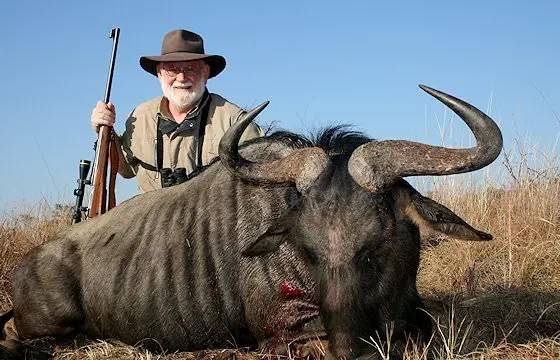
Hunting in Africa has long been a controversial and complex topic. While some travelers seek out legal, regulated hunting safaris, others strongly oppose the practice on ethical or conservation grounds. It’s important to understand the distinctions between trophy hunting, subsistence hunting, and poaching, and how these impact Africa’s wildlife, ecosystems, and local communities.

In this article, we explore the realities of hunting in Africa, the countries where it’s legal and regulated, how it ties into conservation efforts, and what alternatives exist for travelers who want an up-close wildlife experience without harming animals.

Types of Hunting in Africa

1. Trophy Hunting
Involves wealthy clients paying large sums to hunt specific species, often including “Big Five” animals like lions, elephants, buffalo, leopards, and rhinos.

Legal in some countries when done under strict regulation and quota systems.

Animals hunted are typically older males past their breeding prime.

2. Subsistence Hunting
Practiced by rural communities for survival, using traditional tools or techniques.

Usually targets smaller game like antelopes or wild pigs.

Often unregulated, but deeply rooted in indigenous culture.

3. Illegal Hunting / Poaching
Involves unauthorized killing of animals, often for the illegal trade in ivory, horns, skins, or bushmeat.

Has devastating effects on endangered species and ecosystems.

Combated by anti-poaching units and conservation programs.

Countries Where Trophy Hunting Is Legal (With Regulations)

South Africa: Home to a significant trophy hunting industry with ranches that breed animals specifically for hunting. Regulated by the government.

Namibia: Offers legal hunting with a focus on sustainable use. Community-based conservancies benefit from income.

Zimbabwe: Known for controversial cases, but also has regulated hunting programs tied to conservation funding.

Tanzania: Allows big game hunting in designated hunting blocks. Government issues licenses and quotas.

Mozambique: Growing as a legal hunting destination, especially for buffalo and antelope species.

Conservation Arguments For and Against Hunting

In Favor:

Generates significant revenue for wildlife reserves and communities.

Creates financial incentive to conserve wild habitats and species.

Hunting fees can fund anti-poaching efforts, research, and ranger salaries.

Against:

Ethical concerns about killing wild animals for sport.

Potential mismanagement and corruption can lead to overhunting or illegal practices.

Tourism alternatives like photographic safaris can bring equal or greater income without killing wildlife.

Popular Game Species in African Hunting Safaris

Plains Game: Impala, kudu, wildebeest, springbok, warthog

Big Five: Lion, elephant, buffalo, leopard, rhino (note: rhino hunting is highly restricted)

Dangerous Game: Hippos, crocodiles, hyenas

Alternatives to Hunting Safaris

If you’re interested in wildlife and nature-based experiences without contributing to animal harm, consider:

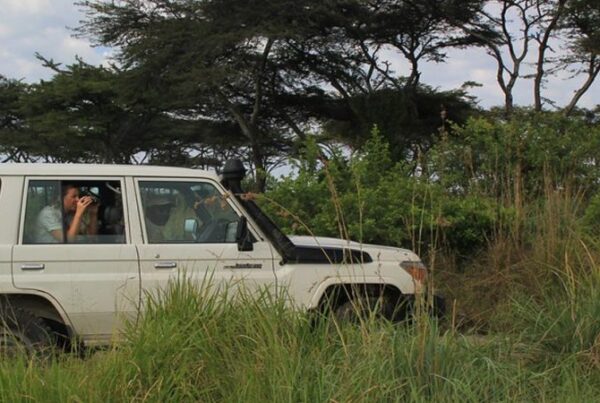
Photographic safaris in national parks and private game reserves.

Walking safaris led by trained guides and trackers.

Conservation safaris where you assist researchers or rangers in wildlife monitoring.

Wildlife rehabilitation visits to sanctuaries or rescue centers.

Community tourism that supports locals without wildlife exploitation.

Final Thoughts
Hunting in Africa is a divisive issue. While legal trophy hunting under strict regulation can contribute to conservation and local economies, it remains a deeply personal and ethical decision. As a traveler, you have the power to choose experiences that reflect your values, whether that includes hunting or not.

Want a Wildlife Experience Without Hunting?
WildHorn Africa offers ethical safaris and conservation-based travel that immerse you in Africa’s rich ecosystems—without the need for hunting. Our tailor-made safaris allow you to track big game, explore on foot, and connect with nature in a way that protects it for future generations.

Get in touch with WildHorn Africa to plan your unforgettable, wildlife-friendly adventure today.

Special offers

Special offers

By Get inspired

Special Offers: Unlock Exclusive Discounts and Tailored Safaris for 18+ and LGBTQ+ Travelers with WildHorn Africa

Special Offers, Experience Africa Like Never Before with Exclusive Savings and Tailored Adventures

The allure of Africa’s wild landscapes, majestic wildlife, and rich cultures is undeniable. But beyond the breathtaking scenery and unforgettable experiences, savvy travelers know that timing and opportunity can unlock incredible value. At WildHorn Africa, we are dedicated to making your dream safari not only extraordinary but also accessible through special offers that cater to diverse travel needs—whether you seek discounted packages, customized requests, 18+ adult safaris, or inclusive LGBTQ+ journeys.

This detailed guide explores how you can capitalize on our exclusive promotions, understand the nuances of special requests, and benefit from tailor-made travel experiences designed specifically for adults and LGBTQ+ travelers. Whether you’re a first-time visitor or a seasoned safari enthusiast, these offers are designed to provide exceptional value without compromising on quality, authenticity, or comfort.

Unlocking Value: The Power of Discounted Safari Packages

Discounts on African safaris are more than just price reductions—they are gateways to experiencing more of Africa’s wonders while optimizing your budget. WildHorn Africa frequently offers seasonal discounts, early bird specials, and last-minute deals that allow travelers to explore iconic parks and hidden gems without breaking the bank.

Discounted packages typically coincide with shoulder seasons when wildlife viewing remains excellent, but visitor numbers decrease. This strategic timing means guests enjoy more intimate encounters with nature alongside cost savings. WildHorn Africa’s expert team helps you identify these periods and crafts itineraries that maximize both value and experience.

Beyond fixed discounts, we also offer group rates and loyalty rewards, encouraging repeat travelers and communities of friends or families to share in the adventure while benefiting from reduced rates. These offers make luxury and immersive safaris accessible to a broader audience.

Tailored Experiences: Meeting Special Requests with Precision and Care

One size rarely fits all when it comes to African safaris. WildHorn Africa prides itself on our ability to accommodate special requests that personalize your journey. Whether you require specific dietary accommodations, seek private guiding, wish to include off-the-beaten-path excursions, or desire bespoke cultural interactions, our team crafts every detail meticulously.

Special requests often extend to travel style preferences—some guests may prefer rugged, adventurous camping under the stars, while others seek luxurious lodges with world-class amenities. Whatever your vision, WildHorn Africa’s deep local knowledge and partnerships ensure your safari reflects your desires.

This bespoke approach allows you to move beyond conventional itineraries, creating unique moments and memories that align perfectly with your interests and comfort levels.

Adult-Only Adventures: Exclusive 18+ Safaris for Sophisticated Exploration

For travelers aged 18 and above, WildHorn Africa offers exclusive adult-only safaris designed to balance adventure, relaxation, and cultural immersion. These trips often include activities not suitable for younger travelers, such as night drives, walking safaris, and intimate wine tastings by the campfire.

Adult-only safaris prioritize a more mature atmosphere, allowing guests to engage deeply with the environment and each other without distractions. Whether you are traveling solo, as a couple, or with friends, these safaris foster connections built on shared experiences and a passion for the wild.

Our 18+ safaris also incorporate elements of wellness, fine dining, and luxury, creating an experience that rejuvenates both body and spirit amid Africa’s stunning backdrops.

Inclusive Travel: LGBTQ+ Friendly Safaris That Celebrate Authenticity

Inclusivity is at the core of WildHorn Africa’s philosophy. We understand that LGBTQ+ travelers seek safe, respectful, and welcoming environments without compromising adventure or authenticity. Our LGBTQ+ friendly safari packages are thoughtfully designed to provide comfort and confidence throughout your journey.

These safaris include private accommodations, discreet transport, and guides trained in cultural sensitivity to ensure your identity is honored and celebrated. Beyond safety, WildHorn Africa emphasizes community building, connecting LGBTQ+ travelers with like-minded adventurers and local partners who embrace diversity.

By choosing WildHorn Africa, LGBTQ+ guests embark on journeys where they can freely express themselves, explore Africa’s natural wonders, and create lifelong memories in a supportive atmosphere.

Combining Offers: Maximize Your Safari Experience

An exciting aspect of WildHorn Africa’s offerings is the ability to combine various special offers to create unparalleled value. For example, adult-only groups can benefit from discounted rates during off-peak seasons, or LGBTQ+ travelers can request bespoke itineraries that align with seasonal wildlife events while enjoying exclusive promotions.

Our flexible booking policies and attentive customer service empower you to tailor your travel plans without compromise. We work closely with you to balance timing, budget, and preferences, ensuring your safari is as unique as you are.

Booking with Confidence: Why WildHorn Africa Is Your Trusted Partner

Choosing WildHorn Africa means partnering with a company committed to transparency, excellence, and ethical tourism. Our special offers come with no hidden fees, expert guidance, and guaranteed quality—ensuring your investment delivers maximum return in memories and experiences.

Our team’s intimate knowledge of African destinations, combined with a network of trusted local operators, guarantees authentic encounters and smooth logistics. We prioritize conservation and community upliftment, so your safari contributes positively to the regions you visit.

With WildHorn Africa, you receive not just a trip but a carefully curated journey where every offer and request is honored with professionalism and heart.

Seize Your Moment—Book Your Special Safari Offer Today

Africa’s wild beauty and cultural richness await travelers ready to explore with curiosity and care. WildHorn Africa’s special offers open doors to extraordinary experiences, whether you seek discounted packages, adult-only adventures, or inclusive LGBTQ+ safaris tailored just for you.

Now is the perfect time to embark on your African safari dream. Book your Africa tours and safaris via WildHorn Africa and unlock exclusive value, expert support, and unforgettable journeys. Adventure, discovery, and inclusivity come together to create the safari experience you’ve always envisioned.

Your extraordinary African adventure is just a click away.

Close Menu