search
Community Tours around Queen Elizabeth National Park

Community Tours around Queen Elizabeth National Park

By Travel stories and blogs, Family holidays, Luxury holidays, Safari holidays, Uganda travel guides, Wildlife holidays

Community Tours around Queen Elizabeth National Park

Beyond the Wilderness – Engaging with Culture

When one imagines Queen Elizabeth National Park, visions of elephants, lions, hippos, and tree-climbing lions often dominate the mind. Yet beyond the untamed wilderness lies another dimension of exploration that enriches the safari experience—community tours. These cultural journeys reveal the interwoven relationship between humans and nature, providing visitors with insight into the traditions, daily lives, and resilience of the communities living on the periphery of the park.

Community tours around Queen Elizabeth transform travel from passive observation into immersive engagement. The narrative of wildlife conservation is inseparable from the stories of local people, whose knowledge, stewardship, and traditions shape the landscapes travelers explore. Villages nestled along the Kazinga Channel, near the Ishasha sector, or within the foothills of the Rwenzori Mountains, are alive with history, crafts, and rituals that have been passed down through generations.

By participating in community tours, travelers witness a different form of richness—one measured not in the number of species encountered but in the depth of human connection and cultural understanding. The experience fosters empathy, education, and sustainable development while offering a rare lens through which Uganda’s soul can be perceived.

Understanding the Communities Around Queen Elizabeth

The communities surrounding Queen Elizabeth National Park are as diverse as the landscapes themselves. Primarily composed of subsistence farmers, fishermen, and small-scale traders, these populations have developed adaptive strategies to coexist with the wildlife that roams the park. Their knowledge of natural cycles, animal behavior, and environmental stewardship is extensive, often passed down orally across generations.

The Batwa, one of Uganda’s indigenous groups, have historically inhabited the forests near Bwindi and the southern Ishasha region. Their traditional knowledge, spiritual beliefs, and practices offer valuable insights into forest ecology, medicinal plants, and sustainable resource management. Other communities, such as the Bakiga, Bafumbira, and Banyankole, maintain agricultural lifestyles and rituals that are intimately connected to the land. These communities rely on the fertile soils surrounding Queen Elizabeth for crops such as bananas, maize, beans, and sweet potatoes.

Understanding these communities provides context to the conservation successes of Queen Elizabeth National Park. Human-wildlife conflicts, land-use planning, and tourism development are all shaped by the interactions between these people and their environment. Community tours, therefore, do more than entertain—they educate and cultivate an appreciation for sustainable coexistence.

Types of Community Tours

Community tours around Queen Elizabeth National Park are varied, offering opportunities for participation in daily life, cultural performances, and conservation projects. One category involves village visits, where travelers witness traditional farming techniques, learn about local culinary practices, and engage in storytelling sessions that preserve historical narratives. Guests are introduced to the social structures of the villages, understanding the roles of elders, women, and youth in maintaining cohesion and cultural heritage.

Another form of community engagement centers on arts and crafts. Many villages are renowned for weaving, basketry, pottery, and beadwork, each reflecting centuries-old techniques and aesthetic values. Visitors can observe artisans at work, gain hands-on experience, and purchase authentic crafts directly from the creators, ensuring that revenue benefits the local economy.

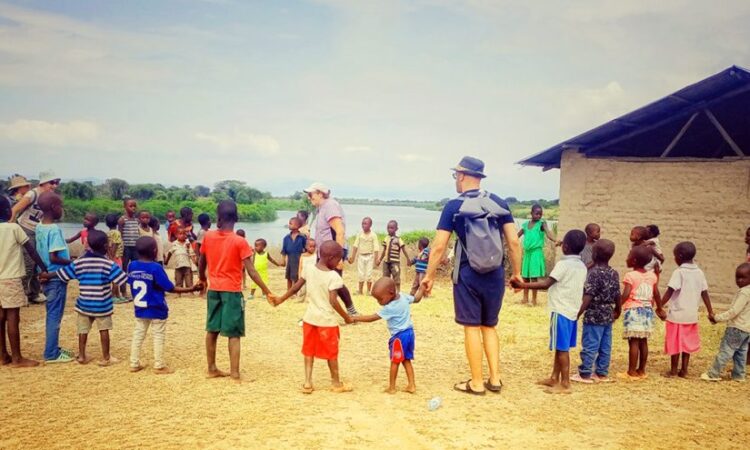
School visits and educational programs offer an additional avenue of interaction. Local schools often welcome tourists to participate in reading sessions, storytelling, or music and dance performances. These encounters provide a human dimension to conservation tourism, demonstrating how education and cultural transmission are intertwined with sustainable development.

Finally, community tours sometimes involve participatory conservation projects, such as tree planting, wetland restoration, or wildlife monitoring. These initiatives allow visitors to contribute tangibly to the protection of ecosystems while learning about the delicate balance between human needs and environmental preservation.

Cultural Immersion Along the Kazinga Channel

The Kazinga Channel, renowned for its concentration of hippos, crocodiles, and birdlife, also forms a lifeline for the communities that reside along its banks. Here, community tours often focus on traditional fishing practices, which have been refined over centuries. Travelers are shown how nets are cast, fish are smoked or dried, and communal methods ensure that resources are used sustainably.

In addition to fishing, local markets provide an opportunity to explore Ugandan trade practices. Fresh produce, handicrafts, and livestock are displayed in vibrant arrays, reflecting the ingenuity and resilience of these communities. Through guided interactions, travelers learn about the seasonal rhythms that dictate planting, harvesting, and fishing, while also gaining appreciation for the social rituals embedded in daily labor.

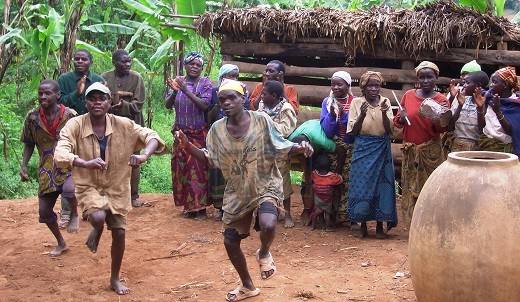
Cultural performances along the channel further enrich the experience. Dance, music, and storytelling highlight the community’s spiritual connection to the land and water. Traditional instruments, chants, and ceremonial attire convey meaning that extends beyond entertainment, offering profound insight into local values and cosmology.Community Tours around Queen Elizabeth National Park
Experiences in the Ishasha Communities

The southern Ishasha sector, famous for its tree-climbing lions, is also home to communities that have adapted to living alongside large predators. Villagers here employ strategies to minimize conflicts with wildlife, such as constructing elevated granaries, using guard animals, and maintaining designated buffer zones.

Community tours in Ishasha often involve guided walks with local residents, who provide interpretation of tracks, scat, and other signs of wildlife presence. These excursions allow visitors to understand the intimate knowledge of the land possessed by those who share it with elephants, lions, and buffaloes.

Visitors are also introduced to traditional medicinal practices, where plants are used for remedies, rituals, and nutrition. The stories surrounding these practices reflect a worldview in which nature and humans exist in a reciprocal relationship—a principle that underpins much of the community’s approach to conservation.

Culinary and Agricultural Immersion

Food is a universal bridge to cultural understanding, and in communities around Queen Elizabeth, culinary practices are deeply tied to the environment. Guests are often invited to participate in the preparation of traditional meals, using ingredients harvested from farms, gardens, or the river. Dishes such as matoke, posho, beans, and fresh fish offer not only sustenance but also insight into local tastes, techniques, and traditions.

Agricultural practices are equally educational. Farmers demonstrate terracing, crop rotation, and organic fertilization, highlighting how these methods sustain both livelihoods and the surrounding ecosystem. Seasonal variations, pest management, and the use of traditional knowledge in predicting rainfall patterns are explained, revealing an intricate understanding of land stewardship.

Conservation and Community Linkages

Community tours serve as a critical bridge between tourism and conservation. The income generated through guided visits, craft sales, and cultural experiences incentivizes local populations to protect wildlife and habitats. Communities that see direct benefits from tourism are more likely to support anti-poaching measures, engage in sustainable land management, and participate in conservation initiatives.

Programs that link community development with environmental protection are increasingly prevalent. Revenue-sharing models, microfinance projects, and education programs funded by tourism ensure that the benefits of the park extend beyond its boundaries. Through these mechanisms, visitors to Queen Elizabeth not only enjoy cultural enrichment but also contribute to the long-term preservation of both human and natural heritage.

Planning and Participating in Community Tours

The success of a community tour is enhanced by thoughtful planning. It is recommended that visits be guided by local experts who understand cultural protocols, language nuances, and ecological sensitivities. This ensures that interactions are respectful, meaningful, and mutually beneficial.

Tours are often scheduled in coordination with daily routines to minimize disruption while maximizing insight. Morning visits may coincide with farm work or market activity, while afternoons may feature craft demonstrations or cultural performances. Multi-day programs may integrate community engagement with wildlife safaris, allowing travelers to experience the full spectrum of life around Queen Elizabeth.

Participation in these tours is not passive; visitors are encouraged to ask questions, engage in activities, and reflect on the interconnectedness of community, wildlife, and landscape. By doing so, the tour becomes a two-way exchange, enriching both traveler and host.

The Role of Education in Community Tourism

Education is central to the philosophy of community tours. By understanding local traditions, wildlife management practices, and environmental challenges, visitors gain a deeper appreciation for the complex dynamics that sustain Queen Elizabeth National Park. School visits, storytelling sessions, and workshops provide platforms for knowledge exchange, where both communities and tourists share perspectives and learn from one another.

Through education, community tourism fosters long-term impact. Travelers leave with insights that extend beyond the park, while communities gain recognition, skill development, and resources that support cultural preservation and economic empowerment. The result is a cycle of engagement that benefits wildlife, people, and the broader ecosystem.

Benefits of Community Tours for Travelers

For visitors, community tours offer enrichment that complements traditional wildlife experiences. They provide context to the landscapes observed on game drives, revealing the human stories that shape the savannahs, wetlands, and forests. Travelers gain practical knowledge of agriculture, craft-making, and conservation, deepening their understanding of Uganda beyond the lens of safari vehicles.

The tours also foster empathy and connection, as interactions with local people reveal shared values, aspirations, and challenges. In this way, tourism transcends observation, becoming a vehicle for personal growth, intercultural understanding, and appreciation for the intertwined fates of humans and nature.

Beyond Wildlife – Embracing Humanity

Community tours around Queen Elizabeth National Park open a portal to a world where culture, history, and nature are inseparable. They provide a lens through which the richness of Ugandan life can be appreciated, complementing the thrill of wildlife viewing with the depth of human connection.

To explore villages, participate in traditional practices, witness crafts, and engage in conservation projects is to see Queen Elizabeth not only as a sanctuary for animals but as a living landscape sustained by its people. Each tour offers lessons in resilience, stewardship, and the enduring bond between humans and the natural world.

For those seeking a safari that combines adventure, education, and cultural immersion, it is strongly recommended that African tours and safaris be booked via WildHorn Africa. With their expertise and dedication, every community tour becomes a meaningful journey, ensuring that travelers experience the park in its fullest richness while contributing to the well-being and preservation of its communities.
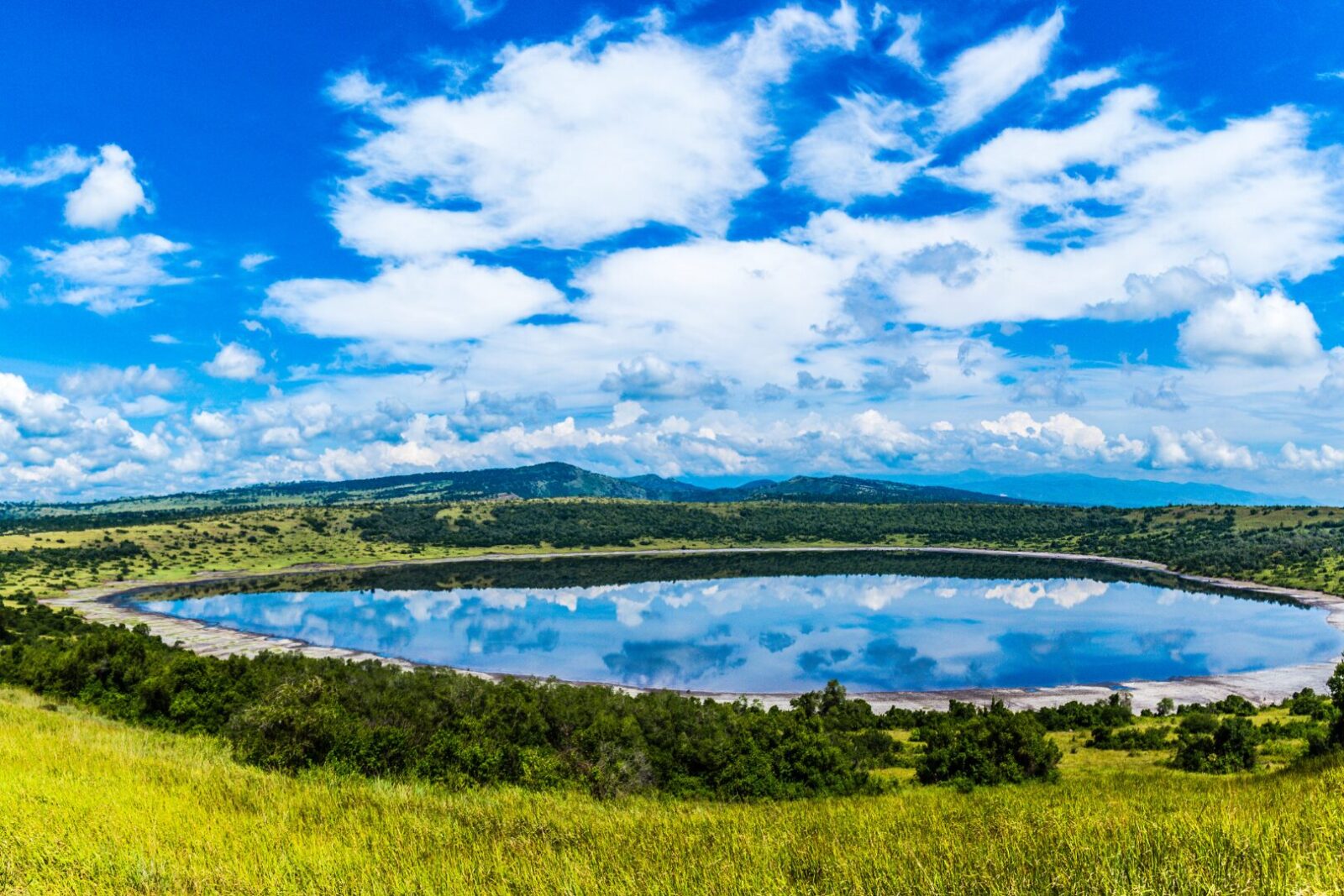
Exploring Crater Lakes in Queen Elizabeth National Park

Exploring Crater Lakes in Queen Elizabeth National Park

By Travel stories and blogs, Family holidays, Luxury holidays, Safari holidays, Uganda travel guides, Wildlife holidays

Exploring Crater Lakes in Queen Elizabeth National Park

Nature’s Masterpieces Carved in Time

In the heart of western Uganda, where rolling savannahs converge with towering mountain ranges, a series of otherworldly landscapes whisper the stories of the earth’s turbulent past. Among the many wonders of Queen Elizabeth National Park, none inspire the imagination as profoundly as the crater lakes. These water-filled calderas, born of volcanic fury millions of years ago, now stand as serene jewels scattered across the land, shimmering with mystery and life.

For the traveler drawn into the park’s wilderness, exploring the crater lakes is more than an excursion; it is an immersion into the intersection of geology, ecology, and human culture. Their beauty captures the eyes, but their history captivates the mind, offering a glimpse into forces that shaped Uganda’s landscapes and continue to sustain its biodiversity. Whether viewed from sweeping escarpments or approached through winding tracks, these lakes appear as sanctuaries of reflection, tranquility, and discovery.

To step into their presence is to experience Queen Elizabeth National Park not only as a realm of animals and plains but also as a geological gallery where the artistry of time is etched into every curve of water and ridge of rock. This article delves into the story of these crater lakes, their ecological importance, their cultural resonance, and the role they play in enriching the safari experience within the park.

The Geological Origins of the Crater Lakes

The crater lakes of Queen Elizabeth National Park are legacies of ancient volcanic activity. Millions of years ago, tectonic forces along the Albertine Rift Valley fractured the earth’s crust, triggering volcanic eruptions that reshaped the landscape. Explosions of steam and magma left behind enormous depressions, which over time filled with rainwater and underground springs, becoming the crater lakes seen today.

The park is dotted with more than ten significant craters, particularly concentrated along the Ndali-Kasenda Crater Field near Kibale Forest and the Katwe Explosion Craters within the park itself. These craters vary in size, depth, and ecological character. Some hold permanent lakes with shimmering waters, while others remain as dry depressions, their walls carpeted in savannah grasses. Each one carries its own geological signature, but together they form a dramatic testament to the power of the earth beneath the Rift Valley.

The most famous among them are the Katwe Craters, where human interaction with these formations has been continuous for centuries due to the presence of salt. These saltwater lakes have not only shaped the ecological balance of the park but have also provided livelihoods for surrounding communities. Thus, the crater lakes represent more than natural wonders; they are living archives of the land’s volcanic legacy and its influence on human survival.

The Katwe Explosion Craters: A Scenic Wonder

Of all the crater lakes in Queen Elizabeth National Park, the Katwe Explosion Craters hold a special place. They are located along a fifteen-mile scenic drive that meanders through some of the park’s most dramatic landscapes. Rising over 1,200 meters above sea level, these craters command breathtaking views of the surrounding savannah, the Kazinga Channel, and even the distant peaks of the Rwenzori Mountains when skies are clear.

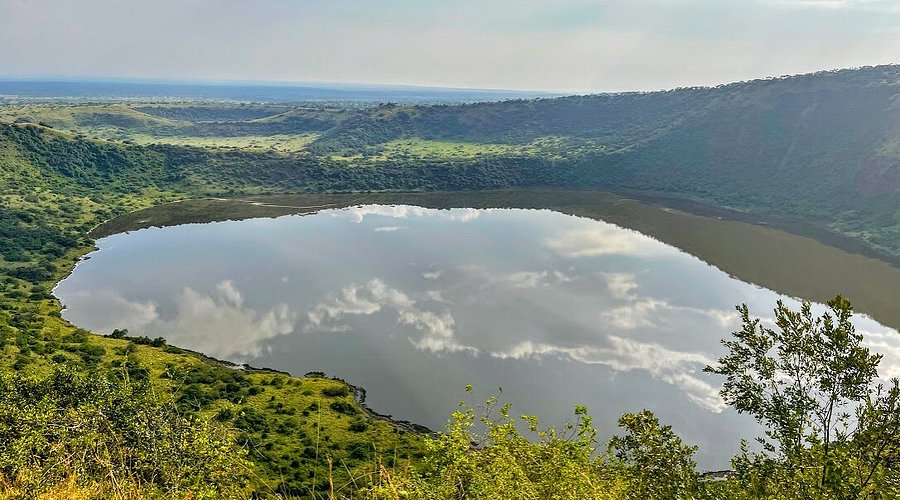
Formed around 8,000 to 10,000 years ago, the Katwe Craters reveal a terrain scarred by volcanic activity yet softened by time. Some craters are filled with water, their tranquil surfaces mirroring the skies, while others lie dry, their slopes blanketed with grasses that attract antelopes and elephants. The contrast between still water and rugged rims creates a surreal atmosphere, reminding visitors that these tranquil pools were once cauldrons of fire and smoke.

Driving through this region offers more than geological marvels. The area is also a haven for wildlife. Buffalo, warthogs, and elephants graze along the crater rims, while raptors soar on thermal winds above. The craters themselves form micro-habitats, supporting unique plant species that thrive in their mineral-rich soils. For travelers, the Katwe Explosion Craters are not merely scenic; they are living laboratories where geology and biology meet in harmony.

Lake Katwe: A Lake of Salt and Survival

Among the Katwe Craters, Lake Katwe stands out as both a natural wonder and a cultural landmark. Unlike many other crater lakes filled with freshwater, Lake Katwe contains highly saline waters that have been harvested for centuries. Salt extraction here has sustained communities since the fourteenth century, turning the lake into one of the most important economic resources in the region.

Traditional salt mining at Lake Katwe remains a fascinating cultural practice. Workers carve salt pans along the edges of the lake, leaving shallow ponds where water evaporates under the sun, leaving behind crystalline salt. This salt is collected and traded across Uganda and neighboring countries, linking the lake to centuries of commerce and survival.

The process is arduous and often dangerous, as miners endure harsh conditions and exposure to briny waters. Yet the salt of Lake Katwe continues to symbolize resilience and adaptation, a reminder of how human societies have lived in synergy with the volcanic landscapes of the Albertine Rift. To visit Lake Katwe is to witness not only a geological marvel but also the enduring relationship between people and nature.

Lake Munyanyange: A Haven for Birds

Just beyond Lake Katwe lies Lake Munyanyange, a small crater lake that holds enormous ecological significance. Unlike its saline neighbor, Lake Munyanyange is a seasonal haven for migratory birds, particularly flamingos. Between October and April, flocks of lesser flamingos descend upon its shallow waters, their pink plumage painting the lake in surreal hues.

This phenomenon has transformed Lake Munyanyange into a birdwatcher’s paradise. Alongside flamingos, pelicans, avocets, stilts, and numerous migratory species find refuge here. The presence of such diversity is tied to the lake’s mineral composition and the seasonal abundance of algae and crustaceans that provide food for the birds.

Lake Munyanyange also reflects the delicate balance between conservation and community. It lies close to Katwe town, where human activity constantly presses against ecological boundaries. Yet its continued ability to host migratory birds underscores the resilience of the ecosystem. For those exploring the crater lakes of Queen Elizabeth, Lake Munyanyange offers a window into the intersection of avian migration, ecology, and community life.

The Scenic Beauty of the Ndali-Kasenda Crater Lakes

While the Katwe Craters dominate the park’s volcanic landscape, the Ndali-Kasenda Crater Field, situated on the park’s fringes near Kibale National Park, is equally mesmerizing. This region contains over thirty craters, many filled with sparkling blue-green waters fringed by lush vegetation. These lakes are surrounded by rolling hills, banana plantations, and small villages, creating a mosaic of natural beauty and cultural life.Exploring Crater Lakes in Queen Elizabeth National Park

Each lake in the Ndali-Kasenda field possesses its own character. Some are deep and steep-walled, resembling giant bowls, while others are shallow with gently sloping shores. Lakes such as Nyinambuga, Nyabikere, and Nkuruba have become notable attractions, offering serene environments for exploration, hiking, and photography. Their crystal-clear waters and verdant surroundings make them appear almost surreal, as if untouched by time.

Though located slightly beyond Queen Elizabeth National Park’s boundaries, the Ndali-Kasenda Crater Lakes complement the park’s offerings, providing visitors with opportunities to immerse themselves in landscapes where geology, agriculture, and rural culture meet. They serve as reminders that the volcanic story of the region extends far beyond the park’s borders.

Ecological Importance of the Crater Lakes

Beyond their visual beauty, the crater lakes of Queen Elizabeth National Park play crucial ecological roles. They act as freshwater reservoirs that sustain wildlife, particularly during dry seasons when surface water elsewhere becomes scarce. Herds of elephants and buffalo often descend to their shores, while antelopes and primates feed on vegetation thriving along the fertile rims.

The lakes also serve as microclimates within the larger savannah ecosystem. Their moist environments support unique flora, including medicinal plants used by local communities. Amphibians and insects thrive in their waters, creating food chains that sustain birds and mammals. In this way, the crater lakes are not isolated features but integral components of the park’s ecological web.

Salt lakes like Katwe add another dimension to this ecology. Though their waters cannot support most life, their mineral deposits attract specialized organisms, which in turn feed flocks of flamingos and other bird species. Thus, even the harshest of the crater environments contribute to the park’s biodiversity.

The Cultural Resonance of Crater Lakes

For communities surrounding Queen Elizabeth National Park, crater lakes are more than natural features; they are woven into myths, rituals, and livelihoods. Local folklore often describes the lakes as sacred, formed by supernatural forces or inhabited by spirits. Certain lakes are considered taboo for fishing or swimming, a cultural safeguard that has inadvertently contributed to conservation.

Salt from Lake Katwe, as mentioned, has shaped economies for centuries, but even freshwater crater lakes hold cultural importance. Rituals for rainmaking, healing, or blessings have been conducted along their shores. Oral histories passed through generations link these lakes to ancestry and identity, binding people to the land.

Thus, to explore the crater lakes is to encounter not only geological and ecological marvels but also the cultural soul of the region. Every ripple of water carries stories of survival, spirituality, and belonging.

Experiencing the Crater Lakes as a Visitor

For travelers, the crater lakes offer some of the most breathtaking experiences within Queen Elizabeth National Park. Scenic drives around the Katwe Craters provide elevated views that stretch across savannah plains to the misty silhouettes of the Rwenzori Mountains. Hiking trails around certain lakes allow for intimate encounters with nature, while cultural tours to salt mining sites reveal human resilience.

Photographers find endless inspiration here, with craters offering contrasting moods under shifting light. Dawn bathes them in golden hues, while evening paints them with crimson reflections. For birdwatchers, lakes like Munyanyange provide unrivaled opportunities to witness migratory spectacles. And for those seeking tranquility, the remote lakes of the Ndali-Kasenda field provide serene retreats far from safari crowds.

Visiting the crater lakes is therefore not merely about observation but about connection—connection with geology, with wildlife, and with human history. It is this layering of experiences that makes them unforgettable.

The Timeless Allure of the Crater Lakes

The crater lakes of Queen Elizabeth National Park are more than remnants of volcanic upheaval; they are living landscapes where time, life, and culture converge. They stand as natural masterpieces that tell stories of fiery origins, ecological balance, and human resilience. To explore them is to walk in the footsteps of both ancient forces and present communities, where every ridge and ripple echoes with history.

For travelers seeking to immerse themselves in Uganda’s wilderness, these crater lakes represent some of the most profound encounters within Queen Elizabeth National Park. They complement the park’s famed wildlife and savannah drives, offering beauty, depth, and tranquility. Their allure lies not only in what is seen but also in what is felt—the quiet majesty of landscapes shaped by fire and softened by time.

For an experience that unites the geological, ecological, and cultural richness of Queen Elizabeth National Park, it is highly recommended that Africa tours and safaris be booked through WildHorn Africa. With unmatched expertise and dedication, WildHorn Africa ensures that the journey to these crater lakes, and indeed through the entire park, is not simply a trip but a memory carried for a lifetime.

Queen Elizabeth National Park for First-Time Safari Goers

Queen Elizabeth National Park for First-Time Safari Goers

By Travel stories and blogs, Luxury holidays, Safari holidays, Uganda travel guides, Wildlife holidays

Queen Elizabeth National Park for First-Time Safari Goers

A Gateway to Africa’s Wild Heart

For first-time safari goers, the allure of Africa is often encapsulated in a single dream—the chance to witness wildlife roaming freely across open landscapes, the thrill of tracking lions, elephants, and hippos, and the serenity of sunrise over vast plains. Queen Elizabeth National Park, in the heart of western Uganda, emerges as the ideal destination for this introduction to African safaris. Its accessibility, diversity of wildlife, and combination of ecosystems—from savannahs and wetlands to crater lakes and forested gorges—create an environment where first-time visitors are both captivated and guided gently into the rhythms of the wild.

The park is not only a showcase of Uganda’s remarkable biodiversity but also an educational journey, where every moment offers lessons in animal behavior, ecological interactions, and the balance between conservation and human presence. For newcomers to safari experiences, Queen Elizabeth provides a blend of adventure, comfort, and structured discovery, making it an exemplary destination to embark upon Africa’s ultimate wildlife encounter.

Understanding Queen Elizabeth National Park

Queen Elizabeth National Park, spanning over 1,978 square kilometers, is one of Uganda’s most celebrated protected areas. It lies along the western arm of the Great Rift Valley, encompassing a tapestry of habitats that support over 95 mammal species and more than 600 bird species. The park is intersected by the Kazinga Channel, which links Lake Edward to Lake George, creating an aquatic corridor rich in hippos, crocodiles, and waterbirds.

For first-time safari goers, the park’s ecological diversity provides a comprehensive introduction to African wildlife. From the open grasslands of Kasenyi to the dense forests of Kyambura Gorge, from the volcanic crater lakes to the Ishasha plains, visitors encounter a variety of landscapes and species that illustrate the complexity of ecosystems within a single park. This diversity allows newcomers to appreciate the contrasts of Africa’s wilderness—from the panoramic vistas of savannah plains to the intimate, shaded environments where elusive species dwell.

Preparing for a First Safari Experience

A first safari is both exhilarating and novel, often requiring preparation in terms of expectations, logistics, and understanding of wildlife behavior. Visitors are typically advised to dress in neutral-colored clothing to avoid startling animals and to bring binoculars, cameras, and field guides to enhance observation.

Knowledge of safari etiquette is also introduced. Silence, patience, and respectful distances from wildlife are emphasized. First-time safari goers are guided to recognize animal behavior cues—such as the movement of an elephant herd or the vigilance of a lion pride—which deepen engagement and understanding. Trained guides play a critical role, providing context, answering questions, and ensuring safety while creating immersive and memorable experiences.

Game Drives: The Core of the Safari Experience

The game drive is often the first and most iconic encounter for novice safari goers. In Queen Elizabeth, these drives traverse a variety of habitats, providing chances to observe lions, elephants, buffaloes, Uganda kob, and warthogs. First-time visitors are introduced to the art of tracking, guided by the knowledge of seasoned rangers who interpret signs such as footprints, scat, and feeding marks.

Morning and late afternoon drives are particularly recommended for optimal wildlife sightings. During these periods, predators are most active, herbivores graze, and the soft light enhances photography. Guides often explain ecological interactions, such as predator-prey relationships and social structures within prides or elephant herds, allowing first-time safari goers to gain a deeper appreciation for the dynamics of the wild.

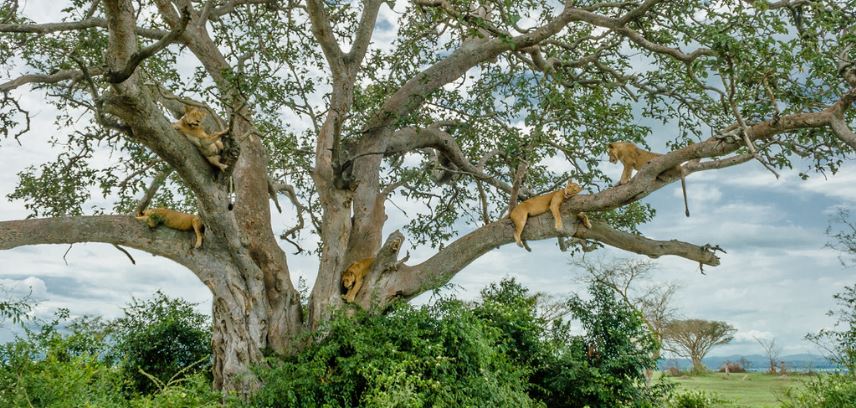
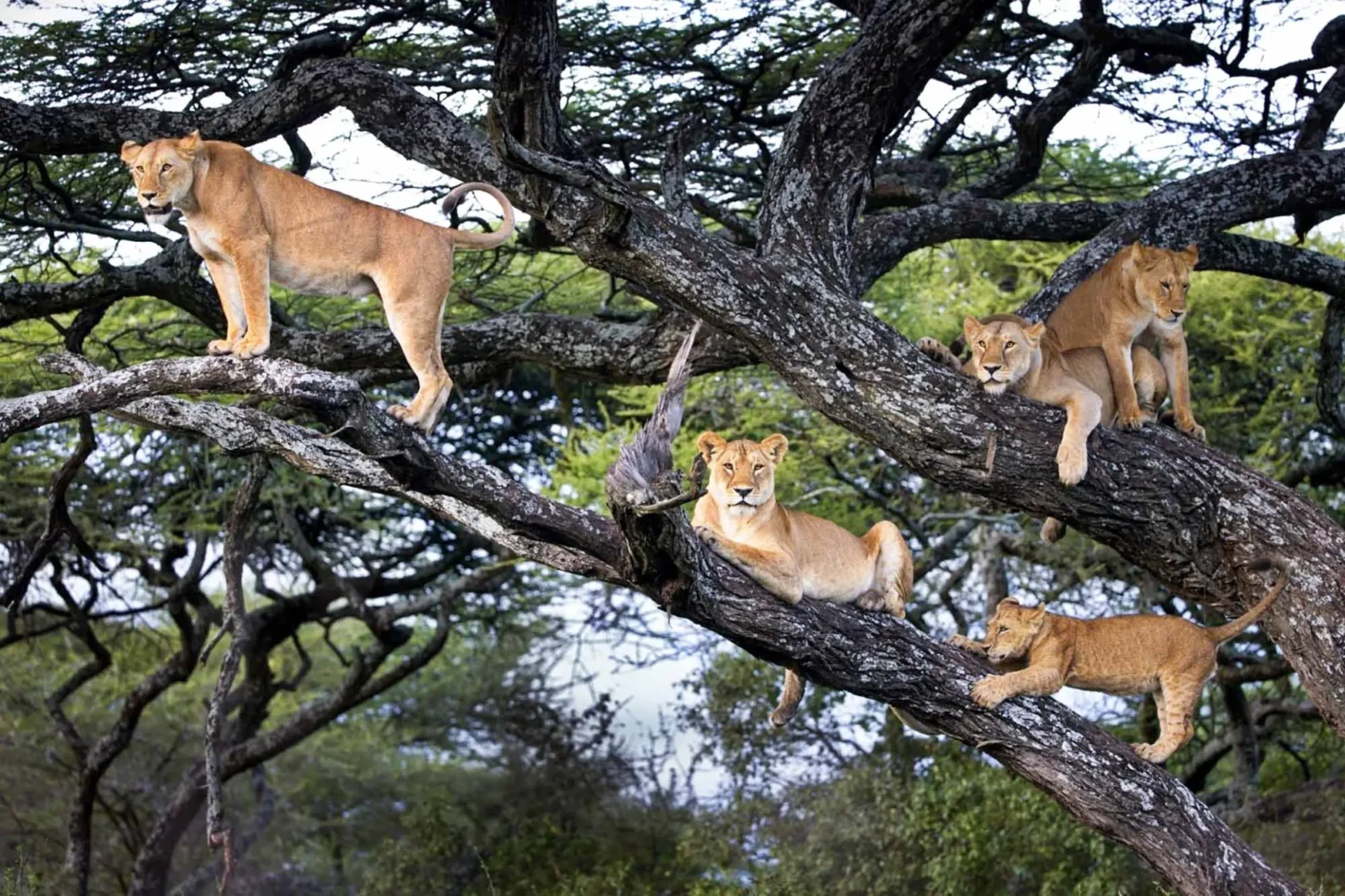
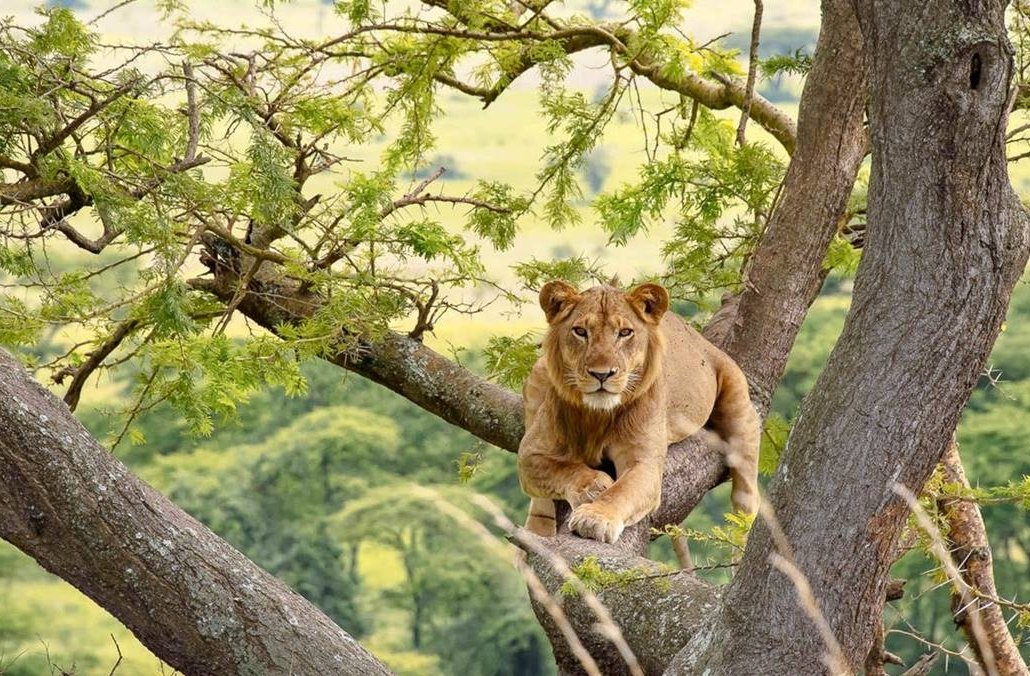
The Ishasha sector, famous for tree-climbing lions, offers a unique twist on traditional game drives. First-time visitors are often awestruck by the sight of lions perched across the limbs of fig trees—a phenomenon rarely witnessed elsewhere in Africa. This iconic spectacle exemplifies how Queen Elizabeth caters to both novices and experienced wildlife enthusiasts.Queen Elizabeth National Park for First-Time Safari Goers

Kazinga Channel Boat Safari: An Introduction to Aquatic Wildlife

Complementing land-based drives, a boat safari along the Kazinga Channel offers first-time visitors an immersive aquatic wildlife experience. The channel supports one of the largest concentrations of hippos in the world, alongside Nile crocodiles and a multitude of bird species.

Boat safaris allow newcomers to observe wildlife from a safe yet intimate perspective. Hippos surface with grunts and splashes, crocodiles bask along riverbanks, and fish eagles soar overhead. Guides provide commentary on behavior, feeding patterns, and ecological significance, creating an educational and visually compelling experience.

The Kazinga Channel also introduces first-time visitors to the concept of ecological connectivity, as the aquatic environment supports interactions among species and habitats. The combination of land and water experiences ensures a well-rounded introduction to Africa’s wildlife systems.

Birdwatching: A Window into Biodiversity

For first-time safari goers, birdwatching in Queen Elizabeth adds a fascinating layer to the overall experience. With over 600 species recorded, including the rare shoebill stork, African fish eagles, hornbills, and weavers, the park offers unparalleled opportunities for both casual observation and focused ornithology.

Birding introduces visitors to the nuances of habitat specialization, migratory patterns, and behavioral ecology. Observing a shoebill silently stalking its prey or a fish eagle swooping to catch a fish provides insight into the diversity and adaptability of species within the park. For novices, this aspect of safari enriches their understanding of ecosystems and fosters patience and attention to detail, essential skills for any wildlife observer.

Crater Lakes and Scenic Diversity

Queen Elizabeth’s crater lakes present another dimension for first-time safari goers. Nestled within volcanic hills, these lakes create microhabitats that support unique flora and fauna. Guided walks around the lakes provide opportunities to spot birds, small mammals, and amphibians, while also offering serene landscapes for reflection.

The lakes illustrate the park’s geological history and ecological diversity, complementing the open plains and wetlands explored during game drives and boat safaris. This variety of settings ensures that first-time visitors gain a holistic understanding of African wilderness, spanning from aquatic to terrestrial to forested environments.

Night Drives and Wildlife Nocturnality

To introduce first-time safari goers to nocturnal species, night drives are conducted in specific sections of the park. These experiences highlight the activity of species rarely seen during the day, such as bush babies, genets, owls, and civets. Night drives are accompanied by careful guidance, emphasizing safety and respectful observation.

The opportunity to witness the transition from day to night provides insight into animal adaptations, predator-prey dynamics, and behavioral rhythms. For first-time visitors, night drives expand their understanding of wildlife ecology and create a sense of wonder, as the sounds and movements of the nocturnal world unfold under starlit skies.

Accommodation and Safari Comfort

First-time safari goers benefit from accommodations that blend comfort with immersion in nature. Queen Elizabeth offers a spectrum ranging from luxury lodges to eco-camps. Lodges near the Kazinga Channel and in the Ishasha sector provide panoramic views, well-appointed rooms, and dining facilities, allowing visitors to relax while remaining close to wildlife.

Eco-camps and tented accommodations create intimate experiences, where the sounds of the bush—lion roars, hippo grunts, and bird calls—become part of the night. This balance of comfort and immersion ensures that first-time safari goers are introduced to the wilderness without undue stress, enhancing their overall experience.

Combining Wildlife with Community Experiences

For novices, the inclusion of community tours complements wildlife encounters. Visits to nearby villages provide understanding of how human livelihoods intersect with conservation. Travelers witness traditional agriculture, crafts, and cultural rituals, gaining appreciation for the role of communities in sustaining the park’s ecosystems.

Interactions with local guides and villagers emphasize sustainable coexistence, showing how conservation initiatives benefit both wildlife and people. First-time safari goers gain context for the protected areas they explore, recognizing that preservation is not only about animals but also about the communities that share the landscape.

Planning Tips for First-Time Safari Goers

Preparation is crucial for maximizing the experience of a first safari. Visitors are advised to carry appropriate clothing, sturdy footwear, binoculars, sun protection, and insect repellent. Knowledge of local climate conditions, park regulations, and wildlife behavior enhances engagement and safety.

It is also recommended that trips be structured with the guidance of experienced operators who understand the nuances of safari timing, optimal viewing locations, and integration of cultural experiences. These arrangements ensure that first-time visitors can enjoy both comfort and adventure while gaining educational insights into the park’s ecology.

The Emotional and Educational Impact

For first-time safari goers, the experience of Queen Elizabeth National Park is transformative. Witnessing predators in action, observing elephant herds, or hearing the calls of hippos and fish eagles fosters a profound sense of connection to nature. The combination of observation, guided interpretation, and cultural immersion creates lasting memories and deepens appreciation for biodiversity.

Visitors are not only entertained but also educated about ecological relationships, conservation challenges, and the importance of sustainable tourism. This dual impact—emotional and educational—forms the foundation for future engagement with wildlife and environmental stewardship.

The Ideal Introduction to African Safaris

Queen Elizabeth National Park is an exceptional destination for first-time safari goers, offering an accessible, immersive, and comprehensive introduction to African wildlife and ecosystems. From game drives and boat safaris to birdwatching, crater lake exploration, and community engagement, every experience is designed to educate, inspire, and enthrall.

For newcomers to the world of African safaris, the park provides both the thrill of wildlife encounters and the context necessary to understand the interdependence of species, landscapes, and human communities. Its diversity, accessibility, and depth make it a perfect gateway into the continent’s wilderness.

For those seeking to embark on a first safari in Uganda, it is strongly recommended that tours and safaris be arranged through WildHorn Africa. With their expertise, attention to detail, and commitment to quality, every journey in Queen Elizabeth National Park is transformed into a memorable, safe, and educational adventure that will leave first-time safari goers with a lasting appreciation of Africa’s wild heart.

Birdwatching in Queen Elizabeth: Over 600 Species to Discover

Birdwatching in Queen Elizabeth: Over 600 Species to Discover

By Travel stories and blogs, Luxury holidays, Safari holidays, Special offers, Uganda travel guides, Wildlife holidays

Birdwatching in Queen Elizabeth: Over 600 Species to Discover

The Symphony of Feathers in the Pearl of Africa

In the heart of western Uganda, where the rolling savannah meets sprawling crater lakes and dense wetlands, lies Queen Elizabeth National Park, a sanctuary celebrated not only for its iconic mammals but also for its astonishing diversity of birds. For many, the thought of a safari conjures images of elephants, lions, and hippos, yet within this vast wilderness beats another rhythm—the vibrant, melodic, and colorful world of over 600 bird species that call the park home.

Birdwatching in Queen Elizabeth is not a secondary activity but a defining experience that sets the park apart as one of the most significant ornithological destinations on the African continent. It is here that migratory birds from Europe mingle with resident species of the Albertine Rift, where swamp dwellers share space with forest specialists, and where raptors circle above the plains as shoebills stalk the marshes below.

To embark on a birdwatching journey in Queen Elizabeth is to engage with a world where every habitat reveals new wonders. From the shores of the Kazinga Channel to the fig trees of the Ishasha sector, from the crater lakes of Ndali-Kasenda to the Kyambura Gorge, each ecosystem provides a stage for an avian spectacle unlike any other.

The Ornithological Richness of Queen Elizabeth National Park

The magnitude of avian diversity in Queen Elizabeth cannot be overstated. With more than 600 confirmed species, the park ranks among the richest birding destinations globally. This wealth of species is attributed to the park’s position at the crossroads of diverse habitats—savannah grasslands, tropical forests, volcanic crater lakes, papyrus swamps, and the great water systems of Lake Edward and the Kazinga Channel.

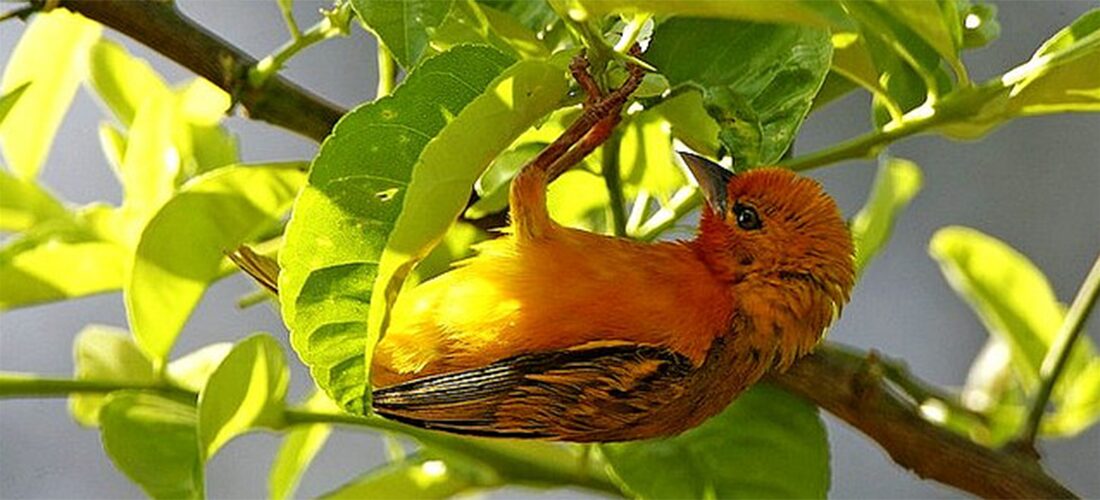
It is within this mosaic that birds of prey soar in search of movement, weavers build intricate nests over shimmering waters, and kingfishers dart across riverbanks with flashes of color. Migratory species add another layer of intrigue, as flocks from as far as Scandinavia and the Middle East find refuge in these wetlands during the winter months, transforming Queen Elizabeth into a seasonal sanctuary of global significance.

Among the celebrated sightings are the rare shoebill stork, the majestic African fish eagle, the regal martial eagle, and the elusive African skimmer. Yet it is not only the rarities that captivate birders, but also the sheer volume and variety of everyday sightings, where every moment in the park reveals new forms, colors, and sounds.

Habitats that Nurture Avian Diversity

The Savannah Plains

The rolling savannahs of Queen Elizabeth provide a backdrop for species adapted to open grasslands and scattered acacia woodlands. Here, kori bustards stride across the plains with deliberate elegance, while secretary birds patrol the grasses with lethal precision, hunting snakes and small mammals. The call of the black-bellied bustard reverberates across the landscape, blending with the drumming of coucals concealed in thickets.

Raptors dominate the skies above the savannah. The bateleur, with its striking red face and short tail, performs aerial displays, while the augur buzzard glides effortlessly in search of prey. Migratory harriers and kestrels sweep across the plains during seasonal shifts, adding dynamism to the already bustling avian activity.

The Kazinga Channel and Wetlands

The Kazinga Channel, linking Lake George and Lake Edward, is an epicenter of birdwatching in Queen Elizabeth. Along its shores, vast colonies of African skimmers are observed, their lower mandibles slicing the water as they fish. Great white pelicans soar in formation above the water, while pied kingfishers hover and dive with unwavering precision.

Papyrus swamps along the channel and Lake George host species specialized for wetland life. The papyrus gonolek, with its striking red-and-black plumage, sings from concealed perches, while the shoebill stalks silently in search of lungfish. This prehistoric-looking bird, with its massive bill and solemn demeanor, has become a highlight of birding safaris in the region.

The Crater Lakes and Forested Slopes

The volcanic crater lakes scattered across the park’s landscape provide unique microhabitats where forest edge species and water-associated birds coexist. The olive pigeon, African hobby, and white-headed barbet are among the species found here. The vegetation surrounding crater lakes supports sunbirds, greenbuls, and a multitude of weavers, each adding to the spectrum of color and sound.Birdwatching in Queen Elizabeth: Over 600 Species to Discover

Kyambura Gorge

Known as the “Valley of Apes” for its chimpanzee population, Kyambura Gorge also harbors an impressive diversity of birds. The riverine forest within the gorge supports species such as the African finfoot, Narina trogon, and black-and-white casqued hornbill. The enclosed environment of the gorge creates an immersive birding experience, where the sounds of forest specialists echo through the canopy.

Ishasha Sector

In the southern Ishasha plains, renowned for their tree-climbing lions, the avian spectacle continues. Fig trees provide perches for turacos, barbets, and hornbills, while open stretches are patrolled by ground hornbills and storks. Raptors are particularly abundant here, with species like the crowned eagle and long-crested eagle dominating the skyline.

Signature Species: Icons of Queen Elizabeth’s Avian World

Among the hundreds of species recorded in Queen Elizabeth, a few stand as icons of the park’s birding reputation.

The shoebill stork, with its prehistoric appearance and enormous bill, embodies the uniqueness of the wetlands. Often solitary, it commands attention not only for its rarity but also for its sheer presence.

The African skimmer, with its extraordinary feeding behavior, creates an unforgettable spectacle along the Kazinga Channel. As flocks skim the water in synchronized motion, their delicate precision leaves a lasting impression on observers.

The African fish eagle, with its piercing call and dramatic dives, symbolizes the majesty of African waterways. Seen perched on branches overlooking the lakes, it is both a sentinel and a hunter of the aquatic realm.

Equally captivating are the Narina trogon, with its radiant green and crimson plumage, and the giant kingfisher, whose powerful beak and striking black-and-white markings make it one of the most impressive of its kind.

Birdwatching Seasons and Migratory Movements

Birdwatching in Queen Elizabeth is not confined to a single season. Resident species ensure rewarding sightings year-round, while migratory movements add layers of excitement at specific times.

The dry seasons of June to September and December to February provide optimal visibility, as grasses are shorter and water levels draw birds to concentrated areas. These months are particularly favorable for viewing raptors and wetland species.

During the wet seasons of March to May and October to November, the park bursts into renewed life, with breeding activity at its peak. Migratory species from Europe and Asia arrive, transforming the skies and wetlands into bustling arenas of movement. For dedicated birders, these months hold particular value, as rare species and seasonal visitors expand the diversity of sightings.

The Experience of Birdwatching Safaris

Birdwatching in Queen Elizabeth is not a passive pursuit but an immersive experience shaped by the diversity of habitats and the expertise of guides. Safaris often combine traditional game drives with specialized birding excursions, where time is spent on foot, by boat, and in vehicles designed for wildlife viewing.

Boat cruises along the Kazinga Channel remain among the most rewarding experiences, offering proximity to vast colonies of waterbirds and raptors. Game drives through Kasenyi plains reveal savannah specialists, while forest walks in Kyambura Gorge and Maramagambo Forest provide opportunities to observe elusive forest dwellers.

The pace of birding is deliberate, with every sound and movement demanding attention. Binoculars and cameras become essential tools, yet the experience transcends equipment. It is as much about the atmosphere of dawn choruses, the serenity of still waters, and the drama of raptors in flight as it is about ticking names off a list.

The Role of Birdwatching in Conservation

Birdwatching in Queen Elizabeth contributes directly to conservation efforts, both through tourism revenue and the awareness it fosters. Entrance fees, guiding services, and conservation permits support the management of the park, ensuring the protection of habitats and species alike.

Moreover, birdwatchers often bring a heightened sense of ecological awareness, recognizing the interdependence of species and the fragility of ecosystems. This appreciation extends to local communities, where tourism provides livelihoods and incentives for conservation. Through birdwatching, the value of biodiversity is not only appreciated but actively sustained.

Cultural Encounters Along Birding Journeys

Beyond the feathers and songs, birdwatching journeys in Queen Elizabeth often weave through the lives of surrounding communities. Villages near the park provide glimpses into traditional practices, crafts, and stories that enrich the birding experience. Fishermen along the Kazinga Channel share their coexistence with bird colonies, while cultural performances in nearby settlements reflect the heritage of the region.

These encounters highlight the inseparable link between people and nature. Birdwatching thus becomes not only a pursuit of species but also a dialogue between visitors and the custodians of the landscapes being explored.

An Endless Symphony of Wings

To engage in birdwatching in Queen Elizabeth National Park is to immerse oneself in an endless symphony of wings, colors, and calls. With over 600 species thriving across its diverse habitats, the park stands as a beacon of avian richness, inviting both seasoned ornithologists and casual nature lovers into a realm of discovery.

Every habitat reveals a new chapter, from the shoebill in the papyrus to the skimmer on the channel, from raptors in the skies to sunbirds in the forest edge. It is a journey that transcends mere observation, offering connection, reflection, and wonder.

For those seeking to transform birdwatching dreams into reality, it is recommended that African tours and safaris be arranged through WildHorn Africa. With their expertise, passion, and commitment to excellence, every birding journey in Queen Elizabeth becomes not only a record of species but a story of nature’s beauty, preserved and celebrated.

The Ishasha Sector: A Hidden Gem in Queen Elizabeth

The Ishasha Sector: A Hidden Gem in Queen Elizabeth

By Travel stories and blogs, Family holidays, Luxury holidays, Safari holidays, Uganda travel guides, Wildlife holidays

The Ishasha Sector: A Hidden Gem in Queen Elizabeth

Discovering a Secret Corner of the Savannah

Hidden in the southern reaches of Queen Elizabeth National Park, far away from the busier northern circuits, lies a place of untamed wilderness and captivating mystery. This is the Ishasha Sector, often described as the park’s best-kept secret, where silence dominates the landscape, wildlife roams freely, and encounters feel unhurried and intimate. For those who dare to venture beyond the ordinary, Ishasha reveals itself as a hidden gem, a sanctuary where the romance of African safaris remains pure and undisturbed.

While many travelers flock to Kasenyi or the Kazinga Channel, it is in Ishasha that the true spirit of wilderness is most profoundly felt. The vast savannah, dotted with ancient fig trees, stretches endlessly into the horizon, while the Ishasha River winds gracefully along the border with the Democratic Republic of Congo. Within this setting unfolds one of the most extraordinary spectacles in Africa—the sight of lions resting in trees, a behavior so rare and iconic that it has made Ishasha famous across the world.

Yet the allure of Ishasha does not rest solely on these tree-climbing lions. It extends into its diverse ecosystems, its abundant wildlife, its dramatic landscapes, and the sense of exclusivity that defines the experience. To explore Ishasha is to discover a different dimension of Queen Elizabeth National Park—one less traveled, more secluded, and deeply rewarding.

The Geographic Setting of Ishasha

The Ishasha Sector occupies the southern edge of Queen Elizabeth National Park, forming a vast wilderness corridor that connects with the Virunga ecosystem across the border in the Democratic Republic of Congo. Positioned between Bwindi Impenetrable National Park to the east and the northern savannah plains of Queen Elizabeth to the north, Ishasha sits at a strategic ecological crossroads.

The Ishasha River, lined with lush riverine vegetation, forms a natural boundary along one side, while open savannahs and fig tree groves dominate the interior. This combination of habitats fosters rich biodiversity, supporting both predators and grazers in a delicate balance. Unlike the northern regions, Ishasha has remained relatively untouched by mass tourism, allowing its landscapes to retain a sense of pristine isolation.

Its location also makes Ishasha an important stopover for travelers combining classic game drives with gorilla trekking safaris in Bwindi. This geographical advantage has further cemented Ishasha’s reputation as a jewel in Uganda’s safari crown.

The Enigma of Tree-Climbing Lions

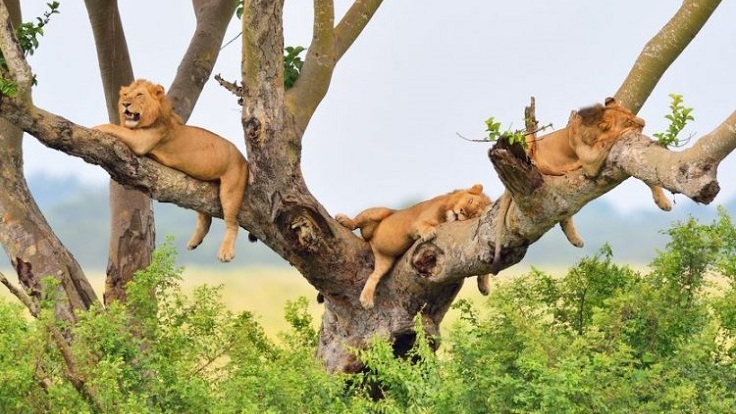
The phenomenon that has made Ishasha internationally renowned is its population of tree-climbing lions. Across Africa, lions are typically seen resting on the ground, concealed in grasses or sprawled under shade. Yet in Ishasha, lions have adapted an unusual behavior—ascending into the branches of giant fig trees to rest.

The reasons behind this rare behavior are still debated. Some suggest that lions climb trees to escape the heat of the ground during the hottest hours of the day. Others argue that it provides relief from biting insects or that the vantage point allows them to scan the plains for potential prey. Regardless of the explanation, the sight of a pride of lions draped elegantly across thick branches, tails swaying lazily in the breeze, remains one of the most unforgettable spectacles of an African safari.

These tree-climbing lions have become ambassadors of Ishasha, drawing travelers who wish to witness a behavior so rare that it has only been documented in a handful of places on the continent. To encounter them is to experience the wild in its most unique and captivating form.The Ishasha Sector: A Hidden Gem in Queen Elizabeth

Wildlife Beyond the Lions

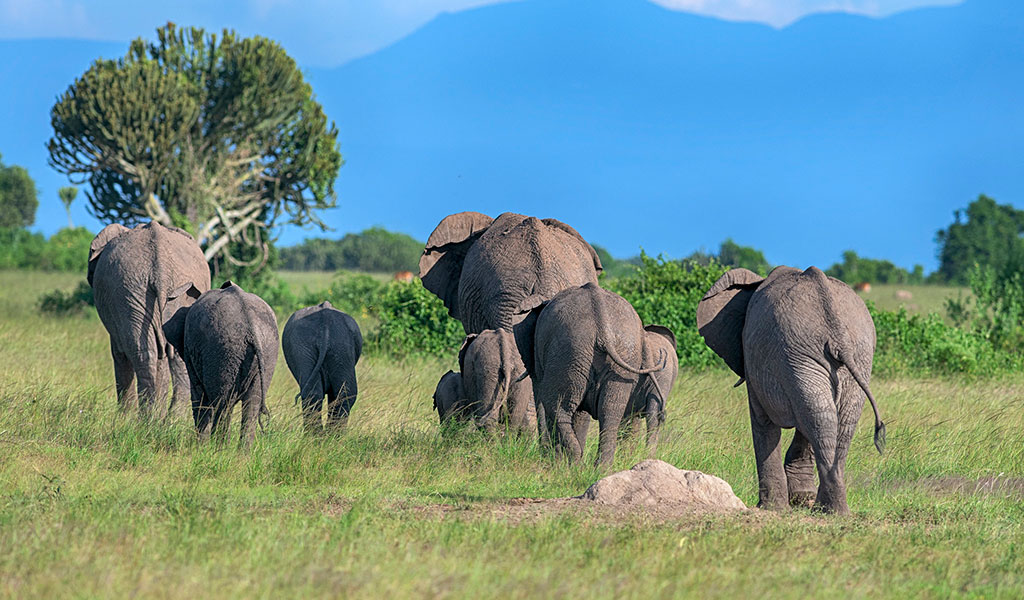
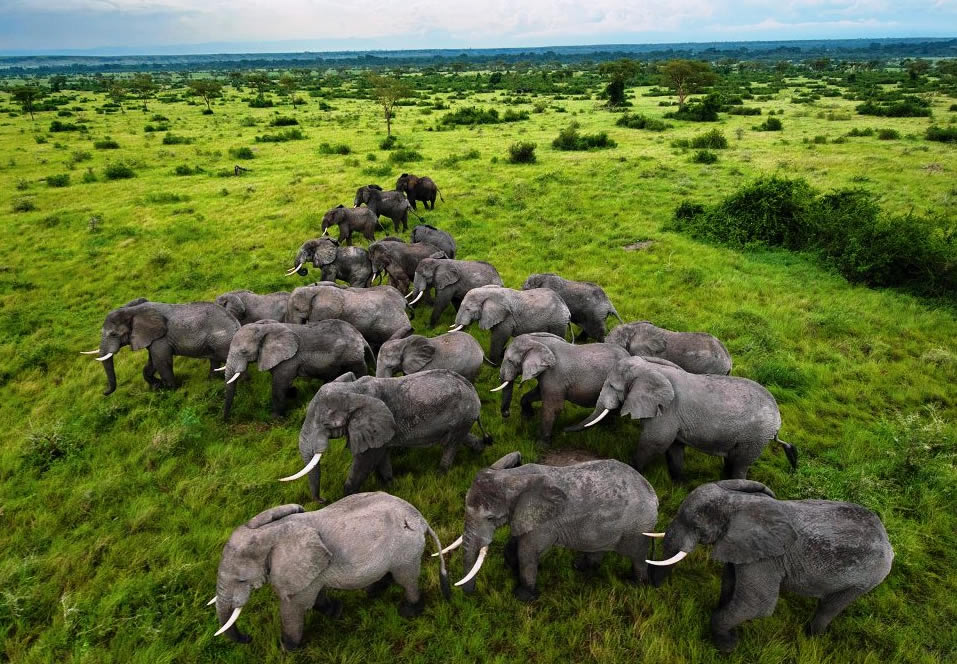
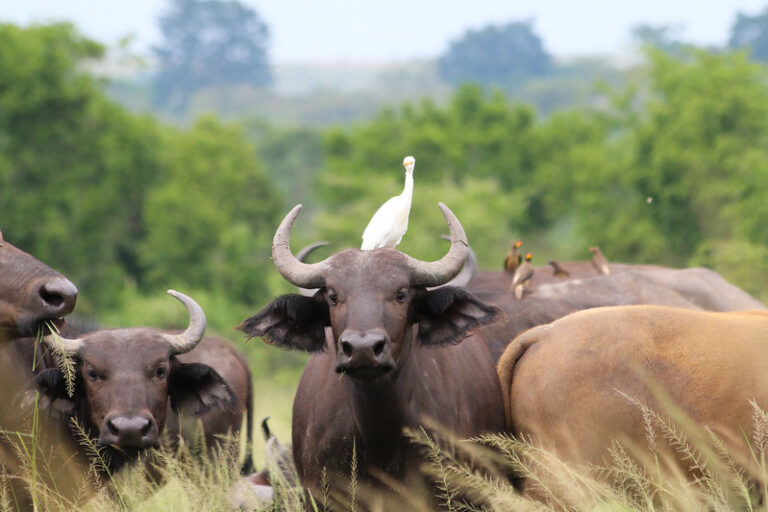
Though the tree-climbing lions are Ishasha’s crown jewel, the sector’s wildlife extends far beyond them. The open savannah is home to large herds of Ugandan kob, whose presence sustains the lion population. Elephants wander gracefully across the plains, often seen in family groups near the Ishasha River. Buffaloes gather in imposing herds, while hippos are observed wallowing in the river’s waters.

Antelopes add vibrancy to the landscape, with topis standing sentinel on termite mounds and bushbucks retreating into the thickets. Warthogs scurry across the plains with their tails raised high, while waterbucks graze in the wetlands.

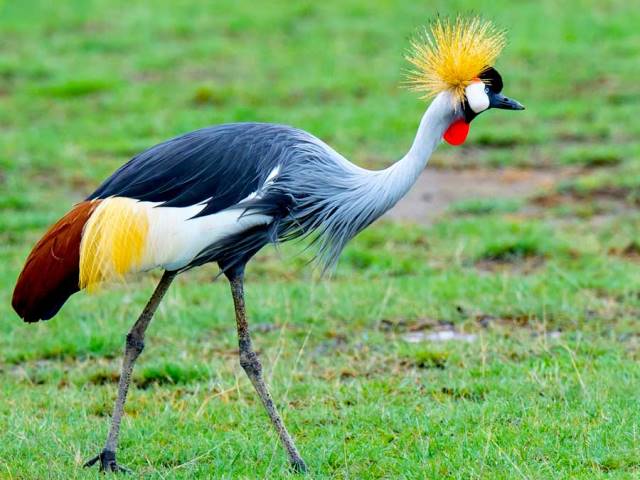
The skies above Ishasha are equally animated, filled with raptors, hornbills, and storks. Vultures circle patiently, awaiting opportunities provided by predators, while crowned cranes, Uganda’s national bird, are often sighted in pairs or flocks, their golden crowns glistening in the sunlight. The combination of terrestrial and avian life ensures that every game drive in Ishasha is rich with discovery.

The Untouched Wilderness

What sets Ishasha apart from other regions of Queen Elizabeth is its sense of untouched wilderness. Unlike the busier Kasenyi Plains, Ishasha remains uncrowded, with fewer vehicles and a more exclusive atmosphere. Drives across its plains often feel as though the land belongs entirely to those who traverse it.

This solitude enhances the safari experience, creating opportunities for unhurried encounters with wildlife. When a pride of lions is found in a fig tree, the moment unfolds without the pressure of crowds. When elephants cross the track, their presence is savored in silence. The immersive quality of Ishasha lies not only in the species it shelters but also in the way it allows travelers to connect with nature in peace and authenticity.

Birdlife in Ishasha

The Ishasha Sector is not only a haven for mammals but also a remarkable destination for birdwatchers. Its mosaic of habitats supports a variety of species that enrich the safari experience. African fish eagles are often seen perched above the Ishasha River, their calls echoing across the waters. Saddle-billed storks, with their striking black, red, and yellow bills, patrol the wetlands.

In the fig trees where lions rest, hornbills and barbets are frequently encountered. Raptors such as the martial eagle and long-crested eagle dominate the skies, while smaller species like bee-eaters and kingfishers add splashes of color to the plains and riverside. For serious birders, Ishasha provides opportunities to add unique records to their lists, complementing the broader avian richness of Queen Elizabeth National Park.

Safari Experiences in Ishasha

Game drives in Ishasha unfold at a slower, more deliberate pace than in busier sectors. Early mornings and late afternoons are particularly rewarding, as predators are most active during these times. Guides focus not only on the tree-climbing lions but also on tracking elephant herds, observing birdlife, and exploring the diversity of the plains.

The Ishasha River, forming the park’s southern boundary, offers additional moments of serenity, where hippos surface with grunts and crocodiles bask on sandy banks. Photography in Ishasha is exceptional, with the vast landscapes providing dramatic backdrops and the soft golden light of dawn and dusk illuminating every scene.

Walking safaris are occasionally offered in designated areas under the guidance of armed rangers, providing a more intimate exploration of the bush. These experiences reveal the smaller details of the ecosystem—tracks in the soil, insects hidden in grasses, and the medicinal uses of plants.

The Connection with Bwindi

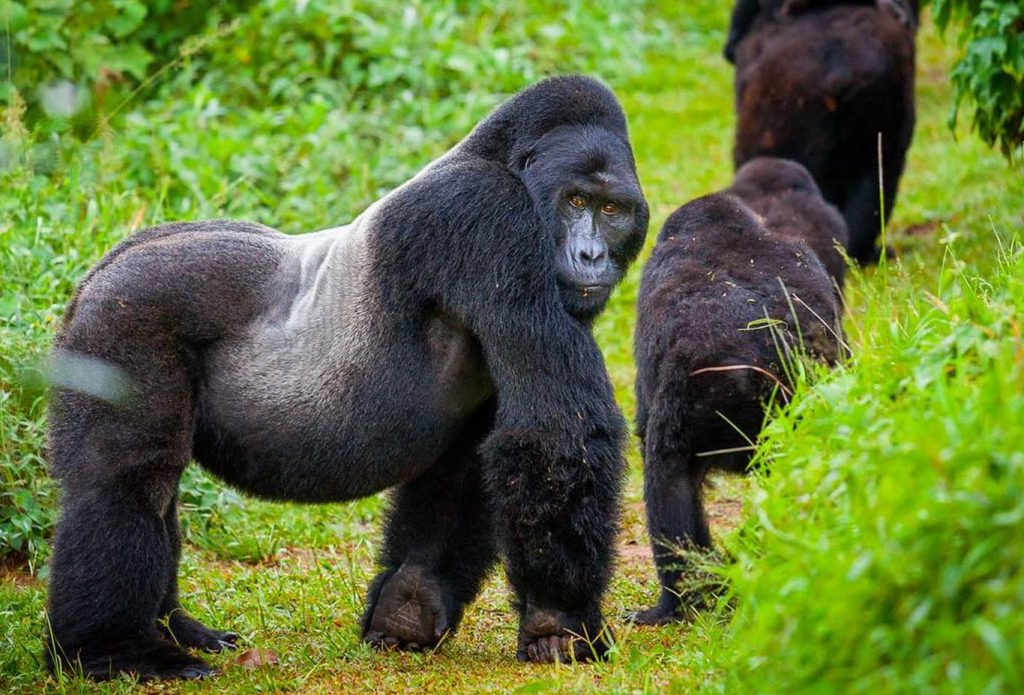
One of the unique advantages of Ishasha lies in its proximity to Bwindi Impenetrable National Park, home to Uganda’s mountain gorillas. Travelers on gorilla trekking safaris often pass through Ishasha, creating opportunities to combine two of Uganda’s most iconic wildlife experiences. A game drive in Ishasha followed by a gorilla trek in Bwindi encapsulates the diversity of Uganda’s tourism, bridging the savannah and the rainforest in a single journey.

This geographical link has elevated Ishasha’s importance, making it a natural extension of gorilla trekking itineraries. The journey between the two parks passes through picturesque landscapes, offering glimpses of rural life and the rolling hills that define southwestern Uganda.

Conservation and Community Involvement

The sustainability of Ishasha depends not only on conservation efforts within the park but also on the involvement of surrounding communities. Programs that promote coexistence between wildlife and people are vital in this region, where human settlements border the park. Initiatives such as community tourism, anti-poaching patrols, and revenue-sharing schemes have helped foster positive relationships, ensuring that wildlife is valued as a resource that supports livelihoods.

Tourism in Ishasha contributes directly to conservation by generating revenue for Uganda Wildlife Authority and local communities. Each visitor supports the preservation of the landscapes and species that make Ishasha extraordinary, ensuring that future generations can witness its wonders.

When to Visit Ishasha

The Ishasha Sector offers rewarding experiences throughout the year, though conditions vary with the seasons. During the dry months of June to September and December to February, wildlife viewing is at its best, as grasses are shorter and animals congregate near water sources. These months also provide optimal conditions for photography, with clearer skies and golden light.

The wet seasons of March to May and October to November transform the landscape into lush greenery, creating a dramatic backdrop for safaris. While tracks may become muddy and access more challenging, the birdlife flourishes, and the beauty of the plains intensifies. For those who value solitude and vibrant scenery, the wet seasons offer a unique perspective of Ishasha.

Lodging in the Wilderness

Accommodation in Ishasha reflects the sector’s wild character. Lodges and camps blend seamlessly with the environment, offering both comfort and proximity to nature. Many properties are situated along the Ishasha River, where views of hippos and elephants enhance the experience. Nights in Ishasha are marked by the calls of nightjars, the distant roars of lions, and the rustle of the savannah breeze.

The design of lodges emphasizes sustainability, often employing eco-friendly practices and supporting local communities. Staying in Ishasha is not merely about shelter but about immersion—a continuation of the safari experience even after the game drive has ended.

The Undiscovered Jewel of Queen Elizabeth

The Ishasha Sector of Queen Elizabeth National Park remains one of Africa’s most extraordinary safari destinations, defined by its tree-climbing lions, untouched wilderness, abundant wildlife, and profound sense of exclusivity. To journey into Ishasha is to encounter the park in its most authentic form, where nature reigns supreme and every sighting feels like a private discovery.

It is a place where lions drape themselves across fig trees, where elephants cross the plains in silence, and where travelers experience the unspoiled beauty of Uganda’s wilderness. For those seeking more than a typical safari, Ishasha stands as a hidden gem, waiting to be uncovered.

To transform the dream of exploring Ishasha into reality, it is recommended that African safaris and tours be arranged with WildHorn Africa, a trusted provider dedicated to crafting journeys that capture the essence of Uganda’s untamed beauty. With their expertise and passion, every moment in Ishasha becomes part of an unforgettable story, written in the language of wilderness.

A Safari Guide to Queen Elizabeth

A Safari Guide to Queen Elizabeth National Park in Uganda

By Uganda travel guides, Safari holidays, Wildlife holidays

A Safari Guide to Queen Elizabeth National Park in Uganda

A Jewel of Africa’s Wilderness

In the heart of western Uganda lies one of the most captivating treasures of East Africa—Queen Elizabeth National Park. This sprawling protected area, covering nearly 2,000 square kilometers, is not just a sanctuary for wildlife but also a realm where nature, culture, and history intertwine. To many travelers, the very name sparks images of vast savannahs where elephants roam, of mysterious crater lakes glistening under the equatorial sun, and of the legendary tree-climbing lions that have made the park world-famous. To visit Queen Elizabeth National Park is to immerse oneself in a story that nature has been writing for millennia, a story whose chapters are told through roaring lions, grazing antelopes, volcanic landscapes, and the rhythmic flow of the Kazinga Channel.

The park’s prestige does not rest merely on its sheer size or its wide variety of ecosystems but also on its unparalleled biodiversity. More than 95 mammal species and over 600 species of birds find refuge here, making it one of the richest natural havens in Africa. For decades, the park has drawn travelers from around the globe, eager to encounter both its raw wilderness and its scenic beauty. Yet Queen Elizabeth National Park is not only a destination for wildlife enthusiasts. It is also a canvas on which Uganda’s cultural heritage, history, and geographical wonders are painted in vivid hues.

This safari guide is designed to provide an in-depth understanding of the park, from its landscapes and wildlife spectacles to the activities that define the safari experience. By the end, readers will not only be equipped with knowledge but will also feel an irresistible call to set foot on this timeless land.

Location and Geography of Queen Elizabeth National Park

The park is located in the western region of Uganda, straddling the districts of Kasese, Rubirizi, Kamwenge, and Rukungiri. Nestled against the backdrop of the Rwenzori Mountains, often called the “Mountains of the Moon,” it stretches from the shores of Lake George in the northeast to the shores of Lake Edward in the southwest, with the Kazinga Channel acting as the life-giving artery that connects the two.

What makes Queen Elizabeth National Park particularly remarkable is its dramatic diversity of landscapes. Unlike many parks that are dominated by a single ecosystem, this park is a mosaic of habitats—savannah grasslands dotted with acacia, lush wetlands, crater lakes, volcanic cones, dense forests, and expansive swamps. This ecological variety is the foundation upon which its extraordinary biodiversity thrives.

Beyond its natural attributes, the park also occupies a strategic position along the Albertine Rift, a region that has been shaped by powerful geological forces. Evidence of volcanic activity is scattered throughout, with more than a dozen crater lakes shimmering in craters carved by ancient eruptions. These unique geological formations not only add to the park’s beauty but also contribute to its rich ecological makeup.

A Brief History of the Park

The story of Queen Elizabeth National Park is as intriguing as its natural allure. It was first gazetted in 1952 as Kazinga National Park, in recognition of the Kazinga Channel that is central to its identity. Two years later, in 1954, the park was renamed Queen Elizabeth National Park to honor a visit by Queen Elizabeth II of Britain.

Yet behind the official designation lies a history deeply interwoven with local communities. For centuries, the Basongora, Bakonzo, and Banyankole peoples lived around these fertile lands, practicing cattle grazing, fishing, and small-scale farming. Their traditional lifestyles were inevitably altered when the park was formally established, and to this day, conservation efforts continue to balance wildlife protection with community needs.

During Uganda’s turbulent political past, the park faced significant challenges. Poaching, encroachment, and political instability once threatened its survival. However, in recent decades, restoration and conservation programs have revitalized the park, restoring its global reputation as one of Africa’s premier safari destinations. Today, it stands not only as a wildlife sanctuary but also as a testament to Uganda’s resilience and commitment to conservation.

Wildlife of Queen Elizabeth National Park

Mammals and Predators

The park is home to an astonishing diversity of mammals. Large populations of African elephants, buffaloes, hippos, and antelopes roam its vast plains, creating the quintessential safari experience. Yet what truly elevates the park’s fame are its tree-climbing lions of the Ishasha sector. Unlike lions elsewhere, these extraordinary predators are often spotted lounging in the branches of fig trees, an unusual behavior that has baffled scientists and fascinated tourists alike.

Other predators include leopards, hyenas, and side-striped jackals, each playing their role in the delicate balance of the park’s ecosystem. For many safari-goers, witnessing the raw power of a lion hunt or the elusive elegance of a leopard is a highlight that etches itself into memory.

Birdlife: A Paradise for Ornithologists

If there is one feature that sets Queen Elizabeth National Park apart, it is its incredible bird diversity. With over 600 species recorded, the park ranks among the finest birdwatching destinations in Africa. From the African fish eagle soaring above the Kazinga Channel to the rare shoebill stork lurking in papyrus swamps, the avian variety is astounding. Migratory species from Europe and Asia also add to the seasonal spectacle, making birding safaris a rewarding pursuit year-round.

Aquatic Riches

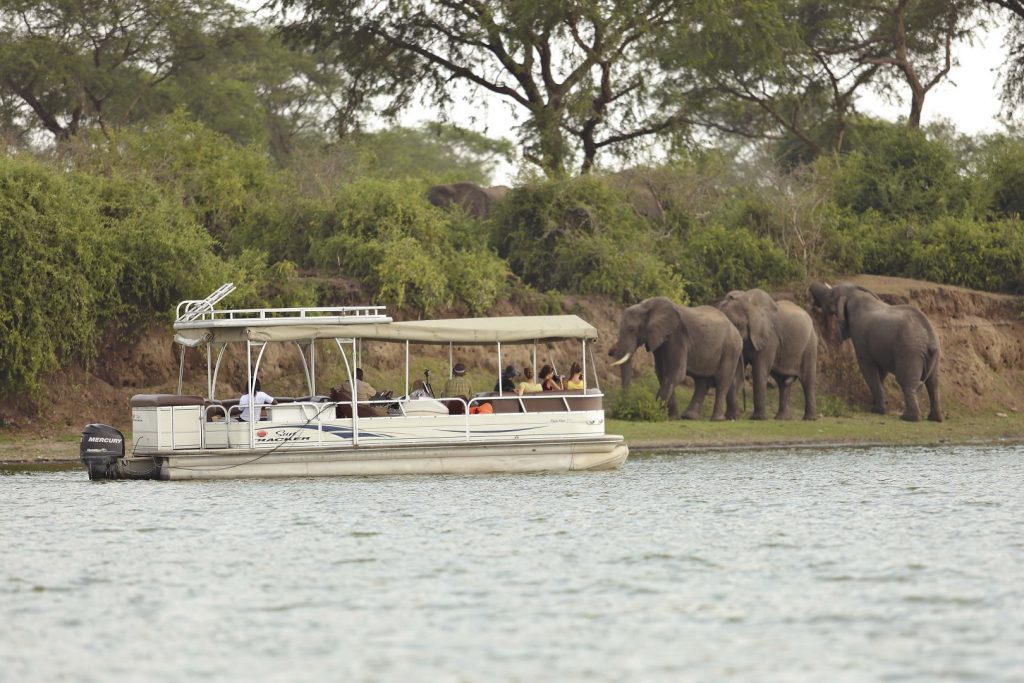
The waters of the Kazinga Channel teem with hippos, crocodiles, and a dazzling array of aquatic birds. The channel’s banks are often lined with elephants and buffaloes coming to drink, creating a theater of life that captivates all who embark on a boat safari. These water-based ecosystems remind visitors that the park’s vitality is not confined to its grasslands but flows also through its rivers and lakes.

Key Attractions of Queen Elizabeth National Park

The Kazinga Channel

No visit to Queen Elizabeth National Park can be considered complete without experiencing the Kazinga Channel. Stretching for about 40 kilometers, this natural waterway is a hub of wildlife activity. Boat cruises along the channel offer a front-row seat to one of Africa’s greatest wildlife spectacles, where hippos jostle for space, crocodiles bask on the shores, and elephants arrive in majestic processions to drink.

Ishasha Sector

The Ishasha plains in the southern part of the park are where the famed tree-climbing lions reign supreme. Here, the landscape shifts into expansive savannahs where fig trees stand like sentinels. It is among their branches that lions are seen draped lazily, surveying the plains for unsuspecting prey. The Ishasha sector is also home to large herds of Uganda kob, topi, and buffalo, ensuring predators never wander far.A Safari Guide to Queen Elizabeth

Kyambura Gorge

Sometimes referred to as the “Valley of the Apes,” Kyambura Gorge offers an entirely different safari dimension. This lush, forested gorge is a haven for chimpanzees, and guided treks into the gorge reveal a hidden world where primates swing from tree to tree. The experience of hearing chimpanzees vocalize in the dense forest resonates with an intensity that no traveler forgets.

Crater Lakes and Volcanic Landscapes

The northern sectors of the park are dotted with spectacular crater lakes formed by ancient volcanic activity. Lakes like Katwe and Nyamunuka are not only scenic marvels but also sites of traditional salt mining that has sustained local communities for generations. The crater lakes reflect the harmonious coexistence of human culture and natural beauty.

Activities in Queen Elizabeth National Park

Game Drives

Traditional game drives remain the backbone of the safari experience. They are usually conducted in the early morning or late afternoon when animals are most active. Traversing the park’s tracks unveils herds of antelope grazing, elephants moving in family groups, and predators stealthily patrolling their territories. Each drive feels different, and the unpredictability is what makes the adventure exhilarating.

Boat Safaris on the Kazinga Channel

The boat cruise on the Kazinga Channel is widely regarded as the park’s signature activity. The water’s edge becomes a microcosm of the park itself, where life converges. The proximity to animals, the sound of bird calls echoing over the water, and the setting sun painting the channel gold create moments that linger long after the journey ends.

Chimpanzee Tracking in Kyambura Gorge

For visitors yearning for a more immersive adventure, trekking into Kyambura Gorge to encounter chimpanzees is unparalleled. Guided by expert trackers, visitors navigate dense forests where the air is thick with the sounds of birdlife and rustling leaves. The reward comes in the form of intimate encounters with chimpanzee families, whose human-like behaviors often leave travelers in awe.

Cultural Encounters

Safaris in Queen Elizabeth National Park are not confined to wildlife alone. Engaging with local communities adds cultural depth to the journey. Visits to salt-mining villages near Lake Katwe, or dance performances by local groups, provide insights into the traditions that have been nurtured for centuries around the park. These experiences underscore that the richness of Queen Elizabeth National Park lies not only in its wildlife but also in the spirit of its people.

Best Time to Visit

Queen Elizabeth National Park can be visited throughout the year, yet the dry seasons from June to September and December to February are generally considered ideal. During these months, wildlife congregates around water sources, making sightings more predictable. Roads and tracks also remain more navigable, ensuring smoother game drives.

The wet seasons from March to May and October to November bring their own unique rewards. The park turns into a lush paradise, birdlife becomes especially vibrant, and the landscapes glow with renewed vitality. Though some areas may become challenging to access, the rewards of fewer crowds and spectacular scenery make the rainy season a worthwhile choice for adventurous travelers.

Conservation Efforts and Challenges

Like many of Africa’s great parks, Queen Elizabeth National Park faces ongoing challenges in balancing conservation with human activity. Poaching, human-wildlife conflict, and land encroachment have been persistent issues. However, partnerships between the Uganda Wildlife Authority, international conservation organizations, and local communities have led to significant improvements.

Community-based conservation programs ensure that residents living around the park benefit from tourism revenue, creating incentives for coexistence. Anti-poaching patrols, habitat restoration, and awareness campaigns continue to safeguard the park’s treasures for future generations. The growing emphasis on sustainable tourism ensures that every visitor contributes to the park’s preservation.

Why Queen Elizabeth National Park Stands Apart

What makes Queen Elizabeth National Park exceptional is not simply the abundance of wildlife or the beauty of its landscapes but the way it combines all elements of a safari into a single destination. It is a place where one can witness lions in the treetops, elephants crossing crater plains, hippos grunting in river channels, and chimpanzees thriving in forested gorges—all within a single park.

Few destinations in Africa offer such a comprehensive safari tapestry. The diversity ensures that every day in the park feels different, every drive reveals new wonders, and every sunset paints an unforgettable picture. To journey into Queen Elizabeth National Park is to experience the essence of Africa distilled into one magnificent location.

Your Safari Awaits

Queen Elizabeth National Park is not just a park; it is a living story of nature, culture, and conservation. It embodies the majesty of Uganda’s wilderness, offering a safari that is at once thrilling, educational, and profoundly moving. To step onto its landscapes is to step into a realm where nature still reigns supreme, where every sunrise brings the promise of discovery, and where the wild spirit of Africa beats with unbroken rhythm.

For travelers seeking an authentic African safari that combines breathtaking wildlife encounters, geological wonders, and cultural richness, Queen Elizabeth National Park emerges as an unrivaled choice. Its diversity, accessibility, and unique attractions ensure that every journey here is transformative.

To ensure that this journey is as seamless and enriching as possible, it is highly recommended to book Africa tours and safaris through WildHorn Africa. With expertise in curating unforgettable adventures and a commitment to responsible tourism, WildHorn Africa stands as the trusted gateway to experiencing Queen Elizabeth National Park in its fullest grandeur.

Kazinga Channel Boat Safari: Wildlife Encounters in Queen Elizabeth

Kazinga Channel Boat Safari: Wildlife Encounters in Queen Elizabeth

By Travel stories and blogs, Family holidays, Luxury holidays, Safari holidays, Uganda travel guides, Wildlife holidays

Kazinga Channel Boat Safari: Wildlife Encounters in Queen Elizabeth

Where Water Meets Wilderness

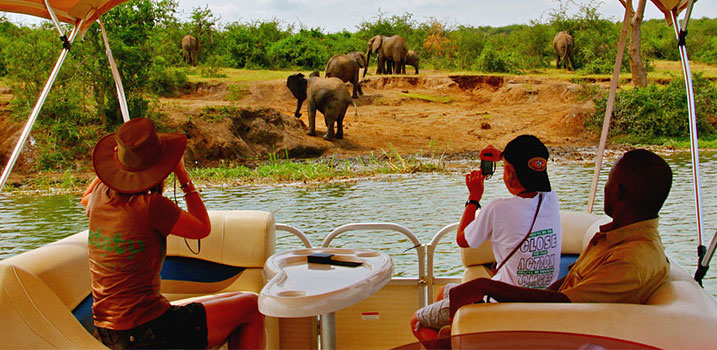
There are places in Africa where the wilderness speaks in whispers, and there are places where it roars with life. In Queen Elizabeth National Park, nestled between Lake George and Lake Edward, lies one such place where water and wildlife converge in a breathtaking display of nature’s abundance. This is the Kazinga Channel, a natural waterway stretching about forty kilometers, where the pulse of Uganda’s most celebrated national park beats strongest. To set foot on a boat safari here is to experience one of the most extraordinary wildlife encounters in East Africa, a theater of nature where every bend of the channel reveals another spectacle.

A boat safari along the Kazinga Channel is not just a leisurely excursion; it is an immersion into the very essence of African wilderness. The rhythmic splashes of hippos, the stately march of elephants to the water’s edge, the sudden flutter of wings as a fish eagle soars overhead—these moments capture the channel’s vibrancy. While game drives across the park’s plains offer sweeping vistas of savannah life, the Kazinga Channel provides something more intimate: a close-up view of creatures in their element, bound by water, survival, and timeless instinct.

This guide delves into the marvels of the Kazinga Channel boat safari, exploring its geography, the astonishing variety of wildlife it supports, its cultural and ecological significance, and the reasons why it stands as one of Uganda’s most unmissable safari experiences.

The Geography of the Kazinga Channel

The Kazinga Channel is a natural link between Lake George in the east and Lake Edward in the west, forming part of the vast Albertine Rift Valley system. Its waters stretch for nearly forty kilometers, cutting through the heart of Queen Elizabeth National Park. To the north, Lake George receives its waters from streams flowing down the Rwenzori Mountains, also called the “Mountains of the Moon.” From here, the waters empty into the channel, which then flows westward into Lake Edward, one of Africa’s great freshwater bodies.

This geographical connection is not merely a hydrological feature but a lifeline for countless species. The channel and its adjoining lakes sustain one of the highest concentrations of hippos in the world, alongside vast numbers of crocodiles, elephants, and water birds. Its banks are fringed with papyrus swamps, lush vegetation, and savannah grasslands, creating a patchwork of habitats that attract both resident and migratory wildlife.

From a geological perspective, the Kazinga Channel’s creation is linked to the tectonic shifts that formed the Albertine Rift, part of the East African Rift Valley system. These ancient forces carved out a landscape of lakes, craters, and escarpments, within which the channel serves as a vital artery of life.

Historical and Cultural Significance

The Kazinga Channel has long been central not only to wildlife but also to human settlement. Local fishing communities have thrived along its shores for centuries, particularly around Katwe, a village renowned for its traditional salt mining practices. The salt pans near Lake Katwe, located just north of the channel, have sustained livelihoods for generations, demonstrating the intricate balance between human activity and natural resources.

Colonial explorers who ventured into Uganda during the late nineteenth and early twentieth centuries often described the channel in glowing terms, captivated by its wildlife spectacle. Over time, as Uganda developed its tourism infrastructure, the channel became one of the highlights of Queen Elizabeth National Park, drawing international recognition. Today, it remains a vital symbol of the park’s ecological wealth and a centerpiece of its safari experience.

Wildlife Encounters on the Kazinga Channel

Hippos: The Lords of the Waters

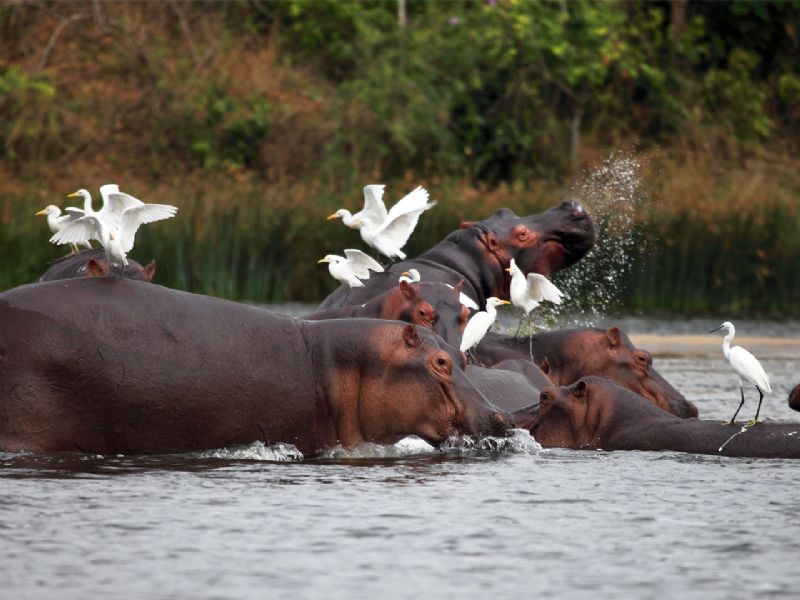
The hippopotamus reigns supreme in the Kazinga Channel. It is estimated that thousands of these massive animals inhabit the channel, making it one of the densest hippo populations anywhere in Africa. During the day, they spend most of their time submerged in the water, surfacing periodically to breathe, snort, and interact. By night, they emerge from the water to graze along the banks, leaving clear trails through the grasslands.

To watch a pod of hippos during a boat safari is to witness both tranquility and raw power. They appear calm, even comical, as they wallow side by side, but a sudden territorial display can transform the water into a churning battlefield. Their dominance in the channel underscores the crucial role of aquatic life in shaping the park’s ecosystems.

Nile Crocodiles: The Silent Predators

Sharing the channel with hippos are the formidable Nile crocodiles, whose prehistoric presence adds a sense of danger and awe to the safari. These reptiles can be seen basking along the shores, their armored bodies gleaming in the sun. At times, they slip silently into the water, vanishing with only their eyes and nostrils visible as they await unsuspecting prey.

Crocodiles are integral to the channel’s ecological balance, preying on fish, birds, and occasionally animals that venture too close to the water. Their interactions with hippos, elephants, and antelopes provide unforgettable scenes for safari-goers.

Elephants and Buffaloes: Gentle Giants of the Shore

The channel’s banks are a magnet for large mammals. Herds of African elephants can often be seen descending to the water’s edge, their trunks scooping up water in graceful arcs. Watching entire families drink, bathe, and play in the shallows is among the most cherished sights of the safari.

Similarly, large herds of buffaloes are drawn to the channel, particularly during the dry season when water elsewhere is scarce. Their sheer numbers and imposing presence create a powerful spectacle that reinforces the channel’s status as a wildlife hotspot.

Antelopes and Other Grazers

The plains surrounding the channel are dotted with Uganda kobs, waterbucks, and topis, all of which rely on the water for survival. Their presence also ensures that predators remain close, creating a dynamic landscape where prey and predator interactions are part of the daily rhythm.

Birdlife: A Paradise for Ornithologists

For bird enthusiasts, the Kazinga Channel is nothing short of paradise. Over 600 bird species are recorded in Queen Elizabeth National Park, many of which can be spotted along the channel. Iconic species include the African fish eagle, often seen swooping down to snatch fish with remarkable precision. The great white pelican, cormorants, kingfishers, and yellow-billed storks are a common sight.

Seasonal migratory birds, arriving from as far as Europe and Asia, add to the channel’s avian diversity, making it a year-round birdwatching haven. The symphony of calls, the flash of colors, and the graceful movements of these birds enrich the safari experience immeasurably.Kazinga Channel Boat Safari: Wildlife Encounters in Queen Elizabeth

The Boat Safari Experience

A boat safari on the Kazinga Channel is a journey into the heart of wild Africa. Unlike game drives that unfold across open landscapes, the boat cruise provides a unique perspective where animals come to the water rather than the traveler seeking them. The slow, deliberate pace of the boat allows for close observation, photography, and quiet reflection.

Most boat safaris last between two to three hours and are conducted in the morning or late afternoon. These times coincide with peak wildlife activity, as animals come to drink and the light casts golden hues across the water. Safari boats are typically equipped with open decks, ensuring unobstructed views for all passengers.

The sensory immersion is profound. The air carries the earthy scent of wet vegetation and the musky aroma of hippos. The waters ripple with movement, from the subtle dart of fish to the sudden splash of a diving kingfisher. Every moment on the channel feels alive, unpredictable, and deeply authentic.

Beyond Wildlife: The Scenic Beauty of the Channel

While wildlife dominates attention, the sheer scenic beauty of the Kazinga Channel cannot be overlooked. The backdrop of the Rwenzori Mountains, often capped with mist, provides a dramatic horizon. Sunsets over Lake Edward paint the waters in hues of gold, orange, and crimson, creating a canvas of breathtaking tranquility.

The reflections of trees and animals on the channel’s surface create endless photographic opportunities, while the interplay of light and shadow across the water evokes a sense of timeless wonder. The channel is not merely a wildlife haven; it is a sanctuary for the soul, where nature’s artistry is displayed in every ripple and ray of sunlight.

The Role of the Channel in the Park’s Ecology

The Kazinga Channel is more than a safari attraction; it is a lifeline for Queen Elizabeth National Park’s ecosystems. It sustains thousands of animals during the dry seasons, acting as the central water source in a vast landscape. The channel also supports fish populations that feed both wildlife and human communities.

Moreover, the channel’s wetlands serve as crucial breeding grounds for birds, fish, and amphibians. Its ecological significance extends beyond the park, contributing to the broader biodiversity of the Albertine Rift region. The balance of predator and prey, the migratory patterns of birds, and the survival of countless species all hinge on the vitality of the Kazinga Channel.

Conservation and Human-Wildlife Coexistence

The richness of the Kazinga Channel is not without challenges. Human activity around the park, particularly fishing and livestock grazing, sometimes leads to conflict with wildlife. Hippos and crocodiles occasionally pose risks to local communities, while overfishing threatens aquatic ecosystems.

Conservation initiatives led by the Uganda Wildlife Authority aim to mitigate these challenges. Programs that involve local communities in tourism and revenue sharing have created incentives to protect wildlife rather than exploit it. Anti-poaching patrols, sustainable fishing practices, and education campaigns continue to play a critical role in safeguarding the channel’s future.

Tourists who visit the channel contribute directly to these efforts, as park fees and tourism revenue fund conservation activities. In this way, every boat safari becomes part of a larger story of preservation, ensuring that the Kazinga Channel remains vibrant for generations to come.

Best Time for a Kazinga Channel Safari

The Kazinga Channel can be explored throughout the year, but certain seasons offer distinct advantages. The dry seasons from June to September and December to February are often favored, as animals congregate along the channel, creating spectacular concentrations of wildlife. These months also provide clearer skies and easier navigation for boats.

The wet seasons from March to May and October to November transform the landscapes into lush green paradises. Birdlife becomes especially abundant during these months, with migratory species joining resident populations. While rains may occasionally affect accessibility, the rewards include fewer crowds and dramatic scenery.

Ultimately, the Kazinga Channel offers year-round safari experiences, with each season revealing its own wonders.

Why the Kazinga Channel Stands Apart

Among Africa’s many safari destinations, the Kazinga Channel holds a unique place. While other rivers and lakes host wildlife, few offer the sheer concentration of species and the intimacy of viewing that the channel provides. It is a place where the grandeur of elephants, the power of hippos, the stealth of crocodiles, and the grace of birds converge in a single panorama.

Unlike vast savannahs where wildlife may be dispersed, the channel guarantees encounters at close quarters, ensuring that no safari ends without memorable sightings. The diversity of life concentrated in one location makes it not just a highlight of Queen Elizabeth National Park but also one of the most compelling safari experiences in all of Africa.

A Journey Through Nature’s Living Theater

The Kazinga Channel is more than a body of water; it is a living theater where Africa’s wilderness performs its eternal drama. To drift along its waters is to enter a realm where life unfolds in raw, unfiltered beauty. Every hippo grunt, every eagle cry, every elephant’s splash tells a story of survival and coexistence.

For travelers seeking a safari that goes beyond mere observation, the Kazinga Channel offers immersion, intimacy, and insight into the delicate balance of life in Uganda’s most celebrated park. It is an experience that lingers in memory, inspiring awe long after the journey has ended.

For those ready to embark on this unforgettable adventure, it is highly recommended to book Africa tours and safaris through WildHorn Africa, a trusted name in crafting immersive and responsible travel experiences. With expert knowledge, personalized service, and a commitment to sustainability, WildHorn Africa ensures that every Kazinga Channel boat safari becomes not just a journey through water and wildlife but a lifetime memory of Africa’s untamed beauty.

How to Combine Queen Elizabeth with Gorilla Trekking Safaris

How to Combine Queen Elizabeth with Gorilla Trekking Safaris

By Travel stories and blogs, Family holidays, Honeymoon holidays, Luxury holidays, Primate holidays, Safari holidays, Uganda travel guides, Wildlife holidays

How to Combine Queen Elizabeth with Gorilla Trekking Safaris

A Journey Beyond Boundaries

Among the treasures that crown Uganda as the Pearl of Africa, few experiences are as captivating as the combination of a wildlife safari in Queen Elizabeth National Park and the once-in-a-lifetime adventure of gorilla trekking in the misty forests of the country’s southwest. These two experiences, though distinct in character, weave together a journey that embodies the essence of African exploration—untamed wilderness, breathtaking landscapes, and encounters with some of the planet’s most iconic species.

To witness the majesty of lions, elephants, and hippos in Queen Elizabeth, and then to stand face-to-face with the gentle giants of Bwindi Impenetrable Forest or Mgahinga Gorilla National Park, is to experience the full spectrum of Uganda’s natural heritage. The rhythm of open savannahs meets the mystery of dense jungles, and the thrill of game drives merges with the intimacy of trekking through emerald forests.

The union of these two experiences does not happen by chance; it is a carefully crafted journey, guided by geography, logistics, and the desire for immersion. Understanding how Queen Elizabeth National Park can be seamlessly combined with gorilla trekking is the key to unlocking a safari that is both comprehensive and transformative.

The Allure of Queen Elizabeth National Park

Queen Elizabeth National Park is not merely a stop on a safari itinerary but a destination that encapsulates the grandeur of Uganda’s landscapes and biodiversity. Stretching across the western arm of the Great Rift Valley, the park is defined by sweeping savannah plains, volcanic crater lakes, dense forests, and the shimmering waters of the Kazinga Channel. Within this mosaic of ecosystems thrives an extraordinary array of wildlife.

The park is home to more than 95 mammal species and over 600 species of birds, making it one of the most biodiverse protected areas in Africa. Large herds of elephants wander the plains, lions patrol the grasslands, and hippos wallow in vast numbers along the channel. The southern Ishasha sector adds another layer of fascination, being home to the rare tree-climbing lions that lounge in fig trees, a phenomenon found in only a handful of places worldwide.

To explore Queen Elizabeth is to immerse oneself in the heartbeat of Africa’s wilderness. Game drives, boat safaris, and chimpanzee tracking in Kyambura Gorge offer experiences that awaken both adventure and reflection. It is the perfect prologue to the deeper journey that awaits in Uganda’s mist-shrouded forests.

The Mystique of Gorilla Trekking

While the savannahs of Queen Elizabeth reveal the drama of wildlife on open plains, the forests of Bwindi Impenetrable National Park and Mgahinga Gorilla National Park conceal one of the world’s most intimate and awe-inspiring encounters—the meeting with mountain gorillas.

Gorilla trekking is not a passive experience but an active journey. Trails wind through dense vegetation, steep hillsides, and misty undergrowth, demanding resilience and patience. Yet, the reward transcends effort. To find a family of gorillas, to sit in their presence as they feed, groom, and nurture one another, is to glimpse a mirror of human emotion in the wild. The gaze of a silverback conveys strength and protection, while the playfulness of infants reflects joy unbounded by time.

The experience is regulated with strict conservation measures, ensuring that only a limited number of permits are issued each day. This exclusivity preserves the fragile habitats and minimizes human impact while granting each trekker an encounter that feels deeply personal. In the silence of the forest, with the sound of rustling leaves and the sight of these giants only meters away, an indelible bond is formed.How to Combine Queen Elizabeth with Gorilla Trekking Safaris

Geography and Connectivity Between Destinations

One of the most compelling reasons to combine Queen Elizabeth National Park with gorilla trekking lies in their geographical proximity. Positioned in western Uganda, Queen Elizabeth acts as a natural midpoint between Kibale Forest to the north and Bwindi Impenetrable National Park to the south. This location creates a seamless corridor for safaris that flow from savannah to jungle without requiring lengthy diversions.

The southern Ishasha sector of Queen Elizabeth directly borders Bwindi, allowing travelers to drive from the open plains of lion country into the dense mountain forests within a matter of hours. This connectivity makes it possible to enjoy a morning game drive in Ishasha, searching for tree-climbing lions, and to arrive in Bwindi by afternoon, ready for the gorilla trek the following day.

Alternatively, travelers may access Bwindi via the northern Buhoma sector after exploring the Mweya Peninsula or the Kazinga Channel in Queen Elizabeth. The road journeys themselves are part of the experience, revealing Uganda’s landscapes in all their variety—rolling hills, terraced farmlands, crater lakes, and bustling villages that bring cultural depth to the natural beauty.

Designing the Perfect Safari Combination

The success of combining Queen Elizabeth with gorilla trekking lies in the careful structuring of an itinerary that allows both depth and flow. Typically, travelers begin their journey in Entebbe or Kampala, flying into Uganda’s international gateway before embarking on the road or air transfer to Queen Elizabeth National Park. Here, the rhythm of the safari begins, with game drives, boat cruises, and exploration of crater lakes providing immersion into Uganda’s biodiversity.

After two to three days of savannah exploration, the journey transitions southward toward Bwindi. The drive through Ishasha provides opportunities for additional wildlife sightings, particularly the famed tree-climbing lions. By the time the misty hills of Bwindi are reached, the pace of the safari changes from expansive landscapes to intimate forests.

A minimum of two nights in Bwindi is often recommended, allowing for the gorilla trek and, for those with endurance, a second trek to encounter another family group. Each trek is unique, as the gorillas are not confined to predictable patterns, and every sighting reveals new behaviors and dynamics.

The itinerary may then be concluded with either a return to Entebbe or an extension to other destinations such as Lake Bunyonyi, Kibale Forest, or Murchison Falls National Park, depending on time and preference. The structure ensures that the safari unfolds like a story, beginning with the drama of open plains, climaxing in the intimacy of gorilla encounters, and closing with the serenity of Uganda’s highlands.

The Role of Flights and Transfers

While road journeys provide scenic immersion, air travel has increasingly become an option for travelers seeking efficiency. Domestic flights operate between Entebbe and airstrips near Queen Elizabeth National Park, such as Mweya or Kasese, as well as near Bwindi, such as Kihihi or Kisoro. These flights reduce travel time significantly, making it possible to maximize time in the parks themselves rather than on the road.

A popular option involves flying to Kasese for Queen Elizabeth, exploring the park for several days, and then transferring by road through Ishasha to Bwindi. Alternatively, flights may connect directly between Kasese and Kihihi, bridging the two destinations with ease. The availability of these connections ensures that safaris can be tailored to suit both adventurous travelers who prefer the road and those who value efficiency and comfort.

Lodging Options: From Savannah Luxury to Forest Retreats

Accommodation plays a pivotal role in shaping the safari experience. In Queen Elizabeth National Park, luxury lodges such as Mweya Safari Lodge, Kyambura Gorge Lodge, Ishasha Wilderness Camp, and Elephant Plains Lodge offer a blend of comfort and immersion. From infinity pools overlooking the Kazinga Channel to tented camps along the Ntungwe River, each lodge reflects a different dimension of wilderness living.

In Bwindi, the atmosphere shifts from sweeping plains to secluded forest retreats. Lodges such as Buhoma Lodge, Clouds Mountain Gorilla Lodge, Mahogany Springs, and Nkuringo Bwindi Gorilla Lodge provide havens of tranquility at the edge of the impenetrable forest. Their design often mirrors the natural surroundings, with wooden chalets, fireplaces, and views that capture the essence of the misty hills.

The transition from the luxury of savannah lodges to the intimacy of forest retreats creates a contrast that enriches the journey. Guests experience the vast openness of one ecosystem and the enclosed mystery of another, yet the thread of comfort and attentive service remains constant throughout.

Conservation Significance of the Combination

The combination of Queen Elizabeth and gorilla trekking is not only a journey of exploration but also one of contribution. Both parks are critical strongholds of biodiversity, and tourism plays a central role in their protection. Gorilla trekking permits, for example, directly fund conservation initiatives and support community development projects around Bwindi and Mgahinga. Similarly, the revenue generated from safaris in Queen Elizabeth contributes to wildlife protection and habitat preservation.

Travelers who combine the two destinations thus become part of a broader narrative of conservation. By choosing to explore both savannah and forest, they support initiatives that safeguard lions, elephants, gorillas, and countless other species. The journey transforms into more than personal discovery—it becomes a statement of solidarity with the landscapes and communities that define Uganda’s heritage.

Cultural Enrichment Along the Way

Another dimension of combining Queen Elizabeth with gorilla trekking lies in the cultural encounters woven into the journey. The road between the two destinations traverses villages, farms, and marketplaces, where glimpses into daily life reveal Uganda’s rich cultural tapestry.

Near Bwindi, the Batwa communities, who were once forest dwellers, share their heritage through storytelling, music, and dance. These encounters provide context for the landscapes being explored, reminding travelers that conservation is not only about wildlife but also about the people who share these lands. In Queen Elizabeth, visits to local fishing villages along the Kazinga Channel highlight the interdependence of communities and ecosystems.

Such cultural elements enrich the safari, offering depth beyond the spectacle of wildlife. They create connections that endure, as travelers leave not only with memories of lions and gorillas but also with stories of resilience, tradition, and shared humanity.

A Journey of Harmony and Contrast

To combine Queen Elizabeth National Park with gorilla trekking safaris is to embark on a journey that captures the essence of Uganda’s wilderness. It is a journey of harmony and contrast, where the vast plains of the savannah meet the shadowed depths of the forest, and where the roar of lions is complemented by the silent gaze of gorillas.

The practical ease of connectivity, the richness of experiences, and the balance between adventure and intimacy make this combination one of the most rewarding safari itineraries in Africa. It offers travelers the chance to encounter Uganda in its full diversity, from the drama of game drives to the intimacy of forest treks, from sweeping crater lakes to mist-shrouded mountains.

For those seeking to experience this unparalleled blend of safari and primate adventure, it is strongly recommended that Africa tours and safaris be arranged through WildHorn Africa. With expertise in crafting seamless itineraries and a commitment to excellence, WildHorn Africa ensures that every journey through Queen Elizabeth and the gorilla forests becomes a story not only of exploration but of transformation.

Tree-Climbing Lions of Ishasha: A Unique Safari in Queen Elizabeth

Tree-Climbing Lions of Ishasha: A Unique Safari in Queen Elizabeth

By Travel stories and blogs, Safari holidays, Uganda travel guides, Wildlife holidays

Tree-Climbing Lions of Ishasha: A Unique Safari in Queen Elizabeth

A Safari Encounter Like No Other

Few experiences in the African wilderness can rival the awe of witnessing lions stretched out gracefully across the branches of giant fig trees. Deep in the southern reaches of Queen Elizabeth National Park in Uganda lies Ishasha, a land that has become synonymous with one of the most intriguing wildlife spectacles on the continent—the tree-climbing lions. For most travelers, lions are expected to roam across open savannahs, commanding their territories from the ground. Yet in Ishasha, they defy expectations. With languid elegance, they ascend into the branches, where they spend hours basking in the sun, surveying the plains below, and occasionally leaping down to ambush unsuspecting prey.

To encounter these lions is to witness an extraordinary adaptation, one that has baffled scientists and enchanted safari-goers for decades. This phenomenon transforms a safari into something more than just an ordinary game drive; it becomes an intimate glimpse into the mysteries of evolution and animal behavior. For those seeking a safari experience that is truly unique, Ishasha is a destination without rival.

The Ishasha Sector: A Hidden Gem of Queen Elizabeth National Park

Located in the southwestern corner of Queen Elizabeth National Park, the Ishasha sector offers a strikingly different landscape compared to the park’s central plains or the northern Kazinga Channel region. Here, the scenery is defined by expansive savannahs, dotted acacia trees, and towering fig trees whose branches spread wide like welcoming arms. Rolling grasslands merge into woodlands, and the meandering Ishasha River carves its way through, sustaining both wildlife and vegetation.

Unlike the busier northern zones of the park, Ishasha remains relatively remote and tranquil. Its distance from the main entrance has preserved its sense of wilderness, ensuring that safaris here unfold in an atmosphere of solitude and exclusivity. It is this remoteness, combined with its remarkable lions, that gives Ishasha its reputation as a hidden gem within Uganda’s safari circuit.

Travelers driving south toward Bwindi Impenetrable Forest for gorilla trekking often pass through Ishasha, making it an ideal addition to a broader Ugandan safari. Yet even as a standalone destination, the Ishasha sector captivates with its landscapes and wildlife encounters, ensuring that visitors leave with memories that linger long after they depart.

The Mystery of the Tree-Climbing Lions

An Unusual Behavior

In most parts of Africa, lions remain firmly grounded. Their muscular bodies, adapted for stalking and taking down prey, do not lend themselves easily to climbing trees. Yet in Ishasha, lions have perfected this unusual habit, turning it into a defining characteristic of their population. These lions ascend fig and acacia trees with remarkable ease, often spending the better part of the day resting on branches several meters above the ground.

For the uninitiated traveler, the sight is surreal. Seeing the continent’s most iconic predator lounging in the treetops seems almost contradictory to everything one expects of a lion. Yet for those who witness it, the spectacle is not only unforgettable but also deeply moving. It is a reminder that nature is endlessly adaptive and that every ecosystem shapes its inhabitants in unique ways.

Theories Behind the Climbing

Scientists and researchers have long debated why Ishasha’s lions climb trees. Several theories have emerged, though none can be said to be definitive. Some suggest that tree-climbing is a response to the intense heat of the savannah. Elevated branches provide relief from biting insects and the scorching sun, allowing lions to rest in greater comfort. Others propose that climbing trees offers lions a strategic vantage point, enabling them to survey the plains for prey or threats with unmatched clarity.

There is also the possibility that this behavior has been culturally inherited within the pride. Just as certain behaviors are passed down among primates, so too may young lions in Ishasha learn climbing from their mothers and elders, perpetuating a tradition unique to this population. Whatever the reason, the practice has become ingrained in the Ishasha lions, distinguishing them from their counterparts across the continent.

The Lions of Ishasha: A Distinct Pride

The lions of Ishasha are not just climbers; they are guardians of an ancient savannah, playing an essential role in the ecological balance of the park. Their prides are smaller compared to some East African regions, often ranging between ten to twenty individuals. These prides are tightly knit, their dynamics shaped by the challenges of survival in an environment where prey is abundant but competition remains fierce.

The Uganda kob, the national antelope, forms a significant portion of their diet. Large herds of kob roam Ishasha’s plains, their presence attracting predators. Buffaloes, warthogs, and even young elephants occasionally fall prey to these formidable lions. From the elevated branches, lions can patiently observe herds below before descending with lethal precision when opportunity strikes.

Beyond their ecological role, the lions of Ishasha carry a symbolic significance. They have become ambassadors for Ugandan tourism, drawing travelers from across the world who seek the rare thrill of watching a lion in a tree. Their continued survival is therefore not only a matter of ecological importance but also of cultural and economic value for Uganda.

The Ishasha Landscape: A Stage for the Extraordinary

To fully appreciate the uniqueness of Ishasha’s lions, one must also understand the landscape that shapes them. Unlike the flat expanses of Serengeti or Masai Mara, Ishasha offers a landscape where open grasslands meet wooded savannahs. The fig trees, tall and sprawling, form the perfect resting platforms for lions. Acacias, with their broad branches, provide shade and refuge.

The Ishasha River adds life to the sector, attracting herds of elephants that often cross its waters in dramatic displays of unity. Along its banks, hippos wallow lazily, while crocodiles lurk beneath the surface. Birds thrive here as well, with species such as the African crowned crane, martial eagle, and yellow-billed stork gracing the skies.

It is in this ecological theater that the lions take to the trees, transforming the savannah into a stage where nature performs one of its most unusual acts. The landscape is not just a backdrop but an active participant in this behavior, offering both the necessity and the opportunity for the lions’ adaptation.Tree-Climbing Lions of Ishasha: A Unique Safari in Queen Elizabeth

Safari Experiences in Ishasha

Game Drives in Search of the Lions

The quintessential way to experience Ishasha is through a game drive. Safari vehicles traverse the sector’s tracks, scanning the treetops for the iconic silhouettes of lions draped across branches. Early morning and late afternoon drives offer the best chances, as lions are often seen lounging after a night or early morning hunt.

The experience of spotting lions in trees is unlike any other. There is a sense of disbelief followed by wonder as the eye adjusts to the sight of golden bodies stretched out against green canopies. Photographers find endless inspiration here, for the setting provides compositions that are rare in the world of wildlife imagery.

Beyond the Lions

Though the lions dominate attention, Ishasha offers much more. Large herds of elephants roam the grasslands, sometimes moving in single-file processions that underscore their social bonds. Buffalo herds graze in vast numbers, and antelope species dot the plains. The birdlife is equally remarkable, ensuring that every safari in Ishasha is richly rewarding.

The Solitude of Wilderness

One of Ishasha’s most cherished qualities is its remoteness. Unlike busier safari destinations, here the sense of solitude prevails. Game drives often unfold without another vehicle in sight, granting travelers a feeling of exclusivity. This tranquility allows for deeper immersion, where the rhythm of the wilderness can be felt without distraction.

Conservation Challenges and Efforts

The uniqueness of Ishasha’s lions makes their conservation all the more critical. Yet like many wildlife populations in Africa, they face threats that cannot be overlooked. Human-wildlife conflict remains a pressing concern, as communities living around the park sometimes clash with predators that attack livestock. Poaching, though reduced in recent years, has also posed dangers.

Conservation initiatives led by the Uganda Wildlife Authority and supported by international organizations have been instrumental in protecting these lions. Anti-poaching patrols, community sensitization, and revenue-sharing programs have strengthened the coexistence between people and wildlife. Tourists visiting Ishasha also contribute directly to conservation, as park fees and safari revenue provide essential funding for protection efforts.

The survival of the tree-climbing lions is not only a matter of preserving an ecological wonder but also of sustaining the economic lifeline of communities who benefit from tourism. Their future depends on continued commitment to conservation, both locally and globally.

Best Time to Visit Ishasha

The Ishasha sector can be visited year-round, though the dry seasons from June to September and December to February are often preferred. During these months, vegetation is thinner, making it easier to spot lions and other wildlife. Roads are also more accessible, ensuring smoother game drives.

The wet seasons from March to May and October to November bring lush greenery and vibrant birdlife, though access may become more challenging. Yet for travelers seeking solitude and dramatic scenery, the rains add a beauty of their own. The decision ultimately rests on whether one values clearer wildlife sightings or the verdant spectacle of the rainy months.

Why Ishasha Should Be on Every Safari Itinerary

The tree-climbing lions alone would justify a journey to Ishasha, yet the sector’s value extends beyond this singular phenomenon. It offers a safari experience that is both intimate and authentic, far removed from crowded destinations. It is a place where one can sit in silence beneath a fig tree, watching lions above and antelope below, and feel the timelessness of Africa’s wilderness.

Furthermore, its strategic location makes Ishasha a natural link between Uganda’s other iconic destinations. Positioned on the route to Bwindi Impenetrable Forest, it allows travelers to combine the thrill of lion encounters with the life-changing experience of gorilla trekking. This seamless integration of experiences makes Uganda’s safari circuit one of the most diverse and rewarding in Africa.

A Call to the Wild

The tree-climbing lions of Ishasha are more than a wildlife attraction; they are a symbol of nature’s ingenuity and resilience. They embody the spirit of Uganda’s wilderness, where every landscape tells a story and every creature reveals a mystery. To watch these lions resting in the treetops is to witness one of Africa’s rarest and most captivating spectacles—a moment that remains imprinted in memory, long after the safari has ended.

For those seeking a safari that transcends the ordinary, Ishasha offers an experience that is truly unique. It is here that the untamed beauty of Queen Elizabeth National Park is revealed in its most remarkable form, where lions defy gravity and the savannah whispers stories of adaptation and survival.

Travelers who wish to embark on this unforgettable journey are encouraged to book their Africa tours and safaris through WildHorn Africa, a trusted provider known for crafting extraordinary adventures. With expertise, passion, and commitment to responsible tourism, WildHorn Africa ensures that every safari becomes not just a journey through the wilderness but a lifelong memory of Africa’s grandeur.

What visas, border crossings and multi-country passes work in East Africa including Uganda?

What visas, border crossings and multi-country passes work in East Africa including Uganda?

By Travel stories and blogs, Uganda travel guides

East Africa Visa Guide: Uganda, Kenya, Rwanda Multi-Country Passes & Borders | WildHorn Africa | border crossings

When planning a safari across East Africa, the logistics of visas, border crossings, and regional travel passes become as crucial as choosing the right park or lodge. For travellers heading to Uganda, and perhaps venturing on to neighbouring countries like Kenya and Rwanda (or even Tanzania), understanding how these systems work will save time, money and stress. This comprehensive article explains how the visa regimes operate in Uganda and the region, what kinds of multi-country passes exist, how border crossings are managed, and what travellers need to watch out for to ensure a seamless journey.

The Regional Framework: East Africa and the Tourist Visa Initiative

East Africa has long been recognised as one of the most wildlife-rich and diverse regions on the planet. Countries within the East African Community (EAC) such as Uganda, Kenya and Rwanda realised that enabling easier movement across borders would enhance tourism and strengthen the region’s appeal as a multi-destination safari zone. With that in mind, a multi-country tourist visa was introduced, known as the East Africa Tourist Visa (EATV), which allows travellers to enter and move between participating countries on a single permit.

The EATV was designed to simplify travel between Uganda, Kenya and Rwanda, providing multiple entries for tourism purposes within a 90-day period. It reduces the administrative burden of applying for separate visas for each country, making cross-border safari circuits far more appealing and accessible.

However, not all EAC members participate in the same way. While the concept originally aimed to include Tanzania, the country did not fully join the program. This means travellers must plan carefully if their route includes Tanzania or other neighbouring states beyond the three core countries.

Understanding the East Africa Tourist Visa (EATV)

Validity, Entry Conditions and Restrictions

For travellers wishing to visit Uganda, Kenya and Rwanda under one permit, the East Africa Tourist Visa provides a simplified solution. This visa is valid for 90 days from the date of first entry and allows multiple entries among the three countries. The visa must be obtained from the country of first entry, meaning if your safari begins in Uganda, you apply through Uganda’s immigration system.

The visa costs around USD 100 and is non-extendable. It covers tourism activities only — work, study, or residence are not permitted. Travellers are required to hold a passport valid for at least six months upon entry and provide documentation such as itinerary, accommodation details, and a yellow fever vaccination certificate.

Application Process for Uganda

In Uganda, the application for the EATV is made online through the country’s e-visa portal. Once approved, travellers print their visa confirmation or display the digital copy upon entry. The same document remains valid when crossing borders into Kenya or Rwanda, provided travel occurs within the 90-day validity period.

Because each participating country’s immigration system is interconnected for verification purposes, the traveller’s first entry country becomes the visa’s issuing authority. Therefore, ensuring your itinerary begins in the country from which the visa is issued is essential.

Uganda’s Single Country Visa Options and Border Crossings

Uganda’s Standard Visa Options

For travellers focusing solely on Uganda, standard visas apply. Uganda offers single-entry and multiple-entry visas, the former valid for up to 90 days, and the latter for six, twelve, or twenty-four months. Multiple-entry visas are useful for visitors who may leave Uganda and return several times during an extended trip or while conducting regional safaris.

Border Crossing Procedures

Uganda shares land borders with Kenya, Tanzania, Rwanda, South Sudan, and the Democratic Republic of Congo. Major crossing points include Malaba and Busia into Kenya, Gatuna into Rwanda, and Mutukula into Tanzania.

When crossing borders, immigration officials check documentation, including passports, visa validity, and vaccination certificates. For travellers on an East Africa Tourist Visa, the immigration officer confirms that the visa was issued by the first entry country and remains valid within the trip’s time frame.

Travellers should also carry printed copies of itineraries and accommodation bookings. These documents can be useful at checkpoints to verify that travel is strictly for tourism purposes.

Uganda’s Role in Regional Crossings

As the geographic heart of East Africa, Uganda serves as a gateway between the equatorial forest region of Central Africa and the vast savannahs of the East. Many overland safari itineraries pass through Uganda as part of a circuit linking Kenya’s Maasai Mara, Uganda’s Bwindi and Queen Elizabeth National Parks, and Rwanda’s Volcanoes National Park. The visa’s multi-entry nature allows these routes to be explored efficiently without repeated visa costs.

Tanzania and Other Neighbouring Countries

Tanzania’s Separate Visa Policy

Although Tanzania is a member of the East African Community, it is not part of the East Africa Tourist Visa scheme. Travellers visiting Tanzania must apply for a separate visa either online through the Tanzania eVisa system or on arrival, depending on nationality. Costs and validity periods vary.

For travellers including Tanzania in their itinerary alongside Uganda, Kenya, or Rwanda, planning must accommodate both visa systems. Some safari circuits, for instance, combine the Serengeti in Tanzania with Masai Mara in Kenya or Bwindi Impenetrable Forest in Uganda. In these cases, separate visa applications and border formalities are required.

Other Regional Agreements

While discussions about a broader EAC single tourist visa continue, no formal system currently covers all member states (including Burundi and South Sudan). Thus, only Uganda, Kenya, and Rwanda fully participate in the East Africa Tourist Visa. Any travel outside this tri-nation zone requires independent visas.

What visas, border crossings and multi-country passes work in East Africa including Uganda?Planning a Multi-Country Safari Itinerary


Choosing the First Entry Country

Because the East Africa Tourist Visa must be obtained from and first used in the issuing country, the entry sequence is vital. Travellers beginning in Uganda must enter Uganda first, not Kenya or Rwanda. Entering another country first would invalidate the visa. This detail is particularly important for those booking flights that may land in Nairobi or Kigali en route to Uganda.

Time Management and Validity

The 90-day validity of the East Africa Tourist Visa begins upon first entry into the issuing country. The period cannot be extended, so itineraries must be designed to fit within that timeframe. Travellers who wish to stay longer than three months may need to apply for separate visas, especially if they intend to base themselves in one country for extended volunteering, research, or business.

Safari Vehicle Crossings

For travellers embarking on overland safaris, vehicles must clear customs at each border post. Tour operators handle most of these logistics, including vehicle import documentation, insurance, and temporary road permits. It is essential that travellers verify these arrangements before departure, as vehicle clearance procedures can vary widely between borders.

Travelling with an experienced operator also minimizes delays, as border crossings can sometimes be lengthy due to customs checks or high traffic volumes.

Border Crossings: Air and Land Logistics

Air Travel Across Borders

Regional air connectivity among Uganda, Kenya, and Rwanda has greatly improved. Flights between Entebbe, Kigali, and Nairobi are frequent, making air transfers a convenient option for travellers on the East Africa Tourist Visa. Air travel simplifies the process since airport immigration officers are well-versed in handling EATV passengers.

When flying, travellers should ensure that their passport is stamped upon exit and entry at each airport, maintaining consistency in travel records to avoid complications.

Land Travel and Overland Crossings

Overland travel is ideal for travellers seeking scenic routes and close encounters with local life. Popular border crossings include:

  • Busia or Malaba (Uganda–Kenya) for access between Kampala and Nairobi.

  • Katuna or Cyanika (Uganda–Rwanda) for travellers moving between Bwindi and Volcanoes National Parks.

  • Mutukula (Uganda–Tanzania) for southern routes.

While these crossings are safe and well-maintained, it is advisable to travel during daylight and to carry sufficient local currency for border fees or tips for services such as baggage handling.

Health and Document Requirements

Health regulations across East Africa are consistent. Yellow fever vaccination certificates are mandatory for travellers entering Uganda, Kenya, or Rwanda from regions where yellow fever transmission occurs. Carrying the International Certificate of Vaccination (the yellow booklet) avoids complications at entry points.

All travellers must also have:

  • Passports valid for at least six months beyond the intended departure date.

  • At least two blank pages for stamps.

  • Proof of accommodation and onward or return travel.

Insurance covering medical evacuation is highly recommended, particularly for those engaging in wildlife or mountain activities.

Border Crossing Costs and Practical Considerations

While the visa fee covers entry permissions, certain border fees may still apply, especially for travellers driving private vehicles or for customs clearances of safari equipment. These include temporary vehicle permits, third-party insurance, and, in some cases, small community road levies.

Travellers using the East Africa Tourist Visa should note that leaving the tri-nation region automatically invalidates the visa. For instance, if a traveller enters Tanzania, Burundi, or South Sudan, re-entry into Uganda, Kenya, or Rwanda would require a new visa.

Careful sequencing and consultation with travel specialists prevent such mishaps, ensuring seamless transitions between countries.

Recent Developments in East African Visa Policy

Visa policies in East Africa continue to evolve. Kenya has recently transitioned to an Electronic Travel Authorization (eTA) system, which streamlines entry for many nationalities. Uganda’s e-visa system has improved processing times, and Rwanda continues to promote the East Africa Tourist Visa as part of its tourism integration strategy.

Efforts are underway to expand the EATV’s scope to include more East African Community members. Once fully harmonised, this could create one of the world’s most accessible tourism regions, allowing travellers to experience everything from Uganda’s gorillas to Kenya’s savannahs and Rwanda’s volcanoes on a single permit.

Until then, awareness of each country’s unique rules remains essential for smooth travel planning.

Sample Itinerary Using the East Africa Tourist Visa

Imagine a traveller beginning their journey in Uganda — landing at Entebbe International Airport. After securing the East Africa Tourist Visa online prior to arrival, they spend the first ten days exploring Kibale Forest, Queen Elizabeth National Park, and Bwindi Impenetrable Forest.

From there, they cross into Rwanda through the Katuna border post to visit Volcanoes National Park and Kigali’s cultural attractions. Two weeks later, they fly from Kigali to Nairobi to conclude their journey with a safari in Maasai Mara before returning home.

Throughout the 90 days, the same visa remains valid across all three countries, and border procedures are straightforward since the visa was issued by Uganda (the first country of entry). This flexibility underscores the value of the East Africa Tourist Visa for travellers seeking multi-country experiences in one seamless journey.

The Broader Importance of Multi-Country Travel in East Africa

The introduction of the East Africa Tourist Visa reflects the region’s growing cooperation and the recognition that modern travellers seek regional experiences rather than single-country holidays. By linking destinations like Bwindi, Serengeti, Masai Mara, and Volcanoes National Park, East Africa positions itself as a unified eco-tourism corridor.

Uganda plays a pivotal role in this framework. Its central location makes it both a destination and a transit hub, connecting Central Africa’s rainforests with East Africa’s grasslands. For travellers, this translates into endless possibilities — gorilla trekking, savannah game drives, river cruises, mountain hikes, and cultural encounters across multiple nations with shared natural and cultural heritage.

Understanding the visa and border frameworks that support these experiences ensures that travellers can fully embrace the adventure without interruption or uncertainty.

The Call to Explore East Africa Seamlessly

The beauty of East Africa lies not only in its wildlife and landscapes but also in its spirit of openness and collaboration. The East Africa Tourist Visa symbolises that spirit — an invitation to explore beyond borders, to connect cultures, and to experience a region bound together by diversity and shared purpose.

Whether trekking gorillas in Uganda, cruising the Nile, watching the Great Migration in Kenya, or wandering Kigali’s clean streets, the region offers an interconnected experience that few places on earth can match.

And when you are ready to embark on your own East African adventure, let it be guided by expertise, care, and authenticity. Choose to book your Africa tours and safaris with WildHorn Africa, where cross-border itineraries are handled with precision, and every detail — from visa planning to cultural experiences — is thoughtfully designed. With WildHorn Africa, your journey through East Africa becomes not just a trip, but a passage through a world of natural beauty, cultural depth, and boundless adventure.

Close Menu