
search
Kabaka’s Palace & Bulange Kabakas Palace Bulange

Kabaka’s Palace & Bulange ( Kabakas Palace Bulange )

By Uganda places to visit, Where to go


Kabakas Palace Bulange

Enter the Heart of a Living Kingdom: Kabaka’s Palace & Bulange

Amidst the busy streets and modern skyline of Kampala, the capital of Uganda, stands a pair of iconic landmarks that offer a window into one of Africa’s oldest and most influential monarchies — Kabaka’s Palace and Bulange. These two institutions are not just architectural marvels; they are the political and cultural heart of the Buganda Kingdom. The palace, known locally as Lubiri, represents the seat of royal power, while Bulange serves as the parliament or administrative headquarters of the kingdom. Together, they symbolize the resilience, pride, and heritage of the Baganda people.

For those seeking a deeper understanding of Uganda beyond its national parks and wildlife, a visit to the Kabaka’s Palace and Bulange offers a rich immersion into a kingdom where tradition continues to shape the identity and governance of its people. This journey does not merely inform — it transforms. One begins to see how history, power, and culture converge within the ceremonial walls of Lubiri and the grand halls of Bulange.

Location

Both the Kabaka’s Palace and Bulange are located in the Rubaga Division of Kampala, just a few kilometers west of the city center. The palace sits atop Mengo Hill, offering sweeping views of the surrounding districts, while Bulange stands about two kilometers away, majestically positioned at the end of the royal Mile — a straight ceremonial road that links the palace to the parliament. This road is symbolic, not merely functional, as it represents the connection between royal authority and political leadership within the Buganda Kingdom.

The placement of these two structures on prominent hills was a deliberate decision. In Buganda cosmology, high places are considered sacred and spiritually powerful. The location reflects not only the physical dominance of the monarchy but also its spiritual oversight of the land and its people.

How to Get There

Getting to the Kabaka’s Palace and Bulange is relatively easy, given their proximity to central Kampala. From most parts of the city, the journey takes no more than 20 minutes by car or motorbike taxi, commonly referred to as bodaboda. Visitors arriving at Entebbe International Airport can expect a drive of approximately 45 minutes to an hour, depending on traffic conditions.

Both locations are well known to locals, and any driver or guide in Kampala will be familiar with the route. It is highly advisable to explore these sites with a certified tour guide or cultural liaison, as their insights into the historical and cultural significance of the landmarks can greatly enhance the experience. For those navigating independently, GPS directions to “Kabaka’s Palace Mengo” or “Bulange Mengo” will provide accurate routes.

Attractions

The Kabaka’s Palace is a place where history lives in stone and tradition breathes through ceremony. Originally constructed in 1885 by Kabaka Mwanga II, the palace has undergone several reconstructions and renovations due to various political upheavals, including the infamous 1966 attack that marked a turning point in Uganda’s post-independence history. The palace grounds stretch over a vast compound, encircled by royal guards and watched over by towering gates that bear the kingdom’s insignia.

One of the most striking features within the palace grounds is the former underground prison used during the dictatorship of Idi Amin. The dark tunnels, damp walls, and the stories of political prisoners held within evoke a chilling memory of Uganda’s turbulent past. While the palace remains the symbolic residence of the Kabaka, he currently lives elsewhere, allowing portions of the grounds to be accessible to visitors.

At the opposite end of the Royal Mile stands Bulange, a grand colonial-era structure that houses the Buganda Lukiiko, the kingdom’s parliament. Built in the 1950s, the building reflects a blend of British colonial architecture and traditional Buganda royal motifs. The halls of Bulange are adorned with royal emblems, cultural symbolism, and photographs documenting the legacy of the Kabakas who have led Buganda through centuries of resilience. The building continues to function as an active administrative center where cultural policies, development plans, and royal decrees are discussed and implemented.

Walking along the Royal Mile itself is an experience rich with symbolism. Along the road are monuments and markers, each bearing the totemic symbols of Buganda’s fifty-two clans. These emblems tell stories of origin, allegiance, and social structure, revealing the depth of the kingdom’s organization and the roles its clans play in governance and society.

Things to Do

Exploring the Kabaka’s Palace and Bulange is a journey best experienced with guidance. Cultural guides, many of whom are deeply connected to the Buganda royal institution, offer immersive tours filled with historical narratives, spiritual explanations, and traditional insights. Visitors are walked through the ancient customs of coronation, the intricate clan system, and the evolving political role of the Kabaka in modern Uganda.

Within the palace grounds, moments of quiet reflection are encouraged, especially near the royal drum house, where ceremonial instruments are kept. The beating of these drums once summoned the kingdom’s subjects and announced major events — echoes of which still linger in the air.

At Bulange, visitors may have the chance to observe or learn about traditional parliamentary proceedings, which are still conducted in the Luganda language and follow centuries-old customs. While public sessions are rare, the aura of governance and the seriousness with which cultural policies are debated are palpable.

For photography enthusiasts, both sites offer outstanding opportunities. The regal gates, traditional architectural features, and vibrant cultural motifs make for compelling visual stories. However, visitors are advised to seek permission before taking photos, especially near guarded areas or during ceremonial preparations.

Best Time to Visit (Kabakas Palace Bulange )

The Kabaka’s Palace and Bulange can be visited throughout the year, but the best time remains during Uganda’s dry seasons — from June to August and from December to February. These months offer pleasant weather, clearer skies for photography, and more predictable tour schedules. During these periods, the gardens and landscapes around the palace and parliament are particularly lush and well-maintained, enhancing the aesthetic and atmospheric appeal of the visit.

Cultural festivals and public events also provide unique windows into the vibrancy of Buganda’s heritage. The Kabaka’s Birthday Run and the Coronation Day celebrations are among the most colorful, drawing thousands of participants in traditional attire and showcasing music, dance, and ritual in grand spectacle. Aligning your visit with such events can provide a fuller, more emotionally resonant experience.

However, even on quieter days, these landmarks maintain a spiritual presence. Early mornings are especially recommended for those seeking a contemplative atmosphere. The gentle golden light over Mengo Hill adds an almost sacred glow to the palace walls, while Bulange basks in a quiet dignity that reflects the seriousness of its purpose.

A Kingdom Enduring: More Than a Visit

The Kabaka’s Palace and Bulange are not relics of a forgotten era; they are living, breathing institutions that continue to influence modern Ugandan society. The Buganda Kingdom remains one of the most organized traditional monarchies in Africa, with active participation in cultural governance, education, land stewardship, and social programs. What makes this visit unique is the sense of continuity — a civilization that has evolved through colonialism, independence, and modern statehood, yet still holds firm to its identity, values, and ceremonial roots.

A journey through these sites is an education in power, in symbolism, and in the enduring nature of culture. It becomes clear that to understand Uganda, one must understand Buganda — and to understand Buganda, one must walk the Royal Mile between the palace and Bulange, where every step echoes with centuries of history.

Plan Your Cultural Journey with WildHorn Africa

If you are ready to step into the living history of Uganda and witness the grandeur of one of Africa’s most storied monarchies, then your journey should begin with those who know it best. WildHorn Africa offers expertly guided cultural and historical tours that bring you closer to the true spirit of the land.

From the royal hills of Buganda to the savannahs of the Serengeti, WildHorn Africa crafts every itinerary with depth, respect, and authenticity. Book your African cultural adventure today and experience the continent not just as a destination, but as a story told through every landmark, every legend, and every royal gate.


Ajai Wildlife Reserve

Ajai Wildlife Reserve

By Uganda places to visit, Where to go

Ajai Wildlife Reserve
Rediscovering Uganda’s Forgotten Eden of the North

Tucked quietly along the western banks of the Nile in northern Uganda lies one of the country’s most enigmatic and historically significant conservation areasAjai Wildlife Reserve. Once famed for its thriving population of white rhinos and its unique location on a Nile island, Ajai was for many years a forgotten wilderness. Today, however, this reserve is slowly re-emerging from the shadows, captivating the imagination of conservationists, ecologists, and adventurous travelers alike.

Ajai is not defined by loud safari circuits or high-profile game drives. Instead, it thrives on subtle natural beauty, historical reverence, and ecological resilience. It tells a story of conservation setbacks and hopeful recoveries, offering visitors a tranquil but raw experience of Uganda’s lesser-known wild north. In an era where over-tourism has diminished the authenticity of many African wildlife experiences, Ajai remains untouched, unhurried, and deeply rooted in nature’s own rhythm.

What follows is a closer look into Ajai Wildlife Reserve, uncovering its geographic importance, access routes, natural treasures, immersive activities, seasonal variations, and the compelling reasons why it should no longer remain under the radar for travelers seeking genuine wilderness.

Location: A Nile-Bound Reserve in Uganda’s Northern Heartland

Ajai Wildlife Reserve is located in Arua District, within Uganda’s West Nile sub-region, near the border with the Democratic Republic of Congo. The reserve covers approximately 166 square kilometers, a compact but ecologically vital expanse characterized by savannah grasslands, seasonal swamps, riverine forests, and dense thickets. The most distinctive feature of Ajai is its placement within an island-like area along the White Nile, surrounded on multiple sides by water channels, lending it an isolated, almost sanctuary-like atmosphere.

This location offers more than just scenic charm. It has made Ajai a strategic wildlife refuge, historically shielded from poaching due to its natural boundaries. Though some of the larger species have been lost or migrated over time, the reserve remains a critical habitat for wetland species, small game, primates, and diverse birdlife. Its proximity to Lake Albert and the Albertine Rift Valley means it plays a role in regional ecological connectivity, particularly for migratory species.

Ajai’s name itself is rooted in legacy, having been named after Chief Ajai, a powerful local leader who once controlled the land and protected the rhinos that roamed it. His conservation foresight laid the groundwork for one of Uganda’s earliest formally recognized wildlife areas.

How to Get There: A Journey into Northern Uganda’s Remote Serenity

Getting to Ajai Wildlife Reserve is part of the adventure and offers a window into the vast northern landscapes of Uganda. The reserve is located roughly 400 kilometers northwest of Kampala, Uganda’s capital, and the journey can be made by both road and air.

By road, travelers pass through towns such as Luweero, Masindi, Hoima, and Nebbi, eventually reaching Arua, the closest urban center to the reserve. From Arua, it is a relatively short drive to the reserve’s boundary, often via dirt roads that weave through villages and savannah terrain. The travel experience itself is a cultural immersion, providing a look into rural Ugandan life.

For those seeking quicker access, Arua Airport is served by scheduled domestic flights from Entebbe International Airport. Upon arrival in Arua, visitors can arrange pickups with tour operators such as WildHorn Africa, whose guides are well-versed in the region’s geography and capable of managing all logistical needs with professionalism and local insight.

Despite its remoteness, the roads and air connections are steadily improving, making Ajai more accessible than ever before.

Attractions: Tracing the Past and Preserving the Present

Ajai Wildlife Reserve’s appeal lies not in vast animal herds but in its unique ecological character, rich history, and tranquil setting. This is a place where the landscape tells stories of both abundance and loss, and where conservationists are now working to revive forgotten biodiversity.

In the early 20th century, Ajai was internationally recognized as a stronghold for Uganda’s white rhinos. It was declared a reserve in 1962 precisely because of its vital role in rhino conservation. Unfortunately, rampant poaching and civil instability in the 1970s and 1980s decimated rhino populations, leading to their local extinction. However, there are ongoing discussions about reintroduction programs, and efforts to rehabilitate the ecosystem are gaining traction.

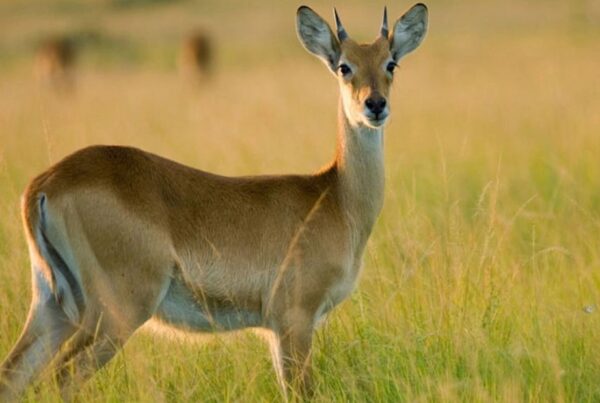
Today, visitors can encounter a variety of wildlife including Uganda kob, bushbuck, warthogs, vervet monkeys, and waterbucks. The thick underbrush and tall grasses also provide refuge to smaller nocturnal species such as genets, civets, and occasionally porcupines. Although sightings of larger carnivores are rare, the occasional presence of leopards and hyenas has been reported, particularly in the denser woodland pockets.

Ajai’s wetlands and riverine systems support an array of bird species, especially water-associated birds like the African jacana, herons, egrets, and pied kingfishers. The birding experience is quiet, uninterrupted, and deeply meditative—a welcome retreat from the busier national parks.

Things to Do: Quiet Adventures in an Undisturbed Habitat

The activities available at Ajai are centered around low-impact, immersive nature experiences. Unlike some of Uganda’s larger parks, Ajai doesn’t promise the big five around every corner. Instead, it offers a slower, more reflective interaction with the environment, ideal for eco-tourists, researchers, and photographers.

Guided nature walks are among the best ways to experience the reserve. These treks allow for intimate observations of plants, insects, birdlife, and animal tracks, and often reveal the delicate balance that exists within this compact wilderness. With knowledgeable guides, even a seemingly quiet trail becomes rich with interpretation and meaning.

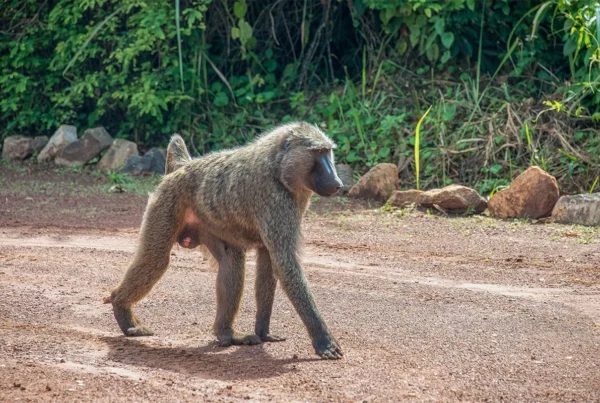
Game drives, though limited in scope, can be arranged with prior coordination. These drives explore the reserve’s grassland sections, where antelope graze and baboons move in troops across the road. Wildlife viewing is subtle here, requiring patience, timing, and sharp observation skills.

For cultural enrichment, nearby communities—some of which trace their lineage back to Chief Ajai himself—offer cultural exchanges and storytelling sessions that explore traditional conservation beliefs, land stewardship practices, and historical ties to the reserve.

For birders, early morning walks or afternoon canoe trips near the Nile’s edges present exceptional opportunities for photography and species identification.

Best Time to Visit: When Nature Opens Its Doors

Ajai Wildlife Reserve can be visited throughout the year, but like many Ugandan wilderness areas, the dry seasons offer the most favorable conditions for travel and wildlife observation. These typically occur from December to March and June to early September.

During dry periods, roads are more reliable, grass is shorter, and animals are easier to spot near water sources. The reserve’s clay soils are notorious for becoming slick and impassable during heavy rains, so visitors during the wet season (April–May and late September–November) should plan accordingly and use the services of expert tour operators like WildHorn Africa.

However, birding tends to peak during the wetter months, especially when migratory species arrive and local wetlands brim with life. Each season carries its own rhythm, so the choice of timing should align with one’s travel goals—whether focused on wildlife spotting, photography, or quiet solitude in nature.

Why Ajai Deserves Recognition

Ajai Wildlife Reserve is not just a dot on Uganda’s map—it is a symbol of both ecological loss and hopeful restoration. In an age when protected areas are evaluated mainly by the volume of their megafauna, Ajai stands apart by offering a different kind of wilderness: one rooted in quiet beauty, biodiversity recovery, and a deep historical legacy.

Its location along the Nile adds a layer of natural majesty that few reserves can match, while its isolation protects it from the pressures of overdevelopment. Ajai remains a frontier reserve—a place for those willing to go beyond guidebooks and into the realm of unfiltered, purposeful exploration.

As Uganda continues to develop a more inclusive and regionally balanced conservation strategy, Ajai has every potential to regain its former glory and assume a prominent role in northern Uganda’s eco-tourism revival.

Book with WildHorn Africa: Travel Beyond the Expected

For those ready to rediscover Ajai Wildlife Reserve, the key to an enriching, well-coordinated experience lies with WildHorn Africa. Specializing in tailored safari adventures and conservation-focused travel, WildHorn Africa brings together local expertise, logistical excellence, and a deep respect for Uganda’s wild spaces.

Whether you’re interested in Ajai’s history, birding in silence by the Nile, or contributing to responsible eco-tourism, WildHorn Africa curates journeys that are intimate, transformative, and rooted in meaning.

Bugungu Wildlife Reserve

Bugungu Wildlife Reserve

By Uganda places to visit, Where to go

Bugungu Wildlife Reserve
Where Wetlands, Woodlands, and Wilderness Converge in Northern Uganda

Hidden between the rolling rift escarpments and the wild thunder of the Nile, Bugungu Wildlife Reserve stands as one of Uganda’s most ecologically rich yet least explored sanctuaries. Located within the expansive Murchison Falls Conservation Area, this pristine reserve forms a crucial buffer zone that not only protects key animal corridors but also shelters diverse habitats that sustain countless species. Despite its quieter reputation compared to the nearby Murchison Falls National Park, Bugungu unfolds a raw, authentic wilderness experience—one that blends rare wildlife, scenic diversity, and uninterrupted serenity.

This is not a place of crowded safari tracks or overdeveloped lodges. It is a sanctuary where the rhythms of the wild dictate time and where wetland birds cry from papyrus thickets as antelopes graze beneath acacia canopies. The feeling here is one of true immersion—a place for seekers of solitude, scientists, photographers, and conscious travelers who wish to reconnect with Earth’s natural order.

Let’s explore what makes Bugungu Wildlife Reserve such a compelling and underrated destination, by examining its location, accessibility, notable features, visitor activities, seasonal patterns, and why this forgotten gem deserves a prominent spot on any safari itinerary.

Location: Uganda’s Ecological Buffer of the Albertine Rift

Bugungu Wildlife Reserve is located in northwestern Uganda, within Buliisa District, and forms the western extension of the Murchison Falls Conservation Area (MFCA). It spans an area of approximately 473 square kilometers, lying at the base of the Albertine Rift Valley escarpment, just before the land descends into the low-lying swamplands that border Lake Albert.

The reserve’s unique location allows it to act as a natural buffer between human settlements and the core protected areas like Murchison Falls National Park and Budongo Forest. Its terrain is mostly flat, though flanked by rugged highlands to the east, creating a mosaic of ecosystems that include woodlands, savannah grasslands, swampy valleys, and riverine forests.

The reserve borders the western bank of the Victoria Nile, and the seasonal Bugungu River crosses it before flowing into Lake Albert. This diverse hydrology nurtures a wide range of flora and fauna, allowing Bugungu to function as both a wildlife habitat and a hydrological sponge, filtering and storing water for downstream communities and species.

How to Get There: Remote but Rewarding Routes

Accessing Bugungu Wildlife Reserve involves a journey that is both scenic and symbolic—a transition from bustling civilization into the untouched soul of Uganda’s wilderness. The reserve is approximately 270 kilometers northwest of Kampala, and the most common route is via Masindi, through Budongo Forest and onward toward Paraa or Buliisa.

From Masindi, travelers follow the Masindi–Paraa–Bugungu road, which meanders through dense forest, open savannah, and escarpment ridges. The route is gravel and can be rough during the rainy seasons, but it offers exquisite views of Lake Albert and the Rift Valley floor, particularly near the Bugungu gate.

Alternatively, one may approach from the northern side via Pakwach or Wanseko, especially if coming from Murchison Falls or Gulu. For visitors seeking speed and convenience, chartered flights to Pakuba or Chobe Airstrips can shorten travel time significantly. A trusted operator like WildHorn Africa ensures a seamless journey, complete with 4×4 vehicles, guides, and insider knowledge of the reserve’s most rewarding routes.

Attractions: A Sanctuary of Rare Species and Ecological Harmony

While Bugungu may not boast the density of big game found in nearby Murchison Falls, its ecological importance and biodiversity are profound. The reserve shelters several species that migrate seasonally between Budongo Forest, Murchison Falls, and Lake Albert, making it a critical wildlife corridor.

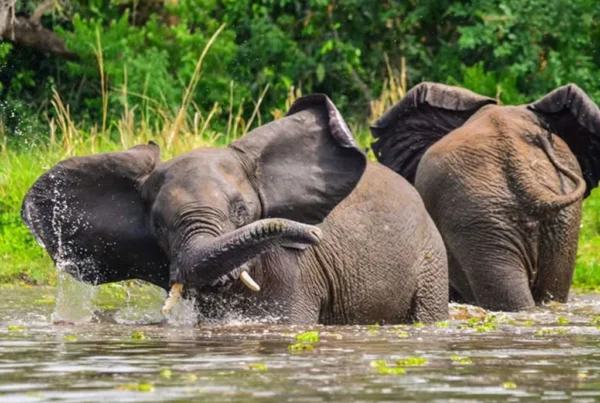
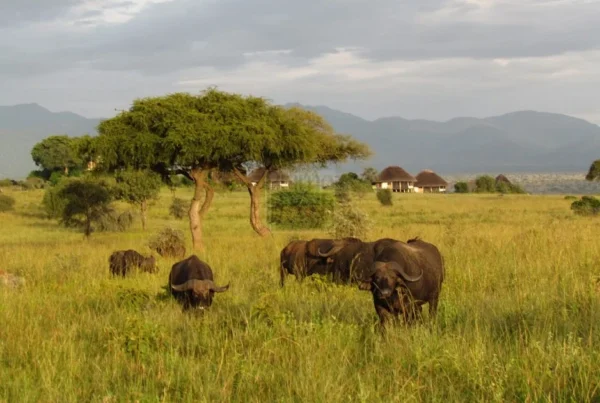
Among the more prominent residents are Uganda kobs, hartebeests, oribis, waterbucks, warthogs, and baboons, often spotted grazing in open glades or resting under fig trees. The occasional leopard and hyena roam the reserve, particularly near the escarpments, though sightings require patience and luck. The edges of the reserve host populations of buffaloes and elephants, especially during the dry seasons when water sources become scarce elsewhere.

However, it is the avian population that truly distinguishes Bugungu. The reserve is a birdwatcher’s paradise, with more than 600 recorded species, thanks to its blend of wetlands, forests, and open plains. Iconic birds like the shoebill stork, papyrus gonolek, African fish eagle, saddle-billed stork, and giant kingfisher can be observed around the swamps and lakeshore edges. The calls of sunbirds, weavers, and hornbills fill the air at dawn and dusk, creating a melodic background to every exploration.

Also notable is the reserve’s botanical diversity. Grasses, herbs, and rare woodland trees like terminalia, acacia, and combretum dominate the terrain, supporting a stable ecosystem that resists erosion and climate stress. This makes Bugungu not just a refuge for animals but also a living classroom for conservation biology and sustainable land management.

Things to Do: Silent Safaris in Untamed Land

Visitors to Bugungu Wildlife Reserve find themselves immersed in an intimate wilderness experience unlike any other in Uganda. Unlike more commercialized parks, Bugungu remains largely untouched by mass tourism, which allows for slow, thoughtful encounters with nature.

Game drives across the savannah reveal wildlife in their most authentic state. Herds of antelope leap across vehicle paths with unforced grace, while troops of baboons frolic along muddy watercourses. Because of its tranquil atmosphere, Bugungu is also ideal for photographic safaris, particularly during the golden hours of sunrise and sunset.

Birding safaris here are extraordinarily productive, especially when led by trained guides from WildHorn Africa. The wetlands are perfect for sighting elusive species, and binoculars often fill with colors and patterns that are both exotic and mesmerizing.

Nature walks and forest hikes offer an up-close look at the land’s smaller inhabitants, including butterflies, amphibians, and medicinal plants. These walks also provide a unique opportunity to learn about traditional knowledge systems from local communities who have coexisted with the land for generations.

One of the more rewarding experiences is simply to listen—to the rustle of wind through papyrus, the splash of a heron in the shallows, or the low rumble of distant buffalo. In Bugungu, silence is not absence; it is presence.

Best Time to Visit: Following Nature’s Rhythms

The most favorable time to explore Bugungu Wildlife Reserve is during the dry seasons, which fall between December and March, and again from June through early September. During these months, animal sightings are easier, roads are more navigable, and water-dependent species gather near wetlands, making observation more consistent.

The wet season, particularly April to May and late September to November, brings out the lushest side of the reserve. Green landscapes burst to life, bird activity intensifies with the arrival of migratory species, and the reserve feels fresh and teeming with renewal. However, some roads may become slippery, and access can be limited in low-lying areas.

That said, Bugungu’s diverse habitats provide enough ecological variation to ensure year-round wildlife activity, so even off-season visitors can find moments of awe. Each season brings its own mood, rhythm, and revelation, adding to the richness of the safari experience.

A Reserve That Speaks in Quiet Tones

Bugungu Wildlife Reserve is not designed for spectacle. Its charm lies in its subtlety, its silence, and its ecological depth. Here, the journey is not about the checklist but about the connection—to land, to wildlife, and to oneself. It is a reminder that not all wilderness needs to roar; some of it whispers, and in that whisper lies profound beauty.

For conservationists, Bugungu is a living model of landscape integration, showing how protected areas, community livelihoods, and water systems can coexist. For travelers, it is a refuge from the hurried world, a place to breathe deeply, observe patiently, and leave transformed.

Book with WildHorn Africa: For Journeys that Matter

To experience the magic and mystery of Bugungu Wildlife Reserve, trust your safari to WildHorn Africa. With their deep expertise in crafting tailor-made, eco-conscious safaris, you will gain more than just access to Uganda’s hidden corners—you’ll gain a narrative, a purpose, and a lifelong memory.

From seamless logistics to storytelling guides, from authentic cultural interactions to meaningful conservation engagement, WildHorn Africa curates more than trips—it creates transformational travel.

Karuma Wildlife Reserve

Karuma Wildlife Reserve

By Uganda places to visit, Where to go

Karuma Wildlife Reserve
Where Uganda’s Untamed Spirit Rises with the Roar of the Nile

There are few places in Africa where the thunderous energy of nature collides so powerfully with serene wilderness as it does in Karuma Wildlife Reserve. Located in northern Uganda, this breathtaking reserve serves as the gateway to Murchison Falls National Park, yet it often lingers in the shadows of its larger neighbor. However, for those who venture off the usual trail, Karuma reveals itself as a sanctuary teeming with raw beauty, rare wildlife, and unmatched ecological significance.

Named after the Karuma Falls, a series of dramatic white-water rapids that split the mighty Nile River as it races through ancient granite outcrops, this reserve is not merely a protected area—it is a vibrant lifeline within Uganda’s broader conservation framework. Its unique mix of woodland savannah, riverine habitats, and rocky escarpments supports a diverse range of species and offers spectacular scenery rarely seen in standard safari circuits.

This article delves deep into the magic of Karuma Wildlife Reserve—its location, access routes, notable attractions, available activities, and the ideal times to visit. Whether you’re a conservation enthusiast, adventure traveler, or cultural explorer, Karuma provides an experience that is both enriching and transformative.

Location: A Crossroads of Nature and Conservation

Karuma Wildlife Reserve is located in Kiryandongo District in northern Uganda. It covers approximately 675 square kilometers and is part of the greater Murchison Falls Conservation Area (MFCA), which also includes Murchison Falls National Park, Bugungu Wildlife Reserve, and Budongo Forest Reserve. This proximity allows Karuma to serve not only as a buffer zone but also as an important migratory corridor for wildlife, ensuring ecological continuity across the region.

The reserve’s centerpiece—the Karuma Falls—sits along the Victoria Nile, one of the key tributaries of the Nile River. These falls are not traditional waterfalls but rather a series of powerful rapids crashing over rocks and through gorges, creating a majestic spectacle of energy and sound. The surrounding landscape features undulating terrain, bushlands, and thickets, interspersed with patches of open savannah, offering varied habitats for both terrestrial and aquatic species.

Due to its strategic position at the intersection of Uganda’s central and northern regions, Karuma acts as a biological and geographical bridge, fostering connectivity between ecosystems and supporting the survival of numerous species.

How to Get There: Smooth Connections to Wild Territory

Karuma Wildlife Reserve is conveniently accessible by road, which makes it an appealing stopover for travelers en route to Murchison Falls National Park or Gulu in northern Uganda. It is located approximately 260 kilometers from Kampala, the capital city, with most of the journey completed on a well-maintained highway that passes through Luwero, Nakasongola, and Kiryandongo.

The reserve is just a short distance from the Karuma Bridge, an iconic crossing over the Nile that also marks the gateway to northern Uganda. The bridge is not only a crucial infrastructure feature but also offers a dramatic view of the roaring rapids below—an unforgettable sight even before entering the protected area.

Those flying in can opt for charter flights to Chobe Airstrip or Pakuba Airstrip, both of which are located within the broader Murchison Falls Conservation Area. From these airstrips, Karuma can be reached in under an hour by road with a professional tour operator such as WildHorn Africa, whose intimate knowledge of the terrain guarantees a seamless and safe expedition.

Attractions: From Tumbling Rapids to Towering Wildlife

The defining attraction within Karuma Wildlife Reserve is, without question, the Karuma Falls. Their thunderous energy, visible mist, and rhythmic roar create an almost spiritual atmosphere. This natural wonder has inspired legends among the Luo people, who believe that the rapids were created by a powerful spirit known as “Karuma”—from which the name of the reserve derives. In this context, the falls represent not just a scenic attraction but a sacred symbol of the region’s cultural and natural identity.

Beyond the rapids, the reserve supports a rich array of mammals, birds, and reptiles. Elephants, buffaloes, Uganda kob, waterbucks, olive baboons, and warthogs are frequently sighted along the riverbanks and grasslands. Leopards and hyenas are present, although more elusive. The proximity to Murchison Falls ensures that wildlife moves freely between protected zones, making game drives both spontaneous and rewarding.

The reserve also offers excellent birdwatching opportunities, especially in the riverine zones. African fish eagles, goliath herons, pied kingfishers, grey crowned cranes, and shoebills are among the avian highlights, while the rapids themselves attract aquatic species such as otters and monitor lizards.

The natural beauty of Karuma is enhanced by its scenic backdrops of acacia woodlands, river cliffs, and dense undergrowth, making it an ideal destination for photographers and landscape lovers.

Things to Do: Experiences That Stir the Soul

One of the most enriching aspects of visiting Karuma Wildlife Reserve is its capacity to offer a wide range of authentic safari experiences without the crowds often found in more famous national parks. The reserve lends itself perfectly to private, immersive, and slow-paced activities that allow for a deeper appreciation of the environment.

Guided game drives, especially in the early morning and late afternoon, provide the best chance to see wildlife in action. The routes along the Nile and the areas near the Karuma Bridge are particularly rich in sightings. Because the reserve is relatively undisturbed, animal behavior tends to be more natural, offering rare glimpses into predator-prey dynamics, mating rituals, and herd movements.

For those seeking a more tactile engagement with the land, guided nature walks offer close-up encounters with the flora and smaller fauna of the region. These walks also allow visitors to learn about traditional uses of plants, interpret animal tracks, and understand ecological interactions in a more nuanced manner.

Birdwatching excursions are another highlight, with Karuma’s position along the Nile making it a stopover for migratory species. Whether one is an amateur enthusiast or an ornithological expert, the reserve promises a rewarding checklist of rare and colorful birds.

Cultural visits can be arranged to nearby communities, especially those of the Acholi and Langi people, who have lived in harmony with this land for generations. Visitors can learn about traditional dances, cattle herding practices, and indigenous beliefs surrounding the river and its spirits.

Karuma is also a prime destination for those with a historical interest, as the nearby Karuma Hydropower Station—Uganda’s largest—offers a modern engineering contrast to the natural might of the falls. Though separate from the reserve’s protected zone, it symbolizes Uganda’s balance between development and conservation.

Best Time to Visit: Timing the Pulse of the Wild

The ideal time to explore Karuma Wildlife Reserve is during the dry seasons, which run from December to March and June to early September. During these months, wildlife congregates near the Nile and waterholes, making game viewing more predictable and roads easier to traverse.

The green season from April to May and September to November brings lush vegetation, flowering plants, and abundant birdlife. Although travel can be slightly more challenging due to slippery roads, the scenery becomes dramatically picturesque and the photographic opportunities increase exponentially.

Regardless of the season, the presence of the Nile ensures a constant water source, making Karuma a year-round haven for wildlife. Visitors are advised to pack light clothing for daytime heat, warmer layers for evening breezes, and waterproof gear if traveling during the rainy months.

A Reserve Poised Between Thunder and Tranquility

Karuma Wildlife Reserve is a place of contrasts—where raging waters meet calm woodlands, and where untamed nature coexists with human ingenuity. It is not a mainstream destination, and that is precisely its appeal. Those who visit Karuma are not merely ticking boxes on a safari itinerary—they are encountering a wild place on its own terms.

With its roaring rapids, rich wildlife, and spiritual depth, Karuma offers something more than scenery—it offers a sense of belonging to the wild. In its unassuming way, it invites travelers to slow down, to observe more closely, and to feel the heartbeat of Uganda not through the lens of spectacle, but through intimacy and immersion.

Book with WildHorn Africa: Curators of Authentic Safari Journeys

To truly experience the untamed elegance of Karuma Wildlife Reserve, trust your adventure to WildHorn Africa. With a team of passionate guides, conservation-driven travel planners, and a deep-rooted understanding of Uganda’s hidden gems, WildHorn Africa transforms a simple visit into a life-changing encounter.

Whether you’re looking for a standalone trip to Karuma or seeking to integrate it into a broader exploration of Uganda’s wild north, WildHorn Africa will tailor your itinerary with care, precision, and sustainability at its core.

Bokora Corridor Wildlife Reserve

Bokora Corridor Wildlife Reserve

By Travel guides, Uganda places to visit, Where to go

Bokora Corridor Wildlife Reserve
Where Wilderness Stretches Beyond the Horizon

There are still places in Africa where silence speaks louder than sound, where landscapes remain untouched by mass tourism, and where the wild holds sovereignty over man. Bokora Corridor Wildlife Reserve, one of Uganda’s most vast and underrated conservation areas, is such a place. Spanning an immense stretch of land in the northeastern Karamoja sub-region, this reserve offers an extraordinary glimpse into raw, unfiltered Africa—where the sun scorches the earth by day and stars flood the skies by night. It is a sanctuary not only for wildlife, but for those seeking the authentic spirit of exploration.

Part of the Karamoja Wildlife Protection Complex, Bokora Corridor lies between two other significant reserves—Pian Upe to the south and Matheniko to the north. Together, they form a triad of protected areas that preserve Uganda’s last remaining semi-arid wilderness. But Bokora is not merely a corridor in name. It is a lifeline for migratory species, a cultural artery for pastoralist communities, and a reservoir of ecological importance. In its broad valleys, dry riverbeds, and volcanic hills, the story of survival unfolds with every passing season.

For the adventurous traveler, conservationist, or nature lover, Bokora Corridor is an untapped frontier—a place where the journey becomes the destination and nature is experienced in its most elemental form.

Location: Uganda’s Hidden Wild Heart

Bokora Corridor Wildlife Reserve is located in Napak District of northeastern Uganda, stretching over an impressive 2,056 square kilometers. It sits strategically between Mount Napak to the west and Mount Kadam to the east, nestled within the broader Karamoja plateau. This positioning makes it a vital ecological link, or “corridor,” for wildlife moving between Pian Upe, Matheniko, and even Kidepo Valley National Park, located farther north.

Unlike many of Uganda’s western parks with lush vegetation and abundant rainfall, Bokora lies in a semi-arid climate zone, characterized by scattered savannahs, thorny bushland, and expansive grasslands. The terrain ranges from open plains to rocky ridges and seasonal wetlands, making it both challenging and captivating to navigate. The starkness of the land does not diminish its beauty—instead, it intensifies it. Bokora’s dramatic scenery, shaped by time and tectonic activity, provides a unique ecological and geological contrast to the rest of Uganda.

How to Get There: A Journey into the Untamed

Reaching Bokora Corridor Wildlife Reserve requires determination, but it is a journey that reveals Uganda’s profound geographical and cultural diversity. The reserve is approximately 470 kilometers from Kampala, the capital city. The most direct route involves traveling through Mbale and Soroti, then heading northeast toward Napak and Lorengechora, which serve as the nearest access towns.

Travel by road is possible with a reliable 4WD vehicle, especially during the dry season when roads are more navigable. The drive, lasting between 9 to 11 hours, winds through various ecological zones—from fertile lowlands and terraced hills to the open vistas of the Karamoja plains. Along the way, travelers encounter Karimojong homesteads, wandering herds of cattle, and traditional kraals—each a living expression of this region’s unique cultural identity.

For those preferring speed and convenience, chartered flights can be arranged to Moroto Airstrip, followed by a road transfer to the reserve. It is highly recommended to travel with a professional tour operator such as WildHorn Africa, whose expertise in navigating Uganda’s remote regions guarantees a seamless and safe experience.

Attractions: Wildness in Every Direction

Despite its remote location and relatively low visitation numbers, Bokora Corridor boasts a surprising biodiversity richness, supported by its diverse habitats and low human interference. It serves as a crucial haven for dryland-adapted wildlife and a safe passage for animals moving across Karamoja’s broader landscape.

Among the mammals that inhabit the reserve are lesser kudu, eland, hartebeest, topi, guenther’s dik-dik, roan antelope, and klipspringers. Large predators such as leopards, spotted hyenas, and jackals are also present but are more elusive due to the low density of tourists and infrastructure. Though sightings can be less frequent than in more developed parks, the experience is far more intimate and unpredictable—true to the spirit of a genuine wilderness.

Birdlife in Bokora is exceptional, particularly for species associated with dry savannah and semi-desert environments. Over 300 bird species have been recorded, including the karamoja apalis, red-fronted warbler, white-headed buffalo weaver, white-bellied go-away bird, and fox kestrel. Birding is especially fruitful around the rocky hills and river valleys, where water and shelter draw both resident and migratory species.

The terrain itself is also an attraction. Towering volcanic mountains such as Mount Napak rise from the plains like forgotten sentinels, offering surreal vistas and challenging hiking opportunities for adventurous souls. These mountains are not only geological marvels but also cultural landmarks, revered by local communities and rich with folklore.

Things to Do: A Reserve for Explorers

Visitors to Bokora Corridor Wildlife Reserve are rewarded not by commercial amenities, but by experiences that are personal, profound, and primitive in the best sense of the word. The reserve remains relatively undeveloped, which only heightens its appeal for those seeking unstructured, immersive safari activities.

Guided walking safaris provide the most authentic way to engage with the land. These low-impact treks allow for up-close encounters with wildlife, tracking of animal footprints, identification of plant species, and interpretation of ecological signs often missed from a vehicle. The silence of walking through this vast landscape—broken only by bird calls and the crunch of dry grass—is a meditative experience that connects visitors to the essence of the wild.

Birdwatching excursions, especially in the early mornings and evenings, are deeply rewarding. The solitude and open space allow for undistracted observation, photography, and appreciation of rare and localized species. The riverine areas, in particular, are magnets for bird activity during the dry season.

Mountain hiking on Mount Napak offers both physical challenge and spiritual reward. The ascent is steep and unmarked, requiring guides and stamina, but the panoramic views from the summit capture the vastness of Karamoja in all its raw beauty. The mountains also hold cultural significance to local people, and with the right guides, visitors can hear traditional legends and gain insight into how the land shapes belief.

Cultural visits to nearby Karimojong communities offer another layer of depth. These are not staged performances, but real-life glimpses into a pastoralist way of life that has survived for centuries. Engaging respectfully with these communities fosters mutual understanding and highlights the important role that indigenous people play in conservation.

Accommodation options within the reserve are minimal, but mobile tented camps can be arranged through operators like WildHorn Africa, offering both comfort and eco-sensitivity. Nights in the reserve are unlike any other—free from light pollution, the skies above Bokora explode with stars, while nocturnal sounds remind visitors they are far from the trappings of civilization.

Best Time to Visit: Seasons of Contrast

The best time to explore Bokora Corridor Wildlife Reserve is during the dry seasons, which occur from December to March and again from June to early September. During these months, roads are passable, wildlife is concentrated around scarce water points, and the skies remain mostly clear. The vegetation thins out, improving visibility for both game viewing and photography.

The wet seasons—April to May and September to November—bring life to the landscape in bursts of green and flowering grasses, but also render many roads muddy and difficult to navigate. While the rainy months are less ideal for general safari logistics, they do offer dramatic cloudscapes, vibrant flora, and an uptick in bird activity, making them attractive to serious birders and landscape photographers.

Regardless of the time of year, visitors should come prepared for intense sunlight during the day and cooler temperatures at night, especially in the higher altitudes near Mount Napak. The climate is one of extremes, much like the landscape itself.

Where Silence Becomes the Guide

Bokora Corridor Wildlife Reserve is not a place of crowds, paved roads, or souvenir shops. It is a place for travelers who want to feel the land beneath their feet, hear the rustle of grass in the wind, and witness life as it has unfolded for millennia. It demands humility, patience, and a love for places that have yet to be shaped by tourism’s heavy hand.

For those seeking a deeper connection to Africa—its nature, its rhythms, its unvarnished beauty—Bokora delivers not a safari, but a soulful expedition. It is a sanctuary for species and a haven for hearts still stirred by the call of the wild.

Book with WildHorn Africa: Your Gateway to Authentic Exploration

To explore the untamed grandeur of Bokora Corridor Wildlife Reserve, entrust your journey to WildHorn Africa. As experts in remote and immersive safaris, WildHorn Africa crafts tailor-made experiences that bring travelers into genuine contact with Uganda’s most remote conservation landscapes.

From seamless logistics and expert guides to sustainable lodging and culturally respectful interactions, WildHorn Africa ensures that every safari is not only memorable but meaningful. With their intimate knowledge of Karamoja and its protected areas, your journey to Bokora will be safe, insightful, and unforgettable.

Matheniko Wildlife Reserve

Matheniko Wildlife Reserve

By Uganda places to visit, Where to go

Matheniko Wildlife Reserve
Uganda’s Wild Frontier — Rugged, Remote, and Untamed

Tucked into the northeastern corner of Uganda lies a stark, sunbaked wilderness rarely seen by tourists and almost untouched by mass development. Matheniko Wildlife Reserve, part of the vast Karamoja conservation landscape, represents one of the most raw and authentic safari environments in all of East Africa. Often described as Uganda’s last true frontier, Matheniko is a landscape where survival, silence, and nature converge — offering an unfiltered look at the rugged heart of the African wild.

Spanning over 1,520 square kilometers, Matheniko is more than just a protected reserve; it is a living canvas of arid savannahs, rocky outcrops, seasonal rivers, and ancestral cultural land. Here, the drama of the natural world plays out daily against a backdrop of golden plains, jagged hills, and skies that stretch to eternity. Wildlife roams freely, undisturbed by crowds. Birds soar on thermals above wind-sculpted ridges. And deep within this parched terrain lies one of Uganda’s most overlooked conservation success stories.

For the traveler who seeks solitude, raw nature, and adventure in its purest form, Matheniko offers an experience unlike any other.

Location: A Jewel in the Karamoja Corridor

Matheniko Wildlife Reserve is located in Moroto District, in the Karamoja sub-region of northeastern Uganda. It is part of a critical transboundary ecosystem known as the Karamoja-Pokot Conservation Area, which extends into Kenya and includes Pian Upe, Bokora, and Kidepo Valley National Park.

Positioned between Mount Moroto to the east and the vast Pian Upe plains to the southwest, Matheniko lies along a natural corridor for seasonal wildlife migration, making it an essential piece in Uganda’s conservation puzzle. This location gives the reserve unique characteristics — it is not lush like the rainforests of the west, nor densely populated like the central savannahs. Instead, Matheniko is a semi-arid landscape, shaped by wind, stone, and seasonal rainfall, offering a harsh beauty that is both humbling and unforgettable.

The reserve sits at elevations ranging from 1,070 to 1,830 meters above sea level, allowing for sweeping views of the surrounding Karamoja hills and plains. This topographical variation also creates micro-habitats that support a surprisingly rich array of species, even in this arid zone.

How to Get There: The Road to Remoteness

Reaching Matheniko Wildlife Reserve requires commitment — but the journey itself is a breathtaking transition from Uganda’s fertile lowlands to its arid highlands. The reserve can be accessed by road from Kampala, with the most common route traveling through Mbale or Soroti, and then on toward Moroto, the main urban center in Karamoja. This drive spans approximately 600 kilometers and can take between 10 to 12 hours, depending on road conditions and stops along the way.

For travelers seeking efficiency or comfort, chartered flights are available to Moroto Airstrip, reducing travel time significantly. From Moroto, the reserve is a short drive eastward along rough but passable roads, with panoramic views at every turn. Due to the remoteness and limited infrastructure, most visitors opt to travel with trusted tour operators such as WildHorn Africa, which ensures fully-equipped 4WD vehicles, experienced guides, and local expertise for navigating the region.

Though the road may be long, it is rich with visual rewards: pastoralist herders, kraals, and Karimojong homesteads dot the landscape, adding a layer of cultural texture to the natural scenery. The remoteness becomes part of the adventure, reinforcing the feeling that Matheniko is not merely a destination, but a pilgrimage into the untamed.

Attractions: Wildlife in a Harsh Eden

At first glance, Matheniko may seem too dry and remote to support life — but this perception quickly dissolves with every step taken into its ancient landscape. The reserve is home to a wide range of savannah and semi-desert species, many of which are rare or endangered, and some that are not commonly found in other parts of Uganda.

Among the mammals frequently encountered are guenther’s dik-diks, oryx, lesser kudu, eland, topi, Uganda kob, and klipspringers — species specially adapted to arid and rocky environments. Olive baboons, vervet monkeys, aardvarks, and spotted hyenas also inhabit the reserve, though often keeping to less disturbed areas.

Birdlife is equally diverse and includes both East African and Somali-Masai biome species. Over 220 bird species have been recorded in Matheniko, making it a top birding destination for those seeking rare and localized birds. The karamoja apalis, eastern paradise whydah, northern carmine bee-eater, African pygmy falcon, and white-headed buffalo weaver are just a few examples of the avian treasures hiding in this rugged expanse.

Reptiles, too, find sanctuary here — with rock pythons, agama lizards, and monitor lizards being common sightings on sun-warmed rocks. The geology of the reserve, characterized by exposed granite, dry riverbeds, and volcanic hills, adds dramatic texture to every excursion.

Things to Do: Exploring Uganda’s Wildest Terrain

The activities within Matheniko Wildlife Reserve reflect its raw and undomesticated nature. There are no manicured game tracks or five-star lodges here — only wild ground, open skies, and untold stories etched in stone and sand.

Guided walking safaris offer the most immersive way to explore the reserve. These treks, led by local rangers or conservation scouts, allow visitors to track animals by their prints, learn about traditional plant uses, and understand the delicate balance of survival in a semi-arid ecosystem. Walking along dry riverbeds and climbing rocky outcrops reveals a landscape that speaks in whispers, not roars — perfect for those seeking quiet adventure and deep connection.

Birdwatching excursions are also deeply rewarding. The reserve’s unique location means birders can tick off species that are rarely found elsewhere in Uganda, often within a short distance of each other. Early morning and dusk hours are especially fruitful, when bird activity peaks and the air is filled with calls, chirps, and songs.

Photography in Matheniko is not about quantity, but quality of composition. The stark contrasts, long shadows, and textured terrains make for exceptional landscape and wildlife images, especially during the golden hours of sunrise and sunset.

Cultural visits to nearby Karimojong communities provide context to the region’s human-wildlife coexistence. These visits offer insights into nomadic pastoralism, traditional dwellings (manyatta), indigenous crafts, and age-old survival knowledge passed down through generations. It is a chance to engage meaningfully and respectfully with Uganda’s most resilient cultural group, whose lifestyle continues to reflect harmony with nature.

Though lodging is limited, mobile camps and eco-conscious safari tents can be arranged through outfitters like WildHorn Africa, ensuring both comfort and minimal environmental impact. Nights under the stars here are unlike any other — with clear skies, absolute silence, and the soft breath of the wild whispering through the bush.

Best Time to Visit: When the Wild Comes to Life

Matheniko Wildlife Reserve experiences two distinct seasons, which shape both wildlife behavior and visitor experience. The dry season, from December to March and again from June to August, is considered the best time for safaris. During these months, wildlife congregates near the few remaining water sources, and the vegetation remains sparse, making animal sightings easier.

The wet seasons, from April to May and September to November, bring occasional flash floods and renewed greenery. Though wildlife becomes more dispersed, the rains give birth to bursts of floral color and increased bird activity, especially among migratory species. For photographers and serious birders, this can be the most visually rewarding time to visit.

Regardless of the season, Matheniko remains a destination that is best suited for those who embrace unpredictability, value wilderness over luxury, and appreciate the poetic silence of remote places.

For Those Who Still Believe in Wild Africa

Matheniko Wildlife Reserve is not for everyone — and that is precisely its strength. It does not promise ticking off the Big Five in a day, nor does it cater to Instagram fantasies of curated safaris. What it offers instead is authenticity, resilience, and discovery. It is a place that tests your curiosity, rewards your patience, and deepens your respect for life in its most elemental form.

For those seeking the soul of Africa, unfiltered and unchanged, Matheniko is a treasure map. It points not to glamor, but to truth. And in doing so, it reminds us why we travel — not just to see, but to feel, to learn, and to transform.

Book Your Safari with WildHorn Africa

To experience the rugged beauty and ancient soul of Matheniko Wildlife Reserve, trust your journey to those who know it best. WildHorn Africa specializes in off-the-beaten-path safaris, offering tailor-made expeditions that unlock Uganda’s most secret corners with professionalism, comfort, and cultural integrity.

From well-equipped vehicles and knowledgeable guides to eco-conscious lodging and deep local partnerships, WildHorn Africa ensures that every aspect of your adventure is carefully designed. Travel deeper. Go farther. Experience the wild as it was meant to be — with WildHorn Africa by your side.

Katonga Wildlife Reserve

Katonga Wildlife Reserve

By Uganda places to visit, Where to go

Katonga Wildlife Reserve
Uganda’s Wetland Wilderness — Where Rivers Breathe Life into the Savannah

In the quietly flowing waters of western Uganda, where papyrus swamps, woodland thickets, and savannah plains converge, lies one of the country’s most delicate and underrated ecological gems — Katonga Wildlife Reserve. Often overshadowed by Uganda’s more famous national parks, Katonga holds its own as a biodiversity-rich sanctuary that pulses with life shaped by the rhythms of water. This 211-square-kilometer reserve may not roar with lions or tremble under elephant herds, but it hums with the subtle, timeless energy of wetland ecosystems, making it a paradise for nature lovers, conservationists, birders, and seekers of quiet, unspoiled wilderness.

Named after the Katonga River, which meanders through the reserve’s heart, this protected area serves as a lifeline for hundreds of species, many of them rare or endangered. With its mix of seasonal and permanent wetlands, grasslands, and wooded savannah, Katonga represents a unique blend of habitats not commonly found in such close proximity elsewhere in East Africa. Here, the thrill is not just in the sight of wildlife but in the profound immersion into one of Uganda’s last true wetland frontiers.

Location: Western Uganda’s Hidden Ecological Haven

Katonga Wildlife Reserve is situated in Kyenjojo and Kamwenge Districts, along the Katonga River Basin, in the western part of Uganda. The reserve lies along the Ibanda–Kamwenge Road, roughly 200 kilometers west of Kampala, Uganda’s capital. It occupies the transitional zone between the wetland systems of the Lake Victoria basin and the dry grasslands of the western rift valley, making it a critical ecological corridor for both resident and migratory species.

This strategic positioning along the river gives Katonga its unique character. Unlike other parks that are dominated by dry savannahs or dense forests, Katonga’s terrain is shaped by the ebb and flow of water, with much of the reserve composed of swamps, oxbow lakes, and floodplains. This diversity of microhabitats has given rise to an astonishing range of life, from secretive sitatunga antelope to flourishing colonies of wetland birds.

How to Get There: A Journey into Serenity

Accessing Katonga Wildlife Reserve is relatively straightforward, although it remains off the typical tourist circuit. From Kampala, the journey by road takes approximately 4 to 5 hours, depending on traffic and weather. The most direct route leads through Mityana, then on to Ibanda or Kamwenge, depending on the entry point being used. The final stretch may require a high-clearance vehicle, especially in the rainy season when the dirt roads leading to the reserve become muddy and slippery.

While public transportation can take travelers to nearby towns, access into the reserve itself requires a private vehicle or tour arrangement. For this reason, most visitors opt for organized tours through reputable operators such as WildHorn Africa, which ensures not only reliable transport but also knowledgeable guides and well-coordinated activities once inside the reserve.

Though lacking an airstrip of its own, Katonga can be reached via chartered flights to nearby towns such as Fort Portal or Kasese, followed by a short drive. The journey, whether by air or road, reveals the undulating countryside, rural villages, and sweeping landscapes that hint at the ecological richness waiting ahead.

Attractions: Nature’s Quiet Marvels

What Katonga lacks in mass tourism infrastructure, it more than makes up for in natural beauty and rare wildlife encounters. The reserve is home to a variety of mammals, reptiles, amphibians, and an astonishing array of birds. Its most iconic resident is the elusive sitatunga, a semi-aquatic antelope that thrives in marshy environments. These shy animals are expertly adapted to swamp life, with splayed hooves and keen senses, and are among the highlights for visitors lucky enough to spot them during a boat or swamp walk.

Other mammals within the reserve include the reedbuck, waterbuck, bushbuck, warthog, and the African otter, which often slips silently through the reserve’s many waterways. Though large predators are rare, small carnivores such as civets, genets, and mongoose add to the ecological complexity.

Katonga is especially prized among birdwatchers, with over 150 recorded bird species. The reserve is a sanctuary for both resident and migratory wetland birds, including the papyrus gonolek, malachite kingfisher, African jacana, shoebill stork, white-winged warbler, and African fish eagle. Birders describe Katonga as a place of quiet spectacle — where the beauty of a morning chorus or the silhouette of a heron at dusk leaves a lasting impression.

The riverine ecosystem also supports a range of aquatic species including frogs, turtles, and fish, which form the foundation of a thriving food chain and keep the ecosystem in perfect balance.

Things to Do: A Safari of the Senses

Experiencing Katonga Wildlife Reserve is a deeply sensory affair. Unlike high-speed game drives common in larger national parks, Katonga invites visitors to slow down, observe, listen, and connect with nature on a more intimate level.

Guided nature walks are among the most rewarding activities. Conducted by trained rangers or local guides, these walks lead through grasslands, along riverbanks, and into papyrus swamps where sitatunga hide and birds nest. Walking safaris offer an educational insight into animal behavior, plant life, wetland ecology, and traditional knowledge from surrounding communities.

One of the unique highlights is the swamp walk — a guided trek through the floating vegetation and shallow waters of the reserve’s marshlands. This experience, often done barefoot or with gumboots, brings visitors face-to-face with a side of African wilderness that few get to explore. It’s not just about seeing wildlife, but about understanding the delicate hydrology and biodiversity of these wetlands.

Canoe excursions along the Katonga River offer another angle of exploration. Paddling through the slow-moving waters allows for silent approaches to wildlife, particularly birds and aquatic mammals. The early morning mist or golden sunset light transforms the water into a mirror of sky and vegetation, making these journeys as meditative as they are adventurous.

Photography enthusiasts will find Katonga a rich canvas, with its reflections, textures, and abundant wildlife offering opportunities for both artistic and documentary work. The reserve’s relative solitude means shots are unspoiled by vehicles or crowds, and subjects appear in their most natural states.

Simple cultural interactions with local communities may also be organized, offering glimpses into the lives of people who have coexisted with these ecosystems for generations. Their sustainable farming, traditional fishing methods, and storytelling traditions offer valuable context to the reserve’s conservation narrative.

For overnight stays, basic eco-lodges and campsites are available near the reserve, often surrounded by forest or overlooking the floodplains. Staying here allows visitors to fall asleep to the croaks of frogs and the distant calls of water birds — a symphony only possible in a place this wild and untouched. WildHorn Africa ensures quality accommodation and full immersion into this wetland world.

Best Time to Visit: Seasons of Life and Color

Katonga Wildlife Reserve is accessible year-round, but the dry seasons — from December to February and June to August — offer the most comfortable and logistically straightforward experience. During these months, the trails are more navigable, visibility improves, and wildlife tends to gather near the water’s edge, making them easier to observe.

The wet seasons, from March to May and September to November, bring higher water levels, which enhance the swamp and river experiences. Though some paths may be less accessible due to flooding or mud, bird activity typically surges during these months, and the reserve transforms into a lush green paradise. The rains renew the land, bring flowers into bloom, and provide dramatic skies that captivate photographers.

Each season offers a distinct lens through which to experience Katonga — dry for accessibility and viewing, wet for color and birdlife. Those who value quiet, immersive, and personalized nature travel will find the reserve rewarding at any time of year.

The Soul of Uganda’s Wetland Heritage

Katonga Wildlife Reserve is not a place of grandeur in the traditional safari sense — it is a place of intimacy, subtlety, and ecological wisdom. Its existence reminds us that the most powerful connections to nature often come not from roaring lions or stampeding herds, but from the soft flutter of herons in the reeds, the silent glance of a sitatunga, or the whisper of wind through papyrus.

In a world where nature is increasingly commodified, Katonga remains authentic and untouched. Its importance lies not just in what it protects, but in how it allows visitors to reconnect with the rhythms of water, land, and life. For the traveler who seeks something deeper than snapshots — something soul-stirring and quietly wild — Katonga is a revelation waiting to happen.

Book Your African Safari with WildHorn Africa

If you’re ready to go beyond the obvious and explore the underrated wonders of Uganda, then let your journey begin in places like Katonga Wildlife Reserve. But to uncover such delicate and remote ecosystems with respect, safety, and insight, the experience should be entrusted to experts who understand the terrain intimately.

WildHorn Africa specializes in bespoke safaris that connect travelers with Uganda’s most authentic wild spaces. From seamless transport and seasoned guides to thoughtfully designed itineraries and eco-conscious lodgings, WildHorn ensures every safari is as impactful as it is unforgettable.

Discover the wetlands. Walk the wild. Travel with purpose. Travel with WildHorn Africa.

Toro-Semliki Wildlife Reserve

Toro-Semliki Wildlife Reserve

By Uganda places to visit, Where to go

Toro-Semliki Wildlife Reserve
Where Savannah Meets the Rift — Uganda’s Hidden Eden

Tucked away in the lush, undulating landscapes of western Uganda lies one of the country’s most enchanting yet under-visited treasures — Toro-Semliki Wildlife Reserve. This protected area, which dates back to 1926, holds the distinction of being Uganda’s oldest wildlife reserve, a title that speaks volumes about its enduring significance in the nation’s conservation history. Though it rarely takes the spotlight in typical safari itineraries, Toro-Semliki offers something that’s becoming increasingly rare: tranquil wilderness, rich biodiversity, and a perfect blend of savannah, wetland, and rainforest ecosystems — all in one reserve.

Toro-Semliki is not merely a sanctuary for animals; it is a place where the geological drama of the Albertine Rift unfolds before your eyes. With the Rwenzori Mountains towering to the south, Lake Albert stretching along the northern horizon, and the Semliki River meandering through the valley floor, the reserve’s scenery is nothing short of spectacular. Its understated charm, coupled with the chance to explore wildlife without crowds, makes it a haven for those seeking authentic, immersive safari experiences.

Location: Nestled Between Mountains and Rivers

The Toro-Semliki Wildlife Reserve is located in western Uganda, specifically in Kabarole and Ntoroko Districts, near the border with the Democratic Republic of Congo. The reserve forms part of the greater Albertine Rift ecosystem, a globally recognized biodiversity hotspot. It lies between the Rwenzori Mountains to the southwest and the eastern escarpment of the Albertine Rift Valley to the north, which gradually drops toward Lake Albert, one of Africa’s Great Lakes.

This prime geographical location positions Toro-Semliki at a unique ecological intersection, where Central African rainforest species overlap with East African savannah wildlife, creating an incredibly diverse flora and fauna profile. The reserve is also adjacent to Semuliki National Park, known for its hot springs and lowland forest, adding another layer of exploration potential for those venturing into the region.

How to Get There: A Scenic Route Worth Every Mile

Reaching Toro-Semliki Wildlife Reserve can be accomplished by both road and air, depending on the traveler’s preference and itinerary. Most visitors access the reserve from Fort Portal, a vibrant town known as the tourism capital of western Uganda. From Fort Portal, the journey to the reserve takes approximately 2 to 3 hours by road, covering about 80 kilometers. The road winds down the escarpments with breathtaking views of the Semliki Valley below, making the journey an experience in itself.

For international travelers, the most convenient point of entry is Entebbe International Airport. From there, a drive to Fort Portal spans about 6 to 7 hours, though the route is scenic and dotted with cultural sites, tea plantations, and mountain views. Alternatively, chartered domestic flights to airstrips near Semliki can be arranged for faster and more comfortable access. Tour operators such as WildHorn Africa offer comprehensive packages that include private road transfers or scheduled flights, ensuring a stress-free arrival into the reserve.

Attractions: Wildlife, Scenery, and Rare Encounters

Toro-Semliki Wildlife Reserve boasts an impressive array of attractions that set it apart from many other safari destinations. As a savannah-dominated reserve interspersed with riverine forests and swamps, it supports a rich mosaic of wildlife species.

The African buffalo, Uganda kob, warthog, bushbuck, and waterbuck are commonly sighted grazing the grasslands. Elephants, though more elusive, are present and frequently traverse the reserve’s interior woodlands. Among the rarer highlights are the giant forest hog — the largest pig species in the world — and the leopard, which silently stalks the reserve’s quieter corners.

One of Toro-Semliki’s most iconic species is the shoebill stork, a prehistoric-looking bird often found along the swamps of Lake Albert and the Semliki River. Birdwatchers from around the world travel here hoping for a glimpse of this enigmatic species, as well as to add rarities like the black-billed barbet, red-throated bee-eater, and yellow-throated cuckoo to their lists. The reserve is known to host over 440 bird species, placing it among Uganda’s top birding destinations.

Another unique attraction is the chimpanzee population living in the Mugiri River Forest within the reserve. Though not as habituated as those in Kibale or Budongo, these chimpanzees represent an important population, and sightings — though unpredictable — add a sense of wild mystery to every forest walk.

The scenery itself is a powerful draw. Sweeping views over the Semliki River basin, morning mists rising from the wetlands, and dramatic escarpments that change hue with the sun’s position make Toro-Semliki a paradise for photographers and nature lovers.

Things to Do: Adventures in Solitude and Serenity

Visitors to Toro-Semliki Wildlife Reserve are rewarded with a wide range of activities, all conducted at a relaxed pace that contrasts with the high-adrenaline rush of mainstream safari parks. Game drives through the reserve’s open plains allow close-up views of antelope herds and other savannah species, often with no other vehicles in sight. The absence of crowds enhances the feeling of personal connection to the wild, a luxury increasingly rare in African safaris.

Guided nature walks offer an intimate way to explore the reserve’s riverine forests, wetlands, and savannah corridors. These walks, often conducted in the early morning or late afternoon, bring visitors into close contact with birdlife, insects, small mammals, and tracks left by nocturnal wildlife. They also provide educational insight into the ecology and conservation efforts within the reserve.

A visit to the Semliki River presents opportunities for boat rides and canoeing, especially for birders keen to explore remote swamps. The calm waters and lush riverbanks create a peaceful yet wildlife-rich atmosphere, perfect for watching hippos, crocodiles, and a wide variety of aquatic birds.

Cultural visits to nearby communities offer another layer of depth to the Toro-Semliki experience. The region is home to the Batooro and Bamba people, whose rich traditions, farming lifestyles, and storytelling culture add a human connection to the land. Engaging with local communities also strengthens conservation outcomes by fostering mutual respect between wildlife and those who live nearby.

For overnight visitors, the reserve offers a few eco-lodges and tented camps, which blend into the natural environment and offer stunning views across the plains and valleys. Nights are serenaded by the distant call of hyenas or the chorus of frogs along the riverbanks. WildHorn Africa ensures visitors are comfortably accommodated and immersed in the surroundings without sacrificing safety or quality.

Best Time to Visit: Climate, Wildlife, and Ideal Seasons

Toro-Semliki Wildlife Reserve enjoys a relatively moderate climate, thanks to its location in the transitional zone between the Congo Basin and East Africa. However, like most parts of Uganda, it experiences two main seasons: the dry season and the wet season.

The best time to visit is during the dry months, which run from December to February and June to August. During this time, vegetation is thinner, wildlife tends to gather around water sources, and roads remain passable. Game viewing and birding are generally more rewarding in these conditions.

The wet seasons, particularly from March to May and September to November, bring lush vegetation, vibrant landscapes, and an explosion of bird activity. While travel may be slightly more challenging due to muddy trails, the rains transform the reserve into a verdant paradise, perfect for photography and quieter adventures. Birdwatchers often favor this season due to the arrival of migratory species and increased activity among resident birds.

Regardless of the season, Toro-Semliki rarely feels crowded, offering year-round tranquility and solitude — a hallmark of its appeal.

Rediscovering Uganda’s First Reserve

Toro-Semliki Wildlife Reserve stands as a living legacy of Uganda’s conservation history, a reminder that the country’s safari offerings extend far beyond the better-known parks. In its wide plains, quiet forests, and winding rivers, one can rediscover the wonder of Africa as it once was — untouched, unhurried, and unspoiled.

The reserve’s ability to combine biodiversity, geological drama, cultural richness, and serene beauty makes it a destination that defies expectations. It does not shout for attention — instead, it whispers its stories to those willing to listen, explore, and engage on its own terms.

Book Your African Safari with WildHorn Africa

If the call of quiet wilderness, diverse wildlife, and meaningful exploration resonates with you, then Toro-Semliki Wildlife Reserve should not be missed. But to uncover its secrets, navigate its remote trails, and connect deeply with its rhythm, travel with those who understand it best.

WildHorn Africa offers expertly crafted safari experiences that go far beyond the ordinary. Whether you’re a seasoned wildlife traveler or a first-time visitor to Uganda, WildHorn ensures seamless logistics, expert-guided safaris, community engagement, and accommodations that respect both nature and comfort.

Explore deeper. Discover differently. Book your African safari with WildHorn Africa — where adventure meets authenticity.

Pian Upe Wildlife Reserve

Pian Upe Wildlife Reserve

By Uganda places to visit, Where to go

Pian Upe Wildlife Reserve
Uganda’s Untamed Wilderness Waiting to Be Discovered

In the remote, wind-swept plains of northeastern Uganda, far from the well-trodden paths of mainstream tourism, lies one of the country’s most spectacular yet underrated wilderness areasPian Upe Wildlife Reserve. Vast, wild, and brimming with raw, untouched beauty, this conservation area spans over 2,788 square kilometers, making it the second-largest protected area in Uganda, after Murchison Falls National Park.

Despite its massive size and rich biodiversity, Pian Upe has remained largely hidden from the public eye, a fact that now makes it one of Africa’s last true frontier reserves. For those with an adventurous spirit and a longing for solitude, this expansive semi-arid savannah offers more than just wildlife sightings — it delivers a visceral connection to nature, uninterrupted and authentic.

Location: The Wild Heart of Karamoja

Pian Upe Wildlife Reserve is situated in the northeastern Karamoja sub-region of Uganda, straddling the districts of Nakapiripirit, Amudat, and Moroto. The reserve lies just south of Mount Kadam and east of Mount Napak, two of the ancient volcanic giants that tower above the savannahs. Its proximity to the Kenyan border places it within the greater Karamoja landscape, a region long known for its cultural resilience, open plains, and free-ranging wildlife.

Its name originates from two local pastoral groups — the Pian, a sub-group of the Karimojong people, and the Upe, a Kalenjin-speaking community. This interweaving of cultural and ecological significance makes Pian Upe more than just a protected area; it is a living landscape, where conservation and tradition coexist.

How to Get There: A Journey Worth the Miles

Although remote, Pian Upe is accessible by road from several key locations in Uganda. The most common approach begins in Kampala or Entebbe, from where the journey north and east spans approximately 8 to 9 hours, depending on road conditions. The route typically leads through Mbale and then northeast to Nakapiripirit, from which the reserve’s entrance is only a short drive away.

The roads are a mix of paved and unpaved tracks, making 4WD vehicles essential, particularly during the rainy season. Despite the distance, the drive is richly rewarding — sweeping views of Mount Elgon, isolated villages, and herds of cattle paint a vivid picture of Uganda’s rural heartlands. For those seeking comfort, WildHorn Africa arranges private transport, experienced guides, and even fly-in safaris for faster access and aerial views of the Karamoja plains.

Pian Upe is also conveniently placed for travelers exploring Sipi Falls, Mount Elgon National Park, or Kidepo Valley National Park, forming a remarkable eastern safari circuit that showcases Uganda’s ecological and cultural diversity.

Attractions: Untouched Wild and Rare Species

Pian Upe’s most striking feature is its sheer wildness. Unlike Uganda’s busier national parks, Pian Upe offers a wildlife experience defined by solitude, surprise, and space. The reserve supports a unique blend of wildlife species, many of which are rare or absent from other parts of the country.

Cheetahs, once nearly extinct in Uganda, are slowly making a comeback in Pian Upe and are occasionally sighted darting across the open plains. These elusive predators share the landscape with leopards, spotted hyenas, and jackals, which patrol the area’s acacia thickets and rocky outcrops.

Ungulates dominate the ecosystem, with healthy populations of Uganda kob, Jackson’s hartebeest, eland, topi, Grant’s gazelle, roan antelope, and oryx. The presence of rock hyraxes, vervet monkeys, and olive baboons adds ecological texture to the reserve, while monitor lizards, pythons, and various snakes inhabit the rocky ridges.

Birdlife is nothing short of spectacular, with over 250 recorded species thriving in the reserve’s varied habitats. From raptors like the martial eagle and Egyptian vulture to ground dwellers such as the karamoja apalis and ostrich — Uganda’s largest bird — Pian Upe is a dream for bird enthusiasts seeking sightings beyond the ordinary.

Things to Do: Wild Beyond Expectation

The experiences offered in Pian Upe are as raw and untamed as the land itself. Game drives, conducted with experienced guides and rangers, allow visitors to explore the vast savannahs in search of wildlife, with every sighting carrying the thrill of unpredictability. Unlike in more populated parks, wildlife here is not accustomed to high human presence, making each encounter feel more intimate and authentic.

For travelers who seek immersive, ground-level experiences, guided nature walks are a must. These walks offer insight into the smaller details of the ecosystem — the tracks of antelope imprinted in the dust, the calls of distant birds, and the movement of reptiles in the underbrush. Walking through the same land traversed by ancient pastoralists and wild animals evokes a primal connection to the earth.

Birdwatching excursions, often best conducted in the early morning, yield an astonishing variety of species and offer excellent photography opportunities. Seasonal swamps, rocky escarpments, and open grasslands provide different vantage points for observing both migratory and endemic birds.

For those with an interest in cultural heritage, visits can be arranged to nearby Karimojong communities, where traditional pastoralism continues to shape daily life. These encounters foster a deeper understanding of how people and wildlife have historically coexisted, and how modern conservation efforts are beginning to integrate community well-being.

Overnight stays are possible in basic lodges and campsites within or near the reserve, offering spectacular night skies and the kind of wilderness silence that amplifies the rustle of wind and the distant calls of nocturnal animals. WildHorn Africa ensures comfortable accommodations and carefully curated itineraries for those wishing to truly dwell in the wild.

Best Time to Visit: Seasons of Solitude and Life

Pian Upe Wildlife Reserve can be visited throughout the year, but the dry season, which typically runs from December to March and again from June to September, is generally considered the best time for exploration. During these months, the roads are more accessible, wildlife congregates around water sources, and vegetation is less dense, making animal sightings easier.

The wet seasons, from April to May and October to November, bring dramatic changes to the landscape. The reserve bursts into life with wildflowers and greenery, creating stunning photographic backdrops. However, these months may present logistical challenges due to muddy roads and flooded tracks, though for adventurous travelers, they offer a heightened sense of isolation and immersion.

Regardless of the season, every visit to Pian Upe carries the promise of unspoiled natural beauty, a rarity in today’s increasingly crowded safari destinations.

Uganda’s Best-Kept Secret

Pian Upe Wildlife Reserve remains one of Uganda’s most overlooked treasures, not for lack of potential but perhaps because it has chosen to remain wild, untamed, and silent for so long. As other parks grow more commercialized, Pian Upe offers a welcome contrast — a place where the spirit of exploration is alive and unfiltered.

The ongoing conservation efforts here are beginning to bear fruit, with increasing wildlife populations and growing interest from ecotourists. Yet Pian Upe still walks a delicate line between obscurity and recognition. Every traveler who visits contributes not only to the survival of this unique landscape but also to the preservation of its rare solitude.

In Pian Upe, one does not merely observe nature — one participates in it, breathes with it, and walks its ancient paths under the same sun that has risen over this land for millennia.

Book Your Safari with WildHorn Africa

If your heart is stirred by the call of the untamed, if your curiosity seeks stories written in the tracks of cheetahs and sung by the wind across endless plains, then Pian Upe Wildlife Reserve awaits. But the journey into such a wild and unpolished gem requires thoughtful planning, deep regional knowledge, and reliable guides who understand the terrain and its rhythms.

That’s where WildHorn Africa excels. With years of experience, a commitment to conservation, and a passion for crafting life-changing journeys, WildHorn Africa is your ideal partner in exploring Uganda’s hidden wonders. From secure transportation and expert guides to personalized itineraries and authentic cultural connections, every detail is handled with care.

Let your African adventure begin not in the crowded parks but in the soul-stirring silence of Pian Upe.
Explore deeper. Travel wilder. Book with WildHorn Africa.

Ziwa Rhino Sanctuary

Ziwa Rhino Sanctuary

By Uganda places to visit, Where to go

Ziwa Rhino Sanctuary
Reviving Giants in the Wild Heart of Uganda

Hidden within the rolling savannahs of central Uganda lies a conservation success story that resonates far beyond the borders of East Africa. Ziwa Rhino Sanctuary, a 70-square-kilometer haven located in Nakasongola District, is the only place in Uganda where wild rhinos roam freely. More than just a wildlife destination, Ziwa symbolizes hope, resilience, and a national commitment to reversing extinction. It offers travelers a rare, immersive glimpse into the rewilding of one of Africa’s most iconic species — the rhinoceros — and serves as a living classroom for conservation enthusiasts from around the globe.

Location: Where Uganda’s Wild Meets Purpose

Ziwa Rhino Sanctuary is strategically situated in central Uganda, approximately 176 kilometers (about 110 miles) north of the capital, Kampala. It lies just off the Kampala–Gulu Highway, making it an accessible stopover for travelers en route to the legendary Murchison Falls National Park. Surrounded by acacia woodlands, open savannah, and lush wetlands, the sanctuary offers a serene contrast to Uganda’s bustling urban centers.

This protected area was chosen for its suitable habitat — a mix of grasslands, shrubs, and water points — which mirrors the conditions rhinos once thrived in before they were declared extinct in the wild in Uganda in 1983. Its location in the heart of the country also positions it perfectly for conservation education and eco-tourism initiatives.

How to Get There: From City Streets to Savannah Paths

Accessing Ziwa Rhino Sanctuary is straightforward for both domestic and international visitors. Most tourists begin their journey from Kampala or Entebbe International Airport. From there, the journey to the sanctuary can be comfortably made by road, taking roughly three to four hours depending on traffic and weather conditions. The route is mostly paved and well-maintained, winding through Uganda’s countryside and giving travelers a scenic preview of what awaits.

For those on a northern circuit safari, including Murchison Falls, Kidepo Valley, and Karuma Falls, Ziwa offers an ideal midway point to stretch legs and absorb a unique wildlife experience. Private tour companies, including WildHorn Africa, can arrange transport, guided experiences, and overnight stays, ensuring a seamless transition from Uganda’s urban pulse to its natural rhythm.

Attractions: More Than Just Rhinos

While the name suggests a singular focus, Ziwa Rhino Sanctuary is teeming with biodiversity and ecological richness. The sanctuary’s primary attraction, however, remains its southern white rhinoceroses, which roam freely within the protected boundaries. As of now, the population stands at over 30 individuals, born from a founding group that was reintroduced in 2005 through a collaborative conservation project spearheaded by the Rhino Fund Uganda and the Uganda Wildlife Authority.

Unlike in national parks where rhinos may be elusive, at Ziwa they are habitually tracked on foot, offering a rare chance to observe these prehistoric giants at close range. Guided walks bring visitors within meters of the animals, always under the close supervision of trained rangers who ensure both visitor safety and minimal disturbance to the rhinos. These treks are more than just sightseeing; they are educational encounters laced with stories of survival, genetics, and reintroduction science.

Beyond the rhinos, Ziwa is home to over 300 species of birds, including the rare shoebill stork, often sighted during swamp walks or boat trips within the sanctuary’s wetlands. Duikers, oribis, bushbucks, and monitor lizards are also commonly seen, adding depth to the wildlife experience. The mosaic of grasslands and swamps supports a surprising array of ecosystems, each pulsing with life.

Things to Do: A Conservationist’s Playground

Activities at Ziwa are immersive, educational, and thoroughly engaging. The rhino tracking experience, typically lasting two to three hours, is undoubtedly the centerpiece. Conducted early in the morning or late afternoon to avoid the midday heat, this activity not only provides close-up views of the rhinos but also insights into their behavior, diet, reproduction, and the threats they continue to face across Africa.

For birdwatchers, Ziwa is an under-the-radar paradise. Guided bird walks allow for exploration of the sanctuary’s varied habitats, where both migratory and endemic species flourish. The elusive shoebill, often described as one of Africa’s most bizarre and charismatic birds, draws ornithologists and curious visitors alike.

Swamp walks and canoe excursions dive deeper into Ziwa’s wetland zones, revealing a tranquil but thriving world of amphibians, reptiles, and aquatic birds. These lesser-known experiences are often described by guests as unexpectedly meditative — a peaceful contrast to the high-adrenaline big game safaris elsewhere in Uganda.

For those interested in conservation, educational tours are also available, focusing on the sanctuary’s history, rhino genetics, anti-poaching strategies, and community outreach efforts. Engaging with the rangers and conservation staff paints a comprehensive picture of what it takes to protect a species from the brink.

Overnight stays are possible in the sanctuary’s eco-lodges and tented camps, offering a rustic but comfortable base from which to explore. Falling asleep to the sounds of the African bush, knowing that rhinos are nearby, creates an emotional connection that transcends the typical safari.

Best Time to Visit: Weathering for Wildlife

Ziwa Rhino Sanctuary can be visited year-round, thanks to Uganda’s generally mild and tropical climate. However, the dry seasons, which run from December to February and June to August, are considered optimal. During these months, the trails remain dry and accessible, visibility improves, and wildlife activity tends to increase near water sources, making for easier tracking and richer sightings.

The rainy seasons — typically from March to May and September to November — can make tracking more challenging due to slippery conditions and overgrown vegetation. However, these months bring their own rewards: the sanctuary turns lush green, birdlife becomes even more abundant, and fewer tourists create a more private, serene experience. Photographers often favor the rainy season for its dramatic skies and vibrant landscapes.

Beyond the Rhinos: A Deeper Meaning

Ziwa Rhino Sanctuary is not just a stopover; it is a living monument to what conservation can achieve when vision, science, and community align. Its success has reignited hopes that one day, rhinos might once again thrive in Uganda’s major national parks. Plans are already underway for eventual reintroduction into protected areas such as Murchison Falls, where rhinos once roamed freely decades ago.

But Ziwa is also a reminder of how fragile such gains can be. Rhino horn trafficking, habitat loss, and climate instability remain ever-present threats across Africa. By visiting, learning, and supporting the sanctuary, travelers become part of a wider conservation mission — one that bridges tourism and impact.

This deep purpose, paired with the sanctuary’s natural beauty and the emotional gravity of seeing a once-extinct species thriving again, leaves a lasting impression on all who come.

Book Your Journey with WildHorn Africa

If the dream of walking among rhinos, hearing the heartbeat of conservation, and exploring Uganda’s untamed heartlands stirs something within you, then Ziwa Rhino Sanctuary belongs on your African itinerary. But to experience it fully — with authenticity, depth, and seamless logistics — your journey should be entrusted to those who know this land intimately.

WildHorn Africa specializes in crafting bespoke African safaris and conservation-focused tours that go far beyond surface-level sightseeing. With expert guides, deep local connections, and a passion for the wild, WildHorn ensures that each journey into places like Ziwa is not only unforgettable but also meaningful.

Whether it’s a dedicated rhino tracking trip or a grand Ugandan adventure encompassing gorilla trekking, wildlife safaris, and cultural exploration, let WildHorn Africa be your compass. Travel with purpose. Walk with rhinos. Witness the wild rise again.

Your African story starts here — with WildHorn Africa.

Close Menu