search
A Wildebeest River Crossing in the Serengeti

A Wildebeest River Crossing in the Serengeti

By Tanzania travel guides, Travel guides, Travel stories and blogs


A Wildebeest River Crossing in the SerengetiWitness one of the planet’s most breathtaking and perilous wildlife spectacles — where survival, instinct, and sheer numbers converge on the banks of East Africa’s most iconic rivers.

Introduction to A Wildebeest River Crossing in the Serengeti

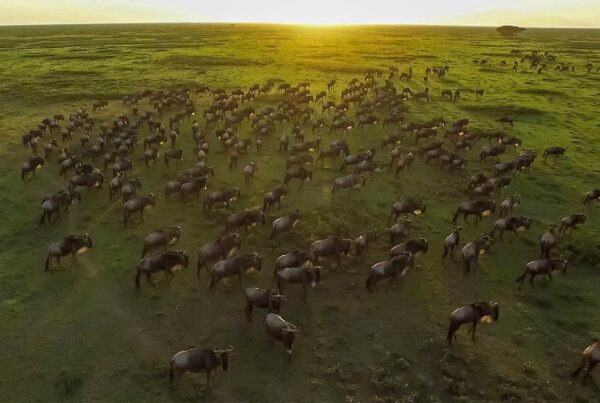
There are few sights on Earth that can match the drama, scale, and raw energy of a wildebeest river crossing in the Serengeti-Mara ecosystem. Every year, over 1.5 million wildebeests—joined by hundreds of thousands of zebras and gazelles—embark on a relentless journey in pursuit of greener pastures. This is the Great Migration, one of nature’s greatest spectacles and a defining experience of African wildlife.

But within this epic journey lies its most heart-stopping moment: the crossing of crocodile-infested rivers like the Mara and Grumeti. Here, instinct collides with danger, and chaos becomes choreography. This article takes a deeper look into this thrilling chapter of the migration and why it remains a must-see on any African safari.

Understanding the Great Migration

The Annual Cycle of Life and Death

The Great Migration is a continuous, clockwise cycle of movement through the Serengeti in Tanzania and the Maasai Mara in Kenya. It’s not a one-time event, but a year-round progression dictated by rainfall patterns and grazing availability.

Wildebeests move from the southern Serengeti calving grounds in January–March toward the north, eventually reaching the Mara River region around July to September. It is here that one of nature’s greatest dramas unfolds: the wildebeest river crossing.

The River Crossing: Nature’s Ultimate Gamble

A Game of Instinct vs. Peril

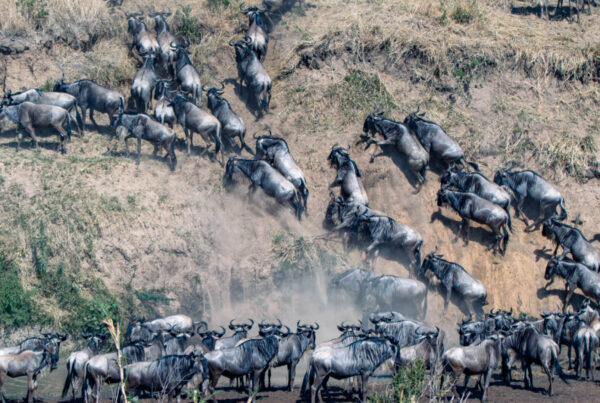
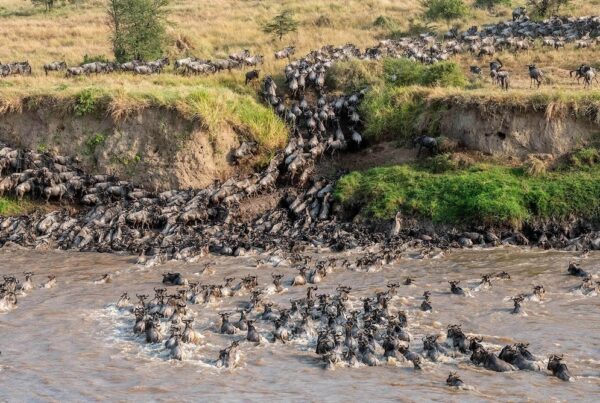
When wildebeests reach the banks of the Mara River, they hesitate. The water is not just a barrier; it is a predator’s playground. Nile crocodiles, some measuring over 16 feet in length, lie in wait. The steep embankments, strong currents, and stampeding herds add to the peril.

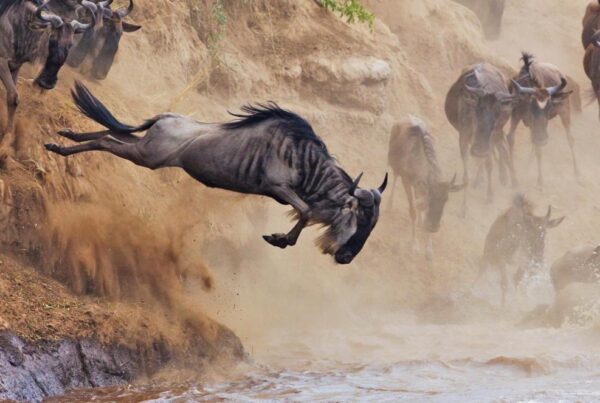
Yet the wildebeests cross, compelled by the promise of lush grazing grounds on the other side. Driven by instinct and the overwhelming urge to follow the herd, thousands plunge into the water, creating a frenzied scene of noise, splashing, panic, and courage.

The Role of Crocodiles

Crocodiles play a vital ecological role in these crossings. As apex predators, they target the weak, the injured, and the inexperienced. Although tragic, these kills are part of the ecosystem’s balance—sustaining predators and preventing overgrazing.

Danger From Within

Not all casualties are due to predators. Many wildebeests die from drowning, exhaustion, or trampling during stampedes. The panic of thousands trying to cross simultaneously leads to bottlenecks, with some animals being crushed or swept away by currents.

Timing and Location: When and Where to Witness It

While nature follows its own unpredictable schedule, July through October typically offers the best chance to witness a crossing. Key river crossing points include:

  • Mara River (Northern Serengeti/Maasai Mara): The most iconic crossing with high crocodile activity.
  • Grumeti River (Western Corridor): Crossings begin earlier in the season, around May to June.

However, crossings can happen sporadically and unpredictably. It’s not uncommon for herds to gather at the riverbank for hours—or even days—before deciding to cross. This unpredictability adds to the suspense and awe of witnessing the event firsthand.

Beyond the Wildebeest: A Wildebeest River Crossing in the Serengeti

Zebras and Gazelles

Wildebeests don’t migrate alone. They are often accompanied by zebras and Thomson’s gazelles. Zebras help lead the way by remembering routes and water points from previous years, while gazelles often follow for safety in numbers.

Predators on the Trail

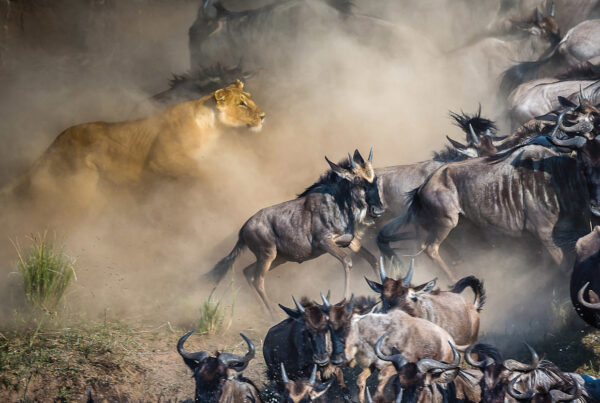
Lions, hyenas, cheetahs, and leopards shadow the migration, knowing that the mass movement offers prime hunting opportunities. The drama of the river crossing continues on land, where exhausted or separated individuals fall prey.

Conservation and the Future of the Migration

Despite its grandeur, the Great Migration faces numerous threats:

  • Human encroachment: Expanding agriculture and fencing disrupt migration corridors.
  • Climate change: Altered rainfall patterns impact grazing and water availability.
  • Infrastructure projects: Roads and dams may hinder animal movement if not planned responsibly.

Conservationists, governments, and safari operators must collaborate to protect this global natural heritage. Sustainable tourism, research, and policy advocacy are crucial to maintaining the integrity of this phenomenon for generations to come.

Why Seeing It Live Is Unforgettable

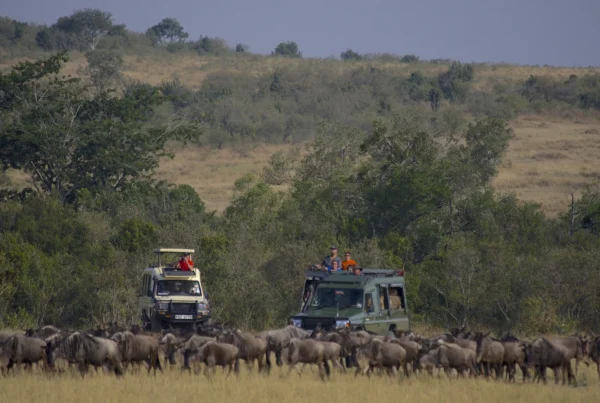
No documentary or photograph can prepare you for the sensory overload of a wildebeest crossing. The earth trembles under their hooves. The air is thick with dust and tension. The sounds—bellows, splashes, growls—resonate deep in your chest.

It’s a moment of raw, unscripted nature, where you bear witness to the ancient pulse of the wild. Each crossing is different, shaped by the conditions, the players, and chance. That’s why many seasoned travelers say this is the greatest wildlife experience on Earth.

Embark on Your African Safari With WildHorn Africa

If you dream of witnessing the thunderous wildebeest river crossings or exploring the endless plains of the Serengeti, look no further than WildHorn Africa.

As specialists in authentic, expertly guided safaris, WildHorn Africa crafts tailor-made experiences that connect you to the soul of Africa. From luxury lodges to mobile tented camps, from sunrise game drives to intimate riverbank stakeouts, your adventure will be crafted with care, respect for nature, and deep local knowledge.

Book your unforgettable safari today with WildHorn Africa — and become part of the legend of the Serengeti.

A Wildebeest River Crossing in the Serengeti #A Wildebeest River Crossing in the Serengeti

5-Day Great Migration Fly in from Zanzibar

5-Day Great Migration Fly in from Zanzibar

By Luxury holidays, Safari holidays, Tanzania trip ideas, Wildlife holidays
From $2,800   per person  (USD)

5-Day Great Migration Fly in from Zanzibar

5-Day Great Migration Fly in from Zanzibar

Set out on an unforgettable 5-day journey across Tanzania’s legendary wilderness with our Great Wildebeest Migration Fly-In Safari. Experience the breathtaking drama of the Great Migration as vast herds of wildebeest sweep across the Serengeti plains in search of fresh grazing. From your arrival at Kogatende Airstrip, our expert team will be there to guide you, ensuring a smooth and enriching safari from start to finish.

5-Day Great Migration Fly in from Zanzibar

itinerary

Book this tour or craft your own experience

    Had a great trip with wild horn Africa when I visited volcano National park for 3days the experience was unforgettable,great memories and all thanks goes to our guide #Guma Kenny from Wildhorn Africa

    Neymar Imran

    I enjoyed my time with wildhorn Africa in kenya at Naivasha National part for 4 days had a great experience with different wild life with a help of our guide Juma

    Butumwa Djarumuzi

    Included

    • Park fees(For non-residents)
    • All activities(Unless labeled as optional)
    • All accommodation(Unless listed as upgrade)
    • A professional driver/guide
    • All transportation(Unless labeled as optional)
    • All flights during the tour
    • All Taxes/VAT
    • Meals(As specified in the day-by-day section)
    • Drinks(As specified in the day-by-day section)

    Excluded

    • International flights (From/to home)
    • Round-trip airport transfer
    • Additional accommodation before and at the end of the tour
    • Tips (Tipping guideline US$20.00 pp per day)
    • Personal items (Souvenirs, travel insurance, visa fees, etc.)

    The best time to visit is generally considered to be during the dry season, when weather conditions are more pleasant and travel is less likely to be disrupted, typically based on your preferred destinations. During this period, landscapes are at their most vibrant, wildlife sightings are more frequent, and activities can be enjoyed with greater ease. While visits are possible year-round, choosing this window is often recommended to ensure the most rewarding and comfortable experience.

    WhatsApp
    The Wildebeest Migration

    The Wildebeest Migration

    By Travel guides

    The Wildebeest Migration: Nature’s Most Dramatic Journey, The Great Wildebeest Migration

    A Spectacle Like No Other (The Wildebeest Migration)

    In the vast, untamed heartlands of East Africa, where golden savannahs stretch to the horizon and acacia trees pierce the endless skies, one of the world’s most remarkable natural phenomena unfolds with rhythmic regularity. The Wildebeest Migration is not simply a movement of animals—it is the heartbeat of the African wild, an ancient, unbroken cycle that has shaped ecosystems, defined landscapes, and mesmerized travelers for generations. Over two million wildebeest, joined by hundreds of thousands of zebras, gazelles, and elands, embark on an epic journey across the Serengeti-Mara ecosystem, forging one of the most powerful illustrations of survival, adaptation, and instinct-driven endurance in the natural world.

    The Wildebeest Migration #The Wildebeest Migration The Wildebeest Migration

    Understanding the Great Migration

    At the core of the wildebeest migration lies a profound and instinctive search for life-sustaining resources. This continuous, circular trek follows seasonal rainfall patterns, guiding the herds through an expansive range covering both Tanzania’s Serengeti National Park and Kenya’s Masai Mara National Reserve. The migration is dictated by the availability of fresh grazing lands and water, making it a perpetual pursuit of survival in an environment both generous and merciless.

    The journey begins in the southern Serengeti plains, where from January to March, hundreds of thousands of wildebeest calves are born within a short window. This mass birthing is synchronized and breathtaking, with nearly 500,000 calves entering the world in just a few weeks. But this is not merely a moment of beauty—it is also a time of danger. The presence of so many vulnerable young animals attracts predators in large numbers. Lions, hyenas, cheetahs, and jackals stalk the plains, giving rise to intense scenes of predation that are as dramatic as they are essential to the ecological balance.

    A Journey of Trials and Triumph

    By April, as the southern grasslands begin to wither under the dry season, the massive herds begin their slow and determined northward movement. This phase of the migration carries them through central Serengeti, traversing wide valleys and woodlands, offering a rich viewing experience of diverse wildlife and ever-shifting group dynamics. The herds are constantly on the move, dictated by rainclouds and the green flush of new grass. They travel not in a single mass, but in waves—one group trailing another, spreading across a mosaic of terrain.

    As they press onward into the western corridor by May and June, the landscape becomes more challenging. The wildebeest must cross the Grumeti River, a lesser-known but formidable obstacle patrolled by enormous crocodiles lying in ambush. The river crossings, whether at Grumeti or the famed Mara River, are among the most riveting experiences of the migration. These events peak between July and September, when the herds reach the northern Serengeti and Masai Mara, and thousands surge into the turbulent river waters.

    The Mara River crossings are where chaos and courage collide. Panicked wildebeest leap from steep banks into murky waters, their hooves thrashing in fear and desperation. Crocodiles, some over 20 feet long, lie silently before erupting in a frenzied attack. Many animals perish—trampled, drowned, or caught—but for those who survive, the reward is rich grazing land on the other side. This spectacle, raw and unfiltered, defines the very essence of life in the wild: brutal, beautiful, and deeply moving.

    The Return South: Completing the Circle

    As October and November approach, the Masai Mara begins to dry out, prompting the herds to begin their return journey. The grasses in the southern Serengeti are once again lush, renewed by seasonal rains. With the same instinctual drive that pulled them north, the wildebeest begin to migrate southward. Their journey comes full circle as they arrive once more in the southern plains by December, just in time for the next calving season, and the cycle continues without pause, as it has for millennia.

    Beyond the Wildebeest: An Ecosystem in Harmony

    While wildebeest are the central characters in this great drama, they are far from alone. The migration includes vast numbers of Burchell’s zebras, who often lead the herds due to their excellent memory for routes, and Thomson’s and Grant’s gazelles, whose agility adds grace to the rugged march. These grazers form a dynamic balance in how they consume the vegetation, ensuring the ecosystem regenerates and supports life throughout the year.

    The presence of so many herbivores naturally sustains one of the densest populations of predators on Earth. Lions prowl the plains in large prides, often targeting the weak and young. Cheetahs use their speed to outrun fleeing antelope. Hyenas, both cunning and relentless, follow closely behind the herds, while scavengers like vultures and jackals clean up what the hunters leave behind. This entire food web—interconnected, interdependent, and intricately timed—demonstrates the delicate equilibrium of nature at its most spectacular.

    Cultural Connections and Human Stories

    Amidst this natural theater, the Maasai communities have lived for centuries, maintaining a way of life that honors the land and its creatures. Visiting these communities during a migration safari offers a deeper layer of understanding—about resilience, coexistence, and cultural heritage. The Maasai are not only stewards of this ecosystem but storytellers of its ancient rhythms. Their wisdom, passed down through generations, enriches the travel experience with meaning and authenticity.

    Interactions with local communities also reflect the growing movement of community-based conservation, where tourism revenue supports schools, healthcare, and sustainable resource management. This human dimension reminds us that the wildebeest migration is not just a natural event, but part of a larger, living heritage that binds people, wildlife, and landscapes together.

    Why The Wildebeest Migration Matters 

    To witness the wildebeest migration is to witness a primal force of nature—one that transcends borders, outlasts generations, and defines the essence of wild Africa. It’s a lesson in movement, resilience, and unity. It humbles the observer and awakens a profound respect for the laws of the natural world. In a time when human footprints often threaten wilderness, the survival of this ancient journey offers hope and a reason to protect what remains unspoiled.

    Every dusty trail, every trembling riverbank, and every echoing roar on the plains tells a story older than humanity itself. And every traveler who experiences the migration becomes a part of that story—carrying its message home, remembering what it means to be alive in a world still ruled by nature’s rhythm.

    Experience the Migration with WildHorn Africa

    If you’re seeking more than a holiday—if you’re yearning for a life-changing journey—then it’s time to let WildHorn Africa guide you into the heart of the migration. With unmatched expertise in East African safari planning, intimate knowledge of the Serengeti and Masai Mara, and a deep commitment to sustainable travel, WildHorn Africa curates experiences that go far beyond the ordinary.

    From placing you at the perfect vantage point for a river crossing, to arranging immersive cultural interactions with Maasai warriors, WildHorn Africa ensures every moment is tailored to your interests and comfort. Whether you’re a photographer, a wildlife enthusiast, or a family seeking wonder together, the team’s attention to detail, safety, and local connection makes your migration safari both seamless and unforgettable.

    Book your wildebeest migration adventure today with WildHorn Africa—and let nature’s greatest journey transform the way you see the world.

    The Wildebeest Migration #The Wildebeest Migration The Wildebeest Migration

    Wildebeest migration trips

    Wildebeest migration trips

    By Travel guides

    Wildebeest Migration Trips: Nature’s Greatest Show Unfolds

    Introduction: Witness the Pulse of the Wild (Wildebeest migration trips)

    In the heart of East Africa, across the golden savannas of Kenya and Tanzania, a breathtaking spectacle unfolds each year—the Great Wildebeest Migration. Often called the Eighth Wonder of the Natural World, this phenomenon sees over two million wildebeest, accompanied by hundreds of thousands of zebras, gazelles, and other herbivores, moving in a vast, cyclical journey that defines the rhythm of life on the Serengeti and Masai Mara plains. To embark on a wildebeest migration trip is to step into a timeless dance of survival, instinct, and raw wilderness—a journey that offers unmatched wildlife encounters and awe-inspiring beauty.

    For travelers who seek more than just sightseeing, who yearn to feel the Earth’s pulse beneath their feet, and who wish to witness nature’s grandeur unfiltered, a migration safari is the ultimate African adventure. It’s not merely a vacation—it’s a privilege to witness the raw spectacle of predator versus prey, the endurance of life under harsh conditions, and the ecological wonder of synchronized movement across vast landscapes.

    Understanding the Migration: A Cycle of Survival

    The Great Wildebeest Migration is not a singular event but a year-long cycle of movement dictated by seasonal rains and the promise of fresh grazing land. The journey begins in southern Serengeti where wildebeest calves are born in astonishing numbers—sometimes up to 8,000 a day during peak calving season. This event, typically between January and March, brings not just new life but an influx of predators. Lions, hyenas, cheetahs, and leopards exploit this vulnerability, creating scenes that are dramatic and often heart-wrenching, yet vital to the ecological balance.

    By April and May, as the southern plains dry up, the herds begin their northward journey, traversing central Serengeti and heading towards the western corridor. It is during the months of June to August that the migration gains momentum, reaching its climactic chapter at the Mara River crossings. Here, panic-stricken herds plunge into crocodile-infested waters, risking everything in pursuit of the greener pastures of the Masai Mara in Kenya.

    This moment, often depicted in wildlife documentaries, is perhaps the most iconic scene of the entire migration. It is chaotic, suspenseful, and primal. Watching thousands of wildebeest and zebras leap into treacherous waters, while crocodiles snap their jaws and predators lie in wait on the far banks, is an experience that engraves itself on the soul.

    After reaching the Masai Mara by September and October, the herds eventually begin their southern journey again, retreating to the Serengeti as rains fall in the south by November and December, completing the ancient loop of survival.

    Where to Experience the Migration

    The Serengeti National Park in Tanzania and Masai Mara National Reserve in Kenya are the two major regions where the migration unfolds. Each offers distinct perspectives and experiences depending on the time of year. The Serengeti, with its vast open plains, is ideal for witnessing calving season and the early movements, while the Masai Mara is the place to be during the river crossings.

    Travelers looking to capture the most action-packed moments of the migration often aim for the Mara River crossings, which are best seen from late July through September. However, choosing the right time and location depends on what aspect of the migration you wish to witness—be it the tender birth of calves, the drama of predation, or the mass movement of herds under open skies.

    The vastness of the ecosystem allows for both intimate encounters in private conservancies and sweeping vistas in national parks. Each setting offers its own magic, with expert guides bringing the unfolding drama to life through their knowledge, passion, and storytelling.

    The Wildlife Beyond the Wildebeest (Wildebeest migration trips)

    While the migration centers on wildebeest, the supporting cast of animals enriches the experience. Thousands of zebras accompany the herds, creating stunning black-and-white patterns against the green and gold of the savannah. Graceful Thomson’s and Grant’s gazelles weave through the larger animals, while imposing elephants, towering giraffes, and elusive leopards remind you that the Serengeti-Mara ecosystem is among the most biodiverse on Earth.

    Predators play a crucial role in maintaining the ecological balance. Lions, often seen in prides, dominate the food chain, while cheetahs use their speed to hunt in the open plains. Hyenas and jackals clean the remains of hunts, and vultures circle overhead in anticipation of nature’s inevitabilities. The presence of these animals makes every game drive feel like a living documentary.

    Cultural Enrichment: Meeting the Maasai and Local Communities

    A wildebeest migration trip is not only about wildlife but also about connecting with the rich cultures that inhabit these lands. The Maasai people, known for their vibrant attire, traditional lifestyles, and deep-rooted respect for nature, are custodians of this wilderness. Visiting Maasai villages allows travelers to witness ancient customs, hear oral histories, and understand the delicate balance between wildlife conservation and human livelihood.

    The presence of community-owned conservancies and eco-tourism initiatives helps sustain the region both economically and environmentally. Many safaris include cultural exchanges that enrich the travel experience, grounding it in the realities and heritage of East Africa.

    Planning the Ideal Migration Safari

    Embarking on a migration safari requires thoughtful planning. The sheer size of the Serengeti-Mara ecosystem means that movement of the herds can vary slightly each year depending on rainfall patterns. Travelers benefit immensely from the insights of experienced local operators who understand the rhythms of the migration and can position you in the right place at the right time.

    Accommodation options range from mobile tented camps that move with the herds to luxurious lodges offering panoramic views and elevated service. Game drives are typically conducted in open-roof vehicles, led by knowledgeable guides who track the movements of animals with astonishing precision. Some operators even offer hot-air balloon safaris, allowing you to drift silently above the herds at sunrise—an experience of surreal beauty.

    Whether you seek luxury, adventure, or photography-focused safaris, every detail of the journey can be tailored to your preferences, ensuring an unforgettable African escape.

    A Journey That Transforms

    The Great Migration is not just a marvel of biology—it is a symbol of resilience, unity, and the deep interdependence of ecosystems. Witnessing the migration firsthand leaves a lasting impression, one that transcends the visuals of animals in motion. It awakens a sense of humility, reminding us of our place in the vast tapestry of life.

    Travelers often describe their wildebeest migration trip as transformative, returning home with a greater respect for nature, a deeper awareness of conservation, and memories that linger long after the dust has settled on the savannah.

    Book Your Migration Adventure with WildHorn Africa

    If you’re ready to embark on one of the world’s most spectacular wildlife journeys, let WildHorn Africa be your trusted guide. With years of experience crafting tailor-made African safaris, an unwavering commitment to ethical travel, and deep partnerships across East Africa’s top parks and lodges, WildHorn Africa ensures your wildebeest migration trip is seamless, exhilarating, and deeply meaningful.

    From planning the perfect itinerary to offering personalized service in the wild, WildHorn Africa elevates your safari experience to extraordinary heights. Whether you wish to see the drama of the Mara River, the serenity of the calving season, or the grandeur of the endless Serengeti plains, your journey will be crafted with care and guided by passion.

    Book your Africa tour today with WildHorn Africa—and let the call of the wild lead you to the adventure of a lifetime.

    Wildebeest migration trips #Wildebeest migration trips Wildebeest migration trips

    Make wildebeest migration page parent

    packages

    Close Menu