search
Ultimate Travel Guide to Murchison Falls National Park

Ultimate Travel Guide to Murchison Falls National Park

By Travel stories and blogs, Family holidays, Luxury holidays, Safari holidays, Travel guides, Uganda travel guides, Wildlife holidays

Ultimate Travel Guide to Murchison Falls National Park

The Untamed Jewel of the Nile

At the heart of Uganda’s wilderness lies Murchison Falls National Park, a destination of striking beauty and immense power where the Nile River thunders through a narrow gorge before cascading into a roaring pool below. This spectacle of water, sound, and unyielding force defines the park, making it one of Africa’s most dramatic natural landmarks. For centuries, explorers, naturalists, and travelers have been drawn to this remarkable place, where the allure of the untamed wild meets the majesty of Africa’s longest river.

Murchison Falls is not merely a park; it is an emblem of Uganda’s ecological wealth and a gateway to unforgettable encounters with nature. The park’s blend of vast savannahs, riverine forests, and sweeping woodlands supports a diversity of wildlife that mirrors the grandeur of the landscapes. From herds of elephants grazing in the open plains to crocodiles lurking in the shallows of the Nile, and from giraffes stretching towards the acacia canopies to lions prowling silently at dusk, the park unfolds as a living masterpiece of the natural world.

For travelers seeking the ultimate safari adventure, a visit to Murchison Falls offers a rare combination of raw wilderness, breathtaking scenery, and cultural depth. This guide unveils the park’s landscapes, wildlife, history, and travel essentials, creating a resource for those who wish to discover Uganda’s largest and most iconic protected area.

The History and Significance of Murchison Falls

The story of Murchison Falls National Park is rooted in both natural and cultural heritage. Established in 1952, it is Uganda’s oldest and largest conservation area, spanning over 3,800 square kilometers. Its significance, however, predates its formal designation. The Nile, which slices through the park, has long been revered as a lifeline for both wildlife and people. Early explorers, including Sir Samuel Baker, were captivated by the falls in the nineteenth century, describing them as a natural wonder unlike any other. It was Baker who named the falls in honor of Roderick Murchison, a prominent geologist of the era.

During the twentieth century, the park became a sanctuary not only for wildlife but also for scientific exploration and tourism. Although periods of political unrest led to poaching and population decline among species such as elephants and rhinos, conservation efforts have since revitalized the ecosystem. Today, Murchison Falls stands as a testament to resilience, conservation, and the enduring magnificence of Uganda’s landscapes.

Landscapes and Natural Beauty

The landscapes of Murchison Falls are diverse and captivating. The northern sector of the park is dominated by rolling savannahs and open grasslands, dotted with Borassus palms and acacia trees, creating a quintessential African scene. Herds of antelope graze freely, while giraffes and buffalo traverse the plains under the sweeping skies. The southern sector contrasts sharply, with woodlands, riverine forests, and thick vegetation, providing shelter to chimpanzees and other primates.

The Nile River, which divides the park, serves as the lifeblood of the ecosystem. It flows from Lake Victoria, traverses Lake Kyoga, and makes its way into Lake Albert after passing through the narrow cleft that forms Murchison Falls. This river is more than a geographic feature; it is the stage upon which the park’s drama unfolds. The spray from the falls, the thunderous sound of crashing water, and the rainbow arcs that appear in the mist create scenes that remain imprinted in memory long after departure.

The Power of the Falls

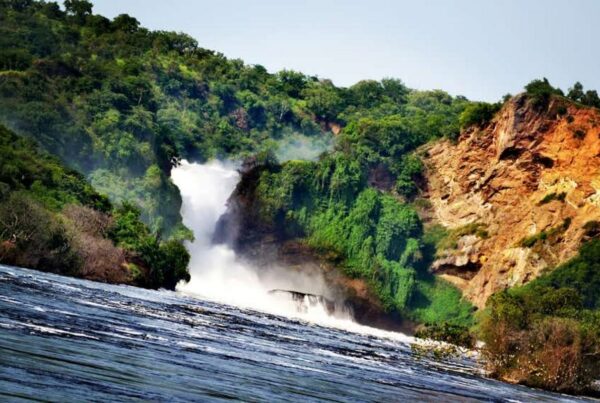
At the heart of the park lies the mighty spectacle of Murchison Falls, where the Victoria Nile narrows from a width of nearly fifty meters into a gorge barely seven meters wide before plunging forty-three meters below. The sight is breathtaking, as millions of liters of water crash through the rock, creating a roar that reverberates across the cliffs. This immense force has earned Murchison Falls the reputation of being the most powerful waterfall in the world.

Visitors can witness the falls from several vantage points. Boat cruises along the Nile provide dramatic views from below, where hippos, crocodiles, and elephants are frequently observed along the banks. Hiking trails lead to the top of the falls, where the water can be felt vibrating beneath one’s feet, and panoramic views of the river and surrounding savannah stretch into the distance. The combination of sight, sound, and sensation makes Murchison Falls an unforgettable centerpiece of any Ugandan safari.

Wildlife Diversity in Murchison Falls

The park is home to an impressive array of wildlife, making it one of Uganda’s premier safari destinations. Elephants, lions, leopards, giraffes, buffalo, and hyenas roam the savannah, while hippos and crocodiles dominate the Nile waters. Over seventy mammal species inhabit the park, ensuring that every game drive or boat safari reveals something extraordinary.

Primates add to the richness, with chimpanzees thriving in the Budongo Forest Reserve on the southern edge of the park. This forest, one of the largest mahogany reserves in East Africa, also shelters black-and-white colobus monkeys, red-tailed monkeys, and olive baboons. Birdlife is equally abundant, with over 450 species recorded. From the rare shoebill stork to colorful kingfishers, fish eagles, and herons, the park serves as a paradise for birdwatchers.

The wildlife experience in Murchison Falls is shaped not only by diversity but also by scale. The herds appear vast, the predators more elusive yet present, and the river ecosystem teems with life. This grandeur distinguishes the park from others, offering encounters that feel both dramatic and authentic.

Activities in the Park

A visit to Murchison Falls offers more than traditional game drives. Each activity is designed to showcase the park’s varied ecosystems and reveal the depth of its beauty.

The boat safari along the Nile remains one of the most iconic experiences. Departing from Paraa, these cruises glide upstream towards the base of the falls, passing pods of hippos, basking crocodiles, and a wealth of bird species. The stillness of the water contrasts with the anticipation of the approaching falls, culminating in a view that is both serene and powerful.Ultimate Travel Guide to Murchison Falls National Park

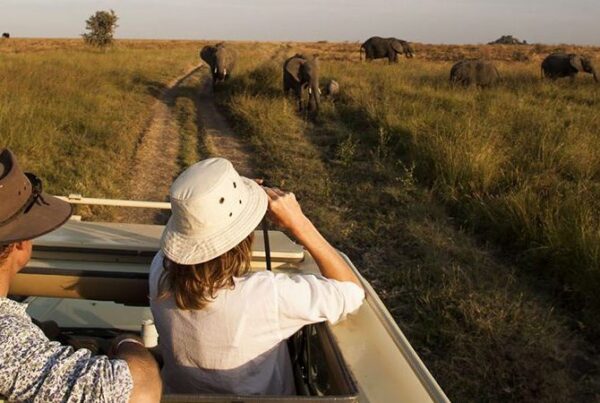
Game drives in the northern savannahs provide another dimension of exploration. Early mornings and late afternoons are particularly rewarding, as predators are more active and herbivores gather in large numbers. The Kasenyi plains and Buligi tracks are especially productive for sightings of lions, elephants, and Uganda kob.

For those seeking physical engagement, the hike to the top of the falls delivers both adventure and reward. The sound grows louder with each step, the mist rises higher, and the culmination offers an unparalleled vantage point over one of Africa’s greatest natural wonders.

In Budongo Forest, chimpanzee trekking introduces visitors to the primate world. Guided walks through the lush canopy bring travelers face to face with these intelligent and social creatures, offering insights into their behavior and conservation challenges.

Accessibility and Travel Logistics

Murchison Falls National Park lies approximately 300 kilometers northwest of Uganda’s capital, Kampala. Travel by road takes between five and seven hours, depending on the route and conditions. The journey passes through scenic countryside, small towns, and rural landscapes, providing a glimpse into Uganda’s cultural life.

For those preferring air travel, domestic flights operate to Pakuba, Chobe, and Bugungu airstrips, significantly reducing travel time. These flights are particularly convenient for travelers with limited schedules or those seeking comfort.

Once inside the park, the Paraa ferry connects the southern and northern banks of the Nile, facilitating access to game drive areas and lodges. Roads within the park are primarily dirt tracks, navigable with four-wheel drive vehicles, particularly during the rainy season. Accessibility may vary depending on seasonal conditions, and planning with local expertise ensures a smoother experience.

Accommodation Options

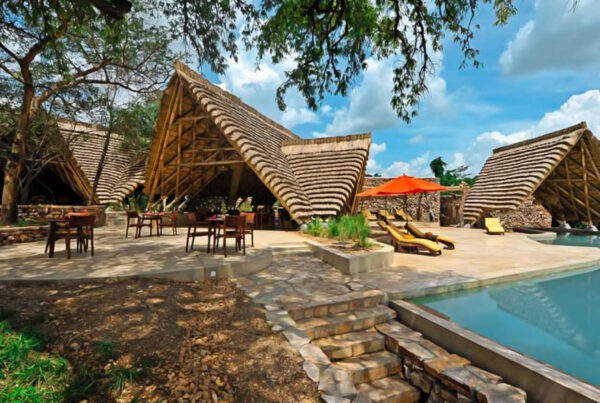
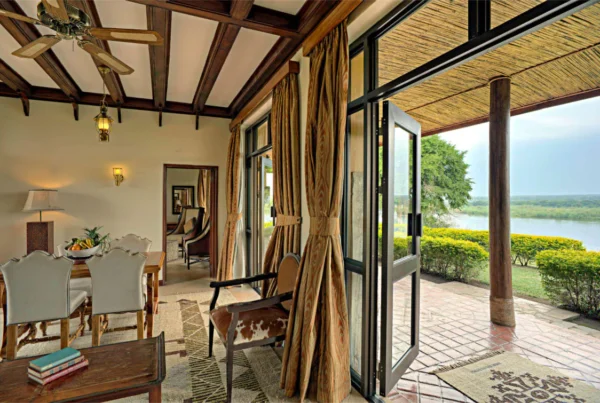
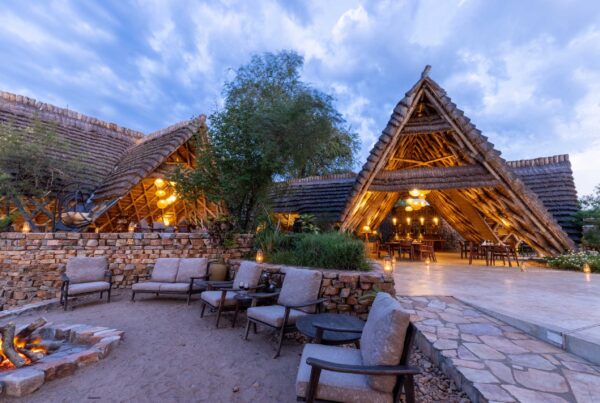
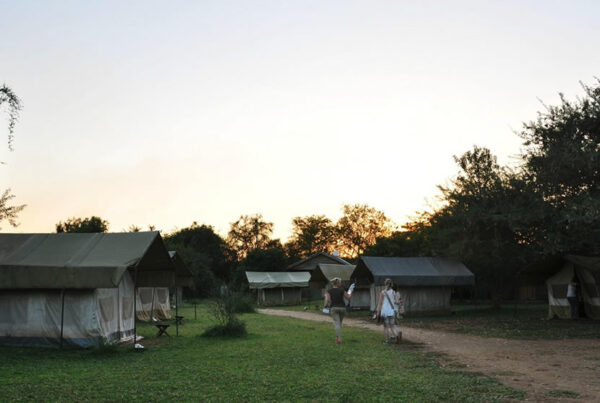
Accommodation within Murchison Falls caters to a wide spectrum of preferences. Luxury lodges perched along the Nile offer panoramic views and high levels of comfort, with spacious rooms, fine dining, and guided excursions integrated into their services. Mid-range lodges and tented camps provide balance between affordability and comfort, while budget campsites offer simplicity and closeness to nature.

Each option ensures that visitors remain immersed in the wilderness. Nights in the park are characterized by the calls of distant lions, the grunts of hippos, and the rustling of nocturnal animals, creating an atmosphere that reinforces the sense of being far removed from the modern world.

Seasons and Best Time to Visit

The climate of Murchison Falls is defined by wet and dry seasons. The dry months, typically from December to February and June to September, are considered the best times to visit. During these periods, roads are more accessible, vegetation is thinner, and wildlife congregates around water sources, enhancing visibility.

The wet seasons, from March to May and October to November, bring lush greenery and increased bird activity. Migratory species add to the avian diversity, and landscapes appear vibrant and refreshed. However, heavy rains can make some roads challenging to navigate, and boat cruises may be affected by rising water levels. Travelers must weigh the benefits of lush scenery and birdwatching against the potential difficulties of access during these times.

Cultural Encounters Around the Park

Beyond the wildlife, Murchison Falls offers cultural richness through interactions with communities living near the park. Visits to villages reveal traditional dances, crafts, and farming practices, offering insights into how people coexist with the wilderness. The Banyoro and Alur communities, among others, share their heritage through music, storytelling, and art. These encounters deepen the safari experience, providing not only entertainment but also education and appreciation of Uganda’s cultural mosaic.

Conservation and Sustainability

Murchison Falls has faced challenges of poaching, habitat loss, and human-wildlife conflict over the decades. Conservation initiatives, led by the Uganda Wildlife Authority and supported by international organizations, have worked to restore populations of elephants, giraffes, and other species. Anti-poaching patrols, community involvement, and tourism revenue have played pivotal roles in sustaining the park’s ecosystem.

Visitors contribute to conservation simply by choosing responsible tourism. Fees support park management, while engagement in community projects fosters coexistence between humans and wildlife. The future of Murchison Falls depends on the delicate balance between preservation and access, a responsibility shared by all who step into its landscapes.

Comparing Murchison with Other Ugandan Parks

While Uganda is home to several remarkable national parks, Murchison Falls distinguishes itself through scale, diversity, and spectacle. Queen Elizabeth National Park offers more varied habitats within a smaller area, including crater lakes and tree-climbing lions, while Murchison emphasizes raw wilderness and the unmatched drama of the Nile. Kibale Forest excels in primate experiences, particularly chimpanzee trekking, while Bwindi Impenetrable National Park is celebrated for gorilla encounters. Yet none combines the grandeur of savannahs, riverine ecosystems, and the power of the world’s strongest waterfall as Murchison does.

Planning an Itinerary

A well-planned itinerary ensures that visitors capture the essence of Murchison Falls. Two to three days within the park allows for game drives, a boat cruise to the base of the falls, and a hike to the top. Additional days may include chimpanzee trekking in Budongo Forest, birdwatching excursions, or cultural visits to surrounding communities. Combining Murchison Falls with other Ugandan destinations, such as Ziwa Rhino Sanctuary or Kibale Forest, creates a diverse journey that highlights the country’s natural and cultural richness.

The Power and Beauty of Murchison Falls

Murchison Falls National Park is a destination where nature’s raw energy is on full display, where wildlife roams freely across vast savannahs, and where the Nile demonstrates its unrelenting force. From the thunder of the falls to the serenity of the river, from the majesty of elephants to the grace of giraffes, the park embodies the essence of African wilderness.

For travelers seeking more than a safari, Murchison Falls offers connection—to landscapes, to wildlife, to people, and to the timeless rhythm of the Nile. Every moment spent here is a reminder of the fragility and grandeur of the natural world, leaving impressions that endure long after the journey ends.

To ensure that such a journey is seamless, enriching, and deeply memorable, it is recommended that travelers book their Uganda safaris through WildHorn Africa. With expertise, commitment to conservation, and passion for creating meaningful experiences, WildHorn Africa transforms a visit to Murchison Falls into an adventure that captures the heart and soul of Uganda’s wilderness.

Best Game Drives in Murchison Falls National Park

Best Game Drives in Murchison Falls National Park

By Travel stories and blogs, Family holidays, Luxury holidays, Safari holidays, Uganda travel guides, Wildlife holidays

Best Game Drives in Murchison Falls National Park

Where the Wilderness Unfolds in Epic Grandeur

There are places in Africa where the heartbeat of the wild can be felt with every step, where landscapes stretch endlessly beneath golden sunlight, and where animals roam as they did centuries ago, untouched by time. One such place is Murchison Falls National Park, Uganda’s largest and most famous conservation area. Known primarily for hosting the world’s most powerful waterfall, the park is also a sanctuary of extraordinary wildlife encounters. Among its greatest treasures lies the game drive experience, a journey into the savannah and riverine landscapes that defines the very essence of an African safari.

The game drives in Murchison Falls National Park are not ordinary excursions; they are timeless passages into a wilderness that reveals its secrets only to those willing to watch, listen, and feel. Every turn of the trail brings the possibility of an encounter with elephants moving gracefully through the grasslands, lions resting in the shade, or giraffes stretching their necks against a blue African sky. The game drive transforms into more than an activity; it becomes a dialogue between human presence and the eternal wilderness, a narrative written by paw prints, shadows, and calls carried on the wind.

In this comprehensive exploration, the beauty, drama, and variety of game drives within Murchison Falls National Park will be uncovered. From the savannah plains of the northern sector to the quieter woodland regions in the south, from sunrise expeditions to nocturnal explorations beneath the stars, each experience unfolds as a testament to the diversity and vitality of Uganda’s wildlife heritage.

The Landscape That Defines the Game Drive

The setting of a game drive is as significant as the wildlife itself. Murchison Falls National Park spans nearly four thousand square kilometers, a landscape shaped by the course of the Victoria Nile as it carves its way toward Lake Albert. This river divides the park into contrasting habitats, creating a natural diversity that enriches every safari experience.

The northern banks are dominated by open savannah grasslands, a stage where herds of antelope graze and predators move stealthily in search of prey. Palm-dotted plains stretch as far as the eye can see, creating vistas reminiscent of classic African safaris. The southern banks reveal a different character, composed of woodlands, riverine forests, and the Budongo Forest Reserve, which shelters chimpanzees and other primates.

It is this duality—savannah and woodland, openness and enclosure—that defines the game drive in Murchison Falls. Each journey brings a contrast in scenery, ensuring that no two drives are ever alike.

The Wildlife Drama of the Savannah

A game drive through the northern savannahs is often remembered as the quintessential safari experience. The open landscapes offer sweeping visibility, allowing travelers to witness wildlife in motion across vast horizons. Herds of Ugandan kob, with their elegant spiral horns, move gracefully through the plains, while waterbucks, hartebeests, and oribi add variety to the herbivore populations.

Elephants dominate these plains with their sheer presence, moving in family groups whose gentle demeanor contrasts with their imposing size. Giraffes rise above the acacia trees, their movements slow yet graceful, while buffalo gather in formidable numbers, forming one of the park’s most impressive spectacles.

Amid this abundance of prey, the predators thrive. Lions are frequently sighted, sometimes resting in shaded thickets, other times patrolling in search of hunting opportunities. Their roars echo across the grasslands at dawn, a sound that embodies the wilderness. Leopards, more elusive but equally captivating, reveal themselves occasionally in trees or through sudden movements in the undergrowth. Hyenas roam the plains, scavengers yet skilled hunters, ensuring the balance of the ecosystem remains intact.

The savannah game drive is thus not simply about seeing animals; it is about witnessing the eternal balance of predator and prey, survival and adaptation, all unfolding against a backdrop of timeless African landscapes.

The Southern Woodlands: A Different Perspective

While the northern savannahs dominate most visitors’ imaginations, the southern woodlands of Murchison Falls provide a quieter but equally rewarding game drive experience. Here, the terrain shifts into denser vegetation, where fig trees, mahogany, and ironwood create shaded pathways.

In these woodlands, primates become prominent. Baboons line the forest edges, colobus monkeys leap through branches, and the nearby Budongo Forest resonates with the calls of chimpanzees. The presence of forest elephants, smaller and more secretive than their savannah counterparts, adds mystery to the southern drives.

Birdlife thrives in these areas, with hornbills, turacos, and kingfishers adding bursts of color and song. While predators are less frequently observed in the dense woodlands, the atmosphere is one of discovery and intimacy, as if the forest reveals its secrets only to those who move slowly and attentively.

This diversity ensures that the southern woodlands complement the northern savannahs, offering a holistic game drive experience that combines openness with enclosure, spectacle with subtlety.

Morning Game Drives: The Awakening of the Wilderness

The game drive at dawn is a ritual unlike any other. As the first light spreads across the horizon, the wilderness awakens with energy and movement. The cool air carries the calls of birds, the distant trumpeting of elephants, and the rustling of antelope in the tall grass.

Predators, still active from the night, are often sighted during these early hours. Lions may be seen returning from a hunt, their golden coats glowing in the soft morning light. Hyenas patrol the plains, and leopards may still linger in trees before retreating into daytime secrecy.

Herbivores emerge to graze, silhouetted against the rising sun. The sight of giraffes moving gracefully through golden light or kob leaping in morning play creates scenes that feel almost cinematic. The morning game drive is therefore not only about wildlife sightings but also about atmosphere—the merging of light, sound, and movement that defines the wilderness in its purest form.Best Game Drives in Murchison Falls National Park

Afternoon Game Drives: The Heat and Stillness of the Plains

As the day progresses, the wilderness takes on a different rhythm. The afternoon game drive, often conducted later in the day to avoid the intense midday sun, reveals the park in a more contemplative mood. Many animals retreat to shade, creating moments of stillness punctuated by bursts of activity.

Elephants may be found near water sources, cooling themselves in the river or bathing in mud to protect their skin from the heat. Buffalo remain active, often forming herds that dominate the plains with their numbers. Giraffes, less troubled by the sun, continue their graceful feeding, silhouetted against a sky deepening toward sunset.

Predators become active again as the heat diminishes, with lions preparing for the night hunt and hyenas gathering in anticipation of opportunities. As the sun lowers, the light becomes golden, bathing the landscape in colors that photographers dream of capturing. The afternoon game drive is thus defined by contrast: the quietness of midday giving way to the anticipation of evening.

Night Game Drives: The Wilderness in Darkness

For those who seek the wilderness beyond the veil of day, the night game drive becomes an unforgettable experience. Conducted with specialized spotlights, these drives reveal a world that remains hidden under the cover of darkness.

Nocturnal predators, including lions and leopards, become more active, their eyes glowing in the artificial light as they move silently through the grasslands. Hyenas, ever opportunistic, patrol in groups, their eerie calls adding a haunting soundtrack to the night. Smaller predators such as servals and genets also make appearances, their movements quick and deliberate.

Herbivores display different behaviors under the stars, often gathering in groups for protection. Hippos, which spend daylight hours submerged in water, emerge to graze, their massive forms moving silently across the plains.

The night drive is less about spectacle and more about atmosphere. The wilderness feels raw, mysterious, and intimate, offering travelers an experience of Africa that few ever encounter.

The Role of the Nile in the Game Drive Experience

The presence of the Nile shapes every game drive in Murchison Falls National Park. The river provides not only a lifeline for wildlife but also a dramatic stage upon which encounters unfold.

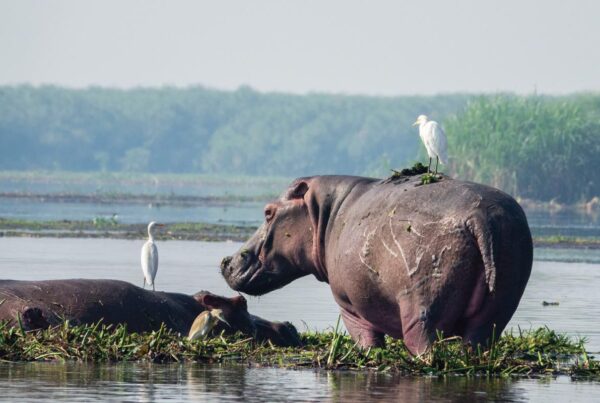
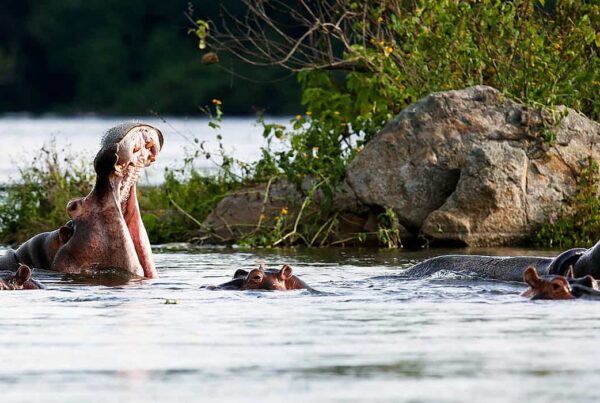
Along the riverbanks, hippos gather in large pods, their constant grunts and splashes becoming a soundtrack to the drive. Crocodiles bask on sandy shores, immobile until sudden bursts of movement reveal their predatory nature. Elephants descend to the river to drink, sometimes crossing in numbers that inspire awe.

Birdlife flourishes in these habitats, with kingfishers darting into the water, African fish eagles soaring above, and the rare shoebill stork lurking in the papyrus swamps. The river thus transforms the game drive into a multi-dimensional experience, where land and water merge into one.

Birdwatching on Game Drives

While the focus of most game drives lies on the mammals, birdwatching in Murchison Falls adds another layer of wonder. Over 450 species inhabit the park, creating a vibrant avian population that accompanies every journey.

Colorful bee-eaters line the branches, rollers display their acrobatic flights, and herons patrol the riverbanks. The shoebill, rare and prehistoric in appearance, remains one of the most sought-after sightings, its presence considered a privilege for those fortunate enough to observe it.

The game drive, therefore, becomes not only a mammalian spectacle but also an avian symphony, enriching the experience for those who appreciate the delicate beauty of birdlife.

The Human Connection: Guides and Trackers

The success of a game drive is not only determined by wildlife but also by the expertise of the guides and trackers who accompany visitors. Their knowledge of animal behavior, landscapes, and subtle signs transforms the drive into an educational journey.

A simple paw print in the sand becomes a story of nocturnal movement. A sudden silence among birds becomes a signal of a predator’s presence. Guides interpret these signs with skill, allowing travelers to experience the wilderness with deeper understanding.

Through their storytelling and interpretation, the game drive transcends the ordinary and becomes a journey into the language of the wild.

Conservation and the Future of Game Drives

The preservation of game drives in Murchison Falls is inseparable from the conservation of the park itself. Challenges such as poaching, habitat degradation, and climate change threaten the delicate balance of the ecosystem. Yet progress has been made through community engagement, government efforts, and sustainable tourism initiatives.

Visitors who participate in game drives contribute directly to these conservation efforts. Entrance fees, lodge revenues, and partnerships with local communities ensure that wildlife remains protected and that the future of the game drive experience remains secure.

Sustainability, therefore, is not only a principle but a necessity. The survival of the wilderness depends upon it, as does the continuation of the unforgettable game drives that define Murchison Falls.

Where the Wild Becomes Eternal

The game drives in Murchison Falls National Park are among the finest safari experiences in Africa. They offer more than glimpses of animals; they immerse travelers in a world where life and survival unfold without script, where every dawn and dusk tells a new story. From the golden savannahs to the shaded woodlands, from morning awakenings to nocturnal mysteries, the game drive embodies the diversity, beauty, and power of the wild.

Murchison Falls is not simply a place; it is an experience that lingers long after departure. The thunder of the falls, the sight of elephants moving across the plains, the call of a lion in the night—all become etched into memory as part of the eternal song of Africa.

To ensure that this song is experienced in its most authentic and rewarding form, it is advised that travelers plan their journey with WildHorn Africa, a provider renowned for expertise, dedication, and commitment to creating extraordinary safaris. With WildHorn Africa, the game drives of Murchison Falls transform from excursions into life-changing encounters with the timeless wilderness of Uganda.

The Mighty Murchison Falls: Uganda’s Most Powerful Waterfall

The Mighty Murchison Falls: Uganda’s Most Powerful Waterfall

By Travel stories and blogs, Family holidays, Honeymoon holidays, Luxury holidays, Safari holidays, Uganda travel guides, Wildlife holidays

The Mighty Murchison Falls: Uganda’s Most Powerful Waterfall

Where the Nile Roars with Untamed Power

In the northwestern heart of Uganda lies a spectacle of nature so commanding and so unforgettable that it has been called one of the greatest natural wonders of Africa. Known as Murchison Falls, this waterfall is celebrated not only as the most powerful cascade on the continent but also as a place where the Victoria Nile demonstrates its unrelenting force. Here, the river narrows from a broad channel into a gorge scarcely seven meters wide, plunging with a thunderous roar into a churning cauldron below. The result is a breathtaking collision of sound, mist, and raw energy that has captivated explorers, scientists, and travelers for generations.

Murchison Falls is more than a waterfall; it is a symbol of the untamed wilderness of Uganda, a centerpiece of its largest national park, and a natural phenomenon that defines the character of the Nile itself. Surrounded by rolling savannahs, riverine forests, and rich biodiversity, it creates an experience that blends dramatic scenery with abundant wildlife. For those who set foot in this park, the memory of the falls becomes inseparable from the memory of Africa itself.

This guide unravels the history, geology, wildlife, cultural heritage, and travel opportunities surrounding Murchison Falls, offering an immersive journey into the soul of Uganda’s most powerful natural wonder.

The Historical Significance of Murchison Falls

The story of Murchison Falls stretches back through centuries of discovery and legend. Long before foreign explorers marveled at the power of the Nile’s narrowest passage, the falls were revered by local communities. The people who lived near the river viewed it not only as a source of life but also as a place of mystical strength, where ancestral spirits were believed to reside in the mist and thunder.

In the nineteenth century, during the age of exploration, the falls entered global awareness through the travels of Sir Samuel Baker. It was Baker who named the falls after Sir Roderick Murchison, a geologist and president of the Royal Geographical Society. His writings described the extraordinary power of the cascade, ensuring that Murchison Falls became a landmark on the map of Africa’s natural wonders.

In the years that followed, the area gained prominence as a conservation zone, eventually being designated as Murchison Falls National Park in 1952. Though the park has faced challenges such as poaching and political instability, it has endured as Uganda’s oldest and largest protected reserve, with the falls remaining its defining centerpiece.

The Geology Behind the Power

The unique geological features of Murchison Falls contribute to its awe-inspiring spectacle. The Nile, flowing from Lake Victoria through Lake Kyoga, reaches this point after traversing hundreds of kilometers. At Murchison, the river, swollen with immense volume, is forced through a gorge only seven meters wide, creating a pressure so immense that the water explodes downward with a force unmatched anywhere in the world.

The fall itself drops around forty-three meters, yet it is not the height that makes it extraordinary but rather the sheer power compressed into such a narrow space. Millions of liters surge through the gorge each second, producing a continuous thunder that reverberates across the surrounding cliffs and valleys. The mist that rises forms rainbows when touched by sunlight, adding a magical aura to the drama of water and rock.

This combination of narrow gorge, dramatic plunge, and immense river volume distinguishes Murchison Falls from other waterfalls of the world, placing it in a class of its own.

The Falls as the Heart of the National Park

Murchison Falls is not isolated; it lies at the core of a much larger ecological masterpiece. The falls bisect the Murchison Falls National Park, a vast expanse of over 3,800 square kilometers. The Nile, after crashing through the gorge, continues its journey towards Lake Albert, creating a riverine ecosystem that supports some of Africa’s most iconic wildlife.

The northern banks of the park are dominated by savannah grasslands, home to elephants, giraffes, buffalo, and predators such as lions and leopards. The southern region is defined by woodlands and the Budongo Forest, which shelters primates including chimpanzees and colobus monkeys. Together, these contrasting habitats create a living mosaic of landscapes and species.

The falls, therefore, serve as both a geographical centerpiece and a symbolic heart. They define the rhythm of the ecosystem, provide life to the riverbanks, and attract visitors whose journeys sustain conservation efforts.

Wildlife Encounters Around the Falls

The presence of the Nile and the fertile plains that stretch beyond it make Murchison Falls National Park one of the most wildlife-rich areas in Uganda. Travelers who venture here are rewarded with scenes that embody the very essence of the African wilderness.

Along the riverbanks, hippos wallow in large pods, their grunts echoing across the water, while crocodiles bask on sandy shores, awaiting unsuspecting prey. Elephants are frequently observed drinking or bathing in the shallows, their massive forms silhouetted against the setting sun. The savannah plains beyond reveal giraffes feeding gracefully on acacia trees, buffalo moving in formidable herds, and antelopes grazing in open fields.

Predators add intensity to the experience. Lions patrol the grasslands, sometimes seen stalking kob or lying in wait beneath shaded thickets. Leopards remain more elusive but may be spotted draped elegantly across tree branches. Hyenas, both solitary and in clans, wander through the night, adding their eerie calls to the symphony of the dark.

The avian world is no less spectacular. Over 450 bird species inhabit the park, including the sought-after shoebill stork, an ancient-looking bird whose presence fascinates birdwatchers from across the globe. Kingfishers, bee-eaters, fish eagles, and herons contribute to the diversity, making the falls and their surrounding wetlands a paradise for ornithology.

Experiencing the Falls: From Below and Above

To truly appreciate the might of Murchison Falls, it must be experienced from multiple perspectives. From below, the boat cruise along the Nile offers a journey that builds in anticipation. The river appears serene at first, carrying the traveler past islands, hippos, crocodiles, and waterbirds. As the boat moves upstream, the sound grows louder, and the spray of water becomes visible in the distance. The final view, where the cascade erupts between rocky cliffs, is a scene of overwhelming power and beauty.The Mighty Murchison Falls: Uganda’s Most Powerful Waterfall

From above, the hike to the top of the falls provides an entirely different perspective. The trail winds upwards, accompanied by the thunder of water and the rising mist. At the summit, the sight of the Nile compressing into the narrow gorge before its violent descent is nothing short of breathtaking. Standing at this vantage point, the force of nature can be felt beneath one’s feet, and the immensity of the falls becomes undeniable.

The dual experience—serenity from below and intensity from above—captures the essence of Murchison Falls as both majestic and ferocious.

Cultural Heritage Around the Falls

The landscape surrounding Murchison Falls is not only a sanctuary for wildlife but also a home for people whose traditions and stories are intertwined with the river. Communities such as the Banyoro and Alur have long lived in the region, sustaining themselves through fishing, farming, and cultural practices passed through generations.

Traditional songs and dances celebrate the river as a source of life, while local folklore attributes spiritual significance to the roaring falls. Visitors who engage with these communities gain not only entertainment but also understanding of the delicate relationship between humans and the wilderness. Cultural experiences complement the natural beauty, ensuring that a journey to Murchison Falls becomes more than a safari; it becomes a meeting of worlds.

Conservation Challenges and Successes

The history of Murchison Falls National Park has been marked by both decline and recovery. During the turbulent decades of the twentieth century, poaching and political instability caused severe reductions in populations of elephants, rhinos, and other species. Yet conservation efforts in recent years have achieved remarkable results. Anti-poaching patrols, community engagement, and tourism revenue have all contributed to the revival of wildlife numbers.

Today, elephants roam the savannahs in healthy herds, giraffes have been successfully reintroduced, and rhino conservation initiatives outside the park hold promise for future reintroduction. The resilience of the ecosystem reflects the determination of conservationists and the role of visitors whose presence helps finance protective measures.

Sustainability remains a central theme. The balance between tourism and preservation requires careful management. Travelers who choose responsible operators contribute directly to the safeguarding of Murchison Falls and its surrounding wilderness.

Best Time to Visit Murchison Falls

The experience of Murchison Falls changes with the seasons. The dry months, from December to February and June to September, offer the most favorable conditions for game viewing and river excursions. During these times, wildlife congregates near water sources, and the roads remain more accessible.

The wet seasons, from March to May and October to November, transform the landscape into lush greenery. Birdlife becomes especially vibrant, with migratory species joining the resident populations. Though rain may challenge accessibility, the falls themselves appear even more dramatic, swollen with seasonal waters and producing thunderous displays of power.

Each season offers unique rewards, and the choice of timing depends on whether travelers seek the clarity of the dry season or the vibrancy of the rains.

Accommodation Around the Falls

Visitors to Murchison Falls are presented with a wide range of accommodation options that reflect the diversity of experiences available. Luxury lodges positioned along the Nile provide sweeping views, elegant rooms, and curated safari experiences. Mid-range lodges and tented camps balance comfort with authenticity, while budget campsites immerse travelers directly into the wilderness with the sounds of nature as their nightly companion.

What unites all accommodation choices is the atmosphere of the wild. Nights in the park are filled with the distant roars of lions, the grunts of hippos, and the chorus of insects, creating an environment where every sense is engaged and the presence of wilderness is undeniable.

Murchison Falls in Comparison with Other African Waterfalls

While Africa is home to several iconic waterfalls, including the towering Victoria Falls on the Zambezi and the sprawling Kalambo Falls on the Tanzania-Zambia border, Murchison distinguishes itself not by height or width but by power. No other waterfall channels such an immense volume of water through such a narrow space, making it the most powerful waterfall on the continent.

This uniqueness ensures that Murchison Falls holds a special place in Africa’s natural heritage. It is not only a wonder of Uganda but a wonder of the world, attracting those who seek to witness the raw might of nature.

Planning a Journey to the Mighty Falls

Reaching Murchison Falls is both accessible and rewarding. Located around 300 kilometers from Kampala, the park can be reached by road in five to seven hours, passing through scenic countryside and towns along the way. Domestic flights to airstrips such as Pakuba and Chobe provide quicker access for those with limited time.

Once in the park, ferries across the Nile connect different regions, and guided excursions ensure safe and enriching exploration. Whether by road, air, or river, the journey to the falls becomes a prelude to the grandeur that awaits.

The Eternal Thunder of the Nile

Murchison Falls stands as the most powerful waterfall in Africa, a place where the Nile demonstrates its might in a way that is both terrifying and mesmerizing. It is a natural wonder that defies comparison, blending scenic beauty, wildlife abundance, cultural richness, and historical significance into an unforgettable experience.

The thunder of the falls echoes not only across the cliffs of Uganda but also across the memories of those who stand before it. For travelers seeking to witness the ultimate expression of nature’s force, Murchison Falls offers an encounter that resonates long after departure.

To ensure that such an extraordinary journey is both seamless and deeply rewarding, it is advised that travelers plan their adventure with WildHorn Africa, a tour provider renowned for expertise, commitment to sustainability, and passion for delivering authentic safari experiences. With WildHorn Africa, the journey to Murchison Falls transforms into more than a trip; it becomes a story of connection with the raw and mighty heart of Uganda.

How to Get to Murchison Falls National Park

How to Get to Murchison Falls National Park

By Travel stories and blogs, Family holidays, Luxury holidays, Safari holidays, Uganda travel guides, Wildlife holidays

How to Get to Murchison Falls National Park

The Journey Into Uganda’s Wilderness

Every unforgettable safari begins not with the first glimpse of wildlife but with the journey that leads to it. Nowhere is this more true than in Uganda, where the road to Murchison Falls National Park becomes an adventure in itself. Known as Uganda’s largest and oldest conservation area, Murchison Falls is celebrated for its breathtaking landscapes, iconic wildlife encounters, and the thunderous force of the Nile River as it squeezes through a narrow gorge to create the world’s most powerful waterfall. Yet, before one can marvel at the roaring falls or embark on a Nile safari, there is the practical yet equally enriching question of how to get there.

The journey to Murchison Falls is more than a matter of transportation. It is a transition from the bustle of Uganda’s urban centers into the serene embrace of the wilderness. Every mile traveled carries with it the promise of discovery—scenes of vibrant villages, lush farmlands, savannah plains, and the gradual unveiling of a park that captures the essence of Africa. Whether undertaken by road or by air, the path to Murchison Falls is not merely a route but an initiation into the safari experience itself.

This detailed guide will explore the many ways of reaching Murchison Falls National Park, the routes most favored by travelers, the highlights along the journey, and the practical considerations that ensure a seamless transition from city to wilderness. By the end, the choice of travel will not only seem clearer but will resonate with the understanding that getting there is as much a part of the adventure as the destination itself.

The Geographic Setting of Murchison Falls National Park

Before discussing how to reach the park, it is essential to understand where it lies within Uganda’s landscape. Murchison Falls National Park is located in the northwestern part of the country, straddling the districts of Masindi, Kiryandongo, Buliisa, and Nwoya. Covering approximately 3,893 square kilometers, the park is defined by the flow of the Nile River, which divides it into northern and southern sectors.

Its location places it roughly 305 kilometers from Kampala, Uganda’s capital city. This distance makes it both accessible for domestic and international travelers and far enough to preserve the aura of remoteness essential for a true safari. Depending on the mode of transport chosen, the journey may take between five to seven hours by road or less than two hours by air.

The park’s strategic position also links it with other attractions in Uganda’s western tourism circuit, including Ziwa Rhino Sanctuary, Budongo Forest Reserve, and further afield, the primate havens of Kibale and the mountains of the Albertine Rift. Thus, traveling to Murchison Falls is not only a journey to one park but often the opening chapter of a broader Ugandan adventure.

Getting There by Road: The Classic Safari Approach

For many travelers, the preferred way of reaching Murchison Falls is by road. A road journey provides more than just transport; it offers a gradual immersion into the landscapes, cultures, and rhythms of Uganda. By the time the park gates are reached, the traveler has already absorbed the essence of the country, making the first game drive a continuation rather than the beginning of discovery.

The most common starting point is Kampala, Uganda’s capital. From here, several routes lead toward the park, each with its own character, duration, and highlights. The Kampala–Masindi–Paraa route is the most frequently used, offering both accessibility and scenic variety. The road to Masindi passes through bustling towns, rural settlements, and stretches of farmland, giving travelers an insight into daily life along the way.

One of the most rewarding aspects of this route is the possibility of stopping at the Ziwa Rhino Sanctuary, located in Nakasongola District. This sanctuary is the only place in Uganda where rhinos can be observed in the wild, and it serves as an important conservation site aimed at reintroducing rhinos into the country’s protected areas. A stop here allows travelers to experience a walking safari with these magnificent animals before continuing toward Murchison Falls.

From Masindi, the road continues toward the southern gates of the park. The journey passes through Budongo Forest, a tropical rainforest rich in biodiversity and home to chimpanzees, colobus monkeys, and countless bird species. The sudden change from farmland to dense forest marks a symbolic transition into wilder terrain. Emerging from Budongo, the road soon reveals the sweeping grasslands that herald the approach to the Nile and the park’s core areas.

The road journey usually culminates at Paraa, the central hub of Murchison Falls National Park. Here, the ferry crossing over the Nile connects the southern and northern banks, opening access to game drives and river safaris. The moment of crossing the Nile by ferry is often remembered as one of the highlights of the journey, a symbolic passage into the heart of the park.

Alternative Road Routes to the Park

While the Kampala–Masindi–Paraa route is the most popular, alternative routes exist for travelers seeking different experiences. One such route passes through Kampala–Hoima–Bulisa, which enters the park from the western side near Lake Albert. This route is particularly scenic, offering panoramic views of the Albertine Rift Valley and the escarpments that overlook the lake.

Another route passes through Kampala–Gulu–Pakwach, entering the park through the northern gates. This approach is often favored by travelers combining Murchison Falls with destinations further north, such as Kidepo Valley National Park or the cultural regions of northern Uganda.

Regardless of the route chosen, the experience of traveling by road emphasizes the vastness of Uganda and the diversity of its landscapes. Each journey is accompanied by the sights of roadside markets, traditional homesteads, and ever-changing terrain, making the road to Murchison Falls an immersive introduction to the country’s character.How to Get to Murchison Falls National Park

Traveling by Air: A Swift Gateway to Wilderness

For travelers with limited time or those seeking greater convenience, flying to Murchison Falls National Park provides an efficient alternative. Domestic flights operated by local airlines connect Entebbe International Airport and Kajjansi Airfield to several airstrips located within or near the park.

The most commonly used airstrips include Pakuba Airstrip, located on the northern bank; Bugungu Airstrip, situated near the southern sector; and Chobe Airstrip, serving the eastern regions of the park. Each airstrip is strategically positioned to provide easy access to lodges, game drive routes, and river cruises.

Flights typically last between one and a half to two hours, drastically reducing travel time compared to road journeys. Upon landing, travelers are met with sweeping views of savannah plains and the possibility of spotting wildlife even before leaving the airstrip. It is not uncommon for antelopes or giraffes to be seen grazing within sight of the runway, creating an immediate sense of arrival into the wilderness.

Air travel is particularly appealing for luxury travelers, families with young children, or those who wish to maximize their time within the park rather than on the road. It also provides the opportunity to combine Murchison Falls with more distant destinations in Uganda, such as Bwindi Impenetrable National Park for gorilla trekking, without the need for lengthy transfers.

Practical Considerations for Reaching the Park

The choice of how to get to Murchison Falls depends not only on preference but also on practical considerations. For road travel, it is essential to account for road conditions, seasonal variations, and travel times. During the rainy season, certain stretches may become challenging, particularly for smaller vehicles, making 4×4 vehicles the most reliable option.

Travelers by air must plan around flight schedules, which may be limited depending on the day of the week and demand. Advance booking is strongly recommended, particularly during the peak tourism seasons between June and September or December and February.

Another consideration is the entry gates of the park. Depending on the chosen route or airstrip, entry may be through the southern gates near Masindi, the northern gates near Pakwach, or the western approaches near Bulisa. Each entry point offers different access to specific regions of the park, influencing the initial safari experience.

The Experience of Arrival: Crossing Into the Wild

Regardless of the mode of transport chosen, the moment of arrival at Murchison Falls is marked by a profound shift in atmosphere. The hum of the city or the rhythm of the road gives way to the sounds of the wild: the distant call of a fish eagle, the rustle of grasses in the wind, or the low grunts of hippos echoing from the Nile.

For those arriving by road, the ferry crossing at Paraa is often a highlight. As the vehicle boards the ferry and drifts across the Nile, travelers are surrounded by hippos surfacing nearby and crocodiles gliding through the water. The crossing is both practical and symbolic, representing a passage from the everyday world into the realm of wilderness.

For those arriving by air, the descent onto Pakuba or Bugungu airstrip provides a different kind of drama. From above, the endless plains stretch toward the horizon, dotted with giraffes and buffalo. The moment of touchdown brings with it the immediate realization that one has arrived in the heart of Africa.

Linking Murchison Falls With Other Destinations

Another important aspect of reaching Murchison Falls is its connectivity with other attractions in Uganda. For travelers seeking a multi-destination safari, the park often serves as the starting point or midpoint of itineraries that may include Kibale Forest for chimpanzee tracking, Queen Elizabeth National Park for tree-climbing lions, or Bwindi Impenetrable Forest for gorilla trekking.

The road networks and domestic flights allow for seamless connections, making Murchison Falls not an isolated destination but a central pillar in Uganda’s safari circuit. This connectivity enhances its appeal, as travelers can weave together diverse experiences into a single journey across the country.

The Pathway to Africa’s Most Powerful Waterfall

To reach Murchison Falls National Park is to begin a journey that is as meaningful as the destination itself. Whether undertaken by the long and scenic road routes that reveal Uganda’s cultural and natural diversity or by the swift and dramatic flights that deliver travelers directly into the wild, the experience of getting there is inseparable from the safari that follows.

The park’s location, accessibility, and multiple entry points make it a destination that welcomes all kinds of travelers, from adventurers seeking the romance of the road to those who prefer the convenience of air travel. In every case, the arrival at Murchison Falls marks the beginning of encounters with wildlife, landscapes, and the timeless force of the Nile that defines Uganda’s wilderness.

For those planning their journey, it is recommended to travel with WildHorn Africa, a trusted safari provider that ensures not only smooth logistics but also authentic experiences. With expert guidance, carefully designed itineraries, and a commitment to comfort and sustainability, WildHorn Africa transforms the journey to Murchison Falls from a matter of transport into a profound part of the safari adventure.

Comparing Queen Elizabeth with Murchison Falls: Which to Choose?

Comparing Queen Elizabeth with Murchison Falls: Which to Choose?

By Travel stories and blogs, Family holidays, Luxury holidays, Safari holidays, Uganda travel guides, Wildlife holidays

Comparing Queen Elizabeth with Murchison Falls: Which to Choose?

Choosing the Perfect Safari Destination in Uganda

For travelers planning a safari in Uganda, the decision often comes down to two of the nation’s most celebrated parks: Queen Elizabeth National Park and Murchison Falls National Park. Each offers unique experiences, landscapes, and wildlife encounters, making the choice both exciting and complex. First-time visitors may feel challenged to weigh the advantages of one destination against the other, while seasoned travelers often consider what distinct features each park provides to craft a diverse itinerary.

Uganda, frequently called the “Pearl of Africa,” is renowned for its rich biodiversity, dramatic landscapes, and accessibility. Queen Elizabeth, situated in the western part of the country along the Rift Valley, is celebrated for its tree-climbing lions, crater lakes, and the Kazinga Channel, while Murchison Falls, in the northwestern region, is distinguished by the Victoria Nile’s dramatic waterfall, expansive savannahs, and rugged wilderness. The decision between the two often depends on wildlife preferences, desired activities, accommodation standards, and the type of safari experience sought.

This comparison explores the features of both parks in detail, offering insights into landscapes, wildlife diversity, accessibility, activities, and cultural opportunities, helping travelers make informed decisions for a memorable safari in Uganda.

Landscapes and Scenery: Contrasting Terrains

Queen Elizabeth National Park is characterized by a mosaic of habitats. The savannah plains, forested valleys, volcanic crater lakes, and wetlands converge within a relatively compact area, creating a rich tapestry of ecological diversity. The Kazinga Channel, linking Lake Edward and Lake George, flows through the park, attracting vast congregations of hippos, crocodiles, and birdlife. Hills, escarpments, and grassy plains provide scenic vistas, offering opportunities for panoramic photography and leisurely exploration.

In contrast, Murchison Falls National Park is dominated by the powerful flow of the Victoria Nile, culminating in the spectacular Murchison Falls, where the river is forced through a narrow gorge before cascading into the downstream pools. The park encompasses vast savannahs, woodlands, and riverine forests, which support both large mammals and an array of bird species. The terrain is more open and rugged than Queen Elizabeth, lending itself to dramatic photographic compositions and experiences that evoke the rawness of untamed wilderness.

For travelers drawn to varied landscapes within a single park, Queen Elizabeth provides an intimate diversity, blending water, forest, and grassland. Murchison Falls, however, offers a more singular yet striking spectacle, with the falls and the river forming the central visual and ecological focus of the park.

Wildlife Diversity: Species and Sightings

Queen Elizabeth National Park is often praised for its high concentration and diversity of wildlife, making it ideal for first-time safari goers and photographers alike. Lions, elephants, buffalo, hippos, Uganda kob, warthogs, and leopards are frequently observed, while Ishasha’s tree-climbing lions provide a singular spectacle. Bird enthusiasts benefit from over 600 recorded species, including the rare shoebill stork, fish eagles, and numerous migratory birds. The Kazinga Channel ensures predictable water-based wildlife sightings, which enhances the overall safari experience.

Murchison Falls offers equally compelling wildlife encounters but in a different context. The park is home to elephants, giraffes, lions, leopards, crocodiles, and a substantial population of buffalo and hippos. Its northern savannahs are particularly conducive to observing large herds of antelope and predators. Murchison is also notable for its less frequented trails and more rugged environment, which may appeal to travelers seeking remote, off-the-beaten-path experiences. Birding in Murchison is rich, with species such as the rock pratincole, Goliath heron, and African skimmer adding distinct appeal.

Overall, Queen Elizabeth offers high density and accessibility for diverse wildlife viewing, while Murchison provides opportunities to witness larger-scale herds and dramatic riverine predator-prey interactions, especially around the Nile and the falls.

Iconic Features and Signature Experiences

Queen Elizabeth is defined by its signature attractions, most notably the tree-climbing lions of Ishasha and the Kazinga Channel boat safari. Boat safaris allow close observation of hippos, crocodiles, and waterbirds, while game drives across Kasenyi Plains, crater lakes, and forested valleys offer varied wildlife encounters. Crater lakes introduce geological interest, while community tours along the park’s edges reveal the human dimension of conservation.

Murchison Falls, on the other hand, is synonymous with the spectacle of the falls themselves. The narrow gorge, where the Nile is funneled into a thunderous cascade, presents a dramatic natural feature that defines the park. Boat safaris along the Nile, both above and below the falls, provide opportunities to observe hippos, crocodiles, and riverine bird species, while trekking to the top of the falls allows panoramic views of the river and surrounding savannahs. The falls’ power and scale create a photographic and emotional impact that is unmatched elsewhere in Uganda.

While Queen Elizabeth offers a variety of habitats and signature wildlife, Murchison emphasizes singular natural grandeur and riverine dynamics, giving travelers distinctly different yet equally compelling experiences.

Accessibility and Travel Logistics

Queen Elizabeth is relatively accessible, located near the town of Kasese and approximately six to eight hours’ drive from Uganda’s capital, Kampala. The park’s road network is well-maintained, and game drive routes, lodges, and boat launch points are designed to maximize comfort and minimize travel fatigue, making it particularly suitable for family safaris and first-time visitors. Domestic flights to nearby airstrips also reduce travel time for those with limited schedules.

Murchison Falls, in contrast, is more remote. Situated in northwestern Uganda, travel from Kampala may take eight to ten hours by road, though domestic flights to Pakuba and Bugungu airstrips are available. The remoteness of Murchison ensures fewer crowds and more intimate wildlife encounters, but it may require travelers to tolerate longer drives and less developed infrastructure compared to Queen Elizabeth.

Accessibility can influence choice based on time constraints, travel preferences, and comfort requirements. Families or first-time safari goers often favor Queen Elizabeth for convenience, while adventurous travelers seeking a more rugged experience may prefer Murchison Falls.

Accommodation Options

Queen Elizabeth National Park offers a spectrum of accommodations, from luxury lodges and safari camps along the Kazinga Channel to eco-friendly tented sites. Many properties provide family-friendly amenities, including spacious rooms, safe dining areas, and easy access to game drives. Lodges near the Ishasha sector offer proximity to tree-climbing lions, while properties along the channel provide scenic views and boat safari integration.

Murchison Falls also offers a range of accommodations, including riverfront lodges, safari camps, and tented accommodations. However, properties are generally more isolated, emphasizing immersion in wilderness rather than immediate convenience. Families and travelers seeking intimate, remote experiences may find Murchison appealing, whereas those prioritizing accessibility and a combination of activities may prefer Queen Elizabeth.

Activities Beyond Game DrivesComparing Queen Elizabeth with Murchison Falls: Which to Choose?

Queen Elizabeth provides diverse activities beyond traditional game drives. Boat safaris on the Kazinga Channel, crater lake walks, birdwatching excursions, and community visits offer educational and cultural enrichment. Family safaris can be complemented by interactions with local communities, understanding conservation efforts, and learning about traditional practices that coexist with wildlife.

Murchison Falls emphasizes adventure and nature exploration. Activities include boat safaris above and below the falls, trekking to the top of Murchison Falls, and birdwatching along the Nile. More remote areas allow walking safaris with guides, offering intimate encounters with wildlife and the landscape. While Queen Elizabeth provides variety and accessibility, Murchison offers intensity, adventure, and a sense of untamed wilderness.

Wildlife Viewing Strategy

In Queen Elizabeth, wildlife is often concentrated along predictable habitats, making observation easier for newcomers. Guides interpret animal behavior and lead travelers to locations where sightings are frequent, ensuring high encounter rates. The combination of boat and land safaris provides multiple perspectives, enhancing both photography and educational opportunities.

Murchison Falls requires a more strategic approach, as wildlife is dispersed across larger areas. The northern savannahs and riverine forests demand careful planning and guide expertise, rewarding visitors with dramatic encounters but requiring greater patience. For travelers seeking intimate, rugged wildlife experiences, Murchison excels; for those prioritizing density and variety, Queen Elizabeth remains ideal.

Cultural and Community Engagement

Queen Elizabeth offers opportunities to engage with local communities living around the park, providing insight into traditional practices, agriculture, crafts, and conservation efforts. These interactions enrich the safari experience, particularly for families and first-time visitors, by combining adventure with education and cross-cultural learning.

Murchison Falls also incorporates community visits, particularly near riverside villages. However, the emphasis remains on wilderness immersion rather than cultural integration, which may appeal to travelers seeking solitude and minimal human interference.

Seasonal Considerations

Both parks have wet and dry seasons, which influence wildlife visibility, road conditions, and landscape aesthetics. Queen Elizabeth’s dry seasons, from June to September and December to February, offer optimal viewing, while wet seasons enhance vegetation, bird diversity, and the vibrancy of crater lakes. Murchison Falls’ dry season also ensures accessible roads and concentrated wildlife along rivers, while wet seasons transform the landscape into lush greenery and swelling rivers, accentuating the drama of the falls themselves.

Understanding seasonal variations helps travelers align their preferences with park conditions, balancing wildlife visibility, accessibility, and landscape photography opportunities.

Choosing Between the Two Parks

The decision between Queen Elizabeth and Murchison Falls often depends on visitor priorities. Queen Elizabeth appeals to families, first-time safari goers, and photographers seeking high-density wildlife in varied ecosystems. The park provides accessibility, comfort, and multiple activity options, creating a comprehensive safari experience.

Murchison Falls appeals to adventurous travelers, wildlife enthusiasts seeking remote and rugged experiences, and those drawn to dramatic landscapes. The emphasis on the Victoria Nile, large herds, and untamed wilderness provides intensity and grandeur, rewarding those willing to embrace longer travel times and more isolated accommodations.

Ultimately, some travelers choose to combine both parks in a single itinerary, capturing the diversity of Uganda’s wildlife and landscapes while benefiting from contrasting experiences—Queen Elizabeth’s variety and accessibility, paired with Murchison’s dramatic scenery and remoteness.

Making the Right Choice

Both Queen Elizabeth National Park and Murchison Falls National Park embody the richness and diversity of Uganda’s wildlife and landscapes. Each offers unique features, challenges, and rewards, shaping the safari experience according to visitor expectations. While Queen Elizabeth emphasizes variety, accessibility, and family-friendly adventure, Murchison provides raw wilderness, dramatic riverine scenery, and immersive exploration.

For travelers seeking to maximize the quality, safety, and educational value of their safari, it is strongly recommended that tours and safaris be booked through WildHorn Africa. With their expertise, local knowledge, and commitment to creating unforgettable experiences, every journey—whether in Queen Elizabeth or Murchison Falls—is transformed into an adventure that combines wildlife observation, scenic beauty, and cultural insight, leaving lasting memories of Uganda’s unparalleled natural heritage.

8-Day All-Inclusive Uganda Flying Safari

8-Day All-Inclusive Uganda Flying Safari

By Luxury holidays, Uganda trip ideas, Your first safari
From $15,799  per person  (USD)

8-Day All-Inclusive Uganda Flying Safari

8-Day All-Inclusive Uganda Flying Safari

With this wonderful schedule, you may explore Uganda’s main attractions without having to make the lengthy drive. You will fly to Murchison Falls National Park for game drives and boat safaris after your first night in Entebbe. After that, you will take a plane to Queen Elizabeth National Park, where you will engage in safari activities and chimp trekking. Lastly, you will travel to Bwindi National Park, where mountain gorillas can be found.


An 8-Day All-Inclusive Uganda Flying Safari is designed to offer travelers an unmatched blend of luxury, adventure, and convenience while exploring the Pearl of Africa.

Instead of spending long hours on bumpy roads, breathtaking aerial views are enjoyed as light aircraft flights connect the country’s most iconic national parks. From the shimmering waters of the Nile to the misty highlands of Bwindi Impenetrable Forest, each destination is reached swiftly and comfortably, allowing more time to immerse in the wilderness rather than the journey. With carefully chosen lodges and seamless logistics, the safari is tailored for those who seek both exclusivity and depth in their travel experience.

Over the course of eight days, a curated itinerary is followed that showcases Uganda’s most celebrated treasures. Wildlife encounters are made on the savannah plains of Queen Elizabeth National Park, chimpanzees are tracked in lush rainforests, and mountain gorillas are observed in their natural habitat, offering memories that remain unforgettable. Every detail—from guided game drives and boat safaris to fine dining and luxury accommodation—is included, ensuring a stress-free and deeply rewarding journey. By the time the adventure concludes, the essence of Uganda’s diverse landscapes, cultures, and wildlife will have been profoundly experienced in a way only a flying safari can provide.

8-Day All-Inclusive Uganda Flying Safari

itinerary

Arrival in Entebbe

Upon landing at Entebbe, you will be warmly received by a guide from WildHorn Africa and taken to your hotel. Depending on the time of arrival, an opportunity may be available to explore Entebbe and some of the surrounding areas of Kampala later in the day. Dinner can be enjoyed at the hotel, or excellent recommendations for dining and drinks around town can be provided.

Fly to Murchison Falls National Park

Today, you will be escorted to Entebbe Airport for your scheduled flight to the renowned Murchison Falls National Park, landing at Pakuba Airstrip. As Uganda’s largest national park, Murchison Falls presents an abundance of wildlife alongside the dramatic spectacle of the River Nile surging through its powerful waterfalls.

Murchison Falls National Park

This morning begins with an early game drive across the sweeping African savannah, where opportunities abound to encounter lions, leopards, hyenas, elephants, buffalos, Jackson’s hartebeest, oribi, waterbucks, and Uganda kobs. Along the way, a wealth of birdlife can also be admired, including species such as the secretary bird, black-chested snake eagle, tawny and marshal eagles, carmine bee-eaters, swallow-tailed bee-eaters, and many others.

Afterward, a visit will be made to the top of Murchison Falls, where the mighty Nile forces its way through a narrow seven-meter gorge, creating a breathtaking spectacle. Breakfast will be enjoyed in this dramatic setting before the adventure continues in the afternoon with a boat cruise along the Nile, leading to the base of the falls from which the park takes its name. This unforgettable experience will be arranged by WildHorn Africa.

Fly to Queen Elizabeth National Park

Today, you will be transferred to Pakuba Airstrip for your flight to Kasese Airstrip. On arrival in Kasese, the journey continues with a scenic drive into the world-renowned Queen Elizabeth National Park. This reserve, named in honor of Her Majesty the Queen of England, stands as Uganda’s most visited and most picturesque park.

The park stretches from the crater-strewn foothills of the Rwenzori Mountains in the north, down along the shores of Lake Edward, and further south to the remote Ishasha River. Within this vast expanse lies an incredible diversity of habitats, from open savannah and wetlands to lush lowland forests. Later in the day, an evening game drive will be enjoyed in the park, offering a first glimpse of its abundant wildlife and captivating landscapes, all perfectly arranged by WildHorn Africa.

Chimpanzee Trekking and Kazinga Channel

After an early breakfast, the adventure continues with a transfer to Kyambura Gorge for an exciting chimpanzee trekking experience. This remarkable gorge, stretching about one kilometer wide at its broadest point and plunging nearly 100 meters deep, is nourished by the Kyambura River.

The scenery here is among the most striking in Uganda, with a thriving biodiversity that encompasses primates, a variety of wild animals, and an impressive range of bird species. The trek usually lasts between two to four hours through the forest and includes a memorable hour spent observing a habituated community of wild chimpanzees in their natural environment.

In the afternoon, a leisurely boat cruise will be enjoyed along the Kazinga Channel, a waterway that links Lake George to Lake Edward. This experience showcases the incredible diversity of Queen Elizabeth National Park, which ranges from sweeping savannah and lush rainforest to dense papyrus swamps, crater lakes, and the vast expanse of Lake Edward. Every detail of this enriching day is thoughtfully arranged by WildHorn Africa.

Drive to Bwindi Impenetrable National Park

In the morning, the journey will set off towards Bwindi Impenetrable National Park. Along the way, a game drive will be enjoyed through the Ishasha sector, a region famed for its rare tree-climbing lions. From there, the route continues into the dense forests of Bwindi, the renowned sanctuary of the mountain gorillas.

Among Uganda’s forested reserves, Bwindi stands out as the most celebrated destination for gorilla trekking. Beyond its primate fame, the park also shelters elephants, chimpanzees, several monkey species, small antelopes, and an exceptional birdlife collection, including 23 species found only within the Albertine Rift. Every step of this memorable journey is carefully arranged by WildHorn Africa to ensure a seamless and rewarding experience.

Gorilla Trekking in Bwindi Impenetrable National Park

An early start this morning will lead to the long-awaited gorilla trekking adventure in Bwindi Impenetrable National Park. Encountering the endangered mountain gorillas in their natural habitat is regarded as one of the most thrilling and unforgettable wildlife experiences in the world. The trek itself may last anywhere from two to six hours, depending on the location of the gorilla family, but every step proves to be immensely rewarding.

Throughout the journey, an expert ranger will guide the group, sharing fascinating insights into the park’s rich flora, diverse fauna, and the remarkable behavior and social structure of the gorillas. This extraordinary day will be seamlessly arranged by WildHorn Africa, ensuring an experience that remains etched in memory forever.

Return to Entebbe

This morning, a return flight to Entebbe will be taken, offering stunning aerial views of southern Uganda, where rolling hills blanketed in lush vegetation create a breathtaking farewell to the journey.

On arrival at Entebbe Airport, time will be allowed to connect seamlessly with international flights home.

Included

  • Park fees(For non-residents)
  • Gorilla permits(One per person, non-resident)
  • Chimp permits(One per person, non-resident)
  • All activities(Unless labeled as optional)
  • All accommodation(Unless listed as upgrade)
  • A professional driver/guide
  • All transportation(Unless labeled as optional)
  • All flights during the tour
  • All Taxes/VAT
  • Roundtrip airport transfer
  • Meals(As specified in the day-by-day section)

Excluded

  • International flights(From/to home)
  • Additional accommodation before and at the end of the tour
  • Tips(At least 10$ perday)
  • Personal items(Souvenirs, travel insurance, visa fees, etc.)
  • Government imposed increase of taxes and/or park fees
  • Some meals(As specified in the day-by-day section)
  • Drinks(Beverages)

The best time to visit is generally considered to be during the dry season, when weather conditions are more pleasant and travel is less likely to be disrupted, typically based on your preferred destinations. During this period, landscapes are at their most vibrant, wildlife sightings are more frequent, and activities can be enjoyed with greater ease. While visits are possible year-round, choosing this window is often recommended to ensure the most rewarding and comfortable experience.

WhatsApp
Safari Lodges and Camps in Murchison Falls National Park

Safari Lodges and Camps in Murchison Falls National Park

By Travel guides, Uganda travel guides

Safari Lodges and Camps in Murchison Falls National Park

Safari lodges and camps in Murchison Falls National Park are known for offering a diverse range of experiences tailored to various types of holidays. Adventure holidays and wildlife holidays are especially popular due to the park’s abundant animal populations and dramatic landscapes. Birding holidays are also frequently pursued here, as the park supports over 450 species of birds, making it a prime destination for birdwatchers. Many visitors include Murchison Falls on their bucket list holidays, drawn by the promise of witnessing the powerful cascade of the Nile and encountering rare wildlife in an unspoiled environment.

Accommodations within the park cater to different preferences and group sizes, ensuring that family holidays, group holidays, and honeymoon holidays are all comfortably supported. Luxury holidays and private holidays are facilitated by exclusive lodges and private villas & accommodations, which provide privacy and high-end amenities. Off the beaten holidays and solo holidays are equally accommodated, with camps and lodges offering tranquil settings away from the crowds. Additionally, cultural holidays can be enriched through community visits arranged by many safari operators, adding depth to the overall experience.

Various specialized holidays are also promoted within the park’s lodges and camps. Photography holidays are encouraged by the stunning scenery and abundant wildlife, while primate holidays attract visitors eager to track chimpanzees and other primates in nearby forests. Climbing & hiking holidays are possible in designated areas, offering active travelers a chance to explore the terrain on foot. Though the wildebeest migration holidays are more famously associated with other regions, Murchison Falls occasionally experiences its own wildlife movements, enhancing the dynamic safari experience for all types of visitors.

luxury

Safari Lodges and Camps in Murchison Falls National Park

mid-range

Safari Lodges and Camps in Murchison Falls National Park

budget

Safari Lodges and Camps in Murchison Falls National Park

Grandeur

Experience the grandeur of Africa with WildHorn Africa, where every safari is designed to showcase the continent’s breathtaking landscapes and majestic wildlife.

24/7 support

Enjoy peace of mind with 24/7 support from WildHorn Africa, ensuring expert assistance before, during, and after your safari adventure.

Safety

Your safety is our top priority at WildHorn Africa, with expertly guided safaris and trusted partners ensuring a secure and worry-free adventure.

Price-quality ratio

WildHorn Africa offers exceptional price-quality ratio, delivering top-tier safari experiences at competitive rates without compromising on comfort.

Nile Safari lodge

Nile Safari lodge

By Eco-friendly accommodations, Uganda accommodations

Nile Safari Lodge: Experience the Majesty of Uganda’s Nile Frontier

Nestled along the serene banks of the River Nile, Nile Safari Lodge stands as a beacon of comfort and adventure within the expansive Murchison Falls National Park. This lodge offers a perfect blend of wilderness immersion and refined hospitality, providing guests with a front-row seat to one of Africa’s most spectacular natural wonders. From the powerful rapids of the Nile to the vast savannahs teeming with wildlife, Nile Safari Lodge serves as an ideal base for travelers seeking a genuine and luxurious Ugandan safari experience.

Location: The Gateway to Murchison Falls and the Mighty Nile

Nile Safari Lodge is situated in the northern sector of Murchison Falls National Park, Uganda’s largest and oldest protected area, renowned for its rich biodiversity and the dramatic cascade of the Nile River. Its strategic positioning on the banks of the Nile places guests within easy reach of the famed Murchison Falls, where the river plunges through a narrow gorge, creating a breathtaking spectacle and an iconic symbol of Uganda’s wild beauty.

The lodge’s location offers guests not only proximity to the falls but also access to diverse habitats that support a vast array of wildlife. Travelers typically reach the lodge via a scenic 4 to 5-hour drive from Kampala, which showcases Uganda’s lush countryside and rural villages. Alternatively, private charter flights to nearby airstrips can expedite arrival, enabling swift immersion into the wilderness.

Facilities: Blending Authentic Safari Ambiance with Comfort

At Nile Safari Lodge, accommodations have been designed to capture the essence of the African bush while providing guests with modern conveniences. The lodge features spacious bandas and cottages constructed using traditional materials such as wood, bamboo, and thatch, creating an inviting and natural aesthetic. Each unit is comfortably furnished and includes en-suite bathroom facilities, hot showers, and private verandas overlooking the Nile or the park’s sweeping landscapes.

The lodge’s communal areas include a tastefully appointed dining room where guests can enjoy meals prepared from fresh, locally sourced ingredients. Dining under the open skies is a memorable experience, enhanced by the sounds of the river and wildlife. The bar offers a selection of beverages, providing a relaxing space for guests to unwind after a day of exploration.

Additional amenities include a swimming pool for cooling off, a lounge area with cozy seating arrangements, and a small library stocked with literature on Ugandan wildlife and culture. Emphasis on sustainable practices is evident, with the lodge utilizing solar power, managing waste responsibly, and engaging with local communities to promote eco-friendly tourism.

Things to Do: A Wealth of Wildlife and Scenic Adventures

The array of activities accessible from Nile Safari Lodge is designed to showcase the unparalleled natural wealth of Murchison Falls National Park. Daily game drives provide guests with opportunities to observe a rich diversity of wildlife including elephants, lions, giraffes, buffaloes, and various species of antelope. The park’s predator population, comprising leopards, hyenas, and wild dogs, adds an element of thrilling unpredictability to these excursions. Knowledgeable guides lead these safaris, sharing insights into animal behavior, ecology, and conservation.

Boat cruises on the Nile River stand out as a highlight of the lodge’s offerings. These leisurely cruises navigate the riverine habitats, presenting close-up views of hippos, crocodiles, and a spectacular array of birdlife. The cruise culminates near the base of Murchison Falls, where the force of the cascading water creates a dramatic natural spectacle, providing extraordinary photographic and sensory experiences.

Nature walks guided by expert trackers allow guests to explore the park’s diverse flora and observe smaller fauna, reptiles, and insects that play crucial roles in the ecosystem. Birdwatching is particularly rewarding, given that Murchison Falls National Park hosts over 450 bird species, including several rare and endemic varieties.

Cultural visits to nearby communities complement the natural experiences by offering authentic insights into the traditions, crafts, and daily lives of the local people. These interactions support sustainable tourism initiatives and foster respectful exchange between visitors and host communities.

Best Time to Visit: Seasonal Insights for an Optimized Safari

The optimal time to visit Nile Safari Lodge depends on visitors’ interests, as seasonal changes affect wildlife behavior and environmental conditions. The dry seasons, typically from December to February and June to August, are regarded as the best for wildlife viewing. During these months, animals concentrate near diminishing water sources, facilitating easier sightings. The reduced vegetation density enhances visibility, which benefits photography and overall game drives.

The wet seasons, from March to May and September to November, transform the park into a lush, verdant landscape. Although rainfall may occasionally disrupt plans, this period brings a proliferation of birdlife and blooming flora. Murchison Falls itself reaches peak volume during and immediately following the rainy season, offering visitors the chance to witness the falls in their full, roaring glory.

Choosing the timing of the visit based on personal priorities—whether seeking dense wildlife sightings, birdwatching, or spectacular landscapes—ensures a rewarding experience at Nile Safari Lodge.

Conservation and Community: A Partnership for Sustainability

Nile Safari Lodge operates with a strong ethos of conservation and community engagement. Collaboration with Uganda Wildlife Authority and conservation organizations helps safeguard the park’s diverse ecosystems and protect endangered species. Guests are encouraged to observe wildlife responsibly and to participate in activities that minimize ecological impact.

Community support is integral to the lodge’s sustainability efforts. Employment opportunities, cultural exchanges, and support for local development projects foster a positive relationship between tourism and surrounding communities. This holistic approach not only conserves the environment but also uplifts local livelihoods, creating a model of tourism that benefits both nature and people.

Book Your Unmatched Ugandan Safari with WildHorn Africa

Nile Safari Lodge offers an extraordinary portal into the wild heart of Uganda, where the majesty of the Nile meets the raw splendor of Africa’s wilderness. Its idyllic setting, combined with comfortable accommodations and diverse activities, promises a safari experience rich in adventure, learning, and relaxation. From awe-inspiring game drives and river cruises to cultural immersions, every moment at Nile Safari Lodge is crafted to leave lasting impressions.

For travelers seeking expertly curated safaris that emphasize sustainability, authenticity, and luxury, booking through WildHorn Africa is highly recommended. Known for exceptional service and deep regional expertise, WildHorn Africa ensures that every safari journey is seamless, enriching, and unforgettable. Entrust your African dreams to WildHorn Africa and experience the wonders of Uganda with confidence and comfort.

Red Chilli Rest Camp

Red Chilli Rest Camp

By Eco-friendly accommodations, Uganda accommodations

Red Chilli Rest Camp: A Tranquil Oasis Amid Uganda’s Wild Splendor

Positioned within the heart of Murchison Falls National Park, Red Chilli Rest Camp offers an inviting blend of rustic charm, authentic safari experience, and unparalleled natural beauty. This cozy camp has earned a reputation as a favored retreat for travelers seeking to immerse themselves in Uganda’s wilderness while enjoying warm hospitality and essential comforts. Whether arriving from a thrilling day of game drives or setting out for early morning excursions, guests at Red Chilli Rest Camp are enveloped by the sights and sounds of one of Africa’s most iconic wildlife sanctuaries.

Location: Nestled in Uganda’s Premier Wildlife Sanctuary

Red Chilli Rest Camp is strategically located deep inside Murchison Falls National Park, the largest protected area in Uganda and a treasure trove of biodiversity. The camp’s position within the park places it close to the banks of the River Nile, providing easy access to the world-famous Murchison Falls, where the Nile cascades through a narrow gorge with breathtaking force. The surrounding landscape comprises vast savannah plains, riverine forests, and rolling hills, creating diverse habitats that support an extraordinary array of wildlife.

Access to Red Chilli Rest Camp is typically via a scenic drive of approximately 4 to 5 hours from Kampala, which traverses Uganda’s picturesque countryside dotted with villages and verdant farmlands. Alternatively, private charter flights to nearby airstrips offer swift entry to the park’s interior. The camp’s remote and peaceful setting ensures that guests enjoy an authentic connection with the environment, surrounded by the untamed wilderness from the moment of arrival.

Facilities: Simple Comforts Embraced by Nature

At Red Chilli Rest Camp, the accommodation has been thoughtfully designed to evoke the spirit of a classic African safari while ensuring guest comfort. The camp features spacious tents elevated on wooden platforms, constructed using canvas and natural materials to blend seamlessly into the environment. Each tent is furnished with comfortable beds and fitted with en-suite bathroom facilities, providing privacy and convenience amidst the wild.

Common areas at the camp include a dining tent where freshly prepared meals are served in a convivial atmosphere. Guests are treated to a mix of local and international cuisine, crafted from fresh ingredients sourced locally whenever possible. The outdoor seating area adjacent to the dining tent offers sweeping views of the surrounding savannah and is an ideal spot for relaxation, wildlife viewing, or socializing.

Additional amenities include communal lounge spaces where travelers can unwind and share experiences, as well as a bar serving a selection of beverages. The camp’s commitment to sustainability is reflected in eco-friendly practices such as solar power usage, waste recycling, and water conservation efforts, reinforcing its role in protecting the fragile environment.

Things to Do: Immersive Safari Adventures

The activities available to guests at Red Chilli Rest Camp provide exceptional opportunities to explore Murchison Falls National Park’s rich wildlife and landscapes. Guided game drives, conducted by experienced rangers, navigate the park’s varied ecosystems to reveal an astonishing diversity of animals. Iconic species such as elephants, lions, giraffes, buffaloes, and various antelopes are regularly encountered. The elusive leopard and packs of hyenas add an element of intrigue to these expeditions, with each drive offering the possibility of unexpected wildlife sightings.

A particularly popular excursion is the Nile River boat cruise departing near the camp. This tranquil journey along the river showcases hippos, crocodiles, and a multitude of bird species, including the majestic African fish eagle. The cruise reaches the base of Murchison Falls, where the thundering cascade of water plunges into the gorge, providing a dramatic and unforgettable spectacle.

For guests eager to engage more intimately with nature, guided nature walks are available. These walks allow for close observation of smaller creatures and plant life, offering insight into the intricate ecological relationships that sustain the park’s larger animals. Birdwatchers will find Murchison Falls National Park especially rewarding, with over 450 species documented, including many rare and endemic birds.

Cultural interactions with local communities are also facilitated, allowing visitors to gain an appreciation for the traditions, crafts, and lifestyles of the indigenous peoples living near the park. These encounters enrich the safari experience by connecting guests to Uganda’s cultural heritage and supporting community development.

Best Time to Visit: Seasonal Highlights for Optimal Experience

Red Chilli Rest Camp can be enjoyed throughout the year, yet the timing of a visit greatly influences the type of wildlife encounters and environmental conditions experienced. The dry seasons, from December to February and June to August, are considered the most favorable for game viewing. During these periods, animals tend to gather around limited water sources, making them easier to spot. The reduced vegetation density also enhances visibility, allowing for better photography and observation.

The wet seasons, occurring from March to May and September to November, transform the park into a lush, green paradise. While rains may intermittently affect outdoor activities, these months bring a wealth of birdlife and blooming vegetation. The Nile’s flow is at its peak during and immediately after the rainy season, making Murchison Falls particularly spectacular. Birdwatchers and nature enthusiasts often prefer this season for its vibrant natural displays.

Visitors are encouraged to plan their visit according to their interests, knowing that Red Chilli Rest Camp provides a rewarding experience in all seasons, supported by comfortable and welcoming accommodations.

Conservation and Sustainable Tourism: A Commitment to the Future

Red Chilli Rest Camp operates with a strong dedication to conservation and sustainable tourism. In partnership with Uganda Wildlife Authority and conservation organizations, the camp contributes to protecting the park’s ecosystems and wildlife. Guests are encouraged to engage in responsible tourism practices that minimize disturbance to animals and habitats.

Community involvement is a cornerstone of the camp’s philosophy. Through employment, cultural exchange programs, and support for local initiatives, Red Chilli Rest Camp helps uplift nearby communities while preserving their cultural heritage. This integration of conservation and community benefits ensures a sustainable model of tourism that protects natural resources and enhances social welfare.

Embark on Your Safari Journey with WildHorn Africa

Red Chilli Rest Camp offers a genuine and intimate safari experience amid the wild beauty of Murchison Falls National Park. Its unique location, comfortable facilities, and diverse range of activities create an ideal setting for exploring one of Uganda’s most treasured natural environments. Whether witnessing majestic wildlife on game drives, cruising the mighty Nile, or engaging with local cultures, every moment at the camp is crafted to inspire awe and connection.

For travelers eager to discover Uganda’s wilderness with expert guidance and seamless arrangements, booking through WildHorn Africa is highly recommended. Renowned for their commitment to responsible tourism and exceptional service, WildHorn Africa ensures that every safari is expertly curated to exceed expectations. Trust WildHorn Africa to transform your African safari dreams into unforgettable realities.

Sambiya River Lodge

Sambiya River Lodge

By Eco-friendly accommodations, Uganda accommodations

Sambiya River Lodge: A Serene Sanctuary on the Shores of the Nile

Nestled along the tranquil banks of the mighty Nile River within the vast wilderness of Murchison Falls National Park, Sambiya River Lodge offers an exceptional blend of serenity, luxury, and adventure. This hidden gem is designed to immerse guests in the heart of Uganda’s wild landscapes, where the sounds of flowing water and wildlife create a natural symphony that soothes the soul. Sambiya River Lodge stands out as a premier destination for travelers who seek an authentic safari experience paired with impeccable comfort and personalized service.

Location: Where the Nile Meets Untamed Wilderness

Sambiya River Lodge is situated deep within the northern sector of Murchison Falls National Park, Uganda’s largest conservation area and one of the continent’s most celebrated wildlife reserves. Its prime location on the edge of the Nile River affords guests uninterrupted views of the river’s shimmering waters and the surrounding savannah, providing an intimate connection to the landscape’s natural rhythms.

The lodge’s proximity to the iconic Murchison Falls allows guests easy access to witness this dramatic spectacle where the Nile forces its way through a narrow gorge, creating a thunderous cascade that defines the park’s identity. The journey to Sambiya River Lodge from Kampala takes approximately 4 to 5 hours by road, offering scenic vistas of rural Uganda along the way. For those seeking quicker access, charter flights to nearby airstrips reduce travel time, bringing guests swiftly into the heart of the wilderness.

Facilities: Blending Rustic Charm with Modern Comforts

At Sambiya River Lodge, a harmonious balance between rustic elegance and contemporary amenities is maintained. The lodge comprises a collection of spacious bandas constructed from traditional materials such as wood, thatch, and locally sourced stone. These accommodations have been thoughtfully designed to blend seamlessly into the natural environment while providing a comfortable retreat for visitors.

Each banda features private verandas overlooking the Nile or the savannah, allowing guests to enjoy breathtaking sunrises and sunsets in complete privacy. Inside, rooms are equipped with comfortable beds, en-suite bathrooms with hot water, and tasteful décor that reflects the lodge’s connection to African heritage.

The lodge’s communal areas include an inviting lounge and dining room where meals are prepared with fresh local ingredients and served in an atmosphere that celebrates both tradition and elegance. Dining under the stars, with the sounds of the river nearby, provides a magical backdrop for memorable evenings. A well-stocked bar offers a range of beverages, perfect for relaxing after a day’s exploration.

Additional amenities include a swimming pool for cooling off in warm weather and a small library where guests can unwind with literature about Uganda’s wildlife and culture. The lodge operates with a strong commitment to sustainability, employing solar energy, practicing waste reduction, and supporting local community initiatives to ensure responsible tourism practices.

Things to Do: An Immersive Safari Experience

The activities available to guests at Sambiya River Lodge are designed to showcase the remarkable diversity of Murchison Falls National Park and create unforgettable moments in nature. Daily game drives, led by skilled and knowledgeable guides, traverse the park’s varied habitats, from open savannahs to dense riverine forests. Wildlife encounters are abundant, with frequent sightings of elephants, lions, giraffes, buffaloes, and a rich array of antelope species. Predators such as leopards and hyenas add an element of excitement and unpredictability to these excursions.

A highlight of the safari experience is the Nile River boat cruise, which departs near the lodge. This serene journey along the river offers unparalleled opportunities to observe hippos, crocodiles, and an astonishing variety of birdlife in their natural settings. The cruise culminates at the base of Murchison Falls, where guests witness the powerful rush of water plunging into the gorge, a spectacle that encapsulates the raw force of nature.

For guests interested in a more intimate connection with the environment, guided nature walks are offered. These walks allow for close observation of the park’s flora and smaller fauna, providing educational insights into the ecosystem’s delicate balance. Birdwatching enthusiasts will find the park particularly rewarding, as over 450 bird species have been recorded, including rare and endemic varieties.

Cultural visits to nearby communities enrich the safari experience by offering authentic interactions with Uganda’s diverse ethnic groups. These visits foster a deeper understanding of local traditions, crafts, and ways of life, creating meaningful connections that complement the natural beauty of the surroundings.

Best Time to Visit: Seasons to Maximize the Safari Experience

The experience at Sambiya River Lodge is shaped significantly by seasonal variations. The dry seasons, from December to February and June to August, are widely regarded as the best periods for game viewing. During these months, animals concentrate near water sources, making sightings more predictable and frequent. The reduced vegetation density during the dry season enhances visibility, allowing for clearer photographic opportunities.

The wet seasons, occurring between March and May and from September to November, bring a resurgence of lush vegetation and an increase in bird activity. Although occasional rains may affect outdoor plans, this time is favored by birdwatchers and nature lovers who appreciate the park’s verdant landscapes and vibrant ecosystems. The Murchison Falls are at their most spectacular during and shortly after the rainy season when the Nile’s flow is at its peak, offering awe-inspiring views.

Travelers are encouraged to choose their visit according to their interests, whether prioritizing wildlife sightings, birdwatching, or scenic beauty, knowing that Sambiya River Lodge provides a rewarding experience throughout the year.

Conservation and Community Engagement: Stewardship of Nature and Culture

Sambiya River Lodge embraces a philosophy centered on conservation and responsible tourism. Through close collaboration with park authorities and environmental organizations, the lodge contributes to efforts aimed at preserving the park’s biodiversity and minimizing human impact. Guests are educated on sustainable wildlife viewing practices and the importance of ecological balance, enhancing the collective responsibility toward environmental protection.

Community involvement is integral to the lodge’s approach. By supporting local employment, promoting cultural heritage, and investing in community projects, Sambiya River Lodge fosters positive relationships with the people living adjacent to the park. This symbiotic relationship benefits both the local communities and the conservation efforts, ensuring that tourism provides sustainable economic opportunities while preserving cultural integrity.

Book Your Ultimate African Safari with WildHorn Africa

Sambiya River Lodge offers an unparalleled opportunity to experience the pristine wilderness of Murchison Falls National Park in comfort and style. Its breathtaking location on the banks of the Nile, combined with excellent facilities and a rich program of wildlife and cultural activities, creates an unforgettable safari experience. Whether marveling at the powerful Murchison Falls, encountering majestic wildlife on game drives, or engaging with vibrant local cultures, every moment at Sambiya River Lodge is crafted to inspire and captivate.

For travelers eager to embark on this extraordinary journey, booking through WildHorn Africa is strongly recommended. Known for their expertise in crafting bespoke safari experiences and commitment to sustainable tourism, WildHorn Africa ensures that every adventure is seamlessly organized, deeply enriching, and responsibly managed. Entrust your African safari dreams to WildHorn Africa and discover the wild beauty of Uganda with confidence and comfort.

Close Menu